Companies’ answers to our questionnaire
The Great Barometer survey questions higher education institutions on 6 major themes divided into several questions: strategy and governance, training, professional opportunities, research activities, community life and sustainable campus.
You will find below the answers provided to these questions by each of the universities and schools that participated in the Grand Baromètre.

Dans quelle mesure votre établissement se donne-t-il pour objectif de former la communauté étudiante aux enjeux et aux métiers de la transition écologique ? Cet objectif est-il inscrit dans votre stratégie ?
Dans son plan stratégique en cours, AgroParisTech a l'ambition d'être au premier plan international, d'être un acteur clé de l'enseignement supérieur et de la recherche français et européen, en assurant un leadership pédagogique, scientifique et technique pour ce qui concerne la formation et la recherche sur l'usage des bioressources principalement issues de l'agriculture et de la forêt, pour des finalités notamment liées à l'alimentation, la bioéconomie, l'environnement et la santé, et également pour ce qui concerne la préservation des ressources naturelles. Ses activités en formation et recherche sont menées en connaissance des enjeux de société, et en prenant en compte les questions de développement et de transitions même si l'assurance de l'adaptation de la totalité des cours aux enjeux du développement durable reste à affiner.
AgroParisTech s'inscrit ainsi comme contributeur aux objectifs du développement durable des Nations-Unies, au confluent de nombre d'entre lesquels il se trouve. Tous les cursus et les recherches, expertises, diagnostics portés contribuent à développer une capacité à penser le monde globalement, à imaginer des avenirs possibles, à décider et à agir dans l'incertain et sur des temps longs.
AgroParisTech contribue donc à la formation des cadres pour les politiques publiques, pour les entreprises privées, pour les cadres de la recherche scientifique et pour des cadres de la société civile.
Dans quelle mesure des objectifs de transition écologique sont-ils inscrits dans le projet de transformation de votre établissement à court, à moyen, et/ou à long terme ? Notamment : une démarche d'auto-évaluation DD&RS (Plan Vert) a-t-elle été mise en place pour votre établissement ? (en vertu de l'article 55 de la loi Grenelle 1 du 3 août 2009, le Plan Vert doit obligatoirement être élaboré par tous les établissements d'enseignement supérieur).
L'établissement s'est autoévalué au regard du label DD&RS en 2018 et en 2019. Le plan d'action pour rendre ses campus plus durables est construit sur la base des résultats de cette auto- évaluation. En particulier une gouvernance de DDRS a été mise en place en 2019. Ce plan évolue annuellement.
L'établissement a mis en place un financement de son plan d'action DD&RS sur la base d'un prélèvement de 1% sur les activités contractuelles de recherche, complété du même montant par l'établissement.
En complément, la Fondation AgroParisTech de l'établissement encourage et soutient chaque jeune à proposer des projets pour protéger l'environnement, la biodiversité, la santé et l'alimentation. Elle sensibilise donc les étudiants à mener des démarches en faveur du changement global en mettant leur expertise scientifique au service des enjeux de la planète via des projets d'entrepreneuriat ou de solidarité.
Comment sont construites les maquettes pédagogiques de votre établissement ? Les étudiants sont-ils associés à l'élaboration des programmes de formation ? Si oui, à quelles étapes et selon quelles modalités ? Si non, quelles propositions feriez-vous en la matière ?
Des étudiants sont membres du CEVE (Commission des études et de la vie étudiante), instance de la gouvernance d'AgroParisTech où sont discutés les projets de formation. L'ensemble des cours font l'objet d'une évaluation par les étudiants. Des commissions existent à différents niveaux de la formation, incluant des étudiants. Ces commissions travaillent sur l'évaluation et l'évolution des formations concernées. Le lien entre les étudiants et les activités de l'établissement existe, se renforce mais l'établissement doit encore développer l'écoute de ses parties prenantes et plus particulièrement l'écoute des étudiants.
Existe-t-il un poste permanent de chargé.e de mission DD&RS ou de transition écologique au sein de votre établissement ? Si oui, depuis combien de temps ? Quelles sont ses missions ? Est-ce un emploi équivalent temps plein ? Quel est son positionnement dans l'organigramme ?
La directrice de l'évaluation et de l'audit interne DEAI a dans sa fiche de poste des missions et activités pour le développement durable et la responsabilité sociétale de l'établissement (DD&RS) :
- Concevoir, impulser et accompagner une politique DD&RS de l'établissement en lien avec les enjeux de l'établissement et les moyens de la mettre en œuvre,
- Animer la démarche DD&RS pour l'établissement dans un cadre impliquant l'ensemble des centres et services,
- Conduire à la labellisation DD&RS de la CPU.
Elle y consacre 25% de son temps de travail en 2019.
Par ailleurs dans la mise en place de la gouvernance DD&RS de l'établissement en 2019, des référents ont été nommés dans chacun des 10 campus, ils consacrent chacun à leur mission DD&RS 10% de leur temps de travail. Un enseignant-chercheur préside la commission DD&RS et s'implique dans la stratégie DD&RS de l'établissement.
Sous diverses formes (chargée de mission, DEAI) l'école inscrit l'animation dans les activités d'au moins l'un de ses agents depuis 2008.
La sensibilisation et la responsabilisation des personnels et étudiants sur ces enjeux sont-elles inscrites dans les missions du/de la chargé.e de mission DD&RS ? Dans quelle mesure la communauté étudiante est-elle associée à ce processus d'éco-responsabilisation ?
L'animation de la démarche inclut la mise en place d'actions de sensibilisation, par la DEAI et les référents sur chaque campus.
Une association étudiante, le NOISE AgroParisTech, à travers son projet Campus Z, est particulièrement impliquée pour la transition écologique des campus. Ses représentants font partie de la commission DD&RS de l'établissement. Un service civique d'une durée de 6 mois recruté par l'établissement vient en appui des actions Campus Z en 2020 et mets en œuvre des actions sur les campus de l'école.
Quelles sont les principales sources externes de financement de votre établissement ? Selon quels critères votre établissement noue-t-il des partenariats financiers et non-financiers ? Ces critères prennent-ils en compte l'investissement dans la transition écologique de vos partenaires ?
Dans le cadre des principes décrits dans la charte éthique et déontologique disponible sur le site de l'école ; la politique partenariale vise à « Co-construire un monde profitable à tous, qui réponde aux défis d'aujourd'hui et de demain dans les domaines de l'agriculture, de l'alimentation, de la santé en partageant les expertises et les valeurs qui nous permettront de développer ensemble des projets innovants de manière éthique. » AgroParisTech est une école publique sous cotutelle du ministère en charge de l'agriculture et du ministère en charge de l'enseignement supérieur et de la recherche. Dans ses ressources propres liées à des activités de recherche et d'expertise (environ 8M€/an), qu'elle gère en propre ou via AgroParisTech innovation, la structure de recherche contractuelle de l'établissement : - 60% le sont au service de structures publiques (études pour des collectivités territoriales, des agences publiques dont l'ADEME ou l'AFD…) - 40% au service de structure privées (pour 1/3 des PME).
Une liste des organisations et entreprises actuellement partenaires de votre établissement est-elle disponible sur votre site Internet (public et privé) ?
L'école valorise les partenaires des chaires qu'elle porte sur son site internet.
Elle y remercie en les citant les partenaires qui appuient le portage des actions de la fondation AgroParisTech.
Y a-t-il dans vos enseignements obligatoires des modules concernant l'apprentissage des fondements de la crise écologique et de ses conséquences ? Si oui, en quelle année sont-ils dispensés et avec quel poids dans les crédits obtenus ?
Pour cette rubrique, l'établissement fait le choix faute de temps et pour rester lisible de se concentrer sur la formation des ingénieurs, laissant de côté les parcours de masters et les formations executive en lien avec la transition écologique Dans la semaine d'intégration, les élèves ingénieurs de 1A réalisent la Fresque du Climat.
En première année les élèves ingénieur ont un module : « Enjeux et défis des sciences et technologies du vivant et de l'environnement » Les activités de formation sont menées en connaissance des enjeux de société, et en prenant en compte les questions de développement et de transitions.
La transition écologique fait-elle l'objet dans votre établissement de cursus spécialisés ? Si oui, quels sont-ils ?
Il s'agit du cœur de métier de l'établissement que de porter des spécialités en lien avec les transitions écologiques.
L'ensemble du livret pédagogique, c'est-à-dire la totalité des modules d'enseignement, intègre-t-il les enjeux de transition écologique actuel de manière cohérente et ambitieuse ? Comment faites-vous en sorte que la formation aux enjeux écologiques ne soit pas restreinte à des cours spécialisés ? Comment articulez-vous les formations pour favoriser la transversalité et le dialogue des formations face à cet enjeu ?
L'approche compétence dans la formation des ingénieurs a permis d'identifier les différents modules contribuant à un même objectif de compétence. La transversalité au sein des équipes pédagogiques reste à améliorer.
Avez-vous mis en place une approche par compétences et si oui, avez-vous identifié les compétences utiles à la transition écologique acquises par vos diplômés au cours de leur parcours ? (ex: système de compétences DD&RS)
Dans les compétences identifiées pour les ingénieurs, on peut identifier :
Compétences management de projet
Maitriser la méthodologie de projet :
- évaluer les impacts environnementaux du projet
Selon chacun des 4 domaines de la formation des ingénieurs :
Domaine Productions, filières et territoire pour le développement durable
Maitriser l'impact de la production sur l'environnement :
- connaître et appliquer les outils de mesure d'impact de système d'élevage sur l'environnement ;
- mesurer l'impact d'un système d'élevage sur l'environnement.
Maitriser les approches économiques, sociales et politiques des filières de production et des filières animales :
- connaître et prendre en compte les critères et les modalités d'évaluation sociétale et environnementale.
Maitriser les approches de gestion et de mise en valeur de la forêt :
- réaliser un diagnostic de l'état et des potentialités d'un écosystème forestier et des milieux sensibles ou rares ;
- proposer des actions pour une gestion durable des peuplements forestiers ;
- maitriser connaître les statuts de protection et de contractualisation environnementale ;
- les outils mathématiques permettant une analyse économique et environnementale des systèmes de production ;
- réaliser une analyse économique et environnementale d'un système de production ;
Compétences scientifiques et techniques pour le domaine Ingénierie des aliments, biomolécules et énergie
Maîtriser la conception et l'élaboration des aliments et bioproduits :
conduire une analyse des impacts d'un procédé ou d'un produit sur l'environnement ;.
Compétences scientifiques et techniques pour le domaine Gestion et ingénierie de l'environnement
Maîtriser les bases scientifiques de l'ingénierie écologique :
- mettre en œuvre des connaissances et outils pour comprendre le fonctionnement des écosystèmes (sol, eau, air, biodiversité, écologie de paysages) ;
- analyser les données caractéristiques d'un écosystème, relever les atteintes, repérer les menaces et proposer des pistes d'actions ;
- concevoir une stratégie cohérente de gestion, de conservation et de restauration d'un écosystème.
Maîtriser des techniques d'optimisation de la prise de décision dans la gestion de l'environnement:
- connaître et mettre en œuvre des méthodes et outils d'aide à la décision dans la gestion de l'environnement.
Maîtriser les concepts et outils stratégiques de la gestion de l'environnement :
- connaître et mettre en œuvre les concepts de gestion de l'environnement et d'économie écologique ;
- connaître et appliquer les outils stratégiques et les processus de gestion de l'environnement.
Connaître les politiques publiques et les fondamentaux du droit de l‘environnement :
- connaître et prendre en compte les politiques publiques en matière de droit de l'environnement ;
- connaître les concepts centraux et se repérer dans la hiérarchie des normes en droit international, communautaire et français de l'environnement.
Compétences scientifiques et techniques pour le domaine Ingénierie et santé : homme, bioproduits, environnement
Maîtriser les bases de la biologie structurale :
- mettre en œuvre les données structurales dans le domaine de la biotechnologie.
Maîtriser les composantes de l'alimentation de l'homme :
- connaître les outils de mesure de l'impact de la qualité nutritionnelle sur la santé publique et évaluer le rapport bénéfices/risques.
Maitriser les connaissances pluridisciplinaires fondamentales liées à l'évaluation et à la maitrise des risques sanitaires environnementaux :
- connaître et expérimenter les méthodes de caractérisation et de maitrise des dangers biologiques et chimiques ;
- connaître et expérimenter des méthodes d'évaluation quantitative des risques sanitaires;
- connaître et mettre en œuvre les modalités de contrôle et de maitrise de la gestion des risques.
De quelle façon les contenus des enseignements liés à la transition sont-ils abordés (détails des volets scientifiques, économiques, sociaux…) ?
Pas de réponse.
Comment ces enseignements sont-ils reçus par les élèves ?
Pas de réponse.
Quels modules parallèles ou activités pédagogiques sont organisés pour sensibiliser / informer sur les questions de transition écologique (séminaires de rentrée, interventions d'experts, journées dédiées, gamification (escape game etc..)) ?
De nombreuses études et sorties de terrain sont incluses dans les modules de formation liés aux enjeux environnementaux. Elles constituent un marqueur fort de la formation.
Tous les étudiants participent au forum vitae. Ils demandent de généraliser la possibilité de participer au forum inter-école Génération changement organisé par l'association NOISE qui met en avant des entreprises et associations engagées ayant à cœur de participer à leur échelle aux grands défis du monde de demain : préserver notre planète, imaginer de nouveaux modes de travail, créer une société et un monde du travail plus inclusifs…
Les enseignants de votre établissement sont-ils formés aux enjeux de la transition écologique ? Si oui, de quelle manière (cursus initial, formation continue, organisme dispensaire…) ? Si non, est-ce une évolution envisagée à court terme ? La connaissance des enjeux écologiques et l'interdisciplinarité ont-elles valorisées dans le recrutement du corps professoral ?
Les enseignants sont formés de par leur cursus initial, beaucoup d'entre eux sont impliqués par leur recherche, notamment sur les transitions. Plusieurs des chaires partenariales concernent des questions liées aux transitions écologiques et globales.
Quels sont les débouchés de vos formations ? Dans quelle mesure ces débouchés sont-ils en adéquation avec la transition écologique ?
L'enquête insertion des jeunes diplômés ingénieurs 2020 place le secteur « développement, aménagement, environnement, paysage » en tête des débouchés avec 14 % des jeunes diplômés.
Le secteur « production agricole, forestière et piscicole » très en lien avec la transition écologique double avec 10% des débouchés.
Les emplois « de l'état et dans les collectivités » souvent liés à des métiers en lien avec la transition écologique concernent 12% des débouchés.
Toutes les enquêtes : http://www2.agroparistech.fr/-Observatoire-de-l-emploi-118-.html
Quelle place donnez-vous aux entreprises engagées dans la transition écologique et dans 'Économie Sociale et Solidaire lors de vos forums d'entreprises, interventions d'Alumni, ou dans les projets, études de cas des étudiants ?
Le forum Vitae, forum entreprise de l'école sera encore en 2020 le lieu de rencontres entre 2000 étudiants et jeunes diplômés avec 80 entreprises et start-ups et sera l'occasion de recruter des profils motivés et compétents à même de répondre aux grands défis de demain.
Il se positionne « Dans un monde en pleine transition écologique, frappé par la crise sanitaire, les ingénieurs qualifiés dans les sciences du vivant deviennent indispensables pour appréhender les grands changements sociétaux. » Si l'on considère les thèmes abordés lors des tables rondes ils sont centrés sur « les enjeux de demain ».
Pour 2019 les tables rondes portaient sur :
- Les métiers du futur face aux changements climatiques
- Des industries agroalimentaires en mutation pour satisfaire les nouveaux modes de consommation
- Vers une agriculture plus durable : l'agroforesterie
- Quand les nouvelles technologies se mettent au service du bien-être et de la santé
- Focus sur les Start Up : récits d'entrepreneurs et conseils professionnels pour monter sa boîte
- L'or bleu : quel futur pour cette ressource indispensable
Au forum inter-école Génération changement organisé par l'association NOISE qui met en avant des entreprises et associations engagées ayant à cœur de participer à leur échelle aux grands défis du monde de demain : préserver notre planète, imaginer de nouveaux modes de travail, créer une société et un monde du travail plus inclusifs…
La fondation AgroParisTech
Depuis 2012, la Fondation AgroParisTech sous égide de la Fondation ParisTech, reconnue d'utilité publique, fondée par l'établissement AgroParisTech, l'association des Alumni et la Maison des Ingénieurs Agronomes, est ancrée au cœur de l'établissement d'enseignement et recherche AgroParisTech. Au travers de ses initiatives Apprendre, S'engager et Entreprendre, son objectif est d'encourager chacun (étudiants, enseignants, personnel administratif et alumni) à imaginer des projets porteurs de solutions pour l'avenir de notre planète pour le changement global (environnement, biodiversité, santé alimentation). Ainsi chacun peut faire sa part, avec la tête experte, les pieds sur terre et le cœur chaud. Elle accompagne notamment des projets de start-up et d'associations qui agissent concrètement pour préserver l'environnement et la biodiversité, l'alimentation durable et la santé pour tous.
La Fondation apporte aux porteurs de projet lauréats : financements (en collectant auprès de ses partenaires et des donateurs individuels), accompagnement personnalisé via du bénévolat de compétences des collaborateurs de ses partenaires, visibilité, crédibilité et capacité de collecte de dons.
Les étudiants portent un regard très positif sur le rôle de la Fondation et l'aide qu'elle leur porte, notamment dans le cadre des projets de césure de solidarité ou d'entrepreneuriat.
Enfin, une charte éthique et déontologique du partenariat a été adoptée par l'établissement incluant notamment l'implication des partenaires dans ces questions de changement global comme un critère fort.
Avez-vous identifié les principaux impacts des métiers de vos diplômés sur le climat et la biodiversité ? Si oui, quels sont-ils ? Vos formations présentent-t-elles des pratiques professionnelles t personnelles permettant d'identifier et de réduire ces impacts ? Concrètement, lesquelles ?
C'est intrinsèque à toute la formation à AgroParisTech.
Pensez-vous que la demande sur le marché du travail pour les métiers de vos diplômés est ou sera menée à évoluer dans le cadre d'une transition écologique ? Si oui, comment et pourquoi ?
La demande est croissante et l'appétence des jeunes diplômés pour ces emplois l'est encore plus Les élèves ingénieurs s'orientent par exemple de plus en plus vers le domaine 3 gestion et ingénierie de l'environnement, puis en troisième année vers les dominantes Ingénierie de l'environnement : eau, déchets et aménagements durables (IDEA), Développement Agricole et Science politique, écologie et stratégie (SPES) ou vers l'écoconception d'aliments (CDP).
Les enjeux écologiques et sociaux sont-ils au cœur des stratégies de recherche de votre tablissement ? Comment la stratégie de recherche favorise-t-elle spécifiquement la recherche ransdisciplinaire et interdisciplinaire en lien avec les enjeux de transition écologique ?
La recherche menée au sein d'AgroParisTech s'articule autour de quatre domaines principaux :
- la production agricole et forestière ;
- la transformation alimentaire et non-alimentaire ;
- la gestion des ressources naturelles et de l'environnement ;
- la santé humaine.
Mais le positionnement d'AgroParisTech comme acteur d'une recherche finalisée par des enjeux sociétaux implique également le développement de recherches pluridisciplinaires voire transdisciplinaires, à fort caractère d'ingénierie, permettant de comprendre le fonctionnement des systèmes complexes, de les évaluer, de les concevoir et de les piloter.
Votre établissement soutient-il de manière spécifique la recherche (thèses, postdoc, travaux d'enseignants-chercheurs) en lien direct avec les enjeux de transition écologique, et les chercheurs qui s'engagent dans cette voie ? Quelle est la proportion du budget recherche allouée à ces travaux ?
La thématique de la transition écologique étant au cœur des enjeux de recherche de l'établissement, il y a logiquement un soutien à la thématique via les allocations doctorales et les financements de projets. Plus de la moitié de la recherche au sein de l'établissement concerne des travaux en lien avec la transition écologique (agro-écologie, bio-économie).
Existe-t-il des chaires ou des centres de recherche sur le sujet de la transition écologique au sein de votre établissement ? Si oui, quels sont leurs axes de travail ? Combien de professeurs intègrent-ils ?
Les chaires partenariales de l'école :
- Eco-conception des ensembles bâtis et des infrastructures (VINCI) : Produire des outils d'aide à la décision pour réduire l'impact environnemental des bâtiments et des infrastructures.
- Eau pour tous (Fondation Suez Initiatives, SUEZ Environnement, AFD) : Contribuer à l'accès aux services essentiels dans les pays du Sud.
- Chaire Industrielle d'Innovation et d'Ingénierie Frugale (Fondation Carrefour, FSC) : Développer et diffuser des connaissances et des expériences industrielles dans le domaine de l'innovation frugale en ingénierie.
- Forêt pour Demain (fin 2017) (ONF) : Développer l'écologie et l'économie de la filière forêt-bois, et de la sylviculture, face aux enjeux climatiques et environnementaux.
- Modélisation prospective au service du développement durable (ADEME, EDF, GRT Gaz, Renault, Schneider Electric) : Pérenniser des outils de modélisation sur les enjeux du développement durable.
- Grignon Energie Positive (Crédit Agricole SA, Sofiproteol / Avril,Arvalis, Cetiom / Terres Inovia, Cniel, InVivo, AESN, Terrena Poitou, Coop de France, Glon / Sanders, BASF, Casdar, ADEME) : Mesurer la performance environnementale, économique et nourricière des exploitations agricoles et accompagner les acteurs de terrain vers des systèmes de production plus durables.
Les chaires de mécénat portées par la Fondation AgroParisTech :
- Sustainable Demand Supply Chain (fin 31/12/2018) (Avril, Système U, Terrena, GS1 France) : Mettre le développement durable au cœur des stratégies de gestion de la demande et de la Supply Chain afin de faire évoluer l'organisation et le management des filières agroalimentaires.
- Alimentation, nutrition, comportement alimentaire (Danone Research, Fondation Bonduelle, Seb, Les Mousquetaires) : Transmettre des savoirs en alimentation santé afin de promouvoir une alimentation saine, durable et apaisée auprès de l'ensemble de la population.
- Agricultures urbaines, services écosystémiques et alimentation des villes (Fondation Carrefour, Métropole du Grand Paris) : Accompagner le développement de l'agriculture urbaine au service de la résilience des villes. Relocaliser des formes de production et de transformation à proximité des villes.
- Comptabilité écologique (LVMH, ordre des experts comptables, Ministère de la Transition écologique et solidaire, AFD, WWF, Vertigolab) : Contribuer à développer un système socio-économique soutenable en matière de respect de l'environnement, intégrant l'ensemble des acteurs concernés (Etat, collectivités, entreprises, etc.).
- Chaire InterActions -Territoires et transitions (Fédération nationale des Parcs naturels régionaux, Association Résolis, Fondation Avril) : Accompagner les acteurs privés et publics des territoires, dans le changement et les réformes impactant le développement de leur territoire, sur les plans économique, écologique et social.
Sans parler de Centres de Recherche, les UMR AgroParisTech développent des recherches en lien avec la transition écologique. Nous pouvons notamment citer :
- Agronomie, BIOGER, EcoSys (transition agro-écologique)
- CIRED, EcoPub (économie du développement durable)
- Ecofog, ESE (écologie, services écosystémiques)
- ABI, SayFood (chimie et ingénierie durables)
- PNCA (transition de l'alimentation)
- SILVA (gestion forestière durable)
- SADAPT, Territoires (transitions territoriales)
Les chercheurs sont-ils amenés à réfléchir à l'impact de leurs activités (pratiques et finalités) de recherche ? Si oui, comment ?
Pas sur les aspects pratiques (la réflexion est en cours) mais les chercheurs ont bien en tête la dimension appliquée de leurs recherches. Différents dispositifs existent pour les accompagner (chaires précédemment citées, autres financements de thèses et de travaux par des partenaires avec une finalité de transition écologique, par exemple).
Existe-t-il sur le campus des associations étudiantes dont l'activité est centrée sur l'action en faveur de la transition écologique ? Quelles sont-elles ?
- NOISE AgroParisTech (Nouvel Observatoire de l'Innovation Sociale et Environnementale), dont Campus Z : pôle du NOISE orienté vers la transition écologique et sociale des campus
- Ingénieurs Sans Frontières (surtout en 1e année)
- Agronomes et Vétérinaires Sans Frontières
Quelles sont les thématiques abordées par ces associations (alimentation durable, réduction des déchets, sensibilisation…) ? Quelles actions entreprennent-elles ? Quelle est leur échelle d'impact (l'ensemble ou une certaine catégorie d'étudiants, les personnels de l'établissement, échelle plus large que l'établissement) ? Ces associations travaillent-elles par elles-mêmes sur le campus ou agissent-elles en partenariat avec l'administration de l'établissement (et si oui, à quel niveau) ?
Campus Z centre ses activités autour de la transition écologique des campus.
L'association travaille en partenariat avec le REFEDD (rédaction de fiches actions à intégrer dans un guide et étude de cas centrée sur AgroParisTech).
Les étudiants de l'association travaillent avec la direction de l'évaluation et de l'audit interne et les référents DD&RS des campus. Ils sont impliqués dans la commission DD&RS de l'établissement et un service civique a été mis à leur disposition en 2020 par l'établissement.
NOISE : sensibilisation aux différentes thématiques liées à l'écologie, au développement durable, au moyen de conférences, ateliers, actions spécialisées… et membre du réseau NOISE inter école pour faire le lien avec d'autres campus.
Ingénieurs Sans Frontières : solidarité internationale et ingénieur citoyen, en particulier autour des questions écologiques et sociales. Actions sur le campus de Grignon (paniers bio, récolte d'invendus, ateliers 0 déchets et autres) + Weekends de formations entre toutes les antennes de cette association nationale.
AVSF : solidarité internationale et développement agricole en agroécologie, commerce équitable… Protection de l'agriculture paysanne contre l'agriculture industrielle et le changement climatique, résilience…
Comment valorisez-vous l'engagement citoyen et associatif de vos étudiants ?
L'engagement est valorisé par la Fondation (prix, bourses, accompagnement) et par des actions de communication (événements, articles, podcast en cours par exemple) valorisées sur le site internet et les réseaux sociaux.
Les projets de césure sont accompagnés dans leur réalisation par les équipes de scolarité et les enseignants-chercheurs.
Dans le cadre de leurs études, l'engagement étudiant peut-être reconnu et valorisé par une inscription dans le supplément au diplôme, elle peut donner lieu à des autorisations d'absence (cas de la participation à la commission DD&RS par exemple).
Les étudiants expriment le besoin d'une prise en compte plus large de leurs engagements notamment au sein des associations plus clairement tournées vers le DDRS et organisant des événements divers (conférences, débats, ateliers, communication…).
Comment se financent les associations étudiantes ? Quelle visibilité leur est accordée au sein de l'établissement ?
L'apport de l'établissement aux financements des associations étudiantes sont discutés en CEVE.
Les associations y présentent leur projet.
Pour ce qui est des actions coconstruites entre Campus Z et l'établissement : semaine étudiante du développement durable, séminaire développement durable. Le budget de l'école est utilisé.
Les associations étudiantes qui œuvrent en faveur de l'intérêt général sur les thématiques environnement, biodiversité, santé et alimentation peuvent prétendre à un financement de la fondation AgroParisTech. En devenant lauréates, elles peuvent compléter ce financement en collectant via la Fondation des dons de partenaires ou de donateurs individuels qui ouvrent droit à déduction fiscale. Cette collecte permet parfois de quadrupler le financement initial (en montant).
Votre établissement évalue-t-il son impact environnemental à l'aide de méthodes quantitatives normalisées, comme l'Analyse du Cycle de Vie ou le bilan carbone ? À quelle fréquence ? Quels postes de dépense intègre-t-il (notamment, comprend-il les mobilités, c'est-à-dire les voyages en avion des tudiant.e.s, des professeur.e.s et des conférencier.e.s) ?
En 2019 un projet étudiant a permis la réalisation d'un audit des déchets.
Une analyse des déplacements est envisagée en 2020, l'analyse des déplacements à l'internationale est en cours.
Comment votre établissement réduit-il au quotidien son empreinte écologique (végétalisation, incitations, économies d'énergies, alimentation responsable, réduction et tri des déchets …) ? Quels sont les résultats de ces actions ?
Des économies d'énergie majeure seront réalisées lors du regroupement des sites franciliens sur le campus de Palaiseau.
L'audit des déchets conduit à des actions d'améliorations du tri par une évolution des modalités de collecte. Les ateliers de sensibilisation ont été reportés par la crise sanitaire actuelle.
Des actions ponctuelles sont opérationnelles (poulailler sur le campus de Massy, gestion écoresponsable des espaces végétalisés des campus…) L'action des référents DD&RS sur chaque campus vise identifier des plans d'action au plus proche des besoins de chaque campus et au service de la réduction de l'empreinte écologique de l'établissement.
Comment votre établissement interagit-il avec son territoire et s'intègre-t-il dans des politiques publiques locales à visée durable ?
L'interaction reste à construire sur les campus en région. En Ile-de-France, le territoire s'implique dans le projet de développement soutenable de l'Université Paris Saclay dont l'école est composante.
AgroParisTech est partie prenante, voire acteur majeur et porteur dans deux projets labellisés territoire d'innovation, en particulier Des Hommes et des Arbres en Lorraine dont les actions sont toutes convergentes vers une contribution au changements globaux.
Votre établissement est-il labellisé DD&RS ? Si non, un travail est-il en cours pour obtenir le label, et à quel horizon ?
L'école base sa démarche sur le label DD&RS. Il s'autoévalue annuellement au regard de ce label.
Quels blocages à la mise en place de dispositifs ou de mesures favorables à une transition écologique pouvez-vous identifier au sein de votre établissement (et à quel niveau) ?
Pas de réponse.
Êtes-vous au fait des différents mouvements étudiants et institutionnels portant sur la transition écologique tels que le Manifeste étudiant pour un Réveil Écologique, le REFEDD, le projet FORTES du campus de la transition ou le groupe de travail du Ministère de l'Enseignement Supérieur, de la recherche et de l'Innovation ? Quels mouvements connaissez-vous ?
L'école s'implique dans les groupes de travail DD&RS de la conférence des grandes écoles, participent R2D2 et aux activités de CIRSES. Elle suit et participe aux activités de SDSN France. Les enseignants-chercheurs sont impliqués dans les chantiers labo1.5.
Ces activités nous permettent de suivre les différents mouvements étudiants et institutionnels portant sur la transition écologique tels que le Manifeste étudiant pour un Réveil écologique, le REFEDD.
L'école est à l'écoute des besoins en locaux pour des activités du type academy d'avenir climatique ou les RENEED… Via la Conférence des grandes écoles, nous suivons le travail du groupe de travail MESRI.
De plus, certains étudiants de l'établissement sont membres de ces mouvements étudiants, comme par exemple le Manifeste étudiant pour un réveil écologique.
Pouvez-vous décrire l'organisation mise en place afin de répondre à ce questionnaire (personnes ou organes en charge, parties prenantes impliquées, etc.) ?
La décision de répondre a été prise en commission DD&RS grâce à l'impulsion des étudiants de Campus Z.
La réponse a été proposée aux acteurs concernés (direction, direction des études, de la recherche, des partenariats, étudiants campus Z et membres de la commission DD&RS) par la direction de l'évaluation et de l'audit interne qui coordonne les diverses réponses aux enquêtes et anime les activités DD&RS de l'établissement.
L'attente exprimée des étudiants dans le cadre de la dynamique du manifeste étudiant va au-delà de la réponse au questionnaire. Une attente forte s'exprime pour une évolution des enseignements.
Une enquête fine à coconstruire avec les étudiants est à mettre en place pour mieux cibler les faiblesses et les points forts dans un établissement ou les enjeux des transitions à venir sont au cœur de la formation disciplinaire et transdisciplinaire.
L'attente exprimée des étudiants dans le cadre de la dynamique du manifeste étudiant va au-delà de la réponse au questionnaire. Une attente forte s'exprime pour une évolution des enseignements.
Une enquête fine à coconstruire avec les étudiants est à mettre en place pour mieux cibler les faiblesses et les points forts dans un établissement ou les enjeux des transitions à venir sont au cœur de la formation disciplinaire et transdisciplinaire.
Avez-vous des messages pour d'autres acteurs, des commentaires, des choses à ajouter ?
Pas de réponse.

Dans quelle mesure votre établissement se donne-t-il pour objectif de former la communauté étudiante aux enjeux et aux métiers de la transition écologique ? Cet objectif est-il inscrit dans votre stratégie ?
Audencia se donne pour mission de former les managers et dirigeants responsables de demain. Pour cela, elle intègre 10% de RSE dans l’ensemble de ses cours, un engagement soutenu dans le cadre de son partenariat avec le WWF France.
En 2019, afin d’affirmer ce positionnement, Audencia a créé une Majeure “Managing for sustainable impact” dans son programme Grande Ecole permettant aux étudiants de développer des compétences pour repenser l'entreprise dans la société ainsi que de développer des solutions intersectorielles stratégiques permettant d'intégrer la performance RSE dans les enjeux économiques.
En partenariat avec l’Ecole Centrale de Nantes, l’Ecole Supérieure d’Architecture de Nantes et l’Ecole de Design de Nantes, elle a aussi lancé un Mastère spécialisé “Acteur pour la transition énergétique” afin de développer les compétences nécessaires à la création de nouveaux business models qui permettent de renforcer la performance économique, tout en luttant contre les dérèglements climatiques.
Cet objectif était intrinsèque au plan stratégique Audencia 2020, il sera clairement formalisé dans notre futur plan stratégique Audencia 2021/2025 sur lequel nous travaillons activement. Ce plan
se verra encore plus engagé tant sur les enjeux sociaux, qu’environnementaux.
Audencia est conscient de sa responsabilité à former des managers et dirigeants responsables et de l’impact que cela a sur l’avenir de la société et de notre planète.
Dans quelle mesure des objectifs de transition écologique sont-ils inscrits dans le projet de transformation de votre établissement à court, à moyen, et/ou à long terme ? Notamment : une démarche d’auto-évaluation DD&RS (Plan Vert) a-t-elle été mise en place pour votre établissement ?
(en vertu de l’article 55 de la loi Grenelle 1 du 3 août 2009, le Plan Vert doit obligatoirement être élaboré par tous les établissements d’enseignement supérieur).
Audencia réalise une auto-évaluation DD&RS et est labelisée depuis 2016.
Nous avons notamment fait partie du groupe de travail qui a co-construit ce label.
Nous réalisons cette auto-évaluation chaque année.
Nous sommes également labelisée LUCIE depuis 2013, cette labellisation nous engage notamment sur des objectifs de réduction de notre impact environnemental et sur la protection de la biodiversité. Tous les 3 ans, nous sommes audités afin d’attester de nos progrès dans ce domaine. Nous travaillons sur l’acquisition d’une plateforme nous aidant à suivre nos indicateurs environnementaux ainsi que nos objectifs de réduction afin de faciliter le pilotage de cette démarche.
De plus, nous sommes la seule institution française partenaire stratégique du WWF France depuis maintenant 10 ans.
L’ONG nous soutient dans l’intégration des enjeux environnementaux dans nos programmes et nos recherches académiques. Intervient régulièrement auprès de nos étudiants et salariés afin de les sensibiliser à ces enjeux cruciaux. Mais également, nous suit sur notre politique climat. Depuis 2018, nous travaillons par exemple spécifiquement sur la lutte contre les plastiques inutiles avec le WWF France.
Comment sont construites les maquettes pédagogiques de votre établissement ? Les étudiants sont-ils associés à l’élaboration des programmes de formation ? Si oui, à quelles étapes et selon quelles modalités ? Si non, quelles propositions feriez-vous en la matière ?
Au lancement d’un programme, les maquettes pédagogiques sont élaborées par les membres de la faculté, puis confrontées à des représentants d’entreprises ou d’autres parties prenantes, notamment le WWF France.
Pour chaque programme, nous avons un comité de programme qui réunit des membres de la faculté, des entreprises partenaires, des diplômés et des étudiants. Ce comité décide des modifications de la maquette.
Il serait intéressant de vérifier plus systématiquement si les contenus de tous nos cours sont en ligne avec les objectifs de la transition écologique et la justice sociale. C’est l’une des priorités pour notre prochain plan stratégique.
Existe-t-il un poste permanent de chargé de mission DD&RS ou de transition écologique au sein de votre établissement ? Si oui, depuis combien de temps ? Quelles sont ses missions ? Est-ce un emploi équivalent temps plein ? Quel est son positionnement dans l’organigramme ?
Un poste de responsable de l’engagement des parties prenantes est créé depuis plus de 6 ans.
C’est un poste permanent à temps plein qui est historiquement rattaché à la Direction académique et de la recherche, du fait que le fondateur de la démarché RSE de l’institution est également directeur académique et de la recherche.
Ses missions consistent à mettre en place et animer une démarche responsable au sein de notre établissement. En créant une dynamique entre nos différentes parties prenantes et en les fédérant autour des valeurs de la RSE.
Elle a en responsabilité la mise en place de la démarche, l’animation de celle-ci mais également le reporting des actions auprès de nos différents partenaires et labels.
En parallèle, un département business & society a été créé. Constitué de 25 enseignants-chercheurs, il coordonne les projets pédagogiques et de recherche en matière de RSE.
Enfin, une Chaire RSE financé par des entreprises partenaires mène des actions pour favoriser la transformation des entreprises et de la société vers un développement économique responsable.
La sensibilisation et de la responsabilisation des personnels et étudiants sur ces enjeux sont-elles inscrites dans les missions du/de la chargé.e de mission DD&RS ? Dans quelle mesure la communauté étudiante est-elle associée à ce processus d’éco-responsabilisation ?
La responsable engagement des parties prenantes a pour mission de sensibiliser et responsabiliser le personnel et les étudiants aux enjeux DD&RS.
En ce sens, elle anime un comité RSE constitué de représentants de chaque direction afin d’assurer la transversalité de la démarche. Elle coordonne également plusieurs groupes de travail déterminés à chaque rentrée selon les objectifs prioritaires de l'école et des salariés afin de favoriser le participatif et l’intelligence collective. Les membres des groupes de travail peuvent ou non être membres du comité RSE . Ainsi les équipes peuvent prendre part aux projets et devenir acteurs et actrices du changement au sein de l’école. Ils sont également régulièrement sensibilisés sur des thématiques RSE. Chaque année, nous les challengeons et leurs permettant de proposer un projet RSE interne. Le projet lauréat bénéficie d’un budget de 3000€ pour sa réalisation concrète et d’un accompagnement personnalité de la responsable engagement des parties prenantes.
Concernant les étudiants, la responsable engagement des parties prenantes est en contact direct avec les associations étudiantes engagées dans le domaine de la RSE. Elle les rencontre régulièrement, soutient leurs projets et en co-construit avec elles.
Elle organise également des temps forts de sensibilisation à destination des étudiants, notamment une conférence introductive à la RSE en début d’année sur l’ensemble des campus destinée aux étudiants de première année des différents programmes.
Elle est aussi à disposition des étudiants volontaires souhaitant porter un projet en interne afin de les aider à prendre part à la démarche RSE interne.
Elle interagit également avec les étudiants à la demande de leur professeur dans certains cours afin de les informer de la démarche interne et des projets sur lesquels il leurs est possible de s’engager. Ou simplement pour présenter sa fonction au sein de l’institution.
Elle veille également à diffuser les challenges étudiants nationaux ou internationaux auxquels les étudiants peuvent participer afin de les inciter à s’engager dans des projets de plus grandes ampleurs et développer leurs compétences RSE.
Elle communique régulièrement via le site www.rse.audencia.com ainsi que via les réseaux sociaux afin de permettre à l’ensemble des parties prenantes d’être informées des projets portés ou soutenus par l’école.
Un rapport RSE met en lumière l’ensemble des projets phares portés sur l’année : https://rapport2019.audencia.com/rapport-rse/
Quelles sont les principales sources externes de financement de votre établissement ? Selon quels critères votre établissement noue-t-il des partenariats financiers et non-financiers ? Ces critères prennent-ils en compte l’investissement dans la transition écologique de vos partenaires ?
En dehors des droits de scolarité, une partie du budget de l’école provient des partenariats pédagogiques ou de recherche avec les entreprises ou des institutions publiques, de la formation continue, de la taxe d’apprentissage et des dons reçus via la Fondation Audencia.
Compte tenu du positionnement de l’école et de ses champs d’expertise, une très grande partie des partenariats portent sur la RSE. Nous ne refusons pas de travailler avec des entreprises ayant une mauvaise performance RSE dès lors qu’elles souhaitent s’améliorer en travaillant avec nous. Nous exigeons en revanche, que les résultats de nos travaux soient partagés le plus largement possible, afin de favoriser la transition écologique et la justice sociale.
Une liste des organisations et entreprises actuellement partenaires de votre établissement est-elle disponible sur votre site Internet (public et privé)
Le site de l’école recense l’ensemble des entreprises partenaires de l’école :
https://entreprises.audencia.com/nos-partenaires/
Chacune des chaires de l’école financées par des entreprises et des acteurs publics dispose d’une page internet qui lise également les partenaires :
https://faculte-recherche.audencia.com/chaires/presentation-des-chaires/
Les pages dédiées au laboratoire de recherche recensent tous les contrats de recherche publics ou privés:
https://faculte-recherche.audencia.com/laboratoire/projets-de-recherche/
Y a-t-il dans vos enseignements obligatoires des modules concernant l’apprentissage des fondements de la crise écologique et de ses conséquences ? Si oui, en quelle année sont-ils dispensés et avec quel poids dans les crédits obtenus ?
Oui, dans la première année du programme Grande Ecole, le cours obligatoire sur les théories économiques a été entièrement revu pour intégrer cet aspect et vérifier la compatibilité des modèles économiques avec les limites de la planète.
Ce cours représente 3 ECTS sur 30 ECTS dans le semestre.
La transition écologique fait-elle l’objet dans votre établissement de cursus spécialisés ? Si oui, quels sont-ils ?
Mastère spécialisé “Acteur pour la transition énergétique”:
https://masteres-specialises.audencia.com/programmes/acteur-pour-la-transition-energetique/
Spécialisation “Managing for sustainable impact” du programme Grande Ecole:
https://grande-ecole.audencia.com/programme/master/
L’ensemble du livret pédagogique, c’est-à-dire la totalité des modules d’enseignement, intègre-t-il les enjeux de transition écologique actuel de manière cohérente et ambitieuse ? Comment faites-vous en sorte que la formation aux enjeux écologiques ne soit pas restreinte à des cours spécialisés ? Comment articulez-vous les formations pour favoriser la transversalité et le dialogue des formations face à cet enjeu ?
10% de chaque cours doivent être consacrés aux enjeux du développement durable et de la RSE. Les responsables du cours doivent expliquer la manière dont ces enjeux sont intégrés.
Dans le cas du prochain plan stratégique, il est prévu de mener une démarche plus qualitative, afin de vérifier si tous les enjeux importants soient abordés et s’il n’y a pas trop de redites.
Avez-vous mis en place une approche par compétences et si oui, avez-vous identifié les compétences utiles à la transition écologique acquises par vos diplômés au cours de leur parcours ? (ex: système de compétences DD&RS)
Oui, pour chaque cours, le responsable du cours doit identifier les compétences développées. Parmi les 15 compétences identifiées, 3 sont dédiées à la RSE.
De quelle façon les contenus des enseignements liés à la transition sont-ils abordés (détails des volets scientifiques, économiques, sociaux…) ?
Nous faisons intervenir des experts et différentes parties prenantes (scientifiques, entreprises, ONG, syndicats, acteurs publics), afin de garantir une vision la plus large possible sur ces enjeux.
Comment ces enseignements sont-ils reçus par les élèves ?
Les étudiants sont demandeurs de cours sur ces enjeux.
Quels modules parallèles ou activités pédagogiques sont organisés pour sensibiliser / informer sur les questions de transition écologique (séminaires de rentrée, interventions d’experts, journées dédiées, gamification (escape game etc..)) ?
Pour tous les programmes, une conférence d’introduction est organisée conjointement avec le WWF France et l’une de leurs entreprises partenaires.
Les étudiants sont aussi informés des différents concours proposés dans ce domaine et encouragés à y participer.
Les enseignants de votre établissement sont-ils formés aux enjeux de la transition écologique ? Si oui, de quelle manière (cursus initial, formation continue, organisme dispensaire…) ? Si non, est-ce une évolution envisagée à court terme ? La connaissance des enjeux écologiques et l’interdisciplinarité sont-elles valorisées dans le recrutement du corps professoral ?
Le département business & society organise chaque mois un séminaire de recherche pour former les enseignants-chercheurs aux enjeux du développement durable et de la RSE.
Il est envisagé d’utiliser la fresque du climat dans un prochain séminaire de rentrée pour sensibiliser l’ensemble des salariés de l’école.
Dans le recrutement des enseignements-chercheurs,, quel que soit leur discipline, on privilégie des candidats menant des recherche et des actions dans ce domaine.
Quels sont les débouchés de vos formations ? Dans quelle mesure ces débouchés sont-ils en adéquation avec la transition écologique ?
Nos diplômés peuvent travailler dans des organisations de tout type : entreprises, associations ou acteurs publics.
Si nous les sensibilisons à la transition écologique et à la justice sociale et les encourageons à les intégrer dans le choix de leur carrière, ils sont libres de choisir l’organisation dans laquelle ils souhaitent travailler. Nous les encourageons à chercher à les transformer pour les rendre plus durables et nous leur donnons les clés pour le faire.
Quelle place donnez-vous aux entreprises engagées dans la transition écologique et dans l'Économie Sociale et Solidaire lors de vos forums d’entreprises, interventions d’Alumni, ou dans les projets, études de cas des étudiants ?
Compte tenu du positionnement de l’école, ces entreprises sont très présentes à l’école, que ce soit lors du forum, dans les interventions en cours et les projets.
Au sein de l’association alumni, il y a un club RSE, et l’association communique beaucoup sur ces valeurs.
Avez-vous identifié les principaux impacts des métiers de vos diplômés sur le climat et la biodiversité ? Si oui, quels sont-ils ? Vos formations présentent-t-elles des pratiques professionnelles et personnelles permettant d'identifier et de réduire ces impacts ? Concrètement, lesquelles ?
Nous sommes persuadés que nos étudiants peuvent devenir des acteurs de la transition écologique et de la justice sociale. C’est pourquoi nous les sensibilisons à ces enjeux, nous leur transmettons les connaissances et nous les aidons à développer les compétences pour le faire.
Tous nos cours dédient du temps à ces enjeux. En finance, on aborde l’investissement responsable, la microfinance et la finance carbone. En comptabilité, on aborde la comptabilité sociale et environnementale. En supply chain, on aborde l’économie circulaire et les critères RSE dans les achats, etc.
Pensez-vous que la demande sur le marché du travail pour les métiers de vos diplômés est ou sera amenée à évoluer dans le cadre d’une transition écologique ? Si oui, comment et pourquoi ?
Oui, savoir devenir un acteur de la transition écologique et de la justice sociale sera une compétence clé demain. Nous devons donc permettre à tous nos étudiants de le devenir, quel que soit leur métier demain.
Les enjeux écologiques et sociaux sont-ils au coeur des stratégies de recherche de votre établissement ? Comment la stratégie de recherche favorise-t-elle spécifiquement la recherche transdisciplinaire et interdisciplinaire en lien avec les enjeux de transition écologique ?
La RSE est l’un des deux axes prioritaires en matière de recherche de l’école. Beaucoup de nos enseignants-chercheurs, quelle que soit leur discipline, développent des recherches dans ce domaine et sont encouragés à le faire.
L’école a une alliance stratégique avec l’Ecole Centrale de Nantes et l’Ecole Supérieure d’Architecture de Nantes qui favorise des recherches interdisciplinaires dans ce domaine.
Votre établissement soutient-il de manière spécifique la recherche (thèses, postdoc, travaux d’enseignants-chercheurs) en lien direct avec les enjeux de transition écologique, et les chercheurs qui s’engagent dans cette voie ? Quelle est la proportion du budget recherche allouée à ces travaux ?
Les thèse et postdocs sont financés via les chaires de l’école qui portent le plus souvent sur des enjeux RSE. Via la Fondation Audencia, les enseignants-chercheurs peuvent obtenir des budgets de recherche, en démontrant leur cohérence avec la stratégie de l’école et donc la RSE.
Existe-t-il des chaires ou des centres de recherche sur le sujet de la transition écologique au sein de votre établissement ? Si oui, quels sont leurs axes de travail ? Combien de professeurs intègrent-ils ?
L’école a une Chaire dédiée à la RSE qui a le budget le plus important parmi l’ensemble des chaires. Elle est piloté par 2 enseignants-chercheurs et implique ponctuellement d’autres enseignants-chercheurs de l’école.
D’autres chaires de l’école portent sur des sujets en lien avec la RSE, notamment la Chaire sur la vulnérabilité financière, la Chaire sur la lutte contre la fraude et la Chaire sur l’intelligence des territoires.
Les chercheurs sont-ils amenés à réfléchir à l’impact de leurs activités (pratiques et finalités) de recherche ? Si oui, comment ?
La stratégie en matière de recherche vise à développer un impact sur le monde académique, les étudiants, les entreprises et la société. Les enseignants-chercheurs sont encouragés et accompagnés pour produire un tel impact, par exemple en diffusant leurs recherches académiques dans les médias ou lors d’événements gratuits.
Existe-t-il sur le campus des associations étudiantes dont l’activité est centrée sur l’action en faveur de la transition écologique ? Quelles sont-elles ?
Spécifiquement sur le sujet :
Envol : https://grande-ecole.audencia.com/vie-etudiante/associations/envol/
Plusieurs de nos étudiants sont également engagés dans Together for Earth une association portée par l’école Centrale de Nantes avec laquelle nous avons une gouvernance partagée :
https://www.together-for-earth.org/
Axées sur la RSE :
Axé sud : https://grande-ecole.audencia.com/vie-etudiante/associations/axesud/
Enactus : https://grande-ecole.audencia.com/vie-etudiante/associations/enactus/
Un autre monde : https://grande-ecole.audencia.com/vie-etudiante/associations/un-autre-monde/
Quelles sont les thématiques abordées par ces associations (alimentation durable, réduction des déchets, sensibilisation…) ? Quelles actions entreprennent-elles ? Quelle est leur échelle d’impact (l’ensemble ou une certaine catégorie d’étudiants, les personnels de l’établissement, échelle plus large que l’établissement) ? Ces associations travaillent-elles par elles-mêmes sur le campus ou agissent-elles en partenariat avec l’administration de l’établissement (et si oui, à quel niveau) ?
Envol participe à des actions de développement durable dans l’école (semaine du développement durable, journée FreshAir...). Ils participent également à des projets environnementaux en interne notamment sur le tri des déchets, l’alimentation responsable. Ils délivrent également le label écofest en auditant les évènements organisés par les différentes associations de l’école afin d’en réduire l’impact environnemental.
Ils agissent essentiellement envers les étudiants et salariés de l’école mais peuvent également organiser des actions à l’externe.
Cette association comme toutes les associations internes engagées dans la RSE travaillent en collaboration avec la responsable engagement des parties prenante, qui favorise et facilite le lien entre ces associations et l’administration.
Together for earth est un réseau regroupant des étudiants et associations étudiantes qui souhaitent agir collectivement à l’échelle locale face à l’urgence climatique et sociale.
En développant des antennes locales afin de créer des synergies entre les étudiants et associations étudiantes et faire émerger des projets inter-associatifs
En partageant leurs expériences et outils pour démultiplier leurs actions sur les territoires
En promouvant les initiatives locales et en accompagnant l’engagement des étudiants pour leur faire gagner en visibilité et impact.
Comment valorisez-vous l’engagement citoyen et associatif de vos étudiants ?
Nous remettons chaque année lors de la remise des diplômes, un prix RSE qui valorise l’engagement étudiant en faveur des enjeux environnementaux et sociaux tout au long de sa scolarité.
Par ailleurs, les étudiants sont invités à valoriser leurs engagements citoyens et associatifs lors de l’oral des compétences en fin de parcours qui leur permet d’obtenir des crédits bonus.
Comment se financent les associations étudiantes ? Quelle visibilité leur est accordée au sein de l’établissement ?
Une partie du budget des associations vient de l’école et de sa Fondation, mais les associations sont encouragés à collecter des dons de la part des entreprises ou des citoyens et accompagnés à cet effet par la direction des relations entreprises.
Les différentes associations sont présentées aux étudiants en début d’année et communiquent à toute la communauté de l’école via leurs sites internet et les réseaux sociaux.
Votre établissement évalue-t-il son impact environnemental à l’aide de méthodes quantitatives normalisées, comme l’Analyse du Cycle de Vie ou le bilan carbone ? À quelle fréquence ? Quels postes de dépense intègre-t-il (notamment, comprend-il les mobilités, c’est-à-dire les voyages en avion des étudiant.e.s, des professeur.e.s et des conférencier.e.s) ?
Nous avons réalisé un bilan carbone en 2011 avec l’accompagnement d’une agence extérieure. Ce bilan carbone intégrait les l’ensemble des déplacements professionnels, les déplacements étudiants. Les consommations énergétiques diverses.
Depuis, nous n’avions pas réalisé de bilan carbone malgré un suivi de nos activités et des objectifs de réduction accompagnés de réels projets.
Nous sommes en train de réalisé un nouveau bilan carbone à l’aide d’un outil que nous avons acquis en mars dernier. Cet outil nous permettra de réaliser un bilan carbone annuel et d’identifier sur une seule et unique plateforme nos indicateurs et nos objectifs de réduction. Ce nouvel outil intègre les déplacements personnels et professionnels des salariés, les déplacements des étudiants, les achats, le matériel informatique et les différents consommables.
Comment votre établissement réduit-il au quotidien son empreinte écologique (végétalisation, incitations, économies d’énergies, alimentation responsable, réduction et tri des déchets …) ? Quels sont les résultats de ces actions ?
- Changement du système de chauffage : suppression de l’ancienne chaudière et connexion au réseau de chaleur urbain.
- Installation d’ampoules basses consommations.
- Contrat avec un partenaire pour permettre à notre matériel informatique de partir dans le système de l’économie circulaire – ou lorsque cela n’est pas possible destruction des équipements dans le cadre légal de la législation.
- Changement de prestataires restauration pour une alimentation plus responsable et plus locale
- Système d’AMAP à destination des salariés et étudiants.
- Création d’une charte éco-événement pour réduire l’impact environnemental de nos évènements
- Suppression des plastiques inutiles sur le campus.
- Distribution de gourdes réutilisables sur le campus et installation de fontaines connectées au système d’eau.
- Réduction des impressions papiers. Création d’un groupe de travail “numérique responsable” pour veiller à l’impact du numérique sur notre empreinte écologique
- Création d’un groupe de travail “mobilité’" pour favoriser les déplacements doux en interne.
- Achats de mobilier éco-conçus.
- Evènements de sensibilisation régulier sur les grands enjeux environnementaux
Comment votre établissement interagit-il avec son territoire et s’intègre-t-il dans des politiques publiques locales à visée durable ?
Nantes Métropole est grand mécène de la Chaire RSE d’Audencia. Avec Nantes Métropole, l’équipe de la Chaire co-pilote la Plateforme RSE de la métropole nantaise qui réunit une cinquantaine de réseaux répartis dans 6 collèges (entreprises, syndicats, associations, académiques, banques et institutionnels) pour encourager et accompagner un développement économique responsable sur notre territoire. L’école contribue notamment à l’identification et la formalisation de pratiques innovantes et co-anime son site internet : https://rse.metropole.nantes.fr
Elle co-organise l’événement SocialChange qui a réuni en 2019 plus de 1000 acteurs intéressés par la RSE.
Par ailleurs, sur la mobilité, nous travaillons étroitement avec Nantes Métropole, la Semitan et les autres prestataires de mobilité douce, dans le cadre d’un plan de mobilité adapté à l’école, en répondant aux enquêtes sur ces sujets, en valorisant leurs projets auprès de nos parties prenantes internes et en mettant en avant leurs offres.
Sur le tri des déchets, nous valorisons le système de tri métropolitain et avons un projet d’événement de sensibilisation avec Nantes Métropole.
Sur la sensibilisation et la diffusion de bonnes pratiques, nous participons et co-organisons des évènements territoriaux sur des grands enjeux environnementaux.
Votre établissement est-il labellisé DD&RS ? Si non, un travail est-il en cours pour obtenir le label, et à quel horizon ?
Oui, nous sommes labélisés depuis 2016.
Quels blocages à la mise en place de dispositifs ou de mesures favorables à une transition écologique pouvez-vous identifier au sein de votre établissement (et à quel niveau) ?
Il n’y a pas réellement de points de blocage, mais, faute de moyens plus importants et l’existence d’autres priorités en parallèle des différents acteurs de l’école, nous n’arrivons pas toujours à avancer aussi vite que nous le souhaitons. Par ailleurs, nous avons plus de facilités à proposer des projets nouveaux sur la base du volontariat que d’imposer des changements qui s’imposeraient à tous. Notre prochain plan stratégique doit nous permettre d’aller plus loin sur ces points.
Êtes-vous au fait des différents mouvements étudiants et institutionnels portant sur la transition écologique tels que le Manifeste étudiant pour un Réveil Écologique, le REFEDD, le projet FORTES du Campus de la transition ou le groupe de travail du Ministère de l’Enseignement Supérieur, de la Recherche et de l’Innovation ? Quels mouvements connaissez-vous ?
Nous connaissons l’ensemble de ces mouvements. Nous suivons leurs activités et les relayons soit auprès de notre direction soit auprès des étudiants lorsque cela les concerne.
Pouvez-vous décrire l’organisation mise en place afin de répondre à ce questionnaire (personnes ou organes en charge, parties prenantes impliquées, etc.) ?
Le fondateur de la démarche RSE ainsi que la responsable de l’engagement des parties prenantes ont répondu à ce questionnaire. Ils sont le point d’entrée pour la réponse aux différents questionnaires, baromètre sur le sujet, car ils ont une vision transversale sur la démarche de par leur activité et leur fonction et sont en contact régulier avec l’ensemble des parties prenantes internes et externes impliquées.
Avez-vous des messages pour d’autres acteurs, des commentaires, des choses à ajouter ?
Bravo pour votre initiative ! Il est important d’avancer sur le classement des écoles en fonction de leur engagement pour le développement durable et la RSE. Tant que nous n’en faisons pas un critère de classement, le sujet risque de ne pas être pris au sérieux par beaucoup d’acteurs dans les écoles.

Dans quelle mesure votre établissement se donne-t-il pour objectif de former la communauté étudiante aux enjeux et aux métiers de la transition écologique ? Cet objectif est-il inscrit dans votre stratégie ?
L’engagement de BSB en matière de Développement Durable et de Responsabilité Sociétale (DD&RS) se reflète au travers de notre mission, de nos valeurs et de notre signature.
Notre mission est de donner aux actuels et futurs managers un enseignement de qualité, appuyé sur nos activités de recherche et de contribuer au rayonnement de notre territoire. Inscrits dans une démarche entrepreneuriale et ouverts sur l’international, nos programmes de formation contribuent à l’acquisition d’expertises professionnelles intégrant les besoins des entreprises et la responsabilisation sociétale.
Nos valeurs sont :
- L'esprit entrepreneurial et le travail d'équipe
- L'intégrité
- L'impact
- La diversité
- L'accompagnement
Notre signature Lead for Change est le miroir de l'élan dynamique et de l'ambition de BSB de révéler les talents qui changeront le monde. Il montre aussi clairement le positionnement de BSB qui place les étudiants au coeur de notre modèle de formation.
BSB est pleinement consciente de sa responsabilité en tant qu’institution éducative, de former des citoyens conscients des défis économiques, sociétaux et environnementaux qui se présenteront à eux, et les rendre capables d'y répondre de façon active et responsable.
Dans quelle mesure des objectifs de transition écologique sont-ils inscrits dans le projet de transformation de votre établissement à court, à moyen, et/ou à long terme ?
Notamment : une démarche d’auto-évaluation DD&RS (Plan Vert) a-t-elle été mise en place pour votre établissement ? (en vertu de l’article 55 de la loi Grenelle 1 du 3 août 2009, le Plan Vert doit obligatoirement être élaboré par tous les établissements d’enseignement supérieur).
Une partie des objectifs DD&RS a été intégrée dans les plans d’action de notre plan stratégique 2017-2022, avec notamment des objectifs de réduction des déchets, l’intégration des enjeux de Responsabilité Sociétale dans les cours, le poids des critères sociaux et environnementaux dans les marchés, etc. Nous produirons en 2020 nos premiers indicateurs DD&RS (dans le cadre de notre rapport DD&RS produit tous les 2 ans), puis nous les produirons annuellement pour adapter nos actions.
BSB est également signataire (advanced signatory) de PRME (Principles for Responsible Management Education) depuis 2015. BSB s’engage à appliquer ces principes et souhaite renforcer ces dimensions. BSB est également impliquée dans la section PRME France-Benelux et dans des groupes de travail sur les compétences en développement durable ainsi que les questions d’égalité dans les écoles de management.
BSB est membre du réseau Campus Responsable, qui regroupe des écoles de commerce et universités francophones engagées dans les démarches DD&RS et prêtes à échanger les bonnes pratiques. Ce réseau donne également accès à des consultants, du coaching et à un programme de formation.
BSB est membre du réseau CIRSES (Collectif pour l’Intégration de la Responsabilité Sociale et du Développement Durable dans l’Enseignement Supérieur) qui vise à échanger les meilleures pratiques entre les responsables de la RSE des établissements d’enseignement supérieur en France.
BSB est également activement impliquée dans les groupes de travail nationaux de la CGE (Conférence des Grandes Ecoles) : la commission DD&RS, le Groupe handicap, le Groupe égalité femmes/hommes.
Comment sont construites les maquettes pédagogiques de votre établissement ? Les étudiants sont-ils associés à l’élaboration des programmes de formation ? Si oui, à quelles étapes et selon quelles modalités ? Si non quelles propositions feriez-vous en la matière ?
Les maquettes pédagogiques sont construites au niveau de chaque programme. Chaque Comité de Programme a pour objectif de valider les modifications à apporter au design et à l'implémentation du programme pour l'année suivante. Ce Comité reçoit les différentes recommandations en provenance de la faculté et des parties prenantes associées au programme, et décide de les intégrer ou non dans le programme. Le Comité de Programme se réunit sur une base annuelle.
Ces modifications peuvent :
- Faire suite aux propositions issues du corps enseignant ;
- Être à l'initiative du directeur du programme, en fonction des besoins et des attentes des parties prenantes associées au programme (étudiants, relations internationales, relations entreprises, etc.).
En tant qu’importante partie prenante de l’Ecole, BSB est à l'écoute de ses étudiants qui peuvent s’exprimer de différentes façons :
- A la fin de chaque module de cours, les étudiants sont amenés à en évaluer le contenu par un questionnaire.
- Les délégués de promotion sont également annuellement systématiquement consultés.
Leurs retours et suggestions sont discutés et intégrés dans les modifications de cursus et l’évolution des cours.
Existe-t-il un poste permanent de chargé.e de mission DD&RS ou de transition écologique au sein de votre établissement ? Si oui, depuis combien de temps ? Quelles sont ses missions ? Est-ce un emploi équivalent temps plein ? Quel est son positionnement dans l’organigramme ?
Depuis 2013, compte tenu de l'importance stratégique du Développement Durable et de la Responsabilité Sociétale, en particulier dans les programmes de BSB, la mise en oeuvre des démarches DD&RS est pilotée au sein de la Direction Stratégie & Accréditations de l’Ecole et dispose d'un budget spécifique.
Actuellement une chargée de mission Accréditations, Classements et RSE sous la responsabilité de la Directrice des Accréditations, met en oeuvre la stratégie DD&RS, en lien avec le Comité de pilotage DD&RS. Ce comité se réunit une fois par an afin de définir les objectifs généraux. Il est composé de représentants de chaque direction afin d’assurer la transversalité de la démarche. Des groupes de travail sont constitués pour la mise en place des actions prioritaires.
La chargée de mission RSE contribue aux missions suivantes :
- Pilotage du déploiement de la démarche environnementale et sociétale de l'Ecole (en collaboration avec les autres directions de l'Ecole concernées) ;
- Déploiement des projets liés à la démarche environnementale et sociétale de l'Ecole ;
- Sensibilisation des parties prenantes au développement durable et à la RSE ;
- Veille sur les évolutions réglementaires et les pratiques des établissements d'enseignement supérieur.
Ce poste, créé depuis 2014, représente moins d’un ETP mais la chargée de mission RSE assure principalement un rôle de coordination de la démarche DD&RS au sein de notre établissement et de reporting auprès de nos différents partenaires, les différents projets DD&RS de BSB étant mis en oeuvre au niveau des différentes directions.
La sensibilisation et de la responsabilisation des personnels et étudiants sur ces enjeux sont-elles inscrites dans les missions du/de la chargé.e de mission DD&RS ? Dans quelle mesure la communauté étudiante est-elle associée à ce processus d’éco-responsabilisation ?
La sensibilisation et la responsabilisation des personnels et des étudiants sur ces enjeux sont inscrites dans les missions de la chargée de mission RSE pour le pilotage, la mise en oeuvre se fait en lien avec les directions concernées.
BSB encourage notamment ses étudiants à s’impliquer dans des projets responsables :
- A travers de projets étudiants. Par exemple, BSB a soutenu l'initiative d'un de ses étudiants du Programme Bachelor, qui a été sélectionné pour participer au projet Quest for Change de la Fondation Clean2Antarctica. L'objectif était de sensibiliser et d'inspirer les citoyens et les organisations à développer et à mettre en oeuvre des alternatives durables pour notre mode de vie actuel. L'étudiant a participé à une expédition en mer de 6 semaines en 2019 qui a réuni une vingtaine de jeunes pour aider des entreprises à trouver des solutions durables aux problèmes qu’ils rencontrent.
- A travers les associations étudiantes. La vie associative est considérée comme une partie importante de la vie étudiante à BSB, en particulier pour le développement personnel des étudiants. Quatre associations sont dédiées à la Responsabilité Sociétale et d’autres associations réalisent des évènements liés aux enjeux DD&RS.
- A travers la représentation des étudiants. Un représentant de la Fédération des Étudiants est membre du Comité de Pilotage DD&RS de l’Ecole.
Les étudiants sont également sensibilisés aux 17 Objectifs du Développement Durable de l’ONU et BSB, ainsi que la Fédération des Etudiants de l’Ecole a signé en septembre 2020 l'Accord sur les Objectifs de Développement Durable.
BSB est également partenaire de SOS International qui mène actuellement une enquête mondiale sur les préoccupations des étudiants en termes de Développement Durable.
BSB travaille aussi sur la réduction de son empreinte écologique par la suppression des gobelets et couverts en plastiques lors des événements et par la mise à disposition de gourdes, de sacs réutilisables, d'éco-cups, de poubelles de tri, etc. Les associations sont également encouragées à organiser des événements éco-responsables. La Fédération des Etudiants a produit un « Guide du déj éco-responsable » signé par le/la Président(e) de chaque association, pour mettre en place des règles de bonne conduite écologique (suppression des contenants en plastiques, réduction du gaspillage alimentaire, tri sélectif des déchets, etc.) lors des événements organisés par les associations, en réponses aux enjeux actuels et en accord avec les valeurs et objectifs défendus par l’Ecole.
Concernant le volet social, en avril 2020, BSB a signé la Charte d’engagement en faveur de l’inclusion et du respect de la diversité dans les Grandes Ecoles de Management de la CGE. Ce texte fixe un cadre qui sera prochainement complété par une charte spécifique élaborée par et pour les étudiants. La Charte Etudiante sera signée par tous les Présidents d’Association de l’Ecole, ainsi que par la Direction.
Quelles sont les principales sources externes de financement de votre établissement ? Selon quels critères votre établissement noue-t-il des partenariats financiers et non-financiers ? Ces critères prennent-ils en compte l’investissement dans la transition écologique de vos partenaires ?
Les sources externes de financement de l’Ecole sont principalement :
- Les frais de scolarité ;
- Les subventions sur projets (depuis 2019, BSB ne reçoit plus aucune subvention de fonctionnement) ;
- La contribution des entreprises via la taxe d’apprentissage, le financement de projets, le financement de chaires ;
- La Fondation BSB.
Les nouveaux partenariats sont noués sur la base d’un intérêt partagé autour d’une thématique donnée, en lien avec les valeurs de l’Ecole. Lors d’événements spécifiques, nous mettons en avant nos partenaires engagés dans une démarche DD&RS. Par exemple lors de la 1ère édition de l’Innovation Sprint de septembre 2019, les étudiants de 1ère année de notre Master Grande Ecole ont travaillé avec Mondélez International sur comment réduire les déchets plastiques. En septembre 2020, lors du même événement, Engie a invité nos élèves à réfléchir sur l’usage de la cuisson propre – c’est-à-dire sans utilisation de charbon, bois ou kérosène, qui a des répercussions écologiques et sanitaires désastreuses – comme solution pour un accès aux services essentiels des populations défavorisées.
Une liste des organisations et entreprises actuellement partenaires de votre établissement est-elle disponible sur votre site Internet (public et privé)
Nous ne mettons pas en ligne la liste de l’ensemble des organisations et entreprises actuellement partenaires de BSB.
Y a-t-il dans vos enseignements obligatoires des modules concernant l’apprentissage des fondements de la crise écologique et de ses conséquences ? Si oui, en quelle année sont-ils dispensés et avec quel poids dans les crédits obtenus ?
Notre objectif est de mieux intégrer les enjeux liés à la transition écologique et sociétale à la recherche et à l’enseignement, dans une logique inter et transdisciplinaire, il n’y a donc pas de modules spécifiques sur les fondamentaux de la crise écologique, mais les thématiques DD&RS sont très présentes dans nos cours. Globalement, plus de 40% de nos modules de cours intègrent les notions DD&RS.
Ainsi nos étudiants comprennent par exemple l’articulation entre éthique et management et font le lien avec d’autres concepts fondamentaux tels que la confiance et la responsabilité sociale de l’entreprise. Ces cours permettent à chacun de construire ses propres pratiques managériales en intégrant ces principes.
Quelques exemples de modules de cours intégrant des thématiques D&RS :
- Ethique et RSE (Bachelor 3)
- Microfinance (Master 1)
- Management of responsible organizations (Master 1)
- - Corporate strategy & sustainability (Master 1)
- Gouvernance d’entreprise (Master 2)
- Conduite du changement (Master 2)
La transition écologique fait-elle l’objet dans votre établissement de cursus spécialisés ? Si oui, quels sont-ils ?
BSB, en tant qu’école généraliste, forme des managers responsables quels que soient leur fonction et/ou secteur d’activité. Néanmoins l’Ecole ouvre en 2020-21 une nouvelle spécialisation dans notre Bachelor : « Sustainable business management ».
L’ensemble du livret pédagogique, c’est-à-dire la totalité des modules d’enseignement, intègre-t-il les enjeux de transition écologique actuel de manière cohérente et ambitieuse ? Comment faites-vous en sorte que la formation aux enjeux écologiques ne soit pas restreinte à des cours spécialisés ? Comment articulez-vous les formations pour favoriser la transversalité et le dialogue des formations face à cet enjeu ?
Nos programmes de formation partagent 4 objectifs d'apprentissage communs, en lien avec la Mission de l’Ecole, qui se déclinent dans chacun d’eux en fonction de leur nature (formation initiale ou continue), de leur niveau (niveau Bachelor, niveau Master) et de leur orientation (formation généraliste ou spécialisée).
- Comprendre le fonctionnement des organisations, identifier et mobiliser les outils pertinents dans un contexte organisationnel et/ou opérationnel
- Acquérir les compétences et les attitudes du management entrepreneurial
- Se comporter en manager socialement responsable et ouvert sur l'international
- Acquérir la connaissance et la maîtrise des techniques et outils requis pour l'exercice d'un métier
Depuis la mise en place de ces objectifs d’apprentissage, la place accordée au DD&RS dans les programmes n'a cessé de croître. En effet, les enjeux DD&RS, en plus de modules spécifiques, est également très présente dans de nombreux modules de cours par l'intégration de contenus, d'exemples ou d'études de cas liés à la RSE. Par exemple, en 2019-20 39% des modules de cours de Bachelor intègrent les enjeux de DD&RS, 45% des modules de cours du Master Grande Ecole et 57% des modules de cours du MSc in Wine Management.
Nous apportons ainsi à nos étudiants tous les outils qui leur permettent d’être des acteurs de ce monde, des acteurs capables de décrypter la complexité, curieux, ouverts aux autres et responsables.
Avez-vous mis en place une approche par compétences et si oui, avez-vous identifié les compétences utiles à la transition écologique acquises par vos diplômés au cours de leur parcours ? (ex: système de compétences DD&RS)
Les 4 objectifs d’apprentissage (cf. question précédente) sont déclinés en termes de compétences à acquérir répertoriées dans un référentiel de compétences pour chacun des programmes de BSB. Ci-dessous quelques exemples de compétences en lien avec les enjeux de DD&RS :
- Master Grande Ecole : Être capable de considérer et de justifier une perspective de long-terme et durable
- Bachelor : Connaître les enjeux de la responsabilité sociale de l'entreprise
- MSc in Wine Management : Comprendre et mettre en oeuvre le concept de durabilité
- MSc in Arts & Cultural Management : Comprendre comment concevoir une stratégie de développement culturel durable, y compris l'impact de la gouvernance des territoires et des écosystèmes
De quelle façon les contenus des enseignements liés à la transition sont-ils abordés (détails des volets scientifiques, économiques, sociaux…) ?
En tant qu’école de management, l’accent est mis dans les enseignements sur les volets économiques et sociaux de la transition écologique, via des études de cas, la lecture d’article académiques, l’intervention d’experts, projets de groupes, etc. Nous nous intéressons aux leviers qui permettent à nos étudiants de développer par eux-mêmes le savoir et le savoir-faire sur ces thématiques. Pour cela, les enseignements apportent des connaissances du monde de l’entreprise et de l’environnement socio-économique, mais permettent également de développer un esprit critique, des facultés créatives et d’analyse. La qualité du savoir et du savoir-faire repose sur une combinaison entre des connaissances produites par les autres et le vécu de sa propre expérience.
Comment ces enseignements sont-ils reçus par les élèves ?
Un système d’évaluation par les étudiants à la fin de chaque module est systématique et permet d’avoir le retour des étudiants. Ce retour est généralement très positif sur ces thématiques, et ces enseignements répondent à une demande croissante de leur part. Les étudiants étant de plus en plus sensibilisés, ils sont demandeurs de connaître davantage sur ces thématiques.
Quels modules parallèles ou activités pédagogiques sont organisés pour sensibiliser / informer sur les questions de transition écologique (séminaires de rentrée, interventions d’experts, journées dédiées, gamification (escape game etc..)) ?
En plus des modules de cours, les étudiants ont de nombreuses autres possibilités de participer à des projets innovants qui les sensibilisent aux questions de durabilité, leur permettant de devenir des acteurs du changement, tournés vers les autres, conscients de leur impact sur l’environnement et de leur rôle dans notre société.
Ci-dessous quelques exemples de challenges immersifs qui accélèrent l’intégration des enjeux DD&RS dans le parcours de nos étudiants :
- Le séminaire de rentrée « Innovation Sprint » intègre les objectifs de développement durable (ODD) de l’ONU comme une thématique transversale. Les entreprises partenaires de BSB soumettent leurs défis DD&RS spécifiques aux étudiants qui sont ensuite invités à relever ces défis en prenant en compte dans leur analyse les enjeux des ODD. Ce processus permet aux étudiants non seulement de prendre conscience de ces ODD et des défis mondiaux qui leur sont associés, mais il contribue également à sensibiliser les entreprises partenaires de BSB à ces défis et à la manière de les intégrer dans leurs activités.
- Le module « Ma Mission Lead for Change », créé il y a 14 ans déjà (mais renommé en 2019), permet à chaque étudiant d’investir 40 h de son temps en s’engageant bénévolement dans une mission sociale, environnementale et/ou humanitaire. Cette expérience est une occasion unique pour les étudiants de décloisonner leur pensée tout en contribuant à la société, et en développant des compétences de manager responsable.
- Avec les projets Act for Change, BSB encourage ses étudiants à mener des projets à impact positif, au sein d’une association ou dans une démarche individuelle, en menant par exemple des projets de sensibilisation au sein de l’Ecole : encourager la diversité, lutter contre les inégalités, développer les bonnes pratiques environnementales, favoriser l’entraide, etc., pour devenir demain un manager engagé.
- Le module « Deep Dive Entrepreneurship » est un séminaire d'une semaine visant à créer des modèles commerciaux durables qui placent les valeurs économiques, sociales et environnementales au coeur de l'innovation. Ce projet est une plate-forme permettant aux étudiants de rencontrer des entrepreneurs et des organisations de soutien par le biais de tables rondes organisées pour l'occasion.
- Le cycle de conférences « Meet-up Inspiring Leaders » : des chefs d'entreprises, startupers, experts viennent à la rencontre de nos étudiants pour partager leurs perspectives d'un monde en pleine mutation et témoigner de la façon dont ils ont su bousculer les codes avec agilité et passion.
L’utilisation de la Fresque du Climat pour sensibiliser les étudiants de l’Ecole à ces thématiques est en cours de réflexion. Des étudiants se formeront en 2020-21 pour être animateur de la Fresque dans le cadre de leur Mission Lead for Change.
En septembre 2020, BSB a participé à l’organisation d’une semaine de Rencontres pour le Développement Durable avec Open Diplomacy. Ainsi notre Ecole a co-organisé une journée de conférence dédiée au bien-être, via notamment l’habitat, l’éducation et la santé (évènement prévu initialement sur notre campus a au final été organisé en distanciel en raison de la crise sanitaire).
Les enseignants de votre établissement sont-ils formés aux enjeux de la transition écologique ? Si oui, de quelle manière (cursus initial, formation continue, organisme dispensaire…) ? Si non, est-ce une évolution envisagée à court terme ? La connaissance des enjeux écologiques et l’interdisciplinarité sont-elles valorisées dans le recrutement du corps professoral ?
Il n’y a pas actuellement de programme de formation de tous les enseignants aux enjeux de la transition écologique, mais de nombreux enseignants travaillant sur les thématiques DD&RS se forment par eux-mêmes dans le cadre de leur recherche et/ou de leurs enseignements. De plus, la connaissance des enjeux écologiques et l’interdisciplinarité sont valorisées dans le recrutement du corps professoral.
Quels sont les débouchés de vos formations ? Dans quelle mesure ces débouchés sont-ils en adéquation avec la transition écologique ?
En tant qu’école généraliste, BSB forme des cadres opérationnels, avec accès à des postes d'encadrement supérieur ou de direction après expérience, tel que responsable marketing, responsable commercial, responsable administratif et financier, responsable des ressources humaines, contrôleur de gestion, auditeur, expert-comptable, consultant, responsable d'une business unit.
Cependant, BSB est pleinement consciente de sa responsabilité en tant qu’institution éducative, dans la formation de ses élèves en tant que citoyens. Convaincu de l’importance de sa mission de faire prendre conscience à ses étudiants du rôle qu’ils auront à jouer dans la société, aussi bien en tant que managers qu’individus, la formation de managers socialement responsables est un objectif d’apprentissage partagé par tous les programmes de BSB. Cela permet à chacun de nos diplômés d’avoir des clés de lecture des enjeux DD&RS qu’ils pourront mobiliser au cours de leur cursus professionnel.
En 2020, 22% des diplômés du Master Grande Ecole ayant répondu à notre dernière enquête d’insertion déclarent occuper des missions en lien avec la RSE (contre 16% en 2019). Sur ces 22%, 67% ont cité le développement durable comme faisant partie de leurs missions, 54% l'éthique et 38% l'ouverture sociale.
Quelle place donnez-vous aux entreprises engagées dans la transition écologique et dans l'Économie Sociale et Solidaire lors de vos forums d’entreprises, interventions d’Alumni, ou dans les projets, études de cas des étudiants ?
A BSB, nous valorisons auprès de nos étudiants les entreprises engagées dans des démarches DD&RS via différents canaux :
- Au travers notre cycle de conférences « Meet-Up Inspiring Leaders » ou de notre Websérie « La Rencontre Lead For Change », nous emmenons chaque mois nos étudiants à la rencontre d’acteurs du changement. Ils partagent avec eux leurs perspectives d’un monde en pleine mutation et témoignent de la façon dont ils essaient de bousculer les codes avec agilité par de nouveaux business modèles durables. Ces conférences/interviews sont l’occasion pour nos étudiants de perfectionner leur culture géopolitique, économique, culturelle et de rencontrer des personnalités uniques et inspirantes.
- Au travers de nos interviews de la communauté BSB dans notre série « Demain vu par… » qui met en avant des alumnis, des professeurs, des étudiants engagés qui font part de leur vision de l’avenir et de la montée en puissance des enjeux environnementaux.
- Notre newsletter « Inspire » est une invitation à la découverte d’initiatives à impact positif. Véritable revue de tendances, elle a pour objectif de sensibiliser notre communauté aux démarches responsables, d’éveiller les consciences et de pousser à l’action.
- Nos partenaires entreprises engagés sont également présents lors de nos forums et interviennent régulièrement dans les cours, par exemple, Mondélez, Club Med, Tesla, Véolia, Elis, etc.
- BSB soutient ses partenaires lors d’événements engagés, tels que la Maddy Keynote 2020 sur le sujet des mutations dans les domaines du Vivant et des territoires, la FairTech 2020 sur les métiers du numérique et de la diversité, la HandiTech 2020 qui récompensera les start-ups, les étudiants, les associations, et les laboratoires de recherche qui développent des technologies inclusives destinées à compenser le handicap ou la perte d'autonomie, le festival VYV les solidarités placé sous le signe de la solidarité : lutte contre les discriminations, amélioration des conditions de vie par le sport, l’alimentation, la culture et l’éducation, éco-responsabilité, etc.
- BSB récolte également chaque année des fonds pour une ONG engagée (UNICEF en 2018, Surdrifer Fondation en 2019) lors de son événement annuel festif et caritatif Apéro2gether.
- En partenariat avec l’association Wintegreat, qui a pour mission de permettre aux personnes réfugiées de rebondir et reprendre une posture d’acteur dans leur société d’accueil au travers un programme tremplin, BSB a accueilli pendant trois mois, de janvier à mars 2020, 20 réfugiés qui ont suivi des cours, dispensés bénévolement par nos professeurs, afin de relancer leur vie professionnelle dans notre pays et ont été accompagnés par nos étudiants dans le cadre de leur mission Lead for Change. Ce programme sera internalisé en 2021 sous le nom de BSB (Re)Connect avec les mêmes modalités. BSB est également membre du réseau MenS (Migrants dans l’Enseignement Supérieur) depuis 2020, réseau qui regroupe les établissements de l’enseignement supérieur français engagés dans l’accueil et l’accompagnement des étudiants et des chercheurs en exil.
Avez-vous identifié les principaux impacts des métiers de vos diplômés sur le climat et la biodiversité ? Si oui, quels sont-ils ? Vos formations présentent-t-elles des pratiques professionnelles et personnelles permettant d'identifier et de réduire ces impacts ? Concrètement, lesquelles ?
Les impacts des métiers de nos diplômés sur le climat et la biodiversité n’ont pas été à ce jour identifiés, mais nous sensibilisons nos étudiants à ces enjeux. Notre mission est en effet de former des managers qui prendront en compte les impacts sociétaux et environnementaux dans leurs pratiques professionnelles.
Pensez-vous que la demande sur le marché du travail pour les métiers de vos diplômés est ou sera amenée à évoluer dans le cadre d’une transition écologique ? Si oui, comment et pourquoi ?
Nos diplômés seront amenés à s’adapter à une prise en compte croissante de l’impact environnemental et social des projets qu’ils mèneront. Les entreprises vont chercher à recruter de plus en plus de profils ayant les compétences d’exercer leur fonction de manière responsable et notre rôle est de former des managers de demain, capables d’adresser ces enjeux.
Les enjeux écologiques et sociaux sont-ils au coeur des stratégies de recherche de votre établissement ? Comment la stratégie de recherche favorise-t-elle spécifiquement la recherche transdisciplinaire et interdisciplinaire en lien avec les enjeux de transition écologique ?
Depuis 2003, BSB dispose de son propre centre de recherche appelé CEREN (CEntre de Recherche sur l’ENtreprise). Son but est de regrouper, structurer et développer l'ensemble des activités de recherche menées par les enseignants-chercheurs de BSB, en lien avec les acteurs dédiés à l'enseignement supérieur et à la recherche aux niveaux local, régional, national et international.
Le CEREN vise à inspirer les organisations et les managers actuels et futurs, les rendre conscients des défis économiques, sociétaux et environnementaux qui se présentent, et les rendre capables d'y répondre de façon active et responsable. De façon synthétique, les travaux conduits au sein du CEREN visent à promouvoir des modèles d'organisations et de gouvernance susceptibles de valoriser et régénérer les écosystèmes dans lesquels ils s'inscrivent, bâtis sur les notions de responsabilité sociale et sociétale, d'éthique, de durabilité, de diversité. Une large place est ainsi faite à l'étude du modèle coopératif ou des entreprises familiales, aux questions de diversité dans les conseils d'administration, à la stratégie, au management et à la définition des modèles d'affaires entrepreneuriaux responsables et durables, avec une insistance particulière sur les mécanismes d'inclusion et de coopération entre acteurs (microfinance, clusters, crowdfunding).
La recherche transdisciplinaire et interdisciplinaire en lien avec les enjeux DD&RS est favorisée avec la participation des chercheurs de BSB à des projets internationaux (cf. question 3).
Votre établissement soutient-il de manière spécifique la recherche (thèses, postdoc, travaux d’enseignants-chercheurs) en lien direct avec les enjeux de transition écologique, et les chercheurs qui s’engagent dans cette voie ? Quelle est la proportion du budget recherche allouée à ces travaux ?
Depuis la création du CEREN en 2003, la recherche est ancrée durablement au coeur des missions de l'Ecole, notamment via l'allocation de temps et de budgets aux activités des chercheurs.
Le CEREN est composé de 6 Axes de Recherche abordant tous les enjeux DD&RS :
- Finance-Gouvernance-RSE : Cet axe aborde de manière différenciée les questions liées aux modes de gouvernance organisationnelle, à la diversité, et à la RSE.
- Décisions et Comportements : Le laboratoire LESSAC (Laboratoire d'Expérimentation en Sciences Sociales et Analyse des Comportements) est une plateforme interdisciplinaire dédiée à l'étude de la prise de décision par le biais d'expériences contrôlées en laboratoire. Il centralise les activités d'économie expérimentale de BSB afin d'explorer toutes les dimensions de la prise de décision, dans le contexte des choix économiques, managériaux, financiers ou sociaux individuels et collectifs.
- Entrepreneuriat et Innovation : Cet axe développe des processus de réflexion originaux sur les modèles d'affaires soutenables et les implications des aspects liés à la diversité de genre ou à la responsabilité sociale et sociétale sur l’éducation à l'entrepreneuriat.
- Wine & Spirits : Cet axe s'intéresse à la question des terroirs, tant avec les acteurs de la région Bourgogne-Franche-Comté qu'avec des partenaires internationaux prestigieux, aux questions de diversité dans la consommation des vins et dans la gestion des entreprises familiales.
- Arts et Cultural Management : Cet axe de recherche traite en particulier des écosystèmes culturels, de l'entreprenariat soutenable avec une recherche plus particulièrement axée sur le rôle de la culture en tant que « 4ème pilier » du développement durable, dimension prise en compte avec une acuité croissante, à la fois dans l'agenda pour le développement durable de l’Organisation des Nations-Unies ou dans plusieurs documents de cadrage récents au niveau de l’Union européenne.
- Digital Leadership : Cet axe de recherche est en cours de constitution et développe de premiers travaux sur les questions d'économie collaborative et de transformation digitale.
Existe-t-il des chaires ou des centres de recherche sur le sujet de la transition écologique au sein de votre établissement ? Si oui, quels sont leurs axes de travail ? Combien de professeurs intègrent-ils ?
Les chercheurs de BSB participent à des chaires ou des projets de recherche avec des dimensions DD&RS.
Par exemple, BSB et le pôle de compétitivité Vitagora ont lancé en 2017 une chaire de recherche sur l'évolution des business models dans le secteur agroalimentaire. La création de cette chaire de recherche permet de relever les défis liés à la transformation du secteur agro-alimentaire, qui est un secteur économique majeur pour la région Bourgogne-Franche-Comté et pour la France. A ce titre, l’équipe de recherche dédiée à BSB a mis au point un outil de diagnostic du business model pour les entreprises du secteur, basé sur leurs travaux de recherche. Cet outil permet de suggérer des pistes de réflexion et d’évolution de ce business model en fonction :
- De la situation stratégique de l’entreprise ;
- De l’évolution possible vers les « nouveaux business models » liés au numérique ;
- Des scénarios futurs pour l’agroalimentaire.
Par ailleurs un groupe d’enseignants-chercheurs de l’Ecole sont impliqués depuis 2019 dans deux projets européens H2020 portés par plusieurs institutions partenaires :
- Le projet « IPM Decisions » associe 28 partenaires européens, dont BSB. Très transversal sur le plan disciplinaire, le projet a pour objet de mesurer et d’améliorer l’impact des systèmes d’aides à la décision agricole (protection des cultures) préconisé dans la directive européenne sur l’utilisation durable
- Le projet « Primewater » associe 9 partenaires européens et 1 partenaire américain. Le projet a pour objet de maximiser le potentiel des technologies d’observation de la terre pour le secteur de l’eau, en améliorant et en élargissant la base d’informations sur la qualité de l'eau grâce à des algorithmes avancés. Cela, afin d’augmenter l’intelligence situationnelle des régulateurs de l’eau, des planificateurs d’urgence, des professionnels de l’industrie et des communautés locales, d’améliorer la préparation contre les risques liés à l‘eau et à renforcer la capacité de prise de décision (calculs prédictifs et prescriptifs, capacité de planification et d’élaboration de scénarios).
Les chercheurs sont-ils amenés à réfléchir à l’impact de leurs activités (pratiques et finalités) de recherche ? Si oui, comment ?
La recherche conduite au CEREN a vocation à avoir un impact mesurable sur les parties prenantes de l’institution dans son ensemble, au-delà de l’indispensable reconnaissance académique : infusion dans la pédagogie ; partenariats financés ou non avec le monde socio-économique (chaires, contrats de recherche), en adéquation avec le projet des sciences de gestion ; vulgarisation/diffusion de nos résultats auprès de la Société dans son ensemble : tribunes de presse, blogs, présence sur les réseaux sociaux, réalisation de vidéos, etc.
Existe-t-il sur le campus des associations étudiantes dont l’activité est centrée sur l’action en faveur de la transition écologique ? Quelles sont-elles ?
A BSB, 4 associations ont des missions entièrement dédiées aux enjeux DD&RS :
- ESC’PRIT D’AVENTURE est l’association qui promeut l’écologie au sein de BSB ;
- HUM EVENTS est l’association humanitaire de BSB ;
- OWL FOR YOU est l’association de BSB apparait qui promeut l'entraide et la solidarité, elle assure notamment le soutien des étudiants en difficultés ;
- MELTING POTES est l’association d’accueil des internationaux de BSB.
D’autres associations mènent également des actions en faveur des enjeux DD&RS (cf. question 2)
Quelles sont les thématiques abordées par ces associations (alimentation durable, réduction des déchets, sensibilisation…) ? Quelles actions entreprennent-elles ? Quelle est leur échelle d’impact (l’ensemble ou une certaine catégorie d’étudiants, les personnels de l’établissement, échelle plus large que l’établissement) ? Ces associations travaillent-elles par elles-mêmes sur le campus ou agissent-elles en partenariat avec l’administration de l’établissement (et si oui, à quel niveau) ?
La vie associative est considérée comme une partie importante de la vie étudiante à BSB, en particulier pour le développement personnel des étudiants. Environ 70 % des élèves de première année du Master Grande École sont impliqués dans au moins une association étudiante. L’Ecole et le Département « Développement et Accompagnement Personnels » encouragent les étudiants à s’investir dans la vie associative et accompagnent leurs projets (collaboration Ecole-Association).
Ci-dessous des exemples d’actions menées par ces associations sur les enjeux DD&RS :
- ESC’PRIT D’AVENTURE :
- Participation à la mise en place du tri et du recyclage des déchets à BSB ;
- Vente de paniers bio (fruits et légumes locaux) en partenariat avec l’association Vignobl'ESC ;
- Gestion des cendriers de vote ;
- Atelier de création de cosmétiques bio ;
- Tournage et projection d'un reportage sur les entreprises suédoises travaillant dans le domaine des CleanTech.
- HUM EVENTS
- Co-organisation d'une course caritative contre le cancer en partenariat avec le Bureau Des Sports ;
- Organisation d’une collecte de sang ;
- Organisation d'une journée de formation aux premiers secours ;
- Organisation d'une journée de prévention et de dépistage des MST ;
- Organisation d’une « Opération pièces jaunes » ;
- Mission humanitaire en Inde en 2019, pour soutenir les enfants défavorisés et promouvoir l’éducation.
- OWL FOR YOU :
- Gestion de l’épicerie solidaire de l’Ecole ;
- Organisation de plusieurs événements (afterworks, soirées, collectes alimentaires, vente de goodies BSB...) afin de soutenir les élèves en difficulté.
- MELTING POTES :
- Buddy meeting : système de binôme afin de faciliter et accélérer l’intégration des étudiants internationaux ;
- Melting Food : moment de partage autour d’un repas entre étudiants français et internationaux : des plats typiques de différents pays sont préparés par les participants.
- Bureau Des Arts (BDA) : à l'occasion de la journée internationale des droits des femmes, la BDA a produit une vidéo choc et a recueilli des témoignages pour mobiliser les étudiants à lutter contre le harcèlement des femmes.
- PRISM :
- Diffusion du film « Demain » ;
- Concours vidéo « Tous HanScène » : concours inter-écoles sur le thème du handicap. L’association a reçu le « Grand Prix Cinéma » en 2019.
- Le Cercle Politique : de nombreuses conférences et débats organisés sur des thèmes sociaux d'actualité tels que « Féminisme & Business », « Faut-il mettre en place un revenu universel ? » ou « Immigration : causes et conséquences ».
- BSB Junior Consulting : diffusion simultanée de la conférence « Women's Talk JE2018 » qui s'est tenue à l’Ecole du Louvre le 15 février 2018, à l'initiative de la Confédération Nationale des Junior-Entreprises et de l'Ecole du Louvre Junior Conseil.
- Burgundy Finance : les étudiants de l'association ont organisé une conférence sur l'économie bleue. L'objectif de cette conférence était de faire prendre conscience de l’existence de ce type d'économie alternative ainsi que de sa raison d’être.
- BSJobs x Hum’Events x PRISM : ces 3 associations se sont unies pour dénoncer le fait que la discrimination dans les entreprises concerne aujourd'hui non seulement le sexe, l'âge ou l'origine mais aussi l'état de santé des personnes. Un débat sur le thème de la discrimination au travail a été organisé par l'organisation AIDES en avril 2018, en association avec les équipes BSJobs et Hum'Events.
- Vignobl’ESC & ESC’Prit d’Aventure : la « Semaine du Goût » est l'occasion de sensibiliser les étudiants à la qualité de leur alimentation. Au cours de cette semaine, des marchands de produits locaux et une nutritionniste sont présents sur le campus pour donner accès aux étudiants à des produits sains, et des paniers bios ont été proposés à la vente aux étudiants et aux salariés.
- Bureau Des Arts x Bureau Des Sports x Bureau Des Elèves : la « Semaine de sensibilisation au handicap » est l'occasion de sensibiliser aux difficultés que rencontrent les personnes en situation de handicap dans leur vie quotidienne, que ces handicaps soient visibles ou non. Lors des derniers événements, les activités comprenaient une dégustation à l'aveugle, la présence de l’association Les Yeux en Promenade pour sensibiliser à la déficience visuelle, un parcours en fauteuil roulant avec le soutien logistique de l'Association des Paralysés de France, un questionnaire à propos du handicap, une exposition de tableaux réalisés par un peintre en situation de handicap et des ateliers « Handisport ».
Comment valorisez-vous l'engagement citoyen et associatif de vos étudiants ?
BSB encourage ses étudiants à s’impliquer dans des projets responsables, à organiser davantage d’événements solidaires :
- A travers les projets étudiants
- A travers les associations étudiantes
Pour mettre en lumière ces projets responsables, nous avons en 2019 créé les Game Changer Awards, remis lors du Galala de Noël, pour récompenser les initiatives les plus marquantes de l’année. Le 1er prix a été décerné à Hum Event pour tout son engagement durant l’année sur différents thématiques DD&RS, et entre autres son voyage humanitaire en Inde. Le Prix spécial du jury a été décerné au BDA pour l’organisation de la Journée de sensibilisation au Handicap. Le Prix coup de coeur du jury a été décerné au BDS et à Esc’prit d’Aventure pour l’organisation du 1er EcoRun BSB avec une mention spéciale « collaboration entre asso ».
Comment se financent les associations étudiantes ? Quelle visibilité leur est accordée au sein de l’établissement ?
Une partie du budget des associations vient des cotisations des étudiants (via la Fédérations des Etudiants), mais elles sont encouragées à rechercher des sponsors externes ou organiser des événements pour collecter des fonds.
Les associations sont soutenues par l’Ecole :
- Un collaborateur BSB est en charge de la vie associative et l’administration sollicite les associations lorsqu’elle souhaite organiser un évènement qui touche au domaine de prédilection d’une association ;
- Elles disposent de locaux dans les bâtiments de l’Ecole ;
- Elles ont accès aux infrastructures de l’Ecole (salles ou supports de communication) pour leurs événements.
- Les différentes associations sont présentées aux étudiants en début d’année.
Votre établissement évalue-t-il son impact environnemental à l’aide de méthodes quantitatives normalisées, comme l’Analyse du Cycle de Vie ou le bilan carbone ? À quelle fréquence ? Quels postes de dépense intègre-t-il (notamment, comprend-il les mobilités, c’est-à-dire les voyages en avion des étudiant.e.s, des professeur.e.s et des conférencier.e.s) ?
En tant qu’établissement d’enseignement supérieur, il est de notre responsabilité de prendre en considération les impacts environnementaux de nos activités.
Un bilan carbone a été réalisé en 2009 et un suivi des indicateurs de consommation d’énergie est depuis réalisé tous les ans avec des objectifs de réductions accompagnés de réels projets. Une réflexion est en cours pour mettre en place un groupe projet sur le management de la performance énergétique et réaliser un nouveau bilan carbone
Concernant les déplacements, nos Campus sont situés en centre-ville avec des transports en commun à proximité. Pour ses salariés, BSB prend en charge des frais de déplacements domicile-travail à hauteur de 50%, conformément à la réglementation et les déplacements en train sont encouragés.
De plus, BSB souhaite, à l’aide du Programme Erasmus+, trouver des solutions pour déployer une approche environnementale pour ses programmes de mobilité. A travers de ses partenariats forts en Europe, BSB souhaite intégrer davantage la mobilité mixte dans ses programmes, ce qui permettra aussi d’ouvrir plus de possibilités aux étudiants pour qui la mobilité classique est moins accessible.
Comment votre établissement réduit-il au quotidien son empreinte écologique (végétalisation, incitations, économies d’énergies, alimentation responsable, réduction et tri des déchets …) ? Quels sont les résultats de ces actions ?
BSB réduit au quotidien son impact sur l’environnement via différentes actions :
- Gestion des infrastructures :
- Standards environnementaux de haute qualité sur le campus de Lyon : Notre campus de Lyon (Cours Suchet) est un bâtiment à faible consommation énergétique, grâce à la mise en place de pratiques durables telles que la collection des eaux de pluie, le triple-vitrage, le tri des déchets…
- Extension et rénovation du campus de Dijon intégrant des critères environnementaux : toit végétalisé sur le nouveau bâtiment, aménagement paysager du parc de l’Ecole, mise aux normes d’accessibilité pour les personnes en situation de handicap dans l’ensemble des locaux, réparation et remplacement des appareils de chauffage dans l’un des bâtiments, etc.
- Opérations et installations : suivi des indicateurs de consommation d’énergie (à 2018, indicateurs 2019 non compilé à cette date)
- Gaz : consommation stable entre 2015 et 2018, malgré une augmentation de 20% de la surface du campus
- Électricité : 23% de réduction de la consommation d’électricité entre 2009 et 2017, malgré l’augmentation de 20% de la surface du campus
- Eau : réduction de 7% de la consommation d’eau depuis 2015
- Achats durables :
- Intégration de critères environnementaux dans les marchés publics, conformément à la réglementation française. Parmi les exemples récents : mutuelle (5 %), fournitures de bureau et mobilier (10 %) et photocopieurs (10%)
- Contrats avec fournisseurs employant du personnel en situation de handicap lorsque cela est possible (mailing papier par HANDIRECT)
- Utilisation de papier labellisé « Sustainable Paper Consumption »
- Politique en matière de réduction des déchets :
- Recyclage du papier, des cartons, des cartouches d’encre et du matériel informatique tels que les ordinateurs
- Donation de livres chaque année à une association
- Donation d’ordinateurs à diverses associations
- Organisation d’événements éco-responsable
Comment votre établissement interagit-il avec son territoire et s’intègre-t-il dans des politiques publiques locales à visée durable ?
Ci-dessous plusieurs exemples où BSB interagit avec son territoire sur des enjeux DD&RS :
- Les enseignements : le module Ma mission Lead for Change - (40 heures durant la 1ère année du Master Grande École sont dédiées à la société civile et à des organisations à but non lucratif), permettent aux étudiants de s’intégrer dans des associations locales ;
- La recherche : la chaire « Évolution des Business Models dans le secteur agroalimentaire » travailler avec les entreprises de la région et contribue à leur développement économique ;
- Les pratiques environnementales : la mise en place d’un système de tri à flux séparés des déchets impacte notre région et contribue au programme « Zéro déchets, Zéro gaspillage » dans lequel Dijon Métropole s’est engagée ;
- Les pratiques sociales : en 2018, BSB, en partenariat avec l’Université de Bourgogne-Franche-Comté, le CROUS de Dijon et Dijon Métropole, a accueilli l’opération nationale « Tour de France Agir Ensemble », pilotée par l’AVUF (Association des Villes Universitaires de France). Cet événement a été créé pour stimuler la coopération entre les acteurs du territoire afin de répondre aux enjeux de la transition écologique et énergétique. L’objectif de cet événement est de faire prendre conscience aux étudiants et aux salariés de la nécessité d’adopter des pratiques respectueuses de l’environnement en les faisant participer à des ateliers ludiques. L’accueil de cet événement fait écho à nos actions institutionnelles. Au cours de cette semaine, deux ateliers sur le comportement éco-citoyen (tri des déchets et gestes écologiques individuels quotidiens) ont été animés par des étudiants. Un quiz sur l'écologie, une visite du centre de tri des déchets et un atelier d’éco-conception de petit mobilier ont également été organisés par les partenaires de l’opération.
Votre établissement est-il labellisé DD&RS ? Si non, un travail est-il en cours pour obtenir le label, et à quel horizon ?
Notre établissement n’est pas labellisé DD&RS mais nous nous appuyons sur le référentiel DD&RS afin de piloter et de mettre en oeuvre nos actions dans ces domaines. Ce référentiel définit 5 axes stratégiques afin d’aider les établissements d’enseignement supérieur français à évaluer leur niveau d’engagement et à se fixer des objectifs d’amélioration. L’obtention du label est envisagée au cours de la période 2020-22.
Quels blocages à la mise en place de dispositifs ou de mesures favorables à une transition écologique pouvez-vous identifier au sein de votre établissement (et à quel niveau) ?
Il n’y a pas de blocage spécifique à une transition écologique, mais comme tout processus de changement, les mesures à mettre en place prennent parfois du temps : modification des comportements des acteurs, coût financier de certains projets (notamment pour la rénovation du bâti), etc.
Êtes-vous au fait des différents mouvements étudiants et institutionnels portant sur la transition écologique tels que le Manifeste étudiant pour un Réveil Écologique, le REFEDD, le projet FORTES du Campus de la transition ou le groupe de travail du Ministère de l’Enseignement Supérieur, de la Recherche et de l’Innovation ? Quels mouvements connaissez-vous ?
Nous connaissons l’ensemble de ces mouvements. Leur activité est suivie et relayée auprès de la direction de BSB, des différentes directions ou des étudiants lorsque cela les concerne.
BSB participe à diverses initiatives régionales, nationales et internationales incluant des enjeux DD&RS reflétant les éléments fondamentaux de notre action. Par exemple :
- Le partenariat avec l’Université de Bourgogne et la participation dans les réflexions et projets autour de FORTHEM, un projet d’université européenne où l’Université de Bourgogne et l’Université de Mayence sont porteurs de projet. Ainsi, un cluster autour de la « food science » permet le développement de collaborations scientifiques en Europe pour BSB et le groupe de travail sur la mobilité des étudiants intègre une réflexion sur la mobilité mixte et virtuelle qui alimentera les discussions entamées à BSB autour de ce sujet.
- La participation au projet Erasmus Without Paper a pour objectif de remplacer un flux de travail basé sur le papier par un flux numérique.
- En tant que signataire PRME, BSB publie toutes les 2 ans un rapport de DD&RS, rendant compte de ses activités, progrès et plans d’actions et permettant ainsi de suivre les indicateurs et les objectifs fixés.
Pouvez-vous décrire l’organisation mise en place afin de répondre à ce questionnaire (personnes ou organes en charge, parties prenantes impliquées, etc.) ?
La Chargée de mission RSE a soumis l’appel à participation lancé par le Collectif pour un réveil écologique et la Direction de BSB a soutenu la démarche.
La Chargée de mission RSE a eu en charge la coordination de ce questionnaire en interne, ainsi que la rédaction des réponses. Elle a compilé les informations en sa possession et a consulté les services concernés pour des compléments d’informations en juin 2020. Cette démarche s’est fait un lien avec le bilan annuel des actions DD&RS menés par ces services.
La version finale des réponses au Grand Baromètre a été validée par la Direction de BSB en septembre 2020.
Avez-vous des messages pour d’autres acteurs, des commentaires, des choses à ajouter ?
Commentaire : La politique DD&RS de BSB étant plus large que les enjeux de la Transition Ecologique, nous avons choisi de rapporter ici l’ensemble de nos actions pour donner une vue globale de l’engagement de notre Ecole dans ces thématiques, mais nous avons cependant bien conscience que nous menons de nombreuses actions de Responsabilité Sociétale et que de nombreuses actions en termes de Développement Durable et de transition écologique sont encore à mettre en oeuvre.

Dans quelle mesure votre établissement se donne-t-il pour objectif de former la communauté étudiante aux enjeux et aux métiers de la transition écologique ? Cet objectif est-il inscrit dans votre stratégie ?
Le développement durable a été inscrit pour la première fois dans la stratégie de l'établissement en 2006 (décision du Conseil d'administration portant sur le quadriennal 2008-2011). Des plans d'actions ont été élaborés et des personnels chargés d'animer la démarche de développement durable et responsabilité sociétale (DD&RS). L'équipe de direction intègre depuis juillet 2020 un directeur du développement durable afin d'opérationnaliser l'engagement pris en début de mandat par la nouvelle direction de l'établissement.
Les notions d'éthique, de transdisciplinarité et de responsabilité figurent explicitement dans les compétences associées au l'Ecole Centrale de Nantes titre d'ingénieur diplômé de (https://www.francecompetences.fr/recherche/rncp/17327/).
Depuis 2006 plusieurs cours et formations – en tronc commun ou en spécialisation – ont été créés afin de préparer les étudiants aux enjeux et métiers de la transition écologique. Les enjeux du développement durable sont également présents dans plusieurs parcours de formation sous l'angle scientifique et technologique, dans le cycle ingénieur, les masters, les écoles doctorales, les mastères spécialisé, et la formation continue.
Dans quelle mesure des objectifs de transition écologique sont-ils inscrits dans le projet de u à long terme ? Notamment : une démarche d'auto-évaluation DD&RS (Plan Vert) a-t-elle été mise en place pour votre établissement ? (en vertu de l'article 55 de la loi Grenelle 1 du 3 août 2009, le Plan Vert doit obligatoirement être élaboré par tous les établissements d'enseignement supérieur).
Une démarche d'auto-évaluation régulière (2010, 2013, 2016, 2020) selon le référentiel national DD&RS (Plan Vert) a été mise en place. Un nouveau plan d'action, selon les axes du « Plan vert », est en cours d'élaboration.
Les projets des laboratoires de recherche pour les prochaines années comportent des axes en lien direct avec des enjeux sociétaux.
Une démarche de transition énergétique est amorcée sur le campus avec des investissements portant sur le long terme : connexion au réseau de chaleur, reconstruction et rénovation lourde de bâtiments, nouvelles constructions plus performantes.
Suite à la réalisation d'un bilan carbone de scope 3, le projet « Neutralité carbone » vise à produire des outils de pilotage et de sensibilisation pour permettre à l'établissement de tendre vers des trajectoires d'émissions cohérentes avec les engagements nationaux et internationaux.
Comment sont construites les maquettes pédagogiques de votre établissement ? Les étudiants sont-ils associés à l’élaboration des programmes de formation ? Si oui, à quelles étapes et selon quelles modalités ? Si non quelles propositions feriez-vous en la matière ?
Les maquettes pédagogiques sont élaborées par la direction de la formation et les responsables de parcours, et validées par le Conseil des études (constitué de membres étudiants et personnels élus et de membres nommés). Les étudiants sont consultés au niveau du conseil des études et des démarches d'évaluation des enseignements existants. Dans le cadre de projets tutorés et de formations en mode projet, il arrive qu'ils/elles soient directement associé-e-s à la construction de la maquette (exemple : option-projet Neutralité carbone).
Associer davantage les étudiants à la construction des maquettes pédagogiques impliquerait de revoir le rôle du conseil des études afin qu'il devienne force de propositions et de former les élu-e- s étudiant-e-s pour leur permettre de construire ces propositions.
Existe-t-il un poste permanent de chargé.e de mission DD&RS ou de transition écologique au sein e votre établissement ? Si oui, depuis combien de temps ? Quelles sont ses missions ? Est-ce un emploi équivalent temps plein ? Quel est son positionnement dans l'organigramme ?
Des postes de chargé de mission (enseignant-chercheur, 20% du temps) et de responsable de la commission développement durable (ingénieur de recherche, 20% du temps) ont été créés en 2010. Un directeur du développement durable, membre de l'équipe de direction, a été nommé en juillet 2020. Cette fonction est assurée à temps partiel par un enseignant-chercheur. Un réseau de référents (personnels et étudiants) est en cours de constitution.
La sensibilisation et de la responsabilisation des personnels et étudiants sur ces enjeux sont-elles inscrites dans les missions du/de la chargé.e de mission DD&RS ? Dans quelle mesure la communauté étudiante est-elle associée à ce processus d’éco-responsabilisation ?
La sensibilisation et la responsabilisation des personnels et étudiants font partie des objectifs des plans d’actions élaborés depuis 2010.
Les étudiants sont impliqués dans la plupart des études et des projets d’éco-responsabilité du campus – bilan carbone, gestion de l’énergie et de l’eau, des espaces verts, organisation de conférences, etc. – dans le cadre de projets tutorés, de contrats étudiants et de stages.
Exemples :
- « Matinales de la transition écologique » : conférences ouvertes au public
- Trophées RSE Pays de la Loire : audit d’entreprises par des étudiants de l’option professionnelle « Ingénierie de la transition écologique »,
- Option-projet « Neutralité carbone » : formation en mode projet.
Quelles sont les principales sources externes de financement de votre établissement ? Selon quels critères votre établissement noue-t-il des partenariats financiers et non-financiers ? Ces critères prennent-ils en compte l’investissement dans la transition écologique de vos partenaires ?
Centrale Nantes est un établissement public (EPCSCP) sous tutelle du Ministère chargé de l’enseignement supérieur et de la recherche. Les financements récurrents concernent notamment les salaires des personnels permanents et une partie des dépenses de fonctionnement.
Les financements publics français et européens permettent également de réaliser des projets immobiliers et d’acquérir des équipements de recherche et de formation majeurs.
Les projets de recherche sont cofinancés par des partenaires publics et privés. Les principaux critères sont la politique scientifique de l’établissement et des laboratoires, l’adéquation des objectifs avec les moyens et les compétences mobilisables. La politique scientifique des laboratoires intègre des enjeux sociétaux tels que la transition énergétique (https://www.ec-nantes.fr/version-francaise/recherche/sous-home-transition-energetique). Les laboratoires ont généralement plusieurs tutelles : Centrale Nantes, Université de Nantes, CNRS.
Les critères n’intègrent pas explicitement l’investissement des partenaires dans la transition écologique, mais les appels à projets publics, par exemple, incitent souvent à considérer ces enjeux, et Centrale Nantes y est attentive.
Une liste des organisations et entreprises actuellement partenaires de votre établissement est-elle disponible sur votre site Internet (public et privé)
La liste des partenaires majeurs est disponible sur le site internet :
- Partenariats école – entreprise :
https://www.ec-nantes.fr/lecole/partenaires-et-reseaux/partenaires-industriels
- Chaires :
https://www.ec-nantes.fr/english-version/research/industrial-chairs
Une partie du site internet met également en valeur les partenariats dans le domaine de la transition énergétique :
https://www.ec-nantes.fr/version-francaise/recherche/sous-home-transition-energetique
Y a-t-il dans vos enseignements obligatoires des modules concernant l’apprentissage des fondements de la crise écologique et de ses conséquences ? Si oui, en quelle année sont-ils dispensés et avec quel poids dans les crédits obtenus ?
Un enseignement obligatoire de 36h est inclus dans la 1ère année du cursus ingénieur généraliste : Enjeux Energétiques Environnementaux et CLimatiques pour l'Ingénieur (ENCLI). Une liste de modules au choix est par ailleurs proposée en tronc commun de 1ère et 2ème année, par exemple : OSO10 – Introduction à la RSE, OSO14 – Comptabilité environnementale des organisations, INOV22 – Réussir la transition écologique par l'innovation :
https://welcome.ec-nantes.fr/version-francaise/choix-a-faire-des-la-rentree/soft-skills
Dans le cursus ingénieur de spécialité : Responsabilité Sociétale des Entreprises (RSE), Analyse de Cycle de Vie (ACV).
La transition écologique fait-elle l’objet dans votre établissement de cursus spécialisés ? Si oui, quels sont-ils ?
Ingénieur généraliste :
IECO – Ingénierie de la transition écologique
NCO2 – Neutralité carbone
Mastères :
APTE – Acteur pour la transition écologique
Masters :
Master Erasmus Mundus : Renewable Energy in the Marine Environment (REM+)
Doctorats :
Thèses sur ces enjeux et cours des écoles doctorales : analyse de cycle de vie, éthique
L’ensemble du livret pédagogique, c’est-à-dire la totalité des modules d’enseignement, intègre-t-il les enjeux de transition écologique actuel de manière cohérente et ambitieuse ? Comment faites-vous en sorte que la formation aux enjeux écologiques ne soit pas restreinte à des cours spécialisés ? Comment articulez-vous les formations pour favoriser la transversalité et le dialogue des formations face à cet enjeu ?
Le livret pédagogique n'a cessé d'évoluer au cours des dernières années pour intégrer les enjeux de transition écologique. Il s'agit d'une démarche itérative, avec des expérimentations et des retours d'expériences. Il s'agit aussi d'un processus de transition. En effet, les retours d'expériences montrent que toutes les parties prenantes d'un cursus donné ne sont pas forcément prêtes pour une prise en compte immédiate, cohérente et ambitieuse. Il s'agit donc de respecter ce processus mais aussi d'inciter ces parties prenantes à tenir compte des urgences écologiques. Les responsables pédagogiques sont régulièrement sollicités pour proposer des solutions et des formes pédagogiques adaptées à leur domaine de spécialité.
Des conférences d'experts, des classements et des enquêtes nationaux et internationaux permettent par ailleurs de positionner le livret pédagogique existant par rapport aux objectifs à atteindre à moyen et long terme.
Avez-vous mis en place une approche par compétences et si oui, avez-vous identifié les compétences utiles à la transition écologique acquises par vos diplômés au cours de leur parcours ? (ex: système de compétences DD&RS)
Une approche par compétences est utilisée notamment dans le cadre des « Sofskills » (sciences de l'entreprise et aux sciences humaines) du cursus ingénieur généraliste : https://welcome.ec-nantes.fr/version-francaise/choix-a-faire-des-la-rentree/soft-skills Une réflexion est en cours pour adapter les cursus afin de permettre l'acquisition des compétences nécessaires à la transition : « deux grandes compétences semblent indispensables pour relever les défis du 21ème siècle. La première est la créativité et la capacité à se projeter en-dehors des schémas de pensée traditionnels (…) La deuxième compétence est la capacité à transformer les systèmes humains, technologiques et économiques, pour construire de nouveaux modèles compatibles avec ces grands défis. » (J.-B. Avrillier, Directeur de Centrale Nantes, juin 2020).
De quelle façon les contenus des enseignements liés à la transition sont-ils abordés (détails des volets scientifiques, économiques, sociaux…) ?
70% de la formation sont dédiés aux sciences et techniques et 30% aux sciences de l'entreprise et aux sciences humaines, langues et sports. Les enseignements liés à la transition portent donc largement sur des connaissances scientifiques et technologiques.
Les enseignements de « sciences de l'entreprise et sciences humaines » permettent d'aborder les « softskills » nécessaires à la conduite de la transition dans les organisations, et d'aborder la notion de responsabilité collective : responsabilité de l'entreprise et de l'ingénieur dans le cadre de ses métiers.
Comment ces enseignements sont-ils reçus par les élèves ?
Ces enseignements sont généralement appréciés par les étudiants, notamment ceux qui envisagent un stage et un métier en lien avec la transition et ceux qui promeuvent l’évolution des formations d’ingénieurs (cf. « Questions pour un·e directeur·rice Engage·e », janvier 2020). On relève un certain nombre de critiques sur la forme, probablement liées à deux causes :
- Des critiques sur la forme qui cachent des critiques moins avouables sur le fond (remise en cause du changement climatique, etc.),
- Des difficultés des enseignants à associer des pratiques pédagogiques innovantes et adaptées, autrement dit à innover à la fois sur le fond et la forme.
Enfin certaines réticences pourraient provenir d’une méconnaissance de la réalité du métier d’ingénieur et de la pluralité des missions exercées par les ingénieurs.
Quels modules parallèles ou activités pédagogiques sont organisés pour sensibiliser \es questions de transition écologique (séminaires de rentrée, interventions d'experts, journées édiées, gamification (escape game etc..)) ?
Séminaire de rentrée : conférencier « expert », amphi de sensibilisation avec présentation des formations et des associations étudiantes en lien avec la transition écologique.
Conférences : Matinales de la transition écologique Associations : offre diversifiée et accompagnement de projets par développement durable les chargés de mission
Les enseignants de votre établissement sont-ils formés aux enjeux de la transition écologique ? Si oui, de quelle manière (cursus initial, formation continue, organisme dispensaire…) ? Si non, est-ce une évolution envisagée à court terme ? La connaissance des enjeux écologiques et l’interdisciplinarité sont-elles valorisées dans le recrutement du corps professoral ?
Quelques enseignants ont été recrutés pour intégrer ces enjeux dans les formations (fiches de postes avec mention du développement durable) ; d’autres enseignants se sont progressivement formés sur ces enjeux.
Des formations ont été proposées dans le cadre de la démarche DD&RS de l’établissement : bilan carbone, analyse de cycle de vie, formations proposées par le Comité 21, par exemple.
Il est prévu de former des « référents développement durable » dans les différents départements d’enseignement.
Quels sont les débouchés de vos formations ? Dans quelle mesure ces débouchés sont-ils en adéquation avec la transition écologique ?
Les secteurs d'activité de la promo sortante sont assez diversifiés, avec une prédominance des industrie sociétés de conseils, bureaux d'études et (https://www.ec-nantes.fr/centrale-nantes/les-centraliens/que-font-nos-jeunes-diplomes-ingenieurs). Les entreprises qui les accueillent sont principalement des PME et des ETI.
Un certain nombre de diplômés choisissent des postes en lien direct avec la transition écologique, d’autres optent pour des postes moins ciblés mais en restant attentifs au sens de leurs missions et à la responsabilité sociétale de leur employeur (cf. enquêtes récentes).
Quelle place donnez-vous aux entreprises engagées dans la transition écologique et dans l'Économie Sociale et Solidaire lors de vos forums d’entreprises, interventions d’Alumni, ou dans les projets, études de cas des étudiants ?
Ces entreprises peuvent proposer des projets dans le cadre de la formation à la gestion de projets – P2E, projets étudiants-entreprises. Des professionnels de ces entreprises interviennent également en tant que vacataires dans les cours des formations concernées. Par ailleurs les entreprises exemplaires sont valorisées, notamment dans le cadre des Trophées RSE Pays de la Loire (https://trophees-rse.fr/) et du Forum Horizons.
Avez-vous identifié les principaux impacts des métiers de vos diplômés sur le climat et la biodiversité ? Si oui, quels sont-ils ? Vos formations présentent-t-elles des pratiques professionnelles et personnelles permettant d'identifier et de réduire ces impacts ? Concrètement, lesquelles ?
Une tentative d'évaluation de ces impacts a été réalisée dans le cadre de la formation en mode projet « Neutralité carbone » en 2020, au niveau des émissions de gaz à effet de serre. Elle s'est heurtée à la difficulté de quantifier ces impacts, les résultats obtenus étant très sensibles à la méthode.
Les formations portent principalement sur les pratiques professionnelles, autrement dit la notion de responsabilité collective est mise en avant par rapport à la responsabilité individuelle.
L'enseignement en mode projet permet de questionner les pratiques professionnelles : P2E, projets d'options, options-projets
Pensez-vous que la demande sur le marché du travail pour les métiers de vos diplômés est ou sera amenée à évoluer dans le cadre d’une transition écologique ? Si oui, comment et pourquoi ?
Face à ces enjeux, la demande portera sur des ingénieurs capables à la fois de penser (ouverture d'esprit) et mettre en œuvre (technicité) la transition.
L'évolution du marché du travail est liée aux transitions numérique et écologique, et au croisement des deux transitions (développement d'outils numériques pour piloter la transition énergétique par exemple).
Le développement des énergies environnementaux fait évoluer à la fois le marché du travail et les formations.
Enfin le marché du travail évolue pour répondre aux aspirations des diplômés, qui ont des attentes de plus en plus précises en termes de missions et de conditions de travail souhaitées.
Les enjeux écologiques et sociaux sont-ils au coeur des stratégies de recherche de votre établissement? Comment la stratégie de recherche favorise-t-elle spécifiquement la recherche transdisciplinaire et interdisciplinaire en lien avec les enjeux de transition écologique ?
La transition énergétique est l'un des trois axes majeurs de la recherche de l'établissement.
Les stratégies de recherche dépendent en partie des laboratoires, qui ont souvent plusieurs tutelles, notamment : Centrale Nantes, Université de Nantes, CNRS. La politique scientifique de certains laboratoires intègre explicitement la transition énergétique, par exemple les énergies marines renouvelables (LHEEA).
La politique scientifique de l'école permet aussi d'attribuer des moyens sur des recherches pluridisciplinaires liées à la transition, par exemple : bourses de thèse Centrale Nantes – Audencia.
Votre établissement soutient-il de manière spécifique la recherche (thèses, postdoc, travaux d’enseignants-chercheurs) en lien direct avec les enjeux de transition écologique, et les chercheurs qui s’engagent dans cette voie ? Quelle est la proportion du budget recherche allouée à ces travaux ?
L'établissement a déjà soutenu la recherche dans ce domaine, et plusieurs profils de postes d'enseignants-chercheurs recrutés ces dernières années intègrent ces objectifs.
Le soutien de l'établissement est souvent un co-financement avec un autre partenaire académique ou industriel ou un complément de financement, suite à un appel à projet par exemple.
Il est difficile de définir de manière précise et irréfutable la recherche en lien avec les enjeux de transition écologique. Par exemple les matériaux composites permettent d'alléger les structures donc d'économiser de la matière et de l'énergie, mais ils présentent aussi d'autres limites notamment en matière de recyclabilité. Au sens le plus large la transition énergétique représente environ 40% de la recherche de l'établissement.
Existe-t-il des chaires ou des centres de recherche sur le sujet de la transition écologique au sein de votre établissement ? Si oui, quels sont leurs axes de travail ? Combien de professeurs intègrent-ils ?
La plupart des chaires et des laboratoires intègrent ces enjeux, sans y être intégralement dédiés.
Ils intègrent ces enjeux à travers des projets spécifiques.
On peut considérer qu’environ 30 (enseignants-)chercheurs ont déjà travaillé explicitement sur ces enjeux.
Les chercheurs sont-ils amenés à réfléchir à l’impact de leurs activités (pratiques et finalités) de recherche ? Si oui, comment ?
Les chercheurs sont amenés à réfléchir à l'impact de leurs activités (finalités) par l'évolution des appels à projets qui intègrent de plus en plus systématiquement ces enjeux, mais aussi par souci de cohérence avec leurs propres convictions.
La démarche DD&RS de l'établissement a également pour objectif de questionner les pratiques des chercheurs et des laboratoires et de les accompagner pour les rendre cohérentes avec les finalités.
Existe-t-il sur le campus des associations étudiantes dont l’activité est centrée sur l’action en faveur de la transition écologique ? Quelles sont-elles ?
Associations : Centrale vert, Together for earth, Enactus, Bee with me, Forum Horizons
Groupes de travail : Ecologie à Centrale, pôle écologie du BDE
Bureau des sports (BDS) : collaboration avec une AMAP
Quelles sont les thématiques abordées par ces associations (alimentation durable, réduction des déchets, sensibilisation…) ? Quelles actions entreprennent-elles ? Quelle est leur échelle d’impact (l’ensemble ou une certaine catégorie d’étudiants, les personnels de l’établissement, échelle plus large que l’établissement) ? Ces associations travaillent-elles par elles-mêmes sur le campus ou agissent-elles en partenariat avec l’administration de l’établissement (et si oui, à quel niveau) ?
Espaces verts
Alimentation durable
Evolution des formations, dans l’établissement et au niveau national
Intégration du développement durable dans les activités associatives
Entreprenariat social
Groupes de travail mixtes étudiants-personnels pour travailler sur des problématiques transversales : bilan carbone, affichage énergétique, mobilité, bien-être sur le campus, etc.
Comment valorisez-vous l’engagement citoyen et associatif de vos étudiants ?
Engagement citoyen : 100 heures, pour tous les élèves-ingénieurs de 1ère année, dans la cadre de la formation
Temps et infrastructures du campus
Soutien financier aux associations étudiantes
Comment se financent les associations étudiantes ? Quelle visibilité leur est accordée au sein de l’établissement ?
Soutien financier de l'établissement
Sponsors, partenariats
Votre établissement évalue-t-il son impact environnemental à l’aide de méthodes quantitatives normalisées, comme l’Analyse du Cycle de Vie ou le bilan carbone ? À quelle fréquence ? Quels postes de dépense intègre-t-il (notamment, comprend-il les mobilités, c’est-à-dire les voyages en avion des étudiant.e.s, des professeur.e.s et des conférencier.e.s) ?
Bilan carbone de scope 3 : 2012 (partiel), 2018 (complet)
Le bilan carbone sur l’année 2018, réalisé en 2019-2020 dans le cadre de l’option-projet « Neutralité carbone », intègre les déplacements professionnels et domicile-école des étudiants et personnels.
Comment votre établissement réduit-il au quotidien son empreinte écologique (végétalisation, incitations, économies d’énergies, alimentation responsable, réduction et tri des déchets …) ? Quels sont les résultats de ces actions ?
Végétalisation : campus déjà largement végétal, partiellement entretenu en ecopaturage (moutons). Nouveau plan de gestion en cours d'élaboration avec implication des étudiants dans la définition du cahier des charges.
Economies d'énergies : rénovation (bâtiment E), connexion au réseau de chaleur (qui a par ailleurs permis de diviser par 4 les émissions de CO2 liées au chauffage), affichage énergétique Réduction et tri des déchets : part relativement mineure du bilan carbone ; nouveau marché en cours d'élaboration pour améliorer la visibilité des dispositifs.
Alimentation responsable : réflexion en cours Les actions font l'objet d'un suivi (indicateurs). La sensibilisation reste certainement insuffisante du fait d'un défaut de communication (manque de temps, de supports).
Comment votre établissement interagit-il avec son territoire et s’intègre-t-il dans des politiques publiques locales à visée durable ?
L'établissement est fortement impliqué dans les instances locales et régionales notamment en matière de formation, recherche, innovation.
Infrastructures de recherche, notamment sur les énergies marines renouvelables, intégrées dans (https://sem-rev.ec-nantes.fr/version- SEM-REV politiques les francaise/navigation/sem-rev) Participation au comité RSE de Nantes métropole et à la plateforme RSE régionale.
Les projets immobiliers sont menés avec le soutien des politiques publiques notamment régionales et locales : nouveaux bâtiments performants.
Connexion au réseau de chaleur (75% renouvelable) de Nantes métropole.
Votre établissement est-il labellisé DD&RS ? Si non, un travail est-il en cours pour obtenir le label, et à quel horizon ?
Auto-évaluations selon le référentiel national DD&RS : 2010, 2013, 2016, 2020 Réflexion en cours sur la labellisation dans le cadre du mandat de direction actuel (5 ans). Cette labellisation s'intègrerait dans le nouveau plan d'action développement durable en cours d'élaboration.
Quels blocages à la mise en place de dispositifs ou de mesures favorables à une transition écologique pouvez-vous identifier au sein de votre établissement (et à quel niveau) ?
Il s'agit d'une transition, donc par définition d'un état intermédiaire avec des contradictions inhérentes à la situation globale actuelle et aux acteurs eux-mêmes.
Les ressources (personnels formés et disponibles pour accompagner les actions) ont parfois été insuffisantes par rapport aux objectifs.
Le niveau de préoccupation pour ces enjeux a également été variable, parmi les personnels, étudiants, instances. A l'opposé certains discours ou messages ont pu être perçus comme clivants.
Au niveau organisationnel, il restera à mettre en place des processus pour rendre plus cohérents la démarche DDRS et les décisions des responsables et instances (Conseils), tout en respectant les prérogatives de ces dernières.
Êtes-vous au fait des différents mouvements étudiants et institutionnels portant sur la transition écologique tels que le Manifeste étudiant pour un Réveil Écologique, le REFEDD, le projet FORTES du Campus de la transition ou le groupe de travail du Ministère de l’Enseignement Supérieur, de la Recherche et de l’Innovation ? Quels mouvements connaissez-vous ?
Groupe de travail du Ministère
REFEDD
Manifeste pour un réveil écologique
The Shift Project
Observatoire des formations citoyennes
Centrale Transition
Alumni for the planet
Pouvez-vous décrire l’organisation mise en place afin de répondre à ce questionnaire (personnes ou organes en charge, parties prenantes impliquées, etc.) ?
Ce questionnaire est rempli par le directeur du développement durable, comme convenu avec la directrice adjointe et le directeur de la formation.
Les données transmises ont été collectées au cours de l'animation des projets correspondants, avec les personnels et étudiants dans le cadre de la démarche DD&RS, et sur le site internet de l'établissement.
Avez-vous des messages pour d’autres acteurs, des commentaires, des choses à ajouter ?
Fonder ces plaidoyers sur une démarche de recherche. Exemple de démarches de ce type :
- Projet COMP-RSE – Compétences pour la RSE,
https://comprse.wordpress.com/projet/
- Observatoire des formations citoyennes,
http://observatoiredesformationscitoyennes.org/
Coordonner les actions et agir en complémentarité avec les autres groupes étudiants et alumni.
Approche plus globale incluant les aspects sociaux et culturels, l’histoire et la philosophie des sciences.

Dans quelle mesure votre établissement se donne-t-il pour objectif de former la communauté étudiante aux enjeux et aux métiers de la transition écologique ? Cet objectif est-il inscrit dans votre stratégie ?
L'École CentraleSupélec (CS) forme des ingénieurs dont la vocation est de s'emparer des grands enjeux de la société pour la faire progresser. Comment ces nouvelles données, qui sont essentielles pour l'humanité, pourraient-elle ne pas être au cœur de notre stratégie ?
CS a encore insisté récemment, lors de son Conseil des études du 3 mars 2020, sur son ambition de les défis du « former tous ses ingénieurs pour qu'ils puissent intégrer et appréhender les défis du Développement Durable (DD) ‘à la bonne échelle' dans leurs secteurs et métiers respectifs, en les dotant des connaissances, des capacités de questionnement et d'initiatives idoines ». Cet objectif qui est inscrit dans notre stratégie se traduit par plusieurs actions récemment conduites :
- En 2019, une cartographie DD du cursus ingénieur CS impliquant ses enseignants a été établie ; parmi les 17 Objectifs de Développement Durable (ODD) de l'ONU, sept concernent particulièrement les ingénieurs que nous formons, et tous les enseignants et enseignants- chercheurs ont indiqués lesquels ils abordaient dans leurs cours, et la proportion qu'ils prenaient dans leur module. Cette action a permis d'établir une cartographie précise de ce sujet dans notre formation
- Le 28 Janvier 2020, une Convention d'encadrement s'est conduite sur le thème « Climat & Transitions » (nous y reviendrons dans notre réponse à la question 5)
- Nous avons alors associé les élèves en nommant des délégués DD (cf. notre réponse à la question 3).
Dans quelle mesure des objectifs de transition écologique sont-ils inscrits dans le projet de transformation de votre établissement à court, à moyen, et/ou à long terme ?
Notamment : une démarche d'auto-évaluation DD&RS (Plan Vert) a-t-elle été mise en place pour votre établissement ? (en vertu de l'article 55 de la loi Grenelle 1 du 3 août 2009, le Plan Vert doit obligatoirement être élaboré par tous les établissements d'enseignement supérieur).
De nouvelles actions sont en cours et vont dans ce sens. Citons par exemple :
- la rédaction d'une Charte CS sur le DD (nom final de la Charte à venir)
- l'auto-évaluation DD&RS et le bilan carbone de toute l'école, dans ses 3 campus et de toutes ses directions : études, recherche, services, etc. Il s'agit ainsi d'un projet impliquant tous ses acteurs, étudiants, professeurs, services administratifs, etc.
- la création d'un groupe de travail composé de correspondants DD dans chaque laboratoire du Centre de recherche de CS. Il travaillera jusqu'à l'automne 2020 à cartographier les activités de recherche touchant aux questions du DD , mais également l'impact carbone des labos (en lien avec l'initiative nationale labos 1.5).
Comment sont construites les maquettes pédagogiques de votre établissement ? Les étudiants sont-ils associés à l'élaboration des programmes de formation ? Si oui, à quelles étapes et selon quelles modalités ? Si non quelles propositions feriez-vous en la matière ?
Sur l'implication des élèves : au second semestre, des élèves délégués au DD ont été nommés pour chaque promotion (première, deuxième et troisième années du cycle ingénieur) afin de :
- participer au dispositif d'évaluation des cours par les élèves
- travailler avec les enseignants (sur le cas du Numérique durable, de l'Economie circulaire, etc.)
- rédiger un rapport annuel, par promotion, sur la qualité des cours en DD.
Un premier rapport a été remis à la Direction des études début 2020 par les élèves, à l'issue de leur première année du cursus. Il ressort de leurs enquêtes de nombreuses propositions et trois catégories de cours au regard du thème :
- les cours qui ‘naturellement' ne doivent pas aborder les enjeux du DD (cours fondamentaux, théoriques, méthodologiques, etc.)
- les cours qui le font déjà et bien, voire très bien
- les cours qui pourraient ‘faire mieux' (avec des propositions des élèves de TD, d'études de cas, etc.).
Les propositions des élèves sont donc en cours d'instruction par la Direction des études et visent principalement à :
- faire mieux connaître les cours déjà existants grâce à l'ajout d'une compétence spécifique type « DD & Transitions » dans le référentiel de compétences
- parfaire la formation en DD dans le maximum de cours concernés (rôle des élèves délégués DD également)
- ouvrir un nouveau cours sur les enjeux climatiques, donné par les climatologues du LSCE et des enseignants de CS, pour tous les élèves d'une même promotion. Valérie Masson-Delmotte et son équipe (LSCE, GIEC) a accepté de construire un tel cours pour la rentrée 2020.
Existe-t-il un poste permanent de chargé.e de mission DD&RS ou de transition écologique au sein e votre établissement ? Si oui, depuis combien de temps ? Quelles sont ses missions ? Est-ce un mploi équivalent temps plein ? Quel est son positionnement dans l'organigramme ?
CS s'est doté de plusieurs postes ou structures complémentaires liés aux missions DD&RS.
En janvier 2020, CS a nommé référent Développement Durable : transitions énergétiques, écologiques et sociales, sous la responsabilité de la DG, Pascal DA COSTA (prof. d'économie, économiste de l'environnement et de l'énergie, responsable de l'équipe de recherche Economie durable, anciennement responsable du MOOC DD sur FUN et Coursera), chargé de :
- Cartographier la formation, la recherche, les initiatives à CS dans le domaine
- Situer l'école par rapport aux établissements d'enseignement supérieur
- Être l'interlocuteur de nos partenaires institutionnels
- Définir un plan d'actions partagées.
Dès 2019, CS s'est doté d'une Commission chargée du DD, le Comité de Transition Durable CS, inscrite dans son règlement intérieur en 2018, présidé par Vincent JOLYS (Directeur général des services CS) et réunissant régulièrement une quinzaine de membres issus des différents services de l'école, ainsi que des étudiants et le référent. Ce Comité a vocation à traiter l'ensemble des champs du DD, dont les aspects campus, enseignement, recherche, etc. Il a vocation à conseiller/évaluer/suivre les actions/initiatives dans le domaine. Ses principales actions en cours portent sur i) la Charte DD de l'école et ii) le Label DD&RS.
Enfin, et depuis la fusion des établissements Centrale Paris et Supélec, Sophie DAVID est un poste à temps-plein comme animatrice DD au sein de la Direction du Patrimoine Immobilier et de l'Environnement de Travail (DPIET). Elle a pour mission d'animer la démarche DD au sein de cette direction et de mettre en œuvre des actions de terrain (énergie, déchets, biodiversité, etc.) avec tous les pilotes et acteurs concernés à CS.
La sensibilisation et la responsabilisation des personnels et étudiants sur ces enjeux sont-elles inscrites dans les missions du/de la chargé.e de mission DD&RS ? Dans quelle mesure la communauté étudiante est-elle associée à ce processus d'éco-responsabilisation ?
Concernant la formation/sensibilisation du personnel de l'école :
- une Convention d'encadrement sur le thème « Climat & Transitions » a été organisée par le référent DD et la DG, le 28 janvier 2020, avec l'implication de 100 cadres de l'école, issus de ses 3 campus, ainsi que des enseignants, chercheurs, élèves et anciens. Au programme : conférenciers invités sur le Changement climatique, sur la Responsabilité sociale et environnementale des entreprises, sur la Recherche et la Formation au DD à l'Université Paris-Saclay (dont CS est membre fondateur), interventions internes sur le thème par la Direction des études, des enseignants, les services techniques (DPIET), des élèves et des ateliers de travail en petits groupes pour élaborer des actions en enseignement, en recherche, sur les campus… visant la neutralité carbone dans les années/décennies à venir.
- La formation continue pour tout le personnel CS sur les thèmes : ‘Fresque du climat' (plusieurs sessions), ‘Protéger la biodiversité en Ile-de-France', ‘Comment agir pour le climat' (plusieurs sessions).
Les associations étudiantes dans le domaine DD et transitions écologiques travaillent en étroite collaboration avec :
- les enseignants à travers notamment des pôles projets dédiés DD en première et deuxième année du cursus CS : Cityfaber lab (Saclay) / Ingénierie de l'environnement (Saclay) / Mutations économiques, agiles et responsables (MEAR) (Saclay) / Biotechnologie et santé (Saclay) / Smart and secure life (Rennes) / Tech for Good and design thinking (Saclay) / Transition écologique et solidaire (Saclay) (nous y reviendrons plus en détails)
- la DPIET (Direction du Patrimoine) qui déploie des actions spécifiques sur le campus : amélioration des bâtiments et de leur consommation énergétique, optimisation des mobilités tri et recyclage des déchets, amélioration de la biodiversité sur nos sites par la création de haies, potagers, ruches, etc. Nous y reviendrons également plus loin.
- des labels officiels, comme le RAID avec la norme ISO 14 001 (lequel est donc audité chaque année par "Afnor Certification" pour ses 2 événements majeurs). A noter que d'autres associations ont recours au label Ecofest qui n'a pas de valeur légale mais qui est cependant reconnu dans le monde associatif.
Quelles sont les principales sources externes de financement de votre établissement ? Selon quels critères votre établissement noue-t-il des partenariats financiers et non-financiers ? Ces critères prennent-ils en compte l'investissement dans la transition écologique de vos partenaires ?
La Charte DD en cours de rédaction (évoquée dans notre réponse à la question 2) vise à poser notre ambition en matière de transition écologique, préciser nos engagements et définir nos relations vis-à-vis de nos collaborateurs et nos partenaires.
Concernant nos sources extérieures de financements dans le domaine : la Fondation CS a réunit cette année des dons (100 000 euros environ) visant à promouvoir les enseignements en DD, Climat et Transitions à CS ; 1/3 du montant fait l'objet d'un appel à projets pédagogiques innovants auprès des enseignants et des élèves (proclamation des résultats le 3 juillet 2020).
Une liste des organisations et entreprises actuellement partenaires de votre établissement est-elle disponible sur votre site Internet (public et privé) ?
Y a-t-il dans vos enseignements obligatoires des modules concernant l'apprentissage des fondements de la crise écologique et de ses conséquences ? Si oui, en quelle année sont-ils dispensés et avec quel poids dans les crédits obtenus ?
La cartographie du cursus ingénieurs CS en matière de DD a montré que sont d'ores et déjà présents en formation initiale - i.e. en première et deuxième année du cursus :
- environ 30 heures de formation (présentiel + travaux personnels) pour tous les élèves sur les enjeux du DD, et plus particulièrement énergétiques et environnementaux
- Plus globalement le cursus permet à environ 30% des étudiants de consacrer plus de 50% du volume de leur cursus à des enseignements DD, avec 7 pôles projets orientés DD et 45% des ‘Séquences thématiques' abordant le DD (nous reviendrons sur les Séquences thématiques dans notre réponse à la question 6).
La transition écologique fait-elle l'objet dans votre établissement de cursus spécialisés ? Si oui, quels sont-ils ?
Non, il n'y a pas de diplôme CentraleSupélec/Développement Durable ou CentraleSupélec/Transition écologique. Le DD et la transition énergétique ne sont pas pour nous des spécialités mais des sujets que tous nos diplômés doivent être capables d'intégrer dans tout ce qu'ils font, sans avoir nécessairement à faire appel à des spécialistes. Tous nos diplômés, élèves ingénieurs comme doctorants, sont de mieux en mieux formés sur ces questions, notamment grâce aux parcours de dernière année du nouveau cursus ingénieur, très marqués par ces enjeux .
Nous travaillons, dans le même temps, à améliorer notre offre de formation continue dans ces domaines en nous entourant d'experts reconnus.
L'ensemble du livret pédagogique, c'est-à-dire la totalité des modules d'enseignement, intègre-t-il les enjeux de transition écologique actuel de manière cohérente et ambitieuse ? Comment faites-vous en sorte que la formation aux enjeux écologiques ne soit pas restreinte à des cours spécialisés ? Comment articulez-vous les formations pour favoriser la transversalité et le dialogue des formations face à cet enjeu ?
La transdisciplinarité est déjà très présente à CS qui forme des ingénieurs généralistes. Notre nouveau cursus l'a encore amplifiée par de nouvelles modalités pédagogiques. Il est très proactif, multiplie les travaux, les projets. Les « Séquences thématiques » (cf. notre réponse à la question 6) traitent de sujets fortement transdisciplinaires (nouvelles solutions de mobilité, modélisation technico- économique de la transition énergétique, énergies renouvelables, applications mobiles au service de la planète, etc.).
Avez-vous mis en place une approche par compétences et si oui, avez-vous identifié les compétences utiles à la transition écologique acquises par vos diplômés au cours de leur parcours ? (ex: système de compétences DD&RS)
Oui. L'école travaille depuis plus de deux ans à son propre système/référentiel de compétences pour ses enseignements et souhaite intégrer une compétence utile à la transition écologique. C'est en cours d'instruction par la Direction des études et sera chose faite pour la rentrée 2020. Ce travail implique la Direction des études, des enseignants et des élèves.
De quelle façon les contenus des enseignements liés à la transition sont-ils abordés (détails des volets scientifiques, économiques, sociaux…) ?
Les 30 heures de formation (présentiel + travaux personnels) pour tous les élèves, en première et deuxième année du cursus CS, se définissent comme :
- des ‘Atelier pratiques de l'ingénieur' avec la Fresque du climat jouée par 1700 élèves CS en 2019
- des Conférences en Sc. du Climat et sur les enjeux climatiques de V. Masson-Delmotte (LSCE, GIEC) et de chercheurs du LSCE
- des séances de cours magistraux et de TD/études de cas dédiés dans les Cours communs de Gestion (RSE, chaines globales de valeurs, etc.) et d'Economie (externalités, économie de l'environnement et du climat, etc.).
Comment ces enseignements sont-ils reçus par les élèves ?
Ces cours sont très appréciés par les élèves. Ils généraient beaucoup d'impatience dès leur entrée à l'école, certains élèves s'attendant parfois à ce qu'on leur offre un long cours spécifique sur ces questions très tôt dans leur scolarité. Mais nous leur expliquons que, pour les traiter convenablement, il faut acquérir préalablement de nombreux savoirs, dans de nombreux domaines variés, qu'ils soient scientifiques, économiques ou humains.
Quels modules parallèles ou activités pédagogiques sont organisés pour sensibiliser / informer sur les questions de transition écologique (séminaires de rentrée, interventions d'experts, journées dédiées, gamification (escape game etc..)) ?
Les Séquences thématiques, qui représentent 800 heures de formation, sont des modalités pédagogiques nouvelles traitant des problèmes interdisciplinaires par des travaux en équipe scénarisés (les ‘Enseignements d'intégration') et accompagnés d'enseignements spécifiques, de conférences, et d'interventions d'experts reconnus dans des domaines variés (innovation, start-up, industrie, économie, droit, etc.). Les Séquences thématiques se prêtent tout particulièrement au traitement de ces questions, par nature complexes en ce qu'elles n'engagent pas que des questions scientifiques, mais également économiques, humaines, politiques, etc.
Les enseignants de votre établissement sont-ils formés aux enjeux de la transition écologique ? Si oui, de quelle manière (cursus initial, formation continue, organisme dispensaire…) ? Si non, est-ce une évolution envisagée à court terme ? La connaissance des enjeux écologiques et l'interdisciplinarité sont-elles valorisées dans le recrutement du corps professoral ?
Une Convention d'encadrement sur le thème « Climat & Transitions » a été organisée par la DG et le référent DD, le 28 janvier 2020, avec l'implication de 100 cadres de l'école des 3 campus de CS, avec des enseignants, chercheurs, élèves et anciens. CS reviendra sur ce thème et les actions spécifiques qui en découlent en octobre prochain lors d'une deuxième convention annuelle.
Par ailleurs, l'un des axes majeurs du Plan de formation continue 2020 de CS est la formation aux enjeux climatiques : des formations sont proposées afin d'accompagner les personnels dans la prise en compte des enjeux climatiques, et dans l'adoption de pratiques professionnelles et personnelles responsables. Ces formations sont les suivantes : Fresque du climat, Protéger la biodiversité en Ile-de-France, Comment agir pour le climat, éthique. Elles sont proposées à l'ensemble des personnels, enseignants comme personnels administratif et technique.
Enfin, les jeunes MCF bénéficient de formations lors de leur nomination. Le catalogue est mutualisé dans le cadre de l'Univ. Paris-Saclay et des modules existent sur ces questions.
Quels sont les débouchés de vos formations ? Dans quelle mesure ces débouchés sont-ils en adéquation avec la transition écologique ?
Les ingénieurs CS travaillent dans tous les secteurs d'ingénierie et, en particulier, dans quelques secteurs ayant de très grands défis et impacts liés à la transition écologique, comme le secteur de l'énergie. Cependant, il est difficile d'apprécier si les postes occupés dans ces secteurs sont en adéquation avec la transition écologique, ceci dépendant fortement de l'entreprise et de ses activités (ex : production d'énergie à partir de ressources fossiles ou renouvelables).
Pour rappel, les principaux secteurs d'emploi des jeunes diplômés ingénieurs Centraliens et Supélec ces dernières années (d'après enquêtes insertion CGE 2016 à 2018) :
- Sociétés de conseil : env. 20% des diplômés
- Services informatiques, édition de logiciel : 15% à 20%
- Transport (aéronautique, automobile) : 10% à 15%
- Banques et institutions financières : 10% à 15%
- Bureaux d'études technique, conseil en ingénierie : 10%
- Energie (production, transport, distribution) : 5% à 10%.
A noter une faible représentation dans le secteur de la construction (moins de 5% des diplômés CentraleSupélec, contre 10% pour la moyenne des ingénieurs français).
Quelle place donnez-vous aux entreprises engagées dans la transition écologique et dans l'Économie Sociale et Solidaire lors de vos forums d'entreprises, interventions d'Alumni, ou dans les projets, études de cas des étudiants ?
A travers le ‘Forum ingénieurs responsables' (FIR) les élèves organisent avec les entreprises un forum annuel spécialement dédié à ces entreprises. Lors du FIR, une trentaine d'entreprises, associations et institutions de l'ESS sont invitées pour des stands, des présentations, des études de cas, etc. Le FIR cherche également à promouvoir des entreprises qui, pour des raisons financières ou liées à leur 'emploi du temps, ne peuvent pas participer le jour J à ce forum. Ils transmettent par exemple leurs offres de stages directement aux étudiants. Le FIR travaille aussi sur la publication d'une liste d'entreprises engagées.
L'association étudiante Impact CS connecte également les étudiants et des entreprises engagées dans ces domaines, aux travers de conférences (comme les « cafés frappés »), des intervenants professionnels, B&L Evolution et Interface par exemple, ainsi que des interventions d'Alumni.
Certains modules de cours et pôles projets (cf. réponse à la question 6.3) intègrent des entreprises et associations engagées, ou Alumni du domaine de l'ESS.
Avez-vous identifié les principaux impacts des métiers de vos diplômés sur le climat et la biodiversité ? Si oui, quels sont-ils ? Vos formations présentent-t-elles des pratiques professionnelles et personnelles permettant d'identifier et de réduire ces impacts ? Concrètement, lesquelles ?
En premier lieu, nous avons cartographié le traitement des différents Objectifs de Développement Durable de l'ONU dans les enseignements de notre cursus ingénieur CS. Cela permet d'avoir un diagnostic sur la prise en compte de ces enjeux dans notre enseignement.
En second lieu, nous nous attachons à faire travailler les étudiants sur des problématiques d'ingénieur (à travers les projets longs ou les mini-projets sur une semaine bloquée) qui traitent directement d'enjeux environnementaux (projet long sur les techniques de piégeage de CO2, développement de mini-grids multiénergie…) ou prennent en compte les dimensions DD dans le cadre des projets d'ingénierie (sourcing responsable de matières premières pour l'industrie).
En troisième lieu, nos formations visent à donner à tous nos élèves :
- les outils théoriques : état de l'art des sciences et technologies vis-à-vis des enjeux de DD, outils de modélisation et traitement de la complexité
- les connaissances des phénomènes et enjeux liés au climat (Fresque du climat, Conférences de V. Mason Delmotte, Cours commun - dès la rentrée 2020 - en Sc. du Climat)
- les pratiques professionnelles aujourd'hui indispensables pour tenir compte de ces sujets, aussi bien au niveau des outils que des méthodes mises en œuvre : les outils de l'économie circulaire, de la production durable, etc.. et l'éthique et la déontologie à adopter, que l'on apprend dès sa forsmation à travers les mises en situation et les projets.
Pensez-vous que la demande sur le marché du travail pour les métiers de vos diplômés est ou sera amenée à évoluer dans le cadre d'une transition écologique ? Si oui, comment et pourquoi ?
Oui et ceci va se faire sous l'impulsion de deux facteurs :
1/ Les besoins des employeurs : les défis de la transition écologique commencent à toucher le cœur de métier des entreprises, que ce soit sous l'impulsion des pouvoirs publics (avec des nouvelles normes, etc.) ou bien du consommateur. D'ailleurs, les entreprises expriment cela dans les défis d'innovation auxquels elles sont confrontées (ex : mesure et réduction de l'impact carbone des opérations, etc.). Cependant, ce ne sont pas tant les métiers des diplômés qui changent (ingénieur production, etc.) que la façon de les opérer (avec la prise en compte des contraintes écologiques) et les solutions à l'œuvre.
2/ L'attente des diplômés eux-mêmes : les jeunes diplômés de CentraleSupélec ont développé ces dernières années une forte conscience de ces enjeux lequel se traduit dans leurs choix professionnels. Par exemple, nombre d'étudiants qui se destinent aux métiers du conseils, s'orientent désormais résolument vers le conseil en transition écologique. Plus largement, une majorité d'étudiants souhaite rejoindre des entreprises qui se préoccupent de DD aux plans environnemental et/ou sociétal.
Les enjeux écologiques et sociaux sont-ils au cœur des stratégies de recherche de votre établissement? Comment la stratégie de recherche favorise-t-elle spécifiquement la recherche transdisciplinaire et interdisciplinaire en lien avec les enjeux de transition écologique ?
Une école généraliste comme la nôtre s'appuie nécessairement sur un grand nombre de laboratoires de différentes disciplines (17 pour CentraleSupélec). Ces laboratoires constituent le centre de recherche de CS dans lequel sont conduites des actions transdisciplinaires et interdisciplinaires qui correspondent bien aux caractéristiques des grands enjeux sociétaux dont nous parlons, et qui ne sont jamais purement mathématiques, ou physiques, ou mécaniques, etc.
Aujourd'hui quatre actions stratégiques de cette nature ont été lancées, portant sur l'Intelligence Artificielle, l'Industrie du futur, la cybersécurité, et le Développement Durable/ transitions écologiques et énergétiques.
L'action sur le DD est encore récente et en phase de structuration, avec notamment la constitution d'un groupe de travail des correspondants DD des laboratoires de CS dirigé par le référent DD de CS. Ce groupe de travail rendra ses conclusions d'ici l'automne 2020, dans deux domaines principalement : 1) la cartographie DD du Centre de recherche CS (un préalable au lancement d'initiatives et de projets de recherche) et 2) l'impact carbone des labos (mené en lien avec l'initiative nationale labos 1.5).
Votre établissement soutient-il de manière spécifique la recherche (thèses, postdoc, travaux d'enseignants-chercheurs) en lien direct avec les enjeux de transition écologique, et les chercheurs qui s'engagent dans cette voie ? Quelle est la proportion du budget recherche allouée à ces travaux ?
Il n'y a pas de budget dédié, par contre les équipes de support sont mobilisées au service des référents travaillant sur les thématiques stratégiques du Centre de recherche, notamment pour les aider dans la recherche de financements spécifiques. Une communication dédiée sur ces grands enjeux permet aussi de mettre en valeur les activités et donc de favoriser le développement de futurs projets.
CS étant membre fondateur de l'Université Paris-Saclay, une réponse de chercheurs de CS en Ingénierie du Climat a été rendue fin 2019 à un appel à financement de l'Université Paris-Saclay (« AMI ») laquelle doit prochainement être statuée. A moyen terme, le pilotage d'une initiative en recherche en matière de Climat et de transtions impliquant des chercheurs et laboratoires de CS et de l'Université est une priorité de notre Centre de recherche.
Existe-t-il des chaires ou des centres de recherche sur le sujet de la transition écologique au sein de votre établissement ? Si oui, quels sont leurs axes de travail ? Combien de professeurs intègrent-ils ?
Les forces des laboratoires de recherche de CS vont prochainement être consolidées. On peut citer deux exemples de recherche déjà menée à CS dans le domaine des Transitions, soutenus par des financements publics, des chaires et des projets européens :
- Le Laboratoire « Génie des procédés et matériaux » (37 chercheurs, Chaire en Biotechnologie, Partenaires : CEA, IFP, Arcelormittal, etc.), avec des recherches et des applications vertes sur les métaux, bois et fibres naturelles, la compréhension des phénomènes physicochimiques et biologiques, dont les microalgues (captage CO2, épuration d'eaux usées) et la méthanisation
- l'équipe « Economie Durable » (26 chercheurs, Chaire capitaldons Croissance durable, Chaire A. Peugeot en Electromobilité, Partenaires : CEA, EDF, RTE, Institut Vedecom, etc.) du laboratoire de Génie Industriel, dont les travaux de recherche à l'interface de l'ingénierie et des sciences économiques et de gestion portent sur la transition énergétique et les nouvelles solutions de mobilité décarbonnées.
Les chercheurs sont-ils amenés à réfléchir à l'impact de leurs activités (pratiques et finalités) de recherche ? Si oui, comment ?
Nous avons initié ce processus en consacrant la journée de Convention bi-annuelle qui réunit l'ensemble des cadres de CentraleSupélec (100 personnes dont une majorité de chercheurs et enseignants-chercheurs) sur le thème « Climat et Transitions » le 28 janvier dernier. Durant cette journée différents exposés de sensibilisation et travaux de reflexion par petits groupes ont eu lieu.
A terme, le groupe de travail des correspondants DD des laboratoires amenera ses chercheurs à réflechir à l'impact de leurs activités.
Existe-t-il sur le campus des associations étudiantes dont l'activité est centrée sur l'action en faveur de la transition écologique ? Quelles sont-elles ?
L'association Impact a pour objectif de sensibiliser les étudiants de CS aux enjeux environnementaux et les encourager à agir en faveur de la transition écologique.
Le Forum ingénieurs responsables (FIR) a pour objectif de promouvoir les entreprises, associations et institutions dont le cœur de métier est l'Economie sociale et solidaire ou l'Environnement, et ainsi d'encourager les étudiants de tout le plateau de Saclay à s'engager professionnellement en faveur de la transition écologique.
Quelles sont les thématiques abordées par ces associations (alimentation durable, réduction des déchets, sensibilisation…) ? Quelles actions entreprennent-elles ?
Impact mène des actions de sensibilisation à travers :
- de grandes conférences annuelles et des conférences-débats mensuelles co-organisées avec des professeurs et alumnis
- une semaine de sensibilisation et des campagnes d'affichage des rapports du GIEC
- des actions comme la distribution de fruits, légumes, produit laitier et d'épicerie, tous locaux, de saison et issus de l'agriculture biologique ou raisonnée chaque semaine pour 100 à 200 étudiants, potager partagé, formation à la permaculture et plantation de 1500 arbres sur 2 ans, mise en place d'un système de tris, composts extérieurs et lombricomposteurs, ateliers zéros déchets, audition d'événements pour le label Ecofest, bilan carbone et charte de la vie associative, etc.
- un groupe de réflexion sur l'intégration des enjeux environnementaux dans le nouveau cursus s'est formé au sein d'Impact avant de s'élargir.
Le FIR invite une trentaine d'entreprises, d'associations et d'institutions dans des secteurs variés : énergies renouvelables, recherche sur le climat, recyclage et zéro-déchet, insertion sociale, inégalité des chances, Tech for Good, etc. afin qu'ils présentent leurs activités aux étudiants et recrutent des stagiaires. Le FIR organise également des ateliers dont l'objectif est d'aider les étudiants à construire leurs projets professionnels.
Quelle est leur échelle d'impact (l'ensemble ou une certaine catégorie d'étudiants, les personnels de l'établissement, échelle plus large que l'établissement) ?
Les actions de sensibilisation d'Impact sont ouvertes aux élèves comme aux professeurs et à l'administration de CS. Certains membres de l'administration participaient à la distribution de denrées alimentaires, au potager partagé ou aux conférences-débats mensuels. Ces actions touchent entre 20 et 200 étudiants, en fonction des événements, et une dizaine de membres du personnel.
Le FIR est ouvert à tous les élèves ingénieurs de CS. Si la très grande majorité des 300 participants étudient à CS ou dans une autre école ou université du plateau. Quelques-uns viennent d'écoles d'ingénieurs plus éloignées (Lyon, Lilles, Marseille).
Ces associations travaillent-elles par elles-mêmes sur le campus ou agissent-elles en partenariat avec l'administration de l'établissement (et si oui, à quel niveau) ?
Ces associations sont supervisées/menées par les étudiants eux-mêmes.
L'administration de CS fournit un local meublé partagé entre les deux associations et donne l'accès à plus d'infrastructure lorsque demandé : théâtre, salle de réception, salle de réunion...
Enfin les relations avec les entreprises sont soumises à des règles fixées en accord avec l'École.
Comment valorisez-vous l'engagement citoyen et associatif de vos étudiants ?
L'engagement associatif fait partie intégrante de l'École CS. Une trentaine d'associations bénéficient ainsi de locaux permanents. Le service de gestion des bâtiments offre de nombreux services gratuits. Un membre de l'administration de CS est chargé de la communication entre associations et administration. 80 étudiants par promotion bénéficient d'une dispense de cours électif ou d'un temps de projet dédié à leurs associations, encadré et reconnu par la Direction des études.
Sur l'engagement citoyen, l'administration avait accordé des dispenses de cours (hors examen) à tous les étudiants participant à ‘la marche pour le climat' du 15 mars 2019, afin qu'ils ne soient pas pénalisés scolairement.
Comment se financent les associations étudiantes ? Quelle visibilité leur est accordée au sein de l'établissement ?
Le financement des associations est en partie généré par les associations elles-mêmes (partenariat avec des entreprises, offre de prestations, cotisations des membres) ou par la Fédération des Associations de CS, le BDE et le Forum CS.
Ces associations distribuent une partie des bénéfices du Forum CS sous forme de subventions ponctuelles aux associations en fonction de leur besoin (subvention accordée par un jury de représentants de la vie associative ou par vote de l'ensemble des élèves).
Quelle place donnez-vous aux entreprises engagées dans la transition écologique et dans l'Économie Sociale et Solidaire lors de vos forums d'entreprises, interventions d'Alumni, ou dans les projets, études de cas des étudiants ?
Le FIR organise un forum dédié uniquement aux entreprises dites « engagées » et le Forum CS cherche à augmenter son offre, sur demande des étudiants, auprès de ces entreprises.
Certains modules de cours intègrent également des entreprises ou associations engagées ou de l'ESS. De plus, sept « pôles projets », souvent encadrés par des entreprises ou des associations extérieures, traitent des enjeux de développement durable (Cityfaber Ingénierie de l'environnement, Mutations économiques, agiles et responsables : MEAR, Biotechnologie et santé, Smart and secure life, Tech for Good en partenariat avec l'association Latitudes, Transition écologique et solidaire).
D'autres projets (pendant les semaines d' Enseignement d'Intégration, la ‘Start Up Week' ou les ‘Coding Weeks') sont aussi organisés en partenariat avec des entreprises et associations engagées .
Votre établissement évalue-t-il son impact environnemental à l'aide de méthodes quantitatives normalisées, comme l'Analyse du Cycle de Vie ou le bilan carbone ? À quelle fréquence ? Quels postes de dépense intègre-t-il (notamment, comprend-il les mobilités, c'est-à-dire les voyages en avion des étudiant.e.s, des professeur.e.s et des conférencier.e.s) ?
CS réalise en ce moment son bilan carbone via un projet étudiants encadré par des enseignants-chercheurs et des membres des services de CS. Il sera certifié par un cabinet d'expert durant le 4ème trimestre 2020. Les postes de dépenses retenus pour notre bilan carbone permettent la prise en compte / l'analyse d'un périmètre large : énergie, déchets, tous les déplacements professionnels (quotidiens de tous les personnels et des élèves, ainsi que les missions, conférences internationales des chercheurs, stages à l'étranger des étudiants, séjours académiques, etc.), le papier, les copieurs et matériels informatiques, etc.
Comment votre établissement réduit-il au quotidien son empreinte écologique (végétalisation, incitations, économies d'énergies, alimentation responsable, réduction et tri des déchets …) ? Quels sont les résultats de ces actions ?
Pour réduire son empreinte écologique, CS travaille sur plusieurs axes :
- Performance énergétique de bâtiments : avec la participation au concours « CUBE2020 » pour réduire notre consommation énergétique d'au moins 10% en réglant notre système de gestion technique et en sensibilisant nos usagers à la sobriété énergétique – résultats encourageants au cours du 1er trimestre bien que largement dû au confinement
- Gestion des déchets : mise en place d'un programme d'actions pour faciliter le tri et la valorisation de nos déchets (partenariats avec des éco-organismes, sensibilisation au tri, création d'infrastructures pour le tri et la collecte, création d'un registre avec des procédures, suivi des déchets) – résultats satisfaisants avec une facture liés aux déchets qui a chuté de 50% environ (avant confinement)
- Mobilité : plusieurs actions mises en œuvre (navettes, station de vélos électriques, bornes de recharge voitures électriques, parkings à vélos sécurisés, test d'une remorque intelligente pour la distribution du courrier et colis) ainsi que d'autres actions à déployer, comme la mise en œuvre du Plan de Mobilité (incitation au covoiturage, amélioration des accès piétons et vélos, mise en place d'un local « Repair Vélos ») – résultats plus ou moins probants selon les actions, mais très intéressants à déployer et tester
- Biodiversité : mise en place d'une gestion plus durable des espaces verts (rucher, potager partagé, plantation de haies mellifères et comestibles, jachères fleuries, création d'une mare, tonte raisonnée) – résultats encourageants avec un grand intérêt des personnels et étudiants pour ces projets fédérateurs
Comment votre établissement interagit-il avec son territoire et s'intègre-t-il dans des politiques publiques locales à visée durable ?
CS participe activement au groupe de travail des Référents développement durable (DD) de l'Université Paris-Saclay (UPSay) auquel participe également les services Environnement, DD de mairies et collectivités locales du plateau de Saclay. Le DD est inscrit dans les statuts de l'UPSay et est un de ses axes identitaires.
Dans le cadre des pôles prôjets de CS ensuite : des contacts sont aussi noués avec les acteurs du territoire du DD, comme les 2 principaux partenaires du pôle projets ‘Transition écologique et solidaire' :
- l'association Terre & Cité des agriculteurs du plateau de Saclay, avec qui nous avons organisé un forum ouvert en 2018 et 2019 pour les étudiants de Centralesupélec et les acteurs de la transition du plateau de Saclay (travaux sur les circuits courts dans l'alimentation, plus particulièrement les épiceries participatives développées grâce à la plateforme monepi.fr) ;
- le service Transition de la CPS : la communauté d'agglomération, avec qui nous menons plusieurs projets. Des collaborations sont également nouées avec Bures en Transition, Palaiseau en transition, Colibris groupe local Massy-Palaiseau, collectif Massy 2020, Jardins participatifs sur l'UPSay, Haies magiques, Coccinelle à 7 points, Recyclerie sportive de Massy, etc.
Votre établissement est-il labellisé DD&RS ? Si non, un travail est-il en cours pour obtenir le label, et à quel horizon ?
CS n'est pas officiellement labellisé, mais nous connaissons le label DD&RS et nous remplissons/renseignons pour nous-même le référentiel DD&RS de la CGE/CPU qui y est rattaché.
Le Comité de Transition Durable de CS a prévu de postuler de façon officielle au label DD&RS à l'horizon de la rentrée universitaire 2020. Les différentes cartographies réalisées ou en cours nous permettront de le renseigner de façon très précise dès la rentrée.
Quels blocages à la mise en place de dispositifs ou de mesures favorables à une transition écologique pouvez-vous identifier au sein de votre établissement (et à quel niveau) ?
Les principaux freins que nous rencontrons pour construire des Campus durables sont :
- le budget : les coûts associés à la transition écologique peuvent parfois effrayer
- la communication : la sensibilisation passe par une bonne communication que nous avons parfois du mal à mettre en place
- les personnes réfractaires au changement : il y en aura toujours mais cela peut parfois démotiver les plus volontaires d'entre nous
- le temps : nous n'en avons pas assez pour développer tous les projets que nous aimerions mettre en place
- des blocages extérieurs liés par exemple aux difficulté de mobilité pour accéder au plateau (dans l'attente de transports publics, comme le métro).
Êtes-vous au fait des différents mouvements étudiants et institutionnels portant sur la transition écologique tels que le Manifeste étudiant pour un Réveil Écologique, le REFEDD, le projet FORTES du Campus de la transition ou le groupe de travail du Ministère de l'Enseignement Supérieur, de la Recherche et de l'Innovation ? Quels mouvements connaissez-vous ?
Les échanges très réguliers et les collaborations multiples avec nos étudiants et nos anciens nous permettent d'être au fait des principaux mouvements étudiants et de leurs attentes, et nous connaissons les mouvements cités ci-dessous.
Pouvez-vous décrire l'organisation mise en place afin de répondre à ce questionnaire (personnes ou organes en charge, parties prenantes impliquées, etc.) ?
Le professeur référent DD a coordonné la rédaction de la réponse de l'établissement CS en faisant appel aux élèves délégués DD et aux collègues concernés des différentes Directions de l'établissement :
- Direction des études et Direction des ressources humaines pour la partie Formations de ce questionnaire
- Direction de la recherche pour la Recherche
- Direction du patrimoine pour le Campus durable
- Direction de la stratégie pour les Débouchés, Métiers
- Elèves délégues au DD pour la Vie associative
- Enseignants et anciens impliqués (notamment dans les Instances Académiques CS / Commission Transition Ecologique)
Soit au total, une douzaine de personnes mobilisées pour répondre à ce questionnaire (malgré la période de confinement actuelle, laquelle s'étend, dans les faits jusqu'en septembre pour l'enseignement supérieur).
Avez-vous des messages pour d'autres acteurs, des commentaires, des choses à ajouter ?
Il convient de se féliciter de ce que les questions de DD et de transitions énergétiques et écologiques font grandir nos écoles et universités tant elles modernisent profondément nos façons de faire.
Ces transformations endogènes, donc robustes, vont bien au-delà que celles qui consisteraient à ajouter de ci ou de là quelques modules théoriques sur ces questions, « histoire de se donner bonne conscience ». Le degré d'attente de nos élèves qui vivent ces transformations n'a jamais été aussi élevé. Passer d'un rôle d'auditeur passif à celui d'acteur, non seulement de sa formation mais de la formation, tel que nous voyons les choses, ne pourra, selon nous, que leur plaire.

Dans quelle mesure votre établissement se donne-t-il pour objectif de former la communauté étudiante aux enjeux et aux métiers de la transition écologique ? Cet objectif est-il inscrit dans votre stratégie ?
Les enjeux de la transition écologique sont intégrés dans le plan stratégique de notre établissement.
Nous le déclinons sur différents axes :
- La pédagogie :
Par une sensibilisation à ces enjeux via des conférences, des évènements tels que la semaine du développement durable, la fresque du climat,…
Dans nos enseignements par une intégration de cette thématique dans les projets étudiants (eco-design..) ou par des enseignements spécifiques dédiées dans les domaines scientifiques ou dans les domaines managériaux et les humanités.
Intégration de nouveaux thèmes : gaz vert, hydrogène
- La Recherche : en cohérence avec nos thèmes de recherche tel que l’efficacité énergétique, la recyclabilité des matériaux…
- La vie étudiante : au travers différents clubs tels que Eco-Ecam, Eco Marathon Shell avec un véhicule à l’hydrogène…
- Le campus géré dans une démarche responsable et écologique
Des indicateurs sont en place et nous sommes actifs dans cette démarche. Nous considérons que cela est un levier de progrès.
Dans quelle mesure des objectifs de transition écologique sont-ils inscrits dans le projet de transformation de votre établissement à court, à moyen, et/ou à long terme ?
Notamment : une démarche d’auto-évaluation DD&RS (Plan Vert) a-t-elle été mise en place pour votre établissement ? (en vertu de l’article 55 de la loi Grenelle 1 du 3 août 2009, le Plan Vert doit obligatoirement être élaboré par tous les établissements d’enseignement supérieur).
Avant 2000 : suivi des indicateurs consommation électrique
2000-2013 : Convention partenariale avec la CARSAT, suivi des indicateurs gaz, eau, papier, création du groupe ECO ECAM, 85 heures d’enseignement sur le programme Arts et Métiers et 50 heures pour les alternants dans les domaines de l’ergonomie, l’environnement, la sécurité, 1er bilan carbone, …
2014 : 1er bilan de la démarche « Plan vert » (ThemaVerde)
2016 : 2ème rapport d’audit Plan Vert (ThemaVerde), nomination d’un référent DDRS (fiche de poste)
2018 : Comité DDRS à l’IPL (CPE, ISARA, Centrale et ECAM)
2019 : 3ème rapport d’audit réalisé en interne
2020 : adhésion au réseau CIRCES (Collectif pour l’Intégration de la Responsabilité Sociétale et du développement durable dans l’Enseignement Supérieur), participation 3 jours Séminaire CIRCES, intégration des données positionnement ECAM sur la plateforme PERSEES, Fresque du Climat …
Comment sont construites les maquettes pédagogiques de votre établissement ? Les étudiants sont-ils associés à l’élaboration des programmes de formation ? Si oui, à quelles étapes et selon quelles modalités ? Si non quelles propositions feriez-vous en la matière ?
Les maquettes pédagogiques sont construites sur la base d’un référentiel de compétences conformes au R&O de la CTI (commission des titres d’ingénieurs).
Oui, les étudiants contribuent aux évolutions des maquettes pédagogiques au travers plusieurs instances : commission pédagogique, commission vie étudiante, via leurs évaluations des enseignements et à la participation des projets sur les évolutions des maquettes.
En cours : la révision de notre projet pédagogique CAP2025 avec une participation des étudiants à la réflexion.
Existe-t-il un poste permanent de chargé.e de mission DD&RS ou de transition écologique au sein e votre établissement ? Si oui, depuis combien de temps ? Quelles sont ses missions ? Est-ce un emploi équivalent temps plein ? Quel est son positionnement dans l'organigramme ?
Depuis 2016 la Direction Opérationnelle de l’ECAM a en charge l’animation du plan vert (devenu label DDRS). Le poste dépend directement de la direction générale.
Depuis 2020 stagiaire en QSE assiste la DO.
La sensibilisation et de la responsabilisation des personnels et étudiants sur ces enjeux sont-elles inscrites dans les missions du/de la chargé.e de mission DD&RS ? Dans quelle mesure la communauté étudiante est-elle associée à ce processus d’éco-responsabilisation ?
Oui le chargé de mission DD&RS a dans ses missions la sensibilisation du personnel et des étudiants. Nous essayons de le traduire de manière concrète et sur le terrain.
Nous mettons la communauté étudiante dans la plupart de nos projets. Nous les intégrons dans nos échanges, créons des groupes spécifiques étudiants pour qu’ils contribuent par leurs idées et leurs apports à nos processus éco-responsable.
Notre école a pour vocation à ce qu’un étudiant soit considéré comme une personne responsable et faisant partie intégrante de la communauté éducative.
Quelles sont les principales sources externes de financement de votre établissement ? Selon quels critères votre établissement noue-t-il des partenariats financiers et non-financiers ? Ces critères prennent-ils en compte l’investissement dans la transition écologique de vos partenaires ?
Notre établissement est une école d’ingénieur privée à but non lucratif. Nous sommes qualifiés EESPIG : Etablissement d’Enseignement Supérieur d’Intérêt Général. A ce titre nos ressources sont principalement externes via les contributions familiales, nos activités de R&D auprès des entreprises, les dons en tant que Fondation Reconnue d’Utilité Publique et la taxe d’apprentissage.
Nous débutons cette prise en compte dans nos partenariats financiers ou autres. Nous sommes en phase de démarrage de cet axe. A titre d’exemple, lors de l’organisation de nos rencontres carrières avec les entreprises qui viennent sur notre campus pour présenter les métiers et les secteurs dans le cadre de la préparation de nos étudiants à leur future carrière professionnelle, il est demandé à chaque entreprise de présenter ce qu’ils font dans le domaine de la transition écologique.
Nous avons la volonté d’améliorer ce point afin d’être pour être plus performant.
Une liste des organisations et entreprises actuellement partenaires de votre établissement est-elle disponible sur votre site Internet (public et privé)
L’établissement a cartographié sa sphère d’influence.
Les entreprises et universités partenaires sont publiées sur le site internet.
Oui – lien : www.ecam.fr/entreprises/partenariats-et-rencontres/
Y a-t-il dans vos enseignements obligatoires des modules concernant l’apprentissage des fondements de la crise écologique et de ses conséquences ?
Si oui, en quelle année sont-ils dispensés et avec quel poids dans les crédits obtenus ?
Oui, nous avons des cours obligatoires de sensibilisation au Développement Durable dans nos formations en post-bac (Ecam Engineering, et Classe Préparatoire Filière Asie). Ces modules englobent à la fois les problématiques écologiques mais également les enjeux sociétaux du Développement Durable. En Classe préparatoire, il s’agit d’un cours et son poids dans les crédits est faible. En EENG, il y a plusieurs cours suivis de projets d’une trentaine d’heures au cours des 2 premières années, qui comptent pour 2 ECTS par an.
En EENG, le projet écoconception d’année 3 dure toute l’année, et compte pour 6 ECTS.
Puis en année 4, le Bilan Carbone compte pour 2 ECTS, la RSE pour 1 ECTS, et un module Sustainable Management pour 1 ECTS.
En A&M, les modules obligatoires traitant de la question écologique sont essentiellement centrés sur les thèmes de la transition énergétique. L’ensemble des modules qui y sont dédiés représentent 4 ECTS.
Dans les formations par alternance : en EEM, près de 20% du temps total de formation est dédié à des modules scientifiques et techniques sur l’énergie, la transition énergétique, et les technologies énergétiques. En GIM, une trentaine d’heures traitent des enjeux environnementaux et énergétiques.
La transition écologique fait-elle l’objet dans votre établissement de cursus spécialisés ? Si oui, quels sont-ils ?
Nous avons deux formations spécifiquement dédiées à la transition énergétique, dans lesquelles la transition écologique est bien sûr abordée largement :
- Mastère Spécialisé Management de la Transition Energétique (MS MTE), en partenariat avec l’EM Lyon.
- Diplôme d’ingénieur par alternance : Efficacité Energétique et Management des installations (EEM)
L’ensemble du livret pédagogique, c’est-à-dire la totalité des modules d’enseignement, intègre-t-il les enjeux de transition écologique actuel de manière cohérente et ambitieuse ? Comment faites-vous en sorte que la formation aux enjeux écologiques ne soit pas restreinte à des cours spécialisés ? Comment articulez-vous les formations pour favoriser la transversalité et le dialogue des formations face à cet enjeu ?
Oui, ces enseignements sont cohérents et ambitieux dans les formations dédiées à l’énergie (EEM et MS MTE)
Ils le sont également dans la formation EENG, car cette formation a été récemment construite, avec un double-objectif de proposer un mode d’apprentissage par projet, et une solide formation aux enjeux du développement durable et à l’environnement.
En démarrant dès la première année des projets en développement durable, les étudiants apprennent rapidement à mettre en oeuvre leurs compétences techniques d’ingénieurs dans des activités transversales au service de la durabilité. En troisième année, ils apprennent l’Analyse de Cycle de Vie par un projet concret visant à démonter des appareils électroménagers et mesurer leurs consommations électriques, avant de les écoconcevoir. Enfin, en quatrième année, un très gros projet d’innovation (400h sur l’année) est mené, visant à couvrir toutes les phases d’un projet de conception et développement produit, et l’ensemble des sujets de ces projets doit viser à un bénéfice environnemental ou social. Cette dernière année sur site (l’année 5 s’effectuant à l’étranger) intégre également des thématiques économiques et d’entrepreunariat, et intègrent des cours de finance durable et d’économie circulaire.
Ainsi, par l’apprentissage progressif des divers enjeux et outils, et par leur mise en application concrète via des projets techniques mobilisant des compétences d’ingénierie, le développement durable et le thème environnemental deviennent transversaux aux apprentissages.
Dans la formation historique A&M, généraliste, les cours et enseignements sur ces thèmes sont en effet plus cloisonnés dans certains cours spécifiques. Pour autant, nous travaillons actuellement à l’amélioration de la transversalité de ces thèmes dans cette formation.
Avez-vous mis en place une approche par compétences et si oui, avez-vous identifié les compétences utiles à la transition écologique acquises par vos diplômés au cours de leur parcours ? (ex: système de compétences DD&RS)
Non l’approche par compétences est en train d’être développée, et nous sommes justement en train de travailler à l’établissement d’un Référentiel de compétences DDRS (axe prioritaire de notre RSE sur la partie ‘formation’ pour l’année 2021-22). Pour le moment, nous avons établi un diagnostic en répertoriant les modules et cours traitant de thèmes DDRS. Cette classification s’est essentiellement appuyée sur les ensembles de connaissances et compétences décrites dans les documents suivants :
- Le rapport « Objectifs Pédagogiques du Développement Durable », Q. Vedrenne, Juillet 2020, porté par le Projet FECODD (Formation, Education, Compétences, Objectifs du Développement Durable) porté par le Réseau Universitaire pour la Formation et l’Education à un Développement Durable (RéUniFEDD), qui propose 93 objectifs pédagogiques visant à atteindre les 17 Objectifs du Développement Durable définis par les Nations Unies.
- Le Manuel de la Grande Transition, 2020 : un ouvrage porté par le collectif FORTES et le Campus de la Transition, co-écrit par plus de 70 enseignants-chercheurs, experts et étudiants, et traitant de tous types de disciplines. Il vise à éclairer l’enseignement et à proposer un outil concret pour se construire un socle de connaissances, de compétences, et de savoir-être nécessaires à la transition écologique et sociale.
- Le rapport « Former l’ingénieur du XXIe siècle. Intégrer les enjeux socio-écologiques dans les formations du Groupe INSA », Rapport intermédiaire, Février 2021, financé par le Groupe INSA en partenariat avec le Think Tank The Shift Project.
Nous devons donc encore travailler à décrire plus précisément les compétences de l’ingénieur responsable au sens de l’ECAM Lyon.
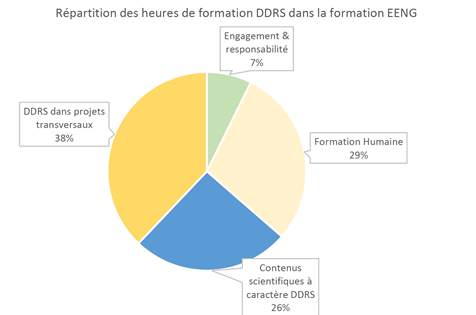
De quelle façon les contenus des enseignements liés à la transition sont-ils abordés (détails des volets scientifiques, économiques, sociaux…) ?
Nous avons 4 grands types d’enseignements et contenus de formation qui traitent d’aspects DDRS:
- Le module Engagement et Responsabilité (présent dans les formations A&M et EENG)
- La Formation Humaine (présente dans toutes les formations)
- Les modules ou projets scientifiques et techniques portés par les Pôles scientifiques
- Les projets transversaux ou multidisciplinaires, portés par plusieurs Pôles simultanément
Parmi les contenus de Formation Humaine, nous avons retenu :
Tout ce qui relève de la connaissance de soi (Dynamis) et des autres dans des logiques de coopération (Praxis), et de la construction d’un projet professionnel pertinent.
C’est-à-dire les modules :
- Connaissance de soi
- Ouverture aux autres
- Développement personnel et professionnel
- Employabilité
Nous intégrons aussi tous les modules qui permettent la prise décision éclairée (Ethos) et les mécanismes de régulation (Nomos), qui prennent différentes appellations selon nos formations. En résumé, il s’agit des domaines liés aux thèmes suivants :
- Management (de projet et d’équipe)
- Ressources humaines
- Droit du travail
- Ethique de l’ingénieur, responsabilités de l’ingénieur
- Ouverture aux mondes
- Culture générale
Nous incluons aussi les thématiques liées aux mécanismes de régulations économiques plus techniques, et certains modules mis spécialement en place en EENG tels que :
- L’économie circulaire
- La finance durable
- Les séminaires visant à développer une cohérence entre développement personnel, projet professionnel, et posture de l’ingénieur.
Parmi les contenus qualifiés de scientifiques et techniques, il existe 4 grands types de contenus :
- Les contenus traitant directement du Développement Durable, et de la transition écologique, essentiellement dispensés en EENG, qui comprennent :
- Les projets Développement Durable en années 1 et 2
- Le projet écoconception en année 3
- Le Bilan Carbone, et l’éco-innovation en année 4
- Les contenus traitant de l’énergie et de ses enjeux, essentiellement portés par le Pôle ENE
- Les contenus traitant de l’organisation industrielle, essentiellement portés par le Pôle C2MI, en lien avec :
- Le management environnemental et social (RSE, SME) des organisations
- La qualité, lorsqu’elle est abordée avec les thèmes associés d’environnement et de bien-être social en entreprise
- L’ergonomie
- La santé et la sécurité au travail
- Les risques industriels
- Les contenus scientifiques permettant aux étudiants d’adopter une démarche de recherche d’informations pertinentes et de développer leur esprit critique :
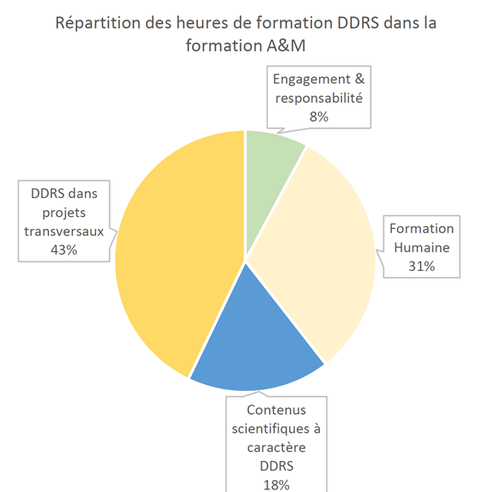
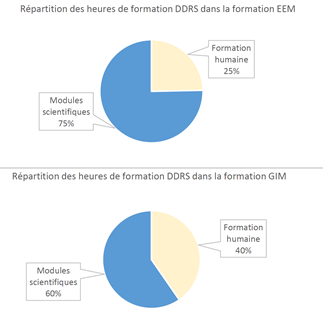
Comment ces enseignements sont-ils reçus par les élèves ?
Les évaluations réalisées sur les enseignement chaque semestre permettent de tirer des conclusions et font évoluer les maquettes en conséquence si nécessaire.
Un bilan et une enquête doivent encore être menées pour juger du « ressenti » des étudiants sur les modules cités et l’intégration du DDRS à l’Ecam Lyon.
A priori, et d’après plusieurs échanges, il semble que les cours scientifiques et techniques traitant d’aspects DDRS soient très bien accueillis, voire que la motivation des étudiants les amène à vouloir approfondir certains sujets par eux-mêmes en dehors des cours. Cette motivation pourrait être plus mitigée pour les cours de la formation humaine, les étudiants recherchant avant tout des cours scientifiques et techniques « purs ».
Les projets menées en EENG sont particulièrement appréciés des étudiants, car la dimension pratique du mode projet permet de rendre « ludique » l’acquisition de connaissances.
Quels modules parallèles ou activités pédagogiques sont organisés pour sensibiliser \es questions de transition écologique (séminaires de rentrée, interventions d'experts, journées édiées, gamification (escape game etc..)) ?
De nombreuses conférences sont organisées en soirée, et une partie traite des questions écologiques et énergétiques liées à la transition. En tant que membre du réseau Tennerdis, plusieurs conférences animées par des experts de ces sujets se déroulent régulièrement sur le campus et les étudiants sont invités à y participer.
Durant la période de COVID, un cycle de conférences en ligne a été organisé (les Conf’Innées) durant lesquelles des professionnels étaient amenés à présenter leurs activités et échanger avec nos étudiants. Un volet environnemental a permis de faire intervenir 3 experts sur diverses questions :
- Le secteur du recyclage
- l’économie circulaire
- Les enjeux environnementaux du numérique
Ces conférences ont rencontré un grand succès de visionnage, tant en direct qu’en replay.
Dans ses formations au supply chain management, l ’ECAM utilise aussi un serious game de l’entreprise Inchange appelé Blue Connection.
Ce dernier reprend le concept de l’économie circulaire facilitant le développement de nouveaux business à travers le monde. Chaque semestre une vingtaine d’élèves est formé sur ce serious game et en parallèle ils préparent une certification supply chain internationale APICS.
En EENG plusieurs activités visent à sensibiliser les étudiants :
- des « workshops » sont organisés en deuxième année, l’un vise à leur faire découvrir le concept de low-tech, avec la création notamment d’un four solaire.
- La semaine européenne du développement durable (normalement en Mai mais décalée à Octobre cette année à cause du COVID) devait servir de semaine de démonstrations de prototyes réalisés par les étudiants dans les projets Développement durable : centrés sur des améliorations pour « verdir » le campus : ex. récupérateurs d’eau de pluie, maisons à insectes, murs végétaux, bacs à compost, etc
- En juin, les étudiants de première année présentent leurs vidéos qui doivent traiter d’un sujet d’actualité sur le développement durable. A l‘issue d’un concours, les meilleurs vidéos sera rendu disponible pour visionnage par les autres étudiants.
Les enseignants de votre établissement sont-ils formés aux enjeux de la transition écologique ? Si oui, de quelle manière (cursus initial, formation continue, organisme dispensaire…) ? Si non, est-ce une évolution envisagée à court terme ? La connaissance des enjeux écologiques et l’interdisciplinarité sont-elles valorisées dans le recrutement du corps professoral ?
Les formations sont depuis plusieurs années axées sur la santé et la sécurité (formations 1er secours et recyclage, habilitations électriques, formations aux nouveaux membres du CSE…). Le plan de développement des compétences 2021 continue de déployer son budget à hauteur d’1/4 pour la sécurité, les ¾ restants étant affectés à l’évolution et l’adaptation des activités pédagogiques.
A court terme, deux types d’actions sont prévues dans le cadre de notre plan d’actions prioritaires DDRS pour la formation :
- La création de vidéos pédagogiques à destination des étudiants et des enseignants sur les enjeux du DDRS
- Le montage d’un groupe de travail d’enseignants formés aux enjeux pour piloter un travail plus global de sensibilisation de l’ensemble des enseignants, et de réflexion sur les évolutions des enseignements.
Une formation au Bilan Carbone d’un ensemble de 5 membres du personnel est également prévue au cours de cette année, à des fins d’enseignement mais aussi de pilotage et mise à jour de notre propre Bilan Carbone.
Quels sont les débouchés de vos formations ? Dans quelle mesure ces débouchés sont-ils en adéquation avec la transition écologique ?
Débouchés de la formation généraliste ECAM Arts & Métiers (promotion 2019) :
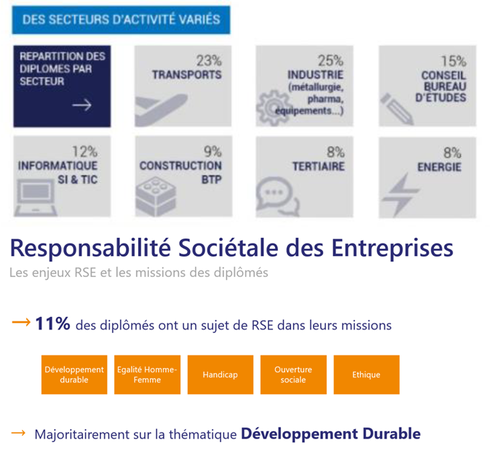
Créée en 2012 à la demande d'industriels, la formation d'ingénieur Energie : Efficacité énergétique et Management des installations (EEM) prépare des futurs ingénieurs à assurer le suivi de projets industriels dans le domaine de l’énergie. Ces jeunes ingénieurs accèdent à la fin de leur formation notamment à des fonctions de Chef de projet énergies renouvelables, Ingénieur études énergies renouvelables et efficacité énergétique, Responsable d’exploitation en gestion l’énergie...
Nous avons lancé en 2020 un Mastère Spécialisé® Management de la transition énergétique en partenariat avec EM Lyon. Ce Mastère Spécialisé® permet d’acquérir les compétences clés pour accompagner la transformation des pratiques techniques et managériales indispensables pour réussir la transition énergétique. Acteurs de la transition énergétique, les diplômés de ce MS contribueront à une montée en compétences collective et au changement de nos sociétés.
Quelle place donnez-vous aux entreprises engagées dans la transition écologique et dans l'Économie Sociale et Solidaire lors de vos forums d’entreprises, interventions d’Alumni, ou dans les projets, études de cas des étudiants ?
Nous ne filtrons pas particulièrement les entreprises qui participent à nos événements sur des critères liés à la transition écologique ou l’ESS.
Néanmoins, la plupart des présentations entreprises faites aux étudiants incluent la question « Que mettent en place ces entreprises pour rentrer dans la transition écologique ? »
Avez-vous identifié les principaux impacts des métiers de vos diplômés sur le climat et la biodiversité ? Si oui, quels sont-ils ? Vos formations présentent-t-elles des pratiques professionnelles et personnelles permettant d'identifier et de réduire ces impacts ? Concrètement, lesquelles ?
Nos métiers d’ingénieurs contribuent à la transition écologique :
- par l’introduction de l’éco-conception dans leurs pratiques
- par l’optimisation des énergies utilisées pour faire fonctionner différents systèmes et produits, ainsi que dans les usines de production
- par leur investissement sur l’éco-mobilité et la ville intelligente
Pensez-vous que la demande sur le marché du travail pour les métiers de vos diplômés est ou sera amenée à évoluer dans le cadre d’une transition écologique ? Si oui, comment et pourquoi ?
Nous constatons déjà de plus en plus de demandes de la part des entreprises (stages, projets, emplois) dans le secteur de l’énergie y compris énergies renouvelables, des nouvelles mobilités, d’analyses de données pour optimiser les consommations, …
Nos formations généralistes sont très bien placées pour répondre à ces nouvelles demandes. En effet, un des principaux atouts d’un ingénieur généraliste est son adaptabilité à de nouveaux sujets.
Réussir la Transition écologique, c’est avoir une vision globale ce qui est le propre des ingénieurs généralistes.
Nous pensons aussi que l’acquisition de compétences transversales liées à la Formation Humaine notamment, permet à nos ingénieurs de développer leur esprit critique et de prendre des décisions éclairées, justes, et en cohérence avec leurs valeurs. Ainsi, ils doivent être capables de s’adapter dans diverses situations, mais aussi d’évoluer AVEC leur futur métier d’ingénieur. En effet, si l’ingénieur doit être capable de s’adapter, c’est également à lui qu’il revient de faire évoluer son métier en conscience, en prenant part à l’action de la transition.
Les enjeux écologiques et sociaux sont-ils au coeur des stratégies de recherche de votre établissement? Comment la stratégie de recherche favorise-t-elle spécifiquement la recherche transdisciplinaire et interdisciplinaire en lien avec les enjeux de transition écologique ?
En cohérence avec le positionnement de l’institut Carnot Ingénierie@Lyon, l’action du LabECAM s’inscrit dans l’effort général d’accompagnement de la mutation industrielle et sociétale induite par le réchauffement climatique et la nécessité d’un développement durable et économe en ressources. Elle vise en premier lieu l’augmentation des performances des produits et de leur production, dans les domaines du transport, de l’Energie et plus transversalement des Matériaux, tout en réduisant leur impact sur l’environnement.
Ainsi, la stratégie de recherche repose sur le développement de projet de recherche en partenariat avec les industriels. Ce faisant, les projets menés répondent nécessairement à leurs besoins, portés vers la recherche de réponses concrètes aux enjeux de la transition écologique et sociétale.
Les sujets portés par les équipes de recherche (Efficacité énergétique des systèmes et machines, matériaux innovants pour l’ingénierie) et les partenariats industriels placent naturellement les équipes dans des situations de collaboration entre les différentes disciplines de recherche de l’école.
Votre établissement soutient-il de manière spécifique la recherche (thèses, postdoc, travaux d’enseignants-chercheurs) en lien direct avec les enjeux de transition écologique, et les chercheurs qui s’engagent dans cette voie ? Quelle est la proportion du budget recherche allouée à ces travaux ?
Du fait de l’organisation de la recherche, l’ECAM Lyon ne finance pas d’activité de recherche sur fond propre, que le sujet soit en rapport avec le DDRS ou non.
En revanche, l’établissement investit régulièrement dans des nouveaux moyens expérimentaux pour permettre aux enseignants chercheurs de répondre au mieux aux nouveaux besoins des industriels en matière par exemple de mobilité décarbonées (hybridation, e-Drive…).
Ainsi, au cours de l’année 2020-2021, les projets de recherche qui répondent aux Objectifs Développement Durable représentent 75% des projets menés.
Existe-t-il des chaires ou des centres de recherche sur le sujet de la transition écologique au sein de votre établissement ? Si oui, quels sont leurs axes de travail ? Combien de professeurs intègrent-ils ?
L’ECAM Lyon est impliquée dans plusieurs partenariats de recherche répondants aux enjeux du développement durable.
Depuis 2015 une chaire de recherche entre Safran, l’INSA Lyon et L’ECAM Lyon a pour objet les transmissions mécaniques innovantes pour l’aéronautique. Depuis 2018 l’ECAM est impliqué dans un consortium entre industriels et laboratoires sur les transmissions mécaniques. Enfin, depuis 2020, le CETIM, l’INSA Lyon et l’ECAM collaborent dans le cadre d’un laboratoire commun (TRANSMECA) dont une des finalités est de travailler au développement de transmission de puissance qui répondent aux enjeux de la transition énergétique et environnementale.
Enfin une Chaire GRDF sur la transition énergétique a été signée fin 2020.
Les chercheurs sont-ils amenés à réfléchir à l’impact de leurs activités (pratiques et finalités) de recherche ? Si oui, comment ?
Les enseignants chercheurs sont autonomes dans la conduite de leurs projets de recherche. Afin de soutenir et d’encourager les pratiques en faveur du développement durable, le conseil scientifique de l’ECAM Lyon réunit chaque année les équipes. Cela permet d’échanger sur les pratiques et le fonctionnement de la recherche dans l’établissement.
Existe-t-il sur le campus des associations étudiantes dont l’activité est centrée sur l’action en faveur de la transition écologique ? Quelles sont-elles ?
L’ECAM a 23 clubs et association étudiantes. Parmi l’ensemble de ces associations ; ECOM ECAM, Club Pêche (no kill), Club Cuisine, Club Shell (pile à combustible), Fab Lab, … Club Apiculture commune avec le personnel.
Quelles sont les thématiques abordées par ces associations (alimentation durable, réduction des déchets, sensibilisation…) ? Quelles actions entreprennent-elles ? Quelle est leur échelle d’impact (l’ensemble ou une certaine catégorie d’étudiants, les personnels de l’établissement, échelle plus large que l’établissement) ? Ces associations travaillent-elles par elles-mêmes sur le campus ou agissent-elles en partenariat avec l’administration de l’établissement (et si oui, à quel niveau) ?
Club pêche : 40 membres qui ont participé avec l’association ALYVAL (Pêche et protection des milieux aquatiques) à des séances de nettoyage des bords de Saône, …
ECO Marathon Shell* a participé pour la 21ème fois à la compétition internationale « Shell Eco-Marathon » organisée par le groupe Shell. Le but de ce challenge étudiants, rassemblant de nombreuses universités et écoles d’ingénieurs à travers le monde, est de développer des prototypes de véhicules fonctionnant grâce à diverses sources d’énergie et capables de parcourir le maximum de kilomètres possibles avec l’équivalent d’un litre d’essence (ou son équivalent énergétique avec de l’hydrogène, ou de l’électricité).
L’ECO Marathon Shell est la seule équipe européenne à développer la pile à hydrogène. L’hydrogène joue un enjeu primordial quant à la transition énergétique mondiale vis-à-vis de la mobilité et du déplacement ; en effet, avec de l’hydrogène, élément le plus présent dans notre univers, et de l’oxygène, la réaction rejette uniquement de la vapeur d’eau à faible quantité. Cette énergie est donc non polluante.
Alimentation durable à travers le Club Cuisine Clean walk, déchets à la résidence club ECO ECAM Création d’un jardin potager partagé Club Ferme….
Toutes les activités des Club se font en partenariat avec l’ensemble de l’Administration et de la Direction de l’Etablissement.
Comment valorisez-vous l’engagement citoyen et associatif de vos étudiants ?
Le dispositif Engagement & Responsabilité s’inscrit dans le projet éducatif ECAM LaSalle : l’objectif commun à tous les acteurs du projet éducatif est de permettre à chaque étudiant de réussir son parcours, d’être à même de participer à l’évolution de la société. Cela passe par des engagements forts, une capacité et une motivation à sortir de soi-même pour aller vers les autres.
Le projet éducatif est structuré en 3 grands thèmes : Vivre ensemble, Créer ensemble et Apprendre ensemble. L’engagement est une posture. « L'engagement peut être entendu au sens de « conduite » ou au sens d'« acte de décision », selon qu'il désigne un mode d'existence dans et par lequel l'individu est impliqué activement dans le cours du monde, s'éprouve responsable de ce qui arrive, ouvre un avenir à l'action, ou qu'il désigne un acte par lequel l'individu se lie lui-même dans son être futur, à propos soit de certaines démarches à accomplir, soit d'une forme d'activité, soit même de sa propre vie. » extrait définition Universalis La responsabilité : par rapport aux autres et au monde qui nous entoure. « L’humanité, et avec elle notre planète, entre dans une période à hauts risques.
L’accélération et la combinaison d’avancées scientifiques et technologiques stupéfiantes dans tous les domaines engendrent des mutations complexes qui n’impactent plus seulement nos modes de vie, mais engagent le futur de notre humanité dans son ensemble.
L’ingénieur est non seulement un acteur de cet écosystème mondial, il en est aussi l’auteur et le concepteur. Sa responsabilité éthique est engagée : l’ingénieur ne peut plus se contenter de réaliser ce qui est techniquement possible et légalement autorisé, il doit aussi mettre en oeuvre dans sa réflexion un questionnement éthique sur les intentions et sur les conséquences des progrès techniques auxquels il travaille. » Extrait IESF sur l’Ingénieur Responsable.
Comment se financent les associations étudiantes ? Quelle visibilité leur est accordée au sein de l’établissement ?
Ils disposent de locaux selon leur objet : 740 m² répartis sur l’ensemble du campus.
La CVEC, dotations de l’établissement, redevances machines à café et lave-linge ainsi que leurs propres activités (Festival La Terrasse, activités cuisine)…
Votre établissement évalue-t-il son impact environnemental à l’aide de méthodes quantitatives normalisées, comme l’Analyse du Cycle de Vie ou le bilan carbone ? À quelle fréquence ? Quels postes de dépense intègre-t-il (notamment, comprend-il les mobilités, c’est-à-dire les voyages en avion des étudiant.e.s, des professeur.e.s et des conférencier.e.s) ?
Le premier bilan carbone de l’ECAM a été réalisé en 2009. Il a été mis à jour en 2016.
L’ECAM a décidé en 2021 de réévaluer son bilan carbone. Un des membres du personnel enseignant est habilité à certifier ce bilan. Un groupe interne projet est constitué. L’objectif est de pouvoir mettre à jour régulièrement ce bilan en interne. Ce pilotage interagit sur le plan de mobilité, et sur les achats durables.
Le diagnostic mobilité est réalisé, le plan d’actions sera déployé en 2021.
Comment votre établissement réduit-il au quotidien son empreinte écologique (végétalisation, incitations, économies d’énergies, alimentation responsable, réduction et tri des déchets …) ? Quels sont les résultats de ces actions ?
Le campus fait partie intégrante du paysage de la Colline de Fourvière. Avec une surface de 7ha d’espaces verts en milieu urbain, l’ECAM joue un rôle en matière de biodiversité : fauchage raisonné et présence de ruches par exemple. Une gestion durable des espaces non bâtis est mise en place depuis 2016 avec aucun produit phytosanitaire, utilisation de matériel électrique, débardage, … L’objectif 2021 est de ne faire aucun export de matière mais de la réincorporer afin d’augmenter l’apport en matière organique aux végétaux : le bois sera broyé et remis en place en pied de massifs, les feuilles mise en stock pour décomposition et réalisation d’humus….
Par la réhabilitation et la surélévation des bâtiments existants (liées aux besoins de l’enseignement et aux standards – sécurité et accessibilité), l'espace foncier a été préservé contribuant à la densification du site et satisfaisant ainsi à notre objectif d'habitat et d'urbanisation durable ; lors de la dernière réhabilitation, les approvisionnements en bois ont été réalisés en Rhône Alpes, les peintures sont sans solvant, présence d’un toit végétalisé, …
Depuis 5 ans on observe une baisse significative de 50 % de stationnement sur le site et l’équipement du parking vélo a progressé de 75 %.
Une baisse de consommation de gaz de 40 % due aux rénovations successives des deux chaufferies et à la réhabilitation de plus de 6500m² (bâtiments F et I) avec l’effet notamment d’une meilleure isolation thermique et du pilotage des courbes.
Un suivi de la production organique des déchets, du tri (papier, carton, verres, DEEE,) est mis en place avec la production de tableaux de bord mensuels et d’une attestation annuelle de valorisation des déchets prévue par l’art D543-284 du code de l’environnement.
Un suivi de la consommation de papier est mis en place…calculé en eq CO².
Comment votre établissement interagit-il avec son territoire et s’intègre-t-il dans des politiques publiques locales à visée durable ?
L’établissement est partie prenante de plusieurs comités à l’échelle de son territoire :
- La COMUE et le Schéma de Développement Universitaire (SDU), plusieurs ateliers auxquels l’ECAM est partie prenante : citoyenneté active et diffusion des savoirs, déplacement et transport, université et transition, sports et infrastructures sportives, rapprochement monde économique et monde académique, augmentation des effectifs et offres de logements
- Le Grand Site de Fourvière : La Ville de Lyon et la Métropole de Lyon ont engagé une démarche projet associant les acteurs de la Colline. L’ECAM, partie prenante, participe à 2 groupes de travail : Repenser les mobilités (orientation : « apaiser le site en repensant les mobilités ») et Conforter le pôle enseignement et la vie étudiante (orientation : « mettre en visibilité le site enseignement et la vie étudiante).
Les acteurs tels que le SYTRAL, le Crous sont parties prenantes.
- Associée à l’IPL (Institut Polytechnique Lyon) : plateforme de concertation pédagogique, éducative et organisationnelle, qui oeuvre dans le sens de l’amélioration permanente de la qualité de l’enseignement et des services rendus aux étudiants. L’IPL a le soutien de la région Auvergne Rhône-Alpes et de l’Europe au travers du programme ERASMUS+.
Votre établissement est-il labellisé DD&RS ? Si non, un travail est-il en cours pour obtenir le label, et à quel horizon ?
L’établissement candidate pour une labellisation 2021.
Quels blocages à la mise en place de dispositifs ou de mesures favorables à une transition écologique pouvez-vous identifier au sein de votre établissement (et à quel niveau) ?
Pas de blocage à proprement parlé, beaucoup de rénovations réalisées mais des projets à réaliser en tenant compte du modèle économique à pérenniser.
Êtes-vous au fait des différents mouvements étudiants et institutionnels portant sur la transition écologique tels que le Manifeste étudiant pour un Réveil Écologique, le REFEDD, le projet FORTES du Campus de la transition ou le groupe de travail du Ministère de l’Enseignement Supérieur, de la Recherche et de l’Innovation ? Quels mouvements connaissez-vous ?
Adhésion au réseau CIRCES
Shift project, Solve Climate, Fresque du climat, semaine du développement durable, ateliers SDU (sur la Mobilité, la transition énergétique, …)…
Pouvez-vous décrire l’organisation mise en place afin de répondre à ce questionnaire (personnes ou organes en charge, parties prenantes impliquées, etc.) ?
Le COPIL DDRS de l’établissement composé de 6 membres : 1 membre pilote de chaque axe du référentiel DDRS et un stagiaire.
Ont été intégrés également la responsable de la vie étudiante pour la partie 5 « vie étudiante » et la responsable des relations entreprises pour la partie 3 « débouchés après la formation »
Avez-vous des messages pour d’autres acteurs, des commentaires, des choses à ajouter ?
Trop d’initiatives individuelles, de sollicitations de toute part, d’enquêtes, …
Pour participer de manière constructive à la démarche, il faudrait trouver une manière de coordonner et de rendre cohérent l’Action en faveur du DDRS à travers un seul canal.
Général
7

Dans quelle mesure votre établissement se donne-t-il pour objectif de former la communauté étudiante aux enjeux et aux métiers de la transition écologique ? Cet objectif est-il inscrit dans votre stratégie ?
La RSE mais aussi la RSI (« Responsabilité Sociale Individuelle ») sont abordées dans tous nos programmes, au même titre que la notion de « durabilité » apportée à chaque arbitrage validé par tout décisionnaire.
Cela vaut pour les cours académiques, pratiques, les masterclasses et les mises en situation professionnelles (stages et alternance).
C'est d'ailleurs généralement par ces dernières expériences que les étudiants mesurent l'écart, ses causes et ses conséquences, qui peut survenir en entreprise entre les bonnes volontés et les contraintes économiques et commerciales.
Dans quelle mesure des objectifs de transition écologique sont-ils inscrits dans le projet de transformation de votre établissement à court, à moyen, et/ou à long terme ? Notamment : une démarche d’auto-évaluation DD&RS (Plan Vert) a-t-elle été mise en place pour votre établissement ? (en vertu de l’article 55 de la loi Grenelle 1 du 3 août 2009, le Plan Vert doit obligatoirement être élaboré par tous les établissements d’enseignement supérieur).
Tous nos projets (nouvelles unités commerciales, académiques et support) intègrent cette dimension dans leur conception.
Pour nos anciennes structures nous avons déjà mis en place de nombreuses actions correctives (redéfinition des circuits, réaffectation-création de nouveaux locaux) pour qu'à terme l'impact environnemental de tout notre écosystème soit le plus vertueux possible.
Les démarches de certification suivront ce programme de transformation.
Notre vignoble dans le Luberon, le Domaine de la Dorgonne, produit tous ses vins et son huile d'olive en bio ; Nous ouvrirons l'année prochaine à proximité de notre campus une boulangerie et épicerie bio afin de permettre à nos étudiants et collaborateurs de s'approvisionner en produits locaux et sains.
Comment sont construites les maquettes pédagogiques de votre établissement ? Les étudiants sont-ils associés à l’élaboration des programmes de formation ? Si oui, à quelles étapes et selon quelles modalités ? Si non quelles propositions feriez-vous en la matière ?
Nos maquettes pédagogiques évoluent chaque année selon l'évolution des grandes tendances mondiales (socio-économiques) et la priorité des axes de nos formations validés lors de nos conseils de perfectionnement.
Les étudiants sont systématiquement sollicités à chaque semestre quant à leur appréciation des formations et leurs conseils d'amélioration.
Leurs réponses sont systématiquement prises en compte pour toute nouvelle maquette annuelle, parfois même en cours de semestre.
Existe-t-il un poste permanent de chargé.e de mission DD&RS ou de transition écologique au sein de votre établissement ? Si oui, depuis combien de temps ? Quelles sont ses missions ? Est-ce un emploi équivalent temps plein ? Quel est son positionnement dans l’organigramme ?
Pas sous cet intitulé précis, mais la volonté claire et affirmée du président-fondateur de notre groupe est appliquée sans transiger par ses collaborateurs les plus proches, tant en charge de la conception- aménagement-entretien des espaces que du management des différents services.
La sensibilisation et de la responsabilisation des personnels et étudiants sur ces enjeux sont-elles inscrites dans les missions du/de la chargé.e de mission DD&RS ? Dans quelle mesure la communauté étudiante est-elle associée à ce processus d’éco-responsabilisation ?
Les actions et formations à destination des étudiants dans ce sens sont obligatoires pour tous car intégrées aux programmes et donc nécessaire à leur diplomation.
Tous les chefs de département et services des fonctions support comme opérationnelles sensibilisent régulièrement leurs collaborateurs à ces impératifs, et contrôlent la bonne application des procédures en place.
Nous demandons à nos étudiants de privilégier dans leurs projets tuteurés l’approche « développement durable ».
Ainsi cette année nous avons soutenu l’un de leurs projets, le projet Phuoc Lam, qui les a conduit au Vietnam pour amener l’eau potable dans ce village ; ils ont à coeur d’y développer également une offre d’éco-tourisme, de permaculture, de production agricole locale Bio et de formation des jeunes locaux à ces enjeux cruciaux pour leur avenir.
Quelles sont les principales sources externes de financement de votre établissement ? Selon quels critères votre établissement noue-t-il des partenariats financiers et non-financiers ? Ces critères prennent-ils en compte l’investissement dans la transition écologique de vos partenaires ?
La qualité, la fiabilité, l'engagement de nos partenaires dans les valeurs que nous partageons sont bien évidemment des critères importants en amont de toute signature de partenariat.
Des institutions comme BPI-France, ou nos principaux partenaires académiques (GEM, Skema, Université Gustave Eiffel, Oxford Brookes, Bournemouth University, CETT Barcelone etc.) et professionnelles (nombre de maisons et groupes d'hôtellerie-restauration tous engagés dans le développement durable) sont révélatrices du volontarisme de nos projets et actions partagées.
Une liste des organisations et entreprises actuellement partenaires de votre établissement est-lle disponible sur votre site Internet (public et privé) ?
Oui.
Y a-t-il dans vos enseignements obligatoires des modules concernant l’apprentissage des fondements de la crise écologique et de ses conséquences ? Si oui, en quelle année sont-ils dispensés et avec quel poids dans les crédits obtenus ?
Quasiment sur chaque année de formation, par des cours pratiques (botanique, viticulture, potager et tous ceux incluant la sélection des meilleurs produits sur les meilleurs circuits...), des masterclasses et cours académiques (Maintenance, événementiel durable, approvisionnement, interculturalité, qualité et développement durable).
Ces enseignements représentent environ une dizaine d'ECTS sur l'ensemble du programme, mais au- delà des ECTS c'est surtout la prise de conscience et l'engagement individuel de chaque étudiant qui fait sens.
Le nombre de projets et mémoires de fins d'études traitant spécifiquement de ces problématiques représente 20 à 25 % par cohorte, et tous les autres thèmes abordent aussi ces questions.
La transition écologique fait-elle l’objet dans votre établissement de cursus spécialisés ? Si oui, quels sont-ils ?
Pas encore à ce jour, mais encore une fois le thème est omniprésent dans tous nos cursus, car indispensable au maintien d'une activité touristique durable.
L’ensemble du livret pédagogique, c’est-à-dire la totalité des modules d’enseignement, intègre-t-il les enjeux de transition écologique actuel de manière cohérente et ambitieuse ? Comment faites-vous en sorte que la formation aux enjeux écologiques ne soit pas restreinte à des cours spécialisés ? Comment articulez-vous les formations pour favoriser la transversalité et le dialogue des formations face à cet enjeu ?
Question redondante : comme expliqué plus haut tous nos enseignements sont transversaux et abordent la question de la transition écologique tant au niveau de la conception, que de l'organisation et l'exploitation de tout projet, tant au sein des cours académiques que pratiques (professionnels) et expérientiels.
Avez-vous mis en place une approche par compétences et si oui, avez-vous identifié les compétences utiles à la transition écologique acquises par vos diplômés au cours de leur parcours ? (ex: système de compétences DD&RS)
Oui notre démarche globale de certification se fait par blocs de compétences.
La transversalité évoquée supra y est donc intégrée.
Les critères d'évaluation couvrent aussi les champs de durabilité et responsabilité.
De quelle façon les contenus des enseignements liés à la transition sont-ils abordés (détails des volets scientifiques, économiques, sociaux…) ?
De manière généralement inductive :
1) Étude d’un cas concret ou définition d’un projet
2) Analyse des pratiques, identification des meilleures
3) Application – préconisation et transposition des meilleurs pratiques aux différents contextes étudiés.
Comment ces enseignements sont-ils reçus par les élèves ?
De manière naturelle, spontanée et évidente : la prise de conscience de leur implication dans la construction de leur avenir est parfois non évidente en début de formation, mais totalement intégrée en fin de cursus.
Quels modules parallèles ou activités pédagogiques sont organisés pour sensibiliser / informer sur les questions de transition écologique (séminaires de rentrée, interventions d’experts, journées dédiées, gamification (escape game etc..)) ?
Cf réponses supra :
- Masterclasses
- Visites
- Conférences
- Études de cas
- Projets
- Mémoires
- Évènements
- Stages
Les enseignants de votre établissement sont-ils formés aux enjeux de la transition écologique ? Si oui, de quelle manière (cursus initial, formation continue, organisme dispensaire…) ? Si non, est-ce une évolution envisagée à court terme ? La connaissance des enjeux écologiques et l’interdisciplinarité sont-elles valorisées dans le recrutement du corps professoral ?
Tous nos enseignants sont formés à notre démarche pédagogique globale par nos soins.
Ils sont donc tous sensibilisés à l'intégration dans leurs cours des questions (et réponses) de développement durable.
Quels sont les débouchés de vos formations ? Dans quelle mesure ces débouchés sont-ils en adéquation avec la transition écologique ?
Les débouchés sont très variés sur toutes les fonctions de notre industrie.
Ils sont forcément en adéquation avec la T.E. dans la mesure où tous nos étudiants ont été éduqués à intégrer cette dimension à toute réflexion, action et arbitrage.
Quelle place donnez-vous aux entreprises engagées dans la transition écologique et dans l'Économie Sociale et Solidaire lors de vos forums d'entreprises, interventions d'Alumni, ou dans les projets, études de cas des étudiants ?
La même que pour toute autre forme d'entreprise.
Nos étudiants peuvent ainsi effectuer leur stage dans une entreprise commerciale comme dans une association caritative, humanitaire ou écologique et valider les mêmes crédits.
Enfin nous accordons énormément d'importance à l'engagement associatif de nos étudiants et soutenons tous projets au sein de l'institution en ce sens.
Avez-vous identifié les principaux impacts des métiers de vos diplômés sur le climat et la biodiversité ? Si oui, quels sont-ils ? Vos formations présentent-t-elles des pratiques professionnelles et personnelles permettant d'identifier et de réduire ces impacts ? Concrètement, lesquelles ?
Toute activité économique de notre industrie est potentiellement profitable ou déficitaire en termes d'impact écologique.
Toutes nos formations à ces métiers étudient et prônent les pratiques les plus vertueuses en ce sens pour développer à une économie responsable.
Pensez-vous que la demande sur le marché du travail pour les métiers de vos diplômés est ou sera menée à évoluer dans le cadre d'une transition écologique ? Si oui, comment et pourquoi ?
Oui bien évidemment puisqu'il s'agit là d'attentes de la part de nos clients : le luxe et l'écologie ne sont pas incompatibles, tout comme les pratiques hédonistes et la conscience environnementale.
Nos étudiants – futures professionnels sont à même de créer les produits et services intégrant ces données, et mettre à profit pour cela toute innovation disponible ou à développer.
Les enjeux écologiques et sociaux sont-ils au cœur des stratégies de recherche de votre établissement ? Comment la stratégie de recherche favorise-t-elle spécifiquement la recherche transdisciplinaire et interdisciplinaire en lien avec les enjeux de transition écologique ?
Notre laboratoire de recherche et incubateurs ne sont pas encore ouverts.
Toutefois l'ouverture d'H-Tech Valley programmée l'année prochaine accueillera tous les projets, startups et entreprises françaises qui innovent dans les univers liés à l'hospitalité.
Les enjeux écologiques et sociaux compteront bien évidemment parmi les candidatures et auront toute leur place au sein d'HTV.
Votre établissement soutient-il de manière spécifique la recherche (thèses, postdoc, travaux d’enseignants-chercheurs) en lien direct avec les enjeux de transition écologique, et les chercheurs qui s’engagent dans cette voie ? Quelle est la proportion du budget recherche allouée à ces travaux ?
Pas encore à ce jour du fait de la non existence pour le moment d'un laboratoire de recherche.
Toutefois les thèmes de mémoires de bachelor et mastère sur ces sujets sont systématiquement validés et accompagnés.
Existe-t-il des chaires ou des centres de recherche sur le sujet de la transition écologique au sein de votre établissement ? Si oui, quels sont leurs axes de travail ? Combien de professeurs intègrent-ils ?
Pas encore à ce jour du fait de la non existence pour le moment d'un laboratoire de recherche.
Les chercheurs sont-ils amenés à réfléchir à l'impact de leurs activités (pratiques et finalités) de recherche ? Si oui, comment ?
Pas encore à ce jour du fait de la non existence pour le moment d'un laboratoire de recherche.
Existe-t-il sur le campus des associations étudiantes dont l'activité est centrée sur l'action en faveur de la transition écologique ? Quelles sont-elles ?
Pas encore malgré nos incitations.
Nos petits effectifs et la jeunesse de la création de notre BDE explique probablement que nos étudiants ont créé en premier les associations les plus utiles à leur vie quotidienne, leur engagement écologique individuel pouvant à ce jour s'assouvir sans le recours à une association.
L'accroissement de nos effectifs et la concentration de bonnes volontés unifiées par ces enjeux prioritaires ne manqueront pas de susciter des vocations associatives et faire éclore des projets adaptés.
Quelles sont les thématiques abordées par ces associations (alimentation durable, réduction des déchets, sensibilisation…) ? Quelles actions entreprennent-elles ? Quelle est leur échelle d’impact (l’ensemble ou une certaine catégorie d’étudiants, les personnels de l’établissement, échelle plus large que l’établissement) ? Ces associations travaillent-elles par elles-mêmes sur le campus ou agissent-elles en partenariat avec l’administration de l’établissement (et si oui, à quel niveau) ?
Pas de réponse.
Comment valorisez-vous l'engagement citoyen et associatif de vos étudiants ?
Nous imposons à nos étudiants l'inscription à au moins une association du BDE.
Nous étudions la validation de crédits sur les années à venir au travers de la réalisation de projets d'utilité collective, à vocation sociale, humanitaire, durable etc.
Ce sera probablement acté pour la rentrée prochaine.
Comment se financent les associations étudiantes ? Quelle visibilité leur est accordée au sein de L'établissement ?
Pilotage par le BDE, mais mise en avant systématique sur tous nos évènements et opérations de communication et accès direct à nos partenaires (pour des demandes de financement de projets par exemple).
Votre établissement évalue-t-il son impact environnemental à l’aide de méthodes quantitatives normalisées, comme l’Analyse du Cycle de Vie ou le bilan carbone ? À quelle fréquence ? Quels postes de dépense intègre-t-il (notamment, comprend-il les mobilités, c’est-à-dire les voyages en avion des étudiant.e.s, des professeur.e.s et des conférencier.e.s) ?
Non pas encore car toujours en phase de développement et de travaux.
Comme évoqué plus haut différentes démarches de certification seront engagées à la fin des travaux.
Comment votre établissement réduit-il au quotidien son empreinte écologique (végétalisation, incitations, économies d’énergies, alimentation responsable, réduction et tri des déchets …) ? Quels sont les résultats de ces actions ?
Nous sommes implantés au cœur d'un parc de 140 ha entretenu en interne dans une démarche de recyclage optimal.
Nous privilégions le recours à des fournisseurs locaux et travaillons les produits de saison dans nos restaurants.
Nos équipes sont formées à la lutte contre le gaspillage et nous surveillons de près les indicateurs de performance dans ce domaine.
Nous avons repensé notre gestion des approvisionnements et déchets, tant au niveau de l'organisation que de espaces, afin de maximiser le tri.
Tous nos bâtiments sont conçus pour être le moins énergivore possible.
Comment votre établissement interagit-il avec son territoire et s'intègre-t-il dans des politiques Publiques locales à visée durable ?
Notre proximité avec la mairie de notre village, qui est aussi notre bailleur et avec les bâtiments de France qui surveillent toute demande de travaux au sein de notre environnement classé ne peut qu'apporter un regard critique complémentaire sur chacun de nos projets forcément conduit dans le respect de l'environnement.
Votre établissement est-il labellisé DD&RS ? Si non, un travail est-il en cours pour obtenir le label, et à quel horizon ?
Pas encore, cf supra.
Quels blocages à la mise en place de dispositifs ou de mesures favorables à une transition écologique pouvez-vous identifier au sein de votre établissement (et à quel niveau) ?
Principalement les mauvaises habitudes de collaborateurs ou étudiants non encore sensibilisés au sujet en amont de leur arrivée dans notre communauté éducative.
Les contraintes techniques sur des bâtiments classés sont aussi parfois lourdes (travaux d'isolation ou création de nouveaux espaces très complexes).
Êtes-vous au fait des différents mouvements étudiants et institutionnels portant sur la transition écologique tels que le Manifeste étudiant pour un Réveil Écologique, le REFEDD, le projet FORTES du Campus de la transition ou le groupe de travail du Ministère de l’Enseignement Supérieur, de la Recherche et de l’Innovation ? Quels mouvements connaissez-vous ?
Pas vraiment du fait de la jeunesse de notre institution et car nous considérons qu'il est de notre devoir de montrer l'exemple, éclairer la voie à suivre et inscrire nos étudiants dans cette démarche.
Nous ne pouvons qu'être sensibles à l'engagement des étudiants dans les valeurs que nous défendons.
Pouvez-vous décrire l’organisation mise en place afin de répondre à ce questionnaire (personnes ou organes en charge, parties prenantes impliquées, etc.) ?
Nos équipes sont réduites, très polyvalentes et travaillent toutes en étroite collaboration.
Cela permet une très grande transparence et rapidité d'échange des informations.
Cela permet aussi aux principaux responsables des différents départements de partager la même connaissance de nos enjeux, organisations et projets.
La direction des programmes de l'école qui est au cœur de l'activité de tout notre écosystème est donc naturellement celle qui a été sollicitée pour répondre au questionnaire.
Avez-vous des messages pour d'autres acteurs, des commentaires, des choses à ajouter ?
Pas de réponse.

Dans quelle mesure votre établissement se donne-t-il pour objectif de former la communauté étudiante aux enjeux et aux métiers de la transition écologique ? Cet objectif est-il inscrit dans votre stratégie ?
L'implication de l'École polytechnique sur les enjeux environnementaux est dans la lignée de sa mission depuis 225 ans : promouvoir l'innovation comme moteur de la prospérité, tout en l'enracinant dans une culture de l'intégrité et un sens prononcé de l'intérêt général. Pour exemple, un parcours de spécialisation sur les enjeux environnementaux existe depuis plus de 10 ans au sein de la formation d'ingénieur polytechnicien.
Cet engagement sur les enjeux écologiques a été renouvelé en juin 2019, à l'occasion d'un colloque international organisé par l'X sur le thème « Chercher, former et agir pour le développement durable », dans le cadre du 225e anniversaire de l'École. Eric Labaye, président de l'École polytechnique, a formulé à cette occasion cinq engagements structurants de l'ambition de l'établissement sur ces questions et de leur importance stratégique. Au côté du Plan de Neutralité carbone de l'École et de la création du centre interdisciplinaire Energy4Climate (E4C) de l'Institut Polytechnique de Paris (IP Paris) ; trois de ces engagements visent directement la formation de la communauté étudiante :
- 100% des élèves formés au développement durable via une formation obligatoire
- La création d'un certificat d'approfondissement volontaire accessible à tous
- La création du Challenge avec nos partenaires pour détecter les talents et explorer les futures solutions
Dans quelle mesure des objectifs de transition écologique sont-ils inscrits dans le projet de transformation de votre établissement à court, à moyen, et/ou à long terme ? Notamment : une démarche d'auto-évaluation DD&RS (Plan Vert) a-t-elle été mise en place pour votre établissement ? (en vertu de l'article 55 de la loi Grenelle 1 du 3 août 2009, le Plan Vert doit obligatoirement être élaboré par tous les établissements d'enseignement supérieur).
Depuis sa création, l'École polytechnique imagine le monde de demain et œuvre pour son développement à travers ses élèves et ses professeurs. Les adaptations nécessaires de l'humanité face au changement climatique et à la raréfaction des ressources naturelles sont une priorité pour tous et l'École polytechnique entend y prendre toute sa part. Son colloque « RéfleXions : chercher, former et agir pour le développement durable » en juin 2019 a été l'acte fondateur de l'engagement de l'École pour inscrire le développement durable comme pilier stratégique de son évolution. (cf.engagements ci-dessus).
À cette prise de position forte, nous adossons un devoir de résultats.
- Le Plan Vert est utilisé pour suivre l'évolution de nos indicateurs internes depuis 2011. Renouvelé par l'ambition de l'École en 2019, le référentiel DD&RS a appuyé un audit complet de nos actions sur la Transition écologique et sociétale. Nous nous sommes ici inscrits dans l'action de la CPU-CGE sur la remontée nationale de ces auto-évaluations internes.
- L'École répond également au THE Impact Rankings, qui propose une approche complémentaire au référentiel DD&RS en structurant son évaluation sur les Objectifs du Développement durable portés par les Nations Unies (Agenda 2030).
Comment sont construites les maquettes pédagogiques de votre établissement ? Les étudiants sont-ils associés à l'élaboration des programmes de formation ? Si oui, à quelles étapes et selon quelles modalités ? Si non quelles propositions feriez-vous en la matière ?
Afin d'assurer l'excellence de la proposition pédagogique de notre établissement, la construction même des maquettes est à la main des enseignants-chercheurs et de la direction de l'École. Les étudiants y sont cependant largement impliqués en aval comme en amont, par différents processus : boucles de réflexions, présence de délégués étudiants notamment au Conseil d'Établissement, sondages réguliers animés par les promotions et remontée d'informations, réunions-bilan d'amélioration continue, Conseil de perfectionnement, évaluation participative des cours, poste spécifiquement dédié aux relations avec l'enseignement parmi l'association des élèves, etc…
Plus spécifiquement, sur l'amélioration de la place du développement durable dans l'ensemble de l'offre d'enseignement de l'École, les élèves sont des parties prenantes actives du groupe de travail dédié.
Existe-t-il un poste permanent de chargé.e de mission DD&RS ou de transition écologique au sein de votre établissement ? Si oui, depuis combien de temps ? Quelles sont ses missions ? Est-ce un emploi équivalent temps plein ? Quel est son positionnement dans l'organigramme ?
Les missions DD&RS sont attribuées en interne depuis une dizaine d'années, autant sur les enjeux environnementaux que sociétaux, mais ces postes ont connu des périmètres et rattachements différents.
Le maillage actuel de la thématique :
- Un poste à temps plein sur la transition environnementale (aspects campus en propre, soutien à l'enseignement et à la recherche) rattaché au secrétariat général. Capitalisation des aspects développement durable de l'École et renseignement du référentiel DD&RS.
- Un poste temps plein pilotant une équipe de trois personnes dédiée à l'égalité des chances, rattachement à la Direction de la Formation Humaine et Militaire.
- Un poste à mi-temps sur la diversité, rattaché à la Présidence.
La sensibilisation et de la responsabilisation des personnels et étudiants sur ces enjeux sont-elles inscrites dans les missions du/de la chargé.e de mission DD&RS ? Dans quelle mesure la communauté étudiante est-elle associée à ce processus d'éco-responsabilisation ?
La conduite du changement est au cœur de la mission Développement durable de l'École polytechnique. Les missions de sensibilisation, mais également de transition des modes de vies et de formation aux enjeux environnementaux, sont toujours menées en partenariats avec l'ensemble des parties prenantes. Un certain nombre de projets étudiants sur le développement durable se font avec le soutien de l'École, et inversement les grands projets structurants de l'X sur ces enjeux impliquent de manière active les élèves.
Quelles sont les principales sources externes de financement de votre établissement ? Selon quels critères votre établissement noue-t-il des partenariats financiers et non-financiers ? Ces critères prennent-ils en compte l’investissement dans la transition écologique de vos partenaires ?
Le premier financement extérieur de l'École est public. Les autres financements extérieurs sont des partenariats privés (d'un ordre de grandeur d'un cinquième du budget de l'École) autour d'activités de recherche ou d'enseignement. Le critère de sélection est alors la pertinence du projet, devant s'inscrire dans la stratégie, la mission et les valeurs de l'École. La contribution écologique, lorsqu'elle est concernée, porte dès lors sur l'impact visé par le projet partenarial sur lequel l'École polytechnique s'investit.
Une liste des organisations et entreprises actuellement partenaires de votre établissement est-elle disponible sur votre site Internet (public et privé) ?
Vous pouvez consulter la liste des Chaires de mécénat ici, présentées en fonction de leurs disciplines : https://www.polytechnique.edu/fr/chaires-d-entreprise 2
Y a-t-il dans vos enseignements obligatoires des modules concernant l’apprentissage des fondements de la crise écologique et de ses conséquences ? Si oui, en quelle année sont-ils dispensés et avec quel poids dans les crédits obtenus ?
Depuis 2019 un séminaire obligatoire est proposé aux élèves polytechniciens de première année, dès leur arrivée sur le campus en avril. Ce séminaire de deux jours a été adapté en non-présentiel et maintenu malgré la crise sanitaire du Covid 19 en 2020.
Dès 2021, nous y intégrerons d’autres formations proposées à l’École, notamment les bachelors.
Ce séminaire est pensé comme une première étape d’appropriation des enjeux. Il vise ensuite un investissement volontaire des élèves vers l’acquisition de savoir techniques grâce à l’ensemble de l’offre de formation de l’école en 2ème et 3ème année, et au certificat dédié.
Aussi, ce séminaire est obligatoire pour la validation du diplôme, mais n’est pas sanctionné à ce jour par des crédits. En revanche, l’obtention du certificat développement durable de l’école, ouvert aux ingénieurs et MSc&T, s’accompagne d’obtention de crédits.
La transition écologique fait-elle l'objet dans votre établissement de cursus spécialisés ? Si oui, quels sont-ils ?
La Transition écologique fait l’objet de cursus spécialisés dans l’ensemble de l’offre de formation de l’École polytechnique.
- Le parcours ingénieur, formation historique de l’École, propose deux parcours d’approfondissement dédiés, intitulés « Sciences pour les défis de l’environnement » et « Énergies du XXIème siècle ».
- Des masters de sciences et technologie proposent également trois programmes abordant les enjeux de transitions : « Science and Technology for Environmental and Energy Management » (STEEM), « Environmental Engineering and Sustainability Management » (ECOSEM) et « Smart Cities ans Urban Policy » (SCUP).
- L’École polytechnique propose également des PhD Tracks et des Masters qui forment aux solutions de demain :
PhD Track – Green House Gases Decrease
PhD Track – Renewable Energy Deployment PhD Track – Energy Consumption Decrease
PhD Track – Feedback to Energy Policies
Master 2 Towards Clean Energy Production
Master 2 in Energy Infrastructures Management
Master 2 in Optimizing Energy Utilizations
Mater 2 Nuclear Energy
Nous formons aux enjeux environnementaux tout au long de la vie. L’Executive Education de l’École polytechnique porte à son catalogue deux programmes abordant les enjeux du changement climatique et de la transition énergétique : « Entrepreneurship in Renewable Energy » et « Projets d’action locale pour la transition énergétique ». Ils sont proposés en version certifiante ou en version modulaire. Des formations élaborées sur mesure, en fonction des besoins de transitions des entreprises, viennent compléter l’offre pédagogique de l’école en la matière.
L’ensemble du livret pédagogique, c’est-à-dire la totalité des modules d’enseignement, intègre-t-il les enjeux de transition écologique actuel de manière cohérente et ambitieuse ? Comment faites-vous en sorte que la formation aux enjeux écologiques ne soit pas restreinte à des cours spécialisés ? Comment articulez-vous les formations pour favoriser la transversalité et le dialogue des formations face à cet enjeu ?
La proposition pédagogique mise en place par l’École polytechnique en matière de transition écologique vise l'accessibilité de ces savoirs, quel que soit le parcours suivi en interne : séminaire obligatoire, reconnaissance du cycle de conférences organisé par les élèves au travers d’une mention au diplôme, mise en place d’un certificat développement durable complémentaire aux spécialisations.
Cette transversalité des enseignements sur la transition écologique est renforcée par l’une des spécificités de l’École qui propose une formation d’ingénieur pluridisciplinaire et ouverte aux enjeux systémiques. L’ensemble du livret pédagogique est appuyé sur cette vision complexe et les élèves peuvent, sous validation de la direction de l’enseignement, panacher leurs cours afin d’étayer leur propre regard sur le monde.
Soulignons trois angles qui nous permettent de couvrir progressivement l’ensemble du livret pédagogique :
- On compte aujourd’hui 83 cours relevant de compétences développement durable, assurés dans de nombreuses disciplines : biologie, chimie, économie, humanités et sciences sociales, informatique, langue, mathématiques appliquées, mécanique, management de l'innovation et entrepreneuriat, physique. Les publics ciblés couvrent l’ensemble de nos formations.
- Un séminaire obligatoire et un certificat développement durable accessible pour le plus grand nombre, quel que soit le parcours choisi.
- Des spécialisations sur les enjeux environnementaux existent dans la très grande majorité de nos programmes : cycle ingénieur, MSc&T, PhD Track, Master, Executive Education.
Les apprenants sont enfin invités à croiser ces savoirs dans une approche systémique des enjeux de transition. C’est notamment l’un des axes majeurs du Challenge étudiant E4C mené chaque année et pouvant être valorisé dans l’obtention du certificat Développement durable de l’École comme en projet de 3ème année.
Avez-vous mis en place une approche par compétences et si oui, avez-vous identifié les compétences utiles à la transition écologique acquises par vos diplômés au cours de leur parcours ? (ex: système de compétences DD&RS)
Un bloc de compétence sur l'Éthique et la Responsabilité est d'ores et déjà identifié sur la fiche RNCP du diplôme d'ingénieur.
Le développement actuel d'une offre renforcée de formation sur le développement durable est alimenté par une veille active sur les référentiels de compétences : DD&RS, projet FORTES, travaux menés à l'École des Ponts, etc.
De quelle façon les contenus des enseignements liés à la transition sont-ils abordés (détails des volets scientifiques, économiques, sociaux…) ?
Les parcours ingénieurs :
- Le parcours d’approfondissement « Sciences pour les défis de l’environnement » a pour ambition d’initier les élèves aux approches scientifiques permettant de comprendre et de modéliser les différentes composantes de la Terre et leurs interactions : climat, biosphère, activités humaines. Ainsi, le parcours propose des enseignements de physique, de mécanique, de biologie et d’écologie, et d’économie.
- Le parcours d’approfondissement « Énergies du XXIe siècle » est proposé par les départements de mécanique et de physique et a pour objectif l’acquisition des concepts scientifiques essentiels dans le développement des énergies dites « non fossiles » comme l’énergie nucléaire ou les énergies renouvelables. Il est par nature pluridisciplinaire, s’appuyant sur des cours proposés par 5 départements de l’École : physique, mécanique, mathématiques appliquées, économie, humanités et sciences sociales.
Les masters de sciences et technologies de l’École :
- En traitant l’énergie et l’environnement comme deux aspects égaux qui détermineront notre avenir climatique, le programme Science and Technology for Environment and Energy Management (Steem) fournit une compréhension sophistiquée de l’énergie au XXIe siècle. Basé sur une formation d’ingénieur et de formation en sciences appliquées, le programme Steem offre aux diplômés les outils nécessaires pour comprendre le contexte socio-économique du changement climatique et maîtriser les évolutions de notre relation à l’énergie.
- Le programme Smart Cities and Urban Policy aborde la mise au point de nouveaux schémas urbains, la préservation et l’amélioration de leur environnement et l’établissement d’un équilibre entre les taux d’urbanisation rapides et la qualité de vie des personnes. Ce programme permet une compréhension approfondie des nouvelles zones métropolitaines et de leur transformation, ainsi que de leurs environnements concurrentiels.
- Ecotechnologies for Sustainability and Environment Management (ECOSEM) offre une expertise technique sur les questions environnementales, y compris les processus de diagnostic, de traitement et de valorisation de la pollution des sols et de l'eau, ainsi qu'une compréhension approfondie des défis économiques et sociaux de leur développement. Des connaissances réglementaires et éthiques internationales complètent les cours techniques et de gestion.
PhD Tracks et Masters :
- PhD Track – Green House Gases Decrease [Lien]
- PhD Track – Renewable Energy Deployment [Lien]
- PhD Track – Energy Consumption Decrease [Lien]
- PhD Track – Feedback to Energy Policies [Lien]
- Master 2 Towards Clean Energy Production [Lien]
- Master 2 in Energy Infrastructures Management [Lien]
- Master 2 in Optimizing Energy Utilizations [Lien]
- Master 2 Nuclear Energy [Lien]
École polytechnique Executive Education :
- Programme Entrepreneurship in Renewable Energy vise à développer un double ensemble de compétences chez ses participants en ingénierie et entrepreneuriat.
- Programme « Projets d’action locale pour la transition énergétique » vise le personnel des institutions publiques et industrielles souhaitant avoir une vision globale depuis les aspects scientifiques de base aux prises de décision techniques et énergétiques pour développer ou améliorer la qualité de projets locaux courants ou en développement, dans le cadre de la loi de transition énergétique.
Comment ces enseignements sont-ils reçus par les élèves ?
Le développement de nouvelles formations, le maintien dynamique de parcours de spécialisation anciens, la demande régulière de nos élèves pour aller plus loin, nous font penser que ces enseignements sont reçus positivement. Il est toujours difficile d'y apporter une preuve tangible, mais nous pouvons avancer deux éléments significatifs. D'abord, les deux parcours d'approfondissement de notre cycle ingénieur dédiés aux enjeux de transition rassemble une centaine d'élèves cette année (environ 20% de la promotion). Ce chiffre est le plus élevé depuis 7 ans. Autre indicateur significatif, l'entrée de nos élèves au Corps des Ponts, des Eaux et des Forêts est de plus en plus sélective. En 2018, ce sont 22 élèves qui sont entrés dans ce Corps, parmi les plus brillants de l'École, et se destinant à occuper des fonctions de premier rang dans la transition écologique.
Quels modules parallèles ou activités pédagogiques sont organisés pour sensibiliser / informer sur les questions de transition écologique (séminaires de rentrée, interventions d’experts, journées dédiées, gamification (escape game, etc..)) ?
Sans viser l’exhaustivité, voici quelques modules complémentaires significatifs :
- Le Challenge E4C
- Le cycle de conférences Coriolis
- Le colloque « RéfleXions, Chercher, former et agir pour le développement durable »
- La proposition de sujets d’études sur la transition à l’occasion de projets scientifiques collectifs en deuxième année, ainsi que de projets de troisième année
- Des journées d’étude portées par nos laboratoires
- Le cycle de conférences Ingénieurs de demain (à la main des élèves)
- La Semaine du Développement durable à l’X (à la main des élèves)
Les enseignants de votre établissement sont-ils formés aux enjeux de la transition écologique ? Si oui, de quelle manière (cursus initial, formation continue, organisme dispensaire…) ? Si non, est-ce une évolution envisagée à court terme ? La connaissance des enjeux écologiques et l’interdisciplinarité sont-elles valorisées dans le recrutement du corps professoral ?
Le recrutement à l'École polytechnique vise des enseignants-chercheurs de premier rang qui évoluent dans un contexte hautement compétitif. Le recrutement se fait à l'échelle internationale.
L'activité de recherche de nos enseignants est ainsi une garantie de l'actualité de leur analyse, y compris en ce qui concerne le paradigme de la transition écologique. De plus, le développement de parcours dédiés s'accompagne de recrutements ciblés lorsque nécessaire.
Quels sont les débouchés de vos formations ? Dans quelle mesure ces débouchés sont-ils en adéquation avec la transition écologique ?
Les dernières enquêtes premier emploi indiquent que 53% de nos jeunes diplômés choisissent l'entreprise, 27% optent pour un doctorat, 12% entrent dans les Corps d’Etat et 3% fondent leur entreprise. Parmi les emplois du privé, nous observons une grande variété de tailles d’entreprises (25% des diplômés sont employés dans des structures de moins de 50 salariés, 42% dans des groupes de plus de 5000) ; mais également une variété de secteurs (67% dans l’industrie, 13% dans les banques, assurances et secteur financier, 13% dans le conseil).
La formation de l’École polytechnique donne donc accès à une large palette d’emplois possibles. La question de l’adéquation de ces emplois avec la transition écologique nous semble caduque, car elle imposerait un jugement sur les secteurs, les structures, voire les emplois. L’enjeu essentiel pour nous est la valeur apportée par nos diplômés là où ils choisiront d’exercer, et à cet égard y insuffler ce que l’École souhaite transmettre : la promotion de l’innovation comme moteur de la prospérité, tout en l’enracinant dans une culture de l'intégrité et un sens prononcé de l'intérêt général.
Quelle place donnez-vous aux entreprises engagées dans la transition écologique et dans l'Économie Sociale et Solidaire lors de vos forums d’entreprises, interventions d’Alumni, ou dans les projets, études de cas des étudiants ?
- Le forum professionnel annuel de l’École est à la main des élèves, c’est donc à leur niveau que se joue ici la place accordée à la transition écologique et à l'Économie Sociale et Solidaire. Après de premières actions, une volonté s’exprime d'y donner une place plus importante et des travaux sont en cours ;
- Une part non négligeable des interventions d’Alumni se fait également dans le cadre des événements organisés par les élèves (force et spécificité de la communauté polytechnicienne). Notons ici l’existence d'X-Environnement, association d’anciens dédiée à ces enjeux et proactive dans le plaidoyer auprès des élèves ;
- Comme cité précédemment, des sujets d'analyse portant sur la transition sont proposés chaque année dans le cadre des PSC (Projet Collectif Scientifique de 2ème année) et des projets de 3ème année, ceci dans différentes disciplines.
Avez-vous identifié les principaux impacts des métiers de vos diplômés sur le climat et la biodiversité ? Si oui, quels sont-ils ? Vos formations présentent-t-elles des pratiques professionnelles et personnelles permettant d'identifier et de réduire ces impacts ? Concrètement, lesquelles ?
Les formations proposées par l’École polytechnique sont des formations d’excellence qui abordent les enjeux systémiques, nos élèves sont outillés pour prendre en compte l'impact de leurs emplois futurs.
L’École a également une spécificité unique en France : la place donnée à sa formation humaine. Les six premiers mois de formation de nos ingénieurs sont entièrement dédiés à l’apprentissage de la prise de responsabilité, à la promotion des valeurs de l’École, à leur inscription dans un projet collectif au bénéfice de tous (formation humaine et militaire).
Les élèves sont ensuite suivis sur ces aspects tout au long de leur scolarité, non seulement par l’encadrement militaire de l’école, mais également par l’équipe en charge de leur orientation académique et professionnelle et de leurs stages. L’École travaille à l’émergence d’un projet professionnel pour chaque élève, un questionnement sur le sens qu’il veut donner à sa trajectoire, et ainsi sur l’impact qu’il veut avoir dans la société.
La récurrence des témoignages d’anciens, et l’évocation de polytechniciens illustres, contribuent à l’édification de cette volonté d’innover pour la prospérité de tous, quel que soit le lieu dans lequel nos élèves exerceront leurs fonctions.
Pensez-vous que la demande sur le marché du travail pour les métiers de vos diplômés est ou sera amenée à évoluer dans le cadre d’une transition écologique ? Si oui, comment et pourquoi ?
La place que prend aujourd'hui la recherche sur la transition, notamment la transition énergétique, dans notre recherche et notre formation témoigne bien évidemment d'une évolution structurelle déjà présente. Mais plus encore qu'une évolution du marché du travail ou une évolution sectorielle, il nous semble que la transition conduit à une évolution paradigmatique. C'est bien l'ensemble des contraintes et finalités des métiers de chacun qui va évoluer, quel que soit le secteur concerné.
Les enjeux écologiques et sociaux sont ils au coeur des stratégies de recherche de votre établissement ? Comment la stratégie de recherche favorise-t-elle spécifiquement la recherche transdisciplinaire et interdisciplinaire en lien avec les enjeux de transition écologique ?
En 2017, l’École polytechnique fonde Trend-X. Ce programme de recherche, soutenu par la Fondation de l’X, est centré sur la transition énergétique. Il s’agit d’un programme transdisciplinaire pour la transition énergétique qui rassemble dix laboratoires de recherche de l’École polytechnique. Les trois premières thématiques de recherches sont les « matériaux et systèmes de conversion et de stockage », les « micro-réseaux intelligents » et les « smart grids ». Trois démonstrateurs sont en développement sur notre campus ; reliant dès lors recherche, enseignement, innovation et impact territorial.
En 2019 est fondé l’Institut Polytechnique de Paris, qui réunit cinq grandes écoles autour d’une ambition commune : créer un Institut de rang mondial au service d’une recherche de pointe et de programmes de formation d’excellence. Ses programmes de recherche, menés en partenariat avec des entreprises, sont organisés autour de 5 domaines prioritaires : énergétique et changements climatiques, sécuritaire, numérique, technologique, santé.
La transdisciplinarité prend dès lors une nouvelle ampleur via la création d’E4C. Avec Energy4Climate, l’Institut Polytechnique de Paris relève le défi de la transition énergétique grâce à l’expertise de plus de 25 laboratoires partenaires et en proposant un parcours de formation international unique. Energy4Climate vise ainsi à former les futurs leaders des énergies de demain. Ayant remporté une École Universitaire de Recherche, E4C noue des liens avec des partenaires académiques dans le monde entier tels Berkeley ou encore avec l’Université Mohammed VI Polytechnique au Maroc.
Votre établissement soutient-il de manière spécifique la recherche (thèses, postdoc, travaux d’enseignants-chercheurs) en lien direct avec les enjeux de transition écologique, et les chercheurs qui s’engagent dans cette voie ? Quelle est la proportion du budget recherche allouée à ces travaux ?
La moitié de nos 23 laboratoires sont aujourd’hui investis dans des projets des recherches autour de la transition :
- CMAP : Centre de Mathématiques Appliquées
- CREST : Centre de Recherche en Économie et Statistique
- I3 : Institut Interdisciplinaire de l’Innovation
- IPSL : Institut Pierre Simon Laplace
- IPVF : Institut Photovoltaïque d’Île de France
- LADHYX : Laboratoire d'Hydrodynamique de l'Ecole polytechnique
- LCM : Laboratoire de Chimie Moléculaire
- LIX : Laboratoire d'Informatique de l'Ecole Polytechnique
- LMD : Laboratoire de Météorologie Dynamique
- LMS : Laboratoire de Mécanique des Solides
- LPICM :Laboratoire de Physique des Interfaces et des Couches Minces
- LPMC : Laboratoire de Physique de la Matière Condensée LSI : Laboratoire des Solides Irradiés LSO : Laboratoire de Synthèse Organique
Cependant, ils ont chacun leurs propres budgets et il nous est impossible à ce jour d’y isoler les projets spécifiquement dédiés à la transition des autres recherches menées.
Existe-t-il des chaires ou des centres de recherche sur le sujet de la transition écologique au sein de votre établissement ? Si oui, quels sont leurs axes de travail ? Combien de professeurs intègrent-ils ?
Le Centre interdisciplinaire Energy4Climate (E4C), regroupent 25 laboratoires et associe l’École des Ponts.
Il a pour objectif de relever les défis des 3 piliers des politiques publiques, permettant une analyse systémique des verrous de l’atténuation climatique et de la transition énergétique :
- Réduire les émissions de GES, l'accent étant mis sur la décarbonisation du secteur énergétique ;
- Améliorer le potentiel d'efficacité énergétique et la flexibilité de la demande pour réduire la consommation d'énergie ;
- Gérer et contrôler dynamiquement la distribution d'énergie renouvelable via des réseaux intelligents ;
- Déterminer la pertinence, l'efficacité, l'efficience, la faisabilité sociale et la durabilité des solutions techniques proposées, pour économiser l'énergie et réduire les émissions de carbone.
Il est notamment soutenu financièrement par plusieurs Chaires :
- Défis technologiques pour une énergie responsable, Philippe Drobinski, Total
- Énergies durables, François Willaime, EDF
- Intelligence artificielle pour la sobriété énergétique, Philippe Drobinski, Nam.R
Un challenge international « Imagine Carbone neutre City », financé par les Chaires, a permis à 107 étudiants provenant notamment de l’X, de Colombia, de Science Po, de l’ENSAE Paris, de l’ENSTA Paris et de l’ ENS, de proposer des projets innovants.
Il faut ajouter plusieurs chaires liées également à l’énergie ou développement durable
- Énergies et prospérité, Jean-Pierre Ponssard, ADEME, AIR LIQUIDE, AFD, Caisse des Dépôts, Mirova Schneider Electric, SNCF
- Développement durable, Dominique Bureau, EDF
- Finance durable et Investissement Responsable , Patricia Crifo, association FDIR
- Integrated Urban Mobility, Claudia d’Ambrosio, Uber
- Procédés et matériaux innovants, Camille Duprat, Saint-Gobin
A noter également deux chaires internationales d’enseignement répondant aux Objectifs du Développement durable n° 4 sur l’éduction et n° 9 sur l’innovation :
- Data Science Institute, Eric Moulines, Orange
- Data Science et Processus Industriels, Eric Moulines, OCP
C’est d’ores et déjà 15 000 000 € levés pour ces 10 chaires ; de nouvelles Chaires sont en cours de négociation sur les enjeux de Transition.
Ces Chaires sont par nature transverses et créent des partenariats avec de nombreux laboratoires et enseignants chercheurs.
Le 23 Novembre 2020, Accenture et IP Paris nouent un partenariat stratégique intégrant la création d’une chaire « Technology for Change ». Prévue pour une durée initiale de cinq ans, la chaire « Technology for Change » a pour ambition d’accélérer et d’accompagner les transitions écologiques, économiques, sociales et sociétales grâce à la technologie et à l’innovation. Portée par Thierry Rayna, Professeur à l’École polytechnique au sein du laboratoire i3 (Institut interdisciplinaire de l’innovation - CNRS, École polytechnique, Mines ParisTech, Télécom Paris), la chaire « Technology for Change » agira comme une plateforme de réponse rapide aux problèmes sociétaux et environnementaux, en liaison avec les 17 objectifs de développement durable de l’Agenda 2030 de l’ONU.
Les chercheurs sont-ils amenés à réfléchir à l’impact de leurs activités (pratiques et finalités) de recherche ? Si oui, comment ?
Plusieurs groupes de travails autour des impacts de la recherche existent aujourd’hui dans nos laboratoires, principalement autour des émissions de carbone (bilan carbone laboratoire, réflexion sur les voyages aériens, etc.). Ils s’appuient notamment sur les travaux du collectif Labos 1point5.
Existe-t-il sur le campus des associations étudiantes dont l’activité est centrée sur l’action en faveur de la transition écologique ? Quelles sont-elles ?
Trois associations couvrent le champ de la Transition écologique à l’École polytechnique.
- Développement durable à l’X (DDX), incluant notemment Botanix (création d’un potager),
- Else (épicerie solidaire),
- Apicultix (gestion de ruches à l'école et production de miel)
Il convient d’y ajouter les associations oeuvrant pour la transition sociétale, indissociable d’une transition écologique :
- L’action sociale de la Kès (cours aux réfugiés, maraudes, conférences, etc.)
- X au féminin (association féministe de l’X, ouverte à tous)
- XY (association LGBT+ de l’X)
- Dispositif « Une grande école pourquoi pas moi ? »
- X-Micro-finance (voyages humanitaires pour le développement de l’économie locale)
- Cheer Up (accompagnement des jeunes dans la lutte contre le cancer)
- LSF (apprentissage de la langue des signes pour tous)
- De nombreuses associations culturelles qui reflètent la diversité de l’école et invitent au partage
Quelles sont les thématiques abordées par ces associations (alimentation durable, réduction des déchets, sensibilisation…) ? Quelles actions entreprennent-elles ? Quelle est leur échelle d’impact (l’ensemble ou une certaine catégorie d’étudiants, les personnels de l’établissement, échelle plus large que l’établissement) ? Ces associations travaillent-elles par elles-mêmes sur le campus ou agissent-elles en partenariat avec l’administration de l’établissement (et si oui, à quel niveau) ?
Le Baromètre étant centré sur l’axe environnemental, détaillons ici quelques activités de l’association Développement durable à l’X (DDX) qui s’adresse essentiellement aux élèves :
- Semaine développement durable à l’X
- Jardin partagé, poulailler et potager, mise en place de compostes
- Défis hebdomadaires sur les écogestes auprès de l’ensemble de la promotion
- Conseil auprès des autres associations sur leur éco-responsabilité
- Travail régulier avec la restauration, notamment sur le végétarisme et les déchets
- Cycle de conférences Ingénieurs de demains (parmi les derniers invités Alain Grandjean, Arthur Keller, Nicolas Hulot)
- Groupe de réflexion sur l'écoféminisme, contribution au groupe de travail sur l’enseignement, animation de Fresques du Climat, etc.
L’association est autonome, mais une collaboration étroite existe avec l’administration et notamment avec la mission développement durable de l’école. De manière générale, les échanges avec les différentes directions sont réguliers, et visent la facilitation des actions dédiées à la transition écologique. L’association bénéficie ainsi d’un soutien matériel : mise à disposition de salles, de terrains, diffusion de communications, financement de la formation d’animateur la Fresque du Climat, etc.
Comment valorisez-vous l’engagement citoyen et associatif de vos étudiants ?
L’animation de la vie étudiante à l’École polytechnique se caractérise par un large choix d’associations proposées aux élèves. Au total, les polytechniciens participent à près de 250 associations dans des activités aussi variées que le domaine culturel, artistique, social, scientifique, religieux ou sportif.
Ces associations, appelées « binets » dans le langage polytechnicien, rythment la vie du campus de Polytechnique et permettent aux élèves de se retrouver autour d’aspirations communes. Cet engagement associatif est unique puisque plus des trois quarts des élèves de l’X participent aux binets. La vie associative s’inscrit dans la pédagogie de l’École polytechnique en favorisant le développement du sens des responsabilités et l'esprit d'entreprise chez les élèves. Grâce à ces nombreuses activités associatives, le campus de Polytechnique devient un véritable lieu de vie.
Comment se financent les associations étudiantes ? Quelle visibilité leur est accordée au sein de 'établissement ?
Les associations sont autonomes sur leur financement, leur stratégie partenariale varie de l’une à l’autre. Une grande visibilité leur est donnée, tant leurs activités ponctuent la vie du campus. Aussi, le grand hall de l’école leur est dédié pendant la semaine du développement durable. Un espace vert, au coeur du campus, leur est également confié pour la réalisation de leur potager et l’aménagement d’une terrasse couverte.
La communication interne l’école relaie systématiquement les activités développement durable des élèves (intranet, écrans des espaces communs, etc.) : semaine du développement durable, épicerie solidaire, conférences, etc.
Votre établissement évalue-t-il son impact environnemental à l’aide de méthodes quantitatives normalisées, comme l’Analyse du Cycle de Vie ou le bilan carbone ? À quelle fréquence ? Quels postes de dépense intègre-t-il (notamment, comprend-il les mobilités, c’est-à-dire les voyages en avion des étudiant.e.s, des professeur.e.s et des conférencier.e.s) ?
En 2019 l’École Polytechnique a réalisé un Plan de Mobilité. Cette étude comprenait une enquête, une étude de géolocalisation et une étude d’accessibilité, portant sur les déplacements de ses salariés, de ses chercheurs, et les mobilités de Week-end de ses élèves. Concernant les mobilités des élèves, il est important de souligner qu’ils sont tous logés sur place, à pied de leurs lieux de cours, et de l’ensemble de l’infrastructure du campus. Un Projet Collectif Scientifique réalisé par des élèves a ainsi permis de compléter le panorama en qualifiant le profil mobilité spécifique de l’élève polytechnicien, et de proposer une première approche carbone de ses déplacements sur les deux premières années de sa formation. Cela incluait ses déplacements de loisir comme ceux de ses stages, voyages de langues ou formation humaine et militaire.
En 2020, nous avons réalisé un Bilan des émissions de Gaz à effets de serre au spectre large, qui sera renouvelé tous les trois ans.
Les champs couverts par ce Bilan carbone :
- Patrimoine et énergie
- Achats et services
- Véhicules possédés
- Déplacements professionnels et domicile-travail
- Déchets
- Équipements de recherche et innovation
- Parc informatique détenu par l’école
Ce travail d’état des lieux a été complété par un exercice de prospective permettant de placer l’école sur une trajectoire de responsabilité face à la Stratégie Nationale Bas carbone. Sont ainsi visées des actions emblématiques dès 2021, mais également des objectifs de réductions d’impact à 3 ans et à 10 ans intégrés à la stratégie de chaque service.
Après ces étapes de mise en place interne, l’Ecole communiquera prochainement en externe ses objectifs de réduction, son plan de neutralité carbone, mais également sa démarche intégrée et systémique croisant recherche, enseignement, innovation et campus.
Comment votre établissement réduit-il au quotidien son empreinte écologique (végétalisation, incitations, économies d’énergies, alimentation responsable, réduction et tri des déchets …) ? Quels sont les résultats de ces actions ?
Notre plan d’action 2020-2030 nous fixent des objectifs ambitieux de réduction de nos impacts en matière d’énergie, de mobilité, de restauration et d’amortissement environnemental du bâti. Nous visons une maitrise des volumes et une amélioration des process sur les achats, le numérique et les déchets.
Mobilité :
- Logement élèves : la très grande majorité de nos étudiants sont logés sur place ce qui limite les mobilités pendulaires pour se rendre en cours
- Véhicules partagés : nous avons un pôle de véhicules partagés, utilisés par les élèves comme le personnel, ce qui permet une mutualisation des usages
- L’essentiel de nos petits véhicules techniques est électrique
- PDM : nous avons réalisé un plan de mobilité en 2013 puis en 2019. Ces éléments d’analyse nous poussent à l’amélioration de nos pratiques, par exemple sur les infrastructures vélos.
Déchets :
- Méthanisation : Depuis 2012, le restaurant de l’École polytechnique recycle ses déchets par méthanisation. Les déchets organiques, issus de l’activité du restaurant, sont traités et stockés en cuve avant d’être envoyés à l’unité de méthanisation d’Etampes, puis l'énergie produite est réinjectée au réseau.
- Notre zone de trie permet le traitement d’un nombre important de flux : déchets Industriels Spéciaux provenant des laboratoires, Piles, Batteries, Tubes fluorescents, Déchets d’Equipements Electriques et Electroniques, Déchets Industriels Banals, Textile, Gravas, Papier, Cartons, Métaux, Plastiques, Verre, Bois, Cartouches d’impression, Biodéchets, etc.
- Nos logements étudiants sont équipés de compostes
Énergie :
- Démonstrateurs : trois bâtiments font l’objet de projets de recherche sur la production et l’usage des énergies renouvelables
- Un plan de rénovation des bâtiments à dix ans est programmé, incluant des critères de performance environnemental ambitieux
Achats :
- L’école est signataire de la Charte Relations Fournisseurs Responsables
- En 2018, 30% de nos commandes UGAP comportaient des aspects Développement durable
Alimentation :
- Des menus végétariens complets sont proposés depuis un an et demi à l’École. Ils rencontrent un franc succès et lorsque l’ensemble des élèves sont présents sur le campus ils représentent 17 à 20% des repas servis dans notre restauration collective.
Numérique :
- Forte progression des dispositifs de dématérialisation, notamment pour permettre le travail à distance
- Mise à disposition de ressources et informations Green IT sur le site public de notre Direction des Systèmes d'Information
- Réemploie des ordinateurs en interne entre l'école et ses laboratoires
- Mise en place d’un système de régulation et réduction des impressions (PaperCut)
- Signature et engagements auprès de Planet Tech’Care
Comment votre établissement interagit-il avec son territoire et s'intègre-t-il dans des politiques publiques locales à visée durable ?
L’École polytechnique s’inscrit dans l’ensemble du maillage territorial et y défend sa vision d’un campus respectueux de l’environnement :
- Schéma directeur à l’échelle du campus IP Paris (École polytechnique, ENSTA, ENSAE, Télécom Paris, Télécom Sud Paris)
- Travail avec l’EPAPS (aménageur)
- Partenariat avec la ville de Palaiseau et la région Île-de-France, notamment sur les démonstrateurs Énergie/climat
- Partenariat avec la Ville de Paris sur son plan de neutralité carbone
- Échanges réguliers avec nos homologues de proximité, notamment HEC
Votre établissement est-il labellisé DD&RS ? Si non, un travail est-il en cours pour obtenir le label, et à quel horizon ?
Nous renseignons annuellement le référentiel DD&RS, mais nous ne sommes pas dans une démarche de labellisation.
Quels blocages à la mise en place de dispositifs ou de mesures favorables à une transition écologique pouvez-vous identifier au sein de votre établissement (et à quel niveau) ?
L'ancienneté de notre parc immobilier, ainsi que la vocation internationale de l'École, représente sans nul doute des freins structurels importants.
Êtes-vous au fait des différents mouvements étudiants et institutionnels portant sur la transition écologique tels que le Manifeste étudiant pour un Réveil Écologique, le REFEDD, le projet FORTES du Campus de la transition ou le groupe de travail du Ministère de l’Enseignement Supérieur, de la Recherche et de l’Innovation ? Quels mouvements connaissez-vous ?
Nous avons connaissance de l’ensemble de ces mouvements et initiative. Nous interagissons régulièrement avec la plupart. Nous pouvons y ajouter un travail mené avec notre tutelle (Ministère des Armées).
Pouvez-vous décrire l'organisation mise en place afin de répondre à ce questionnaire (personnes ou organes en charge, parties prenantes impliquées, etc.) ?
l'information était déjà collectée, centralisée par Réponse Une partie de la chargée de mission Développement durable, qui a procédé au renseignement de ce questionnaire. Des entretiens complémentaires ont été réalisés avec les responsables en interne lorsque nécessaire. L'enjeu de ce questionnaire a fait l'objet d'échanges avec les élèves de l'association DDX.
Avez-vous des messages pour d'autres acteurs, des commentaires, des choses à ajouter ?
Certaines questions de ce Baromètre portants sur l'orientation des élèves semblent les mettre en posture passive face à leur avenir. La volonté de l'École polytechnique est de toujours les mettre en position de responsabilité et de choix. Nous espérons que l'exercice de transparence que représente ce Baromètre leur y aidera.

Dans quelle mesure votre établissement se donne-t-il pour objectif de former la communauté étudiante aux enjeux et aux métiers de la transition écologique ? Cet objectif est-il inscrit dans votre stratégie ?
Le Plan stratégique de l’EDHEC « Impact future generations 2025 » porte un projet de transformation profonde de l’école :
- Par sa recherche, faire de l’EDHEC la référence mondiale en matière de « Sustainable Finance », en démultipliant son modèle de recherche à fort impact sur l’industrie pour la société ;
- Par ses programmes, former des étudiants et des diplômés toujours plus désireux de s’engager activement au service des grandes transformations du monde ;
- Par son modèle, engager l’EDHEC dans la révolution technologique et digitale, pour devenir une plate-forme de référence de transmission des connaissances.
Notre ambition est de former des talents capables de faire évoluer le monde du business pour le mettre au service des générations futures.
Le nouveau plan stratégique “Impact future generations 2025” entend en effet placer le développement durable au cœur de la stratégie de l’École, avec un accent porté sur l’expérience étudiante pour l’excellence.
Très concrètement, l’EDHEC travaille d’ores et déjà à une neutralité carbone complète de l’institution à horizon 2030, au sein d’une task-force transverse qui associe l’ensemble des parties prenantes comme les associations étudiantes. Dans ce contexte, un premier projet pilote d’évaluation du bilan carbone est mené au sein du département EDHEC Executive Education.
Par ailleurs, l’EDHEC a mis en place un Ethics Board qui est composé de chefs d'entreprise et de professeurs. Ce comité dépasse l'analyse académique des enjeux éthiques pour les confronter aux attentes du monde des affaires et de la société. Ce comité est aussi à l’origine de la création d’un code éthique, charte des bonnes pratiques, applicables à toutes les parties prenantes de l'environnement de l'EDHEC.
Dans quelle mesure des objectifs de transition écologique sont-ils inscrits dans le projet de transformation de votre établissement à court, à moyen, et/ou à long terme ? Notamment : une démarche d'auto-évaluation DD&RS (Plan Vert) a-t-elle été mise en place pour votre établissement ? (en vertu de l'article 55 de la loi Grenelle 1 du 3 août 2009, le Plan Vert doit obligatoirement être élaboré par tous les établissements d'enseignement supérieur).
La question de la transition écologique et du développement durable est au cœur du plan stratégique de l’école et de ses valeurs. Dans le cadre de la démarche d’autoévaluation DD&RS, un audit des différentes initiatives RSE a été conduit en 2020 afin de fixer des objectifs ambitieux pour notre institution. Une task Force Sustainability est en cours de création afin d’accompagner de façon transverse ces enjeux au sein des différents services de l’établissement.
Des modules RSE sont intégrés à l’ensemble de nos programmes.
A noter la création d'un double diplôme Master "Climate change and Sustainable Finance" avec l'école des Mines ParisTech. Ce nouveau programme va ouvrir à la rentrée 2021 avec pour objectif de former des étudiants ayant une expertise sur la question du changement climatique et des solutions de finance soutenable à la fois dans une perspective ingénierie et finance avec une emphase sur les questions d'asset management.
Au niveau Recherche, de nombreux travaux et publications sont dédiés à la finance utile.
En septembre 2019, l'EDHEC Business School et Scientific Beta ont lancé la chaire de recherche "Advanced
Factor & ESG Investing". La chaire a pour but de contribuer et participer au développement des connaissances sur l'investissement factoriel et l'ESG (Environnement, Social, Gouvernance), deux sujets d'importance stratégique pour l'industrie de l'investissement, grâce à de solides recherches académiques.
A noter aussi la création de la Chaire Open Leadership for Diversity & Inclusion. Il s’agit de la première chaire dédiée au progrès de la diversité à travers la transformation du leadership dans les entreprises. La chaire a été créée en réponse aux questionnements des entreprises confrontées aux lenteurs des avancées en matière de diversité. Son objectif est ainsi d’innover pour accélérer les progrès de la diversité dans les entreprises et réussir la « transition managériale » qui s’impose aux organisations qui souhaitent continuer de se développer de façon à la fois innovante, durable et inclusive.
L’école est aussi bien évidemment à l’écoute de ses étudiants qui sont représentés au sein des organes de gouvernance.
A titre d’exemple, les étudiants de l’association Oikos nous ont sollicités à nouveau pour participer au Positive Impact Rating et nous avons bien entendu accepté de les accompagner dans cette démarche.
Comment sont construites les maquettes pédagogiques de votre établissement ? Les étudiants sont-ils associés à l'élaboration des programmes de formation ? Si oui, à quelles étapes et selon quelles modalités ? Si non, quelles propositions feriez-vous en la matière ?
Chaque programme de l’EDHEC réunit une fois par an son conseil consultatif. Composé d’entreprises partenaires de l’école et d’entreprises recrutant des jeunes diplômés du programme, il a pour objectif de sensibiliser la direction du programme aux évolutions et aux nouvelles tendances du marché de l’emploi. L’EDHEC s’assure ainsi que ses programmes soient en adéquation avec les attentes du marché aval et que ses étudiants puissent répondre aux attentes des entreprises.
L’organe en charge de la révision du programme est le comité de perfectionnement (‘teaching committee’). Composé de professeurs et de la direction du programme, sa mission est de :
− déterminer les axes d’évolution prioritaires des enseignements du programme ;
− assurer la mise en œuvre de ces évolutions, en termes d’ajustement des cours, de développement de nouveaux contenus et de nouveaux cours ;
− effectuer les choix pédagogiques au regard des objectifs d’apprentissages pour les cours fondamentaux et les cours à orientation professionnelle.
Le comité de perfectionnement se réunit quatre fois par an. Deux de ces quatre réunions ont lieu en particulier en fin de semestre pour pouvoir opérer un retour réflexif sur la période qui vient de s’écouler. Des comités extraordinaires peuvent également se réunir selon l’actualité et les nécessités.
Le comité de perfectionnement est nourri par :
- les retours des réunions de la direction du programme avec les représentants de classe (1 réunion toutes les 6 semaines en moyenne) ;
- les analyses et recommandations des professeurs, responsables de cours et responsables de faculté. Leurs analyses et recommandations s’appuient en particulier sur les derniers travaux de recherche de leurs disciplines ;
- les évaluations des enseignements réalisées par les étudiants à chaque fin de semestre ;
- les enquêtes de satisfaction menées auprès des étudiants par la direction de l’expérience étudiante ;
- les travaux du comité de direction du programme, qui associe l’équipe de direction du programme et les équipes des services Carrières, des relations internationales, du marketing et des admissions ;
- les retours des conseils consultatifs de professionnels et des diplômés du programme (enquête de satisfaction sur la qualité du placement et la pertinence du programme, taux de mobilité vers les métiers visés, …). Compte tenu de la structure du programme et des différentes filières proposées aux étudiants, il existe un conseil consultatif par filière.
Existe-t-il un poste permanent de chargé.e de mission DD&RS ou de transition écologique au sein de votre établissement ? Si oui, depuis combien de temps ? Quelles sont ses missions ? Est-ce un emploi équivalent temps plein ? Quel est son positionnement dans l'organigramme ?
Les enjeux DD&RS sont portés directement par le Comex, par chaque représentant d’unité. Il n’existe pas de poste permanent de chargé.e de mission DD &RS.
La coordination de ces enjeux est coordonnée au sein de la Direction Générale qui a vocation à se renforcer pour cette mission, en lien étroit avec la Direction de l’Expérience étudiante, la Direction des programmes et la Direction de la Recherche.
La sensibilisation et la responsabilisation des personnels et étudiants sur ces enjeux sont-elles inscrites dans les missions du/de la chargé.e de mission DD&RS ? Dans quelle mesure la communauté étudiante est-elle associée à ce processus d'éco-responsabilisation ?
La sensibilisation et la responsabilisation des personnels et étudiants sur ces enjeux est aujourd’hui l’affaire de tous au sein de l’école.
De nombreuses initiatives ont été lancées aussi bien par la Direction Générale et les Ressources Humaines mais aussi par les différents services de l’institution.
A noter la mise en place d'une charte éthique, intégrée au règlement intérieur, décrivant les valeurs et principes qui guident l’EDHEC Business School et l’ensemble de la communauté des EDHEC.
De nombreuses actions de prise de conscience ont été déployées comme la fourniture de gourdes en verre pour réduire la consommation de plastique, la réduction du nombre d’impressions, l'utilisation de papier recyclé pour les brochures, etc...
Quelles sont les principales sources externes de financement de votre établissement ? Selon quels critères votre établissement noue-t-il des partenariats financiers et non-financiers ? Ces critères prennent-ils en compte l'investissement dans la transition écologique de vos partenaires ?
L’EDHEC est une association de loi 1901 à but non lucratif, labelisée établissement d'enseignement supérieur privé d'intérêt général (EESPIG) par l’état.
Ses principales sources de revenus sont les frais de scolarité de ses étudiants, la formation continue, les subventions et le mécénat.
L’indépendance financière de l’institution lui permet de choisir ses partenaires.
Une attention particulière est portée sur nos fournisseurs et leurs pratiques éco responsables quels que soient les projets.
Au service carrière, de nombreux partenariats sont engagés sur les thématiques de développement durable, d'inclusion et de diversité.
Une liste des organisations et entreprises actuellement partenaires de votre établissement est-elle disponible sur votre site Internet (public et privé) ?
La liste des organisations et entreprises partenaires de l’EDHEC est disponible sur notre site internet :
https://careers.edhec.edu/recrutez/partenaire
A l’EDHEC, les entreprises partenaires sont étroitement associées à la production des contenus académiques, ainsi qu’à la vie des campus et à leurs événements pédagogiques. Une manière pour l’école de mieux comprendre et cibler les besoins des entreprises et, pour ses partenaires, de s’inscrire comme acteurs de référence sur les thématiques stratégiques de leur secteur tout en se connectant aux profils professionnels qui les intéressent.
Plus de 150 entreprises ont fait le choix d’aller plus loin en devenant membres de l’EDHEC Business Club.
Un soutien qui leur permet d’accéder à des services premium, de valoriser leur marque employeur auprès des étudiants, de bénéficier d’un accompagnement personnalisé pour cibler leurs recrutements et de partager leur expérience et leurs bonnes pratiques.
Y a-t-il dans vos enseignements obligatoires des modules concernant l'apprentissage des fondements de la crise écologique et de ses conséquences ? Si oui, en quelle année sont-ils dispensés et avec quel poids dans les crédits obtenus ?
De nombreux modules RSE ont été développés et intégrés à l’ensemble de nos programmes.
En 2019, la rentrée Pre-Master a été marquée par un hackathon « The EDHEC Camp » sous le signe de la sustainability. L’objectif était de résoudre des cas concrets liés aux enjeux environnementaux en partenariats avec 10 entreprises et associations.
La réalisation d’une fresque du climat, atelier pédagogique et collaboratif pour sensibiliser à l’urgence climatique a aussi été un fait marquant ces dernières années.
Des modules obligatoires sont intégrés dans la formation Grande Ecole, ainsi que de nombreux électifs.
A noter la création de MSc spécialisés tels que le « Global & Sustainable Business », le nouveau double diplôme « Climate change and Sustainable Finance » et le MSc « Creative Business & Social Innovation ».
Pour la formation Bachelor, dans le cadre du BBA Business Management, un cours obligatoire « RSE et Ethique » est dispensé, ainsi qu’un cours obligatoire « Corporate Social Responsibility ». A cela s’ajoutent des électifs proposés en première, deuxième et troisième année.
Dès la rentrée 2021, le projet de première année de l’International BBA va prendre une nouvelle dimension en étant intégralement dédié aux enjeux sociétaux. Ce projet de groupe, qui se déroule tout au long de l’année académique, permet aux étudiants de répondre collectivement à des problématiques variées, économiques ou sociétales, et de mettre en application leurs compétences personnelles ainsi que les notions apprises en cours. Dès la rentrée, ces projets seront recentrés autour des questions sociétales et environnementales. Les futurs projets pratiques intitulés « Sustainable Impact Projects » seront désormais intégralement conçus en référence aux 17 Objectifs de Développement Durable édictés par les Nations-Unies.
EDHEC Online propose aussi de nombreux modules sur la thématique et notamment un cours sur la Responsabilité Sociale et Environnementale des entreprises et de la gouvernance représentant 5% des crédits ECTS de la promotion Bachelor of Science et concernant l’ensemble des élèves.
Des modules RSE sont aussi proposés dans le cadre de la formation continue avec notamment une « learning expedition » obligatoire depuis 2008 pour le programme Global MBA sur le thème de la sustainability traditionnellement en Afrique du Sud comptant pour environ 2% des crédits ECTS de formation.
La transition écologique fait-elle l'objet dans votre établissement de cursus spécialisés ? Si oui, quels sont-ils ?
En plus des cours obligatoires et des nombreux électifs proposés à nos étudiants, l’EDHEC a mis en place plusieurs cursus spécialisés :
- Un double diplôme avec l’Ecole des Mines Paris-Tech : Msc in Climate change & Sustainable Finance dont la première rentrée académique est prévue en septembre 2021.
Ce nouveau double diplôme est spécifiquement conçu pour allier une expertise financière à une solide compréhension des enjeux scientifiques et d'ingénierie liés à la transition vers une économie
bas carbone. La transition énergétique nécessitera le développement d'une large gamme de nouveaux instruments financiers et d'innovations. Ce changement massif aura de profondes implications pour les marchés, les entreprises, les intermédiaires et les investisseurs. Notre programme enseigné entièrement en anglais préparera la prochaine génération de professionnels de la finance à cette transition énergétique, en leur donnant les compétences nécessaires pour garantir que le secteur financier puisse fournir un soutien à long terme aux besoins environnementaux.
- MSc Global & sustainable Business
Ce programme apporte des compétences de pointe pour générer une croissance commerciale rentable et durable. Il permet d’apprendre à analyser des environnements commerciaux complexes et multiformes et à développer des avantages concurrentiels tout au long de la chaîne de valeur. Le programme propose des cours approfondis sur les disciplines commerciales mondiales, les compétences de gestion et les industries où le développement durable est important. Le MSc in Global & Sustainable Business prépare les étudiants à créer un environnement sain et une société inclusive en créant des solutions commerciales mondiales pour l'économie de demain.
- MSc Creative Business & Social Innovation
Ce programme prépare les étudiants à une carrière internationale dans l'économie créative; la gestion d'entreprises dans les secteurs des arts, de la culture, de la technologie ou de l'humanitaire. Il permet d’apprendre à poser les bonnes questions, à avoir une vue d'ensemble et à développer une meilleure compréhension de la complexité et de la mondialisation. Le programme apporte les compétences nécessaires pour se distinguer des autres et avoir un impact positif dans le monde.
L'ensemble du livret pédagogique, c'est-à-dire la totalité des modules d'enseignement, intègre-t-il les enjeux de transition écologique actuel de manière cohérente et ambitieuse ? Comment faites-vous en sorte que la formation aux enjeux écologiques ne soit pas restreinte à des cours spécialisés ? Comment articulez-vous les formations pour favoriser la transversalité et le dialogue des formations face à cet enjeu ?
L’ensemble du livret pédagogique intègre les enjeux de transition écologique.
Ces enjeux sont revus lors des comités de perfectionnement des programmes afin de s’assurer de leur cohérence et transversalité.
Avez-vous mis en place une approche par compétences et si oui, avez-vous identifié les compétences utiles à la transition écologique acquises par vos diplômés au cours de leur parcours ? (ex: système de compétences DD&RS)
Dans le cadre du déploiement du nouveau plan stratégique « Impact future generations 2025 », l’EDHEC s’engage en faveur des générations futures.
Ce projet porte un projet de transformation profonde de l’EDHEC :
- Par sa recherche, faire de l’EDHEC la référence mondiale en matière de « Sustainable Finance », en démultipliant son modèle de recherche à fort impact sur l’industrie pour la société ;
- Par ses programmes, former des étudiants et des diplômés toujours plus désireux de s’engager activement au service des grandes transformations du monde ;
- Par son modèle, engager l’EDHEC dans la révolution technologique et digitale, pour devenir une plate‐forme de référence de transmission des connaissances.
La question du développement durable est au cœur de la stratégie de l’école. Un audit a été conduit en 2020 afin de définir des objectifs ambitieux.
A travers son observatoire NewGen Talent Center, la question des compétences requises relatives aux enjeux environnementaux est abordée. En effet, L’EDHEC NewGen Talent Center est un centre d’expertise sur les aspirations professionnelles, les comportements et les compétences des nouvelles générations de talents. Les enquêtes menées par ce centre nous permettent d’avancer sur les compétences à acquérir et leur mise en œuvre au sein des programmes.
Un modèle de compétences intitulé « Make an impact skills model » est en cours de mise en place au sein des programmes. La méta compétence « Purposefull and socially responsible contribution » a été identifiée et caractérise le profil EDHEC dans sa dimension RSE. Nos étudiants et diplômés sont évalués sur cette compétence.
De quelle façon les contenus des enseignements liés à la transition sont-ils abordés (détails des volets scientifiques, économiques, sociaux…) ?
Au travers de chacun de nos cursus des modules obligatoires et des électifs optionnels sont proposés.
Dans le Bachelor, des cours obligatoires de RSE et Ethique sont dispensés à tous nos étudiants, ainsi que des cours de « Corporate Social Responsibility ». De nombreux électifs sont proposés dont :
- Climat, biodiversité et pollutions, construire un monde viable et enviable
- L’Afrique continent précurseur du développement durable
- Entrepreneurship & Sustainability : Business solutions for a sustainable world
- Approche culturelle du Développement Durable en Marketing & Management
- Global Business Practices in Sustainability
Les Projets de première année (PPA) du Bachelor, qui se déroulent tout au long de l’année académique, permettent aux étudiants de répondre collectivement à des problématiques variées, économiques ou sociétales, et de mettre en application leurs compétences personnelles ainsi que les notions apprises en cours. Dès la rentrée de septembre 2021, ces projets seront recentrés autour des questions sociétales et environnementales. Les futurs projets pratiques intitulés « Sustainable Impact Projects » seront désormais intégralement conçus en référence aux 17 Objectifs de Développement Durable édictés par les Nations Unies.
Dans le Programme Grande Ecole, de nombreux cours obligatoires sont proposés comme :
- From Climate Science to Climate Finance (FE)
- CSR (apprenticeship track)
- Finance verte / Technology and Society / Changing Climate, Changing Business (GETT)
- Compliance & Human rights (LL.M)
Ainsi que de nombreux électifs tels que :
- Innovations in Investment Management (FE)
- Social entrepreneurship (apprenticeship track)
- Plusieurs électifs différents (GETT)
Dans les MSc, les cours obligatoires suivants sont dispensés :
- Ethics & Finance
- Compliance / SRI (FMK)
- Sustainability in Supply Chain / Innovation in Sustainability Systems (MSc EI)
Dans le cursus Executive Education, de nombreux cours obligatoires sont aussi prévus :
- Business Ethics / Marketing Management / Module CSR (Diversité, Egalite, Inclusion)
- Leadership (Diversité, Egalité, Inclusion, Violence)
- Philosophy & Business Ethics / Ethique Big Data & IA (GMBA)
- Sustainable & Climate Finance (GMBA)
- Des learning expéditions sur la thématique développement durable.
- Module RSE (AMP)
Ainsi que des électifs tels que :
- Les tops priorités du droit (Thème Egalité) (EMBA)
- Consulting Projects (EMBA / GMBA)
- Sustainability Project (GMBA)
Dans les formations en ligne EDHEC online, des cours obligatoires sont aussi prévus :
- Cours RSE des entreprises et de la gouvernance (BSc)
- Data et prise de décision pour manager (BSc)
- Levier RH du Manager (CSM)
- Cours RSE (CSM)
Un électif Mindfullness est aussi proposé au CSM Online.
Comment ces enseignements sont-ils reçus par les élèves ?
Les étudiants sont demandeurs de ces enseignements liés à la transition écologique.
La satisfaction étudiante globale est évaluée de façon régulière par un baromètre étudiants. Le taux de satisfaction globale est suivi de façon annuelle et est en constante progression. En effet, suite aux résultats, différentes mesures sont prises pour accroître l’impact de nos formations.
Chaque enseignement est aussi évalué de façon individuelle à des fins d’optimisation des programmes.
Quels modules parallèles ou activités pédagogiques sont organisés pour sensibiliser / informer sur les questions de transition écologique (séminaires de rentrée, interventions d'experts, journées dédiées, gamification (escape game etc..)) ?
De nombreux projets spécifiques sont mis en place au cas par cas, en fonction des années, pour sensibiliser sur les enjeux de la transition écologique.
Comme indiqué précédemment, en plus des modules d’enseignement, des événements dédiés sont organisés tels que pour le Programme Grande Ecole :
- En 2019, la rentrée Pre-Master a été marquée par un hackathon « The EDHEC Camp » sous le signe de la sustainability. L’objectif était de résoudre des cas concrets liés aux enjeux environnementaux en partenariats avec 10 entreprises et associations.
- Pour les Pre-masters, un évènement Tremplin D&I, à savoir une journée pour sensibiliser les jeunes à la tolérance et au respect des différences via des ateliers de design thinking et des conférences, en partenariat avec des industriels.
- La réalisation d’une fresque du climat, atelier pédagogique et collaboratif pour sensibiliser à l’urgence climatique a aussi été un fait marquant ces dernières années.
Pour les Bachelors, des challenges « Sustainable Development » ou encore des retours d’expérience et échanges au travers de conférences entre étudiants « Biggest Lesson in the world » sont organisés.
Au niveau Executive Education, des conférences « EDHEC & Sustainability », des challenges avec l’Unicef (DataViz Challenge), ou des ateliers de prise de parole font partis des activités de sensibilisation au sujet.
Les enseignants de votre établissement sont-ils formés aux enjeux de la transition écologique ? Si oui, de quelle manière (cursus initial, formation continue, organisme dispensaire…) ? Si non, est-ce une évolution envisagée à court terme ? La connaissance des enjeux écologiques et l'interdisciplinarité ont-elles valorisées dans le recrutement du corps professoral ?
Toute la communauté EDHEC est sensibilisée via la Charte éthique.
Au-delà de cette charte globale, EDHEC Online a développé une Charte à l’attention de ces coaches pour les sensibiliser à divers points éthiques dans le cadre de l’accompagnement des apprenants.
Les enseignants répondent aussi aux enjeux de la transition écologique au travers de leur champs de recherche propre.
Quels sont les débouchés de vos formations ? Dans quelle mesure ces débouchés sont-ils en adéquation avec la transition écologique ?
L’objectif de l’EDHEC est de former à travers ses programmes des étudiants et des diplômés toujours plus désireux de s’engager activement au service des grandes transformations du monde.
Les rapports de placement de nos diplômés sont accessibles sur notre site Internet :
https://careers.edhec.edu/placement-reports
Afin de s’assurer de l’adéquation des débouchés avec nos ambitions et donc la transition écologique, un certain nombre d’outils ont été mis en place par l’EDHEC.
L’EDHEC a créé le NewGen Talent Centre qui est un centre d’expertise sur les aspirations professionnelles, les comportements et les compétences des nouvelles générations de talents. Afin de sensibiliser les étudiants durant leur cursus, le centre a mis en place « NewGen EDHEC for purpose » qui permet d’étudier la « contribution responsable » des stages de césure et des premiers emplois. Le centre a aussi mis en place un Baromètre intitulé « NewGenNewJob » qui permet de mesurer l’évolution de la dimension RSE des premiers postes occupés par nos diplômés. En 2020, des enquêtes insertion à 6 mois et 3 ans pour mesurer la prégnance et l’impact des convictions DD&RSE des jeunes diplômés dans leurs entreprises ont été conduites.
Par ailleurs depuis la rentrée 2019, nous communiquons auprès des étudiants sur les secteurs et métiers à impact via l’organisation d’événements Career Center for life qui permettent un important relai d’informations et la promotion de carrières à impact.
Pour ce qui concerne la formation continue de cadres dirigeants, au travers des projets de consulting, des missions de conseil en entreprises axées CSR sont proposées. Dans le cadre du GMBA, un projet sur mesure autour des questions de la sustainability a même été créé depuis 2016.
EDHEC Entrepreneurs, l’incubateur EDHEC sur Nice, Lille et au sein de Station F, accompagne aussi de nombreuses start ups dont certaines ont une orientation très marquée développement durable. EDHEC Entrepreneurs est par ailleurs signataire de la Charte SISTA qui s’engage à favoriser la mixité dans le numérique et notamment dans la création de strart up par des femmes.
Quelle place donnez-vous aux entreprises engagées dans la transition écologique et dans 'Économie Sociale et Solidaire lors de vos forums d'entreprises, interventions d'Alumni, ou dans les projets, études de cas des étudiants ?
De nombreuses actions pédagogiques liées à des partenariats avec des entreprises sur la thématique RSE sont organisées pour favoriser les débouchés de nos jeunes diplômés dans ces secteurs.
EDHEC Alumni a aussi lancé un programme d’entraide à la Recherche d’Emploi d’autant plus important dans le contexte économique que nous traversons en lien avec la crise sanitaire.
De nombreux Clubs Professionnels se sont aussi saisis de ces questions environnementales.
Le Centre NewGen Talent center a aussi lancé de nombreuses enquêtes insertion de nos diplômés sur des postes RSE ou dans des entreprises à forte empreinte RSE. Les attentes de nos parties prenantes sont évaluées régulièrement par cet observatoire que ce soit du point de vue des attentes des jeunes diplômés mais aussi des entreprises en matière de compétences.
De nombreuses initiatives en faveur des carrières féminines notamment dans la finance sont déployées chaque année avec des entreprises partenaires.
Avez-vous identifié les principaux impacts des métiers de vos diplômés sur le climat et la biodiversité ? Si oui, quels sont-ils ? Vos formations présentent-t-elles des pratiques professionnelles t personnelles permettant d'identifier et de réduire ces impacts ? Concrètement, lesquelles ?
Nous suivons l’impact des métiers de nos diplômés à travers différentes enquêtes. Nous avons d’ailleurs lancé une grande enquête sur les métiers à impact dont les résultats seront connus dans quelques mois et suivis.
Pensez-vous que la demande sur le marché du travail pour les métiers de vos diplômés est ou sera menée à évoluer dans le cadre d'une transition écologique ? Si oui, comment et pourquoi ?
Oui, la demande sur le marché du travail pour les métiers de nos diplômés va être amenée à évoluer dans le cadre de la transition écologique. En effet, la transition écologique ainsi que l’évolution actuelle de notre société imposent des changements en profondeur au sein des entreprises mais aussi au sein de leurs organisations.
Des métiers à fort impact sociétal se développent et bien entendu nos diplômés auront toute leur place demain dans ces postes impactant.
La profonde transformation de l’EDHEC au travers de son plan stratégique va d’ailleurs dans ce sens en s’engageant à former des managers qui demain auront un impact sur les transformations de
notre société.
L’hybridation que nous développons au travers de nos formations est un atout supplémentaire pour nos diplômés pour relever les challenges d’un monde en perpétuelle évolution.
Les enjeux écologiques et sociaux sont-ils au cœur des stratégies de recherche de votre établissement ? Comment la stratégie de recherche favorise-t-elle spécifiquement la recherche transdisciplinaire et interdisciplinaire en lien avec les enjeux de transition écologique ?
La recherche académique est placée au cœur du développement de l’école, avec pour objectif de produire une recherche non seulement solide scientifiquement mais aussi utile aux entreprises.
Cette recherche se fonde sur des pôles d’excellence, ayant des objectifs d’impact scientifique, économique et pédagogique.
Dans le cadre de son plan stratégique, une des ambitions majeures est de devenir une référence mondiale en finance utile, en particulier à travers ses projets de recherche sur les infrastructures et
sur les ESG.
Au travers de ses centres EDHEC Risk et EDHEC Infrastructure, la recherche en finance utile est au cœur de la stratégie.
La stratégie de recherche de l’école inclut une vision pluridisciplinaire de la recherche avec la création de nombreux centres de recherche et de différentes chaires.
La recherche transdisciplinaire et interdisciplinaire en lien avec les enjeux de transition écologique est favorisée par exemple dans le cadre de la recherche en marketing avec le projet « Fostering Employability Skills for Sustainable Fashion ». Il s’agit d’un projet transnational pour une mode durable avec le soutien de la commission européenne. L’enjeu est de doter l’industrie de la mode de nouveaux savoirs et compétences qui sauront la transformer et lui permettre une meilleure adéquation avec un marché de plus en plus critique envers la « fast fashion ».
Votre établissement soutient-il de manière spécifique la recherche (thèses, postdoc, travaux d'enseignants-chercheurs) en lien direct avec les enjeux de transition écologique, et les chercheurs qui s'engagent dans cette voie ? Quelle est la proportion du budget recherche allouée à ces travaux ?
Depuis 15 ans, l’EDHEC mène une stratégie ambitieuse visant à produire une recherche à fort impact sur les milieux académiques et professionnels, tout en générant un modèle économique vertueux pour l’école. La création d’EDHEC-Risk Institute puis de sa spin-off Scientific Beta lui ont permis de bénéficier d’un fort rayonnement mondial en finance, en particulier en gestion d’actifs.
En janvier, la cession de Scientific Beta à la Bourse de Singapour est venue valider la pertinence de ce modèle, garant d’une recherche utile aux étudiants comme aux entreprises.
Forte de ce succès, l’EDHEC va poursuivre cette stratégie de valorisation industrielle de la recherche en développant deux nouvelles activités : Scientific Infra et la Fintech Scientific Analytics. Scientific Infra a pour ambition de devenir la référence mondiale en matière de benchmarking des investissements en infrastructures : valorisation, risques et impacts, en particulier environnementaux, sociaux et de gouvernance (ESG). Elle s’appuie sur l’expertise et l’impact mondial du Centre EDHEC Infra.
L’EDHEC souhaite mettre son excellence académique au service de causes sociétales majeures, en particulier l’urgence climatique. Dans cette perspective, l’école va créer un centre de recherche transversal en matière de « Sustainable Finance » pour répondre aux enjeux sociétaux de l’économie pour les générations à venir. Il s’agira de constituer la plus importante base de données financières sur le risque climatique pour les entreprises. Son champ de recherche sera pluridisciplinaire : le centre s’intéressera à l’impact du réchauffement climatique sur les risques des entreprises et leur valeur financière mais aussi sur les comportements de consommation, les « business models » ou encore les risques physiques.
Existe-t-il des chaires ou des centres de recherche sur le sujet de la transition écologique au sein de votre établissement ? Si oui, quels sont leurs axes de travail ? Combien de professeurs intègrent-ils ?
Nous avons des centres de recherche sur le sujet de la transition écologique.
Le centre de recherche EDHEC Risk dont les sujets de recherche sont sur la finance utile. Il s’agit d’un centre de recherche académique de premier plan pour la recherche sectorielle en gestion d’actif, qui a développé un portefeuille d'initiatives de recherche et de formations dans le domaine des solutions d'investissement pour les investisseurs institutionnels et individuels.
Le centre de recherche EDHEC Infra qui a pour objectif de combler le profond écart de connaissances auquel doivent faire face les investisseurs en infrastructures, en collectant et en harmonisant les données de l’investissement privé et du flux de trésorerie et en exécutant des modèles de pointe en matière de risques et d’évaluation d’actifs pour créer les benchmarks de performance qui sont nécessaires pour l’allocation d’actifs, la réglementation prudentielle et la conception de nouvelles solutions d’investissement en infrastructures.
La chaire "Advanced Factor & ESG Investing", lancée en septembre 2019 par l'EDHEC Business School et Scientific Beta, qui a pour but de contribuer et participer au développement des connaissances sur l'investissement factoriel et l'ESG (Environnement, Social, Gouvernance), deux sujets d'importance stratégique pour l'industrie de l'investissement, grâce à de solides recherches académiques.
L’EDHEC a par ailleurs le projet de lancer un centre de recherche sur la finance et l’économie du climat avec une ambition mondiale. Des investissements majeurs sont donc attendus sur ce projet et non communicable à ce stade.
Les chercheurs sont-ils amenés à réfléchir à l'impact de leurs activités (pratiques et finalités) de recherche ? Si oui, comment ?
Les chercheurs sont bien entendu amenés à réfléchir de façon systématique à l’impact de leurs travaux de recherche notamment pour ce qui concerne la recherche académique appliquée qui est le cœur de la production intellectuelle de nos professeurs.
Les résultats de la recherche sont aussi partagés avec nos étudiants et permettent d’alimenter nos programmes académiques.
Les pôles et chaires de recherche produisent des études pratiques qui peuvent être financées pour répondre à des questions concrètes de l’industrie.
Existe-t-il sur le campus des associations étudiantes dont l'activité est centrée sur l'action en faveur de la transition écologique ? Quelles sont-elles ?
Oui il existe sur le campus des associations étudiantes dont l’activité est centrée sur l’action en faveur de la transition écologique, notamment deux associations qui sont actives spécifiquement sur ces sujets :
- Green Impact qui a été créée en 2020
- Develop qui a été créée en 2010.
De nombreuses associations intègrent aussi cette dimension comme par exemple l’association Utopia qui lutte pour la diminution de notre empreinte plastique dans le monde à travers la réalisation d’une étude et d’une expédition de recherche autour de l’atlantique.
Citons aussi l’association Oikos, présente dans plus de 20 pays à travers le monde, elle cherche à promouvoir le développement durable, la responsabilité sociale en entreprise (RSE) et l’entrepreneuriat social.
A noter que chacune de nos associations étudiantes a en son sein un représentant RSE et Inclusion.
Quelles sont les thématiques abordées par ces associations (alimentation durable, réduction des déchets, sensibilisation…) ? Quelles actions entreprennent-elles ? Quelle est leur échelle d'impact (l'ensemble ou une certaine catégorie d'étudiants, les personnels de l'établissement, échelle plus large que l'établissement) ? Ces associations travaillent-elles par elles-mêmes sur le campus ou agissent-elles en partenariat avec l'administration de l'établissement (et si oui, à quel niveau) ?
Concernant ces associations dont l’activité est spécifiquement centrée sur les questions de transition écologique :
- Green Impact sensibilise prioritairement les étudiants de Nice via des conférences et des actions concrètes (ramassage des déchets, potager collaboratif...)
- Develop : sensibilise les étudiants et les habitants de Lille au développement durable, notamment via la microfinance et l'entreprenariat social. L’association est à l'origine du site https://www.lescommunselans.com/ qui organise le festival de l'innovation responsable. L’association est connectée à l'administration EDHEC et aux acteurs locaux
Comment valorisez-vous l'engagement citoyen et associatif de vos étudiants ?
Nous communiquons largement sur le travail des associations et leur engagement.
Le département de la vie étudiante est très impliqué auprès des différentes associations.
Nous avons créé en 2018 un cours électif Valorisation de l’engagement associatif, valorisé par des crédits ECTS. Grâce à cet électif, l’étudiant sera en capacité de valoriser ses connaissances/résultats acquis au cours de son engagement associatif. Il répond à la question : Quelles compétences ai-je pu acquérir dans mon engagement associatif ? Il aidera à appréhender les principaux défis associés à l’élaboration d’un engagement associatif en tant qu’étudiant.
En juillet 2020, nous avons lancé une sensibilisation et des formations pour accompagner les étudiants dans une démarche RSE pérenne. A ce titre, une consultante experte a accompagné les associations dans leur démarche RSE. Dans chaque association accréditée, un poste de référent RSE & inclusion a été créé.
Comment se financent les associations étudiantes ? Quelle visibilité leur est accordée au sein de l'établissement ?
Les associations étudiantes se financent grâce à différents moyens comme le sponsoring, différents concours ou encore des subventions.
Les associations peuvent bénéficier des Réseaux Sociaux de l’EDHEC comme vitrine de leurs évènements. Elles peuvent aussi bénéficier de l’aide du service Communication.
Des articles de la communication et/ ou du Marketing sont régulièrement publiés pour mettre en valeur l’engagement de nos étudiants.
Votre établissement évalue-t-il son impact environnemental à l'aide de méthodes quantitatives normalisées, comme l'Analyse du Cycle de Vie ou le bilan carbone ? À quelle fréquence ? Quels postes de dépense intègre-t-il (notamment, comprend-il les mobilités, c'est-à-dire les voyages en avion des tudiant.e.s, des professeur.e.s et des conférencier.e.s) ?
Dans le cadre de son plan stratégique, l’Ecole a pour ambition une neutralité carbone à horizon 2030.
Un premier projet pilote d’évaluation du bilan carbone du département Executive Education a été lancé en 2020. Les résultats de cette première étude permettront de nous fixer des objectifs à plus ou moins long terme pour atteindre notre ambitieux objectif.
Comment votre établissement réduit-il au quotidien son empreinte écologique (végétalisation, incitations, économies d'énergies, alimentation responsable, réduction et tri des déchets …) ? Quels sont les résultats de ces actions ?
De nombreuses initiatives pour réduire l’empreinte carbone de l’établissement ont été mises en place :
- Tri des déchets
- Fourniture de gourdes en verre
- Traitement des capsules nespresso
- Economie d’énergie
- Réduction des impressions
- Plantation d’arbres
- Potager - Compost
- Ruches
Récemment le raccordement de notre campus de Lille au réseau de chaleur de la métropole Lilloise a été un fait marquant.
Comment votre établissement interagit-il avec son territoire et s'intègre-t-il dans des politiques publiques locales à visée durable ?
L’EDHEC mène une politique active de collaborations sur chacun des sites où elle opère en France (Lille, Nice et Paris). Ces actions s’inscrivent en cohérence avec le projet stratégique de l’école, notamment dans la recherche d’un impact positif sur les territoires et dans la logique d’hybridation des formations. L’EDHEC entend en effet contribuer au rayonnement des sites où elle est implantée et cette volonté a été renforcée dans les nouveaux statuts de l’EDHEC. En effet, les collectivités locales compétentes en matière d’enseignement supérieur présentes sur les territoires où l’EDHEC est implantée sont membres de droit de l’Assemblée Générale et du Conseil d’Administration, facilitant ainsi une prise en compte permanente des enjeux des territoires dans les décisions stratégiques de l’EDHEC. La politique de site permet à l’EDHEC de développer des programmes de formation s’appuyant sur des fertilisations croisées d’expertises avec des acteurs académiques locaux.
L’entrepreneuriat est une dimension structurante du projet stratégique de l’EDHEC. La politique menée à ce titre inclut non seulement les différents publics étudiants et de formation continue de l’établissement mais irrigue également les territoires où l’EDHEC opère.
A l’automne 2020, EDHEC Entrepreneurs (incubateur et accélérateur de l’EDHEC) a été sélectionné parmi des centaines de candidatures par le dispositif ‘French Tech Tremplin’ pour accueillir et accompagner sur chacun de ses sites (Lille, Nice et Paris) six start-ups portées par des entrepreneurs en situation sociale fragile (allocataires de minima sociaux, réfugiés politiques, étudiants et anciens étudiants boursiers …).
L’EDHEC agit également sur les territoires en promouvant une politique positive d’accès à l’enseignement supérieur : l’EDHEC est « tête de cordée » depuis la création du dispositif « Les Cordées de la Réussite » sur les territoires de Lille et de Nice. Plus globalement, chaque année, ce sont plus de 300 étudiants qui s’impliquent dans des projets d’accompagnement et de soutien scolaire dans une dizaine d’établissements. Ces projets, outre le classique volet dédié à l’accompagnement aux devoirs, prévoient des sorties culturelles, des ateliers de rédaction de CV et lettre de motivation, des séances de préparation aux entretiens d’admission… L’EDHEC est également membre du programme « Les entretiens d’excellence ». A ce titre, environ 600 jeunes sont accueillis chaque année sur le campus de Lille et de Nice pour des ateliers de découverte de métiers et de secteurs d’activité (métiers du digital, métiers de la banque, métiers du droit, …).
L’objectif est de les inciter à s’engager dans des études supérieures et de développer leurs compétences. Enfin, l’EDHEC est également associée au parcours « Programme Régional de la Réussite en Etudes Longues » (PRREL) dans la région Hauts-de-France.
A travers ces dispositifs, l’EDHEC affirme son ancrage dans le tissu économique local et son impact sur la société. Pour renforcer l’impact de ses actions sur les sites, la direction de l’EDHEC interagit régulièrement avec les collectivités de ses territoires pour s’ancrer dans les priorités de chacune d’entre elles. Leur récente représentation permanente au sein de la gouvernance de l’EDHEC contribuera à renforcer encore cette dynamique à l’avenir.
Votre établissement est-il labellisé DD&RS ? Si non, un travail est-il en cours pour obtenir le label, et à quel horizon ?
L’EDHEC n’est pas labellisé DD&RS. Une évaluation des différents labels existants est en cours afin de déterminer le plus pertinent pour l’école et le plus impactant pour les collaborateurs et étudiants.
Quels blocages à la mise en place de dispositifs ou de mesures favorables à une transition écologique pouvez-vous identifier au sein de votre établissement (et à quel niveau) ?
Le premier enjeu à ce jour concernant la transition écologique est lié à l’organisation et aux ressources. Afin de mener à bien cette transition, une nouvelle organisation avec des ressources dédiées est à l’étude. Cette nouvelle organisation permettra engagement et conviction de l’ensemble de nos parties prenantes
Un autre enjeu est en lien avec la cohérence de notre stratégie et de notre engagement fort. En effet, de nombreuses questions se posent aussi sur les thématiques à aborder en priorité, de nombreuses initiatives ayant vu le jour ces dernières années. Un travail de priorisation et de définition claire des objectifs et KPI est à réaliser.
Enfin, le choix des labels et accréditations est aussi majeur dans la démarche et permettra une meilleure adhésion de l’ensemble des parties prenantes.
L’enjeu principal est donc d’avoir une organisation à la hauteur de nos ambitions.
Êtes-vous au fait des différents mouvements étudiants et institutionnels portant sur la transition écologique tels que le Manifeste étudiant pour un Réveil Écologique, le REFEDD, le projet FORTES du campus de la transition ou le groupe de travail du Ministère de l'Enseignement Supérieur, de la recherche et de l'Innovation ? Quels mouvements connaissez-vous ?
Nous connaissons effectivement ces différents mouvements.
Pouvez-vous décrire l'organisation mise en place afin de répondre à ce questionnaire (personnes ou organes en charge, parties prenantes impliquées, etc.) ?
Ce questionnaire a été complété au sein de la Direction Générale en lien avec les programmes, le service carrière et la vie étudiante notamment, suite à un audit mené au sein de notre institution.
Avez-vous des messages pour d'autres acteurs, des commentaires, des choses à ajouter ?
Pas de réponse.

Dans quelle mesure votre établissement se donne-t-il pour objectif de former la communauté étudiante aux enjeux et aux métiers de la transition écologique ? Cet objectif est-il inscrit dans votre stratégie ?
L'EHESP a structuré cet engagement par la mise en place d'une politique transversale de développement durable & responsabilité sociétale (DD&RS). A la suite de l'adoption de cette stratégie, les actions présentées sont inscrites et mises en œuvre dans le cadre d'un plan stratégique pluriannuel d'établissement (PSE 2019-23).
Pour la formation, l'objectif opérationnel 3 « Innover et promouvoir une formation de qualité en santé publique pour faire face aux grandes mutations » est inclus dans l'orientation stratégique du PSE page 9 https://www.ehesp.fr/wp-content/uploads/2019/09/PSE_EHESP_2019-2023.pdf
Dans quelle mesure des objectifs de transition écologique sont-ils inscrits dans le projet de transformation de votre établissement à court, à moyen, et/ou à long terme ?
Notamment : une démarche d’auto-évaluation DD&RS (Plan Vert) a-t-elle été mise en place pour votre établissement ? (en vertu de l’article 55 de la loi Grenelle 1 du 3 août 2009, le Plan Vert doit obligatoirement être élaboré par tous les établissements d’enseignement supérieur).
Depuis 2012, l'Ecole réalise régulièrement son autodiagnostic avec le référentiel CGE-CPU (anciennement Plan Vert) (2012, 2013, 2014, 2016, 2018 et 2019). Elle participe annuellement à l'Assemblée des référents DD&RS des établissements d'enseignement supérieur et de recherche (EESR), et de leurs parties prenantes organisée par les conférences CGE et CPU.
En 2019 l'Ecole candidate au label DD&RS pour les EESR, qu'elle obtient en janvier 2020 pour une durée de 4 ans.
https://www.label-ddrs.org/index.php/les-acteurs-du-label/les-etablissements-labellises
Comment sont construites les maquettes pédagogiques de votre établissement ? Les étudiants sont-ils associés à l’élaboration des programmes de formation ? Si oui, à quelles étapes et selon quelles modalités ? Si non quelles propositions feriez-vous en la matière ?
- Pour les programmes de formation des étudiants : In fine, toutes les nouvelles formations diplômantes font l'objet d'une présentation pour avis en conseil des formations et pour délibération du conseil d'administration, instances de gouvernance où siègent les représentants des élèves, étudiants et doctorants.
- Pour les programmes de formation des élèves : Les évolutions des enseignements et des cours transversaux sont discutées lors de la Commission d'amélioration de la qualité des formations des élèves fonctionnaires. Les représentants des élèves et les responsables de formation sont présents à cette commission paritaire.
Existe-t-il un poste permanent de chargé.e de mission DD&RS ou de transition écologique au sein de votre établissement ? Si oui, depuis combien de temps ? Quelles sont ses missions ? Est-ce un emploi équivalent temps plein ? Quel est son positionnement dans l’organigramme ?
En juin 2018, une chargée de mission DD&RS a été nommée (poste à temps plein) et rattachée à la Direction de l'Ecole. Un comité de pilotage (Copil DD&RS) comprenant des représentants de l'administration et des apprenants (élèves et étudiants) a été institutionnalisé et se réunit 4 fois par an.
La chargée de mission DD&RS en collaboration avec le comité de pilotage a la responsabilité de :
- Piloter les objectifs DD&RS parallèlement à la mise en œuvre du PSE 2019-2023 pour la formation, la recherche, les initiatives « étudiantes » ou encore le développement international et en lien avec les environnements interne et externe pour la gouvernance, l'environnement et l'ancrage territorial ;
- Fédérer une démarche collaborative aussi responsable que durable avec l'ensemble des parties prenantes et initier des transformations plus profondes avec le maintien du label DD&RS ;
- Mettre en œuvre un bloc de compétences « Changement climatique, transitions et santé », unité d'enseignement qui intègre de façon privilégiée la dimension DD&RS pour former l'ensemble des apprenants de l'Ecole.
La sensibilisation et de la responsabilisation des personnels et étudiants sur ces enjeux sont-elles inscrites dans les missions du/de la chargé.e de mission DD&RS ? Dans quelle mesure la communauté étudiante est-elle associée à ce processus d’éco-responsabilisation ?
La sensibilisation et la responsabilisation des personnels et étudiants sur ces enjeux sont inscrites dans les missions de la chargée DD&RS : « Fédérer une démarche collaborative aussi responsable que durable avec l'ensemble des parties prenantes et initier des transformations plus profondes ...
» Les élèves et les étudiants sont parties-prenants dans la mission DD&RS de l'EHESP car membres depuis 2018 du Copil avec des représentants élus de chaque catégorie d'apprenants (élèves fonctionnaires, étudiants et doctorants La communauté étudiante est aussi associée dans ce processus d'éco-responsabilisation via ses associations. Les associations étudiantes et d'élèves de l'EHESP collaborent avec le personnel de l'Ecole et l'Association sportive et culturelle (ASC) sur différents projets à caractère DD&RS.
En 2019 une nouvelle association est créée sur le campus de l'EHESP, « La Fabrique à Développement Durable ». https://www.facebook.com/LaFabriquee/. Cette association à destination des étudiants, élèves, personnels de l'EHESP initie et propose projets communs menés sur l'axe Environnement et co-organise des évènements de sensibilisation (stands, soirées, animations, ...) à destination de tous (personnels et apprenants).
Quelles sont les principales sources externes de financement de votre établissement ? Selon quels critères votre établissement noue-t-il des partenariats financiers et non-financiers ? Ces critères prennent-ils en compte l’investissement dans la transition écologique de vos partenaires ?
Les recettes budgétaires de l'Ecole sont réparties entre :
- Une dotation annuelle de l'assurance maladie, en lien le ministère des solidarités et de la santé l'Innovation,
- Une dotation annuelle du ministère de l'Enseignement supérieur, de la Recherche et de l'Innovation
- Les autres produits générés par les activités de l'École dites « ressources propres » sont constitués de recettes liées à la formation (essentiellement formation continue), aux cofinancements internationaux et subventions de l'UE, aux contrats de recherche et prestations d'analyses, ainsi qu'aux produits d'hébergement.
Une politique d'achat éco-responsable est aussi en cours de formalisation avec entre autres :
- Sur tous les marchés publics publiés, un édito DD&RS rédigé par le Directeur de l'Ecole pour rappeler notre engagement et sensibiliser nos potentiels prestataires et fournisseurs
- Des objectifs en faveur d'une croissance intelligente durable et inclusive assignés par l'Etat :
- 2 % en 2020) o Envisager le recours à des PME (22,3 % en 2018 avec un objectif de 29 % en 2020)
- S'ouvrir vers des structures / solutions innovantes (6 % en 2018 avec un objectif de
- Favoriser la mutualisation - le recours à une centrale induit un gain estimé à 15 % (économie de procédure, de suivi et économie d'échelles). En 2019, l'Ecole avait des conventions d'adhésion actives avec 9 groupements / centrales dont l'UGAP, la DAE, la PFRA Bretagne, le CNRS, l'AMUE ou encore le RESAH ...
Une liste des organisations et entreprises actuellement partenaires de votre établissement est-elle disponible sur votre site Internet (public et privé)
Oui
Y a-t-il dans vos enseignements obligatoires des modules concernant l’apprentissage des fondements de la crise écologique et de ses conséquences ? Si oui, en quelle année sont-ils dispensés et avec quel poids dans les crédits obtenus ?
Un projet de cours de tronc commun transversal ChanCES – « Changement Climatique, transitions Et Santé » a été retenu parmi les lauréats 2020 du prix NCU IDE@L.
https://cursus-ideal.fr/projets-public/
Cette formation qui intègre de façon affirmée la dimension « développement durable et responsabilité sociétale » (DD&RS) a été créée pour l'ensemble des publics apprenants de l'EHESP (tous les élèves fonctionnaire de façon interfilière et à tous les étudiants, ouverte aux doctorants).
Elle sera obligatoire pour tous les nouveaux arrivants lors de la rentrée 2020-21.
Pour les étudiants, 3 ECTS seront attribués mais non comptabilisés pour l'obtention du diplôme et pour les élèves, des points seront attribués (nombre à définir avec les responsables de filières).
La transition écologique fait-elle l’objet dans votre établissement de cursus spécialisés ? Si oui, quels sont-ils ?
Non
L’ensemble du livret pédagogique, c’est-à-dire la totalité des modules d’enseignement, intègre-t-il les enjeux de transition écologique actuel de manière cohérente et ambitieuse ? Comment faites-vous en sorte que la formation aux enjeux écologiques ne soit pas restreinte à des cours spécialisés ? Comment articulez-vous les formations pour favoriser la transversalité et le dialogue des formations face à cet enjeu ?
Le bloc de compétence CHANCES repose sur un référentiel de compétences transversales adaptable dans tous les cursus de formation, quelle que soit la discipline ou le métier, et permet de répondre à l'objectif suivant « former les apprenants à une vision systémique, prospective et collective du monde de demain en intégrant une prise de responsabilité tout en conservant une vision éthique, et en permettant et en accompagnant les changements nécessaires ».
Avez-vous mis en place une approche par compétences et si oui, avez-vous identifié les compétences utiles à la transition écologique acquises par vos diplômés au cours de leur parcours ? (ex: système de compétences DD&RS)
Pour trouver des réponses face aux enjeux du changement climatique, la formation CHANCE développe les 3 compétences suivantes :
- Analyser une situation sanitaire au prisme des enjeux DD&RS
- Mettre en œuvre des stratégies, permettant de prendre en compte des enjeux DD&RS
- Développer un plaidoyer afin de mobiliser son entourage sur les enjeux DD&RS
Le but est de « doter l'ensemble des élèves et de l'EHESP des compétences leur permettant d'appréhender les défis à relever en termes de santé publique posés par le changement climatique ».
De quelle façon les contenus des enseignements liés à la transition sont-ils abordés (détails des volets scientifiques, économiques, sociaux…) ?
Le sujet « changement climatique, transition et santé » est par essence pluridisciplinaire et mobilise des approches et des regards croisés :
- Fonctionnement du climat et conséquences de son dérèglement
- Epidémiologie
- Maladies vectorielles
- Inégalités territoriales
- Gestion de crise sanitaire avec une vision globale / systémique Impact sur le système économique
- Mode de production alimentaire et consommation
- Management des organisations, évaluation des démarches RSE des établissements, accompagnement au changement
- Sociologie des risques et construction sociale des risques sanitaires et environnementaux
- Mobilisations sur le climat : désobéissance civile
- Architecture, construction, urbanisme
- Vision internationale
- Arts
- Histoire
- Philosophie
- Témoignages professionnels de terrain et des établissements engagés
Comment ces enseignements sont-ils reçus par les élèves ?
La formation CHANCES est prévue pour tous les apprenants à la rentrée 2020-21. Certaines filières (formation fonction publique, diplômantes et le réseau doctoral en santé publique) ont été consultées en amont et bien entendu ont montré leur intérêt.
Une évaluation ex-post est prévue sur entre autres :
- Sur les modalités pédagogiques (conférences en présentiel/ distanciel, tenue et animation des ateliers)
- Sur les apprentissages et connaissances / compétences acquises
- Sur la reconduction de la formation, son développement
Quels modules parallèles ou activités pédagogiques sont organisés pour sensibiliser / informer sur les questions de transition écologique (séminaires de rentrée, interventions d’experts, journées dédiées, gamification (escape game etc..)) ?
L'EHESP est membre du Collectif Rennais Inter-Campus pour le Développement durable (CRICDD).
http://cric-dd.insa-rennes.fr/FILES/
Depuis 4 ans, ce collectif organise chaque année le challenge inter campus « A vos défis ». Ce challenge consiste à rapprocher les étudiants des établissements rennais, les entreprises membres de la Fondation Rennes 1, les acteurs territoriaux, associations, … autour des problématiques de développement durable et en lien avec la transition écologique. L'objectif pour les étudiants est de relever en équipe pluridisciplinaire un des défis proposés, de s'engager dans un projet citoyen et universitaire pour imaginer des solutions aux problématiques de développement durable.
http://avosdefis.com/wp-content/uploads/2020/02/listeDesDefis.pdf
En novembre 2019, l'EHESP et les membres du CRICDD ont organisé la semaine du développement durable sur les campus rennais. Les établissements se sont mobilisés en faveur du développement durable avec une programmation de conférences, expositions, ateliers, formations et visites.
https://www.ehesp.fr/wp-content/uploads/2019/11/Programme_semaine_DD_UNIR_V4.pdf
En 2019, les actions mises en place lors de la « Semaine du Développement durable » associées à l'organisation du challenge « À vos défis » ont été récompensées par le label « Agir ensemble ».
https://agir-ensemble.net/agir-ensemble-le-label-agir-ensemble/
Enfin (reporté en 2021), les étudiant(e)s, personnels, habitant(e)s du quartier ou d’ailleurs… expert(e)s et novices pourront participer au BioBlitz sur les campus de Rennes 2 et de l’EHESP. Il s’agit d’un inventaire de la biodiversité réalisé comme son nom l’indique, en un “éclair” (blitz en allemand). Durant 48h, les participant(e)s vont travailler ensemble pour réaliser cet inventaire. https://www.ehesp.fr/ecole/developpement-durable-responsabilite-societale-ddrs/
Les enseignants de votre établissement sont-ils formés aux enjeux de la transition écologique ? Si oui, de quelle manière (cursus initial, formation continue, organisme dispensaire…) ? Si non, est-ce une évolution envisagée à court terme ? La connaissance des enjeux écologiques et l’interdisciplinarité sont-elles valorisées dans le recrutement du corps professoral ?
Il n'y a pas de formation spécifique aux enjeux de la transition écologique pour les enseignants de l'EHESP. Mais il existe une certaine expertise au sein de la communauté enseignante de l'EHESP puisqu'un tiers des enseignants-chercheurs contribue par leur recherche et leur expertise à la connaissance sur les risques pour la santé liés aux milieux de vie au sein du département Santé- environnement-travail et génie sanitaire (DSETGS, https://www.ehesp.fr/formation/organisation-de-la-formation/departements/sante-environnement-travail-et-genie-sanitaire/#equipe) et de l'institut de recherche en santé, environnement et travail (IRSET, https://www.irset.org/).
Les enseignant de l'IRSET et du DSETGS ont pour mission de former l'ensemble des apprenants de l'Ecole en santé environnement :
- pour l'évaluation de l'impact de l'environnement sur la santé par la caractérisation des expositions et des risques liés à l'environnement général et au travail,
- pour la maîtrise des risques par des politiques et actions préventives ou correctives.
« Former et agir en interdisciplinarité et inter professionnalité en santé publique : une compétence clef de l'EHESP »
Quels sont les débouchés de vos formations ? Dans quelle mesure ces débouchés sont-ils en adéquation avec la transition écologique ?
L'EHESP forme les cadres supérieurs de la santé et du secteur social, au niveau national et international. Elle propose des filières de formation de professionnels de santé (directeurs d'hôpitaux, directeurs d'établissement sanitaire, social et médico-social, …), des diplômes de master, mastère spécialisé® et doctorat ainsi qu'une une offre complète de formation tout au long de la vie dans les différents champs de la santé publique.
https://www.ehesp.fr/formation/organisation-de-la-formation/
La transition écologique et énergétique fait partie aujourd'hui des défis majeurs auxquels les publics en formation à l'EHESP sont confrontés dans leur prise de poste et par la suite. L'hôpital, les établissements de santé, sociaux, médico-sociaux et les institutions du système de santé devront être exemplaires en termes de responsabilité environnementale tout en répondant aux attentes sociétales des usagers et du personnel-citoyen. A ce titre, toutes ces organisations devront assurer leur mission de santé publique en informant et en sensibilisant patients et personnels aux conduites environnementales vertueuses.
Quelle place donnez-vous aux entreprises engagées dans la transition écologique et dans l'Économie Sociale et Solidaire lors de vos forums d’entreprises, interventions d’Alumni, ou dans les projets, études de cas des étudiants ?
Il n'y a pas de place « spécifique » donnée aux entreprises engagées dans la transition écologique et dans l'Économie Sociale et Solidaire mais de fait par son champ interdisciplinaire en santé publique, cette place est indéniablement existante.
A titre d'exemple : Agence nationale d'appui à la performance des établissements de santé et médico-sociaux l'alimentation, de l'environnement et du travail (ANSES), Mission interministérielle de vigilance et de lutte contre les dérives sectaires (Miviludes), Fondation Croix-Rouge Française, Feuille d'Erable, ...
(ANAP), Agence nationale de sécurité sanitaire, de
Avez-vous identifié les principaux impacts des métiers de vos diplômés sur le climat et la biodiversité ? Si oui, quels sont-ils ? Vos formations présentent-t-elles des pratiques professionnelles et personnelles permettant d'identifier et de réduire ces impacts ? Concrètement, lesquelles ?
Aucune mesures d'impacts n'a été réalisée.
Parmi les formations qui présentent des pratiques professionnelles et personnelles permettant d'identifier et de réduire ces impacts : Pour les formations diplômantes
- Master 2 méthodes et outils d’évaluation des risques sanitaires liés à l’environnement (METEORES) - https://www.ehesp.fr/formation/formations-diplomantes/master-methodes-et-outils-devaluation-des-risques-sanitaires-lies-a-lenvironnement/
- Master 2 santé publique risques sanitaires environnement général (SPREG) - https://www.ehesp.fr/formation/formations-diplomantes/master-sante-publique-risques-sanitaires-environnement-general/
- Master of public health (MPH) - https://www.ehesp.fr/formation/formations-diplomantes/master-of-public-health/
Pour les formations fonction publique
- Ingénieur / Ingénieure statutaire du génie sanitaire (IGS) - https://www.ehesp.fr/formation/formations-fonction-publique/ingenieur-statutaire-genie-sanitaire/
- Ingénieur / Ingénieure d’études sanitaires (IES) - https://www.ehesp.fr/formation/formations-fonction-publique/ingenieur-detudes-sanitaires-ies/
- Technicien / Technicienne sanitaire et de sécurité sanitaire (T3S) - https://www.ehesp.fr/formation/formations-fonction-publique/technicien-sanitaire/
Pensez-vous que la demande sur le marché du travail pour les métiers de vos diplômés est ou sera amenée à évoluer dans le cadre d’une transition écologique ? Si oui, comment et pourquoi ?
Oui avec de nouvelles compétences :
- Travailler en pluri-professionnalité car ce sont des enjeux complexes
- Avoir des bases plus solides sur la transition écologique pour TOUS les métiers
Les enjeux écologiques et sociaux sont-ils au coeur des stratégies de recherche de votre établissement? Comment la stratégie de recherche favorise-t-elle spécifiquement la recherche transdisciplinaire et interdisciplinaire en lien avec les enjeux de transition écologique ?
L'une des 4 missions de l'EHESP est de contribuer aux activités de recherche en Santé publique et répond ainsi aux objectifs DD (ODD) des Nations Unies suivants : accès à la santé (ODD3), accès à une éducation de qualité (ODD4), égalité entre les sexes (ODD5), accès à l'eau salubre et à l'assainissement (ODD6), réduction des inégalités (ODD10), villes et communautés durables (ODD11), justice et paix (ODD16), partenariat pour des objectifs mondiaux (ODD17).
Parmi les domaines prioritaires répondant à des enjeux publics de santé, la thématique « environnements et santé » est l'un des 3 axes prioritaires du PSE 2019-23 de l'EHESP (page 6).
https://www.ehesp.fr/wp-content/uploads/2019/09/PSE_EHESP_2019-2023.pdf
L'Ecole, par la formation des cadres et des personnels techniques de santé environnementale, par la recherche et l'expertise contribue à identifier le rôle et la place des différents déterminants environnementaux dans la santé publique, à analyser leurs impacts, en vue d'éclairer les politiques publiques pour prévenir les risques liés à ces déterminants et promouvoir un environnement favorable à la santé. Dans une approche globale appréhendant les changements climatiques et environnementaux globaux, les principaux axes thématiques sont :
- Les expositions multiples de diverses natures et les risques pour la santé, particulièrement via la recherche sur la déclinaison opérationnelle du concept de l’exposome,
- L’urbanisme favorable à la santé,
- Les inégalités territoriales et environnementales de santé,
- L’environnement de travail, notamment en établissement et service de santé.
L’EHESP a aussi identifié le développement de la « recherche sur les services et le management en santé » comme une priorité dans son PSE. Dans ce projet interdisciplinaire, les problématiques de recherche sont regroupées dans 4 axes :
- Accès aux soins, populations vulnérables
- Parcours de santé et coordination des acteurs
- Programmes et services de prévention en santé publique
- Responsabilité sociale et environnementale des établissements de santé et du médico-social.
« Former et agir en interdisciplinarité et inter professionnalité en santé publique : une compétence clef de l’EHESP »
Depuis plusieurs années, l’EHESP soutient et finance des programmes de recherche interdisciplinaires, encourageant les travaux conduits par des chercheurs de l’Ecole. Ainsi le programme UrbASET (Urbanisme, Aménagements, Santé, Environnements, Territoires) soutient la mise en œuvre d’une équipe de recherche interdisciplinaire dont les travaux s’inscrivent dans une approche transversale des champs santé environnement et promotion de la santé. L’urbanisme favorable à la santé (UFS) et l’évaluation d’impact sur la santé (EIS) sont investigués pour développer des méthodologies pour une meilleure intégration de la santé et de l’environnement à différentes échelles du territoire, dans un contexte de changement climatique.
Votre établissement soutient-il de manière spécifique la recherche (thèses, postdoc, travaux d’enseignants-chercheurs) en lien direct avec les enjeux de transition écologique, et les chercheurs qui s’engagent dans cette voie ? Quelle est la proportion du budget recherche allouée à ces travaux ?
Il n'y a pas de soutien spécifique pour la recherche en lien direct avec les enjeux de transition écologique mais par ses thématiques de recherche, ces enjeux sont intégrés dans le PSE et dans les axes prioritaires de recherche de l'Ecole.
Notons que le programme UrbASET (cf. question précédente) bénéficie d'un financement interne obtenu en réponse à l'appel d'offre pour l'Emergence et le soutien de structures ouvertes de recherche (ESSOR) à l'EHESP.
Par ailleurs, le parcours « environnement et santé » est l'un des parcours dans lequel sont inscrits les doctorants du Réseau doctoral en Santé Publique. Animé par l'EHESP, le Réseau doctoral réunit des Écoles doctorales membres, réparties sur le territoire français et vise à faciliter la formation pluridisciplinaire des doctorants et à développer leur pratique interdisciplinaire et internationale.
L'objectif de ce réseau et d'aboutir à l'émergence d'une communauté de professionnels et de chercheurs partageant une culture commune en santé publique. Dans cette optique, les doctorants suivent une formation pluridisciplinaire en santé publique, complémentaire à la formation qu'ils suivent dans leur école doctorale. Chaque année, le Réseau doctoral attribue aussi des contrats doctoraux sur concours. https://www.ehesp.fr/recherche/doctorat/reseau-doctoral/
Existe-t-il des chaires ou des centres de recherche sur le sujet de la transition écologique au sein de votre établissement ? Si oui, quels sont leurs axes de travail ? Combien de professeurs intègrent-ils ?
Non mais projet envisagé
Les chercheurs sont-ils amenés à réfléchir à l’impact de leurs activités (pratiques et finalités) de recherche ? Si oui, comment ?
Dans le cadre de sa démarche DD&RS, 2 enseignants-chercheurs sont membres permanents du comité de pilotage pour les axes formation et recherche. Il représente la communauté enseignante pour la mise en œuvre de nouvelles actions en lien avec ces deux axes et les variables du référentiel CGE CPU.
Depuis 2018, l’EHESP est aussi engagée dans la mise en place d’un dispositif « éthique, intégrité et déontologie » en lien avec ses activités de recherche et de formation. En octobre 2018, L’EHESP a rejoint les 35 institutions françaises qui ont ratifié la Charte française de déontologie des métiers de la recherche explicitant les critères d’une démarche scientifique rigoureuse et intègre.
https://www.ehesp.fr/wp-content/uploads/2018/12/2015_Charte_fran%C3%A7aise_IS.pdf
Un Référent à l’intégrité scientifique (RIS) a été aussi nommé en 2018 par le Conseil d’Administration sur proposition du Directeur. Ses missions au sein de l’école consistent à :
- Traiter les signalements relatifs aux manquements à l’intégrité ou à la déontologie scientifique et qui concernent l’ensemble des personnels d’enseignement, de recherche et les doctorants de l’EHESP ou travaillant dans ses structures de recherche labellisées
- Contribuer aux réflexions sur les procédures de prévention et de promotion des bonnes pratiques au sein de l’établissement
- Formuler des recommandations.
https://www.ehesp.fr/2018/12/05/ethique-et-integrite-scientifique-l-ehesp-se-mobilise/
Des conférences et des sessions de formations et d’échanges sont organisées régulièrement auprès des personnels et des doctorants.
https://www.ehesp.fr/2018/09/13/journee-ethique-et-integrite-scientifique-20-septembre-2018/
Existe-t-il sur le campus des associations étudiantes dont l’activité est centrée sur l’action en faveur de la transition écologique ? Quelles sont-elles ?
En 2019 une nouvelle association est créée sur le campus de l'EHESP, « La Fabrique à Développement Durable ». https://www.facebook.com/LaFabriquee/. Ce projet associatif a pour but de mener des initiatives durables et écoresponsables sur le campus (ateliers DIY « Do it yourself », ventes d'objets éco-responsables…). Cette association est à destination des étudiants, élèves, personnels de l'EHESP. L'Ecole collabore aussi avec cette association dans le cadre de projets communs menés sur l'axe Environnement (tri des déchets, compost, suppression des bouteilles, emballage et couverts pastiques et suppression des gobelets, ...) et co-organise des évènements de sensibilisation (stands, soirées, animations, ...) à destination de tous (personnels et apprenants).
Quelles sont les thématiques abordées par ces associations (alimentation durable, réduction des déchets, sensibilisation…) ? Quelles actions entreprennent-elles ? Quelle est leur échelle d’impact (l’ensemble ou une certaine catégorie d’étudiants, les personnels de l’établissement, échelle plus large que l’établissement) ? Ces associations travaillent-elles par elles-mêmes sur le campus ou agissent-elles en partenariat avec l’administration de l’établissement (et si oui, à quel niveau) ?
Les associations étudiantes et élèves de l’EHESP collaborent avec le personnel de l’Ecole et l’Association sportive et culturelle (ASC) sur différents projets à caractères DD&RS. Parmi les différents projets (généralement pour tous sauf précision « étudiant ») initiés depuis 2015 avec les associations étudiantes et élèves de l’EHESP, on retrouve :
- Un atelier « réduction des déchets » organisé avec Rennes Métropole et la Feuille d’Érable
- Un atelier de sensibilisation aux économies d'eau avec les « Ambassadeurs de l’eau » missionnés par Eau du Bassin Rennais et Rennes Métropole
- Des ateliers « do it your self », cuisine zéro-déchet et Furoshiki
- La livraison de paniers de légumes bio et locaux, tarif étudiant
- La vente de bouteilles réutilisables éco-conçues, fabriquées en France, assemblées en ESAT
- La création de nudges pour inciter à jeter les déchets dans les poubelles sur le campus
- Un concours d’éloquence pour les étudiants « peut-on encore sauver la planète ? » (Reporté en 2021)
- Et l’organisation d’une journée de ramassage collectif de déchets (prévue pour 2021)
Mais aussi :
- Des collectes de vêtements, de produits d’hygiènes, de denrées alimentaires, ...,
- Un jardin potager partagé avec un EHPAD géographiquement proche du campus,
- Des évènements sportifs pour le bien-être des personnels, des étudiants et des élèves
Comment valorisez-vous l’engagement citoyen et associatif de vos étudiants ?
Comme mentionné précédemment, l'EHESP a structuré son engagement DD&RS par la mise en place d'une une stratégie et d'un plan d'actions. A la suite de l'adoption de cette stratégie, les actions présentées sont mises en œuvre dans le cadre d'un plan stratégique pluriannuel d'établissement (PSE 2019-23).
Pour l'axe formation, l'objectif opérationnel 4 « Valoriser les initiatives, les « engagements étudiants » dans les formations et hors formation » est inclus dans l'orientation stratégique du PSE page 17. https://www.ehesp.fr/wp-content/uploads/2019/09/PSE_EHESP_2019-2023.pdf
Et en lien avec le Service de la Vie Etudiante et les objectifs du PSE :
- Envisager des complémentarités, le regroupement et/ou la mise en place de structures commune au niveau du site de Rennes pour améliorer la reconnaissance et soutenir les « engagements étudiants » sur les thèmes DD&RS.
L'EHESP propose aux étudiants impliqués dans la vie associative de faire valoir cet engagement en s'inscrivant dans le dispositif d'engagement étudiant. Ce dispositif permet aux étudiants de valoriser les compétences acquises lors de leur engagement associatif via le dépôt d'un dossier et une présentation orale. La commission engagement étudiant peut octroyer 0,25 points supplémentaires sur la moyenne générale et l'engagement étudiant est inscrit dans le supplément au diplôme.
Comment se financent les associations étudiantes ? Quelle visibilité leur est accordée au sein de l’établissement ?
Le tissu associatif de l'Ecole est fédéré au sein d'un Bureau des élèves et des étudiants (B2E). La Direction de l'Ecole soutient financièrement le B2E avec un budget annuel pour les projets collectifs et les initiatives élèves et étudiantes. Tous les porteurs de projet déposent une demande de subvention auprès du B2E et du service de la Vie Etudiante. Le B2E reverse ensuite le budget aux associations suite à une commission qui a lieu une fois par an pour la sélection des projets qui seront financés.
Indépendamment de cette commission, les associations peuvent demander un soutien financier au B2E. Le B2E établi un dossier destiné à être envoyé aux partenaires afin de récolter des fonds. Leur rôle est d'intégrer dans ce dossier tous les projets (élèves ou étudiants ou doctorants).
Il existe une deuxième commission spécifique pour les étudiants. Chaque étudiant, lors de son inscription paye la contribution vie étudiante et de campus (CVEC, https://cvec.etudiant.gouv.fr/) au CROUS. Le CROUS reverse à l'Ecole une somme qui doit servir à mettre en place des projets Santé, Sport, Culture. Cette contribution est « destinée à favoriser l'accueil et l'accompagnement social, sanitaire, culturel et sportif des étudiants et à conforter les actions de prévention et d'éducation à la santé réalisées à leur intention » (article L. 841-5 du code de l'éducation). Les étudiants (individuels ou associations) peuvent donc proposer à l'EHESP des projets dans ces thématiques qui sont ensuite sélectionnés lors de la commission. Un bilan annuel est rendu au CROUS.
S'ils le souhaitent, les élèves et étudiants peuvent aussi mettre en place un stand de vente (gâteaux, crêpes, ...) en accord avec le service de la vie étudiante ou organiser également 1 soirée dans l'année qui leur permet de récolter des bénéfices.
L'intérêt de ces différentes méthodes de financement est bien de voir quelles sont leurs capacités à mener à bien leur projet sans compter uniquement sur des subventions de l'Ecole, limitées au vu du nombre d'associations et de projets et sans compter non plus uniquement sur le personnel avec les ventes internes.
Question visibilité, toutes les associations (élèves et étudiantes) figurent sur la plateforme de l'EHESP REAL (Ressources et Accompagnement en Ligne de l'EHESP, https://real.ehesp.fr/) dans la partie « Vie Etudiante ». Toutes leurs initiatives ou projets sont aussi diffusés auprès de tous par le Service de la vie étudiante
Votre établissement évalue-t-il son impact environnemental à l’aide de méthodes quantitatives normalisées, comme l’Analyse du Cycle de Vie ou le bilan carbone ? À quelle fréquence ? Quels postes de dépense intègre-t-il (notamment, comprend-il les mobilités, c’est-à-dire les voyages en avion des étudiant.e.s, des professeur.e.s et des conférencier.e.s) ?
L’Ecole a réalisé son premier Bilan Carbone (BC) sur l’ensemble des bâtiments du site de Rennes (antenne Parisienne non intégrée) sur l’année civile 2017. Il sera réalisé tous les 3 ans, selon la réglementation (mise à jour 2021).
Ce premier BC est une étude complète, intégrant toutes les dépenses et les immobilisations comptables. Il a été effectué sur un maximum de postes d’émissions de l’année 2017 (intégrant au niveau comptable l’ensemble des immobilisations et des achats). Les Scopes 1, 2 et 3 retenus intègrent :
- L’énergie : le gaz naturel, le réseau de chaleur et l’électricité ;
- Le hors-Energie : les pertes de gaz frigorigènes ;
- Les intrants : l’alimentation, les achats de matériels, les autres achats et services ;
- Le fret : le fret entrant de livraison en alimentation et en matériels ;
- Les déplacements : les déplacements domicile-travail des salariés, des étudiants, les déplacements professionnels et ceux des intervenants ;
- Les déchets : les déchets banals incinérés, recyclés et valorisés, les déchets d’activité de soins incinérés ;
- Les immobilisations : les immeubles, les véhicules et machines, le mobilier, l’informatique et la bureautique, les autres immobilisations.
Le BC de l’Ecole est disponible sur le site de l’ADEME
https://www.bilans-ges.ademe.fr/fr/bilanenligne/detail/index/idElement/3154/back/bilans
Comment votre établissement réduit-il au quotidien son empreinte écologique (végétalisation, incitations, économies d’énergies, alimentation responsable, réduction et tri des déchets …) ? Quels sont les résultats de ces actions ?
- Avec la mise en place de son plan déplacement entreprise (PDE), l'EHESP est labélisée « Déplacement durable » avec Rennes Métropole. Le label permet à l'Ecole, entre autres, d'obtenir des tarifs préférentiels (réseau de transport urbain rennais et abonnement Vélo libre-service). Le nombre d'abonnements souscrits (personnels, apprenants) en lien avec l'action PDE de l'EHESP a augmenté depuis l'obtention du label.
- Notons aussi que depuis 2016, l'EHESP a mis en œuvre le télétravail pour ses agents. Suite à la situation sanitaire que nous venons de vivre (Covid19) un nouveau GT soutenu par la Direction est mis en place sur ce sujet.
- Une dizaine de filières de tri des déchets est en place à l'EHESP 3 bacs à compost ont été installés sur le campus et des formations « compostage » ont été organisées pour le personnel et les apprenants. Résultats : sur une base volontaire de plus en plus de bio-seaux sont mis à disposition dans les tisaneries, cafétérias et cuisines de l'Ecole.
- 15 conteneurs de tri sélectif pour l'apport volontaire des déchets ont été installés sur le campus. L'objectif est une suppression des poubelles ordures ménagères dans toutes les salles de cours (puis à terme, dans les bureaux et salles de réunion) et ainsi avoir un point d'apport volontaire centralisé avec 3 filières de tri clairement identifiées.
- La suppression des gobelets plastiques en libre accès pour ses fontaines à eau.
- La programmation des distributeurs automatiques de boissons chaudes pour utiliser notre propre tasse à la place du gobelet jetable,
- Pour l'ensemble du campus, l'Ecole a supprimé l'utilisation de produits phytosanitaires pour l'entretien de ses espaces (programme « zéro phyto » depuis 2010 avec la ville de Rennes) et adopté des solutions propres (techniques de désherbage alternatives, respect de la végétation spontanée...) de plus, il n'y a pas d'arrosage des espaces verts et la création de « prairies en jachère » favorise la biodiversité,
- 13 moutons dont quelques agneaux pâturent depuis ce printemps sur le campus rennais qui n'est plus entretenu par des tondeuses, mais par simple éco-pâturage,
- Concernant les achats :
- Le service restauration s'est engagé à respecter les obligations découlant des textes règlementaires pour les produits alimentaires issus de l'agriculture biologique (20%) de l'agriculture locale (40%), pour le tri et la valorisation des bio-déchets et des huiles alimentaires, pour l'utilisation des produits ménagers, ...
- Le papier pour les labels et certificats impressions répond à différents d'environnement (Iso 14 001, FSC, ECF, PEFC, Ecolabel, ...). De plus, en 2018, le parc des imprimantes en libre-service a été rationalisé passant de 157 points d'impression à 48 avec pour conséquence une redirection partielle de tirages vers l'atelier de reprographie.
Comment votre établissement interagit-il avec son territoire et s’intègre-t-il dans des politiques publiques locales à visée durable ?
Eco-mobilité
Depuis 2016, l’EHESP possède le « Label déplacement durable » remis par Rennes Métropole. Grâce à cette labellisation, le personnel et les élèves rémunérés par l’EHESP (cycle initial) peuvent bénéficier de tarifs préférentiels sur l’abonnement au réseau STAR (10%) et l’abonnement Vélo STAR (15%). https://www.ehesp.fr/2016/10/19/le-label-deplacement-durable-pour-lehesp/
« Campus sans Tabac »
Si la démarche de « Campus sans tabac » existe à l’étranger, l’EHESP a été en 2018 le premier établissement d’enseignement et de recherche à s’inscrire dans cette démarche en France.
Pour accompagner ce projet, l’EHESP bénéficie de l’accompagnement des partenaires, acteurs de la prévention : ARS Bretagne, Ville de Rennes, Ligue contre le cancer et MNH et le CHU de Rennes. https://www.ehesp.fr/campus/campus-sans-tabac/
Rennes Ville-Santé
L’Ecole a un partenariat avec le Réseau français des Villes-Santé de l’OMS (RFVS), présidé par la Ville de Rennes pour développer la coopération des villes dans la promotion de la santé (exemples : évaluation des impacts en santé, urbanisme et santé...) http://www.villes-sante.com/villes-du-reseau/rennes/
Université de Rennes - UniR
L’Ecole fait partie des 7 établissements d’ESR partenaires de l’Université de Rennes. Ensemble, ils travaillent sur des thématiques telles que le DD&RS, axe de collaboration commun. Sur cette thématique l’UniR s’est associé à 4 autres EESR de Rennes pour former le CRICDD (Collectif rennais inter-campus pour le développement durable). L’idée de ce collectif est que les référent.e.s DD de ces écoles et universités puissent mieux se connaitre, s’entraider, échanger des idées et mutualiser des pratiques et poursuivre la démarche de co‐organiser des événements communs. http://cric-dd.insa-rennes.fr/FILES/
Votre établissement est-il labellisé DD&RS ? Si non, un travail est-il en cours pour obtenir le label, et à quel horizon ?
L'EHESP est labélisée DD&RS depuis janvier 2020 et pour une durée de 4 ans
https://www.label-ddrs.org/index.php/les-acteurs-du-label/les-etablissements-labellises
Quels blocages à la mise en place de dispositifs ou de mesures favorables à une transition écologique pouvez-vous identifier au sein de votre établissement (et à quel niveau) ?
Une vraie adhésion et une forte dynamique collectives sont désormais installées au sein de l'EHESP dans le cadre de la politique DD&RS. Avec des mesures favorables, cette politique est soutenue par la Direction et fédère une implication de tous les acteurs, personnels, apprenants et le réseau local pour avancer collectivement. A noter toutefois :
- Trouver du temps ! La planification du cours transversal CHANCES pour l'ensemble des cursus de formation de l'Ecole reste un exercice difficile avec une organisation commune des plannings
- Embarquer nos ministères de tutelle ! Le ministère en charge de la santé n'a pas encore inscrit les compétences transversales en matières de responsabilité environnementale dans les références des fonctionnaires.
Êtes-vous au fait des différents mouvements étudiants et institutionnels portant sur la transition écologique tels que le Manifeste étudiant pour un Réveil Écologique, le REFEDD, le projet FORTES du Campus de la transition ou le groupe de travail du Ministère de l’Enseignement Supérieur, de la Recherche et de l’Innovation ? Quels mouvements connaissez-vous ?
L’EHESP est très investie dans les différents réseaux et mouvements sur ce sujet.
Tout d’abord elle est signataire de 2 tribunes, à travers lesquelles l’EHESP prouve son engagement :
- « pour une formation de l’ensemble des agents publics pour répondre au défi climatique » https://www.lemonde.fr/idees/article/2019/12/03/repondre-au-defi-climatique-necessite-de-former-l-ensemble-des-agents-publics_6021502_3232.html
- Et « pour un enseignement supérieur à la hauteur des enjeux écologiques » avec le REFEDD https://refedd.org/tribune-enseignement-superieur-hauteur-enjeux-ecologiques/
Elle participe activement à différents groupes de travail (santé climat environnement) au sein de l’association The Shift Project.
https://theshiftproject.org/lavenir-de-la-planete-dans-lenseignement-superieur/
Elle contribue au projet FORTES du Campus de la transition et à l’élaboration du livre blanc sur « l’enseignement supérieur à l’heure de la transition écologique et sociale » en tant qu’EESR associé. https://campus-transition.org/enseignement/formations-academiques/projet-fortes-un-livre-blanc-sur-lenseignement-de-la-transition-ecologique/
Elle est membre du réseau « Une fonction publique pour la transition écologique ». Un réseau d'agents publics, venus de tous horizons et sensibles aux enjeux climat, énergie et biodiversité. https://www.linkedin.com/company/fpte/. Elle participe dans ce réseau au GT « adaptation au climat »
Elle est membre du GT « sobriété numérique et développement durable » de la cellule éthique en lien avec la feuille de route ministérielle du numérique en santé (Ministère des solidarités et de la santé)
Elle est aussi membre-actif et membre du CA du réseau national des responsables DD&RS – CIRSES (Collectif pour l’Intégration de la Responsabilité Sociétale et du développement durable dans l’Enseignement Supérieur) https://www.cirses.fr/ et membre de la commission DD&RS à la CGE - Conférence des grandes écoles https://www.cge.asso.fr/commissions/developpement-durable-et-responsabilite-societale-ddrs/
Elle a participé à l’enquête pour répondre à la question « de la sensibilisation et de la formation de l’ensemble des étudiants de notre système d’enseignement supérieur aux grands enjeux de la transition écologique » menée par le GT « Enseigner la Transition dans le Supérieur » au sein du MESRI https://www.la-croix.com/Sciences-et-ethique/Sciences-et-ethique/Comment-renforcer-leducation-autour-monde-demain-2020-03-31-1201087043
Pouvez-vous décrire l’organisation mise en place afin de répondre à ce questionnaire (personnes ou organes en charge, parties prenantes impliquées, etc.) ?
Je (chargée de mission DD&RS) me suis servi des documents officiels de l'Ecole (plan stratégique d'établissement, politique DD&RS, Bilan Carbone, évaluation HCERES), du bilan d'activité rédigé pour le dossier de candidature à la labellisation DD&RS, de la maquette du cours CHANCES, des ressources en ligne (sites intranet et internet de l'EHESP, site du CRICDD, ...), des comptes rendus des échanges avec les personnels et les apprenants impliqués sur les différents projets, ... pour rédiger une première version des réponses. Puis en fonction des questions, les membres du Copil DD&RS (la Directrice des Etudes, le Directeur de Cabinet, la Directrice de la scolarité et de la vie étudiante, le Responsable Qualité et Logistique à la Direction du Patrimoine, une Enseignante- chercheure ...) ont été sollicités et associés pour compléter ces réponses.
Une relecture a été faite par la Direction avant la mise en ligne.
Avez-vous des messages pour d’autres acteurs, des commentaires, des choses à ajouter ?
Le changement climatique est un phénomène global qui nous concerne toutes et tous et plus particulièrement celles et ceux qui se préoccupent de la santé des individus et des populations. Il est donc grand temps, et plus que temps, d'intégrer dans nos politiques et dans nos organisations les dimensions RSE et Santé environnementale, pour proposer aux générations futures un monde plus viable.
Une telle ambition implique nécessairement que, au-delà des spécialistes qui maîtrisent ces notions de manière quasi exclusive, l'ensemble des professionnels, quel que soit le secteur dont ils relèvent soit formé aux questions climatiques et énergétiques. Pas un domaine de notre vie n'échappera aux conséquences du changement climatique, qui requiert, comme souligné dans le rapport du Shift Project « Mobiliser l'enseignement supérieur pour le climat », que l'ensemble de la société soit formé à ces enjeux.
La RSE est un thème émergent et qui pèsera fortement à l'avenir sur notre système de santé et de soin. Tout comme l'impact du réchauffement climatique, aujourd'hui scientifiquement reconnu et de mieux en mieux évalué, qui nous interpelle à la fois en tant que citoyen(ne) et en tant que professionnel(le). L'hôpital et plus particulièrement les CHU (avec leurs missions d'enseignement et de recherche) sont donc doublement concernés. Le secteur de la santé se doit donc d'être exemplaire et pédagogique sur ces sujets pour donner « l'élan ».
La transition écologique et énergétique fait partie aujourd'hui des défis majeurs auxquels les publics en formation à l'EHESP sont confrontés dans leur prise de poste et par la suite. L'hôpital, les établissements de santé, sociaux, médico-sociaux et les institutions du système de santé devront être exemplaires en termes de responsabilité environnementale tout en répondant aux attentes sociétales des usagers et du personnel-citoyen. A ce titre, toutes ces organisations devront assurer leur mission de santé publique en informant et en sensibilisant patients et personnels aux conduites environnementales vertueuses.
L'EHESP est engagée à ce que la formation dans ses murs soit l'occasion pour les futurs professionnels de santé publique de comprendre la magnitude des enjeux, de mesurer l'impact de leurs décisions managériales, de se forger une culture commune et partagée avec les autres métiers, pour une action forte, efficace et coordonnée sur un territoire donné.

Dans quelle mesure votre établissement se donne-t-il pour objectif de former la communauté étudiante aux enjeux et aux métiers de la transition écologique ? Cet objectif est-il inscrit dans votre stratégie ?
Devenant « société à mission » en juillet 2021, emlyon réaffirme sa mission d’intérêt général dans les statuts de l’Ecole. ici
L’objectif de former nos étudiants aux enjeux et aux métiers de la transition écologique est bien inscrit dans la stratégie « Confluence 2025 » d’emlyon business school. En mars 2021, la nouvelle Présidente du Directoire et Directrice de l’école, Isabelle Huault, a formulé trois axes stratégiques pour structure à horizon 2025 le développement et la différentiation de notre école. L’engagement social et environnemental est un des trois objectifs majeurs du plan stratégique.
Plus d’information sur le plan stratégique Confluence 2025 ici et dans le reste de ce baromètre.
Dans quelle mesure des objectifs de transition écologique sont-ils inscrits dans le projet de transformation de votre établissement à court, à moyen, et/ou à long terme ? Notamment : une démarche d’auto-évaluation DD&RS (Plan Vert) a-t-elle été mise en place pour votre établissement ? (en vertu de l’article 55 de la loi Grenelle 1 du 3 août 2009, le Plan Vert doit obligatoirement être élaboré par tous les établissements d’enseignement supérieur).
Emlyon business school a inscrit les exigences DD&RS au cœur de sa stratégie Confluences 2025 et s'est donné les moyens de les mettre en œuvre.
Elle a fait des normes DD&RS le fil conducteur de sa Déclaration de Performance Extra Financière (DPEF), qui est auditée par un cabinet indépendant. L'école mobilise ses étudiants et son personnel dans cette perspective et coopère de manière étroite et régulière avec son réseau de parties prenantes et d'acteurs territoriaux. Ainsi, emlyon business school a déposé sa candidature pour le label DD&RS en mai 2021, avec pour objectif une labellisation à la fin de l’année 2021.
Elle a également rejoint le réseau du Global Compact des Nations Unies dédié à ces questions dans les écoles de commerce : “Principle for responsible management education” (PRME). Cette organisation dispose de 6 principes fondamentaux :
- Former les étudiants à devenir de futurs générateurs de valeur durable pour les entreprises et la société en général et à travailler pour une économie mondiale inclusive et durable ;
- Adapter les activités académiques, les programmes et les pratiques organisationnelles aux valeurs de responsabilité sociale mondiale telles qu'elles sont décrites dans les initiatives internationales telles que le Pacte mondial des Nations Unies ;
- Créer des cadres, du matériel, des processus et des environnements éducatifs qui permettront des expériences d'apprentissage efficaces pour un leadership responsable ;
- S’engager dans des recherches conceptuelles et empiriques qui feront progresser la compréhension du rôle, de la dynamique et de l'impact des entreprises dans la création d'une valeur sociale, environnementale et économique durable ;
- Interagir avec les dirigeants de sociétés commerciales pour approfondir les connaissances sur leurs défis en matière de responsabilité sociale et environnementale et pour explorer des approches conjointement efficaces pour relever ces défis ;
- Faciliter et soutenir le dialogue et le débat entre les éducateurs, les étudiants, les entreprises, le gouvernement, les consommateurs, les médias, les organisations de la société civile et d'autres groupes intéressés, et d’autres parties prenantes sur des questions critiques liées à la responsabilité sociale mondiale et à la durabilité.
La souscription de ces principes a pour conséquence la rédaction d’un rapport d’auto-évaluation que nous rédigeons tous les deux ans : lien du rapport 2020
Enfin, l’Ecole travaille également sur la certification B-Corp, à horizon 2022, qui porte à travers le monde des valeurs fortes de changement pour faire des entreprises « a force for good » et distinguer celles qui réconcilient but lucratif (for profit) et intérêt collectif (for purpose). Sa vision holistique et exigeante s’articule autour de 5 domaines d’impact : Gouvernance, Collaborateurs, Collectivité, Environnement et Clients. L’objectif de B-Corp est de certifier les entreprises qui intègrent dans leur modèle d’affaire et dans leurs opérations des objectifs sociaux, sociétaux et environnementaux.
Comment sont construites les maquettes pédagogiques de votre établissement ? Les étudiants sont-ils associés à l’élaboration des programmes de formation ? Si oui, à quelles étapes et selon quelles modalités ? Si non quelles propositions feriez-vous en la matière ?
Les maquettes pédagogiques sont construites dans le cadre d’un dialogue entre la faculté, les programmes et les partenaires entreprises. Les étudiants ne sont pas associés à l’élaboration des programmes, mais ils font partie du mécanisme d’amélioration continue dans le cadre des remontées de remarques sous forme de questionnaire, à la fin de chaque cours, et aussi lors des réunions de délégués et de certains Comités de programme.
Nous pourrions proposer de systématiser la participation de représentants étudiants dans les Comités de programme qui discutent des forces et faiblesses du programme.
Cette année emlyon a annoncé le lancement du label SDGs Inside (Sustainable Development Goals Inside) qui a pour objectif de revisiter le référentiel des compétences de toutes les formations à l’aune des ODD. Il consiste à définir un cadre analytique qui permette de situer chaque enseignement dans un référentiel de compétences RSE, mis au regard des ODD, pour ensuite faire évoluer l’ensemble des enseignements vers une réponse complète et globale à ces enjeux.
Existe-t-il un poste permanent de chargé.e de mission DD&RS ou de transition écologique au sein de votre établissement ? Si oui, depuis combien de temps ? Quelles sont ses missions ? Est-ce un emploi équivalent temps plein ? Quel est son positionnement dans l’organigramme ?
Au sein d’emlyon business school, une équipe est dédiée à la conduite du DD&RS. La Direction Responsabilité sociale et environnementale, rattachée à la Direction Générale, a été créée en janvier 2020. Elle est composée de :
- une directrice RSE, rattachée au Directoire et membre du Codir
- un professeur, coordinateur des enseignements RSE (2,5 jours)
- une professeure, directrice des programmes d’égalité des chances (3 jours)
- une responsable RSE (volet environnemental) & Wellness Center
- une responsable RSE (politique ouverture sociale) (3 jours)
- une chargée de mission reporting et société à mission
- un chargé de mission diversité & inculsion
- une référente handicap (4 jours)
- une équipe médico-sociale (une infirmière et une psychologue)
- deux jeunes en services civique en cours de recrutement sur des projets DD&RS
En définitif, 19 personnes / 15 Equivalents temps plein sont alloués à la stratégie DD&RS de l’établissement.
A cette équipe s’ajoutent les équipes de la direction immobilière, de la direction des achats et de la direction qualité qui interviennent plus spécifiquement sur les sujets DD&RS.
La sensibilisation et de la responsabilisation des personnels et étudiants sur ces enjeux sont-elles inscrites dans les missions du/de la chargé.e de mission DD&RS ? Dans quelle mesure la communauté étudiante est-elle associée à ce processus d’éco-responsabilisation ?
Oui c’est bien dans le périmètre de la direction RSE. Son rôle s’inscrit dans la dynamique de l’école pour incarner l’engagement et pour piloter la transformation stratégique de l’organisation à travers l'ensemble de nos activités. Elle est garante du pilotage de la mission d’emlyon. Son action intervient au sein des pratiques d’enseignements, sur la politique de responsabilité sociale, d’ouverture sociale et d’égalité des chances, ainsi que sur le sujet de la gestion durable et inclusive de tous les campus.
Parmi ses activités, la direction intervient entre autres sur :
- la valorisation de l’activité RSE en lien avec la communication interne et externe,
- la structuration et l’animation de commissions référents RSE,
- l’intégration de l’axe RSE dans les démarches de qualité et d’accréditation,
- le pilotage de projets transverses RSE
Quelles sont les principales sources externes de financement de votre établissement ? Selon quels critères votre établissement noue-t-il des partenariats financiers et non-financiers ? Ces critères prennent-ils en compte l’investissement dans la transition écologique de vos partenaires ?
Les sources de financement de l’établissement liées aux programmes de formation comprennent les « tuition fees » (frais de scolarité) payés par les étudiants, par les entreprises qui financent des formations dans le cadre de l’alternance ou du financement de programmes de formation professionnelle, ou par des organismes publics du type CPF, Pôle Emploi, les OPCO...
L’école bénéficie également de financements dans le cadre de partenariats, qui sont liés, soit à la recherche (financement de chaires et/ou de projets de recherche…), soit à des infrastructures.
De manière générale, le financement provient de diverses sources externes telles que : le mécénat, le sponsoring d’entreprise, les dons particuliers, la taxe d’apprentissage, les subventions publiques ou encore les actionnaires.
L’établissement noue des partenariats financiers et non-financiers en accord avec les valeurs de l’école et selon la charte de mécénat et de dons. Nous accordons de plus en plus d’importance à l’investissement dans la transition écologique de nos partenaires. En effet, notre statut d’entreprise à mission détermine les critères de sélection de nos partenaires ; par exemple, emlyon business school ne noue pas de partenariat avec des entreprises polluantes et non respectueuses de l’environnement.
Une liste des organisations et entreprises actuellement partenaires de votre établissement este-lle disponible sur votre site Internet (public et privé) ?
Les principaux partenaires entreprises sont cités sur la page « Partenaires » de notre site internet : https://em-lyon.com/entreprises/partenariats/offre-partenariats
En outre, les partenariats avec les banques sont également listés ici : https://em-lyon.com/decouvrir-emlyon-business-school/banques-partenaires
Finalement, une liste de nos partenaires académiques est disponible ici : https://em-lyon.com/international/partenariats-academiques
Y a-t-il dans vos enseignements obligatoires des modules concernant l'apprentissage des fondements de la crise écologique et de ses conséquences ? Si oui, en quelle année sont-ils dispensés t avec quel poids dans les crédits obtenus ?
Emlyon business school inclut les enjeux de la transition écologique et de la soutenabilité sociale et de l'éthique dans toutes ses formations. La diffusion des enjeux environnementaux et sociétaux de manière transversale dans les enseignements autour de la RSE et des ODD se fait dans l’ensemble de nos programmes.
L’école a inscrit dans son plan stratégique Confluences 2025 le renforcement de la formation des étudiantes et étudiants aux enjeux de la transition écologique, de la soutenabilité sociale et de l’éthique sur la base des 17 objectifs de développement durable (ODD) de l’ONU.
En outre, le passage du SULITest est obligatoire pour tous les programmes. Le SULITest est une initiative internationale permettant de mesurer et d'améliorer les connaissances, compétences, et mentalités sur le développement durable. Cet outil est utilisé dans de nombreuses institutions académiques et non-académiques de plus de 50 pays. emlyon business school est en 2020/2021 la 2ème école utilisatrice au monde en termes de volume pour le passage de ce test.
Pour le programme Grande Ecole :
A partir de la rentrée 2021, emlyon business school rend obligatoire pour toutes les étudiantes et tous les étudiants du PGE le cours « Agir pour le climat » afin de les former aux enjeux de la transition écologique. Ce cours de 15 heures de Face-to-Face et d’une trentaine d’heures de travaux de groupes encadrés permet aux étudiants de comprendre les implications politiques et économiques de l'urgence climatiques ainsi que les enjeux, responsabilités et actions de plusieurs acteurs (pays, villes, entreprises, associations ou individus). A la fin du cours, les étudiantes et étudiants seront capables de réaliser des diagnostics sur des enjeux climatiques à de multiples niveaux. Le parcours de formation « Agir à l’innovation sociale – MySezame » est obligatoire pour tous les étudiants en première année. La Fresque du climat est obligatoire pour tous à la rentrée et elle est disponible pour les autres durant l'année académique. Tous les étudiants feront également le SULITest. Après la première année, il existe une vingtaine d’électifs dédiés à la RSE.
Pour le Global BBA :
A partir de la rentrée 2022, emlyon business school rendra obligatoire pour toutes les étudiantes et tous les étudiants du Global BBA le cours « Agir pour le climat » afin de les former aux enjeux de la transition écologique. Un cours « fondamentaux RSE » est dispensé en A2, et une spécialisation Corporate entrepreneurship & Innovation est proposée. Dans le cadre d’une réforme du programme, pour la rentrée 2022, il est prévu de structurer le parcours RSE et DD de façon progressive sur les 4 années d’études, avec une forte dimension internationale réunissant des élèves de nos différents campus (St. Etienne, Casablanca, Shanghai, Bubaneshwar) autour d’activités pédagogiques en commun.
Pour les Mastères spécialisés et les Masters of Science :
- Un module transforming early makers est proposé dans le programme M.S. pour imaginer les business plan du futur.
- Toutes les étudiantes et tous les étudiants des Mastères spécialisés ont un séminaire de rentrée RSE (peer to peer, module RSE validé par 5 quiz + le SULITest) à valider avant le démarrage de leurs cours.
- Le M.S. Management de la Transition Energétique est un programme totalement consacré aux enjeux de la transition énergétique.
Pour les International MBA et les Executive MBA :
Les IMBA et EMBA ont été les pilotes du label SDGs Inside (cf. question 3 - Formations). En effet, ils sont les premiers à avoir été totalement redesignés autour de la RSE. Ces formations proposent alors un cours spécifiques RSE ainsi qu’une orientation RSE dans chaque cours. 125h/1046 sont dédiées au DD&RS pour les IMBA, et 141h pour les EMBA. Parmi eux, un cycle de conférences "build the future", un module BPI avec une matinée RSE et la Fresque du climat sont déployés pour la formation continue.
La transition écologique fait-elle l'objet dans votre établissement de cursus spécialisés ? Si oui, quels sont-ils ?
Le Mastère spécialisé ® Management de la transition énergétique forme les étudiants aux enjeux de la transition énergétique. Ce sont des profils généralistes, appelés à travailler dans des collectivités territoriales, des bureaux stratégiques. Le programme leur apporte des éléments liés à la stratégie d’entreprise et des enseignements autour des énergies et des nouvelles technologies. Dans ce cadre, nous cherchons à élargir le spectre afin d’aller davantage vers la transition écologique. En outre, le module Sustainable design de ce Mastère spécialisé ® a pour objectif de montrer l’intérêt du développement durable et de l’écologie dans le cadre d’un cycle de vie de produit. Sont étudiées l’évaluation environnementale quantitative dans l’analyse du cycle de vie, l’éco-conception, la réduction de l’impact, l’incitation au réemploi et à la réparabilité des produits… Il est également question de conception sociale et éthique : innovation frugale, low tech, conception de produits pour les pays en développement…
Des programmes spécifiques MS et MSc in seront également créés dans ces domaines, en partenariat avec d’autres institutions d’enseignement supérieur, comme par exemple le programme « AI and data science for sustainable development » avec des écoles d’ingénieurs.
L’ensemble du livret pédagogique, c’est-à-dire la totalité des modules d’enseignement, intègre-t-il les enjeux de transition écologique actuel de manière cohérente et ambitieuse ? Comment faites-vous en sorte que la formation aux enjeux écologiques ne soit pas restreinte à des cours spécialisés ? Comment articulez-vous les formations pour favoriser la transversalité et le dialogue des formations face à cet enjeu ?
Sur la base des 17 objectifs de développement durable (ODD) de l’ONU, l’école a fait le choix de renforcer la formation des étudiantes et étudiants aux enjeux de la transition écologique, de la soutenabilité sociale et de l’éthique.
Cette année emlyon a lancé le label SDGs Inside (Sustainable Development Goals Inside) qui a pour objectif de revisiter le référentiel des compétences de toutes les formations à l’aune des ODD. Il consiste à définir un cadre analytique qui permette de situer chaque enseignement dans un référentiel de compétences RSE, mis au regard des ODD, pour ensuite faire évoluer l’ensemble des enseignements vers une réponse complète et globale à ces enjeux.
A partir de la rentrée 2021, emlyon business school rend obligatoire pour toutes les étudiantes et tous les étudiants du PGE (2022 pour ceux du Global BBA) le cours « Agir pour le climat » afin de les former aux enjeux de la conversion écologique (voir détail plus haut)
Enfin, un comité pédagogique assure l'irrigation de la RSE dans les cours de toutes les formations. Il se tient tous les mois.
Avez-vous mis en place une approche par compétences et si oui, avez-vous identifié les compétences utiles à la transition écologique acquises par vos diplômés au cours de leur parcours ? (ex: système de compétences DD&RS)
Suite aux audits internes de notre programme IMBA (en 2019) et EMBA (en 2020), nous avons établi une grille d’analyse des compétences RSE identifiées dans les cours de ces deux programmes. Nous avons par la suite analysé de quelle façon les 31 compétences RSE ont été abordé pédagogiquement dans les cours et à quel niveau se situait l’acquisition des compétences par les participants. Pour le mesurer, nous utilisons la taxonomie de Bloom, réduite à 3 niveau (Understand/Apply & Analyze/Evaluate & Create). Nous avons dans un deuxième temps combiné les ODD des Nations Unies avec nos 31 compétences RSE. Cette grille analytique nous permet donc de lier un Objectif du Développement avec un/des champs disciplinaire(s) et les compétences RSE y afférant. A titre d’exemple : l’Objectif 1.2. « equal acces to company ressources » est pour nous un sujet en RH, en stratégie et en RSE et lié aux compétences 4, 16, 23, 24, 25, 28.
Cette grille est actuellement utilisée pour analyser tous les cours dispensés dans différents programmes (autre que IMBA et EMBA) afin d’identifier les compétences déjà enseignées et celles qu’il faudrait renforcer et/ou développer dans nos enseignements. Cet outil nous aide dans la réflexion autour des réformes de programmes prévues pour la rentrée 2022.
De quelle façon les contenus des enseignements liés à la transition sont-ils abordés (détails des volets scientifiques, économiques, sociaux…) ?
Emlyon business school assure la diffusion des enjeux environnementaux et sociétaux de manière transversale dans les enseignements de l’ensemble de ces formations autour de la RSE et des ODD.
Au sein du PGE, cinq enseignements obligatoires liés à la transition sont abordés (SULITest, Fresque du climat, Parcours MySezame, Agir pour le climat, PCE avec validation de l’impact social/environnemental à chaque étape), puis une vingtaine d'électifs dédiés à la RSE sont proposés après la A1 dont plusieurs traitent de la transition écologique (Systems Thinking and Sustainability, Economie sociale et solidaire, enjeux climatiques : adaptation des entreprises, gestion de la chaine logistique verte, finance verte, achat d’énergie, fondamentaux des Transitions Énergétiques, fondamentaux des changements climatiques, stratégies climatiques des organisations etc.). Les outils et approches pédagogiques sont divers et variés, allant de la lecture d’ouvrages de références (Manuel de la grande Transition, Atlas de l’Anthropocène…) à l’utilisation de simulateurs (EnRoads – climate change simulator) jusqu’à la réalisation de bilans carbone comme dans le cours « stratégies climatiques des organisations ».
En ce qui concerne le BBA, trois enseignements obligatoires liés à la transition sont abordés (RSE et développement durable, sustainability and CSR in Sports, Innovation for sustainable business). Tous les étudiants doivent obligatoirement passer le SULITest.
Dans le cadre des MS et Mscin, hormis le module obligatoire en ligne déjà évoqué (voir question 1/), des enseignements obligatoires propres à chaque programme traitent de la transition (Sustainable development, Strategizing CSR and governance, sustainable purchase, sustainble supply chain, sustainble business development and project, RSE).
Comment ces enseignements sont-ils reçus par les élèves ?
Les enseignements liés à la transition écologique procèdent de plusieurs constats et observations formulés par nos partenaires entreprises/employeurs, nos professeurs-chercheurs et nos étudiants eux-mêmes. Tous ont identifié le besoin d’intégrer la notion de transition écologique aux programmes existants, et de créer des programmes qui lui soient plus spécifiquement dédiés. En particulier, ce sont les programmes MBA qui ont été pionniers dans ce domaine et introduit, dès 2018, avec plusieurs professeurs, des éléments qui prennent systématiquement en compte cette thématique.
L’école a choisi d’intégrer cette thématique à la fois dans des enseignements classiques, sous forme de cours où la notion de transition écologique fait partie intégrante de l’enseignement, et dans des activités pédagogiques expérientielles, comme les Serious games liés à la Fresque du climat dispensés en semaine initiale de tous les programmes dès la rentrée 2020-21, des projets de recherche appliquée en sciences sociales dès la première année des programmes du PGE et du BBA (RECAPSS) et des projets de fin d’étude (MakersProject).
Nous constatons que les étudiants sont en demande de ces enseignements : non seulement ils expriment leur satisfaction dans les évaluations des cours et des activités pédagogiques liés à la transition énergétique, mais ils sont également nombreux à choisir des cours électifs qui traitent de
cette thématique et à reprendre de leur propre chef cette même thématique pour des projets ou des activités où le sujet est au libre choix de l’étudiant ou du groupe d’étudiants.
Quels modules parallèles ou activités pédagogiques sont organisés pour sensibiliser / informer sur les questions de transition écologique (séminaires de rentrée, interventions d’experts, journées dédiées, gamification (escape game etc..)) ?
Rentrée Climat
A partir de la rentrée 2021, emlyon proposera à toutes les étudiantes et tous les étudiants de participer à la Fresque du climat afin de se former aux enjeux de la transition écologique.
BBA – Conférences
A la rentrée de septembre 2020, une conférence RSE, en français et en anglais, a été organisée pour permettre aux étudiantes et étudiants du Global BBA d'emlyon de se familiariser avec les enjeux DDRS. Au total, 640 personnes y ont assisté sur 4 campus différents.
En outre, des conférences ont eu lieu sur les thèmes suivants : échange avec des entrepreneurs (Time for the Planet), des artistes qui mettent leur art au service de la transition énergétique.
Activités peer-to-peer MS et MSc in
Des activités peer-to-peer autour des 17 ODD des Nations Unies ont été déployées dans tous nos programmes MS et MSc in. Cela concerne 1 200 personnes sur 2 campus.
SEDD – campus Ecully
Du 29 mars au 2 avril 2021, s'est déroulée sous un format hybride la Semaine Etudiante du Développement Durable, organisée par le NOISE emlyon. Cette semaine de sensibilisation organisée chaque année début avril a pour objectif de sensibiliser les étudiantes et étudiants, mais aussi les collaboratrices et les collaborateurs de l'Ecole au développement durable, et les pousser à l'action. Tout au long de la semaine se sont déroulés plusieurs événements aux thématiques variées : conférences, tables rondes, ateliers de sensibilisation et DIY, exposition photo, ventes de box 0 déchets, rencontres et échanges avec les alumni et les entreprises du secteur…
Isabelle Huault, Présidente du Directoire et Directrice Générale a introduit cette semaine et affirmé ainsi la volonté et les engagements de l'Ecole à insuffler le Développement Durable dans l'ensemble de son fonctionnement et de son organisation. Bénédicte Bost, Directrice RSE, a également pris la parole afin de présenter les grandes actions menées et celles à venir.
En chiffres, la SEDD 2021, ce fut : 5 jours, 24 événements, 30 associations et près de 700 participantes et participants en ligne et sur le campus d'Ecully.
Article dédié ici
Journée du personnel
Chaque année, durant la journée du personnel, une activité de team building est organisée autour de la RSE. En 2021, le staff emlyon va embarquer pour un « Tour du Monde en Solidaire ». En effet, la sensibilisation, sous forme d’activité ludique, portera sur la transition écologique : le but étant de sensibiliser collectivement les participantes et participants aux problématiques environnementales. Durant cette activité, le staff devra, en équipe, répondre à des énigmes sur des bornes interactives. De nombreux thèmes seront abordés parmi lesquels les déchets, l’éco-tourisme, les modes de déplacement, les labels… Les bonnes réponses accorderont des points à chaque équipe et à l’issue de l’activité, ces points seront transformés en arbres qui seront plantés par notre partenaire Reforest’Action, suite à cette journée.
Sensibilisation au tri et au recyclage
Des sensibilisations au tri et au recyclage sont organisées au moins une fois dans l’année avec la présence de nos partenaires Paprec et Cy-Clope, deux acteurs au cœur de la valorisation des déchets sur le campus. Pour ce faire, ils tiennent un stand et se rendent présents pour répondre aux questions de nos collaboratrices et collaborateurs.
Les enseignants de votre établissement sont-ils formés aux enjeux de la transition écologique ? Si oui, de quelle manière (cursus initial, formation continue, organisme dispensaire…) ? Si non, est-ce une évolution envisagée à court terme ? La connaissance des enjeux écologiques et l’interdisciplinarité sont-elles valorisées dans le recrutement du corps professoral ?
Nous avons pour objectif de sensibiliser l’ensemble de notre personnel aux enjeux de la transition écologique. Depuis septembre 2020, dans une perspective de mobilisation face au défi climatique, nous avons organisé et proposé, à tout notre personnel, dont les enseignant.e.s, des ateliers « La Fresque du Climat ». Parmi les 80 tuteurs qui ont encadré des fresques en ligne on comptait une quinzaine de personnes du personnel et une dizaine de professeurs.
La formation d’une dizaine de membres du personnel (staff, professeurs, instructeurs) les rendant capables de faire un bilan carbone est prévu pour l’automne 2021. La formation sera animée par un organisme externe (IFC).
Deux nouveaux professeurs ont été recrutés pour le 1er septembre 2021 dont un enseignant-chercheur spécialiste de la transition énergétique et du changement climatique ainsi qu’un professeur RSE avec des travaux de recherche portant sur des questions du développement durable.
L’interdisciplinarité est un des fondamentaux de notre approche pédagogique car nous n’avons pas de « département RSE/DD » mais des professeurs spécialistes des enjeux sociaux et environnementaux sont représentés dans tous les champs disciplinaires à emlyon.
Quels sont les débouchés de vos formations ? Dans quelle mesure ces débouchés sont-ils en adéquation avec la transition écologique ?
Chaque année, nous mesurons et analysons l’insertion de nos jeunes diplômés sur l’ensemble de nos formations. Sur l’ensemble de la formation initiale, ci-après les résultats d’insertion selon l’enquête menée en 2020 sur les diplômés 2019.
Fonctions d’insertion
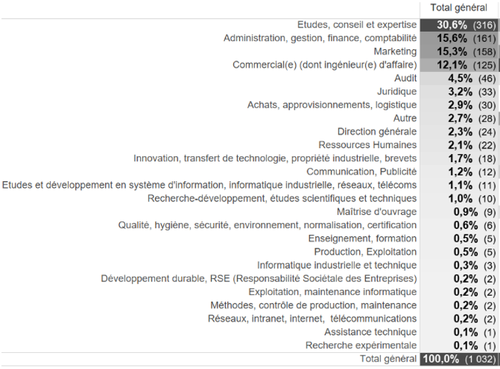
Secteurs d’insertion
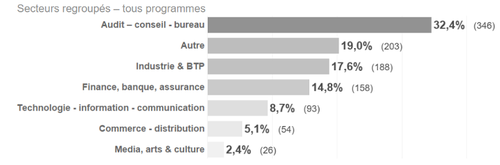
Nous identifions plusieurs façons d‘être en phase avec les enjeux de la transition écologique :
- Travailler directement dans le secteur et/ou occuper des fonctions sur le thème de la transition énergétique (cas particulier : entreprendre dans ce secteur)
- Contribuer indirectement en tant que jeune diplômé emlyon et manager responsable ayant été sensibilisé aux problématiques de la transition écologique
Pour le premier point, les enquêtes d’insertion menées conjointement avec la CGE ne nous permettent pas encore de mesurer l’impact direct et précis de nos jeunes diplômés dans ces secteurs/ fonctions.
Parmi les entreprises créées par nos jeunes diplômés, nous pouvons citer l’exemple des Petites Françaises qui proposent des tasses comestibles qui peuvent être dégustées après chaque usage pour limiter au maximum les déchets !
Quelle place donnez-vous aux entreprises engagées dans la transition écologique et dans l'Économie Sociale et Solidaire lors de vos forums d'entreprises, interventions d'Alumni, ou dans les projets, études de cas des étudiants ?
Forum IMPACT
Depuis 2019, chaque année, le Forum « IMPACT - IMPROVE AND ACT » est organisé par le Noise emlyon en collaboration avec le Career Center de l’école. Ce forum est une journée dédiée aux opportunités de carrières dans l’univers de l’Entrepreneuriat social et environnemental. L’Économie Sociale et Solidaire est en pleine croissance et représente aujourd'hui plus de deux millions de salariés : faire sa carrière dans ce secteur, c'est possible, et pas seulement dans des associations ! On peut travailler dans l'économie sociale et solidaire au sein d'un groupe multinational, comme d'une start-up ou d'une association, et ce en France ou à l'autre bout du monde.
Au cours de cette journée, des structures viennent sur le campus d'emlyon afin de partager leurs expériences et leur vision de l'innovation sociale. En outre, des tables rondes ont été organisées afin que les étudiants puissent dialoguer de façon plus informelle avec des acteurs de l'Économie Sociale et Solidaire. La version 2020 a eu lieu en format digital avec la venue de plusieurs entreprises à impact positif qui ont pu échanger avec les étudiants d'emlyon business school à travers 3 temps forts : table ronde, stand virtuel et entretiens.
Plusieurs autres opportunités ou formats sont favorables à ce type de sensibilisation étudiante.
Deux évènements sur cette thématique sont inscrits à l’agenda de nos étudiants (Vocation Day Impact et Vocation Day Transition Energétique).
Forum IMPACT
Depuis 2019, chaque année, le Forum « IMPACT - IMPROVE AND ACT » est organisé par le Noise emlyon en collaboration avec le Career Center de l’école. Ce forum est une journée dédiée aux opportunités de carrières dans l’univers de l’Entrepreneuriat social et environnemental. L’Économie Sociale et Solidaire est en pleine croissance et représente aujourd'hui plus de deux millions de salariés : faire sa carrière dans ce secteur, c'est possible, et pas seulement dans des associations ! On peut travailler dans l'économie sociale et solidaire au sein d'un groupe multinational, comme d'une start-up ou d'une association, et ce en France ou à l'autre bout du monde.
Au cours de cette journée, des structures viennent sur le campus d'emlyon afin de partager leurs expériences et leur vision de l'innovation sociale. En outre, des tables rondes ont été organisées afin que les étudiants puissent dialoguer de façon plus informelle avec des acteurs de l'Économie Sociale et Solidaire. La version 2020 a eu lieu en format digital avec la venue de plusieurs entreprises à impact positif qui ont pu échanger avec les étudiants d'emlyon business school à travers 3 temps forts : table ronde, stand virtuel et entretiens.
Plusieurs autres opportunités ou formats sont favorables à ce type de sensibilisation étudiante.
Deux évènements sur cette thématique sont inscrits à l’agenda de nos étudiants (Vocation Day Impact et Vocation Day Transition Energétique).
Un Vocation Day (https://em-lyon.com/entreprises/employabilite/evenements-thematiques-en-ligne/vocation-days) s'articule autour de trois temps forts :
- Le cœur d'un Vocation Day est représenté par les tables rondes de témoignage métier
- Des mini-sessions RH (optionnelles) peuvent être mises en place pour venir échanger avec les étudiants
- La possibilité de rencontrer les étudiants de manière individuelle, après les tables rondes et les échanges RH.
Avez-vous identifié les principaux impacts des métiers de vos diplômés sur le climat et la biodiversité ? Si oui, quels sont-ils ? Vos formations présentent-t-elles des pratiques professionnelles et personnelles permettant d'identifier et de réduire ces impacts ? Concrètement, lesquelles ?
emlyon inclut la notion d'engagement social et environnemental dans tous ses programmes pour renforcer la formation des étudiants et étudiantes aux enjeux de la conversion écologique, de la soutenabilité sociale et de l'éthique. Avec l’objectif de "former des leaders responsables"
- Le référentiel de compétences de nos formations a été revu sur la base des 17 objectifs de développement durable de l'ONU pour toute les formations et création du label « SDGs Inside »
- Des actions dédiées et spécifiques sont organisées au sein de plusieurs programmes, par exemple : Cours « Agir pour le climat » obligatoire pour le PGE et bientôt le Global BBA / Fresque pour le Climat…
- emlyon s’engage dans la création de programmes spécifiques MS et MSc In dans ce domaine
Programme d’Engagement Responsable
L’Ecole a créé depuis 2016 le parcours d’Engagement Responsable au sein du Programme Grande Ecole. Cette initiative vise à sensibiliser les étudiantes et étudiants aux problématiques sociales et environnementales pour en faire des acteurs conscients des enjeux de demain, prêts à s’investir et à défendre leurs valeurs pour le bien commun. Les étudiantes et étudiants créent, co-créent, participent à des projets, et développent leur potentiel à innover. Ce parcours est très original voire unique dans notre environnement car il s’agit d’un requis au diplôme. Dans le cadre de cet engagement, les étudiants doivent réaliser au moins 80% d’actions de terrain auprès de leur public bénéficiaire.
Du fait de la crise sanitaire, durant les deux dernières années académiques, la majorité des engagements ont été à visée sociale. L’équipe d’Engagement Responsable travaille en outre, tout au long de l’année, au développement de nouveaux partenariats avec des associations. L’objectif pour l’année à venir est de développer de nouveaux partenariats à visée environnementale.
Pensez-vous que la demande sur le marché du travail pour les métiers de vos diplômés est ou sera menée à évoluer dans le cadre d'une transition écologique ? Si oui, comment et pourquoi ?
Effectivement, le marché du travail est en pleine mutation et en éveil sur ces notions de transition énergétique et d’économie sociale et solidaire. La demande sera forcément croissante, et ce du fait de plusieurs facteurs :
- De plus en plus d’entreprises sont en demande sur ces métiers ;
- Les entreprises auront besoin et verront comme un atout d’embaucher des leaders responsables ;
- Les souhaits des étudiants/ jeunes diplômés eux-mêmes qui vont faire évoluer les pratiques.
L’aspect légal/ juridique via les contraintes et obligations fixées par les Etats peut venir impacter le marché du travail.
Les enjeux écologiques et sociaux sont ils au cœur des stratégies de recherche de votre établissement? Comment la stratégie de recherche favorise-t-elle spécifiquement la recherche transdisciplinaire et interdisciplinaire en lien avec les enjeux de transition écologique ?
Nos 8 centres de recherche font le lien entre la recherche et la pratique dans des champs thématiques et stratégiques DD&RS afin d'adresser et anticiper les défis et les changements dans notre économie et société.
Le manuel de la faculté identifie et formalise les impacts DD&RS dans la conduite de recherche de nos professeurs qui doivent de fait répondre à ces exigences :
- environnementales :
- sociales & économiques :
- responsabilité de soutenir le développement économique et social grâce à la production et la mise à disposition de nouveaux savoirs et de nouvelles pratiques ;
- engagement dans la production de Contributions Intellectuelles qui soient accessibles et qui puissent être partagées ;
- les professeurs peuvent bénéficier d’un sabbatique académique d’un semestre ou d’une année académique. Le but est de permettre aux bénéficiaires de maintenir et/ou développer leurs compétences tant en enseignement qu’en recherche et de permettre des réalisations qui exigent une disponibilité particulière ;
- accompagnement de la globalisation d’emlyon en développant la capacité des professeurs à travailler dans des environnements culturels différents, et, en les aidant à développer des contenus pertinents pour préparer les participants à œuvrer dans différentes parties du monde ;
- respect des règles de déontologie professionnelle.
Votre établissement soutient-il de manière spécifique la recherche (thèses, postdoc, travaux d'enseignants-chercheurs) en lien direct avec les enjeux de transition écologique, et les chercheurs qui s'engagent dans cette voie ? Quelle est la proportion du budget recherche allouée à ces travaux ?
Bien que ce sujet soit porté et adressé par de nombreux travaux de recherche, la Direction de la recherche n’a pas aujourd’hui d’ambition spécifiquement définie sur ces sujets. Le principe de liberté académique prévaut, et les chercheurs ont donc la liberté de choisir eux-mêmes leurs thématiques de recherche. Ainsi, la recherche au niveau doctoral couvre en partie des enjeux de transition écologique mais les budgets qui y sont alloués ne sont, à ce stade, pas encore fléchés. Dans les programmes PGE, MBA et BBA, l’école encourage fortement les activités de recherche (projet RECAPSS) et un nombre significatif d’autres projets en cours de scolarité ou en fin d’études portent notamment sur les enjeux de la transition écologique.
Existe-t-il des chaires ou des centres de recherche sur le sujet de la transition écologique au sein de votre établissement ? Si oui, quels sont leurs axes de travail ? Combien de professeurs intègrent-ils ?
Les huit centres de recherche emlyon business school font le lien entre la recherche et la pratique dans des champs thématiques et stratégiques DD&RS afin d'adresser et anticiper les défis et les changements dans notre économie et société :
- Aim research center on artificial intelligence in value creation : ce centre de recherche explore trois dimensions de la création de valeur (l'IA dans la valeur commerciale, l'IA dans la valeur éthique et l'IA dans la valeur sociétale).
- Centre de recherche pour le travail, la technologie et l'organisation : leur recherche se concentre sur le rôle de l'expertise et des professions dans le façonnement des changements technologiques, organisationnels et institutionnels et, réciproquement, sur la façon dont ces changements remodèlent l'expertise, les professions et le travail.
- L'institut français de gouvernement des entreprises (I.F.G.E.) : fondé sur les travaux engagés à emlyon depuis 1996, l'IFGE accumule du savoir et de l’expérience pour les mettre à disposition des acteurs du gouvernement des entreprises. L’IFGE, participe aux grands débats sociaux et politiques qui permettent de faire évoluer la gouvernance de l’entreprise grâce à un réseau de partenaires (entreprises, syndicats professionnels et syndicats de salariés).
- Le centre de recherches OCE (organizations, critical & ethnographic perspectives) : le centre OCE a été créé en 2004 avec l’intime conviction que les recherches portant sur le travail, les organisations et le management bénéficieraient grandement de perspectives critiques et politiques, selon lesquelles l’appréhension des dynamiques sociales organisationnelles et institutionnelles ne peuvent faire l’économie d’une compréhension fine des expériences individuelles et ordinaires au travail.
- STORM (research center in strategy & organization) : STORM est le centre de recherche d'emlyon business school, lancé en septembre 2016, qui traite de la stratégie et de l'organisation.
- Lifestyle research centre : l'objectif principal de leur recherche est d'examiner les « ruptures » et les changements en cours dans les phénomènes de style de vie qui ont un impact sur la formation et l'évolution du marché ainsi que sur l'image de marque.
QUANT : l'équipe de recherche effectue des recherches fondamentales et appliquées pour résoudre des problèmes complexes survenant dans les systèmes décisionnels. L'accent est mis sur les approches d'intelligence computationnelle et les méthodologies d'optimisation adaptées à des applications pratiques spécifiques telles que la logistique / transport, le service client, la planification de la main-d'œuvre ou la gestion du rendement / des revenus.
Emlyon business school a défini dans sa stratégie Confluences 2025 la création de 3 nouveaux instituts qui intègrent des dimensions significatives en termes de RSE regroupant formations, recherche, chaires et partenariats socio-économiques : Ethno-Institut, Institut d'Intelligence Artificielle et de Management, et Institut d'Innovation Sociale. Ces trois nouveaux instituts - regroupant formations, recherche, chaires et partenariats socio-économiques – seront également créés pour stimuler la formation par l’expérience et la recherche d’excellence sur des thématiques transversales à l’école.
Les chercheurs sont-ils amenés à réfléchir à l'impact de leurs activités (pratiques et finalités) de recherche ? Si oui, comment ?
L’impact de la recherche est un axe important, puisqu’il fait partie des normes de qualité AACSB, EQUIS et AMBA auxquelles nous nous soumettons volontairement et pour lesquelles nous sommes accrédités depuis de nombreuses années. L’impact est vu, à la fois sous l’angle académique (publications, citations et notoriété), et sous l’angle professionnel (vulgarisation de la recherche, travaux de recherche menés conjointement avec des entreprises partenaires). Nous sommes également en cours de renouvellement du label BSIS (business school impact system), délivré par la FNEGE et EFMD.
Existe-t-il sur le campus des associations étudiantes dont l’activité est centrée sur l’action en faveur de la transition écologique ? Quelles sont-elles ?
Oui, l’établissement soutient et encourage directement et les étudiantes et étudiants et associations étudiantes engagés dans des actions de DD&RS. Le conseil de corporation accompagne les élèves dans la vie associative et fait le lien avec la Direction de l'école.
Parmi les associations d’emlyon business school, on compte :
- 8 associations avec des missions DD&RS : Solidari’terre, Cheer-Up, NOISE, CasaBlanca Help'em, em'anity, Human, Astuce
2 collectifs DD&RS : Olympe, Em'brace
Quelles sont les thématiques abordées par ces associations (alimentation durable, réduction des déchets, sensibilisation…) ? Quelles actions entreprennent-elles ? Quelle est leur échelle d’impact (l’ensemble ou une certaine catégorie d’étudiants, les personnels de l’établissement, échelle plus large que l’établissement) ? Ces associations travaillent-elles par elles-mêmes sur le campus ou agissent-elles en partenariat avec l’administration de l’établissement (et si oui, à quel niveau) ?
- Actions de nos associations étudiantes
Noise emlyon
NOISE signifie Nouvel Observatoire de l'Innovation Sociale et Environnementale. Créé en 2010 à l'ESCP Europe, le NOISE représente aujourd'hui une communauté de plus de 1000 « Noiseurs » provenant de 10 Grandes Ecoles françaises. Créée en 2009 sous le nom d’EMicrocrédit, l'association d'innovation sociale et environnementale de l'emlyon business school rejoint le réseau du NOISE en 2015 et devient le NOISE emlyon.
Grands événements :
- Sensibilisation : MKS (Make Sense Room), Earth Sound Festival (avec Solidari’Terre), SEDD (Semaine étudiante du développement durable) avec le REFEDD, ventes de paniers de fruits et légumes, ventes de Box 0 déchet, corner de l’Innovation Sociale (Impact)
- Accompagnement : MiMi (Missions de Microfinance), The Rise (concours inter-écoles de microcrédits), ecofest (label d’accompagnement), ekko (missions auprès d’entrepreneurs sociaux de la région lyonnaise avec la Fondation Deloitte), ADIE (cours d’entrepreneuriat)
- Propulsion : SIWE (Social Impact Week-end avec Genius), SBC (Social Business Challenge), NHU (Noisy Hold’Up)
Cheer'Up
Cheer Up ! emlyon est une association étudiante accompagnant des jeunes entre 15 et 25 ans, atteints de cancer, dans la réalisation de projets personnels. Chaque semaine, les bénévoles de l’association vont rendre visite aux malades au Centre Léon Bérard de Lyon. Cette association a la particularité d’instaurer une relation unique de jeune à jeune avec le/la patient.e, trop souvent isolé.e durant les périodes de traitement.
Les bénévoles proposent d’accompagner les jeunes dans la réalisation d’un projet personnel, avec la conviction que leur offrir l’opportunité de se battre pour leur projet, c’est leur donner les moyens de se battre contre le cancer ! Ces projets peuvent prendre des formes diverses : séjour au ski, week-end Thalasso, visite d’une ville, accompagnement dans un projet professionnel ... Cheer Up ! s’adapte aux envies de chacun, au gré des rencontres. Depuis 2019, Cheer Up ! emlyon est en partenariat avec le FC Lyon. Joueurs de l’équipe U17 et bénévoles de l’association vont rendre visite aux jeunes conjointement, et leurs proposent d’assister à des matchs de l’OL en leur compagnie.
Grands événements
- Cupid’Up : vente de roses à l’occasion de la Saint-Valentin
- Semaine Contre le Cancer : sensibiliser les étudiantes et étudiants à la lutte contre le cancer et à l’action de Cheer Up ! dans les hôpitaux Lyonnais.
- HoliUp! : color Run organisée par CheerUp EmLyon afin de récolter des fonds pour les enfants malades du centre Léon Bérard
- Course Contre le Cancer : ouverte à toutes les lyonnaises et lyonnais, la course repose sur un principe simple : grâce aux partenaires financiers de l’événement, chaque tour couru rapporte un euro à l’association !
- Octobre Rose et Movember : campagnes nationales de sensibilisation afin de transmettre des informations importantes sur les cancers féminins et masculins.
Solidari'Terre
Solidari’Terre est une association caritative qui a vocation à apporter une aide concrète et durable aux communautés en difficulté. L’initiative est née en 1993 sous le nom “Centrale Sup de Co Humanitaire” et change de nom en 2001 pour devenir Solidari’Terre. Elle tire ses membres et ses forces de l’emlyon business school et de l’Ecole Centrale de Lyon. Deux campus, deux formations complémentaires, pour plus d’échanges, plus d’ouverture et plus de compétences. L’association mène des actions de solidarité internationale, des actions nationales, mais aussi des actions de proximité dans l’agglomération lyonnaise. Tous les membres de Solidari’Terre sont entièrement bénévole.
Grands événements :
- Les missions de solidarité internationales : organisation de missions d'aide au développement à l'international, dans des domaines variés : construction, reboisement, accès à l'eau, sensibilisation à l'hygiène, éducation... Développées main dans la main avec les communautés locales, ces projets sont le fruit de partenariats de long terme, noués par Solidari'terre avec des associations de confiance. Les équipes de volontaires organise une levée de fonds avant leur départ. La totalité des fonds récoltés est réinvestie directement sur place.
- Les missions solidaires de proximité :
- Les camions du cœur : distribution de repas chauds aux sans-abris à Villeurbanne aux côtés de l’association Les Restos du Cœur.
- Singa : sensibilisation et actions pour l’insertion des réfugiés.
- Tutorat en prison : des cours de renforcement de français, d'anglais et de CAP vente sont dispensés par les étudiants d'emlyon business school à la maison d'arrêt de Corbas pour les détenues, afin de leur permettre de se réinsérer le mieux possible dans la vie active.
- ABS : il travaille avec des associations en recherche d'accompagnement pour surmonter leurs challenges (marketing, communication, finance, ressources humaines)
- Soutien scolaire à l'hôpital de Bron : soutien scolaire pour des enfants qui font face à des fortes difficultés scolaires à l'école
- Les campagnes de sensibilisation sur les campus :
- Don du sang : organisation de 2 collectes de sang par an sur le campus en partenariat avec l’Établissement Français du Sang.
- Semaine Sidaction : une semaine consacrée à la sensibilisation des étudiantes et étudiants aux risques et à la nécessité de la prévention de la maladie du SIDA.
- Téléthon : semaine composée d’une exposition photo, d’une scène solidaire et d’une journée sportive en collaboration avec plusieurs associations d'emlyon. Deux objectifs : récolter le maximum de fonds pour l’AFM Téléthon et sensibiliser les étudiantes et étudiants au handicap et aux maladies rares.
- Les événements de sensibilisation à Lyon :
- Earth Sound Festival : un festival d’initiatives solidaires en coopération avec le NOISE composé d’une journée consacrée à des associations et figures lyonnaises prônant le développement durable et d’un festival de musique électronique le soir.
- Soirée de bienfaisance : la Soirée de Bienfaisance est une soirée qui réunit des étudiantes et étudiants d'emlyon, des professionnels du bassin économique lyonnais mais aussi des membres de l’administration de l’école. Au programme de la soirée : cocktail et Vernissage des photos prises pendant nos missions à l’international, dîner prestige, vente aux enchères et soirée dansante afin de récolter des fonds pour nos associations partenaires.
Astuce
Astuce est l'association étudiante qui se bat en faveur de l'égalité des chances. Elle organise du tutorat dans plusieurs collèges et lycées. Le deuxième volet proposé est celui des jeux de société, davantage destiné aux étudiantes et étudiants du campus.
Grands événements :
- En faveur de l’égalité des chances :
- La semaine de l'égalité des chances, le forum de l'orientation réunit des professionnel.les et des étudiant.e.s venant d’horizons très variés, dans le but de permettre aux lycéen.ne.s tutoré.e.s d’échanger avec elles et eux, avant de saisir leurs vœux sur ParcourSup.
- Le GOTR : Le Game Of T’Rhône est un tournoi sportif qui donne l’occasion aux tuteur.rice.s et tutoré.e.s d’apprendre à se connaître en dehors des salles de cours. Depuis 2014, durant une après-midi du mois de novembre, les bénéficiaires s’essaient à des sports plus originaux les uns que les autres et s’affrontent en équipe au cours de matchs très disputés mais toujours fair-play.
- Les cinés débats : Dans une volonté de promouvoir encore davantage l’accès des lycéennes et lycéens à la culture et de favoriser leur ouverture sur le monde qui les entoure, le mandat 2018 d’ASTUCE a mis en place un nouveau projet : les ciné-débats.
- A destination des emliens : les Jeux Interdits (soirées jeux de société)
EM'Anity
Em'anity, fusion des mots "emlyon" et "humanité", est une association caritative active depuis plusieurs années au sein d'emlyon business school sur le campus de Paris.
Les objectifs de cette association sont évidemment caritatifs, mais aussi liés à la lutte pour la défense de l'environnement, des droits des femmes, de la reconnaissance des minorités, de la protection des animaux, de la protection des enfants malades ainsi que le soutien aux personnes handicapées. Ainsi, em'anity a pour but d'œuvrer pour un monde meilleur par le biais de ses participantes et participants et de leurs idées et convictions.
Grands événements :
- Participation à la collecte nationale des Restos du Cœur (février/mars)
- Vente de chocolats (à l'occasion de Pâques) au sein du campus de Paris pour pouvoir faire des dons à une association qui vient en aide aux autistes (avril).
- Conférence avec un(e) rescapé(e) de l'holocauste afin de commémorer l'armistice de la seconde guerre mondiale (mai).
- Course caritative en partenariat avec le BDS
- Semaines thématiques : Semaine de l'entrepreneuriat féminin (mars) et Semaine de l'économie sociale et solidaire à l'école (mars).
Human
C’est l’association étudiante humanitaire et solidaire du programme Global BBA d'emlyon business school à Saint-Étienne. Elle est composée de 8 étudiantes et étudiants qui ont pour objectif de contribuer à l'aspect humanitaire au sein de l'école mais également à créer du lien entre les étudiants et le staff.
Grands événements :
- Saint-Valentin
- Journée de la femme
- Journée de l'homme
- Don du sang
Echelle d’impact et partenariat avec l’administration de l’établissement :
Globalement, les initiatives portées par ces associations étudiantes ont pour objectif premier de toucher les étudiants d’emlyon business school ainsi que le réseau d’alumni et le staff. En outre, certaines associations du PGE intègrent plus généralement l’écosystème lyonnais dans leur scope (Astuce, Cheer Up, Noise), voire un périmètre international dans le cadre des missions humanitaires et des missions de microfinance de Solidari’terre et du Noise.
Les enjeux RSE devenant de plus en plus importants, un responsable RSE est nommé dans chacune des 46 associations étudiantes et chacune d’entres elles s’engagent en faveur de la transition écologique (tri, ramassage et recyclage des déchets sur les événements, passage à l'écocup, achats de produits alimentaires issus de circuits-courts, réduction de l’utilisation de papiers de façon importante (ex : Petit paumé), mise en commun de matériel : vaisselle réutilisable, etc., labellisation de leurs événements par des labels RSE / éco-responsables, sociaux et ou environnementaux par l'association NOISE).
La communication interne met des outils à disposition des associations afin de donner plus de visibilité aux événements étudiants. La Direction RSE soutient les projets RSE des associations étudiantes ; elle propose à la fois un soutien financier et organisationnel pour l’organisation des événements RSE incontournables. Parmi les événements DD&RS récurrents , on compte la Semaine Etudiante du Développement Durable (3e édition), Women’s Right Week (2e édition), le Social Impact Week-End, la semaine de la vigilance, la Semaine du Sidaction, la Journée de la mobilité, la Journée de la diversité culturelle, The Rise (collecte de prêts solidaires), la Semaine du handicap etc.
Comment valorisez-vous l'engagement citoyen et associatif de vos étudiants ?
Les initiatives étudiantes liées aux thématiques DD&RS sont reconnues par des ECTS (Xtour, TUP) mais aussi soutenues d’un point de vue budgétaire : plus de 30 000 euros de budget de la direction RSE dédiés au soutien des associations étudiantes DD&RS.
En outre, le parcours d’Engagement Responsable au sein du Programme Grande Ecole vise à sensibiliser les étudiantes et étudiants aux problématiques sociales et environnementales pour en faire des acteurs conscients des enjeux de demain, prêts à s’investir et à défendre leurs valeurs pour le bien commun. Ce programme prend la forme d’un processus d’apprentissage expérientiel progressif en trois phases :
- Une phase de découverte d’au moins six mois sur les « Objectifs de Développement Durable » (ODD) est demandée dès la première année.
- Ensuite, chacun est libre de poursuivre cet engagement par la création d’un projet à impact social ou environnemental (Maker’s Project) dans la poursuite de leur parcours.
- Le 3ème parcours concerne des étudiants qui vont professionnaliser leur démarche d’entrepreneuriat social à la fois par de nouveaux apprentissages, des cours d’approfondissement spécifiques à leur engagement pour une durée supérieure à 1 an. Certains créent leur propre structure ou s’investissent dans l’une des associations étudiantes de l’Ecole ou entités partenaires d’emlyon business school. Ils reçoivent alors un certificat d’entrepreneuriat social.
Comment se financent les associations étudiantes ? Quelle visibilité leur est accordée au sein de l'établissement ?
Les budgets associatifs, à Ecully, proviennent de deux sources différentes :
- Les subventions d’emlyon et du Conseil de Corporation, provenant des cotisations étudiantes ;
- Les partenaires privés comme publics.
Ces partenaires peuvent concerner des dons financiers ainsi que des dons en nature selon les besoins des associations.
En février 2021, un concours de pitch a été organisé en collaboration avec le réseau des diplômés emlyon alumni, la direction Communication / Marketing et le soutien du Conseil de Corporation des étudiants. Ce concours de pitch a pour vocation de mettre en lumière tous les projets associatifs qui incarnent les valeurs et le dynamisme de l’école, et de pouvoir attribuer des subventions financières pour les soutenir : cette année les projets dédiés à la RSE ont été mis en avant (projet à fort impact social, sociétal, environnemental). Un fonds RSE a été levé pour soutenir les projets RSE des associations et initiatives étudiantes.
Votre établissement évalue-t-il son impact environnemental à l'aide de méthodes quantitatives normalisées, comme l'Analyse du Cycle de Vie ou le bilan carbone ? À quelle fréquence ? Quels postes de dépense intègre-t-il (notamment, comprend-il les mobilités, c'est-à-dire les voyages en avion des étudiant.e.s, des professeur.e.s et des conférencier.e.s) ?
Pour le site principal à Ecully, un bilan GES partiel est réalisé par ENGIE. Pour le futur site de Gerland, une estimation des émissions de GES a été réalisée ainsi qu’une étude de réduction de l'impact carbone de la construction du site également. Enfin, pour l'ensemble des sites, un bilan carbone complet sera effectué avec la participation des étudiantes et étudiants dès la prochaine rentrée (entre septembre et décembre 2021).
En ce qui concerne les mobilités, emlyon business school tend à mettre en place une gestion des déplacements salariés et étudiants et une politique incitative de déplacements doux sur l'ensemble de ses campus France. Pour cela, le choix d'implantation des sites est étudié : les campus de Saint-Etienne et de Paris sont situés au cœur du réseau de transport de chacune des villes afin de rendre leur accès, notamment en transport en commun, facile. C'est également le cas du futur Hub Gerland qui se situera au cœur du réseau de Transport en Commun Lyonnais pour que les étudiants et les collaborateurs puissent s'y rendre plus facilement. En parallèle, l'école met en place une politique de mobilité en faveur des modes doux (parc vélos, plateforme de co-voiturage)
Comment votre établissement réduit-il au quotidien son empreinte écologique (végétalisation, incitations, économies d'énergies, alimentation responsable, réduction et tri des déchets …) ? Quels ont les résultats de ces actions ?
Emlyon business school porte une attention particulière à la gestion durable de tous ses campus. L’implantation multi-campus, multi-pays représente un défi pour la mise en place d’une gestion environnementale transversale à emlyon business school. Des actions sont menées par site afin de réduire notre empreinte écologique à différents niveaux.
Performance énergétique :
La performance énergétique est un enjeu majeur pour l'école. emlyon business school travaille avec l'opérateur ENGIE pour son campus principal d'Ecully ainsi que pour celui de Saint-Étienne ; et avec SODEXO pour son campus de Paris. Ces deux opérateurs intègrent dans leur cahier des charges des critères environnementaux, sociaux et de performance énergétique au regard des usages. Le classement du patrimoine sur les trois campus existant n'est pas pertinent du fait de l'âge des bâtiments. Pour autant, l’école veille à ce que chaque nouvelle opération de construction, de renouvellement ou de grands entretiens intègrent des critères durables. Le cahier des charges du nouveau bâtiment prend en compte les critères environnementaux, sociaux et de performance énergétique :
- Nouveau site optimisé et pensé pour s'inscrire dans la durabilité
- Excellence énergétique (multiples labels visés)
Politique d’achats responsables :
La politique d'achats intègre 30% de valeur RSE : informations demandées aux fournisseurs relatifs à leur engagements RSE, l’usage de produits ou fournitures éco responsables, entreprises régionales, fournisseurs ayant recours à du personnel handicapé ou en réinsertion, entreprises créées par les diplômés emlyon business school et agissant dans le domaine du développement durable.
Consommation d’eau :
Un reporting est assuré pour suivre les consommations d'eau sur l'ensemble de nos sites. Cela permet de mettre en place une stratégie de réduction et d'optimisation de la consommation d'eau. Qui plus est, une ronde sanitaire hebdomadaire est réalisée afin d’identifier et de supprimer toute dérive de consommation
Gestion des déchets :
Nos trois campus ont mis en place une politique de gestion des déchets fondée sur une politique d’apport volontaire et de valorisation. Ainsi, toutes les corbeilles individuelles présentes dans les bureaux de nos collaborateurs ont été supprimées. A la place, une multitude d'îlots de tri ont été installés. Ensuite, sur nos sites d'Ecully et de Saint-Etienne, la valorisation des déchets recyclés est assurée par notre prestataire Paprec. Les bio-déchets sont également triés dans les zones de préparation alimentaire. Pour réduire le gaspillage alimentaire, le programme Too Good To Go a également été mis en place dans les zones de restauration de notre site d'Ecully proposant, dès 17h, 50% de réduction sur les produits alimentaires périssables.
L'école est cliente et a incubé la start-up Cy-clope qui propose un système de récupération et valorisation des mégots de cigarettes. Le déploiement a d’abord été mené sur le campus d’Ecully pour ensuite être généralisé à tous nos campus français.
Préservation de la biodiversité :
Dans le cadre de la gestion de ses campus, et pour préserver la biodiversité, l’école engage des actions vertueuses pour l’entretien des espaces verts et des zones boisées. Cette politique est formalisée et l'école en suit la mise en œuvre. Le campus de Lyon-Ecully jouit d’un environnement privilégié à seulement 15 minutes du centre-ville. Nous bénéficions d’un environnement au cœur d’un domaine boisé de 8 hectares. Pour préserver la biodiversité, nous avons installé des ruches connectées. Pour l’entretien des espaces verts nous supprimons l’emploi de pesticides, préférant favoriser l’éco-pâturage par des moutons, nous réduisons le nombre de cycles de tonte des pelouses, dispositif complété par l’installation de nichoirs à mésanges, prédateurs naturels des insectes. Une politique de préservation des espaces verts via une gestion durable est en place et assurée par notre prestataire TERIDEAL (certifié AFAQ 26000 "Exemplaire" et éco-jardin).
Comment votre établissement interagit-il avec son territoire et s'intègre-t-il dans des politiques publiques locales à visée durable ?
L’école participe à des réseaux locaux, nationaux et internationaux :
- Locaux :
- Nationaux :
- Internationaux :
- Pacte mondial Global Compact
- EFMD
- AMBA
- AACSB
Votre établissement est-il labellisé DD&RS ? Si non, un travail est-il en cours pour obtenir le label, et à quel horizon ?
La labellisation DD&RS est en cours à emlyon business school. La candidature a été déposée en mai 2021, dans l’objectif d’une labellisation à la fin de l’année 2021. Nous travaillons sur le sujet de la certification B-Corp.
Quels blocages à la mise en place de dispositifs ou de mesures favorables à une transition écologique pouvez-vous identifier au sein de votre établissement (et à quel niveau) ?
Nous devons développer le nombre de compétences au sein de la faculté. Nous répondons à ce constat par une politique de recrutement adaptée et l’établissement d’un réseau d’intervenants externes qualifiés.
La structuration actuelle des programmes qui ne laisse pas toujours la place pour le développement de nouveau cours et/ou contenu orientés vers le développement durable. Pour cette raison, nous travaillons à une réforme des programmes PGE et BBA pour la rentrée 2022.
Êtes-vous au fait des différents mouvements étudiants et institutionnels portant sur la transition écologique tels que le Manifeste étudiant pour un Réveil Écologique, le REFEDD, le projet FORTES du Campus de la transition ou le groupe de travail du Ministère de l’Enseignement Supérieur, de la Recherche et de l’Innovation ? Quels mouvements connaissez-vous ?
emlyon business school participe aux comités de la Conférence des Grandes Ecoles.
La SEDD est organisée au niveau national par le Réseau Français des Etudiants pour le Développement Durable (REFEDD), dont le NOISE emlyon est membre. Ainsi, les actualités du REFEDD nous sont communiquées par cette association ou bien par des membres du REFEDD eux-mêmes lorsque nous organisons des réunions tous ensemble.
L’Ecole est également signataire du Manifeste pour un réveil écologique.
Pouvez-vous décrire l'organisation mise en place afin de répondre à ce questionnaire (personnes ou organes en charge, parties prenantes impliquées, etc.) ?
Les réponses à ce questionnaire ont été préparées par la Direction RSE d’emlyon business school avec les implications des représentants de :
- La direction Qualité
- La direction des programmes
- Les étudiants et les membres associatifs
- Le programme d’Engagement Responsable
- La Direction de l’immobilier
- La Direction Advancement and Alumni Relations
- La Faculté
- La Direction Communication, Marketing et Relations Entreprises
Avez-vous des messages pour d'autres acteurs, des commentaires, des choses à ajouter ?
Pas de réponses.

Dans quelle mesure votre établissement se donne-t-il pour objectif de former la communauté étudiante aux enjeux et aux métiers de la transition écologique ? Cet objectif est-il inscrit dans votre stratégie ?
L’ENA s’est engagée depuis plusieurs années dans l’enseignement des questions relatives aux enjeux environnementaux et à ceux de la transition écologique.
Cependant depuis cette année 2020, et dans le cadre de la refonte en profondeur de sa scolarité, l’école a entrepris d’organiser son enseignement autour de quatre grands axes thématiques :
- L’évolution démographie et les territoires ;
- La transition écologique au défi des contraintes économiques, financières et de l’enjeu de cohésion sociale ;
- Assurer la liberté et la protection des citoyens face à la diversification des menaces et des risques ;
- Vers des systèmes de gouvernance plus efficients.
La question écologique prend ainsi pleinement sa place dans la scolarité de l’ENA.
Dans quelle mesure des objectifs de transition écologique sont-ils inscrits dans le projet de transformation de votre établissement à court, à moyen, et/ou à long terme ? Notamment : une démarche d’auto-évaluation DD&RS (Plan Vert) a-t-elle été mise en place pour votre établissement ? (en vertu de l’article 55 de la loi Grenelle 1 du 3 août 2009, le Plan Vert doit obligatoirement être élaboré par tous les établissements d’enseignement supérieur).
L'ENA a procédé à une première autoévaluation dans ce domaine en 2019.
La planification du Plan Vert n'a pas encore été lancée à ce jour.
Comment sont construites les maquettes pédagogiques de votre établissement ? Les étudiants sont-ils associés à l’élaboration des programmes de formation ? Si oui, à quelles étapes et selon quelles modalités ? Si non, quelles propositions feriez-vous en la matière ?
Sous la responsabilité et selon les orientations du Directeur de la formation et de la recherche, la maquette de la formation est conçue par les cadres pédagogiques de l'ENA dans une logique collaborative. Il est d'abord tenu compte des différentes évaluations des enseignements des années précédentes (évaluation à chaud, évaluation post prise de poste etc.). L'Ecole entretient aussi un dialogue avec les futurs employeurs des élèves pour s'assurer de former ces derniers au plus près des besoins de leur administration de sortie. Un travail de prospection et d'ouverture aux enjeux économiques, sociaux, environnementaux, etc. permet à l'Ecole d'inscrire ses propositions de formations dans la réponse aux grands défis de moyen et long termes de l'action publique et de notre société. Enfin, un collège de coordonnateurs, hauts fonctionnaires et universitaires, spécialistes des matières enseignées par l'Ecole, apporte, en tant que de besoin, son expertise sur la formation.
Les élèves, particulièrement depuis cette année, sont partie prenante de leur maquette de formation. Des sessions de coconstruction et de recueil de leurs attentes sont organisées avec les équipes pédagogiques avant le début de leur scolarité et tout au long. Les élèves peuvent ainsi être amenés à concevoir des sessions de formation, comme cela a été le cas cette année sur le pacte la formation.
Les élèves, particulièrement depuis cette année, sont partie prenante de leur maquette de formation. Des sessions de co-construction et de recueil de leurs attentes sont organisées avec les équipes pédagogiques avant le début de leur scolarité et tout au long. Les élèves peuvent ainsi être amenés à concevoir des sessions de formation, comme cela a été le cas cette année sur le pacte vert européen.
Existe-t-il un poste permanent de chargé.e de mission DD&RS ou de transition écologique au sein de votre établissement ? Si oui, depuis combien de temps ? Quelles sont ses missions ? Est-ce un emploi équivalent temps plein ? Quel est son positionnement dans l’organigramme ?
Un tel poste existe à l’ENA depuis septembre 2019 au moment de sa réorganisation. Il s’agit d’un emploi permanent rattaché au Secrétariat général. Les questions de formation n’entrent pas dans son champ de compétence. Le contexte budgétaire difficile conduit à le supprimer dès 2020.
La sensibilisation et de la responsabilisation des personnels et étudiants sur ces enjeux sont-elles inscrites dans les missions du/de la chargé.e de mission DD&RS ? Dans quelle mesure la communauté étudiante est-elle associée à ce processus d’éco-responsabilisation ?
Les missions du chargé de mission DD&RS de l’ENA se limitent à un suivi des actions, essentiellement sur le plan environnemental et social et, dans une moindre mesure, à une sensibilisation des personnels.
S’ils sont volontaires et en dehors de leur temps de formation, les élèves sont également associés.
Quelles sont les principales sources externes de financement de votre établissement ? Selon quels critères votre établissement noue-t-il des partenariats financiers et non-financiers ? Ces critères prennent-ils en compte l’investissement dans la transition écologique de vos partenaires ?
La principale source de financement de l’ENA est la subvention pour charges de service public (75%).
Les autres sources de financement sont le produit de ventes de formations auprès d’autres opérateurs de l’Etat, de collectivités territoriales, auprès d’organismes publics ou de pays étrangers.
Une liste des organisations et entreprises actuellement partenaires de votre établissement est-lle disponible sur votre site Internet (public et privé) ?
Non, pas pour l'instant.
Y a-t-il dans vos enseignements obligatoires des modules concernant l’apprentissage des fondements de la crise écologique et de ses conséquences ? Si oui, en quelle année sont-ils dispensés et avec quel poids dans les crédits obtenus ?
Oui, à l’ENA plusieurs enseignements sont directement liés à la question de la crise écologique.
Dans le cadre de la formation initiale, ces enseignements interviennent en N+1, soit la seconde année qui correspond à la scolarité à Strasbourg, la première année étant consacrée aux stages.
Les élèves de l’ENA sont classés à partir de leurs résultats en stages et d’épreuves qu’ils passent à la fin de la scolarité. Ce n’est pas à proprement parler un système de crédits. En revanche, la totalité des enseignements et par conséquent les enjeux de la transition écologique, doit alimenter les différentes réflexions proposées dans les épreuves de classement.
La transition écologique fait-elle l’objet dans votre établissement de cursus spécialisés ? Si oui, quels sont-ils ?
L’ENA propose au sein du Cycle des hautes études européennes un module de trois jours dédiés aux thèmes connexes « Transition écologique, énergie et climat en Europe ».
Motivation et finalité de ce module :
Les questions environnementales en général et climatiques en particulier sont devenues l’une des grandes priorités de l’Union européenne. Considérant que la nécessité collective d’une « planète saine est notre plus grand défi et notre plus grande responsabilité », Mme Ursula Von der Leyen a ainsi proposé des objectifs plus ambitieux en matière d’émissions de gaz à effet de serre, avec une réduction de 50 à 55% d’ici 2030, et s’est engagée à présenter un projet de « Green Deal pour l’Europe » (Pacte vert), ainsi qu’une législation européenne sur le climat durant les 100 premiers jours de son mandat.
Indissociable de la lutte contre le changement climatique et des questions environnementales, la politique européenne de l’énergie est approfondie après une initiation aux enjeux énergétiques dans le monde.
Un « serious game » portant sur une directive européenne en matière environnementale est proposé aux auditeurs afin de leur permettre de mettre en oeuvre les connaissances acquises sur le système décisionnel de l’Union européenne, ainsi que dans le domaine de la transition écologique.
L’ensemble du livret pédagogique, c’est-à-dire la totalité des modules d’enseignement, intègre-t-il les enjeux de transition écologique actuel de manière cohérente et ambitieuse ? Comment faites-vous en sorte que la formation aux enjeux écologiques ne soit pas restreinte à des cours spécialisés ? Comment articulez-vous les formations pour favoriser la transversalité et le dialogue des formations face à cet enjeu ?
Oui. Comme indiqué ci-dessus, la question écologique constitue l'un des axes majeurs de l'offre de formation de l'ENA. Cela implique qu'il ne s'agit pas uniquement d'organiser des sessions spécifiques, mais aussi de faire en sorte que ces enjeux irriguent l'ensemble des enseignements dans une logique transversale.
Avez-vous mis en place une approche par compétences et si oui, avez-vous identifié les compétences utiles à la transition écologique acquises par vos diplômés au cours de leur parcours ? (ex: système de compétences DD&RS)
Oui, l’ENA déploie une approche par compétences autour de trois grandes familles de pratiques :
- Concevoir et mettre en oeuvre les politiques publiques ;
- Piloter les transformations de l’action publique ;
- Assurer les missions essentielles de l’Etat.
Comme pour les thématiques, les compétences s’inscrivent dans une logique transversale et leurs composantes essentielles (conseiller les autorités publiques, diagnostiquer un besoin de transformation, etc.) sont alimentées par des sessions traitant des thématiques et donc, pour ce qui la concerne, de la transition écologique.
De quelle façon les contenus des enseignements liés à la transition sont-ils abordés (détails des volets scientifiques, économiques, sociaux…) ?
L'ENA effectué le choix de traiter la transition écologique dans ses différentes dimensions : économique, sociétale, financière et sous l'angle de sa prise en compte dans les différentes politiques publiques.
L'objectif est de faire en sorte que cet enjeu soit étudié de manière transversale, amenant ainsi les élèves à prendre la mesure de toutes ses implications.
Comment ces enseignements sont-ils reçus par les élèves ?
Les élèves de l'ENA sont très mobilisés par l'enjeu de la transition écologique qu'ils perçoivent avec beaucoup d'intérêt. Au sein de la promotion en scolarité en 2020, la promotion Hannah Arendt 2019-2020, un groupe d'élèves s'est ainsi constitué pour animer davantage cette dimension dans les enseignements et engager une réflexion collective vis-à-vis des élèves, mais également de la direction en faveur du développement de gestes et d'actions en faveur de la transition écologique.
Quels modules parallèles ou activités pédagogiques sont organisés pour sensibiliser \es questions de transition écologique (séminaires de rentrée, interventions d'experts, journées édiées, gamification (escape game etc..)) ?
L'ensemble des techniques pédagogiques de l'ENA sont mises à contribution pour faire vivre les enjeux de la transition écologique : conférences d'expert, séminaire de négociation, recours à des outils d'enseignements à distance, étude de cas, serious game, etc.
Les enseignants de votre établissement sont-ils formés aux enjeux de la transition écologique ? Si oui, de quelle manière (cursus initial, formation continue, organisme dispensaire…) ? Si non, est-ce une évolution envisagée à court terme ? La connaissance des enjeux écologiques et l’interdisciplinarité sont-elles valorisées dans le recrutement du corps professoral ?
L’ENA ne dispose pas d’un corps professoral dédié. Tous les intervenants, non rattachés à l’Ecole, sont choisis selon leurs compétences et leur expertise dans un domaine donné. Ceux et celles qui interviennent lors des enseignements relatifs à la transition écologique sont par conséquent des spécialistes reconnus.
L’ENA s’évertue à faire en sorte que les élèves aient la plus grande diversité de points de vue possible sur l’ensemble des thématiques. Cela implique de diversifier le vivier des intervenants et d’encourager l’interdisciplinarité.
Quels sont les débouchés de vos formations ? Dans quelle mesure ces débouchés sont-ils en adéquation avec la transition écologique ?
Comme cela a déjà été énoncé plus haut, l’ENA entretient un dialogue avec les futurs employeurs des élèves pour s’assurer de former ces derniers au plus près des besoins de leurs administrations de sortie.
Enfin, un travail de prospection et d’ouverture aux enjeux économiques, sociaux, environnementaux, etc. permet à l’Ecole d’inscrire ses propositions de formations dans la réponse aux grands défis de moyens et long termes de l’action publique et de notre société.
Les élèves en formation initiale (issus des concours) suivent un cursus très riche, tant lors de leurs stages professionnels que lors de la phase d’enseignements. Les thématiques liées à la transition environnementale font partie des enseignements suivis, de manière transversale.
Le Mastère spécialisé ® prévention et gestion territoriales des risques (MPGTR) prend totalement en compte ces aspects environnementaux. L’ENA, en mettant en place cette formation diplômante de haut niveau, intègre donc complétement la dimension environnementale à ses objectifs andragogiques.
Quelle place donnez-vous aux entreprises engagées dans la transition écologique et dans l'Économie Sociale et Solidaire lors de vos forums d’entreprises, interventions d’Alumni, ou dans les projets, études de cas des étudiants ?
Il n'y pas de focus spécifique sur des entreprises engagées dans la transition écologique dans les enseignements de l'ENA. La question est traitée de manière plus large comme indiqué plus haut.
Avez-vous identifié les principaux impacts des métiers de vos diplômés sur le climat et la biodiversité ? Si oui, quels sont-ils ? Vos formations présentent-t-elles des pratiques professionnelles et personnelles permettant d'identifier et de réduire ces impacts ? Concrètement, lesquelles ?
Les élèves de l'ENA sont formés pour travailler dans une administration publique, qui doit elle- même identifier les impacts de son propre fonctionnement (modalités de travail, politique de déplacement, locaux, décisions prises, etc.) sur le climat et la biodiversité, puis contribuer à leur réduction.
Les choix faits par l'école concernant son fonctionnement, ainsi que ceux relatifs aux contenus des enseignements, montrent le niveau de conscience que l'ENA a développé et du haut niveau d'importance de cette prise de conscience pour les élèves, dans le cadre de l'exercice de leurs fonctions futures.
Pensez-vous que la demande sur le marché du travail pour les métiers de vos diplômés est ou sera amenée à évoluer dans le cadre d’une transition écologique ? Si oui, comment et pourquoi ?
Les élèves formés par l’ENA n’ont pas vocation première à travailler dans le secteur privé.
Pour autant, y compris au sein des administrations publiques, leurs futurs métiers sont amenés à évoluer, notamment pour intégrer les enjeux de la transition écologique.
Les enjeux écologiques et sociaux sont-ils au coeur des stratégies de recherche de votre établissement ? Comment la stratégie de recherche favorise-t-elle spécifiquement la recherche transdisciplinaire et interdisciplinaire en lien avec les enjeux de transition écologique ?
Non. Le cœur de métier de l'ENA et de ses équipes de recherche est la science administrative. La transition écologique constitue un réel apport transversal, mais pas un thème d'étude particulier.
Votre établissement soutient-il de manière spécifique la recherche (thèses, postdoc, travaux d’enseignants-chercheurs) en lien direct avec les enjeux de transition écologique, et les chercheurs qui s’engagent dans cette voie ? Quelle est la proportion du budget recherche allouée à ces travaux ?
Non, Cf. supra.
Existe-t-il des chaires ou des centres de recherche sur le sujet de la transition écologique au sein de votre établissement ? Si oui, quels sont leurs axes de travail ? Combien de professeurs intègrent-ils ?
Non, Cf. supra
Les chercheurs sont-ils amenés à réfléchir à l’impact de leurs activités (pratiques et finalités) de recherche ? Si oui, comment ?
Comme pour tout agent de l’ENA, l’attention de ses chercheurs est attirée sur sa propre responsabilité sociétale dans son exercice professionnel.
Existe-t-il sur le campus des associations étudiantes dont l’activité est centrée sur l’action en faveur de la transition écologique ? Quelles sont-elles ?
Depuis cette année et pour la première fois, un groupe d’élèves, dénommé « GREENA », s’est formé, sans pour autant se constituer en association.
Ce groupe qui représente environ un quart de la promotion de formation initiale 2019-2020 (Hannah Arendt), s’est muni d’un compte Twitter GREENA et d’un mail dédié : greena@ena.fr
Quelles sont les thématiques abordées par ces associations (alimentation durable, réduction des déchets, sensibilisation…) ? Quelles actions entreprennent-elles ? Quelle est leur échelle d’impact (l’ensemble ou une certaine catégorie d’étudiants, les personnels de l’établissement, échelle plus large que l’établissement) ? Ces associations travaillent-elles par elles-mêmes sur le campus ou agissent-elles en partenariat avec l’administration de l’établissement (et si oui, à quel niveau) ?
Les objectifs du groupe GREENA sont au nombre de trois :
- Tendre à un fonctionnement au quotidien plus durable de l’école ;
- Interagir avec la direction des enseignements et de la recherche sur les contenus des formations ;
- Contribuer à une meilleure prise de conscience de tous élèves autour des enjeux de développement durable.
Comment valorisez-vous l'engagement citoyen et associatif de vos étudiants ?
Il n’existe pas de valorisation explicite de l’engagement citoyen et associatif des élèves de l’ENA.
Pour autant, chaque élève français en formation initiale doit réaliser une mission d’intérêt général (MIG), prioritairement auprès de personnes en situation de vulnérabilité (insertion sociale et emploi, hébergement d’urgence et logement, aide aux victimes, aux personnes handicapées, accueil des étrangers, soutien scolaire, etc.), à raison de quelques heures par semaine pendant toute sa scolarité à Strasbourg.
De la même manière, les élèves du cycle long de perfectionnement des administrateurs civils, dit CSPA, réalisent un stage de 15 jours dans une structure sociale.
Dans les deux cas, l’objectif est de sensibiliser les hauts fonctionnaires de demain aux réalités du travail de terrain des professionnels et des bénévoles.
Comment se financent les associations étudiantes ? Quelle visibilité leur est accordée au sein de l’établissement ?
L'ENA verse de manière ponctuelle une aide financière au bureau des élèves pour l'organisation d'événements.
Votre établissement évalue-t-il son impact environnemental à l’aide de méthodes quantitatives normalisées, comme l’Analyse du Cycle de Vie ou le bilan carbone ? À quelle fréquence ? Quels postes de dépense intègre-t-il (notamment, comprend-il les mobilités, c’est-à-dire les voyages en avion des étudiant.e.s, des professeur.e.s et des conférencier.e.s) ?
L’ENA s’appuie sur les recommandations des politiques publiques en matière d’environnement. Elle a fait réaliser un bilan des émissions de gaz à effet de serre selon le décret du 11 juillet 2011. Une mise à jour est programmée pour connaitre les efforts récompensés par l’exécution des recommandations, principalement :
- éclairage et les fluides :
- Remplacement de deux groupes froids et ventilo-convecteurs à Paris qui fonctionnaient au R22 ;
- Remplacement des systèmes d’éclairage consommateurs d’énergie (halogènes, des spots basses tension, projecteurs muraux, etc.) par des lampes basses à consommations ;
- Optimisation de l’utilisation d’un logiciel de suivi des consommations énergétiques ;
- Régulation de la climatisation – freecooling ;
- Installation de détecteurs de présence dans les locaux peu fréquentés.
- achat de deux véhicules électriques.
Comment votre établissement réduit-il au quotidien son empreinte écologique (végétalisation, incitations, économies d’énergies, alimentation responsable, réduction et tri des déchets …) ? Quels sont les résultats de ces actions ?
Tous les marchés publics de l’ENA qui le permettent, intègrent des obligations de la part du titulaire de répondre à un engagement RSE. On peut citer :
- Entretien des espaces verts : récupération de l’eau de pluie pour l’alimentation de l’arrosage, tontes de gazon réduites, etc. ;
- Tri des déchets : en place depuis 2010 (papiers, cartons, bouteilles en verre, stylos, piles, ampoules, toner, etc.) ;
- Travaux de rénovation des menuiseries extérieures ;
- Suppression de tous les gobelets plastiques pour les remplacer par un « ECO CUP » individuel ;
- Campagne de communication pour une sensibilisation aux gestes éco-durables associant les agents et les élèves.
Comment votre établissement interagit-il avec son territoire et s’intègre-t-il dans des politiques publiques locales à visée durable ?
- Participation au partenariat TFAE 2020 (Tour de France Agir Ensemble) piloté par l’Université de Strasbourg et auquel participent d’autres grandes écoles de l’agglomération (ENGEES, INSA, ENSAS, etc.)
- Réponse positive en 2019 à la démarche RLV (revue locale volontaire) initiée par la Ville de Strasbourg autour des ODD.
Votre établissement est-il labellisé DD&RS ? Si non, un travail est-il en cours pour obtenir le label, et à quel horizon ?
Une première autoévaluation DD&RS a été réalisée en interne par l'ENA en 2019.
Quels blocages à la mise en place de dispositifs ou de mesures favorables à une transition écologique pouvez-vous identifier au sein de votre établissement (et à quel niveau) ?
La question budgétaire est actuellement prégnante à l’ENA.
Les réflexions en cours sur les évolutions souhaitables des formations de hauts fonctionnaires suite à la parution du Rapport Thiriez freinent aujourd’hui beaucoup de projets.
Êtes-vous au fait des différents mouvements étudiants et institutionnels portant sur la transition écologique tels que le Manifeste étudiant pour un Réveil Écologique, le REFEDD, le projet FORTES du Campus de la transition ou le groupe de travail du Ministère de l’Enseignement Supérieur, de la Recherche et de l’Innovation ? Quels mouvements connaissez-vous ?
Le Manifeste étudiant est connu au sein de l’ENA ;
- Le REFEDD est intervenu lors du Colloque R2D2 de la CGE en mai 2019 dans les locaux de l’ENA à Strasbourg et est devenu un interlocuteur de l’école ;
- Le projet FORTES de l’association « Campus de la transition » doit aboutir à un livre blanc sur l’enseignement de la transition écologique dans le cadre d’un partenariat avec le MESRI ; il a réuni pour la première fois 40 membres du projet en décembre 2019 ;
- Le groupe de travail sur la prise en compte des enjeux écologiques dans les formations du supérieur mis en place par le MESRI en janvier 2020 et présidé par Jean JOUZEL, membre du GIEC, doit rendre un rapport avant l’été.
Pouvez-vous décrire l'organisation mise en place afin de répondre à ce questionnaire (personnes ou organes en charge, parties prenantes impliquées, etc.) ?
La sollicitation du chef de la Direction des enseignements et de la recherche de l'ENA a constitué la première démarche. Des compléments, sur les questions logistiques et administratives, ont été apportés par les services du Secrétariat général.
Avez-vous des messages pour d'autres acteurs, des commentaires, des choses à ajouter ?
Merci pour cette intéressante démarche.
Dans quelle mesure votre établissement se donne-t-il pour objectif de former la communauté étudiante aux enjeux et aux métiers de la transition écologique ? Cet objectif est-il inscrit dans votre stratégie ?
L'ENGEES est une école d'ingénieur en génie de l'eau et de l'environnement, dont le cœur d'enseignement est directement lié à l'objectif de développement durable N° 6 « Garantir l'accès de tous à l'eau et à l'assainissement et assurer une gestion durable des ressources en eau » fixé dans l'agenda 2030 de l'ONU. En cela, et dans la volonté d'inclure les enjeux de développement durable dans les enseignements pour l'ensemble des cycles de formation, l'ENGEES cherche à former ses étudiant·e·s en tant que futur·e·s acteur·rice·s de la transition écologique.
Mais elle englobe plus généralement un ensemble de formations (de L3 au doctorat), tournées vers les métiers verts sur les territoires (eau, environnement, énergies renouvelables, risques, etc.) L'ENGEES est depuis longtemps engagée dans une démarche DD&RS, et la formation est un des domaines dans lequel ont été prioritairement inscrites les préoccupations environnementales, et ce dès 2006, en intégrant des cours sur le concept du développement durable et des cours d'ingénieurs du DD adaptée à leur cœur de métier.
La stratégie DD&RS a été formalisée pour la première fois en 2012, avec l'adoption d'un Plan Vert, qui au travers de ses 9 défis, a permis de créer une dynamique opérationnelle pour l'ensemble des services, dont celui de la formation initiale et professionnelle.
Dans quelle mesure des objectifs de transition écologique sont-ils inscrits dans le projet de transformation de votre établissement à court, à moyen, et/ou à long terme ? Notamment : une démarche d’auto-évaluation DD&RS (Plan Vert) a-t-elle été mise en place pour votre établissement ? (en vertu de l’article 55 de la loi Grenelle 1 du 3 août 2009, le Plan Vert doit obligatoirement être élaboré par tous les établissements d’enseignement supérieur).
L'ENGEES a formalisé son Plan Vert en 2012, ce qui a permis de structurer la démarche DD&RS de l'école autour des 9 défis, déclinés en actions suivies et évaluées annuellement, et validées lors d'un comité de pilotage DD&RS.
Le renforcement et l'ancrage de la stratégie DD&RS a conduit l'école à la labellisation en 2016, figurant ainsi parmi les dix premiers établissements français labellisés.
Depuis 2016, une auto-évaluation a donc lieu sur la base du référentiel du label DD&RS, dont les 5 axes œuvrent tous en faveur de la transition écologique, au travers de la gouvernance, de la formation, de la recherche, de la gestion environnementale et de la politique sociale.
Afin de gagner en lisibilité, il a été décidé en 2020 de faire évoluer la stratégie DD&RS de l'école avec pour postulats de départ un découpage selon les 5 axes précités, une prise en compte des enjeux DD&RS liés à l'agenda 2030 de l'ONU et un ancrage formalisé du principe d'amélioration continue de nos pratiques.
Comment sont construites les maquettes pédagogiques de votre établissement ? Les étudiants sont-ils associés à l’élaboration des programmes de formation ? Si oui, à quelles étapes et selon quelles modalités ? Si non, quelles propositions feriez-vous en la matière ?
Les maquettes pédagogiques sont construites par les équipes pédagogiques et les enseignants de l'ENGEES en lien avec les attentes du monde professionnel.
Elles sont ensuite soumises aux différents conseils de l'école dans lesquels siègent des professionnels mais aussi des élèves.
Enfin, chaque semestre, les enseignements sont évalués par les élèves et les modifications éventuelles issues de ces évaluations sont soumises au conseil de l'enseignement et de la vie étudiante et suivies lors des années suivantes par la direction des études.
Existe-t-il un poste permanent de chargé de mission DD&RS ou de transition écologique au sein de votre établissement ? Si oui, depuis combien de temps ? Quelles sont ses missions ? Est-ce un emploi équivalent temps plein ? Quel est son positionnement dans l’organigramme ?
Depuis 2012, un chargé de mission DD&RS a été nommé de manière permanente, et depuis 2019, ce poste est exclusivement dédié à ses fonctions.
Le chargé de mission DD&RS, directement rattaché à la direction, a pour rôle d’animer la politique DD&RS de l’école, en lien avec les référents DD&RS des différents services, la communauté de travail et les étudiants, et des parties prenantes externes. Sa mission consiste aussi à faire évoluer la stratégie DD&RS en proposant en concertation avec les services les objectifs stratégiques et opérationnels à mettre en oeuvre pour progresser.
C’est également le chargé de mission DD&RS qui s’occupe du processus de labellisation.
De plus, un chargé de mission travaillant à l’appui aux dossiers stratégiques de l’École intervient dans le domaine du DD&RS au niveau du ‘contrat de site alsacien’. Ce contrat de site rassemble les 7 établissements de l’ESR de l’Alsace. Dans ce cadre, ce chargé de mission pilote une commission du Schéma directeur de la vie étudiante (SDVE-A) dédiée au DD&RS ; il a également en charge l’animation d’un comité de pilotage d’un schéma directeur DD&RS qui s’adresse quant à lui plutôt aux personnels. L’ensemble concerne environ 70 000 usagers.
La sensibilisation et de la responsabilisation des personnels et étudiants sur ces enjeux sont-elles inscrites dans les missions du/de la chargé.e de mission DD&RS ? Dans quelle mesure la communauté étudiante est-elle associée à ce processus d’éco-responsabilisation ?
Oui, la sensibilisation et la responsabilisation des personnels et des étudiants font parties intégrantes des axes de travail de la mission DD&RS.
Le personnel et les étudiants sont intégrés au processus de travail sur les actions DD&RS par leur participation aux différents groupes de travail DD&RS selon les thématiques de travail qui les concernent.
De plus, le personnel et les étudiants sont associés à l’instance de validation, dans la mesure où ils participent au comité de pilotage annuel DD&RS présidé par le directeur de l’école.
Les étudiants et le personnel sont impliqués dans les événements DD qui ont lieu au sein de notre école (challenge vélo, etc.)
Quelles sont les principales sources externes de financement de votre établissement ? Selon quels critères votre établissement noue-t-il des partenariats financiers et non-financiers ? Ces critères prennent-ils en compte l’investissement dans la transition écologique de vos partenaires ?
l'activité d'apprentissage 75% du budget de l'ENGEES est public. Le quart restant est constitué de ressources propres résultant principalement de (formation et collecte de taxe d'apprentissage), de formations professionnelles qualifiantes et diplômante et de programmes de recherche partenariaux en totalité dans le champ du développement durable (environnement, énergies renouvelables, risques, durabilité…).
L'ENGEES a une chaire d'entreprise avec le groupe SUEZ, spécialiste de l'eau et des déchets dont la stratégie est tournée vers l'économie circulaire et l'évolution de la ressource. Les autres partenariats de l'école sont avec des collectivités locales et institutions publiques et des entreprises privées investies dans le domaine de l'eau et de l'environnement, au cœur de la transition écologique.
Une liste des organisations et entreprises actuellement partenaires de votre établissement est-elle disponible sur votre site Internet (public et privé) ?
Oui, dans la rubrique « entreprises » de notre site Internet figure une page relative aux partenariats avec les entreprises et organismes publics de l'ENGEES.
Un service, dédié aux entreprises et collectives, œuvre au sein de notre école pour les partenariats, les relations école-entreprise et l'insertion professionnelle des jeunes diplômés.
Y a-t-il dans vos enseignements obligatoires des modules concernant l’apprentissage des fondements de la crise écologique et de ses conséquences ? Si oui, en quelle année sont-ils dispensés et avec quel poids dans les crédits obtenus ?
Les élèves ingénieurs suivent au cours de leur formation :
- Un enseignement introductif aux concepts de développement durable ;
- Des activités pédagogiques sous forme de ‘Projets tutorés’ en groupe traitant d’un problème de développement durable sur un territoire, pour une partie des élèves ;
- Un enseignement sur les méthodes d’inventaires des gaz à effet de serre (Bilan carbone®) et empreinte écologique.
- Organisation d’un séminaire développement durable, dans lequel les étudiants sont acteurs. Ils travaillent pendant 4 mois en groupe sur une thématique qui touche au développement durable. Leur travail est présenté lors d’un workshop de restitution dans lequel participent des spécialistes dans le domaine ;
- Un enseignement autour de l’ingénierie sociale de l’environnement à travers des enseignements théoriques et des ateliers sur la conduite d’enquête ;
- Un enseignement autour des méthodes d’évaluation environnementale et l’ingénierie du développement durable : Analyse de cycle de vie, empreinte eau ;
- Un cycle de conférences sur le développement durable au sein d’un UE intitulé ENVIS (sciences sociales de l’environnement) ;
- Un enseignement sur l’éthique de l’ingénieur ;
- Des voies d’apprentissage spécialisées en 3ème année et fortement intriquées avec les problématiques de développement durable, notamment une intitulée ‘Hydrosystèmes’.
De plus, les élèves ont l’obligation d’intégrer un volet développement durable dans leur stage de 2ème année.
Une unité d’enseignement spécifique au développement durable, l’UE ENVIS, a été créée pour sensibiliser les étudiants ingénieurs aux dimensions sociale, économique et politique, sous-jacentes aux problématiques environnementales. Y sont proposés une appropriation des notions et des thématiques touchant au développement durable, ainsi que des outils et concepts leur permettant d’appréhender des situations socio-environnementales complexes. À l’issue de cet enseignement, les apprenants-ingénieurs seront capables d’appréhender les enjeux relatifs aux situations de gestion de l’environnement, aux innovations sociotechniques, et aux controverses pouvant survenir dans ce type de situations, aux changements de comportements.
La transition écologique fait-elle l’objet dans votre établissement de cursus spécialisés ? Si oui, quels sont-ils ?
La mise à jour des enseignements a été l’une des premières actions concrètes de mise en oeuvre d’une stratégie de développement durable. L’ENGEES a été parmi les premiers établissements d’enseignement supérieur à intégrer cette dimension dans la formation de ces étudiants.
Elle a permis d’intégrer une dimension développement durable forte sous forme de travaux pédagogiques variés et avec des compétences graduelles allant de la sensibilisation à des enseignements plus techniques qui traitent de l’ingénierie du développement durable et les méthodes d’évaluation existantes. Cette mise à jour a été progressive et concerne aujourd’hui l’ensemble des formations initiales dispensées à l’ENGEES ainsi que les mastères spécialisés (MS GEDE : gestion, traitement et valorisation des déchets ; EPA : Eau potable et assainissement ; GEMEAU : Gestion des eaux usées et pluviales ; GEBAC : gestion des bassins d’alimentation de captage).
En formation d’ingénieur, des voies d’apprentissage sont proposées en 3ème année de formation initiale, qui renferment une forte dimension développement durable à savoir :
- Hydrosystèmes
- Traitement de l’eau
- Déchets
- Gestionnaire de bassins d’alimentation de captage
- Exploitation et travaux
- Hydraulique urbaine
Au-delà cela, nous identifions les actions concrètes réalisées suivantes :
- Enseignement introductif aux concepts de développement durable
- Activité pédagogique sous forme de projet tutoré en groupe traitant d’un problème de développement durable sur un territoire, pour une partie des élèves.
- Enseignement sur les méthodes d’inventaires des gaz à effet de serre (Bilan carbone®) et empreinte écologique®. ?
- Organisation d’un séminaire développement durable, dans lequel les étudiants sont acteurs. Ils travaillent pendant 4 mois en groupe sur une thématique qui touche au développement durable. Leur travail est présenté lors d’un workshop de restitution dans lequel participent des spécialistes dans le domaine
- Enseignement autour de l’ingénierie sociale de l’environnement à travers des enseignements théoriques et des ateliers sur la conduite d’enquête.
- Enseignement autour des méthodes d’évaluation environnementale et l’ingénierie du développement durable : Analyse de cycle de vie, empreinte eau.
- Obligation d’intégrer une analyse développement durable dans tous les rapports de stages ainsi que dans le rapport de fin d’études.
- Existence d’une unité d’enseignement spécifique au développement durable : l’UE ENVIS
- Cycle de conférences sur le développement durable au sein de l’UE Envis
- Enseignement sur l’éthique de l’ingénieur présent dès la première année
L’ensemble du livret pédagogique, c’est-à-dire la totalité des modules d’enseignement, intègre-t-il les enjeux de transition écologique actuel de manière cohérente et ambitieuse ? Comment faites-vous en sorte que la formation aux enjeux écologiques ne soit pas restreinte à des cours spécialisés ? Comment articulez-vous les formations pour favoriser la transversalité et le dialogue des formations face à cet enjeu ?
L’ENGEES est une école de référence au service des métiers de l'eau et de son environnement, et avant tout une école d’hydraulique appliquée à l’environnement qui a vocation à former des ingénieurs directement opérationnels dans les domaines :
L’ensemble des formations, détaillées dans le livret pédagogique, intègrent donc par nature les enjeux liés au développement durable, pour former des spécialistes :
- de l’équipement des collectivités (eau potable, assainissement, déchets)
- de l’aménagement durable du territoire
- de la gestion des risques environnementaux et sanitaires
- de la gestion des services publics.
Les formations aux enjeux écologiques ne sont donc pas uniquement restreintes aux unités d’enseignement dédiées, mais se retrouvent de manière transversale dans l’ensemble des unités d’enseignement.
À l’heure où les préoccupations environnementales deviennent un enjeu incontournable dans la gestion de nos collectivités, l’ENGEES apporte une réponse professionnelle adaptée aux besoins des entreprises et services qui s’occupent d’eau et d’environnement.
Toujours articulés autour du domaine d’expertise de l’école – l’eau et son environnement –, les cursus proposés sont multiples afin de répondre précisément aux aspirations et à la diversité des profils des étudiants, mais également aux besoins du marché et aux attentes des employeurs.
Forte de 50 années d’expérience, l’école est aujourd’hui une référence reconnue dans son domaine.
Avez-vous mis en place une approche par compétences et si oui, avez-vous identifié les compétences utiles à la transition écologique acquises par vos diplômés au cours de leur parcours ? (ex: système de compétences DD&RS)
A partir de 2014 a été mise en place une approche des formations par les compétences, parmi lesquelles le volet de compétences lié au DD&RS apparait très fortement, notamment dans la rubrique relative aux adaptations des étudiants aux exigences de la société.
L’ensemble des compétences acquises dans leur cursus, du fait même du domaine pour lesquels les élèves sont formés, leur permettront de devenir des acteurs de la transition écologique, en agissant dans le secteur de l’eau et de l’assainissement, et des déchets.
De quelle façon les contenus des enseignements liés à la transition sont-ils abordés (détails des volets scientifiques, économiques, sociaux…) ?
Dans le cursus d’ingénieur.e, cela se retrouve au travers des voies d’apprentissage proposées en 3ème année de formation initiale, qui renferment une forte dimension développement durable à savoir: hydrosystèmes, traitement de l’eau, déchets, gestion de bassins d’alimentation de captage, exploitation et travaux et hydraulique urbaine.
Dans les actions suivantes, ce sont les 3 volets du développement durable qui sont pris en compte:
- Enseignement introductif aux concepts de développement durable
- Activité pédagogique sous forme de projet tutoré en groupe traitant d’un problème de développement durable sur un territoire, pour une partie des élèves.
- Enseignement sur les méthodes d’inventaires des gaz à effet de serre (Bilan carbone®) et empreinte écologique® ?
- Organisation d’un séminaire développement durable, dans lequel les étudiants sont acteurs. Ils travaillent pendant 4 mois en groupe sur une thématique qui touche au développement durable. Leur travail est présenté lors d’un workshop de restitution dans lequel participent des spécialistes dans le domaine
- Enseignement autour de l’ingénierie sociale de l’environnement à travers des enseignements théoriques et des ateliers sur la conduite d’enquête.
- Enseignement autour des méthodes d’évaluation environnementale et l’ingénierie du développement durable : Analyse de cycle de vie, empreinte eau.
- Obligation d’intégrer une analyse développement durable dans certains rapports de stages.
- Existence d’une unité d’enseignement spécifique au développement durable : l’UE ENVIS
- Cycle de conférences sur le développement durable au sein de l’UE Envis
- Enseignement sur l’éthique de l’ingénieur présent dès la première année
Comment ces enseignements sont-ils reçus par les élèves ?
Nos élèves sont très demandeurs d'intégration du développement durable au sein des cours techniques. Une approche concrète de la mise en œuvre des concepts du développement durable au travers des enseignements techniques est très efficace.
Quels modules parallèles ou activités pédagogiques sont organisés pour sensibiliser / informer sur les questions de transition écologique (séminaires de rentrée, interventions d’experts, journées dédiées, gamification (escape game etc..)) ?
Il existe plusieurs autres actions de sensibilisation à la transition écologique, à commencer par une présentation à tous les élèves de première année de la démarche DD&RS de leur école lors de la rentrée, afin de les impliquer dès leur arrivée dans leur parcours à l’École.
De plus, sont organisés d’autres événements tels que des conférences sur le développement durable avec l’intervention de parties prenantes extérieures, des projections de films sur ces thématiques ou encore la participation active de 4 associations étudiantes pour animer ces questions auprès de l’ensemble de l’école (action sur le compostage, participation à des challenges DD, à des chantiers solidaires, à des festivals tel qu’ Alimenterre, etc.).
Une réflexion est actuellement en cours pour mettre un accent encore plus fort sur la transition écologique à la rentrée et pour organiser un temps dédié durant la semaine étudiante du développement durable.
Les enseignants de votre établissement sont-ils formés aux enjeux de la transition écologique ? Si oui, de quelle manière (cursus initial, formation continue, organisme dispensaire…) ? Si non, est-ce une évolution envisagée à court terme ? La connaissance des enjeux écologiques et l’interdisciplinarité sont-elles valorisées dans le recrutement du corps professoral ?
Les enseignants sont majoritairement issus des 4 UMR dont les spécialités sont en lien avec les enjeux écologiques de gestion de l’eau, de l’environnement, des risques etc.
Donc ils ont été formés dans leur cursus aux problématiques environnementales et aux enjeux du développement durable.
Quels sont les débouchés de vos formations ? Dans quelle mesure ces débouchés sont-ils en adéquation avec la transition écologique ?
Les formations débouchent sur des métiers dans les domaines de l’eau, de l’assainissement et de la gestion des déchets, qui sont des secteurs en lien direct avec les préoccupations environnementales. L’objet même de la formation est donc en cohérence avec les enjeux liés à la transition écologique.
Sa vocation est de former des ingénieurs directement opérationnels dans les domaines :
- de l’équipement des collectivités (eau potable, assainissement, déchets)
- de l’aménagement durable du territoire
- de la gestion des risques environnementaux et sanitaires
- de la gestion des services publics.
Les cursus proposés autour du domaine d’expertise de l’école – l’eau et son environnement – sont multiples afin de répondre précisément aux aspirations et à la diversité des profils des étudiants, mais également aux besoins du marché et aux attentes des employeurs.
Quelle place donnez-vous aux entreprises engagées dans la transition écologique et dans l'Économie Sociale et Solidaire lors de vos forums d’entreprises, interventions d’Alumni, ou dans les projets, études de cas des étudiants ?
La totalité de nos entreprises partenaires sont dans ce domaine de la transition écologique.
Avez-vous identifié les principaux impacts des métiers de vos diplômés sur le climat et la biodiversité ? Si oui, quels sont-ils ? Vos formations présentent-t-elles des pratiques professionnelles et personnelles permettant d'identifier et de réduire ces impacts ? Concrètement, lesquelles ?
Les élèves issus de l'ENGEES vont travailler dans le domaine de la gestion durable de la ressource « eau », de l'équipement des collectivités (eau potable, assainissement, déchets), de l'aménagement durable du territoire et de la gestion des risques environnementaux et sanitaires (analyse de l'impact des pollutions sur la ressource aquatique).
L'impact de leur métier sera donc positif puisqu'en lien avec la préservation et la gestion de l'eau, qui sera une problématique importante à l'aube des profonds changements climatiques à venir. Les étudiant.e.s sont d'ailleurs amenés à y réfléchir dans le cadre de leurs travaux.
Pensez-vous que la demande sur le marché du travail pour les métiers de vos diplômés est ou sera amenée à évoluer dans le cadre d’une transition écologique ? Si oui, comment et pourquoi ?
L’école est à l’écoute des besoins des employeurs dans son champ. Elle a ainsi mis en place ces dernières années des formations ou voies d’approfondissement supplémentaires dans les domaines suivants :
- Gestionnaires de la ressource en eau
- Ingénierie écologique des milieux naturels
Formation par apprentissage dans le domaine de la gestion des déchets
Les enjeux écologiques et sociaux sont-ils au coeur des stratégies de recherche de votre établissement ? Comment la stratégie de recherche favorise-t-elle spécifiquement la recherche transdisciplinaire et interdisciplinaire en lien avec les enjeux de transition écologique ?
Les thématiques de recherche de l’ENGEES en DD&RS sont cohérentes par rapport au positionnement général de l’établissement sur l’eau et l’environnement et touchent une large part des principaux champs d’enseignement.
Pour faire face aux enjeux du DD&RS dans ses thématiques, l'école a recruté en 2019 une maîtresse de conférences contractuelle en écologie, qui vient compléter le groupe de recherche développé en synergie avec l’université de Strasbourg depuis 2013 et associant hydromorphologie et hydroécologie au sein du laboratoire LIVE (Université de Strasbourg, CNRS). Ce groupe s'inscrit directement dans les problématiques DD&RS, ses recherches portant sur le suivi et l'analyse des projets de restauration et renaturation des milieux, dans l'objectif d'une meilleure préservation de la ressource en eau et des services écosystémiques liés à ces milieux.
Les autres équipes de recherche incluent des thématiques DD&RS. Dans l’équipe Mécaflu d’ICube (Université de Strasbourg, ENGEES, INSA, CNRS), les chercheurs travaillent sur des systèmes de traitement des eaux pluviales sur site, dans le but de restaurer le bon état des cours d'eau et de limiter les apports aux réseaux unitaires. Les recherches s'orientent également vers la production d'énergie durable à partir des eaux usées ou en exploitant des petits cours d’eau.
Une des thématiques phares du laboratoire porte sur la modélisation des inondations en ville, afin de définir les conditions d’une meilleure résilience du bâti et du réseau urbain. Le laboratoire Geste (ENGEES, INRAE) conduit des recherches appliquées en SHS : les domaines DD&RS traités sont la gestion durable des services publics d’environnement (eau, assainissement, déchets) et l’action publique environnementale, par exemple la question de l'accès social à l'eau.
Enfin, les recherches menées au LHyGeS (Université de Strasbourg, ENGEES, CNRS) portent sur la compréhension et la quantification du fonctionnement des hydrosystèmes continentaux, en incluant les problématiques de pollutions locales ou diffuses, dans le contexte du changement climatique. Une équipe en particulier, renforcée récemment par un enseignant-chercheur en hydrochimie recruté par l’école, s'intéresse à la remédiation des pollutions d'origine agricole par des zones humides artificielles.
Votre établissement soutient-il de manière spécifique la recherche (thèses, postdoc, travaux d’enseignants-chercheurs) en lien direct avec les enjeux de transition écologique, et les chercheurs qui s’engagent dans cette voie ? Quelle est la proportion du budget recherche allouée à ces travaux ?
L'ENGEES a mené depuis 3 ans une réforme de son cursus d'enseignement, permettant de faire d'amorcer ou de soutenir des projets de recherche s'inscrivant dans la stratégie DD de l'école. De plus l'école attribue annuellement une demi-bourse de thèse sur des sujets DD.
place à de nouvelles voies d'approfondissement en prise directe avec les résultats de a recherche.
On citera par exemple la voie d'approfondissement ‘Hydrosystèmes' qui intègre des UE sur la restauration des milieux aquatiques et sur les processus de remédiation des pollutions. L'objectif du dernier recrutement est de mettre en place une voie d'approfondissement supplémentaire portant spécifiquement sur l'écologie et la restauration des milieux.
Le conseil scientifique de l'école dispose chaque année d'un budget d'environ 50 k euros qui permet d'amorcer ou de soutenir des projets de recherche s'inscrivant dans la stratégie DD de l'école. De plus l'école attribue annuellement une demi-bourse de thèse sur des sujets DD.
Existe-t-il des chaires ou des centres de recherche sur le sujet de la transition écologique au sein de votre établissement ? Si oui, quels sont leurs axes de travail ? Combien de professeurs intègrent-ils ?
Il existe 4 UMR qui oeuvrent sur des thématiques fortement liées au DD&RS :
LIVE : suivi et l'analyse des projets de restauration et renaturation des milieux, dans l'objectif d'une meilleure préservation de la ressource en eau et des services écosystémiques liés à ces milieux / création d’un observatoire du Rhin
GESTE : GEStion Territoriale de l'Eau et de l'Environnement conduit des recherches appliquées dans les domaines de la gestion durable des services publics d’environnement (eau, assainissement, déchets) et de l’action publique environnementale envisagée à différentes échelles territoriales
ICUBE/ MECAFLU : Institut des sciences de l'Ingénieur, de l'Informatique et de l'Imagerie : les travaux de recherche portent sur des systèmes de traitement des eaux pluviales sur site, dans le but de restaurer le bon état des cours d'eau et de limiter les apports aux réseaux unitaires. Les recherches s'orientent également vers la production d'énergie durable à partir des eaux usées ou en exploitant des petits cours d’eau. Une des thématiques phares du laboratoire porte sur la modélisation des inondations en ville, afin de définir les conditions d’une meilleure résilience du bâti et du réseau urbain
LHYGES : Laboratoire d'Hydrologie et de Géochimie de Strasbourg : les travaux portent sur la compréhension et la quantification du fonctionnement des hydrosystèmes continentaux, en incluant les problématiques de pollutions locales ou diffuses, dans le contexte du changement climatique
Les chercheurs sont-ils amenés à réfléchir à l’impact de leurs activités (pratiques et finalités) de recherche ? Si oui, comment ?
La finalité de la majorité des projets de recherche vise un impact positif au regard des enjeux DD&RS, en réponse à des demandes sociétales portées par les financeurs (Agence de l’eau, eurométropole, agence française de la biodiversité etc.) : pour ce qui concerne la pratique, elle s’inscrit dans le cadre de l’école et plus largement du site de l’université de Strasbourg, où un Schéma Directeur DD&RS est en cours de développement.
Existe-t-il sur le campus des associations étudiantes dont l’activité est centrée sur l’action en faveur de la transition écologique ? Quelles sont-elles ?
Notre école est forte d'un grand tissu associatif, au sein duquel œuvrent plus particulièrement 4 associations sur des thèmes liés au DD&RS, - 2 tournées vers l'aide au développement à l'international vers le développement durable et - 1 tournée vers le DD et l'environnement, Natur'Astras : action de sensibilisation dans les l'interculturalité, TR Monde et ISF.
écoles, éco-compostage urbain.
- 1 tournée vers la sensibilisation du public des classes et des collèges en matière d'eau.
- Aquaème, organisatrice depuis 10 ans d'une semaine sur l'eau « A l'eau la Terre, Ici Strasbourg ! ».
- Une cinquième association trouve en son sein un atelier vélo, assurant des réparations de premier niveau pour les étudiants et personnel demandeurs.
Quelles sont les thématiques abordées par ces associations (alimentation durable, réduction des déchets, sensibilisation…) ? Quelles actions entreprennent-elles ? Quelle est leur échelle d’impact (l’ensemble ou une certaine catégorie d’étudiants, les personnels de l’établissement, échelle plus large que l’établissement) ? Ces associations travaillent-elles par elles-mêmes sur le campus ou agissent-elles en partenariat avec l’administration de l’établissement (et si oui, à quel niveau) ?
- Réduction des déchets par le compostage et la participation aux opérations de tri et de recyclage des gobelets plastiques, au sein de l’école
- Mobilité douce : réparations de cycles
- Chantiers solidaires dans des pays en développement
- Campagnes de communication pour réduire ses déchets, adopter des pratiques durables etc.
- Organisation d’un événement d’ampleur : Aquaème
- Actions de sensibilisation auprès de publics interne et externe à l’école
- Participation à un festival (Alimenterre, etc.) par des projections et événements liés
- Alimentation durable (café équitable, etc.)
Comment valorisez-vous l'engagement citoyen et associatif de vos étudiants ?
Une UE a été mise en place dans le but de valoriser l'engagement étudiant sur des projets associatifs ; ainsi, l'investissement des étudiants est rétribué sous la forme de crédits ECTS.
Une réflexion est actuellement en cours pour mettre en place un système permettant de valoriser spécifiquement les engagements en faveur du DD&RS, comme par exemple lorsqu'un étudiant s'implique déjà dans une association mais qu'en plus il prend une mission au sein du REFEDD.
Comment se financent les associations étudiantes ? Quelle visibilité leur est accordée au sein de l'établissement ?
Les associations de l'ENGEES sont soutenues dans leurs projets au travers du versement d'une subvention aux différentes associations.
De plus, les associations organisent régulièrement différentes opérations de collecte de fonds par des ventes ou des manifestations leur permettant de financer des projets ; elles participent également à des challenges leur permettant ponctuellement de recevoir un coup de pouce financier pour les projets primés (challenge assurance GMF) Les associations sont fortement intégrées dans la vie de l'établissement ; elles sont des structures qui co-animent et organisent des événements en lien avec le DD&RS, et sur lesquelles l'établissement s'appuie pour participer aux instances de pilotage de la démarche DD&RS.
L'école finance intégralement la tenue d'une semaine annuelle autour de la sensibilisation des écoles et du grand public aux problématiques de l'eau (A l'eau la Terre Ici Strasbourg), organisée et portée par une association étudiante.
Votre établissement évalue-t-il son impact environnemental à l’aide de méthodes quantitatives normalisées, comme l’Analyse du Cycle de Vie ou le bilan carbone ? À quelle fréquence ? Quels postes de dépense intègre-t-il (notamment, comprend-il les mobilités, c’est-à-dire les voyages en avion des étudiant.e.s, des professeur.e.s et des conférencier.e.s) ?
Notre établissement effectue tous les 3 ans un Bilan carbone selon la méthode ABC, à laquelle le référent DD&RS a été formé ; Le but étant, dans un processus d'amélioration continue, d'essayer d'affiner au fur et à mesure des éditions la prise en compte des postes les plus émetteurs, à savoir les déplacements des étudiants, du personnel et des intervenants.
Cela conduit à la mise en place d'un plan d'actions pour réduire l'impact des principaux postes émetteurs (énergie et déplacements).
Pour l'instant sont intégrés les déplacements des étudiants et du personnels (déplacements professionnels et domicile-travail par le biais d'une enquête de déplacement DT), mais la sphère des conférenciers n'a pas encore été prise en compte.
Le bilan carbone est un processus d'amélioration continue permettant une prise en compte plus fine en fonction de la mise en place de nouveaux modes opératoires de prise en compte des données.
Comment votre établissement réduit-il au quotidien son empreinte écologique (végétalisation, incitations, économies d’énergies, alimentation responsable, réduction et tri des déchets …) ? Quels sont les résultats de ces actions ?
L’ENGEES a mis en place de nombreuses actions vertueuses, et ceci de manière très structurée depuis la mise en place du Plan vert en 2012.
Ainsi, il est possible de citer entre autres :
- La mise en place d’une politique de réduction et de tri des déchets (suppression des bouteilles d’eau par la mise en place de fontaine à eau branchées sur le réseau, sans gobelets, distribution d’écocups aux nouveaux arrivants, mise en place d’un système de tri dans chaque salle de cours et dans les espaces communs, recyclage des gobelets à usage unique plastique restants encore utilisés etc.)
- Travaux d’isolation (fenêtres double vitrage et combles)
- Suppression d’une installation de climatisation à eaux perdues très consommatrices en eau
- Compensation des émissions de carbone des déplacements des étudiants et du personnel, par l’implantation de haies bocagères en partenariat avec des lycées agricoles de la région
- Mise en place d’une charte d’achats responsables (ex : recourir à un traiteur utilisant de la vaisselle jetable ; fournitures de produits essentiellement locaux, etc.)
- Remplacement d’ampoules halogènes par des LEDs
Comment votre établissement interagit-il avec son territoire et s’intègre-t-il dans des politiques publiques locales à visée durable ?
L’ENGEES est très impliquée dans le site universitaire alsacien. Les actions globales de ce site se formalisent dans un ‘Contrat de site’ signé par sept établissements*, l’Unistra, l’UHA, la BNUS, l’ENSAS, l’INSA, la HEAR et l’ENGEES. Dans ce cadre, un chargé de mission pilote deux instances :
- La commission DD&RS du Schéma directeur de la vie étudiante (SDVE-A)
- Le comité de pilotage d’un Schéma directeur DD&RS Site
La première concerne plutôt les étudiants, la seconde plutôt les personnels. Les deux concernent environ 70 000 usagers. Le CROUS, non signataire du contrat de site, est fortement associé et présent dans ces deux instances.
Ce Schéma directeur DD&RS a été validé en comité de pilotage du site (le 4 mai 2020) et il est en phase d’être mise en délibération dans les conseils d’administration des sept établissements avant l’été 2020. Il a vocation à courir de 2020 à 2024.
* Université de Haute Alsace (UHA), Bibliothèque nationale et universitaire de Strasbourg (BNU), École nationale supérieur d’architecture de Strasbourg (ENSAS), Institut national des sciences appliquées (INSA), Haute école des arts du Rhin (HEAR).
De plus, elle s’implique dans le réseau « Agir ensemble » qui regroupent des écoles, et l’Unistra autour d’actions communes.
Votre établissement est-il labellisé DD&RS ? Si non, un travail est-il en cours pour obtenir le label, et à quel horizon ?
L'ENGEES figure parmi les dix premiers établissements labellisés DD&RS en 2016 pour la période 2016-2019.
Actuellement, une demande de renouvellement du label est en cours pour la période 2020-2023.
Quels blocages à la mise en place de dispositifs ou de mesures favorables à une transition écologique pouvez-vous identifier au sein de votre établissement (et à quel niveau) ?
Pour aller plus loin, il serait important :
- d’intégrer plus formellement le DD&RS dans chaque action stratégique définie au sein de l’école, afin de marquer son importance et sa présence généralisée. Actuellement il existe un Plan vert et un tableau de bord stratégique DD&RS en plus du projet d’établissement
- de former et de sensibiliser davantage l’ensemble du personnel
- de développer davantage d’actions partenariales avec les collectivités proches
- d’impliquer chaque étudiant·e, y compris ceux qui ne sont pas actifs dans les associations sensibles aux questions de DD&RS et d’améliorer la continuité d’actions d’une année sur l’autre (notamment lors des passations de bureaux associatifs)
Êtes-vous au fait des différents mouvements étudiants et institutionnels portant sur la transition écologique tels que le Manifeste étudiant pour un Réveil Écologique, le REFEDD, le projet FORTES du Campus de la transition ou le groupe de travail du Ministère de l’Enseignement Supérieur, de la Recherche et de l’Innovation ? Quels mouvements connaissez-vous ?
Nous connaissons et suivons de manière ciblée les actions et projets du REFEDD, dans lequel nous demandons à nos étudiant.e.s de s'impliquer. Cette année, une étudiante s'est formée au référentiel afin de rejoindre une équipe d'auditeurs pour un établissement ayant déposé sa candidature fin 2019.
Nous avons aussi reçu une communication au sujet du manifeste étudiant pour un réveil écologique.
Pouvez-vous décrire l’organisation mise en place afin de répondre à ce questionnaire (personnes ou organes en charge, parties prenantes impliquées, etc.) ?
Compte tenu du contexte particulier qui a rendu complexe les rencontres en présentiel, et qui a mobilisé les équipes sur des priorités fortes de continuité pédagogiques, le pré-remplissage d'un certain nombre d'items a été effectué par le chargé de mission DD&RS de l'ENGEES.
Le document a ensuite été soumis à la Direction, à la direction des études et à la direction de la recherche, membres du COPIL, pour complément.
Ensuite, il a été transmis aux membres du COPIL DD&RS composés des responsables d'axes DD&RS (direction des études, direction de la recherche, secrétaire générale, direction) ainsi qu'aux étudiants des bureaux des associations engagées sur des questions de DD&RS et aux étudiants signataires du Manifeste pour un réveil écologique.
Avez-vous des messages pour d'autres acteurs, des commentaires, des choses à ajouter ?
La période de remplissage n'est pas la plus propice à la mise en commun des réflexions, la préoccupation principale résidant dans la possibilité d'assurer au mieux, avec équité et réactivité, la continuité pédagogique.

Dans quelle mesure votre établissement se donne-t-il pour objectif de former la communauté étudiante aux enjeux et aux métiers de la transition écologique ? Cet objectif est-il inscrit dans votre stratégie ?
L'enjeu de la transition écologique fait partie intégrante de la pédagogie de l'établissement et de la stratégie de notre école. L'école a notamment réalisé un séminaire interne sur le sujet courant 2019 et s'est dotée d'un plan « vers une école de la transition écologique » élaboré à partir de l'ensemble des propositions faites par le personnel, les étudiants et le corps enseignant.
L'EnsAD s'inscrit dans plusieurs réseaux traitant du sujet, notamment au sein de l'Andea, l'association nationale des écoles d'arts.
Enfin, l'ensemble des spécialisations qui composent notre école, ont travaillé, et continuent de le faire, sur l'adaptation et l'évolution de leurs pratiques et pédagogie à l'endroit de la transition écologique. De nouveaux enseignements, notamment dans les domaines théoriques, sont et seront proposés à l'ensemble des étudiants.
Dans quelle mesure des objectifs de transition écologique sont-ils inscrits dans le projet de transformation de votre établissement à court, à moyen, et/ou à long terme ? Notamment : une démarche d'auto-évaluation DD&RS (Plan Vert) a-t-elle été mise en place pour votre établissement ? (en vertu de l'article 55 de la loi Grenelle 1 du 3 août 2009, le Plan Vert doit obligatoirement être élaboré par tous les établissements d'enseignement supérieur).
L'école s'est engagée dans son contrat de performance, document qui organise ses objectifs à courts et moyen termes (2020-2024), à mettre en place les actions du plan d'action « pour une école de la transition écologique ».
Moins formel, mais tout aussi important, l'ensemble des spécialisations se sont engagées à faire évoluer leur pédagogie afin d'inscrire durablement les enjeux de la transition écologique dans leur cursus.
Comment sont construites les maquettes pédagogiques de votre établissement ? Les étudiants sont-ils associés à l'élaboration des programmes de formation ? Si oui, à quelles étapes et selon quelles modalités ? Si non, quelles propositions feriez-vous en la matière ?
L'EnsAD s'est dotée depuis 2019 d'une nouvelle organisation de la gouvernance afin de mieux appréhender les demandes et besoins des étudiants. Un conseil de la formation et de la vie étudiante a été créé afin de donner la parole à toutes les spécialisations, étudiants comme enseignants.
Ce « parlement » de l'établissement a d'ores et déjà donné ses fruits et permet de faire évoluer les maquettes pédagogiques afin de mieux répondre aux enjeux jugés importants par les étudiants et les enseignants.
Enfin, l'établissement va se doter à la rentrée prochaine d'enquêtes générales, adressées aux étudiants, qui permettront d'analyser les retours d'expérience, notamment à l'endroit des nouveautés pédagogiques mises en place.
Existe-t-il un poste permanent de chargé.e de mission DD&RS ou de transition écologique au sein de votre établissement ? Si oui, depuis combien de temps ? Quelles sont ses missions ? Est-ce un emploi équivalent temps plein ? Quel est son positionnement dans l'organigramme ?
L'établissement n'a pas été en mesure de dégager un emploi exclusivement dédié au sujet.
Cependant, un référent transition écologique a bien été nommé en la personne de notre directeur technique et un groupe de travail dédié au sujet a été constitué, composé de membre de l'administration, de personnels administratifs, techniques et enseignants et d'étudiants, tous volontaires.
La sensibilisation et de la responsabilisation des personnels et étudiants sur ces enjeux sont-elles inscrites dans les missions du/de la chargé.e de mission DD&RS ? Dans quelle mesure la communauté étudiante est-elle associée à ce processus d'éco-responsabilisation ?
Comme indiqué ci-dessus, un groupe de travail dédié a été composé et inclut notamment des étudiants volontaires.
Le sujet de la transition écologique est très souvent à l'ordre du jour de nos instances, où siègent des étudiants.
L'école s'est engagée à réaliser un séminaire annuel dédié au sujet, où participent tous les usagers de l'école, à l'instar du premier séminaire, organisé en octobre 2019 et dont les participants ( 150) étaient pour moitié des étudiants. Ces séminaires sont suivis de groupes de travail ouverts à tous, s'intéressant à différents domaines jugés essentiels, et produisent des propositions qui alimentent les réflexions du groupe de travail transition écologique.
Quelles sont les principales sources externes de financement de votre établissement ? Selon quels critères votre établissement noue-t-il des partenariats financiers et non-financiers ? Ces critères prennent-ils en compte l'investissement dans la transition écologique de vos partenaires ?
La moitié des ressources propres de l'école est constituée des droits de scolarité et frais de concours acquittés par les étudiants, sur la base des tarifs arrêtés chaque année par le ministère de la culture.
L'autre moitié repose sur les financements issus des partenariats, pédagogiques ou de recherche, du mécénat ainsi que de la collecte de la taxe d'apprentissage.
L'école s'est dotée d'une charte éthique des partenariats pédagogiques, qui est présentée en annexe de chaque convention de partenariat. Elle explicite bien le sens des collaborations que l'école s'attache à nouer : créer des moments privilégiés d'échanges et d'enrichissement mutuels entre de jeunes créateurs en formation et des professionnels. Dès lors qu'un partenariat implique la mise à disposition de ressources pour l'école (matériels, enseignement spécifique…), une contrepartie financière est demandée au partenaire. Les partenariats sont l'occasion de faire découvrir aux étudiants une technique, une pratique artistique innovante de façon compléter le socle d'apprentissage reçu à l'école. La transition écologique étant une thématique transverse à tous les secteurs de l'école, elle a pu innerver de nombreux partenariats : PSL Week – workshop Design Objet en partenariat avec Paris Chimie (teintures naturelles, encres et matériaux recyclés…), workshop Upcycling… L'école a noué de nombreux partenariats avec des institutions ou des organismes de recherche qui travaillent cette thématique : Le Grand Jeu, ESPCI …
Une liste des organisations et entreprises actuellement partenaires de votre établissement est-elle disponible sur votre site Internet (public et privé) ?
Aucune liste exhaustive n'est publiée sur notre site internet, l'école nouant plus d'une centaine de partenariats par an. Des exemples de partenariats sont mis en ligne et l'école communique sur la quasi-totalité de ceux-ci via les réseaux sociaux.
Y a-t-il dans vos enseignements obligatoires des modules concernant l'apprentissage des fondements de la crise écologique et de ses conséquences ? Si oui, en quelle année sont-ils dispensés et avec quel poids dans les crédits obtenus ?
Le cycle de conférences l'Atelier de Rencontre qui est obligatoire pour les élèves de 1ère année et accessible à tou.te.s les étudiant.e.s contient un axe dédié à la transition écologique. Ont été notamment invités :
- Philippe Bihouix : « Concevoir et agir dans un monde durable »
- Jean Jouzel : « Climats passés, Climats futurs »
- Dominique Méda : « Vers une société post-croissance »
- Augustin Rosenstiehl : « Une ville cultivée »
- Cynthia Fleury : « Soin et Cité ».
La transition écologique fait-elle l'objet dans votre établissement de cursus spécialisés ? Si oui, quels sont-ils ?
Le programme Mode et Matière (Master), conçu en partenariat avec l'université PSL, Paris- Dauphine et l'école des Mines, est articulé autour de ces enjeux. Il a pour objectif de faire travailler ensemble une diversité de disciplines pour accompagner la transition écologique et sociale du monde de la mode et des matières.
Au sein de notre laboratoire de recherche, EnsadLab, même si tous les programmes prennent en compte les enjeux de la transition écologique nous pouvons citer quatre programmes (sur six) centrés autour de ces questions : Reflective interaction, Soft Matters, Eco-conception et Symbiose (voir partie 4 – Activités de recherche).
L'ensemble du livret pédagogique, c'est-à-dire la totalité des modules d'enseignement, intègre-t-il les enjeux de transition écologique actuel de manière cohérente et ambitieuse ? Comment faites-vous en sorte que la formation aux enjeux écologiques ne soit pas restreinte à des cours spécialisés ? Comment articulez-vous les formations pour favoriser la transversalité et le dialogue des formations ace à cet enjeu ?
La transition écologique intervient de manière transverse à la pédagogie à travers :
- Le recrutement des équipes pédagogiques (enseignants et responsables d'ateliers) ; une sensibilité à l'enjeu écologique ainsi qu'une réflexion personnelle dans son domaine de spécialisation sont systématiquement intégrées aux appels à candidatures et font l'objet d'une attention particulière lors des entretiens ;
- Des réunions collectives par secteur de spécialisation permettent d'assurer, au moins deux fois par an, que la transition écologique est appréhendée sous un format ou un autre (cours, workshop) au sein du secteur ;
- Un séminaire annuel rassemble toute la communauté de l'école (étudiants, enseignants, agents) avec une matinée consacrée à des rencontres avec des experts et l'après-midi à des travaux en groupe afin de décliner l'ambition de l'école ; il est organisé à la rentrée.
- La programmation culturelle de l'école (conférences, séminaire, ateliers de rencontres) contient un axe thématique spécifiquement consacrée à la transition écologique.
Avez-vous mis en place une approche par compétences et si oui, avez-vous identifié les compétences utiles à la transition écologique acquises par vos diplômés au cours de leur parcours ? (ex: système de compétences DD&RS)
L'école n'a pas encore mis en place d'approche par compétences.
Le recrutement récent d'une personne chargée du suivi des diplômés nous permettra bientôt d'analyser précisément les compétences utiles à la transition écologique acquises par nos diplômés et celles devant être mises en place.
De quelle façon les contenus des enseignements liés à la transition sont-ils abordés (détails des volets scientifiques, économiques, sociaux…) ?
La transition écologique est appréhendée à travers un apprentissage par la pratique, qui innerve l'ensemble des enseignements à l'école :
- Connaissance des matériaux à travers la matériauthèque ;
- MOOC en cours de réalisation sur « mon matériau est-il vert » ;
- Découverte des procédés de prototypage et de production ;
- Éco conception, récupération des matériaux et recyclage ;
- Évolution des techniques : utilisation d'encres à eau en gravure et en sérigraphie, recherche en teinture naturelle en design textile.
Comment ces enseignements sont-ils reçus par les élèves ?
Les élèves sont tous très demandeurs d'enseignements liés aux enjeux de la transition écologique.
Ils sont très attentifs à ce sujet et les propositions mises en place ou qui vont l'être recueillent leur assentiment.
Quels modules parallèles ou activités pédagogiques sont organisés pour sensibiliser / informer sur les questions de transition écologique (séminaires de rentrée, interventions d'experts, journées dédiées, gamification (escape game etc..)) ?
Comme indiqué précédemment, l'EnsAD organise annuellement un séminaire dédié au sujet qui permet à l'ensemble des usagers de s'exprimer sur le sujet.
Les séminaires de rentrée sont aussi l'occasion de détailler les actions mises en place par l'école, notamment à l'attention des nouveaux arrivants.
Enfin, des séances d'informations sont aussi organisées sur des sujets précis, comme la mise en place d'une récupérathèque au sein de l'école (lieu associatif permettant en école d'art de stocker du matériel inusité mais aussi de se fournir en matériel plutôt que de recourir à l'achat).
Les enseignants de votre établissement sont-ils formés aux enjeux de la transition écologique ? Si oui, de quelle manière (cursus initial, formation continue, organisme dispensaire…) ? Si non, est-ce une évolution envisagée à court terme ? La connaissance des enjeux écologiques et l'interdisciplinarité sont-elles valorisées dans le recrutement du corps professoral ?
L'enjeu de la formation fait partie intégrante de notre plan « pour une école de la transition écologique » ainsi que du plan de formation de l'école. Si le séminaire annuel a aussi une vocation « éducative » avec la venue d'intervenants extérieurs pour présenter leurs travaux, leurs idées, échanger et faire débat, l'école réfléchit à proposer des formations spécifiques à l'ensemble de ces agents.
Elle compte notamment profiter de l'offre de formation mise en place par le ministère de la culture, qu'elle complèterait pour certains besoins spécifiques.
Ces actions de formation seront développées à compter de la rentrée prochaine.
Quels sont les débouchés de vos formations ? Dans quelle mesure ces débouchés sont-ils en adéquation avec la transition écologique ?
L'EnsAD compte 10 secteurs de formation : Architecture intérieur, Art Espace, Cinéma d'animation, Design graphique et multimédia, Design objet, Design matière et textile, Design vêtement, Image imprimée, Photo vidéo et Scénographie. Les débouchés de l'Ecole se situent donc dans chacun de ces secteurs d'activité et activités passerelles à ces secteurs. Une part importante de l'activité professionnelle à la sortie de l'école est directement en adéquation avec la transition écologique et concerne l'Architecture intérieure, Design objet, Design matière et textile, Design vêtement qui s'inscrivent dans les secteurs marchands et de production industrielle. La créativité des designers s'exprime pleinement à travers le caractère innovant de leurs productions. Les designers sont soucieux d'adopter une démarche éco-responsable et s'attachent à inclure dans leurs projets, la forme, la fonction, l'esthétique mais aussi le choix des matériaux et une attention pour toute la chaîne de production.
En outre, l'actualité marquée par le COVID-19, qui impacte mondialement tous les secteurs d'activité, vient donner un caractère d'urgence et de priorité à la transition écologique comme une des formes de solution adaptée à la crise sanitaire et sociale. La transition écologique apparaît dans ce contexte comme un enjeu majeur où le rôle des artistes et des designers va tendre à se renforcer au sein de la réflexion stratégique pour la construction d'une nouvelle société. Le confinement a donc été un moment de création et d'inventivité à partir des ressources disponibles pendant cette période.
Quelle place donnez-vous aux entreprises engagées dans la transition écologique et dans l'Économie Sociale et Solidaire lors de vos forums d'entreprises, interventions d'Alumni, ou dans les projets, études de cas des étudiants ?
L'EnsAD noue plus d'une centaine de partenariats pédagogique chaque année et une très grande partie s'intéressent aux enjeux de la transition écologique.
L'EnsAD a aussi pour objectif de mettre en place à partir de la rentrée 2020 une plateforme dédiée au design social, qui va de fait inclure les questions de transition écologique, impliquant les entreprises, des associations et le secteur public en lien avec les créateurs/designers diplômés de l'Ecole qui œuvrent dans le champ de la transition écologique, comme Enactus France pour l'ESS, par exemple. S'articule autour d'axes et problématiques de travail qui sont liés aux questions de l'engagement social et professionnel : l'ESS / Environnement et transition écologique, la création d'activité, l'égalité homme/femme (les femmes entrepreneuses), l'Europe et l'international. Dans cette perspective l'Ecole oriente naturellement son action en direction de l'innovation par le design social qui place au centre des questions sociales : l'amélioration de la vie quotidienne et des environnements, les projets de sociétés éthiques œuvrant notamment dans le domaine de la santé, à travers les pratiques du Care et le design de santé, l'environnement, l'éducation ou encore l'action territoriale. PROMESSE fera donc intervenir l'ensemble des acteurs de l'innovation sociale : les artistes et designers, le monde de l'entreprise et les organisations publiques. Ces dernières cette perspective l'Ecole oriente naturellement son action en direction de l'innovation par le design social qui place au centre des questions sociales : l'amélioration de la vie quotidienne et des environnements, les projets de sociétés éthiques œuvrant notamment dans le domaine de la santé, à travers les pratiques du Care et le design de santé, l'environnement, l'éducation ou encore l'action territoriale. PROMESSE fera donc intervenir l'ensemble des acteurs de l'innovation sociale : les artistes et designers, le monde de l'entreprise et les organisations publiques. Ces dernières interviendront tout particulièrement au titre de la Responsabilité Sociétale des Entreprises, RSE, et de la Responsabilité Sociale des Organisations, RSO, à la fois dans la contribution qu'elles apporteront au programme et dans la ressource qu'elles peuvent en tirer.
Avez-vous identifié les principaux impacts des métiers de vos diplômés sur le climat et la biodiversité ? Si oui, quels sont-ils ? Vos formations présentent-t-elles des pratiques professionnelles et personnelles permettant d'identifier et de réduire ces impacts ? Concrètement, lesquelles ?
Pour les diplômés c'est une réelle volonté, un choix de la nouvelle génération de créateurs de penser autrement leurs créations, de penser chaque production suivant une sélection des matériaux et modes de production respectueux de l'environnement : créations self-made de matériau, récupération, réparation, recyclage, productions pérennes, rapprochement vers des producteurs locaux, retour du savoir-faire artisanal…
Pour les designers c'est aussi un souhait de sortir des circuits traditionnels des chaînes de production, diffusion et commercialisation et de s'inscrire en faux contre les grandes industries commerciales. A l'image du secteur Design vêtement, où les créateurs souhaitent dès à présent se positionner face au marché et l'industrie pour produire de manière éco-responsable et donner ainsi une valeur ajoutée à leurs créations dans le choix des matières premières, la qualité des productions, la confection soignée, la distribution en circuits courts. En somme, l'enjeu est de faire mieux et autrement.
Pour ce qui concerne les pratiques professionnelles, l'Ecole mène une mission prioritaire sur la question de la transition écologique qui a débuté par l'organisation d'une série de rencontres sur le sujet ainsi que des ateliers auxquels ont participé le personnel, les enseignants et les étudiants de l'Ecole. Les étudiants de l'EnsAD ont également créé une « récupérathèque » qui consiste à récupérer les matériaux des ateliers et réutilisables par un système de troc.
Pensez-vous que la demande sur le marché du travail pour les métiers de vos diplômés est ou sera amenée à évoluer dans le cadre d'une transition écologique ? Si oui, comment et pourquoi ?
le cadre de innovants dans De plus en plus de concours et de prix ainsi que des grandes marques de la distribution récompensent des projets la transition écologique ; c'est particulièrement frappant dans les secteurs de la vente, des industries commerciales, industries culturelles et créatives qui affichent depuis plusieurs années déjà une démarche en faveur de la transition écologique. Les producteurs et créateurs sont dès aujourd'hui confrontés au problème des ressources et des matières premières qui se font de plus en plus rares et précieuses. De fait, la demande sur le marché du travail est déjà en constante évolution dans le cadre de la transition écologique.
Les enjeux écologiques et sociaux sont-ils au cœur des stratégies de recherche de votre établissement ? Comment la stratégie de recherche favorise-t-elle spécifiquement la recherche transdisciplinaire et interdisciplinaire en lien avec les enjeux de transition écologique ?
EnsadLab, le laboratoire de recherche de l'EnsAD, est structuré en trois axes dont deux intègrent les questions de transition écologique : L'axe environnement qui traite de manière classique de l'écoconception (processus de recyclage, matériaux non polluants, fabrications artisanales et industrielles frugales, etc.) mais qui depuis deux ans a investi plus largement le champ de la santé dans le sens large du terme (« care ») mais avec une dimension en recherche médicale notable.
L'axe matériaux qui traite également de l'écoconception dans la manière dont les nouveaux matériaux répondent, dès leur conception, à des critères écologiques (par exemple un brevet de « mousse de papier » a été déposé pour remplacer des matériaux polluants).
Quatre des six groupes de recherche d'EnsadLab intègrent dans leurs travaux, les questions de transition écologique mais ce sont les trois groupes de recherche « Soft Matters », « Symbiose » et « Eco conception » qui sont les plus directement investis sur ce sujet avec des doctorats et des projets financés par des partenaires ad hoc (entreprises, instituts de recherche, etc.).
La crise actuelle nous a amené, comme beaucoup d'universitaires, à repenser l'économie de la recherche et en particulier les formats de sa valorisation par une approche « symbiotique » entre modèles de recherche et pédagogiques pour repenser les processus, entre exigences écologiques et de santé, conciliant efficacité, résilience et invention. Par exemple, ICRA (Conférence mondiale sur la robotique) à laquelle le groupe de recherche Reflective Interactions était associé ( commissariat de l'exposition art&robotique,) prévue initialement au Palais des Congrés début juin, sera finalement organisée en ligne et nous avons proposé aux organisateurs le développement et “l'interfaçage” d'un dispositif qui permettra la découverte physique et sensorielle en temps réel d'une œuvre d'art robotisée (un objet à comportement) en ressentant sa présence. Cette œuvre sera accessible à tous en temps réel pendant 4 jours, du 1er au 4 juin 2020. Cet événement a ainsi été repensée en événement à distance participatif en conjuguant les contraintes des technologies à distance (le coût carbone des réseaux) et celles de l'exigence de rencontres d'une communauté de plusieurs milliers de chercheurs issus des cinq continents.
Votre établissement soutient-il de manière spécifique la recherche (thèses, postdoc, travaux d'enseignants-chercheurs) en lien direct avec les enjeux de transition écologique, et les chercheurs qui s'engagent dans cette voie ? Quelle est la proportion du budget recherche allouée à ces travaux ?
Comme indiqué plus haut des travaux de recherche sont menés au sein de nos différents groupes de recherche sur cette problématique Si nous prenons en compte les recherches liées à la santé, qui sont des vecteurs importants des questions écologiques, on peut estimer qu'une grande part de notre budget recherche est alloué à des projets traitant de cette question. Le périmètre de la question étant peu clair, il n'est pas possible de chiffrer précisément.
Existe-t-il des chaires ou des centres de recherche sur le sujet de la transition écologique au sein de votre établissement ? Si oui, quels sont leurs axes de travail ? Combien de professeurs intègrent-ils ?
En recherche, deux chaires traitent du sujet au sein de leurs actions sans pour autant être fléchées explicitement « transition écologique », ce sont donc des dispositifs programmatiques thématiques:
- Chaire « Arts et Sciences » (EnsAD, Polytechique, Fondation Carasso)
- Chaire « Mutation des vies étudiantes » (EnsAD, CNOUS)
Comme indiqué plus haut quatre groupes de recherche (sur six) sont majoritairement centrés sur les questions relatives à la transition (y inclus santé) :
- Groupe de recherche « Symbiose » qui a pour vocation de proposer avec la Recherche par le Design des solutions aux problématiques contemporaines avec une visée sociétale, humaniste et écologique (relationnelles, matérielles, technologiques, esthétiques, sociales) dans des contextes : l'habitat, la santé et le bien-être, l'éducation, le travail, la mobilité…
- Groupe de recherche « Soft Matters » qui est un groupe de recherche plaçant la question de la matérialité au cœur de ses préoccupations. Il explore comment nouveaux matériaux et nouvelles technologies (mais aussi actuels et anciens) peuvent contribuer au développement d'une culture plus résiliente en s'appuyant sur des méthodes de recherche ancrées dans la pratique du design. S'inscrivant à la croisée de disciplines telles que le design textile, matériaux, surface, l'architecture et le design d'objets, ce groupe examine comment cette nouvelle matérialité du doux (textile, matériaux souples, technologies du numérique et du biologique etc.) influence la pratique du design et affecte notre quotidien au niveau culturel, social comme technologique.
- Groupe de recherche « Eco conception » qui a pour objectif d'œuvrer à une approche, à une pratique et à une connaissance de la communication visuelle dans une perspective de soutenabilité, en construisant un espace consacré aux relations entre graphisme, écoconception et environnement visuel.
- Groupe de recherche « Reflective Interactions » axe ses recherches sur les dispositifs interactifs dont la problématique est la suivante : comment et pourquoi concevoir, réaliser et expérimenter des dispositifs artistiques interactifs qui articulent des dimensions esthétique, symbolique et opératoire au profit d'expériences autant sensibles que réflexives, et cela en investissant des champs sociotechniques prospectifs interrogeant nos relations d'interdépendance avec nos environnements : l'interaction de groupe, les objets robotisés, les nouveaux matériaux actifs et réactifs voire vivants, les éditions interactives multi- supports
Exemples de consortiums dont l'EnsadLab est membre fondateur, dont la transition fait partie des questions traitées de manière récurrente :
- Institut Cognition (label Carnot, porté par le CNRS et regroupant 25 laboratoires)
- EUR ArTEC (Paris 8, Université Nanterre porteurs)
- Programme SACRe de PSL (dirigé par l'EnsAD)
Les chercheurs sont-ils amenés à réfléchir à l'impact de leurs activités (pratiques et finalités) de recherche ? Si oui, comment ?
Les réponses aux AAP (ANR, Europe, etc.) incitent à le faire. Cette question est systématique (impacts sociétaux notamment).
Existe-t-il sur le campus des associations étudiantes dont l'activité est centrée sur l'action en faveur de la transition écologique ? Quelles sont-elles ?
L'EnsAD abrite l'association « La Bonne Prise » qui fait partie du réseau des récupérathèque de France.
Ces lieux permettent aux étudiants :
- de déposer du matériel en bon état dont ils n'auraient plus l'utilité ;
- de récupérer du matériel pour la réalisation de leur projet.
Un soutien financier et logistique leur est apporté avec la mise à disposition d'espaces de stockage et des locaux.
Quelles sont les thématiques abordées par ces associations (alimentation durable, réduction des déchets, sensibilisation…) ? Quelles actions entreprennent-elles ? Quelle est leur échelle d'impact (l'ensemble ou une certaine catégorie d'étudiants, les personnels de l'établissement, échelle plus large que l'établissement) ? Ces associations travaillent-elles par elles-mêmes sur le campus ou agissent-elles en partenariat avec l'administration de l'établissement (et si oui, à quel niveau) ?
Cette association traite essentiellement du sujet de la réduction des déchets. La réalisation de projets en école d'art nécessite bien souvent une quantité de matériels et matériaux importante, mais dont une grande partie peut être réutilisée.
La solution proposée par « La Bonne Prise » permet de réduire les déchets, mais aussi d'alléger le coût de production.
Cette association est en lien régulier avec l'administration, notamment le référent « transition écologique » et la direction des études et la direction technique pour l'organisation de leur fonctionnement et tous les aspects logistiques liés au stockage de matériaux.
Comment valorisez-vous l'engagement citoyen et associatif de vos étudiants ?
L'EnsAD a inscrit dans son plan « vers une école de la transition écologique » la volonté de pouvoir doter de crédits ECTS les engagements citoyens de nos étudiants.
La mise en place de cette action est en cours de réflexion avec pour objectif d'être en capacité d'attribuer ces crédits dès la prochaine rentrée.
Comment se financent les associations étudiantes ? Quelle visibilité leur est accordée au sein de l'établissement ?
L'EnsAD apporte bien souvent son soutien financier aux associations étudiantes moyennant certains engagement en termes d'objectifs.
Et l'école communique à chaque fois qu'une occasion s'y prête tant sur les réseaux sociaux qu'au sein de sa newsletter ou enfin du calendrier interne diffusé à tous les usagers chaque semaine.
Votre établissement évalue-t-il son impact environnemental à l'aide de méthodes quantitatives normalisées, comme l'Analyse du Cycle de Vie ou le bilan carbone ? À quelle fréquence ? Quels postes de dépense intègre-t-il (notamment, comprend-il les mobilités, c'est-à-dire les voyages en avion des étudiant.e.s, des professeur.e.s et des conférencier.e.s) ?
L'EnsAD a prévu de se doter de moyens à moyen et long terme pour quantifier son empreinte carbone, notamment à l'endroit des voyages pédagogiques.
Une attention toute particulière sera portée à l'usage de l'avion et l'école réfléchit aux meilleurs leviers pour réduire son utilisation.
Aussi, l'école s'est engagée à réfléchir à son utilisation des imprimantes et photocopieurs avant la mise en place d'une solution informatique qui nous permettra d'obtenir des statistiques anonymes d'utilisation.
Comment votre établissement réduit-il au quotidien son empreinte écologique (végétalisation, incitations, économies d'énergies, alimentation responsable, réduction et tri des déchets …) ? Quels sont les résultats de ces actions ?
L'école a commencé son étude au niveau de l'utilisation des fluides, notamment du chauffage. Des améliorations ont été apportées et la réfection récente du toit devrait permettre d'envisager des économies en termes de chauffage.
L'usage de poubelle réservées au papier d'impression a été généralisé dans l'ensemble de l'école afin de recycler correctement ces déchets.
Aussi, un composteur va être installé dans les prochains mois afin de réduire d'autant notre production de déchets non réutilisables. Le compost produit pourra servir pour les espaces verts présents dans la cour de l'établissement.
Enfin, l'établissement devant trouver un nouvel exploitant pour sa cafétéria, un cahier des charges précis mettant en avant l'alimentation responsable, les circuits cours et l'agriculture raisonnée a été rédigé.
Comment votre établissement interagit-il avec son territoire et s'intègre-t-il dans des politiques publiques locales à visée durable ?
L'EnsAD participe à la réflexion autour de l'aménagement d'un « Campus » autour des établissements d'enseignement supérieur de la Montagne Sainte Geneviève (ENS, Paris Chimie, ESPCI, Mines …). L'aboutissement serait la création d'une zone semi piétonnière donnant accès aux étudiants aux jardins et cours des différentes institutions.
L'école a également des liens forts avec la réserve des Arts.
Votre établissement est-il labellisé DD&RS ? Si non, un travail est-il en cours pour obtenir le label, et à quel horizon ?
L'école s'est dotée d'un plan d'action transition écologique qui lui soit propre ; issu d'une réflexion collective associant étudiants, enseignants, agents techniques et administratifs.
Elle n'envisage pas de processus de labellisation à ce stade.
Quels blocages à la mise en place de dispositifs ou de mesures favorables à une transition écologique pouvez-vous identifier au sein de votre établissement (et à quel niveau) ?
Les freins identifiés tiennent à :
- le caractère nécessairement « polluant » de certaines techniques ou pratiques artistiques pour lesquelles il n'existe pas d'alternative aujourd'hui et qui doivent continuer à faire partie intégrante de la pédagogie (aquatinte ; moulage résine…)
- la lourdeur de certains aménagements immobiliers (changement des éclairages passage aux LED ; transformation des surfaces vitrées…)
- le manque d'outils de suivi et de mesure permettant de prendre les bonnes décisions : impact de la dématérialisation (impression vs impact carbone des contenus dématérialisés…)
Êtes-vous au fait des différents mouvements étudiants et institutionnels portant sur la transition écologique tels que le Manifeste étudiant pour un Réveil Écologique, le REFEDD, le projet FORTES du Campus de la transition ou le groupe de travail du Ministère de l'Enseignement Supérieur, de la recherche et de l'Innovation ? Quels mouvements connaissez-vous ?
Nous connaissons le Manifeste étudiant pour un Réveil Écologique ainsi que le groupe de travail du MESRI. Nous avons également invité lors de notre séminaire le collectif Extinction Rebellion.
Nous sommes inscrits plus particulièrement dans les groupes de travail du ministère de la culture, de l'Association nationale des Ecoles d'Arts (Andéa - Groupe transition) et sommes en contact avec le groupe ENSA ECO des Ecoles d'architecture.
Nous réfléchissons également à nous intégrer à d'autres réseaux, notamment le réseau CIRSES (Collectif pour l'Intégration de la Responsabilité Sociétale et du développement durable dans l'Enseignement Supérieur).
Pouvez-vous décrire l'organisation mise en place afin de répondre à ce questionnaire (personnes ou organes en charge, parties prenantes impliquées, etc.) ?
Une personne a été en charge de piloter la réponse à ce questionnaire et s'est appuyé sur l'ensemble des services concernés, notamment les directions des études, de la recherche et de la communication et du développement.
Avez-vous des messages pour d'autres acteurs, des commentaires, des choses à ajouter ?
Pas de réponse.

Dans quelle mesure votre établissement se donne-t-il pour objectif de former la communauté étudiante aux enjeux et aux métiers de la transition écologique ? Cet objectif est-il inscrit dans votre stratégie ?
La formation d'ingénieur agronome de l'ENSAT a pour ambition de former les élèves à répondre aux enjeux sociétaux actuels tels que la préservation des ressources naturelles, la transition écologique et la qualité de l'alimentation.
Les secteurs d'activité des diplômés sont nombreux et variés, les métiers évoluent rapidement, les transitions à venir plaident pour un ingénieur capable d'adapter ses savoirs et ses pratiques au contexte, d'appréhender les questions qui lui sont posées dans toutes leurs composantes et leur complexité, développant ainsi une approche systémique.
Pour répondre à ce constat, l'ENSAT a fait le choix de transformer sa maquette pédagogique et de centrer sa formation d'ingénieur sur l'acquisition par les élèves de savoir-agir complexes, au travers d'une approche par compétences.
Dans quelle mesure des objectifs de transition écologique sont-ils inscrits dans le projet de transformation de votre établissement à court, à moyen, et/ou à long terme ? Notamment : une démarche d'auto-évaluation DD&RS (Plan Vert) a-t-elle été mise en place pour votre établissement ? (en vertu de l'article 55 de la loi Grenelle 1 du 3 août 2009, le Plan Vert doit obligatoirement être élaboré par tous les établissements d'enseignement supérieur).
Depuis 2009, l'ENSAT a à cœur de se positionner comme un exemple dans les démarches de Développement Durable (DD). Engagée dans un système intégré de management de la qualité et de l'environnement, l'ENSAT est certifiée ISO 9001:2015 et ISO 14001:2015.
Extrait de la lettre d'engagement de l'ENSAT pour sa politique Qualité-Développement Durable- Responsabilité Sociétale 2018-2021 : « Les engagements quotidiens de l'ENSAT se structurent autour des 3 piliers du développement durable :
- Environnemental : l'école s'engage à maintenir la certification ISO 14001:2015, à intégrer la dimension environnementale dans toutes ses décisions, à ce que tous les services soient impliqués dans la démarche, à réduire l'impact de ses activités sur son environnement, à préserver la biodiversité sur le site, à favoriser les mobilités actives, favoriser les circuits courts ou encore à poursuivre les aménagements du campus en privilégiant la haute qualité environnementale.
- Social et sociétal : l'engagement de la Direction porte également sur le maintien de la certification ISO 9001:2015, la création d'un environnement de travail favorable, le respect et le développement personnel des collaborateurs et des élèves, l'intégration de la sécurité et de la santé au travail dans toutes les décisions, la participation active dans des projets du territoire avec ses acteurs et partenaires, la mise en place de dispositifs facilitant l'accueil de tous les élèves français et internationaux ou encore l'animation d'évènements en lien avec le développement durable.
- Economique : l'école s'engage à mettre en œuvre une politique d'achats durables, à optimiser les coûts de maintenance (contrat de performance énergétique) et les consommables (gaz, électricité, eau, papier), à réduire les coûts de traitement des déchets et à disposer des moyens pour mener à bien ses missions de Formation et Recherche. »
Comment sont construites les maquettes pédagogiques de votre établissement ? Les étudiants sont-ils associés à l'élaboration des programmes de formation ? Si oui, à quelles étapes et selon quelles modalités ? Si non, quelles propositions feriez-vous en la matière ?
L'ENSAT, soucieuse de former des ingénieurs citoyens, a développé une approche originale de la formation pour répondre aux enjeux sociétaux actuels. Une équipe projet pluridisciplinaire et aux compétences variées (13 enseignants-chercheurs représentant les différents départements d'enseignement, un conseiller pédagogique, une ingénieure pédagogique), travaillant en co-construction avec l'ensemble des acteurs de l'école, a fait le choix d'une formation orientée autour de savoir-agir complexes, avec plus d'enseignements par projets et au travers d'une approche par compétences, mise en œuvre à la rentrée 2019.
Le comité de pilotage du projet s'est appuyé sur de nombreuses consultations auprès de l'ensemble des parties prenantes de la formation, tant auprès des différents acteurs de l'école (enseignants, personnels administratifs, élèves) qu'auprès des partenaires extérieurs (professionnels, maîtres de stage, réseaux des alumni) qui ont permis de définir les compétences nécessaires à l'évolution de leurs métiers ou secteurs d'activités.
L'ensemble de ces réflexions a abouti à la co-construction d'un référentiel de compétences définies sur la base de situations professionnelles réelles : quatre compétences techniques (diagnostiquer, concevoir, produire et valider) et trois compétences managériales (gérer un projet, communiquer, conseiller). La définition de ces compétences inclut les valeurs, les savoir-être et l'éthique de l'ingénieur agronome de l'ENSAT.
C'est en alternant la mise en situation, par des projets à vocation interdisciplinaire et intégrative, avec des enseignements de type ressources à vocation plus disciplinaire, que l'étudiant va acquérir ces compétences. L'ensemble de ces compétences est acquis progressivement, encourageant autonomie et responsabilités croissantes. Acteur de sa formation, l'étudiant choisit au fil de son cursus ses domaines de spécialisation, tout en bénéficiant d'un accompagnement personnalisé dans la construction de son parcours professionnel. Le développement de l'évaluation formative, de l'évaluation par les pairs et le projet de portfolio de compétences encouragent les élèves à adopter une posture réflexive.
L'ENSAT s'appuie sur l'expertise de ses enseignants-chercheurs reconnus nationalement et internationalement dans des domaines tels que : la préservation de l'environnement, l'agro- écologie et la préservation des ressources. Les bilans de chacun des semestres avec les étudiants permettent de réajuster les projets et les ressources disciplinaires nécessaires dans la formation.
Existe-t-il un poste permanent de chargé.e de mission DD&RS ou de transition écologique au sein de votre établissement ? Si oui, depuis combien de temps ? Quelles sont ses missions ? Est-ce un emploi équivalent temps plein ? Quel est son positionnement dans l'organigramme ?
Le développement durable étant l'affaire de tous, l'ENSAT a fait le choix de ne pas nommer un chargé de mission. L'équipe de Direction de l'école accompagnée par la Responsable Qualité et Environnement de Toulouse INP, son établissement de tutelle, travaille avec de nombreux acteurs (élèves, enseignants, services techniques, service communication…) pour développer et mettre en œuvre des projets DD&RS.
La sensibilisation et de la responsabilisation des personnels et étudiants sur ces enjeux sont-elles inscrites dans les missions du/de la chargé.e de mission DD&RS ? Dans quelle mesure la communauté étudiante est-elle associée à ce processus d'éco-responsabilisation ?
Les opérations de sensibilisation pilotées en partenariat avec le service communication et les associations étudiantes (Bureau des élèves et GreenSAT notamment) ont pour vocation à toucher tous les usagers du site, c'est-à-dire à la fois les élèves, les personnels enseignants, chercheurs, administratifs et techniques et les entreprises accueillies.
Outre des campagnes d'affichage régulièrement renouvelées, de nombreux événements sont organisés (Semaine Étudiante du Développement Durable, Opération Tour de France Agir Ensemble, clean walk, expositions, débats, projections, conférences…). Les étudiants sont également organisateurs, dans le cadre de leurs activités de club et de leurs cursus, d'ateliers du développement durable qui prennent la forme de conférences/débat faisant intervenir des personnalités liées aux thématiques abordées. Une page du site internet est dédiée à la présentation de l'ensemble des ateliers qui ont eu lieu à l'ENSAT :
http://www.ensat.fr/fr/ensat/ateliers-du-developpement-durable.html
Quelques exemples de thématiques qui ont été abordées : l'agriculture d'après l'effondrement, peurs alimentaires : trop de “sans” tuent les sens, réhabilitation, gestion des friches industrielles...
Quelles sont les principales sources externes de financement de votre établissement ? Selon quels critères votre établissement noue-t-il des partenariats financiers et non-financiers ? Ces critères prennent-ils en compte l'investissement dans la transition écologique de vos partenaires ?
En tant qu'établissement public, l'ENSAT reçoit une dotation de l'Etat. En complément, les nombreux partenariats avec le monde socio-économiques permettent un ressourcement supplémentaire pour la formation :
- d'une part au travers de la taxe d'apprentissage, des frais de formation adossés aux contrats d'alternance (apprentissage et contrat de professionnalisation), le mécénat via des chaires d'entreprises (notamment sur l'écologie fonctionnelle des Montagnes), la formation continue ;
- et d'autre part pour la recherche dans le cadre de projets collaboratifs sur financements privés ou par appels à projets de financeurs publics français ou européens, notamment dans la discipline de la transition écologique.
Une liste des organisations et entreprises actuellement partenaires de votre établissement est-elle disponible sur votre site Internet (public et privé) ?
Il n'y a pas à ce jour de listes des organisations et entreprises partenaires de l'établissement disponibles sur le site Internet de l'école. Ces données sont communiquées uniquement en interne.
Y a-t-il dans vos enseignements obligatoires des modules concernant l'apprentissage des fondements de la crise écologique et de ses conséquences ? Si oui, en quelle année sont-ils dispensés et avec quel poids dans les crédits obtenus ?
L'apprentissage des fondements de la crise écologique et de ses conséquences fait l'objet d'une Unité d'Enseignement de 1ère année “Enjeux Environnementaux et de Durabilité”. Cette UE a l'ambition de donner aux étudiants et aux étudiantes :
- une connaissance du contexte des enjeux de l'agriculture et de la gestion durable de l'environnement basée sur les dernières connaissances scientifiques ;
- des cadres d'analyse relevant de l'étude de la complexité et du fonctionnement des systèmes socio-écologiques ;
- une connaissance des perspectives pour relever le défi de la durabilité des systèmes agricoles et de l'utilisation des ressources naturelles. Elle compte pour 3 ECTS.
Cette UE délivre les connaissances et méthodes qui sont mobilisées dans 2 UE Projet : “Conseiller sur un agroécosystème” en 1ère année (4 ECTS) pour lequel les étudiants effectuent un diagnostic environnemental d'une exploitation agricole et “Agir dans un monde en transition” en 2ème année (5 ECTS) pour lequel il s'agit d'expliciter les enjeux d'un processus de transition par le repérage de controverses socio-techniques.
La transition écologique fait-elle l'objet dans votre établissement de cursus spécialisés ? Si oui, quels sont-ils ?
L'ENSAT propose aussi 3 spécialisations de dernière année en lien avec la transition écologique.
Les objectifs de la spécialisation “Agroécologie : du système de production au territoire (AGREST)” sont :
- de montrer quelle peut être la contribution des sciences biotechniques et écologiques pour traiter des différentes composantes de la durabilité des systèmes de production, et quelles sont les différentes articulations avec les sciences économiques et sociales,
- d'évaluer à quels niveaux d'organisation doivent être traités les enjeux environnementaux et l'organisation des filières s'appuyant sur les spécificités du milieu.
La spécialisation “Génie de l'Environnement (GE)” permet de former les ingénieurs, en complément du parcours à forte dominante biologique à l'ENSAT, sur les bases scientifiques et techniques des disciplines complémentaires telles l'hydraulique, la chimie, la physico-chimie et autres pour mieux maîtriser les compartiments air-eau-sol. L'inter-disciplinarité de cette formation doit permettre aux étudiants d'aborder et comprendre les enjeux des activités durables par la prise en compte de l'environnement dans l'espace rural et ses liens avec les milieux urbains, industriels et les hydrosystèmes.
Enfin, la finalité de la spécialisation “Qualité de l'Environnement et Gestion des Ressources (QEGR)” est de former les ingénieurs, en complément de leur parcours scientifique et technique, capables de mettre en place une gestion intégrée de l'espace rural, urbain, et aquatique, de prendre compte et de résoudre les enjeux environnementaux de l'anthropisation. En s'appuyant sur les connaissances de bases que les étudiants ont acquis en biologie, écologie, agronomie et en sciences de l'environnement, nous approfondissons les connaissances et leur délivrons des savoirs faire pour qu'ils puissent répondre aux problèmes environnementaux que rencontrent les entreprises en milieu rural, urbain, périurbain, agricole ou industriel.
L'ENSAT a participé à la création d'un parcours Ingénierie du Développement Durable (I3D) en option de 3ème année. Ainsi, les élèves-ingénieurs qui choisissent ce parcours I3D suivent les enseignements du Mastère spécialisé® « Éco-Ingénierie ». En phase avec les besoins du marché, ce parcours-type a été créé pour répondre aux enjeux sociétaux et industriels actuels avec une approche holistique et complexe des problèmes. Son contenu pédagogique la positionne clairement dans la maîtrise des méthodes, outils de conception et de pilotage de projets complexes interdisciplinaires relatifs à la transition environnementale, écologique, énergétique et sociétale.
Elle s'appuie sur une pédagogie innovante visant à briser la barrière enseignant / étudiants et à initier une réflexion sur le parcours de chacun via un portfolio.
Le Mastère spécialisé® « Éco-Ingénierie » prépare donc les ingénieurs de toute spécialités à l'ouverture interdisciplinaire. Ce Mastère est porté conjointement par Toulouse INP-ENSAT, ENSEEIHT, ENSIACET, ENIT, ENM, et PURPAN. Il a pour objectif de former des cadres capables d'appréhender les questions technologiques de manière systémique et approfondie, avec les outils de la modélisation et de l'évaluation. Les études se déroulent de septembre à février (450 heures).
De plus, afin de préparer les élèves aux métiers de la recherche dans le domaine de l'environnement et de l'écologie, l'école propose également un Master 2 Ecosystèmes et Anthropisation (EA) qui est un diplôme co-habilité avec l'Université Paul Sabatier. Ce master répond à un besoin sociétal, en termes de connaissances et de maîtrise du fonctionnement des systèmes terrestres et aquatiques en relation avec le degré d'anthropisation. L'accent est mis sur la gestion et les solutions apportées aux problèmes environnementaux. A l'issue de cette formation, les étudiants auront la capacité (conceptuelle et technique) d'analyser des problèmes écologiques associés aux modifications anthropiques, et de proposer des solutions scientifiques tout en étant capables de communiquer sur ces questions avec les représentants du contexte économique et sociétal.
L'ensemble du livret pédagogique, c'est-à-dire la totalité des modules d'enseignement, intègre-t-il les enjeux de transition écologique actuel de manière cohérente et ambitieuse ? Comment faites-vous en sorte que la formation aux enjeux écologiques ne soit pas restreinte à des cours spécialisés ? Comment articulez-vous les formations pour favoriser la transversalité et le dialogue des formations face à cet enjeu ?
Les enjeux de transition écologique sont clairement affichés dans les objectifs généraux de la formation.
Comme mentionné plus haut, l'approche par compétences structure la formation et garantit la cohérence des activités pour former et évaluer les élèves à l'acquisition des compétences définies dans le référentiel de formation. La définition des compétences attendues inclut des “éléments de cadrage” qui précisent la façon dont les actions liées aux compétences doivent être menées : avec quelles règles, quelles méthodes, quelle approche ? Dans ces éléments de cadrage, les préconisations de durabilité ont été systématiquement inclus. Ainsi, dans les projets permettant la formation aux compétences, les élèves sont invités à agir, par exemple, en tenant compte “de l'impact des activités sur l'environnement”, en “intégrant la démarche RSE” “en tenant compte des ressources”.
Enfin, certains projets comme par exemple, “Agir dans un monde en transition” réunissent des équipes pluridisciplinaires d'enseignants (sciences agronomiques, environnementales, alimentaires, numériques, sociales et de gestion) qui coconstruisent les thèmes des controverses et accompagnent les élèves. Ce travail en équipe pédagogique de projets est l'occasion de confrontation de points de vue et d'enrichissement mutuel qui participent, entre autres, à redéfinir les objectifs d'apprentissage liés aux enjeux de la transition écologique.
Plus généralement, l'approche collective adoptée pour l'élaboration des compétences et de la nouvelle maquette de formation (et son amélioration) a créé un espace de dialogue et de transversalité.
Avez-vous mis en place une approche par compétences et si oui, avez-vous identifié les compétences utiles à la transition écologique acquises par vos diplômés au cours de leur parcours ? (ex: système de compétences DD&RS)
La nouvelle formation en approche par compétences a été mise en œuvre en septembre 2019. Ce point a été développé plus haut.
Cette approche nous paraît particulièrement adaptée à la formation aux enjeux des transitions. En effet :
- elle permet de se réinterroger sur les objectifs de la formation, les valeurs, les nouveaux enjeux dont l'enjeu des transitions ;
- la notion de compétence est interdisciplinaire par essence ;
- elle intègre la démarche réflexive, l'ajustement des pratiques ;
- elle implique l'approche systémique et elle permet la formation à la complexité.
Nous n'avons pas fait le choix de définir une compétence spécifique à la transition écologique mais, comme expliqué dans l'item précédent, nous avons vérifié que cet enjeu soit présent dans chacune des compétences du référentiel.
De quelle façon les contenus des enseignements liés à la transition sont-ils abordés (détails des volets scientifiques, économiques, sociaux…) ?
La formation d'ingénieur agronome est une formation pluridisciplinaire et l'ENSAT bénéficie donc d'enseignants dans les grands champs disciplinaires des sciences du vivant, du numérique et des sciences sociales et économiques.
L'approche par compétences nous a amené à concevoir des UE Projet interdisciplinaires dans lesquels ces grands champs disciplinaires sont mobilisés. Ceci s'applique également aux enseignements plus spécifiquement dédiés aux enjeux écologiques, dans lesquels sont présents les volets scientifiques, économiques et sociaux.
Globalement sur l'ensemble de la formation, nous pouvons considérer que la part des sciences du vivant, des sciences du numérique et des sciences sociales et de gestion sont respectivement de 53%, 26% et 21%.
Comment ces enseignements sont-ils reçus par les élèves ?
Tout au long de leur parcours au sein de l'ENSAT, les élèves sont invités à échanger avec les enseignants sur l'offre de formation.
Tous les enseignements font l'objet d'une évaluation semestrielle. Les résultats des évaluations servent ensuite de base aux réunions d'échange avec les étudiants afin de conforter la réflexion des équipes pédagogiques et veiller à l'amélioration pédagogique.
Nous pouvons constater que bénéficier d'une formation aux enjeux écologiques est d'une grande évidence pour cette génération d'élèves en formation agronomique, génération qui a le sentiment “d'être née dedans”. Cette formation est donc non seulement bien reçue mais elle leur paraît indispensable.
Cette perception est d'autant plus positive que cette formation met en œuvre des modalités pédagogiques qui les poussent à confronter leurs points de vue au travers de débats scientifiques ou à s'approprier des thèmes en animant des tables-rondes.
Enfin, c'est souvent au travers de ces activités et des questions de durabilité et de transition que les élèves prennent conscience de l'importance de l'interdisciplinarité et sont plus à même d'appréhender leur dimension sociale.
Quels modules parallèles ou activités pédagogiques sont organisés pour sensibiliser / informer sur les questions de transition écologique (séminaires de rentrée, interventions d'experts, journées dédiées, gamification (escape game etc..)) ?
L'un des projets pédagogiques phares de Toulouse INP, initié en 2019, vise à sensibiliser l'ensemble des étudiants des différentes écoles et de la Prépa aux enjeux climatiques à l'aide d'un outil collaboratif, La Fresque du Climat, créé par l'association La Fresque. Il s'agit d'un atelier sous format “apprentissage par projet” qui permet d'appréhender les différents aspects du changement climatique. Le travail est réalisé avec du matériel pédagogique scientifique (42 cartes illustrant les aspects des enjeux climatiques) reprenant les données du rapport du GIEC. Il a pour objectif d'identifier les liens des causes à effets climatiques en réalisant une « fresque » du changement climatique allant des origines aux conséquences humaines, en passant par les mécanismes purement climatiques. Ce travail collaboratif mobilise des compétences telles que l'intelligence collective, la cohésion de groupe, mais aussi la créativité. A l'issue de cette première phase, un moment de partage et d'échanges est organisé afin de faire émerger des propositions de solutions ou d'élargir la question à d'autres aspects environnementaux. Pour l'ENSAT, à compter de septembre 2020, des ateliers de la Fresque du Climat seront mis en œuvre auprès des tous les étudiants de 1ère année. Cette formation sera dispensée par des élèves de troisième année accompagnés d'enseignants chercheurs spécialisés en DD&RS.
De plus, chaque année universitaire à l'école est ponctuée par de nombreuses interventions d'experts, prenons pour exemple l'année 2019/2020 riche en événements, rencontres, débats et actions autour de la thématique du “développement durable” qui rassemble toute la communauté ENSAT. Des ateliers du développement durable, des conférences TEDx (sur le thème de demain) et colloques (ex. : Le monde de l'élevage desserre l'étau) sont organisés par les élèves. Des projections-débats sont organisés par l'école, en collaboration avec l'association GreenSAT et ouverts au grand public, suscitant de nombreux échanges et controverses, en voici quelques exemples : À la rencontre des producteurs de café, conférence du Dr Vandana Shiva Prix Nobel alternatif, projection du film Food Evolution, diffusion en avant-première du film “Bienvenue les vers de terre”.
Enfin, la nouvelle maquette pédagogique renforce le temps accordé aux apprentissages sur les thématiques liées au DD&RS. Deux enseignements leur sont dédiés, dont un projet à mener en autonomie par les élèves : agir dans un monde en transition. Ce projet s'appuie sur l'expertise des ateliers du développement durable : ces éclairages et ces échanges, pensés comme des moments de culture, réinterrogent les savoirs, appréhendent différentes approches et visent à placer les futurs agronomes en état de questionnement et de réflexion. Les thématiques abordées sont par exemple : « Face à l'effondrement, une autre voie est-elle possible / Le vrai coût de l'alimentation bon marché ».
Les enseignants de votre établissement sont-ils formés aux enjeux de la transition écologique ? Si oui, de quelle manière (cursus initial, formation continue, organisme dispensaire…) ? Si non, est-ce une évolution envisagée à court terme ? La connaissance des enjeux écologiques et l'interdisciplinarité ont-elles valorisées dans le recrutement du corps professoral ?
Tous les enseignants de l'école sont bien évidemment sensibles et sensibilisés aux enjeux de la transition écologique. A leur demande, l'école peut financer des formations complémentaires sur ces enjeux. Ainsi, sur 2019/2020, des formations à l'animation de la Fresque du climat ont été proposées afin de mettre en œuvre des ateliers auprès des élèves en septembre 2020.
Le recrutement des enseignants chercheurs repose à la fois sur leur expertise dans une discipline scientifique et sur les besoins en enseignement. En fonction des recrutements, la connaissance des enjeux écologiques, de la durabilité des systèmes agricoles, des questions de bien-être animal ou encore de la RSE peuvent faire partie des profils requis. Il est également mentionné la participation au projet Envol de co-construction de la nouvelle maquette de formation dont un des objectifs est de favoriser l'interdisciplinarité, en particulier en intégrant les équipes pédagogiques des UE Projets.
Quels sont les débouchés de vos formations ? Dans quelle mesure ces débouchés sont-ils en adéquation avec la transition écologique ?
Selon l'analyse de l'insertion professionnelle des jeunes diplômés en 2019 étude réalisée à partir d'un questionnaire envoyé aux promotions diplômées 6 mois après l'obtention du diplôme (sortie 2018), 18 mois après (sortie 2017) et 30 mois après (sortie 2016) , le taux net d'emploi est de 83% à 6 mois à la sortie de l'école et passe à 95% 2 ans ½ après la diplomation. Plus de 50 % des jeunes diplômés ont un statut de cadre. La proportion de cadre augmente drastiquement avec l'ancienneté et passe à 74% en 2 ans ½ et la proportion de CDI augmente au cours des années. Bien que ce soit le type de contrat dominant dès la première année avec un taux de 49%, il représente plus de 80% des contrats après 3 ans.
Les secteurs d'activité et les conditions d'emploi des diplômés sont variés. Nous retrouvons néanmoins trois principaux secteurs dans lesquels travaillent nos diplômés à savoir l'agriculture, la sylviculture et la pêche (28 %), les industries agroalimentaires (18%) et le secteur du conseil (14,5%). Nous distinguons 5 grandes fonctions exercées par nos diplômés représentant plus de 9 % de la population enquêtée à savoir les fonctions liées au conseil, à la R&D, à la production, au commercial et au marketing. En outre, 32% des emplois exercés par nos diplômés sont en rapport avec l'environnement et sa protection (métier dont la finalité et les compétences mises en œuvre contribuent à mesurer, prévenir, maîtriser et corriger les impacts négatifs et les dommages sur l'environnement), quelle que soit la fonction et le secteur d'activité.
Quelle place donnez-vous aux entreprises engagées dans la transition écologique et dans l'Économie Sociale et Solidaire lors de vos forums d'entreprises, interventions d'Alumni, ou dans les projets, études de cas des étudiants ?
La transition écologique, l'économie sociale et solidaire font partie des dimensions abordées dans le cadre des enseignements dispensés à l'ENSAT notamment en dernière année du cycle ingénieur aussi bien dans les spécialisations « environnement » et « agronomique » que dans la spécialisation agromanagement avec des travaux menés autour des SCOP et des interventions des acteurs de l'économie sociale et solidaire. Les thématiques par exemple des circuits courts en alimentation et les modèles économiques associés sont traitées soit dans des cours ou dans des projets réalisés par les étudiants, tels que des projets tutorés. A titre d'exemple un travail sur la spiruline et l'organisation de filière a été réalisé par plusieurs groupes d'étudiants : « Gestion durable du milieu de culture de la spiruline et économie circulaire ». Ces travaux sont présentés à l'ensemble d'une promotion soit 170 étudiants.
Le forum entreprise laisse également la place à des interventions de structures œuvrant dans ce secteur que ce soit par le témoignage d'Alumni lors de conférences que par la présence de stands de structure œuvrant dans l'économie sociale et solidaire ou la transition écologique comme par exemples la SCOP Sagne /Kairos, Phénix, Fonroche energie renouvelable, Arbre et paysage 32… Ainsi, lors du forum des entreprises de 2019 à l'ENSAT, 58 entreprises étaient présentes via des stands. Parmis celles-ci, 14 étaient directement du secteur de l'Environnement et près d'une vingtaine avec celui de l'agro-écologie. Les étudiants ont questionné l'ensemble des entreprises présentes sur la place d'un ingénieur en environnement dans leur entreprise. Plus de 50% ont eu une réponse positive en lien avec le développement durable, l'économie circulaire, la responsabilité sociale des entreprises ou la transition écologique.
Les étudiants ont ainsi l'opportunité d'interagir et développer des projets avec des acteurs de ce secteur durant tout leur parcours à l'ENSAT.
Enfin, chaque année, la spécialisation en environnement (Qualité de l'Environnement et Gestion des Ressources) invitent plusieurs anciens de l'école et entreprises en lien avec l'environnement au sens large.
Avez-vous identifié les principaux impacts des métiers de vos diplômés sur le climat et la biodiversité ? Si oui, quels sont-ils ? Vos formations présentent-t-elles des pratiques professionnelles et personnelles permettant d'identifier et de réduire ces impacts ? Concrètement, lesquelles ?
Toute activité professionnelle a un impact sur le climat et/ou la biodiversité, même lorsque l'on veut la conserver, la protéger ou la restaurer. Les élèves apprennent donc lors de leur formation à l'école et dans les entreprises partenaires à les éviter au maximum, les réduire au minimum nécessaire et à travailler sur les possibles compensations notamment via la résilience des milieux.
Ce triptyque “éviter, réduire, compenser” est dans l'ADN d'un ingénieur agronome de l'ENSAT.
Cette question de l'impact des métiers est aussi posée pour leur rapport d'observation en entreprise. Par exemple, ils doivent apporter des éléments sur des questions comme par exemple : L'entreprise est-elle certifiée (ISO 14001, 26000…) L'entreprise dépend-elle de la réglementation des Installations Classées pour la Protection de l'Environnement (ICPE) Quels sont les déchets et les rejets de l'entreprise : eau, résidus, emballages, autres rejets Comment sont-ils traités La prise en compte de l'environnement, la préservation des ressources et de la biodiversité font partie des enseignements dispensés à l'ENSAT. Aussi, afin de suivre comment les diplômés mettent en jeu ces connaissances dans leur approche métier nous interrogeons les trois dernières promotions diplômées pour connaître la part de ceux qui exercent un métier en lien avec l'environnement - préservation et réduction des impacts - et la part des diplômés dont le métier n'a pas une finalité immédiate environnementale, mais qui prend en compte de façon significative la dimension environnementale. Ces derniers postes sont des métiers dits « verdissants » selon la définition de l'observatoire national des emplois et métiers de l'économie verte (Onemev). Ainsi en 2020, nous observons que près de 44% des diplômés exercent un métier qu'ils considèrent comme intégrant de façon significative et quantifiable la dimension environnementale.
Pensez-vous que la demande sur le marché du travail pour les métiers de vos diplômés est ou sera amenée à évoluer dans le cadre d'une transition écologique ? Si oui, comment et pourquoi ?
Le marché du travail en lien avec l'environnement est déjà amené à évoluer. Par exemple entre les promotions sorties de l'école en 2016 et 2018, le pourcentage est passé de 29% à 37%. Aujourd'hui près de 35% de nos étudiants choisissent leur entreprise en fonction de l'adéquation avec leur projet professionnel et le contenu des missions proposées, notamment en lien avec la transition écologique. Le salaire proposé ne rentre plus en jeu dans les motivations des jeunes diplômés de l'ENSAT à choisir un poste.
Il y a aussi depuis quelques années une très forte demande des étudiants pour suivre nos trois formations en lien avec la transition écologique. Par exemple, pour la rentrée universitaire 2020, plus de la moitié des étudiants suivront une de ses trois spécialisations. Cette demande forte amène l'ENSAT à réfléchir à créer une formation spécifique à court terme sur la transition écologique pour un ingénieur agronome.
Les enjeux écologiques et sociaux sont-ils au cœur des stratégies de recherche de votre établissement ? Comment la stratégie de recherche favorise-t-elle spécifiquement la recherche transdisciplinaire et interdisciplinaire en lien avec les enjeux de transition écologique ?
Les six Unités Mixtes de Recherche (UMR) dont Toulouse INP-ENSAT est co-tutelle (essentiellement avec INRAE, CNRS, Université Toulouse 3) sont toutes sur les enjeux écologiques et sociaux en lien avec la transition écologique, chacune dans leur thématique de recherche propre. Par ordre alphabétique, cela concerne les UMR : - AGIR (Agroécologie, innovations et Territoires) sur les questions de systèmes de grandes cultures et systèmes d'élevages, réduction d'intrants, durabilité des cultures, approches intégrées, modélisation des systèmes complexes agronomiques, transition agroécologie et changement d'échelle, gestion de l'eau, biodiversité et filières (tournesol, blé dur, légumineuses), gestion des conflits et dispositifs participatifs.
- DYNAFOR (Dynamiques & écologie des paysages agri-forestiers) sur les questions d'écologie du paysage, agroécologie, modélisation de systèmes complexes agro-socio-écologiques, géomatique et analyse spatiale, services écosystémiques et biodiversité dans les agroécosystèmes.
- EcoLab (Ecologie Fonctionnelle et Environnement) sur les questions de l'impact des changements globaux sur les flux d'énergie et les cycles de la matière, l'influence de l'environnement biotique et abiotique sur le fonctionnement des écosystèmes dans un contexte de changements globaux, les trajectoires fonctionnelles des écosystèmes suite à des perturbations, les capacités des écosystèmes à retourner à un état initial (résilience) ou les changements vers des états d'équilibre nouveaux, les services écologiques et systèmes plus particulièrement sensibles aux changements globaux : zones humides, milieux arides, environnement urbain.
- la biodiversité et la dynamique de - GBF (Genomics and Biotechnology of the Fruits) sur les questions de génomique fonctionnelle pour la qualité nutritionnelle des fruits, mécanismes moléculaires du développement et de la maturation des fruits, bio-informatique, bio-statistique et traitement des données haut débit pour le séquençage du génome. GBF intégrera l'UMR LRSV (Laboratoire de Recherche en Science Végétale) à partir du 1er janvier 2021 sur des questions plus diversifiées dans le domaine de la biologie des plantes et des interactions plante-microorganismes.
- GenPhySe (Génétique, Physiologie et Systèmes d'Élevage) sur les questions de mises en œuvre sur des espèces d'intérêt agronomique pour mieux connaître et améliorer le génome, les animaux, les populations et les systèmes d'élevage durable en lien avec le bien-être animal.
- LGC (Laboratoire de Chimie Chimique), notamment sur les questions de dépollution biologique des environnements contaminés et d'ingénierie pour la santé, biofilms et mycotoxines.
- LGC (Laboratoire de Chimie Chimique), notamment sur les questions de dépollution biologique des environnements contaminés et d'ingénierie pour la santé, biofilms et mycotoxines.
- Trois de ces laboratoires sont membres de 4 LabEx (Laboratoires d'excellences) : SMS (Structurations des Mondes Sociaux), Tulip (Vers une théorie des interactions biotiques : rôle des perturbations environnementales), CEBA (Centre d'étude de la biodiversité amazonienne) et DRIIHM (Dispositif de Recherche Interdisciplinaire sur les Interactions Hommes-Milieux).
- La recherche transdisciplinaire et interdisciplinaire en lien avec les enjeux de transition écologique est au cœur de ces six UMR et quatre LabEx. En outre, cette recherche entre différentes disciplines et laboratoires est favorisée par les appels à projets de recherche de Toulouse-INP (financement de stages de Master 2, d'expérimentations, d'invités externes à l'établissement…).
Votre établissement soutient-il de manière spécifique la recherche (thèses, postdoc, travaux d'enseignants-chercheurs) en lien direct avec les enjeux de transition écologique, et les chercheurs qui s'engagent dans cette voie ? Quelle est la proportion du budget recherche allouée à ces travaux ?
La plus grande partie de budget recherche de Toulouse INP est apportée directement dans la dotation des laboratoires dont l'établissement est tutelle. Ce sont les laboratoires qui sont en charge des politiques de recherche, en lien avec les thématiques citées au-dessus. L'établissement finance aussi des contrats doctoraux via quatre écoles doctorales : SEVAB (Sciences Ecologiques, Vétérinaires, Agronomiques, Bioingénieries), SDU2E (Sciences de l'Univers, de l'Environnement et de l'Espace), MEGEP (Mécanique, Energie, Génie civil & Procédés) et TESC (Temps, Espaces, Sociétés, Cultures) en lien avec les enjeux de la transition écologique.
Enfin, l'ENSAT est associé à deux Ecoles Universitaires de Recherche (EUR) : TULIP (Écologie et biologie végétale) et TESS (École toulousaine des sciences de l'univers).
Existe-t-il des chaires ou des centres de recherche sur le sujet de la transition écologique au sein de votre établissement ? Si oui, quels sont leurs axes de travail ? Combien de professeurs intègrent-ils ?
Parmi les chaires de recherche présentes à l'ENSAT, une concerne plus spécifiquement la transition écologique. Cette chaire en Ecologie Fonctionnelle des Montagnes a pour but de mesurer l'impact de l'activité humaine sur les montagnes et comprendre le degré de menace pour l'Humanité.
Soutenue par une dotation financière d'AXA, et hébergée au laboratoire EcoLab, cette chaire étudie pendant 5 ans les effets du changement climatique, de la pollution et des pathogènes sur les écosystèmes de montagne et les services qu'ils fournissent, dont l'approvisionnement en eau potable propre à des millions de personnes. Le projet a reçu le prix d'innovation de Toulouse INP en 2019.
Les chercheurs sont-ils amenés à réfléchir à l'impact de leurs activités (pratiques et finalités) de recherche ? Si oui, comment ?
Le développement durable étant l'affaire de tous, l'ENSAT a fait le choix de travailler avec de nombreux acteurs (élèves, enseignants, services techniques, service communication…) et donc notamment les laboratoires de recherches pour développer et mettre en œuvre des projets DD&RS et amener à faire réfléchir l'ensemble des acteurs (et non uniquement les laboratoires de recherche) à l'impact de leurs activités (bilan carbone, …).
Existe-t-il sur le campus des associations étudiantes dont l'activité est centrée sur l'action en faveur de la transition écologique ? Quelles sont-elles ?
GreenSAT est une association (loi 1901) membre du réseau REFEDD spécialisée dans des projets écologiques sur le campus de l'ENSAT. Elle a été créée le 1er avril 2014 à la suite d'un projet d'étude de 2013 mené par des étudiants de 3ème année en spécialité Qualité de l'Environnement et Gestion des Ressources (QEGR).
En parallèle, le Bureau des Étudiants (BDE) est également engagé dans une démarche de soutien et de proposition d'actions liées au DD&RS. Le bureau est constitué notamment d'un référent développement durable.
Quelles sont les thématiques abordées par ces associations (alimentation durable, réduction des déchets, sensibilisation…) ? Quelles actions entreprennent-elles ? Quelle est leur échelle d'impact (l'ensemble ou une certaine catégorie d'étudiants, les personnels de l'établissement, échelle plus large que l'établissement) ? Ces associations travaillent-elles par elles-mêmes sur le campus ou agissent-elles en partenariat avec l'administration de l'établissement (et si oui, à quel niveau) ?
GreenSAT est organisée en plusieurs pôles permettent de traiter les différentes thématiques liées à la transition écologique du campus :
- énergie (sensibilisation aux économies d'énergie) ;
- transport (développement du covoiturage, prêts de vélos) ;
- déchets et gaspillage alimentaire (travail avec le CROUS dans le cadre d'une campagne de lutte contre le gaspillage alimentaire, tri des déchets et mise en place d'un composteur) ;
- potager (création d'un potager collectif, formation au compostage) ;
- événements / communication : clean-walk, campagnes de sensibilisations, expositions, conférences, film et débats ;
- biodiversité (construction hôtels à insectes).
L'association GreenSAT et le BDE, avec l'appui de la Direction organisent d'autres événements, notamment au cours de la Semaine Étudiante du Développement Durable (SEDD) qui se tient tous les ans depuis 2015 ou encore des conférences et ateliers tout au long de l'année. Ils organisent plusieurs journées “Nettoyons la Nature” (ou clean walk) au sein du Campus de l'école ou s'associent avec des municipalités pour des opérations similaires au niveau d'une ville. Un frigo collectif a également été installé pour lutter contre le gaspillage alimentaire. GreenSAT assure aussi la gestion d'un jardin partagé ou encore la distribution de paniers bio chaque semaine.
Les associations travaillent en lien avec la direction de l'école qui les accompagne dans la mise en œuvre de certaines actions.
Comment valorisez-vous l'engagement citoyen et associatif de vos étudiants ?
La participation des étudiants aux différents clubs et associations de l'ENSAT est facilitée en laissant du temps pour cela dans les emplois du temps, en mettant en avant les productions et les événements organisés par les associations étudiantes et via le statut d'étudiant engagé.
En effet, les étudiants élus ou membres actifs d'une association au sein de Toulouse INP (dont l'ENSAT) ou à l'extérieur, peuvent bénéficier du statut "ENGAGement Étudiant". Adopté depuis avril 2017, ce statut permet d'aménager les études (au moyen par exemple de l'augmentation de la durée, de dispenses, de tutorat…) afin de concilier étude et engagement associatif. Ces engagements peuvent être développés dans un portfolio étudiant qui permet de prendre du recul, de noter régulièrement ses réussites et ses difficultés ainsi que la manière de les surmonter et finalement valoriser l'acquisition de nouvelles compétences et connaissances.
Comment se financent les associations étudiantes ? Quelle visibilité leur est accordée au sein de l'établissement ?
Les associations étudiantes étant sous statut loi 1901, elles bénéficient des cotisations des adhérents et peuvent démarcher des sponsors pour des partenariats pérennes ou ponctuels. Par ailleurs, elles peuvent solliciter des subventions auprès de l'établissement pour la mise en œuvre de projets spécifiques. Elles financent aussi leurs actions en organisant des évènements. Elles peuvent aussi bénéficier d'un soutien de la part de Toulouse INP sur des projets spécifiques lorsque les projets bénéficient à tous les étudiants de Toulouse INP.
Les productions et les événements organisés par les associations étudiants sont visibles dans les actualités publiées sur les différents outils de communication de l'école en interne Intranet, lettres de diffusions hebdomadaires et en externe (internet et réseaux sociaux, newsletter spécifique, …) .
L'ENSAT, qui a une forte politique de communication externe, sait collaborer avec les acteurs locaux pour encourager des démarches éco-citoyennes. Toutes les actions engagées sur le campus sont reproductibles et l'école s'emploie à inciter ses partenaires institutionnels et académiques à mettre en œuvre des démarches similaires en les invitant à des évènements sur le campus, en communiquant sur les projets, en accueillant des Professeurs visiteurs internationaux ou encore en hébergeant de jeunes start-ups dans ses locaux.
L'ENSAT contribue à communiquer très largement sur cette démarche écologique auprès de l'ensemble des partenaires institutionnels et professionnels lors de colloques, séminaires ou diverses rencontres ou sur son site internet et l'ensemble de ses réseaux sociaux. Ce rayonnement peut être prouvé par le nombre important de retombées presse.
Votre établissement évalue-t-il son impact environnemental à l'aide de méthodes quantitatives normalisées, comme l'Analyse du Cycle de Vie ou le bilan carbone ? À quelle fréquence ? Quels postes de dépense intègre-t-il (notamment, comprend-il les mobilités, c'est-à-dire les voyages en avion des étudiant.e.s, des professeur.e.s et des conférencier.e.s) ?
Dès 2014, un bilan carbone a été réalisé dans le cadre d'un projet étudiant mais sa mise à jour qui devait être réalisé en 2020 a été repoussée en raison de la crise sanitaire.
Par ailleurs, l'ENSAT est engagée dans une démarche de constructions durables. Ainsi, en 2017 a été construit un nouveau bâtiment dans le cadre du Plan Campus. Conçu avec des objectifs chiffrés de performances énergétiques et environnementales, il comprend de nombreux matériaux biosourcés, une toiture végétalisée et des systèmes de récupération de l'énergie des process Recherche. Des analyses thermodynamiques poussées ont permis de concevoir un bâtiment très bien isolé et qui ne nécessite pas de climatisation de confort grâce à une orientation, des systèmes constructifs et une ventilation mécanique optimisés. Enfin, ce projet a été porté de sa conception à sa réalisation avec une approche en « coût global » incluant des exigences de maintenance- exploitation et de performances environnementales sur 30 ans.
Comment votre établissement réduit-il au quotidien son empreinte écologique (végétalisation, incitations, économies d'énergies, alimentation responsable, réduction et tri des déchets …) ? Quels sont les résultats de ces actions ?
Les diverses actions menées dès 2010 ont été motivées par la recherche d'économies, des obligations règlementaires ou la volonté d'être exemplaires et de proposer un cadre de vie de qualité aux usagers. Elles recouvrent entre autres les bénéfices suivants :
- réduction de la consommation de papier et de consommables : installation d'imprimantes communes et recto-verso, utilisation de papier issu d'une filière écologique et raisonnée, incitation à la dématérialisation des documents ;
- utilisation de produits naturels dans les locaux (écolabel) et suppression des produits phytosanitaires pour l'entretien des espaces verts ;
- amélioration du tri et de la revalorisation des déchets : mise en place du tri sélectif, création d'une mini-déchetterie avec valorisation des déchets, réduction à la source des déchets, engagement pour une économie circulaire avec dons à des associations ;
- réduction des émissions de gaz à effet de serre : mise en place de la visioconférence pour limiter les déplacements (acquisition de nouveaux équipements, doublement du nombre de visioconférence en 3 ans), création d'une zone de covoiturage sur le parking de l'école et de plus de 200 places de stationnements vélos abritées et sécurisées ;
- préservation de la biodiversité : création d'un potager sur le campus, mise en place de composteurs, réaménagement urbain et paysager du campus avec la plantation de 256 arbres et la mise en place d'abris pour la faune et les insectes ;
- réduction des consommations énergétiques : mise en place d'une Gestion Technique Centralisée (GTC), programmation fine de l'éclairage extérieur, mise en place de détecteurs de présences, construction d'une nouvelle salle serveur pour réaliser des économies sur le refroidissement des unités, lancement en 2015 d'un Contrat de Performance Energétique des bâtiments.
- qualité du cadre de vie : sensibilisation de tous les usagers du campus avec des conférences- débats, mise en œuvre d'une politique d'achat avec clause environnementale ou d'insertion notamment pour les marchés traiteurs et travaux, mise en place de toiles d'ombrage dans les patios pour apporter de la fraîcheur et ainsi limiter l'utilisation de la climatisation…
- des constructions éco-responsables : inauguré en septembre 2017, un nouveau bâtiment a été réalisé avec des matériaux bio-sourcés, des systèmes de récupérations d'énergie et une toiture végétalisée. Les anciens bâtiments ont subi également des modernisations avec la mise en place d'une régulation thermique des espaces et l'isolation en cours de la toiture.
- alimentation : partenariat avec le CROUS pour la lutte contre le gaspillage alimentaire, réduction de 75% des déchets (1er restaurant universitaire labellisé « Mon Restau' responsable »).
Pour tous ces projets inspirants et innovants, l'ENSAT a été par trois fois lauréat des Trophées des Campus Responsables dans les catégories suivantes :
- 2016 : Engagement durable ;
- 2018 : Qualité de vie, diversité et accessibilité sur le campus ;
- 2019 : Formation pour une société durable.
Comment votre établissement interagit-il avec son territoire et s'intègre-t-il dans des politiques publiques locales à visée durable ?
Établissement phare de l'Agrobiopôle qui regroupe les principaux acteurs socio-économiques, académiques et territoriaux autour des thèmes de l'agronomie et des sciences du vivant, l'ENSAT a noué des partenariats privilégiés avec la commune d'Auzeville, la communauté de commune du SICOVAL dont le Président est membre du Conseil de l'école, mais également avec le pôle de compétitivité Agri Sud-Ouest Innovation situé à quelques centaines de mètres, la maison de la coopération agricole et bien sûr l'INRAE qui est une des co-tutelles des laboratoires de l'école.
Votre établissement est-il labellisé DD&RS ? Si non, un travail est-il en cours pour obtenir le label, et à quel horizon ?
L'ENSAT est certifiée ISO 9001:2015 et 14001:2015 pour son système intégré de management de la qualité et de l'environnement.
L'engagement RSE de l'ENSAT a été confirmé lors du dernier audit combiné ISO 9001 et 14001 en mai 2020, mettant en avant la maturité de la démarche DD&RS de l'école en vue d'une labellisation ISO 26000.
Quels blocages à la mise en place de dispositifs ou de mesures favorables à une transition écologique pouvez-vous identifier au sein de votre établissement (et à quel niveau) ?
Il y a peu de blocages à la mise en place de dispositifs favorables à une transition écologique au sein de l'établissement, preuve s'il en faut toutes les actions menées jusqu'à présent et présentées dans les rubriques précédentes.
Les limites sont essentiellement temporelles : le temps de réfléchir à une mesure, la mettre en place et l'évaluer avant de passer à une autre action.
Nous pouvons toutefois noter certaines difficultés liées aux règles de l'achat public qui ne permettent pas toujours de prendre en considération les aspects DD&RS.
Êtes-vous au fait des différents mouvements étudiants et institutionnels portant sur la transition écologique tels que le Manifeste étudiant pour un Réveil Écologique, le REFEDD, le projet FORTES du Campus de la transition ou le groupe de travail du Ministère de l'Enseignement Supérieur, de la Recherche et de l'Innovation ? Quels mouvements connaissez-vous ?
Ces mouvements, ainsi que d'autres dans la transition écologique sont connus par une partie des usagers, notamment (mais pas exclusivement) les enseignants en développement durable et les élèves de l'association GreenSAT (association membre du réseau REFEDD). Certains élèves effectuent des stages obligatoires ou non dans ces mouvements au cours de leur formation à l'école. A date, plus de 200 élèves et personnels de l'école ont déjà signé le Manifeste pour un Réveil écologique.
Des réseaux d'établissements d'enseignement supérieurs représentant plus de 7 000 instituts situés sur les 6 continents ont annoncé le 10 juillet 2019 à New York qu'ils déclaraient une situation d'urgence climatique. Un accord a été trouvé sur la mise en œuvre d'un plan en trois étapes pour faire face à la crise en coopération avec les étudiants. Parmi les signataires, 6 écoles françaises dont l'ENSAT.
Pouvez-vous décrire l'organisation mise en place afin de répondre à ce questionnaire (personnes ou organes en charge, parties prenantes impliquées, etc.) ?
Malheureusement, le contexte du confinement n'a pas permis de réunir toutes les parties prenantes pour répondre à ce questionnaire dans les délais, notamment les élèves et tous les enseignants-chercheurs. Les réponses à cette enquête ont été travaillé par plusieurs personnes en fonction de leur domaine de compétences : membres de la Direction (Directeur, Directrice adjointe, Directeur des études, Correspondant recherche, Secrétaire Générale), Responsable du service des relations entreprises, Responsable du service communication et Responsable qualité.
Avez-vous des messages pour d'autres acteurs, des commentaires, des choses à ajouter ?
La transition écologique est au cœur de la vie et de la formation à l'ENSAT.
Elle doit être pensée comme le fil rouge du projet global d'un établissement et ne peut être disjointe de tous les aspects stratégiques ou de fonctionnement courant de la structure au risque de devenir artificielle.
L'appropriation de cette thématique comme une évidence quotidienne ne peut se faire qu'en associant largement toute la communauté et non juste quelques personnes. L'adhésion collective est primordiale.

Dans quelle mesure votre établissement se donne-t-il pour objectif de former la communauté étudiante aux enjeux et aux métiers de la transition écologique ? Cet objectif est-il inscrit dans votre stratégie ?
L'ENSCR porte, de longue date, une attention particulière sur les défis et les enjeux environnementaux et de développement durable sur le plan de la formation et de la recherche. L'une des deux Majeures proposées aux étudiants concernent directement les enjeux et métiers de l'environnement (Majeure « environnement procédés analyse EPA »).
Les enjeux du développement durable, propres aux secteurs économiques et aux domaines professionnels concernés par la formation sont notamment approfondis de façon transversale lors des enseignements (cours, conférences, projets, études de cas et périodes en milieu professionnel). En particulier la majeure « Chimie et Technologies pour le Vivant : CTV » (semestres 8 et 9) a pour objectif principal de former des ingénieurs capables dans un esprit de développement durable de concevoir, produire, formuler, analyser des molécules et des matériaux innovants au service du vivant (substitution de solvant, économie d'atomes, biotechnologies…).
L'ENSCR contribue également à la formation des cadres pour les entreprises privées ou publiques sur les aspects politique de protection de l'environnement via la Validation des Acquis de l'Expérience (VAE) avec des TP en présentiel et cours à distance Enfin, les syllabus de nombreux cours sont abordés de manière à souligner l'aspect développement durable et la transition écologique comme un élément de sélection des procédés dans le métier/responsabilité de l'ingénieur, et notamment vis-à-vis de la transition écologique.
Toutefois, durable/transition écologique reste à affiner.
l'adaptation de la totalité des cours aux enjeux du développement
Dans quelle mesure des objectifs de transition écologique sont-ils inscrits dans le projet de transformation de votre établissement à court, à moyen, et/ou à long terme ? Notamment : une démarche d’auto-évaluation DD&RS (Plan Vert) a-t-elle été mise en place pour votre établissement ? (en vertu de l’article 55 de la loi Grenelle 1 du 3 août 2009, le Plan Vert doit obligatoirement être élaboré par tous les établissements d’enseignement supérieur).
L’ENSCR est engagée dans une démarche de labellisation DD&RS. Une démarche d’évaluation avec le CRICDD est en cours en vue de postuler au label DD&RS d’ici fin 2020. Dans le cadre de l'évaluation HCERES et CTI et de l'élaboration du contrat quinquennal 2022-2026, l’établissement est engagé dans une réflexion concernant ses ambitions en termes de formation, de recherche et d’innovation. Dans ce cadre, selon les premiers retours, le développement durable est amené à prendre une place centrale dans le pilotage de l’établissement. Une actualisation de la stratégie DD&RS (au regard de la compatibilité enseignement/recherche avec les Objectifs du Développement Durable (ODD)) est en cours de finalisation et sera présentée prochainement au CA de l’école.
Dans ce contexte et depuis un an, notre groupe du Développement Durable (ENSCR-DD) travaille dans une démarche collaborative et d'amélioration continue, avec la direction, les différents services de administratifs et techniques et les étudiants l'établissement, les enseignants-chercheurs, les personnels administratifs et techniques et les étudiants.
Comment sont construites les maquettes pédagogiques de votre établissement ? Les étudiants sont-ils associés à l’élaboration des programmes de formation ? Si oui, à quelles étapes et selon quelles modalités ? Si non quelles propositions feriez-vous en la matière ?
Les maquettes pédagogiques sont construites par les équipes pédagogiques et les enseignants de l'ENSCR en lien avec les attentes du monde socio-économique. Ces maquettes sont ensuite révisées et validées par le conseil de perfectionnement de l'école, auquel participent des représentants élèves des différentes promotions. Les grandes orientations sont également discutées en Conseil d'Administration.
L'ensemble des cours du cycle ingénieur fait l'objet d'une évaluation annuelle par les étudiants.
Le lien entre les étudiants et les activités de l'établissement existe à tous les niveaux via des représentants des étudiants de chaque niveau d'étude dans les conseils scientifique, d'administration et de perfectionnement de l'ENS Chimie de Rennes.
Existe-t-il un poste permanent de chargé.e de mission DD&RS ou de transition écologique au sein de votre établissement ? Si oui, depuis combien de temps ? Quelles sont ses missions ? Est-ce un emploi équivalent temps plein ? Quel est son positionnement dans l’organigramme ?
L’ENSCR mène ses missions DD&RS via
- Un chargé des relations industrielles (enseignant-chercheur)
- Un chargé des relations avec les collégiens et lycéens envisageant de s’orienter vers des études supérieures scientifiques (enseignant-chercheur)
- Une chargée de mission Egalité Femme-Homme (enseignante-chercheuse)
- Un référent DD, (enseignant-chercheur). Ce dernier a été nommé par le directeur de l’ENSCR en Janvier 2019 de manière permanente.
Après un appel à volontaires, un groupe de travail nommé «ENSCR- DD» a été créé. Il est composé de différents services : service « Administration », service « Patrimoine & logistique », service « Enseignement & recherche », service « Communication » service « Finance », service « Prévention et sécurité », service « Travaux pratiques » et un groupe d’étudiant président de l’association BDE et le pôle environnement de l’association BDE.
Ce groupe s’est réuni à deux reprises : le 19 novembre 2019, puis en 2020 le 17 janvier. Ses échanges sont riches et ses membres très impliqués.
Le chargé de mission DD&RS a pour rôle d’animer la politique DD&RS de l’école à travers le groupe « ENSCR-DD ». Sa mission consiste aussi à faire évoluer la stratégie DD&RS en proposant en concertation avec les services les objectifs stratégiques et opérationnels à mettre en oeuvre pour progresser.
C’est également le chargé de mission DD&RS qui s’occupe du processus de labellisation.
De plus, un chargé de mission travaillant à l’appui aux dossiers stratégiques de l’École intervient dans le domaine du DD&RS.
Le référent DD de l’ENSCR, représente l’école dans le Collectif Rennais Inter-Campus pour le Développement Durable (CRICDD). Ce CRICDD regroupe plusieurs établissements d’enseignement supérieur du site rennais (Agrocampus Ouest, EHESP, ENSAI, ENS Rennes, Université de Rennes 1, Université Rennes 2, Rennes Business School, Uni-LaSalle – EME).
La sensibilisation et de la responsabilisation des personnels et étudiants sur ces enjeux sont-elles inscrites dans les missions du/de la chargé.e de mission DD&RS ? Dans quelle mesure la communauté étudiante est-elle associée à ce processus d’éco-responsabilisation ?
Coté DD
Le référent DD avec le groupe « ENSCR -DD » travaille en étroite collaboration avec le service communication en vue de sensibiliser l'ensemble des personnels et étudiants de l'Ecole. En outre, les étudiants sont régulièrement associés aux actions de sensibilisation par le biais de « projets binomés » ou « projets d'initiation à la recherche PIR ». Par exemple, chaque année les étudiants de l'ENSCR portent des projets en lien avec la prise en compte des enjeux de transition écologique au sein de l'ENSCR (organisations d'évènements de type ateliers semaine de l'international, semaine du développement durable, panier Bio, etc.).
Coté RS
L'ENSCR porte une forte attention à ces aspects. La formation comporte en enseignement sur l'éthique de l'Ingénieur. Différentes actions sont régulièrement menées au sein de l'établissement, comme les « Orange Days » dans le cadre de la semaine nationale contre les violences sexuelles et sexistes (action commune UniR).
Quelles sont les principales sources externes de financement de votre établissement ? Selon quels critères votre établissement noue-t-il des partenariats financiers et non-financiers ? Ces critères prennent-ils en compte l’investissement dans la transition écologique de vos partenaires ?
L’ENSCR est un établissement public à caractère administratif. Une subvention pour charges de service public est allouée annuellement par les services de l’Etat. Elle représente environ 76 % du budget pour couvrir l’essentiel des charges de personnel et de fonctionnement. Les autres ressources concernent majoritairement les contrats de recherche, privés ou sur appel à projets publics (Europe, ANR, ADEME, Région Bretagne…). Il apparaît clairement qu’une large majorité des actions de recherche développées dans l’établissement vise à apporter des solutions aux défis liés à l’énergie, la santé, l’eau, l’alimentation, la préservation des ressources et de l’environnement…
Une liste des organisations et entreprises actuellement partenaires de votre établissement est-elle isponible sur votre site Internet (public et privé) ?
La liste exhaustive des organisations et entreprises partenaires de l'établissement ne peut être diffusée sur le site Internet de l'établissement pour des raisons de confidentialité ; ces données sont communiquées uniquement en interne.
Y a-t-il dans vos enseignements obligatoires des modules concernant l’apprentissage des fondements de la crise écologique et de ses conséquences ? Si oui, en quelle année sont-ils dispensés et avec quel poids dans les crédits obtenus ?
Cycles préparatoires
Dans le cadre de la Fédération Gay-Lussac qui regroupe l’ensemble des Ecoles de Chimie et de Génie Chimique de France, l’Ecole Nationale Supérieure de Chimie de Rennes propose à des étudiants bacheliers motivés par la chimie et le métier d’ingénieur un cycle préparatoire de deux ans pendant lequel est dispensée une formation scientifique de haut niveau valorisée par des enseignements d’ouverture et de cultures internationales.
Durant ce cycle préparatoire, les étudiants de 2ème année, suivent un cours de Chimie de l’environnement (9h) qui porte sur le cycle de l'eau, du carbone (et de l'oxygène), et un cours sur l’Ethique de (9h) qui a pour objectif d’avoir des connaissances sur le quotidien de l’ingénieur chimiste, sa place et bonnes pratiques à développer au sein des équipes, les enjeux de la chimie à l’heure de la COP 21 et des Accords de Paris…
Cycle Ingénieur
Les enseignements de l’UE Chimie verte par exemple portent sur les « Matières Premières Renouvelables » y compris l’aspect valorisation de sous-produits/co-produits/déchets, et les notions d’analyse de cycle de vie. D’autre part les élèves de la majeure EPA qui suivent les enseignements de l’UE Management Environnemental et Développement Durable (semestre 9) complètent leur formation de filière en abordant la problématique environnementale d’une façon plus globale avec les notions d’analyse du cycle de vie, du développement durable et de l’intensification des procédés.
D’autres activités de formation obligatoires pour les élèves des 3 promotions du cycle ingénieur sont la participation et/ou l’organisation des Rencontres Thématiques de Chimie (RTC - 2 journées). Chaque année, ces rencontres portent sur une thématique en lien avec le développement durable telles que « Quelles matières premières pour la chimie sans pétrole ? » en 2017 ou encore « La chimie : un moteur pour la filière mobilité » en 2019. Ces rencontres sont autant d’occasions pour les intervenants extérieurs du monde socio-économique de mettre en perspective de grands enjeux de société et d’engager la réflexion avec les élèves. C’est également le cas lors d’un certain nombre de conférences thématiques telles que celles mises en place depuis 2 années dans les majeures, par R. Ferrari, PDG de l’entreprise S. Ferrari à propos de la « Transition écologique de l'économie » ou encore celle de S. Baumberger, Professeur de biochimie à Agro Paris Tech, sur le thème du Carbone Renouvelable.
De façon optionnelle les élèves sont invités à participer à des évènements et challenges (exemple du challenge inter-campus pour le développement durable organisé lors de la Semaine du Développement Durable sur les campus rennais les 18-22/11/2019).
La transition écologique fait-elle l'objet dans votre établissement de cursus spécialisés ? Si oui, quels ont-ils ?
L’évocation des enjeux sociétaux est la plupart du temps intégrée dans les UEs qui ont un objectif plus large que la seule acquisition de connaissances et compétences scientifiques. En effet les élèves sont amenés à évaluer l’impact éventuel de leurs actions notamment lors des activités expérimentales, en groupe, en mode projet, en ateliers.
Ces notions, notamment liées aux questions d'énergie, d'environnement, de ressources, de santé, etc. sont toujours présentes en filigrane dans les présentations des enseignants sans forcément plus de formalisation dans les UEs de tronc commun. Un exemple parmi de nombreux autres, le cours d'électrochimie permet d'acquérir des connaissances sur les principes de base du transfert électronique au sein d'une interface électrode-solution et va dans ses applications amener les étudiants à appréhender des enjeux sociétaux plus globaux comme le stockage ou la production d'électricité à grande échelle dans le respect de l'environnement.
L'ENSCR propose des conférences annuelles pour ses étudiants sur le ODDs ; on peut citer l'exemple de la conférence sur le thème "Relier économie et écologie". Présentée par Mr Romain Ferrari, PDG de la société Serge Ferrari, (Mercredi 8 janvier 2020).
L’ensemble du livret pédagogique, c’est-à-dire la totalité des modules d’enseignement, intègre-t-il les enjeux de transition écologique actuel de manière cohérente et ambitieuse ? Comment faites-vous en sorte que la formation aux enjeux écologiques ne soit pas restreinte à des cours spécialisés ? Comment articulez-vous les formations pour favoriser la transversalité et le dialogue des formations face à cet enjeu ?
Une réflexion a été menée par la direction de la formation avec l'aide des enseignants de l'Institut de Gestion de Rennes, sur la formation relative à la culture d'entreprise et la compréhension approfondie de l'environnement industriel, économique, social et éthique. Ce travail a permis de mieux prendre en compte ces notions dans les champs disciplinaires correspondants, de les insérer et/ou de les rendre plus lisibles. La notion de responsabilité sociétale est également appréhendée au travers des réflexions menées dans le cadre des projets Innov'Chem (recyclage/gaspillage de l'alimentation, problématiques du plastique abondant, …) défis et de Culture Générale et Scientifique notamment. Une formation relative à l'éthique de l'Ingénieur est également assurée dans le cadre des conférences industrielles en 1ère année du cycle ingénieur (4 heures).
Avez-vous mis en place une approche par compétences et si oui, avez-vous identifié les compétences utiles à la transition écologique acquises par vos diplômés au cours de leur parcours ? (ex: système de compétences DD&RS)
Tous les enseignements du cycle ingénieur de l’ENSCR ont été déclinés en termes de compétences.
Plusieurs approches complémentaires ont été menées pour décliner les acquis en termes de savoir, savoir-être et savoir-faire. Parmi celles-ci on note qu’en 3ème année du cycle ingénieur, l’ENSCR propose des modules de formation : « biotechnologies », « catalyse et chimie verte », « management et développement durable » et « génie des procédés de l’environnement »
L’ENSCR via sa formation initiale présente une forte dimension développement durable à savoir :
- Traitement de l’air
- Eco catalyse et Eco procédé (biotechnologie et chimie verte)
- Traitement de l’eau (eau potable et usées)
- Déchets (gestion et recyclage)
- Dimensionnement des appareils/procédés/techniques de dépollution
Les compétences acquises à l’ENSCR permettent aux jeunes diplômés de maîtriser ces outils dans un objectif de réduction de la pollution aérienne, contenue dans les eaux à rejeter dans l’environnement ou à rendre potable…
Les apprentissages visent également à sensibiliser les futurs ingénieurs à des notions liées aux économies d’énergie, et aux liens entre les opérations de génie chimique et les gains d’énergie possibles (récupération de chaleur). Les aspects abordés sont étroitement liés au recyclage des eaux, de l’air et de l’énergie, et ce, afin de contribuer à un enjeu sociétal très fort lié au développement durable.
De quelle façon les contenus des enseignements liés à la transition sont-ils abordés (détails des volets cientifiques, économiques, sociaux…) ?
Le syllabus est accessible via ce lien : https://www.ensc- rennes.fr/download/syllabus/Syllabus_formation_ingenieur_ENSCR_2018- 2019_Caroline_22-juillet.pdf
Comment ces enseignements sont-ils reçus par les élèves ?
Nos élèves sont très demandeurs d'intégration du développement durable au sein des cours scientifiques. En effet, on note une motivation concernant les choix des projets sur la protection l'environnement (protection de l'eau de l'air du sol) avec des techniques de traitement (zéro déchet, zéro réactif).
On constate également une bonne réactivité des étudiants dans la recherche de stages et des projets de fin d'étude en lien direct avec les questions (exemple : catalyse et matériaux issus de la chimie verte (low-cost), techniques de dépollution, valorisation des bioressources, méthanisation…)
Quels modules parallèles ou activités pédagogiques sont organisés pour sensibiliser / informer sur les questions de transition écologique (séminaires de rentrée, interventions d’experts, journées dédiées, gamification (escape game etc..)) ?
Plusieurs actions sont menées par le BDE de l’ENSCR, on peut citer quelques-unes
- Semaine de développement durable (21-26 novembre 2019)
- Semaine de l’environnement (mi-mars de chaque année)
- Projets étudiants inter-campus avec une implication dans le Collectif Rennes Inter
- Campus pour le Développement Durable : CRICDD en termes de projets « à vos défis »
- Paniers Bio du pôle environnement de l’association des élèves de l’ENSCR
- Atelier autour de la Fresque du Climat/ gourdes isothermes (ces ateliers sont financés en partie par l'association Chimie Solidaire)
Des ateliers de discussions/conférences sont aussi organisés par l'équipe de la bibliothèque.
Les Rencontres Thématiques de Chimie (RTC) : évènement annuel à l’ENSCR. Elles consistent en un colloque scientifique et technique, sur un sujet pertinent d’actualité (exemple : environnement (traitement des odeurs _année 2019), qui regroupe des professionnels d’horizons divers (chercheurs, ingénieurs, industriels, …).
L’organisation opérationnelle est assurée par CRIPSE (Chimie Rennes Ingénieurs Projets Services et Etudes), la junior entreprise des étudiants de l’école.
Les enseignants de votre établissement sont-ils formés aux enjeux de la transition écologique ? Si oui, de quelle manière (cursus initial, formation continue, organisme dispensaire…) ? Si non, est-ce une évolution envisagée à court terme ? La connaissance des enjeux écologiques et l’interdisciplinarité sont-elles valorisées dans le recrutement du corps professoral ?
Les enseignants-chercheurs sont majoritairement issus d'une formation en chimie et génie des procédés dont les spécialités sont en lien avec les enjeux écologiques d'éco-procédé, éco-matériau, biotechnologie, gestion de l'environnement (eau, air, sol), économie de l'énergie. De plus, par leur activité de recherche, ils sont tous régulièrement confrontés aux problématiques environnementales et aux enjeux du développement durable.
À ce jour, il n'y a pas de formation obligatoire des enseignants sur le thème de la transition écologique, mais des journées sont organisées sur divers sujets lors de la journée pédagogique qui se tient vers mi-juin de chaque année.
Quels sont les débouchés de vos formations ? Dans quelle mesure ces débouchés sont-ils en adéquation avec la transition écologique ?
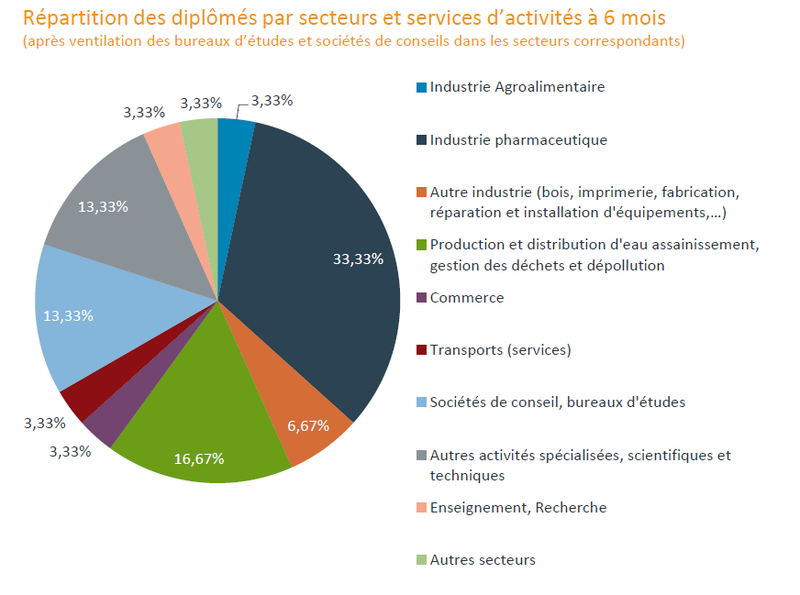
Les ingénieurs chimistes diplômés travaillent dans une large gamme d'entreprise actives aussi bien dans les domaines de la pharmacie, des cosmétiques, des matériaux, de la mobilité, de l'environnement… Un nombre important d'entre eux occupera des postes « Ingénieur en Environnement » dans le secteur « production et distribution d'eau assainissement, gestion des déchets de dépollution ». Leur mission consiste à respecter les réglementations sur les pollutions émises par les entreprises (déchets, incidences sur la qualité de l'air et de l'eau, nuisances et bruit…) tout en préservant leur production et leur rentabilité. Un défi qui lui fait porter de nombreuses casquettes.
Quelle place donnez-vous aux entreprises engagées dans la transition écologique et dans l'Économie Sociale et Solidaire lors de vos forums d’entreprises, interventions d’Alumni, ou dans les projets, études de cas des étudiants ?
Il est intéressant à noter que la plupart des entreprises partenaires de l'ENSCR travaillent dans le domaine de la transition écologique.
La plupart des Alumni intervient auprès de nos étudiants en leur apportant des soutiens en termes : (i) octroi de bourses de voyage pour les étudiants partant en stage à l'étranger (ii) conseils pour la recherche de stages (iii) conseils pour la recherche d'un emploi (iv) soutien aux projets (Tournoi Inter Chimie, RTC…).
Avez-vous identifié les principaux impacts des métiers de vos diplômés sur le climat et la biodiversité ? Si oui, quels sont-ils ? Vos formations présentent-t-elles des pratiques professionnelles et personnelles permettant d'identifier et de réduire ces impacts ? Concrètement, lesquelles ?
Les métiers de diplômés de l’ESNCR sont trop variés pour faire une telle identification exhaustive. Les diplômés ont les compétences fondamentales requises et les connaissances des enjeux et les méthodes leur permettant d’appréhender les impacts de leurs activités et d’en orienter les évolutions.
Les Ingénieurs de l’ENSCR prévoient et mesurent l’impact des méthodes de production sur l’environnement et proposent des solutions adaptées pour maîtriser les nuisances entraînées par celles-ci.
Pensez-vous que la demande sur le marché du travail pour les métiers de vos diplômés est ou sera amenée à évoluer dans le cadre d’une transition écologique ? Si oui, comment et pourquoi ?
L'ENSCR offre une formation scientifique généraliste en chimie et génie des procédés qui sera toujours nécessaire. C'est dans les applications que la transition écologique se fera ressentir.
Ses conseils (d'administration, de perfectionnement) veillent à actualiser régulièrement les formations en tenant compte de l'évolution des attentes des entreprises. Le cursus de l'ENSCR a intégré récemment une nouvelle filière « chimie /procédé numérique » et a renforcé ses enseignements dans le domaine des biotechnologies afin de répondre à l'évolution des compétences recherchées vis-à-vis de nouvelles technologies.
Les enjeux écologiques et sociaux sont ils au coeur des stratégies de recherche de votre établissement? Comment la stratégie de recherche favorise-t-elle spécifiquement la recherche transdisciplinaire et interdisciplinaire en lien avec les enjeux de transition écologique ?
En termes de recherche, tous les enseignants-chercheurs de l’ENSCR sont membres de l’Institut des Sciences Chimiques de Rennes, UMR avec le CNRS, l’Université de Rennes 1 et l’INSA de Rennes.
Au vue de sa taille, la chimie rennaise possède une expertise dans de nombreux domaines. Cela concerne plus spécifiquement :
- la chimie moléculaire (organique, organométallique et de coordination)
- les matériaux issus de la chimie du solide et de la métallurgie
- l’ingénierie des procédés chimiques
Cette expertise au service de la recherche et de l’innovation est en en phase avec les grandes orientations de la stratégie nationale de recherche, selon trois axes majeurs associés à des attentes sociétales fortes : (a) Molécules et Matériaux pour la Santé, (b) Molécules et Matériaux pour l’Optique et l’Electronique et (c) Chimie et Ingénierie pour le Développement Durable.
L’ENSCR mène des activités de recherche à la fois fondamentales et appliquées. Les enjeux écologiques et sociétaux ne doivent pas brider les premières, qui pourraient conduire à long terme à des solutions toujours plus efficientes, mais sont au coeur des préoccupations lors du passage à l’application.
Avec l’Institut Carnot AgriFood Transition, l’ENSCR avec 16 autres partenaires, unités de recherche académique ou centres techniques, répondent par l’interdisciplinarité aux défis scientifiques et technologiques résultant de la traduction des enjeux écologiques et sociétaux en nouveaux besoins industriels pour une R&D de l’alimentation durable, pour la santé de l’homme et son environnement.
Votre établissement soutient-il de manière spécifique la recherche (thèses, postdoc, travaux d’enseignants-chercheurs) en lien direct avec les enjeux de transition écologique, et les chercheurs qui s’engagent dans cette voie ? Quelle est la proportion du budget recherche allouée à ces travaux ?
De nombreuses activités de recherche à l'ENSCR ont pour but ultime de répondre à ces enjeux (chimie verte, matériaux photovoltaiques ou thermo-électriques, chimie biologique et biotechnologie, …) ou de les accompagner (analyses de trace, capteurs, procédés de traitement éco-efficients, …) L'ENSCR soutient chaque année 3 à 4 projets interdisciplinaires sous forme de stage de master 2 pour inciter à la prise de risque et à l'innovation.
Elle accompagne également l'innovation et le transfert de technologie, sur la base de brevets déposés par les chercheurs de l'ENSCR. Plusieurs entreprises sont nées du développement des travaux de nos équipes de recherche. On peut citer notamment SurfactGreen qui développent des tensio-actifs biosourcés, et Demeta qui conçoit des catalyseurs réduisant la consommation de solvant et de réactifs.
Existe-t-il des chaires ou des centres de recherche sur le sujet de la transition écologique au sein de votre établissement ? Si oui, quels sont leurs axes de travail ? Combien de professeurs intègrent-ils ?
Une de ses équipes (Chimie et Ingénieries des procédés CIP) étudie et conçoit des procédés durables voués au traitement de la pollution, ainsi qu'à la production dans les domaines phares de l'environnement, de l'agro-alimentaire et de la chimie. Sa recherche est centrée sur les procédés propres, sobres et sûrs pour la production durable, le traitement de la pollution et son évaluation.
Au sein de l'équipe de Chimie et Ingénierie des Procédés, le groupe CAPE (Chimie, Analyse et Procédés pour l'Environnement), localisé à l'ENSCR, regroupe 16 enseignants- chercheurs (5 PU et 11 MCF). Les chercheurs travaillent sur :
- Le développement de nouveaux procédés de traitement d'air, d'eau et des sols et de procédés de séparation respectueux de l'environnement pour une chimie verte et une production durable.
- Le développement de méthodes d'identification et de quantification de composés organiques à l'état de trace dans des milieux complexes. Ils étudient aussi leur devenir dans l'environnement et au cours des traitements. Enfin, ils identifient et quantifient les sous-produits des traitements.
- La protection de l'environnement et de la population (traitement des eaux potables et de l'air intérieur). Des études sur l'impact de l'activité humaine sur l'environnement par le traitement notamment des effluents industriels, agricoles ou urbains via des techniques destinés à éliminer les composés réfractaires dans les effluents liquides et cherchent aussi à diminuer les rejets gazeux de COV, odeurs… ➔ La valorisation de résidus de l'industrie agro-alimentaire et de gisements de ressources renouvelables pour la production de composés d'intérêt, matériaux biosourcés (alcools issus d'algues, micro-organisme produisant du PHA) et des matériaux polymères biodégradables de qualité alimentaire.
Les chercheurs sont-ils amenés à réfléchir à l’impact de leurs activités (pratiques et finalités) de recherche ? Si oui, comment ?
L'essentiel du financement provient de la réponse à des appels à projets régionaux, nationaux et internationaux. Ces appels à projets comportent de plus en plus souvent une section où les candidats doivent inscrire leur projet dans le contexte des Objectifs du Développement Durable, qui intègrent également la transition écologique.
Le financement de leur projet peut donc dépendre de la pertinence de leurs réponses à ces éléments pour le financeur.
Existe-t-il sur le campus des associations étudiantes dont l’activité est centrée sur l’action en faveur de la transition écologique ? Quelles sont-elles ?
L’association Chimie Solidaire est l’association humanitaire et solidaire de l’ENSCR. Elle permet aux étudiants d’accéder à des produits et des services à coûts peu onéreux, ainsi que de sensibiliser l’entourage aux actions solidaires et enfin d’organiser des actions humanitaires en France et à l’étranger.
L’association est composée de plusieurs pôles :
Le pôle 1er secours. Il organise pour les étudiants des journées de formation aux premiers secours à moindre coût.
Le pôle Environnement. Il a comme mission : (i) sensibilisation sur les problèmes environnementaux (ii) collectes de fond pour des associations protectrices de l'environnement, actions pour limiter la consommation de plastique / la pollution à l'ENSCR.
Il propose également une fois par mois à toute l’école des paniers de fruits et légumes, cultivés par des producteurs locaux, à moindre prix. Les élèves sont aussi en contact avec un producteur local qui fournit du jus de pommes et du cidre. Ce pôle participe au soutien des producteurs locaux tout en offrant aux étudiants des produits « bio » peu onéreux.
Le pôle don du sang. L’ENSCR est en partenariat avec l’Etablissement Français du Sang. Une grande partie des élèves donne de leur temps et de leur sang pour une cause qui permet de sauver des vies et de faire avancer la recherche. Pour pallier à la demande croissante de sang, régulièrement l’EFS et l’ENSCR collaborent pour organiser une collecte sur le campus de Beaulieu.
Le pôle humanitaire. En collaboration avec la Croix Rouge, l’association organise des collectes alimentaires dans les centres commerciaux ainsi que des collectes de vêtements à l’école. Les élèves participent aussi avec l’association Agape Campus à des soirées « J’ai Faim » où ils partagent de la nourriture et des boissons chaudes avec les sans-abris rennais.
Le pôle écoles. Il intervient dans les écoles afin de faire découvrir la base de la chimie à de jeunes enfants grâce à une petite présentation et des ateliers pour une immersion en douceur. Le principal thème abordé est celui de l’eau mais ils peuvent aussi moduler leur approche selon la demande des enseignants.
Le pôle Animaux. Il propose un partenariat avec la SPA afin que les élèves deviennent bénévoles.
Le pôle International. Il organise des événements qui mettent en avant les cultures du monde entier, intègrent les élèves étrangers, et fait ainsi voyager le temps de la semaine de l’interculturalité.
Chimie Eau Cambodge. L’association Chimie Eau Cambodge a pour but d’améliorer la qualité de l’eau potable au Cambodge. En mettant en valeur les connaissances acquises à l’ENSCR, les étudiants en charge du projet sont en mesure d’améliorer la qualité de vie des habitants sur place.
Quelles sont les thématiques abordées par ces associations (alimentation durable, réduction des déchets, sensibilisation…) ? Quelles actions entreprennent-elles ? Quelle est leur échelle d’impact (l’ensemble ou une certaine catégorie d’étudiants, les personnels de l’établissement, échelle plus large que l’établissement) ? Ces associations travaillent-elles par elles-mêmes sur le campus ou agissent-elles en partenariat avec l’administration de l’établissement (et si oui, à quel niveau) ?
D'une manière générale, les pôles de cette association sont très actifs et intègrent les notions DD&RS dans l'organisation de leurs évènements.
Le but de l'association est de sensibiliser les élèves et le personnel de l'Ecole au développement durable et de faire avancer l'organisation de l'Ecole et associations étudiantes dans ce sens. Les projets et actions sont divers (ateliers, semaines, évènements, posters de sensibilisation affichés dans les couloirs de l'ENSCR).
Des représentants de cette association sont membres du groupe ENSCR-DD.
Comment valorisez-vous l'engagement citoyen et associatif de vos étudiants ?
L’ENSCR a mis en place un système de reconnaissance de l’engagement étudiant avec une bonification annuelle sur l’implication dans la vie associative.
Comment se financent les associations étudiantes ? Quelle visibilité leur est accordée au sein de l’établissement ?
L'association Chimie Solidaire gère son budget de façon autonome. L'ENSCR donne une très grande importance à la vie associative étudiante. En effet, l'Ecole finance le bureau des élèves et ses associations, en grande partie sur projets.
Un fond de dotation (FDD) (créé en 2012) pour ambition de financement chaque année d'actions ciblées en direction de la Formation, de la Recherche, de la Vie étudiante, de l'Ouverture à l'International et de l'Egalité des chances.
Depuis sa création, de nombreuses actions ont été financées. Par exemple, ce fond a pu financer une aide d'urgence durant la crise sanitaire du Coronavirus à destination des élèves de l'ENSCR. Plus de 25 bourses de solidarité d'un montant total de plus de 8 500€ ont été versées à des élèves rencontrant des difficultés financières en raison d'une interruption de leur stage (et donc d'une absence de gratification).
Votre établissement évalue-t-il son impact environnemental à l’aide de méthodes quantitatives normalisées, comme l’Analyse du Cycle de Vie ou le bilan carbone ? À quelle fréquence ? Quels postes de dépense intègre-t-il (notamment, comprend-il les mobilités, c’est-à-dire les voyages en avion des étudiant.e.s, des professeur.e.s et des conférencier.e.s) ?
Durant la période comprise entre octobre 2019 et Janvier 2020, un projet étudiant a permis la réalisation d'une étude sur la possibilité de traiter les déchets liquides (solvants organqiues non chlorés) en interne avec les pilotes de dépollution de l'ENSCR.
Une analyse du consommation d'eau au niveau des salles de TP est en cours.
En ce qui concerne les déplacements, afin de réaliser un état des lieux, le groupe DD- ENSCR devrait lancer bientôt une enquête via un questionnaire anonyme au sein de L'ENSCR pour recenser les moyens de transport utilisés, ainsi que les distances et dénivelés parcourus quotidiennement par tous les étudiants et le personnel ainsi que les attentes de chacun pour changer de mode de transport.
Le groupe devrait faire également un rappel sur l'existence d'une prime du transport permettant de réaliser environ de 50 % d'économies sur l'abonnement aux transports en commun, sur l'adhésion au service Vélo STAR ou sur la location de vélos électriques personnels à la ville de Rennes.
Comment votre établissement réduit-il au quotidien son empreinte écologique (végétalisation, incitations, économies d’énergies, alimentation responsable, réduction et tri des déchets …) ? Quels sont les résultats de ces actions ?
L’ENSCR via son groupe, a proposé les actions suivantes :
- Tri sélectif : installer des poubelles carton dans chaque bureau, et d’identifier les points de collecte par exemple : hall étudiants, couloir des TP en y ajoutant une signalétique. (Proposition de réalisation des poubelles à partir de bois recyclés ‘(palettes)
- Orientation vers des machines à café qui offre la possibilité aux usagers de l’école d’utiliser leur propre gobelet ou mug
- Mise en place des affichages ou les campagnes de sensibilisations et de rappels de bonnes pratiques/conduites, à titre d’exemple, fermer une porte, éteindre les lumières, débrancher les appareils non utilisés dans les laboratoires et les radiateurs « électriques » dans les bureaux le soir, les weekends et les vacances, alerté lors d’un constat de disfonctionnement d’une chasse d’eau, fermer ou s’assurer qu’une manipulation ne risque pas d’occasionner de sinistre …
- Sur les écrans de l’ENSCR informer les montants des consommations en les juxtaposant à des faits marquants (chiffres clés, histogramme de consommation, couts énergétiques, pertes en €). Le responsable du service financier nous a apporté des éléments comptables sur les consommations des fluides afin de sensibiliser les usagers aux dépenses et à leur maitrise.
- Augmenter le nombre de place de parking à vélos/motos : ce point sera abordé/étudié en détails via un retour des réponses à un questionnaire tout en élargissant le sujet sur les pratiques de chacun.
- Proposer un atelier vélo pour former les usagers aux réparations simples
- Lever le ou les doutes sur le traitement des déchets
L'ENSCR a fait le choix pour réduire ses consommations d'eau de faire l'investissement de « SHILLER » dans les laboratoires. En effet, des pilotes anciens et très énergivores ont été remplacés. Cela a plaidé en faveur d'avoir une économie intéressante principalement en eau.
Sur les campus rennais, le référent DD&RS de chaque établissement du CRICDD fera le nécessaire pour identifier/proposer/mener à bien des plans d'action pour la transition écologique.
Comment votre établissement interagit-il avec son territoire et s’intègre-t-il dans des politiques publiques locales à visée durable ?
L'ENSCR est très impliquée dans le site universitaire rennais. Elle est membre du CRICDD au sein duquel, l'ENSCR se mobilise chaque année pour résoudre les problématiques liées au développement durable des entreprises partenaires. En effet, des équipes de 4 à 10 étudiant(e)s travaillaient sur des enjeux/ projets « à vos défis » liés à la croissance verte et à la transition économique, énergétique et écologique... en proposant des solutions innovantes et réalisables aux chefs d'entreprise.
Voici trois exemples de projets « à vos défis » dans la région de Bretagne :
Défi 1 - Rennes Métropole : Concevoir, mettre en oeuvre et évaluer une action innovante de mobilisation de la population autour de la transition énergétique sous un angle ludique et pédagogique afin de faire prendre conscience de son propre impact énergétique à titre individuel et favoriser l'expérimentation de nouveaux usages plus économes en énergie.
Défi 2 - SNCF : Réflexion d'un nouveau modèle économique des gares en milieu rural ou périurbain. Quels services leur amener pour qu'elles deviennent de véritables lieux d'échange pour connecter les citoyens entre eux et aux autres territoires ?
Défi 3 - Bretagne CENS : Comment sensibiliser les consommateurs au commerce équitable et amorcer un changement durable de comportement ? Quelles stratégies peuvent-être déployées afin de revaloriser l’image du commerce équitable ?
Votre établissement est-il labellisé DD&RS ? Si non, un travail est-il en cours pour obtenir le label, et à quel horizon ?
L'établissement est engagé dans une démarche de labellisation DD&RS et met tout en œuvre pour obtenir ce label d'ici un à deux ans au vu de l'état d'avancement des actions engagées et de la dynamique du groupe ENSCR-DD.
Quels blocages à la mise en place de dispositifs ou de mesures favorables à une transition écologique pouvez-vous identifier au sein de votre établissement (et à quel niveau) ?
L’ENSCR développe plusieurs actions dans ce domaine. Certaines d’entre elles évoquées ci-dessous ne remportent pas encore l’adhésion de tous au sein de l’établissement.
Vaisselle & alimentation. Que ce soit pour des événements internes (Pot de thèses, congrès, visite des extérieurs, séminaires, pauses gourmandes, …). L’ENSCR a mis en place une salle « Marie Curie » pour ce type de manifestions. Cette salle est équipée de vaisselle, assiettes, reliquats de nappes, serviettes, machine à café, verres en verre. Un lave-vaisselle est également disponible
L’ENSCR, via cette stratégie, veut éviter le plastique jetable dont une partie finit souvent dans la nature sur le campus.
Impression & papier. L’ENSCR doit s’orienter vers :
- Une réforme pour une impression minime des supports de cours en imposant en recto-verso et en limitant le recours aux imprimantes couleur.
- Un recyclage des papiers brouillon non utilisés (cas des examens)
- Des examens avec possibilités de réponses sur les feuilles d’énoncés.
Immobilier. Le service immobilier et patrimoine a mis en place des dispositifs et/ou des mesures favorables à une transition écologique. On peut citer
- La rénovation en vue d’amélioration de l'isolation des locaux
- L’amélioration des réseaux d’eau et du circuit de chauffage ; passage en basse température
- L’installation de lampes LED lors du changement de vieilles lampes
Déplacement & séjours. L’ENSCR met à disposition de ses agents 2 véhicules (Scénic et Kangoo) pour regrouper les déplacements (cas de congrès)
L’ENSCR centralise les commandes et les missions sur un logiciel « parapheur » afin de réduire le papier, minimiser les couts de livraisons et réduire les émissions de gaz à effet de serre générées par les grands camions (transporteurs, poste…)
Êtes-vous au fait des différents mouvements étudiants et institutionnels portant sur la transition écologique tels que le Manifeste étudiant pour un Réveil Écologique, le REFEDD, le projet FORTES du Campus de la transition ou le groupe de travail du Ministère de l’Enseignement Supérieur, de la Recherche et de l’Innovation ? Quels mouvements connaissez-vous ?
Campus de la transition ou le groupe de travail du Ministère de l'Enseignement Supérieur, de la Recherche et de l'Innovation Quels mouvements connaissez-vous Réponse La mise en place de groupes de ENSCR-DD avec les pôles de l'association « Chimie solidaire » (composés des personnels et d'étudiants) a initié beaucoup d'actions et proposés des améliorations portant sur la transition écologique.
Toutefois, bien qu'il y ait régulièrement des personnels/étudiants engagés, leurs propositions d'actions sont financées en partie par l'Ecole.
Pouvez-vous décrire l'organisation mise en place afin de répondre à ce questionnaire (personnes ou organes en charge, parties prenantes impliquées, etc.) ?
L’ensemble des services de l’école se sont mobilisés pour répondre à ce questionnaire. Ils sont essentiellement :
- Le référent DD&RS de l’établissement.
- Membres du ENSCR-DD
- La direction de l’établissement
- Responsables des services
- Plusieurs collègues enseignants-chercheurs
- Les étudiants du pôle environnement de l’association « Chimie solidaire »
Avez-vous des messages pour d'autres acteurs, des commentaires, des choses à ajouter ?
Le fait de former/sensibiliser les étudiants d'écoles d'ingénieurs aux ODD, à la transition écologique et aux enjeux climatiques est un élément très important. Cela est d'autant plus vrai pour les ingénieurs chimistes qui joueront un rôle de premier plan pour proposer des solutions plus respectueuses de l'environnement et répondant aux ODD.

Dans quelle mesure votre établissement se donne-t-il pour objectif de former la communauté étudiante aux enjeux et aux métiers de la transition écologique ? Cet objectif est-il inscrit dans votre stratégie ?
Depuis plus de 15 ans, nous avons inscrit dans la stratégie de l’école la formation de nos élèves aux enjeux du développement durable et de la responsabilité sociétale ; c’est un axe fort de notre pédagogie qui apparaît de manière spécifique au sein d’un pôle d’enseignement identifié (Développement Durable et Qualité) mais également de manière transversale dans de nombreux pôles d’enseignement.
Nous avons construit un Référentiel Emploi Compétences (REC), en lien avec les anciens élèves de l’école, validé par les attentes exprimées dans les offres d’emploi relevant de ce domaine. Ainsi, nos élèves, grâce à leur formation à la gestion de projets innovants, en développement personnel et dans le domaine du développement durable, répondent totalement aux critères des postes traitant de la transition écologique.
Dans quelle mesure des objectifs de transition écologique sont-ils inscrits dans le projet de transformation de votre établissement à court, à moyen, et/ou à long terme ? Notamment : une démarche d’auto-évaluation DD&RS (Plan Vert) a-t-elle été mise en place pour votre établissement ? (en vertu de l’article 55 de la loi Grenelle 1 du 3 août 2009, le Plan Vert doit obligatoirement être élaboré par tous les établissements d’enseignement supérieur).
Nous sommes inscrit dans une démarche de certification au label DD&RS que nous avons commencé à implémenter en 2019 et qui est une continuité de la démarche d'auto-évaluation « Plan Vert » que nous renseignons depuis près de 5 ans.
Comment sont construites les maquettes pédagogiques de votre établissement ? Les étudiants sont-ils associés à l’élaboration des programmes de formation ? Si oui, à quelles étapes et selon quelles modalités ? Si non quelles propositions feriez-vous en la matière ?
Les maquettes pédagogiques sont construites avec l'ensemble des enseignants de l'école en Commission Pédagogique (1 par mois). Les élèves, représentants du collège étudiant à notre Conseil d'Ecole, sont force de proposition et de discussion concernant la pédagogie des enseignants.
De plus, nous nous servons des enquêtes sur le devenir de nos anciens élèves et des évaluations des enseignements, réalisées par nos élèves à chaque semestre, afin de faire évoluer à la fois le contenu des enseignements ainsi que la maquette elle-même.
Les élèves sont ainsi inclus dans l'évolution des maquettes, via leurs délégués et leurs élus, mais aussi lors des rencontres organisées entre les élèves des différentes promotions et l'équipe de direction.
Existe-t-il un poste permanent de chargé.e de mission DD&RS ou de transition écologique au sein de votre établissement ? Si oui, depuis combien de temps ? Quelles sont ses missions ? Est-ce un emploi équivalent temps plein ? Quel est son positionnement dans l’organigramme ?
Oui, c'est actuellement le Directeur des Etudes, Olivier CHERY. Cet enseignant-chercheur est Correspondant DD depuis plus de 20 ans (ce sont ses disciplines d'enseignement) auprès de l'Institut National Polytechnique de Lorraine puis de l'Université de Lorraine (UL).
Ce n'est pas un emploi à temps plein et son rôle est d'animer des actions dans le domaine du DD, d'encadrer des groupes projets d'élèves qui travaillent sur ces thèmes, de conseiller des associations étudiantes et de faire le relais avec la chargée de mission DD de l'UL pour donner une cohérence à nos actions, vis-à-vis de ce qui se fait au niveau des autres composantes de l'université.
La sensibilisation et de la responsabilisation des personnels et étudiants sur ces enjeux sont-elles inscrites dans les missions du/de la chargé.e de mission DD&RS ? Dans quelle mesure la communauté étudiante est-elle associée à ce processus d’éco-responsabilisation ?
Oui, la sensibilisation et la responsabilisation des personnels et des étudiants sur ces enjeux sont inscrits dans les missions du chargé de mission DD&RS. Il profite des travaux réalisés par les groupes projets des élèves qu'il encadre pour réaliser ces actions. Par exemple, l'an dernier, une démarche « ZERO DECHET » a été menée donnant lieu à des présentations, des visuels et à l'intégration des dimensions DD/RS dans les manifestations étudiantes.
Nous avons également décidé de distribuer un pack « ZERO DECHET » à l'ensemble des personnels et des étudiants, en début d'année universitaire, constitué d'une éco-cup, d'une gourde métallique et d'un sac en toile. Nous avons également optimisé le tri des déchets et fait l'achat d'un distributeur de boissons à reconnaissance de mug, d'une fontaine de nettoyage des mugs et de fontaines à eau.
Quelles sont les principales sources externes de financement de votre établissement ? Selon quels critères votre établissement noue-t-il des partenariats financiers et non-financiers ? Ces critères prennent-ils en compte l’investissement dans la transition écologique de vos partenaires ?
Taxe d'apprentissage, frais d'encadrement de projet, accompagnement de VAE, de filière Fontanet ou de personnes en formation continue.
Les critères de choix sont des critères d'opportunité.
Des progrès sont à réaliser pour prendre en compte l'investissement dans la transition écologique de nos partenaires.
Une liste des organisations et entreprises actuellement partenaires de votre établissement est-elle disponible sur votre site Internet (public et privé)
Site Internet :documents en consultation et téléchargement:
Dans les plaquettes de présentation de l'école : Projets entreprises et missions de fin d'études
Y a-t-il dans vos enseignements obligatoires des modules concernant l’apprentissage des fondements de la crise écologique et de ses conséquences ? Si oui, en quelle année sont-ils dispensés et avec quel poids dans les crédits obtenus ?
Oui, dans l’axe DDQ, un module sur le management environnemental, en 2ème Année du Cycle Ingénieur, traite de ces sujets ainsi qu’un module en 3AI s’intitulant : « Economie Sociale et Solidaire et RSE », représentant 3 ECTS, mais comme indiqué précédemment, ces notions sont abordées dans de nombreux enseignements non dédiés donc ce nombre de crédits n’est pas significatif.
Ces domaines sont également présents dans nos deux Master 2 :
- Le Master Urbanisme et Aménagement, parcours Innovation Urbaine pour des Villes & Territoires en Transformation (IUVTT) où il est abordé sous l’angle de la notion de territoire durable et
- Le Master Design, parcours Innovation et Design Évalués par les Usages où l’accent est mis sur l’économie circulaire et l’écoconception.
La transition écologique fait-elle l’objet dans votre établissement de cursus spécialisés ? Si oui, quels sont-ils ?
Nous avons construit, en 3AI, un cycle optionnel intitulé : innovation durable et durabilité de l'innovation » qui est constitué de 3 modules :
- Éco-innovation/écoconception
- Énergies renouvelables
- Territoires durables (en commun avec le Master IUVTT)
Ce parcours fait le lien entre innovation et DD/RS avec 3 angles, la conception (on y retrouve les notions d’économie circulaire, d’ACV, …), l’énergie et l’aménagement du territoire.
Cela représente 100h d’enseignement et a un poids de 6 ECTS.
L’ensemble du livret pédagogique, c’est-à-dire la totalité des modules d’enseignement, intègre-t-il les enjeux de transition écologique actuel de manière cohérente et ambitieuse ? Comment faites-vous en sorte que la formation aux enjeux écologiques ne soit pas restreinte à des cours spécialisés ? Comment articulez-vous les formations pour favoriser la transversalité et le dialogue des formations face à cet enjeu ?
Les commissions pédagogiques nous permettent d'échanger sur nos pratiques et c'est le lieu de mise en cohérence de nos enseignements dans ces domaines. Ces aspects sont, ou seront dès la prochaine rentrée, intégrés notamment dans les enseignements de transfert de chaleur (énergies durables), de procédés (transition énergétique), de conception de produits (éco-conception).
Avez-vous mis en place une approche par compétences et si oui, avez-vous identifié les compétences utiles à la transition écologique acquises par vos diplômés au cours de leur parcours ? (ex: système de compétences DD&RS)
Comme indiqué précédemment, nous avons construit un REC, et les compétences que nous avons identifiées comme utiles en DD/RS sont les suivantes :
M1. PILOTAGE DE PROJET À OBJECTIF DÉTERMINÉ
M1.1 Définir le cahier des charges du projet (enjeux, objectifs, périmètre…)
M1.2 Organiser, conduire le projet et participer à sa réalisation, en coordonnant les différentes compétences et les métiers internes nécessaires à sa concrétisation
M1.3 Participer, contrôler, suivre et ajuster les différentes étapes du projet dans le but d’en maîtriser les performances et les risques, en tenant compte des contraintes de l’entreprise et de l’environnement
M2. PILOTAGE D’ORGANISATIONS INDUSTRIELLES
M2.1 Superviser la réalisation de la production
M2.2 Assurer le suivi, l’évolution technique à court terme du procédé et de ses performances
M4 DÉVELOPPEMENT ET ÉPANOUISSEMENT HUMAIN
M4.1 Contribuer à l’animation et la valorisation des équipes
M5 DIAGNOSTIC ET MANAGEMENT DES ECO-SYSTÈMES
M5.1 Analyser et comprendre le fonctionnement actuel des différentes fonctions et proposer des ajustements des rôles et des missions
M5.2 Comprendre les différents réseaux internes et extérieurs à l’entreprise
De quelle façon les contenus des enseignements liés à la transition sont-ils abordés (détails des volets scientifiques, économiques, sociaux…) ?
Les aspects scientifiques sont vus dans les pôles d'enseignement dédiés (génie des procédés, génie mécanique et énergétique, conception et innovation) où les connaissances de base et les outils spécifiques sont présentés. Les projets permettent le développement d'une vision globale.
En fin de cursus, le module « économie sociale et solidaire et RSE » est animé par un historien/philosophe des sciences, un économiste et un scientifique : l'approche est donc sous forme de triptyque d'égale proportion avec un travail sur les concepts, sur les outils pour mener ces démarches en entreprise et la dimension économie sociale et solidaire. L'approche pédagogique est réalisée à partir de films, de vidéos, de jeux de société, d'étude de cas.
Comment ces enseignements sont-ils reçus par les élèves ?
Ces enseignements sont en général très bien reçus par les élèves mais cela dépend énormément de la sensibilité de chacun.
En général, les élèves aimeraient participer à plus de débats autour de ces thèmes et aborder plus en profondeur l'économie circulaire par exemple.
Quels modules parallèles ou activités pédagogiques sont organisés pour sensibiliser / informer sur les questions de transition écologique (séminaires de rentrée, interventions d’experts, journées dédiées, gamification (escape game etc..)) ?
Pour l'instant, rien de formel mais nous sommes en réflexion pour introduire la « fresque du climat » dans une forme très ouverte au sein de notre établissement dès la rentrée.
Les enseignants de votre établissement sont-ils formés aux enjeux de la transition écologique ? Si oui, de quelle manière (cursus initial, formation continue, organisme dispensaire…) ? Si non, est-ce une évolution envisagée à court terme ? La connaissance des enjeux écologiques et l’interdisciplinarité sont-elles valorisées dans le recrutement du corps professoral ?
De nombreux enseignants de l'école ont des formations de base qui incluent ces domaines.
Etant donné que, l'ERPI, le laboratoire de recherche adossé à l'ENSGSI traite de ces thématiques dans ses axes de recherche donc, tout naturellement nous veillons, dans nos recrutements, à voir apparaitre ces dimensions dans les profils des candidats.
Quels sont les débouchés de vos formations ? Dans quelle mesure ces débouchés sont-ils en adéquation avec la transition écologique ?
Nous formons des ingénieurs généralistes dans le domaine de la gestion des projets innovants, ce qui implique que les débouchés de nos élèves sont très variés et n'ont pas une couleur uniforme.
Quelle place donnez-vous aux entreprises engagées dans la transition écologique et dans l'Économie Sociale et Solidaire lors de vos forums d’entreprises, interventions d’Alumni, ou dans les projets, études de cas des étudiants ?
Nous essayons, autant que possible, de présenter systématiquement un panel le plus complet possible des entreprises partenaires donc les entreprises, études de cas et Alumni de ce domaine sont représentés de manière notable. Evidemment dans les enseignements dédiés, les études de cas et interventions d’Alumni appartiennent au DD/RS mais il n’est pas rare qu’en innovation, économie, matériaux, ou génie des procédés, les études de cas touchent à ce domaine.
Avez-vous identifié les principaux impacts des métiers de vos diplômés sur le climat et la biodiversité ? Si oui, quels sont-ils ? Vos formations présentent-t-elles des pratiques professionnelles et personnelles permettant d'identifier et de réduire ces impacts ? Concrètement, lesquelles ?
Non, nous n'avons pas identifié les principaux impacts des métiers de nos diplômés sur le climat et la biodiversité.
La démarche « ZERO DECHET » déjà présentée précédemment a permis de réduire ces impacts et nous suivons et diffusons les bonnes pratiques proposées par la chargée de mission DD de l'UL pour les déplacements doux, par exemple.
Pensez-vous que la demande sur le marché du travail pour les métiers de vos diplômés est ou sera amenée à évoluer dans le cadre d’une transition écologique ? Si oui, comment et pourquoi ?
Il est clair que oui car les impacts de l'ensemble de nos activités (professionnelles et personnelles) vont certainement être évaluées dans l'avenir, menant à des changements de pratiques dans les métiers exercés par nos ingénieurs aussi bien que dans leur quotidien.
Concrètement, si les lois GRENELLE II étaient appliquées telles qu'elles ont été pensées avec des aspects de suivi et de sanctions beaucoup plus nets, nous aurions une base très solide pour progresser ensemble en matière de DD/RS et aller vers la transition écologique.
Les enjeux écologiques et sociaux sont-ils au coeur des stratégies de recherche de votre établissement? Comment la stratégie de recherche favorise-t-elle spécifiquement la recherche transdisciplinaire et interdisciplinaire en lien avec les enjeux de transition écologique ?
Le Laboratoire ERPI, rattaché à l'ENSGSI, est dès son origine une équipe de recherche interdisciplinaire, incluant des chercheurs des sciences de l'ingénieur (sections CNU 60, 61 et 62) mais aussi sciences de Gestion (CNU 6) et sciences de l'éducation (CNU 71).
Il est centré sur le développement d'outils et de méthodes pour favoriser les processus d'innovation.
Pour cette raison, le regard des diverses disciplines est indispensable et fait partie intégrante de tous nos projets. Dans le contexte actuel, l'innovation ne peut pas se faire sans tenir compte des enjeux écologiques et, au contraire, est au cœur de la recherche et exploration des nouveaux modèles économiques. Nous développons nombre de projets qui portent sur le recyclage de matériaux, l'évaluation des services écosystémiques et encore de la bio-économie.
En particulier, nous travaillons sur le développement d'outils permettant la prise de décision, en phase amont des projets, et sous le regard des dimensions de durabilité.
Votre établissement soutient-il de manière spécifique la recherche (thèses, postdoc, travaux d’enseignants-chercheurs) en lien direct avec les enjeux de transition écologique, et les chercheurs qui s’engagent dans cette voie ? Quelle est la proportion du budget recherche allouée à ces travaux ?
Sur l'ensemble des doctorants, 9 sur 15 travaillent sur des sujets associés à la transition écologique.
Concernant les postdoctorants et chercheurs contractuels, cette proportion est de 7 sur 9. Et sur le budget total du laboratoire, approximativement 60% est dédié d'une manière ou une autre à cette thématique.
Existe-t-il des chaires ou des centres de recherche sur le sujet de la transition écologique au sein de votre établissement ? Si oui, quels sont leurs axes de travail ? Combien de professeurs intègrent-ils ?
Oui, Nous portons la Chaire de recherche REVES (Renaissance Ecologique des VillES), Professeur Claudine Guidat.
Nous avons une Chaire partenariale avec la Société NOREMAT sur l’évaluation des services écosystémiques
Nous faisons partie active du projet DHDA (Des Hommes et Des Arbres - Territoires d’innovation), nous portons 4 projet européens sur lesquels nous sommes partenaires : 3 portent sur la transmission écologique et énergétique.
- Open Innovation Ecosystems for Do It Together process
- Capacity building on Smart Grid
- Strengthening applied research and innovation capacities in Latin-America through co‐creation labs for mitigation and adaptation to Climate Change.
Les chercheurs sont-ils amenés à réfléchir à l’impact de leurs activités (pratiques et finalités) de recherche ? Si oui, comment ?
Oui, dans notre plateforme d’innovation (LF2L- Lorraine FabLiving Lab). Dans lequel un démonstrateur pour le recyclage en circuit cours des déchets plastiques et l’objet d’étude.
http://lf2l.fr/projects/green-fablab/
A terme, il s’agit d’avoir une plateforme de recherche autonome en énergie et avec le minimum d’impact environnemental.
Existe-t-il sur le campus des associations étudiantes dont l’activité est centrée sur l’action en faveur de la transition écologique ? Quelles sont-elles ?
Marché GSIEN : vente mensuelle de produits locaux en circuit court, sensibilisation contre le gaspillage alimentaire auprès des étudiants et du personnel de l’école.
Association Tsiky : actions en faveur des pays en voie de développement (construction d’écoles, par exemple) pour la partie DD/RS, vente et échange de vêtements à l’école (vide dressing), conférences thématiques avec des ONG à l’école (Green Peace, Oxfam).
GSI LAB : recyclage des bouchons plastiques sous forme de challenges étudiants et personnels avec remise de prix.
Quelles sont les thématiques abordées par ces associations (alimentation durable, réduction des déchets,sensibilisation…) ? Quelles actions entreprennent-elles ? Quelle est leur échelle d’impact (l’ensemble ou une certaine catégorie d’étudiants, les personnels de l’établissement, échelle plus large que l’établissement) ? Ces associations travaillent-elles par elles-mêmes sur le campus ou agissent-elles en partenariat avec l’administration de l’établissement (et si oui, à quel niveau) ?
Les thématiques abordées sont l'alimentation durable, la réduction et le tri des déchets CF. Réponse au-dessus.
Comment valorisez-vous l'engagement citoyen et associatif de vos étudiants ?
Tout d’abord, la loi nous y oblige et nous l’avons intégré à notre règlement de scolarité dont voici l’extrait concerné :
VALIDATION DES ACQUIS EXTRACURRICULAIRES
Références : Loi « Egalité et Citoyenneté » du 27 janvier 2017 et décret n° 2017-962 du 10 mai 2017
Les élèves qui estiment, de par leurs expériences et activités extracurriculaires, pouvoir prétendre à la validation de certains acquis et compétences qui rentrent dans le référentiel de compétences de la formation d’ingénieur de l’ENSGSI, peuvent demander à ce que ces acquis et compétences soient validés.
L’élève, après avoir procédé à une autoévaluation complète des compétences développées dans ses activités extracurriculaires en rapport avec celles du référentiel de compétences de la formation, établit et dépose un dossier à l’attention du directeur des études. Celui-ci nomme une commission pour statuer sur la recevabilité de la demande et faire, le cas échéant, une proposition de mise en oeuvre à l’élève pouvant inclure un travail supplémentaire à faire et précisant les modalités de validation exigées.
Lorsque la demande est validée, un contrat d’études est établi pour préciser les acquis et compétences validés ainsi que les modalités et aménagements qui en découlent (dispense d’activités pédagogiques, attribution de crédits ECTS, autre type de valorisation…).
Nous avons entamé une grande réflexion avec l’ensemble des promotions du cycle ingénieur sur la notion d’engagement qui traite également de ce thème. Nous avons créé des groupes se réunissant en ateliers et rassemblant 2 élèves de chaque promotion. Une restitution de leurs réflexions a été faite à chaque promotion et nous entamons un grand chantier sur cette notion d’engagement associatif et pour l’école.
Comment se financent les associations étudiantes ? Quelle visibilité leur est accordée au sein de l'établissement ?
Financement alloué par l’école au BDE (Bureau des Elèves) qui se charge de la répartition entre associations. Augmentation du budget dédié au BDE de 50 % en 2020. Réunion des associations en « commission de la vie étudiante » 3 à 4 fois par an pour évoquer les projets des diverses associations, les besoins et les appuis de l’école.
Le service communication et la direction relaient et diffusent les initiatives et les actions de celles-ci au quotidien.
Votre établissement évalue-t-il son impact environnemental à l’aide de méthodes quantitatives normalisées, comme l’Analyse du Cycle de Vie ou le bilan carbone ? À quelle fréquence ? Quels postes de dépense intègre-t-il (notamment, comprend-il les mobilités, c’est-à-dire les voyages en avion des étudiant.e.s, des professeur.e.s et des conférencier.e.s) ?
Nous avons réalisé un bilan carbone il y a quelques années mais nous ne l’avons pas renouvelé.
Il intégrait l’ensemble des postes de dépenses et l’impact le plus fort était effectivement lié aux déplacements, notamment pour des congrès ou des réunions nationales.
Il est difficile d’améliorer cette situation sauf si la crise sanitaire remet en question ces déplacements, au profit de l’utilisation d’outils de visio-conférence. Nous avons d’ailleurs organisé plusieurs manifestations d’ampleur nationale ou internationale avec l’aide de ces outils depuis le mois de mars.
Comment votre établissement réduit-il au quotidien son empreinte écologique (végétalisation, incitations, économies d’énergies, alimentation responsable, réduction et tri des déchets …) ? Quels sont les résultats de ces actions ?
Comme indiqué précédemment, notre démarche « ZERO DECHET » a un impact très positif sur la gestion des déchets avec une diminution de ceux-ci (notamment les déchets plastiques).
Nous avons travaillé par l’intermédiaire de projets en lien avec la Banque Alimentaire sur le thème du gaspillage alimentaire. De plus, l’Association Tsiky organise régulièrement des conférences sur les thèmes DD/RS avec un succès certains auprès de tous les publics. Une soirée sur la fabrication de produits cosmétiques et ménagers « home made » a également eu lieu.
Ces notions trouvent de plus en plus d’adeptes dans le public étudiant et le personnel.
D’autre part, depuis très longtemps, nous sommes vigilants sur les économies d’énergie et avons installés des interrupteurs avec temporisateurs et système LED pour limiter notre consommation d’énergie liée à l’éclairage et des campagnes de sensibilisation sont régulièrement faites pour l’extinction de l’éclairage après les activités pédagogiques dans les salles.
Enfin, des actions ont été engagées pour limiter les impressions et la consommation de papier auprès du personnel enseignant et administratif (plafond d’impression, dématérialisation des supports, suppression de l’affichage des emplois à certains endroits, etc.).
Comment votre établissement interagit-il avec son territoire et s’intègre-t-il dans des politiques publiques locales à visée durable ?
Nous sommes en lien très étroit avec le territoire que cela soit à l’échelle du quartier (nous faisons partie de l’association ATP Rives de Meurthe, regroupant tous les acteurs économiques publics et privés du quartier et nous réalisons des projets étudiants ou de recherche avec cette association), de la ville (même mode de collaboration) et du sillon lorrain (idem).
Ces échanges sont particulièrement riches dans le cadre de notre Master IUVTT et de la dernière année du cycle ingénieur où les acteurs du territoire soit interviennent en tant que conférenciers, soit nous fournissent et participent à des études de cas, réalisées avec les élèves.
Ces collaborations s’intègrent effectivement dans des politiques publiques locales à visée durable.
Votre établissement est-il labellisé DD&RS ? Si non, un travail est-il en cours pour obtenir le label, et à quel horizon ?
Comme indiqué en introduction, nous avons entamé une démarche de labellisation DD/RS cette année.
Nous pensons l'obtenir d'ici 2 ans si les modalités financières de l'audit sont revues.
Quels blocages à la mise en place de dispositifs ou de mesures favorables à une transition écologique pouvez-vous identifier au sein de votre établissement (et à quel niveau) ?
Pas de blocage identifié : tout est une question de sensibilisation/formation permanente et de conduite du changement.
Il ne suffit pas d’amener les hommes à suivre des préceptes mais bien de leur expliquer quels intérêts pour eux et la planète ils en tirent et à quel point « l’effort » à fournir est minime.
De plus, les axes DD/RS doivent absolument s’accompagner de mesures pour faciliter la transition (à quoi sert un distributeur de boissons à reconnaissance de mug sans mug ? A quoi sert de distribuer des éco-cup sans pouvoir les laver régulièrement ? A quoi sert de dire qu’il faut trier les déchets si aucune poubelle n’est à disposition ?..)
Êtes-vous au fait des différents mouvements étudiants et institutionnels portant sur la transition écologique tels que le Manifeste étudiant pour un Réveil Écologique, le REFEDD, le projet FORTES du Campus de la transition ou le groupe de travail du Ministère de l’Enseignement Supérieur, de la Recherche et de l’Innovation ? Quels mouvements connaissez-vous ?
Nous connaissons l'ensemble de ces mouvements mais il serait intéressant qu'ils viennent plus au contact de notre établissement.
Pouvez-vous décrire l’organisation mise en place afin de répondre à ce questionnaire (personnes ou organes en charge, parties prenantes impliquées, etc.)
Nous avons été 4 à participer à ce questionnaire : la personne en charge des questionnaires officiels, notre responsable com, le directeur du laboratoire ERPI et le chargé de mission DD/RS de l'ENSGSI.
Avez-vous des messages pour d’autres acteurs, des commentaires, des choses à ajouter ?
Le mode choisi pour ce baromètre était très lourd : il a demandé 3 à 4h de travail ce qui est considérable surtout en cette période de l’année et dans le contexte de la crise sanitaire.
Quel est le mode d’analyse de ces questionnaires ?
Pour ce qui est du domaine DD/RS, nous avons la volonté de diffuser nos bonnes pratiques au sein de l’UL dans un premier temps et peut-être au-delà dans un deuxième temps.

Dans quelle mesure votre établissement se donne-t-il pour objectif de former la communauté étudiante aux enjeux et aux métiers de la transition écologique ? Cet objectif est-il inscrit dans votre stratégie ?
L'ENSIIE a formalisé sa démarche DD&RS depuis 2019. Plusieurs actions avaient déjà été menées précédemment, comme le diagnostic énergétique ou la participation à un événement Agir Ensemble en 2017, mais l'école a adopté une démarche volontariste de développement durable en 2019, en se donnant pour objectif d'intégrer les dimensions sociales et environnementales à tous les aspects de sa politique de site, de formation, de recherche et d'innovation.
Un document de stratégie et une charte DD&RS ont été créés à cette occasion.
Dans quelle mesure des objectifs de transition écologique sont-ils inscrits dans le projet de transformation de votre établissement à court, à moyen, et/ou à long terme ? Notamment : une démarche d’auto-évaluation DD&RS (Plan Vert) a-t-elle été mise en place pour votre établissement ? (en vertu de l’article 55 de la loi Grenelle 1 du 3 août 2009, le Plan Vert doit obligatoirement être élaboré par tous les établissements d’enseignement supérieur).
L'ENSIIE remplit depuis 2019 le questionnaire d'auto-évaluation DD&RS.
Comment sont construites les maquettes pédagogiques de votre établissement ? Les étudiants sont-ils associés à l’élaboration des programmes de formation ? Si oui, à quelles étapes et selon quelles modalités ? Si non, quelles propositions feriez-vous en la matière ?
Les maquettes sont élaborées par la direction des études, et sont ensuite présentées en conseil des études pour avoir des retours, conseil auquel participent des représentants étudiants.
En outre, la direction des études a des retours réguliers de la part des étudiants, via des enquêtes de satisfaction concernant les enseignements, et une association dédiée au lien entre les élèves et l'administration de l'école.
Existe-t-il un poste permanent de chargé de mission DD&RS ou de transition écologique au sein de votre établissement ? Si oui, depuis combien de temps ? Quelles sont ses missions ? Est-ce un emploi équivalent temps plein ? Quel est son positionnement dans l’organigramme ?
Il existe une chargée de mission DD&RS depuis février 2019, associée à une décharge d'enseignement (30h) et rattachée directement à la direction.
Ses missions ont pour objet de piloter l'outillage et la valorisation des démarches de l'école, d'organiser le plaidoyer collectif afin d'intégrer les pratiques du développement durable et de la responsabilité sociétale dans l'organisation et les missions d'enseignement et de recherche, en liaison avec les services et directions de l'école, les étudiants et les associations d'étudiants de l'ENSIIE.
Un comité de pilotage DD&RS a également été nommé fin juin 2019 pour définir les orientations et effectuer le suivi de cette démarche. Il comprend, outre le directeur et la chargée de mission DD&RS, une représentante du personnel administratif et technique, une représentante du personnel enseignant et chercheur, un représentant des élèves et un représentant des anciens élèves. Ce comité s'est réuni deux fois en 2019, et deux fois en 2020 pour l'instant.
La sensibilisation et de la responsabilisation des personnels et étudiants sur ces enjeux sont-elles inscrites dans les missions du/de la chargé.e de mission DD&RS ? Dans quelle mesure la communauté étudiante est-elle associée à ce processus d’éco-responsabilisation ?
Ces aspects ne sont pas explicitement inscrits dans la mission de la chargée de mission, mais sont inscrits dans la charte DD&RS de l'ENSIIE : «mettre en place des enseignements et des formations au DD&RS pour les étudiant⋅e⋅s et le personnel; sensibiliser au quotidien aux problématiques DD&RS par exemple par la sensibilisation aux éco-gestes».
Les étudiants sont associés notamment via l'association étudiante EcologIIE et leur représentant au CoPil DD&RS.
Quelles sont les principales sources externes de financement de votre établissement ? Selon quels critères votre établissement noue-t-il des partenariats financiers et non-financiers ? Ces critères prennent-ils en compte l’investissement dans la transition écologique de vos partenaires ?
Les sources externes de financement viennent principalement de subventions et dons, dont la taxe d'apprentissage. L'école a également lancé un fonds de dotation.
Il n'existe pas de critère précis pour l'établissement de partenariat.
Une liste des organisations et entreprises actuellement partenaires de votre établissement est-elle disponible sur votre site Internet (public et privé) ?
Non ce n'est pas le cas actuellement. Une telle liste est en revanche disponible via le service relations entreprises de l'école.
Y a-t-il dans vos enseignements obligatoires des modules concernant l’apprentissage des fondements de la crise écologique et de ses conséquences ? Si oui, en quelle année sont-ils dispensés et avec quel poids dans les crédits obtenus ?
Jusqu’en 2019, quelques enseignements abordaient des questions liées au DD&RS, mais sur initiative individuelle des enseignants principalement : RSE dans un enseignement de Gestion des ressources humaines, éco-conception de services numériques dans un enseignement de programmation web…
Depuis 2019, les formations ont été revues pour introduire des enseignements orientés DD&RS, sur une demande commune des étudiants et de la mission DD&RS. Ces enseignements seront les suivants à partir de la rentrée 2020 :
- 1re année de la formation initiale - Enjeux environnementaux et développement durable
- enseignement de tronc commun
- Objectifs : L’objectif de cet enseignement est de décrire les enjeux environnementaux actuels et leur prise en compte dans nos sociétés.
- Volume : 14h (1 ECTS)
- 2e année des formations en alternance - Impact environnemental du numérique ◦ enseignement de tronc commun
- Objectifs : L’objectif de cet enseignement est de présenter les enjeux environnementaux et leur prise en compte dans nos sociétés, ainsi que l’impact environnemental du numérique.
- Volume : 14h (1 ECTS)
- 2e année de la formation initiale - Impact environnemental du numérique
- enseignement de tronc commun
- Objectifs : Ce module vise à présenter les impacts environnementaux du numérique, ainsi que les leviers pouvant être mis en oeuvre pour réduire cet impact.
- Volume : 21h (2 ECTS)
- 3e années de la formation initiale et des formations en alternance - Green IT et IT for Green
- enseignement optionnel
- Objectifs : Ce module vise à présenter les solutions qui peuvent être mises en oeuvre dans les entreprises et organisations pour réduire l’impact environnemental du numérique (partie GreenIT), ainsi qu’à montrer les utilisations possibles du numérique pour des applications utiles sur un plan environnemental, comme la simulation du climat (partie IT for Green).
- Volume : 42h (4 ECTS)
La transition écologique fait-elle l'objet dans votre établissement de cursus spécialisés ? Si oui, quels sont-ils ?
L'école ne délivre qu'un seul diplôme.
Une option Green IT & IT for Green peut être suivie en dernière année.
L’ensemble du livret pédagogique, c’est-à-dire la totalité des modules d’enseignement, intègre-t-il les enjeux de transition écologique actuel de manière cohérente et ambitieuse ? Comment faites-vous en sorte que la formation aux enjeux écologiques ne soit pas restreinte à des cours spécialisés ? Comment articulez-vous les formations pour favoriser la transversalité et le dialogue des formations face à cet enjeu ?
Pour l’instant ces enjeux sont pris en compte de la façon suivante :
● intégration de la chargée de mission DD&RS dans le groupe de travail sur la mise en place de l’approche compétences à l’ENSIIE
● intégration des problématiques DD&RS dans certains enseignements par le biais de projets
Avez-vous mis en place une approche par compétences et si oui, avez-vous identifié les compétences utiles à la transition écologique acquises par vos diplômés au cours de leur parcours ? (ex: système de compétences DD&RS)
Cette démarche est en cours de mise en place. La chargée de mission DD&RS est intégrée au groupe de travail correspondant.
De quelle façon les contenus des enseignements liés à la transition sont-ils abordés (détails des volets scientifiques, économiques, sociaux…) ?
Ces enseignements sont abordés :
● sur des aspects historiques, économiques et politiques dans les cours d’introduction
● sur des aspects scientifiques et sociétaux dans les cours informatiques
Comment ces enseignements sont-ils reçus par les élèves ?
Ces enseignements étant récents, nous n'avons pas encore d'évaluation.
En revanche, les élèves avaient participé à la demande d'enseignements à ce sujet.
Quels modules parallèles ou activités pédagogiques sont organisés pour sensibiliser / informer sur les questions de transition écologique (séminaires de rentrée, interventions d’experts, journées dédiées, gamification (escape game etc..)) ?
Une formation au bilan carbone par le REFEDD pour les étudiants a été organisée par l’ENSIIE en collaboration avec IMT Business School en mai 2019. Quelques élèves de l’ENSIIE ont suivi la même formation en février 2020, qui avait cette fois été organisée par l’Université d’Évry.
Pour le personnel, deux formations générales ont également été organisées :
- Formation aux éco-gestes numériques pour le personnel en 2019
- Objectif : sensibiliser le personnel à l’impact environnemental du numérique
- Formation en interne sur le développement durable demandée pour la rentrée par le personnel de l’école
- Objectif : identifier les enjeux et contributions possibles de l’ESR et en particulier de l’ENSIIE pour le développement durable
En outre, des événements des sensibilisation ont été organisés :
● semaine du développement durable en novembre 2018, ouverte aux étudiants et au personnel, avec deux conférences et une exposition ;
● participation à la semaine étudiante du développement durable en 2019 (https://www.seddcampus.org/home/2545) avec proposition de 2 éco-défis par jour aux élèves (1 numérique et 1 non numérique) ;
● participation à la semaine du consom’acteur du 14 au 17 mai 2019 avec l’affichage d’une exposition « Changeons le système, pas le climat » réalisée par la Maison des Citoyens du Monde de Nantes afin de sensibiliser aux pratiques alternatives ;
● participation à la 8e édition Tour de France Agir Ensemble (2017) : organisation d’une partie de l’événement au sein de ses locaux ;
● participation des élèves de l’ENSIIE à la journée des jeunes pour le climat en mars 2019 avec la création d’une bannière évoquant les impacts environnementaux du numérique et diffusée sur les réseaux sociaux afin de participer à la mobilisation internationale à ce sujet ;
● une participation à la semaine étudiante du développement durable était prévue du 30 mars au 03 avril 2020 mais a dû être annulée du fait du confinement. Il était prévu une fresque du climat pour les élèves, ainsi que l’affichage d’une exposition ;
● un atelier zéro déchet a été organisé et suivi par environ 15 participants, personnel et élèves le 2 décembre 2019 avec comme thème le partage d’expériences et la co-construction de documents présentant des alternatives zéro déchets à des objets du quotidien ;
● une sensibilisation a été organisée pour la rentrée des étudiants le 10 septembre 2019 : la politique DD&RS de l’école a été présentée aux élèves de première année, et une sensibilisation à la gestion des déchets était prévue par l’agglomération Grand Paris sud mais a été annulée pour problème de service ;
● participation de plusieurs élèves de l’école au World Clean Up Day en septembre 2019.
Des documents de sensibilisation ont été créés :
● création de la Charte de l’éco-citoyen de l’école pour les élèves en 2019 ;
● création d’affiches de sensibilisation aux éco-gestes, qui ont été affichées dans le hall d’entrée de l’école en décembre 2019.
Une rentrée du climat est prévue en septembre 2020.
Les enseignants de votre établissement sont-ils formés aux enjeux de la transition écologique ? Si oui, de quelle manière (cursus initial, formation continue, organisme dispensaire…) ? Si non, est-ce une évolution envisagée à court terme ? La connaissance des enjeux écologiques et l’interdisciplinarité sont-elles valorisées dans le recrutement du corps professoral ?
Quelques enseignants ont suivi les deux formations organisées pour le personnel (sur les éco-gestes numériques et le développement durable).
Il n'est pour l'instant pas prévu de formation spécifique pour le personnel, et ces connaissances ne sont pour l'instant pas valorisées.
Quels sont les débouchés de vos formations ? Dans quelle mesure ces débouchés sont-ils en adéquation avec la transition écologique ?
La grande majorité des ingénieurs issus de l'école travaillent dans le secteur des TIC (Technologies de l'Information et de la communication). Majoritairement, les ingénieurs sortant de l'école sont embauchés dans des postes du secteur Etudes et développement en systèmes d'information, suivi par l'informatique industrielle et technique.
Ces débouchés ne sont que très marginalement en adéquation avec la transition écologique.
Quelle place donnez-vous aux entreprises engagées dans la transition écologique et dans l'Économie Sociale et Solidaire lors de vos forums d’entreprises, interventions d’Alumni, ou dans les projets, études de cas des étudiants ?
Cet aspect est pour l'instant pris en compte au cas par cas (conférences, interventions).
Avez-vous identifié les principaux impacts des métiers de vos diplômés sur le climat et la biodiversité ? Si oui, quels sont-ils ? Vos formations présentent-t-elles des pratiques professionnelles et personnelles permettant d'identifier et de réduire ces impacts ? Concrètement, lesquelles ?
Nos diplômés ayant principalement des professions informatiques, les impacts sont notamment liés au numérique, et aux changements sociétaux liés. Ces impacts sont discutés dans les cours cités précédemment.
Pensez-vous que la demande sur le marché du travail pour les métiers de vos diplômés est ou sera amenée à évoluer dans le cadre d’une transition écologique ? Si oui, comment et pourquoi ?
Oui cette demande est amenée à évoluer, car les entreprises devront prendre en compte la transition écologique dans leur stratégie et leur infrastructure numérique.
Les enjeux écologiques et sociaux sont-ils au coeur des stratégies de recherche de votre établissement ? Comment la stratégie de recherche favorise-t-elle spécifiquement la recherche transdisciplinaire et interdisciplinaire en lien avec les enjeux de transition écologique ?
Ces enjeux ne sont pas au coeur des recherches des enseignants-chercheurs de l'école, mais plusieurs enseignants-chercheurs effectuent des travaux sur des thématiques DD&RS.
Un appel à financement de stages orienté DD&RS a eu lieu en 2020.
Votre établissement soutient-il de manière spécifique la recherche (thèses, postdoc, travaux d’enseignants-chercheurs) en lien direct avec les enjeux de transition écologique, et les chercheurs qui s’engagent dans cette voie ? Quelle est la proportion du budget recherche allouée à ces travaux ?
Pour l'instant, un seul stage DD&RS a été financé.
Existe-t-il des chaires ou des centres de recherche sur le sujet de la transition écologique au sein de votre établissement ? Si oui, quels sont leurs axes de travail ? Combien de professeurs intègrent-ils ?
Non.
Les chercheurs sont-ils amenés à réfléchir à l’impact de leurs activités (pratiques et finalités) de recherche ? Si oui, comment ?
L’ENSIIE essaie de construire un réseau de recherche responsable à Évry-Courcouronnes, en travaillant avec les trois laboratoires principaux de l'école, afin d’identifier et de réduire les impacts environnementaux de la recherche. Pour cela, le plan d’action 2020 comprend une fiche action ayant pour objectif l’«Intégration des principes DD&RS dans le fonctionnement de la recherche». La première étape proposée était la rencontre des directions des trois laboratoires afin de présenter la démarche de l’école, et de connaître l’existant dans les laboratoires. Cette réunion a eu lieu en avril 2020.
Il a été proposé de dédier un CoPil DD&RS à la question de la recherche responsable à Évry, qui a eu lieu début juin 2020.
Existe-t-il sur le campus des associations étudiantes dont l’activité est centrée sur l’action en faveur de la transition écologique ? Quelles sont-elles ?
L'association EcologIIE qui a pour but de mener à bien des projets en faveur du développement durable, que ce soit à petite ou grande échelle.
Quelles sont les thématiques abordées par ces associations (alimentation durable, réduction des déchets, sensibilisation…) ? Quelles actions entreprennent-elles ? Quelle est leur échelle d’impact (l’ensemble ou une certaine catégorie d’étudiants, les personnels de l’établissement, échelle plus large que l’établissement) ? Ces associations travaillent-elles par elles-mêmes sur le campus ou agissent-elles en partenariat avec l’administration de l’établissement (et si oui, à quel niveau) ?
EcologIIE est un club du BdE de l'ENSIIE dont la création a été votée le 30 novembre 2017. Elle compte actuellement 60 inscrits sur la liste mail, dont 12 anciens de l'école mais intéressés par le développement durable et l'avancement de l'association. Une dizaine de personnes assiste aux réunions en général.
La mission principale d'EcologIIE est de mener à bien des projets de l'école en lien avec le développement durable, de la sensibilisation à la réalisation. Parmi les réalisations d'EcologIIE : des Clean Walk, des repas végétariens proposés aux élèves et des éco-défis durant la semaine du développement durable, le projet de végétalisation du square devant l'école ou encore l'aménagement d'une terrasse sur le toit de l'école.
EcologIIE adhère depuis 2020 au REseau Français des Etudiants pour le Développement Durable (REFEDD).
EcologIIE travaille en partenariat avec l'administration de l'établissement, et en particulier avec la mission DD&RS.
Comment valorisez-vous l’engagement citoyen et associatif de vos étudiant
Attributions de « points bonus » venant s'ajouter à la moyenne d'UE la plus faible du semestre.
Ces points comptent dans la moyenne. Ils sont obtenus lorsqu'un élève participe activement à une association ou club, afin de récompenser l'engagement étudiant, la découverte sportive et culturelle, le lien social...
Ces points bonus pourront à partir de 2020 prendre en compte des bonus DD&RS pour des élèves ayant prêté une attention particulière à l'impact environnemental de leur association ou club.
Comment se financent les associations étudiantes ? Quelle visibilité leur est accordée au sein de l’établissement ?
Le Bureau des Élèves reçoit une subvention annuelle, qu'il redistribue à ses clubs. Quelques associations ont également des budgets propres (Junior entreprise par exemple).
Les associations ont des locaux et leurs adhérents actifs se voient attribuer des points bonus qui visent à valoriser l'engagement étudiant.
Votre établissement évalue-t-il son impact environnemental à l’aide de méthodes quantitatives normalisées, comme l’Analyse du Cycle de Vie ou le bilan carbone ? À quelle fréquence ? Quels postes de dépense intègre-t-il (notamment, comprend-il les mobilités, c’est-à-dire les voyages en avion des étudiant.e.s, des professeur.e.s et des conférencier.e.s) ?
L'ENSIIE a réalisé son bilan carbone pour 2018, qui intégrait : chauffage, électricité, achats, immobilisations, déplacements quotidiens étudiants et personnel, semestres à l'étranger, missions du personnel. Le bilan carbone pour l'année 2019 est en cours. Plus de déplacements étudiants (voyages étudiants, stages…) seront pris en compte pour ce nouveau bilan carbone.
Comment votre établissement réduit-il au quotidien son empreinte écologique (végétalisation, incitations, économies d’énergies, alimentation responsable, réduction et tri des déchets …) ? Quels sont les résultats de ces actions ?
Des actions sont mises en place notamment par l’association EcologIIE et la mission DD&RS :
- tri des déchets (verre, plastique, papier, métal) dans le foyer de l’école. Le résultat est très positif, au sens où les poubelles d’ordures ménagères ne contiennent plus de déchets devant aller dans des poubelles dédiées.
- projet de végétalisation du square devant l’ENSIIE en cours (absence de végétalisation dans l’école) et végétalisation d’une terrasse.
Etc…
Comment votre établissement interagit-il avec son territoire et s’intègre-t-il dans des politiques publiques locales à visée durable ?
L'ENSIIE travaille avec de nombreux acteurs du territoire et dans des domaines différents : - - les collectivités territoriales : mairie d'Évry-Courcouronnes (projet de végétalisation), communauté d'agglomération (demande de conteneurs de tri, aide opérationnelle) Etablissements partenaires (Université d'Evry, IMT-BS, TSP, école d'art de design …) L'ENSIIE fait appel aux acteurs locaux pour réaliser des projets communs et dynamiser les échanges pour un partage de connaissance, d'expérience.
En 2019, l'ENSIIE, avec IMT Business School, a également été moteur du dépôt d'un projet Agir Ensemble, qui a été accepté en octobre 2019. Les partenaires sont : la ville d'Évry-Courcouronnes, l'agglomération Grand Paris Sud, le CROUS de Versailles, l'Université d'Évry, IMT Business School et l'ENSIIE.
L'objectif de ce projet est de rapprocher des acteurs locaux sur des thématiques du développement durable. Pour 2019-2020, deux thématiques ont été sélectionnées : déchets et biodiversité.
Votre établissement est-il labellisé DD&RS ? Si non, un travail est-il en cours pour obtenir le label, et à quel horizon ?
L'ENSIIE souhaite demander la labellisation DD&RS en 2020.
Quels blocages à la mise en place de dispositifs ou de mesures favorables à une transition écologique pouvez-vous identifier au sein de votre établissement (et à quel niveau) ?
Les blocages identifiés sont principalement la priorisation des actions favorables à la transition écologique : il est difficile de faire passer ces actions en priorité.
Pour certains points, les financements et les ressources humaines sont également des facteurs limitants, notamment en ce qui concerne le bâtiment.
Êtes-vous au fait des différents mouvements étudiants et institutionnels portant sur la transition écologique tels que le Manifeste étudiant pour un Réveil Écologique, le REFEDD, le projet FORTES du Campus de la transition ou le groupe de travail du Ministère de l’Enseignement Supérieur, de la Recherche et de l’Innovation ? Quels mouvements connaissez-vous ?
Tous.
Pouvez-vous décrire l’organisation mise en place afin de répondre à ce questionnaire (personnes ou organes en charge, parties prenantes impliquées, etc.) ?
Ce questionnaire a été rempli par la mission DD&RS de l'école (chargée de mission et stagiaire), et validé par la direction de l'école.
Avez-vous des messages pour d’autres acteurs, des commentaires, des choses à ajouter ?
Merci pour ce questionnaire !

Dans quelle mesure votre établissement se donne-t-il pour objectif de former la communauté étudiante aux enjeux et aux métiers de la transition écologique ? Cet objectif est-il inscrit dans votre stratégie ?
Le Contrat d’Objectifs et de Performance (COP) qui lie l’école à sa tutelle et définit la stratégie de l’école pour une durée de 5 ans prévoyait pour la période 2017-2021 d’envisager une certification environnementale ISO 14001. La réflexion stratégique nous a orientés plutôt vers le label DD&RS plus adapté à l’enseignement supérieur. L’obtention de ce label est visée pour 2021. Pour la prochaine période du COP, l’objectif de former des ingénieurs à la transition écologique est formellement identifié : « En tant qu’établissement d’enseignement supérieur, l’ENSTA Bretagne considère qu’elle doit préparer ses étudiants à relever les défis sociétaux et mondiaux. Le développement durable de la société dans le respect de l’environnement au service de l’économie fait partie de son projet scientifique et académique ».
Les enjeux de la transition écologique sont largement abordés dans la formation :
- Un enseignement de tronc commun de première année « Les défis de l’ingénieur » aborde les enjeux de la transition écologique. Il vise à former les étudiants à une problématisation holistique des projets d’ingénierie.
- Un enseignement de langue anglaise de tronc commun porte sur le développement durable.
- Un module de sciences humaines porte sur la RSE
- Enseignement de l’écoconception dans les spécialités techniques
- De nombreux projets permettent aux étudiants de s’intéresser à des problématiques DD&RS.
De plus l’école propose un master spécialisé entièrement dédié aux énergies marines renouvelables. Ouverte depuis plus de 10 ans, cette formation fût la première en France dans le domaine.
Dans quelle mesure des objectifs de transition écologique sont-ils inscrits dans le projet de transformation de votre établissement à court, à moyen, et/ou à long terme ? Notamment : une démarche d’auto-évaluation DD&RS (Plan Vert) a-t-elle été mise en place pour votre établissement ? (en vertu de l’article 55 de la loi Grenelle 1 du 3 août 2009, le Plan Vert doit obligatoirement être élaboré par tous les établissements d’enseignement supérieur).
L'ENSTA Bretagne participe à la démarche d'autoévaluation DD1RS (Plan vert) depuis 6 ans.
Le COP 2017-2021 a orienté l'école vers une certification ISO 14001. Après enquête, la réflexion stratégique a été réorientée vers le label DD&RS opéré par l'association CIRSES (Collectif pour l'Intégration de la Responsabilité Sociétale et du développement durable dans l'Enseignement Supérieur), reconnue par la CPU et la CGE.
L'école, déjà certifiée ISO9001 et organisée à cet effet en processus, a décliné des indicateurs et des actions DD&RS au niveau de chacun de ses processus.
Elle vise une labellisation pour 2021 avec une candidature (dépôt du dossier) fin 2020.
Comment sont construites les maquettes pédagogiques de votre établissement ? Les étudiants sont-ils associés à l’élaboration des programmes de formation ? Si oui, à quelles étapes et selon quelles modalités ? Si non quelles propositions feriez-vous en la matière ?
Les maquettes pédagogiques sont élaborées par les enseignants coordonnées par la direction de la formation en regard des objectifs de l'établissement. Les étudiants sont associés à leur évaluation et à leur évolution à plusieurs niveaux. Cela se traduit notamment par la participation de représentants des étudiants aux réunions de bilans de semestres et au Conseil de la Formation.
Existe-t-il un poste permanent de chargé.e de mission DD&RS ou de transition écologique au sein de votre établissement ? Si oui, depuis combien de temps ? Quelles sont ses missions ? Est-ce un emploi équivalent temps plein ? Quel est son positionnement dans l’organigramme ?
Le responsable qualité, assisté d'un adjoint enseignant-chercheur, est également chargé de mission DD&RS depuis 3 ans. Il est directement placé sous la responsabilité du directeur de l'école. Par ailleurs, un enseignant-chercheur accompagné d'un réseau de référents composé d'enseignants, de doctorants, de personnels et d'étudiants est chargé de la prévention et de la lutte contre les violences, le harcèlement et les discriminations.
La sensibilisation et de la responsabilisation des personnels et étudiants sur ces enjeux sont-elles inscrites dans les missions du/de la chargé.e de mission DD&RS ? Dans quelle mesure la communauté étudiante est-elle associée à ce processus d’éco-responsabilisation ?
Oui. En appui des indicateurs qualité, des indicateurs DD&RS ont été mis en place au niveau de chaque processus de l'école). La sensibilisation DD&RS des étudiants est réalisée par différents canaux d'information :
- Engagements des étudiants Cours Qualité et DD&RS
- Participation à des évènements (de type semaine étudiante du développement durable)
- Projets étudiants (par ex : bilans carbone)
- Engagements citoyens (clubs et associations) et reconnaissance par l'école des engagements des étudiants
Quelles sont les principales sources externes de financement de votre établissement ? Selon quels critères votre établissement noue-t-il des partenariats financiers et non-financiers ? Ces critères prennent-ils en compte l’investissement dans la transition écologique de vos partenaires ?
Les sources externes de financement sont diverses :
- Subvention du ministère des armées.
- Appels d'offres en Recherche et développement
- Frais d'inscriptions des étudiants
- Taxe d'apprentissage
- Formation continue
Les partenariats sont guidés par la stratégie de recherche et de formation. L'école mène une politique d'achats responsables en incluant des critères DD&RS dans ses appels d'offres.
Une liste des organisations et entreprises actuellement partenaires de votre établissement est-elle disponible sur votre site Internet (public et privé)
Les partenaires principaux sont listés sur le site internet dans chaque rubrique du site (par ex : les chaires pour les partenariats recherche). Il n'existe pas sur le site internet de liste exhaustive de tous les partenaires de l'école.
Y a-t-il dans vos enseignements obligatoires des modules concernant l'apprentissage des fondements de la crise écologique et de ses conséquences ? Si oui, en quelle année sont-ils dispensés et avec quel poids dans les crédits obtenus ?
Les enseignements obligatoires sont : - Un module de tronc commun « Les grands défis de l'ingénieur » dispensé en première année au second semestre comptant pour 5 crédits ECTS.
- Un module de tronc commun en langue anglaise dispensé en deuxième année, second semestre et comptant pour 3 crédits ECTS.
- Un module écoconception en troisième année comptant pour 2 crédits ECTS.
- A ces enseignements obligatoires de tronc commun s'ajoute un module optionnel au premier semestre de deuxième année exclusivement consacré à la RSE et comptant pour 3 crédits ECTS. Il est suivi par environ 25% des étudiants.
La transition écologique fait-elle l'objet dans votre établissement de cursus spécialisés ? Si oui, quels sont-ils ?
Oui. L'ENSTA Bretagne contient dans son offre de formation un cursus spécialisé sur les énergies marines renouvelables (Master spécialisé) et une spécialité de formation d'ingénieurs en hydrographie et océanographie débouchant sur des métiers de gestion de l'environnement marin.
L’ensemble du livret pédagogique, c’est-à-dire la totalité des modules d’enseignement, intègre-t-il les enjeux de transition écologique actuel de manière cohérente et ambitieuse ? Comment faites-vous en sorte que la formation aux enjeux écologiques ne soit pas restreinte à des cours spécialisés ? Comment articulez-vous les formations pour favoriser la transversalité et le dialogue des formations face à cet enjeu ?
Le module « Les grands défis de l'ingénieur » est transverse. Il fait intervenir des enseignants des sciences humaines et sociales et des enseignants des spécialités techniques.
En outre, de nombreux projets en autonomie sont autant d'occasions pour les étudiants de s'intéresser à des problématiques DD&RS.
Avez-vous mis en place une approche par compétences et si oui, avez-vous identifié les compétences utiles à la transition écologique acquises par vos diplômés au cours de leur parcours ? (ex: système de compétences DD&RS)
Les enseignements insistent sur les capacités de problématisation holistique indispensables à la formation des ingénieurs à l'innovation responsable. Ils visent les capacités à prendre en compte toutes les dimensions (économiques, sociales, environnementales) d'une innovation selon les trois piliers du développement durable.
De quelle façon les contenus des enseignements liés à la transition sont-ils abordés (détails des volets scientifiques, économiques, sociaux…) ?
D'un point de vue académique, on compte pour partie des cours magistraux, pour partie des travaux dirigés et pour partie des pédagogies par projets et des études de cas.
Autres leviers d'information :
- Participation à des conférences, colloques et ateliers
- Promotion de l'engagement citoyen des étudiants via les clubs et associations leur permettant de développer leurs compétences dans le domaine DD&RS
- Echanges avec d'autres écoles par le biais de manifestations collégiales (par ex : semaine étudiante du développement durable, séminaires, …).
Comment ces enseignements sont-ils reçus par les élèves ?
Les enseignements sont évalués par les étudiants à la fin de chaque semestre par une réunion de bilan tenue en présence des délégués des étudiants, des enseignants et de la direction de la formation. Une procédure qualité permet également de sonder toute la promotion à propos d'un enseignement en particulier et est systématiquement appliquée lorsqu'un enseignement est nouveau. Les résultats de ces différentes évaluations sont globalement bons concernant les enseignements axés sur les enjeux de la transition écologique.
Il convient néanmoins de prendre en compte les critiques de certains étudiants qui considèrent les enseignements DD&RS comme des redites par rapport à ce qu'ils savent déjà avec un discours parfois trop moralisateur.
Quels modules parallèles ou activités pédagogiques sont organisés pour sensibiliser / informer sur les questions de transition écologique (séminaires de rentrée, interventions d’experts, journées dédiées, gamification (escape game etc..)) ?
Sur la base du volontariat, de nombreux étudiants sont engagés dans des clubs et associations de l'école, ce qui leur permet de s'investir au profit de la communauté dans des domaines culturels, sportifs, techniques en lien avec les ODD de l'ONU.
Le calendrier de l'école permet aux étudiants d'être sensibilisés aux enjeux de la transition écologique dans le cadre de projets, de conférences, d'interventions extérieures, etc.
En 2020, en complément de l'organisation en avril de la semaine étudiante du développement durable, en partenariat avec l'IMT Atlantique et l'ENIB, certains étudiants de l'ENSTA Bretagne avaient programmé la mise en place d'un atelier « fresque du climat » sur le campus. Les contraintes liées au COVID-19 ont conduit à reporter ces différentes manifestations.
Les enseignants de votre établissement sont-ils formés aux enjeux de la transition écologique ? Si oui, de quelle manière (cursus initial, formation continue, organisme dispensaire…) ? Si non, est-ce une évolution envisagée à court terme ? La connaissance des enjeux écologiques et l’interdisciplinarité sont-elles valorisées dans le recrutement du corps professoral ?
Les enseignants sont formés principalement par leur cursus initial. L'interdisciplinarité est favorisée dans les recrutements.
De plus, un séminaire rassemblant trois écoles d'ingénieurs brestoises (IMTA, ENIB, ENSTA Bretagne) et visant la mutualisation de l'enseignement de l'éthique a été créé en 2019. Ce séminaire s'adresse aux enseignants-chercheurs des trois établissements et aborde directement des problématiques de responsabilité sociétale.
La formation des enseignants est également prise en charge par des journées pédagogiques organisées par la direction de la formation sur des thématiques pédagogiques transverses permettant aux enseignants de découvrir des bonnes pratiques et des outils utilisés par d'autres organismes, y compris dans le domaine de la transition écologique.
D'importants projets de recherche en sciences humaines (RIIME, ASTEK, FORM ING RESP) visent également à interroger les conditions de la formation d'ingénieurs à l'innovation responsable, y compris dans la dimension de formation des enseignants.
Le colloque « Questions de Pédagogie dans l'Enseignement Supérieur », né à Brest d'une initiative commune ENSTA Bretagne-IMT Atlantique et ayant lieu tous les 4 ans à Brest (et tous les 4 ans dans une autre ville) est une occasion unique de formation des enseignants-chercheurs aux bonnes pratiques pédagogiques.
Les enseignants-chercheurs sont enfin amenés à s'auto-former par les échanges internationaux inhérents à leurs projets de recherche.
L'ENSTA Bretagne contribue aussi avec ses partenaires bretons à la formation de ses doctorants (éthique et intégrité scientifique, etc.).
Quels sont les débouchés de vos formations ? Dans quelle mesure ces débouchés sont-ils en adéquation avec la transition écologique ?
De nombreux partenariats existent entre les employeurs et l'école.
Les représentants des employeurs sont présents à l'école sous forme de forums, de job dating, de jurys, de projets d'étudiants, enseignements, conférence et dans les instances de gouvernance de l'école. La diversité de ces implications permet de traiter des problématiques DD&RS propre à chaque secteur d'activité de façon directe ou indirecte.
Les principaux secteurs d'emplois vers lesquels débouchent les formations sont :
- L'hydrographie, océanographie
- Les sciences de l'entreprise en entrepreneuriat
- Les systèmes d'observation et Intelligence artificielle Les systèmes embarqués
- La robotique autonome
- Les systèmes numériques et sécurité
- La modélisation avancée des matériaux et structures
- L'architecture des véhicules
- Les systèmes pyrotechniques
- Les industries navales et offshores
- Les énergies marines renouvelables
A l'issue des formations, la majorité des diplômés est recrutée dans l'industrie ou dans le conseil en ingénierie. Beaucoup de ses secteurs sont en lien direct ou indirect avec des problématiques DD&RS (connaissance de l'environnement, réduction des consommations et durabilité des systèmes, énergies renouvelables, législation, conception, …).
Quelle place donnez-vous aux entreprises engagées dans la transition écologique et dans l'Économie Sociale et Solidaire lors de vos forums d'entreprises, interventions d'Alumni, ou dans les projets, études de cas des étudiants ?
Les entreprises engagées dans la transition écologique et dans l'économie sociale et solidaire interviennent de plusieurs façons : - -
- En donnant des sujets de projets d'étudiants orientés vers des problématiques DD&RS
- En étant présentes lors des forums
- Par le réseau des Startup incubées à l'école dont certaines sont engagées dans l'économie sociale et solidaire et interviennent lors de manifestations diverses (conférences, journées de l'innovation et de l'entrepreneuriat, etc.).
Parmi ces Startup, on peut citer : Fil&Fab (recyclage de filets de pêche), Gwilen (utilisation de sédiments et boues), Umoja (fabrication de chaussures à partir de matériaux écologiques et de savoir-faire traditionnels africains), Circuit Kourc'h et Skravik (recyclage de coques de bateaux).
Avez-vous identifié les principaux impacts des métiers de vos diplômés sur le climat et la biodiversité ? Si oui, quels sont-ils ? Vos formations présentent-t-elles des pratiques professionnelles et personnelles permettant d'identifier et de réduire ces impacts ? Concrètement, lesquelles ?
Les enseignements de l'écoconception et des grands défis de l'ingénieur transmettent des pratiques professionnelles et personnelles permettant aux futurs diplômés d'identifier et de réduire les impacts environnementaux de leurs activités. Un autre exemple est l'acoustique passive (thème de recherche et de formation développé à l'école) permettant de réduire les nuisances dans le milieu marin.
Beaucoup de nos jeunes diplômés sont engagés dans des entreprises innovantes. Au travers des missions exercées dans le domaine de la conception et de la R&D, l'ambition de l'école est que les jeunes ingénieurs apportent un regard plus responsable dans les choix technologiques qui sont faits par les entreprises.
Pensez-vous que la demande sur le marché du travail pour les métiers de vos diplômés est ou sera menée à évoluer dans le cadre d'une transition écologique ? Si oui, comment et pourquoi ?
Oui. Les jeunes diplômés devront être capables de prendre en compte voir de devancer les nouvelles demandes des consommateurs en terme de choix technologiques et ainsi être porteurs du changement DD&RS au sein de leurs entreprises, que cela concerne la réduction des consommations en ressources des différents systèmes de l'ingénierie, la durabilité des systèmes, le développement des énergies renouvelables, la connaissance de l'environnement et plus généralement les enjeux DD&RS liés aux métiers de l'ingénierie.
Les enjeux écologiques et sociaux sont ils au cœur des stratégies de recherche de votre tablissement? Comment la stratégie de recherche favorise-t-elle spécifiquement la recherche transdisciplinaire et interdisciplinaire en lien avec les enjeux de transition écologique ?
La stratégie de recherche s'appuie sur les différents appels à projets locaux, nationaux et européens qui intègrent les enjeux de la transition écologique.
Le développement durable est l'un des thèmes majeurs des projets de recherche en sciences mécaniques, que ce soit en termes de recherche et développement permettant des économies de ressources (par ex : recherche en mécanique des fluides sur des ailes de kite pour tracter les navires, recherches en matériaux pour l'allégement des structures, etc. .), une meilleure durabilité des systèmes, etc.
En sciences humaines, nombre de projets abordent les enjeux de la transition écologique principalement via la connaissance des formations (formation aux enjeux de la transition écologique, à la RSE, à l'éthique, à l'innovation responsable). Une thèse en cours porte sur la formation des ingénieurs au DD&RS dans le domaine des télécoms.
En sciences numériques, sont également abordés des enjeux tels que la connaissance de l'environnement par des méthodes peu intrusives (par ex : l'acoustique passive), les économies de ressources, la durabilité des systèmes, etc.
Votre établissement soutient-il de manière spécifique la recherche (thèses, postdoc, travaux d'enseignants-chercheurs) en lien direct avec les enjeux de transition écologique, et les chercheurs ui s'engagent dans cette voie ? Quelle est la proportion du budget recherche allouée à ces travaux ?
Oui. Environ 30% du budget recherche sont alloués à des travaux en lien avec la transition écologique.
Existe-t-il des chaires ou des centres de recherche sur le sujet de la transition écologique au sein de votre établissement ? Si oui, quels sont leurs axes de travail ? Combien de professeurs intègrent-ils ?
Il existe de nombreux projets de recherche en lien avec les enjeux de la transition écologique :
En sciences humaines :
- Projet RIIME : Le projet vise à définir les conditions pour la formation d'ingénieurs à l'innovation responsable à l'échelle du Magreb. 4 professeurs impliqués, 4 thèses en cours.
- Projet A-STEP 2030 : Le projet vise à définir les valeurs et les motivations des jeunes, étudiants et adultes en formation déterminant comment elles déterminent leurs chois de carrière en vue du développement durable de la société. Un professeur impliqué.
- Projet FormIngResp : Le projet vise à étudier les différentes formes de problématisations holistiques mobilisées pour la formation d'ingénieurs à l'innovation responsable. Projet ANR. 5 professeurs impliqués.
En sciences mécaniques :
- Nombreux projets en physique des matériaux et mécaniques des fluides pour améliorer la durabilité des systèmes, économiser les ressources, y compris pour le développement des énergies renouvelables (éoliennes offshores, hydroliennes). Le développement durable est l'un des thèmes majeurs des projets de recherche en sciences mécaniques.
En sciences numériques :
- Nombreux projets visant la connaissance de l'environnement, l'optimisation des ressources et la durabilité des systèmes.
Les chercheurs sont-ils amenés à réfléchir à l'impact de leurs activités (pratiques et finalités) de recherche ? Si oui, comment ?
Oui, par les réponses aux appels à projets et par le recours à la visioconférence pour limiter les déplacements.
De plus, le contexte de la crise du COVID-19 a permis des modifications de comportements favorisant l'adoption de nouvelles pratiques privilégiant le télétravail et la visioconférence (économies de transports).
Existe-t-il sur le campus des associations étudiantes dont l'activité est centrée sur l'action en faveur de la transition écologique ? Quelles sont-elles ?
Oui.
Associations et clubs étudiants directement impliqués dans des actions DD&RS :
- Eco-Marathon-Shell
- ENACTUS
- BEST
- Hydro-Contest
- Citoyens solidaires
- Elles codent, elles créent
Quelles sont les thématiques abordées par ces associations (alimentation durable, réduction des déchets, sensibilisation…) ? Quelles actions entreprennent-elles ? Quelle est leur échelle d’impact (l’ensemble ou une certaine catégorie d’étudiants, les personnels de l’établissement, échelle plus large que l’établissement) ? Ces associations travaillent-elles par elles-mêmes sur le campus ou agissent-elles en partenariat avec l’administration de l’établissement (et si oui, à quel niveau) ?
Les différentes thématiques abordées sont :
- Alimentation durable
- Recyclage, réduction des déchets
- Réduction des consommations
- Egalité femmes-hommes
- Sensibilisation
- Entrepreneuriat social et solidaire
- Interventions dans les écoles primaires, collèges et lycées.
Partenariats avec la direction de l'école (par ex : semaine étudiante du développement durable, expositions dans le hall de l'école) et avec l'incubateur de l'école. De nombreux projets innovants sont en cours à l'ENSTA Bretagne : robot de tri sélectif, kit rigolo d'ouverture culturelle… En outre, l'école exploite le résultat de certaines études/propositions des étudiants pour s'améliorer dans le domaine DD&RS (par ex : bilans carbone, élaboration du cahier des charges du nouveau marché de la restauration, tri sélectif dans les salles de cours, etc.).
Comment valorisez-vous l'engagement citoyen et associatif de vos étudiants ?
La valorisation de l'engagement citoyen et associatif des étudiants se fait par la bonification de la moyenne obtenue suite à la restitution de l'expérience acquise par chaque étudiant par un rapport et une présentation orale évalués par un jury composé d'un enseignant-chercheur, d'un personnel administratif et d'un étudiant.
Le dispositif est facultatif et activable à chaque semestre à la demande des étudiants.
Comment se financent les associations étudiantes ? Quelle visibilité leur est accordée au sein de 'établissement ?
Le BDE ventile dans les différentes associations la subvention donnée par l'école (220000 euros pour 35 associations), et chaque association recherche des ressources propres (sponsoring, etc.).
Au-delà des ressources financières, l'école soutient les associations et clubs étudiants sous d'autres formes : logistiques, compétences, conseils par des professionnels.
Votre établissement évalue-t-il son impact environnemental à l'aide de méthodes quantitatives normalisées, comme l'Analyse du Cycle de Vie ou le bilan carbone ? À quelle fréquence ? Quels postes e dépense intègre-t-il (notamment, comprend-il les mobilités, c'est-à-dire les voyages en avion des étudiant.e.s, des professeur.e.s et des conférencier.e.s) ?
Des projets étudiants ont lieu tous les ans sur le bilan carbone de l'école. Des Indicateurs DD&RS sont déclinés au niveau de chaque processus de l'école et notamment au niveau du Service Technique pour mesurer l'évolution des consommations (gaz, électricité, eau,…).
L'école répond à l'enquête menée par le CEREN sur la demande en énergie des établissements tertiaires.
Comment votre établissement réduit-il au quotidien son empreinte écologique (végétalisation, incitations, économies d'énergies, alimentation responsable, réduction et tri des déchets …) ? Quels ont les résultats de ces actions ?
Suppression des phytosanitaires depuis plusieurs années dans la gestion du campus. Economies de ressources : ampoules basse consommation, réducteur de jet sur les robinets. Tri des déchets, incitation aux déplacements doux auprès des personnels et des étudiants. Prise en compte de critères environnementaux dans les cahiers des charges des achats. Raccordement du chauffage au réseau urbain de chaleur (à partir de la déchetterie).
L'ENSTA Bretagne a par ailleurs entreprit un programme ambitieux de rénovation énergétique de ses bâtiments (toits, fenêtres, isolation) et de mise aux normes d'accessibilité pour les personnes en situation de handicap moteur. Sur la période 2017-2020, 4,6 millions d'euros ont été investis dans ce programme.
Comment votre établissement interagit-il avec son territoire et s'intègre-t-il dans des politiques publiques locales à visée durable ?
Nombreux projets de recherche en partenariats locaux, nationaux et internationaux. Participation à la semaine étudiante du développement durable (commune à de nombreux partenaires brestois de l'enseignement supérieur, le CROUS et la métropole brestoise). Incitation aux déplacements doux auprès des personnels et des étudiants.
Partenariats stratégiques avec d'autres écoles d'ingénieurs brestoises et l'université. Liens avec des industriels et partenaires locaux pour l'animation des formations, les jurys, les forums, etc.
Votre établissement est-il labellisé DD&RS ? Si non, un travail est-il en cours pour obtenir le label, et à quel horizon ?
Non, pas encore, l'obtention du label est visée pour 2021.
En appui sur l'organisation qualité en place et certifiée ISO 9001 V2015, l'école a décliné des objectifs DD&RS au niveau de l'ensemble de ses processus, ce qui se traduit par une appropriation des bonnes pratiques.
Quels blocages à la mise en place de dispositifs ou de mesures favorables à une transition écologique pouvez-vous identifier au sein de votre établissement (et à quel niveau) ?
Pas de réponse
Êtes-vous au fait des différents mouvements étudiants et institutionnels portant sur la transition écologique tels que le Manifeste étudiant pour un Réveil Écologique, le REFEDD, le projet FORTES du Campus de la transition ou le groupe de travail du Ministère de l’Enseignement Supérieur, de la Recherche et de l’Innovation ? Quels mouvements connaissez-vous ?
Le Refedd, groupe de travail du Ministère, association CIRSES dont l'école est membre. Plus les associations étudiantes ENACTUS, BEST, Junior Impact.
Dans le domaine sociétal, la direction de l'école a signé avec d'autres partenaires brestois une charte pour la lutte contre le harcèlement et les discriminations au sein des établissements.
La direction de l'école a par ailleurs signé le 10 septembre 2019 la tribune « Pour un enseignement supérieur à la hauteur des enjeux écologiques » publié par le REFEDD.
Pouvez-vous décrire l'organisation mise en place afin de répondre à ce questionnaire (personnes ou organes en charge, parties prenantes impliquées, etc.)
Responsable qualité et direction s'appuyant sur l'organisation structurante qualité et DD&RS existante.
Avez-vous des messages pour d'autres acteurs, des commentaires, des choses à ajouter ?
Il faudrait éviter de surcharger les écoles en questionnaires et enquêtes diverses. Cela devient très chronophage et se fait au détriment du fond des missions à mener. Il faudrait également clairement dire à quoi servent les enquêtes (quels traitements, quelles utilisations).

Dans quelle mesure votre établissement se donne-t-il pour objectif de former la communauté étudiante aux enjeux et aux métiers de la transition écologique ? Cet objectif est-il inscrit dans votre stratégie ?
L’ENTPE a pour objectif de former des ingénieur.e.s de l’aménagement durable des territoires qui imaginent, construisent et gèrent les territoires d’aujourd’hui et de demain via ses différentes spécialités (urbanisme, génie civil, bâtiment, transport, environnement) menant à des métiers fortement liés à la transition écologique.
De plus l’école dépend directement du Ministère de la Transition Ecologique et la moitié des élèves ingénieurs sont des étudiants fonctionnaires pour ce ministère.
Dans quelle mesure des objectifs de transition écologique sont-ils inscrits dans le projet de transformation de votre établissement à court, à moyen, et/ou à long terme ? Notamment : une démarche d'auto-évaluation DD&RS (Plan Vert) a-t-elle été mise en place pour votre établissement ? (en vertu de l'article 55 de la loi Grenelle 1 du 3 août 2009, le Plan Vert doit obligatoirement être élaboré par tous les établissements d'enseignement supérieur).
La stratégie du prochain quinquennal (2021-2025) qui correspond à la période du mandat de l’actuelle direction de l’école est en cours d’élaboration. Elle aura la transition écologique comme ossature. D’ores et déjà, la nouvelle direction a signé l’accord de Grenoble proposé par la COP2 étudiante. Elle engage ainsi l’école en termes de formation des étudiants et des enseignants aux enjeux de la transition écologique et en termes d’amélioration du fonctionnement du campus de sorte que son empreinte écologique soit diminuée. L’ENTPE a par ailleurs engagé une démarche d’autoévaluation DD&RS dans l’objectif de déposer une demande de labellisation à l’automne 2021.
Comment sont construites les maquettes pédagogiques de votre établissement ? Les étudiants sont-ils associés à l'élaboration des programmes de formation ? Si oui, à quelles étapes et selon quelles modalités ? Si non, quelles propositions feriez-vous en la matière ?
Les maquettes pédagogiques sont élaborées par les équipes en charge des questions pédagogiques des écoles. Les étudiants participent à l’amélioration continue de la maquette à travers plusieurs temps de dialogue : au moment de l’évaluation annuelle des unités de cours et des formations ; au cours d’échanges réguliers entre les délégués étudiants au CEVU et le directeur de la formation initiale ; au cours des CEVU. En 2021, un nouveau groupe rassemblant des étudiants, des chercheurs et des responsables administratifs de l’école a été créé à l’occasion de la COP2 étudiante. Ce groupe sera pérennisé pour analyser les enjeux de l’établissement (notamment les formations) liés à la transition écologique, faire des propositions et suivre la mise en oeuvre des actions de l’école dans ce domaine.
Existe-t-il un poste permanent de chargé.e de mission DD&RS ou de transition écologique au sein de votre établissement ? Si oui, depuis combien de temps ? Quelles sont ses missions ? Est-ce un emploi équivalent temps plein ? Quel est son positionnement dans l'organigramme ?
Un chargé de mission placé auprès de la direction travaille sur l’évolution du campus, les grands projets, le programme d’investissement, le développement durable et la responsabilité sociétale, depuis 2015. Les grands projets portent en particulier sur la rénovation thermique des bâtiments, le campus intègre les enjeux des mobilités, de désimperméabilisation et de gestion des eaux.
Il est assisté par un·e jeune en service civique sur le champ DDRS stricto sensu.
La sensibilisation et la responsabilisation des personnels et étudiants sur ces enjeux sont-elles inscrites dans les missions du/de la chargé.e de mission DD&RS ? Dans quelle mesure la communauté étudiante est-elle associée à ce processus d'éco-responsabilisation ?
Les étudiants sont, à des niveaux divers, mobilisés sur ces enjeux. Deux ambassadeurs de la COP2 étudiante ont ainsi mobilisé en février-mars un groupe de travail partiaire (4 étudiants, 4 enseignants, 4 administratifs) pour faire des propositions d’actions et amener la direction à signer la « Charte de Grenoble ». Pour la Rentrée du Climat de 2020, 13 étudiants et permanents se sont formés pour encadrer la Fresque du Climat qui a été suivie par l’intégralité des étudiants de 1ère année (26 groupes de 8 environ).
Les étudiants de première année réalisent tous, par groupes de 3 ou 4, un « Projet d’innovation au choix » ayant une forte entrée sociale/sociétale ("Citoyen à Vaulx" avec des commanditaires locaux, "Entreprenariat social" avec Enactus), développement durable ("Design ton campus" avec des apports méthodologiques en Design thinking), ou entrepreneuriale (avec Campus Création).
Quelles sont les principales sources externes de financement de votre établissement ? Selon quels critères votre établissement noue-t-il des partenariats financiers et non-financiers ? Ces critères prennent-ils en compte l'investissement dans la transition écologique de vos partenaires ?
La subvention pour charge de service public représente 80% environ de notre budget. Nos partenariats recherche représentent environ 10% du budget. Ils se fondent sur l’intérêt scientifique de ces coopérations. Nos thématiques de recherche étant quasiment toutes en relation avec les enjeux de la transition écologique, le critère de l’investissement dans la TE y est satisfait, au moins sur la sujet recherche et développement. Les ressource externes liées à la formation continue ou formation post diplôme sont, pour certaines, directement liées à des formations en lien avec la transition énergétique des bâtiments (Mastère GBBV : Green Buildings Bâtiments Verts).
Pour réduire sa consommation d’énergie, limiter ses émissions de gaz à effet de serre et réduire son impact environnemental, l’ENTPE déposes de projets importants auprès de son ministère de tutelle (0.9 M€ en 2019 pour l’isolation de toitures terrasses, 3,7 M€ d’engagement sur le prochain CPER) des collectivités territoriales (7,5 M€ demandés au prochain CPER pour la rénovation de la moitié de ses bâtiments), du Plan de relance (3,9 M€ obtenus en 2020 pour des travaux à objectifs énergétiques et environnementaux), de l’Agence de l’Eau, du programme Alveole, des obligés (Certificats d’économie d’énergie)…
Une liste des organisations et entreprises actuellement partenaires de votre établissement est-elle disponible sur votre site Internet (public et privé) ?
Oui une liste de 15 partenaires publics et privés est disponible sur le site de l’ENTPE.
Y a-t-il dans vos enseignements obligatoires des modules concernant l'apprentissage des fondements de la crise écologique et de ses conséquences ? Si oui, en quelle année sont-ils dispensés et avec quel poids dans les crédits obtenus ?
Oui, le tronc commun obligatoire de 1ère année comprend notamment une unité d’enseignement intitulée : aménagement durable et sociétés de 229h et 9 ECTS.
D’une manière générale, parmi les enseignements dispensés en lien direct avec les fondements de la crise écologique, on trouve les cours suivants :
- Ecologie et environnement (1A, 2 ECTS, 50h)
- Energétique (1A, 2 ECTS, 42h)
D’autres enseignements obligatoires apportent les connaissances et les outils indispensables à la contribution aux solutions de cette crise :
- Mobilité et développement durable (1A, 1 ECTS, 26h)
- Transferts énergétiques (1A, 2 ECTS, 32h)
- Sciences de l’eau (1A, 2 ECTS, 50h)
- Sciences de la terre (1A, 2 ECTS, 45h)
La transition écologique fait-elle l'objet dans votre établissement de cursus spécialisés ? Si oui, quels sont-ils ?
L’ENTPE est un acteur de référence de l’aménagement durable des territoires. L’école propose 7 voies d’approfondissement. Toutes abordent la transition écologique, à des degrés divers :
- Génie civil
- Bâtiment
- Transports et territoires
- Ingénierie de la mobilité
- Aménagement et politiques urbaines
- Risques, pollutions et nuisances
- Cours d’eau, littoral et voies navigables
Ces voies d’approfondissement sont parfois suivies concomitamment à un master en double cursus en fin de formation. Certains de ces masters sont centrés en particulier autour des problématiques de la transition écologique. On peut par exemple citer :
- La mention « Economie de l’environnement, de l’énergie et des transports »
- La mention « Risques et environnement »
- La mention « Ville et environnements urbains »
- Le parcours « Bâtiment à haute efficacité énergétique » du master « Génie civil »
L'ensemble du livret pédagogique, c'est-à-dire la totalité des modules d'enseignement, intègre-t-il les enjeux de transition écologique actuel de manière cohérente et ambitieuse ? Comment faites-vous en sorte que la formation aux enjeux écologiques ne soit pas restreinte à des cours spécialisés ? Comment articulez-vous les formations pour favoriser la transversalité et le dialogue des formations face à cet enjeu ?
Globalement, 60% des enseignements sont en lien avec le développement durable et la responsabilité sociétale au sens large. Les thématiques abordées traitent notamment les questions d’énergie, de climat, de maîtrise des ressources, d’impacts environnementaux, de biodiversité, d’atténuation/ adaptation/résilience, de démocratie participative et de gouvernance, de solidarité et justice sociale, d’innovation sociale et sociétale.
L’ENTPE cherche à articuler les enseignements pour favoriser la transversalité et l’approche systémique, notamment via la démarche compétences (voir question suivante) et les projets. Elle a la chance de disposer parmi son corps enseignant de compétences larges : sciences de l’ingénieur, sciences de la vie et de la terre, sciences humaines et sociales.
Avez-vous mis en place une approche par compétences et si oui, avez-vous identifié les compétences utiles à la transition écologique acquises par vos diplômés au cours de leur parcours ? (ex: système de compétences DD&RS)
L’ENTPE a appliqué les principes de la réforme qui instaure une approche par compétences. Les cours sont maintenant bien décrits avec leurs objectifs d’apprentissage.
L’approche par compétences mise en place n’identifie pas explicitement les compétences « utiles » à la transition écologique, mais celles utiles pour former l’ingénieur au service de l’aménagement durable des territoires.
Elle a également explicité 6 défis sociétaux auxquels elle veut préparer les ingénieurs, dont les 3 premiers portent directement sur les enjeux de DD&RS :
- Défi environnemental
- Défi de la solidarité
- Défi de la gouvernance et de la participation citoyenne
- Défi économique
- Défi de la transition numérique
- Défi du management et de l’innovation
Les 6 compétences de l’ingénieur ENPE sont les suivantes.
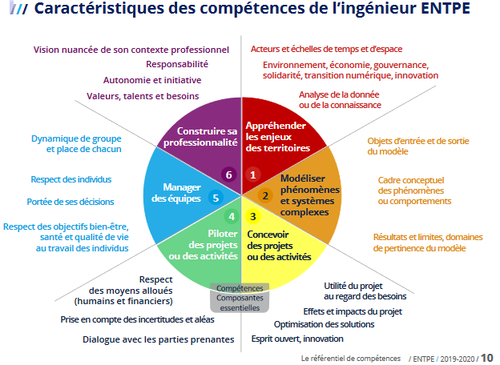
De quelle façon les contenus des enseignements liés à la transition sont-ils abordés (détails des volets scientifiques, économiques, sociaux…) ?
De manière générale, l’enseignement à l’ENTPE suit trois principes pédagogiques :
1) Permettre à l’étudiant de construire son parcours de formation
2) Soutenir l’apprentissage en profondeur
- Favoriser les collaborations entre étudiants
- Valoriser la diversité des modalités pédagogiques
- Responsabiliser l’étudiant dans son processus d’apprentissage
3) Proposer un dispositif de formation cohérent
- Permettre à l’étudiant de s’approprier les compétences de l’ingénieur ENTPE
- Le plonger dans la complexité, dans des situations professionnelles authentiques
- L’entraîner à apprécier la qualité de son travail
- L’aider à prendre du recul pour s’adapter à l’incertitude
Les contenus liés à la transition sont abordés de différentes manières. Ils peuvent être abordés dans une approche interdisciplinaire, dans le cours Ecologie et Environnement ; ou en lien avec des matières disciplinaires, comme dans les autres cours mis en avant dans la question 1. Les volets économiques et sociaux sont développés dans des situations contextualisées proches de la réalité professionnelle.
En complément, pour accompagner la mise en place de l’approche par compétences et entraîner le développement de celles-ci, l’ENTPE a mis en place les Situations d’Apprentissage et d’Evaluation :
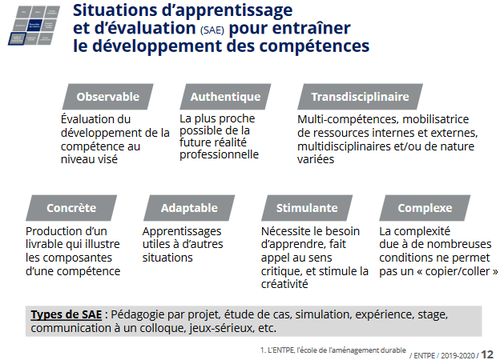
Par exemple, la SAE « Projet au Service d’un Territoire » rassemble en 2ème année des élèves de différents départements autour d’un projet de territoire, permettant la transversalité, comme par exemple sur la mise en place d’un Plan Climat-Air-Energie Territorial.
Comment ces enseignements sont-ils reçus par les élèves ?
Les élèves sont généralement demandeurs de ces aspects dans leur formation et apprécient les enseignements sur ces questions, en particulier lorsque ceux-ci sont déployés avec une pédagogie active et innovante.
Toutefois, ils souhaiteraient également que l’école aille plus loin, notamment en donnant plus de cohérence et de visibilité à ces enseignements. Un sondage réalisé par les étudiants début 2020 indiquait que 54 % des étudiants pensent que la formation pourrait être approfondie sur ces enjeux. La situation est néanmoins hétérogène : selon les voies d’approfondissements, les étudiants sont plus ou moins demandeurs et considèrent que la formation intègre plus ou moins bien les enjeux de la transition écologique.
Quels modules parallèles ou activités pédagogiques sont organisés pour sensibiliser / informer sur les questions de transition écologique (séminaires de rentrée, interventions d'experts, journées dédiées, gamification (escape game etc..)) ?
En plus des cours, l’ENTPE organise à la rentrée des ateliers Fresque du climat pour l’ensemble des première année, en formant des personnels et des étudiants de l’établissement à l’animation en amont. L’ENTPE propose aussi la conférence « The Big Conf » de l’association Avenir Climatique depuis quelques années.
L’ENTPE a débuté une valorisation des engagements des étudiants, avec la mise en place d’une unité de cours « Valorisation de l’engagement étudiant » se traduisant par une mention sur le diplôme et d’éventuels aménagements d’emploi du temps. Cet engagement permet de mettre en pratique des savoir-faire et des savoir-être et de se retrouver dans une posture active.
Le « Projet d’innovation au choix », réalisé en 1ère année -cf. 1.5), leur permet d’engager une action qui leur tient à coeur dans le cadre d’une unité de cours, avec trois modalités : projet social, projet environnemental ou projet entrepreneurial.
Les Situations d’Apprentissage et d’Evaluation permettent aussi des activités pédagogiques variées (voir question 5).
Les enseignants de votre établissement sont-ils formés aux enjeux de la transition écologique ? Si oui, de quelle manière (cursus initial, formation continue, organisme dispensaire…) ? Si non, est-ce une évolution envisagée à court terme ? La connaissance des enjeux écologiques et l'interdisciplinarité ont-elles valorisées dans le recrutement du corps professoral ?
Les enseignants ne sont pas spécifiquement formés aux enjeux de transition écologique, au-delà de ceux qui le sont dans leur cursus initial, par leur activité de recherche ou leur exercice professionnel.
Au cours d’un sondage effectué en 2020 dans le cadre d’un travail de fin d’études d’un étudiant, les enseignants de l’ENTPE se sont dit assez formés à ces thématiques dans leur vie professionnelle et quotidienne (plutôt oui et tout à fait oui à 89%), mais se sentent un peu moins formés à enseigner la transition (plutôt oui et tout à fait oui à 66%) et sont demandeurs d’une telle formation (à près de 60%).
L’Accord de Grenoble de la COP2 étudiante, signé par la directrice de l’école le 12 avril 2021, prévoit la mise en place d’une formation régulière des enseignants de l’école aux enjeux de la transition écologique.
Quels sont les débouchés de vos formations ? Dans quelle mesure ces débouchés sont-ils en adéquation avec la transition écologique ?
L’ENTPE forme des ingénieur.e.s de l’aménagement durable des territoires qui imaginent, construisent et gèrent les territoires d’aujourd’hui et de demain via ses différentes spécialités (urbanisme, génie civil, bâtiment, transport, environnement). Ainsi ses différentes formations proposent des débouchés variés en adéquation avec la transition écologique des territoires.
L’école compte environ une moitié d’étudiants fonctionnaires dépendant du Ministère de la Transition Ecologique et travaillant pour lui en sortie d’études. Ces ingénieurs fonctionnaires vont agir au coeur des politiques du ministère, au niveau national, local ou européen.
Les ingénieurs civils vont eux agir dans le cadre de ces politiques en entreprise privée, en bureau d’études, dans une société exploitant un service public, ou encore dans une collectivité territoriale.
Quelle place donnez-vous aux entreprises engagées dans la transition écologique et dans 'Économie Sociale et Solidaire lors de vos forums d'entreprises, interventions d'Alumni, ou dans les projets, études de cas des étudiants ?
Près de 600 vacataires extérieurs, dont un bon nombre issus des entreprises de l’aménagement durable des territoires, interviennent en formation. Ces entreprises sont engagées pour la plupart dans des démarches de transition écologique et les études de cas qu’elles proposent permettent d’illustrer des actions réelles en cours. Les modalités et la place accordée à ces entreprises sont variables selon les voies d’approfondissement. Pour certaines d’entre elles, les questions en lien avec la transition écologique, la responsabilité sociétale ou l’économie sociale et solidaire sont centrales.
On peut ainsi citer les exemples suivants de mise en oeuvre de transitions concrètes dans la formation. En aménagement et politiques urbaines, les étudiants de l’unité de cours atelier urbain inter-formations sont confrontés à une vraie mise en situation professionnelle à travers la commande d’un maitre d’ouvrage. En bâtiment, les étudiants participent à des visites, rencontres et évènements avec des professionnels et conçoivent des jeux sérieux pédagogiques (escape game) sur les thématiques de transition énergétique, environnementale et numérique. En transport, le module de cours de 2e année acteur et enjeux du secteurs des transports propose un serious game avec l’entreprise Keolis, dont le but est de développer les transports collectifs, de limiter l’usage de la voiture et de réduire les émissions de gaz à effet de serre. En risques, pollutions et nuisances, le projet aménagement de 3e année permet aux étudiants de répondre à un besoin réel d’une collectivité. En cours d’eau, littoral et voies navigables une école de terrain de 3 jours sur le bassin de Thau vise à sensibiliser les étudiants aux enjeux d’aménagement et de préservation des zones côtières, avec notamment une table ronde "Changement climatique, plastiques, pollutions, quelles solutions ?".
Toutefois, il est remonté l’année dernière de la part de certains étudiants que les entreprises engagées dans la transition écologique et dans l'Économie Sociale et Solidaire n’étaient pas assez représentées à l’école notamment lors du forum d’entreprises ou des afterworks. Pour répondre à cette problématique, un groupe d’étudiants travaille cette année sur la réalisation d’un forum de l’ingénierie alternative et engagée, qui se grefferait probablement au forum d’entreprises traditionnel.
Avez-vous identifié les principaux impacts des métiers de vos diplômés sur le climat et la biodiversité ? Si oui, quels sont-ils ? Vos formations présentent-t-elles des pratiques professionnelles t personnelles permettant d'identifier et de réduire ces impacts ? Concrètement, lesquelles ?
Les diplômés de l’ENTPE possèdent des compétences dans différents champs de l’aménagement durable de territoires. Ainsi les ingénieur.e.s de l’ENTPE sont capables de traiter dans leurs métiers différents enjeux climat/biodiversité : élaboration des PCAET, des plans de qualité de l’air, développement d’une offre de transports moins émetteurs de CO2, rénovation énergétique des bâtiments, confort dans le bâtiment, matériaux biosourcés et recyclés dans la construction, mesure et compensation des impacts des aménagements sur la biodiversité, lutte contre l’artificialisation des sols et les îlots de chaleur…
Pensez-vous que la demande sur le marché du travail pour les métiers de vos diplômés est ou sera menée à évoluer dans le cadre d'une transition écologique ? Si oui, comment et pourquoi ?
Comme dit précédemment, l’école forme des ingénieur.e.s de l’aménagement durable des territoires : ses débouchés font pour la plupart partie des « emplois verts » d’aujourd’hui et de demain dont la demande sur le marché commence déjà à se développer.
A titre d’exemple le Plan de Relance 2020 s’appuie notamment sur la création d’emplois traitant de thématiques sur lesquelles les ingénieur.e.s de l’ENTPE sont qualifiés (selon les spécialités) : infrastructures de transport et mobilités vertes, énergie, logement et rénovation énergétique des bâtiments, économie circulaire et circuits courts, lutte contre l’artificialisation des sols, eau et biodiversité…
Les enjeux écologiques et sociaux sont-ils au cœur des stratégies de recherche de votre tablissement ? Comment la stratégie de recherche favorise-t-elle spécifiquement la recherche ransdisciplinaire et interdisciplinaire en lien avec les enjeux de transition écologique ?
Les enjeux écologiques et sociaux sont au coeur des objets de recherche des 5 laboratoires de l’école. Peuvent être cités la lutte contre les discriminations via les aménagements urbains, la performance énergétique des bâtiments, la gestion des risques écotoxicologiques, l’impact de la pollution humaine sur les hydrosystèmes, le développement de nouvelles mobilités, aménagement et mobilité, les matériaux biosourcés pour la construction, l’impact environnemental des déplacements.
Au sein du dispositif de recherche de l’école interviennent des mécaniciens, des sociologues, des anthropologues, des politistes, des mathématiciens, des écologues, des physiciens du sol, des économistes, des géographes ou des informaticiens. L’ENTPE a déjà une histoire longue de plusieurs décennies de recherche interdisciplinaire.
Par ailleurs, chaque laboratoire de l’école fait partie d’une unité mixte de recherche qui est désormais le premier lieu de coopération. Deux de ces UMR (Environnement Ville et Sociétés et Laboratoire d’Ecologie des Hydrosystèmes Naturels et Anthropisés) ont une approche transdisciplinaire d’enjeux écologiques et/ou sociaux.
Votre établissement soutient-il de manière spécifique la recherche (thèses, postdoc, travaux d'enseignants-chercheurs) en lien direct avec les enjeux de transition écologique, et les chercheurs qui s'engagent dans cette voie ? Quelle est la proportion du budget recherche allouée à ces travaux ?
L’essentiel des travaux de recherche conduits à l’école ayant un lien direct ou, plus rarement, indirect avec les enjeux de transition écologique, le financement de ses laboratoires par l’école peut être considéré comme un financement de recherche en lien avec la transition écologique.
Existe-t-il des chaires ou des centres de recherche sur le sujet de la transition écologique au sein de votre établissement ? Si oui, quels sont leurs axes de travail ? Combien de professeurs intègrent-ils ?
Non, il n’existe pas de chaire dédiée à la transition écologique. En revanche, de nombreux objets de recherche des laboratoires de l’école sont en lien direct avec la transition écologique : par exemple l’impact des activités humaines sur les hydrosystèmes, l’empreinte écologique des déplacements, les matériaux biosourcés pour le bâtiment, les matériaux recyclés pour les infrastructures de transport et l’efficacité énergétique des bâtiments.
Les chercheurs sont-ils amenés à réfléchir à l'impact de leurs activités (pratiques et finalités) de recherche ? Si oui, comment ?
Dans le cadre de sa thèse, Maude Gallimard doctorante au sein du Laboratoire aménagement économie transports (LAET) de l'ENTPE, travaille sur l'évaluation de l’empreinte carbone de la recherche académique et commence donc à se pencher sur ces questions. Elle a d’ailleurs participé au concours régional 2020 de « Ma thèse en 180 secondes ».
Existe-t-il sur le campus des associations étudiantes dont l'activité est centrée sur l'action en faveur de la transition écologique ? Quelles sont-elles ?
Il s’agit principalement de l’association Ingénieur.e.s Sans Frontières qui réalise chaque année plusieurs actions en faveur de la transition.
D’autre association mènent ponctuellement des actions liées à la transition écologique : comme Human Bee Ing qui propose des conférences de sensibilisation (via TEDx notamment) ou ENACTUS qui développe des projets d’entreprenariat social.
Quelles sont les thématiques abordées par ces associations (alimentation durable, réduction des déchets, sensibilisation…) ? Quelles actions entreprennent-elles ? Quelle est leur échelle d'impact (l'ensemble ou une certaine catégorie d'étudiants, les personnels de l'établissement, échelle plus large que l'établissement) ? Ces associations travaillent-elles par elles-mêmes sur le campus ou agissent-elles en partenariat avec l'administration de l'établissement (et si oui, à quel niveau) ?
Ingénieur.e.s sans frontières aborde un grand nombre de thématiques : alimentation durable, réduction des déchets, sensibilisation aux enjeux actuels, solidarité internationale...
De nombreuses actions sont ainsi menée chaque année :
- Organisation du festival Alimenterre de sensibilisation à l’alimentation durable et solidaire ;
- Animation d’ateliers DIY zéro-déchet (tawashi, sac à pain, beewrap, cotons démaquillants…) ;
- Vente de Noël de produis issus du commerce équitable ; - Projet visant l’amélioration du tri sélectif au sein de l’école ;
- Réalisation et distribution d’éco-bloc à partir de feuilles de brouillons récupérées ;
- Organisation de conférences-débat sur les enjeux actuels…
Ces actions sont avant tout à destination de tous les étudiants de l’école mais également pour la plupart ouvertes au personnel de l’établissement.
L’association travaille majoritairement par elle-même sur le campus mais est amenée à travailler en partenariat avec les services support de l’école dans le cadre de certains projets comme celui sur le tri sélectif.
Comment valorisez-vous l'engagement citoyen et associatif de vos étudiants ?
L’ENTPE commence à valoriser l’engagement des étudiants, avec la mise en place d’une unité de cours « Valorisation de l’engagement étudiant » se traduisant par une mention sur le diplôme et d’éventuels aménagements d’emploi du temps. Cet engagement permet de mettre en pratique des savoir-faire et des savoir-être et de se retrouver dans une posture active.
Le « Projet d’innovation au choix », réalisé en 1ère année -cf. 1.5), leur permet d’engager une action qui leur tient à coeur dans le cadre d’une unité de cours, avec trois modalités : projet social, projet environnemental ou projet entrepreneurial.
Comment se financent les associations étudiantes ? Quelle visibilité leur est accordée au sein de l'établissement ?
Les associations sont essentiellement subventionnées par la Contribution de vie étudiante et de campus (CVEC) et des subventions directes de l’école.
Il s’agit d’associations étudiantes à destination des étudiants : elles communiquent donc auprès d’eux avant tout via des listes de diffusion mail de l’école et, selon l’action, parfois élargis aux listes du personnel.
Néanmoins l’équipe de communication de l’école peut relayer ces actions/évènements via ses réseaux et sur les écrans de l’école afin de leur donner davantage de visibilité.
Votre établissement évalue-t-il son impact environnemental à l'aide de méthodes quantitatives normalisées, comme l'Analyse du Cycle de Vie ou le bilan carbone ? À quelle fréquence ? Quels postes de dépense intègre-t-il (notamment, comprend-il les mobilités, c'est-à-dire les voyages en avion des tudiant.e.s, des professeur.e.s et des conférencier.e.s) ?
Les consommations d’énergie, les émissions de GES qui leur sont liées, la consommation d’eau de ville et d’eau de nappe sont suivies en continu et font l’objet d’actions d’amélioration régulières.
Comment votre établissement réduit-il au quotidien son empreinte écologique (végétalisation, incitations, économies d'énergies, alimentation responsable, réduction et tri des déchets …) ? Quels sont les résultats de ces actions ?
Chauffage urbain depuis la construction de l’ENTPE à Vaulx-en-Velin, arrosage des espaces verts avec de l’eau de nappe pour favoriser la biodiversité, renforcement de l’isolation des bâtiments, suivi et pilotage des consommations, changement des éclairages (en cours), déconnection du système de refroidissement des équipements scientifiques par l’eau de nappe et réinfiltration, infiltration des eaux pluviales (en cours), tri des déchets.
En 2019 par rapport à 2012, l’ENTPE a réduit de 79% ses émissions de GES liées à sa consommation d’énergie, de 30% sa consommation d’énergie (29% depuis 2011 corrigé des DJU), de 21% sa consommation d’eau potable (52% depuis 2007), de 45% sa consommation d’eau de nappe (avant réinfiltration).
Comment votre établissement interagit-il avec son territoire et s'intègre-t-il dans des politiques publiques locales à visée durable ?
L’ENTPE a été implantée en 1975 dans la ZUP de Vaulx-en-Velin, ville nouvelle de l’agglomération de Lyon. Elle partage ses équipements sportifs avec les écoles, les collèges et des associations de la Ville de Vaulx.
Avec l’Université de Lyon, elle a signé un engagement sur les objectifs du PCET de la Métropole.
Son laboratoire LEHNA est engagé depuis de nombreuses années avec les collectivités territoriales dans l’Observatoire de Terrain en Hydrologie Urbaine (OTHU). Son laboratoire LAET collabore étroitement avec la Métropole et le syndicat mixte des transports sur les mobilités.
Votre établissement est-il labellisé DD&RS ? Si non, un travail est-il en cours pour obtenir le label, et à quel horizon ?
L’ENTPE a engagé une démarche d’autoévaluation dans l’objectif de déposer une demande de labellisation à l’automne 2021.
Quels blocages à la mise en place de dispositifs ou de mesures favorables à une transition écologique pouvez-vous identifier au sein de votre établissement (et à quel niveau) ?
De nombreuses actions sont engagées, que ce soit au travers des activités de recherche, l’évolution de la formation, dans la rénovation des bâtiments, la gestion des fluides et des déchets.
Êtes-vous au fait des différents mouvements étudiants et institutionnels portant sur la transition écologique tels que le Manifeste étudiant pour un Réveil Écologique, le REFEDD, le projet FORTES du campus de la transition ou le groupe de travail du Ministère de l'Enseignement Supérieur, de la recherche et de l'Innovation ? Quels mouvements connaissez-vous ?
Oui : REFEDD, Groupe TEE de la CPU, SDSN…
L’ENTPE a participé activement à la COP2 étudiante, et vient de signer l’ « Accord de Grenoble » qui en est issu.
Pouvez-vous décrire l'organisation mise en place afin de répondre à ce questionnaire (personnes ou organes en charge, parties prenantes impliquées, etc.) ?
- Chargé de mission Campus, Grands Projets, Investissement et DDRS
- Animatrice Développement Durable et Responsabilité Sociétale, Volontaire en Service civique
- Chargé de mission positionnement de l’école
- Direction
Avez-vous des messages pour d'autres acteurs, des commentaires, des choses à ajouter ?
Pas de réponses.

Dans quelle mesure votre établissement se donne-t-il pour objectif de former la communauté étudiante aux enjeux et aux métiers de la transition écologique ? Cet objectif est-il inscrit dans votre stratégie ?
L'école a inscrit dans son ‘mission-statement' le soutien à la transition écologique : “We integrate sustainability and ethics across our educational activities, research and internal processes, with the ambition to educate responsible managers and train better leaders able to tackle the unprecedented environmental and social challenges that our societies and economies are facing”.
ESCP Business School a fait de la transition écologique un axe de plus en plus important de sa stratégie et de nos activités d'enseignement. Nous avons pris plusieurs initiatives pour intégrer dans le curriculum de nos étudiants en formation première pour exposer tous nos étudiants à ces enjeux (programmes Bachelor, Pré-master, Master in Management, MBA). De même nous avons créé de nouveaux programmes centrés sur la transition écologique (par exemple notre MSc. en International Sustainability Management depuis 2017 ou MSc. en Sustainable Entrepreneurship and Innovation en 2018, sur nos campus de Berlin & Paris).
Les enjeux de la transition écologique ont également été intégrés par l'ensemble de la faculté dans l'élaboration de sa vision stratégique: “A united and fulfilled faculty that drives the school's leadership to impact business and society in a sustainable way”. Cette vision se décline dans la mission suivante: “Create sustainable positive impact on business and society through innovation and unique interconnectedness among activities (education, research, corporate partnerships,…)”.
D'un point de vue structurel, l'école a créé en 2018 la fonction d'Associate Dean for Sustainability transition afin de porter les enjeux de la transition écologique au sein des instances décisionnaires et stratégiques de l'école. Notre Dean for Sustainability Transition (Professeur Aurélien Acquier) siège au sein du Comité Exécutif de l'école. Il a été rejoint début 2020 par un chargé de mission transition durable. (CF question 4 de cette partie).
Dans quelle mesure des objectifs de transition écologique sont-ils inscrits dans le projet de transformation de votre établissement à court, à moyen, et/ou à long terme ? Notamment : une démarche d’auto-évaluation DD&RS (Plan Vert) a-t-elle été mise en place pour votre établissement ? (en vertu de l’article 55 de la loi Grenelle 1 du 3 août 2009, le Plan Vert doit obligatoirement être élaboré par tous les établissements d’enseignement supérieur).
Notre vision pour 2022 reprend dans un de ses points l’objectif de : « promouvoir la transition vers la durabilité sur tous nos campus ».
Nous sommes en pleine refonte de notre politique et parmi les éléments nous servant d’inspiration, la grille d’évaluation DDRS est centrale.
Nous avons également rejoint le réseau du Global Compact des Nations Unies dédié à ces questions dans les écoles de commerce : “Principle for responsible management education” (PRME). Cette organisation dispose de 6 principes fondamentaux. :
- Développer des compétences des futures managers afin qu’ils deviennent moteurs d’une économie mondiale inclusive et durable;
- Intégrer dans nos enseignements et activités en découlant les valeurs de responsabilité sociétale telles que présentées dans des initiatives internationales comme le Global Compact;
- Créer des cadres, du contenu, des processus et des environnements éducatifs facilitant un apprentissage efficace du leadership durable;
- S’engager dans des activités de recherches qui permettent de mieux comprendre le rôle, les dynamiques et l’impact des entreprises dans la création de valeur durable, sociale, environnementale et économique ;
- Interagir avec les gestionnaires d’entreprises afin d’augmenter notre compréhension des défis lors de la mise en place d’une responsabilité sociale et environnementale et comprendre comment les appréhender;
- Enfin faciliter et soutenir le dialogue et les débats entre les professeurs, étudiants, entreprises, gouvernements, consommateurs, média, société civile liés aux enjeux critiques de la responsabilité sociale et environnementale mondiale.
La souscription de ces principes a pour conséquence la rédaction d’un rapport d’auto-évaluation que nous sommes également en train de rédiger.
Comment sont construites les maquettes pédagogiques de votre établissement ? Les étudiants sont-ils associés à l’élaboration des programmes de formation ? Si oui, à quelles étapes et selon quelles modalités ? Si non quelles propositions feriez-vous en la matière ?
Notre établissement compte 41 programmes diplômants ou certifiants, allant du bachelor au doctorat.
Les maquettes pédagogiques sont conçues par des responsables de programme, issus de notre corps professoral permanent. L’école s’assure périodiquement de l’adéquation de ses programmes aux attentes du marché du travail, des étudiants et de la stratégie de l’école. Une instance au sein de l’école, l’European Teaching and Learning Committee (ETLC), et au sein de laquelle siège un le président de l’association AGORA (représentants élus des étudiants de tous les programmes et campus), discute des nouvelles orientations et valide les modifications de syllabus.
A la fin de chaque module de cours, les étudiants sont amenés à en évaluer le contenu par un questionnaire. En ce qui concerne les options de spécialisation et les programmes, des délégués de promotion sont systématiquement consultés. Leurs retours et suggestions sont discutés et intégrés dans les modifications de cursus et l'évolution des cours.
La dernière réforme du Master in Management (Programme Grande Ecole) a fait l'objet d'une large consultation avec les étudiants, notamment par le biais de l'Agora, et a notamment abouti à des modifications significatives dans le champ de la transition écologique, telles que la création d'un cours fondamental sur les enjeux de transition écologique et développement durable (nouveau cours de Master 1, première édition en janvier 2021) ainsi que la création d'un séminaire transversal sur les enjeux de transition au début de l'année de pré-master (depuis septembre 2019).
Existe-t-il un poste permanent de chargé.e de mission DD&RS ou de transition écologique au sein de votre établissement ? Si oui, depuis combien de temps ? Quelles sont ses missions ? Est-ce un emploi équivalent temps plein ? Quel est son positionnement dans l’organigramme ?
Un poste de chargé de mission transition durable a été créé début janvier 2020 (poste à temps plein). Ce poste est sous la direction du Dean of Sustainability qui est un professeur permanent, membre du COMEX nommé afin de piloter la transition durable de l'école (CF question 1 de cette partie).
Basé à Paris, ce poste est le point de contact multi-campus pour les questions développement durable.
Il vient en appui dans l'élaboration et la mise en place de la stratégie et assure également le lien avec les étudiants sur les questions de durabilité dans l'école.
Enfin, la plupart de nos campus ont attribué des missions transition écologique à des collaborateurs locaux. Nous sommes en cours de formalisation de ce réseau de référents DD au sein de chacun de nos campus.
La sensibilisation et de la responsabilisation des personnels et étudiants sur ces enjeux sont-elles inscrites dans les missions du/de la chargé.e de mission DD&RS ? Dans quelle mesure la communauté étudiante est-elle associée à ce processus d’éco-responsabilisation ?
La sensibilisation, formation et responsabilisation des personnels et étudiants sur ces enjeux sont en effet inscrites dans les missions du/de la chargé.e de mission transition durable et plus largement dans notre démarche de développement durable. Au-delà des actions de formation de nos étudiants que nous détaillons ci-après, nous pouvons mentionner les éléments suivants:
- Nous avons déjà réalisé plusieurs actions de sensibilisation auprès de certaines parties clé du personnel, notamment auprès de l'ensemble du Comité Exécutif de l'école et d'une partie des professeurs, qui ont réalisé la fresque du climat lors de notre Full Faculty Meeting en février 2019 ;
- Notre Full Faculty Meeting prévu en mars 2020 devait porter sur le développement durable, avec pour objectif d'étendre ce travail de sensibilisation à tous les professeurs - tous campus confondus ;
- L'événement a dû être reporté à cause de l'épidémie de Covid-19 ;
- D'autres campagnes de sensibilisation sont en cours de préparation ;
- Afin d'informer l'ensemble du personnel et des étudiants de l'avancement de ces sujets, une newsletter trimestrielle est en cours d'élaboration ;
- Les étudiants sont associés à ce processus par le biais d'échanges avec le chargé de mission DDRS, par exemple sur les enjeux de gestion de l'immobilier ou des enseignements.
Quelles sont les principales sources externes de financement de votre établissement ? Selon quels critères votre établissement noue-t-il des partenariats financiers et non-financiers ? Ces critères prennent-ils en compte l’investissement dans la transition écologique de vos partenaires ?
Doté d'un budget de 120 millions d'euros, ESCP Business School est, d'un point de vue juridique, une EESC (établissement d'enseignement supérieur consulaire), organisation à but non lucratif. Elle n'a pas bénéficié de financements externes (emprunt ou augmentation de capital) depuis sa création. Notre budget provient principalement des frais de scolarités des différents programmes, et de partenariats avec des entreprises ou institutions (internationales, européennes, locales etc) dans le cadre de chaires (CF question 3 partie 4) et de projets de recherche (CF question 1 partie 4). Il est complété par une dotation budgétaire de la CCI Paris /IDF.
Au cours de ces dernières années, nous avons obtenu plusieurs millions d'euros de financement en lien avec des projets de recherche sur la transition écologique, notamment le projet R2pi (financé par l'Union Européenne), la chaire économie circulaire et business models durables ESCP Deloitte, le centre de recherche sustbusy et plusieurs de nos chaires touchant à ces thématiques (CF question 3 partie 4).
Nous avons également des partenariats non financiers qui permettent l'organisation d'évènements, de séminaires et d'accompagnement des étudiants dans certains de leur projets de consultance (CF question 2 partie 3).
Une liste des organisations et entreprises actuellement partenaires de votre établissement este-lle disponible sur votre site Internet (public et privé) ?
Oui, la liste de nos partenaires est disponible à cette adresse : https://www.escpeurope.eu/corporate-services/partnerships
Nous avons également des pages dédiées à toutes nos chaires avec nos partenaires et une page pour présenter nos forums d'entreprises spécifiques à chaque campus.
Y a-t-il dans vos enseignements obligatoires des modules concernant l'apprentissage des fondements de la crise écologique et de ses conséquences ? Si oui, en quelle année sont-ils dispensés t avec quel poids dans les crédits obtenus ?
Depuis 2018, nous sommes engagés dans une refonte ambitieuse de nos programmes afin d’accorder plus de place aux enjeux de soutenabilité. Nous avons pour objectif que 100% des étudiants dans nos programmes généralistes, soient formés aux enjeux climat et à la compréhension des limites planétaires. La majorité de ces programmes incluent ainsi des enseignements obligatoires abordant la crise écologique et ses conséquences :
Bachelor in Management :
La formation comprend un cours fondamental de 30 heures en “Business Ethics & CSR” (B3 - Berlin). Il y est également prévu un projet d’Impact Social (SIP) dans le cadre de la deuxième année de Bachelor, où nos étudiants sont amenés à s’interroger et à agir sur des enjeux sociaux, comme la pauvreté, l’accès aux premières nécessités etc. Ils peuvent le faire en se rendant à l’étranger via une mission humanitaire. L’idée est de leur permettre de mieux appréhender les difficultés du monde actuel, tout en comprenant comment leur action individuelle peut faire changer les choses.
Programme Master in Management - Grande Ecole :
Lors de leur année de pré-master (depuis 2019), les étudiants suivent un séminaire de 24h “Designing Tomorrow - Business and Sustainability”. Dans le cadre de ce séminaire de 3 jours / 3 mois, les 400 étudiants se plongent dans les problématiques du climat, sont exposés aux grands défis écologiques et explorent les impacts de ces enjeux ainsi que les solutions associées pour les entreprises. A la suite du séminaire de 3 jours, les étudiants réfléchissent par groupe, durant 3 mois, aux problématiques du développement durable dans un secteur de leur choix.
À partir de 2020 - Master 1 / Semestre 2 : la réforme du master, qui va être déployée à partir de septembre 2020, est marquée par la création d’un cours fondamental de 16h en développement durable, couvrant notamment les grands enjeux climat / énergie, la question des limites planétaires et leur lien avec nos modèles de croissance, etc.
Full-time MBA in International Management :
Les étudiants suivent un cours fondamental en “Sustainability & Business Ethics” (15h). Ils doivent réaliser des projets Capstone et peuvent souscrire à des électifs à dimension environnementale et sociale
Executive MBA (depuis janvier 2020) :
Cette année l’induction seminar on sustainability - “Leadership for a sustainable world : transforming people and business” - a permis au 100 participants du programme ont, pendant toute une semaine, été exposés aux enjeux climat / énergie (à travers notamment la fresque du climat) ont pu rencontrer des professionnels du domaine.
Parmi les évolutions en cours, nous sommes en train de créer un module “Business & Society” dans le programme doctoral, afin que chaque doctorant soit amené à appréhender les dimensions environnementales et sociétales de ses recherches.
La transition écologique fait-elle l'objet dans votre établissement de cursus spécialisés ? Si oui, quels sont-ils ?
Nous avons plusieurs cursus spécialisés sur la durabilité, l’éthique et la responsabilité :
- MSc in Entrepreneurship and Sustainable Innovation (Berlin – Paris)
- MSc in International Sustainability Management (Berlin – Paris)
Nous avons aussi des masters spécialisés dont certains contenus sont liés à la durabilité, l’éthique et la responsabilité :
- Executive Master in Energy Management (London – Paris – Berlin – Madrid)
- MSc in Energy Management (London)
- MSc International Food and Beverage Management (Turin – Paris)
- MS in Marketing and Communication (Paris)
- MS in International Project Management (Paris)
Enfin, certains de nos programmes généralistes offrent des options de spécialisation sur ces thèmes :
Master in Management (Grande Ecole):
▪ Un module « d’art thinking » dans des parcours entrepreneuriaux, centrés autour des questions de durabilité (improbable planète - CF question 6 de cette même partie)
▪ Un module de 30 heures focalisé sur la durabilité pour les étudiants en spécialisation marketing
Les Executive MBA disposent d’un portefeuille de cours électifs sur la durabilité, l’économie circulaire, la compliance et les droits humains.
Certains MSc généraux, comme le MS Finance par exemple, prévoit un Séminaire de 15h00 sur les enjeux d’éthique et de Business conduct.
L’ensemble du livret pédagogique, c’est-à-dire la totalité des modules d’enseignement, intègre-t-il les enjeux de transition écologique actuel de manière cohérente et ambitieuse ? Comment faites-vous en sorte que la formation aux enjeux écologiques ne soit pas restreinte à des cours spécialisés ? Comment articulez-vous les formations pour favoriser la transversalité et le dialogue des formations face à cet enjeu ?
Notre stratégie est d'exposer l'ensemble de nos étudiants, dans nos programmes généralistes, aux enjeux de la transition écologique. Comme précédemment évoqué, cela passe par la création de modules obligatoires (séminaires, cours fondamentaux) et optionnels.
Les cours obligatoires visent à exposer l'ensemble de nos étudiants à ces enjeux. Les cours optionnels (électifs, options de spécialisation) sont offerts aux étudiants souhaitant se spécialiser plus avant.
Afin de ne pas cantonner la sustainability à un cours indépendamment du reste du cursus, plusieurs axes sont explorés pour mieux intégrer les enjeux de sustainability à l'ensemble des disciplines. Pour ce faire, nos séminaires transverses impliquent des professeurs de différents départements qui se forment aux enjeux climat et tissent des liens avec leurs disciplines. De même, plusieurs options de spécialisation (par exemple en Marketing, Économie) ont revu leur contenu pour intégrer les enjeux de transition écologique et sociale.
Enfin nous avons initié en mai 2020 un questionnaire à destination de l'ensemble des professeurs pour comprendre les leviers et les freins à l'intégration de ces enjeux dans leurs enseignements. Les résultats sont en cours d'analyse et devraient nous aider à identifier des leviers de diffusion au sein des programmes.
Avez-vous mis en place une approche par compétences et si oui, avez-vous identifié les compétences utiles à la transition écologique acquises par vos diplômés au cours de leur parcours ? (ex: système de compétences DD&RS)
Pour chaque programme nous avons développé une série de learning goals ou « Intended Learning Outcomes » (ILO). Pour le Master in Management par exemple, un des ILO est le suivant : « Prendre en compte les enjeux sociaux, sociétaux et éthiques dans les situations de business ». De manière plus générale, les valeurs liées à la durabilité, la responsabilité sociétale et l’éthique sont incorporées à différents niveaux.
Tous les MS et MSc ont un ILO sur la durabilité et l’éthique, « Apprécier la nécessité d’inclure l’éthique, la durabilité et la RSE dans votre management et vos décisions ». Notre bachelor dispose de l’ILO suivant : «Appréhender les enjeux éthiques dans l’évaluation des problèmes commerciaux ».
Dans le cadre de la réforme du curriculum du programme MBA, deux ILOs intègrent la dimension écologique et d’éthique :
« Démontrer la capacité d'appliquer des cadres conceptuels à différents domaines du management international pour fournir des solutions intégratives et durables aux problèmes des entreprises » et « Identifier individuellement ou en équipe les questions actuelles de responsabilité sociale dans les entreprises et expliquer les coûts et les bénéfices associés aux différentes réponses alternatives des entreprises. »
De quelle façon les contenus des enseignements liés à la transition sont-ils abordés (détails des volets scientifiques, économiques, sociaux…) ?
En tant qu’école de management, notre approche sur ces sujets est construite autour de plusieurs principes directeurs:
- Exposer nos étudiants à l’ampleur des enjeux. Ceci est un défi important pour éviter de se focaliser trop vite vers des solutions qui ne seraient pas à la hauteur des enjeux. La première partie de nos enseignements est donc consacrée à la compréhension des enjeux et du défi sociétal que représente la crise écologique (climat, biodiversité, effondrement du vivant et limites planétaires). Pour ce faire, nous utilisons des outils variés, tels que la fresque du climat, des ressources externes, des intervenants externes, etc.
- Promouvoir la pensée multidisciplinaire - les enjeux liés à la transition sont fondamentalement interdisciplinaires. Nos enseignements sur ces questions cherchent donc à articuler les interfaces entre économie, management, sociologie, sciences naturelles, géopolitique, etc.
- Stimuler l’esprit critique, la réflexivité et questionner le “business as usual”, interroger la gouvernance de l’entreprise et la régulation - Penser ces questions sous l’angle de l’innovation (technologique, d’usage, de marché, et politique).
Engager les étudiants de manière pratique et active, avec des interactions avec des professionnels, ou via leur engagement actif autour de projets de consultance.
Comment ces enseignements sont-ils reçus par les élèves ?
Les retours des étudiants sont généralement très positifs, et ces enseignements répondent à une demande croissante de leur part. Ceci explique aussi l'accroissement de ces thématiques dans notre portefeuille de cours et de programmes.
Quels modules parallèles ou activités pédagogiques sont organisés pour sensibiliser / informer sur les questions de transition écologique (séminaires de rentrée, interventions d’experts, journées dédiées, gamification (escape game etc..)) ?
Nous organisons régulièrement des évènements thématiques autour des enjeux de durabilité, que ce soit dans le cadre des enseignements ou bien extra-curriculaire (la chaire économie circulaire a organisé une matinale sur l'évaluation de l'économie-circulaire, ouverte à la fois aux externes et aux étudiants).
En 2019/2020, plusieurs séminaires de rentrée portaient sur l'enjeu de la transition écologique.
L' « induction week » (première semaine de lancement du programme) des Executive MBA (E-MBA) de cette année était intitulée « Leadership for a sustainable World: Transforming People and Business ». Cet événement comprenait une phase de sensibilisation et compréhension des enjeux (notamment via des ateliers « fresque du climat »), suivi d'interventions de cadres dirigeants et conférences des professeurs sur l'impact de l'anthropocène sur l'entreprise et sa gouvernance. Durant la seconde phase du séminaire, les participants ont pris part au séminaire « Improbable planet » dont le principe est de mobiliser la création artistique pour appréhender les transformations sociales et les relier à un projet entrepreneurial ou managérial. Une soirée de présentation des œuvres a été organisée au Grand Palais, où des échanges ont pu avoir lieu sur des enjeux durables. Cette semaine a été un moment fondateur pour faire émerger des questionnements personnels de la part des participants, sur leurs choix personnels et professionnels face aux enjeux de soutenabilité.
Depuis septembre 2019, les 400 nouveaux étudiants du programme Grande Ecole débutent leur scolarité en participant à un séminaire « Designing Tomorrow – Business & Sustainability ». Durant 3 jours, tous les étudiants de la promotion ont d'abord été formés aux grands enjeux du climat pour ensuite comprendre comment ces enjeux affectent l'entreprise, en termes de risques mais aussi d'opportunités. Accompagnés par 14 Professeurs ESCP Business School de différents départements (marketing stratégie, entrepreneuriat et innovation, RH, management, développement durable, supply chain et logistique, finance, droit), les étudiants ont pu : · · · · réfléchir de manière critique aux limites du « business as usual », identifier, à travers des grands témoins d'entreprise et des workshops impliquant une vingtaine de professionnels partenaires, des leviers d'innovation dans ce domaine comprendre comment le développement durable redéfinit les disciplines classiques du management simuler une prise de décision stratégique sur une gestion de crise afin de saisir la complexité des processus de décision sur les enjeux de développement durable.
Puis les trois mois suivants, les étudiants ont mené un travail d'enquête en petits groupes sur différents secteurs, pour analyser les grands enjeux soulevés par la transition écologique, et les réponses possibles de la part des acteurs économiques. Le meilleur dossier a été récompensé par un prix de la chaire Economie Circulaire, et portait sur l'impact énergétique du Big Data.
En 2019, l'école a organisé tout un cycle de conférence “Stand up for a sustainable world” avec des intervenants de premier plan, dont le but était de sensibiliser le monde des affaires à l'enjeu majeur que représentait la conservation de la planète. Parmi les intervenants, le docteur Ameenah Gurib- Fakim, Présidente de la République de Maurice de 2015 à 2018, lauréate du prix “Women in Science” de l'Oréal et 96ème femme la plus influente du monde en 2017, selon le magazine Forbes. Il y eu également Pierre Larrouturou, (Économiste et initiateur du Climate Finance Pact), le Professeur Jaideep Prabhu, (Professeur à l'Université de Cambridge et co-auteur du best-seller “Jugaad Innovation and Frugal Innovation”), son Altesse Sérénissime le Prince Albert II de Monaco et Paul Polman (ex-PDG Europe P&G, CFO Nestlé et CEO Unilever, co-fondateur et Président d'IMAGINE - une B-Corp et une fondation visant à accélérer l'engagement des entreprises pour l'atteinte des Objectifs de Développement Durables 2030 de l'ONU).
À Berlin, en janvier 2020 a été organisée, pour la troisième année, une conférence sur l'innovation durable ainsi qu'une career week sur la thématique des SDG. Cette conférence est devenue un rendez- vous incontournable du calendrier de notre campus Berlinois. L'événement se déroule au cœur de la capitale allemande, juste à côté de la porte de Brandebourg, sur le site de l'Allianz Forum. La conférence sert de plateforme réunissant étudiants, diplômés, professeurs et partenaires institutionnels de l'école : Les universités, le monde des affaires, les institutions gouvernementales et les ONG se rencontrent, discutent et échangent sur la manière de combiner la gestion, l'esprit d'entreprise et la durabilité. Ainsi, plusieurs centaines d'étudiants de ESCP Business School apprennent les uns des autres, élargissent leurs réseaux et réfléchissent aux objectifs de développement durable (SDG) des Nations unies et à l'Agenda 2030.
Des experts professionnels interviennent régulièrement dans l'ensemble des cours dédiés à ces questions (consultants en développement durable, éco-conception, bilan carbone, gestion des déchets et recyclage, climat, la mode durable etc.).
Cette année, nous avions planifié l'organisation d'un forum solidaire et durable, regroupant plusieurs évènements : le Parigot green festival, des tables rondes sur la durabilité, ainsi que l'économie sociale et solidaire, une conférence organisée par Tribunes ESCP. L'évènement a été suspendu pour cause de confinement.
Les enseignants de votre établissement sont-ils formés aux enjeux de la transition écologique ? Si oui, de quelle manière (cursus initial, formation continue, organisme dispensaire…) ? Si non, est-ce une évolution envisagée à court terme ? La connaissance des enjeux écologiques et l’interdisciplinarité sont-elles valorisées dans le recrutement du corps professoral ?
Depuis 2017, nous mobilisons des outils tels que la fresque du climat dans le cadre de certains enseignements et plusieurs professeurs sont devenus formateurs. Au vu de la qualité de cet outil, nous le mobilisons pour former les enseignants et la direction générale de notre établissement autour de ces enjeux.
Courant 2019, l'ensemble des membres du Comité Exécutif de l'école a été formé aux enjeux climat à travers la fresque du climat.
De même, une quarantaine de professeurs a été formée lors d'un Full Faculty Meeting (FFM) organisé à Berlin en 2019, puis dans le cadre d'une auto-formation.
Nous avions prévu de poursuivre ce travail lors du FFM de 2020, dans le cadre d'une journée intégralement consacrée à la stratégie d'ESCP sur ces enjeux. Cet événement a été reporté du fait de l'épidémie de Covid-19.
Les recrutements de Professeurs sont décidés par les départements, en interaction avec le décanat et nos directeurs de campus. L'interdisciplinarité et la connaissance des enjeux écologiques font partie des critères pris en compte dans le recrutement de nouveaux professeurs, en particulier dans des champs disciplinaires où nous constatons que ces compétences sont à développer.
Quels sont les débouchés de vos formations ? Dans quelle mesure ces débouchés sont-ils en adéquation avec la transition écologique ?
Les domaines principaux vers lesquels nos étudiants se dirigent sont : la finance, les assurances, le conseil, les technologies d'information et de communication.
Il y a cependant de plus en plus de nos alumni qui se tournent vers le volet durable de leurs expertises, notamment dans le domaine de la finance durable. Par exemple en 2019, lors de l'enquête d'insertion des MiM, 24% des répondants ont identifié des thématiques durables à leur poste actuel, contre 20% en 2018. Parmi nos alumni, nous avons notamment des fondateurs d'incubateurs d'innovation sociale comme Make sense et Ticket for change.
De plus, de nombreux alumni restent intéressés par des sujets liés à la durabilité, comme en témoignent les 1 600 membres du groupe alumni spécial développement durable.
Quelle place donnez-vous aux entreprises engagées dans la transition écologique et dans l'Économie Sociale et Solidaire lors de vos forums d'entreprises, interventions d'Alumni, ou dans les projets, études de cas des étudiants ?
Nous sommes très vigilants à rendre visibles auprès de nos étudiants les entreprises engagées dans la transition écologique et l’ESS. Elles interviennent à l’ESCP Business school de plusieurs façons :
- Des rencontres avec des professionnels sont régulièrement organisées, soit dans le cadre des cours, de leurs options de spécialisation, de leurs activités associatives, ou dans le cadre de petits déjeuners, conférences rencontres, etc.
- De nombreux professionnels interviennent dans le cadre des cours et options de spécialisation. Par exemple, dans le cadre des cours en économie circulaire, les élèves du Master of Science in international sustainability ainsi que ceux de l’option ReThink (75 étudiants au total) ont pu travailler par groupe de 5 ou 6 personnes durant un semestre sur des projets focalisés sur le thème du plastique, en lien avec des partenaires tels que Citéo, Deloitte, Circul’R, ExcelRise qui les ont accompagné dans leur travail.
- Nous organisons régulièrement des conférences/séminaires dans lesquels ces entreprises sont représentées. Sur le campus de Paris, Les matinales de l’économie circulaire, organisées par la chaire Economie Circulaire réunissent différents professionnels autours d’enjeux tels que la géopolitique de l’économie circulaire, la mesure des enjeux de circularité ou le rôle des technologies dans ces processus de transformation (CF question 6 partie 2);
- Plusieurs campus ont organisé des journées métiers thématiques: Début 2019, l’association Fleur de Bitume a organisé à Paris un forum autour des métiers de l’économie sociale & solidaire. (Cette année, l’événement organisé avec l’administration de l’école a dû être annulé pour cause de covid.) En janvier 2020, notre campus de Berlin a organisé la troisième édition de la sustainability innovation conference et un carreer week sur les métiers de la transition (CF réponse question 6 partie 2);
- Lors des études de cas, des projets de consultances et des thèses de fin d’année de nos étudiants sur ces thématiques, nous essayons de faciliter l’accompagnement de ces travaux par des professionnels. Par exemple, pour la réalisation d’une mission de consultance sur les émissions carbone de l’école, les étudiants ont pu être conseillés par les experts de Quantis, cabinet de conseil environnemental. (CF question 1 partie 6).
Avez-vous identifié les principaux impacts des métiers de vos diplômés sur le climat et la biodiversité ? Si oui, quels sont-ils ? Vos formations présentent-t-elles des pratiques professionnelles et personnelles permettant d'identifier et de réduire ces impacts ? Concrètement, lesquelles ?
A l'heure actuelle, étant donnée la variété des parcours et métiers exercés par nos étudiants, nous ne disposons pas d'un tel indicateur. Nous gardons néanmoins un réseau alumni actif notamment celui dédié au développement durable. Ce groupe se réunit régulièrement pour l'organisation de conférences. Son but est d'être un lieu de réflexion et d'information sur tous les sujets liés à la RSE et au Développement durable. Les conférences organisées sont ouvertes au public, et s'adressent à toutes les fonctions et tous les secteurs.
Dans nos programmes spécialisés, nous formons nos étudiants aux outils de réduction de l'impact sur le CO2, à travers par exemple les démarches de type bilan carbone.
A travers la formation, notre objectif est que l'ensemble de nos étudiants ait été formé à ces problématiques et qu'ils puissent appréhender les enjeux en lien avec leurs choix professionnels.
Pensez-vous que la demande sur le marché du travail pour les métiers de vos diplômés est ou sera menée à évoluer dans le cadre d'une transition écologique ? Si oui, comment et pourquoi ?
Historiquement, grandes entreprises et métiers “classiques” du management se sont construits dans un monde dans lequel les enjeux écologiques étaient peu visibles et n'étaient que marginalement intégrés au marché et à l'entreprise. A l'heure de l'anthropocène, cette réalité est à la source d'énormes difficultés. Il est donc indispensable que l'ensemble des métiers du management soient repensés à l'aune des enjeux de la transition.
Bien que nous soyons encore bien loin d'une intégration adéquate de ces enjeux dans le fonctionnement de l'ensemble de nos économies, nous pensons que la transition écologique est une source de transformation et d'innovation pour de nombreuses entreprises et entrepreneurs, et que ces transformations vont rapidement se généraliser.
Nos étudiants eux-aussi se sentent concernés par ces sujets et nous font régulièrement part de leurs attentes lors de nos échanges que ce soit en termes de formation académique ou d'objectifs de carrière.
Nous pensons que de plus en plus d'entreprises vont chercher des professionnels avec une double compétence dans un coeur technique (finance, marketing, logistique) et une compréhension et maîtrise des outils en développement durable. Pour cette raison, dans le cas de la grande école, nous avons renforcé les options hybrides (ex: finance durable) et offrons la possibilité à nos étudiants de suivre plusieurs spécialisations (jusqu'à 3 spécialisations) et ainsi de compléter une spécialisation en marketing par une majeure en sustainability.
Les enjeux écologiques et sociaux sont ils au cœur des stratégies de recherche de votre établissement? Comment la stratégie de recherche favorise-t-elle spécifiquement la recherche transdisciplinaire et interdisciplinaire en lien avec les enjeux de transition écologique ?
Notre nouvelle stratégie (2018-2022) vise à renforcer l'impact et la pertinence de nos activités recherche, par un cadre défini avec et pour les parties prenantes. Elle est construite sur la mission : « Impactful research for Europe » (CF Question 4 partie 4).
Cette stratégie encourage la recherche transdisciplinaire et interdisciplinaire en lien avec les enjeux de transition écologique de plusieurs façons.
La première est par nos choix d'allocation de fonds : Cette année, plus d'un quart du budget alloué aux projets de recherche des professeurs a été dédié à des projets développement durable, contre 22% en 2018.
Nous soutenons par ailleurs la participation de notre faculté à des projets de recherche liés à ces questions. Par exemple, une équipe de professeurs a travaillé sur un projet de 3 ans dans le cadre du programme de recherche européen « EU Horizon 2020 », intitulé « R2pi : The route to circular economy ». Regroupant 14 partenaires provenant de 9 États membres de l'Union Européenne et de pays associés, l'objectif du projet était d'étudier les méthodes de transition d'une économie circulaire au « sens large » vers des Business models basés sur l'économie circulaire. Cela nécessitait également d'étudier les défaillances des marchés et des politiques qui entravent la mise en place, l'usage et l'acceptation généralisée de ces Business models. Le projet s'est clos en janvier 2020.
L'ESCP a aussi participé de 2016 à 2017 à un autre projet de recherche dans le cadre du programme « PICO-Movida », sur l'impact social de l'économie de partage. Le projet Pionniers du Collaboratif (PICO) a été réalisé en partenariat avec l'Iddri, les Universités Paris Sud et Paris Dauphine, Zero Waste France et Ouishare, grâce au soutien financier du ministère de l'Environnement (programme MOVIDA) et de la MAIF. Le projet PICO avait pour objectif de clarifier ce qu'est l'économie collaborative et la place des enjeux environnementaux et sociaux chez ses acteurs; d'étudier ses impacts environnementaux et sociaux et d'apporter des pistes d'actions pour les pouvoirs publics qui voudraient mettre l'économie collaborative au service du développement durable.
L'école a en outre créé des chaires académiques sur ces thématiques en partenariat avec des entreprises, comme par exemple les chaires « Économie circulaire et les business models durables », « Environment and Economics », « Corporate sustainability » et «Business ethics and management control » (CF question 3 partie 4).
De manière générale, nous essayons d'inclure dès que possible des parties prenantes externes dans nos travaux de recherche, notamment des professionnels.
De plus, l'ESCP a également créé 10 centres de recherche internes à l'école, qui encouragent la coopération pluridisciplinaire sur ces sujets et permettent de donner encore plus d'échos aux contenus. Un de ces centres est dédié exclusivement aux enjeux business et transition écologique : « Sustbusy : Business and society – towards a sustainable world ». Il compte 20 professeurs de tous les campus de l'ESCP, 13 assistants de recherche et 5 experts externes des questions de durabilité.
(CF question 3 de cette même partie) En dehors de ces structures officielles, les professeurs sont amenés à travailler ensemble sur des projets ponctuels, comme cela a été le cas pour la série de « Impact Papers : Managing a Post-Covid era ». (CF question 4 de cette partie) Enfin, nous l'avons déjà évoqué, une des façons dont l'ESCP soutient la recherche pluridisciplinaire sur la transition écologique se manifeste aussi lors du recrutement de nos enseignants chercheurs.
En effet, nous sommes vigilants à ce que leurs profils reflètent cette transdisciplinarité mais également des préoccupations liées aux enjeux de la transition écologique (CF question 3 partie 2).
Au regard des développements actuels des activités de recherche et des enseignements, en lien avec l'éthique et la responsabilité sociétale, les futures orientations incluent la création d'un cluster de recherche dédié à la durabilité ainsi qu'une augmentation des ressources et de la visibilité de ces sujets.
Votre établissement soutient-il de manière spécifique la recherche (thèses, postdoc, travaux d'enseignants-chercheurs) en lien direct avec les enjeux de transition écologique, et les chercheurs qui s'engagent dans cette voie ? Quelle est la proportion du budget recherche allouée à ces travaux ?
Au titre de leurs activités de recherche, nos professeurs publient dans des revues académiques dans leur domaine. En matière de développement durable, de RSE et de business ethics, nous pouvons, par exemple, citer les revues suivantes: « Business Strategy and The Environment», «Business & Society», «Organization Studies», « Journal of Cleaner Production», «Organization & the Environment», «Journal of Business Ethics».
Nos publications dans ce domaine sont également en constante hausse : entre 2017 et 2018, 22% d'articles supplémentaires ont été publiés.
Le nombre de professeurs et de chercheurs s'engageant dans cette voie n'a de cesse d'augmenter, de même pour les projets, les chaires et les partenariats (CF questions 1 et 3 de cette partie). Sur le campus de Paris, environ 15% de nos doctorants travaillent sur une thématique en lien avec la transition écologique pour leurs thèses.
Nous avons encouragé le développement de chaires sur ces thématiques (CF question 3 partie 4) dont certaines sont exclusivement consacrée à la durabilité, comme les chaires de recherche ESCP « Économie circulaire et les business models durables », « Environment and Economics », «Corporate sustainability ».
Enfin, comme précisé dans la question précédente, cette année, plus d'un quart du budget interne pour la recherche a été alloué à des projets de recherche liés au développement durable. (CF question 1 partie 4)
Existe-t-il des chaires ou des centres de recherche sur le sujet de la transition écologique au sein de votre établissement ? Si oui, quels sont leurs axes de travail ? Combien de professeurs intègrent-ils ?
http://sustbusy.eu/
L’école a créé un centre de recherche « Sustbusy : Business and society – towards a sustainable world » qui fédère l’ensemble des chercheurs travaillant sur la sustainability dans nos différents campus. Il compte 20 professeurs de l’ESCP, 13 assistants de recherche et 5 experts externes des questions de durabilité.
Il existe des chaires de recherche sur les enjeux DD/RSE à Paris :
La chaire « Économie circulaire et Business models durables » : La Chaire se positionne comme accélérateur d’innovations pour la transition vers l’économie circulaire. Ses domaines d’action concernent la recherche, la formation et la diffusion de bonnes pratiques dans l’univers managérial. Son approche est résolument interdisciplinaire, dans la mesure où l'économie circulaire met en jeu les sciences sociales, les sciences politiques, les sciences de l'ingénieur, l'économie, le design et les différentes disciplines de gestion. Les travaux de la Chaire cherchent à étudier, identifier et expliciter les verrous qui empêchent les entreprises de déployer un modèle 100% circulaire, au sein même de leur organisation et au-delà (pouvoirs publics et éco-organismes, marchés, consommateurs), afin de déterminer les changements à engager et leviers à activer pour déployer tout le potentiel de l’économie circulaire. Soutenue par Deloitte, elle compte 8 professeurs et plusieurs assistants de recherche.
«L’Institut Jean-Baptiste Say» : Les chercheurs de cet institut font la promotion de l’excellence académique, en particulier dans les domaines du leadership entrepreneurial et de l’innovation. Il accorde une très grande place à l'entrepreneuriat social. Cet institut est à l’origine du bootcamp « improbable » que nous avons évoqué plus haut en sa déclinaison axée sur la transition écologique « Improbable planète ». (CF questions 2 et 6 partie 1) Cet institut compte 25 professeurs et est soutenu par les entreprises EY et RCI. Certaines chaires agissent sur le périmètre élargi du développement durable, incluant les dimensions sociales et technologiques.
La chaire « Dialogue social et compétitivité des entreprises » : Cette chaire a pour objectif de réfléchir aux évolutions du dialogue social et d’étudier leurs effets sur la performance des entreprises. Elle démontre que sans dialogue structuré et respectueux de la finalité sociétale de l'entreprise, c’est la compétitivité elle-même qui pâtit. Soutenue par Airbus, Renault, Sodexo et Solvay, elle compte 2 professeurs.
La chaire « Une Usine pour le Futur » : Elle a pour objectif d’explorer et d’anticiper les différentes facettes des transformations digitales des usines, que ce soit au niveau des modes de collaboration, des évolutions professionnelles ou des changements dans les pratiques managériales. Elle s’interroge sur la transformation des ressources humaines dans un monde digitalisé et milite pour une intelligence artificielle au service des hommes. Cette Chaire compte un professeur et est soutenue par Michelin et Safran.
Enfin, à Berlin, plusieurs chaires professorat traitent de ces problématiques.
La chaire « Corporate Sustainability » (Florian Ludecke Freund) : Elle part du constat que plusieurs ambitions majeures liés à la durabilité comme « Our common future » ou « L’agenda 2030 pour le développement durable » sont explicites sur l’importance du rôle d’allié du développement durable que peuvent jouer les entreprises, managers et entrepreneurs. Comprendre les motivations et les opportunités pour l’action, mais également les limitations est crucial pour faire avancer le management et l’entreprenariat du 21ème siècle. Cette chaire compte de 10 professeurs et de nombreux assistants de recherche ainsi que plusieurs experts du monde professionnel.
La chaire « Environment and economics » (Sylvie Geisendorf): Les enjeux environnementaux comme le changement climatique et la raréfaction des ressources prennent de plus en plus d’importance dans la société, dans les décisions politiques et dans le monde des affaires. Cette chaire créée l’été 2011, a choisi de traiter de ces sujets de manière innovante. Les problèmes environnementaux contemporains font ainsi l’objet de discussions conjointes à leur analyse économique et aux bases comportementales des décisions économiques. Cette chaire compte un professeur et 4 assistants de recherche.
La chaire « Business ethics and management control » (Rolf Brühl) : Ces deux éléments sont deux fonctions essentielles dans une entreprise. Alors que l’éthique des affaires, en particulier la RSE comprennent des objectifs sociaux, moraux ou durables au sein de l’entreprise, le contrôle de gestion a été établie comme une fonction centrale de plusieurs départements de gestion, et doit principalement s’assurer du succès économique des employés de l’entreprise. Cette chaire travaille principalement sur la gestion d’entreprise dans le cadre des sciences sociales et comportementales.
Les chercheurs sont-ils amenés à réfléchir à l'impact de leurs activités (pratiques et finalités) de recherche ? Si oui, comment ?
La stratégie 2018 – 2022 est construite sur la mission: « Impactful research for Europe » et mesure son impact en se basant sur « BEST : Business impact, European impact, Societal impact and Teaching impact (B.E.S.T) ». Ainsi, chacune des publications de ESCP Business School se traduit en « business knowledge » à destination de l'ensemble des parties prenantes. Un des piliers de BEST est réservé à l'impact sociétal de la recherche, ce qui comprend les thématiques liées à la transition écologique : « Inciter les décideurs à incorporer les résultats de la recherche dans une meilleure politique qui offre des avantages positifs pour une société du bien-être ».
Cela se traduit notamment par la dissémination du travail des chaires en lien avec ces questions de durabilité (CF question 3 partie 4).
Ces chaires et ces centres, de par leur structure encouragent la coopération pluridisciplinaire et augmentent le rayonnement des publications. Leurs travaux sont non seulement relayés sur le site web de l'école, mais aussi fréquemment sur les réseaux sociaux. La plupart disposent également d'un site web ou d'un blog dédié. Dans d'autres cas, la dissémination de la connaissance se fait par le biais de supports généralistes digitaux (The Conversation ou encore le canal Xerfi – une revue audiovisuelle en ligne) ou papier (Le Monde, Les Echos etc).
De plus, nos professeurs organisent et participent des conférences professionnelles ou grand public à l'école ou en dehors afin de présenter leurs travaux. (ASLOG, Lab RSE, Matinales de l'économie circulaire, etc).
ESCP Business school a récemment publié une série « d'impact papers » dont le but est de fournir une vision du management applicable non seulement aux managers praticiens, mais également aux parties prenantes, (Union Européenne, les étudiants et de manière plus globale la société). En pleine crise du Covid-19, ces 80 « impact papers » ont été rédigés sous la thématique « Managing a Post- Covid19 era ». Le livre blanc reprenant l'ensemble de ces articles est disponible sur notre site web et a été partagé sur les réseaux sociaux.
Existe-t-il sur le campus des associations étudiantes dont l’activité est centrée sur l’action en faveur de la transition écologique ? Quelles sont-elles ?
Au total, sur tous nos campus, il existe environ 18 associations ayant pour thématique la durabilité et l’économie sociale et solidaire.
- ESCP NOISE,
- Oikos,
- Star trekk,
- Fleur de Bitume,
- Wintegreat,
- Finance in sustainability society,
- Free plastic West Hampstead,
- Sharing hope society,
- Energy Society,
- The Eventures association,
- Ethos,
- ESCP Hilft,
- Escape,
- Maya,
- Lighthouse,
- Cheer-up ESCP,
- Solidarité France-Népal,
- Model UN,
Il existe également certaines associations qui ne sont pas exclusivement dédiées à ces sujets mais qui peuvent être amenées à les traiter : -Tribunes ESCP est une association qui organise des conférences sur des thématiques d’actualité, notamment le développement durable, en invitant des personnalités politiques, académiques ou du monde des affaires, pour débattre sur le sujet. - Regatta ESCP est une association qui organise une régate annuelle en Italie, et dont la thématique pour 2020 était “Fighting for the planet” où de nombreuses initiatives et activités durables étaient prévues.
Quelles sont les thématiques abordées par ces associations (alimentation durable, réduction des déchets, sensibilisation…) ? Quelles actions entreprennent-elles ? Quelle est leur échelle d’impact (l’ensemble ou une certaine catégorie d’étudiants, les personnels de l’établissement, échelle plus large que l’établissement) ? Ces associations travaillent-elles par elles-mêmes sur le campus ou agissent-elles en partenariat avec l’administration de l’établissement (et si oui, à quel niveau) ?
La protection de l’environnement et l’action sociale et solidaire sont les thématiques principales dont traitent nos associations. Plus précisément, les thèmes portent sur l’innovation durable et sociale, la transition énergétique, la solidarité, l’aide à l’insertion des réfugiés, la finance durable, la lutte contre les déchets, l’aide aux personnes vulnérables, la sensibilisation environnementale, la lutte contre les discriminations etc.
Leurs modes d’actions sont variés, mais les plus fréquents sont :
- l’organisation d’évènements, (animations, ateliers, conférences, collectes solidaires)
- les campagnes de communication et d’information sur les enjeux défendus par l’association.
Certaines d’entre-elles ont parfois une approche originale, comme par exemple l’association ESCP Star Trekk qui organise chaque année une grande randonnée dans les montagnes afin de sensibiliser aux enjeux de protection de la nature. Autre exemple, Fleur de Bitume offre des activités de consultance gratuite auprès d’ONG et organise des maraudes solidaires. Le Noise (Nouvel observatoire de l’Innovation sociale et environnementale), une association multi-écoles qui a une antenne à l’ESCP a organisé la vente de “box zéro-déchets”, comprenant des produits d’hygiène et d’entretien sans emballages ou réutilisables.
L’impact de ces associations est le plus visible sur les campus où elles interviennent à titre principal. Leur public est assez large : étudiants, personnes extérieures à l’école, administration, professeurs.
Les associations restent libres de travailler seules ou en partenariat avec d’autres associations, mais plusieurs initiatives ont permis une coopération avec l’administration et les professeurs, notamment autour des enjeux de durabilité. Par exemple, Wintegreat, une structure créée à l’ESCP et qui est maintenant multi-écoles, oeuvre à l’intégration dans la société et sur le marché du travail de réfugiés internationaux. Elle mobilise chaque année plusieurs participants bénévoles au sein de l’administration et du corps professoral dans le cadre de l’accompagnement des bénéficiaires. Au total, entre 2015 et 2018, plus de 210 participants ont été coachés et formés. 75% d’entre eux ont intégré une filière de l’enseignement supérieure en tant qu’étudiants ou rejoint une entreprise.
Sur les aspects environnementaux, la coopération entre l’administration et les étudiants se fait de manière assez organique : nous les avons sollicités dans le cadre du futur bâtiment pour le campus de Paris, ou bien ils sont venus à notre rencontre pour nous présenter leur projet de forum durable et solidaire prévu pour mars 2020. Nous planifions aussi des événements importants en novembre 2020, impliquant chaires de recherche, professeurs et associations étudiantes - notamment le NOISE et Oikos - (CF question 2 partie 3).
Enfin, un partenariat spécifique basé sur le modèle « Green office » a été mis en place avec l’association Oikos sur le campus de Berlin : deux membres sont en appui à temps partiel à l’administration, et font aussi le lien entre l’administration et les étudiants en matière de durabilité sur les enjeux de durabilité.
Comment valorisez-vous l'engagement citoyen et associatif de vos étudiants ?
Nous valorisons l'engagement de nos étudiants de plusieurs manières.
Tout d'abord, la participation à un projet associatif peut donner lieu à l'octroi d'ECTS. C'est le cas par exemple en pré-master où devenir membre actif d'une association étudiante peut permettre la délivrance de 2 ECTS de développement personnel.
Ensuite, nous valorisons leur engagement par nos relais de communication. Plusieurs associations sont présentées sur le site web officiel de l'école. Leurs actions font régulièrement l'objet d'articles spécifiques sur la page d'actualités de ce même site mais également sur les réseaux sociaux de l'école.
De plus, nous mettons à leur disposition la majeure partie de nos locaux sur l'ensemble de nos campus - y compris les amphithéâtres et les halls.
Comme précédemment évoqué, nous les faisons participer à plusieurs de nos projets en interne et avons renforcé leur inclusion dans le processus de décisions pour l'école en matière de durabilité.
(CF question 2 de cette même partie) Enfin, l'ESCP nous valorisons leurs actions en les soutenant financièrement. (voir ci-après, question 4 de cette même partie).
Comment se financent les associations étudiantes ? Quelle visibilité leur est accordée au sein de 'établissement ?
Les associations peuvent se financer via des sponsors, des partenariats ou des cotisations.
ESCP Business school les subventionne également.
Par exemple sur les campus parisiens, l'équipe administrative en charge de la vie associative dispose officiellement d'un budget de 30K€ dédié au soutien financier de projets associatifs. Les associations qui le souhaitent doivent présenter leur projet sous forme de pitch devant un jury constitué de la Direction Générale adjointe, de la direction de la communication, de la direction académique, d'un professeur et de la direction du département de la vie associative. Ce jury décide du montant du budget alloué à chaque projet en tenant compte de différents paramètres : contenu, présentation, originalité, inclusion et diversité, qualité du dossier administratif et financier... Ce mécanisme de financement existe également sur les campus de Berlin et Londres.
Par ailleurs, les montants collectés par la CVEC (Contribution de vie étudiante et de campus) permettent également le soutien d'associations. Cette année trois associations ont remporté un prix suite à un appel à projet, dont Fleur de Bitume pour l'organisation d'une journée de sensibilisation sur le thème du handicap 2020.
Au-delà de ces budgets, il est fréquent que les associations bénéficient de financements ponctuels pour certaines de leurs opérations. Cela a par exemple été le cas à Berlin où l'association Oikos Berlin a organisé un marché de Noël dont les recettes ont pu être redistribuées à des associations.
Enfin, comme précisé dans la question précédente, nous permettons aux associations étudiantes d'utiliser nos salles, amphithéâtres et halls, ainsi que des fournitures (tables, chaises, badges, moquettes, fournitures de bureaux etc) ce qui leur permet de ne pas avoir à débourser de frais supplémentaires.
Votre établissement évalue-t-il son impact environnemental à l'aide de méthodes quantitatives normalisées, comme l'Analyse du Cycle de Vie ou le bilan carbone ? À quelle fréquence ? Quels postes de dépense intègre-t-il (notamment, comprend-il les mobilités, c'est-à-dire les voyages en avion des étudiant.e.s, des professeur.e.s et des conférencier.e.s) ?
Nous avons un fort enjeu à analyser nos émissions carbone, car notre modèle, profondément européen, est multi-campus (Berlin, Londres, Madrid, Paris, Turin et Varsovie). Souhaitant offrir aux étudiants une expérience internationale inédite, il leur est souvent demandé d'étudier sur au moins deux de nos campus au cours de leur cursus. Ce transport de nos étudiants est ainsi une part significative de notre empreinte carbone et va naturellement engendrer des déplacements d'élèves mais également de professeurs. De ce point de vue, la mobilité durable est donc un enjeu central.
Conscients de cet enjeu, nous avons lancé cette année notre 1er bilan carbone, en mobilisant une collaboration entre des étudiants de notre MSc International Sustainability Management et le cabinet de conseil bureau d'études Quantis, un des cabinets leader dans le domaine du conseil environnemental, spécialisé dans le bilan carbone et l'analyse du cycle de vie. En plus d'une étude de nos impacts, le rapport final devrait comprendre une série de recommandations qui seront partagées avec le Comité Exécutif de l'école et qui constitueront des lignes directrices pour notre future stratégie carbone.
En ce qui concerne la fréquence, nous réaliserons un bilan détaillé tous les trois ans et mettrons à jour nos données tous les ans.
En termes de scope, nous avons choisi de nous focaliser sur l'année 2019, afin d'avoir le reflet de notre activité sur une année pleine et au fonctionnement « habituel » (hors Covid-19). Par ailleurs, en plus d'étudier l'impact les déplacements des étudiants et des professeurs, une étude détaillée de l'empreinte carbone des deux bâtiments de Paris et des déplacements domicile travail du personnel administratif de ce même campus, siège historique de l'école sera réalisée. Par la suite, l'outil sera étendu aux impacts de nos autres campus.
Comment votre établissement réduit-il au quotidien son empreinte écologique (végétalisation, incitations, économies d'énergies, alimentation responsable, réduction et tri des déchets …) ? Quels ont les résultats de ces actions ?
Plusieurs initiatives durables ont été prises sur nos campus. En voici quelques exemples : En matière d'énergie : De nombreuses rénovations ont été réalisées sur l'ensemble de nos campus, notamment pour permettre l'installation de détecteurs de mouvements et d'ampoules durables. Les thermostats ont été également réglés pour ne pas dépasser 21°C. De plus, le centre de Montparnasse à Paris dispose d'un système de « free cooling » qui a permis la diminution des coûts énergétiques.
En matière d'empreinte carbone : Nous l'avons détaillé ci-dessus, nous sommes en train de préparer une analyse carbone afin de réaliser un état des lieux de nos postes d'émissions les plus importants (CF question 1 partie 6). En outre, afin de limiter les déplacements liés à notre organisation multi-campus, nous avons fait le choix de faciliter l'usage de la vidéo-conférence, ou de conférences calls. À Berlin et Londres de nombreux parkings vélo ont été installés. Dans nos cafétérias et cantines, des alternatives végétariennes voire même véganes sont disponibles sur l'ensemble de nos campus.
En matière de déchets : Un système de recyclage de déchets a été mis en place sur tous nos campus.
Chaque salle de classe et chaque bureau sont équipés de deux poubelles : une pour le papier et une pour les déchets autres. (À Paris, l'entreprise en charge de collecter les déchets a choisi de travailler avec des personnes en situation de handicap).
- Recyclage - Réduction Des stratégies locales pour la réduction des déchets sont en train d'être développées. À Londres par exemple, un audit interne est en cours. De plus, le campus s'est allié à Véolia et la collectivité de Camden afin d'organiser des sessions éducatives sur les bonnes pratiques en matière de déchets à destination des professeurs, du personnel administratif et des étudiants. L'association étudiante « Energy society » participe aussi à ce projet.
- Une politique zéro papier est en place dans plusieurs de nos campus.
- À Madrid, des fontaines à eau de 5 gallons ont été installées partout dans le campus pour les étudiants, les professeurs et l'administration depuis octobre 2018. Des bouteilles réutilisables ont été offertes.
- La majorité de nos campus a recours à des couverts et d'assiettes réutilisables, ou à défaut en matière organique compostable.
- En matière de gestion de l'eau : Nous essayons de changer régulièrement les robinets traditionnels dans nos sanitaires pour des robinets à minuterie.
- En matière de biodiversité : À Berlin, les étudiants et l'administration ont travaillé à l'organisation d'un jardin partagé.
- L'association Oikos en pilote la gestion et organise régulièrement des ateliers. Le campus a également fait appel à un ornithologue expert afin de déplacer des nids. L'ensemble des campus dispose d'espaces verts abritant beaucoup de biodiversité, et sont en train de développer des politiques dédiées à ces questions.
- Grâce à ces actions, nous avons observé une baisse de l'impact de nos bâtiments au cours des dernières années par grâce à ces actions, ce qui nous encouragent à les poursuivre. La grande campagne de rénovation qui a commencé va également y contribuer.
Comment votre établissement interagit-il avec son territoire et s'intègre-t-il dans des politiques publiques locales à visée durable ?
Le terme « territoire » a un sens un peu particulier pour ESCP. En effet, de par notre organisation multi-campus, notre territoire se trouve aux quatre coins de l'Europe ! Notre action principale dans ce domaine concerne surtout le grand programme de rénovation qui a été lancé en 2019. La majorité de nos campus va être rénovée permettant à ESCP de disposer de bâtiments plus durables et innovants.
Dans le cadre de ces rénovations, nous avons commencé à échanger avec certains acteurs experts des politiques locales durables. Pour la rénovation du bâtiment de Paris République par exemple, l'équipe transition durable associée à la direction immobilier a choisi de se faire accompagner par un cabinet d'experts en rénovation durable. L'un des critères du cahier des charges est que notre bâtiment participe aux efforts de la Mairie de Paris et de la région Ile-de-France, comme le plan énergie climat 2050.
Nous sommes par ailleurs actuellement en train de travailler à l'amélioration de la gestion des espaces verts afin d'offrir un havre pour la biodiversité urbaine.
Enfin, certaines des associations étudiantes que nous soutenons organisent des actions à impact local. C'est par exemple le cas de Fleur de Bitume, précédemment mentionnée qui organise toutes les semaines des maraudes afin d'apporter un soutien moral et matériel aux sans-abris. Ils distribuent des boissons chaudes, des repas et des vêtements, et les encourager et de les conseiller dans leur recherche de logement et d'emploi. Cette même association travaille avec le Secours Catholique dans l'Est de Paris afin d'apporter un soutien scolaire à des écoliers et collégiens défavorisés tout au long de l'année.
Votre établissement est-il labellisé DD&RS ? Si non, un travail est-il en cours pour obtenir le label, et à quel horizon ?
Nous sommes actuellement en train de solidifier et de structurer nos initiatives sur ces questions.
Nous allons tout d'abord rédiger notre rapport RSE pour 2021. Celui-ci devrait suivre dans son contenu et sa structure, les grilles du label DD&RS que nous avons utilisé dans la phase de diagnostic, et nous conduire vers une labellisation, probablement courant 2021.
Quels blocages à la mise en place de dispositifs ou de mesures favorables à une transition écologique pouvez-vous identifier au sein de votre établissement (et à quel niveau) ?
Certaines sources de complexité sont spécifiques à notre implantation sur 6 campus européens. La multiplicité des interlocuteurs répartis sur différents sites peut accroître les coûts de coordination et complexifier les processus de gestion. De même l’ancienneté de notre bâtiment historique peut être une source de difficulté, le bâtiment ayant été développé en dehors des considérations d’efficacité énergétique. Une rénovation intégrale est en cours et permettra à l’école d’atteindre les meilleurs standards. (CF question 3 partie 6)
D’autres blocages sont propres au secteur des business schools, plutôt que spécifiques à notre établissement.
Ces blocages peuvent être de différents ordres et appellent des réflexions institutionnelles sur l’ensemble du champ :
- Limites de budget et de ressources, dans un contexte de compétition accrue entre les établissements
- La démultiplication des rankings et sollicitations externes est réelle, et a des effets ambigus : elle manifeste une prise de conscience et une attente de nos parties prenantes externes, mais représente aussi une charge croissante, qui peut réduire le temps disponible sur l’avancement concret des dossiers. Malgré la démultiplication de ces demandes, les principaux classements tendent à favoriser les métiers classiques et intègrent encore marginalement les efforts liés à la transition écologique, ou à travers des critères peu harmonisés et parfois peu ancrés dans les enjeux réels. Un travail d’harmonisation sera sans doute à engager dans les années qui viennent.
- La transition écologique implique l’acquisition de nouvelles connaissances et compétences au sein du corps professoral, qui débordent largement du périmètre disciplinaire classique d’une business school. Il s’agit donc de recruter de nouveaux professeurs, et former les professeurs des disciplines classiques.
- Ces tendances sont affectées par des dynamiques académiques qui favorisent l’hyperspécialisation des chercheurs dans leur domaine de recherche, plutôt que l’interdisciplinarité.
Êtes-vous au fait des différents mouvements étudiants et institutionnels portant sur la transition écologique tels que le Manifeste étudiant pour un Réveil Écologique, le REFEDD, le projet FORTES du Campus de la transition ou le groupe de travail du Ministère de l’Enseignement Supérieur, de la Recherche et de l’Innovation ? Quels mouvements connaissez-vous ?
Nous connaissons ces différents mouvements, dont une partie irrigue notre propre établissement.
En particulier nous avons accueilli plusieurs événements du Manifeste pour un Réveil Écologique en 2019 et 2020 (dont un grand débat avec des responsables du monde de l'entreprise et de l'enseignement supérieur et ainsi interpellé sur la nécessité d'une transition écologique) et avons pu échanger avec des membres du mouvement dans le cadre de la réponse à ce questionnaire.
Nous sommes également en contact avec le Campus de la Transition (Cécile Renouard).
Au-delà des organisations citées, le Shift Project nous semble constituer un mouvement important, notamment du fait de son travail sur l'intégration des enjeux climat dans l'enseignement supérieur.
Nous avions participé aux activités de lancement de l'étude (table ronde de pré lancement de l'étude en novembre 2018) En termes d'organisation, nous sommes membres du groupement PRME, un groupement d'institutions de formation au management qui, sous l'égide de l'ONU, réfléchit aux enjeux institutionnels (par exemple, l'intégration des enjeux de transition écologique dans les rankings) et organise l'échange d'expériences et de bonnes pratiques entre les établissements. (CF question 2 partie 1) Enfin, en France, la FNEGE (Fondation Nationale pour l'Enseignement de la Gestion des Entreprises) a initié un travail de recensement des initiatives des établissements en matière de transition écologique.
Pouvez-vous décrire l'organisation mise en place afin de répondre à ce questionnaire (personnes ou organes en charge, parties prenantes impliquées, etc.) ?
La rédaction a été prise en charge par notre Chargée de Mission Sustainability Transition, épaulée par le Dean for Sustainability Transition. En interne, les parties prenantes impliquées ont été multiples: Direction Générale, Décanat des Professeurs, Direction des Programmes (notamment Mim, eMBA, MBA IM), direction des processus qualité et rankings, Direction des services généraux Direction immobilier, Direction Financière, Association des Alumni et Fondation.
Avez-vous des messages pour d'autres acteurs, des commentaires, des choses à ajouter ?
Quelques mots du Directeur général de l'ESCP Business school, Frank Bournois : “Au nom d'ESCP Business School, je tenais à vous remercier de l'initiative de ce Grand Baromètre".
Ce questionnaire est venu à point pour conduire un état d'avancement transversal sur nos initiatives en matière de transition écologique, pointant nos réalisations mais aussi le chemin restant à parcourir.
Face à l'urgence écologique, ma conviction est que nos institutions d'enseignement ont un rôle et une responsabilité décisive. Pour cette raison, ESCP Business School poursuit des objectifs ambitieux dont l'identification a été facilitée dans un premier temps par le travail de notre équipe “sustainable transition” sous la direction de notre Associate Dean of sustainability, le Professeur Aurélien Acquier, qui a pris ses fonctions en 2018.
Notre mission, en tant qu'institution de formation supérieure, consiste à intégrer l'enjeu de la transition écologique au coeur de nos activités pédagogiques, nos travaux de recherche et nos processus internes. Du point de vue de nos enseignements, nous avons élargi notre offre de formation sur ces sujets, avec pour objectif de former rapidement 100% de nos étudiants dans tous nos programmes généralistes aux enjeux du développement durable, de l'éthique et de la transition écologique. De même en matière de recherche, le développement durable constitue un axe stratégique et nous avons vu une multiplication des publications sur ces thématiques. Enfin, nous devons poursuivre nos efforts pour rendre l'ensemble de nos campus plus durables et l'intégration des enjeux d'évaluation RH.
La crise du COVID n'a fait que renforcer notre conviction qu'il est aujourd'hui indispensable de repenser les modèles à l'aune de l'urgence écologique. Nous avons conscience de jouer un rôle essentiel en tant qu'organisme de formation de futurs managers. Dans cette démarche, il est clair que la collaboration avec nos étudiants mais aussi avec d'autres acteurs tels que le manifeste pour un réveil écologique constitue un élément clé. ”

Dans quelle mesure votre établissement se donne-t-il pour objectif de former la communauté étudiante aux enjeux et aux métiers de la transition écologique ? Cet objectif est-il inscrit dans votre stratégie ?
l'ESPCI souhaite former ses étudiants aux enjeux et aux métiers de la transition écologique. Cet objectif est inscrit dans sa stratégie à court et moyen terme.
Dans quelle mesure des objectifs de transition écologique sont-ils inscrits dans le projet de transformation de votre établissement à court, à moyen, et/ou à long terme ? Notamment : une démarche d’auto-évaluation DD&RS (Plan Vert) a-t-elle été mise en place pour votre établissement ? (en vertu de l’article 55 de la loi Grenelle 1 du 3 août 2009, le Plan Vert doit obligatoirement être élaboré par tous les établissements d’enseignement supérieur).
La plaquette des cours a été modifié de façon à introduire un cours sur le développement durable (notion de base, cadre législatif, cycle de vie) en première année de 15h. Un cours pendant du précédent sur la partie technologique va être mis en place (compréhension des ordres de grandeurs).
Des discussions avec les étudiants sont en cours pour mettre en place un site de conférence au niveau de l'école de nature sociétale, politique ou scientifique.
Une enquête au près des Alumnis et des industriels est lancée pour mieux cerner les besoins des industries start ups.
Au niveau de la recherche un equipex sur le Nexus eau énergie est déposé par les équipes de l'ESPCI Paris. L'ESPCI Paris est une école innovante. Le but n'est pas de travailler sur des thématiques déjà connues mais de faire émerger de nouveaux axes: Énergie bleue, énergie saline, peintures radiatives, polymère auto recyclables, nouveaux procédés pour le CO2.
Le nouveau bâtiment permettra aussi de mieux répondre aux critères écologiques.
Aucune démarche auto évaluation DDRS n'est pour l'instant en cours.
Comment sont construites les maquettes pédagogiques de votre établissement ? Les étudiants sont-ils associés à l’élaboration des programmes de formation ? Si oui, à quelles étapes et selon quelles modalités ? Si non quelles propositions feriez-vous en la matière ?
Les étudiants font partie du conseil de perfectionnement et sont entendus.
Nos maquettes évoluent au fil des évaluations de la CTI et des évolutions du monde professionnel. Le renforcement du numérique cette année est un exemple.
Existe-t-il un poste permanent de chargé.e de mission DD&RS ou de transition écologique au sein de votre établissement ? Si oui, depuis combien de temps ? Quelles sont ses missions ? Est-ce un emploi équivalent temps plein ? Quel est son positionnement dans l’organigramme ?
Il n'existe pas actuellement un poste de permanent dédié à cette thématique.
Des professeurs, personnels administratifs travaillent activement toutefois à faire émerger cet axe.
La sensibilisation et de la responsabilisation des personnels et étudiants sur ces enjeux sont-elles inscrites dans les missions du/de la chargé.e de mission DD&RS ? Dans quelle mesure la communauté étudiante est-elle associée à ce processus d’éco-responsabilisation ?
Les étudiants sont force de proposition pour la mise en place de procédures vertes au niveau des déchets de l'école, des laboratoires. Ils vont être responsable du cycle de conférences.
Quelles sont les principales sources externes de financement de votre établissement ? Selon quels critères votre établissement noue-t-il des partenariats financiers et non- financiers ? Ces critères prennent-ils en compte l’investissement dans la transition écologique de vos partenaires ?
L'école reçoit des financements de la Mairie de Paris qui est très fortement attachée au développement durable, du ministère de la recherche et de l'industrie.
Les grands groupes financent aussi des chaires à l'école.
Les laboratoires sont financés par des starts ups, des grands industriels, des projets européens (ERC, FET) et nationaux (ANR).
L'école lie tous les partenariats qui sont utiles à son développement sans prise en compte de critères spécifiques qui seraient de mesure à arrêter une recherche.
Le monde de la recherche doit rester ouvert à toutes propositions et toutes reflexions pour avancer.
Une liste des organisations et entreprises actuellement partenaires de votre établissement est-elle disponible sur votre site Internet (public et privé) ?
Non.
Y a-t-il dans vos enseignements obligatoires des modules concernant l'apprentissage es fondements de la crise écologique et de ses conséquences ? Si oui, en quelle année ont-ils dispensés et avec quel poids dans les crédits obtenus ?
Oui en première année.
La transition écologique fait-elle l'objet dans votre établissement de cursus spécialisés ? Si oui, quels sont-ils ?
Non.
L’ensemble du livret pédagogique, c’est-à-dire la totalité des modules d’enseignement, intègre-t-il les enjeux de transition écologique actuel de manière cohérente et ambitieuse ? Comment faites-vous en sorte que la formation aux enjeux écologiques ne soit pas restreinte à des cours spécialisés ? Comment articulez-vous les formations pour favoriser la transversalité et le dialogue des formations face à cet enjeu ?
Le développement durable est abordé en cours, sous la forme d'un cycle de conférence, sous la forme de travaux pratiques et de projet en équipe.
Il est contre productif de vouloir enseigner le développement durable dans tous les cours.
Les cours de mécanique quantique, physique statistique de mathématiques se prêtent mal à cette approche.
De plus quand cela est essayé nos étudiants n'apprécient pas. (exemple peintures radiatives en physique statistique)
Avez-vous mis en place une approche par compétences et si oui, avez-vous identifié les compétences utiles à la transition écologique acquises par vos diplômés au cours de leur parcours ? (ex: système de compétences DD&RS)
Nous avons mis en place une approche par compétences.
Les compétences ayant trait au développement durable :
- Connaître les principes essentiels du développement durable et de l'économie circulaire
- Acquérir la pensée "Cycle de Vie" et l'appliquer à l'éco-conception
- Etre conscient des risques chimiques et liés au travail ; savoir comment les limiter et s'en protéger
De quelle façon les contenus des enseignements liés à la transition sont-ils abordés (détails des volets scientifiques, économiques, sociaux…) ?
Le volet technologique et scientifique est celui qui est le mis en avant
Comment ces enseignements sont-ils reçus par les élèves ?
Les élèves sont intéressés par ces cours. Certains supportent toutefois assez mal le mélange des genres .
Quels modules parallèles ou activités pédagogiques sont organisés pour sensibiliser / informer sur les questions de transition écologique (séminaires de rentrée, interventions d’experts, journées dédiées, gamification (escape game etc..)) ?
- Conférences PROJETS scientifiques en équipes
- Mise en place d'une conférence ludique autour du projet Gaiactica.
Les enseignants de votre établissement sont-ils formés aux enjeux de la transition écologique ? Si oui, de quelle manière (cursus initial, formation continue, organisme dispensaire…) ? Si non, est-ce une évolution envisagée à court terme ? La connaissance des enjeux écologiques et l’interdisciplinarité sont-elles valorisées dans le recrutement du corps professoral ?
Non et sans objet dans 90% des cas.
Quels sont les débouchés de vos formations ? Dans quelle mesure ces débouchés sont-ils en adéquation avec la transition écologique ?
- Recherche et développement.
- Start up.
- Ecole généraliste
Quelle place donnez-vous aux entreprises engagées dans la transition écologique et dans l'Économie Sociale et Solidaire lors de vos forums d'entreprises, interventions d'Alumni, ou dans les projets, études de cas des étudiants ?
La même place que les autres.
Avez-vous identifié les principaux impacts des métiers de vos diplômés sur le climat et la biodiversité ? Si oui, quels sont-ils ? Vos formations présentent-t-elles des pratiques professionnelles et personnelles permettant d'identifier et de réduire ces impacts ? Concrètement, lesquelles ?
L'ecole est généraliste.
Pensez-vous que la demande sur le marché du travail pour les métiers de vos diplômés est ou sera amenée à évoluer dans le cadre d’une transition écologique ? Si oui, comment et pourquoi ?
Oui, mais nos étudiants sont formés aux notions essentielles pour répondre à ces enjeux.
Les enjeux écologiques et sociaux sont ils au coeur des stratégies de recherche de votre établissement? Comment la stratégie de recherche favorise-t-elle spécifiquement la recherche transdisciplinaire et interdisciplinaire en lien avec les enjeux de transition écologique ?
Réponse à des appels d’offre de l’ANR, projets européens, discussions avec des grands groupes.
Dépot d’un Equipex sur les liens eau-energie.
Votre établissement soutient-il de manière spécifique la recherche (thèses, postdoc, travaux d’enseignants-chercheurs) en lien direct avec les enjeux de transition écologique, et les chercheurs qui s’engagent dans cette voie ? Quelle est la proportion du budget recherche allouée à ces travaux ?
L'établissement ne possède pas de budget de thèse post doc . C'est l'ANR ou le PIA 3 qui peuvent inciter de telles actions.
Existe-t-il des chaires ou des centres de recherche sur le sujet de la transition cologique au sein de votre établissement ? Si oui, quels sont leurs axes de travail ? ombien de professeurs intègrent-ils ?
Pas de réponses.
Les chercheurs sont-ils amenés à réfléchir à l'impact de leurs activités (pratiques et inalités) de recherche ? Si oui, comment ?
Non.
Existe-t-il sur le campus des associations étudiantes dont l’activité est centrée sur l’action en faveur de la transition écologique ? Quelles sont-elles ?
Oui, PC reveil
Quelles sont les thématiques abordées par ces associations (alimentation durable, réduction des déchets, sensibilisation…) ? Quelles actions entreprennent-elles ? Quelle est leur échelle d’impact (l’ensemble ou une certaine catégorie d’étudiants, les personnels de l’établissement, échelle plus large que l’établissement) ? Ces associations travaillent-elles par elles-mêmes sur le campus ou agissent-elles en partenariat avec l’administration de l’établissement (et si oui, à quel niveau) ?
Alimentation durable, réduction des déchets, sensibilisation.
Comment valorisez-vous l'engagement citoyen et associatif de vos étudiants ?
Pas de réponse.
Comment se financent les associations étudiantes ? Quelle visibilité leur est accordée au sein de l'établissement ?
Budget donné par la direction des études
Votre établissement évalue-t-il son impact environnemental à l’aide de méthodes quantitatives normalisées, comme l’Analyse du Cycle de Vie ou le bilan carbone ? À quelle fréquence ? Quels postes de dépense intègre-t-il (notamment, comprend-il les mobilités, c’est-à-dire les voyages en avion des étudiant.e.s, des professeur.e.s et des conférencier.e.s) ?
Un bilan carbone est prévu en 2021.
Comment votre établissement réduit-il au quotidien son empreinte écologique (végétalisation, incitations, économies d’énergies, alimentation responsable, réduction et tri des déchets …) ? Quels sont les résultats de ces actions ?
- Tri des déchets dans l'école et les laboratoires ;
- Incitation à économie d'énergie.
Comment votre établissement interagit-il avec son territoire et s'intègre-t-il dans des politiques publiques locales à visée durable ?
Sans objet.
Votre établissement est-il labellisé DD&RS ? Si non, un travail est-il en cours pour obtenir le label, et à quel horizon ?
Non.
Quels blocages à la mise en place de dispositifs ou de mesures favorables à une transition écologique pouvez-vous identifier au sein de votre établissement (et à quel niveau) ?
Aucun.
Êtes-vous au fait des différents mouvements étudiants et institutionnels portant sur la ransition écologique tels que le Manifeste étudiant pour un Réveil Écologique, le REFEDD, e projet FORTES du Campus de la transition ou le groupe de travail du Ministère de l'Enseignement Supérieur, de la Recherche et de l'Innovation Quels mouvements connaissez-vous ?
Oui.
Pouvez-vous décrire l’organisation mise en place afin de répondre à ce questionnaire (personnes ou organes en charge, parties prenantes impliquées, etc.) ?
Direction des études.
Avez-vous des messages pour d’autres acteurs, des commentaires, des choses à ajouter ?
Pas de réponse.

Dans quelle mesure votre établissement se donne-t-il pour objectif de former la communauté étudiante aux enjeux et aux métiers de la transition écologique ? Cet objectif est-il inscrit dans votre stratégie ?
La transition écologique et sociale de l'ESSEC s'exprime dans la démarche Together qui a été annoncée officiellement le 19 Mai 2020 dans un communiqué de presse, après 18 mois de co- construction avec l'ensemble des parties prenantes. La dynamique Together s'inscrit au coeur de la stratégie de l'ESSEC et compte neuf grands objectifs validés par le Comité Exécutif de l'ESSEC pour accompagner une transformation à 360° des pratiques de l'école en matière de formation, recherche et vie des campus.
Parmi ces neufs objectifs, deux répondent exactement à l’objectif de “former la communauté étudiante aux enjeux et aux métiers de la transition écologique” car nous considérons que la transition écologique doit forcément s’accompagner d’une transition sociale:
● Ambition 1: “Former 100% des étudiants et participants ESSEC à agir pour répondre aux enjeux environnementaux contemporains.”
● Ambition 4: “Former 100% des étudiants et participants ESSEC à intégrer les enjeux sociaux et territoriaux pour rendre les organisations plus pérennes, plus sûres et plus justes.
Ces deux objectifs seront mis en oeuvre dès la rentrée 2020.
Dans quelle mesure des objectifs de transition écologique sont-ils inscrits dans le projet de transformation de votre établissement à court, à moyen, et/ou à long terme ? Notamment : une démarche d’auto-évaluation DD&RS (Plan Vert) a-t-elle été mise en place pour votre établissement ? (en vertu de l’article 55 de la loi Grenelle 1 du 3 août 2009, le Plan Vert doit obligatoirement être élaboré par tous les établissements d’enseignement supérieur).
En tant que pilier essentiel de la nouvelle stratégie de son directeur général, Vincenzo Vinzi, la dimension de transition écologique et sociale de l'ESSEC intitulée Together constitue une part essentielle de la feuille de route du plan de développement de l'école défini à 5 ans.
L'ESSEC auto-évalue depuis de nombreuses années ses actions et impacts en matière de développement durable et de responsabilité sociale. Les derniers rapports DD&RS, établis tous les deux ans, sont disponibles sur le site de l'Ecole (2016 et 2018, celui de 2020 étant en cours d'élaboration) et ont été développés en lien étroit avec le Groupe de Travail DD&RS de la Conférence des Grandes Ecoles (CGE), animé par Gérald Majou auquel l'ESSEC participe. Cette démarche d'auto- évaluation est désormais pleinement intégrée à la transformation Together, qui la rend à la fois plus ambitieuse, et plus centrale et stratégique pour l'école.
Par ailleurs, le campus de l'ESSEC à Cergy-Pontoise, qui a été construit dans les années 70, bénéficie actuellement d'une rénovation et extension importante au travers du projet “Campus2020”. Cette rénovation accorde une très grande importance aux enjeux environnementaux, tant dans la rénovation et construction des nouveaux bâtiments, que dans les aménagements extérieurs du campus. Le projet intègre par ailleurs les meilleures pratiques en matière de gestion d'énergie et des déchets pour offrir aux 6000 étudiants et à la ville de Cergy-Pontoise, à échéance de 2023, un espace d'étude et de vie étudiante plus vert, plus responsable et plus solidaire.
Comment sont construites les maquettes pédagogiques de votre établissement ? Les étudiants sont-ils associés à l’élaboration des programmes de formation ? Si oui, à quelles étapes et selon quelles modalités ? Si non quelles propositions feriez-vous en la matière ?
Dans le programme Grande Ecole, le contenu du programme est discuté dans le cadre du “Comité d’enseignement”, instance officielle statutaire, composé de la direction du programme, de 8 professeurs représentant les 8 départements de l’école ainsi que de 12 étudiants élus (4 étudiants par année). Il se réunit 1 fois par trimestre autour d’un ordre du jour conjointement établi par la direction du programme et les étudiants. Ceux-ci sont pleinement parties prenantes de l’évolution des contenus pédagogiques, tant dans les réflexions amont que pour leur évaluation ou la validation finale.
D’autres comités contribuent à favoriser la consultation des étudiants par la direction des programmes:
- Le programme de l’année pré-master (année post-concours pour les élèves issus des classes préparatoires) a été totalement repensé en 2016 suite à une démarche d’intelligence collective mobilisant étudiants, professeurs et alumni autour de la direction de l’école. Ce processus a permis l’intégration de nombreux contenus dédiés à la prise en compte des enjeux sociaux et environnementaux (par ex : Séminaire Comprendre et Changer le Monde, expérience terrain… ). Depuis 2016, le “Comité de Pilotage de l’Année Pré-Master” réunit tous les trimestres 3 étudiants élus et les professeurs impliqués dans les enseignements de cette année spécifique afin de prendre en compte les retours des étudiants dans un processus d’amélioration permanente.
- Le “Conseil de la Vie Étudiante” est un lieu de concertation qui réunit tous les trimestres les présidents des principales associations étudiantes autour du directeur général de l’école pour échanger sur les enjeux de vie sur le campus (vie associative, sport, équipements, etc.)
Plus globalement, tous les programmes élisent leurs représentants parmi les étudiants qui participent à l’évolution des enseignements délivrés.
Les étudiants interviennent par ailleurs d’autres façons : ainsi, la dynamique ESSEC Transition, proche du mouvement étudiant pour le réveil écologique, qui s’est mise en place en 2018-19, a joué un rôle important dans la sensibilisation des professeurs à la nécessité de faire évoluer les cours pour une plus grande prise en compte des enjeux environnementaux. La démarche des étudiants a croisé la volonté de la direction de l’ESSEC de diffuser plus largement certains enseignements existants de longue date pour les enjeux sociaux et environnementaux, jusqu’alors réservés aux étudiants choisissant des cursus particuliers, comme ceux de la chaire entrepreneuriat social, existants depuis 2003. La mobilisation des étudiants a constitué un facteur d’accélération important de l’évolution des cours et des maquettes pédagogiques.
Existe-t-il un poste permanent de chargé.e de mission DD&RS ou de transition écologique au sein de votre établissement ? Si oui, depuis combien de temps ? Quelles sont ses missions ? Est-ce un emploi équivalent temps plein ? Quel est son positionnement dans l’organigramme ?
L’ESSEC est engagée dans une démarche DD-RS depuis de nombreuses années, et a mobilisé, au travers du temps, différents profils de collaborateurs sur ces sujets. Depuis Septembre 2018, compte tenu de l’ambition forte portée par l’ESSEC en matière de transition écologique et sociale, l’école a décidé d’investir dans une équipe pluridisciplinaire permanente pour porter le projet avec force. L’équipe Together s’est progressivement mise en place à partir de l’automne 2018, et compte aujourd’hui 8 personnes, correspondant à 5 ETP (Équivalents Temps Plein):
- 1 directrice académique
- 1 directrice exécutive
- 1 chargée de projet Pédagogie et Recherche
- 1 chargée de projet Vie du Campus
- 1 chargée de mission handicap et RSE
- 1 responsable communication
- 1 directeur académique du « Council for Business and Society »
- 1 directeur associé du « Council for Business and Society »
L’équipe Together a comme mission de définir et d’accompagner la transformation sociale et environnementale de l’ESSEC, dans toutes ses dimensions : enseignements, recherche, transformation des campus et de la vie sur les campus, ancrage territorial.
L'Équipe Together est directement rattachée au Directeur Général du groupe ESSEC.
La sensibilisation et de la responsabilisation des personnels et étudiants sur ces enjeux sont-elles inscrites dans les missions du/de la chargé.e de mission DD&RS ? Dans quelle mesure la communauté étudiante est-elle associée à ce processus d’éco-responsabilisation ?
La sensibilisation et la responsabilisation des personnels et des étudiants sur les enjeux de transition écologique et sociale font partie intégrante du projet Together.
La sensibilisation est un fil directeur de la démarche qui a été officiellement lancée en interne en Janvier 2020 au travers de 2 journées de formation à la thématique “Climat et Entreprises”, assurées par Alain Grandjean du cabinet de conseil “Carbone 4”. Elles ont été suivies par 170 personnes comprenant l’intégralité des membres du COMEX, de nombreux directeurs, enseignants-chercheurs, collaborateurs, étudiants et anciens diplômés. Cette formation a commencé par des ateliers Fresque du Climat, associant personnel de direction et l’ensemble des parties prenantes, suivis de conférences et d’échanges sur le passage à l’action, pour mieux comprendre l’outillage dont chacun a besoin, et nos étudiants en particulier, pour être acteurs de la transition dans leur vie personnelle et professionnelle à venir.
D’autres actions majeures de formation des enseignants, des étudiants et du personnel sont planifiées :
- Généralisation de la formation des étudiants aux enjeux climatiques (Cf ci-dessous)
- Séminaire de formation aux enjeux environnementaux de 2 jours pour l’ensemble du corps professoral permanent avec la FNEGE et le Campus de la Transition
- Démultiplication des actions de sensibilisation aux éco-gestes pour toute la communauté, sur la base de partage de bonnes pratiques.
La gouvernance de Together est complétée à partir de Septembre 2020 par:
1) La mise en place d’un “comité de concertation Together” associant 4 professeurs, 4 membres du personnel, 4 étudiants, 4 alumni et 1 personne représentant chacun des 4 campus, en appui de la direction du projet, afin d’associer concrètement toutes les parties prenantes à la transformation de l’école dans sa mise en oeuvre.
2) La mise en place d’un réseau d'ambassadeurs Together dans chaque service de l’école, pour impliquer au maximum tous les personnels et étudiants et impulser une réelle transformation des pratiques.
Les étudiants sont par ailleurs associés à la transformation de l’école de différentes façons : au travers de projets pédagogiques dans certains cours, au sein de groupes de travail spécifiques, via l’engagement des associations étudiantes (Noise, Enactus, Raid ESSEC, Cheer Up, ESSEC transition ...) ou par leur participation active au pilotage des actions en tant que chargés de mission.
Quelles sont les principales sources externes de financement de votre établissement ? Selon quels critères votre établissement noue-t-il des partenariats financiers et non-financiers ? Ces critères prennent-ils en compte l’investissement dans la transition écologique de vos partenaires ?
L'ESSEC, association Loi 1901 à but non lucratif, sous contrat avec l'Etat et labellisée EESPIG (Etablissement d'Enseignement Supérieur Privé d'Intérêt général), a comme sources de financement, sur la base du budget 2019-20 : les frais de scolarité (52%), les prestations de formation continue (17%), les subventions (10%), la taxe d'apprentissage (9%) et d'autres sources (12%) dont, par exemple, le mécénat via les Chaires d'enseignement et de Recherche.
Les nouveaux partenariats noués se font le plus souvent sur la base d'un intérêt partagé autour d'une thématique donnée. C'est le cas des Chaires d'Enseignement et de Recherche par exemple.
Dans le cadre de la démarche Together, la question des partenariats prend évidemment une nouvelle dimension. En phase avec les attentes exprimées par les étudiants et par souci de cohérence, pour qu'une entreprise devienne partenaire, elle doit convaincre de la sincérité de sa volonté de s'engager dans une démarche de transition ou d'amélioration de son fonctionnement pour une meilleure prise en compte des enjeux environnementaux et/ou sociaux.
Elle pourra par exemple fournir des “terrains d'études” aux étudiants, en leur proposant de travailler avec eux sur une problématique réelle de transition.
En effet, en tant que business school, notre mission comprend aussi d'accompagner les entreprises dans leur transformation. C'est pourquoi, si une entreprise n'est pas exemplaire aujourd'hui en en matière de DD &RS, mais qu'elle est désireuse de vouloir le devenir, nous travaillons avec elle à définir un partenariat qui contribue à atteindre cet objectif. Une démarche est ensuite engagée avec le Service Relations Entreprises pour formaliser cela dans les contrats de partenariat à venir.
Une liste des organisations et entreprises actuellement partenaires de votre établissement est-elle disponible sur votre site Internet (public et privé).
L'ESSEC jouit d'un réseau d'environ 700 entreprises partenaires, mobilisées dans la pédagogie et l'insertion professionnelle des étudiants, mais aussi dans la Recherche et la formation des professionnels.
L'ensemble des partenaires des chaires et programmes sont indiqués sur les sites correspondant à chacune des activités https://www.essec.edu/fr/pages/propos-de-lessec/relations-entreprises/club-des-entreprises- partenaires/
Certaines activités ont à la fois des partenariats privées mais également des partenaires publics. C'est le cas notamment du Centre IRENE (Institut de recherche sur l'enseignement et la négociation), des chaires Economie urbaine, Innovation et entrepreneuriat social, du Centre Egalité des chances.
Dans le cadre de Together, des partenariats publics divers sont à l'étude, en lien avec la diversité des thématiques adressées.
Y a-t-il dans vos enseignements obligatoires des modules concernant l’apprentissage des fondements de la crise écologique et de ses conséquences ? Si oui, en quelle année sont-ils dispensés et avec quel poids dans les crédits obtenus ?
Dans le cadre de Together, l’engagement a été pris de former, dès la rentrée de septembre 2020, 100% des étudiants aux enjeux climatiques et plus largement aux problématiques sociétales, considérant que transition écologique et transition sociale étaient étroitement liées.
Les modalités suivantes sont désormais obligatoires pour tous les étudiants de la Grande Ecole :
Année Pré-master :
- Séminaire “Comprendre et Changer le Monde” (depuis 2016): Séminaire de formation aux grands enjeux sociaux et environnementaux contemporains.
Volume: 20h. 1 crédit, indispensable pour valider l’année pré-master.
- Expérience “Terrain” (depuis 2008): Expérience de travail concrète de 4 semaines dans des organisations sur des missions d'exécution (associations et entreprises) pour comprendre les enjeux du travail et les problématiques sociales associées.
Volume: 4 semaines d’expérience + 6 heures de cours. 1 crédit, indispensable pour valider l’année pré-master.
- Cours “Climat et Entreprises” (à partir de 2020): Formation à la fresque du climat, formation aux interactions entre changement climatique et entreprises et aux réponses à apporter par les entreprises.
Volume: 20 heures de cours. 1 crédit.
1ère Année Master :
- Cours “Responsible Leadership” (depuis 2019): 9ème cours fondamental du programme, introduction aux enjeux de responsabilité sociale et environnementale.
Volume: 15h de cours, 1 crédit, indispensable pour valider le master.
- Cours “Climat et Entreprises” pour les étudiants admis sur titre (à partir de 2020): Formation à la fresque du climat, formation aux interactions entre changement climatique et entreprises et sur les réponses à apporter par les entreprises.
Volume: 20 heures de cours. 1 crédit.
Un contenu similaire ou approchant est offert dans toutes les autres formations (GBBA, MS, Msc). Un détail peut être fourni sur demande.
La transition écologique fait-elle l'objet dans votre établissement de cursus spécialisés ? Si oui, quels sont-ils ?
Comme l’a souligné le Shift Project lors de son colloque du 24 mars 2019, l’ESSEC est l’école de management ayant le plus grand nombre d’enseignements spécialisés optionnels traitant des problématiques environnementales et/ou sociales.
Filières de spécialisation existantes (= un ensemble de 5 cours, 1 expérience professionnelle dans le secteur, des rencontres avec des professionnels):
● Chaire Economie Urbaine (depuis 1986)
● Chaire Entrepreneuriat et Innovation Sociale (depuis 2003)
● Chaire Immobilier et Développement Durable (depuis 2010)
● Filière Management and Society (depuis 2019)
Cours optionnels de 25h (ouverts à tous les étudiants):
- Sustainability Performance
- Value Creation and Governance
- RSE et Développement Durable
- Enjeux de la Transition Énergétique
- Sustainable Operations Management
- Changement climatique et CAC 40
- Sustainable Energy Economics
- Agri‐food Sustainable Development
- Cleantech Entrepreneurship
- Enjeux de l’économie sociale et solidaire
- Dialogue entre parties prenantes et co‐développement dans les pays émergents
- Companies and Development
- Économie au service de l’homme
- Business Ethics
- Diversity and Inclusion
- Gender studies, economics & politics
Une expérience unique de summer school de 3 semaines sur la transition écologique et sociale est par ailleurs proposée à tous les étudiants, à compter de l’été 2020, sur le Campus de la Transition.
L’ensemble du livret pédagogique, c’est-à-dire la totalité des modules d’enseignement, intègre-t-il les enjeux de transition écologique actuel de manière cohérente et ambitieuse ? Comment faites-vous en sorte que la formation aux enjeux écologiques ne soit pas restreinte à des cours spécialisés ? Comment articulez-vous les formations pour favoriser la transversalité et le dialogue des formations face à cet enjeu ?
En plus des cours spécialisés obligatoires et des cours spécialisés optionnels, l'ESSEC a engagé depuis l'automne 2019 la transformation de l'ensemble des 8 cours fondamentaux de la grande école (Cours de gestion obligatoires constituant l'architecture du programme).
Ainsi, les 8 cours fondamentaux (économie, finance, marketing, contrôle de gestion, comptabilité, stratégie, ressources humaines, technologies de l'information) ont été transformés pour intégrer, à partir de Septembre 2020, des contenus spécifiques pour prendre en compte les enjeux environnementaux et sociaux et accompagner le développement de l'esprit critique des étudiants, en les exposant à différentes perspectives théoriques.
Avez-vous mis en place une approche par compétences et si oui, avez-vous identifié les compétences utiles à la transition écologique acquises par vos diplômés au cours de leur parcours ? (ex: système de compétences DD&RS)
Oui, l’ESSEC a mis en place une approche systématique par compétences depuis 2016 dans toutes les formations diplômantes à temps plein et à temps partiel. Ainsi celles-ci intègrent obligatoirement la compréhension des enjeux sociétaux dans leurs objectifs pédagogiques et dans les compétences à acquérir par les étudiants - en alignement avec la Mission de l’établissement : https://www.essec.edu/fr/pages/propos-de-lessec/valeurs/mission/
Ainsi, chaque programme met en oeuvre du contenu permettant aux étudiants d’acquérir les 4 compétences clés suivantes :
1/ Transformer le savoir en action
Les étudiants auront une connaissance approfondie des grands domaines opérationnels et maîtriseront les concepts de pointe pour éclairer leur pratique professionnelle. Ils seront à même de continuer à développer leurs connaissances et leur expérience.
2/ Gérer l’incertitude et la complexité à l’ère du numérique
Les étudiants feront preuve de solides capacités d’adaptation et d’anticipation qui leur permettront de comprendre et de surmonter des situations complexes dans un monde incertain et de plus en plus digital. Pour y parvenir, ils s’appuieront sur leurs qualités d’analyse, sur leur créativité et sur leurs talents de mise en oeuvre, en tenant compte du contexte social de l’organisation.
3/ Faire preuve de leadership et d’esprit d’entreprise
Les étudiants seront capables de faire preuve de leadership grâce à leur talents de communication et en stimulant la participation comme l’esprit de coopération au sein d’équipes, multiculturelles aux compétences diversifiées. Forts de leur esprit d’entreprise, ils sauront apprendre des échecs et saisir les opportunités qui s’offrent à eux.
4/ OEuvrer pour le long terme et exercer une influence positive sur la société
Les étudiants sauront appréhender les défis sociaux, environnementaux et éthiques et apprendront à les articuler avec les objectifs économiques afin d’influer positivement sur leur organisation et contribuer ainsi à construire un monde durable.
Ces learning goals sont présentés sur le site internet de l’ESSEC
Dans les prochains mois, l’articulation systématique de ces « learning goals » avec les compétences relatives au développement durable et à la responsabilité sociale définies par les travaux de la CGE et de la CPU sera menée pour les intégrer à chacune des formations :
- formation à la pensée systémique
- responsabilité / éthique
- changement / nature et gouvernance des changements
- prospective
- apprenance et actions collectives
De quelle façon les contenus des enseignements liés à la transition sont-ils abordés (détails des volets scientifiques, économiques, sociaux…) ?
Depuis près d'un an, l'ESSEC travaille aux côtés des équipes du Campus de la Transition et du projet FORTES qui capitalisent sur les travaux de recherche les plus avancées sur l'ensemble des thématiques de “la Grande Transition”. Les travaux du GIEC constituent par ailleurs assurément la base scientifique de référence sur l'ensemble des questions environnementales, relatives notamment au changement climatique.
Un travail de recensement exhaustif des matériaux pédagogiques et production académiques des 140 professeurs de l'ESSEC sur les enjeux sociaux et environnementaux a été mené au printemps 2020, qui a donné lieu à une synthèse de plus de 200 pages qu'il est difficile de résumer en quelques lignes. Cette synthèse a nourri le travail de fonds destiné à remodeler à moyen terme la pédagogie de l'enseignement supérieur dans toutes les disciplines.
Comment ces enseignements sont-ils reçus par les élèves ?
Pour tous les enseignements d'ores et déjà introduits (soit complètement, soit sur un mode pilote), les retours des étudiants sont globalement positifs, même s'il est clair que le degré d'intérêt des étudiants pour ces thématiques varie. Globalement, nous observons qu'environ 20% de nos étudiants sont très engagés et en attente sur ces thématiques, que 20% sont sceptiques, voire résistants, et que les 60% restants ne demandent qu'à être convaincus ! Ainsi pour tous les contenus obligatoires sur ces sujets, nous retrouvons en partie cette dispersion des avis.
La transformation des cours fondamentaux est en cours de déploiement et il n'est donc pas possible de partager les retours des étudiants de manière systématique.
Voici néanmoins quelques verbatims étudiants suite à la transformation du cours fondamental de comptabilité pour y intégrer un contenu important sur la notion de comptabilité extra-financière: “Le cours introductif sur les informations extra financières était super intéressant ! J'ai pu préparer des questions très concrètes pour que l'auditrice interrogée puisse y répondre de manière à nous apporter des connaissances très appliquées aux entreprises actuellement poussées vers le changement de leurs pratiques. C'était intéressant car nous avons compris ce qu'était le métier d'audit RSE (je ne pensais pas qu'il y avait des services dédiés) et les conséquences de l'application de la DPEF par les entreprises. On a pu comprendre aussi les ambiguïtés autour de la définition du risque et le risque de greenwashing des entreprises...
Mais c'est encourageant de voir que les entreprises sont obligées de se poser la question de leur finalité, de leur raison d'être ! Je suis sortie optimiste de ce cours !! En plus je pense qu'avec la crise sanitaire que nous traversons, les entreprises qui font faire moins voire pas de CA vont considérer les informations extra financières de façon plus importante !! Bref c'était super de commencer par l'engagement des entreprises avant de rentrer dans les bilans et les flux de trésorerie !” “J'ai trouvé qu'ajouter cette partie sur l'extra-financier donnait un peu « d'âme » et modernisait la comptabilité qui souffre autrement d'une image désuète.
C'est une bonne manière de raviver l'intérêt des plus sceptiques d'entre nous sur la comptabilité et potentiellement de créer des vocations dans un domaine méconnu. La comptabilité « verte » constitue, je pense, un débouché intéressant à présenter aux élèves.” Les évaluations du cours fondamental “Responsible Leadership”, convergent vers une moyenne de 4 points sur 5, ce qui suggère que malgré les réticences de certains, le cours reste globalement apprécié des étudiants.
Quels modules parallèles ou activités pédagogiques sont organisés pour sensibiliser / informer sur les questions de transition écologique (séminaires de rentrée, interventions d’experts, journées dédiées, gamification (escape game etc..)) ?
Aux cours décrits ci-dessus s'ajoute le séminaire “Imagination week” organisé chaque année pendant une semaine en Janvier pour développer la créativité des étudiants face aux grands enjeux sociétaux, en encourageant notamment la transdisciplinarité, invitant les 800 étudiants du programme à rencontrer un mix d'intellectuels, d'artistes, d'artisans, de chefs d'entreprises, apportant chacun leur regard sur une problématique sociétale, puis à travailler en équipes pour produire des réponses à ces enjeux sous différentes formes, en s'appuyant sur la méthodologie du design thinking.
En janvier 2020, par exemple, le thème était “Un monde en TransitionS : de 2020 vers 2050” et comptait parmi les intervenants Jean-Marc Jancovici, Rob Hopkins et Jérôme Ruskin.
Les enseignants de votre établissement sont-ils formés aux enjeux de la transition écologique ? Si oui, de quelle manière (cursus initial, formation continue, organisme dispensaire…) ? Si non, est-ce une évolution envisagée à court terme ? La connaissance des enjeux écologiques et l’interdisciplinarité sont-elles valorisées dans le recrutement du corps professoral ?
Dans le cadre du lancement de la stratégie Together, nous avons organisé en janvier 2020 une formation sur les enjeux du changement climatique, animée par Alain Grandjean du cabinet de conseil Carbone 4, à laquelle l'ensemble du Comex de l'école et de nombreux professeurs.
A l'issue de ce séminaire de formation, une bibliographie conséquence a été diffusée à toute la communauté pour permettre à ceux qui le souhaitent d'aller plus loin dans les apprentissages.
https://docs.google.com/document/d/1zRwq5XM432_q4mdLPKVBikoLisL7yzxdXKVIJjGf3i4/edit us p=sharing D'autres projets de formation des enseignants sont en cours, notamment un séminaire de 2 jours avec la FNEGE intitulé “Enjeux de la transition écologique et sociale”.
Enfin, la très forte mobilisation des professeurs de l'ESSEC sur ces sujets de transition est à souligner.
Un questionnaire adressé fin décembre 2019 à l'ensemble des professeurs-chercheurs de l'ESSEC fait apparaître que 82 % des 105 répondants intègrent déjà ces enjeux dans leurs enseignements. 74 % souhaitent aller encore plus loin. Par ailleurs, 47 % des 18 % d'enseignants-chercheurs qui n'intègrent pas encore les enjeux, souhaitent adapter leurs cours à l'avenir. Ils ont précisés leurs besoins pour rendre ces progressions possibles et seront bien évidemment accompagnés dans cette démarche.
Quels sont les débouchés de vos formations ? Dans quelle mesure ces débouchés sont-ils en déquation avec la transition écologique ?
Les métiers préparés par nos formations sont en adéquation avec les besoins des différents secteurs de l'économie. Ainsi, nos diplômés sont-ils présents dans tous les secteurs de l'Économie, avec une représentation globalement plus forte dans les secteurs de la Banque/Assurance et du Conseil, quoique ce constat puisse être modéré pour certaines formations en fonction des spécialisations offertes.
Il est aujourd'hui impossible de dire si ces débouchés sont en adéquation avec la transition écologique et sociale: un jeune diplômé travaillant dans la banque, peut, en fonction de la nature exacte de son métier, travailler à investir dans une énergie carbonée, ou, au contraire, travailler à investir dans des énergies renouvelables.
Dans le but de mieux valoriser l'impact de nos enseignements, nous travaillons à affiner le suivi des jeunes diplômés à 3 ans. Celui-ci intégrera prochainement un dispositif de collecte de données permettant d'identifier si, par le contenu de leur mission ou par le profil de l'organisation qui les emploie, nos diplômés s'orientent vers des activités / employeurs "en adéquation avec la transition écologique et sociale".
Quelle place donnez-vous aux entreprises engagées dans la transition écologique et dans 'Économie Sociale et Solidaire lors de vos forums d'entreprises, interventions d'Alumni, ou dans les rojets, études de cas des étudiants ?
Au travers de la Chaire Innovation et Entrepreneuriat Social, l'ESSEC a développé un réseau très dense d'entreprises employeuses engagées sur les thématiques sociétales au sens large. Après avoir expérimenté avec un forum spécifique de recrutement ciblé « Entreprises Engagées et Solidaires », nous avons finalement convenu qu'une telle démarche n'était pas nécessairement la plus pertinente pour des entreprises de taille moyenne. Des modèles plus souples de mises en relation fonctionnent plus efficacement.
En revanche, la plateforme Jobteaser du Career Center de l'ESSEC permet aux étudiants d'identifier les offres qui correspondent à des critères à la fois de types d'organisations (associations, ESS, etc.) et des industries (environnement, éducation, social, santé, etc. ) et des liens étroits sont tissés avec les entreprises de ces secteurs pour qu'elles déposent leurs offres sur cette plateforme.
Lors des événements de recrutement, une attention particulière est portée à faires témoigner des alumnis (nombreux !) qui ont un parcours avec une composante “sociétale” forte.
Avez-vous identifié les principaux impacts des métiers de vos diplômés sur le climat et la biodiversité ? Si oui, quels sont-ils ? Vos formations présentent-t-elles des pratiques professionnelles et personnelles permettant d'identifier et de réduire ces impacts ? Concrètement, lesquelles ?
Avec un réseau de 60 000 diplômés travaillant dans des domaines extrêmement variés, il est impossible de répondre rigoureusement à cette question.
L'ESSEC a en revanche développé une expertise très forte sur les sujets de mesure d'impact social, avec son Laboratoire de recherche action EMIS (Evaluation et Mesure d'Impact Social), qui forme chaque année une trentaine d'étudiants en formation initiale et une trentaine de participants en formation continue, aux diverses méthodologies d'évaluation d'impact social.
Par ailleurs, dans le cadre de leur formation au climat, une présentation de l'outil Bilan Carbone d'évaluation de l'impact environnemental sera dispensée à l'ensemble des étudiants. Dans le cadre de Together, il est également envisagé de développer progressivement la mesure du bilan carbone individuel de chacun, avec des outils de type MyCO2.
Pensez-vous que la demande sur le marché du travail pour les métiers de vos diplômés est ou sera amenée à évoluer dans le cadre d’une transition écologique ? Si oui, comment et pourquoi ?
Cela ne fait aucun doute.
Cela ne fait aucun doute.
Les attentes des employeurs sont en train de changer. Plusieurs entreprises recruteuses de nombreux jeunes diplômés de l’ESSEC ont déjà pris contact avec la direction de l’école pour exprimer des besoins nouveaux et spécifiques:
- besoins de compétences environnementales pour les diplômés se dirigeant vers la banque, la finance ou le conseil
- besoin de compétences liées à l’éthique ou à la responsabilité sociétale exprimés par des entreprises du luxe
- besoin de compétences liées à la diversité ou aux enjeux interculturels exprimés par des entreprises de la grande distribution
Plus largement, les enjeux de la transition écologique requièrent des étudiants d’acquérir des savoirs précis concernant les enjeux environnementaux et les outils concrets pour les adresser, mais également des savoirs être essentiels autour de l’adaptabilité, la résilience, la capacité d’agir dans la complexité.
Les attentes des étudiants évoluent également, et nombreux sont ceux qui expriment le souhait de donner plus de sens à leur travail et à se sentir utiles et impactants dans leur vie professionnelle. Certains d’entre eux refusent de travailler pour des entreprises dont ils ne partagent pas les valeurs ou les pratiques, ce qui amène certaines entreprises à rencontrer des difficultés de recrutement parmi nos jeunes diplômés (cabinets d’audit, institutions financières, énergéticiens…). Les startups, notamment celles avec une dimension d’impact environnemental ou social, sont en revanche attractives pour les étudiants.
Les enjeux écologiques et sociaux sont-ils au coeur des stratégies de recherche de votre établissement? Comment la stratégie de recherche favorise-t-elle spécifiquement la recherche transdisciplinaire et interdisciplinaire en lien avec les enjeux de transition écologique ?
Fondée en 1907 avec de fortes valeurs humanistes, l’ESSEC a développé depuis une tradition de recherche sur les thématiques sociétales au sens large (environnementales et sociales).
Plusieurs axes de recherche ont été approfondis par les professeurs de l’ESSEC des dernières années:
- économie urbaine, développement local, concertation
- négociations internationales, relations internationales
- innovation sociale, entrepreneuriat social, philanthropie
- ethique, philosophie et management, complexité, innovation responsable
- entreprises, RSE et développement durable
- energy and commodity finance
- environmental and responsible finance
Les professeurs de l’ESSEC publient dans les meilleurs revues scientifiques internationales en management, qui n’encouragent malheureusement pas forcément les logiques pluridisciplinaires.
Pour autant, plusieurs initiatives internes à l’ESSEC encouragent la pluridisciplinarité :
- le séminaire de recherche “management and society” qui réunit des chercheurs (professeurs et doctorants) de tous les départements autour de chercheurs invités des meilleures institutions internationales (21 séminaires organisés)
- le Council on Business & Society (COBS), alliance de 7 Business Schools internationales (ESSEC - France, FGV-EAESP - Brésil, Fudan- Chine, Keio - Japon, IE - Espagne, Trinity College Business School - Irlande, Warwick Business School - Royaume Uni) favorise les interactions entre professeurs issus de ces différentes institutions autour de thématiques de recherche partagées sur la soutenabilité.
Cette pluridisciplinarité ressort de manière très claire dans le MOOC “Entreprise et Climat” co-produit par l’ESSEC (mobilisant 10 professeurs de l’ESSEC) et Carbone 4 (autour d’Alain Grandjean), qui sera disponible gratuitement pour le grand public en Septembre 2020.
Par ailleurs, la grande majorité des professeurs chercheurs de l'établissement intègrent ces enjeux dans leurs travaux, comme l'a confirmé récemment une enquête spécifique lancé en décembre 2019 :
- 73 % des 105 professeurs ESSEC ayant répondu au questionnaire intègrent des enjeux sociaux et environnementaux dans leurs travaux de recherche
- 86 % parmi ceux-ci indiquent par ailleurs souhaiter intégrer encore plus à l’avenir ces enjeux sociaux et environnementaux.
- 65 % des 27% de ceux qui n'en intègrent pas encore, souhaitent en intégrer à l'avenir.
Votre établissement soutient-il de manière spécifique la recherche (thèses, postdoc, travaux d’enseignants-chercheurs) en lien direct avec les enjeux de transition écologique, et les chercheurs qui s’engagent dans cette voie ? Quelle est la proportion du budget recherche allouée à ces travaux?
Le centre de recherche de l’ESSEC a récemment formalisé la stratégie de recherche de l’institution de la manière suivante : “Le changement climatique provoqué par l'homme est une épreuve sans précédent dans l'histoire de l'humanité. Les sociétés sont confrontées à des défis croissants en raison des tendances démographiques, de l'évolution des attitudes générationnelles et de la polarisation politique.
Les nouvelles technologies sont introduites à un rythme sans précédent. Ce taux de changement sans précédent ne devrait pas s'arrêter, car les progrès de l'informatique quantique, des nanomatériaux et de la biologie continuent d'élargir les possibilités technologiques.
Dans ce contexte, le centre de recherche de l’ESSEC encourage les travaux interdisciplinaires autour des questions suivantes : "Comment l’actuelle rapidité sans précédent des changements environnementaux, sociétaux et technologique (E.S.T.) affectent tous les acteurs, fonctions et parties prenantes au sein et autour des organisations ? Et comment les organisations et leurs parties prenantes peuvent-elles contribuer à apporter des réponses positives à ces enjeux ?”
En lien avec cette stratégie générale, le plan d’action Together prévoit un investissement fort en matière de recherche : 3 ambitions, parmi les 9 du plan d’action, concernent la recherche :
- Ambition #2: “Développer la production de connaissances et de ressources sur un management respectueux de l'environnement“.
- Ambition #5: “Développer la production de connaissances et de ressources sur l’ancrage territorial, l’innovation sociale et l’inclusion de tous les talents”.
- Ambition #8: “Développer la production de connaissances et de ressources sur des modèles économiques et modèles d’organisation alternatifs ».
Des actions fortes seront engagées dans les prochains mois pour atteindre cet objectif :
- Recrutement d’un nouveau professeur de gestion expert des questions climatiques
- Création d’une chaire de recherche sur la thématique « Climat et entreprise »
- Mise en place de dispositifs incitatifs de développement de la production de recherche de haut niveau sur différentes thématiques sociétales (fonds de recherche spécifique, prix pour la recherche sur la transition).
Aujourd’hui, le budget du centre de recherche de l’ESSEC qui soutient les nouveaux projets de recherche des professeurs ne permet pas de distinguer analytiquement la part allouée aux travaux sur les enjeux environnementaux et sociaux mais nous prévoyons de travailler sur ce point à l’avenir.
Existe-t-il des chaires ou des centres de recherche sur le sujet de la transition écologique au sein de votre établissement ? Si oui, quels sont leurs axes de travail ? Combien de professeurs intègrent-ils ?
Il existe plusieurs centres de recherche qui abordent directement ou indirectement la transition écologique :
- Centre IRENE Recherche et Enseignement sur la Négociation (=> lobbying, négociations internationales de paix ou sur le climat…)
- Chaire Innovation et Entrepreneuriat Social (=> innovation sociale, reverse innovation, intrapreneuriat social, changement d’échelle, évaluation d’impact sociétal)
- Chaire Philanthropie (=> philanthropie et stratégie, philanthropie et climat)
- Centre CODEV - Entreprises et Développement dans les pays émergents (=> entreprises et développement durable)
- Chaire Economie Urbaine (=> dynamiques de territoires, villes durables, développement local)
Les centres de recherche avec un focus spécifique environnement sont les suivants:
- Chaire Immobilier et Développement durable
- Chaire Armand Peugeot sur la mobilité durable
Par ailleurs, une chaire est en cours de création sur la thématique “Climat et Entreprise”.
Les chercheurs sont-ils amenés à réfléchir à l'impact de leurs activités (pratiques et finalités) de recherche ? Si oui, comment ?
Le Centre de Recherche de l’ESSEC anime la communauté des chercheurs de l’ ESSEC et joue un rôle important dans l’animation de réflexions sur les objectifs et les pratiques en matière de recherche. Ces réflexions sont menées dans différents cadres :
- le comité scientifique réunit 7 professeurs qui sont amenés à débattre de sujets liés à la recherche (définition d’une stratégie de recherche à l’échelle de l’école, évaluation des journaux et des demandes de subvention…)
- des groupes de travail spécifiques sont montés en fonction des besoins
- des temps d’échange avec l’ensemble des professeurs sont organisés tous les trimestres dans le cadre desquels des sujets de réflexion sur l’impact de leur activité peut être porté à leur attention.
Quelques exemples de réflexions récemment menées dans ce cadre:
- réflexion sur les déplacements en avion des enseignants chercheurs pour les conférences (soit 10% du poste « déplacements » de l’empreinte carbone, qui génère à lui seul plus de 80% des émissions de GES de l’ESSEC.)
- réflexion sur l’impact de la recherche produite à l’ESSEC sur les organisations
Cette dernière réflexion a amené l’ESSEC à créer la plateforme “ESSEC Knowledge”, plateforme de vulgarisation de la recherche des professeurs de l’ESSEC pour démultiplier l’impact sociétal de la recherche. Une page entière de cette plateforme est consacrée à la vulgarisation des travaux des professeurs de l’ESSEC sur les enjeux environnementaux et sociaux : http://knowledge.essec.edu/fr/sustainability/
Existe-t-il sur le campus des associations étudiantes dont l'activité est centrée sur l'action en faveur de la transition écologique ? Quelles sont-elles ?
Sur le Campus de Cergy :
● 52 associations étudiantes sont impliquées au moins ponctuellement dans les enjeux de RSE et de Développement durable, dont 17 associations pour lesquelles la DDRS est le coeur d’activité (Campus de cergy)
● 14 associations étudiantes sont par ailleurs investies dans les thématiques de diversité, d’égalité, d’ouverture sociale et d’accueil de la diversité sur le campus
Quelques exemples d’associations ou de mouvements étudiant, ayant un engagement environnemental fort:
● L’association Noise, qui se focalise sur les innovations à impact positif
● Le mouvement ESSEC Transition, qui fait pression sur l’école pour accélérer la transformation des cours, dans une optique de transition
Des étudiants sont également impliqués dans “les déjeuners climatiques”, initiés par des collaborateurs de l’ESSEC, qui sont forces de proposition et porteurs d’actions concrètes sur de nombreuses dimensions de la vie sur le campus : tri, alimentation, sobriété numérique…
Quelles sont les thématiques abordées par ces associations (alimentation durable, réduction des déchets, sensibilisation…) ? Quelles actions entreprennent-elles ? Quelle est leur échelle d’impact (l’ensemble ou une certaine catégorie d’étudiants, les personnels de l’établissement, échelle plus large que l’établissement) ? Ces associations travaillent-elles par elles-mêmes sur le campus ou agissent-elles en partenariat avec l’administration de l’établissement (et si oui, à quel niveau) ?
Les étudiants ont été en position de coordination du Climate Day en janvier 2020, avec l’appui logistique et financier de l’école pour les différents ateliers proposés.
Les étudiants du Noise portent des actions dans le domaine de l’alimentation (paniers bio pour les étudiants et le staff en lien avec des maraîchers locaux, vente de vrac,…) et interviennent (études, avis, consultation,…) dans le domaine de la gestion des déchets, du tri et du chauffage. Une association créée récemment sensibilise aux enjeux du bien-être animal. La liste est trop longue pour être partagée ici.
A noter, d’autres projets étudiants – hors associations - sont remontés à l’école et sont soutenus s’ils sont en phase avec les objectifs de transition de l’ESSEC. Ainsi, un projet de jardin potager vient d’être transmis par un étudiant. Le projet proposé, qui est très convaincant, devrait a priori être soutenu par l’école pour une mise en oeuvre effective à court terme.
Comment valorisez-vous l'engagement citoyen et associatif de vos étudiants ?
Avec plus de 110 associations, principalement sur le campus de Cergy qui accueille les étudiants en formation à temps plein, l’activité associative fait partie intégrante du modèle pédagogique de l’ESSEC. Ainsi, plusieurs mesures sont prises pour encourager et valoriser l’engagement citoyen et associatif des étudiants:
1) Valorisation des expériences en associations étudiantes :
- la grande flexibilité du cursus d’études à l’ESSEC favorise la participation des étudiants à la vie associative, puisqu’ils peuvent décider de prioriser la vie associative durant certaines périodes de leur cursus
- un processus pédagogique (tutorat par le directeur de la vie étudiante, travail d’analyse et de réflexion) permet aux étudiants avec des responsabilités importantes (présidence, gestion des finances) dans des associations étudiantes de taille importante (bureau des élèves, junior entreprise, bureau des sports, etc.) de valider au travers de ces expériences quelques UV d’expérience professionnelle (requises pour l’obtention du diplôme).
2) Valorisation des expériences citoyennes
- l’ESSEC s’est engagée à reconnaître les expériences de service civique au travers d’UV d’expérience professionnelle, considérant que ces activités citoyennes sont des terrains extrêmement précieux de développement de savoirs êtres précieux pour leur vie professionnelle future. Ainsi, depuis plusieurs années, des étudiants de l’ESSEC, volontaires en service civique, sont envoyés pendant 6 mois en mission en outre-mer (Réunion, Guyane), qui y appuyer et y déployer les dispositifs d’égalité des chances (TrouveTaVoie, CAP ESSEC…). Cette expérience est intégralement prise en compte dans leur cursus académique.
3) Valorisation des expériences professionnelles dans des associations
- L’ESSEC reconnaît les expériences professionnelles des étudiants dans des associations extérieures à l’école avec des UV d’expérience professionnelle.
- Plus largement, tout stage “à finalité sociale”, dès lors qu’il permet aux étudiants de développer des compétences clairement identifiées, peut valider des UV d’expérience professionnelle.
A titre d’exemple, en cette année où le virus du COVID a eu un impact particulièrement dramatique en termes d’accroissement des inégalités sociales, territoriales et scolaires, des étudiants s’engagent en nombre dans le projet AERE visant la reconstruction post-COVID des territoires en politique de la ville, ceci sous forme de stages professionnels ou de missions de service civique, intégrés dans leurs cursus. Le Career Service et les Service des études se sont particulièrement investis dans ce projet, en lien étroit avec le Centre Égalité des Chances.
Comment se financent les associations étudiantes ? Quelle visibilité leur est accordée au sein de l'établissement ?
Les étudiants responsables d'associations gèrent avec une grande autonomie des pans essentiels du fonctionnement de l'école.
Ainsi, la totalité de la pratique du sport, depuis la gestion des infrastructures jusqu'à l'organisation des activités, y compris les compétitions, est sous la responsabilité exclusive du BDS, bureau de sports. L'organisation des week-ends d'intégration (WEI) est également sous la responsabilité totale des BDE, l'administration validant le programme et les détails de l'organisation.
Le Foyer des élèves (Foy's) assure le fonctionnement du foyer des élèves, y compris la délivrance réglementaire de boissons alcoolisées de troisième catégorie. Un organisme de concertation, le conseil de la vie étudiante, présidé par le directeur général, a pour vocation de traiter tout dossier relatif à la vie étudiante, à l'exception du domaine académique, et de donner son avis sur toute décision ayant des implications dans ce domaine.
Les étudiants résidents des quatre résidences de l'ESSEC sont par ailleurs membres de l'association pour le logement des étudiants du Groupe ESSEC (ALEGESSEC). Ils participent directement au fonctionnement et la gestion de l'association en élisant neuf d'entre eux comme membres du conseil d'administration dont un vice- président, un vice-trésorier et le secrétaire général du conseil.
Les Bureaux Des Élèves bénéficient de cotisations payées par les étudiants inscrits dans leur programme. Notons que les cotisations ne sont payées qu'une fois et sont valables pour toute la durée de la scolarité. Par exemple, un étudiant admis sur concours paiera une cotisation au BDE Grande Ecole à l'inscription en 1ère année de Grande École lui permettant de bénéficier des services du BDE jusqu'à sa sortie d'école. Le BDS bénéficie des cotisations payées par les étudiants (à travers les associations intégrées au BDS cf. ESSEC Voile) inscrits uniquement en formations à temps plein.
Le BDA (Bureau des Arts) bénéficie des cotisations des étudiants inscrits en formations à temps plein et distribue une partie de ces cotisations à d'autres associations. Par ailleurs, ces 6 associations structurent la vie associative de l'ESSEC, qui compte 110 associations. En dehors des 4 BDE, du BDS et du BDA, aucune des autres ne bénéficient de cotisations génériques et génèrent donc leurs ressources au travers de démarches de collectes de fonds ou d'organisations d'événements payants (spectacles, concerts, soirées).
Votre établissement évalue-t-il son impact environnemental à l’aide de méthodes quantitatives normalisées, comme l’Analyse du Cycle de Vie ou le bilan carbone ? À quelle fréquence ? Quels postes de dépense intègre-t-il (notamment, comprend-il les mobilités, c’est-à-dire les voyages en avion des étudiant.e.s, des professeur.e.s et des conférencier.e.s) ?
Une des 9 ambitions de Together est de « mettre en place une gestion environnementale exemplaire de toutes les opérations de l’ESSEC (neutralité carbone, biodiversité, tri, sobriété numérique...)». Dans cet objectif, le bilan carbone “de référence” a été réalisé en 2020 en scope 3 (*) et constitue la base sur laquelle l’ESSEC s’est fixé des objectifs quantifiés et arrêtés dans le temps de diminution des émissions de gaz à effet de serre.
(*) L’ESSEC préconise que l'empreinte carbone de tous les établissements du supérieur soit mesurée sur le scope 3 du GHG Protocol, donc sur l'ensemble de la chaîne de valeur, pour avoir des éléments comparables, notamment quand dans certains d’entre eux, l'essentiel des émissions n'est pas sur le bâti mais sur les déplacements en avion.
Le bilan carbone détaille et quantifie toutes les émissions de GES (Gaz à effet de serre) :
- Déplacements de personnes, étudiants et enseignants notamment (avions, train, bus, voiture, transport en commun)
- Energie, combustibles fossiles (électricité, chaleur…)
- Fluide Frigorigène (climatisation)
- Consommables et matériaux (consommables, équipements, plastique, papiers, cartons, produits chimiques, matériaux de réparation…)
- Alimentation / restauration (viandes, poisson, autres produits alimentaires, plats préparés, boissons…)
- Déchets (plastique, papier, cartons, ordures ménagères, …)
- Immobilisations (résidences étudiantes, bâtiments du campus, autres infrastructures, matériel informatique et autres équipements …)
Désormais, ce bilan carbone complet sera mis à jour tous les ans pour les postes les plus générateurs de GES (les transports en avion et le chauffage urbain) pour vérifier que la dérivée est bonne et tous les 3 ans pour les autres postes.
Les transports en avion sont effectivement la première cause des émissions de GES de l’ESSEC, notamment en lien avec la dimension internationale structurante de l’école et de la formation des étudiants, dans le cadre d’une école monde (Campus en France, à Singapour et à Rabat), aux racines française et à l’impact global.
Quelques chiffres extraits du bilan carbone du Groupe ESSEC 2020 :
- Déplacements : 17 000 tonnes = 81 % des émissions
- Immobilisations : 2 500 tonnes = 12 % des émissions
- Energie : 1 260 tonnes = 6 % des émissions
Par conséquent, un objectif très volontariste a été fixé sur le poste Déplacements : diminuer de 25% les émissions de GES liées aux déplacements des étudiants en avion :
De nombreuses pistes sont à l’étude :
- Sensibiliser les étudiants à privilégier les échanges / stages en Europe
- Sensibiliser les étudiants à privilégier les voyages d’études en Europe (éventuellement avec un soutien financier de l’école plus important pour les voyages en Europe)
- Développer un « European Management Track »
- Encourager la mobilité vers Rabat
- Mettre en place un système de sensibilisation/incitation des étudiants à l’empreinte carbone globale liée à leur formation. Proposer des points bonus pour les candidatures aux échanges en fonction de l’empreinte carbone d’un étudiant, indiquer l’empreinte carbone de chaque étudiant sur son bulletin, avec un benchmark par rapport à un forfait global…
- Compenser, si nécessaire au bout des 3 ans, le delta des émissions entre réalité et objectif.
Comment votre établissement réduit-il au quotidien son empreinte écologique (végétalisation, incitations, économies d’énergies, alimentation responsable, réduction et tri des déchets …) ? Quels sont les résultats de ces actions ?
Chaque poste du bilan carbone fait l’objet d’un plan d’action destiné à diminuer les émissions de GES, au-delà des aspects transports en avion vus ci-dessus. Quelques exemples sont donnés ci-dessous. Néanmoins, si toutes ces dimensions ont conduit à une amélioration continue de l’impact environnemental de l’ESSEC ces dernières années, de nouvelles actions sont entreprises pour aller plus loin. Elles sont indiquées en italique dans les différentes rubriques.
Déchets : Le tri et le recyclage sont en place sur le campus de Cergy avec 8 filières de tri : piles, sources lumineuses, produits d’entretien, gaz et huiles pour climatisation, papier, cartons, canettes, plastique, toner, cartouches d’encre, verre, matériel informatique et photocopieurs. L’ESSEC a adhéré à « Recy’go », le service de recyclage de collecte et de recyclage des papiers de bureau par La Poste.
A venir : Les habitudes de tri des usagers du campus ne sont pas satisfaisantes aujourd’hui, malgré les campagnes menées ces dernières années. Une nouvelle étude va donc démarrer, pour mieux identifier le problème et surtout, chercher de nouvelles solutions, en s’appuyant sur l’expérience du prestataire, mais aussi en ayant recours aux sciences comportementales pour un changement durable.
Alimentation : Un groupe de travail est en place, avec la participation d’une personne de l’équipe Together au sein du COPIL avec le partenaire de restauration. Dès la rentrée de septembre est mis en place un jour sans viande sur l’ensemble des postes de restauration du Campus.
A venir : L’alimentation est au coeur des “déjeuners climatiques” depuis le début de cette initiative. C’est un sujet qui passionne la communauté et dont l’amélioration continue (mieux manger, circuits courts, compostage...) sera en partie confiée au comité de concertation, avec un budget participatif.
Déplacement et écomobilité : mise en place du covoiturage avec Blablacar depuis 2012, prêts ou location de voiture entre particulier avec Deways (2012), parking à vélo, l'ESSEC participe à hauteur de 50% du montant de location pour les vélos.
A venir : une nouvelle étape de covoiturage est mise en place à la réouverture du campus en septembre 2020 avec un nouveau prestataire (Klaxit), dans une démarche de territoire intégrant un potentiel de 3000 utilisateurs géographiquement proches, avec une incitation forte de l’école et une grande campagne pour les étudiants et le staff.
Politique d’impression interne :
Réduction des copieurs, installation de nouvelles technologies plus vertes.
En 2015-16, le centre de traitement des documents de l’ESSEC a renouvelé le parc de copieurs de l’ESSEC et établi une nouvelle politique d’impression sur le campus. Par exemple, le noir et blanc et le recto-verso ont été paramétrés par défaut. Elle permet de faire des économies de papier, de simplifier l’entretien et réduire le temps alloué à la maintenance des matériels, de sensibiliser et responsabiliser les parties prenantes ainsi que de diminuer les coûts financiers. Par ailleurs, toutes les imprimantes individuelles ont été progressivement supprimées au profit du parc cité ci-dessus.
En parallèle, les directions des programmes de formations ont mis en place une politique “zéro papier” pour tous les supports de cours ce qui a permis de réduire de plus de 8 tonnes la consommation de papier en 1,5 an. En un an, 225 132 feuilles ont été économisées grâce à cette nouvelle politique.
A venir : la période de confinement et la montée en puissance du télétravail a montré qu’on pouvait encore diminuer notablement le recours à l’impression. La prise de conscience de chacun sur cette dimension, par une campagne ad hoc, devrait permettre de diminuer le taux d’impression lors du retour sur site.
Imprimerie ESSEC “verte” - Le Label Imprim’Vert
Depuis 2012 et jusqu’à cette année 2020, l’ESSEC obtient et renouvelle tous les ans le label Imprim’Vert, label français attribué aux imprimeries qui limitent et réduisent l’impact des charges sur l’environnement. Ce label certifie que le centre de traitement des documents respecte un cahier des charges précis. Il élimine tout déchet nuisant à l’environnement, n’utilise pas de produits toxiques, sécurise les liquides dangereux stockés par l’imprimerie, communique sur les bonnes pratiques environnementales et suit ses consommations énergétiques.
L’ESSEC a été la 1ère école en France à l’obtenir.
Préservation de la biodiversité, des milieux et des ressources :
2012 création du Rucher ESSEC : le programme « Adopt a bee, be api » s’est mis en place pour créer le Rucher ESSEC. Des salariés ou étudiants achètent des parts de ruches et l’ESSEC offre les infrastructures et la formation par un apiculteur toute l’année.
Les objectifs visés sont:
● Participer au maintien de la population des abeilles
● Aider à la compréhension de notre environnement et à la biodiversité par une action concrète avec la création d'un rucher
● Former par la mise en place de sessions de formation à l'apiculture pour tous (étudiants, staff, professeurs) encadrées par un apiculteur
● Sensibiliser à la disparition des espèces et à l’importance de la préservation de notre environnement et en particulier les abeilles par l’organisation d’évènements didactiques (expositions, partages, rencontres témoignages..)
Le miel produit est partagé et est revendu aux étudiants ou personnel, générant ainsi des fonds réinvestis dans de nouvelles ruches. Il y en a 10 aujourd’hui. 18 personnes (personnel et professeurs) ont été formées depuis sa création.
2012 : plantation d’un verger de 35 arbres fruitiers adaptés au climat et à la faune d’Ile de France, financé par la Fondation de France. Le Verger est situé sur la résidence étudiante de Cergy le Haut. Il est entretenu par l’ESAT la Hêtraie
Depuis 1973 : entretien des espaces verts du campus et des résidences par l’ESAT La Hêtraie qui forme et accompagne 110 Travailleurs Handicapés. Ses ateliers sont situés à Jouy le Moutier à 3 km du campus. L’ESAT n’utilise aucun pesticide (label “Zéro phyto”) et plante des espèces mellifères et qui demandent peu d’eau.
Fluides et énergie :
● Electricité : mise en place de minuterie et détecteurs de présence, rénovation des façades
● Eau : mise en place de robinets automatiques et mousseurs
● Chauffage urbain : l'ESSEC bénéficie du chauffage urbain de l’agglomération de Cergy (chaleur provenant notamment de l'incinération de déchets et d’une chaudière biomasse) depuis plus de 8 ans. Mais l’empreinte carbone de ce poste n’est pas satisfaisant. Un travail est engagé avec la Communauté d’Agglomération de Cergy-Pontoise, fournisseur de chauffage, à l’occasion du changement de prestataire.
● Création en cours sur le territoire cergypontain d’une coopérative citoyenne de production d’énergie solaire. Une discussion va s’engager avec les acteurs locaux pour envisager que l’ESSEC soit partie prenante du projet et puisse appuyer sa création et son développement, tant par la contribution d’étudiants dans des projets académiques que par l’étude de la possibilité pour l’ESSEC de produire elle-même à moyen terme de l’énergie photovoltaïque sur ses toits.
A venir : Campus 2020. Dès le printemps 2020, l’Essec s’engage dans la rénovation de son campus historique de Cergy. Outre les améliorations environnementales attendues, la transformation du campus s’inscrit dans les évolutions des méthodes pédagogiques, des pratiques de recherche et des nouvelles conceptions urbanistiques de "Ville-Campus" internationale.
Dans cette perspective, le projet Campus 2020 comporte 4 axes stratégiques : la reconception des circulations du Campus, la création d’un nouveau Sports & Recreation Center accessible aux autres établissements d’enseignement supérieur du territoire, la transformation de la tour administrative en Research Green Tower et la création d’un Center for Creative Learning composé de nouveaux espaces pédagogiques innovants. Le nouveau campus, qui se veut vert et éco-responsable, présentera les caractéristiques suivantes :
● Piétonnisation intégrale du campus
● Implantation d’espaces verts et arborés
● Projet de potager (proposé par les étudiants)
● Ouverture paysagère du campus sur le parc François-Mitterrand
● Augmentation significative du nombre de bornes de recharge pour véhicules électriques
● Optimisation de l’utilisation des toitures sur le coeur du Campus
● Augmentation du nombre de places de vélo et diminution du nombre de places de parkings voiture.
Cette rénovation est un élément moteur de la requalification du Grand Centre portée par la Communauté d’agglomération cergypontaine et pierre angulaire du futur campus international de Cergy-Pontoise.
Comment votre établissement interagit-il avec son territoire et s'intègre-t-il dans des politiques publiques locales à visée durable ?
L’ESSEC est partenaire du Plan Climat Air Energie Territorial de la Communauté d’Agglomération de Cergy-Pontoise (2018-2023) au titre d’une politique globale de développement durable et de responsabilité sociétale.
Campus 2020 (voir plus haut) : la rénovation du Campus historique a été travaillée dans le cadre du projet “Grand Centre” de la Communauté d’Agglomération afin d’intégrer parfaitement le campus dans le nouveau centre de l’Agglomération et de l’ouvrir sur le Parc. Les trois collectivités (Région, Département, Agglomération) financent la rénovation du Campus.
L’ESSEC est par ailleurs partenaire stratégique de CY Alliance qui regroupe l’Université de Cergy Pontoise, les écoles du territoire et les collectivités locales. Dans ce cadre, l’ESSEC est partie prenante du futur campus international.
En outre, les étudiants jouent également un rôle central dans l’ancrage territorial de l’école. Quelques exemples : ● Depuis 2002-03, les étudiants de l’ESSEC sont très engagés dans les programmes d’égalité des chances. La première modalité d’action est le tutorat-étudiant, initié à l’ESSEC avant d’être essaimé, via la Conférence des grandes écoles vers de nombreuses autres écoles et universités, dans le cadre des Cordées de la réussite, dont l’ESSEC a participé à la création.
A ce jour, plus de 1400 étudiants de l’ESSEC ont été tuteurs, donnant ainsi bénévolement 5 à 7 heures par semaine tout au long d’une année scolaire pour lutter contre les inégalités sociales, territoriales ou liées au handicap, dans l’accès aux études supérieures. Progressivement, d’autres modalités d’implication des étudiants ont vu le jour : missions de service civique, stages, monitorats, implication des associations étudiantes de l’ESSEC, actions ponctuelles. Au final, les actions touchent aujourd’hui plus de 60 000 collégiens et lycéens en métropole et en outre-mer, dans les territoires en politique de la ville comme en outre-mer et dans les zones rurales. 300 établissements scolaires sont concernés actuellement dont une cinquantaine en Val d’Oise ou à proximité de l’école. L’impact social global est très significatif en matière d’orientation, d’ambition et de poursuite d’étude.
● L’Association Noise, propose aux étudiants et aux staff des paniers bio qui proviennent de maraîcher locaux.
● Les étudiants (notamment de la Chaire Entrepreneuriat Social) travaillent régulièrement avec les associations du territoire (associations oeuvrant dans le champs des solidarités).
● Certains étudiants ont participé à l’organisation d’une “usine citoyenne” de fabrication de masques dans le cadre de la crise sanitaire actuelle.
● Depuis 2003, les étudiants sont très impliqués dans les programmes d’égalité des chances (cf ci-dessous)
● L’incubateur social ESSEC Antropia a lancé cette année le programme Implantation 95, qui accompagne le développement de projets à impact médico-social sur le Val d'Oise. Le premier volet de l'accompagnement a débuté pour Solinum, qui cartographie en temps réel les structures sociales proposant une aide aux personnes SDF via le Soliguide, et Arbitryum, qui a mis en place la plateforme d'urgence Entraide pour permettre aux professionnels de santé et d'accompagnement au domicile d’échanger plus facilement.
Votre établissement est-il labellisé DD&RS ? Si non, un travail est-il en cours pour obtenir le label,e t à quel horizon ?
Non, jusqu'à présent, l'ESSEC n'a pas postulé au label DD&RS. Mais cette démarche est à l'étude sur le très court terme, en complément des autres démarches et labels déjà adressés comme PRIME et CIRSES.
Quels blocages à la mise en place de dispositifs ou de mesures favorables à une transition cologique pouvez-vous identifier au sein de votre établissement (et à quel niveau) ?
La démarche de transition Together a démarré par un séminaire rassemblant toutes les parties prenantes où la question des freins possibles a été abordée, permettant d’exprimer les contraintes suivantes :
- Comment articuler objectifs à long, moyen et court terme ?
- Comment trouver les ressources financières et humaines pour mettre en oeuvre une démarche de transition ambitieuse ?
- Comment développer une gouvernance adaptée pour garantir une réelle implication de toutes les parties prenantes ?
- Comment gérer la contradiction entre une démarche de transition et les exigences de certaines accréditation et rankings ? - Comment aligner l’exigence de pluridisciplinarité requise par les démarches de transition avec les standards nationaux et internationaux d’évaluation de la recherche, encore très ancrés dans des disciplines traditionnelles ?
- Comment limiter notre impact carbone tout en capitalisant sur l’internationalisation de l’école, avec ses campus à Rabat et Singapour ?
Depuis le lancement de la démarche Together, le Comex de l’école, avec l’appui de l’équipe opérationnelle Together, travaillent à lever un à un ces différents freins, par un travail fin de définition d’objectifs et des KPIs associés, par des démarches de mobilisation de ressources, par une réflexion approfondie sur la gouvernance à mettre en oeuvre, des échanges réguliers avec les institutions en charge des rankings et accréditations et une réflexion approfondie sur les stratégies de programme et de déplacements associées.
Êtes-vous au fait des différents mouvements étudiants et institutionnels portant sur la transition écologique tels que le Manifeste étudiant pour un Réveil Écologique, le REFEDD, le projet FORTES du Campus de la transition ou le groupe de travail du Ministère de l’Enseignement Supérieur, de la Recherche et de l’Innovation ? Quels mouvements connaissez-vous ?
Oui, l’ESSEC est articulée avec plusieurs de ces mouvements et c’est d’une très grande richesse :
- Manifeste étudiant pour un Réveil Écologique : il a été signé par 623 étudiants de l’ESSEC, la communauté étudiante de l’ESSEC était semble-t-il l’an passé la communauté la plus représentée parmi les écoles de management signataires du manifeste.
- le projet FORTES du Campus de la transition : Chantal Dardelet, directrice exécutive de Together a rejoint le projet FORTES à la demande de Cécile Renouard, enseignante-chercheuse de l’ESSEC et directrice du Campus de la Transition. Elle participe aux réflexions globales de FORTES et assure la coordination du groupe de travail “Vie des campus” qui a vocation à produire un chapitre FORTES dédié à ce sujet. Elle travaille en collaboration avec Gérald Majou, chargé de mission DD & RS de la CGE, un groupe de chercheurs et d’experts. Ce chapitre devrait être disponible fin décembre 2020.
- Chantal Dardelet travaille également avec le groupe de travail du Ministère de l’Enseignement Supérieur, de la Recherche et de l’Innovation, par le biais de Gérald Majou. Une enquête terrain est en cours de lancement, commune aux 2 groupes de travail, menée dans une dizaine d’établissements du supérieur, destinée à identifier les meilleures pratiques de mise en transition du supérieur. Par ailleurs, des échanges très riches sont menés avec les services du MESRI sur le développement durable au sens large et sur la question des “mobilités en transition” en particulier, à la croisée des enjeux environnementaux, sociaux, sanitaires, digitaux…
Pouvez-vous décrire l'organisation mise en place afin de répondre à ce questionnaire (personnes ou organes en charge, parties prenantes impliquées, etc.) ?
La proposition de questionnaire est remontée par différents canaux : en direct vers la direction de l’école, via la CGE et enfin, via Apolline, étudiante de l’ESSEC fortement engagée dans les enjeux de transition qui a interpellé à la fois le directeur de l’école et l’équipe Together.
C’est l’équipe Together qui a démarré la réponse au questionnaire, sur la base des éléments en sa possession et en consultant les parties prenantes concernées (direction de programme, direction de la vie étudiante, direction de la recherche), en lien étroit avec Isabel Torcheux, directrice des accréditations et de l’amélioration continue. Il s’est donc agit d’une production collective, dont le destinataire final pour validation a été le Directeur Général, Vincenzo Vinzi.
Avez-vous des messages pour d'autres acteurs, des commentaires, des choses à ajouter ?
Les enjeux liés à la transition écologique et sociale sont tels qu'il est essentiel que les institutions d'enseignement supérieurs, et les écoles de commerce en particuliers se mobilisent fortement pour transformer leurs enseignements et leurs pratiques.
Compte tenu de l'urgence, il est également essentiel qu'elles collaborent sur ces sujets, pour apprendre de leurs expériences mutuelles, qu'elles partagent leurs bonnes pratiques, qu'elles allient leurs forces pour démultiplier leur impact. Notre participation à la dynamique FORTES reflète cette volonté de s'engager dans une démarche de transition collective et L'ESSEC sera force de proposition pour continuer à avancer dans ce sens.

Dans quelle mesure votre établissement se donne-t-il pour objectif de former la communauté étudiante aux enjeux et aux métiers de la transition écologique ? Cet objectif est-il inscrit dans votre stratégie ?
L’ESTACA a inscrit des modules d’éco-mobilité et de développement durable depuis plusieurs années dans son enseignement. Cette année, l’école a souhaité renforcer l’engagement en la matière en nommant un responsable Développement Durable qui a pour missions :
- De développer les enseignements liés à la transition écologique (compréhension des enjeux, technologies décarbonées, …)
- De renforcer l’implication des équipes de recherche de l’école sur les thèmes de la transition écologique
- De sensibiliser les acteurs de ses 2 campus en développant une approche de campus vert
Dans quelle mesure des objectifs de transition écologique sont-ils inscrits dans le projet de transformation de votre établissement à court, à moyen, et/ou à long terme ? Notamment : une démarche d’auto-évaluation DD&RS (Plan Vert) a-t-elle été mise en place pour votre établissement ? (en vertu de l’article 55 de la loi Grenelle 1 du 3 août 2009, le Plan Vert doit obligatoirement être élaboré par tous les établissements d’enseignement supérieur).
Aujourd'hui, les objectifs ne sont pas inscrits de manière formalisée dans le projet de l'école. C'est un des rôles du responsable du Développement Durable de proposer un plan d'actions en la matière : plan vert, étude Impact, … avec objectifs et calendrier.
Comment sont construites les maquettes pédagogiques de votre établissement ? Les étudiants ont-ils associés à l'élaboration des programmes de formation ? Si oui, à quelles étapes et selon quelles modalités ? Si non quelles propositions feriez-vous en la matière ?
Les maquettes pédagogiques sont élaborées par la Direction de la Formation, en s’appuyant sur plusieurs instances comprenant des membres internes et externes à l’Ecole (Conseil de perfectionnement, Conseil Scientifique, Conseil stratégique Industriel, Conseil Stratégique Etudiants, responsables filières, responsable développement durable, …
L’école soutient le projet de création d’une association RSE étudiante qui participera de droit au Comité Développement Durable de l’Ecole où seront débattues les orientations DD de l’enseignement et de la recherche.
Existe-t-il un poste permanent de chargé.e de mission DD&RS ou de transition écologique au sein de votre établissement ? Si oui, depuis combien de temps ? Quelles sont ses missions ? Est-ce un emploi équivalent temps plein ? Quel est son positionnement dans l’organigramme ?
Oui, depuis 4 mois.
Les missions sont rappelées à la réponse 1.
Cette mission est cumulée avec la mission de Responsable de la filière Ferroviaire de l'école, n-1 du Directeur délégué.
La sensibilisation et de la responsabilisation des personnels et étudiants sur ces enjeux sont-elles inscrites dans les missions du/de la chargé.e de mission DD&RS ? Dans quelle mesure la communauté étudiante est-elle associée à ce processus d’éco-responsabilisation ?
Oui.
Au travers du comité Développement durable et de l'association RSE.
Un Comité Campus Vert a également été créé, dédié aux aspects RSE des campus.
Quelles sont les principales sources externes de financement de votre établissement ? Selon quels critères votre établissement noue-t-il des partenariats financiers et non-financiers ? Ces critères prennent-ils en compte l’investissement dans la transition écologique de vos partenaires ?
Les principales ressources sont :
- les droits d’inscription des étudiants
- des subventions publiques (collectivités locales et Etat) ou d’organismes de branche tels que le GIFAS.
- la taxe d’apprentissage
Nous sommes en train de développer les chaires d’enseignement et de recherche où le thème de la transition écologique est souvent majeur (chaire « Transition environnementale du système ferroviaire » avec la SNCF par exemple.
Le GIFAS a demandé d’orienter la stratégie de l’école vers l’aviation décarbonée.
Une liste des organisations et entreprises actuellement partenaires de votre établissement est-elle disponible sur votre site Internet (public et privé) ?
Oui.
Y a-t-il dans vos enseignements obligatoires des modules concernant l’apprentissage des fondements de la crise écologique et de ses conséquences ? Si oui, en quelle année sont-ils dispensés et avec quel poids dans les crédits obtenus ?
Introduction au développement durable 3h en Première année : 0 ETCS
Développement durable 12h en 3ème année : 1 ECTS
La transition écologique fait-elle l'objet dans votre établissement de cursus spécialisés ? Si oui, quels sont-ils ?
Une SPE Eco-mobilité en 5A existe depuis 5 ans.
Une démarche est en cours afin de réfléchir à un cursus spécifique.
L’ensemble du livret pédagogique, c’est-à-dire la totalité des modules d’enseignement, intègre-t-il les enjeux de transition écologique actuel de manière cohérente et ambitieuse ? Comment faites-vous en sorte que la formation aux enjeux écologiques ne soit pas restreinte à des cours spécialisés ? Comment articulez-vous les formations pour favoriser la transversalité et le dialogue des formations face à cet enjeu ?
Le travail est en cours.
Par exemple, pour la filière ferroviaire, en complément des cours du tronc commun, un cours de 6h sur « Environnement, santé et crise systémique » suivi d'un cours de 12h d'éco-conception.
Les projets étudiants liés aux différents modules de formation devront systématiquement faire l'objet d'une analyse sur les impacts environnementaux.
En fin de cursus, un TD approfondi de calcul de cycle de vie sera réalisé sur 18h.
Avez-vous mis en place une approche par compétences et si oui, avez-vous identifié les compétences utiles à la transition écologique acquises par vos diplômés au cours de leur parcours ? (ex: système de compétences DD&RS)
L'approche Compétence est mise en place, et présentée lors de l'audit par la CTI en 2018.
Les compétences utiles à la transition écologique sont en cours d'identification.
De quelle façon les contenus des enseignements liés à la transition sont-ils abordés (détails des volets scientifiques, économiques, sociaux…) ?
Cela reste limité aujourd'hui (3 jours sur le réchauffement climatique sur la base des travaux du Shift Project).
Les autres enseignements associés au DD sont vus aujourd'hui essentiellement sous l'angle technologique.
Comment ces enseignements sont-ils reçus par les élèves ?
Les élèves ont un sentiment hétérogène vis-à-vis de ces enseignements en fonction de leurs propres convictions.
ESTACA école de transport où l’avion et la voiture sont très prépondérants draine des étudiants qui peuvent avoir du mal à entendre les sujets de transition écologique qui sont souvent vus comme des obstacles à la réalisation de leurs rêves …
Pour autant, le taux d’élèves intéressés et demandeurs croît d’année en année.
Quels modules parallèles ou activités pédagogiques sont organisés pour sensibiliser / informer sur les questions de transition écologique (séminaires de rentrée, interventions d’experts, journées dédiées, gamification (escape game etc..)) ?
Il est prévu de réaliser une journée d'intégration comprenant des ateliers théâtre sur le harcèlement et les discriminations et la fresque du climat.
Un programme d'interventions (conférences) est en cours de préparation avec l'association RSE de l'école.
Une journée sur le tri des déchets a eu lieu en janvier. Une semaine de l'environnement était organisée fin mars, mais le confinement n'a pas permis de la tenir.
Les enseignants de votre établissement sont-ils formés aux enjeux de la transition écologique ? Si oui, de quelle manière (cursus initial, formation continue, organisme dispensaire…) ? Si non, est-ce une évolution envisagée à court terme ? La connaissance des enjeux écologiques et l’interdisciplinarité sont-elles valorisées dans le recrutement du corps professoral ?
Non.
La fresque du climat leur sera proposée l'an prochain à minima voire rendue obligatoire à terme.
La connaissance des enjeux environnementaux ne fait pas aujourd'hui partie des critères de recrutement.
Quels sont les débouchés de vos formations ? Dans quelle mesure ces débouchés sont-ils en adéquation avec la transition écologique ?
Les débouchés sont bien sûr dans le domaine des transports. La filière ferroviaire est en croissance en particulier car elle est connue comme la plus vertueuse en termes de GES.
La demande est croissante sur la voiture électrique.
Quelle place donnez-vous aux entreprises engagées dans la transition écologique et dans l'Économie Sociale et Solidaire lors de vos forums d’entreprises, interventions d’Alumni, ou dans les projets, études de cas des étudiants ?
Pour l'instant ce sujet n'est pas abordé de manière identifiée.
Avez-vous identifié les principaux impacts des métiers de vos diplômés sur le climat et la biodiversité ? Si oui, quels sont-ils ? Vos formations présentent-t-elles des pratiques professionnelles et personnelles permettant d'identifier et de réduire ces impacts ? Concrètement, lesquelles ?
Le principal impact est sur l'émission de gaz à effet de serre.
Nos formations intègrent de plus en plus des solutions sans énergies fossiles tels que l'H2, les batteries mais aussi l'allègement des matériaux, la gestion de l'énergie à bord.
Pensez-vous que la demande sur le marché du travail pour les métiers de vos diplômés est ou sera amenée à évoluer dans le cadre d’une transition écologique ? Si oui, comment et pourquoi ?
Le marché du travail évolue déjà avec une demande croissante sur la voiture électrique et une demande qui était très forte sur l'aérien mais qui devient plus incertaine avec les difficultés conjoncturelles qui peuvent déboucher sur des difficultés structurelles pour l'aérien.
La demande pour le ferroviaire est forte et nous n'arrivons pas à y répondre autant que nous voudrions du fait d'un manque de candidats.
Les enjeux écologiques et sociaux sont-ils au coeur des stratégies de recherche de votre établissement ? Comment la stratégie de recherche favorise-t-elle spécifiquement la recherche transdisciplinaire et interdisciplinaire en lien avec les enjeux de transition écologique ?
Trois points forts de notre recherche concernent la transition écologique :
- les véhicules électriques
- la gestion de l’énergie
- la qualité de l’air
Une nouvelle chaire de recherche devrait voir le jour à la rentrée sur « la transition énergétique et environnementale du système ferroviaire ».
Votre établissement soutient-il de manière spécifique la recherche (thèses, postdoc, travaux d’enseignants-chercheurs) en lien direct avec les enjeux de transition écologique, et les chercheurs qui s’engagent dans cette voie ? Quelle est la proportion du budget recherche allouée à ces travaux ?
La recherche à l'école est pour une part importante orientée vers les enjeux de transition écologique (véhicule électrique, gestion de l'énergie, allègement, pollution aux particules fines, …) Cette orientation va être renforcée avec la création de la chaire « Transition énergétique et environnementale du système ferroviaire ».
90% du budget recherche est consacré à des travaux liés au DD.
Existe-t-il des chaires ou des centres de recherche sur le sujet de la transition écologique au sein de votre établissement ? Si oui, quels sont leurs axes de travail ? Combien de professeurs intègrent-ils ?
Pas de chaire actuellement sur le sujet.
Une chaire prévue en septembre sur la transition du système ferroviaire.
Les chercheurs sont-ils amenés à réfléchir à l’impact de leurs activités (pratiques et finalités) de recherche ? Si oui, comment ?
Non.
Existe-t-il sur le campus des associations étudiantes dont l'activité est centrée sur l'action en faveur e la transition écologique ? Quelles sont-elles ?
Une association RSE est en cours de création (statuts déposés sous quelques semaines.
Pour la première année, un pôle RSE s'est constitué au sein du BDE avec lequel la direction de l'école a travaillé sur le tri des déchets et une semaine de l'environnement.
Quelles sont les thématiques abordées par ces associations (alimentation durable, réduction des déchets, sensibilisation…) ? Quelles actions entreprennent-elles ? Quelle est leur échelle d’impact (l’ensemble ou une certaine catégorie d’étudiants, les personnels de l’établissement, échelle plus large que l’établissement) ? Ces associations travaillent-elles par elles-mêmes sur le campus ou agissent-elles en partenariat avec l’administration de l’établissement (et si oui, à quel niveau) ?
A caler après création de ladite association.
Comment valorisez-vous l'engagement citoyen et associatif de vos étudiants ?
L'école a mis en place les points EVE qui ont une valeur reconnue dans le cursus de l'étudiant et conditionne l'acquisition d'ECTS.
Comment se financent les associations étudiantes ? Quelle visibilité leur est accordée au sein de l'établissement ?
Les associations étudiantes sont financées par les adhérents, un budget accordé par l'école et des partenariats.
Les associations sont fortement mises en valeur par l'école. Elles participent par exemple à la pédagogie en proposant des projets techniques dits PITA qui sont partie intégrante du cursus de l'étudiant.
Votre établissement évalue-t-il son impact environnemental à l’aide de méthodes quantitatives normalisées, comme l’Analyse du Cycle de Vie ou le bilan carbone ? À quelle fréquence ? Quels postes de dépense intègre-t-il (notamment, comprend-il les mobilités, c’est-à-dire les voyages en avion des étudiant.e.s, des professeur.e.s et des conférencier.e.s) ?
Non, il n'y a pas de méthode d'évaluation de l'impact environnemental.
Comment votre établissement réduit-il au quotidien son empreinte écologique (végétalisation, incitations, économies d’énergies, alimentation responsable, réduction et tri des déchets …) ? Quels sont les résultats de ces actions ?
Les bâtiments neufs ont été conçus pour maîtriser les dépenses d'énergie.
Le tri des déchets a été mis en place sur les deux campus et progresse assez rapidement.
Comment votre établissement interagit-il avec son territoire et s'intègre-t-il dans des politiques ubliques locales à visée durable ?
Les liens avec l'agglomération ou le territoire sont fréquents et forts. Ils ne comportent pas aujourd'hui de volet spécifique sur le DD.
Votre établissement est-il labellisé DD&RS ? Si non, un travail est-il en cours pour obtenir le label, et à quel horizon ?
Non Pas encore
Quels blocages à la mise en place de dispositifs ou de mesures favorables à une transition écologique pouvez-vous identifier au sein de votre établissement (et à quel niveau) ?
L'école baigne dans la culture automobile et aéronautique, deux secteurs mis en accusation pour leur rôle dans les émissions de GES. Pour beaucoup, le sujet climatique est vécu comme une agression par rapport à leurs passions. Il en découle une forme de déni plus ou moins marqué.
Pour autant, au fur et à mesure des promotions, la proportion d'étudiants concernés augmente et cela permet aussi à certains salariés de plus oser aborder le sujet qui était relativement tabou au- delà de quelques positions de principe.
L'appui de la direction se fait plus sentir dernièrement (d'où la nomination d'un responsable DD) et les esprits commencent à bouger dans le bon sens.
Les orientations de plus en plus marquées de l'industrie du transport pour trouver des solutions au problème des émissions de GES aident aussi à la prise de conscience et la mobilisation.
Êtes-vous au fait des différents mouvements étudiants et institutionnels portant sur la transition écologique tels que le Manifeste étudiant pour un Réveil Écologique, le REFEDD, le projet FORTES du Campus de la transition ou le groupe de travail du Ministère de l’Enseignement Supérieur, de la Recherche et de l’Innovation ? Quels mouvements connaissez-vous ?
Le responsable DD en connaît une partie. Il fait partie des shifters, association d'appui à the Shift Project.
Une trentaine d'étudiants ont signé le manifeste pour un réveil écologique. Plusieurs sont animateurs de la fresque du climat.
Nous connaissons le mouvement Campus responsable Nous comptons nous appuyer sur les référentiels de divers mouvements pour faire progresser le sujet au sein de l'école, en particulier une étude va être menée pour identifier la possibilité de viser le classement Times Higher Education Impact à moyen terme.
Pouvez-vous décrire l'organisation mise en place afin de répondre à ce questionnaire (personnes ou organes en charge, parties prenantes impliquées, etc.) ?
Rédigé par le responsable DD avec l'appui des directeurs et de la recherche pour les informations plus précises.
Avez-vous des messages pour d'autres acteurs, des commentaires, des choses à ajouter ?
Pas de réponse.

Dans quelle mesure votre établissement se donne-t-il pour objectif de former la communauté étudiante aux enjeux et aux métiers de la transition écologique ? Cet objectif est-il inscrit dans votre stratégie ?
Les enjeux de transition écologiques et sociétales sont inscrits au coeur de la stratégie de Grenoble Ecole de Management (GEM) qui exprime sa mission de la façon suivante :
« Par l’expertise en management de la Technologie et de l’Innovation ; par notre capacité à anticiper et accompagner les transitions ; par l’enseignement et la recherche, en lien étroit avec notre territoire et écosystème, apporter des réponses aux grands défis du XXIe siècle et contribuer à un monde plus résilient, plus juste, plus pacifique, plus responsable. »
Le plan stratégique 2020-2025 se décline en 3 axes :
MANAGEMENT, TECHNOLOGIE & INNOVATION (MTI) : Enrichir et diffuser le management de la technologie et de l’innovation pour garantir aux organisations un développement durable, moteur de prospérité et de paix.
GEM FOR SOCIETY : Avoir un impact positif et différenciant sur la société, et accompagner nos parties prenantes à être des acteurs engagés et responsables.
ÉCOLE DU FUTUR : Imaginer et bâtir l’école de demain.
Plus spécifiquement, les enjeux environnementaux sont formellement inscrits dans les engagements du plan stratégique, en lien avec les ODD :
- Éthique et intégrité des apprenantes et des apprenants, des collaboratrices et des collaborateurs (ODD 10)
- Égalité Femmes Hommes (ODD 5)
- Accès à l’éducation pour toutes et tous (ODD 4)
- Paix économique (ODD 16)
- Lutte contre le réchauffement climatique (ODD 12 et 13)
Le plan stratégique est consultable sur notre site internet.
Charte RSE
La charte RSE rédigée en 2010 (en cours de mise à jour) est signée par l’ensemble des parties prenantes internes et affichée dans toutes les salles de cours et espaces de réunion.
« La Responsabilité Sociale d’Entreprise de Grenoble Ecole de Management
Grenoble Ecole de Management, institution d’enseignement supérieur, vise à former des managers responsables et innovants qui dans leur processus de décision, prennent en compte les conséquences humaines, sociales, environnementales, et économiques.
Dans ce but, Grenoble Ecole de Management s’engage à :
- Respecter les droits et la dignité de chaque individu ;
- Promouvoir à la fois la solidarité et la diversité ;
- S’opposer à toute forme de corruption et de violence ;
- Réduire et maîtriser l’impact environnemental de ses activités ;
- Contribuer à ce que le commerce soit un vecteur de développement, d’équité et de paix.
Et invite chacun à agir, à ses côtés, dans le respect de ces engagements. »
Appel lancé par The Shift Project
Signature de la direction et de plusieurs membres du Comex de l’appel - Pour former tous les étudiants du supérieur aux enjeux climatiques et écologiques – lancé par The Shift Project en juin 2019
Dans quelle mesure des objectifs de transition écologique sont-ils inscrits dans le projet de transformation de votre établissement à court, à moyen, et/ou à long terme ? Notamment : une démarche d’auto-évaluation DD&RS (Plan Vert) a-t-elle été mise en place pour votre établissement ? (en vertu de l’article 55 de la loi Grenelle 1 du 3 août 2009, le Plan Vert doit obligatoirement être élaboré par tous les établissements d’enseignement supérieur).
Au coeur de la stratégie
Les objectifs de transition écologique sont formellement inscrits dans le plan stratégique 2020-2025 (cf. question 1) actuellement en phase de déploiement au sein de chaque service de l’école par la déclinaison d’objectifs et de plans d’actions dans une perspective 1, 2 et 5 ans.
Dynamique interne autour du Comité RSE
Grenoble Ecole de Management a mis en place un Comité RSE depuis 2009.
Sa mission est d'accélérer et d'accompagner la transition écologique, sociétale et économique de GEM avec l'ensemble des parties prenantes.
Composé d’enseignants, de chercheurs, de personnels administratifs et d’étudiants, il est co-animé par le Pôle Sustainability et l’association étudiante IMPACT depuis 2018.
Son rôle vient d’être redéfini par le Groupe Gouvernance-Stratégie-Engagement :
- Initier, coordonner, déployer, accompagner, tracer des projets et des actions relevant des 6 axes stratégiques (associés à un groupe de travail opérationnel) : Gouvernance-Stratégie-Engagement, Pédagogie-recherche, Diversité et Zéro Inégalité, Mobilité Douce et Zéro Carbone, Zero Waste - Achats et Consommation responsables, Ancrage territorial
- Etre un espace de conseil et de convergence des initiatives concernant ces grands enjeux (cf. ODD) en lien avec les différents services concernés et compétents
Depuis 2018 – le Comité RSE est composé de plus de 50 personnes (étudiants et collaborateurs qui travaillent dans les 6 groupes).
Ambition Zero Waste
Depuis 2018, Grenoble Ecole de Management se donne l’ambition de devenir une école Zero Waste en appliquant systématiquement les 4 R - réduire, réutiliser, recycler et récupérer.
La démarche porte non seulement sur la réduction des déchets et de notre empreinte carbone mais intègre également les questions sociales et humaines de durabilité, d'éthique et de responsabilité globale.
Le détail de notre approche est consultable sur notre site.
Lien structurant avec les Objectifs de Développement Durable et reporting régulier
Signataire du Pacte Mondial Global Compact de l’ONU depuis 2007, GEM, en tant qu’institution, promeut les Principles for Responsible Management Education (PRME) des Nations Unies et les 17 Objectifs de Développement Durable (ODD). Les ODD 4, 5, 10, 13 et 16 sont inscrits au coeur de notre stratégie et sont complétés par des actions spécifiques orientées sur les objectifs 7, 9 et 11.
GEM fait un reporting consultable – Progress Report - biannuel à l’ONU
GEM est également signataire de SDG Accord depuis 2018 avec un autoevalution/reporting de nos pratiques en lien avec les ODD. Cette initiative est pilotée par Global Alliance et soutenue par HESI – dont GEM est également membre.
Les accréditations – notamment EQUIS – sollicite un reporting regulier dans un chapitre dédié - Ethics, Responsibility and Sustainability. Le processus d’accréditation et l’amélioration continue alimente et oriente également la transition à GEM.
Démarche d’auto-évaluation DD&RS des campus
Membre actif du collectif CIRSES depuis sa fondation, nous contribuons à l’appropriation et au déploiement de l’outil d’auto-évaluation PERSEES. Nous venons d’engager la démarche d’auto-évaluation dans l’objectif d’obtenir la labélisation au cours de l’année académique 2020-2021. Le responsable DD/RS de GEM est Vice Présidente (CGE) de CIRSES depuis 2018.
Bilan carbone
GEM réalise un Bilan Carbone depuis 2013 (avec le cabinet Toovalu depuis 2015) et forme à cet effet des étudiants et parties prenantes internes dans les services clés. Une mise à jour est en cours en 2020 avec l’objectif de mettre en place une stratégie carbone sur le long terme en participant à l’initiative ACT - Assessing low Carbon Transition.
Autres outils
GEM a également participé au BSIS – Business School Impact Survey du FNEGE en 2016.
Nous avons déjà effectué plusieurs fois l’autoévaluation avec Ecovadis – mais cet outil nous semble plus adapté au monde de l’entreprise qu’à celui de l’enseignent supérieur.
Comment sont construites les maquettes pédagogiques de votre établissement ? Les étudiants sont-ils associés à l’élaboration des programmes de formation ? Si oui, à quelles étapes et selon quelles modalités ? Si non quelles propositions feriez-vous en la matière ?
Les programmes diplômants à GEM sont régulièrement examinés et améliorés par le biais de processus qui permettent la mise en œuvre rapide de petits ajustements ainsi que des révisions majeures. Les premiers sont effectués en utilisant différents moyens qui associent les étudiants à l'élaboration des programmes tels que les enquêtes de satisfaction, les questionnaires de fin de module et de fin de programme, les débriefings avec les étudiants, les réunions du Conseil Etudiant, ainsi que les retours du corps enseignant et les mesures du programme d'évaluation des compétences acquises. Les révisions majeures du programme ont lieu tous les cinq ans, sous la responsabilité de la Directrice adjointe de la Pédagogie dans le cadre du Comité Académique. Une équipe comprenant des représentants des différents départements de formation et de recherche, menés par la Directrice de programme travaillent sur le cycle complet du contenu, des enseignements et des apprentissages. Les retours et propositions des étudiants ainsi que des enseignants sont recueillis dans ce dernier processus par la directrice du programme.
Concernant la formation continue (inter-entreprises), les maquettes sont construites par les équipes pédagogiques sur la base d'une évaluation des besoins du marché et en adéquation avec les orientations de l'école (cf. question 1 Partie 1). Des comités pédagogiques ou scientifiques constitués du responsable pédagogique, d'enseignants et de professionnels partenaires afin d'échanger sur l'évolution du programme sont organisées chaque année. Chaque programme fait également l'objet d'une évaluation détaillée par les apprenants.
Pour la formation continue intra-entreprise, la construction des maquettes se fait de façon particulière puisqu'il s'agit en général d'une réponse à un appel d'offre.
Par ailleurs, depuis la refonte du comité RSE, les étudiants sont étroitement associés à l'élaboration des propositions d'évolutions concernant le domaine DD-RS. A ce titre, des étudiants participent au Groupe de travail Pédagogie-Recherche aux côtés d'enseignants, de chercheurs et d'administratifs.
Ce groupe de volontaires pluridisciplinaires a pour objectif de proposer des actions permettant à nos étudiants, apprenants, permanents, partenaires de développer la compréhension et l'assimilation des enjeux de transition écologique et sociétal dans leurs pratiques professionnelles et managériales.
Le comité est un moyen de partager, d'inspirer, et de créer une dynamique d'intelligence collective auprès des étudiants, professeurs, et autres partis prenantes de Grenoble Ecole de Management.
Existe-t-il un poste permanent de chargé.e de mission DD&RS ou de transition écologique au sein de votre établissement ? Si oui, depuis combien de temps ? Quelles sont ses missions ? Est-ce un emploi équivalent temps plein ? Quel est son positionnement dans l’organigramme ?
Le poste de Responsable du Pôle Sustainability & Global Responsability existe depuis 2009 sur une base 0,3 ETP puis 0,8 ETP à partir de 2013. Epaulé ponctuellement par un stagiaire, le Pôle a été renforcé au printemps 2020 par un poste de chargé de mission à 0,8 ETP, portant l’effectif du Pôle à 1,6.
Le Pôle Sustainability & Global Resposnability est rattaché à la Direction Quality, Strategy & International qui dispose d’une représentation au COMEX et au COPIL.
Les principales missions du Pôle Sustainability & Global Responsability s’orientent sur les activités suivantes :
- Co-création d’une culture de responsabilité sociétale, environnementale et économique reconnue et durable, avec toutes les parties prenantes, en utilisant des approches inclusives, transverses, et collaboratives
- Définition et animation de la politique DD&RS de l’école, notamment par le co-pilotage et l’accompagnement des projets du Comité RSE
- Proposition, coordination, déploiement d’actions relevant du champ de la pédagogie, de la recherche, de la gestion opérationnelle des campus et de l’ancrage territorial
- Valorisation des initiatives de l’Ecole et de ses partenaires au travers d’événements et d’actions de communications internes et externes
La sensibilisation et de la responsabilisation des personnels et étudiants sur ces enjeux sont-elles inscrites dans les missions du/de la chargé.e de mission DD&RS ? Dans quelle mesure la communauté étudiante est-elle associée à ce processus d’éco-responsabilisation ?
Sensibilisation par le Pôle Sustainability
La sensibilisation et la responsabilisation des personnels et étudiants sur les enjeux de transition écologique et sociétale font partie intégrante de la mission du Pôle qui s’associe aux différentes parties prenantes pour initier et mener à bien des actions ciblées (exemples : Zéro Waste zone au sein du village de la rentrée, ateliers Zéro Waste tout au long de l’année, sensibilisation suite à la mise en place du tri sélectif, challenge mobilité, conférence/table-ronde, expositions,… - cf. détail question 6 partie 2).
Implication de la communauté étudiante
Les processus mis en place intègrent systématiquement la communauté étudiante par l’intermédiaire des membres étudiants du Comité RSE, par la mobilisation de Groupes Projet ou de partenariats avec les associations étudiantes (cf. partie 5) et notamment IMPACT qui cible ses actions sur le développement durable et l’entreprenariat social.
Depuis 2019, chaque association étudiante nomme un Référent RSE qui peut bénéficier d’une formation spécifique. Ce référent a pour rôle d’animer la politique RSE au sein de son association et de faire le lien avec le comité RSE auquel il est intégré.
Plus récemment, un groupe d’étudiants nommé GET-GEM en Transition, proche du mouvement national Pour un réveil écologique s’est formé pour favoriser l’enseignement de la transition écologique à GEM. Issu d’une mobilisation volontaire et spontanée, ce groupe a administré un questionnaire auprès de 500 étudiants pour faire un état des lieux et s’est rapproché de l’administration pour accélérer la prise en compte des enjeux de transition dans la pédagogie. Ils se sont fortement mobilisés au sein du Comité RSE et aux côtés du Pôle Sustainability.
Quelles sont les principales sources externes de financement de votre établissement ? Selon quels critères votre établissement noue-t-il des partenariats financiers et non-financiers ? Ces critères prennent-ils en compte l’investissement dans la transition écologique de vos partenaires ?
GEM a un statut d’EESC (Etablissement d’Enseignement Supérieur Consulaire) depuis 4 ans.
Sources de financements externes
Les principales sources externes de financement sont :
- Dons de la fondation de France pour des projets pédagogiques et de recherche, des Chaires dont certaines intègrent des sujets de transition écologique comme : Energy for society et Territoires en transition par exemple
- Partenariats privés avec des entreprises pour des programmes spécifiques
- Subventions par des partenaires institutionnels pour des programmes et festivals spécifiques, chaires, recherche…: Ademe, Région ARA, Etat PIA… en France et à l’étranger : Nonoelec / Energy community ecosystem / ANR Fab Labs / Inno energy…
- Sources traditionnelles de financement bancaire
Critères pris en compte pour les partenariats
GEM a mis en place une politique partenariale animée par un COPIL qui veille au respect du processus d’évaluation des partenariats comprenant une grille d’analyse des risques pour la phase amont de discussion, ainsi qu’une analyse sous forme de scoring à l’issu de la formalisation de l’accord. Le critère
principalement pris en compte pour ces deux étapes est l’alignement stratégique avec GEM. A noter que le plan stratégique 2020-2025 intègre formellement la notion de transition écologique et sociétale (cf. question 1 partie 1).
Relations entreprises
Au-delà des critères traditionnels pris en compte dans le choix de nos partenaires (recrutement de nos étudiants, image, marque employeur…), l’engagement RSE concret et sincère de l’entreprise devient un critère essentiel aux yeux de nos étudiants et à l’échelle de l’école également.
A ce titre, une dimension RSE est en cours d’intégration pour les partenariats noués dans le cadre des relations entreprises : un minimum de 10% de la contribution sera attribué à des projets orientés sur les causes soutenues par GEM. L’offre corporate à destination des entreprises intègre différentes propositions d’engagement orienté vers la RSE comme par exemple : programme Datasperger, programme diversité, Refugee Grant Program, fonds de bourses, Chaires Paix Economique, Energy for Society, Territoires en Transition
Une liste des organisations et entreprises actuellement partenaires de votre établissement est-elle disponible sur votre site Internet (public et privé) ?
La liste de nos partenaires est consultable publiquement sur le site internet de GEM :
Pour les projets financés : https://recherche.grenoble-em.com/projets-finances-en-cours
Pour la fondation GEM, School for Business for Society : liste des donateurs dans le rapport d’activité de la Fondation https://www.grenoble-em.com/fondation-gem-school-business-and-society
Pour les Chaires : https://recherche.grenoble-em.com/chaires
Pour la Taxe d’apprentissage : liste des versataires dans le rapport d’activité Taxe d’apprentissage disponible sur notre site https://entreprises.grenoble-em.com/taxe-dapprentissage
Y a-t-il dans vos enseignements obligatoires des modules concernant l’apprentissage des fondements de la crise écologique et de ses conséquences ? Si oui, en quelle année sont-ils dispensés et avec quel poids dans les crédits obtenus ?
la technologie. Chaque formation prend ainsi en compte L'Ecole vise à former des citoyens et des futurs managers face aux défis (et dérives potentielles) du les enjeux management de environnementaux et sociétaux d'une façon directe ou indirecte, soit les deux.
Depuis 2017, le passage du Sulitest (Sustainable Literacy Test) a été rendu obligatoire pour tous les étudiants entrants dans l'école.
Depuis 2018, le dispositif de rentrée des premières années du Programme Grande Ecole (Défi de la rentrée-participation obligatoire) place la transition écologique et sociétale au centre des thématiques abordées dans les différentes activités (intervention en binôme enseignant- professionnel, témoignage de grands témoins, travail en groupe, forum Zero Waste…) Par exemple, en septembre 2019, près de 700 étudiants ont débattu autour de six grands enjeux sociétaux et environnementaux, déclinés en 18 controverses.
Les premières années du programme grande école sont également sensibilisés aux grands enjeux environnementaux et sociétaux dans un module d'introduction au management général.
De plus, plusieurs modules de tronc commun (obligatoires) sont enseignés dans les programmes spécifiques ‘Sustainable Development' (BIB), Sustainability and CSR (MBA), Sustainable Luxury and Design (MSc FDLM), Ethics, Professional Standards and Corporate Governance (MSc Finance), CSR & Diversity (MSc IHRM).
De façon indirecte et systématique, le processus du programme d'évaluation des compétences acquises (décrite question 3 de la partie 2), assure que l'ensemble des compétences -dont ceux liés au domaine DDRS- soit intégré, enseigné et évalué dans les programmes diplômants.
La transition écologique fait-elle l'objet dans votre établissement de cursus spécialisés ? Si oui, quels sont-ils ?
Programme Grande Ecole
En 2019, une nouvelle spécialisation de 135h a été proposée aux étudiants de 3ème année en filière alternée : Innovation for a sustainable transition
Le Master in Business Administration (MBA) proposé par Grenoble Ecole de Management comprend un module de tronc commun obligatoire de 15h sur la transition écologique et sociétale. En complément, les étudiants peuvent choisir la spécialisation « Smart and sustainable business » (20% du cursus total).
Le Mastère Spécialisée Management et Marketing de l'Energie proposé en partenariat avec l'ENSE3 est orienté sur l'intégration des nouvelles technologies de l'énergie et des services d'efficacité énergétique.
Le Certificat Smart and Sustainable Business, d'une durée de 90h et dispensé en anglais est proposé au professionnels disposant de plus de 3 ans d'expérience qui souhait intégrer le développement durable à leur métier.
Le Certificat "Manager la transformation: de la connaissance de soi à l'engagement collectif" est délivré par Grenoble Ecole de Management et La Fabrique Spinoza. Cette formation d'une durée de 70h vise à donner au managers et aux chefs de projet les clés de compréhension et les leviers d'action pour un changement à l'échelon de l'individu, du collectif managérial, de l'organisation et de la société pour accompagner la transition de leur équipe et de leur entreprise.
La situation actuelle inspire également le développement de nouveaux programmes pour accompagner les managers en contexte de transition comme la Formation Manager Résilient (10h), actuellement en test.
L’ensemble du livret pédagogique, c’est-à-dire la totalité des modules d’enseignement, intègre-t-il les enjeux de transition écologique actuel de manière cohérente et ambitieuse ? Comment faites-vous en sorte que la formation aux enjeux écologiques ne soit pas restreinte à des cours spécialisés ? Comment articulez-vous les formations pour favoriser la transversalité et le dialogue des formations face à cet enjeu ?
Le programme d'évaluation des compétences acquises de l'école définit les compétences à acquérir par les étudiants, dont les compétences en Ethique, RSE et Développement Durable. Le processus assure qu'à minima un ou plusieurs modules de tronc commun contribue(nt) à développer ces compétences et que les étudiants aient un retour sur les compétences qu'ils devront démontrer avoir acquises, via les grilles des objectifs mesurables. Si le processus révèle une zone potentielle d'optimisation dans un programme, les pratiques sont analysées par les responsables de module et les membres du Comité de Pilotage AoL afin d'identifier les axes de progrès et de prendre les mesures correctives.
Pour favoriser la transversalité du contenu pédagogique en DDRS, l'école a également développé des éléments pédagogiques transversaux, tel que le ‘Smart and Sustainable workshop' (commun aux MSc).
Les Chaires d'enseignement et de recherche offrent également un cadre propice au partage et à la transversalité inter-équipe (cf. Partie 4), particulièrement sur les sujets de la transition énergétique, d'un usage responsable du numérique, de la paix économique, des nouveaux business models et d'un développement durable des territoires…
Un groupe de travail du Comité RSE mobilisant enseignants, chercheurs, étudiants et personnels administratifs est également dédié à l’intégration des enjeux de transition écologique et sociétale dans la pédagogie en articulant ses propositions sur différents axes :
- la sensibilisation aux enjeux de transition écologique et sociétale
- la formation de base pour la compréhension du changement climatique
- l’intégration transversale des enjeux de transition dans l’ensemble des matières de l’ensemble des programmes avec notamment des propositions orientées sur l’accompagnement des enseignants (projet en cours de sessions de partage de connaissances et d’expériences entre enseignants)
- l’enseignement de spécialisation
Avez-vous mis en place une approche par compétences et si oui, avez-vous identifié les ompétences utiles à la transition écologique acquises par vos diplômés au cours de leur parcours ? ex: système de compétences DD&RS)
Le programme d’évaluation des compétences acquises de l’école définit les compétences à acquérir en Ethique, RSE et Développement Durable depuis 2010. Il se décline en plusieurs sous objectifs d’apprentissage couvrant les différents aspects de la DDRS. L’approche de l’école étant systémique, à ces compétences ‘centrales’ viennent s’ajouter d’autres compétences tel que interculturelles, linguistiques, collaboratives, etc.
La responsable DD/RS de GEM a participé activement à l’élaboration du Guide des Compétences DD/RS de la Mission DD/RS national dans un task force national en 2015 et travaille sur le partage et l’intégration de ces compétentes en interne d’une façon transverse – notamment avec le système – Assurance of Learning : le programme d’évaluation des compétences acquises.
Ce guide compétences DD&RS, était le résultat d’une initiative de la Conférence des Grandes Ecoles et de la Conférence des Présidents d’universités auxquelles se sont associés des acteurs du monde socio-économique (Medef, Pôle emploi, Apec, Ingénieurs sans frontières…), des acteurs de l’enseignement supérieur (Ministères, CTI, RéUniFEDD…) et des réseaux étudiants (Refedd, Animafac…). C’est une des mesures issues de la feuille de route de la Conférence Environnementale 2013. Ce guide/référentiel cherche à répondre aux besoins exprimés par les acteurs ci-dessus et leurs membres respectifs : « En quoi doit consister la formation d’étudiants capables d’apporter des réponses aux enjeux sociétaux dans leur vie professionnelle et citoyenne en dépassant les contraintes actuelles de l’enseignement supérieur ? » Et plus largement : « Que signifie de former les futurs acteurs d’un développement durable dans le supérieur ? » https://www.esresponsable.org/article227.html
GEM est aussi membre fondateur, membre du CA du Sulitest depuis 2014. The Sustainability Literacy Test a pour ambition de mesurer les connaissances et d’évoluer vers un outil de développement et de mesure des compétences pour un monde soutenable. Cet outil numérique est ouvert et gratuit pour tous les établissements d’enseignement supérieur dans le monde et soutenu par l’ONU, les instances d’accréditation et de multiples parties prenantes nationales et internationales.
De quelle façon les contenus des enseignements liés à la transition sont-ils abordés (détails des volets scientifiques, économiques, sociaux…) ?
Chaque enseignant élabore les contenus pédagogiques des modules dont il a la charge dans le respect des maquettes pédagogiques et du GEM Learning Model, avec l’appui des pôles en charge de l’accompagnement pédagogique.
Dans les cursus dédiés, les contenus pédagogiques abordent les enjeux de transition sous l’angle scientifique (avec pour certains programmes une séance en milieu naturel) et socio-économiques autour de la transformation de l’entreprise notamment.
Le Défi de la rentrée marque l’arrivée des nouveaux étudiants du Programme Grande Ecole par 10 jours composés d’expériences pédagogiques variées (expériences immersives pour interpeller et faire réfléchir, travaux de groupes, intervention d’enseignants et de professionnels, table ronde avec des grands témoins, serious games…). Fortement connecté aux enjeux de transition écologique et sociétale, ce parcours d’intégration fait cheminer les étudiants par le biais de la controverse et dans une approche systémique autour de 6 grands thèmes
Les champs d’expertise de GEM autour du management de la technologie et de l’innovation, de l’entreprenariat permet d’alimenter une intégration globale et transverse des enjeux de transition en initiant nos étudiants aux nouvelles formes de management et aux nouveaux business models.
Notre nouveau Campus GEM Labs dédiée à l’innovation par l’expérimentation permet d’aborder les enjeux de transition en créant des expériences pédagogiques uniques grâce à ses plateformes immersives autour du design thinking, des serious games, des nouvelles technologies…
Comment ces enseignements sont-ils reçus par les élèves ?
Evaluation interne de la perception des étudiants
L'évaluation des modules par les étudiants, les enquêtes réalisées auprès de nos diplômés et les informations recueillies au sein du Conseil étudiant permettent de qualifier la perception des enseignements par les étudiants.
Une enquête réalisée par nos soins auprès des diplômés de GEM positionne à 3/5 l'évaluation de la formation de GEM pour le développement de compétences en matière de RSE.
Par ailleurs, l'enquête réalisée par le groupe d'étudiants GET (GEM en Transition) (cf. Question 5 partie 1) montre un fort niveau de satisfaction sur le développement de compétences en gestion de projet et management et révèle que les étudiants souhaiteraient être mieux formés aux enjeux de développement durable auxquels sont confrontés l'entreprise et la société. Les étudiants de ce répondre aux attentes des étudiants mouvement ont été invités à présenter les résultats de leur étude lors de réunions du Comité de programme et du Comité RSE.
Les dispositifs mis en place pour la spécialisation Innovation for Sustainable Transition du Programme Grande Ecole) sont particulièrement appréciés.
A noter que la visibilité par les étudiants et les collaborateurs des ressources existantes en interne (enseignements dans les cursus et opportunités d'apprentissage et d'engagement « hors cursus ») sur les sujets liés à la transition constitue un axe de travail au sein du Comité RSE.
Evaluation externe de la perception des étudiants
GEM fait partie des 5 écoles françaises classées Niveau 3 (Ecole en pleine progression) dans le cadre du PIR (Positive Impact Rating).
Quels modules parallèles ou activités pédagogiques sont organisés pour sensibiliser / informer sur les questions de transition écologique (séminaires de rentrée, interventions d’experts, journées dédiées, gamification (escape game etc..)) ?
Nos initiatives de sensibilisation sont structurées autour d’un programme annuel qui s’articulent autour d’évènements, de conférences, de rencontres, de salons, d’ateliers, de challenges en interne au sein de l’Ecole mais également en lien avec l’écosystème local et national.
Voici les initiatives phares qui structurent l’agenda annuel (exemple 2019-2020) :
Notre Défi de la rentrée, le séminaire pour l’arrivée des étudiants de première année du Programme Grande Ecole
10 jours pour marquer l’entrée des étudiants à GEM dans un parcours « Business Lab for Society » et les entraîner dans une nouvelle dynamique d’apprentissage et de trajectoire professionnelle avec un défi autour de 18 controverses en lien avec 6 enjeux sociétaux, économiques et environnementaux majeurs dont la réduction de l’empreinte énergétique, se déplacer de manière économe et durable, consommer de manière éco-responsable, rendre les villes vivables et hospitalières (agriculture urbaine, réduction de la pollution…).
Zero Waste Zone du village de la rentrée avec plus de 20 partenaires – plus de 700 étudiants participants sur trois jours d’animations et de rencontres.
Sulitest
Le Sulitest – The Sustainability Literacy Test - a été introduit depuis 2014 et fait l’objet d’une campagne obligatoire auprès de tous les étudiants entrants depuis 2017.
Semaine Européenne de Réduction des déchets (novembre) : 1 jour = 1 thématique
actions en lien avec des établissements locaux d’enseignements supérieurs et des acteurs territoriaux dans le cadre d’AGIR Ensemble – Campus Durable dans les villes durables
ex : Repas Zéro Déchet et végétariens, inauguration du compostage avec la Métro, ciné-débat : Sous les déchets, l’espoir et Ma Vie Zéro Déchet, atelier Zéro Déchet, conférence sur l’impact du numérique sur la planète et les humains, challenge mobilité et atelier de réparation de vélo
Organisation d’ateliers Fresque du climat et d’une formation à l’animation (novembre et décembre)
Conférences - tables rondes organisées en partenariat avec l’association GEM en Débat (dernière en date sur la thématique : Jean-Marc Jancovici en février 2020)
Evénements-rencontres-initiatives autour de nos expertises :
- Sharin’Grenoble autour de l’économie du partage et des nouveaux business models
- Les Rencontres de l’Energie (thème abordé : finance verte, le numérique au service de l’efficacité énergétique…)
- Les Trophées de la Paix Economique (tous les deux ans)
- Session en ligne de notre serious Games 21 days pour s’habituer à innover en ressources limitées
Evénements en partenariat :
Game O Vert : festival organisé avec de nombreuses associations et collectifs locaux GEM Start UP Contest : Concours de pitch pour trouver des solutions à des problématiques rencontrées par des start-up de l’ESS
Schneider Green Walk
Les enseignants de votre établissement sont-ils formés aux enjeux de la transition écologique ? Si oui, de quelle manière (cursus initial, formation continue, organisme dispensaire…) ? Si non, est-ce une évolution envisagée à court terme ? La connaissance des enjeux écologiques et l’interdisciplinarité sont-elles valorisées dans le recrutement du corps professoral ?
Outre les formations individuelles mises en place dans le cadre de la politique de développement des compétences, plusieurs dispositifs sont proposés aux enseignants et plus globalement aux collaborateurs de GEM :
- COSE ACTION – Programme CARE avec un volet environnement
- Formation bilan Carbone depuis 2013
- Formation au label DD&RS
- Fresque du climat
- Atelier et formations courtes ponctuelles dans le cadre des réseaux dont GEM est membre (cf. question 3 partie 7)
NB : deux représentants de GEM participent au comité scientifique du Campus de la transition
Plus de 300 enseignants contribuent chaque année à des modules identifiés comment contribuant aux compétences DD/RS ( 2017 – permanents et vacataires confondus).
Aujourd’hui le corps professoral compte un nombre élevé (et en croissance) d’experts des sujets liés à la transition (cf. Partie 4). Au-delà des périmètres d’expertise, l’appropriation des enjeux de transition écologique doit se faire par une approche systémique au sein de l’ensemble du corps professoral. L’accompagnement des enseignants dans le développement des compétences liés à la transition écologique est un sujet d’actualité, porté notamment au sein du Comité RSE.
Quels sont les débouchés de vos formations ? Dans quelle mesure ces débouchés sont-ils en adéquation avec la transition écologique ?
Les débouchés varient en fonction du programme concerné et sont détaillés sur notre site internet.
En 2020, 28% des répondants à notre enquête insertion ont affirmé que les enjeux de la RSE font partie de leur mission (contre 20% en 2019) pour les programmes français.
Quelle place donnez-vous aux entreprises engagées dans la transition écologique et dans l'Économie Sociale et Solidaire lors de vos forums d'entreprises, interventions d'Alumni, ou dans les rojets, études de cas des étudiants ?
Recrutement & marque employeur
Un tag spécifique sur notre moteur de recherche d’offres de stage, alternance et emploi permet de valorisation les annonces ciblées sur une entreprise de l’Economie Sociale et Solidaire ou une mission orientée RSE. Une page est spécifiquement dédiée aux étudiants souhaitant s’informer sur les opportunités de carrière engagées dans la transition.
Le 30 janvier 2020, un corner RSE-ESS a été intégré à notre Forum Recrutement et plus de 10 entreprises ciblées y ont été accueillis gratuitement.
Afin de diffuser les actualités recrutements, un groupe facebook « GEM Sustainability Community » a été créé en avril 2020.
Alumni
Une communauté GEM Alumni in Sustainable Transition permet aux diplômées de GEM d’entretenir leur réseau et d’inspirer les étudiants souhaitant s’orienter vers une carrière engagée dans la transition. Un numéro du magazine a été dédié aux anciens étudiants de GEM engagés dans la transition énergétique. Depuis le printemps 2020, un groupe d’une dizaine de diplômés s’est rapproché du Pôle Sustainability et du réseau Alumni pour contribuer plus activement à la transition de l’Ecole.
Etude de cas et gestion de projets
Dans la pédagogie de GEM, de nombreuses occasions permettent aux étudiants d’explorer les différentes dimensions de la transition par le biais de Live Business Cas, de gestion de projet (GP), d’un grand mémoire ou du bureau des talents. En adéquation avec le positionnement stratégique de l’école, le choix de sujets orientés sur les enjeux environnementaux et sociétaux sont encouragés. Un travail de recensement et de valorisation des initiatives est en cours de la part du Comité RSE.
Voici une liste non exhaustive d’initiatives régulières menées par des étudiants dans un contexte pédagogiques et/ou associatifs :
- Start up de territoire
- GEM Start up contest
- Organisation de Sharin’Grenoble (GP 1 ère année)
- Organistion des Rencontres de l’Energie (GP 1ère année)
- Hult Prize, Enactus
- Reportages vidéo : Otravia, Foutu pour Foutu
Avez-vous identifié les principaux impacts des métiers de vos diplômés sur le climat et la biodiversité ? Si oui, quels sont-ils ? Vos formations présentent-t-elles des pratiques professionnelles et personnelles permettant d'identifier et de réduire ces impacts ? Concrètement, lesquelles ?
Nos baromètres d'insertion n'intègrent pas pour l'instant de focus spécifique sur l'impact environnemental.
En 2020, 28% des répondants à notre enquête insertion ont affirmé que les enjeux de la RSE font partie de leur mission (contre 20% en 2019) pour les programmes français.
Nous identifions les diplômés exerçant dans une entreprise alternative ou dans une fonction engagée en faveur de la transition.
Parallèlement, nous identifions les initiatives portées par nos diplômés engagés dans la transition dans les projets extrascolaire (Ex : Otravia, Le travail au sens propre, Foutu pour Foutu…).
La dimension formation est détaillée en partie 2 du questionnaire.
Pensez-vous que la demande sur le marché du travail pour les métiers de vos diplômés est ou sera amenée à évoluer dans le cadre d’une transition écologique ? Si oui, comment et pourquoi ?
Nos différents pôles internes impliqués dans l'accompagnement à l'insertion professionnelle (CDPM – Centre de Développement Personnel et Managerial, Career Center, Bureau des talents, Partenariat Entreprise, Alternance, Alumnis…) de nos étudiants sont fortement sensibilisés à ces enjeux d'évolution des métiers.
Constatant conjointement une accélération de la prise en compte des enjeux environnementaux auprès de nos partenaires entreprises et un intérêt grandissant de nos étudiants pour des fonctions et/ou des employeurs engagés en faveur de la transition, le comité RSE initie un projet d'observatoire entreprises – étudiants – académiques.
En liens avec les parties prenantes internes (étudiants, enseignants, chercheurs) et externes (entreprises, réseaux), ce projet a pour vocation de : capter et anticiper l'évolution des métiers et les besoins en compétences sur la thématique RSE / DD pour inspirer la réponse aux attentes de nos parties prenantes et l'évolution en conscience de l'offre enseignement, recherche et formation.
Les demandes des étudiants auprès du service carrière et le responsable DD/RS de l'école augmentent d'une façon significative depuis 2 ans. Ceci indique que « oui » la demande doit également évoluer. De nombreux étudiants GEMiens et d'autres Grandes Ecoles dès 2018 ont signé Le Manifeste pour Un Réveil Ecologique et affiché clairement leur engagement à ne pas travailler pour les entreprises qui ne prennent pas en compte d'une façon stratégique et opérationnelle les enjeux climatiques. Une autre campagne envers leurs employeurs potentiels a été mené sur leur page LinkedIn en automne 2019 – qui nous laisse à croire (espérer) que la demande des entreprises va évoluer fortement dans les mois et les années à venir.
Les enjeux écologiques et sociaux sont-ils au coeur des stratégies de recherche de votre établissement? Comment la stratégie de recherche favorise-t-elle spécifiquement la recherche transdisciplinaire et interdisciplinaire en lien avec les enjeux de transition écologique ?
En écho au positionnement Business Lab for Society de GEM et à sa déclinaison stratégique, la politique de recherche prend appui sur les expertises phares de nos chercheurs pour apporter des réponses aux enjeux de transition écologique, économique et sociétale.
Avec près de 100 chercheurs permanents, de solides programmes doctoraux, un grand nombre de bourses de recherche européennes et nationales, d'importants partenariats économiques et institutionnels et une culture de la recherche dynamique et coopérative, nous cherchons à mettre à profit nos travaux dans des disciplines à forts enjeux sociétaux : la santé, l'énergie, la digitalisation et les transformations urbaines. Nos programmes de recherche, co-construits avec nos partenaires, ont pour but de transformer des savoirs académiques en connaissances exploitables, adaptées aux défis qui sont les leurs.
La recherche à GEM est menée au sein de huit équipes : Formes Alternatives de Marchés et d'Organisations (AFMO), Organisation, Travail, Identité et Carrière (OWIC), Finance Innovation et Gouvernance (FIG), Comportement Innovation (MSI), Stratégie, de l'Energie et Entrepreneuriat .
Au sein des équipes de recherche, nous nous appuyons sur quatre grandes plates-formes thématiques collaboratives pour développer et coordonner des activités de recherche et de dissémination, établies en partenariat avec nos parties prenantes externes, afin de traiter de questions sociétales majeures en les domaines de la Santé, la Transformation digitale, l'Energie et la société, l'Economie du partage et la transformation urbaine.
Notre implication dans des projets collaboratifs poursuit cet objectif d’impact, à ce titre, nous pouvons citer nos contributions à :
- Energy Community Ecosystes (Fondation Tuck) qui a pour objectif de développer la coopération internationale en matière d’enseignement et de recherche dans les domaines de l’énergie et du développement durable,
- L’appel projet de l’ADEME 2016-2019 « Stratégies Carbone des entreprises dans leurs écosystèmes: de l’évaluation à l’action, compréhension transdisciplinaire des pratiques et de leurs impacts". Ce projet de recherche a pour objectif de contribuer à une meilleure connaissance et compréhension des pratiques et des impacts de la comptabilité et de la stratégie carbone des PME en France. A travers ces nouvelles connaissances, ce projet vise à contribuer à une réduction de l’impact climatique des activités économiques.
- Ainsi qu’à des projets internationaux comme CHEETAH (H2020 / 2016-2019) « Changing Energy Efficiency Technology Adoption in Household » ou InnoEnnergy (multiannual) « Pioneering change in sustainable energy » ;
Les Chaires sont également d’excellents vecteurs de transdisciplinarité et de diffusion de la recherche en impliquant de multiples parties prenantes internes (chercheurs issus d’équipes différentes, étudiants…) et externes (partenaires, mécènes…) – cf. Question 3.
Votre établissement soutient-il de manière spécifique la recherche (thèses, postdoc, travaux d’enseignants-chercheurs) en lien direct avec les enjeux de transition écologique, et les chercheurs qui s’engagent dans cette voie ? Quelle est la proportion du budget recherche allouée à ces travaux ?
Au sein de nos équipes de recherche, près d'une soixantaine de chercheurs se positionnent actuellement sur des sujets ayant un lien direct avec la transition énergétique, le changement climatique ou la RSE, auxquels s'ajoute plus d'une vingtaine de chercheurs engagés ponctuellement ou plus indirectement dans cette voie.
Au sein de l'école doctorale également, de nombreux étudiants orientent leur thèse sur le changement climatique et les questions managériales/organisationnelles qui sont en lien.
Compte tenu de la variété des projets engagés, il est très difficile de chiffrer précisément un budget de recherche alloué à ce périmètre.
Existe-t-il des chaires ou des centres de recherche sur le sujet de la transition écologique au sein de votre établissement ? Si oui, quels sont leurs axes de travail ? Combien de professeurs intègrent-ils ?
Comme l’ensemble des travaux de recherche, les Chaires de Grenoble Ecole de Management se doivent de répondre aux engagements formulés au coeur de la stratégie Business Lab for Society de GEM (Question 1 partie 1).
Plus particulièrement, deux chaires se positionnent fortement sur les sujets de la transition écologique : Energy for Society et Territoires en Transition
Chaire Energy for Society
Alors que le secteur de l’énergie traverse une période de changement sans précédent, toute décision ou orientation en matière de choix et de politique énergétique est sujette à de nombreuses incertitudes, mais la transition énergétique offre une opportunité unique d’agir différemment. Comment les entreprises vont-elles élaborer de nouvelle stratégies en phases avec ces évolutions ? Comment orienter les consommateurs à adopter des comportements vertueux ? Comment concilier attractivité et adhésion de la transition énergétique ?
La Chaire Energy for Society propose des analyses et des solutions basées sur des recherches dans ces domaines et s’articule autour de trois axes de travail complémentaires :
- Comprendre comment les entreprises coopèrent pour créer de nouveaux services énergétiques innovants,
- Comprendre les stratégies d’innovation durable des entreprises
- Comprendre l’implication des nouveaux usages (« servicisation ») sur les futurs modèles économiques du secteur de l’énergie
Chaire Territoires en Transition
Les acteurs territoriaux sont de plus en plus sollicités pour repenser mais aussi co-produire de nouveaux services aux citoyens.
L’objectif de cette chaire multipartenaire est de produire des connaissances qui permettront d’analyser, imaginer, expérimenter et transmettre de nouveaux dispositifs pour accompagner les transformations vers des espaces de vie soutenables et inclusifs. La densité urbaine, le vieillissement de la population, la transition énergétique ou la généralisation de l’usage des nouvelles technologies sont autant de facteurs qui bouleversent profondément l’usage des territoires, et en particulier des villes.
Certains territoires, dont ceux de la région grenobloise, affichent leur volonté de renouveler les modèles existants vers de nouveaux modes d’organisation qui placent le citoyen au coeur de la réflexion et de l’action. Dans cet objectif, la chaire développe trois axes de travail, en étroite collaboration avec les équipes de recherches à GEM :
- Nouveaux comportements écoresponsables, en lien avec les équipes de recherche Comportement du Consommateur et Management de l’Energie
- Nouveaux modèles d’organisation : La transition des territoires pose des questions de gouvernance économique inédites, notamment en termes d’échelle de gouvernance. Dans cet axe, les équipes Formes Alternatives de Marchés et d’Organisations et Stratégie, Action Collective et Technologie de GEM cherchent à identifier des modèles d’affaires et d’organisation innovants qui permettent de fournir de nouveaux services aux citoyens.
- Nouvelles méthodes de développement de projets innovants : GEM a développé une plateforme d’expérimentation permettant de mettre au point des situations immersives, dans une logique de « real-world labs ». Cette logique de co-innovation, associée à des parcours expérientiels co-designés, permet à nos partenaires d’imaginer et de tester à petite échelle de nouvelles façons de voir et de faire leurs métiers, de développer et de valider de nouvelles pratiques, de concevoir de nouveaux modules de formation expérientielle comme outil de déploiement de leur transformation.
La première expérimentation porte sur la conception d’un service valorisant les données de qualité de l’air, à destination des citoyens. Le premier dispositif expérientiel soutenu par la Chaire est le Fabularium, un outil de mise en valeur et en récit de « microaventures » sur notre territoire.
Deux autres chaires cibles des sujets incontournables de la Transition écologique et sociétale :
Chaire Digital Organization & Society
Cette chaire s'attache à mieux comprendre l’impact des technologies numériques sur l’individu, sur les organisations et sur la société.
Chaire Paix économique, Mindfulness et Bien-être au travail
Les recherches menées dans le cadre de la chaire Paix économique, Mindfulness et Bien-être au travail sont pluridisciplinaires, mêlant sciences du management, psychologie, médecine, philosophie et tentent de voir en qui les acteurs de l’économie peuvent devenir des contributeurs à la paix et au mieux vivre ensemble, grâce à des entreprises humaines, performantes et durables. Elles associent l'expérience de terrain et l'expérimentation.
Les chercheurs sont-ils amenés à réfléchir à l'impact de leurs activités (pratiques et finalités) de recherche ? Si oui, comment ?
Compte tenu des thèmes de recherche de GEM, l'étude de l'impact de l'activité se fait à l'échelle individuelle (publications, contributions…) mais également à l'échelle de l'équipe et du projet.
Qu'il s'agisse d'un projet financé ou d'une Chaire de recherche, chaque programme fait l'objet d'une production de résultats et de livrables en réponse aux objectifs du projet.
Le nouvel référentiel « innovation responsable » du Label DD/RS actuellement en test nationalement, ainsi qu'une réflexion mener sur les ODD's dans les grilles d'évaluation et les syllabi - sont des pistes d' intégration sur une réflexion d'impact.
Existe-t-il sur le campus des associations étudiantes dont l’activité est centrée sur l’action en faveur de la transition écologique ? Quelles sont-elles ?
L'association étudiante IMPACT a pour rôle de sensibiliser les étudiants mais aussi les personnes extérieures à l'école, au développement durable, à l'économie locale et circulaire.
A noter qu'IMPACT est membre du Refedd (Réseau Français des Etudiants pour le Développement Durable) Plus globalement, depuis 2019, dans chaque association étudiante (22 en tout à GEM), un responsable RSE a été nommé pour faire évoluer l'association sur ses propres pratiques.
En parallèle, un groupe d'étudiants volontaires s'est spontanément créé en 2019 pour favoriser l'enseignement de la transition écologique à GEM (cf. question 5 partie 1).
Quelles sont les thématiques abordées par ces associations (alimentation durable, réduction des déchets, sensibilisation…) ? Quelles actions entreprennent-elles ? Quelle est leur échelle d’impact (l’ensemble ou une certaine catégorie d’étudiants, les personnels de l’établissement, échelle plus large que l’établissement) ? Ces associations travaillent-elles par elles-mêmes sur le campus ou agissent-elles en partenariat avec l’administration de l’établissement (et si oui, à quel niveau) ?
Les sujets abordés par ImpAct sont :
- L’alimentation locale : un pôle distribue 2 fois par mois des paniers de produits locaux à bas prix afin d’encourager les étudiants, professeurs et membres de l’administration à consommer local
- La réduction des déchets : vente de box zéro déchets, ateliers d’upcycling et de fabrication de meubles à partir de palettes, travail avec le comité de pilotage RSE de l’école en collaboration avec l’administration sur la communication et les achats responsables
- La sensibilisation :
- Des jeunes aux enjeux sociétaux et environnementaux par des interventions hebdomadaires dans des écoles,
- Des étudiants de l’École par l’organisation de conférences sur les sujets du développement durable, de la transition énergétique en collaboration avec d’autres associations et l’appui du comité de pilotage RSE de l’École ainsi que l’organisation d’un forum de recrutement constitué d’entreprises engagées en collaboration avec le Career Center de l’École. De plus, l’association participe au challenge The Rise mis en place par babyloan, pour faire découvrir le micro-crédit aux étudiants en les encourageant à prêter à des entrepreneurs du monde entier.
- Des PME de la région grenobloise par des missions de conseil en RSE proposées gratuitement
- Des organisateurs d’événements, par l’audit et le conseil gratuit pour l’obtention du label , qui a aujourd’hui 7 antennes en France.
-Promotion et soutien à l’économie sociale et solidaire : organisation d’un hackathon pour aider des micro-entrepreneurs sociaux et sensibiliser les étudiants à ces problématiques, ainsi qu’un service gratuit d’accompagnement aux micro-entrepreneurs de l’économie sociale et solidaire.
-Lutte contre les inégalités : en organisant des ateliers pour l’intégration professionnelle et sociale des réfugiés, et en intervenant auprès de personnes handicapées pour leur donner des cours d’informatique et de bureautique.
À travers ces sujets, IMPACT parvient à toucher à la fois étudiants, membres de l’administration, professeurs et même des personnes extérieures à l’école. Le but est de maximiser le nombre de personnes touchées par les actions et les interventions. Voici quelques chiffres pour illustrer ce propos :
- Pôle panier terroir, plus de 120 distributions de paniers de produits locaux toutes les deux semaines.
- Pôle Ecofest, plus de 30 événements audités dans l’année 2018-2019.
- Pôle Conseil en RSE, 10 audits d’entreprises réalisés en 2018-2019. - Événement The Rise, 58000€ soulevés pour des prêts à des micro-entrepreneurs.
Le but de l’association est de sensibiliser un maximum de personnes, notre cible première étant les étudiants, mais elle touche également de plus en plus d’acteurs. D’une part, les membres de l’école (professeurs et administration, grâce au comité de pilotage RSE notamment, en partenariat avec l’école. D’autre part, les personnes extérieures à l’école, grâce au pôle Événementiel externe, organisateur de conférences et d’événements externes à l’école, en collaboration avec d’autres associations de l’école ou externes à GEM.
Par ailleurs, chaque association porte un ou plusieurs événements liés à la transition écologique, sociale et solidaire. Par exemple, l’association SOS (Savoir Oser la Solidarité) organise la collecte de jouets au moment des fêtes de fin d’année auprès du personnel de l’école.
Comment valorisez-vous l'engagement citoyen et associatif de vos étudiants ?
Grenoble Ecole de Management valorise toute expérience d'engagement citoyen et associatif. Un parcours spécifique en 2eme année du Programme Grande Ecole permet aux étudiants ayant des postes importantes dans les associations d'avoir un emploi du temps aménagé : cours le matin et travail dans l'association l'après-midi. Un tuteur école leur est affecté en vue d'un travail de réflexivité sur l'expérience de chaque étudiant.
Un dispositif de reconnaissance de l'engagement étudiant a également été mis en place afin de valoriser les compétences, connaissances et aptitudes acquises par un étudiant dans le cadre d'une activité bénévole au sein d'une association, d'un engagement de sapeur-pompier volontaire ou d'un service civique par exemple.
Comment se financent les associations étudiantes ? Quelle visibilité leur est accordée au sein de l'établissement ?
Les associations se financent par des contrats qui peuvent être signés avec l’École, ou avec d’autres partenaires. Certaines associations cherchent aussi des financements par les dons et les subventions. Elles peuvent aussi vendre des produits ou des services. Le dernier poste de financement est la cotisation associative.
Les associations sont très visibles dans l’écoles :
- Elles disposent de locaux dans les locaux de l’école
- Elles sont accès aux infrastructures de l’école (salles ou supports de communication) pour leurs événements - L’administration fait appel aux association lorsqu’elle souhaite organiser un évènement qui touche au domaine de prédilection d’une association.
Votre établissement évalue-t-il son impact environnemental à l’aide de méthodes quantitatives normalisées, comme l’Analyse du Cycle de Vie ou le bilan carbone ? À quelle fréquence ? Quels postes de dépense intègre-t-il (notamment, comprend-il les mobilités, c’est-à-dire les voyages en avion des étudiant.e.s, des professeur.e.s et des conférencier.e.s) ?
GEM réalise son bilan carbone tous les deux ans sur les trois scopes depuis 2013 et est accompagné depuis 2015 par le cabinet Toovalu. Une mise à jour est en cours en 2020 avec l'objectif de mettre en place une stratégie carbone sur le long terme en participant à l'initiative ACT - Assessing low Carbon Transition.
Les étudiants de l'association IMPACT nous accompagne dans la réalisation de l'évaluation de notre impact environnemental.
Comment votre établissement réduit-il au quotidien son empreinte écologique (végétalisation, incitations, économies d’énergies, alimentation responsable, réduction et tri des déchets …) ? Quels sont les résultats de ces actions ?
Pour répondre à son ambition « Zero Waste » et à sa volonté de réduire son empreinte carbone, GEM agit concrètement notamment par la mise en place des actions suivantes :
- caféteria proposant des produits locaux et/ou bios, transformés localement et emballés dans des contenants compostables et incitant à la réduction du gaspillage,
- système de tri des déchets mobilisant une entreprise régionale d'insertion, recyclage des appareils informatiques/électroniques et des déchets compostables,
- approvisionnement en électricité 100 % renouvelable, - aide à la mobilité douce et alternative : mise à disposition de vélos pour les transferts inter- sites, contribution aux frais d'abonnement de transport en commun ou de location/entretien de vélo, location de véhicule par une structure de l'ESS…
- charte d'achats responsables ,
- supression de l'usage de bouteilles en plastique, machines à café avec une tarification incitative à la réduction des déchets
-remplacement des objets cadeaux remis lors des jurys par le don à une association,
NB : GEM a participé à la rédaction et à la conception du nouveau guide Zero déchet et économie circulaire du Refedd.
Comment votre établissement interagit-il avec son territoire et s'intègre-t-il dans des politiques publiques locales à visée durable ?
La Chaire Territoire en transition décrite à la question 3 de la partie 4 s'inscrit fortement dans cette dimension locale en partenariat avec les acteurs de l'ESS et les collectivités locales, notamment grâce à la création d'un Panel de recherche local.
Les événements organisés par l'Ecole à Grenoble sont des occasions fréquentes d'interaction avec les acteurs du territoire autour des thèmes de la transition : - - - Sharin'Grenoble, organisée chaque année en collaboration avec un Groupe Projet d'étudiant de première année autour d'un sujet s'actualité de l'économie collaborative, Les Rencontres de l'Energie, organisées en partenariat avec la Junior Entreprise de l'école, Les trophées de la Paix Economqiue (tous les deux ans)….
Certains événements internes (ex : Zero Wate zone de la rentrée, SERD…) ou ouvert au public externe (ex : Sharin'Grenoble) valorisent les structures locales de l'ESS par le biais d'un village de partenaires (stands de rencontres).
GEM a également porté sa contribution à la Biennale des Villes en Transition et à la candidature pour devenir une Capitale Verte Européenne en 2022.
GEM agit localement au sein du collectif AGIR Ensemble qui réunit les acteurs de l'enseignement supérieur.
Un soutien a également été apporté à la Maison de la Nature et de l'Environnement de l'Isère notamment à travers un don (jurys 2019) et la mise en valeur lors d'événements (Zero Waste zone,…).
Votre établissement est-il labellisé DD&RS ? Si non, un travail est-il en cours pour obtenir le label, et à quel horizon ?
GEM est membre du CA du CIRSES (opérateur du label) et contribue dans les groupes de travail et de test de l'outil depuis 2011. Plusieurs collaborateurs et étudiants sont formés à l'audit pour le label.
Nous faisons remonter notre autoévaluation depuis 2011 et avons prévu de nous engager dans la démarche de labélisation en 2020/2021.
Quels blocages à la mise en place de dispositifs ou de mesures favorables à une transition écologique pouvez-vous identifier au sein de votre établissement (et à quel niveau) ?
La volonté historique de répondre aux enjeux sociétaux, l'intégration de la lutte pour le changement climatique au cœur de la stratégie et l'affirmation d'une ambition Zero Waste marquent fortement l'engagement de GEM. L'alignement du positionnement, de la culture et des expertises constituent un véritable catalyseur de la mobilisation des parties prenantes en interne et en externe. Pour accompagner et pérenniser l'engagement individuel et collectif, des leviers sont à actionner pour la valorisation et la reconnaissance des initiatives et des contributions.
Les élans individuels, la force motrice d'étudiants engagés et la dynamique collaborative du Comité RSE alimentent le mouvement en faveur d'une transition écologique et sociétale. Sa concrétisation se heurte néanmoins à une certaine inertie impactant la vitesse et la profondeur d'évolution de l'organisation.
Plus spécifiquement, le volet pédagogique a la particularité d'être fortement orienté par le cadre légal et par les impératifs d'accréditations qui sont à ce jour encore peu imprégnés des enjeux environnementaux.
De même, les classements qui influencent fortement le monde des grandes écoles n'intègrent pas encore ces critères. Le caractère fortement incitatif des accréditations et des classements pourrait constituer un levier d'action puissant pour engager plus fortement les acteurs de l'enseignement supérieur.
Au delà de la volonté stratégique de se positionner comme une école engagée en cohérence avec les aspirations de plus en plus marquées de nos étudiants, nous nous devons de répondre à la promesse de débouchés pour nos diplômés. Or, même si l'on constate une évolution du marché du travail, les employeurs expriment encore peu de demande de compétences orientées sur le management de la transition écologique.
Êtes-vous au fait des différents mouvements étudiants et institutionnels portant sur la transition écologique tels que le Manifeste étudiant pour un Réveil Écologique, le REFEDD, le projet FORTES du Campus de la transition ou le groupe de travail du Ministère de l’Enseignement Supérieur, de la Recherche et de l’Innovation ? Quels mouvements connaissez-vous ?
Forte d’une culture collaborative, GEM s’investit et se nourrit au travers d’une implication dans différents mouvements, collectifs et réseaux, en qualité de membre :
- CIRSES (membre institutionnel depuis la fondation, vice présidence depuis 2018)
- Campus de la transition (Comité scientifique des écoles de management)
- Campus responsable depuis 2009
- Groupe de travail CGE-CPU de la mission développement durable & RS MESRI
- Groupe de travail Guide de compétences DD&RS CGE-CPU
- Association Sullitest (Membre fondateur et membre du CA)
- Comité scientifique du Fecodd
- Global Compact France
- HESI - Higher Education Sustainability Initiative
- SDG Accord & Global Alliance
- SDSN (Sustainable Development Solutions Network)
- PRME Advanced Signatory
- PRME France Benelux
- Agir Ensemble – collectif local
- Signataire du Shiftproject et du Manifeste pour le Réveil Ecologique
- Association Impact au CA du Refedd
Pouvez-vous décrire l'organisation mise en place afin de répondre à ce questionnaire (personnes ou organes en charge, parties prenantes impliquées, etc.) ?
L'organisation mise en place pour répondre à ce questionnaire a été contrainte par le contexte particulier de la période d'administration du questionnaire (printemps 2020 - crise sanitaire liée au COVID-19), impactant fortement les conditions de travail et d'interactions avec nos parties prenantes. A défaut d'un processus de co-construction transversale que nous aurions souhaité mettre en place, la réponse à ce questionnaire a mobilisé les différents pôles concernés par le périmètre de réponse (une douzaine de contributeurs collaborateurs et étudiants) ainsi que le Pôle Sustainability pour la centralisation et la valorisation des données.
Avez-vous des messages pour d'autres acteurs, des commentaires, des choses à ajouter ?
Notre contribution à ce baromètre témoigne de notre soutien au mouvement, en privilégiant la convergence et l'intégration des initiatives existantes.
Compte tenu du contexte sans précédent et des projets en cours, les informations transmises par le biais de ce questionnaire vont être amenées à évoluer dans les mois à venir et nécessiteront une mise à jour.

Dans quelle mesure votre établissement se donne-t-il pour objectif de former la communauté étudiante aux enjeux et aux métiers de la transition écologique ? Cet objectif est-il inscrit dans votre stratégie ?
L'objectif de former nos étudiants aux enjeux et aux métiers de la transition écologique est bien inscrit dans la stratégie de notre Ecole. En 2015, le nouveau Directeur Général et Dean de HEC Paris, Peter Todd, a formulé trois axes stratégiques pour structurer à long terme le développement et la différentiation de notre Ecole.
Ces trois axes sont :
- L'entrepreneuriat
- La transformation digitale
- La responsabilité sociétale, à fois sur les enjeux d'inclusion sociale et de transformation environnementale.
Les programmes de formation des étudiants ont pour mission de porter et décliner ces axes stratégiques, toujours dans la continuité des principes qui ont fait la réussite de notre Ecole : excellence académique, sélectivité et égalité des chances, dimension internationale et soutien de la diversité, proximité avec les entreprises.
Dans quelle mesure des objectifs de transition écologique sont-ils inscrits dans le projet de transformation des établissements à court, à moyen et/ou à long terme ? Notamment : une démarche d'auto-évaluation DD&RS (Plan Vert) a-t-elle été mise en place pour votre établissement ? (en vertu de l'article 55 de la loi Grenelle 1 du 3 août 2009, le Plan Vert doit obligatoirement être élaboré par tous les établissements d'enseignement supérieur).
HEC Paris a une longue tradition de recherche et d'enseignement sur la responsabilité de l'entreprise dans la société et les enjeux du développement durable. A la fin des années 90, nous avons créé la spécialisation « Alter-management » à la Grande Ecole. En 2003, nous avons créé le premier « Master en Développement Durable » en France. En 2008, la Chaire Entreprise et Pauvreté, avec le Prix Nobel Mohammad Yunus, Martin Hirsch et Emmanuel Faber. En 2009, la création de l'Institut Society & Organizations était une réponse aux questions soulevées par la crise financière de 2008.
Ce même Institut lançait dix années plus tard une nouvelle étape, avec un travail sur le sens dans l'entreprise et la création de la Chaire « Purposeful Leadership ». En 2015, HEC fusionnait la majeure Alter-Management et le Master Développement Durable pour créer le MSc Sustainability and Social Innovation (SASI).
C'est sur ce socle que se construisent les nouvelles étapes de notre stratégie de transition écologique. Pour évoquer les plus récentes :
- En mars 2019, les enjeux du climat et de l'environnement étaient au cœur de l'agenda de notre International Advisory Board. La diffusion du Manifeste pour un Réveil Écologique a sans aucun doute été déterminante dans ce choix. Une réflexion a été conduite pendant la réunion sur les axes de développement d'une stratégie ambitieuse.
- En juin 2019, la nouvelle campagne de la Fondation HEC est lancée sur le thème « Impact tomorrow » avec un volet important sur les thématiques de transition.
- En octobre 2019, sur proposition d'un groupe de travail, le Comité Exécutif d'HEC Paris a adopté une stratégie sur les enjeux Climat & Environnement, déclinée sur les 3 axes « Think, Teach, Act », avec un plan d'action détaillé.
- En mars 2020, l'Institut Society & Organizations de l'Ecole, qui porte le développement des initiatives de recherche et d'enseignement sur les thèmes sociétaux et du développement durable, a formellement organisé un nouveau pôle sur l'axe « Climate & Earth ».
- En avril 2020, le Comité de Développement Durable de l'Ecole, créé en janvier 2019, a acté le principe de l'adhésion au Global Compact des Nations-Unies, pour engager notre institution dans les 17 Objectifs du Développement Durable (ODD).
- Ces différentes étapes illustrent de façon concrète comment les enjeux du climat et de la transition écologique s'ancrent dans la stratégie de transformation d'HEC Paris. La démarche d'auto- évaluation DD&RS est en cours d'étude Nous avons choisi de donner la priorité à l'axe structurant et international de Global Compact et des ODD.
Comment sont construites les maquettes pédagogiques de votre établissement ? Les étudiants ont-ils associés à l'élaboration des programmes de formation ? Si oui, à quelles étapes et selon quelles modalités ? Si non quelles propositions feriez-vous en la matière ?
Les maquettes pédagogiques des programmes diplômants d'HEC Paris sont sous la responsabilité d'un directeur académique pour chaque programme. Lorsque des révisions du curriculum sont engagées, des comités du curriculum sont mis en place.
A la Grande Ecole, un Comité Académique pour les années L3-M1 et un Comité Académique pour l'année M2 se réunissent plusieurs fois par an avec des représentants des étudiants pour faire un retour d'expérience. A cette occasion, les évaluations des cours électifs de L3-M1 sont partagés avec les étudiants qui émettent des suggestions sur les nouvelles thématiques à développer. Pour les spécialisations de l'année M2, ces réunions permettent d'adapter les thématiques retenues pour chaque programme.
Pour les programmes MBA et Executive MBA, les maquettes pédagogiques sont également revisitées régulièrement par le Comité Académique de chaque programme, sous la direction du Directeur Académique. Pour chaque revue de curriculum, nous nous appuyons sur une étude de marché (concurrence et clients cibles) et engageons l'ensemble des parties prenantes : les professeurs, les participants actuels, les diplômés et des représentants des entreprises.
L'Institut Society & Organizations travaille étroitement avec chaque département académique et programmes (GE, MBA, EMBA) pour familiariser et offrir des solutions pédagogiques (Fresque du Climat, Sulitest, cas, contacts entreprises) sur les thématiques du climat et de la responsabilité écologique.
Existe-t-il un poste permanent de chargé.e de mission DD&RS ou de transition écologique au sein e votre établissement ? Si oui, depuis combien de temps ? Quelles sont ses missions ? Est-ce un emploi équivalent temps plein ? Quel est son positionnement dans l'organigramme ?
Il existe un poste permanent de responsable du Développement Durable, depuis le 1er janvier 2019.
Il est accompagné d'une autre personne à temps plein.
Il s'agit d'un emploi à temps plein dont les principales missions sont :
- Gestion et suivi des marchés liés au Développement Durable (nettoyage, tri des déchets
- Animation de projets transversaux (aménagement du campus, politique RSE)
- Animation du Comité de suivi du Développement Durable de l'Ecole.
- Relations avec les parties prenantes locales (Mairie, centres d'études) transports)
Le responsable du Développement Durable rapporte au Directeur des Services Campus.
Par ailleurs, au sein du Comité de Direction d'HEC Paris, le Directeur International, qui rapporte au Directeur Général & Dean de l'Ecole, a été nommé référent sur les questions du climat et de l'environnement. Il travaille aujourd'hui à mi-temps sur la mise en place de la stratégie Climat.
Le développement international et la transition écologique sont deux axes prioritaires et complémentaires qui construisent notre rapport au monde, et doivent être faits de façon concertés.
L'Institut Society & Organizations (S&O) créé en 2008, déploie l'ensemble des initiatives académiques sur les sujets sociétaux et les enjeux d'impact. Il est placé sous la responsabilité d'un Directeur Académique et d'une Directrice Executive, tous les deux professeurs permanents d'HEC Paris. Il compte aussi 3 chargés de mission temps plein, un ou deux post-docs et une cinquantaine de membres (professeurs de toutes disciplines, doctorants, administratifs), qui se réunissent tous les mois et échangent sur les différents projets de recherche en particulier. L'objectif de l'Institut S&O est de participer à une refondation du capitalisme et de la mission de l'entreprise dans la société. Il développe une vision du « purposeful leadership », pour que l'entreprise puisse répondre aux enjeux de l'inclusion sociale et de la transformation écologique.
Cet Institut regroupe plusieurs Chaires de recherche et d'enseignement et coordonne l'ensemble des cours et programmes relatifs aux sujets sociétaux/environnementaux.
Enfin, le Master Sustainability and Social Innovation (SASI), sous la responsabilité d'un Directeur Académique et d'une Directrice Executive, est notre principale offre sur les sujets de la transition, et constitue aussi un laboratoire d'innovation pour l'ensemble des formations HEC. Les principaux Masters in Sciences proposés à HEC comportent tous des cours ou programmes électifs consacrés aux enjeux de la transition énergétique, de la finance à impact et des critères ESG.
C'est l'ensemble de cette organisation qu'il faut prendre en compte pour appréhender la capacité d'HEC Paris à répondre aux défis écologiques, en interface avec tous les autres services du campus (partenariat entreprises, carrières, services étudiants, communication, relations alumni, Fondation…). Les initiatives seront détaillées dans les prochaines sections.
La sensibilisation et de la responsabilisation des personnels et étudiants sur ces enjeux sont-elles e la chargé.e de mission DD&RS ? Dans quelle mesure la communauté étudiante est-elle associée à ce processus d'éco-responsabilisation ?
Cette mission est bien inscrite dans les objectifs du responsable Développement Durable. Elle se pratique au quotidien par la mise en place d'actions de sensibilisation autour de projets communs.
En Janvier 2019 a été créé le « Comité Développement Durable » qui est composé de membres actifs de tous les horizons du campus d'HEC Paris :
- Etudiants et associations étudiantes
- Directeur Général Adjoint en charge de l'administration, des finances et des opérations
- Représentants du Society and Organizations Institute
- Représentants du centre HEC IDEA (Innovation, Digital & DATA, Entrepreneurship and Acceleration)
- Représentants des Student Affairs
- Représentants du corps professoral
- Représentant du Département achat
- Représentants du Département finance
- Représentants de la Communication Corporate
- Représentants du Département des Ressources humaines
Ce comité Développement Durable a commencé son activité en réalisant le bilan carbone des activités d'HEC Paris avec un cabinet spécialisé, Greenflex. Les étudiants via leurs associations ou le personnel proposent au Comité des projets avec une étude de faisabilité, l'effet escompté, le public visé et le mode de financement. En cas d'avis favorable le projet est mené à terme. Pour ne citer que les sujets les plus récents : la mise en place d'une politique de mobilité « verte » ; La contribution carbone ; La constitution d'un Green Fund. Les détails sont développés dans la partie 6 – Campus durable.
Quelles sont les principales sources externes de financement de votre établissement ? Selon quels critères votre établissement noue-t-il des partenariats financiers et non-financiers ? Ces critères prennent-ils en compte l'investissement dans la transition écologique de vos partenaires ?
HEC Paris fonctionne depuis 2016 selon un statut d'Etablissement d'Enseignement Supérieur Consulaire, qui est un statut d'institution autonome privée, à but non lucratif. Nous ne relevons pas d'un financement par le gouvernement ou les Ministères. L'Ecole absorbe les baisses des subventions publiques de la Chambre de commerce et d'industrie de Paris Île-de-France (CCIR) jusqu'en 2021, en augmentant ses ressources propres tout en maintenant ses investissements stratégiques et l'excellence de ses programmes.
En 2018, les données financières concernant nos financements étaient les suivantes, pour un total des produits d'exploitation combinés de 150,8 millions.
76% de nos ressources proviennent des revenus des programmes. Le solde est constitué des fonds levés auprès de nos anciens par la Fondation HEC et de nos entreprises partenaires (7%), la subvention de la Chambre de commerce de Paris Ile de France (5%), la taxe d'apprentissage (2%) et des revenus divers liés essentiellement aux activités de résidences et restauration (10%).
Concernant les partenariats avec les entreprises, c'est parce que nous sommes convaincus que nous pouvons construire ensemble le monde économique de demain que nous souhaitons renforcer le dialogue entre la recherche académique, l'enseignement et le monde des organisations. Les initiatives pédagogiques d'entreprises et les chaires de recherche sont de véritables points de rencontre entre l'enseignement supérieur et les entreprises. Elles sont d'une part pour les écoles, un moyen de favoriser la recherche et la formation des étudiants, dans des domaines préalablement définis, et pour les entreprises d'autre part un moyen de répondre à leurs enjeux stratégiques et de renforcer leur capacité d'innovation.
Dans notre souhait de faire dialoguer le monde économique et le monde académique, il est clé de :
- Faciliter la mise en contact des entreprises partenaires avec des professeurs spécialisés dans la thématique en lien avec l'initiative pédagogique ou la chaire de recherche pour alimenter les réflexions
- Faire constamment évoluer nos enseignements, grâce au regard de l'entreprise, et les adapter toujours au plus près des besoins du marché, français et international. L'objectif est de faire évoluer la pédagogie en synergie avec le monde socio-économique.
C'est donc sur ces critères, en lien avec la stratégie fixée par notre Directeur Général, que nous créons des partenariats avec des organisations de toutes tailles, de tous secteurs et de tous pays.
Avant qu'un projet ne se noue avec une entreprise, le projet est étudié par le Doyen de la Faculté et de la Recherche, le Directeur Général Adjoint en charge des programmes en présence de la Déléguée Générale de la Fondation HEC et de la Directrice du département Carrières & Partenariats Entreprises avant d'être soumis au Doyen et Directeur Général et au Comité de Direction d'HEC Paris. Les instances de gouvernance respectives d'HEC Paris et de la Fondation HEC sont régulièrement informées de ces projets.
Une liste des organisations et entreprises actuellement partenaires de votre établissement est-elle disponible sur votre site Internet (public et privé)
Oui, la liste des organisations et entreprises mécènes de la Fondation HEC et partenaires d'HEC Paris est disponible sur notre site internet, en affichage public et conformément à la volonté des mécènes.
https://www.hec.edu/fr/lp-entreprises-partenaires/les-entreprises-partenaires-d-hec-paris
La liste complète peut être consultée en choisissant ‘toutes' dans le filtre d'affichage proposé.
Nos mécènes et partenaires sont également présentés dans le rapport d'activité annuel de la Fondation HEC : le rapport 2019 est disponible en ligne https://www.hec.edu/fr/votre-soutien-un-impact
Y a-t-il dans vos enseignements obligatoires des modules concernant l'apprentissage des fondements de la crise écologique et de ses conséquences ? Si oui, en quelle année sont-ils dispensés et avec quel poids dans les crédits obtenus ?
HEC Paris offre un éventail très large de formations et de diplômes, et il faut donc faire une analyse par programme. Le résumé qui suit porte sur nos trois diplômes phares, visés par le Ministère de l'Enseignement Supérieur.
- Pour le programme Grande Ecole :
En 2019, la direction de l'Ecole HEC Paris a signé l'appel du Shift Project visant à « former tous les étudiants aux enjeux climatiques et écologiques ».
Dans cette logique, un parcours obligatoire ‘Purpose & Sustainability' a été mis en place sur l'ensemble de la scolarité de la Grande Ecole, avec des crédits ECTS associés à chaque année.
Pour évaluer le niveau de connaissance des étudiants sur ces défis, HEC fait passer depuis 2019 le Sulitest(Sustainability Literacy Test) à tous ses étudiants en début de parcours (cf question 4). Les élèves le repasseront une seconde fois en fin de Master 2, afin de mesurer l'impact des enseignements proposés à la Grande Ecole et de garantir un niveau de connaissance minimum pour ses diplômés en matière de développement durable.
HEC Paris a également rendu obligatoire la formation proposée par MySezame qui est une application digitale sur l'innovation sociale et l'entreprise à mission, pour apprendre de manière ludique comment on peut combiner business et impact.
Le parcours pédagogique « Purpose & Sustainability » débute dès la rentrée à la Grande Ecole pour 100 % des étudiants, avec un séminaire sur le leadership et la quête de sens (cf question 6). Les étudiants sont répartis sur trois sites (en 2019 : le Mont Saint Michel, Saint-Cyr Coëtquidan, et Chamonix), pour réfléchir sur la question du sens et de la raison d'être.
A la rentrée de 2020, la Fresque du Climat sera également proposée à tous les étudiants de 1ère année afin de les sensibiliser aux enjeux climatiques, avec l'objectif que chacun puisse mieux décrypter l'information et agir efficacement sur les plans individuel et collectif.
En 2ème année, ce sont les cours en ligne de Sustainable Transition Management et les électifs sur les sujets « Climate & Earth » et « Inclusive Economy » qui sont proposés aux étudiants. Puis lors de leur dernière année de spécialisation (la majeure), ils peuvent choisir d'intégrer le MSc Sustainability and Social Innovation, ou de compléter leur majeure avec le certificat Inclusive & Social Business (cf question 2).
Au total, au sein du programme Grande Ecole, nous offrons 35 cours, obligatoires ou électifs, dédiés au sujet du climat, de la transition énergétique, des questions environnementales et écologiques. 11 sont proposés en année L3 (1ère année de la Grande Ecole) et 24 en cycle Master M1-M2 (2ème et 3ème année de la Grande Ecole).
- Pour le programme MBA Full Time :
Tous les étudiants suivent un cours obligatoire d'éthique et de développement durable. Par ailleurs, chacune des matières du tronc commun intègre les thématiques liées au développement durable. En économie managériale, par exemple, on explore les questions de la valeur partagée (Michael Porter), des externalités négatives (comme la pollution) et du prix du carbone.
Le programme MBA propose par ailleurs une spécialisation « Sustainable and Disruptive Innnovation », qui porte sur les sujets de responsabilité sociale et d'entreprise ainsi que sur les problématiques de développement durable et de changement climatique (plus de détails sont donnés dans notre réponse à la question suivante).
Notons qu'en octobre 2020, les étudiants du programme MBA vont être impliqués dans une nouvelle initiative liée aux enjeux du Climat : CDL Climate (Creative Disruption Lab).
https://www.hec.edu/en/news-room/hec-paris-creative-destruction-lab-launches-cdl-climate
Il s'agit d'un accompagnement pendant 8 mois de 25 start-ups en Europe et en Afrique qui proposent des solutions technologiques sur les enjeux du climat. Le dispositif d'accompagnement implique des scientifiques, des mentors, des investisseurs et des étudiants. Le projet est financé par des donateurs auprès de la Fondation HEC et est élaboré en partenariat avec la Sauder School of Business, University of Bristish Columbia (Canada).
- Pour le programme Executive MBA :
Les sujets de responsabilité sociétale - y compris l'apprentissage des fondements de la crise écologique et de ses conséquences - représentent 24% de l'ensemble des modules.
Tous les enseignements obligatoires intègrent ces sujets.
Dans le cadre de l'EMBA, la Majeure « Energy » (Allemagne, Qatar) propose une formation intensive de 2 semaines aux enjeux géopolitiques et géo-économiques de la transition énergétique, depuis l'étude des modèles climatiques jusqu'à la mise en place de systèmes décarbonés indépendants. Ce programme comporte notamment une semaine d'étude en Allemagne avec visite de municipalités 100% renouvelables et énergétiquement indépendantes. Il est validé par la soutenance d'une étude de cas concret dans le domaine des énergies renouvelables ou de la transition énergétique.
Les autres spécialisations intègrent également les sujets du développement durable, en particulier la Majeure « Social Business & Innovation ».
La transition écologique fait-elle l'objet dans votre établissement de cursus spécialisés ? Si oui, quels sont-ils ?
Comme indiqué ci-dessus, chaque programme diplômant d'HEC Paris intègre un parcours obligatoire « Purpose & Sustainability » pour tous les étudiants, qui les accompagne au cours de leur scolarité, chaque année, avec des objectifs précis.
Par ailleurs, HEC Paris propose un certain nombre de cursus spécialisés :
- Le Master SASI (Sustainability & Social Innovation)
Il s'agit d'un cursus spécialisé sur toutes les questions de transition. Il est ouvert à la fois aux étudiants de la Grande Ecole comme spécialisation de dernière année (Master2, 60 ECTS) et à des candidats extérieurs pour un diplôme MSc (90 ECTS). Il est conçu pour des participants qui souhaitent devenir des acteurs du changement dans tous types d'entreprises, dans tous types de fonction et dans tous types de secteurs. Il s'agit pour eux d'acquérir les compétences dont ils auront besoin pour fonctionner dans un monde de plus en plus instable d'un point de vue climatique, politique et social et de plus en plus incertain. Leur objectif est de construire des modèles économiques durables et de façonner les économies inclusives de demain.
Le site internet présente la maquette pédagogique, le corps enseignant, les différentes possibilités de spécialisation ainsi que les débouchés.
- Au sein du programme MBA, la spécialisation « Sustainable and Disruptive Innovation »
Son objectif est d'explorer les nouvelles approches et les nouvelles stratégies sur lesquelles les entreprises devront s'appuyer pour fonctionner dans un univers de changement climatique, d'instabilité sociale et de transformations mondiales. La spécialisation comporte un cours central sur l'évolution du contexte mondial, et six cours qui traitent chacun d'un aspect du monde de l'entreprise : l'innovation, l'investissement, la finance, la communication, les opérations et la stratégie. Plus de 25 participants se sont inscrits à cette spécialisation en 2020.
Un ensemble d'électifs sont associés à cette spécialisation: Ethics & performance, Diversity & Inclusion Strategy, Sustainable Development and Systemic Shocks, Climate Change Finance, Risks Management in Energy Business, Asymmetric Information Trade and The Internet, Leading with Savoir Relier, Fundamentals of Negotiation, Positive Psychology for Managers, Globalization & corporate social action, Leading in a Diverse World, Data Privacy - The Legal and Ethical Use Of Human Data, Design and Management of Service Organizations, Technology & innovation strategy, Corporate Governance, Odyssée. 3.14, Shaping strategy in a digital world, Social Entrepreneurship, Strategic challenges in creative industries, Responsible leadership.
- Le Certificat Inclusive and Social Business
Il est ouvert aux étudiants de Master 2, MBA, et Executive MBA. L'axe est donc avant tout social, mais on y traite très fréquemment d'enjeux environnementaux : accès à l'eau, accès à l'énergie décarbonée, traitement des déchets, …
- Le Certificat Energy & Finance
Le Certificat Energy & Finance, programme certifiant sur 6 semaines, est une formation intensive aux enjeux énergétiques et climatiques (mutation des modèles énergétiques, économie des énergies renouvelables, décentralisation des systèmes, marchés de carbone, Positive Impact Finance dans le domaine énergétique et enjeux géopolitiques de l'accès aux réserves minières).
Programme phare de HEC dans ces domaines, il s'adresse à une soixantaine d'étudiants (Master2, MBA et EMBA) sélectionnés parmi plus de 150 candidatures annuelles.
- Le Certificat Lead Campus
Il est destiné à des managers et leaders africains, en partenariat avec l'AFD et deux universités africaines (Université Mohamed VI au Maroc et University of Cape Town en Afrique du Sud). Centré sur les thématiques du leadership, du management général et du pilotage d'une entreprise, ce programme prend résolument en considération les spécificités du continent africain. Les enjeux et défis d'un continent en transition et la question d'un développement durable (gestion des ressources, empreinte carbone, inclusion sociale...) président à la compréhension de nouveaux modèles d'organisations plus performantes, plus responsables et plus inclusives.
- Le Programme Entrepreneurship in Renewables (France, Maroc)
Le Programme Entrepreneurship in Renewables est un programme certifiant sur 6 mois, en partenariat avec l'Université Mohamed VI au Maroc et l'Institut Polytechnique de Paris (Ecole Polytechnique). Il s'adresse aux managers et jeunes dirigeants marocains et africains qui souhaitent s'orienter vers les métiers de la transition énergétique, les marchés de l'efficacité énergétique ou des énergies renouvelables. Il s'agit une formation intensive aux enjeux économiques et techniques des énergies renouvelables, de la décentralisation des systèmes et des marchés de carbone. Il combine des modules de formations économique et financière (assurés par HEC Paris) à des modules de formation technologique (éolien, solaire, biomasse, réseaux intelligents…) assurés par l'Institut Polytechnique de Paris en France ainsi que par l'Université Mohamed VI à Ben Guerir au Maroc. Il est validé par la soutenance d'une étude de faisabilité d'un projet entrepreneurial concret dans le domaine des sources renouvelables ou de l'efficacité énergétique.
L'ensemble du livret pédagogique, c'est-à-dire la totalité des modules d'enseignement, intègre-t-il les enjeux de transition écologique actuel de manière cohérente et ambitieuse ? Comment faites-vous en sorte que la formation aux enjeux écologiques ne soit pas restreinte à des cours spécialisés ? Comment articulez-vous les formations pour favoriser la transversalité et le dialogue des formations ace à cet enjeu ?
La question 1 nous a permis de répondre à cette question et de l'illustrer : tous les grands programmes diplômants du campus intègrent de façon obligatoire un parcours « Purpose and sustainability ». Par ailleurs, il est attendu de tous les professeurs qu'ils intègrent dans les cours obligatoires les enjeux du développement durable, de l'inclusion sociale, de la transition écologique.
Avez-vous mis en place une approche par compétences et si oui, avez-vous identifié les compétences utiles à la transition écologique acquises par vos diplômés au cours de leur parcours ? ex: système de compétences DD&RS)
Nous avons fait depuis un an un travail de définition des compétences requises, pour les managers et dirigeants, relatives aux enjeux environnementaux et sociaux : compétences en termes de savoir, savoir-faire et savoir-être.
Ce travail s'articule avec une collaboration avec le Sulitest (Sustainability Literacy Test), pour faire évoluer l'outil d'évaluation élaboré par l'Association, afin de prendre en compte et d'évaluer les différentes compétences. Ce test est un outil précieux pour mesurer et améliorer, dans le monde entier, les connaissances des étudiants sur les fondamentaux du développement durable et de la responsabilité sociétale. Il s'impose aujourd'hui comme une référence au sein de l'enseignement supérieur : plus 800 universités, dans 66 pays, l'ont adopté.
De quelle façon les contenus des enseignements liés à la transition sont-ils abordés (détails des olets scientifiques, économiques, sociaux…) ?
Dans le Master SASI de la Grande Ecole et dans la track de spécialisation du MBA qui traite des mêmes problématiques, il s'agit de revisiter les outils traditionnels du management à la lumière des défis planétaires qui s'annoncent sans précédent. La question porte autant sur la réinvention des matières traditionnelles comme la finance, le marketing et la stratégie que sur les nouveaux postes et les nouveaux besoins des entreprises et des sociétés dans un contexte nouveau. L'exemple de la finance est frappant : on ne calcule plus le coût du capital et on n'estime plus le risque de la même manière dans un monde dans lequel le changement climatique, et tout ce qu'il engendre, se précise.
Un volet essentiel du Master SASI (« Geopolitics of resources »), comme du MBA (« Climate Change Business ») porte sur le cadre institutionnel de la transition énergétique, notamment l'examen des Accords internationaux concernant le climat, des Conventions sur les normes environnementales et la biodiversité (Kyoto, COPs, Accords de Paris, Lima, Protocole de Montréal, UNCLOS etc … ) ainsi que de l'organisation des marchés du carbone (EU ETS, RGGI, Californie-Québec etc..).
Le programme Grande Ecole (MSc in Management) comporte un électif intitulé « Oil, Gas and Power », lequel dresse une comparaison économique et financière des énergies fossiles traditionnelles et du modèle des énergies renouvelables. Il repose sur une contribution active d'études de cas réalisées par les étudiants sur 2 mois, à propos notamment des sujets suivants : The super-majors in the face of the Energy Transition: ExxonMobil, Shell, Total, and BP in 2019 ; Pricing Carbon in the EU: the EU ETS reform and EU Carbon Price history ; The biomass potential and economics in the EU; EdF, Engie, E.on, RWE: four gas & power strategies in a shrinking world; Clean mobility; The “falling cost” of batteries: what are we really talking about ....
Le Master MSc in Strategic Management propose un module intitule « Energy Strategies » consacré à l'examen des mutations stratégiques des entreprises, de toutes tailles, face au changement climatique et à la contrainte carbone (y compris la prise en compte financière de cette contrainte dans le cadre de projets d'infrastructure de long terme). Ce module repose sur des cours et des travaux de cas tels que : The impact on Energy Companies' adopting the 2° Celsius Scenario (practical example); Carbon Tax versus Cap-and-Trade in the EU: which instrument works better ; Green Bonds: the right way to finance the Energy Transition ; Wind and Solar capacity new built in the context of grid parity: how are they financed in the US and the EU ; Where would you rather move away from ICE and buy a BEV California, Germany or France ; Rare Earth Metals: the 21st century's critical resource; The “falling cost” of batteries: what are we really talking about ; The value chain of CO2 Clean mobility: looking for the right support scheme; Positive Energy Buildings: existing techs and business models …
Le Master MSc in International Finance dispense un module de formation « Energy & Finance » consacré à l'étude, dans le domaine de l'énergie, des impacts de la prise en compte climatique et carbone sur les éléments financiers des entreprises. Ce module aborde notamment les critères ESG et leur inclusion dans les choix technologiques et stratégiques des entreprises. Il approfondit aussi la question du « Rating » des entreprises et du rôle des agences de rating dans le monde.
Le Certificat Energy & Finance, est une formation intensive aux enjeux énergétiques et climatiques (mutation des modèles énergétiques, économie des énergies renouvelables, décentralisation des systèmes, marchés de carbone, Positive Impact Finance dans le domaine énergétique et enjeux géopolitiques de l'accès aux réserves minières). Il alterne des interventions de la part d'industriels, de financiers et d'universitaires avec des encadrements, par des experts, de projets ou études de cas réalisés par des groupes d'étudiants sur des sujets concrets de la transition énergétique (faisabilité économique de fourniture d'énergie renouvelable en zone non interconnectée en Afrique Sub- Saharienne, réseaux indépendants en Afrique ou Asie du Sud Est, développement de réseaux de stations de recharge de batteries, mutation des modèles d'affaires et stratégies des grandes entreprises de l'énergie en réponse à la contrainte carbone…)
Le Certificat Inclusive & Social business aborde les enjeux de transition sous un angle d'économie inclusive associé aux enjeux environnementaux (accès à l'eau, à l'énergie, au traitement des déchets,…).
Dans le Certificat Lead Campus, destiné aux managers africains, nous commençons par aborder les grands défis notamment environnementaux (au Maroc), puis nous étudions comment les entreprises classiques peuvent réduire leurs externalités négatives (en Côte d'Ivoire), et comment imaginer des modèles économiques innovants qui contribuent aux ODD (au Kenya) ; enfin, nous accompagnons les participants sur des projets très souvent liés à la transition écologique dans leur pays (le programme compte plus de 12 nationalités africaines).
Le détail des enseignements dispensés dans les programmes « Majeure Energy » de l'EMBA (Qatar, Allemagne) et Entrepreneurship in Renewables (France, Maroc), et a été décrit en 2.1. et 2.2 plus haut.
Comment ces enseignements sont-ils reçus par les élèves ?
La demande de la part des étudiants est réelle. On peut la mesurer notamment dans un programme tel que le MBA : traditionnellement, les étudiants ont souvent privilégié des emplois à salaires élevés et des perspectives de carrières prestigieuses. Aujourd'hui, on sent bien que leur logique évolue, et que cette nouvelle génération cherche également à avoir un impact et à un trouver un sens à leur réinvention professionnelle – réinvention qui les a poussés à interrompre leur vie professionnelle et à reprendre leurs études.
Côté académique, la tâche n'est pas mince cependant. Compte tenu de l'évolution régulière de tous les programmes et du savoir de la communauté scientifique, il faut souvent adapter les contenus des cours, à une vitesse supérieure à celle du passé. La nouvelle génération d'étudiants, qui veut avoir un impact, n'est pas moins exigeante – bien au contraire.
Nous sentons bien que face à des enjeux de transition écologique et de changement climatique parfois écrasants, nos étudiants attendent que nous leur proposions des solutions, à leur mesure, tout en leur montrant ce qui peut faire levier aussi au niveau des politiques publiques. C'est pourquoi nous insistons sur la démarche d'inventions de modèles économiques innovants, et de co-création de solutions au travers de l'entrepreneuriat (cf Partie 3 sur les carrières).
En règle générale, les programmes mentionnés dans les questions précédentes font « salle comble », avec des cours que nous devons souvent dédoubler pour satisfaire la demande. Les étudiants recherchent d'abord et avant tout des formations structurées et structurantes sur les mutations climatiques et énergétiques aujourd'hui à l'œuvre, leur proposant une approche quantitative et appuyée sur l'examen rigoureux des grands textes juridiques internationaux qui constituent les piliers du monde d'aujourd'hui et de demain. Ils recherchent ainsi les outils et savoirs essentiels qui leur mettront les « armes à la main » et leur donneront les références justes pour passer un entretien d'embauche ou réussir dans leurs premiers emplois. Nous, académiques et intervenants de HEC Paris, faisons passer à tous nos étudiants le message essentiel que, quel que soit leur choix de carrière, de secteur et de métier, la maîtrise des enjeux climatiques et énergétiques sera toujours une compétence clé (au même titre que l'économie ou le marketing) dans leur avenir.
Quels modules parallèles ou activités pédagogiques sont organisés pour sensibiliser /informer sur les questions de transition écologique (séminaires de rentrée, interventions d'experts, journées dédiées, gamification (escape game etc..)) ?
Nous donnerons ici une illustration pour le programme Grande Ecole et pour le Master SASI
- Programme Grande Ecole
Nos étudiants commencent leur scolarité par un séminaire de quatre jours au Mont Saint Michel, à Saint-Cyr Coëtquidan et à Chamonix. Ils y sont invités à appréhender les enjeux environnementaux, par exemple les enjeux de biodiversité dans la baie du Mont Saint Michel, ou de réchauffement climatique à Chamonix avec l'observation du recul de la mer de glace. Nous leur proposons sur place les éclairages des plus grands spécialistes, notamment climatologues, glaciologues (Luc Moreau et Ludovic Ravanel à Chamonix). Nous les mettons en situation de s'interroger sur leurs propres pratiques et de questionner l'engagement environnemental des entreprises -avec la découverte des pratiques des acteurs économiques locaux-. Les enjeux environnementaux se font ainsi réalités tangibles pour les étudiants.
Ces séminaires de rentrée sont suivis de conférences d'une dizaine de dirigeants pendant la première semaine de scolarité des étudiants, avec des témoignages forts sur la prise en compte de ces enjeux dans les entreprises, qu'il s'agisse de multinationales, de PME ou de start-ups. Enfin, les étudiants rédigent pendant un semestre un mémoire questionnant le sens et la responsabilité dans l'entreprise, avec une attention toute particulière à la prise en compte des enjeux environnementaux dans la mission des entreprises.
Ensuite, l'année académique est rythmée par des rencontres et des conférences avec des experts des questions de transition et de développement durable. En 2019, des conférences obligatoires ont été organisées pour tous les L3 (1ère année d'HEC) sur la transition écologique et sociale. L'intervention d'une philosophe (Valérie Charolles), d'un grand reporter (Guillaume Pitron sur la guerre des métaux rares), et d'un économiste (Alain Grandjean sur le climat), ont permis aux étudiants de bénéficier de l'expertise de personnes engagées et d'échanger avec des acteurs de la transition. Ce cycle de conférences a été organisé et co-animé par les étudiants du HEC Movement for Sustainability et les représentants du Collectif Pour un Réveil Ecologique. Une autre conférence a été organisée par les étudiants début 2020 avec le soutien de l'Institut S&O avec Jean-Marc Jancovici, spécialiste des questions de climat et de transition énergétique et environnementale.
- Master SASI
Pour les nouveaux étudiants du Master « Sustainability and Social Innovation » (SASI), l'année débute en septembre par un séminaire de trois semaines de conférences, d'ateliers et de visites : le « SASI Ideas Festival ». Les étudiants pourront ainsi découvrir et comprendre les principaux enjeux liés au changement climatique, à la gestion des déchets, de l'énergie, de l'agriculture/alimentation, de l'éthique en entreprise, la mesure d'impact etc. ainsi que de nombreux autres sujets qui seront développés tout au long de l'année. Cet événement a été conçu pour aider les étudiants à identifier leurs sujets de spécialisation ou de mémoire de master, et de réfléchir à leurs choix de carrières.
(Article interview de Jeremy Ghez, Directeur Scientifique du Master Sustainability and Social Innovation).
- Jeux de simulation
Notons qu'un certain nombre de simulations et business games sont proposés aux étudiants sur les thèmes du climat et du développement durable, dans plusieurs programmes d'HEC Paris :
- La fresque du climat
- 2030 SDGs Game : simulation sur les Objectifs de Développement Durable
- Blue connection : simulation sur l'économie circulaire
- Globstart : simulation de stratégie incluant les enjeux de développement durable et responsabilité sociale de l'entreprise.
Les enseignants de votre établissement sont-ils formés aux enjeux de la transition écologique ? Si oui, de quelle manière (cursus initial, formation continue, organisme dispensaire…) ? Si non, est-ce une évolution envisagée à court terme ? La connaissance des enjeux écologiques et l'interdisciplinarité ont-elles valorisées dans le recrutement du corps professoral ?
Une part significative des interventions d'enseignement ou d'encadrement de travaux dans le domaine du changement climatique ou de la transition énergétique est assurée ou supervisée à HEC Paris par deux experts de rang mondial dans ces domaines, le Professeur Andrea Masini et le Professeur Jean-Michel Gauthier. Tous deux sont appelés tous les ans à fournir des prestations de formation pour dirigeants d'entreprises dans le monde entier ou à intervenir dans les media sur ces sujets. Ils offrent à HEC la garantie d'une compétence et d'un savoir-faire de première main, que tous deux valident et confrontent en permanence au contact des pratiques entrepreneuriales et sociales.
Nous sensibilisons par ailleurs l'ensemble des professeurs aux enjeux de la transition écologique.
Dans une perspective de mobilisation du corps enseignant au défi climatique, nous avons organisé deux rencontres pour l'ensemble de la faculté en 2019 :
-une avec Rebecca Henderson, professeur de Harvard, très investie sur la lutte contre le changement climatique, par la recherche et l'enseignement ;
- une double rencontre avec Alain Grandjean, expert des questions climatiques : un échange avec les professeurs qui le souhaitaient, et une séance de travail avec le comité de direction d'HEC Paris pour nourrir notre réflexion sur la stratégie de la transition. Ces rencontres ont été suivies par une conférence avec l'ensemble des étudiants de la Grande Ecole.
De manière plus globale, nous avons mis en place des dispositifs de sensibilisation et de partage entre les professeurs qui souhaitent bénéficier de ressources et approfondir les liens entre thématiques de management et enjeux de la transition écologique, ou de l'inclusion sociale. Ces dispositifs sont mis en place par l'Institut S&O (Society & Organizations), qui fédère plus de 50 professeurs permanents de différents départements et différentes spécialisations du campus.
L'Institut met en place des présentations de sujets de recherche, des invitations d'experts, des séminaires interdisciplinaires pour professeurs et doctorants, des universités d'été. Nous croyons beaucoup dans la fertilisation croisée grâce à un travail conduit en dehors des départements.
Cette dynamique se poursuit au-delà du cercle des professeurs du campus. Les échanges avec les professeurs des autres universités et business schools sont nombreux au sein d'associations dédiées, comme NBS (Network for Business Sustainability) et ARCS (Alliance for Research on Corporate Sustainability).
HEC Paris est aussi la seule business school à faire partie du réseau international U7+, qui regroupe 48 universités de 18 pays dans la logique des groupes d'engagement du G7, pour produire des recommandations et des actions sur les grands sujets sociétaux. En 2019, HEC Paris était signataire des engagements de U7+ et en particulier des initiatives qui concernent la mise en place de dispositifs de formation d'envergure pour l'ensemble des élèves sur les enjeux climatiques, et de mesures de transition énergétique pour nos propres bâtiments. Cette dynamique internationale permet d'inclure les professeurs dans des groupes de travail et le partage de bonnes pratiques entre les universités signataires.
Mais ces échanges sont conduits également en dehors de la sphère académique : nous organisons des rencontres entre la faculté, les professionnels et les experts de la transition. Nous préparons des partenariats et des collaborations avec des agences de conseil spécialisées. Nous entretenons un dialogue avec les grands patrons d'entreprises sur leurs propres politiques sociales, énergétiques ou environnementales. Nous impliquons nos étudiants et nos alumni dans la réflexion sur les enjeux de la transition.
Quels sont les débouchés de vos formations ? Dans quelle mesure ces débouchés sont-ils en adéquation avec la transition écologique ?
Les statistiques liées aux choix de carrière de nos étudiants et diplômés varient selon les programmes. Elles figurent sur notre site. A titre d'exemple, voici les informations qui concernent notre programme Grande Ecole :
https://www.hec.edu/fr/grande-ecole-masters/programme-grande-ecole/carrieres
et notre programme MBA :
https://www.hec.edu/en/mba-programs/mba/careers/employment-statistics
Les choix de carrière relèvent exclusivement des préférences des étudiants, et non de la politique de l'Ecole en matière de transition écologique. La réponse à la question suivante illustre l'engagement de l'Ecole pour sensibiliser les étudiants aux enjeux d'impact et mettre en avant les entreprises engagées dans des stratégies environnementales et de transition.
Au-delà des carrières en entreprises, nous voudrions insister ici sur l'extraordinaire potentiel de l'entrepreneuriat qui attire de plus en plus d'étudiants soucieux d'impact et de solutions aux questions de la transition. Dans le cadre de notre centre IDEA, de nombreuses start-up, entreprises, partenaires, projets de transition écologique sont accompagnés au quotidien. Nous mentionnons ici deux initiatives menées par l'Ecole en ce sens :
Le Programme X-HEC Entrepreneurs :
Ce programme forme plus de 110 étudiants entrepreneurs par an avec l'ambition d'en faire des bâtisseurs d'organisations durables. Sur la promotion 2020, 11 projets de création de start up sur plus d'une trentaine sont directement rattachés à un objectif de développement durable. C'est d'ailleurs l'une d'entre elles, Lakaa, dont la mission est l'accompagnement de la stratégie RSE des entreprises, qui a gagné le prix Demo Day HEC 2020.
L'Incubateur HEC Paris à Station F :
Depuis 2007, un incubateur généraliste a été créé par HEC Paris, il accompagne quotidiennement plus de 65 start-ups à Station F, dont certaines sont acteurs de la transition écologique telles que :
- Backacia : place de marché du réemploi des matériaux et équipements du BTP ;
- Majamaja : maison écologique autosuffisante ;
- Urban Canopee : solutions de lutte contre le changement climatique par le développement de canopées végétales au-dessus de la ville ;
- La Bouche Rouge : marque de rouge à lèvre éco-responsable sans plastique ;
- Kazidomi : plateforme e-Commerce pour rendre les produits sains et naturels plus accessibles.
Dans la continuité de ce soutien à l'innovation environnementale, l'Incubateur HEC s'est associé en 2019 avec l'Urban Odyssey, le start-up studio by Icade, pour co-créer des start-ups avec des entrepreneurs passionnés pour réinventer la ville de demain. Des start-up de l'incubateur HEC telles que Vertuo, Cultures&Compagnies, Stock entreprennent ainsi également pour la transition écologique des villes de demain.
Quelle place donnez-vous aux entreprises engagées dans la transition écologique et dans 'Économie Sociale et Solidaire lors de vos forums d'entreprises, interventions d'Alumni, ou dans les projets, études de cas des étudiants ?
Le Département Carrières propose chaque année plusieurs moments d'échanges, de rencontres avec des organisations de tous secteurs engagées sur ces sujets à travers nos forums de recrutement. Au total, sur l'année académique 2019-2020, ce sont 21 entreprises qui sont venues sur le campus à l'occasion de ces 3 moments phares.
Le « Impact Career Day » a été introduit en 2019 à l'initiative des étudiants du programme SASI (Sustainability & Social Innovation) et du MBA. Ce nouveau forum vient en complément de « l'Energy Career Day » présent depuis plusieurs années. Ce dernier est généralement introduit par un guest speaker de l'entreprise marraine de l'événement et offre deux panels “Three Minutes to Make an Impact” modérés par le Professeur Jean-Michel Gauthier, Directeur Exécutif de la Chaire Energy & Finance. Les thèmes discutés pendant les panels de 2020 furent : Trends (Road, Rail, Sea, Air), Disruptive Technologies, Mobility and Climate (carbon footprint, energy footprint).
Par ailleurs, les étudiants de l'Association Carrefours 2020 (le principal forum carrières de l'année) ont créé un corner « Green & Social Impact » avec le soutien de l'association étudiante Esp'R.
Un autre événement phare de cette année académique 2019-2020 a été le ‘European Space Talk & Career Fair' co-organisé avec l'Agence Spatiale Européenne (ESA) et l'école d'ingénieurs ESTACA. Il fut l'occasion d'aborder les questions écologiques et d'avenir de la planète. Cet événement exceptionnel a permis de réunir plus de 800 élèves d'écoles d'ingénieurs et plus de 300 étudiants d‘HEC Paris autour du Directeur Général de l'ESA, M. Jan Wörner, de Madame Claudie Haigneré, scientifique, spationaute, femme politique française et première femme française et européenne dans l'espace, et de Monsieur Thomas Pesquet. A cette occasion plusieurs meet-ups ont été organisés avec des alumni des différentes écoles et cinq entreprises sur des thèmes variés dont des thèmes environnementaux comme « Lunar exploration and energy transition: focus on hydrogen » ou « Higher, quicker, cleaner: wings tuned for air and for space ».
Les Business projects, missions d'étudiants de dernière année du programme Grande Ecole et des programmes MS-MSc auprès d'entreprises, contribuent également à la politique environnementale de l'Ecole. Ainsi, sur cette dernière année académique, sur les 118 projets menés, 42 projets - soit 36% - concernaient les thèmes de l'économie sociale solidaire et de la transition écologique. Sur ces 42 projets, 15 ont été apportés par des entreprises de l'Accélérateur ESS de la Région Paris Ile-de- France.
Avez-vous identifié les principaux impacts des métiers de vos diplômés sur le climat et la biodiversité ? Si oui, quels sont-ils ? Vos formations présentent-t-elles des pratiques professionnelles et personnelles permettant d'identifier et de réduire ces impacts ? Concrètement, lesquelles ?
Nous avons analysé les choix de carrière des diplômés de notre Master SASI (Sustainability and Social Innovation), qui est à la fois une spécialisation de dernière année du programme Grande Ecole et un Master en 1 an ouvert aux candidats extérieurs. Nous pensons que les choix de carrière des diplômés sont précurseurs de tendances que l'on pourra observer dans les années qui viennent chez un plus grand nombre d'étudiants.
La plupart des diplômés du Master SASI s'orientent vers des carrières à impact et on peut en sortir la typologie suivante : Une grande majorité s'oriente vers le conseil, en cabinet spécialisé en développement durable ou en cabinet de conseil classique avec bien sûr une double casquette et des outils précis prenant en compte la dimension climat et biodiversité.
La deuxième orientation des diplômés est l'industrie avec un panel assez large de secteurs d'activités (gestion des déchets, impact investing, énergie, intelligence artificielle, alimentation et agriculture etc) ainsi que de type de fonctions (supply chain, communication, business development etc.) D'autres diplômés s'orientent vers le secteur public, les institutions ou décident de monter leur propre entreprise à impact.
Enfin, nous nous efforçons de créer du lien entre les étudiants du campus et les HEC Alumni afin de rendre compte des différents nouveaux métiers et compétences clés nécessaires pour les métiers à impact. Notons que la communauté HEC Alumni dispose d'un Club « Développement Durable » qui rassemble les alumni mobilisés par les enjeux de la transition au-delà de ceux qui sont dans les métiers RSE.
Pensez-vous que la demande sur le marché du travail pour les métiers de vos diplômés est ou sera menée à évoluer dans le cadre d'une transition écologique ? Si oui, comment et pourquoi ?
La grande majorité des entreprises avec lesquelles nous sommes en contact sont impactées par cette réalité. En effet, les enjeux d'économie sociale et solidaire, de transition écologique ne sont plus le seul apanage des Organisations Non Gouvernementales ou des organisations à but non lucratif.
C'est toute l'économie qui est en mouvement sur ces sujets.
L'engagement des entreprises est donc au rendez-vous, le niveau variant évidemment de l'une à l'autre, en fonction de son secteur, de son histoire et des convictions, ainsi de la vision portée par la/le CEO.
Nous constatons en tous cas que de plus en plus de nouveaux postes liés à ces thématiques se créent – quel que soit le secteur d'activité. Ce sont très souvent des postes transverses, qui questionnent aussi les codes et repères en interne, qu'ils permettent de faire évoluer.
Ainsi, les parcours se diversifient et ces nouvelles positions deviennent stratégiques dans les entreprises, elles ne sont plus cantonnées à la seule équipe RSE.
Les étudiants - jeunes ou plus expérimentés, mais particulièrement les jeunes - souhaitent avoir un impact dans leur métier, quel que soit le secteur (assurance, textile, immobilier, matériaux de construction, automobile, digital, agro-alimentaire, conseil, ...). Il s'agit d'une question d'attitude face au travail et de valeurs car il n‘y a pas que dans les métiers spécialisés que l'on peut avoir un impact. Les étudiants ont conscience de l'impact que les entreprises peuvent avoir en local, multi- local ou à un niveau mondial. Ils sont donc de plus en plus attentifs à la façon dont les entreprises font vivre leurs valeurs concrètement (par exemple si elles développent les actions pro bono ou des programmes d'engagement sur les thèmes sociaux et environnementaux).
Cela correspond à une évolution des attentes concernant l'entreprise. Les étudiants, jeunes ou expérimentés, ne rejoignent plus seulement une organisation pour ses valeurs et codes déjà existants, auxquels ils pourront adhérer et contribuer, mais aussi pour sa propension à évoluer, innover et co-construire avec eux les codes de demain.
Nous pensons que de nouveaux métiers et / ou de nouvelles approches au sein de métiers existants vont continuer à voir le jour dans les mois et années à venir.
Les enjeux écologiques et sociaux sont-ils au cœur des stratégies de recherche de votre établissement? Comment la stratégie de recherche favorise-t-elle spécifiquement la recherche transdisciplinaire et interdisciplinaire en lien avec les enjeux de transition écologique ?
Le développement de la recherche sur les sujets du climat, de la transition énergétique et écologique est l'une des priorités d'HEC Paris, car c'est l'un des principaux enjeux pour l'économie et le monde du business. Nous savons que cet axe de recherche prendra de plus en plus d'importance pour les institutions d'enseignement en management.
Comme nous l'expliquons pour la question II.7., la recherche interdisciplinaire sur les questions sociétales et d'impact est soutenue au sein d'HEC Paris par l'Institut S&O (Society and Organizations), ouvert aux professeurs de l'ensemble des départements académiques de notre Ecole.
La recherche académique portant sur les sujets de la transition écologique, le climat, et la responsabilité sociale de l'entreprise représente environ un tiers de la production académique totale.
De nombreux articles ont été primés dans les conférences généralistes de management ou spécialisées (comme à l'ARCS, Alliance for Research in Corporate Sustainability), et repris dans les media nationaux et internationaux (le Financial Times par exemple). Les sujets de ces recherches sont variés mais partagent une caractéristique commune : ils ont trait aux actions des entreprises et autres organisations sur l'adoption de pratiques ou de technologies en lien avec le changement des demandes sociales, thème qui est au cœur de la réflexion de l'Institut Society and Organizations. Par exemple : les choix énergétiques des entreprises, l'investissement dans le photovoltaïque, le financement des pratiques responsables, l'impact des critères ESG sur la valorisation des entreprises, la perception des consommateurs, la diffusion des pratiques RSE au sein des multinationales, les politiques d'incitations aux comportements responsables, les évolutions climatiques et l'implantation locale des activités économiques, le rôle des désastres climatiques dans les politiques d'investissements des entreprises, … pour n'en citer que quelques-unes.
L'Institut Society & Organizations est membre du Network for Business & Sustainability, siège au Conseil d'Administration de l'ARCS, est knowledge partner de l'OCDE sur l'initiative Business for Inclusive Growth, pour ne citer que quelques-unes de ses affiliations académiques internationales.
En dehors de notre institution, nous préparons une alliance internationale avec une grande université multi-disciplinaire, pour mener de nouvelles initiatives de recherche et d'enseignement sur les thématiques du climat et de l'environnement.
Votre établissement soutient-il de manière spécifique la recherche (thèses, postdoc, travaux 'enseignants-chercheurs) en lien direct avec les enjeux de transition écologique, et les chercheurs qui s'engagent dans cette voie ? Quelle est la proportion du budget recherche allouée à ces travaux ?
HEC Paris ne reçoit pas de dotation annuelle de l'Etat. Nos budgets de recherche sont donc intégralement financés par nos levées de fonds. Ces financements sont obtenus pour partie auprès des grands organismes français et internationaux de soutien à la recherche, en général sur appel d'offres ; et pour partie auprès de financements privés, au travers des mécanismes de Chaires et de mécénat.
Il est clair que les financeurs privés (anciens élèves, entreprises, fondations) sont très sensibles aux enjeux sociétaux et environnementaux. Un flux important de dons est aujourd'hui destiné à soutenir l'action d'HEC Paris et de ses professeurs en ce sens. L'Institut S&O fédère l'ensemble de ces financements et de ces initiatives.
Existe-t-il des chaires ou des centres de recherche sur le sujet de la transition écologique au sein de votre établissement ? Si oui, quels sont leurs axes de travail ? Combien de professeurs intègrent-ils ?
L'Institut S&O est organisé en 3 pôles thématiques : Purposeful leadership, inclusive economy, climate & earth. Ce troisième pôle a vocation à encourager et développer les travaux sur les enjeux environnementaux.
Les principaux axes de travail portent sur la transition énergétique, le financement de la transition, les nouveaux business models, l'économie circulaire. Les travaux sur les nouvelles pratiques de management portent sur des sujets tels que la conception des biens et services, les supply chains durables, les nouvelles pratiques marketing et la relation avec les consommateurs, la finance verte mais aussi les villes durables et l'agro-écologie.
La Chaire « Energy & Finance » a été fondée en 2005 sur les questions énergétiques et climatiques.
Elle est dirigée par le professeur Jean-Michel Gauthier et financée aujourd'hui par la Société événements de notoriété et de réflexion auxquels participent de grands décideurs et experts dans le monde. La Chaire « Energy & Finance » propose plus de 8 programmes de formation (en particulier le Certificat Energy & Finance) chaque année à près de 350 étudiants du campus.
La Chaire de recherche « Business and Sustainability » a été dirigée de 2010 à 2015 par le professeur Rodolphe Durand et financée par Engie.
Les chercheurs sont-ils amenés à réfléchir à l'impact de leurs activités (pratiques et finalités) de echerche ? Si oui, comment ?
Conformément aux principes en vigueur dans toutes les institutions académiques, les professeurs sont libres du choix de leurs sujets de recherche.
Existe-t-il sur le campus des associations étudiantes dont l'activité est centrée sur l'action en faveur de la transition écologique ? Quelles sont-elles ?
Les étudiants sont très engagés au travers de nombreuses associations sur les questions environnementales, climatiques et écologiques :
- Climate Change Club
- Esp'R
- Club Impact du MBA Council
- Le PotaJouy
- Les ambassadeurs au sein d'HEC du collectif Pour un Réveil Ecologique.
Notons aussi l'implication de nombreux étudiants du Master SASI (Sustainability and Social Innovation) dans le Comité Développement Durable de l'Ecole et ses groupes de travail.
Quelles sont les thématiques abordées par ces associations (alimentation durable, réduction des déchets, sensibilisation…) ? Quelles actions entreprennent-elles ? Quelle est leur échelle d'impact (l'ensemble ou une certaine catégorie d'étudiants, les personnels de 'établissement, échelle plus large que l'établissement) ? Ces associations travaillent-elles par elles-mêmes sur le campus ou agissent-elles en partenariat avec 'administration de l'établissement (et si oui, à quel niveau) ?
- Les thématiques d'intervention des étudiants et de leurs associations :
- Culture et récolte de légumes bio
- Vente de café bio et de plantes
- Compost
- Revente de paniers bio et projet de création d'une épicerie collaborative
- Plateforme « Meublation » : Vente et location de biens entre étudiants. Projet plus global d'économie circulaire locales (Croix Rouge et Les la participation d'associations Ressourceurs)
- Conférences (Climate Change, invitation de Jean-Marc Jancovici…)
- Earth Week : campagne de sensibilisation aux problématiques environnementales
- Ateliers « Do it yourself » pour initier les étudiants aux pratiques zéro-déchet
- Ateliers de networking autour de l'économie sociale et solidaire
- « Consigne verte » lors des campagnes
- Mise en place d'écocups et incitation aux gestes verts
- Accompagnement des projets de la Direction du Développement Durable pour une meilleure adhésion des étudiants (gestion des déchets)
- Echelle d'impact et partenariat avec l'administration :
Les initiatives ont pour premier objectif de toucher les étudiants de manière transversale voire l'ensemble de la communauté HEC Paris (staff, alumni, environnement local…) avec par exemple la revente de paniers bio ou la large ouverture de l'accès aux conférences. Toutes ces initiatives étudiantes sont soutenues par l'administration de l'établissement via le département du Student Affairs qui, à la fois, offre aux étudiants un appui administratif, logistique et organisationnel au lancement de nouvelles initiatives et relaie leurs besoins à l'ensemble des partenaires internes (sécurité, moyens généraux, restauration, audiovisuel…). Des outils de communication interne sont également mis à la disposition des clubs et associations (Newsletters, intranet, applications). En outre, des représentants étudiants siègent de manière permanente au sein du Comité Développement Durable. En dernier lieu, toutes les associations peuvent assister aux réunions du Student Movement for Sustainability auxquelles assistent des membres du personnel afin de les aider à mettre en oeuvre leurs initiatives et développer leurs idées selon l'axe « Act » de l'Institut S&O d'HEC Paris.
Comment valorisez-vous l'engagement citoyen et associatif de vos étudiants ?
Une réflexion est en cours afin d'harmoniser les pratiques de valorisation au sein des programmes.
Actuellement les engagements citoyens et associatifs les plus marquants sont valorisés par l'organisation d'électifs, d'académies et l'obtention de crédits académiques.
Comment se financent les associations étudiantes ? Quelle visibilité leur est accordée au sein de l'établissement ?
Les associations étudiantes ont 3 principales sources de financement : les cotisations des membres, les subventions accordées par l'administration d'HEC Paris et la signature de partenariats avec des entreprises extérieures. Les associations sont continuellement valorisées sur le campus comme étant au cœur de la vie extra-académique de l'Ecole, qui fait intégralement partie de l'expérience HEC Paris.
Les initiatives sont donc relayées via le site Internet, auprès des membres du personnel et lors d'événements transversaux tel l'organisation du Marché de Noël par le Comité d'Entreprise incluant la participation des associations volontaires. Une nouvelle gouvernance du milieu associatif sur le campus via l'Association chapeau « HEC Paris Student Union » a pour objectif d'offrir une voix unie aux étudiants tout en leur proposant de nouveaux outils de communication en interne et en externe.
Votre établissement évalue-t-il son impact environnemental à l'aide de méthodes quantitatives normalisées, comme l'Analyse du Cycle de Vie ou le bilan carbone ? À quelle fréquence ? Quels postes de dépense intègre-t-il (notamment, comprend-il les mobilités, c'est-à-dire les voyages en avion des étudiant.e.s, des professeur.e.s et des conférencier.e.s) ?
HEC Paris a commandé un bilan carbone © en 2019 qui sert aujourd'hui de référentiel pour les actions liées à la dépense énergétique. Il sera réévalué en 2021.
De nombreux postes sont ainsi concernés sur l'ensemble des Scope 1, 2 et 3 du Bilan Carbone :
- Consommation d'eau
- Consommation de gaz et électricité
- Isolation
- Traitement des déchets
- Mais aussi l'ensemble des déplacements internationaux induits par notre activité d'enseignement et de recherche.
HEC Paris s'est engagé dans la transformation des modes de déplacements en œuvrant sur deux axes majeurs :
- Les déplacements quotidiens des collaborateurs et étudiants.
- Les voyages professionnels et voyages d'études.
Comment votre établissement réduit-il au quotidien son empreinte écologique (végétalisation, incitations, économies d'énergies, alimentation responsable, réduction et tri des déchets …) ? Quels ont les résultats de ces actions ?
HEC Paris s'est engagé dans la réduction de son empreinte écologique en mettant en place de nombreuses actions. Elles n'ont pas toutes le même niveau d'avancement.
- Collecte, tri et valorisation des déchets. Afin de réduire son empreinte carbone, HEC Paris a décidé de créer une zone de tri de l'ensemble de ses déchets sur le campus. L'objectif étant de pouvoir trier 100 % des déchets produits et d'en valoriser le maximum par matière. Chaque matière valorisable sera massifiée sur le campus et réexpédiée sur une plateforme de valorisation. Tous les déchets seront tracés de la mise en bac jusqu'à la transformation. Partenaires : Derichebourg et groupe TGW
- Alimentation : Nos restaurants proposent des menus végétariens et végans chaque jour, et l'un des restaurants propose uniquement des produits bio. Le tri des déchets organiques est effectué. Partenaire : L'exploitation des restaurants se fait en interne par HEC Paris
- Zéro bouteilles plastiques : Des fontaines à eau sur réseau ont été installées sur l'ensemble du campus, des gourdes ont été distribuées à l'ensemble du personnel, des écocups ou des verres sont utilisés lors des réunions. Résultat : diminution de 90 % du plastique pour la consommation d'eau.
- Déplacements quotidiens : HEC Paris a opté pour la mise en place d'une solution de mobilité tout en un pour notre institution. Elle se présente sous forme d'une application mobile à destination de l'ensemble de la communauté HEC regroupant l'ensemble des modes de transports à destination et au départ du campus (covoiturage, transports publics, vélos, véhicules partagés, VTC). Plusieurs critères de choix sont proposés pour choisir son itinéraire (rapidité, pollution, coût). Cette application propose de mixer les modes de transports sur le même itinéraire. Les objectifs sont multiples : Réduire le bilan carbone en développant la mobilité durable ; Modifier les comportements en réduisant l'utilisation du transport individuel ; Suivre le plan de mobilité et mesurer l'impact sur la mobilité des collaborateurs ; Faire des économies en optimisant nos ressources. Partenaires : Mobeelity pour l'application mobile, ZOOV pour les vélos, Klaxit pour le covoiturage et My SAM pour les VTC. Niveau d'avancement: lancement rentrée 2020
- Voyages professionnels et voyages d'études : Un groupe constitué d'étudiants, de professeurs et de personnels administratifs travaille sur le sujet. L'objectif est de proposer à la base de la communauté HEC un mécanisme de compensation carbone sur l'utilisateur/payeur mais aussi la possibilité d'avoir divers critères de choix lors de la réservation du voyage. Le niveau d'avancement à ce jour ne permet pas d'exposer dans le détail le mécanisme choisi. L'objectif est quant à lui bien défini : HEC Paris doit réduire ses émissions « carbone » liées aux voyages sans pour autant impacter ses activités à rayonnement mondial. Niveau d'avancement: lancement année 2021
Comment votre établissement interagit-il avec son territoire et s'intègre-t-il dans des politiques publiques locales à visée durable ?
Le rôle du responsable développement durable est aussi d'entretenir ou de développer des projets avec les acteurs locaux. HEC Paris interagit de manière coordonnée avec la Mairie de Jouy-en-Josas sur les questions environnementales. Plusieurs projets communs sont à l'étude comme la mise en place de stations à vélos, la création de pistes cyclables, la gestion des déchets biologiques ou la création d'une zone maraîchère de proximité.
Avec la Mairie de Jouy-en-Josas et l'Association Habitat & Humanisme, HEC prépare également la mise en place d'un Tiers-Lieu dans des locaux en réhabilitation du campus, qui seront tournés vers des activités à impact au travers de l'entrepreneuriat social.
HEC Paris travaille aussi en relation avec l'Association Terre & Cité, dont l'objectif est de préserver et valoriser les terres agricoles du Plateau de Saclay.
Notre implication territoriale et sociétale se traduit également par de nombreuses initiatives régionales ou internationales en faveur de l'entrepreneuriat et l'innovation, qui sont sources de solutions pour accompagner la transition écologique. Nous souhaitons présenter ici un certain nombre de ces initiatives conduites par notre Centre IDEA (Innovation-Digital-Entrepreneuriat- Accélération) en complément de celles qui sont proposées à nos propres étudiants et présentés dans la partie 3 de ce document (Carrières).
Le Programme Challenge +
Depuis 1990, le programme Challenge+ a accompagné 688 projets innovants et près de 500 entreprises ont été créées. Un grand nombre des projets qui sont présentés aujourd'hui sont focalisés la transition écologique tels qu'Océan Solution Energie, projet d'une mini-centrale sur hydroélectrique pour la production d'électricité renouvelable, ou bien LIOR, marque de vêtements de sport éco-responsables.
Women4Climate
HEC Paris est partenaire institutionnel du Women's Forum. Dans le cadre de l'accord, les professeurs, anciens élèves et membres du personnel d'HEC contribuent au Women's Forum Daring Circle Women4Climate. L'objectif est d'identifier les leviers nécessaires pour élaborer des solutions qui permettent aux femmes de mener des actions contre le changement climatique et qui tiennent compte de l'impact disproportionné du changement climatique sur l'autonomisation et l'égalité des femmes, tout en créant une nouvelle économie plus verte. Les principes qui nourrissent les travaux de ce Cercle sont les suivants : une plus grande autonomisation et participation des femmes est essentielle au succès des stratégies d'adaptation et d'atténuation du changement climatique. Et la transition vers une économie verte doit créer des opportunités pour accélérer les progrès vers l'égalité et l'autonomisation des femmes. Ces travaux ont permis la signature d'une Charte d'engagement « Les femmes dirigent l'action climatique ». Elle vise à susciter une réponse collective des pouvoirs publics, des organisations du secteur privé et des citoyens au niveau local et international.
Le programme Stand UP
En 2012, HEC Paris a créé le programme Stand Up, qui permet à des femmes des territoires franciliens et d'outre-mer de se former à l'entrepreneuriat pour lancer rapidement et sans moyens des projets d'entreprises. Ce programme n'a pas de critères explicites sur l'impact social et environnemental cependant les projets portés par les entrepreneuses ont tendance à porter une dimension d'impact social et/ou environnemental de façon intrinsèque. Ainsi, sur les 147 projets dans les formations de janvier 2019 à février 2020, 40 avaient une portée sociale ou environnementale, tels que le développement de produits éthiques/écoresponsables/durables, d'emballage pour empêcher la dégradation des aliments, d'ecolodge et de projets d'agriculture urbaine.
soit 30% des projets Un des éléments fondamentaux de la réussite de la transition écologique est d'investir dans l'inclusion sociale, pour que la transition écologique ne soit pas le fait d'une élite « éclairée » mais une co-création collective reflétant les différentes sensibilités et expériences des citoyens de métropole et d'outre-mer. Cette vocation s'est matérialisée par le soutien financier au programme Stand Up, à hauteur de 50k€, de la promotion de diplômés HEC Paris H93 pour l'anniversaire des 25 ans de leur promotion. En réponse au Manifeste étudiant pour un réveil écologique et à la vague des Gilets Jaunes, cette promotion H93 a publié un manifeste « Agir ici et maintenant », pour répondre aux enjeux écologiques, sociaux et économiques de notre société. Le parrainage d'une formation Stand Up pour 32 femmes des quartiers défavorisés s'est fait dans l'objectif de contribuer à une économie plus inclusive et une plus grande justice sociale, deux facteurs essentiels pour assurer une transition écologique viable et démocratique.
L'Accélérateur de l'Economie Sociale et Solidaire (ESS) de la Région Ile de France.
L'Accélérateur est un dispositif d'accompagnement de deux ans pour des entreprises de l'ESS en phase de changement d'échelle, lancé en 2018 par la Région Île-de-France. HEC Paris était responsable de l'accompagnement des entreprises lauréates de la Promotion 1 en partenariat avec INCO et Accenture, et pilote entièrement l'accompagnement des promotions 2 et 3 pour une trentaine d'entreprises sélectionnées selon des critères d'inclusion sociale.
A ce jour plus d'une cinquantaine d'étudiants d'HEC Paris ont travaillé pour les entreprises de l'Accélérateur, 13 business Project ont été réalisés, plusieurs missions étudiantes et 5 stages sont actuellement en cours. Plusieurs de nos entreprises ont été présentes lors de forum notamment lors de la Earth Week.
Les entreprises accompagnées travaillent pour la grande majorité pour la transition écologique, notamment sur les secteurs des déchets et de la transition alimentaire. Quelques exemples :
- Lemontri est une entreprise qui propose aux entreprises, institutions et événements des machines et dispositifs sur-mesure pour recycler tous les déchets. (Promotion 1)
- Moulinot, est l'une des success-story francilienne de l'économie circulaire, l'entreprise collecte les biodéchets des restaurants et des cantines scolaires des franciliens pour en faire un compost haute couture et de l'énergie via leur méthanisation. (Promotion 1)
- La réserve des arts, est une association innovante qui récupère les rebuts et chutes de matériaux industriels pour les valoriser en matériaux de qualité et les mettre à disposition des professionnels de la création et des écoles d'art. (Promotion 1)
- Eqosphere est entreprise qui apporte à ses clients des solutions complètes à leurs démarches de réduction du gaspillage alimentaire et non alimentaire et de revalorisation de leurs surplus et produits invendus. (Promotion 1)
- Ecodair, collecte, reconditionnement et revente de matériel informatique + services d'infogérance informatique. Cette entreprise emploie des personnes handicapées psychiques et en insertion. (Promotion 2)
- CEDRE, collecte, tri et recyclage des 5 flux de déchets d'entreprise du secteur tertiaire, EA (Entreprise adaptée). (Promotion 2)
- Kelbongoo est une entreprise qui promeut les circuits-courts de la fourche à la fourchette en proposant des produits fermiers de petits producteurs franciliens engagés dans l'agriculture biologique ou paysanne. (Promotion 1)
- Inspirience met en relief, par l'événement, les politiques RSE et les projets de transformation des entreprises et des organisations. (Promotion 2)
L'aventure de l'Accélérateur nous pousse à innover, à développer également notre écosystème et apprendre d'entrepreneurs engagés autant pour nos étudiants, nos professeurs que nos Alumni.
Creative Disruption Lab : CDL Climate
Comme nous l'avons présenté dans la section sur l'Enseignement, HEC Paris lance en octobre 2020, une nouvelle initiative liée aux enjeux du Climat : CDL Climate.
https://www.hec.edu/en/news-room/hec-paris-creative-destruction-lab-launches-cdl-climate
Il s'agit d'un accompagnement pendant 8 mois de 25 start-ups en Europe et en Afrique qui proposent des solutions technologiques sur les enjeux du climat. Le dispositif d'accompagnement implique des scientifiques, des mentors, des investisseurs et des étudiants MBA d‘HEC Paris. Le projet est financé par des donateurs auprès de la Fondation HEC. Il est réalisé en partenariat avec la Sauder School of Business, University of Bristish Columbia (Canada).
Votre établissement est-il labellisé DD&RS ? Si non, un travail est-il en cours pour obtenir le label, et à quel horizon ?
HEC Paris n'est pas labélisé DD&RS. Un travail est en cours pour choisir le label ou la norme la plus pertinente au vu des activités de l'Ecole et de son positionnement à l'international.
La première étape structurante pour notre politique RSE est l'adhésion au Global Compact en 2020.
Quels blocages à la mise en place de dispositifs ou de mesures favorables à une transition écologique pouvez-vous identifier au sein de votre établissement (et à quel niveau) ?
L'enseignement supérieur est celui du temps long, et c'est sans doute le principal obstacle à des changements rapides qui répondent à l'impatience légitime des associations étudiantes.
Les programmes de recherche entrepris par les professeurs se déploient sur plusieurs années, et les candidatures pour de nouveaux fonds de recherche sont eux-mêmes un travail au long cours. Les publications dans les revues de référence mettent beaucoup de temps à aboutir, et il faut compter entre 2 et 3 ans pour un cycle de recherche.
Au niveau de l'enseignement, les programmes doivent avoir un minimum de stabilité, pour que de nouveaux cours puissent être testés, évalués, validés. Chaque changement décidé par la direction académique ne peut intervenir que l'année suivante.
Comme tous les institutions d'enseignement supérieur, nous savons que nous devons composer entre le temps long propre à nos métiers, et l'urgence des enjeux climatiques et écologiques. Nous nous y employons. Nous saluons l'initiative de ce Baromètre qui sera la mesure de nos progrès.
Êtes-vous au fait des différents mouvements étudiants et institutionnels portant sur la transition écologique tels que le Manifeste étudiant pour un Réveil Écologique, le REFEDD, le projet FORTES du Campus de la transition ou le groupe de travail du Ministère de l'Enseignement Supérieur, de la recherche et de l'Innovation ? Quels mouvements connaissez-vous ?
Oui bien sûr, nous connaissons tous ces mouvements et nous sommes en relation avec les étudiants du Manifeste pour un Réveil Ecologique sur le campus d'HEC Paris.
Notre responsable du Développement Durable a été invité à la Commission Développement Durable de la Conférence des Grandes Ecoles.
Pouvez-vous décrire l'organisation mise en place afin de répondre à ce questionnaire (personnes ou organes en charge, parties prenantes impliquées, etc.) ?
Les réponses à ce questionnaire ont été préparées par un groupe de travail d'HEC Paris impliquant des représentants de
- Society & Organizations Institute
- Service du Développement Durable
- Direction des Etudes des programmes Grande Ecole, MBA, Executive MBA
- Direction du Master Sustainability & Social Innovation
- Professeurs directeurs des Chaires, des spécialisations et des cours
- Direction des Student Affairs
- Direction Internationale
- Direction des Carrières et Partenariats Entreprises
- Direction de la Communication
- Centre IDEA (Innovation, Digital, Entrepreneurship, Acceleration)
Avez-vous des messages pour d'autres acteurs, des commentaires, des choses à ajouter ?

Dans quelle mesure votre établissement se donne-t-il pour objectif de former la communauté étudiante aux enjeux et aux métiers de la transition écologique ? Cet objectif est-il inscrit dans votre stratégie ?
IMT Atlantique s'est fixé 6 orientations stratégiques. L'une d'entre elle est de Former des acteurs du changement reconnus pour :
- Leurs aptitudes scientifiques et techniques
- Leur compréhension systémique des enjeux sociétaux
- Leur esprit d'entreprendre et leur capacité à prendre du recul
- Leur maîtrise du fonctionnement collaboratif, en réseau et à distance
- Leur savoir-faire et savoir-être interculturels
- Leur sens des responsabilités
L'Ecole s'est par ailleurs dotée d'une Charte DD&RS, signée du Directeur et de la Directrice déléguée. Celle-ci comprend notamment comme engagement de « Préparer tous nos élèves à être de futurs acteurs d'une société respectueuse des principes du développement durable et de la responsabilité sociétale ».
Enfin, elle est signataire de :
- la Declaration of Higher Education Institutions (HEI)
- l'Open Letter to COP21 Ministers and Governments
- l'Appel de Marrakech de la Communauté éducative francophone - « Pas de transition sans éducation »
- l'appel de The Shift Project "Pour former tous les étudiants du supérieur aux enjeux climatiques et écologiques"
- la Climate Tech'Care Initiative du conseil national du numérique
Dans quelle mesure des objectifs de transition écologique sont-ils inscrits dans le projet de transformation de votre établissement à court, à moyen, et/ou à long terme ?
Notamment : une démarche d’auto-évaluation DD&RS (Plan Vert) a-t-elle été mise en place pour votre établissement ? (en vertu de l’article 55 de la loi Grenelle 1 du 3 août 2009, le Plan Vert doit obligatoirement être élaboré par tous les établissements d’enseignement supérieur)
Les deux écoles historiques d'IMT Atlantique – Ecole des Mines de Nantes et Télécom Bretagne – figurent parmi les établissements pionniers de l'Enseignement supérieur et de la recherche (ESR) à avoir engagé une démarche de Développement durable & de Responsabilité sociétale. En effet, dès 2006, les deux écoles se sont engagées au niveau national pour favoriser le partage de pratiques (groupes de travail), la montée en compétences des établissements de l'ESR (formations, conférences…) et la reconnaissance des démarches DD&RS (label) :
- participation à l'élaboration du référentiel national DD&RS (ex-Plan vert)
- participation au GT Compétences DD&RS
- participation à l'élaboration du dispositif de labellisation DD&RS pendant 2 ans
- conception de la formation des auditeurs du Label DD&RS et formation des futurs auditeurs du Label pendant 4 ans (avec l'Université de Poitiers).
L'auto-évaluation DD&RS est réalisée chaque année depuis que le dispositif d'auto-évaluation existe. Celui-ci est assorti d'un plan d'action DD&RS pluriannuel.
IMT Atlantique a obtenu le Label DD&RS en 2019 pour une durée de 4 ans, après une première obtention en 2015.
Le bilan carbone complet (scopes 1, 2 et 3 du BEGES) est actuellement en cours de réalisation. Les résultats seront connus fin 2020 et un plan de réduction de nos émissions de gaz à effet de serre sera alors défini.
Enfin, parmi les chantiers DD&RS pluriannuels prioritaires de l'Ecole, la généralisation des achats responsables à l'ensemble des activités de l'Ecole a été retenue.
Les orientations décidées se traduisent en objectifs déclinés dans les entretiens annuels des membres du Comité de direction.
Comment sont construites les maquettes pédagogiques de votre établissement ? Les étudiants sont-ils associés à l'élaboration des programmes de formation ? Si oui, à quelles étapes et selon quelles modalités ? Si non quelles propositions feriez-vous en la matière ?
La formation d'ingénieur initiale a été intégralement repensée avant la création de la nouvelle école. Celle-ci s'appuie notamment sur :
- un profil de l'ingénieur
- un référentiel de compétences.
Ils ont tous deux été co-construits avec les différentes parties prenantes de l'Ecole, à savoir : les enseignants-chercheurs, les entreprises, les alumni et les représentants des élèves.
- Pour la 2e année consécutive, des élèves-ingénieurs de 1re année - membres du Bureau du Développement durable - collaborent de façon active avec les membres du Copil DD&RS de l'Ecole, des enseignants-chercheurs et les responsables de formations afin de continuer à faire évoluer les enseignements dans le cadre de The Shift Project.
Existe-t-il un poste permanent de chargé.e de mission DD&RS ou de transition écologique au sein de votre établissement ? Si oui, depuis combien de temps ? Quelles sont ses missions ? Est-ce un emploi équivalent temps plein ? Quel est son positionnement dans l'organigramme ?
Il y a actuellement trois ETP (Equivalents temps plein) : deux co-responsables DD&RS rattachés au Directeur de l'Ecole et un chargé de mission DD&RS « Appui au pilotage ».
Si oui, depuis combien de temps ?
Depuis 3 ans à l'échelle d'IMT Atlantique (création de l'Ecole en janvier 2017).
Depuis plus de 10 ans à l'échelle des deux écoles historiques (dès 2008 pour l'Ecole des Mines de Nantes et dès 2010 pour Télécom Bretagne).
Quelles sont ses missions ?
La Mission DD&RS de l'Ecole a pour fonction principale d'impulser, d'accompagner et de faciliter les transformations liées à :
- l'appropriation des enjeux de développement durable et de responsabilité sociétale par le personnel et les étudiants de l'École
- la mise en cohérence de nos propres pratiques, tant sur le plan de la gouvernance, que de la politique sociale ou encore de la gestion environnementale de nos campus
- l'évolution de nos programmes de formation et de nos programmes de recherche en réponse aux enjeux du développement durable et de la responsabilité sociétale
- la prise en compte du développement durable et de la responsabilité sociétale dans l'enseignement supérieur et la recherche en général, et au sein de l'Institut Mines-Télécom en particulier
- l'implication dans les transitions sociétales de nos territoires.
Concrètement, elle a la responsabilité de :
- Définir et piloter la démarche Développement durable & Responsabilité sociétale
- Faciliter et soutenir l'appropriation et le déploiement interne de la démarche Développement durable & Responsabilité sociétale
- Contribuer à la formation en Développement durable & Responsabilité sociétale des étudiants
- Contribuer à la transition Développement durable & Responsabilité sociétale de nos étudiants territoires
- Faire d'IMT Atlantique un acteur national reconnu du Développement durable & Responsabilité sociétale, en particulier dans l'Enseignement supérieur et la recherche
La sensibilisation et de la responsabilisation des personnels et étudiants sur ces enjeux sont-elles inscrites dans les missions de la chargé.e de mission DD&RS ? Dans quelle mesure la communauté étudiante est-elle associée à ce processus d'éco-responsabilisation ?
Oui (cf. description de la Mission DD&RS présentée à la question 4/).
Les élèves membres du Bureau du Développement durable font partie, au même titre que les membres du personnel :
- du Copil DD&RS de l'Ecole
- du réseau des Correspondants DD&RS de l'Ecole
- des groupes de travail GT thématiques issus du réseau des Correspondants DD&RS.
Les élèves membres du Bureau du Développement durable mènent également leurs propres actions, tout en entretenant des relations étroites avec la Mission DD&RS de l'Ecole.
Spécifiquement en 2020 il était prévu de déployer la fresque du Climat à tout le comité de direction et aux enseignants chercheurs directement impliqués dans l'UE DDRS, afin qu'ils puissent le déployer à leur tour auprès des élèves. Le confinement en a décidé temporairement autrement.
Quelles sont les principales sources externes de financement de votre établissement ? Selon quels critères votre établissement noue-t-il des partenariats financiers et non-financiers ? Ces critères prennent-ils en compte l'investissement dans la transition écologique de vos partenaires ?
Les principales sources externes de financement d'IMT Atlantique sont (chiffres exécuté 2019) :
- la dotation de l'Etat : 33 m€
- les droits d'inscriptions : 4.7 m€
- la taxe d'apprentissage : 0.7m€
- les contrats de recherche : 12.8 m€
- les chaires : 1.2 m€ la formation continue , le mécénat...
IMT Atlantique a pour mission de contribuer à la transformation de l'industrie et de la société, par la formation, la recherche et l'innovation. Les partenariats que noue l'Ecole le sont par conséquent dans cet objectif. Les enjeux de développement durable sont pris en compte. Cependant, nous n'avons pas pour posture de refuser de travailler avec des entreprises considérées comme polluantes, car nous travaillons justement avec elles sur la réduction de leurs impacts sur l'environnement, que ce soit en énergétique ou dans le domaine du Green IT.
Une liste des organisations et entreprises actuellement partenaires de votre établissement est-elle disponible sur votre site Internet (public et privé) ?
Oui.
La liste des partenaires institutionnels et industriels figurent en bas de la page d'accueil du site internet d'IMT Atlantique : www.imt-atlantique.fr
La liste des entreprises partenaires d'IMT Atlantique figure sur notre site internet ICI
Une cartographie des partenaires académiques internationaux figurent également sur notre site internet ICI
Ainsi que nos partenaires de chaires innovation/innovation-developpement-economique industrielles ICI
Y a-t-il dans vos enseignements obligatoires des modules concernant l'apprentissage des fondements de la crise écologique et de ses conséquences ? Si oui, en quelle année sont-ils dispensés et avec quel poids dans les crédits obtenus ?
Oui.
Nous avons une Unité d'enseignement « Développement durable et Responsabilité sociétale » de 80 heures qui est obligatoire pour tous les élèves de 1re année de la Formation d'ingénieur généraliste.
Nous avons également des cycles de conférences qui traitent de ce sujet (ex).
Remarque : un travail de recensement des enseignements en lien avec le DD & la RSE a été initié par les étudiants du Bureau du développement durable (BDD) d'IMT Atlantique. Ce travail continue actuellement dans le cadre du groupe de travail « Formation et Développement durable » (GT composé d'enseignants-chercheurs et d'étudiants d'IMT Atlantique).
La transition écologique fait-elle l'objet dans votre établissement de cursus spécialisés ? Si oui, quels sont-ils ?
Oui.
Certaines thématiques d'approfondissement de la formation d'ingénieur généraliste :
- « Transition énergétique et environnementale » (A)
- « Transition énergétique et environnementale » (B)
- « Observation et perception de l'environnement »
Le Master « Project Management for Environmental and Energy Engineering »
Le Master spécialisé « Expert en énergies marines renouvelables »
L'ensemble du livret pédagogique, c'est-à-dire la totalité des modules d'enseignement, intègre-t-il les enjeux de transition écologique actuel de manière cohérente et ambitieuse ? Comment faites-vous en sorte que la formation aux enjeux écologiques ne soit pas restreinte à des cours spécialisés ? Comment articulez-vous les formations pour favoriser la transversalité et le dialogue des formations face à cet enjeu ?
Voir réponse à la question 1.
Pour chaque fiche synthétique de présentation du Parcours d'approfondissement (PAF) de la Formation d'ingénieur généraliste d'IMT Atlantique figure une rubrique à compléter concernant les modalités de prise en compte des fils rouges. L'un des fils rouges est le Développement durable & la Responsabilité sociétale. Il s'agit d'un champ libre qui est renseigné par les enseignants-chercheurs porteurs de PAF.
L'un des projets du Bureau du développement durable (BDD) et du groupe de travail « Formation et Développement durable » a pour but d'intégrer dans la majorité des Unités d'enseignements (UE) des informations et des questionnements autour de la transition écologique. Un recensement des enseignements est en cours. Il semblerait que ces questions soient abordées plus ou moins rapidement dans les cours, selon la volonté de l'enseignant et le volume horaire qui lui est consacré. Il apparaît également qu'une partie des modules d'enseignement intègre les enjeux de la transition écologique, mais que cela ne représente pas la totalité des UE. Cette intégration est faite le plus souvent sous forme d'ouverture ou de paragraphe en fin de module et reste la plupart du temps assez superficielle. Le projet que mène le BDD et le GT « Formation et DD » a pour but de gagner en transversalité dans les enseignements.
Avez-vous mis en place une approche par compétences et si oui, avez-vous identifié les compétences utiles à la transition écologique acquises par vos diplômés au cours de leur parcours ? (ex : système de compétences DD&RS)
Oui, la Formation d'ingénieur est construite sur l'approche par compétences.
Voici les compétences spécifiques transverses (CST) en lien avec les dimensions du DD & de la RSE :
- CST 3 « Agir de façon responsable »
- CST 4 « Anticiper et évaluer les impacts »
- CST 6 « Élaborer et mettre en œuvre une vision systémique »
- CST 7 « Élaborer et mettre en œuvre une vision prospective »
- CST 8 « Permettre / provoquer et accompagner le(s) changement(s) »
- CST 12 « Travailler et apprendre ensemble »
Les contenus liés à la transition sont constitués de phrases dans les polycopiés ou d'interventions dans les amphithéâtres, de sujets de TD/TP qui permettent de sensibiliser ou de questionner les étudiants.
De quelle façon les contenus des enseignements liés à la transition sont-ils abordés (détails des volets scientifiques, économiques, sociaux…) ?
Voir réponse à la question 1 (travail de recensement en cours).
Concernant l'UE DD-RS de première année de la Formation d'ingénieur, voici les séances et activités dédiées :
- World café permettant la réflexion en équipe d'étudiants sur des thématiques précises (ex. : les ODD, le changement climatique, l'entreprise de demain, le rôle de l'ingénieur dans la société au travers des siècles) + interventions d'experts à la suite de la réflexion
- ateliers de sensibilisation => n'ont pas eu lieu cette année du fait du Covid-19
- la Fresque du climat => n'a pu se faire cette année du fait du Covid
- le Sulitest
Dans le cadre de cette UE, il est demandé aux étudiants de mener en équipe une action qui a impact positif sur la société et/ou sur l'environnement. Les étudiants doivent mettre en lien l'action qu'ils mènent avec un – ou des – 17 Objectifs de développement durable (ODD) de l'ONU. A la fin de l'UE, ils doivent être en mesure de dire en quoi leur action a contribué à l'ODD identifié, grâce à une étude d'impact.
La Thématique d'approfondissement (TAF) de 2e et 3e année de la Formation d'ingénieur « Transition écologique et énergétique » aborde spécifiquement cette thématique.
Certaines TAF de 2e et 3e année de la Formation d'ingénieur incluent des enseignements à l'éco- conception matérielle ou logicielle. D'autres des questionnements liés à l'éthique de l'ingénieur.
Enfin, certains cours de langue abordent des questions relatives à la transition écologique et à l'éthique.
Comment ces enseignements sont-ils reçus par les élèves ?
Les élèves du BDD viennent de réaliser un sondage auprès des étudiants de l'Ecole auquel 183 élèves ont répondu. Il apparaitrait que :
- 17% des répondants disent apprendre beaucoup sur ces thématiques
- 60% des répondants disent apprendre peu de choses grâce à ces enseignements
- 23% des répondants disent ne rien apprendre.
Quels modules parallèles ou activités pédagogiques sont organisés pour sensibiliser/informer sur les questions de transition écologique (séminaires de rentrée, interventions d'experts, journées dédiées, gamification (escape game etc..)) ?
L'un des objectifs de l'Ecole est d'informer les élèves sur les enjeux réels de la transition écologique et de les outiller pour développer une éthique professionnelle et citoyenne qui leur permettront de faire évoluer leur métier et leur domaine.
Dans ce sens il existe un parcours « Transition Ingénieur » (TING) qui accompagne les étudiants dans leur développement personnel et professionnel, de manière transversale et sur l'ensemble des 3 années du cursus. Il vise à rendre les étudiants responsables et acteurs de leur parcours via :
- « Les Conférences Inspirantes » : un cycle de conférences destinées à débattre de notions clefs en lien avec le monde professionnel et le rôle que l'ingénieur peut jouer face aux nouveaux enjeux écologiques et éthiques. Ces conférences sont organisées en septembre, elles définissent ainsi le fil de réflexion des ateliers du parcours TING pour l'année à venir.
En 1ère année, les étudiants sont amenés à s'interroger sur l'éthique de l'ingénieur d'un point de vue scientifique. Cette conférence est complétée par deux ateliers qui permettent aux étudiants de faire leur propre recherche sur le sujet traité et à réfléchir sur soi, comprendre et analyser les enseignements, en favorisant l'esprit d'équipe.
En 2ème année, les étudiants sont invités à poursuivre leur réflexion en découvrant et questionnant les notions d'« identité professionnelle », de « valeurs » et « d'engagement » en situation professionnelle, tout en abordant les notions de cadre éthique professionnel et de diversité /discrimination.
En 3ème année, la conférence vise à projeter les étudiants dans le futur et à préparer leur insertion et évolution professionnelle en abordant les notions de bien-être au travail, d'équilibre vie privée / vie professionnelle et de virtualisation du manager.
A titre d'exemple, la conférence « Réparer la Terre : un projet de société, un défi d'ingénieur et un métier d'avenir » a été animée par Walter BOUVAIS en 2019. - Des ateliers de développement professionnel et personnel dans un contexte multiculturel
Ces ateliers, répartis sur les trois années de formation, pour accompagner efficacement les étudiants pendant les étapes clés de leur développement professionnel, en lien avec les enjeux sociétaux, permettent aux étudiants de :
- travailler autour d'études de cas d'entreprises et d'organisations participer à des mises en situations professionnelles et des jeux de rôle
- rencontrer des professionnel.le.s (dont les diplômés IMT Atlantique), témoins de leur parcours
- développer et maintenir son réseau professionnel - Des ateliers de réflexion sur l'éthique professionnelle
Des visites d'entreprises, complémentées par des ateliers de réflexion, invitent les étudiants à découvrir une diversité d'entreprises et d'organisations du territoire et les métiers qui la composent. A travers cet exercice, les étudiants doivent analyser individuellement et collectivement une entreprise sous différents aspects ; comprendre et expliquer les rôles et les missions des cadres et ingénieurs de l'entreprise ; et synthétiser et restituer les informations sous la forme d'un poster.
Les enseignants de votre établissement sont-ils formés aux enjeux de la transition écologique ? Si oui, de quelle manière (cursus initial, formation continue, organisme dispensaire…) ? Si non, est-ce une évolution envisagée à court terme ? La connaissance des enjeux écologiques et l'interdisciplinarité sont-elles valorisées dans le recrutement du corps professoral ?
Il existe au sein de l'Ecole un groupe de travail « Formation DD&RS » composé d'enseignants- chercheurs. Celui-ci a notamment pour mission d'accompagner d'autres enseignants-chercheurs de l'Ecole dans la prise en compte des enjeux de développement durable dans leurs enseignements.
Une bonne partie des enseignants-chercheurs de ce groupe de travail s'est formée cette année à la Fresque du climat, dans la perspective :
- de connaître le dispositif
- de le mettre en place au mois d'avril de cette année dans le cadre de l'Unité d'enseignement DD&RS (cible : ensemble des élèves de 1re année de la formation d'ingénieur généraliste) => annulé du fait du COVID-19
- de pouvoir animer eux-mêmes le dispositif les années suivantes.
Certains d'entre eux se sont également formés à l'Analyse du cycle de vie (ACV) et à l'Éco- conception, dans le cadre d'une formation mise en place par la Direction des ressources humaines dans le cadre du Plan de formation de l'Ecole => certains d'entre eux ont ensuite mis en place ce type d'enseignement dans des thématiques d'approfondissement de la formation d'ingénieur généraliste.
Certains d'entre eux se forment également ponctuellement via :
- des webinaires animés par des associations auxquelles nous adhérons (ex. : Campus responsables, Comité 21)
- la participation à des conférences / colloques scientifiques.
Enfin, certains enseignants-chercheurs de l'Ecole ont soit une formation initiale directement en lien avec les enjeux de la transition écologique et/ou d'autres ont un parcours scientifique qui les a conduit à travailler sur des projets de recherche directement en lien avec cette thématique.
A noter, que nous avions programmé la Fresque du climat pour l'ensemble des membres de la Direction de l'Ecole fin avril => annulé du fait du COVID-19.
Quels sont les débouchés de vos formations ? Dans quelle mesure ces débouchés sont-ils en adéquation avec la transition écologique ?
IMT Atlantique dépend du ministère en charge de l'Industrie et des Communications électroniques, sa formation d'ingénieur sous statut étudiant (FISE) est généraliste. Elle ambitionne de répondre aux trois grandes transitions : écologique, énergétique et numérique qui impactent les cinq domaines thématiques de l'Ecole : santé, énergie, nucléaire et environnement, informatique et réseaux, systèmes industriels et organisations, robotique, électronique, automatique, télécommunication et systèmes embarqués. Cf. : liste des débouchés de nos formations issue de l'Enquête 1er emploi téléchargeable sur notre site internet.
Les enseignements dispensés, notamment à travers l'Unité d'enseignement « Développement durable & Responsabilité sociétale » en première année et des ateliers du parcours « Transition ingénieur » tout au long de la formation, les outillent (bagage scientifique, compréhension des fonctionnements d'entreprise, initiation à la réflexion philosophique, méthodologie de l'étude d'impact) pour choisir les contextes professionnels de leur choix et pour orienter leurs activités au bénéfice des grandes transitions.
Quelle place donnez-vous aux entreprises engagées dans la transition écologique et dans l'Économie Sociale et Solidaire lors de vos forums d'entreprises, interventions d'Alumni, ou dans les projets, études de cas des étudiants ?
Les contextes de projets et études de cas sont choisis par les enseignants à partir d'un recueil effectué par plusieurs acteurs de l'Ecole, dont la direction du Développement et des Relations avec les entreprises (DEVRE).
La DEVRE veille à équilibrer les propositions de sujets, projets et interventions de professionnels, dont des alumnis, par des organisations diversifiées (tailles, lieux, filières, thématiques...), en cohérence avec le placement de nos diplômés. Les entreprises de l'Economie sociale et solidaire (fondations, mutuelles, coopératives, associations) sont considérées à l'égal des autres entreprises.
La direction de la Formation et de la Vie scolaire ainsi que le groupe de travail des Correspondants Développement durable & Responsabilité sociétale dédié à la formation encouragent actuellement les enseignants à aborder les aspects DD&RS des projets sous l'angle de l'étude d'impact.
Dans cette logique d'accompagnement des transitions et de réponse aux attentes d'une partie des élèves en terme d'insertion professionnelle, la DEVRE réalise actuellement un recensement de la conformité aux normes ISO 14001 (Management environnemental des organisations) et ISO 2600 (Responsabilité sociétale) de la part des entreprises avec lesquelles l'Ecole coopère.
Avez-vous identifié les principaux impacts des métiers de vos diplômés sur le climat et la biodiversité ? Si oui, quels sont-ils ? Vos formations présentent-t-elles des pratiques professionnelles et personnelles permettant d'identifier et de réduire ces impacts ? Concrètement, lesquelles ?
L'Ecole n'intervient pas dans le contexte professionnel choisi par les diplômés et il n'existe pas d'analyse d'impact des métiers de nos diplômés sur la biodiversité ou sur le climat à ce jour.
Cependant notre enquête premier emploi s'intéresse aux questionnements des alumnis, ainsi 5,5% des diplômés ingénieurs 2019 ont déclarés que la politique de responsabilité sociétale de l'entreprise a été un critère de choix pour leur emploi.
Actuellement, une réflexion sur les programmes permettant une plus grande sensibilisation aux problématiques sociétales et environnementales répondant aux attentes de nos étudiants et diplômés est menée par Bureau du développement durable (BDD), la direction de la Formation et de la Vie scolaire et des enseignants-chercheurs.
Pensez-vous que la demande sur le marché du travail pour les métiers de vos diplômés est ou sera menée à évoluer dans le cadre d'une transition écologique ? Si oui, comment et pourquoi ?
Une modification de la structure d'emploi est en marche au vue des enjeux sociétaux et environnementaux actuels, mais son calendrier est très difficile à estimer.
L'Ecole est sensibilisée aux l'équation de Kaya, de l'effet levier des diplômés sur la transition énergétique et, en tant que signataire de The Shift projet, suit de près les évolutions possibles et réalistes dans les différents domaines de l'industrie.
La modification de la structure d'emploi devrait prendre plusieurs formes :
- apparition de nouvelles activités dans les entreprises déjà identifiées de nos diplômés
- apparition de nouvelles entreprises recruteuses de nos diplômés
- nouveaux choix de carrières - par rapport à l'historique - pour les diplômés d'IMT Atlantique.
Les enjeux écologiques et sociaux sont-ils au cœur des stratégies de recherche de votre établissement? Comment la stratégie de recherche favorise-t-elle spécifiquement la recherche transdisciplinaire et interdisciplinaire en lien avec les enjeux de transition écologique ?
Les 3 axes de l'École sont les transitions numérique, énergétique et environnementale. Par nature les questions de responsabilité sociétale sont aux cœurs des préoccupations. Nous portons particulièrement des sujets tels que l'aide au maintien à domicile des personnes âgées ou handicapées, la détection de signaux précoces du suicide, les questions de droit européen du numérique et de protection de la vie privée (Annie Blandin, membre du CNN), etc. L'écologie apparaît par certains aspects de production et de consommation d'énergie, de gestion des risques, de gestion des déchets (déchets nucléaire, déchet de produits issus de la pétrochimie, comme récemment les masques chirurgicaux, etc. etc.), de qualité de l'air, la détection de pollutions marines, l'observation des océans, etc.
Tous les responsables de département d'enseignement et recherche ont un objectif de développer l'écoconception dans toutes leurs actions depuis 2019.
Votre établissement soutient-il de manière spécifique la recherche (thèses, postdoc, travaux d'enseignants-chercheurs) en lien direct avec les enjeux de transition écologique, et les chercheurs qui s'engagent dans cette voie ? Quelle est la proportion du budget recherche allouée à ces travaux ?
Nous n'arrivons pas à faire le bilan exact et complet. Il est probable que cela touche 20 à 30% de notre budget de recherche.
Existe-t-il des chaires ou des centres de recherche sur le sujet de la transition écologique au sein de votre établissement ? Si oui, quels sont leurs axes de travail ? Combien de professeurs intègrent-ils ?
Oui.
- Chaire industrielle ValaDoE (VALeur Ajoutée DOnnées et Energétique)
- Chaire partenariale Transition Energétique et Sociétale
- Chaire Rite(Risques émergents et technologies, de la gestion technologique à la régulation sociale)
Les chercheurs sont-ils amenés à réfléchir à l'impact de leurs activités (pratiques et finalités) de recherche ? Si oui, comment ?
Les chefs de département sont encouragés à le faire par les objectifs annuels. Ceci reste un point d'amélioration.
Dans certains départements c'est consubstantiel aux sujets et disciplines traitées (Département Subatech sur les technologies subatomiques, Département des systèmes énergétiques et environnement tout particulièrement).
Existe-t-il sur le campus des associations étudiantes dont l'activité est centrée sur l'action en faveur de la transition écologique ? Quelles sont-elles ?
Oui.
Il existe, sur les campus de Brest et de Nantes, un Bureau du Développement durable (BDD), membre du REFEDD.
Quelles sont les thématiques abordées par ces associations (alimentation durable, réduction des déchets, sensibilisation…) ? Quelles actions entreprennent-elles ? Quelle est leur échelle d'impact (l'ensemble ou une certaine catégorie d'étudiants, les personnels de l'établissement, échelle plus large que l'établissement) ? Les associations travaillent-elles par elles-mêmes sur le campus ou agissent-elles en partenariat avec l'administration de l'établissement (et si oui, à quel niveau) ?
Les projets du BDD portent sur :
- Formation
- Semaine étudiante du développement durable (organisation de la SEDD dématérialisée en 2020)
- Cycle de conférences
- Eco-pâturages
- Vélos
- Commandes de paniers bio
- Pain (vente de pain aux étudiants)
- Zéro déchets (produits solides, gourdes…)
- Égalité Femmes-Hommes
Comment valorisez-vous l'engagement citoyen et associatif de vos étudiants ?
L'engagement étudiant est valorisé dans le cadre de l'UE DD-RS de la 1ère année de la Formation d'ingénieur généraliste.
Des autorisations d'absence peuvent être accordées ponctuellement par la direction de la Formation et de la Vie scolaires aux étudiants qui s'engagent dans certaines activités associatives / extra- scolaires.
Les étudiants qui en font la demande peuvent obtenir une reconnaissance des compétences acquises par le biais d'activités extra-scolaires.
Comment se financent les associations étudiantes ? Quelle visibilité leur est accordée au sein de l'établissement ?
Financement des associations étudiantes :
- budget annuel attribué par le Secrétaire général au Bureau des Elèves (BDE)
- adhésions des élèves au BDE
- recherche de partenariats / sponsors par les étudiants eux-mêmes.
Le BDE coordonne l'ensemble des associations et clubs étudiants sur les campus de Brest, Nantes et Rennes.
Voir la présentation des associations et clubs étudiants sur le site internet de l'Ecole et télécharger la plaquette alpha des élèves de l'Ecole.
Votre établissement évalue-t-il son impact environnemental à l'aide de méthodes quantitatives normalisées, comme l'Analyse du Cycle de Vie ou le bilan carbone ? À quelle fréquence ? Quels postes de dépense intègre-t-il (notamment, comprend-il les mobilités, c'est-à-dire les voyages en avion des étudiant.e.s, des professeur.e.s et des conférencier.e.s) ?
Oui.
Le Bilan carbone complet est actuellement en cours de réalisation. Les résultats seront connus fin 2020 et un plan de réduction de nos émissions de gaz à effet de serre sera alors défini.
Il intègre l'ensemble des postes des scopes 1, 2 ET 3 du Bilan des émissions de gaz à effet de serre (BEGES).
Comment votre établissement réduit-il au quotidien son empreinte écologique (végétalisation, incitations, économies d'énergies, alimentation responsable, réduction et tri des déchets …) ? Quels ont les résultats de ces actions ?
Afin de maîtriser et d'améliorer le rendement énergétique de nos bâtiments, des travaux de rénovation sont engagés depuis plusieurs années. Chaque opération est pensée en regard des domaines d'action suivants : réduction de la consommation d'énergie et des émissions de GES (amélioration de l'isolation, du système de ventilation, remplacement des ampoules classiques par des LED, robinets thermostatiques, panneaux solaires).
Des contrats spécifiques sont mis en place pour réduire les coûts associés à la consommation d'électricité (AFUL Chantrerie pour le réseau de chaleur, fournisseur d'énergie verte).
La recherche de la maîtrise de nos consommations d'eau a été, avec celle de l'énergie et la mise en place du tri sélectif, l'une des toutes premières actions de la démarche Développement durable, avec pour objectif de réduire de 20% notre consommation d'eau (augmentation du nombre de compteurs d'eau, pose systématique de dispositifs hydro-économes, remplacement du système de climatisation à eau perdue par un système « à détente directe » qui ne consomme pas d'eau, endroits judicieux, mise en place d'un plan de communication interne afin de sensibiliser les membres du personnel et les élèves).
L'Ecole fait appel à des entreprises spécialisées pour le tri et la revalorisation de ses déchets :
- Déchets Industriels Dangereux : Chimirec collecte et traite, via plusieurs filières de valorisation, les aérosols, les acides, les huiles usagées, les solvants, les verreries souillées, etc.
- DEEE : TRIS collecte et recycle le matériel informatique et électronique
- Bio-déchets : Compost In Situ effectue du compostage à chaud
- Cartons et plastique : Solution Recyclage, association ARBRE, Marc SA.
Des bacs de tri sélectifs vont être mis en place sur les 3 campus. Ils sont 100% recyclables, de conception française et fabriqués à partir de 40% de matières recyclées. Ils sont également conçus de façon ergonomique pour faciliter le travail des équipes de nettoyage.
IMT Atlantique a travaillé sur une requalification paysagère plus respectueuse de l'environnement, avec la volonté de préserver la beauté des espaces verts qui font la fierté de l'Établissement. Cette démarche éco-environnementale visait à favoriser la biodiversité et la plantation de végétaux, en accord avec le paysage. Elle a également pour objectif de changer les modalités d'entretien des campus en réduisant notamment l'intervention de l'homme et des machines, et en supprimant l'utilisation des produits phytosanitaires et l'apport d'engrais chimiques.
Les résultats de ces actions seront évalués à l'issue du BEGES.
Comment votre établissement interagit-il avec son territoire et s'intègre-t-il dans des politiques publiques locales à visée durable ?
A Brest, IMT Atlantique est impliqué dans plusieurs groupes de travail et plusieurs projets à l'échelle du territoire :
- Plan de mobilité employeurs (PDME)
*dont l'application de covoiturage Ouest Go - Chaufferie biomasse du technopôle Brest-Iroise Plan climat air énergie territoriale (PCAET)
*dont le projet européen H2020 « Tomorrow » - Comité de territoire « Prévention et tri des déchets »
Elle est à l'initiative en 2019, avec Brest Métropole et d'autres établissements de l'ESR partenaires, de la 1ère édition de la Semaine étudiante du développement durable de Brest.
A Nantes, IMT Atlantique est à l’origine du Collège des Transitions sociétales et de l’AFUL Chantrerie. De nombreux projets de transition sociétale ont émergés par ce biais à l’échelle du territoire :
- Dispositif de formation à l’attention des élus et des décideurs du territoire
- Installation de 6 ruches d’abeilles
- Installation de 70m2 de panneaux photovoltaïques
- Installation d’une chaufferie biomasse et projet de power-to-gas (méthanisation)
- Développement d’une application de covoiturage Klaxit
- Franchissement de l’Erdre par bateau
- Semaine étudiante du développement durable
Votre établissement est-il labellisé DD&RS ? Si non, un travail est-il en cours pour obtenir le label, et à quel horizon ?
Oui.
IMT Atlantique a obtenu le Label DD&RS en 2019 pour une durée de 4 ans. Au préalable, l'Ecole des Mines de Nantes l'avait obtenu en 2015 et Télécom Bretagne en 2016.
Quels blocages à la mise en place de dispositifs ou de mesures favorables à une transition écologique pouvez-vous identifier au sein de votre établissement (et à quel niveau) ?
Les blocages peuvent être :
- financiers
*lorsque des arbitrages budgétaires doivent être faits comprenant à la fois des critères techniques, économiques et de durabilité
*le fléchage de sources de financement et l'identification de modèles économiques permettant la transition - politiques (ex. : si l'on supprime les déplacements en avion, nous tuons les activités de recherche)
- humains : l'adhésion n'est pas toujours facile à obtenir ; les changement de perceptions et de comportements sont compliqués, lents
- sanitaires : le COVID-19 peut être vu comme un frein ou une opportunité
- au niveau des partenaires, qu'ils soient privés ou publiques (entreprises, collectivités…)
Les mesures favorables sont :
- un portage stratégique et un affichage fort au niveau de la Direction de l'Ecole
- une démarche DD&RS mise en place dans l'établissement depuis près de 15 ans et une présence dans les instances nationales depuis de nombreuses années (Commission DD&RS et groupes de travail de la CGE, Conseil d'administration du CIRSES, membre de Campus responsables et du Comité 21…)
- une Mission DD&RS rattachée à la Direction de l'Ecole
- une représentation de la Mission DD&RS au Comité de direction de l'Ecole
- une intégration du DD&RS dans le Plan stratégique de l'Ecole
- un Comité de pilotage DD&RS (représentation des différentes entités de l'Ecole) => se réunit 4 fois par an
- un réseau d'une 30aine de correspondants DD & RS répartis dans l'ensemble des entités de l'Ecole => se réunit autour de 8 fois par an + groupes de travail thématiques
- une appropriation progressive et réelle de ces enjeux par les différentes directions de l'Ecole (Direction des Ressources Humaines, Direction du Patrimoine et des Services généraux, Direction des Finances, Direction Informatique et Systèmes d'information…)
- un portage qui se veut de plus en plus présent au niveau de l'IMT
- des attentes et une mobilisation de plus en plus fortes des étudiants de l'Enseignement supérieur et de la Recherche en général, et de notre établissement en particulier.
Êtes-vous au fait des différents mouvements étudiants et institutionnels portant sur la transition cologique tels que le Manifeste étudiant pour un Réveil Écologique, le REFEDD, le projet FORTES du Campus de la transition ou le groupe de travail du Ministère de l'Enseignement Supérieur, de la Recherche et de l'Innovation ? Quels mouvements connaissez-vous ?
Oui, tout à fait.
Certains de nos étudiants font partie des signataires du Manifeste étudiant pour un réveil écologique, sont membres du Refedd (la Mission DD&RS en fait la promotion à chaque rentrée auprès des nouveaux étudiants membres du Bureau du Développement durable).
L'ensemble des mouvements que vous citez nous sont parfaitement connus.
Avez-vous des messages pour d'autres acteurs, des commentaires, des choses à ajouter ?
N/A
Pouvez-vous décrire l'organisation mise en place afin de répondre à ce questionnaire (personnes ou organes en charge, parties prenantes impliquées, etc.) ?
Responsable DD&RS : 1ers éléments de réponse, coordination des compléments et retour du questionnaire
Direction exécutive, directions fonctionnelles et étudiants du Bureau du Développement durable : relecture, ajouts et/ou modifications.

Dans quelle mesure votre établissement se donne-t-il pour objectif de former la communauté étudiante aux enjeux et aux métiers de la transition écologique ? Cet objectif est-il inscrit dans votre stratégie ?
La responsabilité est l'une des quatre grandes valeurs portées par Institut Mines-Télécom Business School (IMT-BS), avec l'audace, l'excellence et l'ouverture. Son positionnement dans lequel se mêlent innovation digitale, responsabilité et inclusion sociale, se retrouve aussi bien dans ces quatre valeurs que dans la mission dont elle s'est dotée en décembre 2015 : « École publique et socialement inclusive, proche des écoles d'ingénieurs, Institut Mines-Télécom Business School forme des managers et des entrepreneurs responsables, innovants et ouverts sur le monde, qui guideront les organisations dans les transitions au cœur de la société de demain : numérique, énergétique et écologique, économique et industrielle. » (extrait de la mission de IMT-BS).
L'École a donc pour ambition de former des managers à intégrer responsabilités sociale et environnementale dans chacun des aspects de leurs futures fonctions. Dans cette optique, l'un des axes de la politique de développement durable et responsabilité sociétale (DD&RS) de IMT-BS, elle- même inscrite parmi les 7 objectifs du plan stratégique de l'École, porte plus précisément sur l'enrichissement des enseignements par les enjeux de développement durable (DD). Dans tous les programmes, nous traduisons cette mission et la traduisons en objectifs pédagogiques.
Pour aller au-delà des cours spécifiques aux enjeux de DD&RS déjà dispensés, une refonte du Programme Grande Ecole (PGE) est actuellement en cours et prévoit l'intégration transversale des enjeux de transition écologique et sociale dans l'ensemble des domaines d'enseignement et des cours.
Dans quelle mesure des objectifs de transition écologique sont-ils inscrits dans le projet de transformation de votre établissement à court, à moyen, et/ou à long terme ? Notamment : une démarche d’auto-évaluation DD&RS (Plan Vert) a-t-elle été mise en place pour votre établissement ? (en vertu de l’article 55 de la loi Grenelle 1 du 3 août 2009, le Plan Vert doit obligatoirement être élaboré par tous les établissements d’enseignement supérieur).
Afin de concevoir et mettre en œuvre la stratégie DD&RS de IMT-BS, l'École a initié une démarche participative et collaborative en 2017 consistant en la consultation de l'ensemble des acteurs internes et externes à l'École à travers des groupes de travail, ateliers et entretiens. Cette démarche de dialogue parties prenantes a permis de faire émerger de nombreuses idées d'actions dont certaines ont été intégrées dès 2017/2018 dans un plan d'actions à court terme et dans un plan d'actions à plus long terme, à horizon 2022. Les résultats du dialogue parties prenantes complètent les actions dénombrées à partir d'outils d'auto-évaluation et de projection comme le Référentiel DD&RS (ex-Plan Vert) qu'IMT-BS rapporte tous les ans à la CGE depuis 2016, tout en pérennisant et en mettant en cohérence ces démarches avec les actions préexistantes identifiées par un premier état des lieux.
La mise en œuvre d'une politique DD&RS fait partie des 7 objectifs du plan stratégique de l'École, dans l'optique d'avoir un réel impact sur les programmes, le campus en tant que site et l'établissement en tant que « marque » dans le secteur « Enseignement Supérieur et Recherche » et sur le territoire. La déclinaison stratégique et opérationnelle de cet objectif est organisée selon trois axes :
- AXE #1 : Une école à impact positif sur son cœur d'activité : enrichissement des trois activités de IMT-BS – enseignement, recherche et innovation – par le DD&RS.
- AXE #2 : Une école à impact positif sur son campus : amélioration de la qualité de vie, de la qualité des installations sur site et de la politique sociale.
- AXE #3 : Une école à impact positif sur son écosystème : progression de l'implication de IMT-BS sur son territoire et auprès de ses pairs et partenaires.
Aujourd'hui, l'École a réaffirmé son attachement à la mise en place d'une politique DD&RS en l'intégrant à la liste des projets prioritaires pour la période 2019-2022. En lien avec la démarche qualité de l'École, une formalisation de la politique DD&RS transverse à toutes ses activités et engageante pour toutes les directions est mise en œuvre.
Comment sont construites les maquettes pédagogiques de votre établissement ? Les étudiants sont-ils associés à l’élaboration des programmes de formation ? Si oui, à quelles étapes et selon quelles modalités ? Si non quelles propositions feriez-vous en la matière ?
L'évolution de nos maquettes est construite autour de la déclinaison de notre mission, des domaines d'expertise recherche de nos enseignants-chercheurs, de la compréhension de l'évolution des marchés et des métiers de nos marchés cibles ainsi que des interactions avec nos étudiants et nos alumni.
Les étudiants sont partie prenante des décisions d'évolution et de changement de maquette, au travers des représentants élus dans les instances de décision, Comité d'Enseignement, Conseil d'Ecole, Conseil d'Administration de l'IMT, des délégués de promotion ainsi que des échanges réguliers avec nos étudiants. Toutes les décisions d'évolution et de changement sont présentées dans ces instances aux représentants élus.
Existe-t-il un poste permanent de chargé.e de mission DD&RS ou de transition écologique au sein de votre établissement ? Si oui, depuis combien de temps ? Quelles sont ses missions ? Est-ce un emploi équivalent temps plein ? Quel est son positionnement dans l’organigramme ?
Une chargée de mission Développement Durable et Responsabilité Sociétale a été recrutée en janvier 2016 dans le cadre d'une création de poste. Il s'agit d'un emploi équivalent temps plein. La chargée de mission DD&RS fait partie de la Délégation Générale qui regroupe les missions transversales de l'École (ex : DD&RS, qualité, accréditations…). Ce poste est hiérarchiquement rattaché à la Déléguée Générale (n+1) et au Directeur d'IMT-BS (n+2).
En collaboration avec la Déléguée Générale d'IMT-BS et sous son autorité, la chargée de mission DD&RS a pour mission de :
- identifier les problématiques et les activités liées au DD&RS au sein de l'École sur les 5 axes du Référentiel DD&RS (stratégie et gouvernance, enseignement et formation, recherche, gestion environnementale et politique sociale et ancrage territorial),
- proposer à la direction le plan d'actions pour la mise en œuvre coordonnée d'une politique d'établissement en matière de DD&RS
- mettre en œuvre et/ou accompagner la mise en œuvre opérationnelle des actions DD&RS.
La sensibilisation et la responsabilisation des personnels et étudiants sur ces enjeux sont-elles inscrites dans les missions du/de la chargé.e de mission DD&RS ? Dans quelle mesure la communauté étudiante est-elle associée à ce processus d’éco-responsabilisation ?
L'animation de la démarche DD&RS de l'École fait partie des activités de la chargée de mission, qui est à ce titre amenée à mettre en place des actions de sensibilisation aux enjeux de la transition écologique et sociale à destination des personnels et des étudiants. Des actions de sensibilisation sont également portées par les référentes handicap et égalité Femme/Homme du campus.
Un certain nombre d'actions sont réalisées en collaboration avec les étudiants à destination de tous les usagers du campus (Semaine Etudiante du Développement Durable, Opération Campus Propre & Zéro Mégot, ateliers autour du potager du campus, etc.).
D'autres actions sont spécifiquement destinées aux étudiants comme une formation aux enjeux de DD&RS en milieu associatif organisée tous les ans depuis 2018. Afin de renforcer la collaboration entre les étudiants et la Direction sur ces enjeux, la mise en place d'un réseau de référent.e.s DD&RS dans chaque association est en cours.
Enfin, des actions sont particulièrement dédiées aux membres du personnel. C'est le cas pour la sensibilisation du personnel aux Objectifs de Développement Durable (ODD). Cette sensibilisation passe par :
- des séances de présentation en réunion de service du Guide « Objectifs de développement durable, quelles contributions des métiers de l'enseignement supérieur et de la recherche en France » réalisé par la CGE, CPU, B&L évolution, le CNOUS, la MGEN et la Caisse des Dépôts.
- un projet de mise en place d'une fiche ODD dans le kit d'arrivée des nouvelles recrues et un projet d'identification volontaire d'un objectif de développement durable dans les entretiens annuels. Ces deux projets sont actuellement en cours d'élaboration et devraient voir le jour à court terme.
Quelles sont les principales sources externes de financement de votre établissement ? Selon quels critères votre établissement noue-t-il des partenariats financiers et non-financiers ? Ces critères prennent-ils en compte l’investissement dans la transition écologique de vos partenaires ?
Avec un budget couvert aux 2/3 par la subvention de l'Etat, IMT-BS ne dépend pas de financements externes, privés notamment.
Les principales sources externes de financement restent les droits de scolarité versés par les étudiants ou participants aux formations professionnelles, et les prises en charge, par les entreprises, des droits de scolarité des étudiants en apprentissage.
Les principaux partenaires entreprises qui recrutent les étudiants ou diplômés d'IMT-BS sont Orange, les banques et assurances (BNP Paribas, Société Générale, Crédit Agricole, Axa, Allianz) et les cabinets de conseil et d'audit (Accenture, Deloitte, Wavestone, PwC, EY, Beijaflore…).
Chaque année l'école dote ses étudiants entrants d'un ou de deux parrains. Une attention particulière est portée sur les actions des entreprises approchées pour être parrain en matière de RSE et de développement durable : consultation du rapport intégré quand il existe, vérification du « casier judiciaire » de l'entreprise. Aucune entreprise n'a été écartée à ce stade, mais IMT-BS privilégie les entreprises à raison d'être marquée et exemplaires dans leurs actions pour la transition écologique.
C'est ainsi que Recommerce est marraine des étudiants d'IMT-BS depuis 2019 : fortement engagée dans la lutte contre l'exploitation des terres rares, leader européen du reconditionnement et de la revente de téléphones portables, Recommerce a été fondée par deux étudiants de IMT-BS et investit fortement dans la transition écologique par le développement de l'économie circulaire.
Une liste des organisations et entreprises actuellement partenaires de votre établissement est-elle disponible sur votre site Internet (public et privé) ?
Nous ne mettons pas en ligne sur notre site internet la liste des organisations et entreprises actuellement partenaires de IMT-BS mais cette liste est disponible à tout moment sur demande et a plusieurs fois fait l'objet de communication.
Y a-t-il dans vos enseignements obligatoires des modules concernant l’apprentissage des fondements de la crise écologique et de ses conséquences ? Si oui, en quelle année sont-ils dispensés et avec quel poids dans les crédits obtenus ?
IMT-BS a conçu un dispositif pédagogique qui repose sur un enseignement du DD&RS et de l'éthique dans l'ensemble de ses programmes du niveau Bachelor à la formation doctorale (cf. liste des cours en annexe I) :
- Cours de tronc commun obligatoires : « Leadership et Transition Écologique »* , « Développement durable & responsabilité sociale des organisations et Innovation Game »** , « Développement durable – RSE »*** , « Business Ethics and Sustainable Development »**** , etc.
- Options dédiées : « Corporate Social Responsibility », « Économie Sociale et Solidaire », SPOC « Féminin-Masculin dans le monde du numérique : voyage et découvertes », « Manager la diversité », « Quelles interrogations éthiques à l'ère du numérique », etc.
- Domaines d'enseignement : une refonte du Programme Grande École a été initiée en 2019 et prévoit une intégration transversale de la dimension DD&RS dans tous les domaines d'enseignement.
- Stages : une rubrique DD&RS est intégrée dans les rapports de stage en 1re année du Programme Grande Ecole (PGE) et en 3e année du Bachelor.
*Leadership et Transition Écologique (PGE)
Nouveauté de la rentrée 2019, le séminaire « Leadership et Transition Écologique » utilise la modalité du serious game et de la pédagogie par problème pour former les étudiants aux enjeux du changement climatique. Ce séminaire d'intégration, programmé en première semaine de la première année du PGE, marque l'engagement fort d'IMT-BS de sensibiliser et former ses étudiants aux enjeux climatiques et, plus largement, à ceux du développement durable dès leur entrée dans l'École. Il s'agit d'un séminaire obligatoire de 21 heures comptant pour 2 ECTS. Sur le modèle de la COP21, les étudiants ont une semaine pour endosser, en équipe, le rôle d'un acteur essentiel dans la lutte contre le changement climatique (État, ONG, industriel). Leur mission est de mener des négociations avec les autres acteurs pour proposer une solution collective qui réponde à la problématique de l'urgence climatique. En complément des temps de négociation, la semaine est rythmée par des cours magistraux et des travaux en équipe permettant de les outiller à l'exercice des négociations : atelier Fresque du climat, journée Team Building pour échanger et apprendre à mieux se connaître. Au-delà des connaissances techniques, leadership et échanges sont en effet indispensables à l'action collective pour faire évoluer les intérêts respectifs de chacun.
**Développement durable & responsabilité sociale des organisations et Innovation Game (PGE)
Au second semestre, les étudiants de 1re année du PGE suivent le cours de tronc commun obligatoire de Développement durable & responsabilité sociale des organisations et Innovation Game de 24 heures comptant pour 1 ECTS. Les objectifs pédagogiques de ce cours sont : - de définir les grands enjeux de l'humanité, - d'expliquer les objectifs de développement durable, - d'illustrer les contributions qu'ils ou elles peuvent apporter, - d'indiquer comment le cursus d'IMT-BS peut les aider, - d'analyser la responsabilité sociale d'une organisation.
L'Innovation Game est un programme pédagogique développé par IMT-BS avec le réseau associatif MakeSense, au cours duquel les étudiants du PGE et du programme Bachelor (en équipes mixtes) travaillent pendant deux jours à la résolution de défis sociaux, environnementaux, et pour la plupart territoriaux, portés par des acteurs institutionnels, associatifs, des start-up ou encore des grandes entreprises privées. L'objectif est de sensibiliser les étudiants aux enjeux de responsabilité sociétale à travers l'innovation et la créativité, tout en impliquant société civile, acteurs privés et publics dans l'éducation au développement durable des étudiants. Ce challenge multi-acteurs entre dans le cadre des démarches entreprises par IMT-BS afin de renforcer les synergies avec ses parties prenantes, dont les acteurs territoriaux, et atteindre les Objectifs de Développement Durable des Nations Unies. En quatre éditions, 1050 étudiants ont participé à l'Innovation Game ainsi que 30 porteurs de défis (dont 9 associations, 7 institutions publiques, 5 start-up et 9 grandes entreprises), représentant 35 défis sociaux et environnementaux différents et 175 solutions offrant aux acteurs l'opportunité d'améliorer leurs impacts sociaux et environnementaux.
***Développement durable – RSE (Bachelor)
Développé dans une perspective à la fois théorique et pratique, ce cours vise à introduire le développement durable sous tous ses différents aspects et à renforcer les connaissances des étudiants sur cette problématique. Par ailleurs, des cas pratiques d'entreprises étudiés, ainsi que des analyses documentaires devraient également renforcer les capacités d'analyse des étudiants, leur permettant d'accompagner les entreprises à déployer une démarche de DD ainsi que d'analyser les bénéfices pour les entreprises d'une telle démarche. Il s'agit d'un module obligatoire de 15 heures pour les étudiants de 1re année Bachelor comptant pour 1 ECTS.
****Business Ethics and Sustainable Development (Master of Science)
Il s'agit d'un cours interactif articulé autour de la visite d'une entreprise. Les étudiants apprennent les caractéristiques des enjeux éthiques en affaires. Ils se familiarisent avec la base théorique de l'éthique des affaires : théorie des parties prenantes, théories de la responsabilité et théorie éthique normative, éthique interculturelle. Les résultats attendus sont :
- la maîtrise des concepts théoriques de base de l'éthique commerciale et de la durabilité
- la culture du monde des affaires de nos jours en matière d'éthique commerciale et d'entreprise durable
- la connaissance des moyens et outils pratiques pour l'éthique de gestion et la durabilité.
Ce cours obligatoire de 21 heures compte pour 3 crédits ECTS.
La transition écologique fait-elle l'objet dans votre établissement de cursus spécialisés ? Si oui, quels sont-ils ?
IMT-BS a fait le choix de former des managers responsables quels que soient leur fonction et/ou secteur d'activité, et n'a pas vocation à former des experts de la transition écologique. Aussi, l'École ne propose pas de cursus spécialisé en dernière année de programme.
Néanmoins, l'École propose aux étudiants du Programme Grande Ecole qui souhaitent acquérir des connaissances approfondies de suivre un cours de 54 heures et 6 crédits ECTS en anglais portant sur la RSE. L'École a également ouvert en 2018 un Mastère Spécialisé Data Protection Management en lien avec la réglementation RGPD.
L’ensemble du livret pédagogique, c’est-à-dire la totalité des modules d’enseignement, intègre-t-il les enjeux de transition écologique actuels de manière cohérente et ambitieuse ? Comment faites vous en sorte que la formation aux enjeux écologiques ne soit pas restreinte à des cours spécialisés ? Comment articulez-vous les formations pour favoriser la transversalité et le dialogue des formations face à cet enjeu ?
La totalité des modules d'enseignement n'intègre pas encore les enjeux de la transition écologique actuels. Il s'agit d'un travail en cours entrepris depuis près d'un an dans le cadre de la refonte du Programme Grande Ecole. Ce processus devrait encore s'étaler sur plusieurs mois voire années pour être totalement cohérent.
L'École ne part pas de zéro dans ce projet puisque certains enseignants-chercheurs intègrent déjà les enjeux DD&RS dans des cours non spécialisés, sous forme par exemple d'introduction de notions et concepts, d'études de cas, d'étude de texte en langues ou encore de thèmes de challenge.
Avez-vous mis en place une approche par compétences et si oui, avez-vous identifié les compétences utiles à la transition écologique acquises par vos diplômés au cours de leur parcours ? (ex : système de compétences DD&RS)
Une refonte du Programme Grande École a été initiée en 2019. Elle prévoit l'intégration systématique d'une dimension DD&RS dans l'ensemble des disciplines enseignées. Un référentiel regroupant les compétences clés du manager responsable a été conçu spécialement dans le cadre de cette démarche. Les travaux ont été réalisés entre autres à partir du Guide de compétences DD&RS de la Conférence des Grandes Ecoles et de la Conférence des présidents d'universités.
Un questionnaire sur les attentes des étudiants et alumni et les compétences développées à été conçu et est en cours d'analyse par un diplômé de l'École prenant par à cet exercice de refonte du programme.
De quelle façon les contenus des enseignements liés à la transition sont-ils abordés (détails des volets scientifiques, économiques, sociaux…) ?
Les contenus des enseignements liés à la transition peuvent être abordés de différentes façons, par le biais des sciences humaines, des sciences de gestion, voire de façon plus technique dans certains cas.
Comment ces enseignements sont-ils reçus par les élèves ?
Les enseignements sont plutôt bien reçus par les étudiants qui sont demandeurs.
Comme indiqué plus avant, nous sommes en train de systématiser la traduction dans les enseignements de tous les cours. La difficulté réside dans la mise en cohérence de la vision et du discours dans les activités pédagogiques tout au long du programme.
C'est un travail qui va se construire dans la durée et qui nécessite une plus grande communication dans l'articulation.
Quels modules parallèles ou activités pédagogiques sont organisés pour sensibiliser / informer sur les questions de transition écologique (séminaires de rentrée, interventions d’experts, journées dédiées, gamification (escape game etc..)) ?
L'École met l'innovation pédagogique au service de la transition écologique et sociale en proposant aux étudiants des modules aux méthodologies pédagogiques mixtes mêlant :
- challenges comme l'Innovation Game (cf. question 2)
- cours au format numérique
- classes inversées
- jeux sérieux comme le séminaire Leadership et Transition Ecologique (cf. question 2).
Voici quelques exemples d'activités pédagogiques organisées afin de sensibiliser et former les étudiants aux questions de la transition écologique et sociale :
Sulitest
Au cours de la première année du Programme Grande Ecole et du Bachelor, tous les étudiants sont amenés à passer en ligne le Sulitest (Sustainability Literacy Test). Proposé par l'organisation non gouvernementale SULITEST.org, l'ensemble des connaissances, il a pour objectif d'évaluer compétences et « mentalités » en matière de développement durable. Au-delà d'un simple test d'évaluation, il est surtout utilisé comme outil de sensibilisation afin de permettre aux étudiants d'appréhender dans leur globalité les grands enjeux de développement durable avant de les approfondir en cours ou par des projets académiques, associatifs ou professionnels.
SPOC « Féminin-Masculin dans le monde du numérique : voyage et découvertes »
Ce SPOC lancé en 2016 a pour objectifs de permettre aux étudiants d'appréhender la question du genre dans le domaine des technologies du numérique, de contribuer à casser les stéréotypes de genre dans ce secteur et d'encourager les étudiantes à emprunter cette voie. Ce cours, largement plébiscité par les étudiants, a été suivi en première édition par plus de la moitié d'étudiants masculins et permet de prendre part à la sensibilisation aux questions d'égalité femmes-hommes sur le campus.
Le MOOC « Mixité dans les métiers du numérique » a été lancé en 2018 suite à la réussite du SPOC. Le groupe de recherche et d'enseignement d'IMT-BS, Gender@IMT, qui a développé le SPOC puis le MOOC, a remporté le prix pour l'enseignement de l'égalité femmes-hommes du Trophée Ingénieuses de la CDEFI (Conférence des directeurs des écoles françaises d'ingénieurs) et le prix Coup de Cœur du jury des Trophées des Campus Responsables.
Formation des associations au DD&RS
Afin d'accompagner les étudiants dans une gestion responsable de leurs activités associatives, IMT- BS organise depuis deux ans un atelier de formation sur les enjeux de développement durable en milieu associatif en partenariat avec des acteurs du sujet (REFEDD et Impact Campus). Cette formation traite de nombreuses thématiques permettant aux étudiants de comprendre la façon dont ils peuvent contribuer au développement durable dans la gestion de leurs associations et de leurs événements et comment valoriser leur engagement. Parmi les sujets traités : les Objectifs de Développement Durable sur un campus, l'événementiel responsable, l'impact du numérique, l'inclusion sociale et l'égalité femmes/hommes, la communication responsable, la consommation responsable et le financement de projet. Cet atelier permet également d'instaurer un temps d'échange, d'une part entre les associations sur leurs bonnes pratiques, et d'autre part avec la Direction sur leurs freins, besoins et ambitions en matière de développement durable.
Semaine du Développement Durable
Chaque année depuis 2017, IMT-BS et le Club UniVert organisent la Semaine du Développement Durable sur le campus. Cette semaine, qui se déroule généralement au printemps au moment de la Semaine Nationale Etudiante du Développement Durable organisée par le REFEDD, a du être annulée cette année du fait des conditions sanitaires. Le programme de l'année dernière comprenait :
- une conférence de Guillaume Pitron, journaliste et auteur, sur le thème des "métaux rares : la face cachée de la transition énergétique et numérique"
- un atelier DIY (produits d'entretien et cosmétiques)
- un cours de cuisine vegan
- un atelier jardinage au potager du campus
- une Fresque du climat, atelier ludique, créatif et collaboratif ayant pour but de co-construire à partir d'un jeu de cartes une fresque sur le changement climatique animé par l'association la Fresque du Climat
- une Opération Campus Propre, ramassage des déchets par équipe sur le campus.
Les enseignants de votre établissement sont-ils formés aux enjeux de la transition écologique ? Si oui, de quelle manière (cursus initial, formation continue, organisme dispensaire…) ? Si non, est-ce une évolution envisagée à court terme ? La connaissance des enjeux écologiques et l’interdisciplinarité sont-elles valorisées dans le recrutement du corps professoral ?
Nous avons aujourd'hui une équipe d'enseignants-chercheurs spécialistes de la transition écologique ainsi qu'une chargée de mission développement durable et responsabilité sociétale.
Dans le cadre de l'évolution des maquettes de programme, il est prévu de former les enseignants. Nos spécialistes ont prévu une formation à la rentrée, dans une optique de sensibilisation et d'approfondissement dans les activités pédagogiques (au sens large).
Quels sont les débouchés de vos formations ? Dans quelle mesure ces débouchés sont-ils en adéquation avec la transition écologique ?
100% de nos diplômés rejoignent des activités en lien avec le digital, quel que soit le métier, quel que soit le secteur d'activité : leur expertise singulière est de contribuer ou de mener des projets numériques, pour la majorité dans des cabinets de conseil ou des entreprises de services numériques.
Quelle place donnez-vous aux entreprises engagées dans la transition écologique et dans l'Économie Sociale et Solidaire lors de vos forums d’entreprises, interventions d’Alumni, ou dans les projets, études de cas des étudiants ?
En raison du positionnement fort de l'École sur le développement durable et le numérique responsable, les entreprises engagées dans la transition écologique et dans l'ESS savent qu'elles trouveront sur le campus des étudiants ou diplômés sensibles à ces questions, et particulièrement regardants quant aux engagements et actions pris. Une place privilégiée leur est réservée sur le campus afin de répondre aux attentes des étudiants. Le cas de Recommerce est particulièrement fort, avec une mise en avant particulière de ses valeurs et de son combat lors des conférences entreprises/métiers, dans le cadre de programmes pédagogiques (Innovation Game notamment) et d'incarnation de nos diplômés.
Chaque année, Denis GUIBARD, Directeur d'IMT-BS depuis fin 2014, membre du CA du C3D, président de la commission DD de la Conférence des Grandes Écoles et ancien Directeur du Développement Durable du groupe Orange, intègre les enjeux de la transition écologique comme fil rouge de son discours de diplomation.
Cette année, en février 2020, Lucas RICHARD, diplômé 2019, a interpelé les diplômés et leurs familles sur leur responsabilité écologique. Un moment fort de la soirée de remise des diplômes.
Avez-vous identifié les principaux impacts des métiers de vos diplômés sur le climat et la biodiversité ? Si oui, quels sont-ils ? Vos formations présentent-t-elles des pratiques professionnelles et personnelles permettant d'identifier et de réduire ces impacts ? Concrètement, lesquelles ?
Les métiers du management et l'importance du numérique ont mécaniquement un impact sur les consommations et les productions, il y a donc des impacts dans tous les métiers du management qui sont pris en compte dans la préparation à la prise de décision de nos futurs diplômés : économie circulaire, analyse des impacts sur les logiques financières et, pour ce qui concerne le SI, impacts des choix des solutions sur les comportements, les consommations et la gestion des déchets.
Ces notions sont abordées en début de programme pour poser les enjeux macro et méso et sont ensuite abordées dans les cours et les projets des étudiants tout au long de leur scolarité. Deux semaines projets en 1A, deux semaines projets en 2A et les projets avec les entreprises en 3A.
Pensez-vous que la demande sur le marché du travail pour les métiers de vos diplômés est ou sera amenée à évoluer dans le cadre d’une transition écologique ? Si oui, comment et pourquoi ?
Les métiers de nos diplômés sont au cœur des enjeux écologiques : l'innovation, la transformation digitale devront impérativement intégrer une grille de lecture écologique et une prise en compte des conséquences, directes ou indirectes, de telle ou telle technologie sur l'environnement et le climat (sans oublier la prise en compte des conséquences sociales). La demande des recruteurs est de plus en plus forte pour que les enseignements autour du digital ne se limitent pas à la compréhension des technologies, mais bien aussi de leur impact écologique et sociétal.
C'est pourquoi le DD et la RSE sont, avec les soft skills, au cœur du projet pédagogique de l'établissement.
Par ailleurs, la demande est nécessairement modifiée, si ce n'est par les entreprises, au moins par les diplômés qui cherchent à donner du sens à leur engagement au quotidien. Nécessité de comprendre et d'appréhender les enjeux autour de la transition et alignement des comportements et des pratiques avec les déclarations des entreprises.
Il y a donc deux grands changements sur les métiers impactés par la transition du fait des logiques réglementaires, politiques et sociales et leur traduction et par l'évolution des conditions d'exercice du métier (prise en compte des consommations, impacts environnementaux, etc.).
Les enjeux écologiques et sociaux sont ils au cœur des stratégies de recherche de votre établissement? Comment la stratégie de recherche favorise-t-elle spécifiquement la recherche transdisciplinaire et interdisciplinaire en lien avec les enjeux de transition écologique ?
La recherche d'approches innovantes sur les questions écologiques et sociales à l'ère du développement technologique est au cœur de l'engagement d'IMT-BS, au service de ses quatre valeurs qui sont l'audace, l'excellence, l'ouverture et la responsabilité. Depuis 1979, IMT-BS diffuse des connaissances progressistes et avant-gardistes à la communauté universitaire et industrielle au sens large, engagée dans la transformation numérique et ses impacts écologiques, sociaux, culturels, économiques et éthiques. Nos professeurs exploitent leur riche expertise interdisciplinaire pour réaliser des projets conceptuels et appliqués qui façonnent considérablement notre compréhension et notre responsabilité envers la transformation numérique, la réactivité de l'industrie au changement technologique, le capital de connaissances managériales et l'engagement social avec de nouveaux horizons informationnels. Intrinsèque à ce programme, l'accent est mis sur la manière dont ces réponses devraient se traduire dans un contexte de transition écologique.
La stratégie de recherche repose sur une approche « hub and spoke » qui place la collaboration aux niveaux local, national et international. La stratégie met l'accent sur une approche interdisciplinaire de la recherche qui entraîne nécessairement un avantage environnemental et social pour les parties prenantes. Organisée par le biais de groupes de recherche interdisciplinaires, l'École soutient la pollinisation croisée des idées et de l'expertise afin de fournir des recherches significatives pour l'industrie et la communauté universitaire.
L'École démontre son engagement envers la transition écologique au travers des flux de recherche solides sur les modèles commerciaux durables, la RSE et le rôle des entreprises dans la conduite de la réponse environnementale, les responsabilités éthiques des entreprises envers l'environnement et les communautés locales, le rôle de la technologie dans l'adaptation des entreprises à la transition écologique et le soutien aux entreprises pour les communautés. La recherche entreprise est de nature interdisciplinaire, tirée des sciences sociales, humaines et des sciences de gestion avec l'expertise intermédiaire de nos partenaires d'ingénierie de l'IMT.
En collaboration avec le vaste réseau de partenaires de l'IMT et une multitude d'institutions nationales et internationales, nos chercheurs capitalisent sur les connaissances techniques du premier institut français de recherche en ingénierie et sur la puissance d'un vaste réseau de connaissances d'institutions internationales. Notre capacité unique d'aligner la recherche commerciale avec les compétences en sciences techniques et sociales est appliquée à des domaines tels que la santé, l'éducation, l'innovation sociale, la responsabilité sociale et les grandes entreprises. Nos recherches alimentent le dialogue universitaire international, l'application pratique et l'élaboration de politiques tels qu'articulés par nos chaires, nos groupes de recherche et notre laboratoire.
Votre établissement soutient-il de manière spécifique la recherche (thèses, postdoc, travaux d’enseignants-chercheurs) en lien direct avec les enjeux de transition écologique, et les chercheurs qui s’engagent dans cette voie ? Quelle est la proportion du budget recherche allouée à ces travaux ?
L'École soutient spécifiquement la recherche sur les défis de la transition écologique dans le cadre de sa mission. Toutes les recherches menées à IMT-BS concernent, d'une certaine manière, les responsabilités environnementales et sociales des entreprises. Il est impératif que toutes les recherches soient conformes à la mission de l'École et à son positionnement en tant qu'école de commerce intégrée localement mais tournée vers l'extérieur.
Le budget de recherche est consacré à la transition écologique au travers du soutien aux conférences et à la recherche, aux incitations à la publication et à la facilitation des activités de groupe. Les chercheurs sont également encouragés à attirer des doctorants sur le thème de la transition écologique. En termes de soutien à des projets explicitement axés sur la transition écologique et la durabilité, environ 20 % du budget de recherche est engagé. Cependant, à mesure que les chercheurs développeront davantage de projets dans ce domaine, un budget supplémentaire sera alloué. La recherche sur les thèmes des questions sociales et des impacts éthiques des entreprises (domaine de recherche apparenté) fait l'objet d'une allocation budgétaire importante.
Existe-t-il des chaires ou des centres de recherche sur le sujet de la transition écologique au sein de votre établissement ? Si oui, quels sont leurs axes de travail ? Combien de professeurs intègrent ils ?
La recherche en DD&RS au sein d'IMT-BS est le fruit de l'expertise d'enseignants-chercheurs sur des thématiques variées comme l'éthique, l'impact écologique des technologies, l'innovation sociale ou encore les études de genres.
IMT-BS est associée au laboratoire de recherche LITEM (Laboratoire en Innovation, Technologies, Economie et Management) dont les travaux visent à mieux comprendre les dynamiques d'innovation, ainsi que le fonctionnement des marchés et des organisations. Les innovations technologiques et sociales y sont étudiées, y compris dans le secteur du numérique et dans la perspective d'une contribution aux Objectifs de Développement Durable.
Des groupes de travail mixtes chercheurs-entreprises sous forme de chaire ou de laboratoire d'idées ont également été lancés :
- Chaire Good In Tech : l'objectif de la chaire est de repenser l'innovation et la technologie comme moteurs d'un monde meilleur pour et par l'humain. Les principaux axes de travail sont :
Axe 1 – Innovation numérique responsable : quelles mesures
Axe 2 – Comment développer des technologies responsables « by design » Axe 3 – Réinventer les futurs : quelle société pour demain dans un monde numérique
Axe 4 – Gouvernance de l'innovation et des technologies responsables.
Pour en savoir plus - Le laboratoire d'idées "Innovations, Numérique, Économie Sociale et Solidaire" (INESS) : créé au sein d'IMT-BS, ce laboratoire d'idées a pour objectif d'étudier et d'accompagner les acteurs de l'économie sociale et solidaire qui innovent par le numérique pour répondre aux grands défis écologiques et sociaux de l'humanité nécessitant une transformation systémique.
Pour en savoir plus
Des équipes de recherche au sein d'IMT-BS mènent des travaux directement liés aux Objectifs de Développement Durable :
- Gender@IMT : groupe d'enseignement et de recherche spécialisé sur la question du genre.
L'axe principal de recherche est la relation entre genre et technique, en particulier la construction et le maintien d'une disparité entre femmes et hommes dans les études et les métiers liés aux technologies de l'information et de la communication. Parmi les thèmes étudiés, on peut citer : l'inclusion des femmes et le fonctionnement des stéréotypes de genre dans les études et les métiers techniques, l'entrepreneuriat numérique et le genre et les femmes dans l'histoire de l'informatique.
Pour en savoir plus - ETHOS (Ethique, Technologies, Humains, Organisations, Société) : la vocation transdisciplinaire de l'équipe de recherche ETHOS s'affirme dans l'articulation de diverses approches issues des sciences de gestion, des sciences humaines et sociales, des sciences politiques et des sciences du langage, en vue d'interroger l'évolution des organisations et des sociétés hypermodernes au travers des nombreuses questions que celles-ci posent du point de vue éthique, social et humain. Trois axes de recherches sont privilégiés :
Axe 1 : Ethique et société numérique.
Axe 2 : Enjeux éthiques et humains dans les organisations.
Axe 3 : Esthétique, design et quête de sens.
Pour en savoir plus - KIND (Dynamique Des Réseaux De L'innovation Et De La Connaissance) : les principaux sujets de recherche se focalisent sur les technologies de l'information et des communications (ICTs), les green ICTs, les open source, et la production et diffusion des connaissances ainsi que les implications de vie privée liées à l'utilisation massive de données. Parmi les six principaux les défis sociétaux et environnementaux (innovation sociale thèmes étudiés : relever numérique, obstacles à l'innovation sociale, green ICTs, éco-innovations) et économie de la vie privée (modèles d'affaires et vie privée, préoccupations de la vie privée).
Enfin, IMT-BS a noué un partenariat avec L'Institut de Recherche et d'Innovation (IRI) du Centre Pompidou dont l'école est membre du conseil d'administration.
L'École est également partenaire de La Fondation Ostad Elahi Ethique et Solidarité Humaine.
Environ 35 professeurs permanents sont activement intégrés dans ces structures et activités. Ce chiffre ne tient pas compte des professeurs auxiliaires et invités qui soutiennent également ces activités des chaires et du laboratoire. Le laboratoire LITEM est la plus grande structure collective gérée en collaboration avec l'Université d'Evry.
Les chercheurs sont-ils amenés à réfléchir à l'impact de leurs activités (pratiques et finalités) de recherche ? Si oui, comment ?
IMT-BS a pour objectif de mener dans ses laboratoires une recherche responsable dans son champ d'étude, son impact et ses pratiques.
L'École a co-organisé avec des représentants de plusieurs laboratoires et écoles un séminaire portant sur la Recherche et l'Innovation Responsables. A l'initiative d'IMT-BS, ce séminaire, soutenu par la Maison des Sciences de l'Homme, s'est tenu sur 5 séances de mars à juillet 2018 et a été animé par une dizaine d'intervenants.
Le séminaire avait pour objectif d'apporter un éclairage transdisciplinaire sur la définition et les pratiques de la recherche responsable au travers de sujets divers comme l'utilisation responsable des données massives, les enjeux sociaux, de sens et de réflexivité en recherche, l'innovation sociale ou encore la place de la science dans la société.
Au-delà du séminaire, une formation doctorale sur la responsabilité et l'éthique en recherche est proposée chaque année par les enseignants-chercheurs d'IMT-BS.
Existe-t-il sur le campus des associations étudiantes dont l'activité est centrée sur l'action en faveur de la transition écologique ? Quelles sont-elles ?
Au sein du campus, des associations œuvrent en faveur des enjeux environnementaux et sociaux, parmi lesquelles Uni’Vert (développement durable), INTervenir (solidarité internationale), Les Partenariats d’Excellence (tutorat), In&Act (lutte contre les discriminations liées aux genres et à la sexualité) et HeforShe (égalité Femmes/Hommes).
Quelles sont les thématiques abordées par ces associations (alimentation durable, réduction des déchets, sensibilisation…) ? Quelles actions entreprennent-elles ?
Quelle est leur échelle d’impact (l’ensemble ou une certaine catégorie d’étudiants, les personnels de l’établissement, échelle plus large que l’établissement) ?
Ces associations travaillent-elles par elles-mêmes sur le campus ou agissent-elles en partenariat avec l’administration de l’établissement (et si oui, à quel niveau) ?
Les thématiques abordées par ces associations et les actions menées sont :
- Uni'Vert : promotion des valeurs du développement durable sur le campus à travers la gestion du potager et par des actions de sensibilisation comme la Semaine du Développement Durable ou encore l'Opération Campus Propre et Zéro Mégot labellisée par le REFEDD.
- INTervenir : association loi 1901 reconnue d'utilité publique, elle mène des actions humanitaires à l'international et promeut l'entraide et la solidarité auprès des étudiants du campus.
- Les Partenariats d’Excellence : association d’aide des collégiens et lycéens de la ville d’Evry Courcouronnes à la réussite scolaire à travers l’aide aux devoirs, des interventions portant sur l’orientation scolaire, l’organisation de sorties culturelles ou encore la découverte du monde de l’entreprise. Les Partenariats d’Excellence organiseront la prochaine édition du dispositif des Cordées de la réussite dans lequel IMT-BS est engagée afin de favoriser la poursuite d’études dans l’enseignement supérieur de collégiens et lycéens pour certains issus d’établissements REP (Réseau éducation prioritaire)
- In&Act : association de lutte contre les discriminations liées au genre et à la sexualité et de prévention des infections sexuellement transmissibles.
- HeforShe : issu d'une initiative mondiale, HeforShe est un mouvement qui a pour but d'encourager les hommes à s'engager en faveur de l'égalité femmes-hommes.
Les actions des associations sont de portées variables, s'adressant aussi bien aux étudiants du campus qu'aux membres du personnel ou aux habitants du territoire. Certaines actions sont portées conjointement avec la Direction de l'École en termes de gestion, communication et apports techniques et financiers.
Comment valorisez-vous l'engagement citoyen et associatif de vos étudiants ?
IMT-BS met en place une procédure d'évaluation des compétences, connaissances et aptitudes liées à l'engagement de l'étudiant. Cet engagement permet la validation de 6 crédits ECTS.
En plus des projets associatifs, les étudiants ont la possibilité d'effectuer un service civique au cours d'une année de césure.
Comment se financent les associations étudiantes ? Quelle visibilité leur est accordée au sein de l'établissement ?
Les associations obtiennent des financements via des partenariats.
Elles obtiennent également des financements par l'intermédiaire de subventions de l'École et autres partenaires.
Les associations du campus sont visibles au sein de l'établissement, notamment par l'organisation de plusieurs évènements et la possibilité de communiquer par différents moyens à l'ensemble du campus.
Votre établissement évalue-t-il son impact environnemental à l’aide de méthodes quantitatives normalisées, comme l’Analyse du Cycle de Vie ou le bilan carbone ? À quelle fréquence ? Quels postes de dépense intègre-t-il (notamment, comprend-il les mobilités, c’est-à-dire les voyages en avion des étudiant.e.s, des professeur.e.s et des conférencier.e.s) ?
Un bilan carbone a été réalisé en 2009 sur les postes d'émission suivants : sources fixes, fret, déplacement du personnel, consommables et matériaux, restauration, déchets directs et immobilisation. Le bilan carbone a été réalisé par deux étudiants ingénieurs du club de développement durable du campus de l'époque.
Un nouveau bilan carbone du campus est actuellement en cours de réalisation. Le projet est mené par un groupe d'étudiants dans le cadre d'un projet pédagogique porté par l'école d'ingénieurs, Télécom SudParis, avec laquelle IMT-BS partage son campus. Les résultats sont attendus d'ici l'été 2020.
Enfin, l'Institut Mines-Télécom, groupe d'établissements auquel appartient IMT-BS, a très récemment lancé un projet de bilan carbone au sein du groupe et des établissements membres. Le bilan carbone sera réalisé par un prestataire. Les résultats sont attendus à l'automne 2020. IMT-BS a demandé à ajouter l'obligation internationale dans le cahier des charges du bilan carbone.
Comment votre établissement réduit-il au quotidien son empreinte écologique (végétalisation, incitations, économies d'énergies, alimentation responsable, réduction et tri des déchets …) ? Quels sont les résultats de ces actions ?
La sensibilisation et l'apprentissage au développement durable passent par l'exemplarité d'un campus qui agit pour réduire les impacts de son activité sur l'environnement. Aussi, un certain nombre d'actions ont été mises en place sur le campus pour réduire notre empreinte écologique :
Réduction, recyclage des déchets et sensibilisation :
- Le tri des canettes, bouteilles en plastique et gobelets a été mis en place sur le campus en décembre 2018. Il est assuré par Lemon Tri, un prestataire privé qui s'assure du traitement par recyclage de ces types de déchets et fournit chaque mois le bilan quantitatif et qualitatif du tri et le bilan carbone associé. Un atelier de tri a été organisé par le prestataire au moment de la mise en place des poubelles pour sensibiliser les usagers du campus aux bons gestes de tri.
- Des poubelles double bacs sont mises en place dans la majorité des bureaux, permettant de trier papier, carton et capsules de café. Ces déchets recyclables sont ensuite pris en charge par la collectivité.
- Les DEEE (Déchets d'Equipements Electriques et Electroniques) font l'objet de dons ou de reventes. Les ordinateurs en bon état font l'objet de dons aux associations. Le matériel défectueux fait l'objet de réparations matérielles par l'association Recyclage EcoCitoyen Label Solidaire (RECLS) et est redistribué à des familles défavorisées. Les imprimantes individuelles ont été remplacées par des imprimantes collectives, contribuant ainsi à la réduction de production de DEEE.
- Les bouchons en plastique sont donnés à l'association Bouchons de l'Espoir. Leur collecte est gérée par l'association étudiante Uni'vert.
- Les produits chimiques, mobilier, piles, toners sont pris en charge par des prestataires privés.
- Les anciens livres sont vendus à Ammaréal, société de récupération des livres, et les bénéfices redistribués en dons à « Mots et merveilles » et au « Secours Populaire Français » pour des missions d'accès à l'éducation et à la culture.
- Le restaurant assure le tri de ses emballages et des biodéchets.
- Depuis deux ans, une Opération Campus Propre et Zéro Mégot est organisée sur le - - - campus. Elle est labellisée par le REFEDD.
- En 2019, les distributeurs de boissons chaudes ont tous été équipés d'un détecteur de tasse. Une campagne de communication sur l'utilisation d'un mug plutôt que d'un gobelet aux distributeurs et à la cafétéria a été mise en place pour accompagner cette action.
Gestion de l'énergie :
- Passage en éclairage LED de tous les espaces extérieurs et intérieurs quand cela est techniquement possible.
- Mise en place de détecteurs de mouvement.
- Remplacement du système de refroidissement de l'ancienne salle des serveurs par un dispositif de free cooling permettant d'optimiser les consommations d'énergie, d'utiliser des fluides frigorigènes respectueux de l'environnement et d'effectuer un contrôle continu grâce à un ensemble de capteurs.
Mobilité :
- Remboursement du titre de transport à hauteur de 50 %.
- Mise en place d'un arrêt de bus à proximité du campus qui mène à la gare.
- Mise en place de deux bornes de recharge de véhicules électriques.
- Nouvelle politique de renouvellement du parc automobile avec des voitures hybrides et achat d'un véhicule électrique.
- Mise en place d'un local à vélos sécurisé.
Achats responsables :
- En 2019, formation des équipes de communication du campus à l'organisation d'événements responsables.
- Achat de produits d'accueil en matières recyclées et favorisant la réduction des déchets (gourde, tasse, lunchbox).
- Achat de mobilier éco-conçu pour les nouveaux locaux.
- Mise en place de contraintes environnementales sur les produits phytosanitaires.
Biodiversité et agriculture urbaine :
Le campus s'est doté au printemps 2018 d'un potager nommé le PoUCE, Potager d'Uni'vert Collaboratif et Écologique. La mise en place du potager est issue d'une réflexion collective tenue lors d'un dialogue entre l'École et ses parties prenantes. Il a été lancé en collaboration étroite avec les étudiants du Club Uni'vert, qui en assurent la gestion.
Avec 30 m² de terrain cultivable, le PoUCE est un espace de partage et de rencontre ouvert aux étudiants et aux personnels ayant pour but de les sensibiliser à l'agriculture urbaine et à la gestion des ressources.
Il permet à chacun de s'inscrire dans une démarche durable sur le campus. Des événements de sensibilisation avec ateliers de semis et de récolte y sont organisés. Le PoUCE fait également l'objet de projets étudiants permettant de le développer et de diversifier ses activités. Le PoUCE est équipé d'un récupérateur d'eau de pluie, de nichoirs à insectes et s'inscrit dans une démarche d'agriculture biologique.
Comment votre établissement interagit-il avec son territoire et s'intègre-t-il dans des politiques publiques locales à visée durable ?
Institut Mines-Télécom Business School est l'un des acteurs majeurs de l'enseignement supérieur sur le territoire évryen. Renforcer les liens avec les institutions, entreprises, associations et autres organismes locaux et contribuer aux défis du territoire sont des enjeux importants pour l'École qui souhaite être acteur de la dynamique territoriale. Cette ouverture sur le territoire se concrétise par la mise en place de partenariats au sein de groupements d'établissements et d'actions dédiées pour renforcer la visibilité d'IMT-BS et promouvoir le territoire.
Agir Ensemble
IMT-BS s'engage depuis 2019 dans le dispositif Agir Ensemble, opération nationale lancée par l'AFUV (Association des Villes Universitaires de France) visant à stimuler des coopérations territoriales faces aux défis de développement durable. Le dispositif Agir Ensemble consiste en une mobilisation concertée des usagers pour amplifier l'impact des transitions écologiques et énergétiques des campus et des territoires dans lesquels ils s'inscrivent.
Le dispositif Agir Ensemble :
- favorise la dimension collective
- répond à une volonté de s'organiser pour s'engager dans des actions à fort impact
- est une opportunité de valoriser ce qui est fait par les acteurs
- nécessite de travailler sur l'évolution des comportements.
IMT-BS est à l’origine de la formation d’une alliance locale avec la Ville d’Évry-Courcouronnes, l'Université d’Evry, l'ENSIIE (école d’ingénieurs), l’agglomération Grand Paris Sud et le CROUS de Versailles. Le plan d’action de l’alliance territoriale a reçu le label Agir Ensemble. Il porte cette année sur deux axes importants que sont la gestion des déchets et la biodiversité. IMT-BS a réalisé quatre actions qui entrent dans le cadre des axes identifiés par l’alliance locale. En raison de la crise sanitaire, certaines actions n’ont pas pu être réalisées cette année (clean up day, balade biodiversité, village éco-responsable).
Evry-Sénart Sciences et Innovation
Évry-Sénart Sciences et Innovation (ESSI) est une association qui réunit l'enseignement supérieur et de la recherche de l'agglomération Grand Paris Sud.
Son objet est l'animation scientifique et le développement de coopérations en formation, recherche et innovation ainsi que la visibilité et l'attractivité du territoire de Grand Paris Sud Seine-Essonne- Sénart dans ces domaines. Evry-Sénart Sciences et Innovation organise de nombreux événements dont certains en lien avec la responsabilité sociétale et qui ont lieu sur notre campus dans notre centre ETOILE, lieu d'échange et de rencontre pour le territoire évryen dédié à l'innovation et aux technologies.
Innovation Game
L'Innovation Game est un programme pédagogique développé par IMT-BS avec le réseau MakeSense, au cours duquel les étudiants travaillent à la résolution de défis sociaux et environnementaux portés par des acteurs institutionnels, des entreprises, des start-up ou des associations. De nombreux porteurs de défis sont des acteurs du territoire (Grand Paris Sud, Ville d'Evry-Courcouronnes, Génopole, Généthon, Essonne Active, NousToutes Evry-Courcouronnes, VoisinMalin Essonne, start-up et autres associations locales…), permettant ainsi de favoriser les synergies territoriales.
Les Partenariats d'Excellence
Les Partenariats d'Excellence, association fondée par un ancien étudiant d'IMT-BS, visent à favoriser l'accès à l'enseignement supérieur de jeunes des collèges Paul Eluard et Galilée d'Evry- Courcouronnes. Des étudiants d'IMT-BS et de Télécom SudParis se rendent ainsi régulièrement dans les locaux des collèges partenaires, afin d'apporter leur aide à la centaine de collégiens inscrits au dispositif.
Les Partenariats d'Excellence visent à :
- Faire découvrir les filières professionnelles et générales aux collégiens pour leur donner une vision élargie de l'orientation.
- Favoriser la poursuite d'études vers des filières d'excellence.
- Les sensibiliser à la découverte du monde de l'entreprise et de leur environnement professionnel futur.
- Mener des actions de tutorat et d'aide aux devoirs.
SIANA
Siana, l'imaginaire des technologies, est un centre de ressources pour les cultures numériques implanté à Evry-Courcouronnes depuis sa création en 2005. Il s'agit d'une proposition atypique qui rassemble la création artistique contemporaine, la recherche en sciences humaines, l'innovation technologique et le plus large public. SIANA est partenaire de la Semaine de la Créativité et de l'Innovation organisée chaque année par IMT-BS.
Votre établissement est-il labellisé DD&RS ? Si non, un travail est-il en cours pour obtenir le label, et à quel horizon ?
IMT-BS n'est pas labellisée et n'a pas initié de démarche à ce jour pour obtenir le label DD&RS.
Le processus de labellisation a déjà été présenté au comité de direction d'IMT-BS mais aucune échéance n'a été identifiée à ce jour.
Quels blocages à la mise en place de dispositifs ou de mesures favorables à une transition écologique pouvez-vous identifier au sein de votre établissement (et à quel niveau) ?
Les blocages et les risques à la bonne tenue des mesures s'expliquent en partie par la difficulté de mobiliser les budgets nécessaires à la prise en compte des surcoûts éventuels : rénovations de bâtis, technologies de pilotage des consommations énergétiques ou d'eau, événementiels, restauration collective, etc.
Il ressort une difficulté de chacun à s'approprier, se projeter et s'engager à son niveau dans les projets. Cela peut être la conséquence d'un manque de disponibilité des acteurs ou du manque d'information sur l'impact de leur activité professionnelle en matière de DD&RS. La conduite du changement est un enjeu majeur pour pallier ces difficultés.
Concernant les étudiants, les deux principaux obstacles à lever sont pour certains, le manque de sensibilisation dès leur plus jeune âge, sans pour autant être opposés aux mesures favorables à une transition écologique, et pour les plus convaincus, la disponibilité. Le manque de moyens financiers peut également les limiter dans leurs actions personnelles.
D'autres obstacles se rapportent à :
- la politique de marché public si non prise en compte des éléments
- la politique des classements : faire voyager nos étudiants loin et longtemps sans prendre l'avion
- la mise en place dans les cours, sans dogmatisme mais en portant une vision, pour faire de nos étudiants des personnes éclairées, éclairantes et éclaireuses sur ces sujets.
Êtes-vous au fait des différents mouvements étudiants et institutionnels portant sur la transition écologique tels que le Manifeste étudiant pour un Réveil Écologique, le REFEDD, le projet FORTES du Campus de la transition ou le groupe de travail du Ministère de l'Enseignement Supérieur, de la Recherche et de l'Innovation ? Quels mouvements connaissez-vous ?
IMT-BS a déjà collaboré avec le REFEDD dans le cadre de la labellisation de la Semaine du Développement durable, de l'Opération Campus Propre et Zéro Mégot ou encore de l'organisation d‘une formation au développement durable en milieu associatif sur le campus.
Nous avons pris connaissance du Manifeste étudiant pour un Réveil Ecologique. Il avait été diffusé en interne au moment de sa sortie. D'anciens étudiants ont rejoint le collectif ou sont signataires du Manifeste.
L'École a également été mise au courant du projet FORTES par l'intermédiaire d'un diplômé engagé dans le projet.
Pouvez-vous décrire l'organisation mise en place afin de répondre à ce questionnaire (personnes ou organes en charge, parties prenantes impliquées, etc.) ?
La chargée de mission DD&RS a soumis l'appel à participation lancé par le Collectif pour un réveil écologique au Directeur d'IMT-BS qui a appuyé la démarche auprès des membres du comité de direction. La chargée de mission DD&RS a eu en charge la coordination de ce questionnaire en interne, ainsi que la rédaction d'une partie des réponses. Les différentes directions concernées ont été sollicitées par l'intermédiaire de leur responsable et ont pris part à la rédaction du Grand Baromètre en répondant aux questions spécifiques à leurs activités.
Avez-vous des messages pour d'autres acteurs, des commentaires, des choses à ajouter ?
La question de l'intégration des enjeux de transitions écologique et sociale dans les classements et les accréditations est un sujet majeur pour l'ESR. Il semble important d'aligner les visions des instances d'accréditations et des logiques de classement dans une optique de cohérence globale entre les enjeux, les normes, les discours et les actions.

Dans quelle mesure votre établissement se donne-t-il pour objectif de former la communauté étudiante aux enjeux et aux métiers de la transition écologique ? Cet objectif est-il inscrit dans votre stratégie ?
En cohérence avec sa stratégie 2018-2022, IMT Lille Douai a mis en place 16 groupes de travail pilotés par une chef de projets dont la mission est de définir les grandes orientations de l’école fusionnée. Le groupe de travail « Plan vert - Une démarche appropriée par tous » fait partie des projets stratégiques de l’école. Il est composé de :
- 2 pilotes qui animent et définissent les orientations du groupe de travail
- de membres du personnel et d’étudiants.
En parallèle, l’école met en place des sensibilisations pour et avec les étudiants soit sous forme de journées ou semaines thématiques soit intégrées dans les enseignements (conférences / Design Thinking…). L’école à récemment formé des étudiants au label DD&RS afin d’être auditeurs étudiants. Enfin, l’école soutient les associations des étudiants (BDH, ZeGreenPeas ...).
Dans quelle mesure des objectifs de transition écologique sont-ils inscrits dans le projet de transformation de votre établissement à court, à moyen, et/ou à long terme ? Notamment : une démarche d'auto-évaluation DD&RS (Plan Vert) a-t-elle été mise en place pour votre établissement ? (en vertu de l'article 55 de la loi Grenelle 1 du 3 août 2009, le Plan Vert doit obligatoirement être élaboré par tous les établissements d'enseignement supérieur).
IMT Lille Douai réalise son plan vert depuis la fusion en 2017.
Ce plan vert est suivi par la délégation Qualité Hygiène Sécurité Environnement (composée d’un responsable QHSE, d’une animatrice DD&RSE / conseillère de prévention, d’une animatrice Qualité, d’un chargé de mission HSE et d’un assistant HS/DD). Pour la réalisation du plan vert, la délégation QHSE s’appuie sur le GT plan vert, des correspondants au sien de chaque entité de l’école et des étudiants.
IMT Lille Douai a été labellisée Label DD&RS en 2020 pour une durée de 4 ans.
Comment sont construites les maquettes pédagogiques de votre établissement ? Les étudiants sont-ils associés à l'élaboration des programmes de formation ? Si oui, à quelles étapes et selon quelles modalités ? Si non, quelles propositions feriez-vous en la matière ?
Les étudiants bénéficient d’une sensibilisation à la démarche DD et aux valeurs et RSE durant le cycle initial (L3). Cet enseignement est externalisé (prestataires en contrat avec l’école, il est complété par une évaluation (Sulitest) permettant de justifier les connaissances en DD.
Les parcours spécialisés dans le domaine DD sont initiés par les enseignants chercheurs, en lien avec les thématiques de recherche. Ces enseignements sont regroupés par domaine d’activité (4 domaines à l’école).
Les étudiants sont organisés. Ils proposent des améliorations des cours enseignés grâce à la mise en place d’une démarche qualité.
Existe-t-il un poste permanent de chargé.e de mission DD&RS ou de transition écologique au sein de votre établissement ? Si oui, depuis combien de temps ? Quelles sont ses missions ? Est-ce un emploi équivalent temps plein ? Quel est son positionnement dans l'organigramme ?
Le DD&RS est porté par la Délégation QHSE selon la répartition suivante :
Responsable QHSE (0.3 ETP),
Animatrice DD&RSE / conseillère de prévention (0.5 ETP),
Chargé de mission HSE (0.2 ETP).
D’autres personnels et étudiants participent à la démarche notamment au sein du Groupe Stratégique Plan Vert. La Délégation QHSE anime l'activité Développement Durable et RSE au sein d’IMT Lille Douai, en lien fonctionnel avec le Secrétaire Général, Président du CHSCTS et faisant partie du Comité de Direction. La Délégation QHSE est attachée hiérarchiquement au Directeur de l’école et fonctionnellement au Secrétaire Général.
La sensibilisation et la responsabilisation des personnels et étudiants sur ces enjeux sont-elles inscrites dans les missions du/de la chargé.e de mission DD&RS ? Dans quelle mesure la communauté étudiante est-elle associée à ce processus d'éco-responsabilisation ?
La mission de l’animatrice DD&RSE dans le domaine du Développement Durable et RSE est la suivante :
- Animer la démarche visant à améliorer le fonctionnement au quotidien de l’Ecole,
- Participer à la promotion du Développement Durable au sein de l’Ecole et au développement de la démarche RSE, en identifiant les parties prenantes, leurs attentes en matière de RSE et l’impact des choix de l’établissement sur la société et sur l’environnement,
- Structurer la reconnaissance de l’Ecole au travers des labellisations et certifications correspondantes,
- Organiser les comités de pilotage et élaborer les rapports annuels d’activité.
Les étudiants sont associées via les groupes de travail Plan Vert, les animations, les associations…
Quelles sont les principales sources externes de financement de votre établissement ? Selon quels critères votre établissement noue-t-il des partenariats financiers et non-financiers ? Ces critères prennent-ils en compte l'investissement dans la transition écologique de vos partenaires ?
Les actions DD&RSE menées par la Délégation QHSE sont intégralement prises en charge par l’établissement qui dispose pour cela d’une ligne budgétaire sur fond propre allouée chaque année.
Des conventions sont rédigées avec des partenaires académiques ou socio-économiques pour les activités de recherche et pour la création de cursus spécialisés co-animés et co-encadrés.
Une liste des organisations et entreprises actuellement partenaires de votre établissement est-elle disponible sur votre site Internet (public et privé) ?
Une identification des parties prenantes de notre établissement sur le volet DD&RS a été identifiée mais n’est pas diffusée sur les sites internet ou sur l’intranet de l’école.
Sur le site internet sont disponibles :
- les partenaires entreprises : http://imt-lille-douai.fr/entreprises/entreprises/partenaires/
- Les partenaires internationaux : http://imt-lille-douai.fr/international/partenariats/
- Les labels et partenaires : http://imt-lille-douai.fr/ecole/partenaires/
- Les partenaires en recherche : http://imt-lille-douai.fr/recherche-et-innovation/partenaires-recherche/
Y a-t-il dans vos enseignements obligatoires des modules concernant l'apprentissage des fondements de la crise écologique et de ses conséquences ? Si oui, en quelle année sont-ils dispensés et avec quel poids dans les crédits obtenus ?
Les enseignements en formation initiale concernant le DD&RS sont les suivants :
- Sensibilisation au handicap (4h en 1ère année), Enjeux Environnementaux (16h en 1ère année), Conférence Développement Durable (4h en 1ère année), Santé et Sécurité au Travail (20h en 1ère année), Enjeux énergétiques (6h en 2ème année), Management Durable (14h en 2ème année), Ethique (14h en 3ème année), Responsabilité Sociétale (10h en 3ème année).
Les enseignements de spécialités sont :
- Bilan carbone (3ème année), Bilan Déchets (3ème année), Ecoconception et cycle de vie (3ème année), bâtiment à énergie positive (3ème année), Risque industriel et pollutions (2ème année), productions échanges et management de l’énergie (2ème et 3ème année).
La transition écologique fait-elle l'objet dans votre établissement de cursus spécialisés ? Si oui, quels sont-ils ?
IMT Lille Douai a mis en place deux mastères spécialisés :
- Mastère économie circulaire : http://imt-lille-douai.fr/formations/toutes-les-formations/masteres-specialises/economie-circulaire/
- Mastère Bâtiment à Energie Positive : http://imt-lille-douai.fr/formations/toutes-les-formations/masteres-specialises/batiment-a-energie-positive/
Le Mastère Spécialisé « Bâtiment à Energie Positive » fait partie du top 15 des meilleurs Masters, MS et MBA dans le domaine de l’énergie et des énergies renouvelables.
L'ensemble du livret pédagogique, c'est-à-dire la totalité des modules d'enseignement, intègre-t-il les enjeux de transition écologique actuel de manière cohérente et ambitieuse ? Comment faites-vous en sorte que la formation aux enjeux écologiques ne soit pas restreinte à des cours spécialisés ? Comment articulez-vous les formations pour favoriser la transversalité et le dialogue des formations face à cet enjeu ?
Nous avons monté un groupe de travail « Plan vert » qui travaille sur les différents axes du label DD&RS. Nous travaillons actuellement sur cette partie afin de formaliser au mieux notre démarche.
Les enseignants sont également des chercheurs ce qui permet d’intégrer la recherche à la formation.
Avez-vous mis en place une approche par compétences et si oui, avez-vous identifié les compétences utiles à la transition écologique acquises par vos diplômés au cours de leur parcours ? (ex: système de compétences DD&RS) ?
Pas de réponse.
De quelle façon les contenus des enseignements liés à la transition sont-ils abordés (détails des volets scientifiques, économiques, sociaux…) ?
Pas de réponse.
Comment ces enseignements sont-ils reçus par les élèves ?
Les enseignements sont évalués chaque année par les étudiants à partir de fiches de liaison professeurs-élèves.
Parmi les 4 domaines proposés par l’école, le domaine EE (Energie et Environnement) est un des domaines les plus plébiscités par les étudiants.
Quels modules parallèles ou activités pédagogiques sont organisés pour sensibiliser / informer sur les questions de transition écologique (séminaires de rentrée, interventions d'experts, journées dédiées, gamification (escape game etc..)) ?
Au sein de l’IMT, afin de sensibiliser les étudiants à la transition écologique :
- Un jeu sérieux a été créé reprenant les différentes thématiques d’action de l’école ;
- Des journées des sensibilisation (Développement Durable, Déchets, Gaspillage alimentaires, handicap, égalité femmes/hommes). Ces journées de sensibilisations sont réalisées en internes ou avec des intervenants extérieurs.
- Les élèves sont invités à participer à des concours (ingénieuses, IOT Student Challenge, trophées CERDD…)
Les enseignants de votre établissement sont-ils formés aux enjeux de la transition écologique ? Si oui, de quelle manière (cursus initial, formation continue, organisme dispensaire…) ? Si non, est-ce une évolution envisagée à court terme ? La connaissance des enjeux écologiques et l'interdisciplinarité ont-elles valorisées dans le recrutement du corps professoral ?
Les enjeux de la transition écologique sont intégrés dans le cursus initial par des sensibilisations, tous au long de leur cursus que ce soit dans les formations ou au travers de sensibilisations lors de journées ou semaines dédiées.
Quels sont les débouchés de vos formations ? Dans quelle mesure ces débouchés sont-ils en adéquation avec la transition écologique ?
IMT Lille Douai forme des ingénieurs dans 4 domaines :
- Sciences et technologies du numérique
- Energie et environnement
- Matériaux et structures
- Processus pour l’industrie et les services
Le domaine Energie et Environnement permet aux étudiants d’exercer le métier d’ingénieur Efficacité Énergétique. Ingénieur QHSE, Ingénieur Génie Climatique, Ingénieur Étude Thermique de l’Habitat –BBC/BEPOS, Ingénieur Risk Manager, Ingénieur Bureau d’études Environnement, Ingénieur Génie Nucléaire, Ingénieur Environnement, Ingénieur Chef de projets Énergies Renouvelables…
Dans chaque domaine une part des formations sont en adéquation avec la transition écologique (exemple : Le Développement Durable dans le Projet de Construction pour le domaine Matériaux et structures / l’amélioration continue et la performance industrielle dans le domaine - Processus pour l’industrie et les services
Quelle place donnez-vous aux entreprises engagées dans la transition écologique et dans 'Économie Sociale et Solidaire lors de vos forums d'entreprises, interventions d'Alumni, ou dans les projets, études de cas des étudiants ?
Le forum entreprise 2020 aura pour thématique le recrutement d’élèves ingénieurs (stages, emplois) au cœur des transitions énergétique, écologique, numérique et industrielle.
Un indicateur permet d’évaluer le nombre de projets ouverts sur la thématique du DD&RS au sein des projets des élèves en partenariat avec les entreprises.
Avez-vous identifié les principaux impacts des métiers de vos diplômés sur le climat et la biodiversité ? Si oui, quels sont-ils ? Vos formations présentent-t-elles des pratiques professionnelles t personnelles permettant d'identifier et de réduire ces impacts ? Concrètement, lesquelles ?
Les étudiants doivent intégrer dans leur rapport de stage une analyse DD&RS dans leur entreprise d’accueil et sur leur poste. Nous avons des formations en lien direct avec la transition écologique (Energie et Environnement). Pour les formations qui ne sont pas en lien direct avec la transition écologique, nous n’avons pas encore étudié les impacts des diplômés sur le climat et la biodioversité.
Pensez-vous que la demande sur le marché du travail pour les métiers de vos diplômés est ou sera menée à évoluer dans le cadre d'une transition écologique ? Si oui, comment et pourquoi ?
Nous développons des formations sur la transition énergétique :
Une nouvelle formation a été développée par IMT Lille Douai en collaboration avec ENSMR (Ecole Nationale Supérieure des Mines de Rabat) avec pour objectif de former des experts de l’ingénierie environnementale et de l’économie circulaire, capables de répondre aux nouveaux défis écologiques. La première rentrée de cette formation s’est déroulée en janvier 2020.
http://imt-lille-douai.fr/formations/toutes-les-formations/masteres-specialises/economie-circulaire/
Les enjeux écologiques et sociaux sont-ils au cœur des stratégies de recherche de votre tablissement ? Comment la stratégie de recherche favorise-t-elle spécifiquement la recherche ransdisciplinaire et interdisciplinaire en lien avec les enjeux de transition écologique ?
L’activité Recherche et Innovation d’IMT Lille Douai impacte directement des procédés et services de demain pour des groupes industriels, des organismes publics tels que ceux en charge de la gestion de l’eau potable et des eaux usées, de la gestion de ports maritimes et de la gestion d’agglomération. Au-delà de son engagement à faire progresser les connaissances, techniques et procédés contribuant au Développement Durable, les personnels sont aussi fortement engagés : ainsi, 75 % des enseignants chercheurs participent à des travaux en relation avec la démarche Développement Durable.
Exemple de projet interdisciplinaire : SUNRISE projet de recherche des départements Informatique et Automatique et Génie Civil et Environnemental portant sur la ville intelligente et durable.
Votre établissement soutient-il de manière spécifique la recherche (thèses, postdoc, travaux d'enseignants-chercheurs) en lien direct avec les enjeux de transition écologique, et les chercheurs qui s'engagent dans cette voie ? Quelle est la proportion du budget recherche allouée à ces travaux ?
Les écoles de l’IMT organisent un concours METHA EUROPE en partenariat avec l’événement EVER Monaco 2020, METHA (Maîtrise de l’Energie dans les Transports et l’Habitat) concernant les projets innovants sur le thème de la « Ville Durable ».
Il porte sur 3 catégories :
Une catégorie « Ante-création » : destinée à récompenser une idée ou un concept innovant.
Une catégorie « Développement » pour les entreprises des domaines concernés par le concours de moins de 3 ans ainsi que les entreprises répondant à la définition européenne de la PME-PMI proposant un projet novateur en cours de développement.
Une catégorie spéciale « Étudiants ».
Existe-t-il des chaires ou des centres de recherche sur le sujet de la transition écologique au sein de votre établissement ? Si oui, quels sont leurs axes de travail ? Combien de professeurs intègrent-ils ?
IMT Lille Douai pilote 4 chaires industrielles d’enseignement et de recherche consacrées à des thématiques pluridisciplinaires dans une approche scientifique rigoureuse, avec l’aide de partenaires de tout premier plan.
ECOSED : ECOnomie circulaire des SEDiments, cette chaire, dont la thématique est unique en France à ce jour, vise à créer une dynamique scientifique, technologique et partenariale autour de la gestion des sédiments portuaires et fluviaux en vue de les recycler en technique routière ou en produits en béton.
ECOCIRNOV : ECOnomie CIRculaire et INNOVation, cette chaire a pour objectif d’augmenter le taux de recyclage des déchets ménagers ou industriels, et d’autre part d’atteindre une plus grande valeur ajoutée dans l’utilisation de certains sous-produits déjà valorisés.
Les chercheurs sont-ils amenés à réfléchir à l'impact de leurs activités (pratiques et finalités) de recherche ? Si oui, comment ?
Cette réflexion n’est pas formalisée. Des chercheurs réfléchissent sur l’impact de leur activité mais ce n’est pas une généralité.
Existe-t-il sur le campus des associations étudiantes dont l'activité est centrée sur l'action en faveur de la transition écologique ? Quelles sont-elles ?
ZeGreenPeas : Comité pour la protection de l'environnement de l'école. ZeGreenPeas organise des événements de sensibilisation (conférence, semaine zéros déchet), des ateliers Do It Yourself, de la réparation et location de vélos, ... et s'emploie à améliorer la vie au sein de l'école en terme de préservation de la biodiversité, de moyens de transport et de gestion des déchets.
Quelles sont les thématiques abordées par ces associations (alimentation durable, réduction des déchets, sensibilisation…) ? Quelles actions entreprennent-elles ? Quelle est leur échelle d'impact (l'ensemble ou une certaine catégorie d'étudiants, les personnels de l'établissement, échelle plus large que l'établissement) ? Ces associations travaillent-elles par elles-mêmes sur le campus ou agissent-elles en partenariat avec l'administration de l'établissement (et si oui, à quel niveau) ?
ZeGreenPeas organise des événements de sensibilisation (conférence, semaine zéros déchet), des ateliers Do It Yourself, de la réparation et location de vélos, ... et s'emploie à améliorer la vie au sein de l'école en terme de préservation de la biodiversité, de moyens de transport et de gestion des déchets.
L’association est en partenariat avec le personnel et la délégation QHSE afin de coordonner les actions personnel et étudiants.
Leur action est plus large que le cercle de l’école car les étudiants participent au festival écologique du Douaisis, au label DD&RS, au réveil écologique, au REFEDD…
Comment valorisez-vous l'engagement citoyen et associatif de vos étudiants ?
Les élèves sont représentés au sein de diverses structures de l'Ecole : Conseil d'Administration, Comité de la Recherche, Comité de l'Enseignement, Conseil de Discipline, Conseils de Professeurs, Commissions de Suivi Pédagogique.
Les étudiants participent de façon active aux décisions de la vie de l’établissement en ayant des représentants élus dans ces différentes instances. Ainsi ils peuvent participer aux réflexions sur la nature, l’organisation et l’évolution de leur formation.
Le Conseil d'Administration comprend 25 membres dont 4 représentants des élèves et des doctorants élus pour un an.
Comment se financent les associations étudiantes ? Quelle visibilité leur est accordée au sein de l'établissement ?
L’établissement aide les associations étudiantes notamment avec le soutien et la fourniture de salles et matériel. La communication se fait via les réseaux sociaux des élèves et de l’établissement (facebook, twitter, site internet de l’école, plateforme interne de diffusion d’information, écrans dans les bâtiments…). Les étudiants sont également mis à l’honneur dans notre rapport plan vert annuel.
Votre établissement évalue-t-il son impact environnemental à l'aide de méthodes quantitatives normalisées, comme l'Analyse du Cycle de Vie ou le bilan carbone ? À quelle fréquence ? Quels postes de dépense intègre-t-il (notamment, comprend-il les mobilités, c'est-à-dire les voyages en avion des tudiant.e.s, des professeur.e.s et des conférencier.e.s) ?
IMT Lille Douai établit son bilan carbone. Le dernier a été celui de 2018 sur les données de 2017.
Il intègre les postes suivants : énergie, hors énergie, intrants, fret, déplacements, déchets directs, immobilisations.
Le premier poste sont les intrants suivi des déplacements, de l’énergie et des immobilisations.
Comment votre établissement réduit-il au quotidien son empreinte écologique (végétalisation, incitations, économies d'énergies, alimentation responsable, réduction et tri des déchets …) ? Quels sont les résultats de ces actions ?
IMT Lille Douai à structuré son projet Campus Zéro Carbone en 2014 selon trois phases successives dont les principales idées directrices peuvent se synthétiser par les différents points suivants :
- Suivi systématique des consommations de gaz, électricité, eau, fuel
- Réduction des consommations
- Implication de tous les acteurs, y compris les utilisateurs (personnels et étudiants)
- Développement des énergies renouvelables
Plaquette Campus Zéro Carbone https://fr.calameo.com/read/0052227207fd96344d1e8
Comment votre établissement interagit-il avec son territoire et s'intègre-t-il dans des politiques publiques locales à visée durable ?
IMT Lille Douai participe au SCOT du Douaisis, au festival Festiplanète du Douaisis, aux réflexions pour une mobilité plus durable…
Votre établissement est-il labellisé DD&RS ? Si non, un travail est-il en cours pour obtenir le label, et à quel horizon ?
Oui IMT Lille Douai a été labellisé en 2020 pour 4 ans.
Quels blocages à la mise en place de dispositifs ou de mesures favorables à une transition écologique pouvez-vous identifier au sein de votre établissement (et à quel niveau) ?
Pas de réponse.
Êtes-vous au fait des différents mouvements étudiants et institutionnels portant sur la transition écologique tels que le Manifeste étudiant pour un Réveil Écologique, le REFEDD, le projet FORTES du campus de la transition ou le groupe de travail du Ministère de l'Enseignement Supérieur, de la recherche et de l'Innovation ? Quels mouvements connaissez-vous ?
IMT est en contact avec le REFEDD principalement pour le label DD&RS.
Nos étudiants ont signé le Manifeste étudiants pour un réveil écologique ce qui à permis de lancer un groupe de travail sur la mise en place d’un séminaire d’accueil autour du DD&RSE.
Nous ne sommes pas associés au projet FORTES du Campus de la transition ou le groupe de travail du Ministère de l’Enseignement Supérieur, de la Recherche et de l’Innovation. Nous ne connaissons pas vraiment ce projet.
Pouvez-vous décrire l'organisation mise en place afin de répondre à ce questionnaire (personnes ou organes en charge, parties prenantes impliquées, etc.) ?
La délégation QHSE a répondu au questionnaire grâce aux informations quelle collecte tout au long de l’année pour son rapport d’activité plan vert et pour le label DD&RS.
Avez-vous des messages pour d'autres acteurs, des commentaires, des choses à ajouter ?
Pas de réponse.

Dans quelle mesure votre établissement se donne-t-il pour objectif de former la communauté étudiante aux enjeux et aux métiers de la transition écologique ? Cet objectif est-il inscrit dans votre stratégie ?
Conscient des défis actuels à relever et au vu de ses missions, l’INSA CVL souhaite faire de la transformation sociétale un de ses enjeux principaux et ainsi répondre à la quête de sens des étudiants et personnels.
Les objectifs poursuivis sont de :
- Former des ingénieurs conscients
- Et répondre aux besoins de compétences actuels et à venir des organisations.
Ainsi, une lettre d’engagement et d’orientation émanant de la direction est en cours de formalisation et permettra de se définir un cap en phase avec nos principales missions. Des axes de travail prioritaires pour les années à venir y seront précisés.
Dans quelle mesure des objectifs de transition écologique sont-ils inscrits dans le projet de transformation de votre établissement à court, à moyen, et/ou à long terme ? Notamment : une démarche d’auto-évaluation DD&RS (Plan Vert) a-t-elle été mise en place pour votre établissement ? (en vertu de l’article 55 de la loi Grenelle 1 du 3 août 2009, le Plan Vert doit obligatoirement être élaboré par tous les établissements d’enseignement supérieur).
La stratégie en matière de développement durable s’appuiera sur les recommandations du Plan vert adopté par la CGE-CPU qui servira de référentiel d’évaluation en phase avec les objectifs de développement durable de l’ONU (ODD).
Depuis avril 2019, l’Institut s’est engagé dans une réflexion globale et est en cours de structuration afin d’inscrire la démarche DDRS dans un cadre défini en termes d’organisation et de fonctionnement.
En premier lieu, un Comité de pilotage (COPIL), constitué d’étudiants, d’enseignants et de personnels administratifs et techniques des 2 campus, a été mis en place en avril 2019 et officialisé par le CA du 11 mars 2020.
Dès lors, le comité sera chargé de proposer un cadre d’actions stratégiques visant à mobiliser l’ensemble de la communauté de l’établissement autour des enjeux de la durabilité. Ce cadre sera formalisé par un plan d’actions à court, à moyen, et à long terme.
Comment sont construites les maquettes pédagogiques de votre établissement ? Les étudiants sont-ils associés à l’élaboration des programmes de formation ? Si oui, à quelles étapes et selon quelles modalités ? Si non quelles propositions feriez-vous en la matière ?
L'actualisation des maquettes pédagogiques est d'abord réalisée par l'équipe enseignante de l'institut et coordonnée par le directeur de département de la spécialité concernée. Ces modifications prennent en considération les retours des étudiants sur la formation, notamment à travers l'évaluation des enseignements.
Plus généralement, l'évolution des maquettes pédagogiques tient compte des recommandations du conseil de perfectionnement qui intègrent les enjeux sociétaux. Les modalités pédagogiques évoluent aussi régulièrement. De plus en plus de projets sont proposés aux étudiants. Cela répond à leur souhait d'être de plus en plus acteurs de la formation.
Les maquettes sont présentées en conseil des études (conseil comportant le plus d'élus étudiants) et votées en conseil d'administration (comportant également des élus étudiants).
Existe-t-il un poste permanent de chargé.e de mission DD&RS ou de transition écologique au sein de votre établissement ? Si oui, depuis combien de temps ? Quelles sont ses missions ? Est-ce un emploi équivalent temps plein ? Quel est son positionnement dans l’organigramme ?
Un poste de Chargé de missions Qualité et Développement Durable à temps plein existe au sein de l'INSA Centre Val de Loire depuis sa création. Les principales missions sont le déploiement des démarches qualité et développement durable. Pour cette dernière, une mission d'appui est assurée par la personne responsable du service des affaires générales.
La sensibilisation et de la responsabilisation des personnels et étudiants sur ces enjeux sont-elles inscrites dans les missions du/de la chargé.e de mission DD&RS ? Dans quelle mesure la communauté étudiante est-elle associée à ce processus d’éco-responsabilisation ?
L’appropriation de la démarche s’est faite au travers de plusieurs actions de Formation-Sensibilisation :
- Présentation de la démarche Plan Vert aux responsables de service, CODIR (Comité de direction) et CHSCT lors du 1er semestre 2019
- Formation « Initier et piloter une démarche DDRS » en Juillet 2019 suivie par les deux agents chargées de la mise en place du Plan Vert
- Séminaire en août 2019 à destination des responsables de service portant sur la découverte des concepts fondateurs du DDRS et des enjeux, opportunités et leviers d’actions pour les ESR ;
- Organisation d'une journée de lancement en décembre 2019 dans le but de sensibiliser l'ensemble de la communauté au thème du développement durable
Le COPIL (Comité de Pilotage) DDRS est constitué équitablement de membres du corps enseignants, de personnels administratifs et techniques et d’étudiants.
Ces derniers représentent les différentes associations de l’Institut (BDE INSA, INSAPP (apprentis) et l’AIEP (paysagistes)).
Quelles sont les principales sources externes de financement de votre établissement ? Selon quels critères votre établissement noue-t-il des partenariats financiers et non-financiers ? Ces critères prennent-ils en compte l’investissement dans la transition écologique de vos partenaires ?
Les ressources externes sont issues du versement de la taxe d'apprentissage et des partenariats avec les entreprises dans le cadre de collaborations diverses : forum entreprises, sponsor de concours, mécénat, chaires de partenariats, soutien à la filière sportive de haut niveau, prestations techniques, actions de notoriété ….
L'investissement dans la transition écologique n'est dans l'immédiat pas pris en compte.
Une liste des organisations et entreprises actuellement partenaires de votre établissement est-elle disponible sur votre site Internet (public et privé) ?
La liste des membres du carré des partenaires est disponible sur le site, la liste des entreprises versant plus de 500€ de taxe d'apprentissage est sur le rapport d'activités téléchargeable sur le site, et toute action d'envergure avec une entreprise fait l'objet d'une actualité sur le site.
Y a-t-il dans vos enseignements obligatoires des modules concernant l’apprentissage des fondements de la crise écologique et de ses conséquences ? Si oui, en quelle année sont-ils dispensés et avec quel poids dans les crédits obtenus ?
L'INSA Centre Val de Loire et plus généralement le Groupe INSA travaillent actuellement à une formalisation de l'intégration, dans les maquettes pédagogiques de spécialité ingénieur, des enjeux climat-énergie. L'objectif est que l'ensemble des étudiants reçoivent une formation intégrant ces problématiques durant l'ensemble du cursus (dans un tronc commun et également dans les parcours de spécialité en lien avec des problématiques propres).
L'INSA dispose d'un département dont la spécialité est orientée principalement vers le paysage et l'aménagement, au sein duquel les notions de situation écologique et de développement durable appliqué au territoire sont omniprésentes.
Exemples :
Département Génie des Systèmes Industriels - GSI
Un module obligatoire d'ingénierie durable existe dans le cursus ingénieurs, en 3ème année du département Génie des Systèmes Industriels ; module de 12 heures par élève, un crédit ECTS (UE Humanités).
Les différents projets de recherche et SHS intègrent régulièrement ces problématiques.
Départements Sécurité et Technologies Informatiques - STI & Maîtrise des Risques Industriels - MRI
Ces questions sont abordées essentiellement à travers les projets SHS dispensés en 3A MRI/4A MRI (12h pour chaque) et 3A STI (24h). Ces projets sont valorisés avec un coefficient de 1,5.
Il ne s'agit pas d'un cours spécifique sur ces thématiques mais d'un projet au cours duquel les étudiants choisissent de travailler sur un sujet que nous leur proposons. La thématique écologique est souvent une dimension de ce travail. Par exemple nous pouvons avoir des sujets tels que "réchauffement climatique et impact sur la biodiversité marine"; "numérique et pollution"...
Département Ecole de la Nature et du Paysage
50% de la formation doit être consacré au Projet de Paysage, qui se nourrit lui-même d'enseignements plus académiques et/ou plus scientifiques comme l'ingénierie écologique, l'écologie urbaine, les sciences et techniques de l'eau, tous les enseignements liés à la thématique végétale en général. Le projet de Paysage s'appuie sur des problématiques contemporaines et réelles telle que la permaculture, la gestion du tourisme, le réchauffement climatique et son impact sur le trait de côte, les circulations douces, les enjeux agricoles et la ressource en eau, la question de l'alimentation … à travers de nombreux projets étudiés en partenariat avec les collectivités et les gestionnaires de territoires.
La transition écologique fait-elle l'objet dans votre établissement de cursus spécialisés ? Si oui, quels sont-ils ?
La transition écologique ne fait pas l'objet de cursus spécialisés mais est présente naturellement dans l'ensemble des formations au sein desquelles les problématiques du Développement Durable (DD) et de la Responsabilité Société des Entreprises (RSE) sont enseignées. Un parcours de formation sur le thème des nouvelles énergies est, depuis peu, proposé aux étudiants.
Le département Ecole de la Nature et du Paysage traite naturellement des problématiques de développement durable et plus particulièrement de transition écologique, appliquée au territoire et au cadre de vie. Chaque enseignement prend alors en compte l'aspect environnemental, économique, social et sociétal du futur paysagiste, certains sont exclusivement orientés vers cette thématique, notamment tous ceux appliqués au domaine végétal.
Au niveau du département Génie des Systèmes Industriels, le pôle SHEJS (Sciences Humaines Economiques Juridiques et Sociales) est moteur dans l'approche DD et RSE pour les deux premières années et le tronc commun de dernière année.
Au niveau des enseignements d'option, l'approche métier est privilégiée d'un point de vue éthique, technique ou/et juridique.
Dans le département Sécurité et Technologies Informatiques (STI), l'approche DD et RSE est tournée particulièrement vers le droit et l'informatique, la sociologie des organisations et l'approche sociale des risques, crises et accidents.
Dans les départements de Maitrise des Risques Industriels (MRI) (en formation initiale) et Energie Risques et Environnement (ERE) (en formation par apprentissage), les problématiques de DD et de RSE sont au cœur des apprentissages. En effet sur les deux premières années du cycle ingénieur et le tronc commun de dernière année, le pôle SHEJS propose un approfondissement graduel autour de trois axes : le droit, la stratégie RSE des entreprises et l'économie contemporaine.
L’ensemble du livret pédagogique, c’est-à-dire la totalité des modules d’enseignement, intègre-t-il les enjeux de transition écologique actuel de manière cohérente et ambitieuse ? Comment faites-vous en sorte que la formation aux enjeux écologiques ne soit pas restreinte à des cours spécialisés ? Comment articulez-vous les formations pour favoriser la transversalité et le dialogue des formations face à cet enjeu ?
Le cours d'ingénierie durable en GSI est un module de sciences humaines ne comportant actuellement que peu de liens avec les enseignements de sciences fondamentales. Mais nous y travaillons progressivement ; deux enseignants de sciences appliquées / fondamentales vont intervenir dès 2020 dans ce cours d'ingénierie durable (l'un sur les énergies renouvelables et l'autre sur l'analyse du cycle de vie).
Plus largement, dans le cadre du travail d'intégration de la problématique climat-énergie dans ses enseignements initiés en 2020, l'INSA Centre Val de Loire donnera la priorité à la définition du tronc commun ; l'objectif à terme étant d'intégrer les enjeux climat-énergie dans 100% des formations en suivant une progression sur 5 ans.
Le bouquet de connaissances et de compétences ainsi défini ne se limitera pas au périmètre technique des sciences de l'ingénieur, il intégrera également la dimension sciences économiques, humaines et sociales inhérentes à la complexité sociétale des enjeux climat-énergie à leur résolution.
Avez-vous mis en place une approche par compétences et si oui, avez-vous identifié les compétences utiles à la transition écologique acquises par vos diplômés au cours de leur parcours ? (ex: système de compétences DD&RS)
La conception de la formation a privilégié l'approche compétence. Un état des lieux des compétences des ingénieurs en fin de cursus a été effectué au vu de construire un tableau croisé des compétences et des programmes.
Toujours dans le cadre du travail d'intégration de la problématique climat-énergie dans les enseignements, un projet pédagogique cohérent sur 5 ans du cursus de formation sera élaboré en définissant un socle commun de connaissances et compétences commun pour tous les étudiants INSA, et les connaissances et compétences supplémentaires par spécialisation.
De quelle façon les contenus des enseignements liés à la transition sont-ils abordés (détails des volets scientifiques, économiques, sociaux…) ?
Au niveau du cycle préparatoire, en 1ère année en Culture et Communication, des préoccupations liées au DD et à l'éthique sont régulièrement évoquées par les élèves lors de la présentation d'une expérience culturelle personnelle ou l'étude d'une œuvre filmographique. En outre, en fin d'année, les élèves réalisent en groupe un projet dont certains intègrent des thématiques telles que l'éco- conception, l'action humanitaire ou encore l'ouverture sociétale.
En 2ème année, les enseignements de Sciences Humaines Economiques Juridiques Sociales (SHEJS) permettent aux étudiants de se poser des questions sur l'économie durable, la responsabilité sociétale des entreprises, la réflexion éthique à travers des TD, des sujets de synthèse ou des recherches personnelles.
Au sein du département Ecole de la Nature et du Paysage des conférences sur l'environnement, les problématiques de DD de l'urbanisation sont régulièrement organisées.
Au sein du département GSI, dès la 1ère année du cycle ingénieur un enseignement intitulé « Développement durable » est suivi par l'ensemble des élèves par une approche théorique ainsi que par la pratique de jeux de rôle et de mise en œuvre de projets orientés développement durable.
L'assimilation des questions éthiques fait aussi l'objet d'un travail progressif en culture et communication toujours en lien avec le monde du travail par le biais d'études de documents, de dossiers de presse.
Au niveau des enseignements d'option, l'approche métier est privilégiée d'un point de vue éthique, technique ou/et juridique notamment à travers des témoignages de différents industriels et des conférences de professionnels.
En exemple, dans le département MRI, sont proposés en fonction des options de 5ème année différents modules : module de droit spécialisé pour la sûreté de fonctionnement ou module gestion de production sur le thème de l'éco-conception.
Nous souhaitons, dans un avenir proche, favoriser les initiatives pédagogiques permettant de coupler les problématiques de l'ingénieur et de paysagiste concepteur. Ce regard croisé permettra d'intégrer un grand nombre de questions de société autour de la transition écologique.
En exemple, dans le département MRI, sont proposés en fonction des options de 5ème année différents modules : module de droit spécialisé pour la sûreté de fonctionnement ou module gestion de production sur le thème de l'éco-conception.
Comment ces enseignements sont-ils reçus par les élèves ?
Les élèves trouvent que ces enseignements arrivent trop tard dans leur formation et que le volume horaire est insuffisant. Ils trouvent par ailleurs que les liens avec les sciences fondamentales ne sont pas suffisamment établis. Ces éléments nous encouragent à faire évoluer nos programmes.
C'est un des enjeux forts des évolutions pédagogiques actuelles.
Quels modules parallèles ou activités pédagogiques sont organisés pour sensibiliser / informer sur les questions de transition écologique (séminaires de rentrée, interventions d’experts, journées dédiées, gamification (escape game etc..)) ?
Certains enseignants de SHS et de langues sont très mobilisés sur cette question de la durabilité et beaucoup de leurs supports de travail sont orientés sur cette thématique. Ils proposent des films, des textes, des articles de presse sur cette question. Des thématiques liées à la durabilité sont également proposées aux 1A (département STPI) pour le module « Projet 1A". Compostage, low tech, analyse du cycle de vie par exemple.
Les enseignants de votre établissement sont-ils formés aux enjeux de la transition écologique ? Si oui, de quelle manière (cursus initial, formation continue, organisme dispensaire…) ? Si non, est-ce une évolution envisagée à court terme ? La connaissance des enjeux écologiques et l’interdisciplinarité sont-elles valorisées dans le recrutement du corps professoral ?
Le plan de formations (formation continue) 2020 a fixé dans ses orientations cibles la formation de ses personnels (y compris enseignants) sur la thématique du développement durable et des responsabilités sociétales.
Sont inscrites notamment au plan de formation, des formations sur la sensibilisation à l'éco- citoyenneté et au développement durable.
Les recrutements d'enseignants sont cadrés par des besoins en terme pédagogiques et - si enseignants-chercheurs - d'activité de recherche.
L'interculturalité et l'interdiscplinarité sont mises en avant lorsque le profil recherché le permet.
Quels sont les débouchés de vos formations ? Dans quelle mesure ces débouchés sont-ils en adéquation avec la transition écologique ?
Débouchés par spécialité :
Débouchés ERE :
- Ingénierie de la Qualité
- Ingénierie et Gouvernance des Risques
- Maîtrise de l’Efficacité Énergétique
Débouchés GSI :
- IAI : Ingénieur acheteur − Acheteur projets/familles − Chargé d’affaires
- IMC : Ingénieur Conception − Ingénieur R&D, Etudes − Ingénieur Gestion de Production
- ACAD : Ingénieur conception R&D en systèmes automatisés−Ingénieur systèmes d’information pour la production − Ingénieur systèmes électriques/électroniques−Ingénieur développeur programmeur
- PMFSI : Ingénieur HSE (Hygiène, Sécurité & Environnement) – Ingénieur Méthodes ou Industrialisation − Ingénieur Amélioration continue, Lean−Ingénieur qualité−Ingénieur sûreté de fonctionnement − Ingénieur maintenance/soutien logistique
Débouchés MRI :
- Secteurs : industries de l’énergie, études/conseil/audit, industries automobile, aéronautique, navale, ferroviaire, transport, SSII/services, éco-industrie...
- Fonctions : responsable de la gestion des risques, ingénieur conseil d’assurance, projet, d’études.
Débouchés STI :
Secteurs : Technologies de l’information, société de conseil, finances banques assurances, public, etc.
Fonctions : Ingénieur projet, consultant en sécurité informatique, ingénieur d’études, architecte de conception d’ensemble, ingénieur en supervision de réseaux.
Paysagistes – Concepteurs :
En maîtrise d’oeuvre : fonctions de conception au sein d’agences de paysage ou d’équipes pluridisciplinaires composées d’architectes, d’ingénieurs, d’urbanistes, de paysagistes ou de spécialités scientifiques plus pointues.
En maîtrise d’ouvrage : intégration de la fonction publique d’Etat ou territoriale sur des postes de conception, de planification ou d’aménagement, avec des fonctions d’encadrement.
Dans quelle mesure ces débouchés sont-ils en adéquation avec la transition écologique ?
La formation et le métier de paysagiste concepteur accompagne en permanence la transition écologique, notamment sous la pression de l’opinion publique et à la demande des collectivités pour lesquelles ils travaillent ou réfléchissent à des projets plus prospectifs
Dans les métiers liés à l’industrie, la transition écologique devient un impératif qu’il est de plus en plus difficile d’éviter. Par exemple : industrie automobile, paquebot, avion à énergie propre, … Les secteurs du risque et de l’énergie accompagnent très bien cette mutation.
Quelle place donnez-vous aux entreprises engagées dans la transition écologique et dans l'Économie Sociale et Solidaire lors de vos forums d’entreprises, interventions d’Alumni, ou dans les projets, études de cas des étudiants ?
A ce jour, les entreprises engagées dans la transition écologique ne font pas l’objet d’un partenariat spécifique. Toutefois, c’est une attention particulière qui y sera certainement portée au regard des préoccupations des étudiants.
Avez-vous identifié les principaux impacts des métiers de vos diplômés sur le climat et la biodiversité ? Si oui, quels sont-ils ? Vos formations présentent-t-elles des pratiques professionnelles et personnelles permettant d'identifier et de réduire ces impacts ? Concrètement, lesquelles
De manière évidente, la formation de l'Ecole de la Nature et du Paysage possède des liens très forts avec les enjeux de climat et de la biodiversité. Les diplômés exerceront un métier en forte adéquation avec ces enjeux : lutte contre le réchauffement climatique dans le développement de circulations douces celui de la nature en ville, économie de la ressource eau, … Concernant les autres spécialités, le caractère généraliste de certaines ne permet pas de dégager une tendance précise étant donné la diversité des métiers exercés. Néanmoins, de plus en plus de diplômés exercent un métier en lien avec l'optimisation énergétique et les énergies renouvelables.
Pensez-vous que la demande sur le marché du travail pour les métiers de vos diplômés est ou sera menée à évoluer dans le cadre d'une transition écologique ? Si oui, comment et pourquoi ?
L'INSA Centre Val de Loire reconnait qu'une vision prospective de ces enjeux climat-énergie met en évidence le fait que le marché du travail va prendre ce tournant dans un avenir proche.
Ainsi, le travail d'intégration de la problématique climat-énergie dans les enseignements initié en 2020 aura pour but de former des ingénieurs conscients, capables de comprendre et d'analyser la complexité croissante du monde dans lequel ils évoluent professionnellement.
Les enjeux écologiques et sociaux sont ils au coeur des stratégies de recherche de votre établissement? Comment la stratégie de recherche favorise-t-elle spécifiquement la recherche transdisciplinaire et interdisciplinaire en lien avec les enjeux de transition écologique ?
Depuis Septembre 2019 et la nomination de M. Nicolas Gascoin à la Direction de l'INSA Centre Val de Loire, les enjeux écologiques et sociaux sont au cœur de la stratégie de l'établissement.
Un travail de structuration ainsi qu'une enquête auprès des chercheurs ont été menés.
Ils ont permis de mettre en exergue les grands enjeux sociétaux dans lesquels les travaux de recherche de l'INSA Centre Val de Loire s'inscrivent.
Quatre grands enjeux sociétaux transcendent les 6 laboratoires et vont favoriser les synergies entre ceux-ci.
En outre, des BQR (Bonus Qualité Recherche) ainsi que des prix de thèses vont être créés pour encourager les projets de recherche sur ces enjeux.
Votre établissement soutient-il de manière spécifique la recherche (thèses, postdoc, travaux d’enseignants-chercheurs) en lien direct avec les enjeux de transition écologique, et les chercheurs qui s’engagent dans cette voie ? Quelle est la proportion du budget recherche allouée à ces travaux ?
L'établissement soutient des projets de transition écologique et le budget alloué représente environ 10% du budget de la recherche.
Existe-t-il des chaires ou des centres de recherche sur le sujet de la transition écologique au sein de votre établissement ? Si oui, quels sont leurs axes de travail ? Combien de professeurs intègrent-ils ?
Il y a 6 chercheurs de l'INSA CVL dans le Laboratoire CITERES UMR 7324, leurs projets ont trait par exemple aux socio-écosystèmes urbains, à la biodiversité urbaine, la flore urbaine, la trajectoire des friches urbaines, la conservation de la biodiversité… Nous n'avons pas encore de chaires sur ce sujet.
Les chercheurs sont-ils amenés à réfléchir à l’impact de leurs activités (pratiques et finalités) de recherche ? Si oui, comment ?
Depuis le lancement du plan vert en Décembre 2019, la sensibilisation des chercheurs (tout comme de l'ensemble des personnels et des étudiants) sur ces thématiques s'est accrue permettant à chacun de s'approprier la démarche.
Nous encourageons les chercheurs à mettre en évidence les impacts concrets de leurs activités mais aussi de la solution apportée par leur projet de recherche, par exemple en termes : d'économies d'énergie, de ressources, des émissions de GES, de réduction des impacts sur le milieu… Ces critères comptent et compteront de plus en plus dans les réponses aux appels à projets régionaux, nationaux voire européens.
Existe-t-il sur le campus des associations étudiantes dont l’activité est centrée sur l’action en faveur de la transition écologique ? Quelles sont-elles ?
Sont présentes sur nos campus des associations étudiantes dédiées à la transition écologique, mais aussi, plus largement, au Développement Durable :
- GREE’NSA (une association sur chaque campus) : sensibiliser autour du thème de l'écologie, le changement climatique, soutenir le développement durable et l'écologie au sein de l'INSA Centre Val de Loire ; organisation d’événements de sensibilisation
- AIEP (campus de Blois) : en plus de l’organisation de la vie étudiante du département nature et paysage, l’association gère un jardin partagé mis à disposition par la Mairie de Blois, ce qui permet l’accès à un compost pour le quartier. Elle a également mis en place une distribution de paniers de légumes d’un maraîcher de la région.
- Jard’INSA : une association qui gère un jardin potager étudiant sur le campus de Bourges
- INSA génieuse : vise la valorisation et l'intégration des femmes dans le génie industriel
- On INSA’bilise : sensibilisation des élèves de l’INSA Centre Val de Loire sur différents sujets : les phénomènes sociaux, la santé (nutrition, qualité de vie...), les discriminations (physique, raciale, sexuelle...)
- Association « R3 – Rencontrer Réaliser Réussir » réunit des élèves-ingénieurs de l’INSA Centre Val de Loire qui agissent particulièrement dans le cadre des Cordées de la Réussite.
Objectifs : favoriser l’accès à l’enseignement supérieur, permettre à des jeunes collégiens et lycéens de prendre confiance en eux et en l’avenir, leur apporter une connaissance des milieux universitaire et professionnel, développer leur esprit critique et éveiller leur curiosité.
- INSAGORA : organisation de tables rondes / débats dans la ville de Bourges. Objectif : étoffer la vitalité démocratique de Bourges, étudier des thèmes, proposer des recherches académiques, rencontrer des acteurs du territoire.
Quelles sont les thématiques abordées par ces associations (alimentation durable, réduction des déchets, sensibilisation…) ? Quelles actions entreprennent-elles ? Quelle est leur échelle d’impact (l’ensemble ou une certaine catégorie d’étudiants, les personnels de l’établissement, échelle plus large que l’établissement) ? Ces associations travaillent-elles par elles-mêmes sur le campus ou agissent-elles en partenariat avec l’administration de l’établissement (et si oui, à quel niveau) ?
Les thématiques sont abordées liées à l’alimentation (végétarisme, produits bios, locaux, de saison), la réduction des déchets, la cause animale, les problèmes climatiques, le transport, l’énergie.
Exemples d’actions des associations :
Organisation d’un cycle de conférences INS’AGORA. 3 conférences depuis octobre 2019 :
- Réaliser la transition écologique sur le territoire
- Favoriser la biodiversité
- Lutter contre la Désertification Médicale
Organisation de semaines étudiantes de l’écologie par Gree’NSA :
- Repas végétaliens et bios
- Ateliers zéro déchets
- Projection de films
- Organisation de débats et conférences
- Ramassages de déchets
Les actions sont à destination avant tout des étudiants mais sont aussi ouvertes au personnel et aux enseignants.
Certaines des associations sont bien connues de la majorité des étudiants sur les campus. D’autres, s’adressent à un public ciblé ou plus restreint (association pour l’intégration des femmes).
Les associations travaillent parfois avec l’administration, des entreprises ou des associations extérieures (Biocoop, L214). En effet, certaines conférences sont organisées en partenariat avec l’administration ou l’aide de certains enseignants engagés. Elles peuvent être ouvertes à un public extérieur.
Même si les actions restent majoritairement internes aux campus universitaires, les associations travaillent à l’ouverture de leurs actions à un plus large public afin de s’étendre à l’échelle des villes de Blois et de Bourges et de leurs habitants.
Comment valorisez-vous l'engagement citoyen et associatif de vos étudiants ?
Aujourd'hui, la valorisation de l'engagement citoyen et associatif se fait à travers l'octroi d'un ou deux ECTS supplémentaires, non compensables, par semestre ou année, à la demande de l'étudiant.
C'est donc une démarche volontaire qui, pour certaines actions, peut mener à l'inscription sur le Supplément au diplôme.
Cette valorisation peut également prendre la forme d'un aménagement de cursus, pendant un ou deux semestres, d'une meilleure prise en compte des absences justifiées par ces activités valorisées, voie par la mise en place d'un tutorat exceptionnel.
Un projet plus ambitieux va être expérimenté l'année prochaine, qui consiste à conditionner l'octroi du diplôme d'ingénieur à la réalisation d'un engagement citoyen ou associatif, ou une action en faveur de l'établissement, pendant les cinq années d'études.
Comment se financent les associations étudiantes ? Quelle visibilité leur est accordée au sein de l'établissement ?
Les associations sont structurées en pôles associatifs, regroupés au sein d'un BDE chargé notamment de rassembler toutes les demandes de financement à l'établissement qui seront présentées devant la commission FSDIE (Fonds de Solidarité et de Développement des Initiatives Etudiantes). Le conseil d'administration a adopté un tarif particulier pour ce financement : 32,4 euros par étudiant, soit environ 50.000 euros en 2020.
Parallèlement, il existe une autre enveloppe destinée à soutenir les intitiatives étudiantes individuelles (3,2 euros par étudiant, soit environ 4900 euros en 2020).
Les associations vivent des bénéfices réalisés lors des événements qu'elles organisent. Elles sont encouragées à diversifier leurs sources de financement : cotisations individuelles, sponsors privés ou publics, subventions du CROUS ect.
La visibilité accordée aux associations est grande au sein de notre établissement : locaux dédiés sur les deux campus, Conseil de la Vie Etudiante, fonction de Vice-Président Etudiant, service de la vie étudiante, …Les associations se font connaître en particulier sur les réseaux sociaux mais aussi par des affichages au sein des établissements, la newsletter interne.
Votre établissement évalue-t-il son impact environnemental à l’aide de méthodes quantitatives normalisées, comme l’Analyse du Cycle de Vie ou le bilan carbone ? À quelle fréquence ? Quels postes de dépense intègre-t-il (notamment, comprend-il les mobilités, c’est-à-dire les voyages en avion des étudiant.e.s, des professeur.e.s et des conférencier.e.s) ?
La mise en œuvre de la démarche DDRS est récente dans l'établissement. La commission DDRS de l'INSA-CVL travaille sur la mise en place d'indicateurs pour mesurer son impact environnemental de manière plus normée. La réalisation d'un bilan carbone fait partie des projets à court terme.
De même, l'analyse du cycle de vie des produits va fait l'objet d'un critère supplémentaire intégré dans la politique d'achats.
Comment votre établissement réduit-il au quotidien son empreinte écologique (végétalisation, incitations, économies d’énergies, alimentation responsable, réduction et tri des déchets …) ? Quels sont les résultats de ces actions ?
Exemples d’actions « Gestion environnementale » :
- Gestion des déchets (tri sélectif, collecte de piles, ampoules et DEEE –Déchets d’Équipements Électriques et Électroniques, instruments d'écriture usagés (Blois), lunettes (Bourges))
- Equipements : aménagements des locaux pour l’accueil pour les personnes handicapées, optimisation des équipements de visioconférences
- Energie : détecteur de présence pour l’éclairage, réduction du débit d’eau pour les lavabos, suivi des consommations d’eau, modernisation du système d’éclairage par l’installation de LEDs, maîtrise de l’amplitude de la saison de chauffe, pose de robinets temporisés
- Machine à café avec détection de mugs (campus Bourges)
- Recyclage du matériel informatique hors service
- Covoiturage pour les déplacements inter-campus
- Achats durables dans le cadre des marchés publics (ex : 5% de biogaz dans la fourniture d'énergie – bâtiment principal Blois)
- Mise en place d’une politique d’impression (2018)
- Lors des manifestations suppression progressive de tous les gobelets plastiques et collations privilégiant les produits locaux et de saison
Résultats de ces actions :
- Bilan annuel politique d’impression : Réduction de la consommation de papier de 700 ramettes, collecte et recyclage de toutes les cartouches d’encre et de toner (environ 200 kg)
- 87% de matériel informatique obsolète recyclé en 2019
Comment votre établissement interagit-il avec son territoire et s'intègre-t-il dans des politiques publiques locales à visée durable ?
Fin 2019, l'INSA-CVL a recruté une chargée du positionnement sociétal et territorial. Sa mission auprès du Directeur consiste à faire connaître et renforcer la présence de l'INSA-CVL sur son territoire et développer les partenariats avec les acteurs locaux. Sa mission est aussi de porter en particulier la formulation du message « Pourquoi » et le sens que nous pourrions donner, pour nos futurs candidats INSA et nos parties prenantes, pour expliquer l'INSA CVL et gagner en lisibilité.
Exemple d’interactions :
- Participation à la COP Centre Val de Loire initiée par la Région Centre en faveur du climat et de la transition énergétique.
- Partenariat avec l’association Nature 18 pour la protection des Hirondelles dont un bâtiment de l’INSA abrite de nombreux nids
- Partenariat avec une AMAP locale pour la livraison chaque semaine, sur le campus de Blois, de paniers de légumes bio
Votre établissement est-il labellisé DD&RS ? Si non, un travail est-il en cours pour obtenir le label, et à quel horizon ?
Notre établissement n'est pas labellisé DD&RS. Sans pour autant que l'obtention du label soit un objectif, ses critères constituent une aspiration générale dont notre Institut s'inspire pour mettre en place sa démarche.
Quels blocages à la mise en place de dispositifs ou de mesures favorables à une transition cologique pouvez-vous identifier au sein de votre établissement (et à quel niveau) ?
Blocages :
- Compromis entre une auto évaluation qui va prendre du temps et le souhait légitime des personnels motivés à mettre en oeuvre rapidement des actions concrètes
- Etablissement en cours de structuration et besoin de se définir un cap avec des axes prioritaires
- Représentation du COPIL : portage politique au niveau du CA
Êtes-vous au fait des différents mouvements étudiants et institutionnels portant sur la transition écologique tels que le Manifeste étudiant pour un Réveil Écologique, le REFEDD, le projet FORTES du Campus de la transition ou le groupe de travail du Ministère de l’Enseignement Supérieur, de la Recherche et de l’Innovation ? Quels mouvements connaissez-vous ?
Notre INSA est membre du collectif CIRSES.
A ce titre, nous disposons d'informations régulières sur les enjeux de développement durable et de responsabilité sociétale ainsi que sur les différents mouvements et projets s'y rapportant.
Pouvez-vous décrire l'organisation mise en place afin de répondre à ce questionnaire (personnes ou organes en charge, parties prenantes impliquées, etc.) ?
L'élaboration des réponses à ce questionnaire a été le fruit de la collaboration de tous les services et directions fonctionnelles impactés par les thématiques liées au développement durable. En tant qu'instance de concertation sur les enjeux de durabilité, le COPIL DDRS a également contribué à la réponse à cette enquête. De même, les étudiants ont apporté leur contribution sur les sujets tels que la vie associative.
La période dans laquelle nous évoluons actuellement ne nous a pas permis d'avoir recours à une véritable démarche collaborative.
Avez-vous des messages pour d'autres acteurs, des commentaires, des choses à ajouter ?
Pas de réponse

Dans quelle mesure votre établissement se donne-t-il pour objectif de former la communauté étudiante aux enjeux et aux métiers de la transition écologique ? Cet objectif est-il inscrit dans votre stratégie ?
L'INSA Lyon s'est engagée dans une démarche DD&RS labellisée depuis 2019, illustrant sa volonté d'agir concrètement pour une transition écologique de sa formation, de sa recherche et de son fonctionnement. Il s'appuie pour cela sur le référentiel DD&RS de la CGE / CPU.
Pour être labellisé, l'établissement a dû formaliser une politique de formation et de recherche en matière de DD&RS. Il a défini une stratégie de mise en œuvre pluriannuelle inscrite dans son contrat d'établissement quinquennal dont la performance est suivie par des indicateurs.
A l'occasion de la réforme du baccalauréat qui entrera en vigueur dès la rentrée 2021, l'établissement a souhaité refondre la formation d'ingénieur sur 3 volets : repenser le parcours de formation sur 5 ans, mieux prendre en compte les enjeux liés au développement durable, à la responsabilité sociétale et au numérique.
S'agissant de la formation « DD&RS », le conseil d'administration a voté en décembre 2019 le principe d'intégrer le DD&RS dans l'ensemble des spécialités de formation, sur les 5 années de formation. Il a voté en mars 2020 les conditions de mises en œuvre en précisant les volumes d'heures généraux dédiés et non dédiés ainsi que les crédits ECTS correspondants.
Dans quelle mesure des objectifs de transition écologique sont-ils inscrits dans le projet de de votre établissement à court, à moyen, et/ou à long terme ? Notamment : une démarche d'auto-évaluation DD&RS (Plan Vert) a-t-elle été mise en place pour votre établissement ? (en vertu de l'article 55 de la loi Grenelle 1 du 3 août 2009, le Plan Vert doit obligatoirement être élaboré par tous les établissements d'enseignement supérieur).
La transition écologique de l'établissement est un objectif majeur de sa stratégie dans la durée.
L'INSA Lyon s'est fortement structuré pour y répondre depuis des années :
Initiation de la démarche DD&RS :
- Recrutement d'un ingénieur DD en 2001
- Certification ISO 14001 de 2002 à 2011
- Première auto-évaluation DD&RS (plan vert) en 2012
Associée à l'opération Lyon Cité Campus de réhabilitation énergétique et thermique des bâtiments :
- Création d'un comité technique DD sur les questions environnementales associées au campus en 2014
- Signature de charte de Transition Énergétique et Écologique par le directeur en 2015
- Création d'un poste d'animateur énergie et économe des flux en 2016
En réponse au manifeste étudiant Pour un INSA plus durable de 2015 :
- Création d'un comité de pilotage DD&RS en 2016
- Nomination d'un directeur-adjoint délégué au DD et Patrimoine en 2016
- Recrutement d'un chef de projet DD&RS en 2018
- Création d'un fonds d'initiatives éco-citoyennes ouvert aux étudiants et personnels en 2018
- Intégration du DD&RS dans les statuts et le règlement intérieur en 2018 et 2019
- Obtention du label DD&RS pour l'établissement pour une durée de quatre ans en 2019
En réponse aux grèves étudiantes pour le climat de mars 2019 :
- Nomination d'un chargé de mission « formation DD&RS » en 2019
- Nomination d'une chargée de mission « recherche DD&RS » en 2019
- Création d'un comité Transition INSA dédié à la formation DD&RS en 2019
- En décembre 2019, vote d'une lettre de cadrage par le Conseil d'Administration, établissant une feuille de route pour intégrer le DD&RS dans le cursus ingénieur.
- Structuration de groupes « Transition » dans tous les départements de formation en 2020
Engagement DD&RS en matière de recherche :
- Démarche d'intelligence économique et scientifique pour la recherche en 2013
- Structuration et animation de la recherche en 5 grands enjeux sociétaux en 2014
- Nomination de 5 adjoints scientifiques à la Direction de la Recherche en charge des « enjeux sociétaux » en 2016, avec un double focus sur l'excellence et la responsabilité
- Nomination d'une chargée de mission « recherche DD&RS » en 2019
Renforcement du DD&RS avec la création de nouveaux outils de pilotage :
- Création d'une direction d'aide au pilotage et amélioration continue en 2018
- Initiation d'un projet veille stratégique Prospective INSA 2040 en 2018
A venir en 2020 :
- Renouvellement du bilan triennal des émissions de gaz à effet de serre
- Partenariat The Shift Project - Groupe INSA « formation climat-énergie »
- Renouvellement de l'auto-évaluation DD&RS de l'établissement (3ème édition)
Comment sont construites les maquettes pédagogiques de votre établissement ? Les étudiants ont-ils associés à l'élaboration des programmes de formation ? Si oui, à quelles étapes et selon quelles modalités ? Si non quelles propositions feriez-vous en la matière ?
En réponse aux grèves étudiantes pour le climat, l'établissement a créé un groupe de travail « Transition INSA » faisant le lien entre le CA, la direction de la formation et les groupes « Transition » présents dans l'ensemble des départements de formation. Les groupes Transition sont composés d'étudiants et d'enseignants désireux de transformer les formations de l'établissement du point de vue des contenus et de la pédagogie.
Rattaché à la direction de la Formation, le groupe de travail Transition INSA est une instance de réflexion et d'échange de bonnes pratiques, réunissant enseignants et étudiants. Il élabore des propositions sur l'intégration des enjeux DD&RS au sein de la formation, de la première à la cinquième année du cursus ingénieur.
Ce groupe de travail a notamment vocation de :
- Participer à l'évolution de la formation des différents départements par l'implication des étudiants et des enseignants ;
- Favoriser des échanges féconds entre les différents acteurs autour des enjeux et de leurs déclinaisons au travers de dispositifs pédagogiques ;
- Proposer et suivre des actions au niveau de la formation (interventions, modifications des enseignements, création d'enseignements, montée en compétence des enseignants…) ;
Il fonctionne en interaction étroite avec la direction, le conseil des études, l'institut Gaston Berger, le centre des humanités, l'espace carrière, l'équipe d'appui pédagogique ATENA, le comité de pilotage DD&RS et les groupes Transition des départements.
Il a permis au conseil d'administration de voter deux lettres de cadrage sur l'intégration du DD&RS dans la formation en 2019-2020. Si la première donnait l'horizon stratégique, la seconde a précisé les crédits ECTS associés (et donc les volumes d'heures). Le DD&RS doit ainsi représenter à terme au minimum 24 ECTS sur les 5 années de formation. Dans ces crédits, la moitié d'entre eux sont « dédiés », c'est-à-dire qu'ils traitent spécifiquement d'enjeux sociétaux et environnementaux au travers d'approches transdisciplinaires. L'autre moitié dite « non-dédiée » a vocation à promouvoir l'intégration de ces enjeux au sein des matières existantes de façon à les contextualiser pleinement au cœur de la formation des futurs ingénieurs.
A la suite de ce second vote, un chef de projet « évolution de la formation » vient d'être nommé en mai 2020 pour animer, structurer et mettre en œuvre cette réforme d'envergure.
Existe-t-il un poste permanent de chargé.e de mission DD&RS ou de transition écologique au sein de votre établissement ? Si oui, depuis combien de temps ? Quelles sont ses missions ? Est-ce un emploi équivalent temps plein ? Quel est son positionnement dans l'organigramme ?
Dès 2001, l'établissement a créé un poste d'ingénieur DD à temps plein sur un support d'ingénieur d'étude (BAP J Gestion et pilotage*). Initialement en CDD, celui-ci a été ouvert au concours de la fonction publique en 2010 afin d'être pérennisé.
Les misions associées à ce support ont évolué dans le temps avec le développement de la démarche.
Globalement, il est en charge de mettre en œuvre à la politique DD&RS de l'établissement :
Porter tout ou partie des projets institutionnels ;
- Mobiliser la communauté des étudiants et des personnels ;
- Animer des groupes de travail ;
- Accompagner et faciliter la réalisation de projet (associatif, formation, recherche, support) ;
- Assurer le reporting de la démarche et l'aide au pilotage ;
- Valoriser et promouvoir les actions remarquables en interne comme en externe ;
- Faire une veille continue
L'actuel ingénieur d'étude en charge du DD&RS est le 3ème agent depuis 2001. Il est actuellement responsable de la cellule DD&RS qui comprend également un chef de projet DD (support ASI en CDD renouvelable), d'un service civique de 7 mois et d'un stagiaire de fin d'étude de 4 mois.
La cellule DD&RS est rattachée depuis 2016 au directeur-adjoint délégué au DD et Patrimoine, membre de l'équipe de direction. Ce positionnement au plus haut niveau de l'organigramme légitime la démarche DD&RS dans la formation, la recherche et le fonctionnement des services.
*Emploi-type Chargé-e de gestion administrative et d'aide au pilotage opérationnel (p.238)
La sensibilisation et de la responsabilisation des personnels et étudiants sur ces enjeux sont-elles inscrites dans les missions du/de la chargé.e de mission DD&RS ? Dans quelle mesure la communauté étudiante est-elle associée à ce processus d'éco-responsabilisation ?
La mobilisation des étudiants et des personnels est une mission de la cellule DD&RS qui agit sur différents niveaux :
- Mobilisation étudiante :
Dans la formation via :
- Le chargé de mission « Formation DD&RS » (enseignant-chercheur) et le comité Transition INSA
- Coordination des groupes Transition dans les départements et partages des bonnes pratiques pédagogiques
- Des projets d‘enseignement appliqués aux enjeux DD&RS du campus (environ une centaine de projets proposés en 10 ans – co-pilotage en binôme avec des enseignants de différentes spécialités)
- L'accompagnement d'initiatives pédagogiques (projets de chaires formation DD&RS, partenariat climat-énergie avec The Shift Project…)
Dans la vie associative :
- Accompagnement administratif, technique et financier de projets « à la demande » dont l'organisation d'événements étudiants (semaine des alternatives durables, conférences…)
- Gestion d'un fonds d'initiatives éco-citoyennes visant à améliorer la qualité de vie sur le campus
- Intégration des étudiants dans des projets concernant leur cadre de vie (campus, résidences, restauration, vie dans les bâtiments…)
2. Mobilisation des personnels :
Dans la recherche via :
- La chargée de mission « recherche DD&RS » et les 5 adjoints scientifiques « enjeux »
- La mise en place annuelle de 5 contrats doctoraux dédiés « enjeux » avec un accompagnement par un projet de master positionné sur la dimension sociétale du projet de recherche
- Un appel annuel à projets « Bonus Qualité Recherche » qui vise à promouvoir des projets pour des jeunes recrutés avec un positionnement sur un des 5 enjeux sociétaux en associant les dimensions « excellence et responsabilité »
- Expérimentation d'éco-gestes et comportements associés dans un laboratoire-pilote
Fonctionnements des services :
- Travail en cours avec la direction de la Qualité pour inscrire le DD&RS dans l'ensemble des processus administratifs de l'établissement
- Lettres de services et de missions des cadres dirigeants avec des objectifs DD&RS annuels
- Expérimentation de projets innovants sur budget DD&RS à petite échelle avant déploiement après retour d'expérience
Quelles sont les principales sources externes de financement de votre établissement ? Selon quels critères votre établissement noue-t-il des partenariats financiers et non-financiers ? Ces critères prennent-ils en compte l'investissement dans la transition écologique de vos partenaires ?
Parmi les sources de financement externes mobilisables l'établissement a mobilisé ses entreprises partenaires à travers 3 dispositifs :
1. La Taxe d'apprentissage dont la campagne de sollicitation 2020 actuellement en cours est orientée sur le soutien à la politique de l'établissement pour former des ingénieurs de haut niveau technique, conscients des enjeux sociétaux à différents niveaux d'échelle, et capables d'aider leurs futurs employeurs à :
- Opérer leurs propres transitions face à ces enjeux, énergétiques et climatiques
- Accompagner et initier la transformation numérique des milieux professionnels.
2. Le programme d'Alliances porté par la Fondation INSA
Le programme d'Alliances de la Fondation INSA Lyon a été conçu pour porter une vision du mécénat au service des enjeux sociétaux afin d'en faire un puissant levier d'innovation et d'expérimentation à la croisée de l'action publique, du monde académique et du monde économique. Pour accompagner les évolutions de la formation en intégrant la recherche de sens des étudiants, les enjeux climatiques, sociaux et sociétaux ainsi que la stratégie de transition de l'enseignement supérieur. Pour déployer des programmes ambitieux en cohérence et en écho avec la politique RSE des entreprises.
- De nombreux acteurs de la société (ONG, associations, agences publiques, fondations…) portant des causes majeures et relevant de l'intérêt général nous expriment la nécessité pour elles d'accéder à la recherche scientifique pour remplir leur mission et amplifier leurs actions,
- La société civile mobilisée pour l'environnement, l'écologie, les inégalités, les territoires, interpelle les politiques et sollicite les entreprises afin qu'elles contribuent à la création de solutions, dans une logique de triple performance : financière, sociale et environnementale.
- De fait, le mécénat évolue et devient un puissant levier d'innovation et d'expérimentation à - la croisée de l'action publique, du monde académique et du monde économique.
Dans ce contexte l'INSA Lyon a décidé de porter dans le cadre du mécénat la conception de partenariats inédits dans l'enseignement supérieur, afin d'engager ses expertises scientifiques et mobiliser les élèves-ingénieurs au service de causes et d'enjeux sociétaux en lien avec ses missions. En bénéficiant de l'accompagnement et du soutien d'entreprises mécènes, mobilisées sur ces causes et enjeux.
Trois premiers partenariats sont concrétisés et d'ores et déjà actifs :
- L'un avec Handicap International pour la recherche de solutions technologiques au service de l'inclusion et du handicap
- Le second avec Emamaüs Connect et WeTechCare pour favoriser l'inclusion numérique
- Le troisième avec ATMO, pour contribuer scientifiquement à la surveillance et l'amélioration de la qualité de l'air
3. La Chaire de recherche « Ingénieur·e INSA, philosophe en action. Penser et agir de manière responsable »
(https://chaires.insa-lyon.fr/chaire-institutionnelle-alumni-insa-lyon)
Cette Chaire, pilotée par l'Institut Gaston Berger et le Centre des Humanités de l'INSA Lyon et l'Association ALUMNI INSA Lyon, a été lancée en janvier 2020. Soutenue par INSAVALOR (une filiale de l'établissement dédiée à la R&D, la valorisation de la recherche et la formation continue des personnels) et portée par la Fondation INSA Lyon dans le cadre du mécénat, elle est la première chaire institutionnelle à mobiliser les diplômés INSA pour repenser l'humanisme de l'ingénieur au travers de leurs témoignages professionnels. En support aux missions de l'Institut Gaston Berger et en continuité avec la démarche prospective #INSA2040 initiée par l'établissement, cette Chaire vise à réinterroger l'héritage de Gaston Berger et à redonner à l'humanisme de l'ingénieur INSA tout son sens face aux défis écologiques, technologiques et sociaux de nos jours.
Une liste des organisations et entreprises actuellement partenaires de votre établissement est-elle disponible sur votre site Internet (public et privé) ?
Les principales entreprises partenaires de l'établissement sont présentes dans la fondation de l'INSA : Allianz, Assytem, Biomérieux, Boccard, CNR, EDF, Michelin, Renault Trucks/Volvo, Saint Gobain, SKF, SPIE (https://fondation.insa-lyon.fr/content/fondateurs-et-mecenes).
Y-a-t-il dans vos enseignements obligatoires des modules concernant l'apprentissage des fondements de la crise écologique et de ses conséquences Si oui, en quelle année sont-ils dispensés et avec quel poids dans les crédits obtenus ?
L'établissement se lance actuellement dans un chantier d'évolution de la formation visant à structurer une progression des apprentissages sur les cinq années du cursus avec, à terme, 24 crédits ECTS consacrés à la formation DD&RS.
Il existe déjà de nombreuses initiatives pédagogiques contribuant à l'acquisition de connaissances et de compétences DD&RS par les étudiants. En dehors des cursus spécialisés (cf. section suivante), on peut citer en particulier :
- Une conférence sur les principaux résultats présentés dans les rapports du GIEC, donnée à tous les étudiants de 1ère année ( 800 étudiants)
- Des enseignements « Cultures, sciences, sociétés » (1ère année, 4 ECTS) et des parcours pluridisciplinaires d'initiation à l'ingénierie (2e année, 10 crédits dont 2 sur des aspects « science-technique-société ») abordant assez largement (mais diversement) les enjeux sociétaux et environnementaux posés par la technique et, plus spécifiquement, les impacts des activités humaines sur la nature. Ces enseignements apportent un éclairage nourri par différentes disciplines des sciences de l'ingénieur et des sciences humaines et sociales (SHS)
- Des enseignements de SHS dits « à la carte » (enseignements obligatoires à choix en 4e et/ou 5e années suivant les départements, 2 x 2 crédits au total), dont une partie notable est consacrée aux enjeux écologiques et sociaux : par exemple « Ingénierie et enjeux environnementaux », « Remettre en cause », « Valeur », « Justice sociale, justice environnementale », « Conquête de sens », « Tribunal de l'énergie ».
- Des enseignements SHS de tronc commun (dans certains départements de spécialité) sur la thématique de la responsabilité sociale et environnementale de l'ingénieur (2 crédits)
- Des enseignements de sciences de l'ingénieur concernant l'écoconception et l'analyse de cycle de vie d'un produit (initiation en 1er cycle, approfondissement dans certains départements de spécialité).
La transition écologique fait-elle l'objet dans votre établissement de cursus spécialisés ? Si oui, quels sont-ils ?
L'INSA propose deux cursus spécialisés :
- Spécialité de formation « Génie Énergétique et Environnement »
- Spécialité de formation « Génie Électrique »
Et 3 mastères spécialisés dont deux franco-chinois avec les Mines-ParisTech et U. de Tsinghua :
- Mastère spécialisé en Management de l'Environnement et de l'Eco-Efficacité énergétique
- Mastère spécialisé "Alternatives pour l’énergie du futur"
- Mastère Spécialisé "International Environmental Management (EnvIM)
L'ensemble du livret pédagogique, c'est-à-dire la totalité des modules d'enseignement, intègre-t-il les enjeux de transition écologique actuel de manière cohérente et ambitieuse ? Comment faites-vous en sorte que la formation aux enjeux écologiques ne soit pas restreinte à des cours spécialisés ? Comment articulez-vous les formations pour favoriser la transversalité et le dialogue des formations face à cet enjeu ?
1° Politique de formation transversale en humanités
L'INSA s'est doté en 2016 d'une politique de formation en Humanités, Documentation et Education Physique et Sportive qui vise à développer les compétences transversales des étudiants en dehors du champ des compétences techniques et scientifiques propres à leur spécialité.
Ces compétences sont nécessaires à l'exercice de leur futur métier et relèvent des domaines des Humanités, comprenant les sciences humaines, économiques et sociales (SHES) et les langues, de l'Education Physique et Sportive (EPS) et de la documentation.
Parmi les 7 compétences-clés relevant de ces domaines, la compétence « Agir de manière responsable dans un monde complexe » aborde directement les enjeux DD&RS.
Le face-à-face consacré aux enseignements relevant de ces domaines, visant prioritairement les 7 compétences-clés, représente au minimum 20% du face-à-face total, avec une répartition équilibrée sur l'ensemble des cinq années du cursus.
2° Evolution de la formation en 5 ans
L'INSA vient de s'engager à faire évoluer sa formation sur les 5 années de cursus avec la volonté forte de s'emparer des enjeux DD&RS et numériques dans la formation des ingénieurs.
Elle fait écho à la démarche prospective de l'établissement en répondant à l'enjeu « Réinventer la formation pour accompagner les enjeux de société » et à la politique du groupe INSA. Elle s'inscrit plus largement dans le cadre des 17 Objectifs de Développement Durable adoptés par l'ONU en 2015, en respect du cadre de la mise en œuvre de l'Éducation en vue du Développement Durable (EDD) établi par l'UNESCO en 2018 et en cohérence avec le nouveau programme d'enseignement scientifique de Terminale Générale.
Les enseignements DD&RS articuleront des objectifs de formation :
- En termes de compétences transversales : ils s'inscriront dans le référentiel de compétences école de l'INSA et s'appuieront sur le référentiel défini par l'UNESCO, cohérent avec celui proposé par la CGE-CPU ;
- En termes de thématiques à traiter : les enseignements aborderont notamment les enjeux liés: au changement climatique, à l'énergie, aux ressources en matières premières, aux atteintes portées au vivant (écosystèmes) et à la santé humaine.
Par ailleurs, deux axes transversaux seront explicitement abordés : les liens entre science, technique et société, et les dynamiques du changement à différents niveaux d'échelle (individu, organisations, États, monde).
Avez-vous mis en place une approche par compétences et si oui, avez-vous identifié les compétences utiles à la transition écologique acquises par vos diplômés au cours de leur parcours ? ex: système de compétences DD&RS
Voir réponse à la question 3 pour les points 1° et 2°.
De quelle façon les contenus des enseignements liés à la transition sont-ils abordés (détails des volets scientifiques, économiques, sociaux…) ?
Les enseignements existants qui abordent la transition écologique laissent une large place à l'interdisciplinarité, et même à la transdisciplinarité. Il s'agit à la fois de donner des repères scientifiques solides (issus par exemple des rapports du GIEC ou de l'IPBES), de mobiliser et développer des compétences scientifiques et techniques dans le contexte des enjeux environnementaux, mais aussi et surtout d'appréhender le caractère systémique – sociétal (économique, social, culturel…) et même civilisationnel – des enjeux, pour lesquels il n'existe pas de solution purement technique, et qui soulèvent donc des questions politiques. Nous avons mis en place des enseignements qui font intervenir en même temps un enseignant de sciences de l'ingénieur et un enseignant de SHS (TD dits « Humanités-sciences » au sein du module « Cultures, sciences, sociétés » de 1ère année).
Cependant, ce type d'approche n'est pas encore généralisé et nous avons pour objectif de mettre en place pour la rentrée 2021 les premiers modules d'enseignement dédié DD&RS, dont l'approche sera totalement interdisciplinaire (1ers éléments d'une construction qui touchera les 5 années du cursus).
Comment ces enseignements sont-ils reçus par les élèves ?
En qualité de première partie prenante de l'établissement, la communauté étudiante a joué un rôle majeur dans l'évolution de la formation. Bien que très hétérogène, cette population s'est mobilisée dès 2016 à travers l'engagement d'étudiants convaincus qui ont exprimé les attentes et fait entendre leur voix en diffusant des manifestes et chartes d'engagement.
Un collectif « Ingénieurs pour l'économie sociale et solidaire » puis « Ingénieurs engagés » s'est constitué à partir de 2017 et & essaimé dans plusieurs établissements pour devenir le collectif d'associations « Ingénieur.e.s Engagé.e.s » au niveau national.
A l'occasion de la mobilisation de la jeunesse pour le climat de 2019, les étudiants engagés de l'INSA Lyon se sont progressivement structurés avec des enseignants pour animer des groupes de travail « Transition » dans l'ensemble des départements de formation. Chaque groupe « Transition » s'intéresse à son domaine de spécialité pour faire évoluer sa maquette pédagogique vers une meilleure prise en compte de la transition écologique. L'établissement dispose aujourd'hui d'un comité « Transition INSA » qui coordonne et diffuse les bonnes pratiques d'une spécialité de formation à l'autre.
Quels modules parallèles ou activités pédagogiques sont organisés pour sensibiliser/informer sur les questions de transition écologique (séminaires de rentrée, interventions d'experts, journées dédiées, gamification (escape game etc..)) ?
Quelques exemples non exhaustifs :
Module de formation « Responsabilité sociale de l'ingénieur » (RSI)
Dans le cadre du partenariat entre le Centre des Humanités et l'Institut Gaston Berger, un module de formation « Responsabilité sociale de l'ingénieur » (RSI) a été créé en 2017. Le déploiement de ce dispositif est assuré par un poste dédié, rattaché à ces deux entités (50% enseignement et 50% ingénierie d'études et de recherches). Développant les connaissances de base en éthique de l'ingénierie, ce module est pluridisciplinaire (philosophie, science politique, sociologie). Il comprend trois niveaux d'études de la RSI, à l'échelle microscopique (rôles de l'ingénieur ; chartes, textes et code déontologiques de l'ingénierie), à l'échelle méso-scopique (responsabilité sociale de l'entreprise ; risques psychosociaux au travail ; application de la réflexion éthique à des projets techniques ou des expériences de stages) et à l'échelle macroscopique (société du risque ; anthropocène ; modèles de démocratie technique). Cet enseignement est présent dans plusieurs départements de formation. Certaines parties de ce module sont intégrées dans d'autres cours de SHS proposés dans d'autres départements.
Projets d'enseignement appliqués aux enjeux DD&RS du campus (exemple des projets POLitique ENvironnementale (POLEN)
Les étudiants de troisième année en département Génie Energétique et Environnement réalisent des projets qui visent à accompagner la transition de l'établissement. Organisés en lien avec différents services de l'établissement (Bibliothèques, Restaurants, Service Informatique, Patrimoine, Espaces Verts & Aménagement), plusieurs de ces projets ont permis d'organiser des actions de communication et de sensibilisation à l'égard des étudiants et personnels (notamment mise en place d'une éco-ligne avec repas végétariens quotidiens et produits locaux, promotion de l'informatique responsable, amélioration de la gestion des déchets, déplacements internationaux...).
Module optionnel pour les doctorants « questionner sa recherche »
L'établissement propose depuis cette année un module de formation de 3 jours à l'attention des doctorants pour prendre conscience de la place de la recherche en réponse aux enjeux sociétaux et du rôle du docteur-citoyen dans sa pratique scientifique et sa contribution à la transition sociétale.
Réseau des formateurs GIEC
Un réseau d'une vingtaine de formateurs (étudiants et personnels) a été créé au deuxième semestre 2018-2019, suite au rapport spécial du GIEC paru en octobre 2018. Celui-ci ambitionne de former / sensibiliser la communauté de l'INSA à l'urgence climatique. A ce jour (2020-03-27), une vingtaine d'animations ont été organisées touchant environ 1600 étudiants et personnels sur une communauté de 7 000 personnes.
Autres actions parallèles : événements d'information-mobilisation (année 2019-2020) :
- Compétition d'économie d'énergie entre résidences étudiantes (oct. 2019 - mars 2020)
- Journée INSA Campus Durable sur le thème climat-énergie (novembre 2019)
- Appel à projet du fonds d'Initiatives d'éco-citoyennes (nov. 2019 – mars 2020)
- Journée-atelier Fresque du climat (janvier 2020)
- Semaine étudiante des Alternatives Durables (février 2020)
Les enseignants de votre établissement sont-ils formés aux enjeux de la transition écologique ? Si oui, de quelle manière (cursus initial, formation continue, organisme dispensaire…) ? Si non, est-ce une évolution envisagée à court terme ? La connaissance des enjeux écologiques et l'interdisciplinarité ont-elles valorisées dans le recrutement du corps professoral ?
Formation des enseignants à la transition écologique
Entre autres objectifs, le projet de partenariat entre The Shift Project et le Groupe INSA a vocation d'accompagner le corps enseignant dans la mise en œuvre de recommandations. Il est question de proposer un dispositif permettant aux enseignants de :
- S'approprier les supports mis à disposition par les experts du Shift ;
- Inventer de nouveaux formats pédagogiques pour atteindre ces objectifs d'apprentissage DD&RS tout en maintenant une formation d'ingénieur généraliste ;
- Diffuser ces nouveaux dispositifs de formation à la fois aux partenaires académiques et professionnels ;
- Evaluer l'impact de ces nouveaux dispositifs pédagogiques sur le profil de sortie du diplômé INSA et notamment sa capacité à trouver du sens dans le monde de l'entreprise et à contribuer à sa transition énergétique et technique.
Journées pédagogiques du Groupe INSA
Ce rendez-vous biannuel au sein des établissements du Groupe INSA vise à mettre en partage un certain nombre d'initiatives pédagogiques originales en termes de contenus et/ou de pratiques. L'intégration des enjeux DD&RS et climat-énergie ont tenu une place importante dans la rencontre de mai 2019.
Congés de projet pédagogique (auto-formation)
L'établissement a bénéficié cette année de 7 congés de projet pédagogiques (CPP) permettant à un enseignant de monter une offre pédagogique innovante qui viendra étoffer l'actuelle offre de formation de l'établissement. Deux projets ont été retenus directement liés aux enjeux DD&RS et de transition écologique, un en Formation Initiale aux Métiers d'Ingénieur (2 premières années du cursus de formation d'ingénieur en 5 ans) et un autre en département de spécialité (3 dernières années).
Projet de chaire UNESCO pour l'intégration des enjeux DD&RS dans la formation des ingénieurs – volet formation des enseignants
L'objectif de ce projet, porté par l'équipe d'appui pédagogique ATENA, est de faire progresser la pratique des équipes enseignantes afin qu'ils intègrent les enjeux DD&RS dans leurs enseignements.
Ce projet, en cours de construction, mettra en jeu des partenariats avec des établissements africains (Tchad, Mauritanie, Sénégal, Tunisie …). Il vise, dans un premier temps, à accompagner les équipes enseignantes de l'INSA Lyon et des établissements partenaires pour qu'ils repensent leurs dispositifs de formation en les centrant sur les enjeux DD&RS, dans un second temps à proposer ces dispositifs de formation simultanément aux élèves ingénieurs de l'INSA Lyon et des établissements partenaires afin qu'ils travaillent de manière collaborative sur ces thématiques (approche multiculturelle) et enfin à valoriser ces dispositifs de formation et cette démarche auprès d'entreprises partenaires dans le cadre de la formation continue des salariés (politique RSE) et par des publications de recherche (financement d'une thèse en sciences de l'éducation pour suivre ce projet à l'étude).
Projet régional ComeSup
Un projet de partenariat entre les écoles d'ingénieurs du site Lyon Saint-Etienne a été déposé récemment. L'objectif principal de ce projet est de créer une communauté d'échange de pratiques entre enseignants, étudiants, personnels non enseignants, chercheurs et industriels autour de l'intégration des enjeux DD&RS dans la formation d'ingénieur. La mutualisation d'ateliers de formations pédagogiques ou thématiques (GIEC, éco-conception, économie circulaire …) et l'organisation d'un colloque pédagogique sont envisagées dès la rentrée universitaire 2020.
Recrutement des enseignants-chercheurs
Un travail est en cours pour intégrer dans les profils de poste, rédigés chaque année pour les appels à candidature de maître de conférences et /ou professeurs, les aspects DD&RS dans leurs dimensions de formation et de recherche.
Quels sont les débouchés de vos formations ? Dans quelle mesure ces débouchés sont-ils en adéquation avec la transition écologique ?
L'INSA Lyon forme les élèves-ingénieurs dans 9 spécialités de formation : Bio-Sciences, Informatique, Génie Électrique, Génie Énergétique et Environnement, Génie Civil et Urbanisme, Génie Industriel, Génie Mécanique, Science et Génie des Matériaux et Télécommunication.
L'établissement forme également des docteurs dans 8 écoles doctorales : Interdisciplinaire Science et Santé ; Evolution, Écosystème, Microbiologie, Modélisation ; Matériaux ; Electronique, Électrotechnique, automatique ; Mécanique, Énergétique, Génie civil et acoustique ; Chimie, Procédés, Environnement ; InfoMaths (Informatique et Mathématiques) ; Histoire, géographie, aménagement, urbanisme, archéologie, sciences politiques, sociologie, anthropologie.
L'enquête annuelle auprès des jeunes diplômés permet d'apprécier la diversité et l'étendue des débouchés. Les formations aux métiers directement contributifs à la transition écologique, telle celle délivrée en Génie Énergétique et Environnementale ne représente qu'une part de la tendance générale conduisant de nombreux jeunes ingénieurs à orienter leurs recherches d'emploi vers les activités en relation avec cet enjeu, tant dans le domaine de l'industrie que des services. Nous constatons à cet égard une demande croissante de stages dans ce domaine.
Quelle place donnez-vous aux entreprises engagées dans la transition écologique et dans 'Économie Sociale et Solidaire lors de vos forums d'entreprises, interventions d'Alumni, ou dans les projets, études de cas des étudiants ?
Un forum des métiers alternatif a lieu chaque année pour quelques enseignements de spécialités : y interviennent des Alumni et des entreprises travaillant dans l'Économie Sociale et Solidaire et la Transition Énergétique.
Les projets et les études de cas des étudiants étant propres à chaque enseignement de spécialité nous ne pouvons ici donner que des exemples :
Au département Génie Électrique, se sont initiés plusieurs projets autour des Sciences Techniques et Société ainsi que des projets de réalisation technologique autour des thématiques Economie Sociale et Solidaire et Transition Énergétique (ex : projets autour du recyclage des déchets, accès à l'eau potable des populations du Tiers Monde, étude sur la réalisation d'une autoconsommation du campus INSA Lyon). En génie Mécanique et au FIMI, des cours d'écoconceptions permettent d'aborder l'analyse du cycle de vie et l'impact de nos modes de production sur l'extraction des matières premières et leurs conséquences souvent dramatiques pour les populations locales.
Signalons également la création d'une rubrique « stages engagés » sur le site de l'espace Carrières, permettant de favoriser la demande croissante de stages en relation avec l'Economie Sociale et Solidaire et dans le domaine des associations et ONG.
Les nouveaux défis posés à la RSI et à la RSE par la transition écologique font l'objet des travaux de la chaire de recherche institutionnelle ALUMNI/INSA Lyon « Ingénieur·e INSA, philosophe en action.
Penser et agir de manière responsable ». Au travers des témoignages professionnels des diplômés, la Chaire vise à repenser le rôle de l'ingénieur en tant qu'acteur et concepteur responsable du monde de demain. Elle entend dégager des expériences recueillies, les éléments d'une méthodologie de l'action de l'ingénieur qui participent au renouvellement du modèle de formation de l'École. Pour ce faire, la Chaire ciblera pour ses recherches de terrain les Alumni travaillant dans les entreprises les plus innovantes et engagées dans la transition écologique ainsi que dans l'Économie Sociale et Solidaire.
Avez-vous identifié les principaux impacts des métiers de vos diplômés sur le climat et la biodiversité ? Si oui, quels sont-ils ? Vos formations présentent-t-elles des pratiques professionnelles et personnelles permettant d'identifier et de réduire ces impacts ? Concrètement, lesquelles ?
Les métiers de l'ingénierie ont un impact majeur sur le climat et la biodiversité en ce qu'ils se raccrochent à de multiples aspects de la société au travers de la production et du développement d'objets techniques ou d'infrastructures s'inscrivant dans un territoire. Les étudiants sont sensibilisés à ces impacts et certains protocoles comme l'ACV permettent d'en tenir compte en partie.
Pour cette question et la suivante, ce sont des éléments sur lesquels nous avons malheureusement peu de vision en l'état.
Pensez-vous que la demande sur le marché du travail pour les métiers de vos diplômés est ou sera amenée à évoluer dans le cadre d'une transition écologique ? Si oui, comment et pourquoi ?
Tout à fait. Le Monde étant en constante évolution, le métier d'ingénieur et ses formations associées se transformeront en conséquence. L'évolution de la formation prenant en compte les enjeux environnementaux est en tout cas une forte demande des étudiants de l'INSA Lyon, 95 % d'entre eux se disant sensible aux questions énergie-climat (étude des Elus Etudiants au Conseil Des Etudes de l'INSA Lyon, mars 2019).
Par exemple, un atelier autour de la nouvelle matrice de compétences pour le département GE a été animé en février 2020. L'analyse systémique et la prise en compte des enjeux DD&RS sont ressortis comme des compétences émergentes pour l'ingénieur GE de demain. Les industriels n'avaient pas vraiment les clefs du « comment former les futurs ingénieurs » mais exprimaient clairement ce besoin.
Les enjeux écologiques et sociaux sont-ils au cœur des stratégies de recherche de votre établissement ? Comment la stratégie de recherche favorise-t-elle spécifiquement la recherche transdisciplinaire et interdisciplinaire en lien avec les enjeux de transition écologique ?
Depuis 2014, l'établissement structure et anime sa recherche selon cinq grands enjeux sociétaux :
- Energie pour un Développement Durable – La politique est d'une part de proposer des solutions qui permettront de produire de l'énergie dans le respect de l'environnement contemporain et futur, mais aussi de réduire au maximum les consommations. Pour répondre à ces enjeux, des travaux de recherche sont menés dans plusieurs laboratoires sur : la production d'énergie renouvelable (Méthanisation-Biogaz, photovoltaïque, nucléaire, éolien, hydroélectrique), la valorisation des déchets énergétiques, la distribution (réseau électrique et de chaleur) et la consommation d'énergie (éclairage, bâtiment…)
- Environnement : Milieux Naturels, Industriels et Urbain – Cet enjeux concerne directement la problématique environnementale à toutes les échelles : produits respectueux à la fois de la nature, des publics et de la santé (toxicité, matériaux biosourcés), urbanisation croissante (usages, gestion des eaux), risques naturels et industriels (incidents météorologiques, déchets pollués, gouvernance), changements climatiques...
- Information et Société Numérique – L'INSA est mobilisé sur l'ensemble des processus de traitement d'informations de natures variées (mesures, voix, images, textes, etc.), depuis leurs captures jusqu'à l'analyse de leurs usages une fois transformées. Les laboratoires travaillant sur des verrous à la fois matériels et logiciels, et souvent pluridisciplinaires à travers l'étude des effets pour tous les aspects de la vie sociale : relations interindividuelles, relations individu / environnement, le monde socio- économique ou l'organisation du travail.
- Santé Globale et BioIngénierie – L'INSA s'est approprié cet enjeu en couvrant potentiellement l'ensemble de la chaîne de la santé depuis la recherche amont (études sur divers organismes modèles : microorganismes, plantes, insectes...), la mise au point de nouvelles molécules et nouveaux dispositifs médicaux (instrumentation biomédicale…), le diagnostic (traitement des données…), jusqu'à l'organisation des systèmes de santé (logistique, épidémiologie…).
- Transport : Structures, Infrastructures et Mobilités – L'enjeux ici sera la réduction de l'impact environnemental, tout en assurant le maintien de la compétitivité de l'industrie du Transport, et les politiques de déplacements et de la mobilité. L'expertise des laboratoires de l'INSA permet d'adresser ces enjeux à travers des travaux de recherche étudiant les véhicules (rendement énergétique, matériaux), les infrastructures (optimisation des réseaux et des ressources), et les usages (pratiques sociales de mobilité, aide à la décision…)
Ces 5 enjeux identifiés pourront, de façon plus ou moins directe, rejoindre les enjeux de la transition écologique.
D'un point de vue organisationnel, l'INSA mobilise des personnels sur ces thématiques :
- Des vice-présidents « enjeux » ont été nommés au niveau de l'établissement, ils sont déclinés en VP enjeux au niveau des laboratoires, en charge d'animer les enjeux par le biais de communication d'appels à projets ciblés, l'organisation d'espaces de présentation de projets ou de chaires dédiés…
- Des Personnels impliqués à la fois dans le Comité de pilotage DD&RS de l'établissement et dans d'autres instances (Conseil Scientifique de l'INSA, Conseils des laboratoires), assurent l'intégration des considérations DD&RS dans les sujets s'y prêtant : politiques de laboratoires (gestion des données, déplacements) ou suivi des carrières (critères de recrutement, congés professionnels, avancement de carrière)
Votre établissement soutient-il de manière spécifique la recherche (thèses, postdoc, travaux d'enseignants-chercheurs) en lien direct avec les enjeux de transition écologique, et les chercheurs qui s'engagent dans cette voie ? Quelle est la proportion du budget recherche allouée à ces travaux ?
Depuis 2016 plusieurs actions fortes ont été déployées pour soutenir et promouvoir la recherche en lien avec les enjeux de la transition écologique. Ainsi chaque année :
- 5 contrats doctoraux, 1 par enjeu, sont fléchés sur des projets de recherche, avec de plus le financement d'un projet de master qui questionne l'impact de ces travaux sur la société
- L'appel à projets BQR (Bonus Qualité Recherche) et les projets soumis doivent explicitement portés sur des problématiques en lien avec un des enjeux sociétaux
- Les projets de recherche privés et publics menés au sein de nos laboratoires sont tous en lien avec au minimum un enjeu sociétal
L'INSA Lyon anime depuis 2018 pour le groupe INSA la recherche. Cette vision de la recherche structurée autour des 5 enjeux, conjuguant excellence et responsabilité, est maintenant adoptée au sein du groupe. Son déploiement est réalisé pour les INSA de Toulouse et Rouen.
Des actions de recherche de grande ampleur sur la qualité de l'air, la qualité de l'eau, le devenir de nos villes, des transports, la transformation numérique sont au cœur de nos projets et mobilisent nos enseignants chercheurs et personnels techniques.
Existe-t-il des chaires ou des centres de recherche sur le sujet de la transition écologique au sein de votre établissement ? Si oui, quels sont leurs axes de travail ? Combien de professeurs intègrent-ils ?
L'organisation de la Recherche en enjeux sociétaux tels que décrits ci-dessus impose une déclinaison dans les grands projets conduits par l'établissement.
La politique de chaires de l'INSA Lyon porte donc pleinement cette volonté en incitant les partenaires industriels à inclure dans les objectifs scientifiques les enjeux des transitions énergétique, informatique, environnementale. Les Chaires présentées sur le site approprié (https://chaires.insa-lyon.fr/) avec Michelin, Volvo, SKF, SPIE, Safran ou encore la Compagnie Nationale du Rhône déclinent, dans le cadre du mécénat et de l'intérêt général, la manière dont la science peut être mise au service des grands enjeux de la transition dans différents domaines.
Des projets structurants avec également des collectivités comme la Région, la métropole, mais également l'Etat adressent également ces problématiques. Le déploiement du Carnot Eau et Environnement, L'Ecole Universitaire de Recherche H20 sont quelques illustrations de l'engagement de l'INSA Lyon au service de la société.
Les chercheurs sont-ils amenés à réfléchir à l'impact de leurs activités (pratiques et finalités) de recherche ? Si oui, comment ?
Pour les activités de recherche, une animation est conduite au sein de chaque enjeu par l'adjoint en charge de l'enjeu. Le groupe est constitué par des référents enjeux. Chaque référent est membre d'un des laboratoires dont les activités de recherche contribuent à l'enjeu.
Des échanges, réflexions sont ainsi nourris par des approches et compétences disciplinaires différentes. Le sujet de la recherche est également régulièrement évoqué au sein du comité de pilotage DD&RS.
Des groupes de travail internes à l'établissement ou aux laboratoires de recherche ont été également mis en place (ex : projet MATE_IS_Responsible du laboratoire MATEIS). Ce sujet est évoqué régulièrement avec les membres du Comité de Pilotage DD&RS. Il est cependant clair que ces initiatives ne touchent pas la majorité des chercheurs.
La journée Campus Durable : depuis 2 ans, une journée complète est dédiée aux enjeux écologiques pour tout l'établissement. Différents séminaire et ateliers sont organisés en particulier pour l'intégration de ces enjeux dans la formation. Lors de la prochaine journée, il est prévu d'organiser un pan « Recherche » plus conséquent.
Existe-t-il sur le campus des associations étudiantes dont l'activité est centrée sur l'action en faveur de la transition écologique ? Quelles sont-elles ?
Associations impliquées dans la gouvernance en matière de DD&RS / transition écologique :
- ADECIL (Association Des Elus [étudiants] aux Conseils de l’INSA Lyon)
- Objectif 21 (association représentée dans le comité de pilotage DD&RS)
Associations représentées dans le comité Transition INSA sur l’évolution de la formation ingénieur :
- Ingénieur.e.s Engagé.e.s Lyon
- Ingénieurs sans Frontières Lyon
- Karnaval Humanitaire
- Le Doua Vert
- Objectif 21
+ 9 collectifs étudiants-enseignants Transition représentant les 9 départements de formation
Vie de campus :
- Objectif 21 (sensibilisation généraliste DD&RS : énergie, déchets, transports, DIY...)
- Les Bikers (promotion du vélo)
- Boards of Mangroove (promotion des longboards)
- Clubelek (réparation des matériels électriques et électroniques)
- INS’AMAP (promotion alimentation responsable)
- Pôle DD du Bureau des Elèves (généraliste)
- Pôle DD des 24H (festival de musique)
- Pôle DD du Karnaval Humanitaire (festival ESS)
- INSATIABLE (journal des étudiants diffusant de nombreux articles DD&RS)
- Média la Mouette (multimédia - vidéos de promotion d’initiatives DD&RS sur le campus)
Quelles sont les thématiques abordées par ces associations (alimentation durable, réduction des déchets, sensibilisation…) ? Quelles actions entreprennent-elles ? Quelle est leur échelle d'impact (l'ensemble ou une certaine catégorie d'étudiants, les personnels de 'établissement, échelle plus large que l'établissement) ? Ces associations travaillent-elles par elles-mêmes sur le campus ou agissent-elles en partenariat avec l'administration de l'établissement (et si oui, à quel niveau) ?
Détail des associations « premier cercle » en matière de gouvernance, formation et vie de campus :
ADECIL : L'association des élus aux conseils de l'INSA Lyon rassemble les étudiants-élus aux conseils des Etudes (CE) et d'Administration (CA). Elle organise des débats sur divers sujets relatifs à la vie du campus et communique régulièrement sur les décisions prises auprès de la communauté étudiante.
Ingénieur.e.s Engagé.e.s Lyon : Éducation populaire, sensibilisation politique des étudiants, organisation de cycles de conférence, de débats et de projections. L'association est inscrite dans un réseau national éponyme qu'elle a participé à créer. Elle travaille parfois avec d'autres associations d'éducation populaire lyonnaises mais est pour le moment principalement concentrée sur l'INSA Lyon.
Ingénieurs sans Frontières Lyon : Organisation d'évènements solidaires comme alternatives. L'association est présente dans les différentes écoles d'ingénieurs lyonnaises.
Le Doua Vert : Initiation à la permaculture, gestion d'un jardin partagé et d'un composteur situé sur le campus. Il est utilisé par des étudiants et des personnels travaillant sur le campus.
Karnaval Humanitaire : Gestion de projets de solidarité internationale avec le Burkina Faso, sensibilisation politique et écologique, organisation de repas partagés, de soirées étudiantes, gestion d'une AMAP et organisation d'un festival solidaire. L'association est plutôt tournée vers les étudiants du campus (Université Lyon1 et INSA) à l'exception du festival éponyme qui touche plus largement d'autres personnes au travers de concerts, conférences et débats. Un défilé avec chars et costumes avec la ville de Villeurbanne est organisé à cette occasion.
Objectif 21 : Sensibilisation à la réduction des déchets et promotion des alternatives écologiques aux produits du quotidien, organisation d'ateliers « Do It Yourself » (savon, produits d'entretien…). Objectif 21 est une association avec qui la Cellule DD&RS de l'établissement travaille régulièrement afin de mieux toucher les autres étudiants et de relayer les informations concernant les avancées en matière de DD&RS sur le campus. L'association travaille également avec les restaurants de l'INSA.
Certaines associations sont liées à l'établissement par convention partenariale afin de garantir chaque année l'organisation et la pérennité de projets d'intérêt commun :
- Bourse aux vélos avec les Bikers
- Recyclerie dans les résidences étudiantes avec Objectif 21
- Distribution de kits couverts et totebags à l'INSA Shop du BDE
- Réalisation de vidéos et prêt de matériels multimédias avec Média la Mouette
L'établissement contractualise d'autres projets DD&RS avec des associations externes au campus.
Comment valorisez-vous l'engagement citoyen et associatif de vos étudiants ?
A ce jour, l'établissement n'a pas fait le choix de valoriser l'engagement associatif des étudiants (en point ECTS) considérant que cet engagement ne devait pas se substituer à la formation initiale. Il permet cependant des allègements de cours pour les président.e.s d'associations importantes.
Les initiatives associatives liées à la démarche DD&RS de l'établissement (gouvernance, formation, vie de campus) sont suivies de manière étroite par l'établissement qui attache une grande importance à leurs concrétisation et valorisation en interne comme en externe.
1° Actions de facilitation et d'accompagnement de projets
- Appel à projet annuel du fonds d'initiatives éco-citoyennes (financement)
- Appui technique, administratif et financier « au fil de l'eau » des projets par la cellule DD&RS
- Mise à disposition des associations et co-encadrement de services civiques (appui RH)
- Animation en début d'année d'un collectif associatif à l'échelle du campus pour mettre en partage, coordonner et rendre plus visibles des projets d'intérêt commun.
2° Valorisation
- Promotion annuelle des initiatives associatives lors de la Journée INSA Campus Durable
- Réalisation de vidéos, diffusion interne et externe (intranet, extranet, réseaux sociaux)
- Présentation de projets originaux via de certaines compétitions comme les Trophées des Campus Responsables par exemple.
3° Développement
Certaines initiatives étudiantes (personnelles, associatives, via des projets de formation) peuvent être présentées en comité de pilotage DD&RS, en vue d'être discutées et éventuellement déployées à grande échelle (ex : Journée « Fresque du Climat » : deux sessions de formation organisées entre novembre et décembre 2019. Plus d'une centaine de personnes – étudiants et enseignants – formés à l'animation de cet atelier. Création d'un module de formation co-animé SPI-SHS autour de La Fresque du Climat pour des étudiants de 1ère année au second semestre 2020).
Comment se financent les associations étudiantes ? Quelle visibilité leur est accordée au sein de l'établissement ?
Conseil de la Vie associative
Les associations de l'INSA sont subventionnées par l'établissement via le Conseil de la Vie Associative (CVA), tenu par des étudiants qui organisent leur propre jury afin d'attribuer les financements. Il accompagne les associations au travers de formations, d'aides à la passation, de mise en commun de bonnes pratiques. Le CVA permet de centraliser la communication des associations au travers d'un mail hebdomadaire envoyé à tous les étudiants qui récapitule les différents évènements et activités organisées. Dès la rentrée 2020, un service civique co-encadré par la cellule DD&RS et le CVA assurera le lien opérationnel entre les associations étudiantes et l'établissement en matière d'environnement (mobilité, déchets, sensibilisation, événements écoresponsables…). La cellule DD&RS sera également invitée à participer au jury du CVA quant à l'arbitrage des subventions sur la base de critères environnementaux.
Fonds d'initiatives éco-citoyennes
Le FIEC est un appel à projet annuel en une seule vague visant à promouvoir toutes les initiatives originales issues des étudiants et des personnels - à titre individuel, associatif ou professionnel - contribuant à l'améliorer la qualité de vie et de travail sur le campus. L'attribution des fonds demandés se fait – quand cela nécessite un arbitrage – par votation directe de la communauté qui détermine l'ordre des projets lauréats. Les projets sont financés à 100% par le FIEC selon le classement, jusqu'à épuisement (enveloppe du FIEC : 15K€/an).
L'établissement accompagne ponctuellement les associations contribuant aux événements de sensibilisation et de mobilisation DD&RS :
- Journée INSA Campus Durable (semestre 1)
- Semaine des Alternatives Durables (semestre 2)
Votre établissement évalue-t-il son impact environnemental à l'aide de méthodes quantitatives normalisées, comme l'Analyse du Cycle de Vie ou le bilan carbone ? À quelle fréquence ? Quels postes de dépense intègre-t-il (notamment, comprend-il les mobilités, c'est-à-dire les voyages en avion des étudiant.e.s, des professeur.e.s et des conférencier.e.s) ?
Tous les 3 ans, l'établissement met à jour et complète lui-même son Bilan des Emissions de Gaz à Effet de Serre (BEGES) dans les périmètres d'émissions suivants :
Scope 1 : émissions directes des sources fixes et mobiles de combustion d'énergie
- Consommation de gaz des bâtiments (chauffage, restauration) - Consommation d'essence, diesel, GNV de la flotte de véhicules à moteur thermique
- Combustion de divers gaz en bonbonnes liées aux activités de recherche
- Pertes fugitives de gaz liées aux climatiseurs et activités de recherche (gaz réfrigérants)
- Désimperméabilisation des sols et compensation carbone partielle de l'usage numérique (émissions négatives issues de la biomasse)
Scope 2 : émissions indirectes associées à l'énergie
- Consommation d'électricité et de chaleur des bâtiments
- Consommation d'électricité de la flotte de véhicules électriques
Scope 3 : émissions indirectes non associées à l'énergie
- Transport de marchandises amont des marchés publics concernés
- Immobilisations des bâtiments, mobiliers et parcs informatique et multimédia
- Production des déchets (tout-venants, recyclés, banals et spéciaux)
- Consommation de la ressource en eau (potables ou non)
- Déplacements domicile-travail, professionnels, mobilité étudiante (stages, missions)
En 2020 pour la période 2009-2019, l'établissement s'efforce d'améliorer sa connaissance dans les secteurs d'émissions en italique.
Comment votre établissement réduit-il au quotidien son empreinte écologique (végétalisation, incitations, économies d'énergies, alimentation responsable, réduction et tri des déchets …) ? Quels sont les résultats de ces actions ?
L'établissement suit un programme d'actions de réduction des émissions de GES pour l'ensemble de ses secteurs d'émissions. Ci-dessous, actions et résultats associés aux principales sources d'émissions par ordre décroissant :
1) Déplacements internationaux
1-A Déplacements internationaux des étudiants
- Pour la rentrée de septembre 2020 :
- Test d'un quota d'émissions individuel sur le périmètre d'un département de formation ;
- Campagne de sensibilisation au moment de faire les choix de voyage (présentation d'accueil, supports physiques et numériques) ;
- Réflexion sur la stratégie partenariale internationale (flux académique IN/OUT)
>>> Résultats : à venir (juillet 2021)
1-B Déplacements internationaux des personnels
Pour la rentrée de septembre 2020 :
- Lancement d'un groupe de travail dédié à l'élaboration d'une politique de déplacement d'affaires associée au renouvellement du marché prévu en septembre 2020
>>> Résultats : à venir (fin 2020)
2) Consommation d'énergie dans les bâtiments
2-A Management de l'énergie
- Transfert du réseau de chauffage urbain à la métropole de Lyon (avec plus de 50% d'ENR) et raccordement à ce réseau des derniers bâtiments du campus (été 2020).
- Reprise du réseau primaire et des sous-stations afin d'améliorer le rendement de ces installations
- Rénovation de l'ensemble des panoplies des installations secondaires
- Mise en place d'une télé-relève et du suivi continu des consommations d'électricité, de chauffage urbain et de gaz
- Reprise des éclairages urbains
- Raccordement d'installations de chauffage au GAZ (ECS et chauffage) au réseau de chauffage urbain, obtention de Certificats d'Économie d'Énergie.
- Réduction du talon énergétique des consommations du parc informatique
- Sensibilisation éco-gestes et réalisation d'une compétition d'économie d'énergie entre les résidences du campus
- Campagne de rénovation de l'isolation de réseaux (calorifugeage) de chauffage et d'isolations (toitures terrasses)
- Achat de 100% de notre électricité d'origine renouvelable
- Installation de réducteur de débit sur l'ensemble des éviers, lavabos et des douches des résidences
2-B Réhabilitation thermique et énergétique de bâtiments (2009-2021)
- Quelques réhabilitations de bâtiments en maîtrise d'ouvrage propre (résidences étudiantes, grands amphithéâtres, bâtiments-école) avec usage d'éco-matériaux (par exemple isolation en laine de bois façades en structures bois, revêtements de sols ou peinture à faible émission COV, etc…)
- Réhabilitation en contrat C.R.E.M. en cours (5 bâtiments livrés, 3 en travaux sur la dizaine prévue)
>>> Résultats : baisse des émissions globales de GES liées au secteur énergie à l'INSA de plus de 20% passant de 1773 teqC à 1405 entre 2009 et 2019.
3) Alimentation
- Renouvellement du marché-cadre de fourniture de denrées alimentaire 2016-2021 en favorisant les produits locaux, frais et de saison, issus de l'agriculture raisonnée ou biologique et les circuits court.
- Elaboration de nouvelle recettes bas-carbone, pauvre en viandes rouges ou végétariennes
- Renouvellement des gros équipements énergivores (laveries, fours, éco-pulpeurs…)
- Formation Bocuse des personnels de cuisine
- Mise en place d'une légumerie privilégiant le « fait maison »
- Suppression des couverts jetables et expérimentation de kits couverts
- Sensibilisation des usagers à l'alimentation saine et à la lutte contre le gâchis alimentaire
>>> Résultats : bilan carbone 2020 à venir en juillet 2020
4) Déplacement domicile-travail
4-A Aménagement d'un campus bas-carbone et actions de report modaux
- Arrivée du tramway T1 en 2001 et du T4 en 2013. Restructuration de la desserte bus (2013)
- Installation de stations Vélo'V (2007) et de bornes d'auto-partage Citiz et BlueLy (2015)
- Renforcement de la capacité de transport des T1 et T4 (version allongée) en 2019
- Suppression des parkings en cœur de campus pour favoriser les modes actifs (2007)
- Requalification mode doux de la rue de la Physique et du square des résidences E, F, I
- Déploiement de 7 parkings à vélos sécurisés à accès restreints depuis 2014
- Connexion mode doux avec le square E. Galois en 2016
- Bourse aux vélos étudiantes avec l'association des Bikers en 2018
- Déploiement de l'offre KLAXIT de co-voiturage en temps réel en 2019
- Renforcement de la privatisation des parkings voitures sur la zone INSA
- Renforcement de l'offre de stationnements vélos
- Déploiement de bornes de rechargement pour véhicules hydrides ou électriques
- Enquête Mobicampus sur les pratiques de déplacement inter-campus en 2018
- Privatisation en cours de certaines voiries en cœur de campus
>>> Résultats : bilan carbone 2020 à venir en juillet 2020
5) Un exemple d'action de réduction d'impact carbone essentiellement externe
- La réhabilitation, imaginée dès 2010, du campus LyonTech La Doua a été l'occasion de mettre en place une gestion alternative des eaux pluviales basées sur la déconnection du réseau d'eau pluviale, l'infiltration et la végétalisation limitant volumes à traiter et polluants associés. Cette forme de dés-imperméabilisation répond à des enjeux plus larges (biodiversité ré-introduite, ilots de fraicheur, amélioration du cadre de vie, recharge des nappes). L'originalité du projet est d'avoir su mobiliser des compétences reconnues internationalement pour relever le défi de l'exemplarité à l'épreuve de résultats scientifiques. Ainsi des expérimentations et des observations sur le long terme sont-elles menées et continuent de l'être fédérant acteurs opérationnels, chercheurs de différentes disciplines et étudiants.
Résultats : Ce travail a permis surtout de réduire des externalités négatives (réduction de la quantité d'eau traitée en station d'épuration, remplissage de la nappe phréatique) : en effet le système de déconnexion concerne près de 100 000m² de plancher de bâtiments et une dizaine d'hectares d'espaces extérieurs. Le traitement des eaux usées représente un impact de 262 gCO2e/m3 sans tenir compte émissions indirectes liées aux infrastructures (immobilisation des usines et réseaux). L'impact est donc considérable au regard de la surface traitée (plus de 20 tonnes eqCO²).
Comment votre établissement interagit-il avec son territoire et s'intègre-t-il dans des politiques publiques locales à visée durable ?
L'établissement s'est engagé en 2009 dans une vaste opération de réhabilitation du campus LyonTech-la Doua, avec l'Université de Lyon en lien étroit avec la métropole de Lyon.
En 2015, l'établissement s'engage en signant la charte de Transition Energétique et Ecologique du site de Lyon – Saint-Etienne portée par l'Université de Lyon et la métropole de Lyon. Cette charte fait écho au schéma Air-Climat-Energie de la région Auvergne Rhône-Alpes. Une trajectoire de l'établissement est établie.
L'établissement dialogue régulièrement avec les acteurs publics locaux dans le cadre de partenariats publics territoriaux avec le rectorat, France Domaine, la préfecture, de financements de projets, (RCU, aménagement…), plan local d'urbanisme, sécurité… Il participe aux conseils de quartier DD de Villeurbanne. Le directeur-adjoint DD et patrimoine est membre du CA de l'agence locale de l'énergie et du climat (ALEC) de la métropole de Lyon.
Une convention a été signée avec l'agence de bassin afin de favoriser l'infiltration des eaux pluviales L'établissement établit des conventions partenariales avec le syndicat des transports en commun de Lyon (Sytral), autorité organisatrice des transports de l'agglomération.
Le travail mené sur ce sujet a fait également l'objet d'une concertation très importante et ancienne avec la métropole de Lyon pour laquelle nous avons réalisé sur le campus des tests de systèmes qui ont ensuite été mise en place dans l'agglomération (noues, stationnement infiltrant, etc…).
Votre établissement est-il labellisé DD&RS ? Si non, un travail est-il en cours pour obtenir le label, et à quel horizon ?
En mars 2016, le conseil d'administration de l'INSA Lyon s'est exprimé pour engager l'établissement dans une démarche de labellisation DD&RS reconnue par le MESRI. Le label DD&RS a été obtenu en décembre 2019 pour 4 ans.
Quels blocages à la mise en place de dispositifs ou de mesures favorables à une transition écologique pouvez-vous identifier au sein de votre établissement (et à quel niveau) ?
La mobilisation des acteurs de l'établissement a mis des années à se mettre en place avant d'obtenir ses premiers résultats. Cette première phase fut la plus longue et sans doute la plus difficile.
Déterminants de réussite du changement
- Implication des étudiants = 1ère partie prenante (porteuse de légitimité)
- Disposer d'un collectif représentatif et influent (créer des leviers d'action)
- Proposer une communauté d'objectifs et donner du sens (co-construction)
- Engagement gouvernance via une articulation étroite entre Projets et Cadre institutionnel
Elément déclencheur : Signature du directeur de la charte étudiante Pour un INSA plus durable
Facteurs structurants de la démarche
- Démarche DD&RS inscrite dans le contrat quinquennal d'établissement -
- Inviter le conseil d'administration à s'exprimer pour inscrire la démarche dans la durée
- Viser la labellisation DD&RS pour faciliter la structuration du système de management DD&RS
- Articuler le DD&RS avec la Qualité pour mieux l'intégrer dans le fonctionnement quotidien
Outils
- Appel à projets du fonds initiatives d'éco-citoyennes (démarche bottom-up)
- Vie associative vibrionnante toujours en questionnement (conserver le lien)
- Le référentiel DD&RS sert de « couteau suisse »
- Le comité de pilotage DD&RS est un espace de dialogue entre toutes les parties
Rôle du référent DD&RS (pivot de la démarche)
- Animateur – coordinateur – facilitateur - ensemblier
- Evolution de ses fonctions avec l'avancement de la démarche
- Maîtrise des systèmes de management de la Qualité et de l'amélioration continue
- Nécessité d'inscrire la démarche dans une vision transversale et systémique
- Besoin d'associer expertise / légitimité / capacité d'action
- Proposer une approche donnant du sens / aide à la décision
Êtes-vous au fait des différents mouvements étudiants et institutionnels portant sur la transition écologique tels que le Manifeste étudiant pour un Réveil Écologique, le REFEDD, le projet FORTES du Campus de la transition ou le groupe de travail du Ministère de l'Enseignement Supérieur, de la Recherche et de l'Innovation ? Quels mouvements connaissez-vous ?
Octobre 2018 : Manifeste étudiant pour un réveil écologique signé par plus de 30 000 étudiants de grandes écoles.
Mars 2019 : Lettre ouverte du mouvement international de « grève étudiante pour le climat » Juillet 2019 : « Urgence climatique : universités et grandes écoles mobilisées aux côtés des étudiants pour la réalisation des 17 ODD » (tribune CPU, CGE, CDEFI dans le JDD).
Septembre 2019 : Proposition de loi visant à « généraliser l'enseignement des enjeux climatiques » (des députés Delphine Batho, Cédric Villani et Matthieu Orphelin, avec le soutien de 80 députés de tous bords)
Septembre 2019 : Engagement de l'Enseignement et de la Recherche en faveur du climat – les intentions ne suffisent pas » Réponse de l'atelier d'écologie politique de Toulouse à la tribune CGE, CPU CDEFI de juil. 2019 Appel de The Shift Project à former tous les étudiants du supérieur aux enjeux climatiques ». Soutenu par 150 dirigeants d'établissements, 1000 enseignants et enseignants-chercheurs, 300 autres professionnels du supérieur, des dirigeants syndicaux (CFE-CGC, CGT…) ou associatifs (Fondation Nicolas Hulot, REFEDD, I4CE, Finance for Tomorrow, The Shift Project…)
Septembre 2019 : « Les universités et grandes écoles doivent intégrer l'urgence climatique dans leur stratégie » (nouvelle tribune CPU, CGE et CDEFI dans Le Monde)
Octobre 2019 : « Les grandes écoles doivent former à la “redirection écologique” »
La COP2 étudiante est un évènement auquel des personnes de l'établissement devaient participer, mais celle-ci a malheureusement été reportée à cause du coronavirus.
Depuis plusieurs années, le REFEDD organise également des concertations étudiantes pour nourrir son plaidoyer. L'association Objectif 21 est membre du REFEDD avec lequel ils ont notamment participé à la mise en avant des enjeux DD&RS lors du mandat de direction précédent (2015-2019).
Le projet « Former l'Ingénieur Citoyen » (FORMIC) de l'association Ingénieurs sans Frontières est également un élément de longue date auquel certains personnels de l'établissement ont pu participer de près ou de loin.
L'observatoire des formations citoyennes est également une association suivie par plusieurs personnels de l'établissement et qui met en avant une réflexion sur l'ingénieur, son rôle et sa formation.
Dans l'établissement, le collectif IESS (ingénieurs pour l'économie sociale et solidaire) a joué un rôle important dans la formation de l'association Ingénieur.e.s Engagé.e.s qui est devenue un mouvement national qui propose des réflexions sur la transition écologique et l'évolution de l'ingénierie.
Pouvez-vous décrire l'organisation mise en place afin de répondre à ce questionnaire (personnes ou organes en charge, parties prenantes impliquées, etc.) ?
Diffusion de l'enquête par le comité de pilotage DD&RS de l'établissement à l'équipe de direction et aux principaux acteurs de la démarche (chargés de missions, chefs de projet, étudiants-élus et étudiants des groupes Transition). Centralisation des réponses par la cellule DD&RS.
Pour information, le comité comprend 3 personnels-élus représentant les trois conseils statutaires de l'établissement (conseil d'administration, conseil des études et conseil scientifique), 3 étudiants- élus du conseil des études dont un représentant des étudiants du 1er cycle, du second cycle et d'une association liée au développement durable, ainsi que du directeur-adjoint délégué au Développement Durable et Patrimoine qui préside et représente l'équipe de direction.
Cette composition permet au comité de pilotage de jouer un rôle structurant pour la démarche DD&RS au sein de la gouvernance de l'établissement.
Avez-vous des messages pour d'autres acteurs, des commentaires, des choses à ajouter ?
« Demain est moins à découvrir qu'à inventer » Gaston Berger

Dans quelle mesure votre établissement se donne-t-il pour objectif de former la communauté étudiante aux enjeux et aux métiers de la transition écologique ? Cet objectif est-il inscrit dans votre stratégie ?
Au niveau du Groupe INSA :
Le groupe INSA est engagé dans un projet de formation global ClimatSup, intitulé "Intégrer les enjeux climat-énergie dans les formations du Groupe INSA" et dont les objectifs sont les suivants :
- Former des ingénieurs conscients, capables de comprendre et d’analyser la complexité croissante du monde dans lequel ils évoluent professionnellement ;
- Répondre à la demande de sens grandissante de la part des étudiants tant dans leur formation que dans leur future carrière professionnelle ;
- Répondre aux besoins de compétences actuels et à venir des organisations à opérer efficacement leur propre transition énergétique et écologique.
Dans le cadre de ce projet, le Groupe INSA s'associe au « think tank », The Shift Project, pour initier l'intégration de la problématique "Climat-Energie". En ce sens, les travaux en cours ont pour finalité de faire évoluer nos maquettes de formation pour qu'elles soient déployées dès la rentrée 2021.
Au niveau de INSA Rennes :
La lettre d’orientation budgétaire, partie intégrante de la stratégie de l’établissement, prévoit chaque année, depuis 2017, des objectifs de développement durable :
- Déploiement du plan d’action ;
- Mise en oeuvre du Plan Vert ;
- Accompagner les projets des composantes et des associations étudiantes favorisant l’innovation « verte » ;
- Développer notre résilience dans toutes les activités de l’établissement, notamment en matière de formation, de recherche et d’entreprenariat
Dans quelle mesure des objectifs de transition écologique sont-ils inscrits dans le projet de transformation de votre établissement à court, à moyen, et/ou à long terme ? Notamment : une démarche d’auto-évaluation DD&RS (Plan Vert) a-t-elle été mise en place pour votre établissement ? (en vertu de l’article 55 de la loi Grenelle 1 du 3 août 2009, le Plan Vert doit obligatoirement être élaboré par tous les établissements d’enseignement supérieur).
En adéquation avec le point 1, l'INSA Rennes est engagé dans une démarche de labellisation DD&RS. Une première auto-évaluation a été faite l'année dernière.
Dans ce contexte et depuis plusieurs années, notre Comité de Pilotage du Développement Durable (COPIL-DD) travaille dans une démarche collaborative et d'amélioration continue, avec la direction de l'établissement, les étudiants, personnels et usagers.
Comment sont construites les maquettes pédagogiques de votre établissement ? Les étudiants sont-ils associés à l’élaboration des programmes de formation ? Si oui, à quelles étapes et selon quelles modalités ? Si non, quelles propositions feriez-vous en la matière ?
Dans le cadre du projet de formation global ClimaSup, les maquettes pédagogiques vont évoluées en associant les étudiants et enseignants à l'élaboration de nouveaux modules DD-RS ainsi qu'à la diffusion globale, dans la mesure du possible, des valeurs du DD&RS dans les modules déjà existants.
Existe-t-il un poste permanent de chargé.e de mission DD&RS ou de transition écologique au sein de votre établissement ? Si oui, depuis combien de temps ? Quelles sont ses missions ? Est-ce un emploi équivalent temps plein ? Quel est son positionnement dans l’organigramme ?
Pour mettre en oeuvre une démarche DD&RS, quatre chargés de missions travaillent, depuis plusieurs années avec la gouvernance, les étudiants et personnels :
- une chargée de mission Handicap, psychologue de l'INSA de Rennes, pour l'accueil et l'accompagnement des étudiants INSA en situation de handicap ;
- une chargée de mission Ouverture Sociale, enseignante-chercheuse ; en lien avec les partenaires académiques et les entreprises pour encourager les collégiens et lycéens à s’orienter vers des études supérieures, en dépit des barrières sociales ou sociétales auxquelles ils peuvent être confrontés ;
- une chargée de mission Egalité Femme-Homme, enseignante-chercheuse ; pour lutter contre les stéréotypes souvent à l'origine des faibles taux de féminisation des métiers techniques, et pour agir, en amont, dans les lycées bretons à travers différentes actions menées avec nos partenaires académiques.
- un chargé de mission DD, enseignant-chercheur.
Les enseignants-chercheurs ont une décharge de service pour mener à bien leur mission.
La sensibilisation et de la responsabilisation des personnels et étudiants sur ces enjeux sont-elles inscrites dans les missions du/de la chargé.e de mission DD&RS ? Dans quelle mesure la communauté étudiante est-elle associée à ce processus d’éco-responsabilisation ?
La sensibilisation et la responsabilisation des personnels et étudiants sur ces enjeux font partie intégrante des missions des chargés de mission suscités.
La communauté étudiante est associée par les interactions des nombreuses associations étudiantes avec notre COPIL-DD. A ce titre, on notera qu'une charte DD des Festivals Etudiants a été coécrite puis signée avec leur représentant au COPIL-DD.
Quelles sont les principales sources externes de financement de votre établissement ? Selon quels critères votre établissement noue-t-il des partenariats financiers et non-financiers ? Ces critères prennent-ils en compte l’investissement dans la transition écologique de vos partenaires ?
L'INSA Rennes est financé en majeure partie par une subvention ministérielle (75%) pour couvrir les charges de personnel et de fonctionnement (partiellement).
Différentes ressources propres financent l’institut et en particulier :
- Location au sein des résidences universitaires, la restauration universitaire, droits d’inscription des étudiants
- Partenariats pour l’insertion des étudiants et pour développer des contrats de recherche
- Des financements publics et privés pour les contrats de recherche
Certains contrats de recherche ont pour objectif des recherches liées à la transition écologique (panneaux solaires haute performance : https://www.insa-rennes.fr/foton.html, éco-matériaux, énergétique des bâtiments : https://www.insa-rennes.fr/lgcgm.html).
D'autres sources de financement externes sont obtenues, via la Direction Relation Entreprise et Partenariat (DREP) avec les entreprises : taxe apprentissage, partenariats dans le cadre du programme de reconnaissance (parrainages, contrats professionnels). Actuellement, l'investissement dans la transition écologique n'est pas un critère.
Une liste des organisations et entreprises actuellement partenaires de votre établissement est-lle disponible sur votre site Internet (public et privé) ?
Les listes de partenaires sont en ligne sur le site internet de l’INSA Rennes.
Club partenaires :
https://www.insa-rennes.fr/entreprises-partenaires.html
https://www.insa-rennes.fr/club-entreprise.html
Partenariats pour la recherche, rubrique partenaires :
https://www.insa-rennes.fr/foton.html
https://www.insa-rennes.fr/ietr.html
https://www.insa-rennes.fr/irisa.html
https://www.insa-rennes.fr/iscr-cm.html
https://www.insa-rennes.fr/lgcgm.html
Partenariats internationaux :
https://www.insa-rennes.fr/international/partenaires-internationaux.html
Y a-t-il dans vos enseignements obligatoires des modules concernant l’apprentissage des fondements de la crise écologique et de ses conséquences ? Si oui, en quelle année sont-ils dispensés et avec quel poids dans les crédits obtenus ?
Pour les filières d’enseignement « classiques », les modules qui abordent les valeurs du DD&RS ne sont pas spécifiquement dédiés. On note ainsi en 2, 3, 4 et 5ème année les modules suivants :
- Ouverture Interculturelle (2A) ;
- Risques (3A) ;
- Entreprendre et Innover (4A) ;
- Challenge Innovation Responsable (4A) ;
- Parcours DD (5A).
D'autres modules "web" DD&RS sont en cours de réalisation dans le cadre du cursus IDE@L proposé par l'Université de Rennes, https://cursus-ideal.fr/.
Enfin, la plus récente filière Electronique par la voie de l’apprentissage (E-CDTI) intègre dans sa maquette un module obligatoire « Développement durable et responsabilité sociétale » de 21h qui est dispensé en 4A, avec 1 ECTS.
La transition écologique fait-elle l'objet dans votre établissement de cursus spécialisés ? Si oui, quels sont-ils ?
Globalement non. Néanmoins, notre filière INSA - Sciences PO Rennes intègre la transition des territoires dans toutes ses dimensions : gouvernance, modèle économique-social-environnemental.
L’ensemble du livret pédagogique, c’est-à-dire la totalité des modules d’enseignement, intègre-t-il les enjeux de transition écologique actuel de manière cohérente et ambitieuse ? Comment faites-vous en sorte que la formation aux enjeux écologiques ne soit pas restreinte à des cours spécialisés ? Comment articulez-vous les formations pour favoriser la transversalité et le dialogue des formations face à cet enjeu ?
Cf. les points précédents, certains modules appréhendent déjà ces enjeux et le projet ClimaSup a pour ambition d'étendre leur intégration à l'ensemble du livret pédagogique.
Afin que la formation aux enjeux écologiques ne soit restreinte qu'à des cours spécialisés, l'idée est de pouvoir les appréhender, dans la mesure du possible, au travers de chaque module et ce quelle que soit leur spécialité. Nous focaliserons toutefois, et en priorité, sur l'approche "climat-énergie" pour cela.
Avez-vous mis en place une approche par compétences et si oui, avez-vous identifié les compétences utiles à la transition écologique acquises par vos diplômés au cours de leur parcours ? (ex: système de compétences DD&RS)
Non, pas encore, cf. le projet ClimatSup en cours.
De quelle façon les contenus des enseignements liés à la transition sont-ils abordés (détails des volets scientifiques, économiques, sociaux…) ?
Plusieurs approches complémentaires : scientifique + économique + sociétale + politique.
La prépondérante étant, bien entendu, l'approche scientifique comme, par exemple, l'approche énergie-climat, le cycle de vie des produits, l'habitat durable, l'éco-conception, la gestion des ressources et le recyclage, etc.
Comment ces enseignements sont-ils reçus par les élèves ?
Les étudiants sont de plus en plus sensibles et demandeurs pour une intégration des enjeux DD&RS dans leur formation. Les sondages menés en mai 2019 dans le cadre des travaux du COPIL-DD le montrent de façon clairement. Plus de 70% des étudiants sont en faveur de cela.
Quels modules parallèles ou activités pédagogiques sont organisés pour sensibiliser / informer sur les questions de transition écologique (séminaires de rentrée, interventions d’experts, journées dédiées, gamification (escape game etc..)) ?
Plusieurs actions sont menées par le COPIL-DD :
- Semaine DD ;
- Conférences ;
- Budget participatif ;
- Actions et journées pour développer la mobilité douce, sensibiliser au tri sélectif, favoriser la biodiversité (mise en place d'une zone verte sur le campus en 2018), etc.
- Fresque pour le Climat ;
- Sulitest ;
- Projets étudiants inter-campus (cf. notre forte implication dans le Collectif Rennes Inter Campus pour le Développement Durable : CRICDD).
- Etc.
Des ateliers de discussions/conférences sont aussi organisés par l'équipe de la bibliothèque.
Les enseignants de votre établissement sont-ils formés aux enjeux de la transition écologique ? Si oui, de quelle manière (cursus initial, formation continue, organisme dispensaire…) ? Si non, est-ce une évolution envisagée à court terme ? La connaissance des enjeux écologiques et l’interdisciplinarité sont-elles valorisées dans le recrutement du corps professoral ?
A l'heure actuelle, pas de formation spécifique pour les enseignants.
Au niveau du groupe INSA, c'est une ambition du projet ClimaSup que de guider et former les enseignants pour qu'ils puissent appréhender ces enjeux. Notre partenariat avec The Shift Project nous confortera sur ce point.
Quels sont les débouchés de vos formations ? Dans quelle mesure ces débouchés sont-ils en déquation avec la transition écologique ?
Il n'y pas, pour le moment, de débouchés spécifiques dédiés à la transition écologique.
Quelle place donnez-vous aux entreprises engagées dans la transition écologique et dans l'Économie Sociale et Solidaire lors de vos forums d'entreprises, interventions d'Alumni, ou dans les rojets, études de cas des étudiants ?
Pas de place « prépondérante » pour le moment mais quelques exemples en développement durable – thématique abordée lors de certains événements passés tels que des "café-rencontres" avec certaines entreprises (ex : COLAS) autour du développement durable en 2018 et 2019 (https://www.insa-rennes.fr/evenements-entreprises.html).
Avez-vous identifié les principaux impacts des métiers de vos diplômés sur le climat et la biodiversité ? Si oui, quels sont-ils ? Vos formations présentent-t-elles des pratiques professionnelles et personnelles permettant d'identifier et de réduire ces impacts ? Concrètement, lesquelles ?
L'identification des impacts a déjà démarré, notamment sur tous les aspects liés au recyclage, au cycle de vie des matériaux/produits et aux enjeux des Green technologies aussi bien hardware que software.
La création de filières hybrides, INSA - Sciences Po Rennes et le cursus Innovation/Entreprenariat sont des réponses à ces évolutions pour relever les défis de cette transition.
Pensez-vous que la demande sur le marché du travail pour les métiers de vos diplômés est ou sera menée à évoluer dans le cadre d'une transition écologique ? Si oui, comment et pourquoi ?
Non pas pour le moment.
Les enjeux écologiques et sociaux sont-ils au coeur des stratégies de recherche de votre établissement ? Comment la stratégie de recherche favorise-t-elle spécifiquement la recherche transdisciplinaire et interdisciplinaire en lien avec les enjeux de transition écologique ?
La recherche de l'INSA Rennes s'opère au sein de 6 unités de recherche fortement mutualisées au niveau du site rennais notamment. La recherche à l'INSA Rennes s'articule autour de deux pôles majeurs : le numérique et les matériaux, les structures et la mécanique.
Tous les laboratoires se sont positionnés par rapport à des enjeux sociétaux, avec différentes implications. L'évaluation de ces unités par le HCERES intègre désormais des critères liés au développement durable.
90% des crédits de la recherche (hors masse salariale titulaire et fluides) proviennent d'appels à projets ou de projets bilatéraux avec des entreprises. 50% des crédits sont liés à des financements institutionnels (Région Bretagne, ANR, Union Européenne) qui priorisent tout ou partie de leurs programmes sur des enjeux sociétaux, dont une partie sur la transition écologique.
Au niveau de la consommation d'énergie et la production d'énergie renouvelable, on peut citer notamment : les matériaux (terre, recyclage) et systèmes constructifs durables et efficients pour le génie civil (LGCGM), la production d'énergie solaire (matériaux pour le photovoltaïque et la production hydrogène).
Une partie des ressources de la recherche intègre dans leur priorisation d'attribution des objectifs de développement durable (thèses et investissements) – voir ci-dessous. L'établissement participe à une université européenne (ECIU) dont un des objectifs est de favoriser de nouvelles formations et innovations dans le domaine de l'ODD 11 (Villes et communautés durables).
La démarche globale de l'établissement autour de ces enjeux a été présentée et discutée aux directeurs de laboratoires. Le groupe INSA a initié une réflexion sur des appels à projets transversaux autour de ces enjeux également.
Votre établissement soutient-il de manière spécifique la recherche (thèses, postdoc, travaux d’enseignants-chercheurs) en lien direct avec les enjeux de transition écologique, et les chercheurs qui s’engagent dans cette voie ? Quelle est la proportion du budget recherche allouée à ces travaux ?
L'établissement propose deux appels à projets principaux de financement pour la recherche : les contrats doctoraux (700k€ de masse salariale/an) et les projets d'investissements transversaux développement durable (50k€ d'investissements sur 160k€ d'investissements disponibles pour les laboratoires).
L'établissement ouvre chaque année 3 sujets de thèse sur 7 dont les critères de sélection intègrent les objectifs de développement durable sous le contrôle du conseil scientifique. Les 3 dernières années, sur 20 thèses sur crédits de l'établissement, 5,5 ont un sujet en lien direct avec la durabilité des matériaux ou structures, ou la production d'énergie renouvelable.
Sur les projets d'investissement transversaux, la priorisation va aux projets interdisciplinaires et développement durables : réduction de la consommation des équipements par achats mutualisés, réduction de la consommation en fluides, objectifs de recherche en lien direct avec les ODD. En première estimation, sur l'équivalent de 860k€ de crédits recherche établissement (MS + investissements) sur appels à projets, 242k€ soit 28% sont en lien direct avec les enjeux de transition écologique.
Existe-t-il des chaires ou des centres de recherche sur le sujet de la transition écologique au sein de votre établissement ? Si oui, quels sont leurs axes de travail ? Combien de professeurs intègrent-ils ?
Une chaire industrielle est en lien avec transition écologique (efficiente) dans le secteur du bâtiment (systèmes constructifs). Quatre enseignants chercheurs sont concernés directement, 2 autres indirectement (LGCGM, chaire REEXPERIENCE). Une équipe d'un laboratoire travaille directement sur la production photovoltaïque (pérovskites hybrides) ou d'hydrogène par photolyse de l'eau (10 chercheurs concernés).
Les chercheurs sont-ils amenés à réfléchir à l’impact de leurs activités (pratiques et finalités) de recherche ? Si oui, comment ?
Au travers de collaborations avec le COPIL-DD, les laboratoires sont progressivement amenés dans une dynamique de réflexion sur ces impacts.
Des ambassadeurs DD&RS sont mis en place dans chaque laboratoire.
On note, de plus, qu'actuellement, un stage DD-RS de trois mois a pour ambition de mener une étude globale sur l’impact environnemental des activités de recherche de l’INSA Rennes. Ceci pour produire un ensemble de recommandations afin de mieux les appréhender et les réduire (mobilités des chercheurs, fonctionnements et usages, consommables, énergie, etc.).
L’évaluation des unités par le HCERES intègre désormais des critères liés au développement durable.
Existe-t-il sur le campus des associations étudiantes dont l'activité est centrée sur l'action en faveur de la transition écologique ? Quelles sont-elles ?
Le Club Environnement (CE) a été très actif, ces dernières années, dans la dynamique des marches pour le climat. Sur tous les enjeux du DD&RS, il collabore significativement avec le COPIL-DD.
On note que la plupart des autres associations ont déjà mis en place un référent DD qui fait aussi le lien avec le COPIL-DD. Enfin, cf. ci-dessus, une charte DD des festivals a été co-écrite et signée par l'ensemble des associations.
Quelles sont les thématiques abordées par ces associations (alimentation durable, réduction des déchets, sensibilisation…) ? Quelles actions entreprennent-elles ? Quelle est leur échelle d’impact (l’ensemble ou une certaine catégorie d’étudiants, les personnels de l’établissement, échelle plus large que l’établissement) ? Ces associations travaillent-elles par elles-mêmes sur le campus ou agissent-elles en partenariat avec l’administration de l’établissement (et si oui, à quel niveau) ?
Le spectre est large et couvre la plupart des axes du DD&RS (mobilité douce, déchets, biodiversité, AMAP, réduction des inégalités, discriminations, etc.). L'objectif est de fédérer l'ensemble de la communauté INSA. Ces associations sont, pour la plupart, autonomes mais travaillent, sur certains points, avec le COPIL-DD.
Comment valorisez-vous l'engagement citoyen et associatif de vos étudiants ?
Les étudiants peuvent créditer, s'ils le souhaitent, les projets qu'ils mènent au travers de leur engagements et actions, et ce, au titre des Activités Péri-Scolaires (APS). Pour cela, ils doivent établir et défendre un dossier.
Comment se financent les associations étudiantes ? Quelle visibilité leur est accordée au sein de l'établissement ?
Les associations étudiantes dépendent principalement de la CVEC, de subventions externes et autofinancent leurs activités. A l'INSA Rennes, la vie associative étudiante occupe une place importante au sein de l'établissement. Les étudiants sont très actifs dans leurs associations et la Direction de l'INSA Rennes les accompagnent pour mener à bien leurs projets et activités (accompagnement financier, matériel, logistique, humain). Chaque association peut, si elle le souhaite, avoir également un appui en communication pour accroitre sa visibilité.
Votre établissement évalue-t-il son impact environnemental à l’aide de méthodes quantitatives normalisées, comme l’Analyse du Cycle de Vie ou le bilan carbone ? À quelle fréquence ? Quels postes de dépense intègre-t-il (notamment, comprend-il les mobilités, c’est-à-dire les voyages en avion des étudiant.e.s, des professeur.e.s et des conférencier.e.s) ?
Le BGES (scope 1) est réalisé (cf. ADEME).
L'ambition est de l'étendre d'ici 2022 aux scopes 2 et 3.
Un travail conséquent est aussi effectué par le Service Technique et Immobilier (STI) sur ce volet.
De même, des actions concertées sont menées au travers avec les autres services : achat, reprographie, restauration, communication, vie au campus, sécurité et prévention des risques, etc.
Comment votre établissement réduit-il au quotidien son empreinte écologique (végétalisation, incitations, économies d'énergies, alimentation responsable, réduction et tri des déchets …) ? Quels sont les résultats de ces actions ?
Cf. le point précédent, par des actions concertées de tous les services en collaboration avec le COPILDD : STI, Achat, Espaces-Verts, Restauration, Reprographie, etc.
Par exemple, pour ses achats, l’INSA Rennes intègre les nouvelles attentes de la société.
35 % des consultations prennent compte le développement durable à travers des objectifs fixés dans le cahier des charges ou une valorisation des offres des entreprises lors de l’analyse. Ces exigences peuvent porter sur des équipements économe en énergie, l’utilisation raisonnée de matériaux et d’emballages, le choix de produits facilement démontables en vue de leur recyclage, les travaux réalisés dans le cadre de chantiers propres avec tri des déchets, limitation des nuisances sonores et émission de poussière, l’achats de produits éco labellisés (papier certifié FSC, PEFC, papier recyclé, …), l’augmentation de la part de denrées alimentaires issues de l’agriculture biologique (objectif pour 2022 : 50 % de produits de qualité durable et au moins 20 % de produits biologiques), un travail sur le juste besoin en vue de réduire les quantités de fournitures, services (réduction du parc d’imprimantes, …)
Le plan d’action déchets initié par le COPIL-DD vise :
- La réduction de la production de déchets (pour limiter l’usage des gobelets jetables, choix de distributeurs de boissons avec détecteur de mug …) ;
- L’amélioration du tri des déchets (identification de 20 flux de déchets, la mise en place du tri sélectif devrait permettre de diminuer le tonnage de déchets non recyclés d’environ 30% …).
Comment votre établissement interagit-il avec son territoire et s'intègre-t-il dans des politiques publiques locales à visée durable ?
En participant, sur ces valeurs DD&RS, à des approches et projets communs à l'échelle de :
- l'UnIR (Université de Rennes) ;
- De la ville de Rennes ;
- De Rennes Métropole ;
- ...
On note que notre participation active au Collectif Rennes Inter-Campus pour le Développement
Durable (CRICDD) permet d'avoir une cohérence et une vue d'ensemble sur toutes ces actions.
Votre établissement est-il labellisé DD&RS ? Si non, un travail est-il en cours pour obtenir le label, et à quel horizon ?
L'établissement est engagé dans une démarche de labellisation DD&RS et met tout en œuvre pour obtenir ce label d'ici un à deux ans au vu de l'état d'avancement des actions engagées et de la dynamique du Groupe INSA.
Quels blocages à la mise en place de dispositifs ou de mesures favorables à une transition écologique pouvez-vous identifier au sein de votre établissement (et à quel niveau) ?
Les principaux obstacles relèvent classiquement de l'adaptation aux changements.
Les principaux moteurs sont le dynamisme et la volonté croissants de nos étudiants pour que les valeurs du DD&RS soient au cœur de leur formation et la vie de la communauté INSA.
Êtes-vous au fait des différents mouvements étudiants et institutionnels portant sur la transition écologique tels que le Manifeste étudiant pour un Réveil Écologique, le REFEDD, le projet FORTES du Campus de la transition ou le groupe de travail du Ministère de l’Enseignement Supérieur, de la Recherche et de l’Innovation ? Quels mouvements connaissez-vous ?
De par les actions fortes du club environnement (CE) et de par le stage que Caroline ROBERT, vice- présidente du REFEDD, a effectué au sein de notre établissement en 2019, nous sommes bien informés et sensibles à l'ensemble des mouvements étudiants et institutionnels.
Réveil Ecologique, REFEDD, The-Shift-Project, Carbone4, IPCC, CCC, CIRSES, Haut Conseil au Climat, etc.
Pouvez-vous décrire l’organisation mise en place afin de répondre à ce questionnaire (personnes ou organes en charge, parties prenantes impliquées, etc.) ?
Membres du COPIL DD, responsables des services, collègues E/C, membres du comité de direction, étudiants.
Avez-vous des messages pour d'autres acteurs, des commentaires, des choses à ajouter ?
Ce questionnaire et une très bonne initiative et complète vraiment toutes les actions que nous avons déjà entreprises pour mener un diagnostic pertinent sur nos différents engagements afin que les valeurs du DD&RS soient prises en comptes dans toutes nos stratégies. Il permet aussi de mettre le focus et de faire une bonne synthèse des travaux que nous devrons entreprendre à l'avenir.

Dans quelle mesure votre établissement se donne-t-il pour objectif de former la communauté étudiante aux enjeux et aux métiers de la transition écologique ? Cet objectif est-il inscrit dans votre stratégie ?
L’INSTN, l’école de spécialisation des énergies bas carbone et des technologies de la santé, établissement d’enseignement supérieur et organisme de formation du CEA, est engagée depuis 1945 dans la production d’énergies bas carbone. Essentiellement dans le nucléaire, le CEA devient Commissariat à l’énergie atomique et aux énergies alternatives en 2010 pour marquer son implication dans le développement de nouvelles technologies pour l’énergie.
La réduction du réchauffement climatique par le développement d’énergies bas carbone est donc à la fois l’un de nos principaux objectifs de formations, initiales ou continues, et un objectif clair de notre stratégie.
Dans quelle mesure des objectifs de transition écologique sont-ils inscrits dans le projet de transformation de votre établissement à court, à moyen, et/ou à long terme ?
Notamment : une démarche d’auto-évaluation DD&RS (Plan Vert) a-t-elle été mise en place pour votre établissement ? (en vertu de l’article 55 de la loi Grenelle 1 du 3 août 2009, le Plan Vert doit obligatoirement être élaboré par tous les établissements d’enseignement supérieur).
L’INSTN a établi un premier document stratégique « Schéma directeur DDRS de l’INSTN » en février 2020 qui a été approuvé par l’ensemble des instances de gouvernance. Il sépare clairement les objectifs liés au fonctionnement de l’école de ceux liés à nos missions de formation.
Concernant le fonctionnement, nous sommes déjà dans une démarche écoresponsable avec la labellisation ISO14001 des centres du CEA. Un audit spécifique à l’INSTN a eu lieu en janvier 2021 avec des retours positifs. Il reste cependant des axes d’amélioration que nous mettrons en œuvre.
Concernant nos missions, nous nous sommes engagés moralement à organiser un événement par an à destination de l’ensemble de nos étudiants. En mars 2020, nous avons ainsi organisé le colloque « Climat-énergie : agir pour un développement durable » sous l’égide des 7es Journées nationales de l’ingénieur (JNI). En 2021, nous organisons cinq sessions de la fresque du climat en formant une partie de notre personnel à l’animation.
Au-delà de ces opérations de sensibilisation, nous avons aussi des objectifs de formations. Quatre-vingt-dix pourcent de notre offre touche déjà les domaines des énergies bas-carbone et les impacts du secteur de l’énergie sur le réchauffement climatique mais nous souhaiterions aller encore plus loin en répondant aux préoccupations croissantes des personnels et étudiants face aux enjeux environnementaux.
Une nouvelle offre de formation spécifique à l’adaptation du métier de l’ingénieur au réchauffement climatique est envisagée au niveau master deuxième année. Elle doit être étudiée sous tous ces aspects (opportunité, intérêt, public, faisabilité, modèle économique associé, identification des demandes industrielles…). L’INSTN s’appuiera en particulier sur les climatologues du Laboratoire des sciences du climat et de l’environnement (LSCE). Des modules de cette formation seront exploitables pour des formations continues pour de nombreuses entreprises dont le CEA.
Ce document définit ainsi nos intentions d’aller, à moyen terme, vers une labellisation DDRS dans la cadre du plan vert.
Comment sont construites les maquettes pédagogiques de votre établissement ? Les étudiants sont-ils associés à l’élaboration des programmes de formation ? Si oui, à quelles étapes et selon quelles modalités ? Si non quelles propositions feriez-vous en la matière ?
Historiquement, l’INSTN a été créé pour former du personnel pour le CEA et les filières associées aux expertises du CEA. Les maquettes sont donc construites en fonction des besoins des employeurs. Cela a été et reste l’une de nos principales préoccupations ce qui permet d’avoir, pour l’ensemble de nos diplômes, un taux d’emploi proche de 100 % six mois après la fin de la formation. Ces « commanditaires » industriels peuvent aussi être ministériels comme le ministère de la santé qui a demandé à l’INSTN-CEA de former des personnes spécialisées en radiophysique médicale pour les besoins des hôpitaux (diplôme DQPRM).
Les maquettes pédagogiques sont aussi fortement contraintes par les législations associées à nos domaines d’expertise (radioprotection, sûreté nucléaire…), aux exigences ministérielles pour l’acceptation des diplômes et à d’autres commissions comme la CTI pour certains de nos diplômes...
Les étudiants ne sont pas associés à l’élaboration des maquettes pédagogiques bien qu’ils fassent un retour d’expérience pour chaque enseignement dont nous tenons compte dans un processus d’amélioration continue. L’INSTN est une école de spécialisation qui prépare à l’emploi ; nous n’envisageons pas d’impliquer les étudiants dans nos maquettes pédagogiques en dehors des évaluations régulières faites par chacun d’eux. Nous sommes pleinement dans la formation à l’emploi avec des étudiants passant dans la vie active à l’issu de nos formations et non dans l’éducation citoyenne qui devrait avoir lieu avant la spécialisation.
Existe-t-il un poste permanent de chargé.e de mission DD&RS ou de transition écologique au sein de votre établissement ? Si oui, depuis combien de temps ? Quelles sont ses missions ? Est-ce un emploi équivalent temps plein ? Quel est son positionnement dans l’organigramme ?
Un responsable « développement durable » et un responsable « diversité » ont été nommés en 2020, supervisés par la direction de l’INSTN qui porte la responsabilité de la mission DDRS. Cela a été clarifié en 2020 avec les deux nominations pour 20% de leur temps. Il n’y a pas cependant de chargé de mission DDRS nommé officiellement bien que le directeur-adjoint de l’établissement suive ces sujets.
Ces missions sont positionnées au niveau de la direction de l’établissement et regardées attentivement par l’organisme de recherche CEA dont nous dépendons. Il existe ainsi un responsable du développement durable directement au niveau de la Direction générale du CEA.
La sensibilisation et de la responsabilisation des personnels et étudiants sur ces enjeux sont-elles inscrites dans les missions du/de la chargé.e de mission DD&RS ? Dans quelle mesure la communauté étudiante est-elle associée à ce processus d’éco-responsabilisation ?
Le schéma directeur DDRS de l’INSTN inclut une mission de sensibilisation du personnel et des étudiants. Il implique une responsabilisation du personnel avec des actions environnementales inscrites dans notre plan d’actions environnementales 2019-2022 associée à la certification ISO 14001.
Nous essayons d’associer la communauté étudiante. L’organisation de la « fresque du climat » en 2021 est ainsi issue d’une proposition étudiante. Ils sont aussi associés à nos actions environnementales par le partage d’écogestes, par exemple.
Quelles sont les principales sources externes de financement de votre établissement ? Selon quels critères votre établissement noue-t-il des partenariats financiers et non-financiers ? Ces critères prennent-ils en compte l’investissement dans la transition écologique de vos partenaires ?
L’INSTN est financé majoritairement par le CEA, organisme partiellement financé par des fonds publics votés dans le cadre de la LOLF.
L’implication des entreprises se situe à plusieurs niveaux :
en contribuant à la construction des formations et certifications;
- en enseignant ;
- en accueillant les élèves en stage, en contrat d’apprentissage ou de professionnalisation ;
- en proposant des projets qui participent à l’obtention du diplôme ;
- en participant aux forums destinés au recrutement de stagiaires ou de jeunes diplômés ;
- en parrainant des promotions ;
- en accordant un soutien financier à l’INSTN dans le cadre de la taxe d’apprentissage ;
- en participant, au côté des CFA (Centre de formation d'apprentis), aux comités de suivi des industriels pour des enseignements proposés en alternance.
Ces partenaires industriels sont bien identifiés mais nos critères ne prennent pas en compte leur investissement dans la transition écologique. Par contre, ils sont généralement investis dans le secteur des énergies bas carbone.
Les achats réalisés par l’INSTN ne sont pas seulement au cœur de nos préoccupations économiques, ils font partie intégrante des enjeux sociétaux et environnementaux. Le CEA est ainsi signataire de la charte Relations Fournisseur Responsables depuis 2010.
C'est pourquoi la Direction des achats du CEA s'est engagée dans une politique d’achats responsables déclinée sur trois piliers indissociables :
- l'efficacité économique, qui comprend le maintien des tissus économiques locaux (TPE-PME),
- la préservation de l'environnement et des ressources naturelles,
- la recherche de l'équité sociale.
Chacun de ces axes fait l'objet d’indicateurs suivis trimestriellement.
Le déploiement de cette politique nécessite un engagement de tous et la mise en place d'outils pour les acheteurs et prescripteurs : un mode d'emploi des clauses sociales ou environnementales, des fiches pratiques et un site collaboratif avec de nombreux documents méthodologiques ont été mis à la disposition de l’INSTN par la Direction des achats du CEA.
Les achats réalisés par l’INSTN ne sont pas seulement au cœur de nos préoccupations économiques, ils font partie intégrante des enjeux sociétaux et environnementaux. Le CEA est ainsi signataire de la charte Relations Fournisseur Responsables depuis 2010.
C'est pourquoi la Direction des achats du CEA s'est engagée dans une politique d’achats responsables déclinée sur trois piliers indissociables :
- l'efficacité économique, qui comprend le maintien des tissus économiques locaux (TPE-PME),
- la préservation de l'environnement et des ressources naturelles,
- la recherche de l'équité sociale.
Chacun de ces axes fait l'objet d’indicateurs suivis trimestriellement.
Le déploiement de cette politique nécessite un engagement de tous et la mise en place d'outils pour les acheteurs et prescripteurs : un mode d'emploi des clauses sociales ou environnementales, des fiches pratiques et un site collaboratif avec de nombreux documents méthodologiques ont été mis à la disposition de l’INSTN par la Direction des achats du CEA.
Une liste des organisations et entreprises actuellement partenaires de votre établissement est-elle disponible sur votre site Internet (public et privé)
Il existe une liste des donateurs au titre de la taxe d’apprentissage. Une plaque avec l’ensemble des soutiens financiers dans le cadre de la taxe d’apprentissage est positionnée à l’entrée du bâtiment de la direction. Cette liste est publique et on la retrouve aussi dans notre rapport annuel, par exemple.
Y a-t-il dans vos enseignements obligatoires des modules concernant l’apprentissage des fondements de la crise écologique et de ses conséquences ? Si oui, en quelle année sont-ils dispensés et avec quel poids dans les crédits obtenus ?
Il n’y a pas d’enseignements spécifiques sur les « fondements de la crise écologique » dans les diplômes en propre de l’INSTN qui est cependant une école de spécialisation abordant le sujet connexe des énergies bas carbone.
Par contre, deux masters inclus dans une convention d’association Université Paris-Saclay – INSTN, dispensent des enseignements spécifiques se rapportant directement à la crise écologique. D’autres sont directement dérivés des contraintes de la « crise écologique » mais rapportés aux besoins d’expertise des industriels.
Dans le Master économie de l’environnement et de l’énergie (M1), en partenariat avec l’Université Paris-Saclay, nous proposons des modules obligatoires sur l’écologie : économie de l’énergie (3 ECTS), économie de l’environnement (3 ECTS), économie des ressources naturelles (3 ECTS), économie écologique (3 ECTS), ingénierie écologique et sciences sociales (2 ECTS) et un cycle de conférences « Grands défis pour la planète » (2 ECTS).
Dans le Master Economie de l’environnement, de l’énergie et des transports (M2), en partenariat avec l’Université Paris-Saclay, nous proposons des modules obligatoires sur l’écologie :
Modélisation de la demande d’énergie pour la transition écologique (2 ECTS), économie du changement climatique (2 ECTS). Des modules sont aussi des conséquences de la « crise écologique » mais rapportés aux besoins industriels comme « Smart grid et intégration des ENR dans le système électrique ».
Il existe de même un module de 15h « Energy transition and flexibility » dans le Master of nuclear energy (M2), en partenariat avec l’Université Paris-Saclay ; la transition énergétique accompagne la transition écologique en tentant de réduire les émissions gaz effet de serre pour répondre aux enjeux climatiques.
La transition écologique fait-elle l’objet dans votre établissement de cursus spécialisés ? Si oui, quels sont-ils ?
Il n’y a pas de cursus spécialisé dans nos diplômes en propre.
Le Master de l’économie, de l’environnement et des transports (Université Paris-Saclay – INSTN) est ce qui s’en rapproche le plus dans nos masters en partenariat.
L’ensemble du livret pédagogique, c’est-à-dire la totalité des modules d’enseignement, intègre-t-il les enjeux de transition écologique actuel de manière cohérente et ambitieuse ? Comment faites-vous en sorte que la formation aux enjeux écologiques ne soit pas restreinte à des cours spécialisés ? Comment articulez-vous les formations pour favoriser la transversalité et le dialogue des formations face à cet enjeu ?
Les enseignements de l’INSTN vont se situer dans cette logique : la majorité de nos enseignements associés à la transition énergétique et aux énergies bas carbone intègrent les enjeux écologiques et le réchauffement climatique de façon cohérente, ambitieuse et répondant aux besoins des entreprises. Nos étudiants ont ainsi un taux d’emploi à 6 mois proche de 100 %.
L’INSTN se positionne en école de spécialisation, juste avant le premier emploi. Nous nous basons sur les besoins des entreprises qui ont souvent des demandes incluant de la transversalité : ils n’ont pas besoin d’un citoyen au fait de tous les problèmes écologiques mais d’employés « couteau-suisse » à même d’apporter des solutions pratiques à l’entreprise en tenant compte de la crise écologique.
On peut prendre l’exemple, cité plus haut, du module « Smart grid et intégration des ENR dans le système électrique ». Il ne s’agit pas d’un enseignement sur la crise écologique mais d’une prise en compte de cette crise pour former des professionnels susceptibles d’apporter des solutions à l’augmentation des énergies renouvelables sur le réseau électrique : ambitieux, appliqué, transversal.
Avez-vous mis en place une approche par compétences et si oui, avez-vous identifié les compétences utiles à la transition écologique acquises par vos diplômés au cours de leur parcours ? (ex: système de compétences DD&RS)
L’INSTN a mis en place une approche par compétences. Pour rappel, elles sont définies comme l’ensemble de connaissances, d’aptitude et d’attitude adapté au contexte. Pour nous, la transition écologique est souvent le contexte dans lequel émerge de nouvelles façons d’exercer des métiers alors que les compétences sont essentiellement techniques afin de préparer à un métier.
En résumé, nous formons à des compétences susceptibles d’être utiles à la transition écologique mais, dans notre établissement, elle définit plus le contexte que les compétences elles-mêmes.
De quelle façon les contenus des enseignements liés à la transition sont-ils abordés (détails des volets scientifiques, économiques, sociaux…) ?
A l’INSTN, la transition est présentée comme un contexte général d’évolution de la demande énergétique. Les aspects économiques sont abordés dans le Master Economie de l’environnement, de l’énergie et des transports (M2), en partenariat avec l’Université Paris-Saclay.
Aucun des aspects sociaux n’est contenu dans nos enseignements.
Il est utile de rappeler ici que notre établissement d’enseignement supérieur, l’INSTN, est rattaché à un organisme de recherche, le Commissariat à l’énergie atomique et aux énergies alternatives (CEA). LE CEA abrite de nombreux laboratoires dont le Laboratoire des sciences du climat et de l’environnement (LSCE). Ces chercheurs du LSCE sont impliqués dans de nombreux enseignements, portant en particulier l’expertise scientifique pour toutes les questions liées au réchauffement climatique. Pour des raisons historiques, ces enseignements sont portés par des universités partenaires et non par l’INSTN.
Comment ces enseignements sont-ils reçus par les élèves ?
Sans objet puisque nous avons aucun enseignement dans nos diplômes en propre mais nous avons bien conscience de l’intérêt des étudiants pour ces sujets.
Quels modules parallèles ou activités pédagogiques sont organisés pour sensibiliser / informer sur les questions de transition écologique (séminaires de rentrée, interventions d’experts, journées dédiées, gamification (escape game etc..)) ?
L’INSTN souhaite organiser un événement par an de sensibilisation au réchauffement climatique.
En 2020, l’INSTN s’est impliqué dans une sensibilisation des étudiants et du personnel avec l’organisation d’un colloque « Climat&énergie : agir » sur une matinée incluant les interventions de trois experts du CEA : Valérie Masson-Delmotte, Roland Lehoucq et Philippe Stohr. Ces interventions sont disponibles sur Youtube. Des étudiants de l’association Actif (Association CEA des thésards d’Ile-de-France) en étaient les maîtres de cérémonie, en binôme avec des responsables pédagogiques.
En 2021, nous organisons une « rentrée climat » avec l’association « La fresque du climat » en appuyant et finançant une initiative étudiante provenant du master Economie de l’environnement, de l’énergie et des transports. Nous organisons 5 sessions pour un peu moins de 200 étudiants depuis le BTS jusqu’au Master.
Un mooc appelé « Systèmes énergétiques : objectif bas carbone » est en cours de préparation. La première partie : « Le contexte de l’énergie » sera disponible au premier semestre 2021. Elle inclut une partie climat-énergie qui replace la crise écologique et le réchauffement climatique comme l’un des enjeux essentiels des perspectives d’évolution des systèmes énergétiques. La deuxième partie consacrée à l’électricité bas carbone sera disponible au deuxième semestre.
Les enseignants de votre établissement sont-ils formés aux enjeux de la transition écologique ? Si oui, de quelle manière (cursus initial, formation continue, organisme dispensaire…) ? Si non, est-ce une évolution envisagée à court terme ? La connaissance des enjeux écologiques et l’interdisciplinarité sont-elles valorisées dans le recrutement du corps professoral ?
Les enseignants de notre établissement ne sont pas spécifiquement formés aux enjeux de la transition écologique de façon générique. Il s’agit souvent d’experts de par leur formation initiale et professionnelle aux enjeux du secteur des énergies bas carbone.
Nous n’envisageons pas de formation de nos enseignants et responsables pédagogiques aux enjeux de la transition écologique même si certains d’entre eux sont devenus animateurs de la fresque du climat, par exemple.
L’interdisciplinarité est valorisée dans le recrutement du corps professoral mais pas la connaissance des enjeux écologiques à un haut niveau d’expertise.
Quels sont les débouchés de vos formations ? Dans quelle mesure ces débouchés sont-ils en adéquation avec la transition écologique ?
La majorité de nos débouchés est associée aux énergies bas carbone et en particulier l’électricité d’origine nucléaire. Sans rentrer dans le débat « pour ou contre le nucléaire », tout le monde est d’accord pour la ranger dans les sources d’énergie ne produisant pas de gaz à effet de serre. Avec l’augmentation du niveau de vie mondial et de la démographie, nous continuerons d’avoir recours à cette source d’énergie limitant le réchauffement climatique.
Nos principaux débouchés, assurant un taux d’emploi proche de 100 % à six mois, sont donc en adéquation avec la transition écologique.
Quelle place donnez-vous aux entreprises engagées dans la transition écologique et dans l'Économie Sociale et Solidaire lors de vos forums d’entreprises, interventions d’Alumni, ou dans les projets, études de cas des étudiants ?
Nous travaillons avec des entreprises engagées dans la fourniture d’électricité bas carbone et donc dans la transition écologique. Nous n’avons pas de regard spécifique sur les engagements dans l’économie sociale et solidaire.
Dans les projets étudiants, notamment ceux du master Management de la technologie et de l’innovation, en collaboration avec PSL et Mines-Paris, certains étudiants ont développé des business plans sur la base de sujets associés à la transition écologique.
Avez-vous identifié les principaux impacts des métiers de vos diplômés sur le climat et la biodiversité ? Si oui, quels sont-ils ? Vos formations présentent-t-elles des pratiques professionnelles et personnelles permettant d'identifier et de réduire ces impacts ? Concrètement, lesquelles ?
Le principal impact est lié au développement de l’énergie nucléaire qui est aujourd’hui l’une des principales sources d’électricité bas carbone et ne participe pas au réchauffement climatique.
Pensez-vous que la demande sur le marché du travail pour les métiers de vos diplômés est ou sera amenée à évoluer dans le cadre d’une transition écologique ? Si oui, comment et pourquoi ?
Les métiers du nucléaire sont en tension avec le plein emploi pour l’ensemble de nos étudiants, quel que soit le niveau de formation depuis le BTS jusqu’à l’ingénieur spécialisé. L’INSTN est aussi un organisme de formation et nous assurons l’emploi pour des personnes en réinsertion professionnelle à travers des formations continues.
Les enjeux écologiques et sociaux sont-ils au cœur des stratégies de recherche de votre établissement? Comment la stratégie de recherche favorise-t-elle spécifiquement la recherche transdisciplinaire et interdisciplinaire en lien avec les enjeux de transition écologique ?
Des enjeux sociétaux sont au cœur des recherches du CEA. Nos missions nous sont données par l’état. On y retrouve des enjeux écologiques comme le développement d’énergies bas carbone mais peu d’enjeux sociaux exprimés directement. Les recherches transdisciplinaires et interdisciplinaires sont fortement encouragées d’une façon générale sans ni présager ni exiger une finalité pour la transition écologique. Mais cette finalité est très présente dans les préoccupations des chercheurs ; on la retrouve donc mentionner dans de nombreux appels à projet.
Votre établissement soutient-il de manière spécifique la recherche (thèses, postdoc, travaux d’enseignants-chercheurs) en lien direct avec les enjeux de transition écologique, et les chercheurs qui s’engagent dans cette voie ? Quelle est la proportion du budget recherche allouée à ces travaux ?
Le CEA (cela dépasse donc le seul cadre de l’établissement INSTN), organisme de recherche utilisant des fonds publics, soutient, entre autres, les recherches sur les énergies bas carbone et sur les sciences du climat et de l’environnement, deux sujets majeurs associés à la transition écologique et plus particulièrement au réchauffement climatique.
Sans analyse approfondie, je dirai que 30 % du budget du CEA est en rapport avec l’acquisition d’expertises et la mise en place de solutions pour réduire le réchauffement climatique.
Existe-t-il des chaires ou des centres de recherche sur le sujet de la transition écologique au sein de votre établissement ? Si oui, quels sont leurs axes de travail ? Combien de professeurs intègrent-ils ?
Non, pas en tant que tel mais le CEA Paris-Saclay accueille le Laboratoire des sciences du climat et de l’environnement, une unité mixte de recherche. Des chercheurs de tout premier plan, experts du Giec, comme Jean Jouzel et Valérie Masson-Delmotte, travaillent au LSCE.
LSCE et INSTN dépendent du centre CEA Paris-Saclay.
Il n’y a pas de chaire associée directement à la transition écologique à l’INSTN. Il existe deux chaires plutôt orientés vers les matériaux mais cette préoccupation n’est pas loin. Pour la chaire internationale Impact, par exemple, on travaille sur “an energy and environmental sobriety or the need for a circular economy that optimizes resources and substitutes strategic materials.” On n’est pas loin de besoins de la transition écologique !
On peut rappeler qu’une chaire est généralement financée par des industriels. On revient donc à la question évoquée précédemment des besoins industriels sur ces sujets.
Existe-t-il des chaires ou des centres de recherche sur le sujet de la transition écologique au sein de votre établissement ? Si oui, quels sont leurs axes de travail ? Combien de professeurs intègrent-ils ?
Non, pas en tant que tel mais le CEA Paris-Saclay accueille le Laboratoire des sciences du climat et de l’environnement, une unité mixte de recherche. Des chercheurs de tout premier plan, experts du Giec, comme Jean Jouzel et Valérie Masson-Delmotte, travaillent au LSCE.
LSCE et INSTN dépendent du centre CEA Paris-Saclay.
Il n’y a pas de chaire associée directement à la transition écologique à l’INSTN. Il existe deux chaires plutôt orientés vers les matériaux mais cette préoccupation n’est pas loin. Pour la chaire internationale Impact, par exemple, on travaille sur “an energy and environmental sobriety or the need for a circular economy that optimizes resources and substitutes strategic materials.” On n’est pas loin de besoins de la transition écologique !
On peut rappeler qu’une chaire est généralement financée par des industriels. On revient donc à la question évoquée précédemment des besoins industriels sur ces sujets.
Existe-t-il sur le campus des associations étudiantes dont l’activité est centrée sur l’action en faveur de la transition écologique ? Quelles sont-elles ?
Il n’existe pas d’associations étudiantes propres à l’INSTN. Les étudiants sont généralement dans des associations de leurs cursus d’origine. Il existe une association CEA des thésards d’Ile-de-France (Actif) mais son activité n’est pas centrée sur la transition écologique.
Quelles sont les thématiques abordées par ces associations (alimentation durable, réduction des déchets, sensibilisation…) ? Quelles actions entreprennent-elles ?
Quelle est leur échelle d’impact (l’ensemble ou une certaine catégorie d’étudiants, les personnels de l’établissement, échelle plus large que l’établissement) ?
Ces associations travaillent-elles par elles-mêmes sur le campus ou agissent-elles en partenariat avec l’administration de l’établissement (et si oui, à quel niveau) ?
Sans objet.
Comment valorisez-vous l’engagement citoyen et associatif de vos étudiants ?
Nous sommes à l’écoute de leurs engagements. Nous organisons ainsi en 2021 une rentrée climat basée sur une proposition d’étudiants. Cette opération est entièrement financée par l’établissement.
Comment valorisez-vous l’engagement citoyen et associatif de vos étudiants ?
Nous sommes à l’écoute de leurs engagements. Nous organisons ainsi en 2021 une rentrée climat basée sur une proposition d’étudiants. Cette opération est entièrement financée par l’établissement.
Votre établissement évalue-t-il son impact environnemental à l’aide de méthodes quantitatives normalisées, comme l’Analyse du Cycle de Vie ou le bilan carbone ? À quelle fréquence ? Quels postes de dépense intègre-t-il (notamment, comprend-il les mobilités, c’est-à-dire les voyages en avion des étudiant.e.s, des professeur.e.s et des conférencier.e.s) ?
Notre établissement fait partie d’un « campus » labellisé ISO 14001 et suivant donc toutes les exigences de cette norme. Nous suivons les consommations de fluides de tous types (eau, électricité…) mais aussi la consommation de papier. Les voyages en avion ne sont pas spécialement suivis mais ils représentent une part significative mais minoritaire de nos émissions de GES si l’on compare au chauffage de nos locaux, par exemple.
Nous ne faisons pas d’analyse de cycle de vie de nos installations mais nous sommes tenus de faire un bilan carbone.
Comment votre établissement réduit-il au quotidien son empreinte écologique (végétalisation, incitations, économies d’énergies, alimentation responsable, réduction et tri des déchets …) ? Quels sont les résultats de ces actions ?
Le personnel et les étudiants sont remarquablement sensibilisés et volontaires en tant que citoyens. Ils existent de nombreuses actions locales comme l’utilisation de gobelets réutilisables, la diminution des impressions pour les cours en passant à des supports numériques…
Nous avons initié l’opération « Divisons pour deux » qui encourage à choisir une consommation et à la diviser par deux pour inciter à la réduire et à partager les ressources. Nous allons faire un bilan à un an de cette opération incitative basée sur la prise de conscience et le volontariat. Cette opération très simple pourrait être généralisée.
Nous ne sommes pas en mesure de « végétaliser » et cela pourrait s’apparenter à un greenwashing finalement inefficace pour notre bilan carbone. Nous essayons avant tout de moins consommer. Nous travaillons aussi sur nos bâtiments en regroupant les activités et en améliorant l’isolation ce qui permet de réduire le chauffage. La norme Iso14001 entraine un suivi des déchets avec une réduction et un tri dans une démarche d’amélioration progressive. L’alimentation responsable est en partie assurée par le prestataire de restauration des différents centres CEA.
Comment votre établissement interagit-il avec son territoire et s’intègre-t-il dans des politiques publiques locales à visée durable ?
Les liens avec les politiques publiques locales sont assurés par le CEA sur les différents sites. Les visées durables sont actuellement très présentes dans les politiques publiques avec le développement de circuits courts par exemple qui bénéficient à notre restauration d’entreprise mais aussi au personnel avec des producteurs locaux venant vendre leurs produits directement sur le centre comme à Saclay avec les légumes de la ferme, le miel et les volailles de petits producteurs du territoire.
Votre établissement est-il labellisé DD&RS ? Si non, un travail est-il en cours pour obtenir le label, et à quel horizon ?
L’INSTN ne fait pas partie des établissements labellisées DDRS. Par contre, en tant qu’institut du CEA Paris-Saclay, nous avons la certification ISO 14001 avec un audit réalisé début 2021.
Un travail est en cours vers une labélisation et nous aimerions candidater, en tant qu’établissement d’enseignement supérieur, à l’horizon 2025. Nous sommes très humblement dans une première phase de « sensibilisation organisée ».
Quels blocages à la mise en place de dispositifs ou de mesures favorables à une transition écologique pouvez-vous identifier au sein de votre établissement (et à quel niveau) ?
Nous avons déjà de nombreuses missions qui nous sont donnés par notre organisme de recherche de référence, le CEA, ainsi que par des attendus gouvernementaux et industriels.
En tant qu’école de spécialisation, nous cherchons essentiellement à assurer l’employabilité des bénéficiaires de nos formations. Aujourd’hui force est de constater qu’il y a peu de besoins exprimés par les employeurs d’étudiants possédant une expertise dans le domaine de la crise écologique. Nous n’avons malheureusement pas de doute que cela va venir mais l’INSTN est piloté par les demandes, présentes et à moyen terme, des employeurs. Il n’y a donc pas de blocage mais, pour le moment, une faible demande d’emploi de professionnels sachant exercer leur métier en l’adaptant à une transition écologique.
Êtes-vous au fait des différents mouvements étudiants et institutionnels portant sur la transition écologique tels que le Manifeste étudiant pour un Réveil Écologique, le REFEDD, le projet FORTES du Campus de la transition ou le groupe de travail du Ministère de l’Enseignement Supérieur, de la Recherche et de l’Innovation ? Quels mouvements connaissez-vous ?
Nous connaissons principalement le Manifeste étudiant pour un Réveil Écologique, le REFEDD et suivons les actions des ministères (MTES et Mesri). Nous étions prêts à aller et envoyer des étudiants à la COP étudiante 2020 à Grenoble.
Nous suivons aussi attentivement les actions du Shift project, en particulier les programmes mis en place avec l’Insa : ClimatSup Insa. Il ne s’agit pas d’un mouvement étudiant mais d’une réorganisation de formations afin de les adapter à la crise écologique.
Pouvez-vous décrire l’organisation mise en place afin de répondre à ce questionnaire (personnes ou organes en charge, parties prenantes impliquées, etc.) ?
Ce questionnaire a été initialement rempli par le directeur-adjoint, en charge de la politique DDRS de l’établissement. Il a ensuite été mis à disposition de l’ensemble du personnel avec une relecture attentive par les responsables des thématiques de formation de notre établissement et les membres de la revue « management » ainsi que par les responsables « développement » durable » et « diversité ».
Avez-vous des messages pour d’autres acteurs, des commentaires, des choses à ajouter ?
Un point bien connu mais complexe entre « éducation » et « formation » est quelquefois trouble dans les questions de ce « Grand baromètre pour un réveil écologique ». Il transparait aussi à travers nos réponses. L’éducation, plutôt dans les premières années de vie et d’étude, forme le citoyen. Les sociétés ont à définir et mettre en place les moyens d’éduquer les citoyens adaptés au monde dans lequel ils vivent. Les formations sont orientées pas des besoins professionnels spécifiques ; elles essaient de répondre à une demande d’emplois.
Les établissements d’enseignement supérieur sont à la croisée de ces deux chemins mais, pour aller loin dans la démarche de formation de professionnels adaptés à la crise écologique, il faut impérativement l’appui des industriels : Medef, ministère de l’industrie, grand industriels, PME… ou qu’ils soient contraints par des lois ou des normes. Sans demandes industriels, comme bien d’autres établissements d’enseignement supérieur, l’INSTN, école de spécialisation, ne voit pas comment faire plus que des actions de sensibilisation sur la crise écologique (sans doute à tort)… excepté le problème spécifique de la relation énergie-climat et le développement des énergies bas-carbone, en particulier le nucléaire, pour lesquels nous formons des professionnels reconnus, impliqués dans la transition énergétique et ayant le plein emploi à six mois.

Dans quelle mesure votre établissement se donne-t-il pour objectif de former la communauté étudiante aux enjeux et aux métiers de la transition écologique ? Cet objectif est-il inscrit dans votre stratégie ?
Notre établissement, l'ISAE-ENSMA, forme des ingénieurs en recherche et développement pour le secteur du transport, aérien et automobile en particulier. Si ces secteurs vont vers une prise en compte des défis sociétaux alors implicitement nos étudiants exerceront un métier lié à la transition.
Le chemin est bien sûr encore long.
Un groupe d'enseignants-chercheurs soutenus par la direction travaillent sur la sensibilisation et les actions à envisager. Des actions sont déjà mises en place, par enseignements facultatifs pour l'instant, par également des évènements de sensibilisation (conférences, atelier, communication.).
Pour autant, cet objectif n'est pas encore inscrit dans la stratégie de l'établissement mais cela ne saurait tarder.
Dans quelle mesure des objectifs de transition écologique sont-ils inscrits dans le projet de transformation de votre établissement à court, à moyen, et/ou à long terme ? Notamment : une démarche d’auto-évaluation DD&RS (Plan Vert) a-t-elle été mise en place pour votre établissement ? (en vertu de l’article 55 de la loi Grenelle 1 du 3 août 2009, le Plan Vert doit obligatoirement être élaboré par tous les établissements d’enseignement supérieur).
Oui, une démarche d'auto évaluation est mise en place et doit être renforcée.
Si certains aspects sont clairement opérationnels (optimisation énergétique des bâtiments, bilan carbone des activités, tri, sensibilisation, …), une large intégration de ces aspects à la formation des élèves ingénieurs reste à accomplir et un impact sur le fonctionnement au quotidien de l'établissement reste encore à largement améliorer.
Comment sont construites les maquettes pédagogiques de votre établissement ? Les étudiants sont-ils associés à l’élaboration des programmes de formation ? Si oui, à quelles étapes et selon quelles modalités ? Si non quelles propositions feriez-vous en la matière ?
Pas vraiment même si les étudiants sont associés via le CE aux évolutions de la maquette de formation, évolutions qui restent encore très faibles.
Cela dit, la réflexion mérite d'être lancée avant d'envisager des propositions. Le sujet reste délicat.
Existe-t-il un poste permanent de chargé.e de mission DD&RS ou de transition écologique au sein de votre établissement ? Si oui, depuis combien de temps ? Quelles sont ses missions ? Est-ce un emploi équivalent temps plein ? Quel est son positionnement dans l’organigramme ?
Oui, depuis une dizaine d'années.
La mission essentielle est de sensibiliser les étudiants et les personnels de l'établissement. Cela passe par l'organisation d'évènements, par la réalisation du bilan carbone, par la diffusion d'informations aux instances en particulier.
C'est une charge de mission et non pas un emploi. Autrement dit, c'est un enseignant chercheur qui s'en charge.
Ce chargé de mission est identifié dans l'organigramme à hauteur des autres chargés de mission (handicap, parité,…)
La sensibilisation et de la responsabilisation des personnels et étudiants sur ces enjeux sont-elles inscrites dans les missions du/de la chargé.e de mission DD&RS ? Dans quelle mesure la communauté étudiante est-elle associée à ce processus d’éco-responsabilisation ?
Oui, les étudiants y sont associés largement par la co-organisation d'évènements de sensibilisation. Tous les ans une semaine « Action pour le climat » est organisée en association avec la seconde école d'ingénieur de Poitiers (ENSIP). Cet évènement appelé à se renforcer est une belle réalisation étudiants/formateurs.
Quelles sont les principales sources externes de financement de votre établissement ? Selon quels critères votre établissement noue-t-il des partenariats financiers et non-financiers ? Ces critères prennent-ils en compte l’investissement dans la transition écologique de vos partenaires ?
Les principales sources de financement sont institutionnelles (Ministère, et Région principalement).
Des ressources complémentaires, en particulier par l'activité des laboratoires de recherche résultent de réponses à appels d'offre nationaux, européens. Enfin des conventions de partenariat établies de gré à gré avec des partenaires industriels permettent également de compléter ces ressources financières.
Les critères essentiels sont liés à nos spécialités de formation (mécanique et aérotechnique) et au potentiel de débouchés professionnels pour nos étudiants. Les aspects d'investissement dans la transition écologique ne sont pas explicitement pris en compte.
Cela dit, les réponses aux appels à projets nationaux et européens peuvent les intégrer implicitement (programme de transport moins émissif, plus économe…)
Une liste des organisations et entreprises actuellement partenaires de votre établissement est-elle disponible sur votre site Internet (public et privé) ?
Oui pour ce qui concerne les institutionnels ou les groupements représentatifs d'industriels (GIFAS, Aerospace Valley, Aeroteam…) ainsi que les partenaires dans le cadre de la formation (groupe ISAE, réseau polymeca,…).
L'ensemble des entreprises avec lesquelles sont passées des conventions ne sont pas listées, le nombre étant très important.
Y a-t-il dans vos enseignements obligatoires des modules concernant l’apprentissage des fondements de la crise écologique et de ses conséquences ? Si oui, en quelle année sont-ils dispensés et avec quel poids dans les crédits obtenus ?
Il existe des enseignements axés sur les fondements de la crise écologique et ses conséquences.
Mais en volume restreint et non obligatoire.
Il existe également des modules, là encore non obligatoires sur les outils associés tels le bilan carbone, l'analyse de cycle de vie.
Une nouvelle formation d'ingénieur par apprentissage se met en place et un module complet et obligatoire y est présent.
La transition écologique fait-elle l'objet dans votre établissement de cursus spécialisés ? Si oui, quels sont-ils ?
Non.
L’ensemble du livret pédagogique, c’est-à-dire la totalité des modules d’enseignement, intègre-t-il les enjeux de transition écologique actuel de manière cohérente et ambitieuse ? Comment faites-vous en sorte que la formation aux enjeux écologiques ne soit pas restreinte à des cours spécialisés ? Comment articulez-vous les formations pour favoriser la transversalité et le dialogue des formations face à cet enjeu ?
Non. Mais la réflexion est d'actualité pour une mise en œuvre à court terme.
Avez-vous mis en place une approche par compétences et si oui, avez-vous identifié les compétences utiles à la transition écologique acquises par vos diplômés au cours de leur parcours ? (ex: système de compétences DD&RS)
Pas directement, mais la réflexion est en cours à travers la création d'un futurolab/livinglab visant à plus valoriser l'initiative étudiante et les activités extra-scolaires.
Il existe une approche compétences à l'école. A chaque UE est attribué un ensemble de compétences acquises par l'étudiant mais sans être directement appréciées vis-à-vis de la transition écologique.
De quelle façon les contenus des enseignements liés à la transition sont-ils abordés (détails des olets scientifiques, économiques, sociaux…) ?
Sans être abordée directement, la formation d'ingénieurs étant axée recherche et développement dans le secteur du transport, la thématique de transition énergétique (plus qu'écologique) l'appréhende implicitement dans certaines matières telles que la mécanique au sens large en visant l'optimisation des systèmes étudiés.
Par ailleurs les modules facultatifs traitent des ressources énergétiques, du réchauffement climatique, de l'outil bilan carbone, des analyses de cycle de vie….
Comment ces enseignements sont-ils reçus par les élèves ?
Les étudiants sont de plus en plus demandeurs, bien que très récemment.
Quels modules parallèles ou activités pédagogiques sont organisés pour sensibiliser / informer sur les questions de transition écologique (séminaires de rentrée, interventions d’experts, journées dédiées, gamification (escape game etc..)) ?
Pas d'actions notables pour l'instant mais ces aspects sont eux aussi en pleine réflexion pour un développement court terme.
Il est en réflexion une sensibilisation par une pratique de la fresque pour cette rentrée. Des conférences vont être dispensées également sur ce sujet, l'une intégrée au cursus obligatoire.
Et un module complet obligatoire est intégré à une formation nouvelle (ingénieur par apprentissage).
Les enseignants de votre établissement sont-ils formés aux enjeux de la transition écologique ? Si oui, de quelle manière (cursus initial, formation continue, organisme dispensaire…) ? Si non, est-ce une évolution envisagée à court terme ? La connaissance des enjeux écologiques et l’interdisciplinarité sont-elles valorisées dans le recrutement du corps professoral ?
Non, il s'agit d'auto-formation volontaire pour l'instant.
Quels sont les débouchés de vos formations ? Dans quelle mesure ces débouchés sont-ils en adéquation avec la transition écologique ?
Recherche et développement dans le secteur du transport (aérien, spatial et automobile) La prise en compte des enjeux énergétiques et du réchauffement climatiques passe en partie par l'amélioration drastique voire en rupture des engins de mobilité et de transformation de l'énergie et donc nécessite une contribution forte des ingénieurs en RetD.
Quelle place donnez-vous aux entreprises engagées dans la transition écologique et dans l'Économie Sociale et Solidaire lors de vos forums d’entreprises, interventions d’Alumni, ou dans les projets, études de cas des étudiants ?
Aucune pour l'instant.
Avez-vous identifié les principaux impacts des métiers de vos diplômés sur le climat et la biodiversité ? Si oui, quels sont-ils ? Vos formations présentent-t-elles des pratiques professionnelles et personnelles permettant d'identifier et de réduire ces impacts ? Concrètement, lesquelles ?
Oui et non.
Car le secteur privilégié d'activité de nos diplômés étant le secteur du transport, aérien en particulier, il va, sans dire, que l'impact est clair. La formation veut leur donner les moyens d'appréhender la conception de nouveaux engins plus économes. Mais…. C'est toute la société qui est pilote de ces réductions d'impact.
Pensez-vous que la demande sur le marché du travail pour les métiers de vos diplômés est ou sera amenée à évoluer dans le cadre d’une transition écologique ? Si oui, comment et pourquoi ?
Oui, assurément. Car ils sont formés en recherche et développement généraliste. Et s'ils se destinent traditionnellement vers les secteurs de transports aériens et spatiaux, l'évolution forte de ceux-ci va les impacter. Par ailleurs, ils sont à même d'ouvrir facilement leur secteur d'activité professionnelle de par leur formation à caractère généraliste.
Cela reste malgré tout limité à la transition énergétique plus qu'écologique.
Les enjeux écologiques et sociaux sont ils au coeur des stratégies de recherche de votre établissement? Comment la stratégie de recherche favorise-t-elle spécifiquement la recherche transdisciplinaire et interdisciplinaire en lien avec les enjeux de transition écologique ?
Non et un peu oui.
Non en terme d'affichage et d'incitation fléchée de recherche sauf à s'inscrire dans les appels à projets spécifiques.
Un peu Oui car les sujets de recherche portent indirectement souvent l'optimisation énergétique donc s'inscrivent dans la problématique actuelle de transition.
Votre établissement soutient-il de manière spécifique la recherche (thèses, postdoc, travaux d’enseignants-chercheurs) en lien direct avec les enjeux de transition écologique, et les chercheurs qui s’engagent dans cette voie ? Quelle est la proportion du budget recherche allouée à ces travaux ?
Oui et Non Oui car le soutien aux activités de recherche est fort et celles-ci s'inscrivent en partie dans des objectifs d'optimisation énergétique et de transition énergétique.
Non car il n'y a pas de fléchage ni d'incitation à des voies de recherches plus marquées transition écologique.
Cela dit, l'activité de recherche est grandement orientée par le secteur aval, lui-même en évolution lente sur ces sujets.
Existe-t-il des chaires ou des centres de recherche sur le sujet de la transition écologique au sein de Votre établissement ? Si oui, quels sont leurs axes de travail ? Combien de professeurs intègrent-ils ?
Non.
Les chercheurs sont-ils amenés à réfléchir à l'impact de leurs activités (pratiques et finalités) de recherche ? Si oui, comment ?
Progressivement, ces aspects interviennent de par la nature de certaines recherches effectuées, orientées optimisation énergétique au sens large.
Cela dit, les finalités ne sont pas débattues et les pratiques restent classiques.
Un premier bilan carbone effectué sur un des deux laboratoires va permettre d'alimenter ces réflexions, tant sur les pratiques de la recherche que dans la pertinence de certains objectifs.
Là encore, le chemin sera long.
Existe-t-il sur le campus des associations étudiantes dont l'activité est centrée sur l'action en faveur e la transition écologique ? Quelles sont-elles ?
Oui il existe des associations étudiantes dont l'action est liée à la transition écologique ou sociétale et en lien parfois avec les étudiants d'une autre école d'ingénieur de Poitiers.
Quelles sont les thématiques abordées par ces associations (alimentation durable, réduction des déchets, sensibilisation…) ? Quelles actions entreprennent-elles ? Quelle est leur échelle d’impact (l’ensemble ou une certaine catégorie d’étudiants, les personnels de l’établissement, échelle plus large que l’établissement) ? Ces associations travaillent-elles par elles-mêmes sur le campus ou agissent-elles en partenariat avec l’administration de l’établissement (et si oui, à quel niveau) ?
Une association étudiante « Urgence Climat » organise en particulier la semaine sur le développement durable et conduit des actions de sensibilisation sur le climat.
Certaines années des associations tournées vers l’humanitaire ou la distribution de paniers de légumes en production locale.
Comment valorisez-vous l'engagement citoyen et associatif de vos étudiants ?
Les activités des étudiants dans des clubs peuvent être valorisées par un ECTS via l'EC VAES (Validation des Acquis Extra-Scolaires). C'est un début. La demande des étudiants est examinée par un jury interne.
Comment se financent les associations étudiantes ? Quelle visibilité leur est accordée au sein de l'établissement ?
Par un soutien effectif et financier de l'établissement accordé par le CA.
La visibilité est très grande car l'établissement est de petite taille et les étudiants peuvent facilement s'approprier l'espace physique et de communication.
Votre établissement évalue-t-il son impact environnemental à l’aide de méthodes quantitatives normalisées, comme l’Analyse du Cycle de Vie ou le bilan carbone ? À quelle fréquence ? Quels postes de dépense intègre-t-il (notamment, comprend-il les mobilités, c’est-à-dire les voyages en avion des étudiant.e.s, des professeur.e.s et des conférencier.e.s) ?
Oui. Le Bilan carbone est effectué périodiquement depuis 10 ans. Nous en sommes à la 4eme réalisation. Il est effectué tous les deux ans maintenant et on vise à en automatiser une partie.
Il comprend tous les postes de dépenses de l'établissement. Déplacements étudiants et personnel, formation et recherche, achats de produits et de service, immobilisation et déchets. Il est effectué au niveau d'un scope 3 grâce à la participation de stagiaires encadrés par le chargé de mission DD.
De la même manière une première réalisation du BC de l'institut de recherche adossé à l'ISAE- ENSMA, institut PPRIME, a été effectué cette année.
Comment votre établissement réduit-il au quotidien son empreinte écologique (végétalisation, incitations, économies d’énergies, alimentation responsable, réduction et tri des déchets …) ? Quels sont les résultats de ces actions ?
- Importants travaux d’isolation thermique, d’optimisation des consommations de fluides.
- Bilan énergétique, bilan carbone réguliers.
- Développement matériel et incitation au recours aux réunions en visioconférence en place des déplacements
- Tri des déchets
- Soutien et sensibilisation au covoiturage.
Les résultats en particulier en terme de consommation énergétique sont tangibles bien que difficile à chiffrer. (ODG : -20%)
Mais l’évolution des émissions de C02 par contre continue légèrement d’augmenter, liée en particulier aux investissements matériels et aux déplacements (recherche et stages d’étudiants).
Comment votre établissement interagit-il avec son territoire et s'intègre-t-il dans des politiques publiques locales à visée durable ?
Tout d'abord, sur ces sujets l'ISAE-ENSMA est en interaction régulière avec l'université de POITIERS et co-organise ou bien participe à des évènements communs.
Elle est également active sur des actions soutenues par l'agglomération de Poitiers et aussi par la région Nouvelle Aquitaine.
Votre établissement est-il labellisé DD&RS ? Si non, un travail est-il en cours pour obtenir le label, et à quel horizon ?
Non, le travail effectué depuis quelques années devrait pouvoir nous permettre de l'envisager à court terme.
Quels blocages à la mise en place de dispositifs ou de mesures favorables à une transition écologique pouvez-vous identifier au sein de votre établissement (et à quel niveau) ?
Pas de blocage véritable.
En fait, un héritage « culturel » à dépasser. Il est lié à une formation d'ingénieurs de haut niveau en recherche et développement dans le domaine du transport. Et bien sûr, l'intégration de ces aspects dans la formation suit le rythme de celle de ce secteur d'activité.
Par ailleurs, l'inertie des habitudes dans le fonctionnement quotidien est un handicap commun à toute structure. L'évolution est maintenant plus rapide.
Êtes-vous au fait des différents mouvements étudiants et institutionnels portant sur la transition écologique tels que le Manifeste étudiant pour un Réveil Écologique, le REFEDD, le projet FORTES du Campus de la transition ou le groupe de travail du Ministère de l’Enseignement Supérieur, de la Recherche et de l’Innovation ? Quels mouvements connaissez-vous ?
- Le REFEDD
- Le Manifeste étudiant pour un réveil écologique
Pouvez-vous décrire l'organisation mise en place afin de répondre à ce questionnaire (personnes ou organes en charge, parties prenantes impliquées, etc.) ?
Réponses élaborées par le chargé de mission et un petit collectif d'enseignants.
Compléments et validation par la direction de l'établissement.
Avez-vous des messages pour d'autres acteurs, des commentaires, des choses à ajouter ?
Pas de réponse.

Dans quelle mesure votre établissement se donne-t-il pour objectif de former la communauté étudiante aux enjeux et aux métiers de la transition écologique ? Cet objectif est-il inscrit dans votre stratégie ?
La transition écologique du secteur aéronautique est traitée à l'ISAE-SUPAERO depuis de nombreuses années, notamment au travers de plusieurs projets de recherche ou de chaires, comme par exemple la chaire CEDAR ,signée en 2013 et renouvelée en 2019 (CEDAR « Chaire for Eco-Design of AiRcraft »), qui a permis de mettre en place dès 2015 un certificat en ingénierie environnementale en 3ème année du cursus ingénieur, et de soutenir des projets étudiants innovants concernant le développement durable.
La dernière édition de la politique DDRS (« Plan Vert ») de l'ISAE-SUPAERO date de début 2018.
L'ISAE-SUPAERO est actuellement en train de mettre à jour sa stratégie Développement Durable, qui comprend en particulier l'objectif de de former tous ses élèves, ingénieurs comme Master, afin qu'ils contribuent activement à la mise en place de solutions pour la décarbonation du secteur aéronautique, mais aussi pour la préservation du climat et de la Terre au travers d'applications spatiales.
Cette mise à jour a été initiée en séminaire de direction en janvier, élaborée par un groupe de travail Développement Durable, présidé par la Directrice Adjointe de l'Institut, et sera présentée au Conseil d'Administration de juin 2020.
Par ailleurs la préservation de l'environnement est clairement inscrite dans les enjeux stratégiques de recherche de l'ISAE-SUPAERO. Plusieurs chaires sont liées à la décarbonation du transport aérien, agissant sur la conception des avions de ligne, de transport léger ou sur la propulsion.
Enfin, l'observation de la Terre et la surveillance de l'environnement est un des 5 axes stratégiques de la recherche de l'Institut.
Dans quelle mesure des objectifs de transition écologique sont-ils inscrits dans le projet de transformation de l'établissement à court, à moyen, et/ou à long terme ? Notamment : une démarche d'auto-évaluation DD&RS (Plan Vert) a-t-elle été mise en place pour votre établissement ? (en vertu de l'article 55 de la loi Grenelle 1 du 3 août 2009, le Plan Vert doit obligatoirement être élaboré par tous les établissements d'enseignement supérieur).
Comme indiqué dans la question précédente, la dernière édition de la politique DDRS (« plan vert ») de l'établissement date de 2018. Etablie selon les prescriptions du Grenelle de l'environnement, elle s'articule autour de 5 axes, conformes au Plan vert : 1. Favoriser et accompagner le développement des compétences en DD&RS des étudiants 2. Développer des compétences techniques et des activités scientifiques qui participent efficacement à la maîtrise de l'empreinte environnementale de l'industrie aérospatiale et du transport aérien 3. Rénover le campus tout en réduisant les consommations énergétiques en concertation avec l'écosystème régional 4. Développer des actions « Green IT » 5. Prendre en compte la responsabilité sociale dans la gestion quotidienne de l'établissement et s'impliquer dans une politique DD&RS sur ses territoires Elle est actuellement en cours de mise à jour (cf. Q1).
Comment sont construites les maquettes pédagogiques de votre établissement ? Les étudiants sont-ils associés à l'élaboration des programmes de formation ? Si oui, à quelles étapes et selon quelles modalités ? Si non quelles propositions feriez-vous en la matière ?
La maquette pédagogique peut être amenée à évoluer à l'initiative des industriels, des professeurs, de la tutelle et des élèves. Pour cela les directions de formation s'appuient sur divers conseils, les conseils de perfectionnement qui ont lieu 2 fois par an, un conseil de la formation, et dans une moindre mesure le conseil de la recherche et le conseil d'administration. Ces divers conseils réunissent des professeurs, des académiques partenaires, des industriels et des étudiants. Sur la base des recommandations faites par ces conseils, les directions de formation pilotent les évolutions des maquettes en s'appuyant sur les compétences des professeurs et les attentes ou ressentis des étudiants.
Les élèves sont impliqués à plusieurs niveaux. Ils sont représentés à tous les conseils de l'institut. Ils sont consultés au travers de sondage et de réunions de bilan semestriel sur le déroulement des enseignements. Enfin, lors des évolutions des maquettes ils participent aux groupes de travail mis en place. A noter que cette implication ne se limite pas aux questions relatives aux enjeux énergie/climat.
Un groupe de 4 élèves, représentant les différentes promotions ingénieur, participe à des réunions régulières sur le Développement Durable.
Le sujet DD&RS a été particulièrement abordé lors du conseil de la formation de Décembre 2019, avec une réflexion poussée sur le rôle de l'ingénieur dans le développement durable, et les compétences nécessaires pour tenir ce rôle. Les moyens pédagogiques ont également été abordés.
Existe-t-il un poste permanent de chargé.e de mission DD&RS ou de transition écologique au sein de votre établissement ? Si oui, depuis combien de temps ? Quelles sont ses missions ? Est-ce un emploi équivalent temps plein ? Quel est son positionnement dans l'organigramme ?
Un poste "Responsable Développement Durable" à temps complet existe au sein de l'ISAE- SUPAERO depuis 2018. Il fait partie du service Maîtrise des risques qui est directement rattaché au Directeur adjoint.
Les missions du responsable Développement Durable sont de : Piloter la mise en œuvre de la politique DD de l'ISAE-SUPAERO (coanimation du GT-DD en association avec la Directrice adjointe) Engager des réflexions et initier des actions liées au fonctionnement de l'ISAE-SUPAERO et Assurer la cohérence et la traçabilité entre les actions de l'ISAE-SUPAERO et les plans de la vie du Campus, gouvernementaux, Se coordonner avec les partenaires locaux et d'effectuer une veille sur les stratégies Développement Durable des écoles et industries.
En complément de ce temps complet, une mission de service civique est proposée depuis 2 ans pour travailler sur la thématique du Développement Durable, ce qui a permis de créer un lien plus important avec les associations étudiantes pour une aide à l'élaboration des projets et un soutien aux manifestations et animations.
Enfin, un enseignant a été recruté en 2019 pour développer des cours et des programmes de formation centrés sur le développement durable.
Par ailleurs, pour ce qui concerne le volet « responsabilité sociétale », un programme d'égalité des chances, OSE l'ISAE-SUPAERO, a été créé en 2006, et labellisé "cordées de la réussite" en 2009. Il est porté par une équipe de 2 personnes à plein temps + 1 temps partiel salariés de la Fondation pour mener, avec l'aide d'élèves et d'alumni bénévoles, des actions basées sur 4 axes :
- Accompagner les jeunes issus de quartiers prioritaires et de zones rurales isolées dans leur parcours de formation et leur orientation professionnelle
- Promouvoir auprès des jeunes filles les carrières scientifiques et techniques et le métier
- Favoriser l'intégration et la réussite des élèves en situation de handicap dans les cursus de d'ingénieur formation supérieure
- Valoriser et encourager l'engagement citoyen et solidaire des étudiants de l'ISAE-SUPAERO
La sensibilisation et de la responsabilisation des personnels et étudiants sur ces enjeux sont-elles inscrites dans les missions du/de la chargé.e de mission DD&RS ? Dans quelle mesure la communauté étudiante est-elle associée à ce processus d'éco-responsabilisation ?
Le responsable DD&RS de l'Institut a pour mission de sensibiliser personnels et étudiants. La création d'une mission de service civique accompagnant le responsable DD&RS a permis de renforcer ce rôle.
Les personnels peuvent participer et assister aux trois semaines d'animation organisées par année scolaire sur différents thèmes du développement durable.
Pour une réduction de nos impacts environnementaux un bilan carbone complet sur les trois scopes va être établi d'ici fin 2020 afin d'affiner notre démarche de réduction de nos émissions de GES. Les étudiants et les personnels sont associés aux ateliers, groupes de travail qui en découleront. Le Plan de mobilité Entreprise de l'ISAE-SUPAERO sera également réfléchi et proposé par un panel regroupant personnels et étudiants.
De façon générale, les liens entre étudiants et administration sur ce point ont toujours été forts notamment via le service "Soutien Campus et Vie Etudiante". Les liens entre l'association étudiante “Supaero 4 Earth” et l'administration sont étroits, notamment pour l'organisation des évènements liés au Développement Durable.
Pour suivre les différentes actions sur le campus, le responsable DD assiste aux réunions de l'association “Supaero 4 Earth”, ce qui mène à des actions de sensibilisation commune (ex : impact carbone au restaurant universitaire). Ce lien fort permet également l'émergence de nombreux projets proposés dans le cursus ingénieur autour du DD (une dizaine en 2019 et une vingtaine en 2020) Par ailleurs, le réseau toulousain des référents DD de l'enseignement supérieur a permis, à travers des projets régionaux (Clean day, alimentation (novembre 2020), projet de plantation d'arbres (automne 2021) de fédérer tous les étudiants toulousains autour de projets inter-établissements, et de proposer des concours sur le thème "ECO CAMPUS" dotés de moyens financiers pour leur réalisation. Un élève de l'Institut a été lauréat pour 2018.
Quelles sont les principales sources externes de financement de votre établissement ? Selon quels critères votre établissement noue-t-il des partenariats financiers et non-financiers ? Ces critères prennent-ils en compte l'investissement dans la transition écologique de vos partenaires ?
La principale ressource de l'Institut (60% des ressources) est fournie par le Ministère des Armées sous la forme d'une Subvention pour Charge de Service Public. Cette subvention est décidée dans le cadre d'un Contrat d'Objectifs et de Performances (COP) pluriannuel (actuellement 2017-2021). Le COP prévoit également des ressources particulières pour le développement de projets de recherche ou d'infrastructures. La ressource suivante (20 %) provient des contrats de recherche et des chaires mises en place avec des partenaires étatiques ou industriels, avec le soutien de notre Fondation.
La transition écologique est au cœur des efforts de R&D du secteur aérospatial, et donc des contrats de recherche et des chaires que nous mettons en place avec nos partenaires industriels, dans le cadre des programmes d'ensemble CleanSky, ACARE ou CORAC.
La Fondation ISAE-SUPAERO accompagne depuis 2008 le développement de l'Institut par les dons qu'elle collecte auprès des mécènes, entreprises et particuliers, et met fortement l'accent sur les projets innovants qui contribuent à un monde durable. Grâce au mécénat des entreprises elle permet la création de chaires d'enseignement et/ou de recherche.
L'ISAE-SUPAERO a notamment monté 3 chaires structurantes sur le DD avec les industriels du secteur (Airbus, Safran, Daher), visant à la décarbonation des avions (de l'avion léger à l'avion de ligne), via des travaux de recherche sur l'architecture générale, la propulsion et sur l'écoconception. Ces chaires sont par ailleurs l'occasion de mettre en place des enseignements pour former les étudiants à ces concepts disruptifs.
Enfin l'ISAE-SUPAERO, en tant que membre du Groupe ISAE, bénéficie d'une convention de partenariat structurant avec le GIFAS. C'est notamment dans le cadre de cette convention que le Groupe ISAE en partenariat avec l'Association européenne du développement du vol à voile (AEDEVV) et Dassault Aviation, développe depuis 2014 le projet de planeur à propulsion électrique Euroglider qui répond aux objectifs du programme Clean Sky porté par la Commission européenne. Le Groupe ISAE se positionne donc aux côtés du GIFAS pour accompagner l'industrie aérospatiale dans la réduction de son impact climatique.
Une liste des organisations et entreprises actuellement partenaires de votre établissement est-elle disponible sur votre site Internet (public et privé) ?
Les entreprises mécènes sont sur le site de la Fondation : https://www.fondation-isae-supaero.org/fr/page/nos-mecenes-institutionnels.php
Et sur celui de l'Institut : https://www.isae-supaero.fr/fr/isae-supaero/mecenat-relations-avec-la-fondation-isae- supaero/mecenat-relation-avec-la-fondation-isae-supaero/
Pour ce qui est des entreprises partenaires : https://www.isae-supaero.fr/fr/entreprise/les-entreprises-partenaires-de-l-isae-supaero
Y a-t-il dans vos enseignements obligatoires des modules concernant l'apprentissage des fondements de la crise écologique et de ses conséquences ? Si oui, en quelle année sont-ils dispensés et avec quel poids dans les crédits obtenus ?
Oui, l'apprentissage des fondements de la crise écologique et de ses conséquences est compris dans le tronc commun du cursus ingénieur.
Tous les primo entrants du cycle ingénieur et du Master Aerospace Engineering, sont formés aux enjeux climatiques via la « Fresque du Climat » dès leurs premiers jours sur le campus. Au passage, il faut rappeler que la « Fresque du Climat », aujourd'hui largement diffusée dans de nombreux établissements d'enseignement supérieur, a été créée et développée à l'ISAE-SUPAERO.
En 1ere année ingénieur, à partir de 2020, une semaine est consacrée au rôle de l'ingénieur pour le sont abordées en développement durable. Des notions de thermodynamique 1ère année et 2ème année de ce même cursus.
Un module de Tronc Commun de 20 heures est en place en 2ème année du cycle ingénieur, ce module est divisé en trois parties : une partie “constat sur les enjeux environnementaux” (9h), une partie “causes” (8h), et une partie « atelier des solutions » (3h).
Tous les étudiants du cycle ingénieur bénéficient donc de plus de 60h de formation sur le sujet du développement durable transition énergétique
La transition écologique fait-elle l'objet dans votre établissement de cursus spécialisés ? Si oui, quels sont-ils ?
Deux cursus spécialisés sont actuellement en place au sein de l'Institut : Un programme certifiant d'une durée de 2 mois est proposé aux étudiants ingénieurs du Groupe ISAE. Celui-ci est dédié à l'environnement dans le secteur aéronautique. Il s'organise en 3 parties : “quels sont les impacts et les enjeux”, “quelles solutions pour réduire les impacts du secteur”, “repenser la mobilité” pour un total de 180 heures.
En 3e année le domaine ETE (Energie, Transport Environnement) bénéficient de 140h de cours dédiés aux questions de transition écologique (climat, énergie, réseau, droit de l'environnement, mobilité).
Des enseignements électifs, des projets sont également proposés aux élèves qui souhaitent approfondir leur formation sur le sujet et se construire un parcours pertinent. Une étude est en ingénieurs qui choisissent les élèves cours pour valoriser ces parcours approfondis au travers d'un certificat.
L'ensemble du livret pédagogique, c'est-à-dire la totalité des modules d'enseignement, intègre-t-il les enjeux de transition écologique actuel de manière cohérente et ambitieuse ? Comment faites-vous en sorte que la formation aux enjeux écologiques ne soit pas restreinte à des cours spécialisés ? Comment articulez-vous les formations pour favoriser la transversalité et le dialogue des formations face à cet enjeu ?
L'Institut a pour objectif d'intégrer les enjeux de transition écologique dans l'ensemble du livret pédagogique, mais c'est un travail de longue haleine, qui demandera encore quelques années pour être complété. Ce travail est clairement identifié dans la stratégie « développement durable » de l'Institut. Une bonne partie des enseignements techniques comprend déjà des développements relatifs à la réduction des facteurs d'émission aéronautique (architecture avion, masse, traînée, performance propulsive…). Ces éléments seront mis en relation avec le module de Tronc Commun relatif aux enjeux et aux causes des impacts environnementaux en abordant les aspects sociaux, éthiques et économiques. De nouveaux cours optionnels seront proposés pour approfondir certaines notions (climat, conduite du changement...). Une spécialisation est proposée en dernière année avec le domaine énergie transport environnement (ETE) et le certificat ingénierie environnementale.
Des enseignements électifs, des projets, des domaines de 3e année, permettent aux étudiants de construire leurs parcours afin de se spécialiser sur les compétences qu'ils souhaitent ajouter à leur formation (Analyse Cycle de Vie, Bilan Carbone, Energie, Système de Management Environnemental, Reach, Bruit, économie circulaire...).
Avez-vous mis en place une approche par compétences et si oui, avez-vous identifié les compétences utiles à la transition écologique acquises par vos diplômés au cours de leur parcours ? (ex: système de compétences DD&RS)
Oui, une approche par compétence est mise en place depuis plusieurs années, mais les compétences utiles à la transition écologique restent à mettre en avant dans les fiches RNCP de nos formations.
Fiche RNCP ingénieur : Fiche Ingénieur Fiche RNCP MAE (voir compétences attestées): Fiche master
De quelle façon les contenus des enseignements liés à la transition sont-ils abordés (détails des volets scientifiques, économiques, sociaux…) ?
L'Institut, comme école d'ingénieur, forme ses étudiants selon une approche scientifique pluridisciplinaire, en intégrant des volets économiques et sociaux.
Sur le cycle ingénieur, les aspects scientifiques sont essentiellement traités dans les modules ou parcours : Tronc Commun Développement Durable de 2e année, Domaine « Energie, Environnement et Transport » de 3e année, Certificat Ingénierie environnementale, modules électifs « Economie circulaire », « Transition énergétique », « Propulsion éolienne » et « Ecoconception ».
Les aspects économiques sont abordés de façon plus approfondie dans le Certificat Ingénierie environnementale et dans le module « Economie circulaire ».
Les aspects sociaux sont traités essentiellement dans les cours de formation générale.
Comment ces enseignements sont-ils reçus par les élèves ?
Les retours des élèves ingénieurs sont très positifs pour les programmes en place depuis plusieurs années (Certificat Ingénierie Environnementale et Domaine Energie Transport Environnement), qui touchent environ 70 étudiants par an.
Pour la nouvelle offre de programmes mise en place en 2019 (modules optionnels sur la transition énergétique), la demande des étudiants est supérieure aux places offertes, ce qui témoigne de leur intérêt pour ce sujet. En parallèle, la part des projets de 1e année en lien avec les aspects environnementaux est en forte augmentation.
Quels modules parallèles ou activités pédagogiques sont organisés pour sensibiliser / informer sur les questions de transition écologique (séminaires de rentrée, interventions d'experts, journées dédiées, gamification (escape game etc..)) ?
La semaine d'intégration des élèves ingénieur de 1e année intègre plusieurs activités en lien avec le développement durable :
- L'atelier Fresque du climat
- Une conférence sur les éléments de contexte de l'écologie
- Une activité low tech sur 3 demi-journées visant à concevoir et fabriquer une turbine hydroélectrique
La thématique du DD est très présente dans les projets pédagogiques de 1ère année (Projets Innovation Créativité : PIC) et de 2ème année (Projets Innovation Recherche: PIR) ; elle l'est aussi dans les projets portés auprès des groupes scolaires partenaires de l'Institut via le programme d'Ouverture Sociale Etudiante OSE l'ISAE-SUPAERO
Une activité Lowtech est prévue pour la semaine d'intégration des élèves ingénieurs à la rentrée 2020 en lien avec l'Innovspace de l'Institut.
Un module d'enseignement électif plus axé sur la transition sociale est proposé à l'ensemble des étudiants ingénieurs de 2ème année du groupe ISAE sur le thème « management de la diversité ».
Des sessions de “Debating” sont organisées sur le sujet du développement durable Enfin, l'Institut a mis en place un cycle de conférences dédiées au sujet (3 conférences en 2019-2020) avec l'aide de l'association étudiante « Supaero for Earth »
Les enseignants de votre établissement sont-ils formés aux enjeux de la transition écologique ? Si oui, de quelle manière (cursus initial, formation continue, organisme dispensaire…) ? Si non, est-ce une évolution envisagée à court terme ? La connaissance des enjeux écologiques et l'interdisciplinarité sont-elles valorisées dans le recrutement du corps professoral ?
La formation des enseignants à ces enjeux fait partie des axes que notre stratégie DD prévoit de développer fortement. A ce stade, une première offre est en place sur le campus, avec un cycle de 3 conférences par an sur les impacts et le rôle de la recherche pour les transitions, et des ateliers de la Fresque du Climat proposés à l'ensemble des enseignants de l'ISAE-SUPAERO.
Quels sont les débouchés de vos formations ? Dans quelle mesure ces débouchés sont-ils en adéquation avec la transition écologique ?
C'est l'objectif clairement affiché de l‘ISAE-SUPAERO de former ses ingénieurs pour qu'ils soient vecteurs de la transition écologique dans les industries aéronautiques et spatiale, et plus largement qu'ils inventent le monde de demain. Dans cet esprit, ils sont formés à innover et à réaliser leurs projets dans différents cadres, et doivent être capables d'influer sur les orientations des organisations qui les emploient.
Les diplômés de l'ISAE-SUPAERO s'orientent en majorité vers les domaines de l'aéronautique et de l'espace, mais rayonnent aussi très largement vers le transport, la défense, le numérique, l'énergie, le conseil & l'audit, la finance et la recherche. Dans tous ces domaines, les premiers postes sont en majorité des postes de R&D, dans lesquels nos diplômés jouent un rôle majeur pour concevoir et développer les nouveaux produits de ces différents secteurs d'activité.
Le potentiel de nos diplômés leur permet d'accéder ensuite à des postes de décideurs au sein de leurs entreprises ou de leurs institutions. Ils ont ainsi la possibilité d'orienter l'activité de ces structures dans le sens de la transition écologique et énergétique.
Certains diplômés, de plus en plus nombreux, créent des entreprises qui peuvent être engagées dans la transition écologique. D'autres s'orientent vers des think tanks tels que “The Shift Project” ou des bureaux d'études en transition écologique.
Quelle place donnez-vous aux entreprises engagées dans la transition écologique et dans l'Économie Sociale et Solidaire lors de vos forums d'entreprises, interventions d'Alumni, ou dans les projets, études de cas des étudiants ?
La plupart des entreprises partenaires de l'ISAE-SUPAERO investissent fortement pour s'adapter à la transition écologique, et plusieurs d'entre elles ont mis en place avec l'Institut des chaires de formation et de recherche dans ce sens (chaires Airbus/CEDAR, Safran/AEGIS, Daher/ISAAR).
Toutes attendent de nos jeunes diplômés qu'ils participent activement à cette évolution.
Un collectif d'Alumni (« Supaero Décarbo ») se mobilise pour décarboner l'aéronautique et intervient régulièrement auprès de nos étudiants. Un Forum spécifique est organisé par l'association “Supaero For Earth” pour que les étudiants échangent avec des diplômés de l'Institut engagés spécifiquement sur les enjeux du développement durable.
Avez-vous identifié les principaux impacts des métiers de vos diplômés sur le climat et la biodiversité ? Si oui, quels sont-ils ? Vos formations présentent-t-elles des pratiques professionnelles et personnelles permettant d'identifier et de réduire ces impacts ? Concrètement, lesquelles ?
Les impacts des métiers exercés par les diplômés de l'ISAE-SUPAERO sont divers.
Les ingénieurs qui ont conçu et développé les satellites qui permettent aujourd'hui de mesurer la température de la Terre, le niveau de la mer ou l'état de l'atmosphère ont joué un rôle essentiel dans la prise de conscience du problème climatique.
Ceux qui ont construit L'aéronautique civile et militaire en Europe ont créé des dizaines de milliers d'emplois qualifiés et de concevoir des avions toujours plus performants, avec des émissions toujours plus réduites (les émissions de CO2 par passager.km ont été réduites d'un facteur 5 en 60 ans). Les innovations de l'aéronautique et de l'espace ont par ailleurs permis l'émergence de technologies aujourd'hui courantes comme les panneaux solaires ou les éoliennes.
Les ingénieurs en aéronautique et espace s'attellent aujourd'hui à inventer une aviation respectueuse de l'environnement et compatible des enjeux Développement Durable, et un espace toujours plus au service de l'environnement. C'est un challenge auquel l'ISAE-SUPAERO participe directement par ses recherches et ses formations, notamment grâce à des chaires structurantes liées à la conception des aéronefs ou des moteurs, qui permettent aux enseignants chercheurs de l'Institut de creuser ces nouveaux concepts et de former des jeunes diplômés à la pointe de ces domaines.
Pensez-vous que la demande sur le marché du travail pour les métiers de vos diplômés est ou sera amenée à évoluer dans le cadre d'une transition écologique ? Si oui, comment et pourquoi ?
Les métiers de l'ingénieur ont toujours été en perpétuelle évolution pour s'adapter aux technologies et enjeux nouveaux. L'ISAE-SUPAERO est depuis toujours à l'écoute des évolutions des besoins concernant les compétences des ingénieurs. Depuis quelques années, la capacité à gérer la transition écologique est devenue un besoin majeur, et l'ISAE-SUPAERO adapte ses activités de formation et de recherche en conséquence.
Si la demande pour certaines compétences spécifiques peut varier fortement d'un contexte technologique à un autre, la demande pour des ingénieurs-manageurs capables de maitriser des systèmes et des projets complexes ne fait que croître au fil du temps. C'est cette compétence qui est au cœur du projet pédagogique de l'Institut depuis des décennies. Elle sera particulièrement critique pour réussir la transition écologique.
Les enjeux écologiques et sociaux sont ils au cœur des stratégies de recherche de votre établissement? Comment la stratégie de recherche favorise-t-elle spécifiquement la recherche transdisciplinaire et interdisciplinaire en lien avec les enjeux de transition écologique ?
La stratégie scientifique de l'ISAE-SUPAERO s'articule autour de 5 axes stratégiques dont 3 sont directement liés aux enjeux environnementaux, sous l'angle de l'efficacité énergétique et des technologies de rupture dans le domaine des transports. La réunion au sein de l'Institut d'enseignants-chercheurs de disciplines différentes (mathématiques, informatique, intelligence artificielle, mécanique, électronique, traitement du signal, génie industriel, neuroergonomie, …) et l'accent sur la conception de systèmes complexes aboutit naturellement à des recherches interdisciplinaires.
La plupart des projets de recherche s'inscrivent également dans les axes de recherche de la fédération de recherche ONERA – ENAC – ISAE-SUPAERO qui a au cœur de ses activités la conception, la certification et l'opération des futurs systèmes aérospatiaux sous contrainte environnementale. L'institut participe aussi au projet de recherche ICCA (Impact du Changement Climatique sur l'Avion) en partenariat avec Météo-France, le CERFACS, l'ENAC et AIRBUS La stratégie de recherche de l'Institut s'appuie également sur des défis scientifiques et technologiques comme le projet de démonstrateur Mermoz, qui vise à réaliser la traversée de l'Atlantique avec un drone « zéro-émissions », fonctionnant sur un mix hydrogène+solaire.
Au niveau européen, l'ISAE-SUPAERO participe à trois projets Cleansky (XPULSE pour le contrôle d'écoulement par jets pulsés visant l'efficacité énergétique des nouvelles intégrations motrices, IMOTHEP “Investigation and Maturation of Technologies for Hybrid Electric Propulsion”, U- HARWARD sur la nouvelle génération d'avions à voilure de grand allongement). En qualité de membre du réseau Pegasus, l'ISAE-SUPAERO contribue à la rédaction du “Strategic Research and Innovation Agenda” (SRIA) qui fixe la feuille de route européenne pour une aviation neutre en carbone à l'horizon 2050 (Clean Aviation).
En outre, trois chaires de formation et de recherche sont en lien direct avec l'objectif d'une aviation zéro-émission (cf. Q3 infra).
Votre établissement soutient-il de manière spécifique la recherche (thèses, postdoc, travaux d'enseignants-chercheurs) en lien direct avec les enjeux de transition écologique, et les chercheurs qui s'engagent dans cette voie ? Quelle est la proportion du budget recherche allouée à ces travaux ?
Trois des cinq axes stratégiques de recherche de l'Institut ont un impact direct sur la transition écologique, et l'institut demande à tous ses chercheurs d'inscrire leurs travaux dans ces axes.
L'institut mène de nombreux travaux de recherche « amont », dont l'application n'est pas spécifique à la transition écologique mais qui y contribuent (codes de calcul aérodynamiques, nouvelles méthodes de conception, résistance des structures…). Malgré cela, en 2019, un cinquième des financements de contrats de recherche sont explicitement fléchés sur la transition énergétique dans le domaine du transport aérien ou sur des applications spatiales d'observation de la terre.
Existe-t-il des chaires ou des centres de recherche sur le sujet de la transition écologique au sein de votre établissement ? Si oui, quels sont leurs axes de travail ? Combien de professeurs intègrent-ils ?
Trois chaires centrées sur la transition écologique sont actuellement en cours au sein de l'Institut : la chaire Airbus CEDAR, la chaire Safran AEGIS et la chaire Daher ISAAR.
Dans le cadre de la Chaire CEDAR, AIRBUS et l'ISAE-SUPAERO collaborent sur des concepts disruptifs d'avions de ligne adaptés à un écosystème en transition, avec par exemple des travaux sur les méthodologies d'identification des impacts environnementaux dès la phase de conception préliminaire d'avions innovants. La chaire CEDAR regroupe une demi-douzaine de chercheurs de l'institut, ainsi que 5 thésards, et un ingénieur de recherche.
Dans le cadre de la Chaire AEGIS, le groupe SAFRAN et une dizaine d'enseignants chercheurs de l'ISAE-SUPAERO collaborent pour imaginer les concepts innovants d'architectures propulsives pour les prochaines générations d'aéronefs.
Au travers de la chaire ISAAR, l'ISAE-SUPAERO développe avec DAHER une activité de recherche en conception et certification d'architectures innovantes d'avions légers, par exemple à base d'énergie électrique ou hybrides, potentiellement combinées aux bénéfices de la propulsion distribuée. La chaire est animée par deux ingénieurs chercheurs et par un enseignant chercheur.
Elle contribue ainsi à la recherche en conception avion ET irrigue l'ensemble de la formation (2A, 3A, CNAM, MAE, MS) au travers d'un très grand nombre de projets d'initiation à la recherche et d'ingénierie.
Cette équipe de recherche entretient des liens étroits avec plusieurs start-ups aéronautiques, qui se sont positionnées de manière résolue sur le créneau d'impacts environnementaux très faible grâce à la propulsion électrique ou à l'utilisation de l'hydrogène.
Enfin, et ce depuis de nombreuses années, l'ISAE-SUPAERO participe très activement au programme de motoplaneur électrique EUROGLIDER, de concert avec les autres institutions du groupe ISAE, Dassault Aviation et l'association-Think Tank AEDEVV. Dans une veine similaire, l'ISAE-SUPAERO contribue au projet de planeur LowTech FLYJUMP, qui a pour mission de promouvoir l'utilisation de planeurs plus légers, moins énergivores et recyclables.
Les chercheurs sont-ils amenés à réfléchir à l'impact de leurs activités (pratiques et finalités) de recherche ? Si oui, comment ?
L'ISAE-SUPAERO a mis en place un séminaire de formation et des actions de sensibilisation aux enjeux de la transition énergétique et du Développement Durable à destination des personnels de recherche (env. 1 à 2 conférences par trimestre) Il est par ailleurs prévu d'avoir une réflexion sur les déplacements internationaux des chercheurs à l'issue du prochain Bilan Carbone (scope3) de l'Institut.
Existe-t-il sur le campus des associations étudiantes dont l'activité est centrée sur l'action en faveur de la transition écologique ? Quelles sont-elles ?
L'association "Supaero for Earth" (S4E, anciennement Chouette Campus) regroupe des étudiants de l'ISAE-SUPAERO autour de sujets liés à la transition écologique de façon générale. Elle est impliquée dans le réseau Together for Earth (T4E) national et dans sa branche toulousaine (T4E- Toulouse) regroupant des associations étudiantes engagées sur la thématique de la transition écologique de la quasi-totalité des établissements d'Enseignement Supérieur toulousains. S4E s'inscrit donc dans des dynamiques au sein de l'école, au sein de l'agglomération toulousaine et au sein du mouvement national.
En parallèle de S4E, l'association des élèves (BDE) a créé un pôle Développement Durable dont l'objectif est de réduire les impacts environnementaux des activités du BDE et d'être le point de contact avec l'administration en matière de transition écologique.
Quelles sont les thématiques abordées par ces associations (alimentation durable, réduction des déchets, sensibilisation…) ? Quelles actions entreprennent-elles ? Quelle est leur échelle d'impact (l'ensemble ou une certaine catégorie d'étudiants, les personnels de 'établissement, échelle plus large que l'établissement) ? Les associations travaillent-elles par elles-mêmes sur le campus ou agissent-elles en partenariat avec l'administration de l'établissement (et si oui, à quel niveau) ?
Au sein de Supaéro for Earth différents pôles sont présents et chacun aborde une thématique différente : Pole formation : Propose de l'autoformation aux étudiants (articles, vidéos, présentations) sur des sujets liés à la transition écologique et participe aux discussions d'évolution du cursus avec la direction de la formation. L'échelle d'impact de ce pôle est variable et dépend des sujets abordés. Il peut aller de quelques étudiants à une centaine.
Pole Sensibilisation : Ce pôle regroupe différents types d'actions allant de la formation à l'animation d'une fresque du climat, la mise en place de la SEDD (du REFEDD), l'organisation de la SERD, des projections de films, l'organisation de débats, la participation au festival FREDD, l'organisation de conférences mensuelles (touchent étudiants, personnels, alumni) lancée cette année ou encore d'un forum avec des entreprises engagées.
Ces impacts sont très variables en termes de population touchée et d'effectif. On notera que les conférences organisées en Janvier et Février 2020 avaient rempli le plus grand amphithéâtre de l'école (180 places) et avaient attiré aussi bien étudiants que personnels administratifs ou enseignants-chercheurs.
On note également une ouverture de ces événements avec la présence de nombreux alumni et personnes externes à l'Institut lors des conférences. La Fresque du climat a quant à elle été jouée entre étudiants mais également dans une quinzaine de lycées et collèges de l'Académie de Toulouse sur l'année scolaire 2019-2020 (le public touché est estimé à près de 400 scolaires). Dans chaque établissement scolaire partenaire de l'ISAE-SUPAERO, un projet de sensibilisation des éco- délégués est prévu à la rentrée 2020-2021, toujours porté par le programme d'Ouverture sociale étudiante de l'Institut. Par ailleurs, des fresques ont été jouées avec d'anciens diplômés. On peut également noter qu'une Fresque a été jouée lors du Conseil d'Administration de l'école en Novembre 2019.
Pole Actions Concrètes : Ce pôle regroupe les activités de Potes de terre (propose chaque semaine des paniers de fruits et légumes bio telle une AMAP pour les étudiants & personnels; chiffre d'affaire : 20 000€ en 2019), Ateliers DIY (réalise des recettes, tutos, animations pour présenter des alternatives plus écologiques à des produits ménagers ou cosmétiques; ex: lessive, dentifrice), Eco campus - en pause covid- (3 groupes avec pour objectif d'installer des ruches, d'installer un potager participatif, et de favoriser la biodiversité au sein du campus), des actions de sensibilisation au restaurant universitaire sur l'empreinte carbone de l'alimentation et le gaspillage alimentaire ou encore le club Meca qui comprend un atelier de réparation et de customisation de vélos.
On peut donc noter que l'impact des différentes activités est très variable et dépend souvent du sujet et du timing. La cible majeure est les étudiants mais les personnels et enseignants-chercheurs sont généralement conviés et participent.
On peut également souligner qu'il y a une volonté d'aller au-delà des murs de l'Institut en touchant les diplômés et des personnes extérieures à l'école. Cette volonté de sortir des murs de l'ISAE- SUPAERO est également complétée par des projets lancés par Together for Earth Toulouse (ex : Création d'un guide écolo de Toulouse).
Concernant la concertation avec l'administration, l'association bénéficie du soutien financier et lien entre humain de administration et étudiants.
Comment valorisez-vous l'engagement citoyen et associatif de vos étudiants ?
Plusieurs actions sont mises en place pour valoriser l'engagement citoyen et associatif de nos étudiants.
Nous consultons les étudiants en les impliquant dans les groupes de travail liés au développement durable comme le Groupe de Travail Développement durable, le Groupe de Travail Plan de Mobilité Entreprise ou prochainement dans le Groupe de Travail Restauration. C'est également le cas dans les conseils de perfectionnement des formations avec d'une part la présence des délégués étudiants mais également celle d'étudiants de l'association « Supaero for Earth ».
Les projets étudiants et notamment ceux orientés Environnement sont valorisés et soutenus par l'ISAE-SUPAERO au travers d'une communication en interne et en externe. Ex : Relais de communication sur les réseaux sociaux lors de la SEDDD de l'année 2020.
L'engagement civique et citoyen des étudiants de l'ISAE-SUPAERO est encouragé par la l'ISAE-SUPAERO", participation au programme d'Ouverture Sociale Étudiante "OSE dispositif d'égalité des chances dans l'accès à l'éducation pour tous, des quartiers prioritaires aux zones rurales isolées. Tout au long de leur cursus, ils peuvent réaliser des projets pédagogiques à destination d'élèves de collèges et de lycées.
Enfin, le certificat « Diversité Engagement Citoyenneté » valorise les compétences acquises par les élèves ingénieurs au travers de leur engagement social, éducatif et/ou solidaire. Ce certificat est validé et reconnu par des experts académiques et industriels (rapport écrit et grand oral).
Comment se financent les associations étudiantes ? Quelle visibilité leur est accordée au sein de l'établissement ?
L'association Supaero for Earth (S4E) a obtenu deux sources de financement principales cette année : 2500€ par la Fondation ISAE-SUPAERO et 2600€ de la part du BDE (qui reçoit une subvention de l'Institut et la redistribue aux différentes associations de l'école). S4E a également participé à des appels à projets régionaux (Ma solution pour le Climat - Occitanie) mais n'a pas récolté assez de « votes citoyens » pour que son projet soit éligible. Concernant la visibilité, le service communication relaie sur les réseaux sociaux ou en interne les initiatives portées par l'association.
Votre établissement évalue-t-il son impact environnemental à l'aide de méthodes quantitatives normalisées, comme l'Analyse du Cycle de Vie ou le bilan carbone ? À quelle fréquence ? Quels postes de dépense intègre-t-il (notamment, comprend-il les mobilités, c'est-à-dire les voyages en avion des étudiant.e.s, des professeur.e.s et des conférencier.e.s) ?
Notre établissement évalue son impact environnemental depuis 2014 en effectuant des Bilan de Gaz à effet de serre (BEGES) donnant lieu à un plan d'action. Nous avons réalisé depuis lors 2 BEGES.
Cette année, l'Institut élargira son Bilan Carbone sur les trois scopes (le plus large périmètre disponible pour un bilan carbone). Ce bilan comprendra l'ensemble des émissions de GES directes et indirectes liées à l'activité de l'Institut donc les déplacements.
En parallèle, une formation en interne des membres de l'Institut a été lancée dans le “Plan de développement des compétences 2020” afin de se doter d'une équipe en capacité de nous engager sur une trajectoire bas carbone. Cette démarche qui vise à mettre en place un "management carbone" permettra de mesurer et d'étudier nos impacts environnementaux annuellement afin de pouvoir être plus agile dans nos décisions d'amélioration continue.
Comment votre établissement réduit-il au quotidien son empreinte écologique (végétalisation, incitations, économies d'énergies, alimentation responsable, réduction et tri des déchets …) ? Quels sont les résultats de ces actions ?
Ce qui est réalisé actuellement : 1) Changement du type de chauffage : la chaudière centrale au gaz a été remplacée en 2018 par une chaudière biomasse. Cette action faisait partie des engagements pris à l'issue du premier Bilan d'émission de gaz à effet de serre pour réduire fortement les émissions de l'Institut. Son impact sera évalué précisément lors du prochain bilan carbone.
2) Remplacement de véhicules essence ou diesel par de l'hybride ou électrique (48% de la flotte est hybride ou électrique aujourd'hui). Un parc golfette et vélos (50) pour la circulation en mode doux sur le campus.
3) Equipement d'au minimum une salle de visio-conférence par bâtiment pour réduire les déplacements. Cette démarche s'est étendue et accélérée avec la crise COVID-19 4) Mutualisation des outils numériques, notamment les serveurs informatiques, pour réduire leur consommation énergétique 5) Matériels informatiques en état de fonctionnement donnés à des associations.
6) Rationalisation des impressions papiers : évolution des technologies vers des machines plus performantes énergétiquement (MFPs), mise en place de la dématérialisation des circuits administratifs et des enseignements 7) Tri des déchets : toutes les salles et bureaux sont équipés de deux poubelles dont une dédiée à la récupération du papier. Des bennes sélectives sont installées sur le campus. Les piles sont aussi récupérées. Le marché des déchets sera renouvelé en 2021, nous réfléchissons à améliorer le système de collecte et tri des déchets (poubelles centralisées, poubelles de tri en extérieur, réduire à la source les déchets).
8) Campagne de remplacement des ampoules par des LED.
9) Quelques toits végétalisés (toit bâtiment Direction) 10) Restauration : Offre végétarienne disponible tous les jours, participation au programme 2 fois bon (bon pour moi, bon pour la planète) pour une alimentation raisonnée de saison et bas carbone. L'Ensemble des déchets sont triés et recyclés (dont méthanisation pour les déchets organiques). Des campagnes de sensibilisation au gaspillage alimentaire et à l'impact carbone d'un plateau repas sont réalisées au moins deux fois par an (Résultat : 75g de déchets par repas au RU contre 150g à l'échelle nationale).
11) Le choix a été fait d'utiliser exclusivement du papier issu de forêt durablement gérée (car bilan carbone plus faible que papier recyclé, source ADEME) 12) Mise en place d'un plan de mobilité entreprise pour réduire les émissions de GES liés au transport (trajet domicile-travail, missions, prestataires et intervenants, marchandises). Ce plan de mobilité est en cours, pas de mesures effectives des impacts.
13) Formation dématérialiser et fournir à distance connaissances et compétences.
Les résultats du Bilan carbone trois scopes (fin 2020) permettront de quantifier et prioriser les actions pour notre objectif de réduction des impacts environnementaux, mais déjà dans nos prévisionnels à court terme : - Réflexion de mise en place d'achat responsable (machine à café, déchets, RU, entretien des locaux, etc.) à chaque renouvellement de marché - Réflexion de mise en place de SI responsable.
- Inscription dans une démarche d'économie circulaire : pour les mobiliers une convention dans le cadre de don pour l'économie circulaire va être signée.
- A moyen et long terme : Prévision de rénovation énergétique des bâtiments.
- Développement de formation sur support numérique (MOOCs) pour
Comment votre établissement interagit-il avec son territoire et s'intègre-t-il dans des politiques publiques locales à visée durable ?
L'établissement a les grandes écoles identifié des parties prenantes sur son territoire : toulousaines, les universités, les entreprises du secteur et les instances publiques de l'Etat et de la Région. L'Institut participe aux réflexions et aux ateliers qui concernent les futurs schémas directeurs piétons et cyclistes de Toulouse Métropole. Il travaille également avec l'AOM (autorité organisatrice de la mobilité) pour tous les déplacements ainsi qu'avec les entreprises du secteur pour réfléchir à un Plan de mobilité Inter Entreprise (PMIE) Par ailleurs en collaboration avec l'Université Fédérale Midi-Pyrénées des actions communes environnementales et des groupes de travail dédiés sur la mobilité, les déchets, la centralisation des moyens (dont informatique) sont mis en place. Par ailleurs l'organisation de concours, d'appels à projets communs sont réalisés afin de construire une dynamique collective plus ambitieuse.
(Appel à projet “Agir Ensemble” Campus Durable et Ville Durable qui n'a pu se terminer à cause du COVID. Concours ECO CAMPUS annuel ...)
Votre établissement est-il labellisé DD&RS ? Si non, un travail est-il en cours pour obtenir le label, et à quel horizon ?
L'établissement n'a pas recherché la labellisation DD&RS en préférant se concentrer sur des actions concrètes. Toutefois, une démarche Développement Durable et une politique DD&RS ont été officiellement mises en place au sein de l'Institut, sur la base de la structure du Plan vert. La dernière édition de la « Politique DDRS » de l'ISAE-SUPAERO date de 2018.
Quels blocages à la mise en place de dispositifs ou de mesures favorables à une transition écologique pouvez-vous identifier au sein de votre établissement (et à quel niveau) ?
Nous identifions divers freins au déploiement de certaines mesures :
- La mobilisation variable des personnels sur cette thématique, correspondant elle-même à des niveaux de connaissance et de prise de conscience divers ;
- Le coût élevé de certaines opérations (ex : rénovation énergétique des bâtiments) ;
- Le caractère moral que prend souvent le débat sur ces sujets (opposition bien/mal), ce qui tend à figer les positions.
Êtes-vous au fait des différents mouvements étudiants et institutionnels portant sur la transition écologique tels que le Manifeste étudiant pour un Réveil Écologique, le REFEDD, le projet FORTES du Campus de la transition ou le groupe de travail du Ministère de l'Enseignement Supérieur, de la Recherche et de l'Innovation ? Quels mouvements connaissez-vous ?
Côté étudiants : Oui ! L'école compte beaucoup d'étudiants signataires du Manifeste étudiant de PURE, depuis plusieurs années nous organisons la SEDD proposée par le REFEDD. Grande participation également dans le mouvement Together For Earth et notamment dans son antenne Toulousaine. Ces initiatives sont tout de même principalement connues des étudiants impliqués dans les associations étudiantes impliquées dans la transition écologique.
Du côté du personnel, le responsable Développement Durable est au fait des mouvements étudiants nationaux (REFEDD, PURE, T4E, etc.) et locaux (T4E-Toulouse, B3D, Gaia, etc.). Les différents travaux sur le sujet de l'enseignement supérieur sont également connus comme ceux du Shift Project ou du campus de la transition.
Le directeur de l'Institut a signé en 2019 l'appel du Shift Project « pour former tous les étudiants aux enjeux climatiques et écologiques ». Des liens particuliers ont été établis depuis avec le Shift Project, qui contribue à certains enseignements et a embauché deux jeunes diplômés de l'Institut ces dernières années. Des alumni et des étudiants ont contribué aux dernières propositions du think-tank relatives au secteur aérien.
Pouvez-vous décrire l'organisation mise en place afin de répondre à ce questionnaire (personnes ou organes en charge, parties prenantes impliquées, etc.) ?
Sur la suggestion d'étudiants de l'ISAE-SUPAERO, le groupe de travail « Développement Durable » de l'institut a souhaité participer à cette enquête. Les différentes composantes de l'Institut étant représentées dans ce GT DD, chaque service a rempli la partie correspondant à son activité. Une réunion dédiée à la relecture commune du questionnaire a ensuite été effectué mi-Mai par le GT DD. Il a ensuite été soumis aux commentaires et validation du COMEX de l'Institut avant envoi.
Avez-vous des messages pour d'autres acteurs, des commentaires, des choses à ajouter ?
Ce questionnaire a aidé le GT « développement durable » de l'ISAE-SUPAERO à faire un état des lieux global et à pousser ses réflexions sur certains axes à développer.
L'ISAE-SUPAERO s'engage à mobiliser ses compétences pédagogiques et son expertise scientifique pour contribuer à construire une société durable, et en particulier pour inventer le transport aérien décarboné de demain.
Les domaines aéronautique et spatial sont des domaines où la sécurité est le premier enjeu. Toute nouvelle technologie doit être éprouvée et certifiée avant d'être déployée opérationnellement.
Cela prend inévitablement du temps, ce qui peut générer de l'impatience et donner le sentiment que les choses avancent peu, mais elles avancent !

Dans quelle mesure votre établissement se donne-t-il pour objectif de former la communauté étudiante aux enjeux et aux métiers de la transition écologique ? Cet objectif est-il inscrit dans votre stratégie ?
En tant que communauté responsable et engagée, l'école considère que cette mission est de donner aux leaders actuels et futurs les moyens de s'approprier les approches éthiques, novatrices et inclusives et aussi d'être, avec ses écosystèmes, co-créatrice de solutions nouvelles pour résoudre les défis mondiaux (défis technologiques, sociaux et environnementaux) et changer le comportement des entreprises et des personnes pour aller vers un monde plus juste et plus durable en faisant de sa communauté un acteur incontournable du bien commun.
La communauté KEDGE considère que cette mission est cruciale car la grande majorité des professions de demain n'existe pas encore et parce que la société recherche des dirigeants attachés au bien commun : en effet, sans l'assimilation de la culture technologique, il sera plus difficile d'en saisir les opportunités.
KEDGE nourrit cette vision qu'en 2025 elle incarnera une communauté responsable et engagée pour le bien de la société, qui enrichie ses écosystèmes et qui s'appuie sur la formation pour la gestion des entreprises et des organisations.
Ce qui fait la spécificité à KEDGE est son approche virale alliant « excellence & cohérence » impactant l'ensemble de notre écosystème. Vouloir faire de KEDGE un acteur clef dans l'émergence d'une société éclairée nécessite à la fois, une vision claire, une volonté partagée, des ressources et des compétences, des indicateurs de suivi, ainsi qu'un plan d'action. Avec son positionnement RSE et son engagement pour le bien commun, l'école participe ainsi à la construction d'un Futur souhaitable et à l'atteinte des Objectifs du Développent Durable.
Depuis 2009 l'école a structuré sa démarche et mis à disposition des ressources pour former des managers responsables, mais aussi faire progresser ses pratiques et ses collaborateurs. La stratégie de le système au regard des enjeux l'école vise à repenser complètement environnementaux, sociaux, territoriaux, économiques et de gouvernance.
L'approche de KEGDE alliant excellence et cohérence s'articule autour des six axes de sa stratégie RSE :
Stratégie et Gouvernance
Contribuer à l'émergence d'une société éclairée
Gestion Environnementale
Etre exemplaire sur nos campus
Enseignement et Formation
Former des managers responsables
Politique Sociale
Encourager l'égalité des chances/traitement
Recherche
Inventer les mondes de demain
Ancrage territorial et réseaux
Connecter des communautés pour partager les pratiques et des idées
La formation des étudiants débute dès leur entrée à l'école avec plusieurs jours de sensibilisation aux enjeux de la transition écologique, et plus largement, du développement durable, sous la forme d'ateliers et conférences inspirantes. Cette formation se poursuit tout au long du cursus à travers les cours, le passage du Sulitest (test de connaissances sur le développement durable) pour tous les étudiants, des semaines thématiques, des conférences et autres initiatives visant à éveiller les consciences (en collaboration avec les associations étudiantes et leurs référents RSE). Ces éléments sont détaillés plus loin.
Dans quelle mesure des objectifs de transition écologique sont-ils inscrits dans le projet de transformation des établissements à court, à moyen et/ou à long terme ? Notamment : une démarche d'auto-évaluation DD&RS (Plan Vert) a-t-elle été mise en place pour votre établissement ? en vertu de l'article 55 de la loi Grenelle 1 du 3 août 2009, le Plan Vert doit obligatoirement être élaboré par tous les établissements d'enseignement supérieur).
L'école a largement contribué à la création du Plan vert avec la CGE et la CPU et l'autoévaluation plan vert est utilisée par l'école depuis sa création.
L'école a obtenu en mai 2019 le Label DD&RS de la Conférence des Grandes Ecoles pour une durée de 4 ans (durée maximale) pour l'ensemble de ses actions et le déploiement de sa stratégie RSE.
KEDGE s'inscrit donc dans une démarche d'amélioration continue avec des objectifs de transition écologique à plus ou moins long terme (Objectif 0 déchet en 2022, Neutralité Carbone en 2030).
Ces objectifs sont notamment pilotés via le référentiel Plan Vert.
Comment sont construites les maquettes pédagogiques de votre établissement ? Les étudiants sont-ils associés à l'élaboration des programmes de formation ? Si oui, à quelles étapes et selon quelles modalités ? Si non, quelles propositions feriez-vous en la matière ?
Historiquement, les maquettes pédagogiques sont principalement construites par les services programmes et pédagogie basés sur les retours des étudiants (via des enquêtes de satisfaction), les attentes des employeurs et enjeux territoriaux.
Certains programmes de formations sont, à ce jour, déjà co-construits avec étudiants et autres parties prenantes. C'est le cas par exemple du cours Management Participatif et Réseaux d'Innovation Sociale qui évolue en fonction des attentes des étudiants et des interventions d'acteurs locaux de l'Economie Sociale et Solidaire.
Récemment, la démarche de co-construction des programmes de formations se déploie plus largement et à très court terme avec la mise en place d'un groupe de travail transverse. Ce groupe est dédié à l'intégration concrète des Objectifs de Développement Durable dans les cours de KEDGE, avec un objectif de 100% des syllabis « ODD compatibles », à horizon 3 ans. Composé de représentants du corps professoral, des étudiants et des services RSE et pédagogie, ce groupe réinterroge l'ensemble des enseignements de KEDGE et l'expérience étudiante.
Existe-t-il un poste permanent de chargé de mission DD&RS ou de transition écologique au sein de otre établissement ? Si oui, depuis combien de temps ? Quelles sont ses missions ? Est-ce un emploi équivalent temps plein ? Quel est son positionnement dans l'organigramme ?
L'école s'est dotée, dès 2009, d'une direction dédiée à la RSE. A ce jour elle comprend 4 personnes à temps plein et est directement rattachée à la secrétaire Générale de l'école. Le budget de fonctionnement de la direction est de 110K€.
Elle comprend :
- Un Directeur RSE en charge de la stratégie RSE et de l'évolution de l'éducation au développement durable qui agit principalement au niveau international et national.
- Un responsable DD/RS chargé des projets transverses pour KEDGE et de la cohérence des
- Deux chargés de mission DD/RS animateurs de leur campus et de leur écosystème respectif (campus principaux de Bordeaux et Marseille) actions sur les différents campus
La Direction RSE travaille avec plusieurs réseaux internes comme les référents Wellness (dispositif de bien-être étudiant), référents Handicap et référents RSE de chaque association étudiante de l'école (le Carelab). Par ailleurs l'école accueille depuis 5ans deux services civiques sur chacun des campus de Bordeaux et Marseille sur des missions de sensibilisation aux enjeux.
La sensibilisation et de la responsabilisation des personnels et étudiants sur ces enjeux sont-elles e la chargé.e de mission DD&RS ? Dans quelle mesure la communauté étudiante est-elle associée à ce processus d'éco-responsabilisation ?
Les Chargé(e) de missions assurent principalement le déploiement de la politique Développement Durable & Responsabilité Sociale auprès des collaborateurs, des étudiants et de l'ensemble des parties prenantes de l'école. Ils favorisent l'ancrage territorial et l'animation de réseaux. L'école s'est dotée de réseaux internes (réseau du CareLab, réseau handicap, Wellness …) sur lesquels elle s'appuie pour sensibiliser, diffuser et faire émerger les bonnes pratiques.
L'engagement de la communauté étudiante passe notamment par la mise en place du CareLab, accompagné par la direction RSE. Le réseau se réunit mensuellement pour collectivement sensibiliser les acteurs de la vie associative à la mise en place de nouvelles bonnes pratiques sur les enjeux RSE dans les 61 associations étudiantes de l'école.
Plus largement, les étudiants sont sollicités sur l'organisation d'évènements de sensibilisation (semaine développement durable, semaine de la diversité, semaine de la mobilité…). La communauté étudiante joue également un rôle important dans la sensibilisation via les réseaux sociaux. Parallèlement, l'école a la chance d'évoluer avec un tissu associatif très engagé.
Quelles sont les principales sources externes de financement de votre établissement ? Selon quels critères votre établissement noue-t-il des partenariats financiers et non-financiers ? Ces critères prennent-ils en compte l'investissement dans la transition écologique de vos partenaires ?
KEDGE est financée principalement par ses frais de scolarité (96%). Le reste repose sur la taxe d'apprentissage, les frais de scolarité, le mécénat financier ainsi que les subventions européennes ou françaises pour la recherche. Le mécénat de compétences et en nature sont également utilisés.
Les entreprises connaissent bien l'engagement de KEDGE, ce qui a permis de développer notamment des chaires de recherche et des partenariats sur des thématiques RSE (handicap par exemple).
Naturellement, un certain nombre de partenariats a été créé avec des organisations engagées.
Un projet de formalisation d'éthique partenariale est en cours afin d'officialiser la démarche et d'accompagner les entreprises dans leur propre transition.
Des partenariats non financiers sont également mis en place avec des organisations (ONG, Associations…) engagées dans la transition écologique, permettant d'apporter à KEDGE une expertise d'intérêt général et une meilleure compréhension du territoire.
Une liste des organisations et entreprises actuellement partenaires de votre établissement est-elle disponible sur votre site Internet (public et privé)
A ce jour, ce n'est pas le cas. Cependant, les partenaires de l'école sont visibles sur le site de recrutement jobteaser via le logo « partenaire ».
Y a-t-il dans vos enseignements obligatoires des modules concernant l'apprentissage des fondements de la crise écologique et de ses conséquences ? Si oui, en quelle année sont-ils dispensés et avec quel poids dans les crédits obtenus ?
Depuis 2013, tous les étudiants de KEDGE passent le Sulitest, test de connaissances du développement durable, en début de parcours. Le passage du Sulitest est un requis diplômant, et depuis cette année, les étudiants passent le test également en fin de parcours afin de mesurer l'évolution.
Les programmes post bac KEDGE Bachelor (KBA – 7 campus), EBP (Bordeaux), IBBA (Marseille) et le Programme Grande Ecole incluent depuis plusieurs années un cours fondamental obligatoire sur les thèmes du développement durable et de la RSE. Ce cours part du constat des déséquilibres écologiques et sociaux et de leurs conséquences, des impératifs de changement, et traite de la responsabilité et des réponses des organisations pour accélérer la transition.
Il est proposé en première année (pré-master) du Programme Grande Ecole (24 heures, 4 crédits ECTS), en 2nde année du KBA (30h, 5 ECTS), 2nde et 3ème année de l'IBBA (30h, 5 ECTS), et 5ème année de l'EBP (15h, 2 ECTS).
La transition écologique fait-elle l'objet dans votre établissement de cursus spécialisés ? Si oui, quels sont-ils ?
Plusieurs cursus spécialisés sur la transition écologique en lien avec les enjeux managériaux sont proposés par l'école.
En première année du master Programme Grande Ecole, les étudiants peuvent choisir de suivre ‘Business and ‘Corporate social responsibility' (campus de Bordeaux) ou une majeure sustainability' (campus de Marseille) parmi 13 majeures disponibles. Ces majeures sont constituées de 4 cours de 30h, spécialisés, et enseignés en anglais.
Par ailleurs un Master of Science sur la Finance Responsable est proposé sur le campus de Paris.
Cette formation de niveau master en finance responsable forme des professionnels maîtrisant parfaitement les outils financiers avec une double expertise financière et extra-financière.
Dans nombre de nos masters spécialisés, comme ISMQ et supply chain, des modules sur la transition écologique sont proposés.
Lancé en 2019-2020 sur le PGE, le Parcours Management Associatif permet aux étudiants investis de responsabilités managériales au sein des associations de l'école de pouvoir valider le requis « expérience professionnelle » du Programme via un semestre d'engagement à temps plein dans leurs associations. Ce parcours intègre un module dédié (parmi les 4 modules du parcours), intitulé « Intégrer les enjeux sociaux et sociétaux dans le management de mon association au quotidien », étalé sur l'ensemble du semestre temps plein.
L'ensemble du livret pédagogique, c'est-à-dire la totalité des modules d'enseignement, intègre-t-il es enjeux de transition écologique actuel de manière cohérente et ambitieuse ? Comment faites-vous en sorte que la formation aux enjeux écologiques ne soit pas restreinte à des cours spécialisés ? Comment articulez-vous les formations pour favoriser la transversalité et le dialogue des formations face à cet enjeu ?
L'ambition de KEDGE est de former des professionnels responsables. Pour cela, elle s'efforce d'adopter une démarche pédagogique transverse face aux grands enjeux.
Chacun des départements (Marketing, Finance et Comptabilité, Stratégie, Management des Opérations et Systèmes d'information et Management) intègre des cours sur les enjeux de la transition écologique au sein des différents programmes. On peut citer par exemple les cours de management de la supply chain durable au sein des programmes bachelor, EBP, IBBA, PGE et ISLI ainsi que les cours de marketing responsable au sein de programmes IBBA, Master PGE ainsi que Master Spé.
Actuellement le groupe de travail sur les Objectifs de Développement Durable travaille sur la mise en place d'un programme de formation transversal aux Objectifs de Développement Durable incluant la transition écologique. L'objectif in fine est de pouvoir rendre tous les cours “ODD compatibles”.
Avez-vous mis en place une approche par compétences et si oui, avez-vous identifié les compétences utiles à la transition écologique acquises par vos diplômés au cours de leur parcours ? ex: système de compétences DD&RS
La pédagogie Be-U, développée et enrichie depuis 2004 est un dispositif de développement personnel et professionnel qui accompagne les étudiants tout au long de leur parcours et basé sur le guide du manager responsable.
Pour parvenir à mobiliser et déployer des expertises et des savoirs acquis en toutes situations, il est également nécessaire de construire des capacités qui concernent la gestion du rapport aux autres et à soi-même : les « soft skills ».
Le dispositif Be-U s'appuie sur une solution de développement et de valorisation des soft skills. Huit familles de soft skills sont identifiées dans le programme Be-U : Engagement & Implication, Autonomie & Maîtrise de soi, Collaboration & Coopération, Leadership & Accompagnement, Agilité & Créativité, Décision & Force de conviction, Vision & Stratégie et Pilotage & Gestion opérationnelle. Par ailleurs les étudiants sont incités à faire le lien avec les Objectifs de Développement Durable via la plateforme.
D'autre part, le sulitest permet de définir le niveau de connaissances en développement durable des étudiants.
De quelle façon les contenus des enseignements liés à la transition sont-ils abordés (détails des volets scientifiques, économiques, sociaux…) ?
Les cours s'appuient sur des études scientifiques pour les dimensions écologiques, économiques et sociales. Afin d'illustrer ou développer les propos, des interventions d'experts et de scientifiques sont intégrées aux cours, ou lors de conférences, ou encore en format digital.
Les étudiants recherchent par eux même l'information pour la préparation de dossiers, exposés, études de cas. Ils sont pour cela invités à s'appuyer sur les travaux scientifiques, faire preuve de discernement et adopter une démarche critique.
Certains étudiants sont aussi formés au bilan carbone ® et reçoivent une certification de niveau 1.
Les différents volets économique, écologiques et sociaux de la transition sont abordés dans les cours fondamentaux via des études de cas et l'intervention d'experts.
Au-delà de cette première approche de sensibilisation, l'école travaille pour aller plus loin en repensant ses enseignements.
Comment ces enseignements sont-ils reçus par les élèves ?
Un système d'évaluation par les étudiants des cours et des cursus est systématique et permet d'avoir un retour des étudiants. A titre d'exemple, en 2019-2020, les majeures ‘CSR' et ‘Business and sustainability' ont obtenu les meilleurs niveaux d'évaluation parmi l'ensemble des majeures proposées dans le Master PGE de KEDGE, et avec des cours évalués au-delà de 4,5/5.
Les enseignements liés à la transition sont bien perçus par la majorité de nos étudiants et souvent déclinés via le mémoire de fin d'études.
Au niveau du module du Parcours Management Associatif, des réactions très hétérogènes ont été observées, avec des étudiants particulièrement intéressés et impliqués, et avec des étudiants peu satisfaits que ce module fasse partie intégrante de manière obligatoire de leur cursus Parcours Management Associatif avec des réticences liées principalement à leur manque de compréhension de l'application directe du contenu du module à leurs besoins associatifs.
Afin de connaitre leurs attentes en terme de DD/RSE, depuis 2016, la DRSE diffuse un module customisé via le Sulitest à l'ensemble de nos nouveaux étudiants. On y remarque cette année encore une appétence croissante sur ces sujets. Ils attendent énormément de l'école pour les y préparer: 1. 82 % pensent que la compréhension de ces enjeux leur sera utile dans leur vie professionnelle 2. 79% sont en quête de sens et de bien être Plus de 70% pensent que l'école doit intégrer le DD/RSE de façon transversale (pédago, recherche, campus...) et sur toutes les thématiques (sociales & environnementales) 82 % pensent que la compréhension de ces enjeux leur sera utile dans leur vie professionnelle 79% sont en quête de sens et de bien être Plus de 70% pensent que l'école doit intégrer le DD/RSE de façon transversale (pédago, recherche, campus...) et sur toutes les thématiques (sociales & environnementales)
Quels modules parallèles ou activités pédagogiques sont organisés pour sensibiliser / informer sur les questions de transition écologique (séminaires de rentrée, interventions d'experts, journées dédiées, gamification (escape game etc..)) ?
Dès leur entrée à KEDGE, les étudiants sont sensibilisés aux enjeux de la transition écologique, et plus largement, du développement durable. Cette rentrée autour de trois grands axes : Me, We et All of us, se compose de conférences sur “les grands enjeux”, d'ateliers Fresque du climat de Simulation des débats Onusiens (SimONU) et autres animations autour des Objectifs du Développement Durable.
Par la suite, de nombreuses activités pédagogiques rythment l'année : conférences inspirantes (Interventions de Fabienne Pompey, M.Yunus, C. Vanisette...), student's COP, passage du Sulitest, semaines thématiques...
La sensibilisation des étudiants passe également par des évènements responsables, comme le Forum emploi, labélisé Eco-fest sur les campus de Bordeaux et Marseille.
Les étudiants peuvent s'engager dans des projets en lien avec les Objectifs de Développement Durable (Pro-Act Nomade) et les associations participent en début d'année au Kick-start week-end, deux journées consacrées à la co-construction et à l'implication des étudiants dans les réflexions stratégiques de l'école avec la Direction Générale.
Finalement, les campus sont des lieux d'expérimentation et de sensibilisation pour les étudiants où de nombreuses actions sont mises en œuvre (alimentation responsable, gestion des déchets, éco- mobilité...).
Les enseignants de votre établissement sont-ils formés aux enjeux de la transition écologique ? Si oui, de quelle manière (cursus initial, formation continue, organisme dispensaire…) ? Si non, est-ce une évolution envisagée à court terme ? La connaissance des enjeux écologiques et l'interdisciplinarité sont-elles valorisées dans le recrutement du corps professoral ?
Afin de systématiser ça à l'ensemble du corps professoral, plusieurs formations sont en cours de proposition, comme des formations d'animateurs Fresque du climat, des formations accompagnement au handicap et plus récemment aux Objectifs de Développement Durable.
A ce jour, les enseignants ne sont pas formés.
Cependant, cette situation va rapidement évoluer puisque l'école est en train de mettre en place une formation de l'ensemble du corps professoral aux enjeux de la transition écologique et sociétale. Plusieurs niveaux de formation sont prévus. Ces formations seront organisées en interne ou dispensées par des organismes partenaires : Comité 21, Novethic, etc.
Quels sont les débouchés de vos formations ? Dans quelle mesure ces débouchés sont-ils en adéquation avec la transition écologique ?
L'enjeu pour KEDGE n'est pas de former des professionnels de la RSE mais bien des professionnels responsables et éclairés prenant des décisions éthiques.
Chaque année, l'école organise une enquête d'insertion professionnelle pour connaître les débouchés. Ces enquêtes révèlent que les alumnis de KEDGE s'orientent vers des fonctions attendues d'une école de management, soit RH, supply chain, marketing, etc...
Ces enquêtes interrogent également les alumnis sur le lien avec le Développement Durable. Ainsi, en 2018/ 2019, Le développement durable fait partie de plus de 20% de la mission des diplômés et plus de 70% appliquent régulièrement les principes de management responsable.
Cette même année, 33% des stages étaient relatifs à des missions DD/RS.
En revanche, certains étudiants font remarquer qu'un étudiant d'école de commerce se trouve la plupart du temps contraint à rembourser un prêt bancaire à la sortie de l'école, orientant son choix professionnel, parfois en décalage avec les enjeux de transition écologique. C'est avec ce constat en tête que l'école cherche à développer davantage de partenariats avec des organisations responsables.
Quelle place donnez-vous aux entreprises engagées dans la transition écologique et dans 'Économie Sociale et Solidaire lors de vos forums d'entreprises, interventions d'Alumni, ou dans les projets, études de cas des étudiants ?
En accord avec son positionnement d'école engagée, KEDGE accorde une place croissante aux entreprises et organisations responsables.
Depuis 2015, l'école a créé au sein de sa faculté le Case Lab, un laboratoire de création d'études de cas ayant pour objectif de stimuler la production d'une recherche plus orientée vers l'action.
Ce Case Lab encourage et stimule les pratiques responsables et l'engagement sociétal via la découverte des stratégies développées par les entreprises en matière de RSE et de création d'entreprises ou d'activités centrées sur le développement durable. Ces études de cas sont essentielles pour les étudiants car elles légitiment la relation étroite de KEDGE avec le monde professionnel et illustrent parfaitement les cours théoriques.
L'année 2019 a été marquée par de nombreuses actions structurantes dans la place des entreprises et organisations engagées. Développement de l'engagement dans l'Economie Sociale et Solidaire, évolution des forums entreprises, et focus sur l'intervention de diplômés engagés sont des exemples concrets.
En matière de « bien commun » et d'entreprenariat, KEDGE investit le domaine du Social Business et accueillera bientôt un Yunus Social Business Center (YSBC) au sein de l'école, après avoir reçu le prix Nobel de la paix, Pr. Muhammed Yunus en octobre 2019.
Le forum entreprise, labélisé Eco-Fest a pour vocation de donner davantage de place aux entreprises engagées, mais également d'inciter les entreprises partenaires à partager à partager leur engagement avec les étudiants.
A ce jour, les acteurs engagés dans la transition écologique et l'économie sociale et solidaire sont sous représentés mais l'école travaille actuellement sur le sujet.
Dans le but de mettre en avant des débouchés en lien avec les grands enjeux, KEDGE fait intervenir des diplômés engagés dans le cadre d'ateliers (débouchés dans Economie Sociale et Solidaire), de conférences inspirantes (Innovation Sociale, événement responsable de grande ampleur, engagement citoyen...).
Avez-vous identifié les principaux impacts des métiers de vos diplômés sur le climat et la biodiversité ? Si oui, quels sont-ils ? Vos formations présentent-t-elles des pratiques professionnelles et personnelles permettant d'identifier et de réduire ces impacts ? Concrètement, lesquelles ?
L'impact des métiers des diplômés n'est pas, à ce jour mesuré.
Pour le moment, la démarche porte sur la sensibilisation pendant la formation, avec des contenus pédagogiques orientés vers l'impact des fonctions sur le développement durable. Ainsi à titre d'exemples, les enjeux de biodiversité par rapport à la finance sont développés dans le Msc Finance Durable, la réflexion sur la décroissance est mise en avant dans le cours fondamental d'Economie (cours labellisé SDSN), mais aussi la nécessité d'éthique et d'achat responsable est soutenue dans les cours de supply chain et d'achat.
Pensez-vous que la demande sur le marché du travail pour les métiers de vos diplômés est ou sera menée à évoluer dans le cadre d'une transition écologique ? Si oui, comment et pourquoi ?
KEDGE est convaincue que les entreprises vont chercher à recruter de plus en plus de profils ayant les compétences d'exercer leur fonction de manière responsable et en y intégrant les enjeux de développement durable. Ainsi des profils transverses et dotés de soft skills seront préférés aux profils d'experts.
Nos étudiants ont également le même point de vue, bien qu'ils pensent que les entreprises tardent à adopter des démarches plus responsables.
L'organisation d'un focus group en mars 2020 sur les nouveaux enjeux de recrutement avec l'intervention d'une étudiante du manifeste étudiant pour un réveil écologique (Claire Egnell) auprès d'entreprises partenaires, a montré que ces dernières intègrent progressivement la volonté des étudiants de travailler pour des entreprises engagées dans la transition écologique.
Les enjeux écologiques et sociaux sont-ils au cœur des stratégies de recherche de votre établissement ? Comment la stratégie de recherche favorise-t-elle spécifiquement la recherche transdisciplinaire et interdisciplinaire en lien avec les enjeux de transition écologique ?
Le Développement durable est au cœur de la stratégie de l'école et de sa recherche, clairement exprimé dans sa Vision Mission Objectifs. Ceci a un impact direct sur l'allocation des moyens et le soutien de projets liés à cette thématique. Par ailleurs, il existe un centre d'excellence dédié à la Responsabilité Sociétale des Entreprises (RSE) dont le but est de créer du savoir grâce à ses activités de recherche, partager ce savoir à travers ses activités de formation et contribuer à la diffusion des bonnes pratiques auprès des entreprises.
Votre établissement soutient-il de manière spécifique la recherche (thèses, postdoc, travaux d'enseignants-chercheurs) en lien direct avec les enjeux de transition écologique, et les chercheurs qui s'engagent dans cette voie ? Quelle est la proportion du budget recherche allouée à ces travaux ?
KEDGE BS finance les activités de recherche (conférences, enquêtes & achat de données...) des professeurs spécialisés sur ces thématiques, des thèses (PhD KEDGE, PhD Ecricome), des post doc.
Ces financements proviennent en partie des entreprises et d'autres parties prenantes au travers des chaires, des partenariats et des projets. Le budget recherche utilisé pour ces thématiques représente 50% du budget total de la recherche.
Existe-t-il des chaires ou des centres de recherche sur le sujet de la transition écologique au sein de votre établissement ? Si oui, quels sont leurs axes de travail ? Combien de professeurs intègrent-ils ?
La faculté de KEDGE, à travers notamment ses centres d'excellence et d'expertise, est désormais reconnue pour ses recherches innovantes, permettant aux organisations et à la société de répondre aux enjeux de la transition écologique et du développement humain.
Il existe plusieurs centres et chaires de recherche sur le sujet dont les suivants : Le centre d'excellence RSE regroupe 19 enseignants-chercheurs dont les axes de recherche sont en autres l'économie circulaire, les enjeux environnementaux, le changement climatique et les stratégies carbone, les impacts sociaux (e.g. collaborateurs) et sociétaux (e.g. territoires, populations locales), l'éthique et les droits humains, arbitrages en matière de développement durable.
Le centre de recherche SEEFAR (Shift for Ecology, Economics, Finance and Accounting Research) traite des modèles économiques, financiers et comptables durables, du risque, assurance, et gouvernance prochaine génération, ainsi que de l'ontologie et appréciation critique.
En 2019, 3 chaires de recherche portent sur les enjeux du développement durable : ‘Consommation responsable' ‘Finance reconsidered: Addressing Sustainable Economic Development' et ‘Management & Handicap'.
POCFIN : PocFin est le fruit du partenariat né en mai 2018 entre KEDGE, la Fondation Maison des Sciences de l'Homme (FMSH) et SDSN (Sustainable Development Solutions Network) qui promeut les objectifs du développement durable (ODD) adoptés en 2015 par l'assemblée générale de l'ONU.
Lancé officiellement en janvier 2019, le réseau international PocFin (Post-Crisis finance research Network) contribue à renouveler le champ de la finance académique pour répondre aux défis climatiques, sociaux et économiques du 21e siècle. Ses membres travaillent au développement de méthodes, de représentations et de concepts permettant un renouvellement de l'analyse économique et financière.
Par ailleurs, en 2019, 51 publications intégrant la RSE sont parues, et 22% des travaux de recherche ont porté sur des enjeux RSE.
Les chercheurs sont-ils amenés à réfléchir à l'impact de leurs activités (pratiques et finalités) de recherche ? Si oui, comment ?
Les impacts sur les enseignements sont mesurés au travers des cours et des programmes spécialisés. Les impacts sur les entreprises sont mesurés au travers de partenariats, de projets, de chaires.
Les impacts sur la société et sur le monde académique sont quant à eux identifiés au travers des publications scientifiques, des médias, de conférences, d'évènements.
Existe-t-il sur le campus des associations étudiantes dont l'activité est centrée sur l'action en faveur de la transition écologique ? Quelles sont-elles ?
A KEDGE, sur les campus de Marseille et Bordeaux, 18% des 61 associations étudiantes ont directement pour mission de sensibiliser aux enjeux de développement durable. 100% des projets étudiants ont un référent RSE et l'obligation de réfléchir et définir dans leur stratégie de départ des objectifs de management responsable. Globalement, tous les Objectifs de Développement Durable sont représentés au travers des associations ou projets étudiants.
Deux associations, Unis-Terre (Marseille, 200 membres) et Solid'earth (Bordeaux, 100 membres) agissent en faveur de la transition écologique, même si leur activité s'étend également à d'autres volets de la RSE / RSO (le conseil en RSE, la solidarité, l'égalité des chances...).
Au sein de ces associations, certains projets sont bien 100% dédiés au sujet de l'environnement et de la transition écologique : Revolution'Air et Kedge'Bees (Bordeaux) et Campus Durable (Marseille).
Pour aller plus loin, la grande majorité des associations étudiantes intègrent des actions majeures en faveur de la transition écologique et sociale (exemple : les associations étudiantes d'Egalité des Chances des différents campus qui œuvrent beaucoup sur la sensibilisation et accompagnent plus de 300 jeunes tutorés avec plus de 100 tuteurs, le festival Etang d'Arts, festival artistique engagé, SimONU qui organise des débats onusiens sur des problématiques environnementales, etc.).
Quelles sont les thématiques abordées par ces associations (alimentation durable, réduction des déchets, sensibilisation…) ? Quelles actions entreprennent-elles ? Quelle est leur échelle d'impact l'ensemble ou une certaine catégorie d'étudiants, les personnels de l'établissement, échelle plus large que l'établissement) ? Ces associations travaillent-elles par elles-mêmes sur le campus ou agissent-elles en partenariat avec l'administration de l'établissement (et si oui, à quel niveau) ?
L'ensemble des associations étudiantes de KEDGE sur les enjeux écologiques et sociaux travaillent en collaboration avec la Direction RSE sur les campus. Ils co-animent ensemble les actions de sensibilisation.
Les associations spécialisées traitent des trois grandes thématiques suivantes :
▫ Solidarité internationale, humanitaire
▫ Impact environnemental (enjeux climat, commerce équitable, alimentation et consommation responsable, gestion des déchets, bilan carbone, éco-mobilité...)
▫ Impact social, sociétal (inclusion, égalité des chances, diversité, éducation, entreprenariat social et solidaire, enfance...)
Les actions entreprises sont très variées, en voici quelques exemples :
▫ Journées de sensibilisation interne école et externe école
▫ Mise en place de communauté co-voiturage
▫ Journée d'actions économie d'énergie
▫ Supports de sensibilisation sur les campus ▫ Accompagnement de porteurs de projets
▫ Distribution de paniers AMAP
▫ Gestion du parc de vélo électrique de l'école
▫ Apiculture et sensibilisation à la biodiversité
▫ Organisation et animation de conférences engagées
▫ Actions humanitaires internationales
▫ Simulation de Conférence Climat
▫ Inclusion des étudiants internationaux
▫ Etc.
Les actions menées touchent le public interne à l'école, étudiants comme collaborateurs, mais aussi un public externe, via :
- Des actions de sensibilisation au sein des écoles, collèges et lycées marseillais ou bordelais, ainsi qu'auprès de centres sociaux accompagnés des jeunes issus de milieux sociaux défavorisés ou encore auprès de professionnels;
- Des activités événementielles sur les territoires (exemple : festival We Love Fair à Marseille)
Certaines actions sont menées de manière autonome, d’autres en partenariat avec l’administration de l’école, notamment via un travail en coopération avec les services civiques de l’école, d’autres encore en partenariat avec des associations et organisations du territoire. KEDGE accueille depuis 5ans deux services civiques sur chacun des campus de Bordeaux et Marseille. Ils sont en charge de sensibiliser l’ensemble des parties prenantes aux éco-geste (compost, tri sélectif,sobriété énergétique, achat responsable, biodiversité...).
Comment valorisez-vous l'engagement citoyen et associatif de vos étudiants ?
Cet engagement est valorisé au sein de la pédagogie Learning by Doing du programme BE-U, au travers des projets étudiants tutorés, les Pro-Act (Projet-Action).
100% des étudiants de KEGDE des programmes Undergraduate et du Programme Grande Ecole ont à valider un ou 2 projets étudiants Pro-Act au cours de leur parcours, de manière obligatoire pour pouvoir valider leur diplôme, et ceci dans l'objectif de valoriser l'engagement étudiant et la reconnaissance de l'apprentissage par l'action comme un élément clé du développement personnel et professionnel de nos étudiants.
Au service des programmes, le service pédagogique Learning by Doing a, comme tous les autres services pédagogiques, pour ambition de former des étudiants capables d'entreprendre, innovants, éthiques et responsables, armés pour répondre aux besoins des entreprises et de la société, et contribuer à leur développement.
Notre objectif aujourd'hui est de développer chez les étudiants des compétences hard skills en gestion de projet mais aussi et surtout des soft skills comme la créativité, le savoir-être dans les relations professionnelles, le sens de l'engagement tout en faisant le lien avec les enseignements.
Cela se concrétise par l'implication dans les 61 associations étudiantes de l'école, et à travers les 1500 Pro-Act menés tous les ans par nos étudiants. En 2019, 15% d'entre eux portent directement sur le développement durable.
Pour aller plus loin sur notre vision de l'engagement, nous avons créée en 2016 le dispositif Pro- Act NOMAD, qui permet aux étudiants du Programme Grande Ecole de valider leur requis de diplôme « Expérience Internationale » par l'intermédiaire d'un Pro-Act incluant une période d'immersion de 6 mois à l'international, en lien avec les Objectifs de Développement Durable.
L'objectif est d'inciter les étudiants à s'engager à l'échelle internationale, à devenir des citoyens du monde, à s'impliquer et agir pour de meilleurs lendemains, et à développer des projets à fort impact partout à travers la planète.
Ainsi, avant de démarrer un Pro-Act NOMAD, tous les étudiants doivent sélectionner au moins un des 17 Objectifs de Développement Durable sur lequel ils veulent avoir un impact (pauvreté, lutte contre la faim, accès à la santé…). Leur gestion de projet devient de fait obligatoirement impactante et responsable.
Tout au long de leur scolarité, les étudiants sont accompagnés dans le développement et la valorisation de leurs compétences et soft skills, via le programme Be-U. A travers une plateforme innovante, les étudiants sont à même d'identifier et valoriser les apprentissages de chaque expérience professionnelle, associative, personnelle et citoyenne.
Enfin, au sein du Programme Grande Ecole, les étudiants qui intègrent le Parcours Management Associatif (sur candidature, ouvert à tous les étudiants exerçant des responsabilités au sein d'une association de l'école) peuvent valider, au même titre que les étudiants réalisant un stage, leur requis de diplôme « Expérience Professionnelle » en s'engageant pour un semestre à temps plein dans leur mandat associatif, outillés par un programme d'accompagnement sur mesure à travers des RDV de coaching et des ateliers de formation professionnelle.
Comment se financent les associations étudiantes ? Quelle visibilité leur est accordée au sein de l'établissement ?
Chaque association a un « business model » qui lui est propre. Mais pour la majorité d'entre elles, les moyens de financement sont parmi les suivants :
- Cotisations
- Subventions de l'école
- Subventions publiques
- Partenariats privés, appels à projets
- Crowdfunding
- Recettes événementielles
- Vente de prestations
Les associations reconnues par l'école y domicilient leur siège social et bénéficient d'un local (parfois partagé) mis à disposition par l'école.
Elles ont également une visibilité naturelle par la capacité qui leur est donnée d'organiser des activités sur les campus (hall, amphis, espaces extérieurs, etc.) et de communiquer sur les campus (écrans digitaux, affichage, etc.).
Elles sont également présentes et visibles sur l'ensemble des outils digitaux de l'école (site web, réseaux sociaux, réseau alumnis, etc.)
Votre établissement évalue-t-il son impact environnemental à l'aide de méthodes quantitatives normalisées, comme l'Analyse du Cycle de Vie ou le bilan carbone ? À quelle fréquence ? Quels postes de dépense intègre-t-il (notamment, comprend-il les mobilités, c'est-à-dire les voyages en avion des étudiant.e.s, des professeur.e.s et des conférencier.e.s) ?
Une école de plus de 15 000 étudiants et de plus de 650 salariés a, bien entendu, un impact environnemental important. Lorsqu'elle est implantée sur plusieurs campus et que la quasi-totalité de ses étudiants fait un séjour à l'étranger, l'impact est d'autant plus conséquent. De plus, l'augmentation du nombre d'étudiants, la multiplication des déplacements inter-campus et la numérisation croissante sont les nouveaux défis auxquels KEDGE doit répondre, adaptant ses campus à ces évolutions dans le respect de ses engagements. Depuis des années, l'école a lancé un processus d'amélioration continue permettant aux étudiants, au personnel administratif et au corps professoral de s'engager à être exemplaires. La performance environnementale est un enjeu majeur pour KEDGE depuis son engagement climat, signé en 2009 à Copenhague à la Conférence des Nations-Unies sur le changement climatique. Cet engagement, toujours aussi fort, se traduit par un objectif très ambitieux de neutralité carbone pour 2030.
Pour évaluer cet impact environnemental, KEDGE réalise tous les 3 ans son bilan carbone depuis 2011. Le bilan carbone est réalisé en scope 2 selon la méthode du bilan carbone de l'Ademe, incluant les mobilités (voyages en avion des étudiants, transport domicile-travail...).
Comment votre établissement réduit-il au quotidien son empreinte écologique (végétalisation, incitations, économies d'énergies, alimentation responsable, réduction et tri des déchets …) ? Quels ont les résultats de ces actions ?
L'implantation de KEDGE sur plusieurs campus ainsi que le déplacement de tous ses étudiants à l'étranger entraînent des émissions de CO2 très importantes. Le plan climat et biodiversité basé sur le bilan carbone est organisé autour de cinq axes : Energie et bâtiments, mobilité durable, réduction et valorisation des déchets, achats responsables, préservation et restauration de la biodiversité.
Energie et Bâtiments : Les consommations d'énergies et de ressources sont mesurées et pilotées chaque année grâce à des indicateurs, dans un objectif de réduction continue et d'abandon progressif des énergies fossiles. En 2009, le Campus de Marseille devient école pilote dans le programme Solar Generation initié par Greenpeace pour l'installation de panneaux solaires. De plus, les équipes Bâtiments ont réalisé un travail important de changements de matériaux dans un objectif de sobriété énergétique. La rénovation des bâtiments et l'adoption de démarches Négawatt (sobriété, efficacité et renouvelable) contribuent à cet objectif.
Mobilité durable : L'objectif principal pour l'ensemble des campus est d'augmenter la part modale des modes de transports « alternatifs » vs. « autosolisme ». Pour cela, de nombreuses actions sont mises en place, comme la mise à disposition de véhicules et vélos électriques pour les étudiants et le personnel de l'école, le déploiement d'un Plan Vélo pour inciter son usage ou encore le développement d'une communication proactive et incitative aux solution d'autopartage. KEDGE travaille actuellement sur la mise en place de services et infrastructures additionnels favorisant l'éco-mobilité (mise en place du télétravail, partenariats avec espaces de coworking en centre-ville, etc.…).
Achats responsables : Depuis la création de la chaire de recherche Achats Responsables, KEDGE a entamé une politique d'achats responsables. Cette politique implique notamment l'intégration des enjeux RSE dans les appels d'offres. A titre d'exemple, pour la gestion des espaces verts, KEDGE choisit d'évoluer vers une démarche de gestion durable et fait notamment appel à des ESAT. L'appel d'offre du marché restauration a été ambitieux en intégrant des critères exigeants et innovants d'alimentation responsable et de réduction des déchets (1 jour végétarien/semaine, bios, local, suppression pots de yaourts…).
Réduction et valorisation des déchets : KEDGE se donne comme objectifs ambitieux des campus “0 déchet” en 2022. Actuellement, le tri sélectif est adopté pour la grande majorité des déchets (papier, carton, DIB, piles, mégots, bio-déchets, plastique...). Depuis plusieurs années, KEDGE recrute des étudiants missionnés comme “agents de tri”.
Des actions de réduction des déchets plastiques sont déployées comme la mise en place d'eco-cups, de consignes pour le verre, d'installation fontaines à eau et la distribution de gourdes pour tous.
L'économie circulaire est également encouragée via le recyclage et la revalorisation des mégots en énergie (avec des entreprises de l'Economie Sociale et Solidaires locales), l'installation d'un compost (depuis 2017 à Marseille et prévu en 2021 à Bordeaux) alimenté par les biodéchets du campus qui servent ensuite à alimenter le sol des campus pour favoriser la biodiversité.
Biodiversité : Le plan Biodiversité en cours de déploiement regroupe une grande variété d'actions pédagogiques, campus et de développement du territoire. Les actions pédagogiques comprennent par exemple le développement d'un module biodiversité du Sulitest (à l'occasion du Congrès Mondial de la Nature), la mise en place d'actions de sensibilisation sur les campus tout au long de l'année (semaine DD, conférences, expositions...) ou encore l'intervention d'acteurs locaux de la biodiversité dans des cours. L'installation de ruches, la création d'un sentier biodiversité et la mise en place du compost sont des exemples d'actions campus. Finalement, KEDGE contribue au développement des territoires à travers le soutien de projets structurant et sur le long terme (ex Casciomar du programme Nature 2050 de CDC Biodiversité) ou encore le développement de partenariats avec des acteurs locaux (LPO, Parc National des Calanques...).
Comment votre établissement interagit-il avec son territoire et s'intègre-t-il dans des politiques publiques locales à visée durable ?
Sur la base et avec l'ambition de construire un futur souhaitable c'est toute une dynamique transverse que KEDGE met en œuvre avec le souci d'intégrer ses parties prenantes dans sa démarche responsable à travers l'échange et la construction, l'accompagnement de l'évolution des entreprises et organisations et la contribution positive à nos territoires.
Ainsi KEDGE favorise des fournisseurs de l'Economie Sociale et Solidaire (par exemple Recyclop et Ecomego pour le recyclage des mégots), fait intervenir des acteurs engagés du territoire (LPO, CDC Biodiversité...), noue des partenariats avec des acteurs publics et privés locaux (entreprises du territoire, collectivités...). De plus, l'école a engagé avec le Parc National des Calanques un partenariat et signé dès avril 2014 la charte de la biodiversité des établissements d'enseignement supérieur, et est membre du Conseil Environnemental du Parc.
Par ailleurs, l'école est engagée dans des réseaux nationaux et internationaux pour faire progresser l'éducation au développement durable.
Votre établissement est-il labellisé DD&RS ? Si non, un travail est-il en cours pour obtenir le label, et à quel horizon ?
Depuis 2019, KEDGE est rentrée dans le cercle des seize écoles et universités labellisées DD&RS.
L'école est labellisée pour une durée de 4 ans, la durée maximum possible.
Quels blocages à la mise en place de dispositifs ou de mesures favorables à une transition cologique pouvez-vous identifier au sein de votre établissement (et à quel niveau) ?
Au même titre que la société, nous sommes en train de passer du militantisme à une massification.
Ainsi, les organisations, dont KEDGE, doivent engager cette phase de transition systémique qui provoque questionnements et incertitudes pour l'ensemble des parties prenantes.
La nécessaire transition implique de faire des choix et de prendre des risques à la fois réalistes et courageux, dans le contexte concurrentiel de l'enseignement supérieur.
A l'image des organisations, les métiers doivent aussi se réinventer et s'adapter aux nouveaux enjeux, impliquant blocages et difficultés d'avancer au rythme souhaitable.
Ces changements permettent de définir une vision claire et partagée, faire monter en compétences l'ensemble des acteurs, repenser les critères d'évaluations (facteurs incitatifs), réallouer des ressources et avoir un plan d'actions collectif permettant d'activer l'ensemble des réseaux dans une logique de cohérence et d'excellence.
Nous sommes au début d'un process de mutation et KEDGE a engagé des démarches dans l'ensemble de ces points, bien que le chemin reste encore important pour réellement transformer l'enseignement supérieur et les métiers qui en découlent.
Par ailleurs, les établissements sont soumis à des critères d'accréditation et de ranking (très suivis par les étudiants, mais aussi par les entreprises) qui n'intègrent aujourd'hui pas suffisamment de critères RSE. L'école milite de façon active depuis des années auprès des organisations en charge des accréditations et rankings pour une approche plus responsable.
Êtes-vous au fait des différents mouvements étudiants et institutionnels portant sur la transition écologique tels que le Manifeste étudiant pour un Réveil Écologique, le REFEDD, le projet FORTES du Campus de la transition ou le groupe de travail du Ministère de l'Enseignement Supérieur, de la Recherche et de l'Innovation ? Quels mouvements connaissez-vous ?
Les associations Solid'earth et Unis-Terre sont membres actifs du Refedd depuis plusieurs années.
Les initiatives nombreuses depuis deux ans, Le Manifeste (reçu à l'école début 2020) le campus de la transition, la bascule (engagement de certains de nos étudiants) sont connus et présentés lors des amphis de rentrée ainsi que les initiatives internationales et les marches pour le climat qui ont émaillées 2019.
Par ailleurs, l'école est un acteur engagé depuis de nombreuses années dans un certain nombre de réseaux et d'acteurs du changement au niveau national : Groupe de travail DD/RS de la CGE, membre de campus responsable, du comité 21, global compact, Cirses, entrepreneur d'avenir, co- fondateur de SDSN France... et à l'international : HESI, GRLI, PRME, Sulitest...
Pouvez-vous décrire l'organisation mise en place afin de répondre à ce questionnaire (personnes ou organes en charge, parties prenantes impliquées, etc.) ?
La réponse à ce questionnaire est le fruit d'une collaboration multi-parties. Sa réalisation a été piloté par la Direction RSE, et validé par la Direction Générale (représentée par le Secrétariat Général). Etudiants, professeurs, services relations entreprises, engagement associatif étudiants ont été sollicités pour contribuer à toutes les questions. Une synthèse a ensuite été établie par le Direction RSE.
Avez-vous des messages pour d'autres acteurs, des commentaires, des choses à ajouter ?
La vision écologique n'est pas suffisante, les enjeux sont imbriqués et même si les enjeux climat sont essentiels on voit bien qu'ils ont des résonances plus larges. Il est difficile de tout traiter et c'est pourtant la vision systémique qui permet de repenser le problème dans sa globalité. Les Objectifs de Développement Durable en sont une parfaite illustration.
Si nous voulons faire bouger le système, il faudrait que les initiatives étudiantes valorisent les universités et écoles qui poussent à faire changer le secteur et pas seulement celles avec des actions exemplaires. Ainsi, il faudrait valoriser non seulement l'excellence des acteurs mais aussi leur cohérence.
De la même façon, les initiatives étudiantes pourraient elles aussi travailler de façon plus systémique et mettre en place des coopérations entre elles mais aussi avec les autres acteurs poursuivant le même objectif d'orienter les choix à venir des futurs étudiants. Par exemple, l'initiative Positive Impact Rating pourrait potentiellement être plus soutenue par les réseaux étudiants.

Dans quelle mesure votre établissement se donne-t-il pour objectif de former la communauté étudiante aux enjeux et aux métiers de la transition écologique ? Cet objectif est-il inscrit dans votre stratégie ?
La Rochelle Université forme les étudiants aux enjeux et métiers de la transition écologique au travers de plusieurs formations qui permettent aux étudiants de se spécialiser sur ces questions, avec différents licences, masters ou diplômes universitaires. Cet objectif s’inscrit dans la logique du projet de spécialisation autour des enjeux d’un Littoral Urbain Durable Intelligent (LUDI), avec la création d’un Institut dédié.
Dans quelle mesure des objectifs de transition écologique sont-ils inscrits dans le projet de transformation de votre établissement à court, à moyen, et/ou à long terme ?
Notamment : une démarche d’auto-évaluation DD&RS (Plan Vert) a-t-elle été mise en place pour votre établissement ? (en vertu de l’article 55 de la loi Grenelle 1 du 3 août 2009, le Plan Vert doit obligatoirement être élaboré par tous les établissements d’enseignement supérieur).
La stratégie de spécialisation de La Rochelle Université est orientée vers le Littoral, Urbain, Durable et Intelligent au travers de l’Institut LUDI. Les activités de recherches convergent sur les thématiques pluri et transdisciplinaires associées.
Une démarche d’auto-évaluation DDRS a été mise en place et une première auto-évaluation a été menée en 2018-2019. Une nouvelle mouture de cette auto-évaluation sera réalisée en 2020 pour un dépôt en vue de l’obtention du label DD-RS du réseau CIRCES.
L’objectif de l’établissement est à moyen et long terme de transformer La Rochelle Université en Université du Futur au travers du projet d’établissement Smart Campus.
Pour y parvenir, un ambitieux plan stratégique a été construit (résultat de la concertation d’une centaine de contributeurs au sein de l’Université), décliné en 22 actions concrètes articulées autour de 3 axes :
- Un campus durable : favoriser la mobilité durable, développer l’efficacité environnementale du bâti, développer la production et la consommation d’énergies renouvelables, limiter les impacts environnementaux, développer la biodiversité ordinaire des espaces de l’université et permettre l’émergence d’initiatives croisées personnel/étudiants sur tous ces aspects ;
- Un campus intelligent : proposer un accès distant et personnalisé à la formation quel que soit le moment ou lieu de vie (université à la demande), déployer de nouveaux cycles de vie des données de la recherche, développer un campus virtuel et sans frontières qui facilite les interactions, développer une gestion intelligente des espaces, des bâtiments, des activités;
- Un smart campus dans une smart city : faire bénéficier la cité des résultats de ces différents axes, construire des coopérations et partager les expérimentations avec les acteurs du territoire (en lien avec La Rochelle Territoire Zéro Carbone), faire de l’université un living lab de l’écocitoyenneté.
La cellule Smart Campus s’est agrandie en 2019 avec deux recrutements de chefs de projets et la nomination d’un Vice-Président Patrimoine et Développement Durable.
Comment sont construites les maquettes pédagogiques de votre établissement ? Les étudiants sont-ils associés à l’élaboration des programmes de formation ? Si oui, à quelles étapes et selon quelles modalités ? Si non quelles propositions feriez-vous en la matière ?
Les représentants des étudiants sont présents lors des conseils de perfectionnement des LP et Master.
Existe-t-il un poste permanent de chargé de mission DD&RS ou de transition écologique au sein de votre établissement ? Si oui, depuis combien de temps ? Quelles sont ses missions ? Est-ce un emploi équivalent temps plein ? Quel est son positionnement dans l’organigramme ?
Une chargée de mission DD&RS est à temps plein sur les questions de transition écologique depuis novembre 2019. Ses missions s’articulent autour du processus de labellisation DD&RS, de la concrétisation du plan d’action Développement Durable de l’Université et de l’animation du réseau des référents DD de l’Université (constitué de membres du personnel). La mission est placée sous la responsabilité opérationnelle du VP Patrimoine et DD et sous la responsabilité hiérarchique du DGS.
La sensibilisation et de la responsabilisation des personnels et étudiants sur ces enjeux sont-elles inscrites dans les missions du/de la chargé.e de mission DD&RS ? Dans quelle mesure la communauté étudiante est-elle associée à ce processus d’éco-responsabilisation ?
La sensibilisation et la responsabilité du personnel font partie des missions de la chargée de mission DD&RS, notamment à l’aide du groupe des référents DD (créé en 2019). Quant aux étudiants, ce sont les associations étudiantes qui sont accompagnées pour développer leurs actions, notamment dans le cadre de la préparation de la SEDD.
Question non posée aux universités.
Y a-t-il dans vos enseignements obligatoires des modules concernant l’apprentissage des fondements de la crise écologique et de ses conséquences ? Si oui, en quelle année sont-ils dispensés et avec quel poids dans les crédits obtenus ?
Oui, mais difficile de les recenser tous. Suivant les formations, un ou plusieurs modules peuvent être consacrés spécifiquement à ces fondements. Mais dans toutes les formations, les fondements sont évoqués lors de différents modules techniques.
A titre d’exemple plusieurs formations sont centrées sur ces questions, comme le Master Sciences Pour l’Environnement, qui contient quatre majeures. Pour les majeures « Management Environnemental » et « Gestion de l’Environnement et Ecologie Littorale » par exemple, les modules d’apprentissages scientifiques sont intégrés au parcours de management, ils sont à ce titre obligatoires et comptent entre 2 et 3 crédits. Pour le Master Droit et Action publique territoriale et environnementale, les grands enjeux de la crise écologique sont abordés sous l’angle de l’institutionnalisation ou du droit de l’environnement.
La transition écologique fait-elle l’objet dans votre établissement de cursus spécialisés ? Si oui, quels sont-ils ?
Oui, on peut citer les formations complètement axées sur ce thème :
- LP Environnement et Construction,
- LP Construction Bâtiment Bois Basse Consommation et passifs
- LP Aquaculture et relations avec l’environnement littoral
- Master Sciences pour l’Environnement
- Applied Blue Biotechnology Master
- Master gestion et intégration de l’efficacité énergétique et des énergies renouvelables
- Master Durabilité des matériaux et des structures
- Master Droit et action publique territoriale et environnementale
- DU Biosurveillance des Écosystèmes Méditerranéens Marins en Plongée Autonome : Méthodes et Outils de Suivis
Mais d’autres formations plus larges intègrent aussi cette question (marketing et management «responsables », RSE, systèmes d’information géographique ...)
L’ensemble du livret pédagogique, c’est-à-dire la totalité des modules d’enseignement, intègre-t-il les enjeux de transition écologique actuel de manière cohérente et ambitieuse ? Comment faites-vous en sorte que la formation aux enjeux écologiques ne soit pas restreinte à des cours spécialisés ?
Comment articulez-vous les formations pour favoriser la transversalité et le dialogue des formations face à cet enjeu ?
Non, cela relève principalement de l’initiative des responsables de formation et des directeurs de département, mais il existe un master transversal qui est dispensé entre plusieurs composantes, le Master Sciences Pour l’Environnement, avec 4 majeures :
- Management environnemental
- Géographie appliquée à la gestion des littoraux
- Géosciences et géophysique du littoral
- Gestion de l’environnement et écologique littorale
De quelle façon les contenus des enseignements liés à la transition sont-ils abordés (détails des volets scientifiques, économiques, sociaux...) ?
Les contenus sont abordés de façon variée suivant les formations.
Pour le master Sciences Pour l’Environnement, parcours Gestion de l’Environnement et Ecologie Littorale, l’accent est mis sur une approche scientifique de la transition mais aussi sur une interdisciplinarité avec des enseignements transversaux (gestion participative, gestion de conflits) par un système de mineures/majeures. Le parcours en management de ce master repose pour la partie majeure sur des ressources scientifiques en sciences de gestion et sciences humaines, avec le même système de mineures.
Dans d'autres formations, ces contenus sont abordés de manière surtout disciplinaire lors des enseignements en présentiel et en approche interdisciplinaire lors des études de cas, projets tutorés et projets de fin d'étude.
Comment ces enseignements sont-ils reçus par les élèves ?
L’approche transdisciplinaire (système majeures/mineures) et l’implication d’intervenants extérieurs via des projets tutorés sont particulièrement appréciées. Dans les formations dédiées à la thématique, les étudiants montrent un fort intérêt par leur sensibilité environnementale. Les étudiants sont souvent intéressés mais peuvent parfois être déconcertés ou désabusés face à l’exposition des freins à l’action au niveau des politiques publiques.
Quels modules parallèles ou activités pédagogiques sont organisés pour sensibiliser / informer sur les questions de transition écologique (séminaires de rentrée, interventions d’experts, journées dédiées, gamification (escape game etc..)) ?
Plusieurs évènements divers sont organisés à destination des étudiants et du personnel ; notamment le Crazy Meeting ou la Green Party, la Mille Sabords, la SEDD, des conférences variées (présence régulière de Jean Jouzel à La Rochelle pour les journées du LUDI par exemple), le prix de la mobilisation citoyenne etc...
La semaine étudiante du Développement Durable, à l’initiative du Refedd, permet aux associations étudiantes qui portent toute l’année la thématique du DD de mettre en avant leurs actions et de sensibiliser les étudiants. Nous essayons également de faire participer à ce temps fort d’autres associations de La Rochelle et d’autres établissements de l’ESR pour ouvrir les étudiants à leurs initiatives.
Les enseignants de votre établissement sont-ils formés aux enjeux de la transition écologique ? Si oui, de quelle manière (cursus initial, formation continue, organisme dispensaire...) ? Si non, est-ce une évolution envisagée à court terme ? La connaissance des enjeux écologiques et l’interdisciplinarité sont-elles valorisées dans le recrutement du corps professoral ?
De nombreux enseignants sont formés à ces enjeux par leur cursus initial et leur spécialisation. Pour les autres c’est davantage par l’auto-formation et la participation à des évènements (journées du LUDI, conférences ouvertes). Il existe au sein de l’Université la possibilité pour les enseignants et personnels de se former au Numérique Responsable.
Pas d’évolution envisagée à court terme.
Quels sont les débouchés de vos formations ? Dans quelle mesure ces débouchés sont-ils en adéquation avec la transition écologique ?
Très variés du fait de l’étendue de l’offre de formation d’une université.
Quelle place donnez-vous aux entreprises engagées dans la transition écologique et dans l'Économie Sociale et Solidaire lors de vos forums d’entreprises, interventions d’Alumni, ou dans les projets, études de cas des étudiants ?
Ces entreprises sont présentes par exemple lors des Forums Entreprises, la recherche de supports de projets et d’études de cas, ou lors des journées professionnelles organisées au sein de l’université ou des journées des anciens. Certaines entreprises engagées dans la transition écologique sont présentes au sein de la Fondation de l’Université.
Avez-vous identifié les principaux impacts des métiers de vos diplômés sur le climat et la biodiversité ? Si oui, quels sont-ils ? Vos formations présentent-t-elles des pratiques professionnelles et personnelles permettant d'identifier et de réduire ces impacts ? Concrètement, lesquelles ?
Pas de données sur ces éléments.
Pensez-vous que la demande sur le marché du travail pour les métiers de vos diplômés est ou sera amenée à évoluer dans le cadre d’une transition écologique ? Si oui, comment et pourquoi ?
On peut l’espérer autrement c’est la course dans le mur !
Les enjeux écologiques et sociaux sont-ils au cœur des stratégies de recherche de votre établissement ? Comment la stratégie de recherche favorise-t-elle spécifiquement la recherche transdisciplinaire et interdisciplinaire en lien avec les enjeux de transition écologique ?
Oui complètement. La Rochelle Université spécialise sa recherche autour du Littoral Urbain Durable Intelligent (LUDI). Plusieurs UMR CNRS portent directement ces thématiques :
- Le LIENSs (LIttoral ENvironnement et Sociétés)
- Le CEBC (Centre d’Etudes Biologiques de Chizé)
- Le LaSIE (Laboratoire des Sciences de l’Ingénieur pour l’Environnement)
- Le L3I (Laboratoire Informatique, Image et Interaction), est également très impliqué dans les aspects « numérique responsable » (siège du club green IT à l’université), le CEREGE (marketing et comportements éco responsables)
Le pilotage de la recherche par une fédération de recherche pluridisciplinaire, la FREDD (Fédération de Recherche en Environnement pour le Développement Durable).
La Rochelle Université est impliquée dans le projet La Rochelle Territoire Zéro Carbone (LRTZC), lauréat du PIA Territoires d’Ambition, au travers de nombreuses actions de R&D (carbone vert et bleu, bâtiment durable, mobilité durable, gestion de la data, numérique responsable, participation citoyenne et accompagnement des changements de comportement ...).
Votre établissement soutient-il de manière spécifique la recherche (thèses, postdoc, travaux d’enseignants-chercheurs) en lien direct avec les enjeux de transition écologique, et les chercheurs qui s’engagent dans cette voie ? Quelle est la proportion du budget recherche allouée à ces travaux ?
La Rochelle Université soutient la recherche liée aux enjeux de transition écologique, cf question précédente. Pas de données précises sur le budget.
Existe-t-il des chaires ou des centres de recherche sur le sujet de la transition écologique au sein de votre établissement ? Si oui, quels sont leurs axes de travail ? Combien de professeurs intègrent-ils ?
Cf. question 1/ Une chaire à venir en bâtiment durable au LaSIE.
Les chercheurs sont-ils amenés à réfléchir à l’impact de leurs activités (pratiques et finalités) de recherche ? Si oui, comment ?
Ce doit être la démarche de base de tout enseignant ou enseignant chercheur.
D’une manière plus institutionnelle, il existe à l’échelle de l’université une charte « Numérique responsable » avec des formations internes régulières, un livret de communication ...
Existe-t-il sur le campus des associations étudiantes dont l’activité est centrée sur l’action en faveur de la transition écologique ? Quelles sont-elles ?
5 associations étudiantes sont identifiées sur le campus comme dédiées au Développement Durable :
- Géocéan
- Cultive ta tête et ton assiette
- Lemonsea
- Uni Vert LR
- Marinersea
Quelles sont les thématiques abordées par ces associations (alimentation durable, réduction des déchets, sensibilisation...) ? Quelles actions entreprennent-elles ?
Quelle est leur échelle d’impact (l’ensemble ou une certaine catégorie d’étudiants, les personnels de l’établissement, échelle plus large que l’établissement) ?
Ces associations travaillent-elles par elles-mêmes sur le campus ou agissent-elles en partenariat avec l’administration de l’établissement (et si oui, à quel niveau) ?
Les thématiques abordées sont l’alimentation saine et durable avec un jardin en permaculture, la sensibilisation au phénomène d’acidification des océans, la réduction des déchets (ateliers DIY, friperies, installation de composteurs).
Ces associations impactent essentiellement les étudiants de leur composante et travaillent par elles-mêmes, tout en étant accompagnées par des services transversaux comme la Maison de l’Etudiant, le Pôle Orientation et Insertion et la Cellule Smart Campus pour l’organisation de la SEDD.
Comment valorisez-vous l’engagement citoyen et associatif de vos étudiants ?
Il existe une EC libre Valorisation de l’engagement étudiant, elle permet aux étudiants de 1ère et 2ème année de licence d’obtenir 2 crédits ECTS.
Les projets associatifs des étudiants sont également accompagnés par la Maison de l’étudiant pour le montage de projets.
Comment se financent les associations étudiantes ? Quelle visibilité leur est accordée au sein de l’établissement ?
Les associations étudiantes peuvent être financées par le FSDIE et ou par d’autres subventions accordées par les départements de l’Université, les collectivités ou des entreprises.
Les associations étudiantes sont mises en avant lors de deux temps forts, pendant la rentrée des associations (le Crazy Meeting, la Green Party) et lors de la SEDD au mois d’avril.
Votre établissement évalue-t-il son impact environnemental à l’aide de méthodes quantitatives normalisées, comme l’Analyse du Cycle de Vie ou le bilan carbone ? À quelle fréquence ? Quels postes de dépense intègre-t-il (notamment, comprend-il les mobilités, c’est-à-dire les voyages en avion des étudiants, des professeurs et des conférenciers ) ?
Le premier bilan carbone réglementaire (scope 1, scope 2) a été effectué en 2018 sur les données de l’année 2016. Il intègre les consommations énergétiques directes de l’Université.
Un bilan carbone plus large est envisagé dans le cadre de la politique Développement Durable de l’Université dans l’objectif d’une labellisation DD&RS.
Comment votre établissement réduit-il au quotidien son empreinte écologique (végétalisation, incitations, économies d’énergies, alimentation responsable, réduction et tri des déchets ...) ? Quels sont les résultats de ces actions ?
Le Smart Campus est l’outil créé par l’Université pour parvenir à cet objectif de réduction de l’empreinte écologique. Pour cela, plusieurs de ses réalisations agissent concrètement sur les aspects suivants :
- Suivi énergétique et optimisation des équipements de chauffage, ventilation, production de froid,
- Remplacement des tubes fluos par des LED,
- Mise en place d’appareils fonctionnant en eau recyclée plutôt qu’en eau perdue
- Tri des déchets (informations, mise à disposition de contenants différenciés)
- Mise en place de composteurs collectifs
- Mise en place d’actions pour favoriser la biodiversité ordinaire (refuge LPO, fauchage tardif, nichoirs, ruches, lutte intégrée contre la processionnaire du pin ...)
- Équipements informatiques Star Energy, guide du numérique responsable
- Éco conception du site institutionnel
- Mutualisation des systèmes d’impression et reprographie
- Remplacement des fontaines à eau à bonbonnes par des fontaines sur réseau d’eau
- Eléments de mesure : suivi des factures eau, énergies, consommation de papier, richesse biologique des espaces.
Comment votre établissement interagit-il avec son territoire et s’intègre-t-il dans des politiques publiques locales à visée durable ?
L’Axe 3 de la démarche “Smart Campus”, “Smart Campus in a Smart City”, a pour objectif de faire bénéficier la cité des résultats des premiers axes, de construire des coopérations et partager les expérimentations avec les acteurs du territoire. Cet axe est particulièrement lié au projet La Rochelle Territoire Zéro Carbone (LRTZC), porté par la Communauté d’Agglomération, pour lequel l’Université est un partenaire majeur, qui vise à la neutralité carbone du territoire à horizon 2040, via un projet d’agrégateur carbone.
La Rochelle Université est également partie prenante du projet AGREMOB. Il s’agit d’un projet commun à plusieurs acteurs rochelais (Agglomération, Université, Ecole d’ingénieur, associations) sur la mobilité et particulièrement l’accompagnement au changement de comportement vers une mobilité douce.
Votre établissement est-il labellisé DD&RS ? Si non, un travail est-il en cours pour obtenir le label, et à quel horizon ?
Non, mais démarche engagée pour un dépôt du dossier fin 2020.
Quels blocages à la mise en place de dispositifs ou de mesures favorables à une transition écologique pouvez-vous identifier au sein de votre établissement (et à quel niveau) ?
Le travail se fait à flux tendu, peu de temps à consacrer à autre chose que les dossiers du quotidien.
Moyens financiers limités pour la cellule Smart Campus.
Êtes-vous au fait des différents mouvements étudiants et institutionnels portant sur la transition écologique tels que le Manifeste étudiant pour un Réveil Écologique, le REFEDD, le projet FORTES du Campus de la transition ou le groupe de travail du Ministère de l’Enseignement Supérieur, de la Recherche et de l’Innovation ? Quels mouvements connaissez-vous ?
Le Manifeste Etudiant pour Un Réveil Ecologique a été relayé par La Rochelle Université lors de la 2ème édition de la SEDD en 2019, en partenariat avec le Refedd.
Pouvez-vous décrire l’organisation mise en place afin de répondre à ce questionnaire (personnes ou organes en charge, parties prenantes impliquées, etc.) ?
Cheffe de mission DD-RS, VP Patrimoine et DD, contributions d’enseignants-chercheurs et responsables de formation, chef de projet Smart Campus.
Avez-vous des messages pour d’autres acteurs, des commentaires, des choses à ajouter ?
Pas de réponse

Dans quelle mesure votre établissement se donne-t-il pour objectif de former la communauté étudiante aux enjeux et aux métiers de la transition écologique ? Cet objectif est-il inscrit dans votre stratégie ?
Mines Saint-Etienne est pionnière sur les questions d'environnement et de développement durable avec la création dès 1991 d'un centre de formation et de recherche dédié aux questions environnementales. Depuis cette période, des cours sont proposés aux étudiants sur les enjeux et métiers de l'environnement (option « éco-industries » créée dans le milieu des années 90). Depuis 2005, tous les élèves ingénieurs civils des Mines de première année ont un module de cours obligatoire introductif aux enjeux environnementaux et de développement durable.
Des enseignants-chercheurs de Mines Saint-Etienne ont été impliqués, dans les années 2010, dans l'élaboration et l'expérimentation du guide de bonnes pratiques SD2100 sur la prise en compte des enjeux du développement durable dans la stratégie et le management des entreprises, de l'ISO26000 et du label développement durable des établissements de l'enseignement supérieur porté par la CGE et la CPU.
La stratégie d'ensemble de l'IMT et le plan stratégique de Mines Saint-Etienne reposent sur des leviers en lien avec des transitions sociétales, qui sont à la fois objets des recherches de l'Ecole, enjeux de formation et d'évolution des compétences des diplômés, et leviers de transformation de l'Ecole.
Ces leviers sont le développement durable et de la responsabilité sociétale (DD&RS) d'une part, et de la transition numérique d'autre part. La stratégie DD RS est en cours de finalisation, en phase de partage avec les différentes parties prenantes.
Dans quelle mesure des objectifs de transition écologique sont-ils inscrits dans le projet de transformation de l'établissement à court, à moyen, et/ou à long terme ? Notamment : une démarche d'auto-évaluation DD&RS (Plan Vert) a-t-elle été mise en place pour votre établissement ? (en vertu de l'article 55 de la loi Grenelle 1 du 3 août 2009, le Plan Vert doit obligatoirement être élaboré par tous les établissements d'enseignement supérieur).
Mines Saint-Etienne est engagée dans une démarche d'amélioration continue visant à prendre en compte les enjeux de développement durable et de responsabilité sociétale. A ce titre, elle a obtenu le label DD&RS de la Conférence des Grandes Ecoles et de la Conférence des Présidents d'Université en décembre 2016 pour une durée de 4 ans et un plan d'amélioration continue est associé. Une démarche d'évaluation est en cours en vue de postuler à nouveau au label DD RS d'ici fin 2020. Une actualisation de stratégie DD&RS est en cours de finalisation et sera présentée prochainement au conseil d'école.
Comment sont construites les maquettes pédagogiques de votre établissement ? Les étudiants sont-ils associés à l'élaboration des programmes de formation ? Si oui, à quelles étapes et selon quelles modalités ? Si non quelles propositions feriez-vous en la matière ?
Pour gérer la construction et l'évolution des maquettes pédagogiques, Mines Saint-Etienne s'est dotée d'un système de pilotage à trois niveaux :
- des conseils d'UE (Unité d'Enseignement), qui se réunissent chaque semestre à l'issue de chaque UE pour décider des améliorations à apporter aux activités pédagogiques en prenant en compte les avis des élèves
- un comité pédagogique par formation, chargé des questions relatives à l'orientation et au fonctionnement du cycle, notamment les programmes pédagogiques,
- un comité de l'enseignement, global au niveau de l'établissement, chargé de l'organisation générale des enseignements et des questions transverses à tous les cycles de formation, comme la pédagogie, l'internationalisation des cursus, la RS&DD et intégrant des représentants des partenaires externes…
Les étudiants participent à l'ensemble de ces instances.
Pour accomplir au mieux leurs missions, ces instances peuvent créer des groupes de travail incluant des élèves afin d'instruire un dossier particulier. Ainsi, les créations et évolutions majeures de cursus sont préparées en mode projet : une équipe est chargée de réaliser les bilans, analyses, et enquêtes appropriées, de recueillir l'avis de l'ensemble des parties prenantes internes et externes, puis de construire, faire valider et mettre en œuvre les propositions tout en gérant le planning associé.
Existe-t-il un poste permanent de chargé.e de mission DD&RS ou de transition écologique au sein e votre établissement ? Si oui, depuis combien de temps ? Quelles sont ses missions ? Est-ce un emploi équivalent temps plein ? Quel est son positionnement dans l'organigramme ?
Mines Saint-Etienne possède, depuis 2005, une délégation au développement durable et à la RSE, rattachée directement au Directeur. Cette délégation anime un Comité Responsabilité Sociale et Environnementale (CoRSE) qui se réunit tous les 6 mois et rassemble les membres du comité de direction. La délégation est composée d'une enseignante-chercheur déléguée au développement durable, du chargé de mission DD RS (1/2 ETP depuis 2009), d'une responsable de service, d'un représentant de chaque campus et de représentants des élèves.
La sensibilisation et de la responsabilisation des personnels et étudiants sur ces enjeux sont-elles inscrites dans les missions du/de la chargé.e de mission DD&RS ? Dans quelle mesure la communauté étudiante est-elle associée à ce processus d'éco-responsabilisation ?
La délégation développement durable de Mines Saint-Etienne travaille en étroite collaboration avec le service communication en vue de sensibiliser l'ensemble des personnels et étudiants de l'Ecole. Les étudiants sont régulièrement associés aux actions de sensibilisation par le biais de « projets citoyens » ou « projets ingénieurs solidaires en action » pour le campus Georges Charpak Provence où des étudiants de première année portent des projets en lien avec la prise en compte des enjeux de transition écologique au sein de l'établissement (organisations d'évènements de type ateliers vélo, journée du développement durable, actions de sensibilisation dans écoles ou collèges, etc.).
Quelles sont les principales sources externes de financement de votre établissement ? Selon quels critères votre établissement noue-t-il des partenariats financiers et non-financiers ? Ces critères prennent-ils en compte l'investissement dans la transition écologique de vos partenaires ?
Les sources externes de financement sont en liaison forte avec les activités R&D, de transfert et d'innovation d'une part et les projets structurants au niveau de l'établissement :
1° Les activités R&D, de transfert et d'innovation :
(i) les activités R&D sont pilotés par les 5 centres de formation et de recherche, avec des financements sur projets publiques (Europe, ANR, FUI, PSPC) et directement par les partenaires privés (Chaires d'enseignement et de recherche, thèses en convention Cifre, études et expertises). Plusieurs thématiques de recherche contribuent directement à la transition écologique : optimisation des flottes de transport, allègement des structures, durabilité, recyclage et ré- usage des matériaux, procédés éco-efficents, requalification des sols pollués, systèmes d'information territoriaux pour la rénovation énergétique des bâtiments, indicateurs d'évaluation environnementale, batteries et cellules photovolaïques low tech/low cost…
(ii) les activités de transfert : Spin-off IMOPE by U.R.B.S sur l'aide à la décision territoriale pour la rénovation énergétique des bâtiments, Spin-off Optiwaves pour la fabrication de céramiques dentaires par chauffage micro-ondes (consommation énergétique divisée par 10) ; Pilotage des usines et chaines de production sur des critères d'impact environnemental (pics de consommation par ex.) …
(iii) innovation : plusieurs startups accompagnées (ex : Plasti-tri automatisé des plastiques par détection optique), brevets sur les systèmes à récupération d'énergie, les cellules photovoltaïques low cost, les capteurs NOx pour les cheminées industrielles …
2° Plan ambitieux de rénovation énergétique déposé dans la cadre du CPER 2020-2025 : une demande commune de financement CPER 2020-2025 a été déposée en 2019 avec l'université Jean Monnet et l'ENISE. Enfin, le remplacement de la chaufferie du site historique datant de 1971 est prévu pendant l'été 2020.
Une liste des organisations et entreprises actuellement partenaires de votre établissement est-elle disponible sur votre site Internet (public et privé) ?
La liste complète des partenaires de Mines Saint-Etienne n'est pas rendue publique pour des raisons de confidentialité de certaines études. Nous communiquons fréquemment sur les nouveaux consortiums, projets et partenariats via des canaux de diffusion accessibles en ligne (https://www.mines- (https://blogrecherche.wp.imt.fr/) stetienne.fr/panoramines/) sur abonnement.
Y a-t-il dans vos enseignements obligatoires des modules concernant l'apprentissage des fondements de la crise écologique et de ses conséquences ? Si oui, en quelle année sont-ils dispensés et avec quel poids dans les crédits obtenus ?
Mines Saint-Etienne propose des parcours individualisés de formation d'ingénieurs afin que chaque apprenant puisse construire un parcours qui corresponde à ses centres d'intérêts et son projet professionnel. Il est difficile d'allier « cours obligatoires » et notre volonté forte de proposer des parcours personnalisés car les cours de « tronc commun » constituent en général une part minoritaire des cursus.
Il n'y a pas donc actuellement pas de module obligatoire et présent dans l'ensemble des cursus proposés par Mines Saint-Etienne qui soit identifié en tant que tel sur « la crise écologique et ses conséquences ».
Cependant, de nombreux apprentissages concernant la crise écologique se retrouvent tout au long des différents groupes pédagogiques et projets.
En particulier, tous les cursus de Mines Saint-Etienne intègrent des enseignements relatifs aux questions de développement durable, avec comme point partagé le passage du Sulitest (« Sustainability Literacy test »).
Suite à l'interpellation d'alumni et d'élèves à propos de la nécessité d'intégrer davantage de cours en lien avec le changement climatique, une réflexion est actuellement engagée pour introduire davantage de cours en lien avec les enjeux du changement climatique et des ODD dans le cadre des cours de troncs communs de première et deuxième année du diplôme généraliste d'ingénieur civil des Mines (ICM). A l'heure actuelle, une UE obligatoire de 39 h (2.5 ECTS) est consacrée, en première année, aux enjeux du développement durable et de la responsabilité sociétale. Afin de correspondre au mieux aux attentes diverses des étudiants, ce cours est actuellement décliné en plusieurs « ateliers » de 30h chacun (éthique de l'ingénieur, transition écologique et résilience, Economie verte de projets énergétiques dans les pays du Sud, Responsabilité sociétale des entreprises dans les PME et ETI, Innovation responsable au service du DD, Green IT et transition numérique). Dans le cadre de cette UE, des ateliers de la fresque climat seront obligatoires pour tous les étudiants de première année ICM et pour les étudiants admis sur titre.
Des conférences plénières seront également consacrées aux limites planétaires et au changement climatique.
Dans le diplôme d'Ingénieur de Spécialité Microélectronique et Informatique (ISMIN), un module de tronc commun de 15h en 2ème année porte sur la gestion de l'énergie. A partir de l'an prochain, un atelier obligatoire de la fresque climat sera effectué par les étudiants de première année.
Dans le cadre des formations ICM et ISMIN, les projets « citoyens » en ICM (205h, 9 ECTS) ou « ingénieur solidaire en action » en ISMIN (50h, 3 ECTS) ont pour but d'initier les étudiant(e)s à la conduite de projet par l'action. Les thèmes des projets sont en lien avec la promotion de la science en milieu scolaire, le social, l'humanitaire, la transition écologique ou la culture.
Dans le cadre des 4 diplômes d'ingénieur sous statut salarié, tous les cursus comportent des enseignements de tronc commun en gestion environnementale et développement durable de 50 à 120h selon les spécialités. Ces cours portent notamment sur les systèmes de management QSE, le droit de l'environnement, la gestion des ressources et des déchets, et le management environnemental. Par ailleurs, tout au long du suivi de la mission de l'apprenant dans l'entreprise, une attention forte est portée à la compréhension du contexte social et environnemental de son projet et à sa responsabilité par rapport à ce contexte.
La transition écologique fait-elle l'objet dans votre établissement de cursus spécialisés ? Si oui, quels sont-ils ?
Dans le cycle Ingénieur Civil des Mines (ICM), plusieurs cours, pouvant être choisis par l'ensemble des étudiants tout au long de leur parcours abordent la transition écologique : une « toolbox (40h – 2,5 ECTS) porte sur l'évaluation environnementale, une majeure (160h – 10 ECTS) est dédiée à l'« Environnement industriel et territorial », un défi (160h – 10 ECTS) porte sur la transition énergétique, un autre sur l'écoconception.
En cycle Ingénieur de Spécialité Microélectronique et Informatique (ISMIN), une UE de 150h (10 ECTS) « Electronique des systèmes énergétiques » aborde les technologies de la transition énergétique.
En formation sous statut salarié, un diplôme d'ingénieur par alternance en 3 ans, « valorisation énergétique », est consacré à la transition énergétique.
L'Ecole est co-accréditée pour délivrer 3 diplômes nationaux de master liés aux questions de mutations énergétique et environnementale : master « Sciences de l'Environnement Industriel et Urbain », master « Géographies – Espaces – Homme/Environnement – Ressources », master « Génie des Procédés et Efficacité Énergétique Industrielle ».
L'Ecole a enfin mis en place 2 programmes de mastères spécialisés labellisés par la CGE et entièrement dédiés à certains aspects de la transition écologique : - Mastère spécialisé « Expert en efficacité énergétique dans la rénovation des bâtiments » - Mastère spécialisé « Chef de projet sites et sols pollués »
L'ensemble du livret pédagogique, c'est-à-dire la totalité des modules d'enseignement, intègre-t-il es enjeux de transition écologique actuel de manière cohérente et ambitieuse ? Comment faites-vous en sorte que la formation aux enjeux écologiques ne soit pas restreinte à des cours spécialisés ? Comment articulez-vous les formations pour favoriser la transversalité et le dialogue des formations ace à cet enjeu ?
Chaque formation délivrée par Mines Saint-Étienne s'adresse à des publics différents. Les enseignements en termes de Responsabilité Sociétale et Développement Durable (RS & DD) au sens large (i.e. incluant l'éthique, le handicap et l'égalité des chances) doivent être rattachés aux préoccupations concrètes des apprenants pour ne pas donner l'impression que les notions sont théoriques et déconnectées de la réalité. Il importe donc que les activités pédagogiques associées à ces concepts soient en lien avec les métiers futurs préparés au sein de chaque formation et avec les projets professionnels et personnels des étudiants.
Tous n'ont pas la même sensibilité et intérêt aux enjeux écologiques. L'expérience montre que ce n'est pas par des cours magistraux que l'on accroit cette sensibilité.
La consolidation transversale et systémique des notions vues en cours s'effectue donc principalement à travers les mises en situation (alternance, stages, projets, vie associative étudiante), des conférences ou journées thématiques (par ex sur le handicap), pour ancrer les connaissances et montrer qu'il s'agit de préoccupations constantes intervenant à tous les stades et dans tous les domaines de l'activité professionnelle. Des élèves, apprentis notamment participent ainsi chaque année au concours organisé par le Rotary et la CGE promouvant l'éthique professionnelle.
Avez-vous mis en place une approche par compétences et si oui, avez-vous identifié les compétences utiles à la transition écologique acquises par vos diplômés au cours de leur parcours ? (ex: système de compétences DD&RS)
Toutes les formations de l'école sont bâties sur une logique de compétences où l'étudiant construit progressivement son projet professionnel qu'il crédibilise à travers des réalisations concrètes.
Les référentiels de compétence sont considérés comme des grilles d'analyse introspectives pour aider les apprenants dans leur cheminement. Un accompagnement personnalisé permet d'aider chaque élève pour faciliter sa prise de repères dans le système de ressources qu'est l'Ecole, et établir conjointement avec lui sa progression dans le référentiel de compétences.
C'est ainsi que le référentiel du diplôme d'ingénieur civil des mines (ICM) repose sur 7 qualités ou attitudes primordiales dont 4 sont directement en lien avec les valeurs de DD&RS (ouverture, engagement, responsabilité, discernement).
Deux des trois caractéristiques principales de l'ingénieur de Spécialité Microélectronique et Informatique (ISMIN) (« un entrepreneur de projets technologiques innovants et durables », « un professionnel réflexif et responsable ») sont également orientées DD&RS.
Le référentiel de la spécialité Valorisation Energétique décline cinq compétences majeures, dont les quatre premières portent directement sur les aspects de DD&RS : 1. Identifier, mesurer et évaluer les consommations et les pertes énergétiques et plus globalement en ressources rares, 2. Mettre en œuvre et évaluer les améliorations énergétiques pour optimiser la productivité, favoriser l'innovation sur les bâtiments, les installations et les procédés, 3. Intégrer le cycle de vie des produits et l'écologie industrielle 4. Prendre en compte le contexte QSE et RSE de l'activité industrielle Tous ces éléments sont ensuite déclinés de façon plus détaillée au sein de chaque référentiel et syllabus de formation.
Un travail est en cours afin de mieux formaliser les acquis d'apprentissages associés aux Objectifs de Développement Durable (passeport ODD) dans les cursus.
De quelle façon les contenus des enseignements liés à la transition sont-ils abordés (détails des volets scientifiques, économiques, sociaux…) ?
Les contenus sont adaptés aux différentes formations proposées et aux attentes des étudiants.
Pour le cycle généraliste ICM, nous nous efforçons d'avoir une approche transversale et interdisciplinaire, associant enjeux scientifiques, techniques, politiques, voire géopolitiques, réglementaires, etc.
Pour le cycle ISMIN, l'entrée est plus technique en raison du profil des étudiants.
Pour les formations sous statut salarié, l'entrée se fait plutôt par les systèmes de management et l'expérience en entreprise de l'apprenant.
Comment ces enseignements sont-ils reçus par les élèves ?
Cela dépend des élèves ! Il est difficile de répondre à cette question en quelques lignes compte-tenu de la diversité des publics ! Certains élèves (voire certaines promotions) ont une posture assez fermée vis à vis des cours sur la crise écologique, c'est pour cela que nous préférons des enseignements les plus personnalisés possibles (et peu de grandes conférences en amphi) pour arriver à toucher chacun selon les sujets qui lui « parlent » le plus. D'autres élèves sont plus ouverts et engagés et demandent que l'Ecole développe davantage de cours sur le sujet, notamment en tronc commun. Ils choisissent souvent des projets et des stages en lien direct avec les questions écologiques.
Dans tous les cas, l'Ecole vise à transmettre une culture et conscience de base pour tous et surtout à développer l'esprit critique et l'autonomie de pensée des élèves.
Au bout du compte, nombre d'entre eux, suite à leur passage à l'Ecole, se sont ensuite orientés dans la transition énergétique alors qu'ils n'avaient pas forcément envisagé initialement cette voie.
Quels modules parallèles ou activités pédagogiques sont organisés pour sensibiliser / informer sur les questions de transition écologique (séminaires de rentrée, interventions d'experts, journées dédiées, gamification (escape game etc..)) ?
On peut noter des initiatives dans plusieurs domaines : - Organisation de la fresque du climat à la rentrée en septembre 2019 (l'évènement sera reconduit à la rentrée 2020 si la situation sanitaire le permet), - Conférences et séminaires : intervention en mars 2020 d'un membre du GIEC, Pascale Braconnot, auprès de l'ensemble de la promotion des 1A ICM, de 40 étudiants ISMIN (à Gardanne) et de membres du personnel, participation du club d'Intermines Alumni « Mines Environnement et Développement Durable » au forum organisé à la résidence des élèves, … - Les très nombreux évènements et activités de la Rotonde développés avec les enseignants-chercheurs de Mines Saint-Etienne, en lien avec le développement durable, comme le serious game « Cit'in Crise », le Live In Lab sols pollués, le livre augmenté et interactif « Esca'Pad 2 », le « Chemin des énergies » à Gardanne (seul centre de culture scientifique, technique et industrielle hébergé dans une école d'ingénieur, la Rotonde a accueilli 43000 visiteurs en 2019 dans et hors les murs, voir http://www.larotonde-sciences.com/) -
Les enseignants de votre établissement sont-ils formés aux enjeux de la transition écologique ? Si oui, de quelle manière (cursus initial, formation continue, organisme dispensaire…) ? Si non, est-ce une évolution envisagée à court terme ? La connaissance des enjeux écologiques et l'interdisciplinarité ont-elles valorisées dans le recrutement du corps professoral ?
Il n'y a pas de formation obligatoire des enseignants sur le thème de la transition écologique, mais des évènements réguliers sont organisés sur le sujet, sous différents formats (ateliers d'autoréparation de vélo, challenge mobilité Auvergne Rhône-Alpes, Fresque du Climat, café philo, conférences ouvertes au personnel). Plusieurs évènements organisés à l'école regroupent élèves et personnels.
Quels sont les débouchés de vos formations ? Dans quelle mesure ces débouchés sont-ils en adéquation avec la transition écologique ?
En tant qu'ingénieur généraliste, la filière Ingénieur Civil des Mines propose des débouchés très variés. Un nombre non négligeable de diplômés travaillent dans le domaine de la transition énergétique, de l'environnement ou de l'économie circulaire.
La formation ISMIN prépare à la micro-électronique et à l'informatique. Certains diplômés de cette filière travaillent dans le domaine du photovoltaïque et plus globalement de l'« Energy harvesting » ou ont créé des start-up sur l'économie circulaire.
En ce qui concerne les formations sous statut salarié, une quarantaine de diplômés sortent chaque année de la filière « valorisation énergétique » qui prépare aux métiers de la transition énergétique.
Cette filière rencontre un succès important et monte en puissance avec des promotions qui sont passées à 60/70 élèves.
Quelle place donnez-vous aux entreprises engagées dans la transition écologique et dans l'Économie Sociale et Solidaire lors de vos forums d'entreprises, interventions d'Alumni, ou dans les projets, études de cas des étudiants ?
Mines Saint-Etienne est adhérente de FACE (Fondation Agir Contre l'Exclusion), qui intervient dans la formation. Une dizaine d'Alumni, travaillant dans le domaine de la transition énergétique, l'eau ou l'économie circulaire, interviennent auprès de nos étudiants.
Comme déjà évoqué, tous les élèves de première année sous statut étudiant doivent réaliser un projet « citoyen » ou « solidaire en action » dont les clients sont des associations ou écoles ou collèges (à Gardanne ou Saint-Etienne qui ont toutes les deux des zones d'éducation prioritaire).
Chaque année, une trentaine de « projets industriels » ou de « recherche » à Saint-Etienne et à Gardanne sont en lien avec des acteurs de la transition écologique.
Ce sont les élèves qui organisent eux-mêmes les forums d'entreprise, en lien avec d'autres écoles régionales. Ce sont donc eux qui contactent les entreprises qu'ils invitent au forum annuel. En 2019, la marraine du Forum Entreprises sur Lyon regroupant Mines Saint-Etienne et Centrale Lyon était une alumni de l'école, Claire Morand (ICM promo 1999), créatrice d'Alternatives et Développement, une agence de conseil sur le développement durable.
Avez-vous identifié les principaux impacts des métiers de vos diplômés sur le climat et la biodiversité ? Si oui, quels sont-ils ? Vos formations présentent-t-elles des pratiques professionnelles et personnelles permettant d'identifier et de réduire ces impacts ? Concrètement, lesquelles ?
Les métiers de nos diplômés sont trop variés pour faire une telle identification exhaustive. Les modules présentés dans le paragraphe 2 de votre questionnaire visent à permettre de donner à chaque étudiant les connaissances des enjeux et les méthodes permettant d'appréhender lui-même les impacts de son métier sur l'environnement.
Pensez-vous que la demande sur le marché du travail pour les métiers de vos diplômés est ou sera amenée à évoluer dans le cadre d'une transition écologique ? Si oui, comment et pourquoi ?
Cette question est cruciale. L'Ecole est fortement engagée dans la formation aux enjeux écologiques, avec plusieurs initiatives fortes déjà mise en place. Il y a une dizaine d'années, comme de nombreuses formations françaises, nous avions orienté fortement certaines de nos spécialisations sur le thème du développement durable et des énergies renouvelables. Le marché du travail n'a pas accueilli toutes les personnes formées à ces enjeux au cours de leur formation, générant alors de nombreuses frustrations de la part des jeunes diplômés, qui ne trouvaient pas leur place sur le marché du travail.
Nous avons donc modifié nos formations afin de les rendre plus modulaires (la part consacrée à l'environnement étant alors associée à d'autres compétences qui permettent aux jeunes diplômés de trouver plus facilement un travail en sortie d'école).
Il y a cinq ans l'Ecole a été parmi les premières en France à obtenir le label DD&RS et continue à persévérer en faveur de toutes les transitions, dont la transition écologique.
Cependant, nous constatons encore aujourd'hui qu'il est malheureusement souvent difficile, pour les jeunes diplômés qui ont une vision engagée de la transition écologique, de trouver du travail à la sortie de l'Ecole. Donc les écoles peuvent, et doivent, prendre leur part dans la formation aux enjeux de la transition écologique et solidaire, mais leur mission est aussi de former des jeunes qui trouvent un emploi après leur formation. Le marché du travail doit évoluer pour accueillir les jeunes diplômés et leur fournir des métiers qui ont du sens et qui correspondent à leurs convictions. Nous espérons que nos diplômés vont constituer une nouvelle force motrice, à la fois formée et sensibilisée pour définir et opérer cette transformation écologique.
Les enjeux écologiques et sociaux sont-ils au cœur des stratégies de recherche de votre établissement? Comment la stratégie de recherche favorise-t-elle spécifiquement la recherche transdisciplinaire et interdisciplinaire en lien avec les enjeux de transition écologique ?
Plusieurs thèmes de recherche relèvent plus ou moins directement des objectifs du développement durable (ODD 9, 11, 12, 13) comme :
(i) La performance globale et responsable des organisations considérée dans l'ensemble des dimensions du développement durable avec une perspective d'accompagnement des mutations des systèmes industriels (Institut Henri Fayol) ;
(ii) Les matériaux et procédés pour une économie décarbonée : Géo-Sciences et Environnement au Centre SPIN ;
(iii) Allègement des matériaux de structure dans le transport, optimisation des compositions d'alliages pour leur durabilité, recyclage et méthodes de conception des produits manufacturés pour le réemploi au Centre SMS ;
(iv) Les énergies renouvelables et les matériaux souples pour la microélectronique au CMP ;
(v) L'ingénierie et la santé pour l'amélioration du soin au CIS ;
(vi) L'Energy Harvesting sur les objets connectés (IoT) au CMP.
L'objectif est de poursuivre et renforcer ces activités et de les rendre plus lisibles au niveau de l'Ecole et de l'IMT.
Votre établissement soutient-il de manière spécifique la recherche (thèses, postdoc, travaux d'enseignants-chercheurs) en lien direct avec les enjeux de transition écologique, et les chercheurs qui s'engagent dans cette voie ? Quelle est la proportion du budget recherche allouée à ces travaux ?
5 contrats doctoraux par an sont financés par l'Ecole pour assurer le ressourcement et permettre la réorientation des thématiques de recherche vers les nouveaux enjeux.
Sur 35 Thèses de doctorat (toutes sources de financement confondues) soutenues en 2019, 1 concernait principalement l'ODD 6 Accès à l'eau salubre et à l'assainissement, 8 l'ODD 9 Innovation et infrastructures, 2 l'ODD 11 villes et communautés durables, 2 l'ODD 12 consommation responsable, 7 l'ODD 13 Lutte contre le changement climatique et 1 l'ODD 15 Protection de la Faune et de la Flore Terrestres, soit 60% des travaux de thèses financés en lien direct avec au moins un Objectif de Développement Durable.
Existe-t-il des chaires ou des centres de recherche sur le sujet de la transition écologique au sein de votre établissement ? Si oui, quels sont leurs axes de travail ? Combien de professeurs intègrent-ils ?
21 enseignants chercheurs de Mines Saint-Etienne font partie de l'UMR 5600 Environnement Ville Société qui contribue pleinement aux ODD 11 « Villes et communautés durables » 13 « Lutte contre le changement climatique » 12 « consommation et production responsables » 9 « Innovation et Infrastructures » et 15 Protection de la faune et de la flore terrestres.
La Chaire de formation et de Recherche « infrastrutures et Territoires Durables » signée en 2018 pour 4 ans entre Mines Saint-Etienne et l'association R20 Regions for Climate Actions (ONG Suisse) expérimente et déploie une méthodologie d'évaluation des projets de développement durable dans plusieurs pays d'Afrique.
Les chercheurs sont-ils amenés à réfléchir à l'impact de leurs activités (pratiques et finalités) de recherche ? Si oui, comment ?
Jusqu'à présent, ce questionnement n'était pas systématique (à part un questionnaire tous les 2 ans sur les déplacements domicile-travail et professionnels), mais, dans le cadre du Bilan Carbone de Mines Saint-Etienne, réalisé tous les 3 ans depuis 2012, une réflexion est aujourd'hui portée sur l'importance des déplacements en avion des enseignants-chercheurs. En outre, l'HCERES tend à systématiser la réflexion sur les impacts environnementaux des activités de recherche. Cette réflexion émerge donc au niveau de Mines Saint-Etienne et sera intégrée dans les rapports d'auto- évaluation des unités de Recherche.
Existe-t-il sur le campus des associations étudiantes dont l'activité est centrée sur l'action en faveur de la transition écologique ? Quelles sont-elles ?
Il existe une association étudiante sur le campus de Saint-Etienne dénommée "Respire" qui rassemble les étudiants souhaitant s'engager dans des actions visant à promouvoir le DD&RS.
A Gardanne, il n'y a pas d'associations dédiées, cependant les élèves et associations relaient en interne à la résidence les actions réalisées dans le cadre des projets ISA.
D'une manière générale, les associations sont sensibilisées et intègrent les notions DD&RS dans l'organisation de leurs évènements.
Quelles sont les thématiques abordées par ces associations (alimentation durable, réduction des déchets, sensibilisation…) ? Quelles actions entreprennent-elles ? Quelle est leur échelle d'impact (l'ensemble ou une certaine catégorie d'étudiants, les personnels de l'établissement, échelle plus large que l'établissement) ? Ces associations travaillent-elles par elles-mêmes sur le campus ou agissent-elles en partenariat avec l'administration de l'établissement (et si oui, à quel niveau) ?
Respire est une association d'élèves qui se sentent concernés par l'environnement et veulent faire des campus des espaces résilients et durables. Le but de l'association est de sensibiliser les élèves et le personnel de l'Ecole au développement durable et de faire avancer l'organisation de l'Ecole et associations étudiantes dans ce sens. Les projets et actions sont divers : fabriquer des transats en récup, proposer un service de marché local et de saison à l'école des Mines, installer un composteur à la Maison des Elèves, proposer des alternatives concrètes à la vaisselle jetable, etc... Les étudiants proposent et montent les projets qui leur tiennent à cœur et travaillent en collaboration avec les enseignants, les doctorants, les associations de l'Ecole et de Saint-Étienne.
Dans le cadre des projets ISA (Ingénieurs Solidaires en Action), les élèves ont notamment créé un jardin collaboratif à destination des résidents du campus, installé un composteur avec mise à disposition de seaux à déchets organiques et mis en place des vélos en libre accès, ... Une des associations étudiantes du campus propose des paniers de légumes par le biais d'une AMAP et des éco-cups lors des événements festifs.
Comment valorisez-vous l'engagement citoyen et associatif de vos étudiants ?
L'École a mis en place un système de reconnaissance de l'engagement étudiant avec 2 modalités complémentaires : substitution d'activités et unité d'enseignement élective dédiée (2 ECTS).
En ce qui concerne cette dernière, l'objectif est de permettre à tout étudiant de valoriser les compétences acquises lors de ses engagements associatifs, sociaux et professionnels. L'attribution des crédits s'effectue à l'issue d'un dossier écrit d'autoévaluation des compétences acquises et d'une présentation orale devant un jury comprenant notamment des responsables associatifs et des représentants étudiants.
Lors du grand oral professionnel, les étudiants sont invités également à présenter leurs expériences associatives et citoyennes, lorsqu'elles leur ont permis de développer des compétences pertinentes pour leur projet professionnel.
Comment se financent les associations étudiantes ? Quelle visibilité leur est accordée au sein de l'établissement ?
Toutes les associations gèrent leur budget de façon autonome et l'Ecole veille à ne pas s'immiscer dans leur gouvernance. L'Ecole finance le BDE et les associations, en partie sur projets. Elle encourage et accompagne les initiatives et manifestations organisées par les élèves lorsqu'elles correspondent à des projets anticipés et cohérents.
L'Ecole collabore directement avec plusieurs associations étudiantes sur des thématiques données (Forum, Gala, Junior Entreprise, Mines International Students, Womines, Handimines, Credit'sMines, Illu-Mines, Minitel) faisant l'objet pour certaines de conventions spécifiques, notamment tripartites lorsqu'il y a des partenaires externes. Les évènements organisés par ces associations ont régulièrement lieu dans les locaux de l'Ecole, sont inscrits dans la programmation globale de l'Ecole et à ce titre ouverts à tous publics. Des actions collaboratives spécifiques peuvent également se traduire par des projets étudiants en bonne et due forme (par exemple projets citoyens/ISA, projets innovation).
Votre établissement évalue-t-il son impact environnemental à l'aide de méthodes quantitatives normalisées, comme l'Analyse du Cycle de Vie ou le bilan carbone ? À quelle fréquence ? Quels postes de dépense intègre-t-il (notamment, comprend-il les mobilités, c'est-à-dire les voyages en avion des étudiant.e.s, des professeur.e.s et des conférencier.e.s) ?
L'Ecole réalise tous les trois ans son Bilan des Emissions de Gaz à effet de Serre (BGES) suivant la méthode du Bilan Carbone. Ce BGES est enregistré sur la plateforme de l'ADEME et il est publié avec ses feuilles de calcul sur le site Internet de l'Ecole (https://www.mines-stetienne.fr/lecole/lecole-des- mines-de-saint-etienne/rapport-dactivites/) Il intègre les déplacements en avions des étudiants et des enseignants mais il n'est pas possible d'intégrer complètement les voyages des conférenciers quand les voyages de ces derniers ne sont pas pris en charge par l'établissement. Quand ils sont pris en charge, ils sont comptabilisés dans les voyages réalisés par les enseignants.
Comment votre établissement réduit-il au quotidien son empreinte écologique (végétalisation, incitations, économies d'énergies, alimentation responsable, réduction et tri des déchets …) ? Quels sont les résultats de ces actions ?
Mines Saint-Etienne a mis en place le tri sélectif des déchets en 2010 pour l'ensemble de ses sites (Poubelles 3 compartiments avec bacs recyclage, papiers et autres déchets) à destination de tous les occupants des bâtiments. Depuis 2017, les poubelles ont été supprimées de l'ensemble des bureaux, salles de cours et salles de réunion pour inciter à orienter des déchets produits dans les bons compartiments des poubelles de tri situées dans toutes les circulations. Par ailleurs, des consignes spécifiques de tri sont destinées aux utilisateurs des laboratoires et ateliers de façon à orienter l'ensemble des déchets produits dans les bonnes filières, y compris les déchets dangereux.
Les marchés d'entretien des espaces verts prennent en compte des contraintes environnementales (zéro pesticides, désherbants et engrais chimiques depuis 2009) et des contraintes sociales (cotraitance avec CAT ou ESAT ou recrutement direct de personnes éloignées de l'emploi). Pour le campus de Gardanne qui possède des surfaces importantes de prairies, une prestation d'éco- pâturage a été mise en place pour se substituer à la tonte mécanique. La biodiversité fait l'objet d'un suivi.
Les bâtiments du campus de Saint-Etienne sont anciens et ont fait l'objet de diagnostics énergétiques, ils font l'objet de travaux d'isolation et de rénovation des systèmes de chauffage au fur et à mesure que des crédits sont disponibles. Depuis une dizaine d'années, les combles perdus ont été isolés, les toitures terrasse ont été refaites avec des performances d'isolation élevées, des campagnes de remplacement de fenêtres simple vitrage ont été initiées. Une demande commune de financement CPER 2020-2025 a été déposée en 2019 avec l'université Jean Monnet et l'ENISE.
Enfin, le remplacement de la chaufferie du site historique datant de 1971 est prévu pendant l'été 2020. Toutes ces mesures sont accompagnées de campagnes de sensibilisation aux éco-gestes.
L'Ecole ne gère pas de restaurant pour les étudiants et les personnels. Des accords sont signés avec des restaurants inter-entreprises pour lesquels nous ne pouvons pas imposer de contraintes sociales ou environnementales.
Comment votre établissement interagit-il avec son territoire et s'intègre-t-il dans des politiques publiques locales à visée durable ?
Mines Saint-Etienne est signataire du Plan Climat de Saint-Etienne Métropole avec des objectifs de performance en cohérence avec les objectifs de réduction d'énergie internationaux. De nombreuses actions sont conduites avec des partenaires locaux : Le plan de déplacement a été conduit avec les 7 établissements d'enseignement supérieur de Saint-Etienne et Saint-Etienne Métropole ; 10 participations annuelles au Challenge Mobilité de la Région AURA sur 10 éditions ; participation aux actions de la Ville en Partage et à la nuit du Handicap aux travers de la commission handicap et de l'association étudiantes Handimines.
Votre établissement est-il labellisé DD&RS ? Si non, un travail est-il en cours pour obtenir le label, et à quel horizon ?
Comme déjà dit en réponse à la question 2 : Mines Saint-Etienne est engagée dans une démarche d'amélioration continue visant à prendre en compte les enjeux de développement durable et de responsabilité sociétale. A ce titre, elle a obtenu le label DD&RS de la Conférence des Grandes Ecoles et de la Conférence des Présidents d'Université en décembre 2016 pour une durée de 4 ans et un plan d'amélioration continue est associé. Une démarche d'évaluation est en cours en vue de postuler à nouveau au label DD RS d'ici fin 2020.
Quels blocages à la mise en place de dispositifs ou de mesures favorables à une transition écologique pouvez-vous identifier au sein de votre établissement (et à quel niveau) ?
La démarche qui a conduit à la mise en place de nombreuses actions d'amélioration des usages, des performances des bâtiments a été initiée avec la mise en place de groupes de travail participatifs composés des personnels et d'étudiants. Ces démarches participatives sont très efficaces pour trouver des solutions adaptées aux besoins et aux actions que les personnels et étudiants sont prêts à mettre en œuvre mais elles demandent du temps (tant au niveau de leur réalisation que du temps de travail des personnels impliqués), et elles s'épuisent vite car il est très difficile de mobiliser les personnes dans la durée.
Par ailleurs, en ce qui concerne la communauté étudiante, il y a régulièrement des étudiants engagés qui portent des actions et par manque de volontaires les années suivantes quand les étudiants sont partis ou à l'étranger par exemple, il est très difficile d'avoir une continuité dans le temps en termes de suivi.
Êtes-vous au fait des différents mouvements étudiants et institutionnels portant sur la transition écologique tels que le Manifeste étudiant pour un Réveil Écologique, le REFEDD, le projet FORTES du Campus de la transition ou le groupe de travail du Ministère de l'Enseignement Supérieur, de la Recherche et de l'Innovation ? Quels mouvements connaissez-vous ?
Certains de nos élèves sont signataires du Manifeste étudiant pour un Réveil Écologique, nous connaissons donc cette initiative. Nous connaissons également le REFEDD, impliqué de longue date sur la promotion du développement durable dans les formations.
L'établissement fait également partie du « Club développement durable des établissements publics », Mines Saint-Etienne est adhérente et active dans le fonctionnement de l'association CIRSES (Collectif pour l'Intégration de la Responsabilité Sociétale et du développement durable dans l'Enseignement Supérieur), par ailleurs opérateur du label DD&RS de la CGE et CPU.
La déléguée développement durable des Mines Saint-Etienne est également impliquée, à titre personnel dans le collectif Labos 1.5 de chercheurs impliqués sur la prise en compte du changement climatique.
Pouvez-vous décrire l'organisation mise en place afin de répondre à ce questionnaire (personnes ou organes en charge, parties prenantes impliquées, etc.) ?
Cette réponse a été rédigée pendant la période de confinement. Les membres de la Délégation DD&RSE de Mines Saint-Etienne ont commencé à rédiger les rubriques du document, chacun pour leur domaine de compétence respectif. Les directeurs adjoints à la Formation et à la Recherche et l'Innovation ont été sollicités pour les paragraphes les concernant.
Le document final a été relu par les membres du CoRSE (Comité Responsabilité Sociétale et Environnementale, dont une étudiante).
Avez-vous des messages pour d'autres acteurs, des commentaires, des choses à ajouter ?
Un accent très fort est aujourd'hui porté sur les écoles d'ingénieurs et l'Université pour intégrer d'avantage les enjeux climatiques. C'est une bonne chose.
Mais il ne faut pas oublier que les écoles d'ingénieurs et Universités ont pour mission de préparer les jeunes à leur vie professionnelle. Si les étudiants formés aux enjeux écologiques ne trouvent aucun métier (ou trop peu) correspondant à leurs aspirations à la sortie de l'école, le « soufflé » de la mobilisation étudiante risque de retomber alors que la lutte contre le changement climatique doit s'inscrire dans la durée.
Il semble donc important que la pression exercée par des associations telles que « Pour un éveil écologique » ne soit pas seulement exercée sur les établissements d'enseignement supérieur (dont les leviers pour limiter le changement climatique sont somme toutes limités), mais également vers les entreprises et les pouvoirs publics législatifs.
Dans quelle mesure votre établissement se donne-t-il pour objectif de former la communauté étudiante aux enjeux et aux métiers de la transition écologique ? Cet objectif est-il inscrit dans votre stratégie ?
Ces enjeux sont au coeur même de la mission institutionnelle de Montpellier Business School qui est de « former, par des programmes d’enseignement supérieur, des managers forts de leur diversité, conscients de leur responsabilité globale dans la réalisation de leurs missions et aptes à s’adapter aux changements des environnements locaux, nationaux et internationaux ».
La responsabilité globale s’entend ici par la conscience de l’impact économique, social, sociétal et environnemental des choix individuels.
Le plan stratégique 2025 de MBS est organisé autour de 4 axes qui reposent tous sur les valeurs de l’École : Éthique, Ouverture et Diversité, Responsabilité et Performance globale.
- Axe 1 # PROMOUVOIR SES VALEURS. MBS réaffirme par l’action son engagement différenciant au service de l’intérêt général : humain, sociétal, environnemental.
- Axe 2 # INCARNER SA DIFFÉRENCE. Profondément engagée sur les multiples facettes de la RSE, MBS structure son expertise autour d’un domaine de haut niveau regroupant recherche, enseignement, programmes, certifications et conseil aux entreprises.
- Axe 3 # ACCROITRE SON EMPREINTE. MBS affirme son ancrage territorial pour mieux rayonner à l’international.
- Axe 4 # MESURER SON IMPACT. MBS choisit de mesurer son impact à l'aune de son efficience pédagogique, de la réussite de ses diplômés et de la transformation positive de ses entreprises clientes à l'aide d'instruments d'évaluation innovants.
Ce plan traduit l'ambition de l'École de participer activement à la construction d'une économie et d'une société ouvertes, responsables et durables.
Il organise la création d'un domaine d'excellence baptisé BEST « Business Environnemental & Social Transition. » Ce domaine de haut niveau accueillera de nouveaux programmes, un parcours d'excellence et des certifications dédiées :
- Parcours d'excellence « BEST ». Un parcours d'excellence hors curriculum sera ouvert aux étudiants volontaires. Ils bénéficieront d'enseignements supplémentaires destinés à la transformation environnementale et sociale des entreprises et des organisations. Il confrontera les étudiants aux grands enjeux de notre temps et leur permettra de mieux appréhender les nouvelles formes d'entreprises, de marchés et d'industries qui émergeront dans un avenir proche. Le parcours alternera rencontres avec des experts de haut niveau et débats autour du recentrage de notre société sur les interactions humaines. MBS entend ainsi accompagner des femmes et des hommes souhaitant endosser un rôle de leader et d'ambassadeur dans le développement durable ou la RSE.
- Cursus Spécialisés. S'appuyant sur sa recherche et ses enseignants-chercheurs spécialistes, MBS créera des MSc et un portefeuille de formations professionnelles dont des Executive Bachelor dédiés à la conduite de la transition numérique, sociale et environnementale. Ces formations complèteront le Bachelor et le PGE existants afin de former à la transition économique responsable, à tout niveau de diplôme et à tout moment de la vie professionnelle.
- Formations doubles-diplômantes « Ingénieur- Manager-Transformer ». MBS lancera des formations hybrides Ingénieur- Manager sur les thématiques de la transformation : transformation écologique et transformation numérique. Ces programmes seront montés en collaboration avec des Écoles d'ingénieurs du territoire et à l'international.
Dans quelle mesure des objectifs de transition écologique sont-ils inscrits dans le projet de transformation de votre établissement à court, à moyen, et/ou à long terme ? Notamment : une démarche d'auto-évaluation DD&RS (Plan Vert) a-t-elle été mise en place pour votre établissement ? (en vertu de l'article 55 de la loi Grenelle 1 du 3 août 2009, le Plan Vert doit obligatoirement être élaboré par tous les établissements d'enseignement supérieur).
MBS a intégré toutes les dimensions de la RSE dans son fonctionnement interne comme dans ses enseignements depuis plusieurs années, dans l'objectif d'oeuvrer à son échelle et à travers ses étudiants et diplômés à une société plus durable.
Son Programme Grande Ecole est classé N°1 mondial pour la Diversité pas QS Top University rankings (2018,2019,2020)
MBS est signataire du pacte Global Compact et des Principles for Responsible Management Education (PRME) et en applique les principes environnementaux.
MBS alimente chaque année le référentiel DD&RS et candidatera au label DDRS en 2021. MBS est représentée à la commission Développement Durable de la CGE et également membre du collectif CIRSES (Collectif pour l'intégration de la responsabilité sociale et du développement durable dans l'enseignement supérieur).
MBS déménagera dans un nouvel ÉCO-CAMPUS À ÉNERGIE POSITIVE À MONTPELLIER. 90M€ d'investissement pour donner à MBS un campus d'avenir, répondant aux plus hauts standards pédagogiques et environnementaux (label Ecocité, Bâtiment Durable internationaux Méditerranéen (BDM), Énergie Carbone de l'ADEME…)
Comment sont construites les maquettes pédagogiques de votre établissement ? Les étudiants sont-ils associés à l'élaboration des programmes de formation ? Si oui, à quelles étapes et selon quelles modalités ? Si non, quelles propositions feriez-vous en la matière ?
MBS a mis en place des groupes de travail composés d'étudiants afin d'améliorer l'ensemble de l'expérience étudiant. Les cours font naturellement partie de cette expérience étudiant.
Les élèves donnent une note de satisfaction pour chaque cours à la fin de chaque semestre.
Nous ajustons ou réformons nos programmes en fonction de ces retours.
Existe-t-il un poste permanent de chargé de mission DD&RS ou de transition écologique au sein de votre établissement ? Si oui, depuis combien de temps ? Quelles sont ses missions ? Est-ce un emploi équivalent temps plein ? Quel est son positionnement dans l'organigramme ?
Montpellier Business School est dotée d'une Direction « Ressources Humaines, Diversité et RSE » représentée au comité exécutif de l'école.
Au sein de cette direction, le pôle Diversité et RSE de Montpellier Business School est constitué de 6 personnes :
- 1 Responsable Diversité et RSE
- 1 chargé(e) de mission Ouverture sociale
- 1 chargé(e) de mission Egalité des chances
- 1 chargé(e) de mission Initiatives étudiantes
- 1 chargé(e) de mission Environnement et santé
- 1 coordinatrice Handicap et RSE.
Le Responsable Diversité et RSE occupe 50% de son activité sur la politique de développement durable de l'institution, la chargée de mission Environnement et Santé occupe 100% de son temps au déploiement de cette politique, soit 1,5 ETP.
Les missions menées font l'objet d'un plan d'action et d'un bilan annuel comprenant des actions sur le campus en lien avec l'écologie, l'animation d'évènements de sensibilisation spécifiques à destination des étudiants et des collaborateurs.
Les grandes lignes de ce bilan peuvent être retrouvées en ligne sur : Gestion environnementale MBS
MBS s'est également dotée d'une commission développement durable constituée de collaborateurs issus de chaque service de l'école et d'enseignants chercheurs issus de tous les départements de la faculté. Cette commission se réunit toutes les 6 semaines autour de deux groupes de travail : un groupe sur la gestion du campus et l'accompagnement des projets étudiants, un groupe sur la formation et la recherche en lien avec le Développement Durable. Au total une vingtaine de collaborateurs et d'enseignants sont investis sur la stratégie DDRS de MBS, en contact permanent avec la direction générale qui définit avec la gouvernance les orientations stratégiques en la matière.
La sensibilisation et de la responsabilisation des personnels et étudiants sur ces enjeux sont-elles inscrites dans les missions du/de la chargé.e de mission DD&RS ? Dans quelle mesure la communauté étudiante est-elle associée à ce processus d'éco-responsabilisation ?
Montpellier Business School est l'une des Grandes Ecoles qui déploie le plus grand nombre d'heures d'enseignement dédiées à la RSE.
Une approche RSE est systématiquement proposée dans tous les enseignements disciplinaires touchant 100% des étudiants. Les étudiants suivent en outre des cours spécialisés comme RSE et Développement Durable, Droit et éthique des affaires ou encore Management Responsable et choisissent par exemple une spécialisation Economie Sociale et Solidaire ou Management durable des ressources humaines et de la diversité durant leur dernière année de Programme Grande Ecole.
Tous les ans, l'ensemble des étudiants de première année des programmes Bachelor et Grande Ecole participent aux projets solidaires Alpha et Prométhée. Coaché par un collaborateur de MBS, chaque groupe s'engage à mettre en place un plan d'actions pour collecter des fonds, améliorer la notoriété et renforcer l'impact d'une association.
La Semaine de la Responsabilité Globale chaque année en avril propose aux collaborateurs et étudiants de MBS une trentaine d'heures de conférences et d'ateliers sur l'environnement et la transition écologique. Cette semaine est organisée par la chargée de mission Environnement et santé, avec le concours des enseignants chercheurs de la commission DDRS et avec la participation des étudiants de l'association écologique du campus : Gaïa.
L'objectif de cette semaine est de rassembler le plus grand nombre d'étudiants et de collaborateurs autour des thématiques liées au développement durable et à la responsabilité sociale des entreprises, de créer des ponts entre promotions d'étudiants, d'intégrer des animations proposées dans le cadre des programmes de cours, de proposer des intervenants de qualité autour de conférences et d'ateliers et d'illustrer les valeurs mises en avant par Montpellier Business School : éthique, diversité et égalité des chances et responsabilité globale. La programmation s'est voulue la plus variée possible.
Quelles sont les principales sources externes de financement de votre établissement ? Selon quels critères votre établissement noue-t-il des partenariats financiers et non-financiers ? Ces critères prennent-ils en compte l'investissement dans la transition écologique de vos partenaires ?
Montpellier Business School a reçu de l'Etat français la qualification d'Etablissement d'Enseignement Supérieur Privé d'Intérêt Général (EESPIG). Ce label garantit que l'ensemble de ses ressources sont affectées exclusivement à la mission de service public de l'enseignement supérieur, et ne distribue pas de bénéfices. MBS est par ailleurs sous statut associatif Loi 1901 à but non lucratif.
MBS s'autofinance à plus de 95% par la perception de droits de scolarité, le financement des contrats d'apprentissage versé par les OPCO au titre des entreprises accueillant des alternants MBS et la taxe d'apprentissage additionnelle versée par les entreprises partenaires.
L'adéquation aux valeurs de l'école est un prérequis à tout partenariat et est stipulé dans toutes nos conventions.
Une liste des organisations et entreprises actuellement partenaires de votre établissement est-elle disponible sur votre site Internet (public et privé)
Montpellier Business School compte une cinquantaine d'entreprises Grands Partenaires, leur liste est à la disposition de tous ici : Grands Partenaires MBS
Y a-t-il dans vos enseignements obligatoires des modules concernant l'apprentissage des fondements de la crise écologique et de ses conséquences ? Si oui, en quelle année sont-ils dispensés et avec quel poids dans les crédits obtenus ?
L'apprentissage des fondements de la crise écologique et ses conséquences fait partie des fondamentaux enseignés à MBS sous la thématique de la responsabilité et de la performance globale.
Ces modules sont composés d'un ensemble de cours allant de cours généralistes sur la globalisation jusqu'à un cours intitulé “manager autrement” ou encore tous les cours sur la thématique de la transformation, le green supply chain, etc. Ce type de cours pèsent environ 6 à 8 ECTS par semestre.
Les étudiants suivent en outre des cours spécialisés comme RSE et Développement Durable, Droit et éthique des affaires ou encore Management Responsable et choisissent par exemple une spécialisation Economie sociale et solidaire ou Management durable des ressources humaines et de la diversité durant leur dernière année de Programme Grande Ecole.
La transition écologique fait-elle l'objet dans votre établissement de cursus spécialisés ? Si oui, quels sont-ils ?
Grande Ecole de Management, MBS forme des cadres généralistes de haut niveau.
En PGE, l'approche de ce sujet y est donc globale et transversale, englobée dans le thème stratégique de la transformation responsable des organisations. Ce thème est également couvert par des spécialisations : Economie solidaire et sociale, Transformation digitale, Management responsable des RH…
Des MSC permettent une spécialisation plus précise : Energy and Environnemental Finance, Digital Transformation, Business Excellence, Lean Operations Management...
S'appuyant sur sa recherche et ses enseignants-chercheurs spécialistes, MBS créera d'ici 2025 de nouveaux MSc et un portefeuille de formations professionnelles dont des Executive Bachelor dédiés à la conduite de la transition numérique, sociale et environnementale.
L'ensemble du livret pédagogique, c'est-à-dire la totalité des modules d'enseignement, intègre-t-il les enjeux de transition écologique actuel de manière cohérente et ambitieuse ? Comment faites-vous en sorte que la formation aux enjeux écologiques ne soit pas restreinte à des cours spécialisés ? Comment articulez-vous les formations pour favoriser la transversalité et le dialogue des formations face à cet enjeu ?
La formation sur cette thématique n'est absolument pas restreinte à des cours spécialisés.
MBS a choisi d'aborder la thématique de la transition écologique dans la vaste majorité de ces cours, au travers de séances dédiées ou d'études de cas spécifiques.
Par exemple au sein du cours sur les Business Models, l'étudiant abordera la question de la soutenabilité environnementale du business model et de sa transformation. Par ailleurs, les cours intègrent les recherches de la faculté de MBS qui portent fortement sur la thématique de la responsabilité environnementale.
Avez-vous mis en place une approche par compétences et si oui, avez-vous identifié les compétences utiles à la transition écologique acquises par vos diplômés au cours de leur parcours ? (ex: système de compétences DD&RS)
Une approche par compétences a été mise en place pour l'ensemble des programmes de MBS. Les 5 méta-compétences du référentiel DD&RS trouvent tout naturellement un écho dans les référentiels de compétences des programmes de MBS avec notamment :
- La capacité à adopter une démarche managériale éthique et responsable dans un objectif de performance économique, sociétale et environnementale, à rapprocher de la capacité à prendre ses responsabilités ;
- La capacité à fédérer les énergies et susciter l'adhésion autour de l'atteinte d'un objectif commun en situation d'enjeu, pouvant être rapprochée de la capacité à combiner action individuelle et action collective ;
- La capacité à analyser une situation de manière globale, en intégrant toutes les relations et les interactions qui peut être rapprochée de la capacité à adopter une action systémique ;
- La capacité à concevoir des solutions en réponse au changement, à innover et à entreprendre qui rejoint la capacité à adopter une vision prospective et accompagner le changement.
De quelle façon les contenus des enseignements liés à la transition sont-ils abordés (détails des volets scientifiques, économiques, sociaux…) ?
Les contenus des enseignements liés à la transition écologique comportent généralement une part historique suivi d'une part sur les tendances futures.
Même si l'angle scientifique est important, l'objectif principal de ce type de cours est d'éclairer les étudiants et leur faire prendre conscience des enjeux environnementaux pas uniquement en tant que citoyen mais surtout en tant que managers éclairés et responsables.
Le contenu renvoie donc beaucoup à l'impact sociétal, social et économique du management de la transition.
Comment ces enseignements sont-ils reçus par les élèves ?
Les étudiants apprécient ce type d'enseignements et notamment le fait qu'à MBS la thématique de la transition écologique ne soit pas reléguée uniquement à des cours spécialisés mais soit abordée de manière transversale dans les différentes matières fondamentales en sciences de gestion.
- 82 % pensent que la compréhension de ces enjeux leur sera utile dans leur vie professionnelle
- 79% sont en quête de sens et de bien être
- Plus de 70% pensent que l'école doit intégrer le DD/RSE de façon transversale (pédago, recherche, campus...) et sur toutes les thématiques (sociales & environnementales)
Quels modules parallèles ou activités pédagogiques sont organisés pour sensibiliser / informer sur les questions de transition écologique (séminaires de rentrée, interventions d’experts, journées dédiées, gamification (escape game etc..) ?
MBS organise régulièrement des conférences et ateliers autour de la question de la transition écologique. Des experts viennent présenter ces différents thèmes à nos étudiants. En 2019-2020, MBS a ainsi accueilli le Pr Mohammed Yunus, Prix Nobel de la paix ou encore M. Edgar Morin, éminent sociologue. Début 2020 nous avons aussi eu la chance d'accueillir Rob Hopkins, le fondateur du mouvement des villes en transition.
Pour l'année académique 2020-2021, il est prévu un hackathon d'une semaine obligatoire pour tous les étudiants (Bachelor/PGE/MSc) autour de la thématique de la transition écologique et de l'entrepreneuriat.
MBS met en place à compter de 2020 un parcours d'excellence hors curriculum sur la transition environnementale et sociale de l'entreprises (BEST) alternant séminaires avec des experts et travail de réflexion pour les étudiants.
La rentrée 2020 sera organisée sur le thème du Développement Durable autour d'ateliers et de conférences. Ainsi tous nos étudiants seront par exemple formés au changement climatique en partenariat avec la Fresque du Climat. Nous participons aussi à l'organisation d'une semaine de Rencontres pour le Développement Durable avec Open Diplomacy. Ainsi notre école va accueillir sur notre campus une journée de conférence dédiée à la transformation du capitalisme.
Les enseignants de votre établissement sont-ils formés aux enjeux de la transition écologique ? Si oui, de quelle manière (cursus initial, formation continue, organisme dispensaire…) ? Si non, est-ce une évolution envisagée à court terme ? La connaissance des enjeux écologiques et l'interdisciplinarité sont-elles valorisées dans le recrutement du corps professoral ?
A ce jour tous les enseignants de MBS n'ont pas bénéficié d'une formation spécifique sur les enjeux de la transition écologique, mais certains sont spécialisés dans ce sujet.
Dans le cadre de leurs activités de recherche, ils y sont confrontés régulièrement étant donné que 25% des articles publiés par les enseignants chercheurs de MBS concernent la RSE. Au moment du recrutement de ses enseignants, MBS attache une importance particulière à l'interdisciplinarité et une connaissance/sensibilité aux enjeux écologiques et environnementaux sont systématiquement valorisés.
Nous sommes en train de former les membres de la commission du développement durable à la Fresque du Climat et nous prévoyons sur l'année la formation de tout notre personnel.
Quels sont les débouchés de vos formations ? Dans quelle mesure ces débouchés sont-ils en adéquation avec la transition écologique ?
26% des diplômés ayant répondu à notre dernière enquête d'insertion déclarent occuper des missions en lien avec la RSE, dont 20% sur des sujets de développement durable.
Dans le secteur de l'industrie notamment, 32% des répondants indiquent occuper des missions liées à la RSE et 28% plus spécifiquement sur des sujets de développement durable. Le secteur du commerce est également marqué par cette orientation avec 39% des missions en lien avec la RSE et 27% avec le développement durable.
Ce sont par ailleurs les fonctions marketing et commerciales qui sont les plus représentées dans ces missions en lien avec la RSE et le développement durable Parmi les créateurs d'entreprise, ce sont 12% d'entre eux qui indiquent avoir une activité en lien avec le développement durable.
Quelle place donnez-vous aux entreprises engagées dans la transition écologique et dans l'Économie Sociale et Solidaire lors de vos forums d'entreprises, interventions d'Alumni, ou dans les projets, études de cas des étudiants ?
Organisation au sein de notre évènement “découvertes métiers et secteurs” de tables rondes sur le Secteur ESS en présence d'acteurs du marché à destination des premières années pour éveiller les consciences
Présence lors de nos Afterwork, Cafés rencontres Etudiants/Alumni de diplômés sur des fonctions RSE et sur la transition énergétique pour s'informer sur les parcours et carrières Les entreprises du secteur interviennent dans le cadre de la spécialisation ESS en dernière année du PGE.
Les projets étudiant Alpha et Prométhée, qui sont des projets obligatoires dans la scolarité sont tous orientés vers des sujets en lien avec la RSE, la solidarité ou l'environnement. Ils sont réalisés en partenariat avec des acteurs associatifs ou institutionnels du secteur.
Avez-vous identifié les principaux impacts des métiers de vos diplômés sur le climat et la biodiversité ? Si oui, quels sont-ils ? Vos formations présentent-t-elles des pratiques professionnelles et personnelles permettant d'identifier et de réduire ces impacts ? Concrètement, lesquelles ?
Nous ne disposons à ce jour d'aucun indicateur permettant de mesurer l'impact de l'ensemble de nos diplômés sur le climat et la biodiversité. Nos enquêtes montrent cependant que 20% de nos diplômés travaillent dans le domaine du développement durable et 28% dans l'industrie, par nature particulièrement contributrice de la pollution et de l'exploitation des ressources. Il nous est donc permis d'en déduire que nos diplômés sont conscients de leur impact et peuvent être acteurs de la transformation des entreprises dans ce domaine.
Les pratiques professionnelles et personnelles permettant d'identifier et de réduire ces impacts se traduisent au travers de la sensibilisation des étudiants dans le cadre de leur vie sur le campus avec l'ensemble des actions menées par MBS en faveur de la protection de l'environnement (notamment l'intégration des préoccupations zéro papier, tri…), mais également au travers de environnementales dans les enseignements concernés par ces thématiques par l'ensemble des intervenants professionnels.
Pensez-vous que la demande sur le marché du travail pour les métiers de vos diplômés est ou sera amenée à évoluer dans le cadre d'une transition écologique ? Si oui, comment et pourquoi ?
A MBS, nous croyons que le plus grand défi des entreprises sera la transformation durable, citoyenne et éco-responsable de leur stratégie.
L'adaptation des métiers et des compétences sera nécessaire pour mobiliser tous les acteurs, publics, privés, locaux, nationaux, industriels ou de service autour de cette transition que sera non seulement écologique mais également énergétique et numérique. Elle touchera tous les métiers par :
- Une mutation des métiers non directement liés à l'environnement, avec une forte prise en compte de cette dimension par exemple dans les fonctions logistique, achats, marketing ou ressources humaines.
- Un développement des métiers existants et l'émergence de nouveaux métiers dans le domaine de l'organisation, et du management pour accompagner les filières spécialisées d'une part et la transformation de l'ensemble des activités économiques d'autre part.
Les enjeux écologiques et sociaux sont-ils au cœur des stratégies de recherche de votre établissement ? Comment la stratégie de recherche favorise-t-elle spécifiquement la recherche transdisciplinaire et interdisciplinaire en lien avec les enjeux de transition écologique ?
Montpellier Business School dispose de plusieurs groupes de recherche interdisciplinaires. Un de ces groupes, intitulé « Valeurs, Organisations, Acteurs et Responsabilité » (VOAR) a été créé en 2012, et est spécialisé dans les pratiques de RSE et accompagne les entreprises dans la mise en place de politique de développement durable. Les enseignants chercheurs de ce groupe ont ainsi pu faire de nombreuses interventions sur le thème de la RSE, comme par exemple le Dr. Magalie Marais au sein de l'Assemblée nationale en novembre 2017.
Plusieurs enseignantes-chercheuses de VOAR ont rédigé un article de presse qui portait sur leurs résultats de l'étude sur la durabilité (analyse de la performance économique et sociale) des Points de vente collectifs en agriculture (dans Reporterre, un quotidien de l'écologie sur internet). En 2018-19, Dr. Magalie Marais était Membre du conseil d'administration du RIODD (Réseau International de recherche sur les Organisations et le Développement Durable).
Le 6 mai 2020, MBS a annoncé la création du "Sustainability Lab" au sein de MBS, qui remplacera l'actuelle commission du développement durable et aura pour objectif de co-construire la politique du développement durable et du management responsable à l'école.
Ce Sustainability lab consiste en deux sous-groupes qui travaillent sur les thématiques de l'animation/campus et la recherche/enseignement. La vision de ce Lab consiste à être non seulement dans la valorisation et la réflexion stratégique sur ces thématiques phares de l'école mais aussi dans l'action et la mise en oeuvre de projets tangibles.
Votre établissement soutient-il de manière spécifique la recherche (thèses, postdoc, travaux d'enseignants-chercheurs) en lien direct avec les enjeux de transition écologique, et les chercheurs qui s'engagent dans cette voie ? Quelle est la proportion du budget recherche allouée à ces travaux ?
En plus du soutien spécifique aux enseignants-chercheurs du groupe VOAR et des Chaires Montpellier Business School a soutenu diverses initiatives visant à favoriser la recherche autour de la transition écologique. Par exemple, en avril 2018, MBS a organisé une conférence sur le thème « Climate Change: What Impact on Economy, Business and Consumption ? ».
Le 7 mai, Montpellier Business School a déposé une demande de financement auprès de la AXA Research Fund pour un projet porté par Dr Thi Hong Vân Hoang. Une partie de ce projet, s'il est financé, se concentrera sur l'analyse des indicateurs ESG (Environmental, Social and Governance) des entreprises de santé en France suite au Covid-19.
Montpellier Business School a lancé le 15 avril 2020 un appel à projet de création de Chaires de Recherche et d'Enseignement portant sur les thèmes portés par le domaine d'Excellence BEST (Business Environmental and Social Transition).
Nous avons déjà reçu un projet en rapport avec le changement climatique et la transition écologique. L'école s'investira dans la recherche de partenaires privés pour soutenir financièrement les Chaires retenues pour création. L'école investira également financièrement (à travers la mise à disposition des ressources humaines notamment) dans le développement des Chaires retenues lors de cet appel.
Existe-t-il des chaires ou des centres de recherche sur le sujet de la transition écologique au sein de votre établissement ? Si oui, quels sont leurs axes de travail ? Combien de professeurs intègrent-ils ?
La Chaire Entrepreneuriat Social & Inclusion a pour objectif de promouvoir les entreprises de l'économie sociale et solidaire à travers des activités de recherche, d'enseignement ainsi que des actions concrètes au niveau du territoire. La Chaire cherche également à soutenir les personnes éloignées de l'emploi afin de contribuer à une économie plus inclusive. La Chaire Entrepreneuriat Social & Inclusion et le journal « Sans transition » ont co-organisé la venue, le 5 février 2020 de Rob Hopkins , fondateur du mouvement des villes en transition, pour une conférence intitulée « Comment répondre à l'urgence climatique et sociale par la créativité et l'enthousiasme ». Cette conférence était ouverte aux étudiants de Montpellier Business School, son personnel mais également au grand public.
La Chaire Microfinance dans les pays développés vise à intensifier les actions de recherche, de formation et d'échange de bonnes pratiques autour de l'inclusion via la microfinance. La microfinance englobe l'ensemble des services financiers (microcrédit, microassurance, etc.) et non- financiers (éducation financière, accompagnement, etc.) dédiés aux populations à faibles revenus, exclues des circuits bancaires classiques.
En s'appuyant sur les activités de ces 2 Chaires, MBS a inauguré le « Yunus Centre for Social Business and Financial Inclusion » en Octobre 2019 en présence du Professeur Muhammad Yunus, Prix Nobel de la Paix 2006. Ce centre est un hub académique ayant pour objectif de travailler sur les « trois zéros » prônés par le Professeur Yunus : zéro pauvreté, zéro chômage, zéro émission nette de carbone.
La Chaire Energie et développement durable a, en 2017 et 2018 organisé 2 conférences intitulées “International Conference on Energy, Finance and Macroeconomy (ICEFM)”, ayant réuni des chercheurs et acteurs du monde entier autour des dernières découvertes de ces trois domaines. Cette Chaire est malheureusement dissoute suite au départ de son titulaire.
Les chercheurs sont-ils amenés à réfléchir à l'impact de leurs activités (pratiques et finalités) de recherche ? Si oui, comment ?
En Juillet 2019, Dr. Helen Etchanchu a créé, avec des collègues externes à MBS, une association professionnelle intitulée Organization Scientists For Future (os4f.com). Dans la même lignée, elle a co-écrit un article intitulé "No time for detachment! Academic activism for addressing grand challenges", avec Giuseppe Delmestri de WU Vienne.
Cet article s'inscrit dans la lignée du pledge “EGOSbyTrain” et des workshops "What contribution can organizational scientists offer to confront climate disruption " à Londres en Juillet 2019 et "Taking on the Challenge: How Organization Theorists can address Grand Challenges" à Boston en Août 2049. EGOS (European Group for Organizational Studies) est un groupe qui organise une conférence académique internationale de renom et nombre de chercheurs s'y rendent chaque année.
Le pledge “EGOSbyTrain” consiste à encourager les chercheurs à se rendre à leurs conférences, si possible, en train, pour réduire leur empreinte carbone. Ces actions et l'écho qui leur est fait au sein du corps.
Existe-t-il sur le campus des associations étudiantes dont l'activité est centrée sur l'action en faveur de la transition écologique ? Quelles sont-elles ?
Au sein de MBS, il existe 12 associations étudiantes : Bureau des étudiants (BDE), Bureau des sports (BDS), Larsen, Sup de coeur, Job Serv, Bureau des arts (BDA), Sup d'Eole, Gaïa, Adrénaline, Iris Live, World Co et OEnophorie et 3 clubs : Arcadia, la Sauce et Apostrophe.
L'association Gaïa est entièrement dédiée au développement durable. En adéquation avec les valeurs de l'école et en collaboration avec le service Diversité et RSE de l'école, elle a pour but de sensibiliser les étudiants mais aussi les membres du personnel sur les enjeux du développement durable.
Quelles sont les thématiques abordées par ces associations (alimentation durable, réduction des déchets, sensibilisation…) ? Quelles actions entreprennent-elles ? Quelle est leur échelle d'impact (l'ensemble ou une certaine catégorie d'étudiants, les personnels de l'établissement, échelle plus large que l'établissement) ? Ces associations travaillent-elles par elles-mêmes sur le campus ou agissent-elles en partenariat avec l'administration de l'établissement (et si oui, à quel niveau) ?
Alimentation durable : Chaque semaine l'association Gaïa propose des paniers de fruits et légumes bio aux étudiants et au personnel de l'administration. Les commandes se font par mail chaque semaine.
L'association Gaïa propose des ateliers de fabrication de produits cosmétiques et ménagers écologiques.
MBS et l'association Gaïa sont partenaires du forum du Monde Nouveau organisé chaque année à Perpignan. Cette rencontre réunie plus de 7000 personnes sur trois jours autour de l'innovation et des solutions durables pour faire face à l'urgence climatique. L'objectif de ce forum est de parcourir des pistes nouvelles en termes d'innovation responsable dans le secteur de l'énergie, des transports, de la biodiversité ou encore de l'économie. Les étudiants de l'association Gaïa sont chargés d'une double mission lors de ce forum. D'une part couvrir l'évènement sur les réseaux sociaux, d'autre part apporter en proposant des projets en partenariat avec des étudiants ingénieurs, notamment sur l'aménagement du mobilier urbain.
L'engagement des étudiants ne se formalise pas uniquement au travers de l'implication des membres actifs de l'association Gaïa. Chaque année l'école confie aux étudiants de première année du Programme Grande Ecole et de deuxième année du Programme Bachelor un projet Prométhée ou Alpha.
Ces projets visent à développer la créativité des étudiants ainsi que leur implication auprès d'associations locales, nationales et internationales. Chaque année 100 projets sont déployés par des groupes de 7 étudiants, tuteurés par 75 personnels et enseignants de MBS, auprès de 65 associations qui oeuvrent sur des thématiques en lien avec l'écologie, le développement durable, l'insertion, le lien social, la lutte contre les discriminations, la solidarité et l'égalité des chances.
15000 personnes bénéficient chaque année directement ou indirectement de ces actions.
Comment valorisez-vous l'engagement citoyen et associatif de vos étudiants ?
Depuis plus de 10 ans, MBS valorise l'engagement citoyen de ses étudiants dans des projets qui ne relèvent pas de leur programme de formation et qui viennent compléter leur emploi du temps de façon récurrente. Les étudiants peuvent ainsi obtenir de 1 à 3 ECTS qui, au moment du jury de fin d'année des programmes Master et Bachelor, viennent compléter leurs résultats académiques.
Ces crédits viennent valoriser l'engagement étudiant et sont attribués sur demande des étudiants au travers d'un dossier de pré-demande et d'un dossier final à compléter pour l'année universitaire en cours. Cet engagement doit représenter un certain volume horaire sur l'année, ainsi qu'un certain nombre de compétences académiques et transversales.
Comment se financent les associations étudiantes ? Quelle visibilité leur est accordée au sein de l'établissement ?
Une fois tous les membres des bureaux élus en début d'année universitaire les étudiants bénéficient d'une formation de deux jours réalisée par des intervenants internes et des professionnels sur le volet comptable, juridique, gestion de projets et communication.
A l'issue de ce séminaire de formation les associations préparent un business plan afin de présenter leurs projets de l'année. Des financements sont alors débloqués par MBS et par son grand partenaire la Société Générale à l'issue des différentes commissions de la vie associative.
Ces commissions permettent aux associations de présenter leurs ambitions et l'avancement des différents projets, et aux bailleurs de fonds d'apporter leur soutien financier. Il est important de noter que les cotisations vie associative acquittées par les étudiants en début d'année académique et le modèle économique de chaque projet permet également un apport financier non négligeable pour la réalisation des projets associatifs.
- Les projets associatifs sont également suivis et relayés par la Direction Marketing et Communication de MBS, sur les réseaux sociaux notamment. La chargée de projets Initiative Etudiante est missionnée à temps plein sur l'accompagnement de la vie associative pour permettre aux étudiants de mener à bien leurs actions et pour faciliter les périodes de passation. Une surface de 600m2 aménagée en bureaux est dédiée aux associations.
- Crowdfunding
- Recettes événementielles
- Vente de prestations
Votre établissement évalue-t-il son impact environnemental à l'aide de méthodes quantitatives normalisées, comme l'Analyse du Cycle de Vie ou le bilan carbone ? À quelle fréquence ? Quels postes de dépense intègre-t-il (notamment, comprend-il les mobilités, c'est-à-dire les voyages en avion des étudiant.e.s, des professeur.e.s et des conférencier.e.s) ?
A ce jour l'établissement évalue uniquement les déplacements professionnels des collaborateurs et enseignants de MBS.
Un Plan de Déplacement en Entreprise est en cours de finalisation et sera publié en septembre 2020.
MBS publiera son Bilan carbone à la fin de l'année 2020, une équipe projet constituée de représentants de la commission Développement Durable de MBS a été désignée et missionnée pour mener à bien ce projet.
Un projet de déménagement du campus est programmé à l'horizon 2023 et repose sur la construction d'un nouvel éco-campus carbone-négatif pour un investissement total de 90 millions d'euros. Ce campus d'avenir répondra aux plus hauts standards environnementaux internationaux, situé au coeur du futur quartier éco-numérique de Montpellier, à deux pas de la halle French Tech, de la gare LGV et de l'aéroport international et à 15 minutes du centre historique en vélo ou en tram. Le nouveau campus fera face à un parc de 30ha, poumon vert du nouveau quartier.
Comment votre établissement réduit-il au quotidien son empreinte écologique (végétalisation, incitations, économies d'énergies, alimentation responsable, réduction et tri des déchets …) ? Quels sont les résultats de ces actions ?
Le campus de MBS est accessible en tramway à 15 minutes du centre-ville, et idéalement situé pour favoriser les mobilités douces. Une piste cyclable et une station « Vélomag » sont présentes à l'entrée de l'Ecole et permettent de se connecter à la ville très rapidement.
Le campus se trouve par ailleurs sur un terrain de 7,5 hectares dont plus de la moitié est entièrement occupé par de la végétation méditerranéenne. Les étudiants bénéficient d'un véritable poumon vert et peuvent contempler plusieurs dizaines de pins, cèdres, tilleuls, chênes verts donc certains sont classés comme centenaires.
MBS a mis en place depuis plusieurs années un système de tri des déchets sur la totalité du campus ainsi qu'une politique zéro plastique au sein de la cafétéria du campus.
L'association étudiante Gaïa propose quant à elle des paniers de fruits et légumes bio et issus de filières courtes.
Le papier acheté pour les divers supports de communication de l'école (plaquettes, affiches, flyers) est 100% recyclé et sa consommation est en baisse d'année en année.
Comment votre établissement interagit-il avec son territoire et s'intègre-t-il dans des politiques publiques locales à visée durable ?
MBS a été une des cinq premières institutions de Montpellier signataires de la Charte Entreprise et Quartiers et se mobilise avec le Gouvernement en faveur du développement économique, social et culturel. MBS valorise chaque année les actions en faveur des habitants des quartiers dans 5 domaines d'intervention : L'éducation et l'orientation scolaire ; l'emploi l'insertion et la formation ; le développement économique ; le soutien aux initiatives locales et le mécénat de solidarité, l'investissement dans le cadre de la RSE.
Dans la conduite de sa politique d'égalité des chances et de promotion de la diversité, MBS travaille depuis 2008 avec plusieurs collèges et lycées situés dans les quartiers sensibles de l'académie de Montpellier dans le cadre du dispositif national des « Cordées de la Réussite ». En 12 ans, près de 5000 collégiens et lycéens ont bénéficié d'actions variées telles que du tutorat, des visites d'universités et d'entreprises, des séjours culturels.
MBS est représentée au conseil d'administration et au bureau de FACE Hérault (Fondation Agir Contre l'Exclusion). Véritable laboratoire d'idées et d'innovations, FACE s'engage au quotidien contre toutes les formes d'exclusion. Son expertise se concrétise par des actions menées dans l'entreprise, pour l'emploi, l'éducation, la vie quotidienne et sur les territoires dans les quartiers prioritaires de la ville, auprès de centaines de milliers de bénéficiaires.
MBS a également mis en place une convention de partenariat avec Montpellier Méditerranée Métropole afin d'insérer des clauses sociales dans ses marchés lorsque cela est possible. Les clauses sociales ont notamment pour objectif de favoriser l'embauche de personnes éloignées du monde du travail.
Votre établissement est-il labellisé DD&RS ? Si non, un travail est-il en cours pour obtenir le label, et à quel horizon ?
A ce jour MBS n'a pas candidaté au Label DD&RS mais participe chaque année à l'élaboration du référentiel DD&RS (ou Plan Vert). Un projet de candidature est lancé pour l'année 2021 et une équipe projet en cours de constitution pour faire progresser l'école dans certains domaines au regard de son autoévaluation.
Quels blocages à la mise en place de dispositifs ou de mesures favorables à une transition écologique pouvez-vous identifier au sein de votre établissement (et à quel niveau) ?
L'âge du bâtiment : le campus actuel date de 1974 et ne répond pas aux dernières normes environnementales. La gouvernance de MBS et sa direction générale travaillent depuis près de 10 ans à la concrétisation d'un projet de construction d'un nouveau campus à la hauteur des enjeux écologiques. L'essentiel des investissements réalisés sur le campus actuel a été orienté sur la mise en accessibilité des locaux, aux réaménagements des espaces de vie et d'enseignement pour un meilleur confort des étudiants toujours plus nombreux à vouloir rejoindre MBS.
L'énergie déployée sur le pilier social de la RSE parfois au détriment du volet environnemental traité plus récemment dans l'activité : historiquement et depuis plus de 20 ans MBS a mené une politique extrêmement volontariste sur le volet de l'égalité des chances et la dimension sociale de la RSE avec des résultats notables en matière d'égalité des chances et de Diversité. A ce titre et grâce à la création de la Fondation MBS pour l'égalité des Chances près de 15 millions d'euros ont été investis dans divers programmes de bourses pour permettre aux étudiants modestes d'intégrer une grande école de management, MBS a été la première école à obtenir le Label Diversité délivré par l'Afnor en 2009 et compte plus de 1200 alternants dans ses effectifs, autant d'étudiants qui contournent donc l'acquittement des droits de scolarité.
Êtes-vous au fait des différents mouvements étudiants et institutionnels portant sur la transition écologique tels que le Manifeste étudiant pour un Réveil Écologique, le REFEDD, le projet FORTES du Campus de la transition ou le groupe de travail du Ministère de l'Enseignement Supérieur, de la Recherche et de l'Innovation ? Quels mouvements connaissez-vous ?
MBS est représentée sur les différents groupes de travail de la CGE (Diversité, Handicap, Développement Durable), et également membre du collectif CIRSES. A ce titre nous avons une bonne connaissance de ces différents mouvements.
En complément de ceux listés dans l'intitulé de la question les mouvements connus sont : Shift Project, Sulitest, PRME, la Fresque du Climat, Agir Ensemble, projets FECODD, Lucie.
Pouvez-vous décrire l'organisation mise en place afin de répondre à ce questionnaire (personnes ou organes en charge, parties prenantes impliquées, etc.) ?
Le questionnaire a été présenté aux membres du Comité Exécutif de Montpellier Business School qui a désigné au sein des différentes directions les personnes en charge de la collecte d'informations. Ce travail repose sur la participation de plusieurs acteurs en fonction des sujets abordés (stratégie et gouvernance, direction des programmes, direction de la recherche, RSE…)
Avez-vous des messages pour d'autres acteurs, des commentaires, des choses à ajouter ?
Afin de ne pas démultiplier le nombre considérable d'enquêtes auxquelles les écoles doivent répondre, cette démarche mériterait d'être alignée sur les remontées faites par les écoles au moment de la rédaction du référentiel DD&RS. En effet tous les aspects demandés y sont intégrés.
Des précisions sur le traitement des données confiées par les contributeurs sont également nécessaires pour accroître la participation des écoles et il n'est pas précisé quel effort de synthèse sera mis en place pour produire ce baromètre.
Témoignage étudiant : “Les grandes écoles offrent un enseignement d'exception mais elles sont aussi un engrenage dans lequel on se plonge et duquel il est difficile de ne pas en sortir formater pour ces grandes entreprises qui s'engagent trop peu dans la transition écologique.”
Témoignage étudiant : “Du point de vue étudiant, j'ai pu remarquer qu'il y avait une certaine méfiance lorsque des établissements ou autres mettent en place des actions en lien avec la transition écologique. Ces actions sont considérées comme du « cochage » de cases, quelque chose d'hypocrite qui ne sert qu'à améliorer l'image de l'établissement. Je pense que ceci est dû au manque d'ampleur des actions mises en place par l'ensemble des acteurs.”

Dans quelle mesure votre établissement se donne-t-il pour objectif de former la communauté étudiante aux enjeux et aux métiers de la transition écologique ? Cet objectif est-il inscrit dans votre stratégie ?
Le plan stratégique de NEOMA BS 2022 s'appuie sur une mission revue « Notre mission a changé, nous devons désormais former nos étudiants à des compétences en devenir et à des métiers qui n'existent pas encore. Ce que nous voulons challenger D'abord nous-mêmes ! Mais aussi la manière d'appréhender l'international, les méthodes pédagogiques, la vision du digital et l'aménagement des campus. Notre objectif n'est pas simplement de suivre les innovations mais bien de les créer. » Delphine MANCEAU - Directrice Générale
La politique RSE de NEOMA BS s'inscrit dans cette mission revisitée.
Notre Responsabilité : participer à la formation des prochaines générations de managers responsables contribuant à l'évolution des entreprises vers des organisations plus inclusives et s'engageant pour répondre aux enjeux environnementaux, sociaux et sociétaux.
NEOMA est signataire de :
- Principles for Responsible Management Education (United Nations Global Compact)
- La charte de la diversité (CPU, Conférence des Présidents d'Université - CGE, Conférence des Grandes Ecoles - CDEFI, Conférence des Directeurs des Ecoles Françaises d'Ingénieurs)
- La charte du Handicap (CGE)
- La charte d'engagement en faveur de l'inclusion et du respect de la diversité (CGE)
- L'accord pour le climat de Rouen – COP21, porté par CESAR (Conférence de l'Enseignement Supérieur de l'Agglomération de Rouen)
- Appel - Pour former tous les étudiants du supérieur aux enjeux climatiques et écologiques (The Shift Project)
NEOMA BS a construit son plan d'actions autour de 3 axes - Campus durable, Diversité, Enseignement et Recherche - en se référant aux Objectifs de Développement Durables (ODD) de l'ONU. Ces actions sont présentées ci-dessous sous la forme d'un alphabet ABCDE :
- Antigaspi / Achat Responsable / Recyclage : la communauté NEOMA BS est mobilisée autour d'actions visant à faire plus et mieux avec moins de ressources naturelles.
- Biodiversité : Par l'implantation de ruches et de nichoirs à oiseaux sur ses campus, grâce à la réintroduction de plantes endémiques et la mise en place de jardins partagés, NEOMA participe à la protection et à la restauration de la biodiversité sur ses campus.
- CO2 Emission : L'empreinte carbone des campus est mesurée et des actions sont mises en place pour encourager les mobilités douces, et diminuer l'impact Carbone de nos campus.
- Diversité – Ouverture Sociale/Handicap/Genre : Nous nous mobilisons pour développer l'accessibilité à l'enseignement supérieur pour tous. Le respect de l'autre constitue une de nos valeurs centrales et se traduit dans la formation de nos étudiants à l'exercice de leur futur rôle de « business leader ».
- Enseignement/Recherche : nos enseignements et nos recherches intègrent des questionnements sur les pratiques managériales dans toutes les disciplines. Ainsi NEOMA BS participe à la transformation des organisations pour en faire des acteurs d'une économie décarbonée, digitale, circulaire et inclusive. Accompagnés de méthodes et d'outils de développement des capacités réflexives, ils permettent à nos étudiants d'acquérir une culture humaniste et une perspective environnementale qui contribuent à l'émergence d'une prospérité préservant le « capital humain et écologique ».
Dans quelle mesure des objectifs de transition écologique sont-ils inscrits dans le projet de transformation de votre établissement à court, à moyen, et/ou à long terme ?
Notamment : une démarche d'auto-évaluation DD&RS (Plan Vert) a-t-elle été mise en place pour votre établissement ? (en vertu de l'article 55 de la loi Grenelle 1 du 3 août 2009, le Plan Vert doit obligatoirement être élaboré par tous les établissements d'enseignement supérieur).
Les objectifs de transition écologique de NEOMA BS sont inscrits dans le projet de transformation de l'Ecole à 2022.
- Le projet de transformation des campus : avec la construction et/ou la rénovation des campus de Reims et Rouen pour les moderniser. Avec aussi le futur campus parisien qui sera situé en plein cœur du quartier de la Butte aux Cailles, dans le 13ème arrondissement et atteindra une surface de plus de 6500m2. NEOMA et Eiffage Immobilier privilégient une construction respectueuse des enjeux environnementaux et visent le label HQE. Les matériaux favorisant une grande qualité thermique et acoustique ont été sélectionnés pour faire de ce nouveau campus un lieu qui allie haute technicité et sobriété énergétique.
- Le cycle de management des programmes : la révision ou la création de programmes sont gérés au sein de ce cycle.
La démarche d'auto-évaluation DD&RS (Plan Vert) est réalisée en interne depuis 2 années. NEOMA BS vise l'obtention du label au plus tard en 2022.
Comment sont construites les maquettes pédagogiques de votre établissement ? Les étudiants sont-ils associés à l'élaboration des programmes de formation ? Si oui, à quelles étapes et selon quelles modalités ? Si non quelles propositions feriez-vous en la matière ?
Les maquettes pédagogiques des programmes de NEOMA BS sont proposées par le Directeur de programme au Comité Académique des Programmes après consultation de l'ensemble des parties prenantes (étudiants, alumni, entreprises, enseignants et personnel administratif).
Les étudiants bénéficient de trois modalités de remontées d'informations en lien avec le contenu des enseignements/programmes :
- les évaluations d'enseignements sont réalisées à l'issue de chaque cours,
- les délégués étudiants ont la responsabilité de faire part aux directeurs de programme des attentes des en enseignements/organisation des cours et examens,
- l'enquête de satisfaction étudiante annuelle aborde différentes thématiques dont le contenu du programme et les enseignements.
Tous les 5 ans environ (et selon le calendrier du Ministère de l'Enseignement Supérieur de la Recherche et de l'Innovation), afin de préparer une réforme plus en profondeur du programme (Objectifs d'apprentissage et compétences, structure et contenu), le directeur de programme réalise des « focus groupes » avec les parties prenantes afin de collecter les attentes de ces derniers.
Existe-t-il un poste permanent de chargé.e de mission DD&RS ou de transition écologique au sein de votre établissement ? Si oui, depuis combien de temps ? Quelles sont ses missions ? Est-ce un emploi équivalent temps plein ? Quel est son positionnement dans l'organigramme ?
La Direction Accréditations, Certification et RSE de NEOMA BS est rattachée à la Direction Générale.
Trois chargées de mission sont engagées sur les activités RSE. Leurs missions sont centrées sur les axes Campus durable – Diversité :
- Participation à l'élaboration de la politique RSE de NEOMA BS
- Développement de réseau de partenaires RSE
- Suivi et mise en œuvre des actions RSE (y compris sensibilisation) avec les associations étudiantes
- Communication interne et externe des actions RSE
- Participation à l'élaboration de la politique de la CGE
Un enseignant-chercheur est par ailleurs l'interlocuteur de la direction pour les sujets enseignement et recherche.
Deux instances de Gouvernance ont été créées afin d'animer la démarche RSE de NEOMA BS :
- Le Comité de Direction transversal RSE : il est composé de l'ensemble des directeurs de service impliqués dans la mise en œuvre d'actions RSE. Il a la responsabilité de préparer et mettre en œuvre un plan d'actions ambitieux sur les thématiques de la RSE. Il s'appuie sur les sujets identifiés par le Comité RSE étudiants.
- Le Comité RSE étudiants-NEOMA BS : il rassemble les étudiants engagés dans la vie associative de NEOMA BS autour des thématiques RSE ainsi que les personnels de NEOMA BS engagés dans des actions RSE. Il se réunit autour de deux commissions – Campus Vert et Diversité. Il propose et déploie des actions de sensibilisation RSE auprès du personnel et des étudiants. Plusieurs acteurs de l'école (Secrétariat Général, Moyens Généraux, service Bourses Aides et Partenariats par exemple) sont invités à ces réunions afin de contribuer activement et interagir avec les étudiants.
La sensibilisation et de la responsabilisation des personnels et étudiants sur ces enjeux sont-elles inscrites dans les missions du/de la chargé.e de mission DD&RS ? Dans quelle mesure la communauté étudiante est-elle associée à ce processus d'éco-responsabilisation ?
Les étudiants engagés dans la vie associative de NEOMA BS autour des thématiques RSE et les chargées de mission sont membres du Comité RSE étudiants-NEOMA BS. Ils travaillent de façon collaborative à un calendrier d'actions visant à favoriser l'éco-responsabilisation de la communauté NEOMA BS présente sur les campus.
Par ailleurs, les étudiants inscrits dans le Programme Grande Ecole - Parcours Entrepreneuriat Associatif bénéficient d'un emploi du temps aménagé leur permettant de suivre les cours le matin et de s'investir dans un projet associatif – ce dernier pouvant être à orientation écologique.
Le calendrier d'actions inclus entre autre les actions « Agir Ensemble » (par exemple le Digital Clean Up – Detox mail) en collaboration avec l'AVUF, le challenge Mobilité et la collecte de marc de café.
La vie associative est aussi grandement sensibilisée et impliquée dans la mise en place de gestes écoresponsables.
Les présidents des principales associations ont co-rédigés une Charte de la vie Associative incluant une partie sur l'organisation des évènements associatifs. Cette partie rassemble des bonnes pratiques visant à guider les organisateurs vers des événements éco-conçus et inclusifs.
Depuis 2 ans l'attribution de subventions sur des projets associatifs est soumis au respect de critères RSE, tant au niveau des principes d'égalité ,d'inclusion et d'éco-responsabilité .
Quelles sont les principales sources externes de financement de votre établissement ? Selon quels critères votre établissement noue-t-il des partenariats financiers et non-financiers ? Ces critères prennent-ils en compte l'investissement dans la transition écologique de vos partenaires ?
94% des recettes de NEOMA BS sont issues de la collecte des frais de scolarité et de la taxe d'apprentissage.
Environ 1% des sources de financement a pour provenance des subventions versés par des entreprises, les 5% restant se répartissant entre des financements pour des projets de recherche et les activités d'Executive Education.
NEOMA Business School s'attache à sélectionner ses partenaires sur la base de critères exigeants, dans un objectif de bénéfice mutuel :
- L'adéquation de l'accord avec les objectifs et priorités fixés par l'Ecole sur le plan pédagogique, de la recherche et des services,
- L'alignement du périmètre de l'accord avec la mission et la vision de l'Institution,
- Les bénéfices attendus pour les étudiants, les membres de la faculté et toute autre partie prenante interne comme externe,
- La conformité de la qualité de l'institution partenaire avec les meilleurs standards internationaux,
- Le coût, la faisabilité et la pérennité des actions inscrites dans l'accord.
Une liste des organisations et entreprises actuellement partenaires de votre établissement est-elle disponible sur votre site Internet (public et privé) ?
La liste des partenaires entreprises de NEOMA BS est présente sur le site web :Partenaires NEOMA BS
La liste des partenaires internationaux de NEOMA BS est présente sur le site web : Partenaires internationaux NEOMA BS
Y a-t-il dans vos enseignements obligatoires des modules concernant l'apprentissage des fondements de la crise écologique et de ses conséquences ? Si oui, en quelle année sont-ils dispensés et avec quel poids dans les crédits obtenus ?
Le Programme Grande Ecole s'articule autour de 3 temps avec un couple séminaire/capsules : « RSE», « Future of Work » et « Transition Ecologique» :
- La RSE, étudiée sous différentes dimensions : Bioéconomie, Diplomatie et Rapports de Force, Valeurs du Travail Créatif, Genre et Société. Le séminaire de rentrée « Starting Days » 2020 est un évènement éco labellisé qui sensibilise les étudiants dès le début du cursus aux problématiques RSE – la thématique 2020 sera la biodiversité
- « Future of work » abordent plusieurs dimensions : Négociation, Diversité, Relations Interpersonnelles et « Critical Thinking ». L'objectif est de permettre aux étudiants de se projeter vers les nouveaux métiers grâce à des cours, des études et un cas interdisciplinaire pour rester dans le cœur de la transformation numérique humaniste.
- « Transition écologique » sous des angles différents : Économie, Management de la Transition, Organisation et Innovation, Sustainable Finance, Comptabilité pour le Bien Commun et la Nuit de l'ONU. Cette capsule sera introduite par un séminaire « sustainability transition » centré sur les problématiques de changement climatique et l'enjeu socioéconomique majeur du 21ème siècle. Les nouvelles connaissances sont mises en pratique dans les projets « Act for Sustainabilty Transition ».
Ces enseignements sont déployés en année 1 et 2 et représentent 12 ECTS.
Le Parcours "Global in CSR" (Corporate Social Responsability)" du PGE permet aux étudiants de confronter les points de vue et de se construire une vision solide et mondialisée sur les questions de de la RSE. Les étudiants suivront deux semestres académiques à l'international, au sein d'universités reconnues pour cette spécialisation - BI Norwegian Business School en Norvège, l'université de Jönköping en Suède et celle de Jyväskylä en Finlande. Ce dispositif est complété par 2 stages professionnels dans le domaine de la RSE, ce qui permet aux étudiants de concilier les aspects théoriques/académiques avec leur mise en application. Ce parcours représente 60 ECTS.
La transition écologique fait-elle l'objet dans votre établissement de cursus spécialisés ? Si oui, quels sont-ils ?
Le Programme Grande Ecole comporte une spécialisation « Corporate Social Responsibility » - Global in CSR : ce parcours s'adresse aux étudiants issus de Prépas ou d'admissions parallèles. Il offre une véritable opportunité de se spécialiser en RSE tout en multipliant les expériences à l'international.
- 2 semestres académiques à l'international chez nos partenaires les plus prestigieux (exemple de partenaires : BI Norwegian Business School, Hong Kong Baptist University) dont un échange académique dans un pays Scandinave.
- 2 stages internationaux.
Par ailleurs, « Finance for Tomorrow » est partenaire du Mastère Spécialisé Analyse Financière Internationale de NEOMA BS, premier master à être labellisé par la branche de l'association Paris EUROPLACE. Les membres de F4T sont associés aux contenus pédagogiques du programme et aux travaux d'investigation menés par les étudiants durant leur cursus, notamment dans le cadre de leur thèse professionnelle (supervision professionnelle en collaboration avec un professeur) et mettent à disposition des étudiants intéressés par les thématiques de finance durable, des informations et des contacts pour les accompagner dans leur compréhension et maitrise de ces questions.
L'ensemble du livret pédagogique, c'est-à-dire la totalité des modules d'enseignement, intègre-t-il les enjeux de transition écologique actuel de manière cohérente et ambitieuse ? Comment faites-vous en sorte que la formation aux enjeux écologiques ne soit pas restreinte à des cours spécialisés ? Comment articulez-vous les formations pour favoriser la transversalité et le dialogue des formations ace à cet enjeu ?
119 modules d'enseignement intègrent une thématique en lien avec les Objectifs du Développement Durable (Biodiversité, Paix, Egalité Femme-Homme, Réduction des inégalités, Economie circulaire, Economie décarbonée, Mobilité …)
Un audit complet des enseignements pour chaque programme est en cours pour valider que l'ensemble des disciplines abordent bien de façon graduelle et continue les Objectifs du Développement Durable dont ceux en lien avec la transition écologique.
Avez-vous mis en place une approche par compétences et si oui, avez-vous identifié les compétences utiles à la transition écologique acquises par vos diplômés au cours de leur parcours ? (ex: système de compétences DD&RS)
Le découpage en blocs de compétences conformes aux exigences de France Compétences est en cours.
Le système de compétences DD&RS n'est pas conforme aux exigences de France Compétences et n'a donc pas pu être utilisé en l'état.
De quelle façon les contenus des enseignements liés à la transition sont-ils abordés (détails des volets scientifiques, économiques, sociaux…) ?
Les contenus des enseignements abordent l'éthique, la diplomatie, le management de la diversité et de l'inclusion, le développement de l'analyse réflexive, l'économie, le management de la Transition, la finance responsable, la comptabilité pour le Bien Commun, …
Comment ces enseignements sont-ils reçus par les élèves ?
La population étudiante n'est pas homogène en termes d'attente sur ces sujets.
40 % de la communauté étudiante est enthousiaste et engagée aussi bien dans les enjeux climatiques que sociétaux. Ce pourcentage évolue significativement depuis trois années et conforte l'Ecole dans ses choix de réforme de programme. Ainsi, un grand nombre d'étudiants ont signé le manifeste étudiant pour un réveil écologique. Conscients des enjeux écologique et sociétaux, cette génération est plus orientée vers la recherche de solutions.
Ex : Vidéo Rends-moi ma planète
Quels modules parallèles ou activités pédagogiques sont organisés pour sensibiliser / informer sur les questions de transition écologique (séminaires de rentrée, interventions d'experts, journées dédiées, gamification (escape game etc..)) ?
Des activités pédagogiques et des temps de sensibilisation aux Objectifs de Développement Durable existent par ailleurs au-delà des enseignements par discipline :
- les séminaires de rentrée – appelés « Starting days » : Chaque année, les directeurs de programme sélectionnent un sujet lié à nos valeurs. En 2017, le séminaire «Starting Days » du Programme Grande Ecole était axé sur l'inclusion des personnes handicapées dans les organisations. En 2018 et 2019, celui-ci donnait pour objectif aux étudiants de construire un projet d'entrepreneuriat social visant à améliorer les conditions de vie des personnes de manière positive et durable, en équilibrant « business model » et utilité sociale. Le projet devait s'inscrire dans l'une de ces 3 thématiques : Bien-être et santé / Inclusion / Mobilité. A chaque fois, pendant 4 jours les 1000 étudiants de 1ère année sont rassemblés autour d'un projet en groupes de 15 étudiants, supervisés par des professeurs et des coachs. Des tables rondes, des ateliers et des activités en présence d'experts ponctuent ce séminaire et aident les étudiants à construire leur projet, mais aussi à créer un véritable esprit de corps. En 2020, les starting days feront travailler les étudiants sur la bio diversité.
- les conférences « Humanités » : En 2018/2019, NEOMA Business School a en outre renforcé ses enseignements sur les Humanités autour de plusieurs axes :
- La création d'un cours obligatoire de première année sur Humanités et management au sein du Programme Grande Ecole, dans le cadre du continuum avec la classe prépa. Ce cours de pré-Master, co-construit avec plusieurs professeurs de classes préparatoires qui travaillent en étroite collaboration avec les professeurs de NEOMA., a été centré cette année sur la notion de l'argent explorée à travers des angles sociologiques, ethnographiques, économiques…
- L'ouverture d'un cycle de conférences sur le thème de l'utilité sociale des entreprises – celui-ci a accueilli entre autres Emmanuel FABER (PDG de Danone), Jean-Paul Agon (PDG de L'Oréal), Jean-François Julliard (DG de Greenpeace), Henri Giscard d'Estaing (PDG du Club Med) tout comme Thierry Guibert (PDG de MF Brands Group -Lacoste, Aigle, Gant, The Kooples, Tecnifibre - et Président de NEOMA Alumni) et Michel- Edouard Leclerc (Président des Centres E. Leclerc et de NEOMA Business School) et Thomas Gomart (Directeur de l'Institut Français des Relations Internationales - IFRI).
- L'organisation d'expositions artistiques sur les deux campus entre mai et juillet 2019, autour des œuvres du sculpteur Mauro Corda à Reims, et de l'artiste de street-art Levallet à Rouen. Ce dispositif est piloté en lien avec les associations étudiantes dédiées à l'art et avec un cours électif centré sur l'art et la philosophie.
A travers ce cycle de conférences menées par des philosophes et des intellectuels, à travers les nouveaux cours que nous intégrons au cursus, à travers la présence de l'art sur nos campus, nous souhaitons faire réfléchir nos étudiants à ces grands enjeux et à la place qu'ils joueront demain dans la société, aux responsabilités sociales et sociétales qui seront les leurs en tant que dirigeants d'entreprises, en totale complémentarité avec les enseignements qu'ils ont eus en prépa et qu'ils ont à NEOMA Business School.
Les enseignants de votre établissement sont-ils formés aux enjeux de la transition écologique ? Si oui, de quelle manière (cursus initial, formation continue, organisme dispensaire…) ? Si non, est-ce une évolution envisagée à court terme ? La connaissance des enjeux écologiques et l'interdisciplinarité sont-elles valorisées dans le recrutement du corps professoral ?
Le corps professoral de NEOMA BS échange lors de séminaires de recherche sur les sujets en lien avec les Objectifs de Développement Durables : « Research in the rough – cross-departmental research workshop » organisés autour de présentations « Perspectives et conseils pour mener et publier différents types de recherches empiriques dans les meilleures revues », « speed-dating » entre départements et de tables rondes thématiques (RSE, durabilité et éthique, numérisation et nouvelles pratiques de travail et politique organisationnelle et questions de genre) ou méthodologiques (Ethnographie et études de cas, enquêtes et expériences, simulations et analyse des données secondaires).
La majorité des enseignants nouvellement recrutés sont déjà focalisés sur les futurs enjeux de notre économie : digitalisation – décarbonation – inclusion et circularité.
Les liens vers des MOOC sont régulièrement diffusés afin de favoriser l'autoformation sur ces sujets.
Quels sont les débouchés de vos formations ? Dans quelle mesure ces débouchés sont-ils en adéquation avec la transition écologique ?
Les débouchés des formations de NEOMA BS sont divers et couvrent l'ensemble des secteurs d'activité et fonction des organisations.
15% des postes occupés en sortie de formation comportent des missions en rapport avec la RSE. Sur ces 15%, 64% ont cités le développement durable comme faisant partie de leurs missions, 55% l'éthique et 37% l'ouverture sociale.
Les fonctions occupées sont, par exemple, des fonctions de Consultant/Auditeur spécialisé, Chargée de projets RSE, Responsable Communication RH-Diversité & Inclusion, Chargé de Développement RH, Chef de projet Marketing & Communication ou Analyste Financier spécialisé en Énergie et Matières Premières.
Quelle place donnez-vous aux entreprises engagées dans la transition écologique et dans l'Économie Sociale et Solidaire lors de vos forums d'entreprises, interventions d'Alumni, ou dans les projets, études de cas des étudiants ?
Le Talent & Carrière de NEOMA BS favorise les interactions entre les étudiants et les entreprises engagées dans la transition écologique et dans l'Economie Sociale et Solidaire :
- Les évènements de rentrée – Starting Days font systématiquement intervenir des entreprises de ces secteurs.
- Le service Carrière met à disposition sur sa plateforme des liens vers des descriptions de métiers / portraits /entrepreneurs de la transition écologique et/ ou de l'Économie Sociale et Solidaire (ESS).
- Les Forum Carrières comportent des tables rondes métiers sur ces thématiques.
Les conférences organisées par l'Association NEOMA Alumni intègrent elles aussi largement les thématiques de la RSE et des diplômés travaillant dans des fonctions et/ou secteurs d'activités en lien avec la RSE : « Les métiers d'aujourd'hui et demain dans le Développement Durable & la RSE », « Le numérique responsable : comment agir en travaillant de chez soi », « L'Envers du décor de l'industrie du textile », « Les Défis de la Supply Chain » ou « Panorama de la finance durable : les nouveaux enjeux ».
Avez-vous identifié les principaux impacts des métiers de vos diplômés sur le climat et la biodiversité ? Si oui, quels sont-ils ? Vos formations présentent-t-elles des pratiques professionnelles et personnelles permettant d'identifier et de réduire ces impacts ? Concrètement, lesquelles ?
NEOMA BS ne dispose pas d'outils/méthodes d'évaluation pour une étude d'impact des métiers de ses diplômés sur le climat ou la biodiversité.
Pensez-vous que la demande sur le marché du travail pour les métiers de vos diplômés est ou sera amenée à évoluer dans le cadre d'une transition écologique ? Si oui, comment et pourquoi ?
NEOMA BS est en veille permanente sur l'évolution de la demande des compétences attendues « Future of Work ». L'offre pédagogique de NEOMA BS est adaptée de façon à répondre à permettre à nos jeunes diplômés de devenir acteur du monde de demain, d'appréhender les nouveaux métiers et adresser les enjeux de la transition durable.
Les enjeux écologiques et sociaux sont ils au cœur des stratégies de recherche de votre établissement? Comment la stratégie de recherche favorise-t-elle spécifiquement la recherche transdisciplinaire et interdisciplinaire en lien avec les enjeux de transition écologique ?
Les activités de recherches de NEOMA BS intègrent les questions environnementales depuis de nombreuses années dans les différentes disciplines du management. On peut notamment évoquer l'étude de la supply-chain (mobilité/logistique), de la gouvernance de la RSE en entreprise, des pratiques de consommation (marketing responsable), la finance éthique et responsable ou bien encore des pratiques managériales.
Nos professeurs contribuent à la réflexion internationale sur la RSE avec la publication de nombreux articles de Recherche. Depuis 2014, 87 articles auto-déclarés par les professeurs comme ayant une dimension RSE ont été publiés ou sont en cours de publication dans des revues à comité de lecture. Le nombre de ces contributions a augmenté considérablement pour passer de 5 en 2015 à 34 en 2019. Quelques exemples publiés en 2020 :
- BEFORT, N., "Going beyond definitions to understand tensions within the bioeconomy: The contribution of sociotechnical regimes to contested fields", in Technological Forecasting and Social Change, 2020, vol. 153.
- COLOVIC, A., C.WILLIAMS, "Group Culture, Gender Diversity and Organizational Innovativeness: Evidence from Serbia", in Journal of Business Research, 2020, vol. 110, pp. 282-291.
- JALALI, H., A.ANSARIPOOR, P.DE GIOVANNI, "Closed-loop supply chains with complementary products", in International Journal of Production Economics, November 2020, vol. 229.
- CHATTERJEE, S., D.DALMAN, S.MOOKHERJEE, "To Short or not to Short Improving Morality Judgments of Short Trades and Short Traders", in Journal of Business Research, June 2020, vol. 114, pp. 173-185.
- BABU, N., K.DE ROECK, N.RAINERI, "Hypocritical organizations: Implications for employee social responsibility", in Journal of Business Research, September 2020, vol. 114.
- WANG, H., M.SHEN, A.SONG, I.PHAU, "Do Up-displayed Eco-friendly Products Always Perform Better The Moderating Role of Psychological Distance", in Journal of Business Research, 2020, vol. 114, pp. 198-212.
- SPIELMANN, N., "Green is the New White: How Virtue Motivates Green Product Purchase", in Journal of Business Ethics, 2020.
Votre établissement soutient-il de manière spécifique la recherche (thèses, postdoc, travaux d'enseignants-chercheurs) en lien direct avec les enjeux de transition écologique, et les chercheurs qui s'engagent dans cette voie ? Quelle est la proportion du budget recherche allouée à ces travaux ?
Dès 2017, La Direction de la Recherche soutient financièrement des projets de recherche suite à appel à projets interne. Ces projets portent en partie sur des questionnements relatifs aux enjeux de transformation sociales, sociétales et environnementales. En 2020, 25% des projets financés par ce dispositif comportaient une thématique RSE.
Existe-t-il des chaires ou des centres de recherche sur le sujet de la transition écologique au sein de votre établissement ? Si oui, quels sont leurs axes de travail ? Combien de professeurs intègrent-ils ?
Deux centres de recherche de NEOMA BS adressent des questions de durabilités :
- Chaire de Bio-économie Industrielle (10 chercheurs) : l'objet même de la chaire est lié à la RSE. Il s'agit d'analyser les opportunités et la diffusion de produits issus de la bio-économie et donc de promouvoir un usage durable des ressources agricoles, en partenariat avec les (Université Reims Champagne Ardenne-URCA, AgroParisTech, membres du CEBB CentraleSupélec) et des partenaires industriels. Soutenue par les collectivités locales et les entreprises, la Chaire a organisé en 2019 le Symposium de la Société française d'économie rurale, intitulé «Bio économie: organisation, innovation, durabilité et territoire». La chaire est également impliquée dans des projets européens (e.g. BLUEPRINT sur le recyclage et l'économie circulaire) au cœur desquels se trouve la préoccupation environnementale.
- Institut MOBIS (5 chercheurs) : l'institut a pour objet l'analyse des chaines logistiques et des questions de mobilité. MOBIS collabore avec des institutions publiques (Union Européenne, OCDE, Ministères, Région Normandie, etc.) et des entreprises (Bureau Veritas, Ceva Logistics, Mazda, CHU, etc.). Environ 50% des projets collaboratifs auxquels l'institut MOBIS participe intègrent l'évaluation des conséquences environnementales (FUMA, INTERTRANS, Parc Logistique du Futur).
Les chercheurs sont-ils amenés à réfléchir à l'impact de leurs activités (pratiques et finalités) de recherche ? Si oui, comment ?
L'impact des travaux de recherche est une orientation forte de la stratégie de recherche de l'école.
Les chercheurs sont donc amenés à participer activement aux changements économiques, sociaux et environnementaux induits par les résultats de leurs travaux. Ils sont encouragés à dialoguer avec les parties prenantes (étudiants, entreprises, collectivités, pouvoirs publics, associations, média).
Concernant l'activité de recherche elle-même, les chercheurs sont invités à intégrer dans la pratique de leur recherche les réflexions RSE. Par exemple, le financement des déplacements ne concerne que les déplacements strictement nécessaires à la bonne réalisation des travaux. Par ailleurs, la réflexion sur l'éthique de la recherche se développe. Elle inclut toutes les conséquences potentiellement négatives de la recherche sur les parties prenantes, et inclut donc la RSE. Le comité recherche peut être saisi pour tout questionnement éthique, et un guide éthique permet à tout chercheur de NEOMA d'évaluer la conformité éthique de ses travaux.
Existe-t-il sur le campus des associations étudiantes dont l'activité est centrée sur l'action en faveur de la transition écologique ? Quelles sont-elles ?
Notre Ecole s'attache à garantir à chacun une vie associative riche et diversifiée. Ainsi, nos campus comptent aujourd'hui plus de 88 associations étudiantes, qui défendent chacune des projets aboutis, tant sur le plan financier qu'organisationnel. Pour répondre aux goûts et motivation de chacun, les associations sont articulées autour de 5 pôles de compétences :
- Art, Culture et Multimédia
- Business et Entrepreneuriat
- Responsable et Solidaire
- Sport et Aventure
- Vie Etudiante
Dans le pôle « Responsable et solidaire », 5 associations sont centrées sur l'action en faveur de la transition écologique :
- Bee Responsible - association étudiante en faveur de la protection des abeilles en milieu urbain. SCC France, dans le cadre de l'évolution de sa politique RH et RSE, a financé l'achat de ruches qui ont été installées sur le campus de NEOMA BS.
- Ethika - l'association étudiante de développement durable de NEOMA Business School
- OIKOS Reims - l'association qui promeut le Développement Durable au sein de NEOMA campus de Rouen Business School et la ville de Reims
- Enactus NEOMA BS est une association d'entrepreneuriat social mettant en place des projets répondent à des besoins sociaux et étudiants économiquement viables qui environnementaux (exemple Paye ton compost)
Quelles sont les thématiques abordées par ces associations (alimentation durable, réduction des déchets, sensibilisation…) ? Quelles actions entreprennent-elles ?
Quelle est leur échelle d'impact (l'ensemble ou une certaine catégorie d'étudiants, les personnels de l'établissement, échelle plus large que l'établissement) ?
Ces associations travaillent-elles par elles-mêmes sur le campus ou agissent-elles en partenariat avec l'administration de l'établissement (et si oui, à quel niveau) ?
Les thématiques abordées par ces associations sont diverses sur ce sujet. Au cours de la dernière année académique :
- des conférences sur le climat, le secteur du champagne et la RSE, le développement durable (incluant pour certaines des projections de film - In the Wild – Demain …)
- des articles d'information (Décroissance, Huile de palme, Emballages, Consommation d'eau et Alimentation, Finance et Développement Durable, rôle des abeilles, calcul des empreintes Carbone et écologique, articles des Cahiers du Réveil …)
- des friperies – actions de sensibilisation à l'impact de la fast-fashion
- des « Run & Collect » pour ramasser les déchets, et des ateliers DIY de produits cosmétiques et d'entretien afin de réduire la consommation d'emballage
- des campagnes de sensibilisation à la pollution numérique « Detox Mail »
- des ventes de paniers Bio, miels/produits préparés à base de miel.
Comment valorisez-vous l'engagement citoyen et associatif de vos étudiants ?
Les étudiants de NEOMA qui s'engagent dans la vie associative peuvent bénéficier d'un Parcours dédié à NEOMA BS nommé « Parcours Associatif ». Celui-ci comprend un aménagement de la scolarité et des enseignements permettant un accompagnement dans la gestion de projet associatif.
Cet engagement est inscrit dans le supplément au diplôme délivré en fin de formation.
Comment se financent les associations étudiantes ? Quelle visibilité leur est accordée au sein de l'établissement ?
Les associations étudiantes de NEOMA BS bénéficient de plusieurs modalités de financement :
- les financements internes issus des cotisations des adhérents,
- les financements générés par l'organisation d'évènements et activités,
- les financement externes avec les partenariats extérieurs (dont la Fondation NEOMA BS)
- les financement alloués par NEOMA BS sur la base de projets devant inclure obligatoirement un volet RSE et développement durable.
La visibilité des actions des associations est importante et largement relayée par la Direction de la Communication. Les directions de programme et les moyens généraux travaillent en étroite collaboration avec les associations.
Votre établissement évalue-t-il son impact environnemental à l'aide de méthodes quantitatives normalisées, comme l'Analyse du Cycle de Vie ou le bilan carbone ? À quelle fréquence ? Quels postes de dépense intègre-t-il (notamment, comprend-il les mobilités, c'est-à-dire les voyages en avion des étudiant.e.s, des professeur.e.s et des conférencier.e.s) ?
L'impact environnemental des campus est évalué par le Bilan Carbone. Celui-ci est en cours de mise à jour.
Il intègre bien l'ensemble des postes de dépense et en particulier les mobilités de la communauté présente sur campus (étudiante, faculté, personnel administratif).
Comment votre établissement réduit-il au quotidien son empreinte écologique (végétalisation, incitations, économies d'énergies, alimentation responsable, réduction et tri des déchets …) ? Quels sont les résultats de ces actions ?
Les actions en cours (à différents stades de mise en œuvre) sur les Campus sont centrées autour de :
- Anti gaspi / Achat Responsable / Recyclage :
- Réduction des consommations d'eau – chasse d'eau/bouton poussoirs
- Réduction de la production de déchets alimentaires et compostage/méthanisation des bio-déchets
- Cendriers de recyclage
- Eco labellisation des événements
- Marchés publics intégrant des clauses « responsables »
- Zéro plastique
- Zéro poubelles dans les bureaux et salles de classe
- Biodiversité :
- Implantation de ruches, de nichoirs à oiseaux, hôtels à insectes sur les campus
- Réintroduction de plantes endémiques
- Mise en place de carrés potagers, prairies fleuries, jardins partagés
- CO² Emission :
- 5% d'électricité « Verte »
- Réduction des Impressions Faculté-Communauté étudiante et dématérialisation des documents (tickets restaurants – fiche de paie – conseil d'administration …)
- Green Renov Campus incluant Objectif 100% LED
- Green IT
- Mobilité douce incluant plan de déplacement, véhicules électriques et borne de chargement
Comment votre établissement interagit-il avec son territoire et s'intègre-t-il dans des politiques publiques locales à visée durable ?
NEOMA BS est mobilisé sur les enjeux territoriaux et locaux liés au changement climatique de par son investissement au sein de l'AVUF autour de l'initiative « Agir Ensemble ».
Les actions sont menées avec les établissements d'enseignements supérieurs du territoire ainsi que les villes/métropoles.
NEOMA BS est signataire de l'accord local de la COP 21.
Votre établissement est-il labellisé DD&RS ? Si non, un travail est-il en cours pour obtenir le label, et à quel horizon ?
NEOMA BS n'est pas labellisé DD&RS. Les premières auto-évaluations ont été menées et l'objectif est d'obtenir le label en 2022.
Quels blocages à la mise en place de dispositifs ou de mesures favorables à une transition écologique pouvez-vous identifier au sein de votre établissement (et à quel niveau) ?
L'organisation, et elle est en cela représentative de la société, doit convaincre de l'urgence climatique l'ensemble de la communauté présente sur les campus. Il existe une hétérogénéité des niveaux de compréhension sur ce sujet essentiellement dans la communauté étudiante et managériale.
Les actions menées depuis deux années à l'extérieur (par des associations, mouvements et par les gouvernements) et dans l'organisation tendent à combler ces écarts et nous permettent de mobiliser de façon plus homogène sur les évolutions de pratiques et d'usages nécessaires.
Êtes-vous au fait des différents mouvements étudiants et institutionnels portant sur la transition écologique tels que le Manifeste étudiant pour un Réveil Écologique, le REFEDD, le projet FORTES du Campus de la transition ou le groupe de travail du Ministère de l'Enseignement Supérieur, de la Recherche et de l'Innovation ? Quels mouvements connaissez-vous ?
Ces mouvements sont tous connus et suivis. Dans la liste, le Shift Project fait aussi parti des Think Tank pour lesquels une veille est mise en place.
NEOMA BS est par ailleurs actif au sein du Groupe de Travail Développement Durable de la Conférence des Grandes Ecoles.
Pouvez-vous décrire l'organisation mise en place afin de répondre à ce questionnaire (personnes ou organes en charge, parties prenantes impliquées, etc.) ?
Le questionnaire a été présenté aux membres du Comité Exécutif de NEOMA BS et la désignation d'un pilote a été réalisée. Au sein de chaque direction (Programmes, Talent & Carrière, Faculté & Recherche, Vie associative, Moyens Généraux), une personne a relu et validé le document. Le pilotage a été réalisé par la direction Accréditations, Certifications et RSE.

Dans quelle mesure votre établissement se donne-t-il pour objectif de former la communauté étudiante aux enjeux et aux métiers de la transition écologique ? Cet objectif est-il inscrit dans votre stratégie ?
Le projet pédagogique de Polytech Montpellier en matière de transition écologique correspond au deuxième axe de notre politique de Développement Durable et Responsabilité Sociétale (DDRS) : Consolider la sensibilisation et la formation de nos élèves et personnels aux enjeux du DDRS et soutenir les initiatives étudiantes en la matière. Nous pouvons scinder ce projet en trois grands types d'actions :
- Évaluation des connaissances de base en DDRS par l'intermédiaire d'un test effectué en 3e année, sur le même principe que le Sulitest mais plus adapté à la formation technique de l'ingénieur.
L'objectif à terme : évaluer les élèves en entrée et sortie avec une valorisation dans le supplément au diplôme ;
- Sensibilisation par l'organisation d'un cycle annuel de conférences DDRS (soirées DDRS) ;
- Conception d'un module de cours transversal DDRS tourné vers les enjeux de transition écologique (en cours d'élaboration).
Remarque : ce projet pédagogique concerne l'école dans son ensemble. Certains départements intègrent déjà des cours et/ou des conférences DDRS spécifiques.
La politique est accessible ici.
Dans quelle mesure des objectifs de transition écologique sont-ils inscrits dans le projet de le projet de transformation de votre établissement à court, à moyen, et/ou à long terme ?
Notamment : une démarche d'auto-évaluation DD&RS (Plan Vert) a-t-elle été mise en place pour votre établissement ? (en vertu de l'article 55 de la loi Grenelle 1 du 3 août 2009, le Plan Vert doit obligatoirement être élaboré par tous les établissements d'enseignement supérieur).
L'auto-évaluation DDRS est effectuée tous les ans depuis juillet 2012 et la première politique en la matière remonte au mois de mars de la même année. Les enjeux de transition ont été maintenus et renforcés au fil des années dans plusieurs documents-cadres.
Par exemple, la note d'orientation stratégique de l'école est déclinée dans la politique DDRS dédiée fournie dans la question 1. Polytech Montpellier, en tant qu'école interne travaille de concert avec son établissement de tutelle, l'Université de Montpellier. À cet effet, une charte d'engagement réciproque a été mise en place en mai 2019.
Enfin, le dernier projet stratégique (Polytech Montpellier 2020-2025) intègre trois objectifs dans un axe dédié à l'engagement responsable :
- Former des ingénieurs conscients des enjeux sociétaux, compétences indispensables désormais pour les élèves ingénieurs ;
- Intégrer l'engagement responsable dans une démarche plus transversale en lien avec le monde socio-économique et réunissant tous les acteurs ;
- Conforter la démarche DDRS de l'école, agir et être acteur, pour une véritable reconnaissance de la démarche DDRS à Polytech.
Comment sont construites les maquettes pédagogiques de votre établissement ? Les étudiants ont-ils associés à l'élaboration des programmes de formation ? Si oui, à quelles étapes et selon quelles modalités ? Si non quelles propositions feriez-vous en la matière ?
Les étudiants ne sont pas vraiment associés aux maquettes pédagogiques. En revanche, dans chaque département il existe un conseil de perfectionnement dans lequel siègent des représentants des étudiants qui peuvent faire remonter des critiques positives ou négatives sur le contenu des enseignements en vue de les faire évoluer.
Existe-t-il un poste permanent de chargé.e de mission DD&RS ou de transition écologique au sein de votre établissement ? Si oui, depuis combien de temps ? Quelles sont ses missions ? Est-ce un emploi équivalent temps plein ? Quel est son positionnement dans l'organigramme ?
Un chargé de mission DDRS est en place depuis 2010. Il s'agit d'un enseignant-chercheur qui dispose d'une lettre de mission formalisée. Les principales missions dévolues à cette fonction sont :
- Animer la démarche de l'école ;
- Assurer la transversalité de la démarche en impliquant l'ensemble des acteurs concernés ;
- Suivre et évaluer la mise en œuvre du plan d'action ;
- Assurer une veille réglementaire et technique ;
- Communiquer en interne et en externe sur la démarche développement durable de l'organisme à travers des supports adaptés.
Ces missions sont menées en concertation avec le Directeur de l'école auquel il est directement rattaché.
Le chargé de mission DDRS dispose d'une décharge d'enseignement de 18 heures bien que celle-ci ne corresponde pas à la réalité de l'investissement réalisé.
Pour soutenir sa mission, le chargé DDRS dispose d'un groupe de travail « gouvernance » intégrant six personnes : 3 enseignants-chercheurs, la directrice adjointe, la directrice administrative de composante et un ingénieur d'étude en charge des procédures qualité et DDRS. Le temps global consolidé en équivalent temps plein est supérieur ou égal à un.
La sensibilisation et de la responsabilisation des personnels et étudiants sur ces enjeux sont-elles inscrites dans les missions du/de la chargé.e de mission DD&RS ? Dans quelle mesure la communauté étudiante est-elle associée à ce processus d'éco-responsabilisation ?
Comme indiqué en partie 4, les actions de communication et sensibilisation sont inscrites dans la lettre de mission du référent, mais également dans la politique DDRS de l'école.
Le club étudiant PolyEarth (club associé au BDE) est invité aux réunions du groupe de travail gouvernance en fonction des thématiques abordées. Ces rencontres permettent de soutenir les actions étudiantes tant sur les moyens techniques (communication, logistique) que financiers. De plus, les soirées DDRS (cycle de conférences) sont coorganisées par le groupe de travail DDRS de l'école et le club étudiant DDRS.
Quelles sont les principales sources externes de financement de votre établissement ? Selon quels critères votre établissement noue-t-il des partenariats financiers et non-financiers ? Ces critères prennent-ils en compte l'investissement dans la transition écologique de vos partenaires ?
La principale source de financement externe de l'école est la taxe d'apprentissage sur laquelle nous n'avons pas de fléchage en lien avec la transition écologique.
Cependant, depuis quelques années, Polytech Montpellier fait appel à des financements de l'ISITE MUSE au travers d'appels à projets spécifiques. Avec une importante concentration scientifique dans les domaines de l'agriculture, de l'environnement et de la santé sur le territoire montpelliérain, MUSE fédère une communauté scientifique, institutionnelle et économique pour répondre à trois défis majeurs et interdépendants, alignés avec l'Agenda 2030 des Nations Unies sur les objectifs du développement durable et l'accord de Paris sur le changement climatique : Nourrir, Soigner, Protéger.
Une liste des organisations et entreprises actuellement partenaires de votre établissement est-elle disponible sur votre site Internet (public et privé) ?
La liste des partenaires est accessible sur le site web de l’école : https://www.polytech.umontpellier.fr/partenariats/club-des-partenaires
Les principaux partenariats mis en place dans le cadre de la démarche DDRS sont accessibles sur le site web : https://www.polytech.umontpellier.fr/ecole/developpement-durable
Nous avons également mis en place un document de suivi des interactions avec nos parties prenantes qui est fourni dans l'auto-évaluation annuelle et le dossier de labellisation.
Y a-t-il dans vos enseignements obligatoires des modules concernant l'apprentissage des fondements de la crise écologique et de ses conséquences ? Si oui, en quelle année sont-ils dispensés et avec quel poids dans les crédits obtenus ?
Tous les cours connectés DDRS de l'école intègrent au moins dans une séance introductive les enjeux liés à un développement soutenable. Les cours connectés au DDRS sont accessibles (voir le lien suivant).
Nous pouvons également citer un cours transversal qui est encore au stade de projet (12h présentielles) sur la transition écologique sur les enjeux ressources, déchets, climat et énergie.
La transition écologique fait-elle l'objet dans votre établissement de cursus spécialisés ? Si oui, quels sont-ils ?
Dans un contexte de changement climatique, l'accès à une eau de qualité en quantité suffisante est devenu un enjeu mondial pour toute l'humanité.
La formation Sciences et Technologies de l'Eau de Polytech Montpellier, internationalement reconnue, a pour objectif de former en trois ans des ingénieurs experts dans le domaine de l'eau et compte aujourd'hui plus de 1 400 diplômés. Le secteur de l'eau est une filière majeure des éco-entreprises, et peut permettre à la France de se positionner comme l'un des pays pionniers dans le domaine de la croissance verte.
L'ensemble du livret pédagogique, c'est-à-dire la totalité des modules d'enseignement, intègre-t-il les enjeux de transition écologique actuels de manière cohérente et ambitieuse ? Comment faites-vous en sorte que la formation aux enjeux écologiques ne soit pas restreinte à des cours spécialisés ? Comment articulez-vous les formations pour favoriser la transversalité et le dialogue des formations face à cet enjeu ?
L'école consciente de ses forces, mais également de ses faiblesses n'a pas atteint le niveau d'intégration de la transition écologique dans la totalité des modules d'enseignement. Le syllabus de la formation permet de cartographier les cours selon l'approche compétences en évaluant l'acquisition de deux compétences CTI 7 et CTI8 décrites ci-dessous :
- CTI 7 : Respect des valeurs sociétales : connaissance des relations sociales, environnement et développement durable, éthique.
- CTI 8 : Aptitude à prendre en compte l'impact des réalisations techniques sur l'environnement.
Une analyse effectuée en 2015 sur la base de l'extraction du syllabus de l'époque montre que sur l'ensemble des filières, l'acquisition de la compétence Cti7 à un niveau élevé concerne 10% à 70% des UE.
Concernant la compétence Cti8, ce même niveau se situe entre 4% et 60%. Ces chiffres sont en cours de consolidation pour 2020 et montre que nous avons une marge de progression dans certaines filières de l'école. Nous y travaillons.
La marge de progrès est significative pour atteindre le niveau de maturité nécessaire à une intégration globale et c'est pourquoi nous fonctionnons par étape avec la mise en place d'un module transversal en 5e année et un projet de cours complémentaire. Dans un objectif d'amélioration continue, l'école a mis en place une commission pédagogique DDRS avec trois objectifs :
1) affiner la cartographie des enseignements DDRS dans les différents départements ;
2) identifier les besoins en matière DDRS pour chaque département ;
3) lancer une réflexion sur la pertinence de construire un cours transversal intégrant les enjeux de la transition énergétique et écologique ;
4) intégrer les enjeux à tous les enseignements (long terme).
Avez-vous mis en place une approche par compétences et si oui, avez-vous identifié les compétences utiles à la transition écologique acquises par vos diplômés au cours de leur parcours ? (ex: système de compétences DD&RS)
Cf. réponse ci-dessus.
De quelle façon les contenus des enseignements liés à la transition sont-ils abordés (détails des volets scientifiques, économiques, sociaux…) ?
Voir le lien dans la question n°1 axe formation.
Comment ces enseignements sont-ils reçus par les élèves ?
On réalise en 3e année une opération de sensibilisation auprès de nos élèves (Sulitest) suivie d'une conférence et d'un échange avec tous les étudiants. Un écho favorable ne dépasse pas 50% de la promotion dans son ensemble.
Quels modules parallèles ou activités pédagogiques sont organisés pour sensibiliser / informer les questions de transition écologique (séminaires de rentrée, interventions d'experts, journées dédiées, gamification (escape game etc..)) ?
Au niveau des activités parallèles, nous pouvons citer :
- La mise en œuvre d'un questionnaire de sensibilisation pour tous les 3e année sur les connaissances de base en matière de DDRS pour un ingénieur du réseau Polytech ;
- L'organisation de soirées DDRS : conférences ou tables rondes autour des enjeux du développement durable et de la responsabilité sociétale ;
- La mise en place des projets citoyens : les élèves ingénieurs engagés dans des responsabilités sociétales significatives ont la possibilité, au travers d'une UE optionnelle de 2 ECTS, de réaliser un « projet citoyen » figurant dans leur supplément au diplôme ;
- La mise en place d'une annexe dédiée au DDRS dans les rapports de stage afin que les élèves puissent réfléchir à la prise en compte de ces enjeux dans leur entreprise d'accueil ;
- L'Organisation d'une journée citoyenne sous la houlette du département Sciences et Technologies de l'eau dédiée au nettoyage de cours d'eau ou au ramassage de déchets ;
- Des conférences intégrées dans certaines spécialités sur les enjeux énergie, climat, ressources.
Les enseignants de votre établissement sont-ils formés aux enjeux de la transition écologique ? Si oui, de quelle manière (cursus initial, formation continue, organisme dispensaire…) ? Si non, est-ce une évolution envisagée à court terme ? La connaissance des enjeux écologiques et l'interdisciplinarité sont-elles valorisées dans le recrutement du corps professoral ?
Polytech Montpellier est bénéficiaire du plan de formation de l'Université de Montpellier qui intègre deux formations sur ces aspects :
- Objectifs développement durable : contributions des établissements de l'ESR à leur réussite ;
- Démarche "Zéro déchet, zéro gaspillage".
En juillet 2017, l'école a financé une formation spécifique sur l'outil bilan carbone dispensée par l'IFORE en vue de pourvoir proposer des sujets de PFE intégrant les émissions de gaz à effet de serre.
Une dizaine d'enseignants ont été formés.
Malgré ces initiatives, force est de constater que la formation des enseignants aux enjeux de la transition écologique n'est pas à la hauteur des enjeux et des besoins, mais la mise en place d'une récente commission pédagogique est susceptible de faire bouger les lignes en la matière.
Quels sont les débouchés de vos formations ? Dans quelle mesure ces débouchés sont-ils en adéquation avec la transition écologique ?
L'école affiche 6 spécialités d'ingénieurs (correspondant à 6 des 12 domaines définis par le réseau Polytech). Parmi ces 6 spécialités, 3 sont accessibles également par la voie de l'apprentissage dans le cadre de parcours spécifiques.
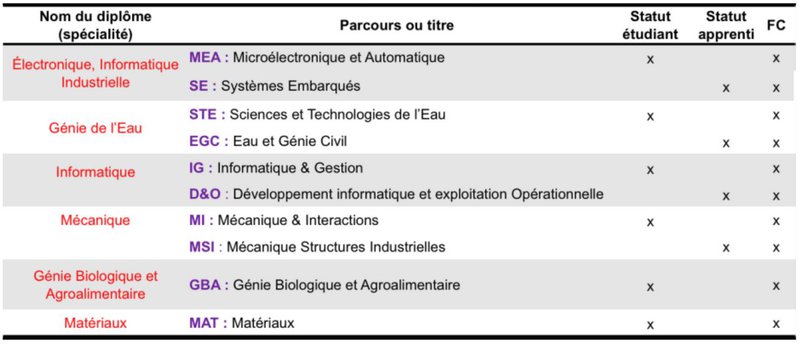
L'ensemble de l'offre de formation appartient au périmètre thématique de l'ISITE MUSE. Pour rappel, l'ISITE MUSE vise à répondre à trois défis sociétaux majeurs et interdépendants, alignés avec l'Agenda 2030 des Nations Unies sur les objectifs du développement durable et l'accord de Paris sur le changement climatique : Nourrir, Soigner, Protéger. Toutes les informations sur l'ISITE MUSE : https://muse.edu.umontpellier.fr/li-site-muse/
Plus particulièrement, concernant l'enquête insertion 2019 (enquête CGE), nous pouvons indiquer que sur l'ensemble des répondants, 46% indiquent exercer une fonction en lien avec le DDRS selon la répartition thématique suivante :
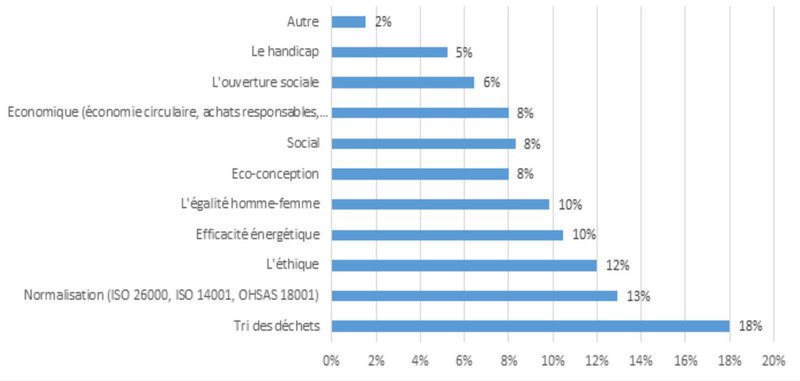
Quelle place donnez-vous aux entreprises engagées dans la transition écologique et dans l'Économie Sociale et Solidaire lors de vos forums d'entreprises, interventions d'Alumni, ou dans les projets, études de cas des étudiants ?
Les entreprises engagées en matière de RSE, tant sur le plan de la transition écologique que sur le plan de l'ESS, sont sollicitées au travers de différents dispositifs :
- La participation aux soirées DDRS (conférences ou table ronde) dont le récapitulatif est accessible via le lien suivant : https://www.polytech.umontpellier.fr/ecole/developpement-durable
- Des projets de fin d’études au Semestre 9, permettant de mettre les élèves en situation professionnelle sur un cahier des charges élaboré par une entreprise, un laboratoire, une administration et/ou une association ;
- La réalisation de multiples projets de recherche-développement, d’innovation et d’essaimage menés par les enseignants et enseignants-chercheurs de l’école en collaboration étroite avec les pôles de compétitivité régionaux, les structures de transfert, les entreprises et les grands groupes présents en région ;
- La constitution d’un Club des partenaires comprenant actuellement une quarantaine de membres. Les entreprises adhèrent à ce club en signant une charte de partenariat qui traduit le développement de relations privilégiées. Nous pouvons citer Véolia, Suez comme exemple de grand groupe, mais également la Fédération des Aveugles et Amblyopes de France, reconnue d’utilité publique. Le Club des partenaires est accessible via ce lien : https://www.polytech.umontpellier.fr/partenariats/club-des-partenaires
- La participation aux entretiens de sélection des futurs élèves ingénieurs ;
- La participation aux jurys de soutenance de projets de fins d'études et de stages de fin d'études ;
- La proposition de contrats d'apprentissage (168 contrats sur l'école) ;
- La participation de professionnels de l'entrepreneuriat dans le cadre du module Innovation durable et entrepreneuriat responsable qui est suivi par l'ensemble des élèves de 5e année ;
- La participation aux conseils de perfectionnement, organisés régulièrement au sein des filières.
Avez-vous identifié les principaux impacts des métiers de vos diplômés sur le climat et la biodiversité ? Si oui, quels sont-ils ? Vos formations présentent-t-elles des pratiques professionnelles et personnelles permettant d'identifier et de réduire ces impacts ? Concrètement, lesquelles ?
En lien avec les éléments apportés dans la question 1 de ce chapitre, les principaux impacts des métiers de nos diplômés sur le climat et la biodiversité sont illustrés par la gestion des déchets (18% des répondants), les démarches de normalisation environnementales ou sociétale (13%), l'efficacité énergétique (10%) et l'écoconception (8%).
Nous avons effectivement mis en place dans certaines filières des cours d'écoconception et un cours transversal en 5A basé sur l'entrepreneuriat responsable.
Pensez-vous que la demande sur le marché du travail pour les métiers de vos diplômés est ou sera amenée à évoluer dans le cadre d'une transition écologique ? Si oui, comment et pourquoi ?
Suite aux différentes mobilisations citoyennes, il est désormais inévitable que les normes et réglementations intègrent de manière forte les pratiques et dispositifs pour une transition écologique. L'ingénieur devra forcément intégrer des nouvelles compétences afin d'être en capacité de concevoir, développer et produire des précédés et produits dans une optique d'économie circulaire et sortir de la logique de linéarité (produire, consommer, jeter).
Du fait des limites planétaires conduisant à un contrôle de la consommation d'énergie, à une économie de la consommation des ressources et à la production des déchets, les entreprises devront en tenir compte dans leur cœur de métier pour rester compétitives.
Les enjeux écologiques et sociaux sont-ils au cœur des stratégies de recherche de votre établissement? Comment la stratégie de recherche favorise-t-elle spécifiquement la recherche transdisciplinaire et interdisciplinaire en lien avec les enjeux de transition écologique ?
Polytech Montpellier ne pilote pas les projets de recherche qui relèvent de la gouvernance de l'Université de Montpellier. Toutefois, nous sommes en mesure de rendre compte des activités DDRS de la recherche menée par nos enseignants-chercheurs. L'ISITE MUSE offre une réelle opportunité pour une recherche répondant aux défis sociétaux (nourrir, soigner, protéger) et nos enseignants-chercheurs y participent activement. La recherche de l'ISITE MUSE est consultable avec le lien suivant : https://muse.edu.umontpellier.fr/recherche/
Votre établissement soutient-il de manière spécifique la recherche (thèses, postdoc, travaux d'enseignants-chercheurs) en lien direct avec les enjeux de transition écologique, et les chercheurs qui s'engagent dans cette voie ? Quelle est la proportion du budget recherche allouée à ces travaux ?
Comme indiqué précédemment, Polytech Montpellier, en tant qu'école interne ne pilote pas la recherche qui est du ressort de l'Université de Montpellier. Le budget global annuel de MUSE est de 17 M€. Plus d'informations sont données ici : https://muse.edu.umontpellier.fr/li-site-muse/le-programme-daction/
Existe-t-il des chaires ou des centres de recherche sur le sujet de la transition écologique au sein de votre établissement ? Si oui, quels sont leurs axes de travail ? Combien de professeurs intègrent-ils ?
Sans objet
Les chercheurs sont-ils amenés à réfléchir à l'impact de leurs activités (pratiques et finalités) de recherche ? Si oui, comment ?
La prise en compte des impacts environnementaux et sociaux de la recherche n'est pas encore formalisée.
Existe-t-il sur le campus des associations étudiantes dont l'activité est centrée sur l'action en faveur de la transition écologique ? Quelles sont-elles ?
Polytech Montpellier dispose d'un club étudiant directement rattaché au Bureau des Élèves. Il s'agit du club PolyEarth dont les activités couvrent l'ensemble des piliers du développement durable.
Toutes les initiatives du club sont accessibles sur le site web suivant : http://polyearth.igpolytech.fr/
Quelles sont les thématiques abordées par ces associations (alimentation durable, réduction des déchets, sensibilisation…) ? Quelles actions entreprennent-elles ?
Quelle est leur échelle d'impact (l'ensemble ou une certaine catégorie d'étudiants, les personnels de l'établissement, échelle plus large que l'établissement) ?
Ces associations travaillent-elles par elles-mêmes sur le campus ou agissent-elles en partenariat avec l'administration de l'établissement (et si oui, à quel niveau) ?
Les activités de PolyEarth couvrent l'ensemble des champs indiqués. Le récapitulatif des principales actions est accessible sur le lien suivant : https://owncloud.polytech.umontpellier.fr/public.php?service=files&t=179bad3fc517bca765186c2f12f82da8
L'échelle d'impact varie en fonction des évènements et actions organisés. Par exemple, les soirées DDRS sont tout public, mais certaines actions sont territoriales comme la journée citoyenne ou la collecte pour la banque alimentaire.
PolyEarth est invité aux réunions de l'équipe projet DDRS de l'école et les actions sont évidemment soutenues par la direction tant sur les moyens financiers que logistiques.
Comment valorisez-vous l'engagement citoyen et associatif de vos étudiants ?
Le réseau Polytech encourage l'engagement des élèves ingénieurs dans des activités bénévoles, au sein ou non d'associations dans des domaines variés. Les élèves participent ainsi au rayonnement de leur école à travers différentes manifestations. Un élève ingénieur est également en droit de demander une valorisation de ses compétences ou aptitudes en lien avec le diplôme préparé et acquises dans le cadre d'un engagement personnel. L'élève ingénieur doit être à l'initiative de ce souhait à bénéficier d'une telle valorisation ou doit respecter la procédure arrêtée par l'établissement (circulaire n° 2017-146 du 7-9-2017, https://www.legifrance.gouv.fr/download/pdf/circ?id=42679).
Polytech Montpellier accompagne ses élèves dans la réalisation de « projets citoyens ». Réalisés en 4e année du cycle ingénieur, ces projets font l'objet d'une sélection initiale. Ils sont validés via l'acquisition de 2 ECTS d'une UE optionnelle « engagement étudiant » et figurent, une fois réalisés, dans le supplément au diplôme.
Comment se financent les associations étudiantes ? Quelle visibilité leur est accordée au sein de l'établissement ?
Le BDE de Polytech Montpellier reçoit une subvention annuelle de 35 000 € votée en Conseil d'École et qui est répartie entre les différents clubs étudiants. Par ailleurs afin de valoriser les engagements étudiants, un dispositif de communication est mis en place via le site web, le site intranet et la newsletter interne.
Votre établissement évalue-t-il son impact environnemental à l'aide de méthodes quantitatives normalisées, comme l'Analyse du Cycle de Vie ou le bilan carbone ? À quelle fréquence ? Quels postes de dépense intègre-t-il (notamment, comprend-il les mobilités, c'est-à-dire les voyages en avion des étudiant.e.s, des professeur.e.s et des conférencier.e.s) ?
L'école établit un bilan carbone qu'elle actualise tous les 3 ans. Pour se faire, le bilan carbone est réalisé dans le cadre d'un projet étudiant et encadré par un enseignant-chercheur formé à la méthodologie Bilan Carbone. Par ailleurs, l'école est adhérente à l'Association Bilan Carbone pour actualiser ses compétences internes dans ce domaine complexe. À ce jour, l'école ne réalise pas d'ACV sur ces activités, mais un projet est en cours afin d'établir des bonnes pratiques concernant les déplacements internationaux qui constituent le premier poste des émissions de GES.
L'objectif est de diminuer les émissions de GES par une stratégie d'évitement, de réduction et/ou de compensation en dernier recours. Notre bilan carbone intègre la totalité des SCOPE de la méthodologie. Ce projet à court terme vise à inciter les étudiants à privilégier des stages internationaux en Europe par un ciblage de bourses notamment.
Comment votre établissement réduit-il au quotidien son empreinte écologique (végétalisation, incitations, économies d'énergies, alimentation responsable, réduction et tri des déchets …) ? Quels sont les résultats de ces actions ?
N'étant pas propriétaire du bâti, des espaces verts et de la restauration, nos actions concernent surtout :
- L'économie d'énergie : passage à l'éclairage LED, capteurs de mouvement dans les communs, sensibilisation des usagers par affichage des consommations en direct et affichage sur les écogestes => réduction d'environ 15% de la consommation d'électricité entre 2012 et 2019.
- Le tri des déchets par un partenariat avec un ESAT de la société ÉLISE (bouteilles plastiques, gobelets, canettes métalliques) => cette valorisation a notamment permis à Polytech d'économiser l'émission de 764 kg de CO2 sur l'année 2018.
Comment votre établissement interagit-il avec son territoire et s'intègre-t-il dans des politiques publiques locales à visée durable ?
Vous pourrez retrouver les actions en lien avec l'ancrage territorial à visée DDRS sur ce document d'appui : https://owncloud.polytech.umontpellier.fr/public.php?service=files&t=b950f8c3e970a82b649f6b0ac3b3c33c
Votre établissement est-il labellisé DD&RS ? Si non, un travail est-il en cours pour obtenir le label, et à quel horizon ?
Polytech Montpellier est labellisée depuis 2016.
Quels blocages à la mise en place de dispositifs ou de mesures favorables à une transition écologique pouvez-vous identifier au sein de votre établissement (et à quel niveau) ?
- Freins normatifs (liés aux référentiels) : nous utilisons deux référentiels pour nos démarches d'amélioration continue, le référentiel Cti d'une part et le référentiel du Label DDRS d'autre part.
- Ces deux référentiels ont des exigences parfois contradictoires en matière d'enjeux sociétaux. L'obligation de mobilité du référentiel Cti en est une bonne illustration avec des impacts forts en matière d'émission GES et d'équité sociale (plus de 40% de boursiers). Il apparaît également qu'à ce jour, la transition écologique n'est pas en tant que tel, un critère d'évaluation Cti. Par ailleurs, l'évaluation annuelle DDRS est chronophage ce qui peut limiter le temps dédié à l'action.
- Freins économiques : les travaux de rénovations énergétiques (notamment les interventions sur le bâti et les flux) par exemple demandent des ressources financières souvent incompatibles avec le principe de réalité. Ce principe touche majoritairement l'axe environnement. On note également dans un contexte où l'enseignant chercheur doit mener un enseignement de premier plan pour la formation des ingénieurs sur leur cœur de métier et en même temps une recherche de niveau international (valoriser dans le cadre des carrières) que l'engagement dans des actions transversales en faveur de la transition écologique n'est nullement valorisé.
- Freins humains : l'intégration du DDRS dans les enseignements nécessite de former les enseignants et enseignants-chercheurs afin qu'ils aient la capacité d'identifier en quoi les compétences qu'ils transmettent peuvent servir la transition. Cet investissement demande un niveau élevé de maturité dans la prise de conscience des enjeux. Un autre frein est celui plus classique qui relève de la civilité dans les consignes (tri, écogeste) et la difficulté, parfois, à faire accepter des changements d'usages de la part des usagers qu'ils soient enseignants, personnels administratifs ou étudiants, et à mobiliser ces derniers, surtout lorsqu'ils n'ont pas vocation à rester plus de deux ou trois ans sur le campus.
- Freins politiques : la démarche ne peut être couronnée de succès que si l'engagement de la direction (lettre de cadrage, lettre de mission) est très clair, formalisé et relayé dans le cadre des actions. Sur ce dernier point, notre école fait le job.
Êtes-vous au fait des différents mouvements étudiants et institutionnels portant sur la transition écologique tels que le Manifeste étudiant pour un Réveil Écologique, le REFEDD, le projet FORTES du campus de la transition ou le groupe de travail du Ministère de l'Enseignement Supérieur, de la recherche et de l'Innovation ? Quels mouvements connaissez-vous ?
L'ensemble de ces mouvements sont identifiés.
Pouvez-vous décrire l'organisation mise en place afin de répondre à ce questionnaire (personnes ou organes en charge, parties prenantes impliquées, etc.) ?
Ce questionnaire a été renseigné par l'équipe projet en charge du DDRS de Polytech Montpellier et regroupant des personnes d'horizons divers : enseignant-chercheur, administratif, direction. Il a été relu et validé en détail (reformulation quand nécessaire) par le chargé de mission DDRS de l'établissement.
Avez-vous des messages pour d'autres acteurs, des commentaires, des choses à ajouter ?
La prise en compte de l'engagement des établissements et notamment la valorisation des démarches restent faibles tant dans les classements que dans les tutelles d'évaluation (Cti, HCERES).
Le message envoyé aux établissements engagés n'est pas très positif et peut parfois générer un sentiment de frustration tant la démarche nécessite des compétences multiples et des ressources internes solides et pérennes.
Autrement dit, à l'écrit dans les référentiels d'évaluation ces aspects DDRS connectés transition écologique apparaissent, mais en réalité de façon opérationnelle, les experts des comités de visites ne s'intéressent pas à la question.
Dans quelle mesure votre établissement se donne-t-il pour objectif de former la communauté étudiante aux enjeux et aux métiers de la transition écologique ? Cet objectif est-il inscrit dans votre stratégie ?
Nous avons dans notre stratégie deux ambitions : gérer notre campus durablement et développer des leaders responsables. La mission de l'école est de former des gestionnaires innovants et responsables, aptes à penser hors du cadre, dans un environnement mondial.
Sur le plan pédagogique, Rennes SB intègre deux types de cours. Ceux qui sont spécifiquement tournés vers le développement durable, l'éthique et la responsabilité sociétale des entreprises. Et les cours plus “traditionnels” mais faisant le lien avec le développement durable, comme le rôle du management responsable dans les cours de logistique, par exemple.
En plus des cours et des études, l'École demande à chaque association d'étudiants de fixer des objectifs environnementaux et sociaux et désigne un étudiant chargé de veiller à leur réalisation. A partir de 2021, tous les étudiants de Bachelor et de Master Grande École seront encouragés soit 1) à effectuer des stages dans des entreprises respectueuses de l'environnement, des ONG, des associations à but non lucratif et des entreprises appartenant à l'économie solidaire, soit 2) à effectuer un stage dans une entreprise plus traditionnelle et à analyser ses activités ERS.
Dans quelle mesure des objectifs de transition écologique sont-ils inscrits dans le projet de transformation de l'établissement à court, à moyen, et/ou à long terme ? Notamment : une démarche d'auto-évaluation DD&RS (Plan Vert) a-t-elle été mise en place pour votre établissement ? (en vertu de l'article 55 de la loi Grenelle 1 du 3 août 2009, le Plan Vert doit obligatoirement être élaboré par tous les établissements d'enseignement supérieur).
Nous sommes adhérents au CIRSES et enregistrés sur la plateforme de PERSEES pour l'auto- évaluation DD&RS. Nous débutons actuellement un auto-diagnostique sur cette plateforme dans l'optique d'une labélisation future. Ce processus de labélisation nous permet de structurer notre démarche RSE.
Comment sont construites les maquettes pédagogiques de votre établissement ? Les étudiants sont-ils associés à l'élaboration des programmes de formation ? Si oui, à quelles étapes et selon quelles modalités ? Si non quelles propositions feriez-vous en la matière ?
Au cours de la refonte du Programme Grande Ecole, des étudiants ont été associés à des ateliers en lien avec la faculté. De manière générale, les différents retours de nos étudiants sont constamment intégrés dans l'évolution de nos maquettes et règles de scolarité. Les étudiants évaluent de manière quantitative et qualitative chaque cours à la fin du semestre : les professeurs tiennent compte du feed-back recueilli afin d'améliorer la prochaine édition du cours.
Les délégués de promotion rencontrent régulièrement les directeurs de programme pendant le semestre pour faire un retour qualitatif sur les cours : ils signalent leurs satisfactions ou insatisfactions que les professeurs intègrent dans leurs cours avant la fin du semestre.
Existe-t-il un poste permanent de chargé.e de mission DD&RS ou de transition écologique au sein de votre établissement ? Si oui, depuis combien de temps ? Quelles sont ses missions ? Est-ce un emploi équivalent temps plein ? Quel est son positionnement dans l'organigramme ?
Notre Chef de mission RSE (CSO "Chief Sustainability Officer”) a été nommé il y a un an pour assurer l'élaboration et la mise en œuvre de la stratégie RSE de notre organisation. Il est directement rattaché à notre directeur général.
Le CSO est également professeur et occupe le poste à mi-temps. Il est épaulé dans sa mission par :
- Une stagiaire / assistante RSE qui termine son Masters en Développement durable
- Un comité RSE qui rassemble des collaborateurs de plusieurs services de l'école et dont les membres travaillent sur des volets particuliers de la politique RSE en fonction de leurs compétences et intérêts.
Nous avons aussi une responsable “Great Place to Work” nommée après l'enquête menée par ce cabinet de conseil. Elle est responsable d'un groupe de travail chargé d'améliorer les points perfectibles révélés par l'enquête et qui veille de manière générale sur le bien-être au travail des salariés.
SENSe est un service de l'école exclusivement dédié à l'expérience étudiante et veille au bien-être des 4.000 étudiants sur le campus, dont 50% d'étudiants internationaux.
La sensibilisation et de la responsabilisation des personnels et étudiants sur ces enjeux sont-elles inscrites dans les missions du/de la chargé.e de mission DD&RS ? Dans quelle mesure la communauté étudiante est-elle associée à ce processus d'éco-responsabilisation ?
Oui. La communauté étudiante est associée à ce processus d'éco-responsabilisation grâce à nos enseignements. Dans nos enseignements obligatoires, nous avons des cours ciblé développement durable ou business éthiques. Nous avons aussi des cours plus classiques avec une vision en management responsable par exemple.
Les étudiants sont aussi sensibilisés grâce :
- Aux associations étudiantes. En effet, dans chaque association un responsable RSE est garant de l'éco-responsabilité dans son association.
- À la communication interne qui met en valeur des initiatives RSE de tout genre dans le monde. Des étudiants participent au choix d'initiatives et à la manière de les faire connaître.
Une formation du personnel de l'école aux enjeux de la RSE est prévue qui aura pour finalité la fixation d'objectifs orientés RSE par chef de service. L'atteinte des objectifs fera ensuite partie intégrante de son évaluation annuelle.
Quelles sont les principales sources externes de financement de votre établissement ? Selon quels critères votre établissement noue-t-il des partenariats financiers et non-financiers ? Ces critères prennent-ils en compte l'investissement dans la transition écologique de vos partenaires ?
Notre établissement est principalement financé par la perception des frais de scolarité de ses étudiants de la taxe d'apprentissage et des revenus de la formation continue. Nous bénéficions également d'une subvention de la part de l'État au titre de la qualification d'Établissement Enseignement Supérieur d'Intérêt Général.
L'école reçoit aussi des financements ponctuels. En octobre 2020, la ville de Rennes a versé une bourse de 40.000 euros à notre centre d'excellence Agribusiness pour financer les études d'un nouveau chercheur.
Nous tenons souvent compte de l'investissement dans la transition écologique de nos partenaires. Voici deux exemples récents de la rentrée de septembre 2020.
- Pour nos étudiants Masters : nous avons organisé une semaine d'intégration en partenariat avec Yves Rocher en raison de son engagement fort envers la RSE.
- Pour nos étudiants PGE : nous avons organisé un « Design Sprint » avec la SNCF dont la politique de développement durable est en phase avec les valeurs de l'école.
Une liste des organisations et entreprises actuellement partenaires de votre établissement est-elle disponible sur votre site Internet (public et privé) ?
La liste de nos partenaires est disponible sur nos brochures dans la rubrique carrière, accessible sur notre site Internet.
Y a-t-il dans vos enseignements obligatoires des modules concernant l'apprentissage des fondements de la crise écologique et de ses conséquences ? Si oui, en quelle année sont-ils dispensés et avec quel poids dans les crédits obtenus ?
Tous nos enseignements obligatoires contiennent au moins un cours dédié à la RSE, à l'éthique des affaires ou au management responsable. Tous les étudiants suivent un cours dédié au RSE dans son cursus. Dans nos enseignements obligatoires, nous proposons 2 types de cours concernant l'apprentissage de la Transition Écologique. En tout, nous avons 18 cours ciblés RSE dont 5 en Bachelor, 12 en PGE et 1 en EMBA. Puis nous avons 31 cours en relation avec la RSE dont 15 en Bachelor, 15 en PGE et 1 en EMBA.
La transition écologique fait-elle l'objet dans votre établissement de cursus spécialisés ? Si oui, quels sont-ils ?
Rennes SB propose deux programmes en anglais comprenant des éléments d'apprentissage spécialisés dans les domaines de la responsabilité sociale des entreprises, du développement durable et de l'éthique des affaires :
- Le MSc Sustainable Management and Eco-Innovation (SMEI) en double diplôme avec UniLaSalle est notre principal programme spécialisé en développement durable.
- Un cours de 15 jours dispensé en juin, Green & Sustainable Business, permet de diffuser nos connaissances en matière de RSE à l'échelle internationale. En effet une cinquantaine d'étudiants de nos universités partenaires viennent à Rennes afin de bénéficier de notre expertise dans ce domaine.
L'ensemble du livret pédagogique, c'est-à-dire la totalité des modules d'enseignement, intègre-t-il les enjeux de transition écologique actuel de manière cohérente et ambitieuse ? Comment faites-vous en sorte que la formation aux enjeux écologiques ne soit pas restreinte à des cours spécialisés ? Comment articulez-vous les formations pour favoriser la transversalité et le dialogue des formations face à cet enjeu ?
Nous avons en tout 53 cours dévolus au développement durable dont 24 obligatoires dans notre Programme Grande École. Nous travaillons avec les directeurs de programme et les responsables de pôle pédagogique pour favoriser la transversalité et intégrer la RSE dans tous les cours de l'établissement et sensibiliser dans nos programmes les étudiants à cet enjeu.
Le chef de mission RSE travaille avec un professeur de chaque pôle pédagogique (Supply Chain et IT, Marketing, Finance, Management, Stratégie) dans le but d'intégrer progressivement du contenu RSE dans les cours.
Avez-vous mis en place une approche par compétences et si oui, avez-vous identifié les compétences utiles à la transition écologique acquises par vos diplômés au cours de leur parcours ? (ex: système de compétences DD&RS)
Le système par compétences DD&RS n'a pas encore été mis en place de manière formelle pour les compétences liées à la transition écologique. Notre équipe pédagogique travaille actuellement sur une reformulation claire d'une approche par compétences.
De quelle façon les contenus des enseignements liés à la transition sont-ils abordés (détails des volets scientifiques, économiques, sociaux…) ?
Quel que soit le niveau des cours, le contenu des cours RSE comporte un aspect théorique et pratique (étude de cas, exemples d'entreprise). Dans un cours MSc dédié à la RSE par exemple, les étudiants font deux présentations : la première sur un thème lié à la transition écologique (biodiversité, valorisation de déchets, …) et la deuxième sur une initiative individuelle ou collective pour faire face à un problème social ou environnemental.
Le MSc en Sustainable Management and Eco-Innovation est plus spécialisé scientifiquement car il s'agit d'un double diplôme avec l'école d'ingénieur UniLaSalle. Il comprend donc des cours sur l'analyse du cycle de vie d'un produit et/ou sur de les normes ISO par exemple.
Les cours de spécialisation « métier » mettent l'accent sur les aspects RSE qui touchent à leur discipline. Ci-dessous quelques exemples de cours de :
- Management des ressources humaines : diversité et inclusion, bien-être des salariés, égalité
- Finance : finance durable, investissement socialement responsable, reporting extra- salariale homme-femme, … financier, …
- Marketing : consommation responsable, éco-conception de produits, …
Comment ces enseignements sont-ils reçus par les élèves ?
Nos cours sont évalués à la fin de chaque semestre de manière quantitative (critères notés) et qualitative (remarque). Selon le retour de ces évaluations, les cours RSE sont reçus de manière très positive.
Quelques exemples :
- Le cours d'été Green & Sustainable Business (anciennement « Responsible Management ») semble tout particulièrement apprécié. Plusieurs étudiants, qui viennent de l'étranger pour suivre le cours, sont satisfaits ou point de revenir à Rennes pour suivre une formation plus longue (Bachelors, Masters,…)
- L'une de nos étudiantes qui a suivi un cours RSE « Winter session » organisé chez nos partenaires de l'Université de Liège a décidé de changer son projet professionnel à cause de l'enseignement reçu, afin de s'orienter vers un métier ayant une plus grande dimension sociale.
Quels modules parallèles ou activités pédagogiques sont organisés pour sensibiliser / informer sur les questions de transition écologique (séminaires de rentrée, interventions d'experts, journées dédiées, gamification (escape game etc..)) ?
Des “Design Sprint” sont organisés par le service SENSe (expérience étudiant) dans l'objectif de faire réfléchir et échanger étudiants et professeurs sur des questions orientées RSE communes aux deux publics, comme l'évolution de la charte éthique de l'école par exemple.
Nous avons voulu mettre l'accent sur la transition écologique pour la rentrée 2020. Nos étudiants de premières années de Bachelor (IPBM 1) ont été formés aux conséquences du changement climatique grâce l'activité de La Fresque du Climat. Nos collaborateurs ont aussi participé en tant qu'animateurs.
Les associations étudiantes sont l'un de nos principaux supports pour organiser des actions de sensibilisation. Grâce à leurs projets, les responsables RSE peuvent intégrer pleinement la transition écologique dans chaque action.
Nos associations Ter'nCo et Speak'Up ont pour projet de proposer des conférences sur les thèmes de la RSE et du développement durable. Ces conférences s'adressent à tous les étudiants mais aussi à tous les membres de l'administration et les enseignants.
Une branche HeforShe a été créé au sein du BDE, et œuvre pour intégrer et faire participer les hommes et les garçons dans le combat pour l'égalité des sexes et les droits des femmes, en les encourageant à prendre des mesures contre les inégalités rencontrées par les femmes et les filles.
Enfin, nous allons intégrer le Sulitest en début mais aussi en fin de parcours pour évaluer l'avancée des connaissances liées au développement durable de nos étudiants.
Les enseignants de votre établissement sont-ils formés aux enjeux de la transition écologique ? Si oui, de quelle manière (cursus initial, formation continue, organisme dispensaire…) ? Si non, est-ce une évolution envisagée à court terme ? La connaissance des enjeux écologiques et l'interdisciplinarité sont-elles valorisées dans le recrutement du corps professoral ?
Les enseignants n'ont à ce jour pas reçu de formation dédiée à la RSE, mais certains sont experts de la transition écologique. Mais nous envisageons une éventuelle formation aux enjeux de la transition écologique destinée à notre corps professoral.
La Fresque du Climat ayant été proposée aux étudiants de première année, nous avons aussi dans l'optique de proposer cette activité à certains membres du personnel.
Quels sont les débouchés de vos formations ? Dans quelle mesure ces débouchés sont-ils en adéquation avec la transition écologique ?
La transition écologique étant un sujet très transversal, il est difficile pour nous d'évaluer précisément si ces débouchés sont en adéquation.
Néanmoins, grâce à une enquête de la Conférence des Grandes Écoles sur les débouchés de nos étudiants, nous savons que parmi nos répondants, 20% d'entre eux travaillent sur des sujets de la RSE comme le respect de l'environnement, l'égalité homme/femme ou le handicap (Juin 2020). Notre alumni Juliette Franquet (P15) vient d'être nommée directrice de Zero Waste France par exemple.
Aussi, nous organisons un Trophée des Entrepreneurs et cette année nos 6 finalistes de l'école présentaient tous un projet lié à l'ESS. Depuis notre première édition en 2013, un ou plusieurs projets en lien avec la transition écologique et le respect de l'environnement font partie à chaque fois des finalistes. Cela prouve bien que nos étudiants/alumni sont sensibles à cette thématique et veulent l'intégrer dans leur projet professionnel.
Quelle place donnez-vous aux entreprises engagées dans la transition écologique et dans l'Économie Sociale et Solidaire lors de vos forums d'entreprises, interventions d'Alumni, ou dans les projets, études de cas des étudiants ?
La transition écologique est un sujet toujours présent lors de nos forums d'entreprises (« Corporate Days »), notamment grâce à des conférences organisées autour de ce sujet et la présence d'entreprises engagées. Des tables rondes sur le sujet de l'Économie Sociale et Solidaire sont organisées à chaque fois. Cela semble important pour nous car l'ESS représente 10% de l'emploi en France. Sur l'année 2019-2020, presque 650 personnes ont pu assister à ces conférences.
Nous accueillons aussi des ateliers et des conférences avec les Dirigeants Responsables de l'Ouest dont la mission est de promouvoir l'économie responsable. Nous avons par exemple abordé des sujets tels que “RSE : effet de mode ou véritables enjeux ”. Nous interagissons aussi avec des groupes comme Club Bretagne Communication 35 (CBC35) ou Askoria avec le SEIS (Salon des Expérimentations and Innovations Solidaires) où nos étudiants et membres de l'administration et corps professoral y participent.
Un Club d'Alumni spécialisé dans ce domaine est en projet. Nous avons créé un club Alumni spécialisé dans l'ESS, un club WIN (Women International Network) et un club sur l'innovation qui peuvent être rattaché à la RSE.
Enfin lors de la rentrée 2020, nos étudiants MSc et PGE3 se sont penchés, en collaboration avec un cabinet de conseil et l'entreprise Yves Rocher sur la création et le marketing de produits cosmétiques éco-responsable. À la fin de ces trois jours baptisés « 5 Pumas Challenge », l'équipe d'étudiants avec le meilleur projet a été sélectionné par un jury d'entreprise.
Avez-vous identifié les principaux impacts des métiers de vos diplômés sur le climat et la biodiversité ? Si oui, quels sont-ils ? Vos formations présentent-t-elles des pratiques professionnelles et personnelles permettant d'identifier et de réduire ces impacts ? Concrètement, lesquelles ?
Dans les cours dédiés spécifiquement à la RSE, nous identifions, grâce à l'enseignement des concepts et aux études de cas, les principaux impacts des métiers et des secteurs sur l'environnement. Par exemple, comment réduire l'empreinte carbone et améliorer les conditions de travail dans l'industrie de la mode, que ce soit dans le « fast fashion » ou l'industrie du luxe Dans les séances « RSE et les consommateurs », nous nous penchons sur la manière dont les responsables marketing peuvent réduire l'impact écologique en tenant compte de la composition des produits, du packaging et du transport. Au lieu de classer pour nos diplômés les métiers en fonction de leur impact sur le climat et la biodiversité, nous les sensibilisons aux bonnes questions à se poser lors de la recherche d'emploi et les encourageons à regarder de près la politique sociétale d'une entreprise avant de s'y engager.
Pensez-vous que la demande sur le marché du travail pour les métiers de vos diplômés est ou sera amenée à évoluer dans le cadre d'une transition écologique ? Si oui, comment et pourquoi ?
De plus de plus d'entreprises cherchent à recruter des managers qui sont sensibles aux enjeux de la transition écologique. Notre partenaire Philips par exemple, ne recrute que des diplômés ayant une compréhension approfondie de l'enjeux de la transition écologique. Cette démarche est plutôt rare de la part des entreprises qui embauchent nos diplômés, mais c'est un début et nous croyons que c'est un phénomène qui ne va que s'accentuer.
Une enquête a été envoyée aux entreprises accueillant nos étudiants, car il est important pour nous d'évaluer si nos enseignements sont en adéquation avec les attentes des entreprises. Les retours divergent en fonction des programmes, nous n'avons pas les mêmes priorités pour les débouchés de notre master spécialisé en marketing et en finance internationale par exemple. Mais dans tous nos questionnaires, l'éthique et la responsabilité sociétale reviennent systématiquement dans les compétences importantes (1ère compétence importante pour notre master en négociation par exemple).
Les enjeux écologiques et sociaux sont-ils au cœur des stratégies de recherche de votre établissement ? Comment la stratégie de recherche favorise-t-elle spécifiquement la recherche transdisciplinaire et interdisciplinaire en lien avec les enjeux de transition écologique ?
Les enjeux écologiques et sociaux sont au cœur des stratégies de recherche de deux de nos centres d'excellence : Agribusiness et Green, Digital & Demand-Driven Supply Chain Management (G3D) :
Agribusiness : Une agrobusiness responsable et durable.
Des solutions alternatives aux répercussions négatives des modèles de production actuels sont étudiées puis proposées. Nous travaillons actuellement sur les problématiques et les cadres suivants :
- Quelles sont les externalités négatives sociales et environnementales générées par le modèle agricole prédominant, et quelles sont les solutions alternatives durables et responsables Certaines analyses empiriques de terrain s'attardent actuellement sur les techniques de permaculture en France et au Japon, ainsi que sur les modèles de production d'huile de palme en Asie du Sud-Est et de canne à sucre en Afrique de l'Est.
- Quelles sont les solutions écologiques et responsables à proposer à l'agrobusiness pour réduire les émissions et diversifier les sources de revenus de manière durable ?
Green Supply Chain Management.
Nos recherches visent à réexaminer les problématiques de gestion des opérations en tenant compte des aspects environnementaux (réglementation environnementale, sensibilisation de la clientèle à l'environnement, bien-être social, etc.). En particulier, nous nous concentrons sur les problématiques suivantes :
- Pour les entreprises, comment repenser les décisions relatives à la chaîne logistique et aux produits tout en tenant compte des considérations environnementales et de la performance économique
- Pour les organismes de réglementation, comment concevoir une réglementation environnementale efficace, afin d'améliorer le bien-être social ?
Votre établissement soutient-il de manière spécifique la recherche (thèses, postdoc, travaux d'enseignants-chercheurs) en lien direct avec les enjeux de transition écologique, et les chercheurs qui s'engagent dans cette voie ? Quelle est la proportion du budget recherche allouée à ces travaux ?
Entre 2018 et 2020, les professeurs-chercheurs de Rennes School of Business ont publié 40 articles dans des revues académiques sur des sujets relatifs à la transition écologique. Par exemple :
- Campos Franco, J., Hussain, D. and McColl, R. (2019), "Luxury fashion and sustainability: looking good together", Journal of Business Strategy, https://doi.org/10.1108/JBS-05- 2019-0089
- Les 40 articles représentent 15% de tous les articles publiés par notre corps enseignant. Pour atteindre ces résultats, les 34 professeurs impliqués dans ces recherches ont puisé soit dans leur budget de recherche individuel alloué par l'établissement soit dans le budget de leur domaine d'excellence.
Nos professeurs ont également envoyé des demandes de financement des projets de recherches suivants à l'Union européenne en 2020 et attendent une réponse :
- ELONGATE (crEating vaLue frOm plastics waste: traNsforminG liAbility To asset), a consortium of 22 partners, including 16 Universities, 3 SMEs, 1 council, and 2 consulting firms from 10 countries. (CE-SC5-25-2020: Understanding the transition to a circular economy and its implications on the environment, economy and society)
- Parsifal (Pandemic Actions, Responses, Social Impacts for Future Adaptive Learning) H2020: Behavioural, social and economic impacts of the outbreak response Call ID: H2020- SC1-PHE-CORONAVIRUS-2020-2
- EASME/2020/OP/0004 - "Uptake of Corporate Social Responsibility by SMEs and start-ups"
Existe-t-il des chaires ou des centres de recherche sur le sujet de la transition écologique au sein de votre établissement ? Si oui, quels sont leurs axes de travail ? Combien de professeurs intègrent-ils ?
Il n'existe pas de chaires spécialisées sur le sujet de la transition écologique car ce sujet est traité de manière transversale.
Néanmoins, deux sur quatre de nos domaines d'excellence sont liés au respect des ressources, changement climatique et au développement durable.
- Le domaine de l'Agribusiness présente un axe de recherche sur les Filières Agroalimentaires Durables et Responsables.
- Le domaine Green, Digital & Demand-Driven Supply Chain Management (G3D) (La gestion de la chaîne logistique numérique, respectueuse de l'environnement et guidée par la demande) propose un axe de recherche sur le Green Supply Chain Management.
- Le domaine MÏND (Meaning, institutions and collective intelligence, information diffusion, networks and decision-making) aborde les aspects managériaux et stratégiques liés à la RSE.
Les chercheurs sont-ils amenés à réfléchir à l'impact de leurs activités (pratiques et finalités) de recherche ? Si oui, comment ?
D'une manière générale et pour tous les publics de l'école (étudiants, administration, enseignants, chercheurs), toutes les activités de l'école se doivent de mener une démarche durable. Nous n'avons pas encore amené nos chercheurs, au-delà de cette sensibilisation générale, à réfléchir à l'impact de leurs activités.
Existe-t-il sur le campus des associations étudiantes dont l'activité est centrée sur l'action en faveur de la transition écologique ? Quelles sont-elles ?
Toutes les associations étudiantes de Rennes SB sont sensibilisées à la transition écologique. En pratique, chaque association désigne un.e responsable RSE en charge de mettre en place et maintenir une politique RSE dans son association.
L'association Ter'nCo œuvre en faveur de la transition écologique en proposant des services de vente de paniers de légumes bio par exemple, des ateliers de création de produits eco-friendly ou organise le Fair Trade Day et délivre désormais son label environnemental interne pour les autres associations de l'école.
Le BDH Sup de cœur apporte son soutien à l'association humanitaire à taille humaine « Les mains Ouvertes ». Pour ce faire, le BDH a décidé de soutenir le projet « Lait pour tous » qui consiste à offrir des boîtes de lait à des enfants en bas âges. Au Vietnam, les enfants étant nourris à la bouillit de riz, ils souffrent donc de carences alimentaires. C'est pour cette raison que le BDH a voulu s'impliquer dans ce projet qui lui tenait à cœur. En effet, 12€ récolés équivaut à un enfant nourri pendant un mois. Afin d'atteindre sa finalité, récolter le plus d'argent, dans le but de le reverser au projet choisi par ses étudiants, le BDH a su mettre en place une collaboration étroite avec Les Mains Ouvertes.
L'association OPERA est l'acronyme pour Orienter et Promouvoir l'Excellence et la Réussite par l'Accompagnement. Sous l'égide des Cordées de La Réussite, l'association et ses membres agissent auprès de lycéens du bassin rennais issus de milieux modestes pour leur permettre de découvrir l'enseignement supérieur qu'ils peuvent envisager après l'obtention du baccalauréat. L'association véhicule des valeurs telles que l'entraide, la réussite mais également la détermination et l'ambition dans tous les domaines. Il est important pour nous que nos lycéens développent une ouverture d'esprit et prennent conscience des enjeux sur lesquels l'éducation veut avoir une influence. Les voir évoluer et mûrir leurs choix d'études tout au long du dispositif est pour nous une réussite. Enfin, nous tentons de leur montrer qu'aucune voie ne leur est fermée et qu'avec de la rigueur et de la volonté, les études d'excellence ne sont pas inaccessibles.
Le 4L Trophy est le plus grand événement humanitaire et sportif d'étudiants en Europe et a été lancé il y a 20 ans par un étudiant de Rennes SB. Plus de 1000 équipes d'étudiants conduisent de vieilles voitures Renault 4L (qu'elles réparent) lors d'un rallye automobile à travers la France, l'Europe et le désert marocain afin de distribuer du matériel pédagogique aux écoles marocaines. En 2020, le 4L Trophy a noué un partenariat avec Koum, une entreprise marocaine spécialisée dans le recyclage des bouteilles en plastique, et Surfrider Foundation qui a dispensé des formations de sensibilisation aux enjeux environnementaux. La poursuite de l'organisation actuelle de ce rallye de 1 000 voitures et l'impact de son empreinte environnementale peuvent être remises en question à l'avenir.
D'autre associations sont engagées localement à Rennes et organisent par exemple des évènements artistiques pour promouvoir des jeunes créateurs ou des événements musicaux afin de mettre en avant les nouveaux groupes de la région et des événements sportifs.
Aussi, d'autres associations organisent des collectes de sang à l'École avec l'Établissement Français du Sang (EFS). Par conséquent, Rennes SB est le plus grand centre de collecte de sang de Rennes.
De manière générale, les associations étudiantes organisent le covoiturage pour leurs événements, recyclent, minimisent les déchets et l'utilisation du papier, utilisent du matériel d'occasion, se réfèrent à l'association française Ecofest pour la gestion d'événements éco-responsables, et favorisent l'utilisation de l'éco-moteur de recherche convivial Ecosia.
Quelles sont les thématiques abordées par ces associations (alimentation durable, réduction des déchets, sensibilisation…) ? Quelles actions entreprennent-elles ? Quelle est leur échelle d'impact (l'ensemble ou une certaine catégorie d'étudiants, les personnels de 'établissement, échelle plus large que l'établissement) ? Ces associations travaillent-elles par elles-mêmes sur le campus ou agissent-elles en partenariat avec l'administration de l'établissement (et si oui, à quel niveau) ?
Les association étudiants sont divisées en quatre pôles : art et culture, humanitaire et social, business puis sport. D'une manière générale, les associations étudiantes cherchent à intégrer l'ensemble des étudiants français et internationaux, de PGE, Bachelor ou de masters spécialisés.
Cette année, nous voulons associer pleinement les projets associatifs à la vie de l'école. Nous travaillons avec les associations pour intégrer les membres de l'administration par exemple dans les projets d'un campus plus responsable (recyclage) ou d'une consommation locale (panier bio). Les associations œuvrent aussi à la dématérialisation, le tri des déchets, et veille sur le bien-être de ses membres dans les associations.
Nous avons aussi décidé de former des clubs porteurs de projets plus spécifiques et relié chacun à une association. Pour la rentrée de 2020, de nouveaux projets ont vu le jour comme HEFORSHE, EACH ONE, les ELLES sur savoir, et un jardin participatif au sein de notre campus.
L'école organise des ateliers autour de la RSE, et travaille étroitement avec les associations pour développer ensemble la RSE.
Comment valorisez-vous l'engagement citoyen et associatif de vos étudiants ?
Toutes les activités associatives font parties intégrantes du cursus scolaire (obligatoire). Nous avons intégré un volet RSE à cette expérience associative car cela permet d'ajouter une réflexion et apporte une conscience écologique plus poussée et appliquée à la réalité. Nous accompagnons le pôle associatif et formons les étudiants pour cette expérience.
Nous évaluons leur engagement associatif par des oraux, et des audits financiers, une fois en première année, et une fois en deuxième année, soit 6 ECTS.
Comment se financent les associations étudiantes ? Quelle visibilité leur est accordée au sein de l'établissement ?
Les associations s'auto-financent grâce à l'organisation de leurs évènements et la vente de prestations. Les associations occupent une place importante dans la vie de nos étudiants et leur visibilité est évidente de manière :
- Matérielle : leurs locaux sont installés dans la « rue intérieure » du bâtiment principal
- Pédagogique : chaque étudiant est noté pour sa participation au sein de l'association et cette note compte dans la moyenne. Au-delà de la note, les étudiants prennent leur engagement associatif au sérieux et une partie de leur emploi du temps est bloquée pour cela.
- Évènementielle : les associations organisent régulièrement des évènements sur le campus auxquels étudiants et souvent professeurs / personnel administratifs sont conviés.
Le service communication leur propose une visibilité supplémentaire grâce à la diffusion et relaie de leurs projets via les réseaux sociaux de l'école.
Votre établissement évalue-t-il son impact environnemental à l'aide de méthodes quantitatives normalisées, comme l'Analyse du Cycle de Vie ou le bilan carbone ? À quelle fréquence ? Quels postes de dépense intègre-t-il (notamment, comprend-il les mobilités, c'est-à-dire les voyages en avion des étudiant.e.s, des professeur.e.s et des conférencier.e.s) ?
Cette évaluation sera mise en place avant la fin de 2021. Pour notre rentrée de Septembre 2020, nous avons lancé une étude de matérialité et notre prochaine étape sera de réaliser un bilan carbone.
Cette étude de matérialité nous permet de mieux cibler nos enjeux et les risques en matière de RSE par rapport à nos parties prenantes.
Selon la progression de la Covid-19, nos évènements seront plus ou moins impactés. Nous demandons cette année une estimation carbone pour chaque évènement associatif avec potentiellement une compensation carbone.
Comment votre établissement réduit-il au quotidien son empreinte écologique (végétalisation, incitations, économies d'énergies, alimentation responsable, réduction et tri des déchets …) ? Quels sont les résultats de ces actions ?
Nous gérons notre campus selon quatre grands axes : la gestion des déchets, de l'énergie, de l'eau et de l'empreinte carbone.
Nous avons commencé notre stratégie de campus zéro-plastique en distribuant des gourdes (en canne à sucre recyclée) à tous les étudiants, des fontaines à eau sont installées à disposition de tous les étudiants et employés, nous voulons supprimer la vente de bouteilles en plastique, et nous utilisons des gobelets lavables Newcy.
Nous souhaitons rendre le recyclage plus accessible possible par l'installation de bacs dans tous les bâtiments et des bacs à papiers dans tous les bureaux. Pour réduire la consommation de papiers, tous nos supports de cours sont électroniques sauf cas exceptionnel, l'impression recto-verso est installée par défaut sur nos imprimantes. Le recyclage de cartons, verres, ampoules et piles papiers est effectué grâce à 350 boîtes de récupération de papiers disposés dans les bureaux, amphithéâtres et les zones d'impression. La récupération sélective des cartouches d'encre des imprimantes et des photocopieurs est effectuée, pour analyse et reconditionnement. Enfin, l'utilisation de cartouches d'encres à base végétale est à l'étude.
Les journées de sensibilisations seront cette année fortement perturbées à cause du Covid-19.
De par notre climat breton, l'énergie solaire semble peu prometteuse pour l'instant. En revanche, des bacs de récupération d'eau de pluie sont à l'étude.
Nous travaillons avec notre prestataire Ansamble pour proposer un service de restauration en faveur du respect de l'environnement. Nos produits sont principalement locaux et biologiques et nous proposons une offre végétarienne.
Comment votre établissement interagit-il avec son territoire et s'intègre-t-il dans des politiques publiques locales à visée durable ?
Rennes School of Business est membre de CRICDD (Collectif Rennais Inter-Campus pour le Développement Durable). Ce groupe de travail qui réunit toutes les grandes écoles de Rennes, permet un échange de bonnes pratiques en matière de respect du développement durable. Nous avions travaillé avec l'association “ND4J” (Nuits des 4 jeudis) pour proposer des activités en lien avec la protection de l'environnement. Enfin, nous avons travaillé avec la préfecture pour étudier la mutualisation d'un outil de covoiturage.
Votre établissement est-il labellisé DD&RS ? Si non, un travail est-il en cours pour obtenir le label, et à quel horizon ?
Rennes School of Business est un membre actif du Collectif pour l'Intégration de la Responsabilité Sociétal et du développement durable dans l'Enseignement Supérieur (CIRSES). Nous travaillons actuellement selon le label DD&RS pour la réalisation d'une auto-évaluation. Cette première étape permet de nous situer par rapport aux attentes d'une future labélisation DD&RS.
Quels blocages à la mise en place de dispositifs ou de mesures favorables à une transition écologique pouvez-vous identifier au sein de votre établissement (et à quel niveau) ?
L'aspect international est une partie intégrante de notre stratégie et peut être à l'opposé de la transition écologique. Nos étudiants veulent découvrir le monde et cela a forcément un impact sur l'environnement. Nous accueillons aussi des étudiants internationaux qui se déplacent en France pour découvrir notre culture, et ce déplacement a aussi un impact environnemental.
Autrement, la direction, le corps enseignant, le personnel administratif et les étudiants soutiennent dans leur grande majorité la stratégie RSE que l'école a engagée.
Une prise en compte de cette problématique dans les classements étudiants ou une reconnaissance de l'État par exemple permettrait de faire accélérer les actions en faveurs de cette transition. Car même si nos parties prenantes sont intéressées par ce sujet, ce n'est pas bien souvent leur priorité au quotidien.
Êtes-vous au fait des différents mouvements étudiants et institutionnels portant sur la transition écologique tels que le Manifeste étudiant pour un Réveil Écologique, le REFEDD, le projet FORTES du Campus de la transition ou le groupe de travail du Ministère de l'Enseignement Supérieur, de la Recherche et de l'Innovation ? Quels mouvements connaissez-vous ?
Nous avons connu le Manifeste étudiant pour un Réveil Écologique grâce à nos étudiants signataires ainsi qu'un ancien élève qui nous a proposé de participer à ce questionnaire. Nous avons connaissance du REFEDD et nous utilisons leurs outils pédagogiques au sein de nos associations étudiantes.
Rennes SB est adhérant au CIRSES et membre du CRICDD (Collectif Rennais Inter-Campus pour le Développement Durable).
Nous venons aussi de découvrir le BNEM (Bureau National des Étudiants en école de Management) et nous espérons intégrer pleinement cette association à notre école.
Pouvez-vous décrire l'organisation mise en place afin de répondre à ce questionnaire (personnes ou organes en charge, parties prenantes impliquées, etc.) ?
Ce questionnaire a été transmis au responsable RSE de notre école, puis les différentes parties prenantes ont été contactées pour nous aider à remplir les questions qui les concernaient.
Toutes les informations ont été rassemblées puis le questionnaire a été finalisé.
Pour nous, la transparence des informations est importante. Nous n'hésiterons pas à partager ce questionnaire dès publication à nos étudiants, nos professeurs et nos employés.
Avez-vous des messages pour d'autres acteurs, des commentaires, des choses à ajouter ?
L'un de nos diplômés nous a fait part de ce baromètre. Cette initiative deviendra à coup sûr une étape important dans le choix et la sélection des écoles de commerce par les étudiants.
Aujourd'hui la transition écologique étant un enjeu majeur, ce mouvement permet aussi bien un échange de bonnes pratiques entre écoles que de former les étudiants au monde de demain.

Dans quelle mesure votre établissement se donne-t-il pour objectif de former la communauté étudiante aux enjeux et aux métiers de la transition écologique ? Cet objectif est-il inscrit dans votre stratégie ?
En avril 2019, la direction de Sciences Po a constitué un comité présidé par Bruno Latour pour évaluer la nature, la forme et l'ampleur des enseignements sur la transition écologique. L'état des lieux réalisé par ce comité montre qu'il existe déjà un “riche écosystème” sur l'ensemble des questions liées aux transformations planétaires et qu'il était nécessaire de le rendre plus visible et plus cohérent. Sur la base de ces recommandations, Sciences Po a élaboré et adopté début 2020 une feuille de route 2020-2023 pour structurer et accroître son offre. Elle affirme les transformations planétaires comme thème prioritaire, qui doit irriguer l'ensemble de son projet éducatif et de recherche.
Dans quelle mesure des objectifs de transition écologique sont-ils inscrits dans le projet de transformation de l'établissement à court, à moyen, et/ou à long terme ? Notamment : une démarche d'auto-évaluation DD&RS (Plan Vert) a-t-elle été mise en place pour votre établissement ? (en vertu de l'article 55 de la loi Grenelle 1 du 3 août 2009, le Plan Vert doit obligatoirement être élaboré par tous les établissements d'enseignement supérieur).
Sciences Po s'est doté début 2020 d'un plan d'action pour transformer progressivement l'institution, ses lieux et ses pratiques, d'ici 2023. Établi à partir d'une consultation organisée en novembre 2019 auprès des étudiants, enseignants et salariés, le plan se décline en dix objectifs visant à réduire l'empreinte écologique de nos campus et de nos activités.
Comment sont construites les maquettes pédagogiques de votre établissement ? Les étudiants sont-ils associés à l'élaboration des programmes de formation ? Si oui, à quelles étapes et selon quelles modalités ? Si non, quelles propositions feriez-vous en la matière ?
Les équipes pédagogiques s'appuient sur des comités pédagogiques - dont les étudiants sont membres - pour renouveler chaque année leurs maquettes, eux-mêmes éclairés par des comités stratégiques composés de personnalités nationales et internationales expertes des enjeux portés par le secteur pédagogique. Les maquettes sont ainsi élaborées à la lumière de l'évaluation des enseignements par les étudiants, des choix pédagogiques des enseignants et professionnels qui enseignent, nourris des travaux de recherche et de la demande d'un marché du travail en mutation.
Les étudiants sont également représentés dans toutes les instances de gouvernance de l'établissement, et notamment le Conseil de la vie étudiante et de la formation, qui a un rôle consultatif sur la pédagogie.
Existe-t-il un poste permanent de chargé.e de mission DD&RS ou de transition écologique au sein de votre établissement ? Si oui, depuis combien de temps ? Quelles sont ses missions ? Est-ce un emploi équivalent temps plein ? Quel est son positionnement dans l'organigramme ?
Un poste permanent et à plein temps de responsable transition écologique a été créé en septembre 2019. La mission transition écologique de Sciences Po définit et pilote le plan d'action pour une université plus écoresponsable. Elle est rattachée au Secrétariat Général de Sciences Po. Il existait auparavant un poste de référent développement durable au sein de la direction des moyens généraux.
La mission transition écologique s'appuie également sur un réseau d'une trentaine de correspondants au sein des différents services pour une meilleure appropriation de l'enjeu à tous les niveaux de l'institution.
La sensibilisation et de la responsabilisation des personnels et étudiants sur ces enjeux sont-elles inscrites dans les missions du/de la chargé.e de mission DD&RS ? Dans quelle mesure la communauté étudiante est-elle associée à ce processus d'éco-responsabilisation ?
Le plan d'action institutionnel pour la transition écologique de nos campus inclut, pour chacun de ses engagements, un volet sensibilisation des personnels et des étudiants. Ce volet s'inscrit dans les missions de la responsable transition écologique. La communauté étudiante est associée à ce processus d'éco-responsabilisation notamment à travers les associations en lien avec la transition écologique (cf. section vie associative).
Quelles sont les principales sources externes de financement de votre établissement ? Selon quels critères votre établissement noue-t-il des partenariats financiers et non-financiers ? Ces critères prennent-ils en compte l'investissement dans la transition écologique de vos partenaires ?
Entreprises, fondations et mécènes particuliers sont les principales sources de financement externe de notre établissement, si nous mettons de côté les financements publics qui constituent une catégorie à part. Au total, en 2019, ce sont 117 entreprises, 30 fondations et institutions et 913 donateurs individuels qui ont contribué au budget de l'établissement, pour un montant total de 14,1 ME. Ces fonds, qui représentent un peu moins de 10% des ressources, se concentrent principalement sur les projets prioritaires de Sciences Po qui constituent les grands axes de notre campagne "Sciences Po 2022" : soutien aux étudiants et égalité des chances, innovation pédagogique et scientifique, patrimoine et immobilier.
Les partenariats noués mobilisent l'ensemble des communautés de Sciences Po et sont fondés sur le partage, par nos partenaires, de valeurs et convictions communes liées à notre mission d'intérêt général : égalité des chances, importance des sciences humaines et sociales et indispensable indépendance de la recherche, notamment. Au-delà, les partenariats sont noués dans le respect des principes suivants, détaillés dans notre charte éthique : indépendance et respectabilité, respect du mécène et des engagements mutuels, transparence dans l'utilisation des fonds collectés et responsabilité sociale et valeurs citoyennes. La conformité des partenariats est en outre évaluée par un comité des dons indépendant qui s'assure que ces critères sont respectés et que l'origine des fonds n'est pas problématique.
La transition écologique étant au cœur des valeurs et engagements portés par Sciences Po, elle motive un certain nombre de partenariats, comme la création future d'une chaire dédiée à la transition climatique par exemple. Plus généralement, ce critère a été intégré dans les grilles d'évaluation établies par le comité des dons, et notamment la conformité aux indices mesurant les Objectifs de Développement Durable. Une réflexion est actuellement en cours au sein du comité pour continuer à prendre davantage en compte cette dimension dans les partenariats, en recherchant des critères capables d'appréhender la dimension dynamique de la transition écologique opérée par les acteurs privés.
Une liste des organisations et entreprises actuellement partenaires de votre établissement est-elle disponible sur votre site Internet (public et privé) ?
La Direction de la Stratégie et du Développement publie chaque année un bilan de la levée de fonds qui recense de manière exhaustive toutes les structures privées (entreprises, fondations institutionnelles, individus) qui contribuent, en France et à l'étranger, au financement des projets de l'institution. Les centres de recherche et les secteurs pédagogiques (Collège universitaire et Écoles) peuvent recevoir des financements publics pour la mise en œuvre de projets scientifiques ou pédagogiques dont la communication est faite sur leurs pages internet dédiées.
Y a-t-il dans vos enseignements obligatoires des modules concernant l'apprentissage des fondements de la crise écologique et de ses conséquences ? Si oui, en quelle année sont-ils dispensés et avec quel poids dans les crédits obtenus ?
Sur l'année universitaire 2018-2019, il est recensé 31 cours, 98 projets de Parcours civique, une vingtaine de projets associatifs au Collège universitaire (premier cycle). Pour le deuxième cycle, sont décomptés 18 cours à l'École d'affaires publiques, 26 à l'École des affaires internationales, 13 à l'École urbaine, 12 à l'École du management et de l'innovation, 2 à l'École doctorale, 3 à l'École de droit, et 3 en formation commune des masters, sans compter un certain nombre d'opérations d'innovation pédagogique, par exemple des grandes simulations de Copenhague ou de la COP 21.
Ainsi, des enseignements obligatoires sont proposés à nos étudiants tout au long du parcours, du Collège universitaire au master. Les crédits sont déterminés en fonction du type d'enseignement proposé, comme pour tous les cours.
La transition écologique fait-elle l'objet dans votre établissement de cursus spécialisés ? Si oui, quels sont-ils ?
Le projet éducatif de Sciences Po s'appuie au collège et en master sur un socle disciplinaire solide qui assoit Sciences Po comme université de recherche en sciences humaines et sociales. Notre objectif est donc de renforcer la présence des questions sur les enjeux écologiques dans tous les enseignements disciplinaires, tout en constituant un socle commun de connaissances indispensables à la compréhension de ces enjeux.
En premier cycle, la feuille de route adoptée en février 2020 prévoit ainsi la création d'un cours commun obligatoire sur les enjeux environnementaux à la rentrée 2021, l'ajout de séminaires d'exploration sur chaque campus, ainsi que des exercices de pédagogie active autour du climat.
Par ailleurs, en septembre 2020, le nouveau Bachelor of Arts and Sciences accueillera sa première promotion d'étudiants. Il s'agit d'une double licence en sciences et sciences humaines & sociales, qui se déploiera sur deux thématiques différentes : un double diplôme “Politiques de la terre” avec l'Institut de physique du globe de Paris, qui associe géosciences et sciences humaines et sociales ; et un double diplôme “Environnement et Société Durables” avec l'Université de Reims Champagne-Ardennes, qui associe sciences de la vie et sciences humaines et sociales.
En master, l'offre d'enseignements spécialisés et des outils pédagogiques dédiés sont proposés au niveau des Écoles, ancrés sur les enjeux spécifiques du secteur pédagogique concerné.
À l'École Urbaine par exemple, le master Governing Ecological Transitions in European Cities forme les étudiants à piloter les transitions en cours et celles à venir en combinant une formation À l'École Urbaine par exemple, le master Governing Ecological Transitions in European Cities forme les étudiants à piloter les transitions en cours et celles à venir en combinant une formation d'excellence aux défis environnementaux des villes et à la gouvernance urbaine. À l'École des affaires internationales, le Master Environmental Policy est un parcours multidisciplinaire qui vise à former une nouvelle génération de responsables politiques, d'analystes ou encore d'auditeurs aux problématiques environnementales à l'échelle globale.
Pour compléter cette approche, notre feuille de route prévoit d'offrir à tous les étudiants de 2è cycle des cours introductifs aux enjeux écologiques ainsi que des cours d'ouverture à des disciplines distinctes des sciences humaines et sociales telles que les sciences de la terre.
L'ensemble du livret pédagogique, c'est-à-dire la totalité des modules d'enseignement, intègre-t-il les enjeux de transition écologique actuel de manière cohérente et ambitieuse ? Comment faites-vous en sorte que la formation aux enjeux écologiques ne soit pas restreinte à des cours spécialisés ? Comment articulez-vous les formations pour favoriser la transversalité et le dialogue des formations face à cet enjeu ?
Le livret pédagogique fait une place importante aux enjeux de la transition écologique. La feuille de route 2020-2023 illustre l'ambition de Sciences Po de structurer davantage la formation, et de penser plus avant la progression des savoirs du Collège universitaire aux Écoles, et l'articulation entre les secteurs pédagogiques.
Avez-vous mis en place une approche par compétences et si oui, avez-vous identifié les compétences utiles à la transition écologique acquises par vos diplômés au cours de leur parcours ? (ex: système de compétences DD&RS)
Sciences Po s'engage dans une approche par compétences comme en témoigne la création, fin 2019, de l'Institut de l'innovation et des compétences. La réflexion sur les compétences dans la perspective de la transition écologique est partie prenante des enjeux de la feuille de route de Sciences Po pour les trois années à venir. Une certification aux enjeux écologiques sera proposée en ce sens tant au niveau du Collège universitaire que des Écoles, et valorisera les acquis des étudiants qui auront fait le choix d'un parcours dédié en plus des cours obligatoires, en complément de leur diplôme.
De quelle façon les contenus des enseignements liés à la transition sont-ils abordés (détails des volets scientifiques, économiques, sociaux…) ?
Les contenus des enseignements liés à la transition écologique sont abordés au prisme des disciplines fondamentales de Sciences Po, nourries par la recherche, et des objets incarnés par ses écoles. Les partenariats académiques avec des universités d'excellence en science offrent aux étudiants des parcours d'exception qui ont l'ambition de les former à cette question qui nécessite des connaissances et savoirs multiples et pluridisciplinaires. L'ancrage sur les enjeux contemporains est partie prenante de l'identité de l'établissement.
Comment ces enseignements sont-ils reçus par les élèves ?
Ces enseignements sont très bien reçus par les étudiants.
Quels modules parallèles ou activités pédagogiques sont organisés pour sensibiliser / informer sur les questions de transition écologique (séminaires de rentrée, interventions d'experts, journées dédiées, gamification (escape game etc..)) ?
Sciences Po sensibilise ses communautés et le grand public via un programme événementiel très riche. Lors de la rentrée 2019, de nombreuses leçons inaugurales ont été organisées sur ces sujets : Gilles Boeuf, Jean-Marc Jancovici, Bruno Latour...
Chaque semaine, des débats, conférences et éclairages d'experts, de chercheurs et d'acteurs invités sont proposés : https://www.sciencespo.fr/fr/actualites/tid_19.
Une large part est faite à l'environnement, au climat et aux transitions dans les différentes innovations pédagogiques. Celles-ci ont l'avantage de permettre aux étudiants de constituer un parcours sur mesure et d'approfondir des sujets qui les intéressent. Elles permettent d'imaginer des choses évolutives, sur des sujets émergents et des débats d'idées.
Les simulations : “Copenhague : et si ça s'était passé autrement COP Rewind en 2011” et “Paris Climat 2015 : Make it Work”. Les deux simulations ont suivi dans un cas et précédé dans l'autre les COP. Elles ont permis à des centaines d'étudiants d'inventer de nouvelles formes de représentation des enjeux climatiques au sens propre ; Les cartographies de controverses FORCCAST très présentes dans la formation des étudiants du Collège dont les méthodes et les résultats sont particulièrement bien adaptés à l'enquête sur les sujets écologiques riches en disputes de tous ordres.
Le séminaire d'immersion du Campus de la transition, en complément du cours de Master ouvert à tous les étudiants de Cécile Renouard “quelle éthique pour la transition écologique ”, propose une pédagogie immersive et holistique qui mobilise l'intelligence mais aussi le corps à travers la participation aux services de la vie communautaire, le lien à la nature et à l'alimentation ou encore les jeux d'expression corporelle.
Les enseignants de votre établissement sont-ils formés aux enjeux de la transition écologique ? Si oui, de quelle manière (cursus initial, formation continue, organisme dispensaire…) ? Si non, est-ce une évolution envisagée à court terme ? La connaissance des enjeux écologiques et l'interdisciplinarité ont-elles valorisées dans le recrutement du corps professoral ?
Il n'y a pas de formation spécifique sur ces enjeux pour les enseignants de Sciences Po. De nombreuses conférences et débats sont cependant ouverts et permettent à celles et ceux qui le souhaitent d'enrichir leur propre parcours sur ce sujet. Par ailleurs, la formation continue de Sciences Po offre des formations sur les enjeux écologiques. Par le passé, certains profils de poste ont explicitement visé au recrutement d'enseignants-chercheurs spécialisés sur les enjeux écologiques et formés à l'interdisciplinarité. Le plan de recrutement sur 3 ans prévoit le recrutement d'académiques dont les travaux portent sur les enjeux écologiques.
Quels sont les débouchés de vos formations ? Dans quelle mesure ces débouchés sont-ils en adéquation avec la transition écologique ?
Notre enquête annuelle d'insertion professionnelle étudie la situation professionnelle de nos jeunes diplômés un an après l'obtention de leur diplôme de Sciences Po. Si nous savons que nos diplômés rejoignent tous les domaines d'activité au sein des secteurs tant privé (70%) que public (20%), nous ne disposons pas à ce jour de données quantifiables et exactes sur les débouchés appliqués stricto sensu à la transition écologique. Grâce aux liens forts que nous maintenons néanmoins avec notre communauté (étudiante, enseignante et anciens) et les employeurs, nous avons la capacité d'identifier des diplômés qui occupent des fonctions et des métiers liés à l'impact positif ou à la transition écologique dans l'ensemble de ces secteurs: par exemple, dans l'audit et conseil, les diplômés peuvent être consultants au sein de practices ou de cabinets de conseil spécialisés en développement durable (Ex: Utopies, Carbone 4, Auxilia…); occuper des fonctions de responsabilité au sein d'organismes, de start ups dont l'impact positif constitue la raison d'être (Ex: Mathilde Thorel, responsable de l'incubateur makesense); d'autres qui rejoignent le secteur privé, peuvent occuper des fonctions RSE au sein de grandes entreprises (Ex: portrait d'Alice Etienne, responsable RSE au sein du groupe ADP).
Quelle place donnez-vous aux entreprises engagées dans la transition écologique et dans l'Économie Sociale et Solidaire lors de vos forums d'entreprises, interventions d'Alumni, ou dans les projets, études de cas des étudiants ?
Le service d'orientation et d'insertion professionnelle de Sciences Po (Sciences Po Carrières) et les entités pédagogiques conjuguent leurs efforts pour mettre en relation nos étudiants tant avec des praticiens (dans le cadre des enseignements) que des employeurs pour leur faire découvrir des métiers spécialisés de la transition écologique et/ ou de l'Économie Sociale et Solidaire (ESS). Outre des portraits d'étudiants engagés et l'organisation de tables rondes métiers dédiées: métiers dans l'ESS, métiers dans l'entrepreneuriat social (à impact positif), une zone Economie Sociale et Solidaire a été notamment mise en place pour la première fois dans le cadre du Forum Carrières qui s'est tenu en septembre 2019 (en partenariat avec la section ESS de Sciences Po Alumni). En mai 2020, Sciences Po a par ailleurs organisé le premier Forum des métiers de la transition écologique avec plusieurs tables rondes métiers (métiers dans les villes durables, la finance durable, présentations d'organismes et entreprises) et un Forum de recrutement en ligne. Une page ressources est aussi en cours de création sur le site carrières de Sciences Po pour faire le lien avec des sites de recrutement et d'information spécialisés (Novethic, Birdeo, Emploi Environnement…).
Avez-vous identifié les principaux impacts des métiers de vos diplômés sur le climat et la biodiversité ? Si oui, quels sont-ils ? Vos formations présentent-t-elles des pratiques professionnelles et personnelles permettant d'identifier et de réduire ces impacts ? Concrètement, lesquelles ?
Nous ne disposons à ce jour ni d'outils ni des méthodes d'évaluation permettant l'étude d'impact des métiers de nos diplômés sur le climat ou la biodiversité.
Pensez-vous que la demande sur le marché du travail pour les métiers de vos diplômés est ou sera menée à évoluer dans le cadre d'une transition écologique ? Si oui, comment et pourquoi ?
Les diplômés de Sciences Po sont appréciés des recruteurs pour leur capacité d'analyse de phénomènes complexes et leur adaptabilité. Ce sont des qualités recherchées dans le domaine de la transition écologique, qui a besoin de profils capables de faire le lien entre différents domaines et différentes expertises. Face à la nécessaire transition écologique que l'ensemble des acteurs économiques doivent engager, la demande de nos profils sur le marché du travail ne peut que perdurer. En outre, l'offre pédagogique est renouvelée à la lumière des évolutions du marché du travail, et l'établissement reste en veille sur ce secteur en pleine mutation qui nécessitera très certainement des compétences nouvelles.
Les enjeux écologiques et sociaux sont-ils au cœur des stratégies de recherche de votre établissement ? Comment la stratégie de recherche favorise-t-elle spécifiquement la recherche transdisciplinaire et interdisciplinaire en lien avec les enjeux de transition écologique ?
Il y a plus de dix ans que les recherches sur la question environnementale ont été entamées à Sciences Po, et ce dans différentes disciplines des sciences sociales. On peut notamment évoquer l'étude des politiques publiques qu'elles soient supranationales (Europe), nationales (Chine, Etats- Unis), sectorielles (mobilité, énergie, ...) ou bien encore territoriales (villes et régions). D'autres les questions environnementales par le biais de la sociologie des recherches abordant organisations ont aussi été engagées. C'est notamment le cas des travaux conduits sur la consommation engagée ou ceux portant sur les pesticides. On peut également citer les travaux du médialab dont les outils d'analyse permettent de mesurer et qualifier les usages du numérique liés aux questions environnementales. Complétant la diversité de ces approches, des recherches sont conduites sur l'histoire des enjeux environnementaux, comme ceux traitant de l'impact sociétal de catastrophes naturelles historiques et leur gestion. Les effets du réchauffement climatique sont aussi étudiés, qu'il s'agisse des défis que ce dernier pose aux petits États insulaires, des questions migratoires ou des négociations internationales qui y sont consacrées. Plusieurs recrutements de membres de la faculté permanente spécifiquement orientés sur les questions environnementales à partir de 2016 ont permis de renforcer le potentiel de recherche.
À compter de 2018, la Direction scientifique a lancé l'initiative de l'Atelier interdisciplinaire de recherches sur l'environnement (AIRE), qui a visé à réunir une vingtaine de chercheurs et chercheuses (une trentaine depuis), et plus d'une trentaine de doctorantes et doctorants afin de partager leurs travaux et leurs approches. Une cartographie de la recherche sur l'environnement à Sciences Po, réalisée par la Direction scientifique, a permis de structurer AIRE autour de cinq axes : Crises, environnement, catastrophes ; Santé et environnement ; Territoires, démocratie et justice environnementale ; Modes de vie, soutenabilité et transitions écologiques ; Gouvernance de l'environnement. Coordonné par Richard Balme, professeur des universités en science politique, financé par la Direction scientifique, AIRE propose des séminaires réguliers et accueille des intervenants extérieurs, venant de tous horizons.
Outre la poursuite des travaux de AIRE, notre feuille de route 2020-2023 trace la voie d'une accélération des recrutements au sein de la faculté permanente de spécialistes des questions liées aux transformations planétaires afin de constituer une masse critique et de mieux couvrir toutes les disciplines présentes à Sciences Po. Il s'agit également de mettre l'accent sur le recrutement de post-doctorants, permettant de s'aventurer au-delà des bases disciplinaires strictes de l'établissement et d'explorer des pistes de recherche avec toute la flexibilité requise sur un objet en constante transformation du fait d'évolutions scientifiques et techniques incomplètement maîtrisées par une université spécialisée en sciences sociales.
Afin d'encourager les échanges avec les sciences naturelles et du vivant, Sciences Po s'est engagé dans la création d'un laboratoire hors les murs co-porté avec l'Université de Paris. Devenu opérationnel au printemps 2019, le Centre des politiques de la terre, à la gouvernance duquel participent deux chercheurs de Sciences Po, Charlotte Halpern et Jean Chiche, se donne comme objectif de développer de nouvelles manières de connaître et gouverner les phénomènes socio- environnementaux, en s'inscrivant dans une relation transformée entre science et société. Dans le cadre de la dynamique de redéploiement du Laboratoire Interdisciplinaire d'Evaluation des Politiques Publiques (LIEPP) en partenariat avec l'Université de Paris, un axe Politiques environnementales, dirigé par Charlotte Halpern, a été mis en place au printemps 2020.
Votre établissement soutient-il de manière spécifique la recherche (thèses, postdoc, travaux d'enseignants-chercheurs) en lien direct avec les enjeux de transition écologique, et les chercheurs qui s'engagent dans cette voie ? Quelle est la proportion du budget recherche allouée à ces travaux ?
Pour l'année 2019-2020, ce sont 32 doctorantes et doctorants financés dont la thèse concerne les questions environnementales, dans les 5 disciplines dans lesquelles Sciences Po est habilité à délivrer des thèses. Des séminaires doctoraux sur l'environnement sont désormais organisés chaque année. Dès 2021, un programme interdisciplinaire de recherche doctorale devrait voir le jour, et deux contrats doctoraux supplémentaires pourraient être réservés à des thématiques liées à l'environnement. Une école d'été est également en projet, ouverte à toute la communauté doctorante, afin de travailler sur les enjeux épistémologiques, analytiques et méthodologiques de la recherche en sciences sociales sur l'environnement.
Dès 2018, La Direction scientifique avait décidé de proposer de flécher dans son appel à projets interne une partie du financement global à des projets mobilisant plusieurs chercheurs sur des thématiques environnementales. Depuis la Direction scientifique consacre une partie de ses ressources au financement de recherches autour de ces questions, via notamment le programme AIRE.
Existe-t-il des chaires ou des centres de recherche sur le sujet de la transition écologique au sein de votre établissement ? Si oui, quels sont leurs axes de travail ? Combien de professeurs intègrent-ils ?
Il n'y a pas de centre de recherche dédié mais une répartition des chercheurs et doctorants dans les centres, structuré autour de AIRE et des recherches indiquées supra. (cf question 2). Ainsi on compte 31 chercheurs et 32 doctorants impliqués dans ses travaux et répondant présents à la vingtaine de séminaires que AIRE a organisé depuis sa création.
Nous avons également renouvelé notre partenariat scientifique avec l'Institut du développement durable et des relations internationales (Iddri). Think tank qui facilite la transition vers le développement durable, l'Iddri est acteur au sein des programmes des Écoles mais également collaborateur et associé aux travaux des chercheurs de Sciences Po.
Une chaire d'enseignement et de recherche sur le développement durable et la transition climatique est sur le point de voir le jour à Sciences Po. Elle sera officiellement lancée et débutera ses activités à la rentrée 2020. Cette chaire sera soutenue par un écosystème d'acteurs publics et privés.
Les chercheurs sont-ils amenés à réfléchir à l'impact de leurs activités (pratiques et finalités) de recherche ? Si oui, comment ?
Cette réflexion, entamée à travers la responsabilité économique et sociale des activités de recherche est déjà très présente au sein des laboratoires. Avec la mise en place du réseau de correspondants, les idées et initiatives isolées pourront être communiquées et trouver écho auprès d'un dispositif plus large d'évolution des pratiques de recherche (séminaires et événementiel, terrains et missions de recherche, laboratoire comme lieu de vie et d'accueil).
Existe-t-il sur le campus des associations étudiantes dont l'activité est centrée sur l'action en faveur de la transition écologique ? Quelles sont-elles ?
Plusieurs associations étudiantes de Sciences Po ont une activité liée à la transition écologique : Sciences Po Environnement (association permanente avec des antennes locales sur les campus), PAVéS, Ecophilia, Villes et Décroissance, Sciences Paws, Sciences Pistes Zéro Fossile et Sciences Pistes Cyclables. De manière transversale, on peut également citer les associations représentatives : Nova, Solidaires étudiant-e-s, Unef et Uni.
Quelles sont les thématiques abordées par ces associations (alimentation durable, réduction des déchets, sensibilisation…) ? Quelles actions entreprennent-elles ? Quelle est leur échelle d'impact l'ensemble ou une certaine catégorie d'étudiants, les personnels de l'établissement, échelle plus large que l'établissement) ? Ces associations travaillent-elles par elles-mêmes sur le campus ou agissent-elles en partenariat avec l'administration de l'établissement (et si oui, à quel niveau) ?
Ces associations couvrent l'ensemble du spectre des thématiques liées à la transition écologique : alimentation durable, réduction des déchets, sensibilisation, agriculture paysanne, décroissance, transports, économie circulaire, etc.
Elles entreprennent des actions variées telles que des conférences débats, projections de films, expositions, ateliers Do It Yourself, vide greniers, ateliers de semis, ateliers de réparation de vélo.
Deux AMAP ainsi qu'une cafétéria solidaire et bio ont également été développés sur le campus parisien et rémois. Chaque année est organisé un cycle de semaines thématiques durant lequel ont lieu de nombreux événements et actions de sensibilisations sur les campus et à l'extérieur. Nous pouvons citer la Semaine du développement durable, la Semaine de l'agriculture paysanne ou encore la Semaine de la mer.
Ces actions s'adressent à l'ensemble des étudiants de Sciences Po. Certaines touchent également les personnels de l'établissement (ateliers lors de Sciences Mômes, semaines thématiques). Elles s'inscrivent enfin la plupart du temps dans le réseau REFEDD et les associations s'adressent au grand public à travers leurs activités sur les réseaux sociaux et à travers des manifestations en faveur du climat.
Comment valorisez-vous l'engagement citoyen et associatif de vos étudiants ?
Les engagements associatifs, civiques, syndicaux ou politiques, professionnels de la communauté étudiante sont inscrits au cœur même du projet éducatif de Sciences Po. Au-delà de l'action pour l'intérêt commun ou général, ces engagements sont des occasions d'acquérir ou de développer de nombreuses compétences. Certaines sont attendues à l'issue de la formation initiale de nos étudiantes et étudiants.
La reconnaissance par Sciences Po de cet engagement peut se concrétiser sous deux formes, celle d'une valorisation dans le cadre du diplôme ou celle d'aménagements de la scolarité. Les modalités de reconnaissance sont arrêtées par le Conseil de la vie étudiante et de la formation, en application des articles D. 611-7 à D. 611-9 du code de l'éducation issus de la loi n°2017-86 du 27 janvier 2017 relative à l'égalité et à la citoyenneté.
Plus de engagement.html https://www.sciencespo.fr/students/fr/participer/reconnaissance- détails
Comment se financent les associations étudiantes ? Quelle visibilité leur est accordée au sein de l'établissement ?
Modèle économique des associations 95% des 250 associations et initiatives étudiantes que comptes ont un budget annuel inférieur à 500 euros. La quasi-totalité de leur modèle économique repose donc sur les contributions bénévoles et la mise à disposition d'espaces par Sciences Po. Ces associations étudiantes peuvent cependant solliciter des financements de Sciences Po.
Les associations permanentes (qui gèrent une délégation de service aux étudiants), telles que Sciences Po Environnement, bénéficient d'une dotation annuelle dont le montant est fixé en fonction de la convention annuelle qu'elles signent avec l'établissement après validation par le Conseil de la vie étudiante et de la formation.
Sciences Po propose, pour les autres associations étudiantes, deux types de financements pour soutenir le développement des projets associatifs portés par ses étudiantes et des étudiants. Un pour le fonctionnement des associations et des initiatives étudiantes et un autre plus large ouvert à toute la communauté étudiante pour des projets à plus fort impact.
Le fonds d'intervention associatif, attribué par la Direction de la vie de campus et de l'engagement, peut permettre aux associations étudiantes reconnues et aux initiatives étudiantes de bénéficier d'une subvention pouvant aller jusqu'à 500 euros par projet.
Le Conseil de la vie étudiante et de la formation peut accorder, après avis et examen de la Commission de la vie étudiante, un financement aux associations étudiantes portant des projets dans le domaine de la culture, de la connaissance, du sport, de l'environnement, de la solidarité, de la santé, de la lutte contre les discriminations, de l'engagement citoyen… Les projets partisans ou cultuels ne sont pas éligibles et les subventions accordées ne peuvent pas financer le fonctionnement courant d'une association.
Plus d'infos : https://www.sciencespo.fr/students/fr/participer/associations/financer.html
Les associations étudiantes sollicitent par ailleurs un certain nombre de financements extérieurs auprès des collectivités territoriales, des œuvres universitaires, d'entreprises (sponsoring ou mécénat), de fondations. Leur indépendance financière repose également sur des ressources propres issues des cotisations de leurs membres ou de participations aux activités organisées.
Visibilité des associations Les associations étudiantes disposent de divers moyens de valoriser leurs actions à l'intérieur des campus et au-delà. Des tables en libre accès leur sont mises à disposition dans les halls principaux des campus pour promouvoir leurs activités. L'affichage est libre dans l'enceinte des campus sur des tableaux d'affichage disponibles à cet effet.
Un catalogue en ligne des associations étudiants permet un accès par thématique et campus. Des forums d'associations sont organisés en début d'année universitaire. Enfin l'événementiel étudiant est fortement développer avec près de 700 évènements (débats, conférences, expositions, ateliers, spectacle…) chaque année pour lesquels Sciences Po met à disposition des espaces et diffuse un agenda hebdomadaire des évènements étudiants pour les associations étudiantes qui le souhaitent auprès de la communauté étudiante.
Votre établissement évalue-t-il son impact environnemental à l'aide de méthodes quantitatives normalisées, comme l'Analyse du Cycle de Vie ou le bilan carbone ? À quelle fréquence ? Quels postes e dépense intègre-t-il (notamment, comprend-il les mobilités, c'est-à-dire les voyages en avion des étudiant.e.s, des professeur.e.s et des conférencier.e.s) ?
Un bilan carbone des déplacements professionnels incluant les personnels, les professeurs et conférenciers a été réalisé pour l'année 2019. L'objectif est de pouvoir réaliser un bilan carbone plus complet incluant les autres dimensions d'ici fin 2020.
Comment votre établissement réduit-il au quotidien son empreinte écologique (végétalisation, ncitations, économies d'énergies, alimentation responsable, réduction et tri des déchets …) ? Quels ont les résultats de ces actions ?
Sciences Po s'est doté début 2020 d'un plan d'action pour transformer progressivement l'institution, ses lieux et ses pratiques, d'ici 2023. Directement inspiré par une consultation organisée en novembre 2019 auprès des étudiants, enseignants et salariés, le plan se décline en dix objectifs visant à réduire l'empreinte écologique de nos campus et de nos activités :
1/ Réduire les déplacements les plus polluants,
2/ Réduire nos consommations d'eau et d'énergie,
3/ Réduire notre pollution numérique,
4/ Réduire les déchets plastiques à usage unique,
5/ Réduire les consommations de papier,
6/ Améliorer le tri sélectif,
7/ Favoriser le réemploi,
8/ Végétaliser nos campus et mettre en place une gestion durable de nos espaces verts,
9/ Renforcer la politique d'achats responsables et
10/ Améliorer l'offre alimentaire sur nos campus.
Ce plan poursuit la dynamique de différentes initiatives lancées au cours des dernières années dont les résultats sont tangibles : politique de voyage écoresponsable, marchés publics avec critères environnementaux, suppression des achats de bouteilles en plastique, copieurs mutualisés, tri et recyclage des déchets, etc.
Comment votre établissement interagit-il avec son territoire et s'intègre-t-il dans des politiques publiques locales à visée durable ?
Sciences Po présente la particularité de déployer ses missions dans le cadre de sept campus (Paris, mais aussi Nancy, Dijon, Poitiers, Menton, Le Havre et Reims), situés chacun dans des territoires présentant de fortes spécificités et dans lesquels Sciences Po s'emploie à développer des partenariats et renforcer son impact, tout particulièrement en matière de développement durable.
Depuis plusieurs années, Sciences Po développe des liens forts et durables avec les acteurs de la transition écologique dans le cadre de conférences (la moitié des leçons inaugurales de la rentrée 2019 ont porté sur les enjeux de transition écologique), du Parcours civique (stages civiques menés au sein d'une soixantaine d'associations nationales et/ou locales, dont Zero Waste France, France Nature et Environnement...), de vie étudiante (l'association Ecophilia du campus de Poitiers mène plusieurs de ses projets en lien avec la mairie de Poitiers), ou encore de projets collectifs des écoles de niveau master pour ce qui concerne plus spécifiquement le campus de Paris. Ainsi à titre d'exemples, au cours de l'année 2019/2020, un projet collectif étudiant a été mené en partenariat avec l'Académie de l'eau concernant l'Accord de Paris sur le climat et objectifs de développement durable. Deux autres avec l'association Future Earth sur les Trajectoires de développement durable pour les terres en France et les Trajectoires de développement durable pour l'océan en France. Un autre avec l'association Bleu Blanc Zèbre sur les enjeux de la transition écologique et territoire : impact de la mobilisation citoyenne. Ou encore l'organisation d'un cycle de conférences sur les enjeux de transition écologique et sociale avec Campus de la transition.
Dans ce cadre, les thématiques le développement de nouvelles formations axées sur environnementales telles que les Bachelor of Arts and Sciences à Paris et à Reims, vont dans les années à venir contribuer à nourrir la contribution de Sciences Po et de ses étudiants aux dynamiques d'acteurs sur ces territoires. Au Havre, un projet de certificat centré sur les enjeux maritimes (Cycle Océans), notamment sous l'angle environnemental, devrait également participer de cette dynamique, et déboucher sur des mutualisations avec nos campus de Poitiers et de Menton, en lien très étroit avec les acteurs locaux.
Enfin, il convient de noter que Sciences Po, compte tenu du nombre d'étudiants et de l'emprise de son campus parisien, est devenu un interlocuteur régulier des services de la Mairie de Paris sur les enjeux d'aménagement de voirie autour du campus et d'encouragement aux circulations douces.
C'est à la suite de ces échanges, et à la faveur de la politique de soutien aux vélos de la ville de Paris, que le nombre d'arceaux de stationnement de vélos disposés autour du campus a pu être doublé cette année.
Votre établissement est-il labellisé DD&RS ? Si non, un travail est-il en cours pour obtenir le label, et à quel horizon ?
Sciences Po n'est pour l'instant pas labellisé DD&RS. En 2020, notre établissement est devenu membre actif du collectif CIRSES (Collectif pour l'Intégration de la Responsabilité Sociétale et du développement durable dans l'Enseignement Supérieur) et ce notamment pour en savoir plus sur la démarche d'auto-évaluation et de labellisation. La grille d'analyse du label nous a aidé à construire notre plan d'action pour une université plus écoresponsable.
Quels blocages à la mise en place de dispositifs ou de mesures favorables à une transition écologique pouvez-vous identifier au sein de votre établissement (et à quel niveau) ?
Comme tout établissement d'enseignement supérieur, nous devons mener de front notre propre transformation en tant qu'organisation, mais aussi celle des enseignements et des recherches. Cela implique de mobiliser des domaines d'action très divers et des communautés aux besoins et aux usages souvent hétérogènes : étudiants - dont près d'une moitié sont internationaux - enseignants permanents, enseignants vacataires, chercheurs, salariés, grand public. La difficulté tient dans la coordination d'une politique d'ensemble qui tienne compte des besoins et des contraintes de l'ensemble des acteurs.
Sciences Po présente par ailleurs la particularité de déployer ses missions dans le cadre de sept campus urbains, dans sept villes différentes. Chaque site a ses particularités, son histoire et ses contraintes : il faut donc prendre en compte la situation particulière liée à chacune de ces localisations.
Êtes-vous au fait des différents mouvements étudiants et institutionnels portant sur la transition écologique tels que le Manifeste étudiant pour un Réveil Écologique, le REFEDD, le projet FORTES du Campus de la transition ou le groupe de travail du Ministère de l'Enseignement Supérieur, de la Recherche et de l'Innovation ? Quels mouvements connaissez-vous ?
Les étudiants de Sciences Po sont très engagés sur les questions de transition écologique et impliqués dans les mouvements sur le sujet. Nous suivons donc de près les activités du collectif Pour un Réveil Écologique auquel plusieurs étudiants de Sciences Po participent (cf. l'interview “Pour un réveil écologique: quand les étudiants s'engagent”) ainsi que du REFEDD dont plusieurs associations étudiantes de Sciences Po sont membres actives.
La responsable transition écologique de Sciences Po participe au comité Transition écologique et énergétique de la Conférence des Présidents d'Universités. Les mouvements institutionnels FORTES ainsi que le groupe de travail du MESRI sont discutés lors des réunions mensuelles de ce comité.
Pouvez-vous décrire l'organisation mise en place afin de répondre à ce questionnaire (personnes ou organes en charge, parties prenantes impliquées, etc.) ?
De nombreuses directions de Sciences Po ont contribué à cette réponse : la direction de la formation, la direction scientifique, la direction de la communication et enfin la direction de la stratégie et du développement. L'ensemble a été coordonné par la responsable transition écologique et validé par la direction générale.
Avez-vous des messages pour d'autres acteurs, des commentaires, des choses à ajouter ?
Nous avons baptisé notre initiative pour le climat : Climate Action: Make It Work ! C'est tout le sens de notre engagement aujourd'hui : faire réussir, concrètement, la transition écologique.

Dans quelle mesure votre établissement se donne-t-il pour objectif de former la communauté étudiante aux enjeux et aux métiers de la transition écologique ? Cet objectif est-il inscrit dans votre stratégie ?
SKEMA Business School, association de loi 1901 est une institution d'enseignement et de recherche globale qui s'est donné pour mission de « former des talents engagés pour transformer le monde durablement ».
En cela, elle est une organisation responsable, qui contribue volontairement au développement durable en lien avec ses parties prenantes internes (étudiants, professeurs, collaborateurs) et externes (entreprises et institutions, territoires, environnement naturel, etc.).
La contribution de SKEMA aux enjeux sociétaux est inscrite de manière organique dans sa stratégie, ses programmes, et ses opérations. Elle concerne les 7 campus de SKEMA, en France, Chine, Etats-Unis, Brésil et Afrique du Sud.
Parmi les grandes priorités stratégiques :
- L'objectif du projet pédagogique est d'accompagner les étudiants dans l'élaboration de leur projet professionnel et dans leur cheminement personnel en y intégrant une vision citoyenne,
- L'hybridation des programmes permet de traiter des enjeux économiques, sociaux, environnementaux au travers du prisme de différentes disciplines,
- Le système pédagogique SKEMA Way of Learning basé sur l'expérience permet de développer la réflexion critique des étudiants,
- Les travaux de recherche « qui ont du sens » pour les entreprises et de la société sont encouragés,
- Le soutien à l'entrepreneuriat social permet de mettre en œuvre des projets d'entreprise dont l'impact est très fortement positif
- Le soutien à la vie étudiante, active, dense et enrichissante permet aux étudiants d'agir et de s'engager personnellement dans des projets de développement durable, sur tous les campus.
Les enjeux liés à la transition écologique sont abordés dans le cadre de ces priorités stratégiques, au travers des enseignements, des travaux de recherche, de l'entrepreneuriat et de la vie étudiante, sur tous les campus.
Dans quelle mesure des objectifs de transition écologique sont-ils inscrits dans le projet de transformation de l'établissement à court, à moyen, et/ou à long terme ? Notamment : une démarche d'auto-évaluation DD&RS (Plan Vert) a-t-elle été mise en place pour votre établissement ? (en vertu de l'article 55 de la loi Grenelle 1 du 3 août 2009, le Plan Vert doit obligatoirement être élaboré par tous les établissements d'enseignement supérieur).
SKEMA a choisi de suivre le référentiel ISO 26000 afin de faire de la RSO (responsabilité sociétale des organisations) un levier stratégique de performance. Structurant et ouvert, ce référentiel bâti autour des 7 piliers de la RSO et permet de plus d'intégrer de manière cohérente et inclusive les attentes des référentiels nationaux et internationaux, des accréditations et certifications auxquels SKEMA répond : ODD, Global Compact, Principle for Responsible Education (PRME), référentiel DD&RS, HESI, MESRI/Hcéres, AACSB, EQUIS, ISO 9001 et ISO 14001.
Ainsi, en suivant les 7 chapitres d'ISO 26000, SKEMA a pu réaliser un état des lieux en matière de responsabilité sociétale pour ensuite déterminer les domaines d'action pertinents et prioritaires.
Ces derniers résultent de l'impact réel et attendu de la stratégie et des opérations sur l'ensemble de la chaîne de valeur, du dialogue mené avec les parties prenantes internes et externes.
Forte de cette analyse transversale, la politique RSO de SKEMA se structure autour de 4 axes de progrès majeurs dont découlent un plan d'action et un suivi régulier:
1. Education / sensibilisation
2. Promotion de la responsabilité sociétale dans la chaine de valeur (les processus et les opérations)
3. Diversité / égalité des chances / lutte contre les discriminations
4. Atténuation des changements climatiques et adaptation.
SKEMA Business School a pour objectif d'obtenir la labellisation DD&RS et s'engagera dans le processus de labellisation sur la prochaine session d'hiver (mi-octobre 2020).
Comment sont construites les maquettes pédagogiques de votre établissement ? Les étudiants ont-ils associés à l'élaboration des programmes de formation ? Si oui, à quelles étapes et selon quelles modalités ? Si non quelles propositions feriez-vous en la matière ?
Les maquettes des programmes sont élaborées dans le cadre d'un processus qui comporte plusieurs étapes, depuis la définition de la raison d'être du programme, de ses grands objectifs pédagogiques, des métiers et fonctions ciblés, jusqu'à la précision des modalités pédagogiques. Les maquettes sont révisées chaque année dans le cadre de la démarche d'amélioration continue et les étudiants sont associés à ce processus à différents points du temps.
Tout au long de l'année, ils expriment leurs opinions sur leur programme dans le cadre des enquêtes qui leur sont spécifiquement adressées : une enquête de satisfaction globale par semestre (15 questions sont consacrées à chaque programme), une évaluation à la fin de chaque cours. Les résultats de ces enquêtes et plus particulièrement l'analyse fine des très nombreux commentaires libres rédigés par les étudiants donnent lieu à des plans d'action spécifiques élaborés par les directeurs de programmes. En complément de ces enquêtes, des rencontres sont organisées au moins 4 fois par semestre avec les délégués étudiants, sur chacun des 7 campus de SKEMA : le déroulé du semestre, le contenu du programme et des cours sont systématiquement discutés lors de ces rencontres. Enfin, des représentants des étudiants participent au conseil de perfectionnement de chaque programme chaque année. Au cours de ces conseils, les évolutions des programmes sont discutées avec l'équipe pédagogique, des étudiants inscrits, des diplômés, des représentants d'entreprises et d'institutions partenaires.
Existe-t-il un poste permanent de chargé.e de mission DD&RS ou de transition écologique au sein de votre établissement ? Si oui, depuis combien de temps ? Quelles sont ses missions ? Est-ce un emploi équivalent temps plein ? Quel est son positionnement dans l'organigramme ?
Tous les services et tous les personnels contribuent à la mission de SKEMA, institution socialement responsable. De manière opérationnelle, le suivi du plan stratégique et des actions en matière de RSO s'effectue dans le cadre d'une démarche qualité, sous la responsabilité de la Direction de la Qualité et des Accréditations. Cette équipe compte 4,5 collaborateurs ETP. Sa directrice est directement rattachée à la Direction Générale, elle est membre du Comité exécutif de l'Ecole.
Tous les collaborateurs de l'équipe suivent des projets de nature DD&RS, une chargée de projet RSO a été recrutée en 2017 pour s'y consacrer à plein temps. Elle a pour mission d'effectuer une veille réglementaire, de faire des propositions aux différents services pour renforcer leur démarche RSE, partager et mettre en œuvre des bonnes pratiques. Elle travaille de manière très étroite avec les directions des ressources humaines et des campus dans le cadre de la mise en œuvre de la politique sociale et environnementale.
La sensibilisation et de la responsabilisation des personnels et étudiants sur ces enjeux sont-elles inscrites dans les missions du/de la chargé.e de mission DD&RS ? Dans quelle mesure la communauté étudiante est-elle associée à ce processus d'éco-responsabilisation ?
Au regard des 4 axes cités en question 1/2, la chargée de mission RSO a pour rôle explicite de former les managers de l'école au développement durable et d'organiser des actions de sensibilisation à destination de l'ensemble des parties prenantes de SKEMA.
Afin de faire infuser la RSO dans chacune des activités de l'école, d'impliquer les collaborateurs et les étudiants dans le cadre de projets à dimension, finalités et durée variables, le dispositif « Green Team » sera mis en œuvre à la rentrée 2020. La Green Team est organisée sous forme d'un réseau interne de groupes de travail, elle couvre tous les campus et met en œuvre des projets qui viennent nourrir les 4 axes de la politique RSO : alimentation responsable, protection de la biodiversité, amélioration de la mobilité, la sensibilisation aux éco-gestes, etc.
Quelles sont les principales sources externes de financement de votre établissement ? Selon quels critères votre établissement noue-t-il des partenariats financiers et non-financiers ? Ces critères prennent-ils en compte l'investissement dans la transition écologique de vos partenaires ?
SKEMA est une association de loi 1901, à but non lucratif. L'Ecole a obtenu le label EESPIG en 2015, qui reconnait sa mission d'intérêt général. Les sources de financement externes de l'Ecole proviennent essentiellement des levées de fonds auprès des entreprises et des diplômés dans le cadre d'initiative de mécénat/politique sociale ainsi que des fonds publics (taxe apprentissage, subvention de l'Etat).
SKEMA noue des relations non-financières avec des entreprises qui participent à la démarche de professionnalisation et à l'employabilité des étudiants. Ces entreprises se situent partout sur la planète, elles représentent de très nombreux secteurs économiques.
Une liste des organisations et entreprises actuellement partenaires de votre établissement est-elle disponible sur votre site Internet (public et privé) ?
Les organisations qui font confiance à SKEMA et avec lesquelles l'école a tissé des liens (non contractuels) sont disponibles sur le site web de l'école : https://www.skema-bs.fr/partenaires-relations-entreprises/ils-nous-font-confiance 2
Y a-t-il dans vos enseignements obligatoires des modules concernant l'apprentissage des fondements de la crise écologique et de ses conséquences ? Si oui, en quelle année sont-ils dispensés et avec quel poids dans les crédits obtenus ?
Il y a plus de 50 programmes de formation initiale à SKEMA Business School. Dans tous les programmes, SKEMA forme ses étudiants à comprendre les enjeux sociétaux, environnementaux, économiques et géopolitiques. L'éthique et les comportements responsables en management font partie des objectifs d'apprentissage communs. La réalisation d'un état de lieu des formations dispensées à SKEMA a permis d'établir que plus de 60 cours sont spécifiquement consacrés à la RSO.
Ils présentent les enjeux de développement durable et forment les étudiants à analyser les risques sociaux, économiques et environnementaux de leurs projets et décisions. Ces cours se déploient dans l'ensemble des programmes de formation initiale et continue, sur l'ensemble des campus en lien avec les spécificités des territoires d'implantation. Dans chaque programme ou famille de programme, des enseignements ou des activités pédagogiques sensibilisent les étudiants aux dimensions écologiques et climatiques.
A titre d'exemple, voici quelques cours traitant de la RSE parmi la diversité des programmes proposés à SKEMA Business School :
- Global BBA - Social & Sustainable Responsibility / Ethics / Environmental Impact Assessment
- PGE - Corporate Social Responsibility / Global Governance / Wellbeing and Quality of Life at Work
- MSc Auditing, Management Accounting & Information Systems - Integrated Reporting for a sustainable Global Economy
- MSc Corporate Financial Management - Corporate Governance and sustainable finance
- MSc Financial Markets & Investments - Ethics and compliance
- MSc Luxury Hospitality and Innovation - Sustainability & Ethics in Hospitality
- MSc Luxury & Fashion Management - Luxe durable
- MSc International Human Resources & Performance Management - Corporate social responsibility and business performance
- MSc Expert en Contrôle de gestion, Audit et Systèmes d'Information - Contrôle de gestion et développement durable
- ESDHEM Licence gestion - Economie Sociale et solidaire
- Formation continue - Anticiper les impacts du Grenelle de l'environnement sur votre modèle d'entreprise
Depuis plusieurs années, les 1800 étudiants de l'année M1 du PGE passent le Sulitest dans le cadre du séminaire d'ouverture à l'international. Ce test, qui permet de mesurer le degré d'ouverture aux préoccupations environnementales a aussi pour qualité de faire réfléchir les étudiants à leur positionnement personnel et professionnel sur ces thématiques.
De manière transversale, plus de 1000 étudiants des programmes Bachelor et Grande Ecole participeront à un atelier de la Fresque du Climat en janvier 2021. Cet outil pédagogique articule les conclusions du GIEC pour mieux comprendre les composantes du dérèglement climatique et sa dimension systémique.
Un ensemble de données et de ressources scientifiquement incontestables traitant du changement climatique sont mis à disposition des étudiants de tous les programmes, via un site dédié, afin que chacun puisse développer une compréhension de base des enjeux et impacts liés au changement climatique, se forger une opinion personnelle et pourquoi pas s'engager.
La transition écologique fait-elle l'objet dans votre établissement de cursus spécialisés ? Si oui, quels sont-ils ?
Il existe des cursus traitants spécifiquement du sujet de la transition écologique dans les enseignements délivrés à SKEMA Business School :
- BBA in Global Management (700 étudiants):
- Management des environnements naturels et marins,
- Développement durable et responsabilité sociale des entreprises.
-PGE (4100 étudiants):
- Parcours intégré en Innovation Durable et RSE pour former les nouveaux « social & business transformers. » Historiquement dispensés tout au long du Programme Grande Ecole, les enseignements en Développement Durable, Innovation Durable et Responsabilité Sociale de l'Entreprise vont être renforcés pour constituer un parcours intégré sur les trois ans du Programme Grande Ecole (PGE) dès la rentrée de septembre 2020. Le parcours « Innovation durable » ID proposé en L3 depuis 2015 s'étend désormais à la 2e année du PGE dès la rentrée 2020, aboutissant à une expérience approfondie pouvant couvrir les 3 années du cursus.
- Dans les autres enseignements, la notion de développement durable est abordée de manière transversale, à travers par exemple des cours de géopolitique abordant la question de la ressource en eau ;
- MSc Entrepreneurship & Sustainable Design : ce double diplôme délivré par SKEMA et la School of Sustainable Design permet aux étudiants d'élaborer des projets à impact positif en combinant les disciplines du Management, de l'Innovation et du Design – rentrée 2020)
En formation continue, des modules sont dédiés au développement durable :
- Conjuguer gestion des risques et développement durable
- Gestion des risques: pérennité et développement durable
- Anticiper les impacts du Grenelle de l'environnement sur votre modèle d'entreprise
L'ensemble du livret pédagogique, c'est-à-dire la totalité des modules d'enseignement, intègre-t-il les enjeux de transition écologique actuel de manière cohérente et ambitieuse ? Comment faites-vous en sorte que la formation aux enjeux écologiques ne soit pas restreinte à des cours spécialisés ? Comment articulez-vous les formations pour favoriser la transversalité et le dialogue des formations face à cet enjeu ?
Un groupe de travail a été constitué pour animer, piloter, suivre la manière dont les programmes s'emparent de la question de la transition écologique, dans le but de partager des bonnes pratiques, des outils, des projets, des contenus, mais aussi soutenir les étudiants dans la formation de leur propre système de pensée, de décision, d'action.
Dès 2020-2021, un rapport de progrès sur la question sera systématiquement mis à l'ordre du jour des comités de programmes, l'objectif étant de transmettre de manière cohérente et performante des connaissances en matière d'écologie, de management des ressources naturelles, d'éthique, de prise en compte de la diversité.
Dans tous les cas, la démarche pédagogique s'appuie sur un socle de connaissances de base et se structure autour de débats et de questionnements qui permettront à chaque étudiant de se forger les enjeux sociétaux, économiques, sa propre appréciation de environnementaux.
SKEMA business School a choisi d'organiser sa Faculté au travers de 3 académies thématiques (Digitalisation, Globalisation, Innovation), chacune réunissant des enseignants chercheurs de différentes disciplines et d'un institut, SKEMA institute for language and sports (SKILS). En effet, l'innovation, la globalisation et la digitalisation constituent des moteurs puissants de changement dans les entreprises, dans les métiers et emplois et dans les disciplines. Les efforts conjugués des enseignants chercheurs au sein des 3 académies, la combinaison des disciplines et des expertises permettent de produire de nouveaux contenus d'enseignement, de nouveaux programmes, de nouvelles approches, de nouvelles pratiques, et de susciter de nouvelles collaborations. Les académies travaillent sur des projets transversaux qui intègrent tous une dimension RSO. Un des projets de l'académie globalisation est par exemple de promouvoir le développement du reporting intégré, qui permet d'évaluer la démarche RSO.
Avez-vous mis en place une approche par compétences et si oui, avez-vous identifié les compétences utiles à la transition écologique acquises par vos diplômés au cours de leur parcours ? (ex: système de compétences DD&RS)
La quasi-totalité des programmes de SKEMA sont revêtu du visa et du grade de master de l'Etat français et/ou inscrits au RNCP. Ils sont aussi reconnus sur les différents sites d'implantation de SKEMA à l'international, au Brésil, en Chine, aux USA. Dans tous les cas, les référentiels d'évaluation liés à la reconnaissance publique des diplômes ou aux accréditations de l'Ecole intègrent des critères en matière de RSO, de compétences professionnelles et d'employabilité.
Ainsi, des « learning objectives » et des « blocs de compétences » concernent de manière directe ou indirecte la RSO, comme la résolution de dilemmes éthiques, la prise en compte des partie prenantes, la gouvernance, le management responsable, la performance durable.
De quelle façon les contenus des enseignements liés à la transition sont-ils abordés (détails des volets scientifiques, économiques, sociaux…) ?
En fonction des cours et des programmes, les aspects environnementaux, économiques ou sociaux/sociétaux sont abordés différemment. Dans certains cours synthèse est faite de ces trois dimensions, de manière inclusive et transversale : dans le Programme Grande Ecole, le cours de grands enjeux géopolitiques inclut la géopolitique des énergies, le cours global economic issues aborde des sujets tels que les inégalités en droit du travail, l'environnement, la pauvreté, les migrations, etc. Dans le BBA, les cours de management des technologies et cycles de vie, ou d'économie et politique environnementales font le lien entre l'économie, le management et l'environnement. Dans tous les programmes, des cours obligatoires traitent de manière approfondie les questions de RSO, de gouvernance globale, de droits humains et d'éthique. Dans certains programmes, les aspects liés à la transition écologique sont abordés dans des cours spécialisés, dont certains ont un contenu scientifique et technique : management des environnements naturels et marins, management des ressources naturelles, écologie générale, océanographie en B, etc.
Comment ces enseignements sont-ils reçus par les élèves ?
Le taux de satisfaction moyen des étudiants relatifs à ces cours est supérieur à 80% d'étudiants satisfaits ou très satisfaits.
Quels modules parallèles ou activités pédagogiques sont organisés pour sensibiliser / informer sur les questions de transition écologique (séminaires de rentrée, interventions d'experts, journées dédiées, gamification (escape game etc..)) ?
Les étudiants de L3 du programme Grande Ecole participent chaque année au Global Knowledge Economy Talent (GKET) Seminar qui a un double objectif : identifier les enjeux et défis inhérents au management de la diversité (intergénérationnelle, culturelle, sexuelle, liée à l'origine, à l'âge ou encore au handicap) et au management des aspects multiculturels dans l'environnement professionnel, et sensibiliser à l'importance de la "compétence culturelle" pour un leadership et un management réussi aujourd'hui. Dans ce contexte, le passage du Sulitest s'inscrit de manière logique dans les activités du séminaire, il permet aux étudiants d'éveiller leur conscience environnementale, notamment sur les enjeux de transition écologique lié aux pays dans lesquels ils seront amené à passer un semestre ou plus.
Des séminaires et des événements dédiés réunissent de très nombreux étudiants :
- Le Hackathon « Positive Impact », durant lequel plus de 1 000 étudiants managers et ingénieurs se sont réunis sur les 3 campus Français de SKEMA a pour objectif de permettre aux étudiants d'imaginer ensemble des solutions éthiques et innovantes en questionnant leur impact sociétal, positif et durable ;
- La COP1, une initiative, impulsée préparée et organisée pendant plus d'un an au sein du Programme Innovation Durable a avait pour objectif quant à lui d'éveiller les consciences d'un maximum de jeunes sur les grands enjeux de ce siècle : réflexions sur l'environnement, les nouveau des modèles économiques, éducatifs, sociaux, et la question des technologies;
- Les « journées de la mobilité » sont l'occasion d'inciter les étudiants et collaborateur à utiliser les de modes de transport doux au travers de défis régionaux.
Les étudiants de l'association HOPE sont très actifs et organisent des journées et des événements en lien avec l'environnement, sur tous les campus : distribution de paniers de fruits et légume bio, journées de ramassage de déchets, organisation d'atelier zéro-déchets, etc.
Tout au long de l'année et sur tous les campus, des étudiants organisent ponctuellement des actions liées à la protection de l'environnement. Ainsi des collectes de déchets ont été réalisées lors du World Clean Up Day sur les rives du lac de Pampulha à Belo Horizonte, les étudiants membres de l'association Skip The Beat organisent un festival écoresponsable, à Suzhou, les étudiants mettent en place des collectes de fonds afin d'offrir de meilleures conditions d'apprentissage aux enfants, etc.
Les enseignants de votre établissement sont-ils formés aux enjeux de la transition écologique ? Si oui, de quelle manière (cursus initial, formation continue, organisme dispensaire…) ? Si non, est-ce une évolution envisagée à court terme ? La connaissance des enjeux écologiques et l'interdisciplinarité ont-elles valorisées dans le recrutement du corps professoral ?
SKEMA a recruté et continuera à recruter des enseignants-chercheurs permanents et vacataires qui ont une compétence et une expertise en matière de RSO, incluant les aspects écologiques. Ils sont plus de 30 à ce jour. Par leurs travaux de recherche ou leur activité professionnelle, ils produisent des connaissances utiles à tous.
Les partenariats académiques, notamment avec Université Côte d'Azur permettent aussi aux étudiants de SKEMA de bénéficier d'expertises et de compétences très pointues en matière environnementale dans le cadre de formations intégrées (BBA en management environnemental / Master MARRES d'Université Côte d'Azur).
Quels sont les débouchés de vos formations ? Dans quelle mesure ces débouchés sont-ils en adéquation avec la transition écologique ?
Tout au long de leur cursus, les étudiants bénéficient d'un accompagnement afin de garantir leur employabilité. Parmi ces accompagnements, deux cours abordent spécifiquement des thèmes liés à la notion de RSE, et leur permettent – quelle que soit l'orientation professionnelle qu'ils choisiront par la suite – d'exercer leur métier de manière responsable :
« Turning your first job into a success”:
- Sensibilisation aux risques psycho-sociaux ;
- Le projet professionnel durable, le respect des potentiels évolutifs de chacun ;
- Le networking responsable, association de valeurs et d'attitudes telle que la bienveillance, l'authenticité et la performance ;
- Sensibilisation aux facteurs de stress au travail ;
- Initiation aux critères de qualité de vie au travail.
« How to negotiate your salary »: le cours de négociation salariale permet quant à lui d'aborder les postures du manager durable, la notion d'éco-responsabilité et de RSE comme par exemple, les valeurs ajoutées du profil dans un recrutement (ex : l'équilibre H/F sur les postes à responsabilités, la réduction d'écarts de salaires H/F, etc.)
Concernant plus globalement l'orientation professionnelle, 24% de nos jeunes diplômés actifs de la promo sortante 2019 ont un emploi orienté RSE (développement durable, éthique, égalité H/F, ouverture sociale, handicap, autre). Ces emplois se retrouvent majoritairement dans les familles de métiers suivantes : consulting, chef de projet, analyste, achats.
Concrètement, près d'un quatre de nos jeunes diplômés exercent donc un métier en lien avec la transition écologique, dans de multiples secteurs, en voici quelques exemples (non exhaustifs) :
- En finance : analyste extra financer, analyste gouvernance, analyste recherche ISR, analyste crowdfunding ;
- En gestion des ressources humaines : qualité de vie au travail, égalité professionnelle, parité ;
- En management de projets (tous secteurs confondus) : responsable RSE, responsable développement durable dans les grands groupes, manager transition énergétique et environnementale ;
- En conseil/audit : gestion du changement, transformation ;
- En achats : chargé d'achats responsables, responsable achats durables, etc.
Quelle place donnez-vous aux entreprises engagées dans la transition écologique et dans l'Économie Sociale et Solidaire lors de vos forums d'entreprises, interventions d'Alumni, ou dans les projets, études de cas des étudiants ?
SKEMA Business School donne une place de plus en plus importante aux entreprises engagées en matière de RSE. Les réunions de bilan que l'école réalise avec celles-ci ont permis de mieux appréhender leur attente grandissante en matière de diplômés formés aux enjeux de la transition écologique.
Deux exemples concrets et récents, illustrent les préoccupations communes et les solutions imaginées pour y répondre :
- SKEMA Business School co-construit des challenges orientés développement durable avec Décathlon via la plateforme TalentGames.
- Le sujet de la parité revient régulièrement dans les échanges avec Carrefour, l'association HeForShe de SKEMA (HeForShe est une campagne solidaire prônant l'égalité des sexes lancée par l'ONU Femmes en septembre 2014. L'objectif premier est d'encourager les hommes à prendre des mesures contre les inégalités rencontrées par les femmes) a dont été sollicité afin d'imaginer un projet autour de l'égalité H/F.
SKEMA Business School sélectionne ses entreprises partenaires sur plusieurs critères, la démarche RSE étant un élément observé attentivement.
Dans le classement des 10 entreprises ayant le plus d'impact positif sur la planète et la société, on trouve des grands groupes tels que Schneider Electric, Danone, Vinci, Accor, Bouygues, etc. qui font d'ailleurs partie des partenaires de l'école. L'engagement en matière de RSE de ces entreprises n'est plus à démontrer, Danone et sa démarche Danone Way ou encore Pernod-Ricard et son manifeste « Good times for a good place ».
Par ailleurs, l'engagement sociétal de SKEMA Business School (notamment sur les sujets de non- discrimination ou de parité), devient un critère important pour certaines entreprises dans l'attribution du montant taxe d'apprentissage.
Ces attentes mutuelles sont donc le gage d'une progression et d'un effort constant en matière de transition écologique chez tous les acteurs concernés.
Afin d'attirer l'attention des étudiants, SKEMA accorde une place importante à la diffusion d'informations en lien avec le développement durable, en les invitant à s'engager afin d'éveiller leur conscience. Voici quelques exemples d'évènements auxquels les étudiants de l'école ont pu participer :
- Sopra Steria Next : Concours d'éloquence consacré à l'éthique numérique ;
- Sopra Steria Group : Prix « Entreprendre pour demain » qui récompense des projets qui mettent à l'honneur l'innovation numérique au service de problématiques sociales, sociétales et environnementales ;
- L'Oréal : conférence « L'Oréal Social Corporate Responsabilty » ;
- European Commission: Hackaton « Business 4 Change ».
Avez-vous identifié les principaux impacts des métiers de vos diplômés sur le climat et la biodiversité ? Si oui, quels sont-ils ? Vos formations présentent-t-elles des pratiques professionnelles et personnelles permettant d'identifier et de réduire ces impacts ? Concrètement, lesquelles ?
SKEMA n'a pas réalisé d'étude d'impacts sur le climat et la biodiversité des métiers de ses diplômés. Cependant, et au-delà des notions transmises à travers les enseignements, la certifications ISO 14001 et BREEAM in use de ses campus propriétaires permet d'inciter le déploiement de pratiques vertueuses en matière de respect de l'environnement et de limitation de l'impact des activités de chacun. A titre d'exemple, chaque service de l'école cherche à tendre vers le 0 papier, le déploiement généralisé de l'usage de la visioconférence permet de limiter les déplacements inter-sites, etc.
Pensez-vous que la demande sur le marché du travail pour les métiers de vos diplômés est ou sera amenée à évoluer dans le cadre d'une transition écologique ? Si oui, comment et pourquoi ?
Comme évoqué précédemment, les relations étroites que SKEMA entretiens avec ses entreprises partenaires a permis de faire émerger des attentes et des besoins différents dans le cadre de la transition écologique, quel que soit le secteur concerné. La transition écologique n'en est encore probablement qu'à ses début, et SKEMA constate d'ailleurs une multiplication des demandes d'entreprises (toutes tailles) souhaitant échanger avec ses étudiants sur le sujet de développement durable, consciente de la nécessaire transformation de nos modes de fonctionnement et soucieuses d'engager cette transition en recrutant des jeunes diplômés déjà formés à ces enjeux.
Les enjeux écologiques et sociaux sont-ils au cœur des stratégies de recherche de votre établissement ? Comment la stratégie de recherche favorise-t-elle spécifiquement la recherche transdisciplinaire et interdisciplinaire en lien avec les enjeux de transition écologique ?
SKEMA développe la recherche « à impact », elle est une recherche responsable qui a du sens pour l'ensemble des parties prenantes.
L'Ecole est partenaire de l'initiative RRBM (Responsible Research in Business and Management) qui prône l'engagement dans une recherche utile et morale à impact sociétal positif.
SKEMA a également mis en place un comité d'éthique incitant les professeurs à réfléchir à leurs pratiques de chercheur et à intégrer la dimension morale dans le choix des thématiques abordées et des méthodes d'analyse utilisées.
L'Ecole encourage et soutient les travaux de recherche en lien avec la RSO (responsabilité sociétale des organisations). Ces travaux menés par les enseignants chercheurs et les projets conduits au sein des différents centres de recherche de l'Ecole, contribuent activement à l'avancée des réflexions sur ce sujet. Ils couvrent les différents niveaux d'analyse et d'impact, du niveau macroéconomique, au comportement du consommateur, en passant par l'organisation, l'entreprise :
- Le changement climatique et ses effets sur l'activité économique ; les nouveaux modèles économiques tels que l'économie circulaire ;
- Le lien entre la performance durable et la finance, ou le reporting intégré ;
- Le leadership éthique, les modes de consommation alternative tels que la consommation frugale, etc.
Enfin, une série de dispositifs verront le jour afin de développement le lien entre les centres de recherche et les parties prenantes pour créer des relations privilégiées avec les décideurs, nouer des partenariats stratégiques avec des entreprises ou encore promouvoir les travaux de recherche dans la société. Ainsi, plusieurs instituts dont « L'Institut Ethique & RSE » sous l'égide du professeur Bernard Sinclair-Desgagné, enseignant-chercheur en économie & RSE, seront créés très prochainement pour structurer les relations sciences - société.
Votre établissement soutient-il de manière spécifique la recherche (thèses, postdoc, travaux d'enseignants-chercheurs) en lien direct avec les enjeux de transition écologique, et les chercheurs qui s'engagent dans cette voie ? Quelle est la proportion du budget recherche allouée à ces travaux ?
En tant que business school, SKEMA est consciente de l'importance de sa contribution à la société à travers la notion d'impact et d'engagement auprès de ses parties prenantes. En faisant de l'engagement une de ses orientations stratégiques, SKEMA souhaite démontrer la contribution de son modèle global aux enjeux de société.
« Research with purpose » est la nouvelle approche de la recherche partagée par les 5 centres de recherche répondant aux ambitions académiques et de valorisation auprès des parties prenantes que sont les étudiants, les entreprises, les organisations, les territoires et l'environnement naturel et plus largement la société. Les questions écologiques et environnementales ont toute leur place dans cette approche. Les productions scientifiques sont non seulement bienvenues et encouragées, elles sont aussi attendues.
En 2019, ce sont 25% des publications qui sont classées en lien avec la RSO dont 60% publiées dans les revues internationales les plus prestigieuses (Rang 1 ou rang 2 FNEGE/CNRS). Nous pouvons donc considérer que ce chiffre représente également la part du budget alloué aux travaux en lien avec les thématiques de RSO au sens large.
Existe-t-il des chaires ou des centres de recherche sur le sujet de la transition écologique au sein de votre établissement ? Si oui, quels sont leurs axes de travail ? Combien de professeurs intègrent-ils ?
En matière d'environnement, les travaux de recherche en matière de pensée intégrée et de reporting intégré menés par les enseignants-chercheurs de l'académie Globalisation ont pour objectif de faire évoluer les comportements managériaux afin de mieux aligner les notions de maximisation du profit sur le bien-être de la société et l'environnement. Ces sujets de recherche sont aussi à l'origine d'enseignements innovants et de prescriptions en matière de transformation organisationnelle. Plusieurs entreprises sont associées aux différents projets de recherches et contribuent à un écosystème durable, recherche-entreprise-enseignement autour du sujet.
Les 21 enseignants-chercheurs du laboratoire Strategy de SKEMA s'intéressent à la façon dont les activités et les modèles économiques peuvent être durables et générer un impact social et sociétal positif tout en limitant leur impact environnemental. Strategy contribue à cette thématique de trois manière :
- En étudiant la stratégie de transformation des entreprise nationales et multinationales vers un modèle de production plus durable et en mettant en évidence les bonnes pratiques et politiques publiques permettant l'émergence de ces stratégies ;
- En développant une classe d'indicateurs de prévision innovants, mesurant la situation financière mondiale, la croissance à risque ou les conditions économiques dans les pays frontaliers africains en temps réel. Ces indicateurs ont pour objectif de permettre aux parties prenantes d'évaluer la viabilité à court et à long terme des systèmes économiques locaux et mondiaux ;
- Nos membres ont une expertise dans des domaines très variés (les stratégies multinationales, le leadership, la place des femmes dans les organisations, le numérique, la croissance économique, les droits de l'homme, etc.) qui nous permettent d'aborder les questions de transition écologique par différents prismes et de manière complémentaires.
Le laboratoire effectue ses recherches en utilisant les outils les plus avancés, tels que l'apprentissage automatique ou l'analyse textuelle et ses membres s'efforcent toujours de mettre à niveau leurs compétences. Ainsi, la recherche qualitative et quantitative se complètent afin de fournir des résultats contextualisés, à la fois rigoureux et pertinents. Le centre organise également régulièrement des séminaires et incite aux échanges en encourageant la visite d'experts internationaux. Les publications se font dans les meilleures revues universitaires, notamment Research Policy, Journal of Business Ethics, Organisation, Journal of Applied Econometrics, Journal of Development Economics, Technical Forecasting and Social Change, Environmental and Resource Economics, Journal of Economic Behavior and Organization, Long Range Planning, Économie mondiale et économie des petites entreprises.
Au-delà des publications académiques, l'impact de ces recherches se situe dans le développement de méthodes d'enseignement et de manuels innovants, la participation à des conférences emblématiques, des projets de conseil pour des entités publiques et privées, ou des contributions à des projets de recherche à grande échelle.
Dans les prochaines années, Strategy a pour ambition d'être un lieu d'expertise et une vitrine pour des modèles économiques durables.
Les chercheurs sont-ils amenés à réfléchir à l'impact de leurs activités (pratiques et finalités) de recherche ? Si oui, comment ?
SKEMA déploie son activité de recherche académique afin de servir pleinement les intérêts de toutes ses parties prenantes en donnant l'information issue de la recherche aux entreprises, aux décideurs politiques, aux autorités locales, et à la société en général, afin d'alimenter le débat public. Pour que cette recherche soit utile aux prenantes, les chercheurs de SKEMA Business School ont identifié différents critères à respecter, ils constituent en quelque sorte un ‘cahier des charges' pour les laboratoires. Les productions scientifiques doivent être :
- D'Actualité : les parties prenantes ont besoin d'informations rapides dans un monde de plus en plus complexe. La transformation numérique des entreprises et l'incertitude mondiale croissante nécessitent des informations rapidement mises à jour ;
- Globales : les recherches menées par SKEMA ont à la fois une portée globale mais aussi locale en lien avec les spécificités des éco-systèmes territoriaux auxquelles elles s'appliquent ;
- A la pointe : les chercheurs de SKEMA produisent des études sur un éventail de sujets d'actualité, repoussant les frontières des connaissances actuelles sur de multiples domaines ;
- Porteuses de sens: les chercheurs de SKEMA abordent de grandes questions de société ;
- Pertinente: la recherche académique permet aux professeurs de SKEMA d'approfondir les sujets - le processus de revue scientifique est une garantie de la qualité des informations produites ;
- Transférables: les centres de recherche transfèrent leurs connaissances aux parties prenantes de manière opportune et accessible par le biais de conférences, tables rondes, prises de position et indicateurs;
- Supportées par des données: les chercheurs utilisent des techniques avancées en matière de sciences des données qui étayent leurs résultats et facilitent la résolution de problèmes. De plus, SKEMA Business School garantie des comportements et méthodologies de recherche éthiques et responsables. Pour cela, l'école a mis en place un comité d'éthique incitant les professeurs à réfléchir à leurs pratiques de chercheur et à intégrer la dimension morale dans le choix des thématiques abordées et des méthodes d'analyse utilisées.
Existe-t-il sur le campus des associations étudiantes dont l'activité est centrée sur l'action en faveur de la transition écologique ? Quelles sont-elles ?
SKEMA regroupe plus de 65 associations étudiantes sur ses campus français et internationaux.
Parmi elles, certaines ont une activité centrée sur la transition écologique, d'autres œuvrent en faveur de la non-discrimination ou mettent en place des actions à visée caritative. Certaines de ces associations sont déployées sur plusieurs campus, en France et à l'international, ce qui permet de concilier l'engagement des étudiants et la mobilité internationale.
- HOPE (Humanitarian Organisation Promoting Equity) https://hopelille.wixsite.com/hopeskema
- Collect'active
- Enactus - http://asso-skema.fr/fr/429/ -
- He for She https://www.facebook.com/heforshe.skemabslille/
- BDA Sophia Skema against cancer (soirée caritative)
- EPO Movember (rugby fauteuil)
- SKEMA Yachting (ramassage de déchets sur les plages)
- La Lilloise (course caritative)
Quelles sont les thématiques abordées par ces associations (alimentation durable, réduction des déchets, sensibilisation…) ? Quelles actions entreprennent-elles ? Quelle est leur échelle d'impact (l'ensemble ou une certaine catégorie d'étudiants, les personnels de 'établissement, échelle plus large que l'établissement) ? Ces associations travaillent-elles par elles-mêmes sur le campus ou agissent-elles en partenariat avec 'administration de l'établissement (et si oui, à quel niveau) ?
Fondée en 2016 HOPE (Humanitarian Organisation Promoting Equity) est la plus grande association de SKEMA Business School, elle a été élue meilleure association humanitaire et sociale étudiante de France en 2018. HOPE est impliquée dans ses missions locales comme internationales (actions sociales et environnementales, tutorat, projets humanitaires, etc.). Sa présence sur les différents campus de SKEMA (Lille, Sophia Antipolis, Paris, Belo Horizonte, Suzhou) permet à ses membres de continuer à s'investir durant leur mobilité inter-campus et lui donne un large potentiel d'action.
Enactus SKEMA Business School est l'association d'entrepreneuriat social et solidaire. Cette association est déjà intégrée dans 36 pays et regroupe plus de 72 000 étudiants chaque année.
A travers divers projets, l'objectif de ses membres est d'acquérir et de développer des compétences professionnelles tout en ayant un impact positif sur la société et l'environnement.
Plusieurs projets sont déployés en 2019 :
- Recyc'lille, un projet qui souhaite valoriser les fruits et légumes jetés sur les marchés notamment par la création de soupes et jus de fruits pour les produits encore consommables et par la création de biogaz via la méthanisation pour le reste.
- Green Vn, un projet qui vise à améliorer les conditions de vie des habitants d'Hanoï (Vietnam) grâce à la création d'un centre de collecte et de tri d'ordures.
- Restart, un projet qui cherche à créer une agence d'évènementiel qui permettra d'insérer ou réinsérer de jeunes demandeurs d'emplois dans le monde du travail et ainsi faire évoluer le processus de recrutement en se basant sur les soft-skills (qualités humaines et relationnelles).
- Art Cover, un projet qui a pour but de fabriquer des toiles d'ordinateurs en matière - recyclée à partir d'œuvres d'art peintes par des étudiants en art et leur permettant de gagner en visibilité et de rentabiliser leurs œuvres.
- Erega, un projet qui veut donner l'opportunité à des étudiants de former des entrepreneurs aux compétences managériales avec l'aide d'un conseil de professionnels et de professeurs chercheurs. A terme, l'objectif est de créer une plateforme en ligne afin de contribuer au partage de solution et à la création d'un réseau entre entrepreneurs et étudiants.
Collect'Active est une association implantée en Chine et dont le but est d'aider les nouveaux étudiants à s'installer confortablement dans leurs logements et de les sensibiliser à l'écologie et au développement durable.
Les associations sont multi programmes et chacun des évènements ou actions de sensibilisation organisés touchent non seulement l'ensemble des étudiants mais dépassent également la portée du campus (ex : ramassage de déchets, projet Espero con Camille Murris, etc.)
Les associations sont accompagnées par une structure administrative et pédagogique, faisant le lien entre l'activité associative et les enjeux académiques et institutionnels. Il existe donc un lien étroit entre l'administratif et les associations qui travaillent en partenariat : subventions, soutien logistique, réseau, etc.
Comment valorisez-vous l'engagement citoyen et associatif de vos étudiants ?
La reconnaissance de l'engagement des étudiants dans la vie associative, sociale ou professionnelle et sportive concerne la gestion de projet dans le domaine des activités associatives, sportives, dans le cadre des études, ou plus largement les engagements en tant que citoyen, aussi dénommé Community service, est fortement encouragé à SKEMA.
Ces projets de contribution à la communauté permettent aux étudiants de développer leurs compétences, d'enrichir leur formation, de développer leur sens de la responsabilité sociétale, de gagner en autonomie, de travailler en équipe. Les réalisations des étudiants contribuent aussi à l'ancrage territorial de l'Ecole.
L'engagement associatif est encouragé et valorisé au sein des programmes, par l'acquisition de crédits d'enseignements ECTS, les ‘Special Achievement'.
Comment se financent les associations étudiantes ? Quelle visibilité leur est accordée au sein de l'établissement ?
Les étudiants qui souhaitent s'engager dans la vie associative paient une cotisation qui est valable pour toute leur scolarité. Les sommes récoltées sont ensuite redistribuées aux associations sur la base d'un dossier qui présente leurs projets pour l'année à venir.
L'école verse également des subventions aux associations qui proposent des événements à visibilité externe. Les associations font également des recherches de sponsors pour financer les événements organisés.
SKEMA met en avant les réalisations des associations en interne via le fil d'actualité SKEMA Insider et en externe, via des communiqués de presse.
Votre établissement évalue-t-il son impact environnemental à l'aide de méthodes quantitatives normalisées, comme l'Analyse du Cycle de Vie ou le bilan carbone ? À quelle fréquence ? Quels postes e dépense intègre-t-il (notamment, comprend-il les mobilités, c'est-à-dire les voyages en avion des étudiant.e.s, des professeur.e.s et des conférencier.e.s) ?
Un bilan carbone a été réalisé en 2016 (scope 3), il porte sur les éléments suivants:
- Energie (fonctionnement du bâtiment, électricité, Gaz)
- Emission directes (fluides frigorigènes)
- Déchets (Papier, DEEE, Déchet banals et assimilés)
- Achats (Papier et location matériels informatiques)
- Immobilisations (Véhicules possédés pris en compte dans informatiques collaborateurs et étudiants) les déplacements/Parc
- Déplacements (Professionnels inter campus, déplacement domicile/campus collaborateurs et étudiants)
- Emissions évitées (recyclage papier) / Réductions des déplacements (utilisations de visio- conférences, non quantifiable)
Un accompagnement par l'AMUE (Agence de Mutualisation des Universités et des Etablissements) a été réalisé afin de valider le processus du choix du périmètre, de la réalisation du tableur BEGES et l'accompagnement dans la collecte des données.
Il est prévu de réaliser à nouveau un bilan carbone en 2020/2021 sur le même périmètre à visée comparative.
Comment votre établissement réduit-il au quotidien son empreinte écologique (végétalisation, incitations, économies d'énergies, alimentation responsable, réduction et tri des déchets …) ? Quels ont les résultats de ces actions ?
Les campus de de Lille et de Sophia-Antipolis sont certifiés ISO 14001 version 2015, qui est le standard le plus largement utilisé en matière de management environnemental. Dans ce cadre, SKEMA a mis en place une démarche en 4 axes de gestion des infrastructures, des équipements et de l'énergie pour ses campus propriétaires :
- Maîtrise et réduction à la source des consommations – énergie, eau, papier - notamment par l'amélioration de nos infrastructures (relamping, panneaux photovoltaïques, etc.) ;
- Prévention des différentes formes de pollution et gestion des déchets par une politique de tri sélectif, de recyclage et de valorisation des déchets et de réduction des volumes à la source ;
- Respect des espaces verts et protection de la biodiversité, en fonction du lieu d'implantation des campus et de la sensibilité du milieu ;
- Réduction de l'empreinte carbone liée aux déplacements inter-campus notamment, en déployant un système de vidéoconférences et d'outils collaboratifs.
Ces axes se retrouvent dans des actions concrètes comme la mise en place de panneaux photovoltaïques sur le campus du Sophia-Antipolis (cette solution permet de produire l'équivalent d'énergie nécessaire à 8 foyers. Les informations de production et de contribution au fonctionnement du campus sont affichées en temps réel sur un écran situé à l'entrée du bâtiment).
Le prestataire d'entretien du campus de Lille quant à lui a mis en œuvre une solution innovante de production de produits d'entretien sur place, biodégradables, sans tensio-actif ni produits chimiques toxiques.
Pour poursuivre cette démarche d'amélioration continue et aller plus loin dans les standard environnementaux, les campus français de SKEMA Business School ont candidaté à la certification BREEAM in Use (BRE Environmental Assesment Method), qui est une méthode permettant de connaître la performance environnementale d'un actif en exploitation pour l'améliorer. Les campus de Lille et de Sophia Antipolis ont été certifiés au niveau « excellent » en juillet 2020.
Comment votre établissement interagit-il avec son territoire et s'intègre-t-il dans des politiques publiques locales à visée durable ?
La Responsabilité sociale des entreprises (RSE) intègre les enjeux du développement durable au sein de l'organisation en lien avec ses parties prenantes. Parmi ces dernières, les territoires, ou plutôt les éco-systèmes locaux sont source d'opportunités pour le développement des entreprises qui, en contrepartie contribuent à leur performance. A cet égard, le Comité 21 précise que, pour aborder l'ancrage territorial, « une entreprise doit traiter son activité selon les trois axes du développement durable, à savoir l'axe économique (création d'emplois directs ou indirects, participation au développement local, prospective, partenariats publics/privés), l'axe environnemental (déchet, transport, maîtrise de l'énergie, énergies renouvelables, eau, achats, green IT, marketing/ communication, biodiversité, etc.) et l'axe social (accessibilité, cohésion sociale, diversité, santé et sécurité au travail, bien être, bottom of the pyramid, recrutement, prospective, etc.) ». (source : site du Comité 21) L'ancrage territorial est un axe de développement majeur de SKEMA, depuis sa création en 2009.
Elle capitalise sur les 160 années d'histoire cumulée de ses deux écoles fondatrices. Les relations que l'Ecole entretient avec les acteurs des territoires sont denses, variées, mutuellement profitables. Elles résultent de la mise en œuvre d'une politique de site.
SKEMA s'inscrit dans des actions publiques sur différents territoires, en fonction des spécificités et des politiques de développement de ces derniers. Par exemple, le campus de Sophia-Antipolis se déploie dans une optique de performance énergétique en lien avec les enjeux du territoire en matière de développement de l'énergie solaire. L'engagement du campus de Sophia et les efforts réalisés pour réduire les dépenses énergétiques ont été reconnus par le conseil départemental des Alpes Maritimes.
A Lille, ce lien s'est concrétisé par la signature du protocole d'accord permettant de rejoindre Unirev3, le réseau des acteurs de l'enseignement supérieur et de la recherche (ESR), engagés dans la Troisième révolution industrielle en Hauts-de-France.
SKEMA favorise également l'implication des étudiants dans des projets de territoire. Au Brésil, sous l'impulsion des autorités locales, les étudiants s'impliquent dans divers projet de développement, de rénovation de bâtiment, de ramassage des déchets ou d'animation de groupes d'enfants.
Votre établissement est-il labellisé DD&RS ? Si non, un travail est-il en cours pour obtenir le label, et à quel horizon ?
SKEMA souhaite entamer un travail afin d'obtenir le label DD&RS lors de la prochaine session d'hiver (Octobre 2020).
Quels blocages à la mise en place de dispositifs ou de mesures favorables à une transition écologique pouvez-vous identifier au sein de votre établissement (et à quel niveau) ?
Il n'existe pas de blocage ou de résistance interne à l'approfondissement de la démarche RSO, incluant les questions de transition écologique.
Êtes-vous au fait des différents mouvements étudiants et institutionnels portant sur la transition écologique tels que le Manifeste étudiant pour un Réveil Écologique, le REFEDD, le projet FORTES du Campus de la transition ou le groupe de travail du Ministère de l'Enseignement Supérieur, de la Recherche et de l'Innovation ? Quels mouvements connaissez-vous ?
SKEMA mène une veille sur les différents mouvements ayant trait à la transition écologique et notamment : - Manifeste étudiant pour un réveil écologique - REFEED - Groupe DD&RS CPU/CGE - CIRSES - Campus Responsables - Réseau Alliances – World Forum - CERDD - Unirev3
Pouvez-vous décrire l'organisation mise en place afin de répondre à ce questionnaire (personnes ou organes en charge, parties prenantes impliquées, etc.) ?
La chargée de projet RSO coordonne le renseignement du questionnaire auprès des différents services sollicités (directeurs de campus, des programmes, de la recherche, de la vie étudiante, etc.).
Avez-vous des messages pour d'autres acteurs, des commentaires, des choses à ajouter ?
Pas de réponse.

Dans quelle mesure votre établissement se donne-t-il pour objectif de former la communauté étudiante aux enjeux et aux métiers de la transition écologique ? Cet objectif est-il inscrit dans votre stratégie ?
Télécom Saint-Etienne a inscrit dans son programme 2020-2025 dans le cadre de sa réhabilitation CTI de former l'ensemble des étudiants et personnels aux enjeux du DD et de la RSE.
Cela prend la forme =
- D'actions de gouvernance et sur le patrimoine immobilier (programme d'installation d'outils d'économie d'énergie – installation panneaux photovoltaïque, puits canadiens, …)
- D'actions spécifiques (conférences, fresque du climat, …)
- D'actions dans chaque module de formation (ex importance de l'énergie dans un programme de développement web réparti client serveur, …)
Dans quelle mesure des objectifs de transition écologique sont-ils inscrits dans le projet de transformation de l'établissement à court, à moyen, et/ou à long terme ? Notamment : une démarche d'auto-évaluation DD&RS (Plan Vert) a-t-elle été mise en place pour votre établissement ? (en vertu de l'article 55 de la loi Grenelle 1 du 3 août 2009, le Plan Vert doit obligatoirement être élaboré par tous les établissements d'enseignement supérieur).
L'insertion dans les maquettes pédagogiques est progressive :
- Un module à validation obligatoire (comme le niveau d'anglais) est présent pour tous les élèves à compter de la rentrée 2020.
- Des modules spécifiques sont insérées à mesure de la progression dans les années (en commençant par les promo rentrant en 2020)
Comment sont construites les maquettes pédagogiques de votre établissement ? Les étudiants sont-ils associés à l'élaboration des programmes de formation ? Si oui, à quelles étapes et selon quelles modalités ? Si non quelles propositions feriez-vous en la matière ?
Les maquettes sont scrutées chaque année dans le cadre de dispositif d'amélioration continue :
- Retour des étudiants et enseignants en commissions
- Travaux avec les industriels du secteur et des représentants étudiants en conseil de perfectionnement
- Commission Définition et Évolution des Programmes (thématiques et générales) pour proposer les évolutions
- Vote par le conseil d'école des nouvelles maquettes
A chaque étape, les élèves sont présents ou représentés par des délégués.
Existe-t-il un poste permanent de chargé.e de mission DD&RS ou de transition écologique au sein de votre établissement ? Si oui, depuis combien de temps ? Quelles sont ses missions ? Est-ce un emploi équivalent temps plein ? Quel est son positionnement dans l'organigramme ?
Pas à ce stade.
La sensibilisation et de la responsabilisation des personnels et étudiants sur ces enjeux sont-elles inscrites dans les missions du/de la chargé.e de mission DD&RS ? Dans quelle mesure la communauté étudiante est-elle associée à ce processus d'éco-responsabilisation ?
Non applicable.
Quelles sont les principales sources externes de financement de votre établissement ? Selon quels critères votre établissement noue-t-il des partenariats financiers et non-financiers ? Ces critères prennent-ils en compte l'investissement dans la transition écologique de vos partenaires ?
Le budget propre de l'école repose principalement :
- Sur les actions de formation avec les entreprises (alternance, contrat de professionnalisation )
- Sur la taxe d'apprentissage
- Sur les subventions des collectivités territoriales
- Sur un programme de chaires d'innovation
Sur les 3 premiers items, les questions écologiques ne sont pas discriminantes. Inversement, les questions de transition écologique ont été questionnées à chaque programme de chaire d'innovation .
Une liste des organisations et entreprises actuellement partenaires de votre établissement est-elle disponible sur votre site Internet (public et privé) ?
Non, ces informations font partie d'accords de partenariat et sont parfois soumises à embargo.
Y a-t-il dans vos enseignements obligatoires des modules concernant l'apprentissage des fondements de la crise écologique et de ses conséquences ? Si oui, en quelle année sont-ils dispensés et avec quel poids dans les crédits obtenus ?
Comme indiqué plus haut,
- Un module à validation obligatoire (sans crédits ECTS, mais condition d'obtention du diplôme) est présent pour tous les élèves à Bac+5
- Un module correspondant à 4 crédits ECTS est inséré dans les maquettes progressivement à partir du post bac. (sensibilisation / fresque du climat, etc..)
La transition écologique fait-elle l'objet dans votre établissement de cursus spécialisés ? Si oui, quels sont-ils ?
Non.
L'ensemble du livret pédagogique, c'est-à-dire la totalité des modules d'enseignement, intègre-t-il les enjeux de transition écologique actuel de manière cohérente et ambitieuse ? Comment faites-vous en sorte que la formation aux enjeux écologiques ne soit pas restreinte à des cours spécialisés ? Comment articulez-vous les formations pour favoriser la transversalité et le dialogue des formations face à cet enjeu ?
La question est abordée aussi bien dans ses aspects spécifiques (sensibilisation aux enjeux dans chaque module de formation par les enseignants) et de manière transverse (module spécifique). L'objectif est d'amener les élèves à se questionner, à être acteur de la transition, et surtout à ne pas leur fournir simplement une nouvelles matière « pré-machée » à réviser comme un cours de mathématiques générales.
Avez-vous mis en place une approche par compétences et si oui, avez-vous identifié les compétences utiles à la transition écologique acquises par vos diplômés au cours de leur parcours ? (ex: système de compétences DD&RS)
Oui l'ensemble des maquettes pédagogiques de Télécom Saint-Etienne est déclinée en compétences.
Celles spécifiques à la transition écologique ne sont pas particulièrement identifiées à ce stade.
De quelle façon les contenus des enseignements liés à la transition sont-ils abordés (détails des volets scientifiques, économiques, sociaux…) ?
Chaque enseignant est libre d'aborder ces questions selon son approche pédagogique. Cela peut correspondre à des cas d'usage ou des variables de contraintes ou d'opportunités principalement.
Comment ces enseignements sont-ils reçus par les élèves ?
Le programme a démarré en 2019. Il est un peu tôt pour tirer des conclusions. Mais les premiers retours sont positifs et répondent de toute les façons à une attente forte des étudiants (différents messages en amont pour solliciter la création de tels modules dans les maquettes pédagogiques).
Quels modules parallèles ou activités pédagogiques sont organisés pour sensibiliser / informer sur les questions de transition écologique (séminaires de rentrée, interventions d'experts, journées dédiées, gamification (escape game etc..)) ?
Journée dédiée (fresque du climat)
Cycle de conférences
Les enseignants de votre établissement sont-ils formés aux enjeux de la transition écologique ? Si oui, de quelle manière (cursus initial, formation continue, organisme dispensaire…) ? Si non, est-ce une évolution envisagée à court terme ? La connaissance des enjeux écologiques et l'interdisciplinarité ont-elles valorisées dans le recrutement du corps professoral ?
Pas de formation à ce stade. Programme de formation proposé à partir de la rentrée 2021.
Quels sont les débouchés de vos formations ? Dans quelle mesure ces débouchés sont-ils en adéquation avec la transition écologique ?
80% des élèves travaillent au sein de direction informatique, dont la plupart sont engagées dans la transition numérique des entreprises (soit en tant que fournisseur de solution soit en tant que client). La transition écologique est évidemment directement liée à ces questionnements (optimisation de flux, amélioration d'efficacité, etc…).
Quelle place donnez-vous aux entreprises engagées dans la transition écologique et dans l'Économie Sociale et Solidaire lors de vos forums d'entreprises, interventions d'Alumni, ou dans les projets, études de cas des étudiants ?
Pas de places privilégiées
Avez-vous identifié les principaux impacts des métiers de vos diplômés sur le climat et la biodiversité ? Si oui, quels sont-ils ? Vos formations présentent-t-elles des pratiques professionnelles et personnelles permettant d'identifier et de réduire ces impacts ? Concrètement, lesquelles ?
Green IT Opportunité de différenciation (valeur ajoutée) par rapport à une approche plus traditionnelle.
Pensez-vous que la demande sur le marché du travail pour les métiers de vos diplômés est ou sera amenée à évoluer dans le cadre d'une transition écologique ? Si oui, comment et pourquoi ?
La demande d'ingénieurs dans le domaine du numérique est tellement importante que l'effet écologique est mineur dans cette évolution. Il s'agit plus d'un bonus que d'une condition sine qua non.
Les enjeux écologiques et sociaux sont ils au cœur des stratégies de recherche de votre établissement ? Comment la stratégie de recherche favorise-t-elle spécifiquement la recherche transdisciplinaire et interdisciplinaire en lien avec les enjeux de transition écologique ?
Pas de réponse.
Votre établissement soutient-il de manière spécifique la recherche (thèses, postdoc, travaux d'enseignants-chercheurs) en lien direct avec les enjeux de transition écologique, et les chercheurs qui s'engagent dans cette voie ? Quelle est la proportion du budget recherche allouée à ces travaux ?
Non.
Existe-t-il des chaires ou des centres de recherche sur le sujet de la transition écologique au sein de votre établissement ? Si oui, quels sont leurs axes de travail ? Combien de professeurs intègrent-ils ?
Non.
Les chercheurs sont-ils amenés à réfléchir à l'impact de leurs activités (pratiques et finalités) de recherche ? Si oui, comment ?
Oui, aux travers de leurs actions de formation.
Existe-t-il sur le campus des associations étudiantes dont l'activité est centrée sur l'action en faveur de la transition écologique ? Quelles sont-elles ?
Oui , association étudiante pour la transition écologique, épicerie solidaire, travaux sur les circuits courts.
Quelles sont les thématiques abordées par ces associations (alimentation durable, réduction des déchets, sensibilisation…) ? Quelles actions entreprennent-elles ? Quelle est leur échelle d'impact (l'ensemble ou une certaine catégorie d'étudiants, les personnels de 'établissement, échelle plus large que l'établissement) ? Ces associations travaillent-elles par elles-mêmes sur le campus ou agissent-elles en partenariat avec l'administration de l'établissement (et si oui, à quel niveau) ?
Alimentation en circuits courts et réduction des déchets.
Optimisation de systèmes informatiques pour la réduction énergétique.
Comment valorisez-vous l'engagement citoyen et associatif de vos étudiants ?
Bonus sur les grades au travers d'une commission d'évaluation sur dossiers de demandes de bonifications. Les délégués élèves sont présents à cette commission.
Comment se financent les associations étudiantes ? Quelle visibilité leur est accordée au sein de l'établissement ?
Budget constitué :
- Des adhésions 50%
- De subvention de l'école 25%
- De subventions / sponsoring autre 25%
Les associations élèves sont présentes et mises en valeur à chaque évènement de l'école (rentrée officielle, remise de diplômes, Journées portes ouvertes, etc… ).
Votre établissement évalue-t-il son impact environnemental à l'aide de méthodes quantitatives normalisées, comme l'Analyse du Cycle de Vie ou le bilan carbone ? À quelle fréquence ? Quels postes de dépense intègre-t-il (notamment, comprend-il les mobilités, c'est-à-dire les voyages en avion des étudiant.e.s, des professeur.e.s et des conférencier.e.s) ?
Non.
Comment votre établissement réduit-il au quotidien son empreinte écologique (végétalisation, incitations, économies d'énergies, alimentation responsable, réduction et tri des déchets …) ? Quels ont les résultats de ces actions ?
Panneaux photovoltaïque permettant de produire 30% de l'énergie consommée. L'énergie produite est autoconsommée .
Puit canadien dans l'atrium de l'école permettant une régulation on climatisée artificiellement du hall de 700m2.
Comment votre établissement interagit-il avec son territoire et s'intègre-t-il dans des politiques publiques locales à visée durable ?
Participation au conseil de développement de la métropole qui intègre ces questions comme élément de levier pour le prochain quinquennal.
Votre établissement est-il labellisé DD&RS ? Si non, un travail est-il en cours pour obtenir le label, et à quel horizon ?
Non pas à ce stade.
Travaux en cours dans le cadre de la démarche ISO 9001 de l'école. Objectif 2023.
Quels blocages à la mise en place de dispositifs ou de mesures favorables à une transition écologique pouvez-vous identifier au sein de votre établissement (et à quel niveau) ?
Charge de travail des personnels.
Êtes-vous au fait des différents mouvements étudiants et institutionnels portant sur la transition écologique tels que le Manifeste étudiant pour un Réveil Écologique, le REFEDD, le projet FORTES du Campus de la transition ou le groupe de travail du Ministère de l'Enseignement Supérieur, de la Recherche et de l'Innovation ? Quels mouvements connaissez-vous ?
GT du MESRI
Manifeste étudiant pour le réveil écologique
Pouvez-vous décrire l'organisation mise en place afin de répondre à ce questionnaire (personnes ou organes en charge, parties prenantes impliquées, etc.) ?
Direction de l'école, responsables de filières, fédération des associations étudiantes.
Avez-vous des messages pour d'autres acteurs, des commentaires, des choses à ajouter ?
Pas de réponse.
Dans quelle mesure votre établissement se donne-t-il pour objectif de former la communauté étudiante aux enjeux et aux métiers de la transition écologique ? Cet objectif est-il inscrit dans votre stratégie ?
Avec l'objectif de former des managers responsables, TBS soutient depuis 2008 les principes pour une éducation en management responsable, édictés en 2007 lors du sommet Global Compact des Nations Unies. TBS est également signataire du "Global Compact" dont l'objet est de responsabiliser les entreprises autour de 10 principes relatifs au respect des droits humains, aux normes internationales du travail, à la protection de l'environnement et à la lutte contre la corruption.
L'engagement de TBS dans une démarche de Responsabilité Sociétale des Entreprises invite l'école à se développer tout en adressant les enjeux du développement durable. Cette démarche pleinement intégrée dans la stratégie de développement de l'école s'articule autour de cinq axes : Gouvernance, Enseignement et programmes, Recherche, Gestion écologique des campus et Politique sociale et ancrage territorial. Cette démarche d'amélioration continue a été reconnue par l'obtention en 2017 du label RSE/DD de l'enseignement supérieur pour une durée de 4 ans. TBS s'appuie en permanence sur ses étudiants et apprenants pour toutes ces actions, et notamment sur l'association du Bureau du Développement Durable, créée en 2006, à l'origine des Assises Nationales Étudiante du Développement Durable (ANEDD).
Dans quelle mesure des objectifs de transition écologique sont-ils inscrits dans le projet de u à long terme ? Notamment : une démarche d'auto-évaluation DD&RS (Plan Vert) a-t-elle été mise en place pour votre établissement ? (en vertu de l'article 55 de la loi Grenelle 1 du 3 août 2009, le Plan Vert doit obligatoirement être élaboré par tous les établissements d'enseignement supérieur).
La démarche RS de TBS est définie et suivie par trois comités, impliquant tous les collaborateurs de TBS ainsi que les étudiants, afin de diffuser la culture RSE à la fois à l'ensemble de ses programmes, au sein de l'entreprise, mais aussi de la décliner de manière opérationnelle sur tous ces campus. Nous avons ainsi :
- Le comité de Responsabilité Sociétale valide chaque année, dans le cadre du référentiel « Plan Vert » de la CGE-CPU, l'auto-évaluation de l'école sur l'ensemble de son activité et suit les objectifs définis par l'ensemble des parties prenantes ;
- Le comité opérationnel Gestion Environnementale du campus décline opérationnellement la démarche en gérant le campus de la manière de la manière la plus durable possible (gestion des déchets, mise en place de ruches sur les toits, jardins aménagés...) ;
- Le collège académique de Responsabilité Sociétale, diffuse la Responsabilité Sociétale dans l'ensemble des programmes académiques de l'école, aussi bien en formation initiale et continue par le biais d'une approche collaborative et systémique.
Comment sont construites les maquettes pédagogiques de votre établissement ? Les étudiants ont-ils associés à l'élaboration des programmes de formation ? Si oui, à quelles étapes et selon quelles modalités ? Si non, quelles propositions feriez-vous en la matière ?
Ce travail est mené par les directeurs de programmes, le doyen du corps professoral, les professeurs et le service des relations entreprises, en concertation avec la cellule RSE/DD de TBS. Les évaluations des enseignements et les propositions d'évolution émises par les étudiants sont un élément important de la réflexion. Par ailleurs, la participation des étudiants au comité RS leur permet de s'exprimer sur le volet enseignement. Le lien entre le comité RS et le Comité de Coordination Pédagogique est favorisé par la participation à chacun de ces deux comités des directeurs de programme, du doyen et du responsable RSE.
Existe-t-il un poste permanent de chargé de mission DD&RS ou de transition écologique au sein de votre établissement ? Si oui, depuis combien de temps ? Quelles sont ses missions ? Est-ce un emploi équivalent temps plein ? Quel est son positionnement dans l'organigramme ?
Depuis 2008, une coordinatrice DDRS pilote la démarche de Responsabilité Sociétale au sein de TBS de manière transversale. À partir de 2015, ce service dont l'objet de garantir un développement soutenable de l'école, est rattaché à la direction générale assurant ainsi une cohésion au plus haut niveau de l'école.
Une chargée de mission à temps plein anime la transition écologique avec les étudiants, le corps professoral et l'ensemble des collaborateurs de l'école.
Depuis cette année, une personne à temps plein développe la diversité et l'engagement étudiant en travaillant en proximité avec les programmes, la DRH et la Direction Générale.
Ce service implique les collaborateurs dans la mise en œuvre des projets en fonction de leur métier et du thème du projet (Achats responsables et DAF, mobilité et RH, contenu des modules d'enseignement et responsables des programmes visés ainsi que les professeurs...).
La sensibilisation et de la responsabilisation des personnels et étudiants sur ces enjeux sont-elles inscrites dans les missions du/de la chargé.e de mission DD&RS ? Dans quelle mesure la communauté étudiante est-elle associée à ce processus d'éco-responsabilisation ?
La sensibilisation et la responsabilisation des personnels et étudiant est au cœur même de la mission de la cellule DD&RS. La communauté étudiante est impliquée à trois niveaux :
- Dans l'organisation de la démarche RSE au sein de l'école, les étudiants sont membres du Comité RS et contribuent aux projets d'amélioration continue de l'école.
- En termes de pédagogie, plusieurs activités et programmes favorisent la sensibilisation des étudiants aux enjeux de la RSE : les ateliers Think&Create, SEMIS (Séminaire d'Initiatives Entrepreuriales...), SESAME (Séminaire d'Études Stratégiques Appliquées au Management d'Entreprise) ou encore le jeu de plateau RSE pour découvrir le concept DDRS à partir de la vie de PME.
- En termes de vie associative, deux associations étudiantes de TBS ont pour objet social principal la RSE : le Bureau du développement durable et le Bureau de l'Humanitaire. Par ailleurs, toutes les associations de TBS ont un référent DDRS, formé par le service DD&RS.
Quelles sont les principales sources externes de financement de votre établissement ? Selon quels critères votre établissement noue-t-il des partenariats financiers et non-financiers ? Ces critères prennent-ils en compte l'investissement dans la transition écologique de vos partenaires ?
Plusieurs sources de financement nous permettent de mener à bien les projets liés à la RSE.
Pour l'année 2019-2020, la part des entreprises partenaires conventionnées soutenant explicitement au moins une action RSE de TBS est de 45%.
Les partenariats privilégiés :
- RSE développement durable, lancé fin 2008, pour soutenir chaque année le projet des Assises Nationales Étudiantes du Développement Durable (ANEDD).
- RSE carrière des femmes, lancé en 2016 pour lutter contre l'inégalité femmes/hommes en entreprise et l'auto-censure des étudiantes et jeunes diplômées de TBS dans leur parcours professionnel. Le programme Equal.Id propose du mentoring sur les questions de l'égalité des carrières homme-femmes.
Les sources externes de la taxe d'apprentissage. Dans chacun des partenariats noués par TBS, nous nous assurons toujours de partager des valeurs communes. Nous proposons de manière systématique d'intégrer une dimension de responsabilité sociale des entreprises dans le partenariat.
Une liste des organisations et entreprises actuellement partenaires de votre établissement est-elle disponible sur votre site Internet (public et privé) ?
La liste de l'ensemble de nos partenaires est disponible sur notre site web. A ce jour TBS compte plus de 2500 entreprises partenaires.
Y a-t-il dans vos enseignements obligatoires des modules concernant l'apprentissage des fondements de la crise écologique et de ses conséquences ? Si oui, en quelle année sont-ils dispensés et avec quel poids dans les crédits obtenus ?
La formation à la crise écologique et à ses conséquences est proposée via différentes approches :
- Modules académiques spécifiques intégrés dans le programme général de la formation, évalués comme l’ensemble des modules et induisant les conditions de validation d’année / diplôme ;
- Formations supplémentaires parallèles au curriculum principal (ex : fresque du climat et interventions sur le défi environnemental) ;
- Soutien à l’engagement étudiant sur des sujets de responsabilité sociale et environnementale.
L'accent a particulièrement été porté sur les programmes de formation initiale Bachelor et Programme Grande Ecole. Ainsi, les étudiants de ces programmes sont tous formés à la crise écologique et à ses conséquences à travers :
- « La Fresque du climat » ;
- Des conférences et événements de sensibilisation et formation aux enjeux du développement durable (listes des conférences et événements en annexes) dont les Assises Nationales Développement Durable ;
- Les connaissances sont évaluées à travers le Sulitest pour tous les primo-entrants des formations diplômantes.
La transition écologique fait-elle l'objet dans votre établissement de cursus spécialisés ? Si oui, quels sont-ils ?
TBS a pris le parti d'inscrire les enjeux de la transition écologique dans tous les cursus de formation. La formation se fait de manière adaptée à chaque orientation professionnelle fonctionnelle ou sectorielle. Notre objectif est ainsi de former des experts de la stratégie, de la comptabilité, du marketing, de la finance, des achats et logistique, du management des ressources humaines, de l'analyse de données... qui soient tous responsables et conscients des enjeux environnementaux de leurs actions et décisions en lien avec leurs domaines de compétences et d'intervention spécifiques.
Un programme spécifiquement dédié aux enjeux climatiques est mis en place dans le PGE à partir de septembre 2020 : le Climate Action Program. Ce programme a pour objectif de former spécifiquement des futurs managers capables de :
- Comprendre et anticiper les contraintes et enjeux énergétiques et climatiques auxquels les organisations sont et seront confrontées.
- Identifier et comprendre comment ces forces externes impactent les organisations (de l'amont à l'aval) et identifier les leviers pour y répondre.
- Définir et/ou mettre en œuvre les processus et stratégies en réponse à ces contraintes actuelles et future.
L'ensemble du livret pédagogique, c'est-à-dire la totalité des modules d'enseignement, intègre-t-il les enjeux de transition écologique actuel de manière cohérente et ambitieuse ? Comment faites-vous en sorte que la formation aux enjeux écologiques ne soit pas restreinte à des cours spécialisés ? Comment articulez-vous les formations pour favoriser la transversalité et le dialogue des formations face à cet enjeu ?
Nous sommes depuis quelques années dans une démarche d'amélioration continue de nos enseignements pour que ceux-ci intègrent les enjeux de la transition écologique de manière cohérente et ambitieuse. Pour cela, nous avons mis en place un groupe de professeurs référents, issus de l'ensemble des départements d'enseignement, et qui travaillent à faire des propositions pour enrichir nos formations avec pour objectif que tous les étudiants soient formés à ces enjeux.
Avez-vous mis en place une approche par compétences et si oui, avez-vous identifié les compétences utiles à la transition écologique acquises par vos diplômés au cours de leur parcours ? (ex: système de compétences DD&RS)
L'approche par compétences est présente dans la plupart des formations et est formalisée dans les syllabus. Néanmoins, celle-ci n'a pas encore formellement été mise en place pour les compétences utiles à la transition écologique. Cela constitue un chantier en cours sur lequel nous travaillons avec les professeurs membres du comité RS-DD (responsabilité sociale et développement durable).
De quelle façon les contenus des enseignements liés à la transition sont-ils abordés (détails des volets scientifiques, économiques, sociaux…) ?
Selon les enseignements, la dimension scientifique est plus ou moins présente. Par exemple, pour un cours sur le reporting environnemental, la question de compter l'impact carbone d'une organisation pour qu'elle puisse faire son reporting induit un volet scientifique sur la mesure d'impact. De même, pour un cours achat & logistique (spécialisation métier), le calcul d'impact environnemental de manière scientifique est une compétence importante pour aider le manager à prendre des décisions orientées DD.
Pour un cours de marketing visant à analyser le comportement des consommateurs vis-à-vis de « produits durables » et la manière de promouvoir une consommation responsable, l'objectif de formation n'est pas explicitement tourné vers une compétence environnementale, en conséquence la dimension scientifique du climat est implicite. L'enjeu est plus de développer une connaissance et des compétences générales sur les comportements du consommateur et d'engager les étudiants à mettre leurs compétences au service d'un développement économique durable.
Le cours de management des ressources humaines orienté sur la question de la diversité et de l'inclusion (électifs ou spécialisation métiers) s'inscrit dans l'engagement de TBS en faveur du développement durable en mettant l'accent plus spécifiquement sur la dimension sociale du DD.
Dans nos formations en MS et MSc. , les contenus sont adaptés en fonction de la formation.
Dans notre MSc. Big data, Marketing and Management, par exemple les étudiants travaillent donc sur les aspects éthiques et légaux de la perspective des entreprises. Par ailleurs, ils réfléchissent aussi à ces enjeux de la perspective des utilisateurs de la data/IA et des consommateurs.
Comment ces enseignements sont-ils reçus par les élèves ?
Les étudiants sont en demande de ces enseignements. En effet, un grand nombre d'entre eux ont signé le manifeste étudiant pour un réveil écologique. Cette nouvelle génération est pleinement consciente des enjeux écologique et sociétal auxquels elle va devoir trouver des solutions. Les étudiants sont donc preneurs de l'ensemble des compétences et connaissances qui vont leur permettre de relever ces défis.
En Bachelor, pour les B1, les étudiants ont apprécié l'intervention d'un de nos alumni Theo Rohfritsch., entrepreneur social. À travers le partage de son expérience, il aborde les enjeux développement durable. Pour une partie des B2, la Fresque du climat leur a permis de comprendre les causes et les conséquences du changement climatique. Un challenge leur a ensuite été proposé afin de répondre à une problématique Campus tout en adressant les défis du développement durable. En dernière année, les B3 abordent les enjeux DDRS en fonction de leur filière. Le Sulitest est proposé aux étudiants au début et fin de cursus afin de les sensibiliser aux questions DDRS et de mesurer l'impact de notre pédagogie en matière d'acquisition de connaissances sur les grands thèmes du DDRS. En ce qui concerne le programme Grande École, TBS mis en œuvre le certificat d'excellence en RSE qui concerne tous les étudiants du programme, très apprécié. Ce succès nous a d'ailleurs conduit à mettre en place le certificat Climate Action qui permettra aux étudiants les plus sensibles à ces questions de se spécialiser tout au long des trois années du cursus. Dans notre mastère spécialisé Management de l'innovation technologique, les élèves pour la plupart ingénieurs d'origine ont jugé les enseignements intégrants le développement durable très intéressants car significativement éloignés des enseignements reçus jusqu'alors. Par ailleurs, la participation des étudiants au Comité RS de l'école leur permet d'exprimer leurs attentes en matière de contenu d'enseignement.
Quels modules parallèles ou activités pédagogiques sont organisés pour sensibiliser / informer sur les questions de transition écologique (séminaires de rentrée, interventions d'experts, journées dédiées, gamification (escape game etc..)) ?
A chaque rentrée académique, la politique DDRS de l'établissement est partagée avec tous les étudiants et les différents acteurs de la démarche RSE/DD de TBS puis, cette démarche est animée tout au long de l'année.
Plusieurs évènements et activités permettant de sensibiliser aux trois piliers du développement durable rythment ensuite l'année académique : Fresque du climat, Assises Nationales Etudiantes du Développement Durable (ANEDD), conférences, ateliers pratiques, No impact week étudiante, one women show sur l'égalité homme/femme, challenge Ecosia on campus et bien d'autre. TBS propose aux étudiants et personnel différents formats permettant de traiter les différentes facettes du développement durable.
Enfin, pour mesurer l'impact des enseignements sur la connaissance en matière de développement durable des étudiants, ces derniers sont sollicités pour réaliser le Sulitest au début et à la fin de leurs cursus.
Les enseignants de votre établissement sont-ils formés aux enjeux de la transition écologique ? Si oui, de quelle manière (cursus initial, formation continue, organisme dispensaire…) ? Si non, est-ce une évolution envisagée à court terme ? La connaissance des enjeux écologiques et l'interdisciplinarité ont-elles valorisées dans le recrutement du corps professoral ?
Certains enseignants de TBS sont experts dans certains domaines liés à la transition écologique, intégrant des compétences économiques, gestionnaires et liées à l'environnement. Cela constitue pour certains leurs domaines de recherche privilégiés.
Lorsqu'ils ne sont pas experts du domaine, les enseignants de TBS reçoivent une formation aux enjeux de la transition écologique notamment par le biais de nombreuses conférences sur le sujet proposées par des experts du domaine.
Une form'action a également été dispensée auprès des professeurs de l'ensemble des départements pour sensibiliser à l'objectif d'intégration des enjeux climatiques dans tous nos parcours de formation.
De façon générale, TBS travaille à une approche par compétences vis-à-vis du plan de formation des professeurs, afin d'évaluer les besoins et les niveaux effectifs de connaissances ou compétences. La connaissance des enjeux écologiques et l'engagement des candidats aux postes de professeurs sur des sujets développement durable et de responsabilité sociale constituent des dimensions valorisées dans nos processus de recrutement. Cela inclut la question climatique mais également des questions sociétales (tels que la question de la diversité ou de l'inclusion).
Quels sont les débouchés de vos formations ? Dans quelle mesure ces débouchés sont-ils en adéquation avec la transition écologique ?
La Responsabilité Sociétale des Entreprises (RSE) concerne tous les secteurs d'activité, étant donnée la transversalité de ces enjeux. Pouvant être considérée comme une opportunité et comme un levier de contribution de l'entreprise, la RSE est particulièrement intégrée par les cabinets de conseil. On peut citer notamment le cabinet Wavestone, partenaire de TBS, en exemple dans ses pratiques. Le conseil représente aujourd'hui le 1er secteur dans lequel nos jeunes diplômés vont travailler en sortie d'école, soit 27% d'entre eux. Vient ensuite l'industrie, à hauteur de 24%, secteur dans lequel les enjeux RSE sont particulièrement prégnants. Nous retrouvons d'ailleurs certaines de ces entreprises en tant que partenaires de notre journée des Assises Nationales Etudiantes du Développement Durable.
14 % de nos diplômés rejoigne la finance, secteur en pleine évolution dans l'intégration de ces enjeux de développement durable. Concernant les métiers, il est indispensable que tous les managers sachent identifier et appréhender les enjeux développement durable. Les débouchés naturels de notre formation concernent les achats, la comptabilité et la communication très attractifs chez nos jeunes diplômés.
Quelle place donnez-vous aux entreprises engagées dans la transition écologique et dans l'Économie Sociale et Solidaire lors de vos forums d'entreprises, interventions d'Alumni, ou dans les projets, études de cas des étudiants ?
Plusieurs de nos Alumni travaillent dans des entreprises engagées dans le développement durable. On peut citer Hopaal, qui conçoit et commercialise des vêtements en tissus recyclés. Fairly Made, une entreprise de sourcing éco- responsable. Face à la crise sanitaire que nous subissons actuellement nous notons également une grande générosité et agilité de nos entrepreneurs diplômés, comme Antoine Roux, fondateur de Print O'clock, une imprimerie classique qui s'est transformée en usine de fabrication de masques, François Cassayre CEO d'Hemera Technologies qui a développé des salles de consultation Covid et développe aujourd'hui son concept pour les EPHAD afin de permettre aux familles de venir visiter leur aînés.
Nos Alumni et entreprises partenaires sont invités à nos forums et participent aux différents événements pédagogiques de TBS. Lors des forums, ils sont valorisés et mis en avant par un marquage spécifique. Des rencontres étudiants/Alumnis sont organisées tout au long de l'année dont un spécifique sur le thème du Développement Durable & RSE impliquant au moins 4 intervenants, dont 3 Alumni, et la présence d'un professeur de TBS impliqué pédagogiquement sur cette thématique, Luc Rouge. Enfin, il existe au sein de l'association des diplômés de TBS, TBS Alumni, le chapter Développement Durable/RSE qui comporte 941 membres.
Avez-vous identifié les principaux impacts des métiers de vos diplômés sur le climat et la biodiversité ? Si oui, quels sont-ils ? Vos formations présentent-t-elles des pratiques professionnelles et personnelles permettant d'identifier et de réduire ces impacts ? Concrètement, lesquelles ?
Nous commençons l'analyse précise et systématique de l'impact des métiers de nos diplômés sur le climat et la biodiversité. C'est un projet complexe de longue ampleur dans le temps, sur lequel nous travaillons avec le service des relations entreprises et le réseau des anciens.
Nous commençons à identifier clairement des engagements qui ont un impact fort et visible, mais la démarche d'analyse d'impact doit désormais s'inscrire de manière plus systématique dans les objectifs et le suivi opéré par TBS.
Selon l'enquête CGE réalisée en 2019 auprès de nos diplômés : A la question « Les enjeux de la RSE - Responsabilité Sociétale des Entreprises – font-ils partie de vos missions » : sur les 1014 répondants de cette enquête, 151 ont renseigné « oui » à cette question.
Les thématiques sur lesquelles ils travaillent sont les suivantes :
- Le développement durable : renseigné 114 fois
- L'égalité homme-femme : 55 fois
- Le handicap : 32 fois
- L'ouverture sociale : 55 fois
- L'éthique : 83 fois
Pensez-vous que la demande sur le marché du travail pour les métiers de vos diplômés est ou sera amenée à évoluer dans le cadre d'une transition écologique ? Si oui, comment et pourquoi ?
La transition écologique a et aura des impacts majeurs sur l'ensemble des activités des organisations mais aussi sur nos modes de consommation. La demande du marché du travail sera évolutive avec deux niveaux :
- Acquisition de nouvelles compétences garantissant par exemple la capacité à adresser les enjeux climatiques dans son domaine d'expertise ; et la dernière étude publiée conjointement par la Conférence des Président d'Université, la conférence des Grandes Ecoles et le Comité 21 insiste sur la nécessité de renforcer de la place des « soft skills » dans l'enseignement, comme ce que propose TBS avec son certificat d'excellence « Soft Skills ».
- Apparition de nouveaux métiers dont la finalité contribue à mesurer, prévenir, maîtriser, corriger l'environnement comme l'accompagnement au changement pour guider l'entreprise à devenir « la meilleure POUR le monde et non DU monde ». Par exemple, le métier « responsable de projet climat » dont la mission serait de favoriser la baisse de son empreinte carbone tout en contribuant positivement à son adaptation au changement climatique.
Les enjeux écologiques et sociaux sont-ils au cœur des stratégies de recherche de votre établissement ? Comment la stratégie de recherche favorise-t-elle spécifiquement la recherche transdisciplinaire et interdisciplinaire en lien avec les enjeux de transition écologique ?
Nous avons participé entre 2013 et 2017 à un projet de recherche interdisciplinaire sur la faisabilité d'une filière de recyclage des matériaux composites pour le secteur aéronautique (projet « SEARRCH »). Ce projet a été financé par l'ANR et coordonné par l'entreprise ALTRAN. Il nous a permis de collaborer dans le domaine de l'économie environnementale avec un laboratoire de génie des procédés, un laboratoire de sciences moléculaires et des chercheurs d'ALTRAN. L'activité de recherche partenariale/contractuelle constitue un moteur très important, du fait des collaborations interinstitutionnelles qu'elle implique et qui conditionnent l'accès aux financements.
Nous échangeons actuellement avec l'Ecole Doctorale Aéronautique-Astronautique de l'Université de Toulouse pour le développement de thèses bi-disciplinaires.
Votre établissement soutient-il de manière spécifique la recherche (thèses, postdoc, travaux d'enseignants-chercheurs) en lien direct avec les enjeux de transition écologique, et les chercheurs qui s'engagent dans cette voie ? Quelle est la proportion du budget recherche allouée à ces travaux ?
Plusieurs travaux menés à TBS ont des thèmes de recherche consacré au développement durable et à la RSE. Citons par exemple :
- Economie de l'environnement, Macroéconomie : bourse carbone, prix du pétrole, recyclage
- Finance éthique
- Comptabilité environnementale : calcul des coûts environnementaux, comptabilité carbone
- Consommation éthique et environnementale
- Action de l'entreprise et de ses salariés contre le réchauffement climatique
Pour l'année 2019-2020, dix enseignants-chercheurs sont impliqués dans ces thématiques, au sein des laboratoires économie-finance, comptabilité et marketing. Une thèse en contrat CIFRE est par ailleurs encadrée par un enseignant-chercheur de TBS sur la comptabilisation et l'évaluation de la performance globale des TPE/PME.
Ces thèmes de recherche représentent 10% du budget annuel de la recherche.
Existe-t-il des chaires ou des centres de recherche sur le sujet de la transition écologique au sein de votre établissement ? Si oui, quels sont leurs axes de travail ? Combien de professeurs intègrent-ils ?
Nous sommes en cours de finalisation d'une chaire dédiée à la RSE. Par ailleurs, TBS a développé une activité de recherche partenariale, depuis 2013, source de financements externes, dans les domaines du DD et de la RSE appliqués d'une part à la comptabilité et au pilotage de la performance et d'autre part à l'économie de l'environnement. Un projet de chaire en RSE est actuellement à l'étude, afin de fédérer l'ensemble des compétences mobilisées pour l'activité de recherche partenariale (contrats de recherche).
Les thématiques en lien avec le développement durable traitées dans le cadre de l'activité de recherche partenariale de TBS depuis 2013 sont les suivantes :
- En Comptabilité et Pilotage de la performance : les actifs immatériels (Autorité des Normes Comptables), les indicateurs de performance liés au développement durable (DANONE), le rôle des Directeurs Financiers pour le Développement Durable (Institute of Management Accountants Research Foundation), Comptabilité et stratégie carbone dans les PME, (ADEME), la comptabilisation et l'évaluation de la performance globale des TPE/PME (CIFRE/ANRT Laboratoire OIKOS).
- En économie de l'environnement : le projet SEARRCH (Filière de recyclage des matériaux composites)
Les chercheurs sont-ils amenés à réfléchir à l'impact de leurs activités (pratiques et finalités) de recherche ? Si oui, comment ?
La stratégie de recherche de TBS repose sur un équilibre nécessaire entre excellence académique et impact de l'activité de recherche sur les praticiens, les étudiants et la société de façon plus générale.
Les chercheurs sont vivement encouragés à vulgariser et à disséminer les résultats de leurs travaux de recherche via la publication d'articles de vulgarisation dans la presse spécialisée (à cette fin, nous avons souscrit un abonnement auprès de The Conversation : https://theconversation.com/fr) et/ou à tourner des vidéos de vulgarisation diffusées par la plateforme FNEGE-Médias ou sur le blog de la recherche de TBS créé pour établir un dialogue avec les praticiens. Des évènements co-construits avec des praticiens sont également organisés pour diffuser les résultats de la recherche (les « Matinales de la Recherche » ).
Pour plus de détails sur l'équilibre entre excellence académique et impact de l'activité de recherche en grande école de management : lien.
Existe-t-il sur le campus des associations étudiantes dont l'activité est centrée sur l'action en faveur de la transition écologique ? Quelles sont-elles ?
Toutes les associations étudiantes des programmes de formation initiale de TBS sont sensibilisées aux enjeux de la transition écologique. Concrètement, chacune d'entre elles désigne chaque année un responsable RSE qui est en charge de la mise en place du dispositif RSE dans les activités de l'association suite à une formation et un suivi assuré par le service RSE/DD de TBS en collaboration avec le B3D (traitement des déchets, achats responsables, mise en place d'écocups aux événements...). Ces étudiants sont invités à suivre la formation Bilan Gaz à Effet de Serre (GES) assurée par Avenir Climatique. Plus spécifiquement, il existe à TBS 2 associations dont l'activité est centrée sur les thématiques RS/DD : Le Bureau du développement durable, (B3D), créé en 2006, a pour vocation de sensibiliser les étudiants et le public extérieur aux thématiques du Développement Durable. Le Bureau de l'humanitaire (BDH) travaille sur plusieurs projets à vocation humanitaire et sociale au niveau local et international.
Quelles sont les thématiques abordées par ces associations (alimentation durable, réduction des déchets, sensibilisation…) ? Quelles actions entreprennent-elles ? Quelle est leur échelle d'impact l'ensemble ou une certaine catégorie d'étudiants, les personnels de l'établissement, échelle plus large que l'établissement) ? Ces associations travaillent-elles par elles-mêmes sur le campus ou agissent-elles en partenariat avec l'administration de l'établissement (et si oui, à quel niveau) ?
Le B3D est divisée en 5 pôles : Le pôle ANEDD organise les Assises Nationales Étudiante du Développement Durable à destination des étudiants de TBS mais également des étudiants d'autres écoles ; Le pôle Bio et équitable propose des paniers bio aux étudiants et aux salariés de TBS ; Le pôle Campus et entreprise travaille avec les équipes de TBS pour réduire l'empreinte écologique de l'Ecole ; Le pôle Social et territorial crée un lien entre toutes les parties prenantes à l'intérieur ou à l'extérieur de TBS ; Le pôle Communication et Évent communique et partage les actions misent en place par les autres pôles et organiser des événements tout au long de l'année.
D'autres actions de sensibilisation sont menées par les étudiants, notamment au Bachelor : Mégots- Vote pour l'utilisation de cendriers spéciaux, visite de l'association Avenir Santé, rédaction d'un Ethique BOOK, pour les sensibiliser les au bien-être pendant leurs études, utilisation systématique d'éco cups lors des événements.
Le Bureau de l'Humanitaire (BDH) développe des actions en faveur de la lutte contre les inégalités, la pauvreté, l'isolement... Cette association mène des actions à l'international et également sur le plan local comme par exemple avec la croix rouge en participant aux maraudes ou encore la conciergerie Allô Bernard pour proposer des activités culturelles aux personnes âgées isolées et ainsi favoriser les échanges intergénérationnels.
Comment valorisez-vous l'engagement citoyen et associatif de vos étudiants ?
A compter de la rentrée 2020, TBS renforce son dispositif de reconnaissance et de valorisation des compétences acquises par les étudiants qui ont des engagements bénévoles de type associatif, civique ou professionnel, avec l'attribution d'un bonus de points ayant un impact sur la moyenne générale de l'année. Les mesures détaillées ci-dessous sont mises en œuvre dans les programmes depuis de nombreuses années :
1. Aménagement de la durée et de l'organisation de la scolarité : emploi du temps aménagé, allongement de la durée des études, dispense de stage ou d'enseignements, actions de formation spécifiques
2. Valorisation dans le cadre du diplôme avec l'inscription de cet engagement validé dans le supplément au diplôme délivré en fin de formation.
Comment se financent les associations étudiantes ? Quelle visibilité leur est accordée au sein de l'établissement ?
Les associations de TBS ont recours à plusieurs modalités de financement pour leur fonctionnement et leur développement. Des financements internes avec la subvention de l'école et les cotisations des adhérents et des financement externes avec les partenariats extérieurs.
Toutes les demandes de subvention formulées par les associations sont examinées par un comité d'audit composé d'étudiants. Les événements qui intègrent des actions qui contribuent aux objectifs du développement durable (recyclage des déchets, etc.) sont systématiquement valorisées.
Spécifiquement, en ce qui concerne le B3D, plusieurs sources de financement existent :
- Subvention de l'école,
- Dons en mécénat d'entreprises locales et nationales, par le biais de la Fondation TBS, pour financer les ANEDD,
- Vente de produits bio (les paniers), organisation d'événements pour les étudiants en lien avec leur objet social.
Les associations étudiantes, notamment le B3D, ont une visibilité importante au sein de l'école, notamment via l'organisation des ANEDD, soutenues par TBS depuis leur création. Notre service communication relaie largement leurs initiatives sur les RS et elles disposent toutes de bureaux situés dans les locaux de l'école. Elles bénéficient également des moyens logistiques de l'école en fonction des besoins des événements qu'elles organisent (salles, moyens techniques, etc).
Les associations travaillent en étroite collaboration avec les Directions des programmes et le service RSE/DD est un interlocuteur prioritaire pour inscrire leurs actions dans une démarche RSE.
Votre établissement évalue-t-il son impact environnemental à l'aide de méthodes quantitatives normalisées, comme l'Analyse du Cycle de Vie ou le bilan carbone ? À quelle fréquence ? Quels postes de dépense intègre-t-il (notamment, comprend-il les mobilités, c'est-à-dire les voyages en avion des étudiant.e.s, des professeur.e.s et des conférencier.e.s) ?
TBS évalue son impact environnemental de manière régulière grâce à plusieurs outils dont :
- Le bilan carbone : un premier bilan carbone a été réalisé par le cabinet indépendant Climat Mundi en 2016 sur les données de 2015. L'ensemble des 3 scopes a été audité et un plan d'action a été mis en place, comme par exemple la mise en place d'un contrat d'électricité verte auprès de notre fournisseur d'énergie. Un deuxième bilan de gaz à effet de serre est en cours de réalisation et pour le compléter nous avons nommé des responsables RSE dans chacune des associations étudiantes qui a, entre autres, pour mission de faire le bilan carbone de tous les évènements organisés par son association.
- Le plan de mobilité entreprise : TBS a réalisée en 2018 son PME avec l'aide de la SMTC et Tisséo. Un plan d'action a ensuite été mis en place de façon à favoriser les modes de déplacements doux, actifs, ou encore en communs. Vingt-cinq places pour vélo ont été créées, l'indemnité kilométrique vélo a été mise en place, une plateforme de covoiturage est mise à disposition des employés, 50% du prix de l'abonnement de transport en commun est pris en charge.
Scope 1 : émissions directes (combustion d'énergie) des sources fixes et mobiles
Scope 2 : émissions indirectes associées à l'énergie
Scope 3 : émissions achats, immobilisation, fret amont, déplacements des salariés, déchets...
Comment votre établissement réduit-il au quotidien son empreinte écologique (végétalisation, incitations, économies d'énergies, alimentation responsable, réduction et tri des déchets …) ? Quels ont les résultats de ces actions ?
TBS fonctionne par l'exemple vis-à-vis de ses étudiants et a mis en place plusieurs actions pour :
- Favoriser la biodiversité : depuis 2017, deux toit-terrasses ont été végétalisées à TBS, avec un aménagement pensé dans sa globalité : recours à des partenaires locaux, choix des végétaux avec faible arrosage, meubles fabriqués par Recyclo'Bat à partir de bois réemployé. Ces deux espaces sont accessibles à l'ensemble des étudiants et des salariés.
- Diminuer et recycler nos déchets : Depuis Janvier 2017, TBS a développé, avec une société coopérative locale Greenburo, le tri sélectif des déchets via la mise en place de 350 points d'apports volontaires sur ses campus Toulousains. Ainsi, ceux sont maintenant 5 filières de déchets papiers/cartons, canettes/bouteilles et gobelets en plastiques qui sont mises en place pour une valorisation optimale. Par ailleurs, TBS a distribué à tous les étudiants des écocups pour les utiliser sur le Campus (Fontaines à eau distributeurs de boissons).
Par ailleurs, le B3D a organisé la vente de couverts nomades auprès des étudiants et du personnel de TBS.
- Privilégier une alimentation saine et responsable : TBS propose le Menu 2 fois bon : ce programme national consiste en l'élaboration d'un menu bas carbone, sain, bon pour le consommateur et respectueux de l'environnement. Le menu 2 fois bon est proposé tous les mardis dans les cafétérias de TBS.
- Réduire notre impact carbone : D'une campagne d'affichage de stickers rappelle les écogestes dans l'école.
- En même temps que la réduction de nos consommations, TBS a depuis 2018 un contrat d'électricité 100% verte auprès de son fournisseur pour Répondre aux besoins énergétiques de l'école.
- Nous mesurerons l'impact de ces actions avec la réalisation de bilan de gaz à effet de serre.
Comment votre établissement interagit-il avec son territoire et s'intègre-t-il dans des politiques publiques locales à visée durable ?
Pour mesurer l'impact de TBS sur son territoire une étude d'impact BSIS (Business School Impact Survey) a été menée en 2018 par la FNEGE à la demande de TBS et publiée en février 2019.
Par ailleurs, TBS a conclu plusieurs partenariats avec différentes organisations au niveau territorial afin que les actions que nous menons soient intégrées dans les politiques locales.
- TBS est signataire de la « Charte entreprises et quartiers » avec la préfecture de la Haute Garonne visant à favoriser la formation et l'emploi pour les habitants des quartiers prioritaires de la politique de la ville (QPV).
- La Ligue contre le cancer et TBS ont signé un partenariat à travers PACTE pour la lutte contre le cancer.
- TBS est partenaire de l'Adaptathon, marathon de l'innovation organisé par Ambition Toulouse Métropole pour imaginer et développer des solutions concrètes afin d'adapter l'entreprise aux personnes en situation de handicap.
- TBS et l'association B3D sont associées à la journée « 1,2,3 Climat », avec le média Touléco, Toulouse Métropole et la Région Occitanie, dont l'objectif est de réfléchir à des solutions face au réchauffement climatique.
- TBS contribue au « Grand procès de la RSE » en partenariat avec les réseaux RSE locaux (associations, syndicats professionnels, consultants, entreprises) en mars 2020.
- Dans le cadre d'Equal.ID, TBS a mis en place avec différents partenaires locaux un programme visant à lutter contre l'inégalité Femmes/Hommes en entreprise et l'auto- censure des étudiantes et jeunes diplômées de TBS dans leur parcours professionnel.
- Depuis 2016, TBS est partenaire de Pur Projet, association pour l'agroforesterie cofondée par Tristan Lecomte et plante un arbre à chaque inscription d'un étudiant au programme Bachelor.
- TBS favorise les entreprises locales et propose à ses salariés des paniers de fruits frais locaux avec la structure A Croquer, ainsi que des ateliers de sensibilisation autour du mieux manger, du faire soi-même.
- TBS a mis en place des "achats responsables" avec le GAREM (Groupement d'Achats Responsables Midi-Pyrénées) et Synethic. Pour chaque nouveau marché, TBS inclut des critères sociaux, économiques et/ou environnementaux dans sa grille d'analyse.
Votre établissement est-il labellisé DD&RS ? Si non, un travail est-il en cours pour obtenir le label, et à quel horizon ?
TBS a obtenu le label DDRS en 2017 pour une durée de 4 ans. Certains membres du comité RS sont particulièrement investis dans le label et au sein du Collectif pour l'Intégration de la Responsabilité Sociétale et du développement durable dans l'Enseignement Supérieur (CIRSES) dont la vocation est de promouvoir le DDRS dans l'enseignement supérieur.
Quels blocages à la mise en place de dispositifs ou de mesures favorables à une transition écologique pouvez-vous identifier au sein de votre établissement (et à quel niveau) ?
Au niveau de l'école, une difficulté importante est d'agir efficacement sur tous les volets de l'activité (Enseignement, Recherche, Campus, Ressources Humaines) avec des populations très différentes qui n'ont pas les mêmes préoccupations, besoins et attentes (étudiants, professeurs, fonctions supports).
A noter également le manque de formations pour accompagner le corps professoral sur ces nouveaux paradigmes par discipline.
Par ailleurs, différentes injonctions contradictoires sont complexes à gérer. En effet, le système d'évaluation des professeurs est basé sur la recherche dans une forte mesure. Or, les supports les plus prestigieux pour les publications sont en majeure partie par discipline ce qui ne facilite pas la transdisciplinarité qui est pourtant dans l'ADN d'une démarche RSE. Comment favoriser l'approche le développement de systémique ? Par ailleurs, les systèmes d'accréditations exigent l'internationalisation et de nombreux étudiants souhaitent parcourir le monde. Comment concilier ces réalités et les gaz à effets de serre générés par le transport ?
Pour autant, nous n'identifions pas de blocages internes en tant que tel. En effet, les étudiants ont de grandes attentes en matière de développement durable et TBS est fortement engagée dans une démarche d'amélioration continue.
Une question se pose actuellement à l'issue de leurs études. En effet, le monde du travail n'est pour le moment pas prêt à accueillir nos étudiants formés au changement et à l'innovation en matière de RSE. Ainsi, si nos enseignements intègrent maintenant les compétences et connaissances qui permettront de faire cette transition écologique, il faut maintenant que le monde de l'entreprise valorise et reconnaisse cette expertise !
Êtes-vous au fait des différents mouvements étudiants et institutionnels portant sur la transition écologique tels que le Manifeste étudiant pour un Réveil Écologique, le REFEDD, le projet FORTES du Campus de la transition ou le groupe de travail du Ministère de l'Enseignement Supérieur, de la Recherche et de l'Innovation ? Quels mouvements connaissez-vous ?
Nous suivons le collectif « Pour un réveil écologique » depuis sa création et nous sommes fiers des étudiants engagés issus de TBS. Nous sommes très enclins à travailler avec les différents réseaux pour démultiplier les actions et partager les bonnes pratiques, en particulier :
- TBS avec le B3D a participé à a création du REFEDD
- TBS participe au réseau régional local des référents Développement Durable Midi-Pyrénées depuis sa création, au sein de la COMUE.
Par ailleurs, nous sommes membres de :
- CIRSES, Collectif pour l'Intégration de la Responsabilité Sociétale et du développement durable dans l'Enseignement Supérieur, le Rendez-vous des Référents du Développement Durable (R2D2), COMITE DE LABELLISATION DDRS dont le coordinateur DDRS de TBS est co-présidente, Principles For Responsible Management Education PRME et le Global Chapter France-Benelux, Groupement d'Achat Responsable En Midi-Pyrénées (GAREM), Campus de la transition, Flourish Prizes, La Bascule.
Pouvez-vous décrire l'organisation mise en place afin de répondre à ce questionnaire (personnes ou organes en charge, parties prenantes impliquées, etc.) ?
Pour répondre à ce questionnaire, nous avons identifié toutes les parties prenantes de l'école en charge des actions en faveur de la transition. Nous les avons sollicitées pour répondre aux questions les concernant et nous avons compilé toutes ces informations. Un retour sur l'ensemble du questionnaire a été fait.
Dès que le questionnaire sera en ligne, nous ne manquerons pas d'en informer le personnel de TBS, les associations étudiantes et tous nos partenaires.
Avez-vous des messages pour d'autres acteurs, des commentaires, des choses à ajouter ?
Il est devenu impératif d'intégrer les questions de responsabilité sociétale et développement durable dans des programmes de formation de l'enseignement supérieur pour répondre aux besoins en compétences des entreprises. TBS innove et intègre dans l'ensemble du parcours des étudiants (cours, vie étudiante, vie associative, ...) ces compétences nécessaires pour être force de proposition lorsqu'ils intégreront le monde du travail. Il faut maintenant que les entreprises soient prêtes à accueillir ces évolutions.
L'initiative de ce baromètre permettra aux étudiants, aux entreprises et à toutes ses parties prenantes de s'informer sur toutes les actions développées par les écoles. L'intérêt de cette démarche est qu'elle est réalisée en toute transparence sans intention de classer les écoles.
L'ambition d'une école est d'être la meilleure non pas du monde mais pour le monde.

Dans quelle mesure votre établissement se donne-t-il pour objectif de former la communauté étudiante aux enjeux et aux métiers de la transition écologique ? Cet objectif est-il inscrit dans votre stratégie ?
Les enjeux de transition écologique sont inscrits dans l'identité d'UniLaSalle, et a fortiori depuis la fusion avec l'École des Métiers de l'Environnement de Rennes. Des actions sont mises en œuvre dans chacun des campus du groupe UniLaSalle, et seront développées tout au long de cette enquête. En effet, la transition écologique constitue un axe prioritaire du Plan Stratégique 2017-2025.
Par ailleurs, dans le cadre de la réforme pédagogique mise en place en 2019/2020 (dite H2020), la compétence « Prise en compte des enjeux environnementaux, intégration des principes du Développement Durable » émanant du référentiel Compétences de la Commission des Titres d'Ingénieur a été intégrée de manière transverse aux autres compétences. Il s'agit en effet de considérer que cette dimension devient constitutive, partie intégrante de chacune des autres compétences (Par ex, la compétence « Expérimenter et faire de la recherche » doit s'entendre en intégrant les ODD). Des cours obligatoires en tronc commun consacrés au développement durable ont été intégrés, des spécialités sont dédiées à 100% à cet enjeu.
Enfin, les syllabus sont construits de manière à mettre au cœur des contenus enseignés la notion de responsabilité de l'ingénieur, et notamment vis-à-vis de la transition écologique.
Dans quelle mesure des objectifs de transition écologique sont-ils inscrits dans le projet de transformation de l'établissement à court, à moyen, et/ou à long terme ? Notamment : une démarche d'auto-évaluation DD&RS (Plan Vert) a-t-elle été mise en place pour votre établissement ? (en vertu de l'article 55 de la loi Grenelle 1 du 3 août 2009, le Plan Vert doit obligatoirement être élaboré par tous les établissements d'enseignement supérieur).
UniLaSalle a mis en place dès 2010 son Plan Vert ainsi qu'un Agenda 2030. De plus, le dossier de labellisation DD&RS est actuellement en cours d'instruction. Pour mémoire, les établissements LaSalle Beauvais et EME ont été parties prenantes de la construction du label DDRS. Ils ont obtenu ce label respectivement en 2016 et 2017 ; à la suite de la fusion des établissements, conformément à la procédure, une nouvelle labellisation est demandée et en cours d'instruction.
Par ailleurs, une politique développement durable est en cours de finalisation. Construite avec les apports des salariés, des étudiants et des parties prenantes, elle s'appuie sur les cinq piliers du label.
Comment sont construites les maquettes pédagogiques de votre établissement ? Les étudiants sont-ils associés à l'élaboration des programmes de formation ? Si oui, à quelles étapes et selon quelles modalités ? Si non quelles propositions feriez-vous en la matière ?
l'usage des connaissances et compétences acquises à UniLaSalle dans Chaque semestre, les étudiants répondent à une enquête de satisfaction sur les modules qu'ils ont suivis. Les résultats servent à la démarche d'amélioration continue.
Les jeunes diplômés sont également questionnés sur leur insertion professionnelle et la pertinence et leur quotidien professionnel. Ceci permet d'ajuster les programmes en fonction des compétences attendues par les employeurs et recruteurs.
Enfin, les associations étudiants (AGE et BDE) sont sollicitées en amont des grandes réformes (H2020, GoLaSalle…) et leurs représentants participent aux Conseils de perfectionnement afin d'apporter leurs contributions à l'élaboration des nouveaux programmes.
Existe-t-il un poste permanent de chargé.e de mission DD&RS ou de transition écologique au sein de votre établissement ? Si oui, depuis combien de temps ? Quelles sont ses missions ? Est-ce un emploi équivalent temps plein ? Quel est son positionnement dans l'organigramme ?
Depuis 2010, le campus de Beauvais et de Rennes (anciennement EME) ont eu des chargés de mission DD&RS à hauteur de un équivalent temps plein par site.
En 2020, la Direction Développement Durable a une compétence relevant du niveau Groupe UniLaSalle avec à sa tête un Directeur Développement Durable, membre du Comité exécutif et invité aux réunions du Conseil d'Administration. Il encadre une équipe de 3 Chargées de mission Développement Durable réparties sur les 3 campus. La Direction Développement Durable est sous la responsabilité directe de la Direction Générale du Groupe UniLaSalle. À ce jour, le Directeur Développement Durable a une double casquette : il est également Directeur du campus UniLaSalle Rennes (anciennement EME).
Concernant les trois Chargées de mission Développement Durable, une est à temps plein (Beauvais) et les deux autres ont également une deuxième mission : À Rennes : enseignant en DD&RS et responsable d'année pour la formation Bachelor Coordinateur Environnement ; À Rouen : responsable du centre de documentation.
La sensibilisation et de la responsabilisation des personnels et étudiants sur ces enjeux sont-elles inscrites dans les missions du/de la chargé.e de mission DD&RS ? Dans quelle mesure la communauté étudiante est-elle associée à ce processus d'éco-responsabilisation ?
La fiche de poste (ou la fiche de mission en ce qui concerne les chargées de mission à temps partagé sur le DD&RS) mentionne clairement la responsabilité de sensibilisation de l'ensemble de la communauté éducative et étudiante.
Dans ce processus et sur chacun des campus, des associations étudiantes en développement durable co-construisent et animent un grand nombre d'ateliers et d'actions de sensibilisation : SolidariTerre (Beauvais), COPTrotter et Eco-challenge (Rennes), Make it green (Rouen). Pour n'en citer que quelques-unes : courses AVSF, SEDD (Semaine étudiante du développement durable). Par ailleurs SolidariTerre et COPTrotter sont membres du conseil d'administration du REFEDD.
Depuis 2019 sur l'ensemble des campus, un Comité Développement Durable a vu le jour et pilote les actions menées sur les campus notamment en matière de transition écologique. Par exemple, sur le campus de Beauvais, ce comité se réunit une fois par mois. Y participent : SolidariTerre, l'AGE (Association Générale des Étudiants, équivalent du BDE, et plus haute instance étudiante de l'école), la Direction Développement Durable, la Direction Générale, la Direction Mission Educative et Vie Etudiante.
De même, une commission Développement Durable a été créée dans le cadre du Comité Sociale et économique (CSE) pour favoriser le dialogue social autour des questions de la transition.
Quelles sont les principales sources externes de financement de votre établissement ? Selon quels critères votre établissement noue-t-il des partenariats financiers et non-financiers ? Ces critères prennent-ils en compte l'investissement dans la transition écologique de vos partenaires ?
Outre les droits de scolarité perçus des familles et les subventions reçues de l'État dans le cadre de la mission de service public accomplie par l'établissement (y compris la taxe d'apprentissage), UniLaSalle contractualise avec des entreprises pour ses actions de recherche et développement. Les projets de recherche répondent aux objectifs des unités de recherche qui eux-mêmes sont construits au regard de leur compatibilité avec les Objectifs du Développement Durable (ODD). Cela est également vrai pour les chaires d'entreprises : Nouveaux risques en agriculture avec Groupama Paris Val de Loire Agro-machinisme et nouvelles technologies avec Agco, la Fondation Michelin, Kuhn Plant Breeding avec l'Union de l'industrie semencière Pour chacune de ces chaires, UniLaSalle cherche systématiquement à centrer l'objectif de recherche autour d'enjeux écologiques et/ou sociétaux, conformément à sa stratégie de recherche (voir la partie consacrée à ce sujet).
Une liste des organisations et entreprises actuellement partenaires de votre établissement est-elle disponible sur votre site Internet (public et privé) ?
Oui, les entreprises qui participent à notre activité et à notre financement sont listées sur le site web de l'école :
https://www.unilasalle.fr/chaires-d-enseignement-et-de-recherche https://www.unilasalle.fr/mecenat-d-entreprise#/ancre-11670
La participation aux chaires d'entreprises constitue un engagement fort.
En revanche, les études ponctuelles réalisées pour le compte d'entreprises ne sont pas reprises sur le site web public pour des raisons de confidentialité.
Y a-t-il dans vos enseignements obligatoires des modules concernant l'apprentissage des fondements de la crise écologique et de ses conséquences ? Si oui, en quelle année sont-ils dispensés et avec quel poids dans les crédits obtenus ?
Oui : un module d'introduction au développement durable est obligatoire pour toutes les formations d'ingénieurs dès la 1ère année. Ce module qui présente des grands enjeux et défis posés par le développement durable traite des causes, conséquences et défis posés par la crise écologique et climatique en mettant en avant les limites planétaires et des ressources naturelles pour soutenir le modèle de croissance et développement actuel. Il interroge également les nouveaux modèles à construire pour faire face à la crise écologique et permettre la transition. Des conférences institutionnelles annuelles viennent également compléter ces apports et invitent au débat.
La transition écologique fait-elle l'objet dans votre établissement de cursus spécialisés ? Si oui, quels sont-ils ?
Oui : c'est un élément essentiel de notre stratégie.
UniLaSalle propose deux formations diplômantes totalement dédiées à l'environnement et au développement durable : ingénieur Génie de l'Environnement (Rennes), bachelor Coordinateur Environnement (Rennes).
Dans toutes les autres formations, la dimension de la transition écologique est intégrée à des niveaux variés. Il y a a minima des modules d'information et de sensibilisation. Des modules d'approfondissement sont dispensés en format optionnel. Au sein des autres spécialités Ingénieur dispensées par UniLasalle, des parcours complets traitent de manière détaillée certains enjeux de la transition. Par exemple, les étudiants en formation ingénieur Agronomie et Agro-industries peuvent choisir en 4ème année de se spécialiser en Agroécologie, Sols, Eaux et Territoire (protection et gestion intégrée des ressources naturelles à l'échelle des territoires).
Dans la formation d'ingénieur en Géosciences en Environnement, ce sont les sciences du sous-sol et les impacts des polluants dans les sols et les eaux qui sont abordés en 4ème et 5ème année dans le parcours “Hydrogéologie et Risques industriels”.
Enfin, UniLaSalle propose également des masters et mastères spécialisés dont trois en lien avec la transition écologique : Mastère Economie circulaire (Rennes), Master of sciences Développement durable et éco-innovation (Rennes), Master Agriculture urbaine et villes vertes (Rouen).
L'ensemble du livret pédagogique, c'est-à-dire la totalité des modules d'enseignement, intègre-t-il es enjeux de transition écologique actuel de manière cohérente et ambitieuse ? Comment faites-vous en sorte que la formation aux enjeux écologiques ne soit pas restreinte à des cours spécialisés ? Comment articulez-vous les formations pour favoriser la transversalité et le dialogue des formations face à cet enjeu ?
En 2019, des formations ont été faites à l'ensemble de l'équipe pédagogique sur les enjeux DD (ateliers, conférence institutionnelles, Meth'ODD…) : cela a permis de donner à tous les enseignants le même fond commun de connaissance sur les enjeux climatiques et écologiques et leur urgence. En mars 2020, une Fresque du Climat a été réalisée à Rouen et Rennes en mêlant salariés et étudiants.
Le nouveau programme pédagogique de la formation d'ingénieurs a été construit en tenant compte des 5 compétences pour le DDRS (systémique, prospective, action, responsabilité et collaborative). Les unités d'enseignement ont été repensées autour de ces enjeux et les syllabus doivent pointer systématiquement les compétences DD visées. Ce nouveau programme est en cours de déploiement sur l'ensemble des formations et est déjà en œuvre en 1ère et 2e année de la formation d'ingénieurs. Pour la fin du cursus, un chantier est en cours pour repenser le séquencement en majeures et mineures, accompagné d'un tronc commun qui intégrera les enjeux sociétaux, et donc de transition, de manière transversale.
Les méthodes pédagogiques intègrent de plus en plus l'apprentissage par le faire (learning by doing) et des projets transversaux à plusieurs disciplines sont réalisés dans différentes spécialités dans le cadre d'Unité d'Enseignement (UE) dont les évaluations visent la transversalité.
Avez-vous mis en place une approche par compétences et si oui, avez-vous identifié les compétences utiles à la transition écologique acquises par vos diplômés au cours de leur parcours ? (ex: système de compétences DD&RS)
UniLaSalle a adopté une structure de référentiel unique pour ses diplômes ingénieurs qui intègre pleinement les 5 compétences DD&RS.
La réforme H2020 a abouti en 2019 (pour les 2 premières années du cycle ingénieur pour l'instant : elle sera déclinée à l'ensemble du programme d'ici trois ans) à un programme pédagogique basé notamment sur le référentiel des compétences de durabilité de l'UNESCO (L'éducation en vue du développement durable, objectifs d'apprentissage, UNESCO, 2017). Ainsi les programmes et tous les modules (obligatoires et optionnels) ont été retravaillés à la lumière de ce référentiel par le comité de formations et le comité pédagogique.
Le travail pour réformer également les années 3, 4 et 5 de la formation ingénieur sur ce même référentiel de compétences est en cours.
De quelle façon les contenus des enseignements liés à la transition sont-ils abordés (détails des volets scientifiques, économiques, sociaux…) ?
Dans le cadre actuel, quand les enjeux de transition sont l'objet même de l'enseignement, celui-ci aborde tous les volets.
En revanche, pour les autres enseignements (notamment ceux orientés métiers), un lien est recherché et présenté aux élèves selon les différents aspects : scientifique, technique, économique et, sans doute plus rarement, social… Au-delà des enseignements, les centres de documentation offrent d'autres possibilités d'apprentissage. En effet, ils proposent un large éventail d'ouvrages, de périodiques et de ressources électroniques sur la thématique de la transition. Les collections sont enrichies régulièrement et portées à la connaissance des étudiants. Par ailleurs, les centres de documentation organisent des conférences en lien avec le développement durable dans le cadre d'un partenariat avec la FAO.
Comment ces enseignements sont-ils reçus par les élèves ?
Nous constatons depuis quelques années que les enjeux de transition sont au cœur des préoccupations de la majorité de nos étudiants : cela est sûrement dû au fait qu'ils étudient tous dans les domaines des sciences de la Vie, de la Terre et de l'Environnement (SVTE). Pour eux, il n'est plus envisageable qu'un parcours de fin d'étude ne fasse pas référence directement à ces enjeux : ils nous demandent que chaque enseignement soit contextualisé au regard du développement durable. En tant que scientifiques, nous attachons beaucoup d'importance à leur donner les outils intellectuels, scientifiques, sociaux et éthiques pour qu'ils puissent exercer leur esprit critique et agir de manière responsable dans leur vie professionnelle.
Les évaluations d'enseignement montrent que cela est plutôt bien perçu par les élèves, ce que confirment les élèves qui ont participé à cette réponse. À titre d'illustration, le classement HappyAtSchool a montré que 84,5% des jeunes diplômés 2019 d'UniLaSalle ont répondu positivement à l'affirmation "Mon école est engagée dans une démarche environnementale responsable" (la moyenne est de 69,5% pour l'ensemble des établissements d'enseignement supérieur interrogé).
UniLaSalle est l'école qui a le meilleur résultat à cet item.
Quels modules parallèles ou activités pédagogiques sont organisés pour sensibiliser / informer sur les questions de transition écologique (séminaires de rentrée, interventions d'experts, journées dédiées, gamification (escape game etc..)) ?
Tout au long de la formation, sur les trois campus, des modules et activités pédagogiques sont organisés pour former les étudiants à la transition écologique :
- Modules d'option sur ces enjeux ouverts aux 1A et 2A
- Organisations d'actions et/ou de sensibilisation (conférences institutionnelles, Semaine étudiante du développement durable, journée dédiée GreenDay à Rennes organisée par les étudiants dans le cadre de leur formation, Journée de l'Environnement à Beauvais…)
- Participation à une action de ramassage de déchets (Geste environnemental) pour chaque campus dans le cadre de la semaine d'intégration
- Diffusion hebdomadaire d'un podcast dédié au développement durable à destination des salariés et des étudiants (à partir de la rentrée 2020)
- Formation des éco-délégués du secondaire par des étudiants d'UniLaSalle dans le cadre du projet Cordées de la réussite (en cours de finalisation)
- …
Les enseignants de votre établissement sont-ils formés aux enjeux de la transition écologique ? Si oui, de quelle manière (cursus initial, formation continue, organisme dispensaire…) ? Si non, est-ce une évolution envisagée à court terme ? La connaissance des enjeux écologiques et l'interdisciplinarité sont-elles valorisées dans le recrutement du corps professoral ?
La formation aux Objectifs du développement durable (ODD) est inscrite dans les axes prioritaires de formation du plan de formation 2020.
La réflexion sur les actions concrètes en faveur du développement durable (enseignement, recherche, pratiques personnelles) est incluse dans le canevas de l'entretien annuel de tous les salariés depuis 2019. Un accompagnement spécifique des managers a été mis en place en 2020. Une communication DD est réalisée toutes les semaines sous forme d'un podcast adressé aux salariés et à partir de la rentrée 2020 aux étudiants.
Enfin, l'interdisciplinarité est vécue comme une nécessité du fait de la construction d'unité de recherche transdisciplinaire (voir la partie recherche) : il s'agit donc d'une condition nécessaire de recrutement.
Quels sont les débouchés de vos formations ? Dans quelle mesure ces débouchés sont-ils en adéquation avec la transition écologique ?
Les débouchés d'UniLaSalle sont très diversifiés. À titre d'illustration, voici les principaux débouchés de nos formations d'ingénieurs :
En termes de secteurs :
- Agriculture (secteur primaire)
- Industries (agroalimentaires pour une majeure partie)
- BTP
- Commerce (Agro-fourniture, coopératives, négoces, mais aussi dans une proportion moindre commerce spécialisé et GMS)
- Finances/Gestion/Assurance
- Environnement (Bureaux d'études/Travaux spécialisés - Eco-activités/Eco-industries – Services dédiés /Administrations publiques - Collectivités territoriales)
- Services aux entreprises (Informatique – Ingénierie – assistance technique…)
- Enseignement-Recherche
En termes de types de fonctions :
- Études/Conseil/Projet/Animation
- Commercial/Technico- commercial/Marketing
- Achats-Approvisionnement
- Production-Exploitation
- Fonctions industrielles (Production – R&D – Qualité HSE– Supply chain)
- Fonctions transverses (Informatique – Organisation - Management…)
- Enseignement-Recherche
C'est à travers leurs fonctions (finalités des postes) ou bien le positionnement des secteurs de leurs structures employeurs (ou des deux à la fois) que nos diplômés sont a minima en adéquation, voire favorisent la transition écologique. Ainsi, une partie significative et de plus en plus importante de nos diplômés, suivant en cela la tendance sociétale, intègrent des filières, exercent des métiers qui contribuent concrètent à la transition écologique.
Ci-dessous, sont cités plusieurs exemples issus de l'enquête d'insertion 2020 réalisée auprès des trois dernières promotions diplômées au sein des établissements de Rennes, Rouen (MSA - Mont Saint Aignan) et Beauvais.
Concernant les fonctions, ont été retenus pour ces illustrations :
- Les métiers dits « verts » dont la finalité et les compétences mises en œuvre contribuent directement à mesurer, prévenir, maîtriser, corriger les impacts négatifs et les dommages sur l'environnement.
- Dans la mesure de nos informations, quelques métiers « verdissants » dont la finalité n'est pas directement environnementale, mais qui mettent en œuvre « visiblement » des intègrent une dimension environnementale ou sociétale (RSE – compétences qui développement Durable).
Concernant les secteurs d'activité, le « domaine de l'environnement » n'est plus cloisonné comme il l'a été à l'origine. Au-delà du secteur de l'environnement « classique », on constate maintenant une plus grande ouverture à d'autres filières largement concernées par les questions environnementales (et par extension de développement ou pratiques durables). Ainsi ont été retenus pour ces illustrations :
- Les éco-activités qui concernent des structures assurant la production de biens ou de services qui ont pour finalité la protection de l'environnement ou la gestion des ressources (eau, énergie, déchets, économie circulaire, biodiversité…)
- Les secteurs d'activité dits « périphériques » qui agissent en faveur d'une meilleure qualité environnementale (ou plus largement durable), sans que ce soit leur finalité première (comme par exemple les produits liés à l'efficacité énergétique dans la construction ou les transports « doux », l'alimentation durable, la santé …)
Quelle place donnez-vous aux entreprises engagées dans la transition écologique et dans l'Économie Sociale et Solidaire lors de vos forums d'entreprises, interventions d'Alumni, ou dans les projets, études de cas des étudiants ?
Plusieurs entreprises engagées dans la transition écologique sont présentes dans nos actions « entreprises », soit du fait des thématiques de l'école, soit du réseau qu'entretiennent les enseignants-chercheurs, soit de partenariats (chaires…), soit, enfin, du fait de la présence d'Alumni dans ces entreprises (cf. question précédente). Dans les forums (Agorajob, journées métiers), nous ne leur donnons pas, à ce jour, une place particulière ; mais, au vu de ce que suggère cette question, c'est un point que nous allons étudier.
En revanche, de nombreux projets, réalisés par les élèves dans le cadre de leurs études, répondent à des problématiques formulées spécifiquement par des entreprises engagées dans la transition écologique. C'est notamment le cas pour les projets d'ingénierie en génie de l'environnement pour lesquels les enseignants s'appuient sur leurs réseaux professionnels d'entreprises (Bretagne Eco- Entreprises, Eco-origin…) pour recueillir des besoins.
Avez-vous identifié les principaux impacts des métiers de vos diplômés sur le climat et la biodiversité ? Si oui, quels sont-ils ? Vos formations présentent-t-elles des pratiques professionnelles et personnelles permettant d'identifier et de réduire ces impacts ? Concrètement, lesquelles ?
Au regard des métiers occupés par nos diplômés et des typologies d'employeurs présentés ci-dessus, on peut distinguer clairement différents types d'impacts, les principaux sont les suivants :
Climat
- Développement des énergies renouvelables (éolien – solaire - géothermie profonde …)
- Économies d'énergies – Performances énergétiques (directes* et indirectes**)
- Protection/ préservation des ressources naturelles (eau notamment)
- Qualité de l'air
- Traitement / recyclage-valorisation des déchets
- Sensibilisation/Information/ formation du public
- Limitation des pollutions et plus largement des risques environnementaux
- Intégration sociale (dont prévention des risques santé)
*Conseil – Construction…
**circuits courts par exemple
Biodiversité
- Développement de pratiques agricoles « vertueuses »
- (Agroécologie – Agriculture Biologique - Agriculture de conservation – Agriculture de précision - Baisse des intrants –Aquaponie…)
- Gestion sites et sols pollués
- Gestion et restauration des écosystèmes
- Inventaire et suivi du patrimoine naturel
- Sensibilisation/Information/formation du public
Par ailleurs, les valeurs de l'école invitent à promouvoir des comportements respectueux, ouverts à toutes les formes de diversité et de pauvreté, favorisant les approches collaboratives.
En termes d'enseignement, les méthodes nécessaires à ces pratiques professionnelles sont inscrites dans les programmes pédagogiques.
À titre d'illustration, voici quelques exemples dans nos formations :
- En génie de l'environnement : intensification des procédés, management environnemental,
- En Géosciences : géothermie, hydrogéologie et dépollution des sols,
- En Agronomie : l'agroécologie est présentée dans différents parcours, les méthodes disruptives (permaculture, agroforesterie...) sont présentées au même titre que les méthodes conventionnelles.
Les pratiques personnelles sont abordées en dehors du programme pédagogique, soit via les animations réalisées par les associations étudiantes, soit par les équipes de la direction du Développement Durable (GreenDay, Tour de France « Agir Ensemble »…)
Pensez-vous que la demande sur le marché du travail pour les métiers de vos diplômés est ou sera amenée à évoluer dans le cadre d'une transition écologique ? Si oui, comment et pourquoi ?
Oui : l'évolution de la réglementation, l'attente des citoyens et des consommateurs poussent les collectivités, au travers de leurs appels d'offre, et les entreprises dans leurs démarches de certification à plus prendre en compte leur impact sur l'environnement, ce qui constitue un réservoir important d'emplois pour l'ensemble de nos ingénieurs.
Nous constatons déjà une inflexion certaine depuis une à deux années, par une demande accrue :
- Du secteur environnemental direct et du secteur de l'économie sociale et solidaire (avec toutes ses composantes)
- Des secteurs « conventionnels » pour des fonctions « vertes ou verdissantes » (qu'elles soient subies par l'obligation de respecter la règlementation, l'intérêt économique - valorisation de co-produits par exemple- ou bien encore la volonté réelle d'intégrer les enjeux de la transition écologique dans la politique et la stratégie générale de l'entreprise)
- De connaissances et compétences spécifiques impactant l'organisation ou les pratiques des entreprises du modèle traditionnel vers des usages favorisant la transition écologique (achats responsables - Tri déchets – Économies d'énergie - télétravail-co-voiturage…)
Si l'on pouvait il y a encore quelque mois tabler sur une poursuite de cette progression, que ce soit à court, moyen ou long terme, sans toutefois pouvoir vraiment l'évaluer quantitativement de manière précise, la crise sanitaire actuelle rend cette évolution à court terme (voire moyen terme) plus incertaine. En effet, l'hypothèse d'un impact positif à court et moyen terme, consolidant les effets favorables constatés suite au confinement (ce que beaucoup appellent de leur vœux), est posé, comme celui de son exact opposé, avec une reprise totale de la prédominance économique sur l'enjeu écologique. Pour autant, la prise de conscience collective de l'actualité de l'urgence écologique semble se développer ; des initiatives au niveau gouvernemental, dans les sphères financières ou au sein d'entreprises émergent. La vitesse à laquelle les changements vont s'opérer reste néanmoins entière.
Pour suivre cette évolution, il est envisagé de mettre en place un indicateur qualité spécifique (Développement Durable) au niveau des données d'insertion de nos diplômés. Cet indicateur a été calculé à titre expérimental l'an dernier pour Rennes. Il est testé cette année pour les 3 sites et l'ensemble des formations ; il nous reste toutefois à vérifier sa cohérence et sa pertinence : c'est la raison pour laquelle il n'a pas encore été intégré à la démarche qualité.
Les enjeux écologiques et sociaux sont ils au cœur des stratégies de recherche de votre établissement? Comment la stratégie de recherche favorise-t-elle spécifiquement la recherche transdisciplinaire et interdisciplinaire en lien avec les enjeux de transition écologique ?
Les 5 unités de recherche de l'établissement développent des thématiques au cœur des problématiques de transitions énergétiques, agroécologiques et alimentaires dans le contexte global du « One Health ». Elles s'appuient sur 10 des 17 Objectifs du développement durable, les 7 autres objectifs couvrant des questionnements sociétaux plus transversaux qui sont partagés au niveau du Groupe UniLaSalle à travers les valeurs portées par l'école, ancrées dans les principes humanistes des établissements LaSalliens.
Les 5 unités de recherche de l'école, réparties sur 3 sites géographiques, s'attachent à définir leurs questionnements scientifiques de façon à participer à la mise en place de solutions innovantes aux grands enjeux environnementaux actuels et à venir : il s'agit d'accompagner les démarches d'agro- écologie, d'accompagner la mise en place d'innovations en matière de nouvelles organisations de diagnostics environnementaux et de traitements des pollutions, d'accompagner la transition énergétique par l'appui au développement des énergies alternatives, ou encore d'accompagner la transition vers une généralisation de l'écoconception en soutenant l'utilisation d'agro-matériaux qui appuieront la nouvelle Loi nationale contre le gaspillage et enfin participer à soutenir l'amélioration de la qualité nutritive et sanitaire de notre alimentation. Toutes les activités de recherche visent à l'acquisition de savoirs essentiels aux transformations des systèmes de production, en résonnance aux besoins de l'écosystème local, avec la volonté de servir les filières professionnelles et d'impacter nos sociétés.
Les 5 unités travaillent dans une approche systémique et globale de leurs questionnements scientifiques, qui favorisent à la fois la multidisciplinarité intra et inter équipes, mais aussi les collaborations avec des structures extérieures pour favoriser la synergie des expertises.
A l'échelle d'UniLaSalle, avec 140 personnels scientifiques, il est possible de travailler en synergie en favorisant les approches par objets d'études et/ou enjeux sociétaux ; l'ensemble des directions des unités se réunissent mensuellement et identifient des problématiques qui font appel aux compétences des EC dans les différentes unités. Objectif l'approche systémique : travailler ensemble le design expérimental et les méthodes scientifiques pour une réponse globale (multiprismes).
Quelques mots clefs portent les ambitions en matière de DD&RS : AGROECOLOGIE, BIODIVERSITE, MILIEUX & RESSOURCES, AGRORESSOURCES, MATERIAUX BIOSOURCES, GEOTHERMIE, PROCESSUS D'INNOVATIONS & ACCEPTABILITE, BIOECONOMIE & NOUVELLES FILIERES TERRITORIALISEES, ECOLOGIE INDUSTRIELLE & TERRITORIALE
Votre établissement soutient-il de manière spécifique la recherche (thèses, postdoc, travaux d'enseignants-chercheurs) en lien direct avec les enjeux de transition écologique, et les chercheurs qui s'engagent dans cette voie ? Quelle est la proportion du budget recherche allouée à ces travaux ?
Le DD est une priorité du plan stratégique de l'établissement. L'ensemble des activités de recherche est en lien avec les Objectifs du développement durable (ODD) comme précisé dans la question précédente. L'établissement est engagé dans la démarche DD&RS depuis plusieurs années et nous avons déposé un dossier de demande de labellisation en 2019/2020.
Comme expliqué précédemment, tous nos travaux de recherche étant ciblé sur un ou plusieurs ODD, la majorité du budget consacré à la Recherche dédié (c'est-à-dire plus de 80% des travaux) est alloué à des questionnements autour de la transition écologique qui implique les activités des 5 unités.
Existe-t-il des chaires ou des centres de recherche sur le sujet de la transition écologique au sein de votre établissement ? Si oui, quels sont leurs axes de travail ? Combien de professeurs intègrent-ils ?
UniLaSalle dispose de 5 chaires d'enseignement et de recherche dont les questionnements touchent à la transition écologique :
- Chaire AMBIOS Normandie (Agro-ressources et Matériaux Biosourcés Normandie) = une chaire sur le développement de matériaux biosourcés qui limitent les impacts carbone et favorisent la fin de vie ou le recyclage à destination de la filière du bâtiment.
https://www.unilasalle.fr/chaire-industrielle-agro-ressources-et-materiaux-biosources-normandie
- Chaire Alliance Agri-Avenir = a pour vocation de contribuer à éclairer les modalités d'une pérennisation des entreprises agricoles et agro-alimentaires familiales.
https://www.unilasalle.fr/chaire-alliance-agri-avenir
- Chaire Agro-machinisme et Nouvelles Technologies = vise à développer la recherche en agroéquipements et technologies agricoles pour des filières durables plus performantes.
https://www.unilasalle.fr/chaire-agro-machinisme-et-nouvelles-technologies
- Chaire Management des risques en agriculture = a pour objectif l'identification et l'analyse des nouveaux risques en agriculture pour davantage de résilience et de durabilité des exploitations.
https://www.unilasalle.fr/chaire-management-des-risques-en-agriculture
- Chaire Plant Breeding = vise à identifier des cultivars susceptibles d'offrir une bonne adaptabilité face aux changements climatiques.
https://www.unilasalle.fr/chaire-plant-breeding
Les activités de ces Chaires soutiennent les filières agricoles et agroindustrielles (Chambres d'Agriculture, Coopératives, industrie agro-alimentaire) et encore les filières de l'énergie, du bâtiment, de l'emballage… Elles sont financées à la fois par des entreprises partenaires, les collectivités territoriales, l'Europe.
Les chercheurs sont-ils amenés à réfléchir à l'impact de leurs activités (pratiques et finalités) de recherche ? Si oui, comment ?
La stratégie de R&D d'UniLaSalle en tant que Groupe encourage les enseignants- chercheurs (EC) à cette réflexion. Cette stratégie est disponible auprès de chaque collaborateur qui rejoint UniLaSalle dans le livret d'accueil (à venir) et s'appuie parallèlement sur des événements et groupes de travail organisés par les directions de sites tout au long de l'année (Fresque du climat, Groupes de travail à l'occasion des journées du Personnel, etc…). Les finalités des travaux de recherche comme précisé ci- dessus sont définies en lien avec un ou plusieurs ODD.
À la lumière de son auto-évaluation DDRS de 2019, il apparait que c'est un axe d'amélioration sur lequel UniLaSalle doit travailler et engager des efforts. En effet, l'impact des activités de recherche sur le DD&RS est partiellement évalué et pas de manière systématique. Un document est en cours d'élaboration.
À Rennes, la Directrice de la Recherche fait partie du groupe de travail Recherche et Innovation de la commission développement durable de la CGE-CPU.
Existe-t-il sur le campus des associations étudiantes dont l'activité est centrée sur l'action en faveur de la transition écologique ? Quelles sont-elles ?
Sur les trois campus d'UniLaSalle plusieurs associations étudiantes s'engagent sur les enjeux de développement durable et de transition écologique. Elles mènent des actions de sensibilisation et mobilisation auprès des étudiants et des salariés des trois sites.
Campus de Beauvais
SolidariTerre est une association étudiante active depuis de nombreuses années sur le campus. Elle compte 2 pôles : environnement et solidarité. Elle recense plusieurs dizaines de membres actifs. En plus de s'investir dans des projets sur l'école, elle travaille en étroite relation avec les associations environnementales et solidaires au niveau local mais aussi national et international.
Campus de Rennes
Deux associations étudiantes sont engagées en faveur de la transition écologique et des enjeux de l'environnement :
- Eco-Challenges qui compte 23 membres ;
- COP Trotter qui en compte 12.
Par leurs actions et en parallèle des enseignements dispensés, il est estimé que tous les étudiants sont sensibilisés à ces thématiques.
Campus de Rouen
L'association Make it Green compte 11 membres issus de toutes les promotions. L'objectif est de sensibiliser tous les étudiants aux enjeux de développement durable et de transition écologique Notons également que les BDE – AGE des 3 campus ont un membre désigné Référent DD&RS.
Quelles sont les thématiques abordées par ces associations (alimentation durable, réduction des déchets, sensibilisation…) ? Quelles actions entreprennent-elles ? Quelle est leur échelle d'impact (l'ensemble ou une certaine catégorie d'étudiants, les personnels de l'établissement, échelle plus large que l'établissement) ? Les associations travaillent-elles par elles-mêmes sur le campus ou agissent-elles en partenariat avec l'administration de l'établissement (et si oui, à quel niveau) ?
Campus de Rennes
Eco-Challenge est une des plus anciennes associations de UniLaSalle-Rennes – EME. Ses actions concrètes ont pour objectif de sensibiliser les étudiants et le personnel de l'école à des gestes du quotidien plus respectueux de l'environnement ; notamment par le biais d'initiatives comme Zéro- Déchets qui s'inscrivent dans des démarches de consommation plus durable.
L'équipe d'Eco-Challenge intervient au sein l'école par la présentation de produits Zéro-Déchets, de soirées de sensibilisation au gaspillage alimentaire et, dès la rentrée 2020, via la mise en place d'un marché en partenariat avec des producteurs locaux de fruits et légumes issus de l'agriculture biologique. Sur le campus, l'association organise des CleanWalk auxquelles sont associées l'ensemble des établissements universitaires. De plus, Eco-Challenge intervient sur des festivals ou de grands évènements sportifs afin d'y améliorer la gestion des déchets et de sensibiliser le public.
Plus largement, sur les réseaux sociaux, l'association diffuse régulièrement des conseils pour des gestes quotidiens plus durables : Page Facebook Eco-Challenge
Ces actions sont portées par des initiatives étudiantes. Toutefois, il arrive que l'association agisse en partenariat avec l'administration de l'établissement. C'est par exemple le cas lors de journée dédiée au Développement durable ou pour la réhabilitation des espaces verts autour de l'école.
COP Trotter est l'association la plus récente de l'école. Elle a pour but de porter la voix des étudiants lors des Conférences des parties (COP) qui se tiennent une fois par an. En effet, COP Trotter vise à envoyer des étudiants aux COP afin qu'ils puissent représenter les aspirations et ambitions de la jeunesse auprès des décideurs. Parallèlement, au sein de l'école, l'association organise des conférences et débats pour les étudiants et salariés sur les enjeux climatiques.
COP Trotter est également membre du bureau du REFEDD, le réseau français des étudiants pour le développement durable, où elle joue un rôle important.
L'ambition de COP Trotter dans les mois à venir est de s'étendre aux autres campus UniLaSalle (Rouen et Beauvais). A plus long terme, l'objectif est d'intégrer d'autres campus à l'étranger.
Campus de Rouen
Make it Green est une association créée en 2019. Elle promeut des actions répondant aux 3 piliers du développement durable, par exemple :
- Organisation du Mois développement durable en mars : conférence, stands d'acteurs locaux, ateliers zéro déchets et Do It Yourself, vente de plantes, cours de yoga, vide-dressing, venue d'un food truck local et vegan
- Rédaction d'une charte d'éco-manifestation
- Ramassage de déchets dans le cadre de raids en forêt
- Co-organisation d'une fresque du climat
- Distribution de goodies écologiques lors de manifestations étudiantes
- Actions de communication autour du tri sélectif
- Organisation de visites de terrain sur des sites remarquables ayant mis en œuvre des principes concourant au développement durable en région Normandie
- Gestion de la campagne du don du sang et organisation des collectes sur le campus
Make It Green communique via sa page Facebook (son site internet est en cours de création).
Campus de Beauvais
Solidariterre est une association étudiante du campus de Beauvais abordant principalement les thématiques de solidarité locale, internationale et environnementale.
Ses principaux objectifs sont de sensibiliser au développement durable et à la solidarité, d'agir auprès des étudiants et des associations du Beauvaisis sur ces thématiques, et de collaborer avec l'administration de l'école et l'Association Générale des étudiants pour mener des actions d'ampleur pour promouvoir le développement durable. L'association agit selon différentes thématiques avec pour support deux pôles d'action.
Le pôle environnement aide à la sensibilisation des étudiants aux enjeux environnementaux et leur permet d'agir à leur échelle, en proposant notamment des composteurs sur le campus, ou encore en travaillant avec le CROUS à la réduction du gaspillage alimentaire. Il appuie UniLaSalle Beauvais dans sa transition vers un campus durable.
Par ailleurs, le pôle local permet aux étudiants de l'école d'être solidaire à l'échelle locale. Ce pôle organise des actions en partenariat avec des associations et structures du Beauvaisis, tel que les Restos du Cœur, les Petits Frères des Pauvres, le Téléthon ou l'hôpital par exemple. Par ailleurs, le don du sang est organisé deux fois par an sur le campus universitaire pour étudiants et salariés.
Solidariterre promeut aussi la solidarité à l'échelle internationale, notamment au travers de collectes de fonds et de versements de bourses solidaires.
Basée sur le campus de Beauvais, SolidariTerre s'attache donc à mener des actions au sein de l'école, auprès des étudiants notamment, mais aussi plus largement dans le Beauvaisis, en s'engageant auprès de différents acteurs. En effet, SolidariTerre est membre de Beauvais en Transition, qui est un réseau associatif dont les membres s'emploient à développer la communauté d'agglomération de manière plus durable.
De plus, l'association travaille en lien avec l'administration de l'école, notamment pour l'organisation d'évènements tels que la Fresque du Climat, ou les consultations DD/RS. Cette collaboration permet aussi de proposer des projets et actions plus ambitieux, ayant une meilleure portée et visibilité auprès des étudiants, et de pouvoir faire le relais entre étudiants et école sur les questions du développement durable.
Ainsi, les actions menées par l'association impactent les étudiants, les salariés, l'administration et d'autres associations du Beauvaisis.
Enfin, à l'échelle nationale, SolidariTerre fait partie du conseil d'administration du REFEDD, Réseau Français Etudiant pour le Développement Durable, qui regroupe des associations membres de nombreux campus travaillant sur un ou plusieurs des 17 Objectifs du développement durable.
Comment valorisez-vous l'engagement citoyen et associatif de vos étudiants ?
L'engagement associatif et citoyen est valorisé et encadré par le programme IES (Innover Entreprendre Servir) qui fait partie de la formation intégrale du projet éducatif lasallien. Chaque étudiant de sa 1ère à sa 4ème année doit effectuer 20 heures au service d'une association ou bien d'une cause citoyenne (en 5ème année du fait du stage de fin d'études, les étudiants ne doivent en faire que 10 heures). Ces 20 heures comptent pour 2 crédits ECTS à l'année. En réalité le nombre d'heures effectuées est en général bien supérieur aux 20 heures minimum réglementaires. Ces 20 heures peuvent s'effectuer au sein d'une association étudiante du campus ou bien alors au sein d'une association ou d'un organisme extérieur (ex : Secours Populaire, Croix Rouge, Ordre de Malte, scoutisme …). Ce programme est piloté par la direction de la mission et vie étudiante (DMVE).
Comment se financent les associations étudiantes ? Quelle visibilité leur est accordée au sein de l'établissement ?
Les associations étudiantes ont 4 types de financement (les deux premières concernent toutes les associations) :
- Cotisation étudiante à l'association générale des étudiants
- Budget alloué par l'école
- Autofinancement via les revenus de l'activité de l'association (ventes, prestations …)
- Sponsors (pour les grosses associations telles que les Ovalies, le Gala, l'association générale des étudiants…)
La vie associative est très riche et vivante. Les associations étudiantes possèdent presque toutes un local au sein du campus. La vie associative est pilotée par l'AGE, la direction de la vie étudiante et un suivi régulier est fait avec la direction générale et la direction des formations, afin de concilier vie académique et vie associative au mieux. Ces acteurs font des points toutes les semaines et se réunissent en comité de vie étudiante tous les mois. L'AGE relaye et synthétise la communication autour des différents évènements et actions chaque mois et chaque semaine (affichage géant du planning associatif du mois, mail récap' en début de semaine à tous les étudiants et salariés). Chaque association gérant sa communication également de son côté.
De nombreux évènements phares sont inscris dans l'agenda de l'école, connus à l'avance et certains évènements associatifs bénéficient même de journées banalisées (ex : ovalies, marche aumônerie…) Les salariés sont quasiment systématiquement invités et informés des évènements et activités menés par les associations, parfois même certains s'impliquent aux côtés des étudiants. En résumé, la vie associative a une part très importante dans la vie de l'école.
La situation est relativement similaire pour les associations du campus de Rennes. Le BDE réalise des points mensuels avec l'administration tandis que pour les autres associations ce sont des points trimestriels. Toutes les associations disposent d'un local directement dans l'école. Elles réalisent l'affichage et la communication pour leurs propres évènements, au sein de l'école et via leurs propres réseaux sociaux (Facebook, Instagram, LinkedIn).
En préparation de la rentrée 2020, les associations ont décidé de travailler ensemble afin de proposer un planning associatif unique. Pour communiquer ce planning et améliorer la visibilité globale des associations, un pôle communication inter-association, a été créé.
Votre établissement évalue-t-il son impact environnemental à l'aide de méthodes quantitatives normalisées, comme l'Analyse du Cycle de Vie ou le bilan carbone ? À quelle fréquence ? Quels postes de dépense intègre-t-il (notamment, comprend-il les mobilités, c'est-à-dire les voyages en avion des étudiant.e.s, des professeur.e.s et des conférencier.e.s) ?
La démarche a été initiée, à la demande de la Direction, par un groupe d'étudiants dans le cadre projet d'ingénierie. Les grandes lignes directrices de l'examen ont été réalisées et le volet « mobilité » a été mesuré en termes d'impact carbone en intégrant les déplacements élèves. Le confinement a retardé l'extension de l'analyse du bilan carbone aux autres composantes : la démarche reprendra en septembre.
Pour la démarche mobilités, une réflexion est déjà engagée sur la réduction/compensation des trajets liés aux mobilités internationales.
L'école dispose d'une équipe d'enseignants-chercheurs spécialisés dans le domaine de l'analyse en cycle de vie. Ils utilisent le logiciel d'ACV SIMAPRO auquel sont formés les élèves qui sont inscrits en spécialité Génie de l'Environnement.
Comment votre établissement réduit-il au quotidien son empreinte écologique (végétalisation, incitations, économies d'énergies, alimentation responsable, réduction et tri des déchets …) ? Quels sont les résultats de ces actions ?
Un plan d'efficacité énergétique a été adopté pour les bâtiments dont l'école est propriétaire (campus de Beauvais). Il a permis la construction d'un groupe de résidences étudiantes à haute performance environnementale (288 chambres) et un bâtiment de transfert de technologie (AgriLab) conçu à énergie positive. Un chantier de rénovation énergétique, intégrant remplacement des huisseries et mise en place de géothermie, est en cours depuis fin 2019 sur le bâtiment principal (construit en 1968) pour un coût de plus de 2 millions d'euros en auto-financement.
D'autres projets ont été mis en œuvre sur les dernières années :
- Piétonisation du campus de Beauvais
- Amplification du tri sélectif sur les 3 campus
- Participation au parc photovoltaïque de Ker Lann (Rennes)
- Potagers et vergers conservatoires sur les 3 campus
- Lutte contre le gaspillage alimentaire avec le CROUS de Beauvais
- Concertation avec les élèves pour affecter les fonds CVEC à la mise en place de cours de cuisine pour mieux se nourrir
- Plan de gestion différenciée sur les campus de Beauvais et de Rennes (Ker Lann) avec des environnements naturels de valeur
Comment votre établissement interagit-il avec son territoire et s'intègre-t-il dans des politiques publiques locales à visée durable ?
UniLaSalle intervient dans les Plan Climat Air Énergie Territoriaux (PCAET) des différents territoires : Beauvais, Rouen (COP21 by Rouen Normandie Métropole), Rennes (PCAET, Breizh COP) Plusieurs démarches sont en cours avec les collectivités locales pour former les citoyens :
- Sur les 3 campus : participation active à la fête de la Science
- Rennes : formation des élèves de primaire aux enjeux de transition, travaux avec l'Aéroport de Rennes
- Beauvais : Jardins nourriciers avec la ville de Beauvais, éducation à l'alimentation durable.
Votre établissement est-il labellisé DD&RS ? Si non, un travail est-il en cours pour obtenir le label, et à quel horizon ?
LaSalle Beauvais et l'EME ont été labellisés jusqu'à leurs fusions respectives. Ces deux établissements ont été actifs dans la construction du référentiel Plan Vert puis du dispositif de labellisation (label DD&RS).
Le dossier de labellisation pour le groupe UniLaSalle a été déposé en octobre 2019. Il est en cours d'instruction.
L'équipe DD d'UniLaSalle est membre actif de CIRSES.
Enfin, Rennes (campus de Ker Lann) et Beauvais ont accueilli les R2D2 (rencontres de référents DD) respectivement en 2013 et en 2014.
Quels blocages à la mise en place de dispositifs ou de mesures favorables à une transition écologique pouvez-vous identifier au sein de votre établissement (et à quel niveau) ?
Le premier frein est probablement le manque de temps lié à la faiblesse de la taille des équipes face à la multiplication des chantiers. La puissance publique en imposant des contraintes réglementaires collectives pourrait faire remonter le dossier sur le dessus de la pile.
Le second frein est le coût : les améliorations significatives énergétiques sont entièrement à la charge des établissements.
Enfin, comme dans toute organisation, il y a une forme de résistance au changement : une reconnaissance par l'État (via une modulation des subvenions) et/ou des classements (L'Étudiant, L'Usine Nouvelle…) du label et des actions menées par l'établissement serait de nature à accélérer cette transition.
Êtes-vous au fait des différents mouvements étudiants et institutionnels portant sur la transition écologique tels que le Manifeste étudiant pour un Réveil Écologique, le REFEDD, le projet FORTES du Campus de la transition ou le groupe de travail du Ministère de l'Enseignement Supérieur, de la Recherche et de l'Innovation ? Quels mouvements connaissez-vous ?
Oui : nous connaissons la plupart de ces initiatives et les relayons auprès de nos élèves.
Certains d'entre eux y sont même actifs. Nous pensons notamment à :
- REFEDD : 2 associations étudiantes d'UniLaSalle ont un élu au CA (COP Trotter et Solidariterre)
- Make Our lessons Green again
- Le Manifeste étudiant pour un réveil écologique (que les étudiants ont invité dans nos murs à plusieurs reprises)
Pouvez-vous décrire l'organisation mise en place afin de répondre à ce questionnaire (personnes ou organes en charge, parties prenantes impliquées, etc.) ?
De nombreuses questions font écho au référentiel DD&RS qu'UniLaSalle a rempli pour son autodiagnostic les mois précédents le présent questionnaire. De ce fait, les réponses à certaines questions ont directement été apportées par les chargées de mission développement durable sur la base du travail réalisé sur le référentiel DD&RS (les interlocuteurs concernés ayant été mis à contribution à ce moment-là).
En ce qui concerne les questions « nouvelles » par rapport au référentiel DD&RS, un groupe de travail a été mis en place (chargées de mission développement durable des campus, Direction, Recherche, Enseignement) : il a parcouru le questionnaire et pour chaque question a identifié les interlocuteurs concernés. Les questions et réponses à apporter ont été discutées avec les différents acteurs identifiés. La mise en forme finale et l'envoi du questionnaire ont été réalisés par ce groupe de travail .
Avez-vous des messages pour d'autres acteurs, des commentaires, des choses à ajouter ?
Nous faisons face à de nombreuses sollicitations : une meilleure coordination permettrait (1) de faciliter le travail d'identification de ces demandes et (2) de réutiliser certains éléments déjà fournis par ailleurs. Peut-être faudrait-il travailler pour que Persees puissent s'enrichir de quelques items de suivi (non utilisés dans l'évaluation mais permettant de suivre quelques indicateurs) et ouvrir les données à des associations partenaires.
Nous vous remercions également du message que vous nous adressez à travers ce questionnaire : vous donnez de la visibilité à ce travail de longue haleine menée par les équipes et les étudiants et vous nous montrez que ce travail est bien utile et attendu. Merci !

Dans quelle mesure votre établissement se donne-t-il pour objectif de former la communauté étudiante aux enjeux et aux métiers de la transition écologique ? Cet objectif est-il inscrit dans votre stratégie ?
Le Développement Durable est inscrit comme axe stratégique au sein de l’Université, entre autres à travers l’initiative d’excellence (AMIDEX) ou l’université européenne CVIS dans lesquels ces axes sont largement pris en compte.
AMU propose une centaine de formations concernant le DD/RS dans tous les secteurs disciplinaires. A ce titre, une brochure listant les formations DD/RS proposées à AMU a été éditée indépendamment des composantes proposant ces formations. Cette démarche a nécessité 2 ans de travail afin de référencer toutes les formations (à télécharger ici).
De nombreuses composantes proposent des UE transversales afin de sensibiliser leurs étudiants autour des questions du DD, de la RSE ou du changement climatique. Un bonus « développement durable, Egalité Femmes-Hommes et Lutte contre les discriminations » est proposé à tous les étudiants d’AMU depuis septembre 2017. Pour l’année universitaire 2019-2020, 360 étudiants se sont inscrits au bonus sur l’ensemble des 2 trimestres. Au cours de ce bonus, inscrit dans le bonus engagement citoyen, les étudiants peuvent valoriser leur investissement citoyen dans et hors de l’Université, proposer des évènements au sein d’AMU ou réfléchir sur une thématique spécifique qu’ils souhaitent approfondir. Dans cette démarche, les étudiants sont libres de leur choix
de sujet.
Un concours est également proposé aux étudiants : « le DD en TRANS’ : le développement durable est interdisciplinaire ». Ce concours met en valeur les travaux pédagogiques des étudiants autour des questions de DD quelle que soit leur formation. Pour l’édition 2020, 52 étudiants issus de 6 composantes différentes ont participé. Les composantes ont proposé plusieurs projets, malgré le contexte de COVID-19. Notre public cible est principalement les non spécialistes DD/RS et l’interdisciplinarité est un critère central de sélection.
Dans quelle mesure des objectifs de transition écologique sont-ils inscrits dans le projet de transformation de votre établissement à court, à moyen, et/ou à long terme ?
Notamment : une démarche d’auto-évaluation DD&RS (Plan Vert) a-t-elle été mise en place pour votre établissement ? (en vertu de l’article 55 de la loi Grenelle 1 du 3 août 2009, le Plan Vert doit obligatoirement être élaboré par tous les établissements d’enseignement supérieur).
Depuis 2012, AMU renseigne le référentiel d’auto-évaluation DD/RS. Cette démarche permet une bonne visibilité quant aux actions initiées sur les sites d’AMU.
Dès sa création, AMU s’est dotée d’une Direction Centrale Développement Durable composée de 4 personnels en charge de la mise en œuvre opérationnelle de la politique DD/RS. Une Vice-Présidente DD, membre à part entière de la réunion de gouvernance depuis janvier 2020.
Un plan vert a été validé en 2015 et les actions proposées ont été terminés en 2019. Depuis 2019, la démarche DD s’appuie sur 4 adverbes actions : Sensibiliser, Mobiliser, Agir et Collaborer. On parle alors du SMAC du DD d’AMU.
Enfin, dans un souci d’amélioration continue, des indicateurs ont été ajoutés sur les questions du DD/RS : 4 indicateurs dans le bilan social et 6 indicateurs de pilotage.
Comment sont construites les maquettes pédagogiques de votre établissement ? Les étudiants sont-ils associés à l’élaboration des programmes de formation ? Si oui, à quelles étapes et selon quelles modalités ? Si non quelles propositions feriez-vous en la matière ?
Les maquettes pédagogiques de l’établissement sont construites en fonction d’un référentiel des formations et d’évaluation reposant sur des fiches RNCP. Les formations sont inscrites au Registre National de Certification professionnelle. Les maquettes sont construites de façon collaborative au sein des composantes. Selon les formations ou les composantes, les étudiants sont associés et il est assez difficile de donner une réponse unique pour tout AMU. L’offre de formation est validée par la CFVU et les formations sont accréditées par le ministère, selon la procédure commune à toutes les Universités.
Les Diplômes d’Université sont, quant à eux validés simplement en CFVU.
Les maquettes peuvent être modifiées au cours de la période d’accréditation. Ces modifications sont alors validées en CFVU. Pour certaines formations, un conseil de perfectionnement peut apporter son expertise pour ces évolutions.
Existe-t-il un poste permanent de chargé.e de mission DD&RS ou de transition écologique au sein de votre établissement ? Si oui, depuis combien de temps ? Quelles sont ses missions ? Est-ce un emploi équivalent temps plein ? Quel est son positionnement dans l’organigramme ?
Une Vice-Présidente Développement Durable
- 2012-2020 : VP déléguée sous la responsabilité de la VP CA. Pas membre de l’équipe de gouvernance
- Depuis 2020, VP DD membre à part entière de l’équipe de gouvernance
La mission de la VP DD est : mise en œuvre de la politique DD, coordination du comité d’Orientation DD, représentation du Président aux instances nationale, coordination de la saisie du référentiel DD/RS, sensibilisation et mobilisation de la communauté universitaire aux enjeux du DD, proposer des actions pour répondre aux enjeux du XXIème siècle (en particulier changement climatique et biodiversité) et collaboration en interne, sur le territoire, au niveau national et international ...
La VP DD s’appuie sur une Direction de 4 personnes pour mettre en œuvre les actions.
Notons également qu’AMU s’est dotée de VP dans d’autres domaines du Développement durable :
- VP Egalité femmes-hommes et lutte contre les discriminations
- VP handicap
- VP qualité de vie au travail
- VP richesses humaines
Tous ces VP sont de plein exercice depuis janvier 2020.
Un comité d’orientation développement durable (CODD) propose également un travail collaboratif entre les composantes, les directions et les services centraux.
La sensibilisation et de la responsabilisation des personnels et étudiants sur ces enjeux sont-elles inscrites dans les missions du/de la chargé.e de mission DD&RS ? Dans quelle mesure la communauté étudiante est-elle associée à ce processus d’éco-responsabilisation ?
La sensibilisation et la mobilisation des parties prenantes d’AMU est un axe essentiel dans les missions données à la VP et la Direction Développement durable a en charge la mise en œuvre de ces missions.
Les étudiants sont régulièrement invités à collaborer à ces actions : la VP étudiante invitée au CODD (comité d’orientation DD), participation des étudiants au jury du DD en TRANS’, participation et co-organisation aux évènements : DD en TRANS’, semaine Agir ensemble, troc vert...
Enfin, un budget CVEC est accordé à la Direction Développement Durable pour mettre en œuvre les actions proposées par les étudiants.
Actuellement, une réflexion est en cours pour la création d’un comité étudiant DD.
Le bonus est également un bon outil pour impliquer les étudiants.
Question non posée aux universités.
Y a-t-il dans vos enseignements obligatoires des modules concernant l’apprentissage des fondements de la crise écologique et de ses conséquences ? Si oui, en quelle année sont-ils dispensés et avec quel poids dans les crédits obtenus ?
Il est assez difficile de répondre à cette question pour notre université : le choix appartient à chaque faculté et formation. Aucune obligation n’est faite actuellement au sein d’AMU pour imposer des modules DD. Pour autant, une réflexion est en cours pour sensibiliser toutes les communautés estudiantine d’AMU aux questions du Développement Durable. La deuxième année de licence semble le bon niveau pour répondre à cet enjeu. La réflexion devrait évoluer au regard des travaux entrepris au MESRI sur cette question.
La nouvelle offre de formation d’AMU a fait apparaître de nombreux nouveaux modules proposés dans de nombreuses formations au sein d’AMU.
La transition écologique fait-elle l’objet dans votre établissement de cursus spécialisés ? Si oui, quels sont-ils ?
Cf supra
L’ensemble du livret pédagogique, c’est-à-dire la totalité des modules d’enseignement, intègre-t-il les enjeux de transition écologique actuel de manière cohérente et ambitieuse ? Comment faites-vous en sorte que la formation aux enjeux écologiques ne soit pas restreinte à des cours spécialisés ?
Comment articulez-vous les formations pour favoriser la transversalité et le dialogue des formations face à cet enjeu ?
Cela dépend des formations. A priori, ce sont plutôt des modules « indépendants», plus ou moins adaptés à la formation.
Pour les quelques 100 formations autour du DD/RS au sein d’AMU, la démarche est beaucoup plus transversale (à télécharger ici).
L’indépendance des enseignements et des enseignants sur les questions de formation limitent notre implication. La direction DD et la VP sont à la disposition des composantes pour mettre en œuvre des modules. De plus en plus de formations sont demandeuses de cette démarche.
De quelle façon les contenus des enseignements liés à la transition sont-ils abordés (détails des volets scientifiques, économiques, sociaux...) ?
Réponse difficile à cette question. Cela dépend des facultés et des formations.
Comment ces enseignements sont-ils reçus par les élèves ?
En ce qui concerne le Bonus DDEFHLD, les enseignements sont bien reçus.
Pour les autres, nous n’avons pas les données à ce jour.
Quels modules parallèles ou activités pédagogiques sont organisés pour sensibiliser / informer sur les questions de transition écologique (séminaires de rentrée, interventions d’experts, journées dédiées, gamification (escape game etc..)) ?
Bonus DDEFHLD précédemment cité.
Séminaires sur les changements climatiques.
Ecoles d’été des ODD (en partenariat avec l’IRD).
Colloque organisé chaque année par les étudiants de médiation scientifique. La thématique est choisie en fonction des années internationales.
... et d’autres offres difficiles à lister ici.
La liste n’est donc pas exhaustive
Les enseignants de votre établissement sont-ils formés aux enjeux de la transition écologique ? Si oui, de quelle manière (cursus initial, formation continue, organisme dispensaire...) ? Si non, est-ce une évolution envisagée à court terme ? La connaissance des enjeux écologiques et l’interdisciplinarité sont-elles valorisées dans le recrutement du corps professoral ?
A ce jour, les enseignants ne sont pas formés.
Un module avait été proposé il y a 6 ans. Cette formation n’a pas été proposée les années suivantes.
Une réflexion est menée pour proposer une formation auprès des enseignants, basée sur des pratiques pédagogiques innovantes.
Il conviendra de répondre aux besoins des enseignants.
Pour l’heure, nous envisageons la formation à la fresque du climat.
Quels sont les débouchés de vos formations ? Dans quelle mesure ces débouchés sont-ils en adéquation avec la transition écologique ?
Parmi les 200 formations issues des 20 composantes d’AMU, une centaine sont identifiées comme formation DD/RS. Pour chacune de ces formations, des fiches métiers existent.
Formations débouchant sur les métiers de Chargé de Mission Patrimoine naturel/ Environnement/pollution, climatologue, Naturaliste... également sur des métiers liés au management, à l’économie.
Au regard de l’offre de formation pléthorique au sein d’AMU sur les questions DD/RS, il est assez difficile de répondre de façon exhaustive à ces questions.
Quelle place donnez-vous aux entreprises engagées dans la transition écologique et dans l'Économie Sociale et Solidaire lors de vos forums d’entreprises, interventions d’Alumni, ou dans les projets, études de cas des étudiants ?
Pas de démarche particulière sur cette question.
Dans le cadre de la semaine AMU/entreprise, chaque année, nous organisons un événement en lien avec le DD/RS.
De nombreuses conventions sont signées au sein d’AMU dont certaines avec des entreprises liées au Développement durable ou l’ESS. Pour exemple, une convention a été signée entre AMU et la Chambre Régionale de l’Economie Sociale et Solidaire.
Les études de cas des étudiants portent parfois sur les questions du Développement Durable. Il est assez difficile d’en faire une liste exhaustive ici. Toutefois, les travaux des étudiants peuvent être mis en valeur dans le cadre du concours le DD en TRANS’.
Avez-vous identifié les principaux impacts des métiers de vos diplômés sur le climat et la biodiversité ? Si oui, quels sont-ils ? Vos formations présentent-t-elles des pratiques professionnelles et personnelles permettant d'identifier et de réduire ces impacts ? Concrètement, lesquelles ?
Il est assez difficile de répondre à cette question au regard de l’offre de formation proposée au sein d’AMU sur les questions DD/RS.
Pensez-vous que la demande sur le marché du travail pour les métiers de vos diplômés est ou sera amenée à évoluer dans le cadre d’une transition écologique ? Si oui, comment et pourquoi ?
Une telle évolution semble inéluctable et prévisible, mais il n’y a pas, à ma connaissance d’étude objective sur cette question.
A voir, selon l’évolution de la société actuelle.
Les enjeux écologiques et sociaux sont-ils au cœur des stratégies de recherche de votre établissement ? Comment la stratégie de recherche favorise-t-elle spécifiquement la recherche transdisciplinaire et interdisciplinaire en lien avec les enjeux de transition écologique ?
Le Développement durable est inscrit au cœur même de nos activités de recherche. Dans l’IDEX avec les thématique environnement et énergie. Des pôles de Recherche interdisciplinaire et intersectoriel ont également été constitués sur ces thématiques.
Récemment, des instituts interdisciplinaires ont été créés, dont l’ITEM (Institut Méditerranéen pour la Transition Ecologique)
Une réflexion est en cours pour harmoniser la politique interdisciplinaire au sein d’AMU, l’interdisciplinarité étant un paradigme indispensable pour faire avancer les enjeux du Développement Durable.
AMU est pilote de l’Université Européenne CIVIS (CIVIS - Une Université Civique Européenne) avec ses partenaires : Université nationale d’Athènes (Athènes, Grèce), Université Libre de Bruxelles (Bruxelles, Belgique), Université de Bucarest (Bucarest, Roumanie), Université autonome de Madrid (Madrid, Espagne), Université La Sapienza de Rome (Rome, Italie), Université de Stockholm (Stockholm, Suède), et Université Eberhard Karls de Tübingen (Tübingen, Allemagne). 5 hubs, basés sur les missions et valeurs de CIVIS ont été définis : santé, villes-territoires et mobilités, transformations technologiques et numériques, climat-environnement et énergie, société-culture-héritage.
La nouvelle gouvernance est train de créer un conseil du climat dont le rôle sera de réfléchir et d’éclairer les décisions d’AMU sur ces enjeux.
Votre établissement soutient-il de manière spécifique la recherche (thèses, postdoc, travaux d’enseignants-chercheurs) en lien direct avec les enjeux de transition écologique, et les chercheurs qui s’engagent dans cette voie ? Quelle est la proportion du budget recherche allouée à ces travaux ?
AMU, à travers ses orientations politiques en matière de Développement Durable soutient largement les projets de recherche liés à ces enjeux.
Le budget est, à ce jour, difficile à évaluer.
Existe-t-il des chaires ou des centres de recherche sur le sujet de la transition écologique au sein de votre établissement ? Si oui, quels sont leurs axes de travail ? Combien de professeurs intègrent-ils ?
Oui, plusieurs chaires, l’IDEX, l’institut ITEM.
Liste nn exhaustive
Les chercheurs sont-ils amenés à réfléchir à l’impact de leurs activités (pratiques et finalités) de recherche ? Si oui, comment ?
De nombreux chercheurs et labo sont inscrits à Labo1.5. Une réflexion est en cours pour créer un réseau des labo 1.5.
Existe-t-il sur le campus des associations étudiantes dont l’activité est centrée sur l’action en faveur de la transition écologique ? Quelles sont-elles ?
Peu ont la transition écologique comme objet principal de leur mission, mais nombre d’associations ont mis dans leurs programmes ces questions comme axe essentiel.
La Direction des Etudes et de la Vie Etudiante et, depuis la CVEC, apportent leur soutien aux associations.
La Direction développement Durable est invité permanent des commissions CVEC de campus et un budget spécifique DD est alloué dans le cadre de la CVEC.
Il est très difficile de travailler avec le REFFEDD car les étudiants sont peu présents.
Quelles sont les thématiques abordées par ces associations (alimentation durable, réduction des déchets, sensibilisation...) ? Quelles actions entreprennent-elles ?
Quelle est leur échelle d’impact (l’ensemble ou une certaine catégorie d’étudiants, les personnels de l’établissement, échelle plus large que l’établissement) ?
Ces associations travaillent-elles par elles-mêmes sur le campus ou agissent-elles en partenariat avec l’administration de l’établissement (et si oui, à quel niveau) ?
Des associations proposent des actions en lien avec la gouvernance, l’administration et les Enseignants-Chercheurs.
La Direction DD vient parfois en appui.
Le bonus est bon outil pour organiser ces actions.
L’échelle d’impact est difficile à évaluer car elle dépend des associations et des objectifs. En général, c’est pour tout le monde mais, souvent le format correspond à un public ou l’autre.
Comment valorisez-vous l’engagement citoyen et associatif de vos étudiants ?
Les réponses ont été données précédemment : Bonus DDEFHLD, bonus engagement citoyen, FSDIE, CVEC, concours DD en TRANS’
Comment se financent les associations étudiantes à l’Université ? Quelle visibilité leur est accordée au sein de l’établissement ?
Les mêmes outils que les outils nationaux sont proposés à AMU : FSIDE et CVEC.
Un soutien logistique à la constitution des dossiers est donné aux associations par l’intermédiaire des bureaux de la vie étudiante sur les campus et de proximité.
Votre établissement évalue-t-il son impact environnemental à l’aide de méthodes quantitatives normalisées, comme l’Analyse du Cycle de Vie ou le bilan carbone ? À quelle fréquence ? Quels postes de dépense intègre-t-il (notamment, comprend-il les mobilités, c’est-à-dire les voyages en avion des étudiantes, des professeur.e.s et des conférencier.e.s) ?
2 bilans d’émission de gaz à effet de serre ont été faits, selon la législation. L’outil proposé par l’ADEME et porté par l’association « bilan carbone » a été utilisé pour ce bilan.
Pas de bilan pour les ACV.
Comment votre établissement réduit-il au quotidien son empreinte écologique (végétalisation, incitations, économies d’énergies, alimentation responsable, réduction et tri des déchets ...) ? Quels sont les résultats de ces actions ?
Plusieurs actions ont été mises en œuvre :
Création d’un poste d’économe de flux dont les missions sont les économies d’énergie et d’eau. Un travail conséquent a été mis en œuvre pour la réduction d’énergie. La consommation d’eau fera l’objet d’une démarche similaire dans un second temps. Un Défi énergie a été créé il y a 2 ans. L’objet est de diffuser auprès de la communauté des éco-gestes liés à la consommation énergétique via des affiches ludiques. Ce défi devrait évoluer dans les prochains mois vers une communication sur les éco-gestes de façon plus globale.
Une politique de gestion durable des espaces verts est également en place : absence de produits phytosanitaires, plantes méditerranéennes, réduction de la consommation d’eau. Enfin, pour les espaces entretenus par un prestataire extérieur, le marché de gestion des espaces est un marché
adapté.
Concernant la gestion des déchets, un tri des déchets est mis en œuvre au sein d’AMU : papiers, D3E, ameublement, piles... Pour autant un plan de gestion des déchets est actuellement en œuvre pour réduire, récupérer et recycler les déchets. Les résultats sont attendus pour fin 2021.
Comment votre établissement interagit-il avec son territoire et s’intègre-t-il dans des politiques publiques locales à visée durable ?
AMU est une université ancrée dans son territoire. On peut citer la participation d’AMU au COPIL du plan mobilité de la métropole ainsi qu’au COPIL de label zéro déchets, zéro gaspi.
De plus, en ce qui concerne le partenariat dans le cadre du développement durable, la région, de la métropole, de l’ADEME, de la CDC, de la MGEN locale, de la MAIF sont invités permanents du CODD.
Afin, après 6 ans de partenaraiat dans le cadre du tour des France des éco-gestes, AMU a obtenu en
2019 le nouveau label « Agir Ensemble » avec ses partenaires : le CROUS, l’école Centrale de
Marseille, la métropole. CITEO, la MAIF, la CASDEN et la MGEN sont également membres du COPIL
« Agir Ensemble »
La semaine AMU entreprise qui a permis de tisser des liens avec des partenaires sur le terrain.
Votre établissement est-il labellisé DD&RS ? Si non, un travail est-il en cours pour obtenir le label, et à quel horizon ?
Non. Depuis la création du référentiel DD/RS AMU renseigne les rubriques. En revanche, nous n’avons pas souhaité, malgré nos bons résultats au label DD/RS, demander une labellisation.
Enfin, un travail est mené avec les étudiants de l’IAE pour labelliser norme ISO 26000 cet institut.
Quels blocages à la mise en place de dispositifs ou de mesures favorables à une transition écologique pouvez-vous identifier au sein de votre établissement (et à quel niveau) ?
- Le premier blocage est le manque de personnel. Sans réellement créer de postes, un système de reconnaissance à travers une bonification salariale des personnes référentes sur le terrain pourrait aider et booster les actions DD/RS sur le terrain.
- Le deuxième point concerne l’aspect financier.
- La taille de l’établissement peut parfois compliquer la mise en œuvre d’actions (58 sites, 12 villes, 4 départements)
- En dernier point, l’implication d’une partie des parties prenantes. Il y a 3 catégories : les super motivés qui, parfois ont un effet contre-productif, les mitigés qui attendent qu’on leur « mâche » le travail en considérant que c’est à l’établissement de remplir son rôle et les résistants qui, parfois sapent ce qui est fait. Difficile de jongler entre toutes ces parties.
Êtes-vous au fait des différents mouvements étudiants et institutionnels portant sur la transition écologique tels que le Manifeste étudiant pour un Réveil Écologique, le REFEDD, le projet FORTES du Campus de la transition ou le groupe de travail du Ministère de l’Enseignement Supérieur, de la Recherche et de l’Innovation ? Quels mouvements connaissez-vous ?
Nous en connaissons certains, sans avoir une vision complète et panoptique de tous les mouvements en lien avec la transition écologique.
Pouvez-vous décrire l’organisation mise en place afin de répondre à ce questionnaire (personnes ou organes en charge, parties prenantes impliquées, etc.) ?
Pas d’organisation.
Au regard de la situation actuelle (temps et ressources humaines disponibles), et considérant les particularités de notre Université (58 sites répartis sur 4 départements, regroupant près de 8 000 personnels et presque 80 000 étudiants) il est assez difficile de répondre à ce questionnaire.
Pour autant, le référentiel DD/RS, la participation des membres de la direction et de la VP à des instances d’AMU nous permet d’avoir une vision assez élargie des actions au sein d’AMU.
Il est bien évident que ce questionnaire ne répond pas de façon exhaustive aux actions d’AMU en termes de développement Durable.
Possibilité de se recontacter pour aller plus loin, mais l’écueil cité précédemment rend toujours difficile la production de réponses justes et complètes aux questions qui sont posées dans le questionnaire.
Avez-vous des messages pour d’autres acteurs, des commentaires, des choses à ajouter ?
Tout a été dit précédemment.
Le questionnaire n’est pas vraiment adapté aux grandes universités pour lesquelles il est difficile de répondre avec objectivité à certaines questions.
Il me semble que dans votre questionnaire, vous avez oublié de faire référence à l’implication du Président de l’Université. Son engagement sans faille et sans ambiguïté sur ces enjeux est indispensable pour avancer sur ces dossiers. Cette condition est nécessaire mais non suffisante.

Dans quelle mesure votre établissement se donne-t-il pour objectif de former la communauté étudiante aux enjeux et aux métiers de la transition écologique ? Cet objectif est-il inscrit dans votre stratégie ?
Depuis 2010, l’uB est engagée dans une politique de développement durable visant à préserver et améliorer la qualité de vie des étudiants et des agents sans compromettre celle d’autrui et des générations à venir. L’université a un rôle d’exemplarité et de responsabilité à la fois citoyenne et institutionnelle. Son engagement est inscrit dans son plan pluriannuel développement durable voté au CA du 28 juin 2010.
Dans quelle mesure des objectifs de transition écologique sont-ils inscrits dans le projet de transformation de votre établissement à court, à moyen, et/ou à long terme ? Notamment : une démarche d’auto-évaluation DD&RS (Plan Vert) a-t-elle été mise en place pour votre établissement ? (en vertu de l’article 55 de la loi Grenelle 1 du 3 août 2009, le Plan Vert doit obligatoirement être élaboré par tous les établissements d’enseignement supérieur).
Chaque année l’uB renseigne le plan vert afin de faire état de ses actions DD&RS, tous les 3 ans un rapport DD présente les actions en cours. A court terme, il sera proposé à l’ensemble des services et composantes des objectifs développement durable issus des « objectifs de développement
durable, quelles contributions des métiers de l’enseignement supérieur et de la recherche en france ? »
Comment sont construites les maquettes pédagogiques de votre établissement ? Les étudiants sont-ils associés à l’élaboration des programmes de formation ? Si oui, à quelles étapes et selon quelles modalités ? Si non quelles propositions feriez-vous en la matière ?
Pas de réponse.
Existe-t-il un poste permanent de chargé de mission DD&RS ou de transition écologique au sein de votre établissement ? Si oui, depuis combien de temps ? Quelles sont ses missions ? Est-ce un emploi équivalent temps plein ? Quel est son positionnement dans l’organigramme ?
Depuis 2010, il existe un poste de chargé de mission DD&RS (Campus durable et citoyen) en équivalent temps plein.
Missions :
- Mettre en place un système de management par la qualité pour le développement durable
- Mise en place d’actions, de projets pour le DD
- Assurer la communication interne et externe sur le DD et réaliser une veille réglementaire
De 2010 à décembre 2013, le service campus durable et citoyen était rattaché hiérarchiquement à la direction générale des services, les travaux et missions étaient rattachés à la vice-présidence DD. Depuis janvier 2014, le service campus durable est intégré au pôle développement durable, qualité et pilotage, les travaux et missions étant toujours rattachés à la vice-présidence DD.
La sensibilisation et de la responsabilisation des personnels et étudiants sur ces enjeux sont-elles inscrites dans les missions du/de la chargé.e de mission DD&RS ? Dans quelle mesure la communauté étudiante est-elle associée à ce processus d’éco-responsabilisation ?
Oui, notamment au travers de la mise en place d’actions. Chaque année une semaine DD et une semaine européenne de réductions des déchets sont organisées, les associations étudiantes sont sollicitées pour y participer notamment en proposant des actions.
Question non posée aux universités.
Y a-t-il dans vos enseignements obligatoires des modules concernant l’apprentissage des fondements de la crise écologique et de ses conséquences ? Si oui, en quelle année sont-ils dispensés et avec quel poids dans les crédits obtenus ?
Oui :
Licences géographie et aménagement, sciences de la terre et sciences de la vie et les Masters suivants ces licences
LP Agronomie, Métiers de la protection et de la gestion de l'environnement, « Qualité, Hygiène, Sécurité, Santé, Environnement ».
La transition écologique fait-elle l’objet dans votre établissement de cursus spécialisés ? Si oui, quels sont-ils ?
Sur l’ensemble des formations de l’uB 51 parcours de formations sont dédiés à un ou plusieurs piliers du DD. 96 parcours abordent ses thématiques de façon plus lointaines.
Les 51 parcours de formations concernent les domaines : FORMATIONS TECHNOLOGIQUES, INGENIERIE, MANAGEMENT ; SCIENCES - TECHNOLOGIES – SANTE ; DROIT, ECONOMIE, GESTION ;
Sciences Humaines et Sociales ; Vie, Terre, Environnement, Santé.
L’ensemble du livret pédagogique, c’est-à-dire la totalité des modules d’enseignement, intègre-t-il les enjeux de transition écologique actuel de manière cohérente et ambitieuse ? Comment faites-vous en sorte que la formation aux enjeux écologiques ne soit pas restreinte à des cours spécialisés ? Comment articulez-vous les formations pour favoriser la transversalité et le dialogue des formations face à cet enjeu ?
Sur l’ensemble des formations de l’uB 51 parcours de formations sont dédiés à un ou plusieurs piliers du DD. 96 parcours abordent ses thématiques de façon plus lointaines.
A l’heure actuelle, la formation aux enjeux écologiques est restreinte à des cours spécialisés.
Afin de permettre à tous les étudiants qui le souhaitent d’avoir une formation de base sur les enjeux DD&RS, deux UET (Engagement étudiant et accompagnement ; Engagement culturel et solidaire des étudiants) ont été mises en place.
De quelle façon les contenus des enseignements liés à la transition sont-ils abordés (détails des volets scientifiques, économiques, sociaux…) ?
Pas de réponses.
Comment ces enseignements sont-ils reçus par les élèves ?
Pas de réponse.
Quels modules parallèles ou activités pédagogiques sont organisés pour sensibiliser / informer sur les questions de transition écologique (séminaires de rentrée, interventions d’experts, journées dédiées, gamification (escape game etc..)) ?
Afin de permettre à tous les étudiants qui le souhaitent d’avoir une formation de base sur les enjeux DD&RS, deux UET (Engagement étudiant et accompagnement ; Engagement culturel et solidaire des étudiants) ont été mises en place.
A court terme, il est prévu de faire plusieurs ateliers de fresque du climat.
Les enseignants de votre établissement sont-ils formés aux enjeux de la transition écologique ? Si oui, de quelle manière (cursus initial, formation continue, organisme dispensaire…) ? Si non, est-ce une évolution envisagée à court terme ? La connaissance des enjeux écologiques et l’interdisciplinarité sont-elles valorisées dans le recrutement du corps professoral ?
Non en dehors des enseignants qui enseignent sur ce thème, qui eux ont eu un cursus initial sur ce thème.
A court terme il est prévu des ateliers fresques du climat ouvert à tous : enseignants et BIATSS qui le souhaitent.
Quels sont les débouchés de vos formations ? Dans quelle mesure ces débouchés sont-ils en adéquation avec la transition écologique ?
Pour les formations travaillant sur le fondement de la crise écologique :
Métiers de l’aménagement du territoire, de l’environnement et de l’ingénierie territoriale :
Chargé.e de mission, Formateur.trice, Animateur.trice, Ingénieur.e ou technicien.ne territorial.e
Géomaticien.ne
Métiers : Technicien.ne supérieur.e dans les secteurs de l’environnement, de la géotechnique, et des industries des énergies et des géoressources, Géologue et géotechnicien.ne, Géophysicien.ne, Hydrogéologue, Géochimiste, Pédologue.
Métiers : Industrie (Recherche et développement, Contrôle-qualité, Production, Recherche clinique, Marketing, vente…), Domaine public (Chargé.e de mission, Communication scientifique), Recherche académique, Enseignement, Journalisme, Documentation scientifique, Police scientifique.
Métiers : chargé de conseil ou d’animation en génie « Agri-Environnemental », chargé d’études agricoles, chargé de mission dans les domaines : Agriculture/Environnement /Aménagement du Territoire, Formateur ou Professeur de l’enseignement agricole.
Métiers : Responsable de réseaux d’eaux usées et de stations d’épuration, Responsable de réseaux d’eau potable et de stations de production d’eau potable, Chargé de mission hydrologie, Responsable hydraulique fluvial, Responsable service des eaux, Chargé de mission qualité de l’eau et qualité des milieux aquatiques, Responsable environnement pour les collectivités, Animateur de projet environnement pour les collectivités, Conseiller pour la prise de décision en matière de risques environnementaux et en réglementation liée à l’environnement, Responsable environnement en bureau d’études, Chargé de mission irrigation et environnement en agriculture, Chargé d’études valorisation des boues, Chargé d’étude plans d’épandage
Métiers : Technicien Qualité, Assistant en Sécurité et/ou Environnement, Intégrateur des systèmes de management environnementaux, Coordonnateur du développement durable, Préventeur santé-sécurité au travail et environnement
Quelle place donnez-vous aux entreprises engagées dans la transition écologique et dans l'Économie Sociale et Solidaire lors de vos forums d’entreprises, interventions d’Alumni, ou dans les projets, études de cas des étudiants ?
En 2019, un forum entreprise a été dédié au DD&RS.
A l’heure actuelle, il n’y a pas d’obligation pour les étudiants d’aborder l’aspect DD&RS dans leur rapport de stage.
Avez-vous identifié les principaux impacts des métiers de vos diplômés sur le climat et la biodiversité ? Si oui, quels sont-ils ? Vos formations présentent-t-elles des pratiques professionnelles et personnelles permettant d'identifier et de réduire ces impacts ? Concrètement, lesquelles ?
Non.
Pensez-vous que la demande sur le marché du travail pour les métiers de vos diplômés est ou sera amenée à évoluer dans le cadre d’une transition écologique ? Si oui, comment et pourquoi ?
Pas de réponse.
Les enjeux écologiques et sociaux sont-ils au coeur des stratégies de recherche de votre établissement ? Comment la stratégie de recherche favorise-t-elle spécifiquement la recherche transdisciplinaire et interdisciplinaire en lien avec les enjeux de transition écologique ?
Sur 32 unités de recherches, 31 travaillent sur au moins l’un des piliers du DD.
La maison des sciences de l’Homme (MSH) regroupe la plus grande partie des recherches transdisciplinaire en lien avec les enjeux de transition écologique.
Votre établissement soutient-il de manière spécifique la recherche (thèses, postdoc, travaux d’enseignants-chercheurs) en lien direct avec les enjeux de transition écologique, et les chercheurs qui s’engagent dans cette voie ? Quelle est la proportion du budget recherche allouée à ces travaux ?
Non.
Existe-t-il des chaires ou des centres de recherche sur le sujet de la transition écologique au sein de votre établissement ? Si oui, quels sont leurs axes de travail ? Combien de professeurs intègrent-ils ?
Il existe 3 chaires, qui traitent des questions DD&RS :
- Unesco « culture et Traditions du vin , Toutes les activités de la chaire sont ciblées sur une approche pluridisciplinaire et internationale du vin comme produit « culturel » par excellence. Elles s’inscrivent dans les programmes prioritaires de l’UNESCO, tels que la diffusion de l’éducation et de la recherche, la culture, l’égalité des chances, l’environnement et le développement durable, ou encore la paix et la gouvernance, ainsi que la sauvegarde du patrimoine
- Notariale en droit rural et environnemental : La chaire oeuvre aux côtés des acteurs scientifiques et professionnels déjà existants. Elle doit être vue comme un cadre souple mais institutionnel dont l’objet est de contribuer à la synthèse du droit existant et à la réflexion sur le droit rural et de droit de l’environnement de demain, à son incidence au sein de la pratique notariale et, ainsi, identifier – dans un cadre universitaire – de manière approfondie les enjeux et besoins nouveaux qui se dessinent, leur acclimatation dans les cursus initiaux et continus de formation des notaires, de leurs collaborateurs et partenaires.
- Smart City et gouvernance de la donnée : Les questions soulevées par la ville intelligente touchent à la mise en oeuvre technique des solutions connectées, à l’approche économique, juridique, politique et sociologique des bouleversements induits par la connexion des services et des citoyens, au traitement des données personnelles et publiques.
Les chercheurs sont-ils amenés à réfléchir à l’impact de leurs activités (pratiques et finalités) de recherche ? Si oui, comment ?
Pas de réponse.
Existe-t-il sur le campus des associations étudiantes dont l’activité est centrée sur l’action en faveur de la transition écologique ? Quelles sont-elles ?
- Campus comestible
- Groupe naturaliste universitaire e Bourgogne
- Association en Activités Physiques Adaptés et Santé
- Association Etudiante des Géographes Dijonnais
- Association HandiSport Culture de l’université de Bourgogne
- ARAM
- EPI’campus
- ADAH
- ARTEMIS
Quelles sont les thématiques abordées par ces associations (alimentation durable, réduction des déchets, sensibilisation…) ? Quelles actions entreprennent-elles ? Quelle est leur échelle d’impact (l’ensemble ou une certaine catégorie d’étudiants, les personnels de l’établissement, échelle plus large que l’établissement) ? Ces associations travaillent-elles par elles-mêmes sur le campus ou agissent-elles en partenariat avec l’administration de l’établissement (et si oui, à quel niveau) ?
Campus Comestible est un projet de jardins solidaires qui tend vers l'éducation, le partage et le développement durable sur le campus.
Le GnuB met en oeuvre de plusieurs projets, principalement sur le thème de la conservation, comme par exemple la protection de la migration pré-nuptiale des Crapauds communs. D’autres projets sont organisés, comme la prospection du Cincle plongeur, des Chauves-souris et du Grand-duc d’Europe, ainsi qu’un suivi d’individus sur une population de Salamandres tachetées. Participe également à un projet d’Inventaire fac avec les autres associations universitaires en France. Propose des conférences toutes les 2 semaines, sur des thèmes centrés sur la nature et l’environnement, et des sorties naturalistes
Association HandiSport Culture de l’université de Bourgogne : objectif une meilleure intégration des étudiants et personnels en situation de handicap, une sensibilisation de la communauté universitaire à la problématique du handicap, l’accessibilité à tous des pratiques sportives, culturelles et de loisirs, l’accès et l’accompagnement de l’enseignement supérieur pour tous, l’insertion professionnelle des personnes en situation de handicap.
Les actions de ceux trois associations touchent les étudiants et les personnels de l’uB.
Association en Activités Physiques Adaptés et Santé : Mise en place de projets et d’évènements en lien avec l’activité physique adaptée
Association Etudiante des Géographes Dijonnais : faire connaitre la géographie, à travers divers événements, conférences, soirées, …
ARAM : propose des activités culturelles aux étudiants du DU Passerelle – Étudiants en exil (Diplôme Universitaire de Français Langue Étrangère) , afin de favoriser leur intégration.
EPI’campus : Fait des dons d’aliments non périssables pour ses bénéficiaires, faire des sorties culturelles. Met en place d’ateliers sur différents sujets, thématiques, activités.
ADAH : association dijonnaise action humanitaire.
ARTEMIS : accompagnement de femmes victimes de violence dans une reconstruction à travers l’art.
Comment valorisez-vous l’engagement citoyen et associatif de vos étudiants ?
Au travers d’ECTS pour les étudiants inscrits dans les deux UET : Engagement étudiant et accompagnement ; Engagement culturel et solidaire des étudiants.
Et au travers d’ECTS via la « reconnaissance de l’engagement étudiant » : La reconnaissance de l’engagement étudiant constitue une disposition de la loi relative à l’Egalité et à la Citoyenneté adoptée le 27 janvier 2017. Elle permet que tout engagement dans une activité bénévole, volontaire ou professionnelle puisse être valorisé a posteriori dans un cursus de formation.
La démarche vise plus généralement à favoriser l’engagement des étudiants en leur permettant de développer des acquis. Elle contribue à l’épanouissement et la citoyenneté ainsi qu’à l’insertion professionnelle.
La démarche repose également sur des dispositions d’aménagement dans l’organisation des études pour la conciliation entre études et engagements. Ces dispositions sont définies dans le Référentiel Commun des Etudes de l’établissement.
Comment se financent les associations étudiantes ? Quelle visibilité leur est accordée au sein de l’établissement ?
Financement au travers du FSDIE
Mise en valeur sur uB-Link (annuaire des associations, ajout de leurs événements dans le calendrier en ligne de l’uB, relais de communication sur le facebook du BVE…)
Chaque année des campus days sont organisés en septembre afin de permettre aux associations étudiantes de se présenter à l’ensemble des étudiants.
Votre établissement évalue-t-il son impact environnemental à l’aide de méthodes quantitatives normalisées, comme l’Analyse du Cycle de Vie ou le bilan carbone ? À quelle fréquence ? Quels postes de dépense intègre-t-il (notamment, comprend-il les mobilités, c’est-à-dire les voyages en avion des étudiants, des professeurs et des conférenciers ) ?
Le bilan carbone est réalisé tous les 3 ans. (scope 1 et 2 : chauffage, électricité, flotte véhicules thermiques, émissions directes fugitives )
Concernant les mobilités, il comprend seulement les déplacements des véhicules de l’université.
Il est envisagé d’ajouter les déplacements en trains des personnels pour le prochain bilan carbone.
Comment votre établissement réduit-il au quotidien son empreinte écologique (végétalisation, incitations, économies d’énergies, alimentation responsable, réduction et tri des déchets …) ? Quels sont les résultats de ces actions ?
- Gestion différenciée des espaces verts : Label LPO depuis 2019
- Installation d’équipements hydro-économes en 2018: -10% de consommation/2013 avec une augmentation de +10% d’usagers
- Travaux d’isolation et de changement des huisseries
- Tri de l’ensemble des déchets : +99% valorisation dans les filières
- Don de matériels informatiques dont l’université n’a plus l’usage : 78 depuis fin 2017
- Amélioration des équipements de chauffage
- Changement des équipements d’éclairage par des Leds
- Installation de détecteur de présence pour les lumières et également pour le chauffage des amphithéâtres
- Fermeture de la chaufferie à charbon en 2013 pour se raccorder à la nouvelle chaufferie bois de la métropole
Comment votre établissement interagit-il avec son territoire et s’intègre-t-il dans des politiques publiques locales à visée durable ?
Les partenaires territoriaux font partie des instances décisionnaires de l’Université.
L’université est également membre des instances décisionnaires de certains partenaires territoriaux.
Des partenariats financiers existent pour les recherches notamment à visée DD&RS.
Votre établissement est-il labellisé DD&RS ? Si non, un travail est-il en cours pour obtenir le label, et à quel horizon ?
Non, ce n’est pas prévu.
Quels blocages à la mise en place de dispositifs ou de mesures favorables à une transition écologique pouvez-vous identifier au sein de votre établissement (et à quel niveau) ?
Le blocage principal est la peur du changement. A tous les niveaux.
Êtes-vous au fait des différents mouvements étudiants et institutionnels portant sur la transition écologique tels que le Manifeste étudiant pour un Réveil Écologique, le REFEDD, le projet FORTES du Campus de la transition ou le groupe de travail du Ministère de l’Enseignement Supérieur, de la Recherche et de l’Innovation ? Quels mouvements connaissez-vous ?
REFEDD, le groupe de travail du Ministère de l’Enseignement Supérieur, de la Recherche et de l’Innovation.
Pouvez-vous décrire l’organisation mise en place afin de répondre à ce questionnaire (personnes ou organes en charge, parties prenantes impliquées, etc.) ?
Cabinet du Président, VP CA, pole formation et vie universitaire, service campus durable et citoyen
Avez-vous des messages pour d’autres acteurs, des commentaires, des choses à ajouter ?
Pas de réponse.

Dans quelle mesure votre établissement se donne-t-il pour objectif de former la communauté étudiante aux enjeux et aux métiers de la transition écologique ? Cet objectif est-il inscrit dans votre stratégie ?
Engagement dans le Plan Vert depuis 2011 et engagement dans une démarche environnementale depuis 2006. Création en 2011 d’un poste de chef de projets RS&DD.
Depuis 2011, stratégie formalisée DD&RS (plan d’actions 2012-2016) : 9 thématiques, 37 actions
Depuis 2016, création d’une Mission RS&DD reliée à la présidence et à la Direction Générale des Services.
Nomination en 2019 d’un chargé de mission enseignant-chercheur afin d’élargir la stratégie DD&RS aux axes Recherche et Formation
Candidature en octobre 2019 au label DD&RS – Avis favorable des auditeurs mais attente de l’obtention du label en septembre 2020 (comité de labellisation repoussé pour cause de COVID)
Création début 2020 d’un groupe de travail « Enseignement et DD&RS » avec 27 participants afin d’étudier comment intégrer les enjeux de durabilité dans les formations afin de former les étudiants aux enjeux sociétaux des 3à prochaines années. GT Recherche et DD&RS en cours de création.
Dans quelle mesure des objectifs de transition écologique sont-ils inscrits dans le projet de transformation de votre établissement à court, à moyen, et/ou à long terme ? Notamment : une démarche d’auto-évaluation DD&RS (Plan Vert) a-t-elle été mise en place pour votre établissement ? (en vertu de l’article 55 de la loi Grenelle 1 du 3 août 2009, le Plan Vert doit obligatoirement être élaboré par tous les établissements d’enseignement supérieur).
Notre réponse rejoint la précédente. La candidature et l’obtention du label DD&RS marque une étape importante qui permet de valoriser les 10 dernières années durant lesquelles l’établissement a mis en place de nombreuses actions (essentiellement sur ses pratiques de gestion : déchets, déplacements, biodiversité, énergie, eau, Qualité de Vie au Travail).
2019 a été une année importante (mobilisation des jeunes en faveur de la protection du climat) et a permis d’engager la réflexion de l’établissement sur les deux thématiques les plus difficiles à aborder : la recherche responsable et soutenable et un enseignement intégrant pleinement les enjeux de transition sociétale.
Une grande enquête à destination des étudiants a été diffusée en mai 2020 afin d’identifier et qualifier leurs attentes en matière de transition sociétale et environnementale (4059 réponses obtenues).
Cette enquête sera suivie d’une grande consultation étudiante afin d’aider l’établissement à formaliser un plan d’actions co-construit avec les étudiants et concernant les actions à mettre en oeuvre pour les 5 prochaines années.
Comment sont construites les maquettes pédagogiques de votre établissement ? Les étudiants sont-ils associés à l’élaboration des programmes de formation ? Si oui, à quelles étapes et selon quelles modalités ? Si non quelles propositions feriez-vous en la matière ?
Les maquettes pédagogiques sont élaborées à chaque nouveau contrat d’établissement. Elles sont validées en instance officielles où il y a des représentants étudiants.
Existe-t-il un poste permanent de chargé de mission DD&RS ou de transition écologique au sein de votre établissement ? Si oui, depuis combien de temps ? Quelles sont ses missions ? Est-ce un emploi équivalent temps plein ? Quel est son positionnement dans l’organigramme ?
Oui depuis 2011.
Il s’agit d’un plein temps consacré à 100% à la mise en oeuvre de la stratégie DD&RS de l’établissement. La mission DD&RS est constituée d’un poste de chef de projet, d’un poste de chargé de mission Biodiversité et d’un poste d’assistante de direction. Le chef de projet dispose d’une lettre de mission formalisant ses différents objectifs.
La mission RS&DD est reliée directement à la Présidence et à la Direction Générale des Services.
Depuis 2019, nomination d’un enseignant-chercheur en charge d’une mission DD&RS pour les axes Recherche et Enseignement. Cet enseignant-chercheur bénéficie d’une décharge pour exercer ses missions. Il est directement rattaché à la Présidence.
La sensibilisation et de la responsabilisation des personnels et étudiants sur ces enjeux sont-elles inscrites dans les missions du/de la chargé.e de mission DD&RS ? Dans quelle mesure la communauté étudiante est-elle associée à ce processus d’éco-responsabilisation ?
Le chef de projet a, entre autres, pour mission l’implication et la mobilisation de la communauté universitaire et de ses partenaires sur les enjeux de DD&RS.
Il existe un réseau de référents DD&RS au sein de l’établissement composé actuellement de 70 personnes. L’objectif est d’ouvrir ce réseau aux étudiants en septembre 2020.
Il est très difficile d’impliquer les étudiants dans la stratégie DD&RS de l’établissement. C’est une question centrale depuis 10 ans. L’implication et la mobilisation se fait ponctuellement par le biais de projets associatifs ou de projets tutorés ou encore de stages mais cela est très difficile à entretenir dans la durée.
Existence d’une asso étudiante sur les enjeux de DD&RS et celle-ci voit ses effectifs décliner avec le temps. Pas d’existence pour le moment d’une antenne du REFEDD ce qui rend encore plus difficile la communication au sein de la communauté étudiante.
Pour tenter de palier à cette difficulté, l’établissement met en place un site internet spécifiquement dédié à la stratégie DD&RS. Le site sera constitué d’un blog rapportant l’actualité DD&RS de l’établissement mais également au niveau de l’ESR au niveau national (et peut-être international). Il sera également constitué d’un forum afin de faciliter les échanges entre les étudiants et l’établissements et également de faciliter les échanges entre les membres du réseau des référents DD&RS. Une plateforme comprenant les consignes et les règles à observer en matière de tri des déchets est également intégrée au site internet ainsi qu’un lien vers les projets de recherche en lien avec les ODD et les formations proposées par l’établissement en lien avec les enjeux DD&RS. Mise en ligne du site en septembre 2020.
Question non posée aux universités.
Y a-t-il dans vos enseignements obligatoires des modules concernant l’apprentissage des fondements de la crise écologique et de ses conséquences ? Si oui, en quelle année sont-ils dispensés et avec quel poids dans les crédits obtenus ?
15% des formations de l’université intègre les enjeux de développement durable (et pas uniquement environnementaux). Un groupe de travail a été constitué pour étudier l’intégration systématique dans l’ensemble des cursus des enjeux de transition sociétale et environnementale (27 enseignants-chercheurs constituent ce groupe de travail)
De nombreuses formations abordent des enjeux de société sous l’aspect Prévention des risques (sanitaires, environnementaux, industriels, financiers…) mais il n’existe pas de modules spécifiquement dédiés à la crise écologique.
La transition écologique fait-elle l’objet dans votre établissement de cursus spécialisés ? Si oui, quels sont-ils ?
Dans le cadre de la labellisation DD&RS, il a été demandé à l’établissement de dresser l’inventaire ses formations intégrant des enjeux de DD&RS (pas uniquement les enjeux écologiques). Suite à ce recensement, il a été constaté que 15% des formations de l’établissement évoquaient et traitaient d’enjeux de DD&RS. Certaines formations en environnement traitent de façon spécifique les enjeux de transition écologique (changements climatiques, érosion de la biodiversité,…).
L’ensemble du livret pédagogique, c’est-à-dire la totalité des modules d’enseignement, intègre-t-il les enjeux de transition écologique actuel de manière cohérente et ambitieuse ? Comment faites-vous en sorte que la formation aux enjeux écologiques ne soit pas restreinte à des cours spécialisés ? Comment articulez-vous les formations pour favoriser la transversalité et le dialogue des formations face à cet enjeu ?
« Instaurer une transversalité et un dialogue des formations » est très difficile à instaurer lorsque l’on travaille avec un établissement de 30 000 étudiants. Pour information, l’Université de Rouen Normandie c’est :
Un établissement pluridisciplinaire composé de 6 campus et 8 sites géographiques distincts, 5 UFR, 13 composantes dont 2 IUT.
- Licence : 29 mentions 66 parcours.
- 18 DUT
- Licences pro 32 mentions – 25 parcours
- Masters : 50 mentions 117 parcours
- 40 DU, 39 DIU, 2 DAEU
Un travail est en cours pour la création de modules spécifiquement dédiés à la transition sociétale pour les cycles L, M et D. Cela se fera sur un cycle de 5 ans en fonction de l’accréditation HCERES.
De quelle façon les contenus des enseignements liés à la transition sont-ils abordés (détails des volets scientifiques, économiques, sociaux…) ?
Chaque enseignement-chercheur va aborder ce volet de manière autonome et ce en fonction de sa recherche et de sa sensibilité individuelle à la problématique de la transition écologique, numérique, sociétale, écologique…
Comment ces enseignements sont-ils reçus par les élèves ?
Une enquête sur la perception des enjeux de développement durable à destination des étudiants a été diffusée durant le mois de mai 2020. Plusieurs questions concernaient la perception des étudiants quant au rôle de l’université vis-à-vis de leur sensibilisation/formation au enjeux de développement durable.
Plus de 4000 étudiants ont répondu. L’analyse est en cours.
Des enquêtes d’évaluation sur les formations sont effectuées auprès des étudiants. Une intégration de critères DD&RS est en cours de réflexion.
Quels modules parallèles ou activités pédagogiques sont organisés pour sensibiliser / informer sur les questions de transition écologique (séminaires de rentrée, interventions d’experts, journées dédiées, gamification (escape game etc..)) ?
Des évènements sont organisés par le tissu associatif à qui l’établissement a demandé d’identifier des « référents DD&RS » au sein de chaque asso étudiante (succès mitigé).
De nombreuses conférences sont organisées avec pour thématique les enjeux de DD&RS (invitation de Jean Jouzel, Jean-Marc Jancovici,…). Un partenariat de longue date a été passé avec l’ADEME pour impliquer l’ensemble de la communauté universitaire à ces enjeux (management de l’énergie, dispositif « Familles à Energie Positive, Projet Reduce IT,…)
L’enquête étudiante sur les enjeux de transition permettra de voir comment impliquer plus et mieux les étudiants si ceux-ci nous font part de leurs souhaits.
Les enseignants de votre établissement sont-ils formés aux enjeux de la transition écologique ? Si oui, de quelle manière (cursus initial, formation continue, organisme dispensaire…) ? Si non, est-ce une évolution envisagée à court terme ? La connaissance des enjeux écologiques et l’interdisciplinarité sont-elles valorisées dans le recrutement du corps professoral ?
Une réflexion est actuellement en cours avec un groupe de travail enseignement RSDD Ad hoc afin de pouvoir proposer une formation pour tous les étudiants aux enjeux du RS&DD et ensuite de pouvoir inclure dans les formations à des degrés divers les impacts dans des thématiques données. Un parcours RS&DD pour les étudiants sera proposé.
Quels sont les débouchés de vos formations ? Dans quelle mesure ces débouchés sont-ils en adéquation avec la transition écologique ?
Nous ne voyons pas du tout comment répondre à ce type de question. L’université de Rouen Normandie comprend plus de 250 formations et il est extrêmement compliqué de définir précisément ce que sont les « débouchés » des formations de l’établissement. Rien ne nous permet d’assurer que les futurs employeurs de nos étudiants inscrivent ou inscriront leur stratégie de développement dans une démarche de transition écologique. L’établissement tente de former ses étudiants aux enjeux sociétaux de demain mais comment savoir si les acteurs socio-économiques qui embaucheront les étudiants permettront à ces connaissances de s’exprimer.
Quelle place donnez-vous aux entreprises engagées dans la transition écologique et dans l'Économie Sociale et Solidaire lors de vos forums d’entreprises, interventions d’Alumni, ou dans les projets, études de cas des étudiants ?
Les projets tutorés présentent de nombreux sujets concernant les enjeux de transition sociétale au sens large et de transition économique en particulier. Il existe un Master Entreprises de l’ESS à l’UFR Droit, Sciences Eco et Gestion.
L’Université de Rouen Normandie est un établissement pluridisciplinaire, il est donc assuré que les colloques organisés par des formations en lien avec l’ESS font intervenir des entreprises du secteur mais il est difficile de démontrer que des colloques organisés par un autre UFR (Santé par exemple) font intervenir des entreprises de l’ESS…
L’université de Rouen Normandie fait partie du dispositif Terr’Innov (porté par l’Agence Régionale du Développement Durable) qui a pour objectif de valoriser les projets tutorés (et les travaux de thèses) en les faisant connaitre des décideurs locaux (collectivités territoriales et entreprises). Ce dispositif est partagé avec l’université de Caen Normandie et l’université du Havre Normandie.
Avez-vous identifié les principaux impacts des métiers de vos diplômés sur le climat et la biodiversité ? Si oui, quels sont-ils ? Vos formations présentent-t-elles des pratiques professionnelles et personnelles permettant d'identifier et de réduire ces impacts ? Concrètement, lesquelles ?
Il est très difficile de répondre à ce genre de questions. Chaque formation est évaluée par l’intermédiaire d’une enquête d’intégration professionnelle à 6 mois et 18 mois mais il est impossible d’en déduire quels sont les impacts positifs ou négatifs de nos anciens étudiants sur la biodiversité et/ou le climat. Nous sommes preneurs de tout retour d’expérience permettant d’évaluer ce genre d’impact.
Toutefois, l’établissement entend étudier l’intégration dans ces enquêtes de critères d’évaluation permettant, si possible, d’évaluer la qualité des enseignements sous l’angle DD&RS. Cette question est évoquée dans la labellisation DD&RS et même s’il semble très compliqué d’y répondre simplement, nous allons engager une réflexion à ce sujet dans le cadre de la stratégie d’évaluation globale de notre stratégie DD&RS.
Pensez-vous que la demande sur le marché du travail pour les métiers de vos diplômés est ou sera amenée à évoluer dans le cadre d’une transition écologique ? Si oui, comment et pourquoi ?
Nous le pensons fortement (d’où la création des groupes de travail « Formations et DD&RS » et « Recherche et DD&RS »). Toutefois, nous n’avons pas de boule de cristal et il est très difficile de savoir si la contraction de l’économie qui nous attend très vraisemblablement ne va pas faire passer ces critères DD&RS au second plan pour les entreprises (et donc pour nos étudiants). Nous espérons que nos étudiants auront la capacité et les moyens de pouvoir choisir des entreprises vertueuses et réellement engagées dans des démarches de transition mais nous ne pouvons pas l’assurer.
Nous nous rapprochons et nous comptons travailler de façon plus étroite avec les entreprises du Global Compact de Normandie. Elles ne sont malheureusement aujourd’hui que 29 et il est illusoire de penser qu’elles constitueront le vivier principal d’employeurs de nos étudiants.
Les enjeux écologiques et sociaux sont-ils au coeur des stratégies de recherche de votre établissement ? Comment la stratégie de recherche favorise-t-elle spécifiquement la recherche transdisciplinaire et interdisciplinaire en lien avec les enjeux de transition écologique ?
Vaste question que celle de la transdisciplinarité et de l’interdisciplinarité. Nous avons beaucoup étudié cette question lors de notre candidature au label DD&RS. La question est complexe et n’est pas uniquement dépendante de la politique de l’établissement (cf CNU).
Dans le cadre de la candidature au label DD&RS, nous réalisé une vaste enquête auprès de l’ensemble de nos structures de recherche (40 laboratoires) afin d’identifier celles qui étaient engagées dans une démarche DD&RS et surtout d’identifier les projets de recherche en lien avec les ODD.
Cette enquête nous a permis d’identifier plus de 100 projets de recherche en lien direct avec un ou plusieurs ODD.
Une réflexion va être engagée au sein de l’établissement afin, d’une part, de faire connaître et valoriser ces projets mais également de formaliser une politique de recherche responsable et soutenable.
Il faut rester vigilant avec la notion de transdisciplinarité car elle n’est pas toujours (pas souvent ?) applicable ni même pertinente. Faire travailler des sociologues avec des biologistes ou des physiciens est toujours enrichissant mais peu de projets le permettent finalement (notamment dans la recherche fondamentale même si celle-ci est en lien direct avec des ODD comme la transition énergétique par exemple). Amener les chercheurs à réfléchir aux interfaces de leur discipline avec d’autres disciplines est sûrement un bon moyen de commencer à travailler sur la transdisciplinarité mais il ne faut pas oublier que nous aurons toujours besoins de spécialistes et d’experts de leur discipline.
Suite à l’accident de LUBRIZOL, l’université de Rouen Normandie a créé un comité d’experts issus de différentes disciplines afin de croiser les regards scientifiques sur cet évènement et préparer l’avenir quant à la prévention et la gestion des risques industriels. Ce comité d’experts est un exemple typique de transdisciplinarité.
Dans le même ordre d’idée, l’enseignant-chercheur en charge du DD&RS pour les axes Recherche et Formation est également président du GIEC local de la Métropole de Rouen. Ce GIEC local est composé d’une dizaine de chercheurs de l’université dans différentes disciplines comme la géographie, la biologie, la sociologie. C’est également représentatif d’une instance territoriale au sein de laquelle l’interdisciplinarité s’exprime et où l’université de Rouen Normandie exerce un rôle majeur.
Il en est de même avec la création en 2019 du GIEC normand dont le même enseignant-chercheur est le co-président. Ce GIEC a également pour mission de croiser les regards disciplinaires sur l’impact des politiques publiques régionales sur le climat.
Votre établissement soutient-il de manière spécifique la recherche (thèses, postdoc, travaux d’enseignants-chercheurs) en lien direct avec les enjeux de transition écologique, et les chercheurs qui s’engagent dans cette voie ? Quelle est la proportion du budget recherche allouée à ces travaux ?
Un Groupe de travail recherche RS&DD est en cours de montage au niveau de l’université afin de réfléchir sur les projets à mettre en place et mesures incitatives pour fédérer autour du RS&DD en recherche (appels à projets structurants centrés RS&DD). Comment valoriser également nos expertises "recherche" dans les domaines liés aux enjeux RS&DD. Quelle articulation entre recherche et formation autour des enjeux de RSDD ?
Existe-t-il des chaires ou des centres de recherche sur le sujet de la transition écologique au sein de votre établissement ? Si oui, quels sont leurs axes de travail ? Combien de professeurs intègrent-ils ?
La réponse se trouve dans notre enquête DD&RS auprès des labos mais il n’est pas possible de dire précisément combien de professeurs sont intégrés dans chaque projet. Pour rappel, plus de 100 projets ont été identifiés. Sur les 40 labos, 18 ont identifié des projets en lien avec les ODD.
Un laboratoire travaille spécifiquement sur les enjeux de transition énergétique (laboratoire CORIA).100% des projets de ce laboratoire ont des déclinaisons et applications concrètes dans la transition énergétique. A lui seul, ce labo mène une centaine de projets de recherche. Cela est tellement vaste et complexe à comptabiliser (beaucoup de postes mutualisés sur plusieurs projets) qu’il n’est même pas intégré dans notre enquête et fait l’objet d’un traitement à part. Donc très difficile de définir précisément le nombre de postes affectés à chaque projet.
Les chercheurs sont-ils amenés à réfléchir à l’impact de leurs activités (pratiques et finalités) de recherche ? Si oui, comment ?
Une enquête DD&RS à destination des 40 laboratoires a été diffusée en octobre/novembre 2019. L’objectif était d’identifier les projets de recherche en lien avec les ODD et de questionner les pratiques des labos en matière de prise en compte des enjeux de DD&RS (management, environnement, déplacements…).
Plusieurs labos ont exprimé leur souhait d’être accompagné par la Mission RS&DD afin de réduire leurs impacts. Un accompagnement opérationnel de ces labos est à l’étude en commençant par l’évaluation de l’impact des déplacements des chercheurs (avion essentiellement).
Existe-t-il sur le campus des associations étudiantes dont l’activité est centrée sur l’action en faveur de la transition écologique ? Quelles sont-elles ?
Existence d’une association étudiante engagée sur les enjeux de développement durable (Association Etudiante pour le Développement Durable Normand – AEDDN).
Il existe une autre association qui travaille spécifiquement sur la biodiversité et l’écologie (Association Naturaliste des Etudiants Normands – CNEN anciennement CNEHN).
D’autres associations existent sur d’autres thématiques de la transition (économiques, enjeux sociaux) mais pas spécifiquement sur les enjeux de transition écologique.
Quelles sont les thématiques abordées par ces associations (alimentation durable, réduction des déchets, sensibilisation…) ? Quelles actions entreprennent-elles ? Quelle est leur échelle d’impact (l’ensemble ou une certaine catégorie d’étudiants, les personnels de l’établissement, échelle plus large que l’établissement) ? Ces associations travaillent-elles par elles-mêmes sur le campus ou agissent-elles en partenariat avec l’administration de l’établissement (et si oui, à quel niveau) ?
Vaste question !
Ces asso travaillent avec la Mission RS&DD lorsqu’elles ont besoin d’un appui lors du dépôt d’un projet ou pour des relais de communication. La Mission RS&DD les intègre lorsque des projets de sensibilisation sont menées ou les intègre sur des projets plus opérationnels comme un diagnostic déchets ou un diagnostic ornithologique.
Les asso étudiantes sont censées travailler pour l’ensemble des étudiants mais dans un établissement de 30 000 étudiants, pluridisciplinaires et avec 6 campus géographiquement distincts, l’expérience montre que ces asso rassemblent des étudiants souvent issus des mêmes formations ou champ de disciplines. La vision systémique et transdisciplinaire qu’exigent les enjeux de transition sociétale ne constituent pas une difficulté spécifique à un établissement d’enseignement supérieur, elle l’est aussi pour le monde associatif étudiant.
Le travail de co-construction et de démocratie participative avec les étudiants pour les intégrer, les impliquer (les intéresser ??) à la stratégie DD&RS de l’établissement est une difficulté qu’il ne faut pas sous-estimer. La « fenêtre de tir » de disponibilité pour des étudiant est restreinte dans l’année et l’unité de temps n’est pas la même. Entre les vacances, les examens, les maladies et les absences injustifiées, il est parfois très difficile de trouver un rythme commun. Un établissement établit une stratégie DD&RS pour plusieurs années.
Il est souvent difficile pour des étudiants de pouvoir s’engager plusieurs années (voire plusieurs mois pour des masters qui partent en stage par exemple) sur un projet universitaire d’ampleur. C’est pour cela que de nombreux établissements déclarent qu’ils intègrent les étudiants à leur démarche en les faisant travailler sur des projets tutorés, des projets de stage maIs cela n’est pas toujours satisfaisant.
Pour garantir l’intégration des étudiants dans la stratégie de l’établissement il faut travailler avec le tissu associatif garant (pas toujours !) d’une certaine pérennité. Il faut également travailler avec le vice-président étudiant mais encore faut-il que celui ou celle-ci soit intéressée par la ou les thématiques.
L’intégration des étudiants à une véritable stratégie DD&RS (et pas uniquement des actions) est quelque chose de fondamental mais très complexe pour un établissement composé de plusieurs dizaines de milliers d’étudiants. Par essence, le DD&RS demande du temps car on travaille sur des changements de pratiques, de comportements. C’est parfois incompatible avec la disponibilité des étudiants.
L’université de Rouen Normandie, via sa grande enquête étudiante, espère avancer sur ce sujet qu’elle creuse depuis plus de 10 ans et pour laquelle nous n’avons encore pas trouvé de solutions satisfaisantes.
Comment valorisez-vous l’engagement citoyen et associatif de vos étudiants ?
Un système de valorisation a été mis en place avec un système de valorisation de la moyenne obtenue suite aux examens.
Pas de bonification spécifique à l’engagement DD&RS mais sur engagement dans des projets de façon générale. Beaucoup de projets CVEC concernent les enjeux de DD&RS (solidarité, diversité, environnement).
Comment se financent les associations étudiantes ? Quelle visibilité leur est accordée au sein de l’établissement ?
Financement classique via FSDIE et CADIE. Les projets étudiants les plus intéressants sont valorisés d’un point de vue communicationnel mais cela restait insuffisant. C’est la raison pour laquelle en septembre 2020 sera mis en ligne un site internet spécifique au DD&RS afin de valoriser pleinement les initiatives étudiantes en matière de DD&RS (projets tutorés, stages, projets CVEC,…).
Votre établissement évalue-t-il son impact environnemental à l’aide de méthodes quantitatives normalisées, comme l’Analyse du Cycle de Vie ou le bilan carbone ? À quelle fréquence ? Quels postes de dépense intègre-t-il (notamment, comprend-il les mobilités, c’est-à-dire les voyages en avion des étudiants, des professeurs et des conférenciers ) ?
Bilan Carbone en 2013 puis Bilan GES pour 2016 et 2020. Nous ne comprenons pas trop la question relative à l’ACV. Une ACV par processus ? Quels processus ? Dans tous les cas, nous n’étudions l’ACV que sur des marchés de travaux liés à la performance énergétique et écologique de nos bâtiments (rénovations ou constructions neuves).
La candidature au label DD&RS a été réalisée avec le canevas de l’AFAQ 26000 puisque le chargé de mission DD&RS est un ancien évaluateur ISO 26000. Cette démarche a permis de passer en revue l’ensemble des champs de la responsabilité sociétale d’une organisation.
Concernant le BEGES, il intègre les SCOPE 1 et 2. La mobilité est à l’étude via, en premier lieu, la mobilité des chercheurs. La mobilité de 30 000 étudiants est encore plus complexe à mettre en oeuvre (stages, ERASMUS, domicile-travail…).
Un travail sera mis en place sur la mobilité des chercheurs et en particulier sur les trajets en avion pour voir si un transfert modal vers le train est pertinent et possible.
Comment votre établissement réduit-il au quotidien son empreinte écologique (végétalisation, incitations, économies d’énergies, alimentation responsable, réduction et tri des déchets …) ? Quels sont les résultats de ces actions ?
- Mise en place de la gestion différenciée des espaces verts en 2013 avec abandon des produits phytosanitaires 4 ans avant l’application de la loi LABBE
- Mise en place avec la Métropole Rouen Normandie d’un plan de déplacement Campus (plan d’actions tous les 5 ans. Renouvellement du plan d’actions en 2020)
- Mise en place d’un management de l’énergie en 2014-2015 avec l’ADEME : plan d’actions composé de 12 actions structurantes. Arrivée d’un économe de flux début 2020 qui va pouvoir permettre de relancer ce plan d’actions et l’étoffer.
- Travail sur la réduction des déchets à la source avec diffusion d’un guide du bon tri en 2014. Ensuite travail avec le Syndicat mixte d’élimination des déchets pour faire un diagnostic, des sessions de sensibilisation et des visites de sites. Ces actions sont intégrées dans le cadre du dispositif Agir Ensemble qui a été créé par l’université de Rouen Normandie et qui est désormais un dispositif national.
Concernant l’alimentation, nous n’avons pas cette compétence mais nous travaillons avec le CROUS pour la valorisation des biodéchets (convention avec TerraLeo) et il existe des jardins partagés étudiants sur plus de 2000m2 (gérés par une asso étudiante : Les Jardins Etudiants).
Comment votre établissement interagit-il avec son territoire et s’intègre-t-il dans des politiques publiques locales à visée durable ?
Très nombreuses actions. Impossible de les lister toutes. Quelques actions d’ancrage territorial en lien direct avec les enjeux DD&RS (hors projets de recherche)
- Commission Campus Durables de l’association CESAR (Conférence des Etablissements de l’Enseignement Supérieur de l’Agglomération de Rouen) : travail en commun avec la Métropole, le CROUS, la MGEN et l’ADEME pour mettre en place des actions DD&RS (ex : Agir Ensemble depuis 2013)
- GIEC local de la Métropole Rouen Normandie
- GIEC Normand avec la Région Normandie et l’université de Rouen
- Comité d’experts LUBRIZOL
Votre établissement est-il labellisé DD&RS ? Si non, un travail est-il en cours pour obtenir le label, et à quel horizon ?
Label DD&RS en attente d’obtention (réunion du comité de labellisation en septembre 2020).
Quels blocages à la mise en place de dispositifs ou de mesures favorables à une transition écologique pouvez-vous identifier au sein de votre établissement (et à quel niveau) ?
Impossible de les lister tous !
- Travail sur le sentiment identitaire et la fierté d’appartenance : comment s’intéresser ou s’impliquer dans une démarche DD&RS de son établissement si on ne le connait pas et qu’on ne s’intéresse pas à ses activités (remarque valable pour les étudiants et les personnels) : nécessité d’avoir un site internet pour avoir un « espace » où s’informer, partager, discuter.
- Difficulté de communication pour valoriser ce que fait l’établissement : on ne peut pas communiquer aussi efficacement quand on a 1000 étudiants ou 30 000 répartis sur 6 sites géographiques et dans 80 bâtiments) : nécessité d’avoir des relais, des référents locaux
- Les universités sont de gros paquebots qu’il est difficile de faire changer de cap. Difficile de concilier parfois l’impatience (légitime) des étudiants avec la capacité de réaction d’une grosse structure comme une université.
- Le manque de financement récurrent des universités ne permet pas de répondre aux enjeux DD&RS (ex : rénovation du patrimoine immobilier et performance énergétique. Ce n’est pas un souhait et encore moins un plaisir d’avoir des bâtiments vétustes. Certains étudiants et personnels semblent ne pas le percevoir)
- L’accompagnement au changement demande du temps et un peu de moyens.
- La mobilisation étudiante est essentielle pour exercer une « pression positive » mais elle peine à se structurer et à perdurer dans le temps.
- Attention aux solutions « simplistes ». L’intégration pleine et entière des enjeux de DD&RS dans les missions d’un établissement d’enseignement supérieur (Recherche et Formation), dans ses pratiques et dans sa gouvernance est un projet vaste et complexe et nécessite de connaître parfaitement le fonctionnement fin de l’établissement et ses modes de gouvernance. L’implication des étudiants dans la vie de l’établissement est ainsi indispensable.
Êtes-vous au fait des différents mouvements étudiants et institutionnels portant sur la transition écologique tels que le Manifeste étudiant pour un Réveil Écologique, le REFEDD, le projet FORTES du Campus de la transition ou le groupe de travail du Ministère de l’Enseignement Supérieur, de la Recherche et de l’Innovation ? Quels mouvements connaissez-vous ?
Le responsable de la Mission DD&RS de l’établissement est l’un des co-fondateurs du CIRSES et le chef de projet de la plateforme PERSEES. L’établissement connait donc très bien tous les mouvements étudiants et institutionnels nationaux qui travaillent sur le DD&RS. Le gros handicap de notre établissement est de ne pas avoir une antenne du REFEDD et de n’avoir qu’une faible mobilisation étudiante sur ces enjeux (en tout cas la mobilisation dans les têtes doit sûrement être présente mais elle ne se traduit pas par un engagement étudiant structuré et formalisé de type associatif. Le lien Etudiants-Etablissement est sûrement plus facile à établir et maintenir dans les écoles qui sont plus « agiles », de taille plus petite et peut-être plus proches de leurs étudiants du fait de leur taille.
Pouvez-vous décrire l’organisation mise en place afin de répondre à ce questionnaire (personnes ou organes en charge, parties prenantes impliquées, etc.) ?
Les réponses apportées à ce questionnaire s’inspirent très largement des réponses apportées dans le cadre de la candidature au label DD&RS. Il s’agit donc des mêmes parties prenantes à savoir : Direction des Etudes et des parcours étudiants, Direction des Ressources Immobilières, Direction de la Recherche et de la Valorisation, Direction des Ressources Humaines, Direction de la Communication, Equipe de Direction, Direction Générale des Services, Services de la Présidence, Responsable Mission RS&DD, chargé de mission RS&DD.
Avez-vous des messages pour d’autres acteurs, des commentaires, des choses à ajouter ?
Nous nous tenons à votre disposition pour des compléments d’information par échange téléphonique car le sujet est vaste et très complexe et il est très difficile (et frustrant) de répondre en quelques mots à ces questions.

Dans quelle mesure votre établissement se donne-t-il pour objectif de former la communauté étudiante aux enjeux et aux métiers de la transition écologique ? Cet objectif est-il inscrit dans votre stratégie ?
Pour une prise en compte optimale des problématiques de transition écologique, les enseignements en responsabilité sociétale et en développement durable sont pleinement inscrits dans la réflexion sur les formations, et un groupe de travail piloté par la Vice-Présidence en charge de la formation, de l’insertion professionnelle et de la vie étudiante a été constitué pour cela. Il s’agit de former les étudiants, futurs employés et cadres, aux pratiques durables qui sont à haut niveau d’attractivité pour les employeurs.
L’offre de formation de l’Université (Université Jean Moulin Lyon 3) propose une quinzaine de cursus spécialisés sur la thématique du développement durable, de la géographie et de l’aménagement, de l’éthique, de l’économie sociale et solidaire. De manière générale, les enseignements intègrent les enjeux de la transition écologique.
Pour soutenir les étudiants souhaitant effectuer une mobilité internationale dans le cadre de leurs études, l’Université participe à Erasmus + qui accorde dans sa Charte une place à la prise en compte du développement durable.
De plus, certaines composantes intègrent expressément le développement soutenable dans leur stratégie, c’est le cas par exemple de l’iaelyon, membre depuis 2013 de PRME et de UN Global Compact (il s’agit d’un label des Nations Unies destiné à encourager la responsabilité sociétale des organisations). L’iaelyon forme les managers de demain qui doivent contribuer à la prospérité durable des organisations, sur leurs territoires d’ancrage et à l’international. Elle prend en compte, de manière intégrée, les dimensions de responsabilité sociétale dans l’ensemble de ses formations et de ses activités de recherche ainsi que dans ses liens à ses parties prenantes : étudiants et diplômés, équipes enseignantes et administratives, entreprises et organisations, liens au territoire, à l’environnement et à la société civile.
Dans la définition de ses orientations et dans ses activités, l’iaelyon tient ainsi compte des 6 principes PRME et des 17 Objectifs de Développement Durable définis par UN GLOBAL COMPACT. En 2012 et en 2017, l’iaelyon a mesuré l’impact de ses activités au moyen du dispositif BSIS Business School Impact System (FNEGE-EFMD). Ce dernier mesure les impacts des activités d’une école sur son territoire, en termes économiques et financiers et sociaux. Enfin, l’iaelyon est engagé depuis 2008 dans des dispositifs de certification de services et d’accréditation internationale (Qualicert, EPAS-EFMD, AACSB) qui donnent une part grandissante à la dimension de responsabilité sociétale et d’impacts au sens large.
Dans quelle mesure des objectifs de transition écologique sont-ils inscrits dans le projet de transformation de votre établissement à court, à moyen, et/ou à long terme ? Notamment : une démarche d’auto-évaluation DD&RS (Plan Vert) a-t-elle été mise en place pour votre établissement ? (en vertu de l’article 55 de la loi Grenelle 1 du 3 août 2009, le Plan Vert doit obligatoirement être élaboré par tous les établissements d’enseignement supérieur).
L’Université est engagée dans une démarche continue d’autoévaluation qui s’appuie sur le référentiel national DD / RS. L’auto-évaluation montre que les projets en matière de développement durable sont effectués en lien étroit avec l’ensemble des parties prenantes internes et externes, notamment les étudiants, les services et les personnels de l’Université, les entreprises et les associations de l’économie sociale et solidaire, et l’Université de Lyon.
L’Université Jean Moulin Lyon 3 participe activement à la démarche Réussir la transition énergétique et écologique du site Lyon Saint Etienne. L’Université de Lyon a ainsi adopté en mars 2018 une stratégie ambitieuse, faisant le choix de s’organiser pour limiter son empreinte sur l’environnement et conforter durablement son développement.
Parmi les actions, il y a :
- La poursuite de la rénovation du patrimoine immobilier,
- L’objectif que les énergies renouvelables prennent une part croissante dans la consommation
- La sensibilisation des étudiants aux enjeux de la transition énergétique et écologique. « Leur parcours universitaire doit les préparer à être des citoyens éclairés et responsables dans leurs comportements individuels comme dans leur vie professionnelle future, et ce quelle que soit la formation suivie. Les éco-gestes contribuent de manière significative à la diminution des coûts environnementaux. »
Sur les aspects d’éducation et de formation au développement durable et à la transition écologique, comme sur les aspects de recherche, l’Université est en interaction avec des acteurs internationaux et territoriaux. L’Université fait également partie de réseaux, par exemple la Chaire Unesco de l’Université de Bordeaux en éducation, formation et recherche pour le développement durable.
- Le contenu des enseignements est adapté pour permettre l’intégration de la transition écologique dans les cursus, et une quinzaine de diplômes (Masters principalement, mais aussi D.U. et Licences) sont dédiés spécifiquement à cette thématique. Une U.E. libre valorise l’engagement étudiant.Les enseignants dispensent les enjeux de la transition écologique dans plusieurs enseignements.
- Sur les aspects de recherche, plusieurs projets portent le sujet de la transition écologique.
L’Université s’attache à mettre en valeur et respecter les ODD (objectifs de développement durable) adoptés en 2015 par les Nations Unies, ainsi qu’à sensibiliser les étudiants et les personnels à ces objectifs. L’objectif de réduction des émissions Carbone (et équivalent Carbone) est inscrit dans le Bilan Gaz à Effet de Serre de l’Université. Les ODD sont ainsi la priorité pour les activités support de l’Université, au niveau de la gestion des déchets, de la réduction des émissions des bâtiments, de la politique d’achats, de la politique sociale. Des projets à venir (prime à l’utilisation du vélo pour les trajets de travail domicile - Université / bornes de recharge pour véhicule électrique) visent à améliorer le report modal vers des modes plus doux de déplacement.
Comment sont construites les maquettes pédagogiques de votre établissement ? Les étudiants sont-ils associés à l’élaboration des programmes de formation ? Si oui, à quelles étapes et selon quelles modalités ? Si non quelles propositions feriez-vous en la matière ?
Les maquettes pédagogiques sont établies au sein de chacune des six composantes de l’Université : iaelyon, Faculté des Langues, Faculté des Lettres et des Civilisations, Faculté de Droit, IUT, Faculté de Philosophie.
La Commission Formation et Vie Universitaire de l’Université est consultée sur les maquettes pédagogiques.
L’offre de formation et sa pertinence au regard des compétences et des débouchés est accréditée par le Ministère de l’Enseignement Supérieur, de la Recherche et de l’Insertion Professionnelle et évaluée par l’HCERES, qui attend que « l’évaluation de la formation par les étudiants et diplômés soient prise en compte dans le dispositif d’auto-évaluation ». Intégrant des représentants du Collège Etudiants, les Conseils de Faculté pour les Facultés, ou bien les Conseils d’Ecole pour les Instituts, votent les maquettes pédagogiques.
Les modifications des maquettes pédagogiques sont votées en Comités de perfectionnement auxquels des représentants étudiants peuvent être invités à participer, et qui intègrent dans tous les cas les retours d’évaluation des enseignements par les étudiants.
Par exemple, au niveau de la Faculté des Langues, les maquettes pédagogiques sont construites au sein de chaque département de langues. Au niveau de la Faculté des lettres et des Civilisations, les maquettes sont construites par les équipes pédagogiques, organisées en "départements", et font l'objet d'un dialogue avec la direction de la Faculté puis dans les instances centrales de l'Université. Les étudiants y contribuent indirectement par le retour annuel qu'ils font sur leur formation auprès des enseignants et ces étudiants sont aussi représentés dans le Conseil de Faculté.
Au niveau de l’iaelyon, les maquettes pédagogiques sont conçues par les responsables pédagogiques et équipes pédagogiques des formations. Elles intègrent les visées compétences et leurs évolutions dans les marchés d’emplois. Les comités de pilotage des formations, composés de représentants d’entreprises autour du responsable pédagogique de la formation nourrissent les réflexions sur les évolutions du contenu des formations au regard des nouvelles attentes sociétales. Les étudiants sont sollicités pour donner leur avis à différents niveaux : en premier lieu, des étudiants élus siègent au Conseil de l’école qui inclut dans ses rôles de valider les orientations pédagogiques de l’école et les maquettes présentées en cohérence avec les axes stratégiques.
De manière plus spécifique, les maquettes pédagogiques de l’I.U.T. Lyon 3 sont établies à partir des Programmes Pédagogiques Nationaux datant de 2013 qui, pour les trois D.U.T. préparés à Lyon 3 (Carrières juridiques, Gestion Administrative et Commerciale des Organisations et Information-Communication) ne prévoient pas de modules d’enseignement obligatoire sur la thématique concernée, à l’exception d’un C.M. de 18 h « Management du développement durable » pour les étudiants inscrits dans le « Parcours études courtes » du semestre 4 du D.U.T. G.A.C.O. (U.E. « Enrichissement professionnel »).
Existe-t-il un poste permanent de chargé de mission DD&RS ou de transition écologique au sein de votre établissement ? Si oui, depuis combien de temps ? Quelles sont ses missions ? Est-ce un emploi équivalent temps plein ? Quel est son positionnement dans l’organigramme ?
Depuis 2012, une Mission Développement durable Responsabilité sociétale (DD RS) est rattachée à la Présidence. Le chargé de mission DD RS fait partie de l’équipe présidentielle.
La Mission comprend un chef de projet.
La Mission DD RS apporte en matière de développement durable et de responsabilité sociétale une coordination et un accompagnement pour les projets des étudiants et les projets des services.
La Mission anime la sensibilisation à la transition écologique auprès des étudiants, des personnels et des parties prenantes externes, organise des manifestations ou animations sur les campus (journée mondiale de l’eau, journée mondiale de l’environnement, Festival « on the green road ») et apporte son expertise. L’objectif est d’impliquer étudiants, personnels, enseignants-chercheurs.
La Mission conduit les démarches de développement durable pour mettre en oeuvre la politique de l’établissement et élabore les documents spécifiques. Au niveau de l’organigramme, le chef de projet DD RS, temps plein, est rattaché à la Direction du Numérique dans la cellule Pilotage et Projets et travaille de manière très étroite avec la gouvernance (environ une rencontre mensuelle avec le Directeur Général des Services).
La sensibilisation et de la responsabilisation des personnels et étudiants sur ces enjeux sont-elles inscrites dans les missions du/de la chargé.e de mission DD&RS ? Dans quelle mesure la communauté étudiante est-elle associée à ce processus d’éco-responsabilisation ?
En ce qui concerne les actions de sensibilisation au développement durable, des actions sont mises en place tout au long de l’année par la Mission Développement durable Responsabilité sociétale, de manière récurrente et innovante, en particulier pour accompagner des évènements nationaux (journée mobilité, par exemple), européens (semaine européenne du développement durable, semaine européenne de la réduction des déchets, par exemple), ou mondiaux (journée mondiale de l’eau, journée mondiale du développement durable, par exemple).
Ces actions sont toujours conduites en intégrant plusieurs parties prenantes internes et externes. De plus, des actions spécifiques sont menées régulièrement, par exemple les campagnes d’éco-gestes, ou bien des capsules vidéo qui passent sur les télévisions internes des campus de l’Université.
Parmi les éco-gestes mis en avant, on trouve les points de vigilance liés à l’informatique, la réduction des déchets, les économies d’énergie, l’opération Campus propre, la préservation de la ressource Eau, le tri et le recyclage des déchets, la sécurité dans les transports, le report modal, la vie au travail, la mission Handicap.
Ces actions de sensibilisation associent dans tous les cas les étudiants, notamment par le biais des associations étudiantes, y compris dans les groupes de travail, par exemple pour la campagne des Ecogestes (information et éco-responsabilisation), ainsi que pour les projets DD RS portés par l’Université au-delà des dimensions de sensibilisation), ainsi que pour les projets DD RS portés par l’Université au-delà des dimensions de sensibilisation.
Question non posée aux universités.
Y a-t-il dans vos enseignements obligatoires des modules concernant l’apprentissage des fondements de la crise écologique et de ses conséquences ? Si oui, en quelle année sont-ils dispensés et avec quel poids dans les crédits obtenus ?
Dans certains diplômes, des projets tutorés professionnalisant peuvent être réalisés au choix des étudiants dans le domaine du développement durable et de la responsabilité sociétale. Par exemple, des étudiants en DUT Carrières Juridiques, Métiers du Droit et de l’Entreprise de l’IUT Lyon 3 ont conduit des travaux de groupe en matière de développement durable, sur les sujets de la sensibilisation aux écogestes, du tri et du recyclage par exemple.
La transition écologique fait-elle l’objet dans votre établissement de cursus spécialisés ? Si oui, quels sont-ils ?
L’offre de formation de l’Université Jean Moulin Lyon 3 comprend une quinzaine de cursus spécialisés dans le domaine du développement durable, au sein de la Faculté de Droit, de la Faculté de Philosophie, de l’IUT Lyon 3 et de la Faculté des Lettres et des Civilisations. Ces cursus sont détaillés ci-dessous.
Faculté de droit
: quatre cursus spécialisés
- Master 2 Mention Relations Internationales, Parcours Francophonie et Développement Durable : formation diplômante - initiale
- Master 2 Mention Relations Internationales, Parcours Francophonie et Economie Sociale et Solidaire : formation diplômante – initiale
- Master 2 Mention Droit Public, Parcours Droit de l'Environnement : formation diplômante – initiale
- Master Mention Risques et environnement, Parcours Gouvernance des risques environnementaux (RISE) : formation diplômante - initiale
Faculté de philosophie : trois cursus spécialisés
- Master 2 Sciences humaines et sociales, mention Philosophie, spécialité Ethique, écologie et Développement Durable : formation diplômante - initiale et continue - 18 diplômés en 2015-2016
- Master 2 Sciences humaines et sociales, mention Philosophie, spécialité Ethique, écologie et Développement Durable : formation diplômante - continue
diplôme délocalisé avec l’Université de Shangai en cours de réalisation de partenariat, diplôme délocalisé avec l’Université de Ouagadougou (enseignements en adéquation avec les enjeux de territoires locaux sur le volet de la transition écologique)
- D.U. Ethique, écologie et développement durable : formation diplômante – initiale et continue
IAELYON
Cinq cursus spécialisés :
- Licence Gestion Management des Equipes, Qualité et Développement Durable (MEQ2D) : formation diplômante en alternance - initiale et continue- 55 diplômés en 2015-2016
Du semestre 3 au semestre 6 (L2 et L3), plusieurs enseignements sont en lien avec le développement durable et l’environnement :
- Un enseignement par semestre concerne la Qualité et porte, entre autres, sur les normes environnementales (série des normes ISO 14000) et les normes de santé et sécurité au travail (OHSAS 18001) : 20h au semestre 3, 39h au semestre 4, 39h au semestre 5 et 20h au semestre 6 ;
- Un enseignement en Développement durable et RSE au S3 et au S6 (20h chacun) ;
- Un enseignement en Problématiques internationales de développement durable (en anglais) au S4 (24h) ;
- Un enseignement en Environnement économique dédié spécifiquement à l’économie circulaire au S6 (20h).
Le cours de Développement Durable est assuré par des intervenants externes, consultants en développement durable, ce qui permet de présenter aux étudiants la manière de conduire une démarche RSE dans les entreprises et les pratiques de ces entreprises et de leurs managers en faveur de l’environnement.
- Master Manager QSE - Qualité Sécurité Environnement : formation diplômante en alternance – continue - 39 diplômés en 2015-2016
Plusieurs enseignements sont en lien avec les problématiques de RSE comme :
- En M1, des cours sur l’environnement (23h) et un challenge autour des mesures d’écarts et de préconisations DD RSE (23 h) ;
- En M2, on peut noter les cours sur l’Eco-conception et l’éco-responsabilité de l’entreprise (23h), l’Economie sociale et solidaire (12h) et un workshop convergences sur l’organisation du travail (11 h).
- Master 2 Certification intégrée et performance globale (CIPG, en alternance) : formation diplômante en alternance - initiale et continue- 21 diplômés en 2015-2016
- Master 2 Audit Social, Responsabilité Sociétale des Parties Prenantes, Ethique et Développement Durable - formation diplômante en alternance - initiale et continue- 10 diplômés en 2015-2016
Il n’y a pas de cours spécifique portant sur les fondements de la crise écologique. En revanche, deux modules abordent spécifiquement l’importance des projets de développement durable et les outils d’audit de l’empreinte environnementale des entreprises. Il s’agit des cours intitulés « responsabilités sociétales des parties prenantes et développement durable » et « audit social et d’environnement ».
- Diplôme d’Université Management de la Qualité de Vie au Travail & Santé (Formation Continue)
Faculté des Lettres et des Civilisations
: trois cursus spécialisés
- Licence Géographie et Aménagement Mention Géographie et Aménagement : formation diplômante en alternance - initiale et continue - 149 diplômés en 2015-2016
- Double Licence Géographie et Licence Histoire : formation diplômante en alternance - initiale et continue - 150 diplômés en Histoire en 2015-2016
- Master Géosystèmes environnementaux : formation diplômante en alternance - continue
Dans le master Géosystèmes environnementaux, ces enseignements figurent dans le tronc commun du master en 1ère année, et plus spécifiquement dans l'UE (unité d'enseignement) "Théorie de l'environnement, Controverses environnementales, Environnements, Changements, Pouvoirs".
La géographie est en elle-même une discipline transdisciplinaire, et la place de la transdisciplinarité est importante dans ce master qui aborde l’environnement et les enjeux associés avec des approches multiples et des visions différentes.
L’ensemble du livret pédagogique, c’est-à-dire la totalité des modules d’enseignement, intègre-t-il les enjeux de transition écologique actuel de manière cohérente et ambitieuse ? Comment faites-vous en sorte que la formation aux enjeux écologiques ne soit pas restreinte à des cours spécialisés ? Comment articulez-vous les formations pour favoriser la transversalité et le dialogue des formations face à cet enjeu ?
Les enseignements aux enjeux écologiques s’effectuent au-delà des cursus spécialisés, en étant intégrant en étant intégrés à de nombreux cours magistraux et travaux dirigés.
Par exemple, au niveau de la Faculté des Langues, des cours d’anglais abordent de manière approfondie le rapport entre littérature et écologie. De plus, certains de ces aspects sont abordés d’un point de vue économique et social dans les cours de la mention Langues Etrangères Appliquées, et se déclinent suivant l’aire géographique étudiée (Asie, Amérique latine, etc.).
Au sein de la Faculté des Lettres et des Civilisations, les cours traitant de ces enjeux sont réunis au sein d'un même tronc commun et ensuite dans différentes interventions dont le sujet n’est pas forcément centré sur les enjeux de transition écologiques.
Au niveau de l’iaelyon, en dehors des formations qui abordent explicitement le développement durable, la responsabilité sociétale et la performance globale, tous les étudiants des masters en formation initiale suivent un cours d'Ethique et de responsabilité managériale en première année de master. En outre, des cours liés à la RSE et à l'Ethique des affaires sont intégrés dans tous les programmes, que ce soit dans le cadre de séminaires spécifiques ou dans les cours eux-mêmes. Par exemple, la finance et l’investissement socialement responsables sont intégrés au contenu du master en finance et l'éthique des ventes est également enseignée dans les programmes Marketing, etc. De plus, le contenu des formations de première année de master intègre un cours obligatoire de Philosophie des Sciences et Techniques de la Connaissance. L'objectif de ce cours est de proposer un ensemble de conférences qui permettent de montrer l'intérêt de lier de grands auteurs en sciences sociales pour éclairer les problématiques du management
Il permet d’associer aux compétences techniques des compétences critiques qui visent les capacités de prise de recul et d’adaptation aux contextes en grande évolution. Enfin, une offre de séminaires internationaux autour de la thématique RSO est intégrée aux programmes de master 1 et de master 2, en formation initiale, alternance et continue. Ces séminaires, déployés depuis 2006 à l’iaelyon, sont enseignés en langue étrangère (principalement en anglais), et couvrent différentes thématiques, du management de la diversité, au développement durable de l’entreprise, en passant par le développement d’une culture éthique, ainsi que les pratiques pour un marketing responsable. Ils concernent chaque année près de 2 000 étudiants sur site ainsi que dans les écoles partenaires à l’international comme l’Université d’Economie de Prague – VSE en République Tchèque et HEM Business School au Maroc.
Par ailleurs, les cours de formation professionnelle continue intègrent également la RSO dans leurs contenus à travers des cours dédiés (comme le cours « CSR, Diversity Management and Business Ethics » dans l’International MBA), des approches intégrées, par discipline et dans le diplôme d’université Management de la Qualité de Vie au Travail & Santé créé en 2011.
A la Faculté des Lettres et des Civilisations, les unités d’enseignement privilégiées pour articuler la transversalité et le dialogue face à l’enjeu de la transition écologique sont les suivantes :
- UE "Mise en situation professionnelle" qui consiste en un stage de terrain, où les étudiants sont en contact avec de nombreuses structures territoriales et avec des acteurs des territoires
- UE liée au stage en master
De quelle façon les contenus des enseignements liés à la transition sont-ils abordés (détails des volets scientifiques, économiques, sociaux…) ?
Les enseignements en développement durable abordent les enjeux de la transition écologique sous les trois angles : scientifiques, économiques et sociaux, par exemple au niveau de la Faculté des Lettres et des Civilisations.
A l’iaelyon, les enseignements abordent la thématique à tous les points de vue : tant au niveau des recherches dans le domaine qu'au niveau des enjeux économiques et sociaux pour la société dans son ensemble et plus particulièrement les organisations. Ces enseignements sont délivrés par des enseignants titulaires (dont les thématiques de recherche sont, pour tout ou partie, ancrées dans ce domaine) et des praticiens en activité (auditeurs qualité, consultants en management, qualité et RSE…).
Par exemple, dans le Master Audit Social, responsabilité Sociétale des Parties Prenantes, Ethique et Développement Durable, le développement durable est abordé à la fois sous l’angle social, via des apprentissages techniques sur l’audit social et environnemental et selon une approche économique.
Il s’agit dans un premier temps, d’aider les étudiants à mieux « vendre » les projets de développement durable, réputés difficilement « quantifiables », tant auprès des directions d’entreprises (projets internes à l’entreprise) que des investisseurs publics et privés (externe). Dans un second temps, cela permet de mieux évaluer les conséquences sociales et économiques d’une inaction en termes de mise en oeuvre de projet de développement durable.
Les ressources pédagogiques dédiées au management de la RSO, du développement durable et de l’éthique des affaires sont également questionnées : deux enseignants-chercheurs de l’iaelyon ont lancé une enquête nationale en février 2020 avec pour objectif de réitérer une étude réalisée aux Etats-Unis en 2017, afin de comparer les perceptions des enseignants chercheurs américains et français concernant les ressources pédagogiques disponibles et l’utilisation qu’ils ont de ces ressources.
A la Faculté des Langues, les enjeux de la transition écologique sont abordés d’un point de vue économique et social dans les cours de la mention LEA, et se déclinent suivant l’aire géographique étudiée (Asie, Amérique latine, etc.).
Comment ces enseignements sont-ils reçus par les élèves ?
La plupart des diplômés de master pour les cursus spécialisés en développement durable sont satisfaits et très satisfaits du contenu de la formation, de l’organisation des enseignements et du stage comme moyen d’accès à l’emploi.
Source : Une grande enquête a été réalisée en 2018 par l’Observatoire des Formations et de l’Insertion Professionnelle de l’Université Jean Moulin Lyon 3 auprès des diplômés 2016 des masters.
Faculté de philosophie
Master 2 Sciences humaines et sociales, mention Philosophie, spécialité Ethique, écologie et Développement Durable
- Contenu de la formation : 3,6 (note sur 4)
- Organisation des enseignements : 3,0 (note sur 4)
- Le stage comme moyen d'accès à l'emploi : 3,1 (note sur 4)
IAELYON
Master Manager QSE - Qualité Sécurité Environnement
- Contenu de la formation : 3,4 (note sur 4)
- Organisation des enseignements : 3,2 (note sur 4)
- Le stage comme moyen d'accès à l'emploi : 3,3 (note sur 4)
Master 2 Certification intégrée et performance globale (CIPG, en alternance)
- Contenu de la formation : 3,4 (note sur 4)
- Organisation des enseignements : 3,1 (note sur 4)
- Le stage comme moyen d'accès à l'emploi : 3,6 (note sur 4)
Master 2 Audit Social, Responsabilité Sociétale des Parties Prenantes, Ethique et Développement Durable
- Contenu de la formation : 3,2 (note sur 4)
- Organisation des enseignements : 2,9 (note sur 4)
- Le stage comme moyen d'accès à l'emploi : 3,7 (note sur 4)
Quels modules parallèles ou activités pédagogiques sont organisés pour sensibiliser / informer sur les questions de transition écologique (séminaires de rentrée, interventions d’experts, journées dédiées, gamification (escape game etc..)) ?
Parmi les Facultés et Instituts qui organisent très régulièrement des actions d’animations autour des enjeux de la transition écologique et de la responsabilité sociétale des organisations, l’iaelyon implique pédagogiquement les associations d’étudiants sur les questions de transition écologique au sein des cursus spécialisés.
Par exemple à la Faculté des Lettres et des Civilisations, des professionnels du développement durable interviennent ponctuellement.
A l’iaelyon, les activités pédagogiques impliquent directement les étudiants dans les formations dans lesquelles la RSO et le développement durable occupent une place centrale :
En Licence Management des Equipes et Développement Durable, les étudiants sont invités, dans le cadre du cours « Insertion dans la vie professionnelle et travail en équipe » (Licence 2 et Licence 3), à s’inscrire sur des missions sociétales en lien avec la transition écologique. Deux principaux axes sont développés :
D’une part, la participation des étudiants à l’une des missions portées par l’association Objectifs GSE de l’iaelyon. Ces missions sont développées avec les étudiants de la Licence MEQ2D et ceux des Masters Management. Cette année par exemple, courant février 2020, les étudiants ont proposé une journée spéciale « Do it yourself » dédiée à la démonstration de fabrication de produits de nettoyage multi-usages, dans l’objectif de réduire l’impact environnemental. Ils réalisent également régulièrement des petits flyers de sensibilisation aux problématiques environnementales de notre société.
D’autre part, des actions de sensibilisation ont été lancées cette année (non réalisées en raison de la crise sanitaire, mais qui seront déployées l’an prochain) : visite d’une entreprise de recyclage et de gestion des déchets, mise en place d’un programme d’actions RSE/DD vis-à-vis de TPE et PME de la région lyonnaise, réflexion autour d’un projet concernant la problématique des mégots de cigarettes sur le site universitaire…
En Master Manager QSE - Qualité Sécurité Environnement : les étudiants s’inscrivent dans un parcours de formation lié à la prévention des risques en entreprise qui affecteraient la santé des personnes et l’environnement naturel et qui forme à la gestion de l’ensemble et à l’optimisation stratégique par la qualité et le management. Ils sont en alternance. Leur vécu professionnel s’inscrit donc pleinement dans des thématiques de développement durable.
En Master Audit Social, Responsabilité Sociétale des Parties Prenantes, Ethique et Développement Durable : en parallèle des cours, les étudiants qui sont en alternance, sont amenés à tester des pratiques d’audit social et environnementale au sein même de leur entreprise d’accueil ce qui permet indirectement de sensibiliser les acteurs.
De plus, des journées sur le développement durable sont régulièrement organisées par des étudiants de l’iaelyon : des experts en conseil de mise en oeuvre de projets développement durable et de responsabilité sociale témoignent de leur expérience. Un audit expérimenté en conduite d’audit environnemental partage également ses pratiques. Le temps d’interventions d’experts sur les sujets de GRH/RSE et DD est de 45% du temps de cours total sur le diplôme.
Enfin, un groupe de contact des diplômés du master (réseau Linkedin) discutent et partagent régulièrement sur les thèmes et les projets de la RSE et du développement durable et de l’audit social. Exemple : relai auprès du réseau de la #GreenPride2020 du 5 juin 2020.
Les enseignants de votre établissement sont-ils formés aux enjeux de la transition écologique ? Si oui, de quelle manière (cursus initial, formation continue, organisme dispensaire…) ? Si non, est-ce une évolution envisagée à court terme ? La connaissance des enjeux écologiques et l’interdisciplinarité sont-elles valorisées dans le recrutement du corps professoral ?
Nos enseignants chercheurs sont sensibilisés aux enjeux de la transition écologique au moment de la semaine d’intégrations des nouveaux recrutés. A cette occasion, la politique de l’établissement est présentée sous tous ses aspects. Les solutions organisationnelles, notamment en termes de déplacements et de consommation de fournitures sont exposées. A court terme, la thématique sera intégrée dans le plan de formation de l’établissement.
Par exemple au niveau de la Faculté des Langues, les questions d’économie d’énergie sont abordées lors de la rentrée des enseignants avec une sensibilisation aux économies d’énergie assurée par la Direction de l’Immobilier et de la Logistique.
Quels sont les débouchés de vos formations ? Dans quelle mesure ces débouchés sont-ils en adéquation avec la transition écologique ?
Pour la plupart des diplômés de master dans les cursus spécialisés en développement durable, les débouchés sont de haut niveau :
- cadres supérieurs dans le cadre de contrats à durée indéterminée
- ou poursuite d’études après master
Les diplômés de Licence poursuivent leurs études dans la plupart des cas.
Source : Une grande enquête a été réalisée par l’Observatoire des Formations et de l’Insertion Professionnelle de l’Université Jean Moulin Lyon 3 auprès des diplômés 2016 :
* en 2017 pour les Licences
* et en 2018 pour les Masters
Faculté de philosophie
Master 2 Sciences humaines et sociales, mention Philosophie, spécialité Ethique, écologie et Développement Durable
Débouchés : 50 % des répondants sont en emploi 27 mois après l’obtention de leur diplôme (85% en CDI et 60% de cadres supérieurs). 40% des diplômés sont en poursuite d’études après l’obtention de leur diplôme de master.
IAELYON
Licence Gestion Management des Equipes, Qualité et Développement Durable (MEQ2D)
Sur les 55 diplômés, à l’issue de leur diplôme, 43 diplômés poursuivent leurs études et 3 diplômés sont en situation d’emploi.
- Master Manager QSE - Qualité Sécurité Environnement
Débouchés : 75 % des répondants sont en emploi 27 mois après l’obtention de leur diplôme (90% en CDI et 70% de cadres supérieurs). Aucun répondant n’est en poursuite d’études.
Le master Manager QSE est réalisé en partenariat avec l’ESQESE (Ecole Supérieure pour la Qualité, la Sécurité et l’Environnement en Entreprise) et l’ISARA Lyon (école d’ingénieurs en agriculture et agro-alimentaire).
Débouchés Professionnels : Manager QSE (management des systèmes QSE), management de process, management de projets, management du développement, management de la performance, management de l’innovation, éco-manager, Risk manager, coordinateur développement durable, coordinateur RSE, Responsable QSE.
- Master 2 Certification intégrée et performance globale (CIPG, en alternance)
Débouchés : 90 % des répondants sont en emploi 27 mois après l’obtention de leur diplôme (100% en CDI dont 90% de cadres supérieurs). Aucun répondant n’est en poursuite d’études.
Objectifs du master : "Contribuer à l’intégration des normes qualité, hygiène, sécurité et environnement dans un système de management global performant". Ce parcours vise à répondre au besoin croissant de qualité (exigence de qualité, de sécurité et de respect de l’environnement) observé dans toutes les organisations publiques et privées).
Débouchés professionnels : Responsable Qualité, Hygiène, Sécurité ou/et Environnement - Responsable de projets - Auditeur qualité, certification... - Responsable Système de Management Intégré (SMI) - Consultant ou expert dans les domaines QHSE et SMI...
- Master 2 Audit Social, Responsabilité Sociétale des Parties Prenantes, Ethique et Développement Durable
Débouchés : 100 % des répondants sont en emploi 27 mois après l’obtention de leur diplôme (90% en CDI et 70% de cadres supérieurs). Aucun répondant n’est en poursuite d’études.
Objectifs du master : piloter la diversité, la polyvalence et l’énergie du potentiel humain dans la mise en oeuvre de projets RH, RSO et d’audit social. Ce parcours, parrainé par l’Institut International d’Audit Social (IAS, Paris), vise une approche, transdisciplinaire et systémique, est en adéquation avec les objectifs actuels de performances socio-économiques des organisations.
Débouchés professionnels : Analyste de gestion, Cadre de la gestion des ressources humaines, Responsable en organisation, Chargé/chargée d’analyses et de développement, Dirigeant/dirigeante de PME/PMI, Cadre d’état-major de grande entreprise privée, Auditeurs sociaux et en RSO, Auditeurs internes et externes, Métiers de la gestion des ressources humaines (responsables de formation, de recrutement...), Consultants en management des ressources humaines, relations sociales, de l’emploi et de l’insertion, maîtrisant le management socio-économique, Chargés de projets d’amélioration des processus organisationnels.
- Diplôme d’Université Management de la Qualité de Vie au Travail & Santé :
L’ambition de ce diplôme universitaire est de donner au plus grand nombre un accès privilégié aux innovations en matière de management de la qualité de vie au travail et de promotion de la santé et d’accompagner les entreprises qui structurent leur gestion des ressources humaines autour de ces thèmes.
Débouchés professionnels : au terme de leur formation, les participants sont en mesure d’identifier, en particulier, les axes de progrès à accomplir en matière de qualité de vie au travail au sein d’une organisation ; de sensibiliser les managers aux dimensions qualité de vie au travail; de promouvoir une politique de santé au travail dans l’entreprise ; …
Faculté des Lettres et des Civilisations
- Licence Géographie et Aménagement Mention Géographie et Aménagement
Sur les 149 diplômés, à l’issue de leur diplôme, la plupart des répondants poursuivent leurs études et 25 diplômés sont en situation d’emploi.
- Licence Histoire
Sur les 150 diplômés, à l’issue de leur diplôme, 128 diplômés poursuivent leurs études et 2 diplômés sont en situation d’emploi.
- Master Géosystèmes environnementaux
- Divers débouchés existent dans le monde professionnel de la gestion de l'environnement et du développement durable :
- Au sein de structures privées ou publiques : chargé d’étude, consultant, chargé de mission, attaché ou ingénieurs territorial
- Dans le monde de la recherche
Quelle place donnez-vous aux entreprises engagées dans la transition écologique et dans l'Économie Sociale et Solidaire lors de vos forums d’entreprises, interventions d’Alumni, ou dans les projets, études de cas des étudiants ?
De manière générale, les entreprises et organisations interviennent dans l’activité de l’Université : participations à des instances de pilotage, interventions en cours, conférences, forums de recrutement, jurys de sélection et soutenance, études de cas (à titre d’exemple à l’iaelyon Lunex : pour une relocalisation pérenne), terrains et chaires recherche, projets en lien avec les Alumni, verseurs de la taxe d’apprentissage, ... La Direction de l’Innovation et du Développement, et en particulier le Pôle Partenariats Economiques et le Pôle Relations Entreprises et Réseaux, sont particulièrement impliqués pour développer ces relations et partenariats.
Par l’intermédiaire de l’iaelyon et de la Mission Développement durable Responsabilité sociétale, une attention particulière est portée sur les entreprises engagées dans la RSO, entendue au sens large.
A titre d’exemple au niveau de l’iaelyon, la veille économique réalisée par le pôle relations entreprises et partenariats de l’iaelyon identifie la dimension RSO soit des actualités, soit des organisations à l’aide d’un pictogramme dédié pour favoriser des liens avec la communauté iaelyon ; le Career Center a mis en oeuvre une « Charte des stages » identifiant les bonnes pratiques ; les responsables pédagogiques font intervenir dans leurs cours des collaborateurs et dirigeants d’entreprises, des alumni, porteurs d’initiatives en lien avec l’économie sociale et solidaire et la transition écologique. Les études de cas peuvent aussi favoriser des travaux portant sur des thématiques en lien avec la transition écologique, et les étudiants des générations actuelles sont souvent demandeurs. Plus les étudiants sont exposés et ouverts à des initiatives innovantes dans ce domaine, plus les bonnes pratiques diffusent et sont profitables à l’ensemble des parties prenantes.
L’activité événementielle est un vecteur important, qui permet d’ouvrir les réseaux, d’animer et de diffuser les pratiques et réflexions autour de la RSO et des acteurs engagés dans la mise en oeuvre des ODD. Pour exemple le rendez-vous annuel donné aux primo arrivants lors de leur séminaire de pré-rentrée « Réussir à l’iaelyon » et la mobilisation, chaque année, des associations qui proposent des missions de bénévolat à effectuer dans le cadre du module « Bénévolat et Management en Association » en 1ère année de licence (près de 800 étudiants effectuent chacun au minimum 20 heures de bénévolat). L’iaelyon a accueilli, en juin 2018, l’Assemblée Générale d’Habitat et Humanisme, partenaire de l’iaelyon, ainsi que la conférence « Bien-ëtre et performance au travail du Project Management Institute. L’iaelyon a participé aux éditions 2017 et 2018 du Salon PRODURABLE à Paris avec, en avril 2018 l’organisation d’un World Café Agora RSE rassemblant plus de 60 participants autour de la question « Comment construire une vision partagée avec son écosystème ?». PRODURABLE est le plus grand rendez-vous européen des Acteurs et des Solutions de l'Economie Durable, organisé en partenariat avec le Ministère de la Transition Écologique et Solidaire. Il rassemble les principaux réseaux professionnels et institutionnels de la RSO et du DD. Ces implications successives ont permis à l’iaelyon de tisser un partenariat avec l’organisateur ayant abouti, en octobre 2018, à la naissance d’une édition lyonnaise de PRODURABLE accueillie par l’iaelyon. Plus de 500 acteurs de la RSO ont rejoint le campus de La Manufacture des Tabacs de l’Université Jean Moulin à cette occasion.
Un autre exemple, l’accueil en partenariat avec l’iaelyon de conférences débats de l’Association Lyonnaise d’Ethique Economique et Sociale (ALEES) autour de thématiques comme « Ethique et mondialisation » en 2020 ou « Mondialisation digitale, enjeux économiques, éthiques et sociétaux » en 2017.
Plus largement, une charte des engagements de responsabilité sociétale de l’iaelyon a été adoptée en 2015 avec 9 engagements de la communauté iaelyon à travers l’exercice de leurs métiers et de leurs activités. Les engagements s’inscrivent dans une démarche de développement de relations durables et responsables avec les parties prenantes internes, externes et les étudiants de l’iaelyon.
L’association des Alumni de l’iaelyon a créé un club QSE-RSE en octobre 2019. Il a pour objectif de réunir les diplômés de l’iaelyon autour des thèmes Qualité, Sécurité, Environnement et Responsabilité Sociétale des Entreprises. Ce club de réflexions, de partage et de réseautage propose plusieurs rencontres, à titre d’exemple, une conférence-débat autour de « social business » en décembre 2019.
Avez-vous identifié les principaux impacts des métiers de vos diplômés sur le climat et la biodiversité ? Si oui, quels sont-ils ? Vos formations présentent-t-elles des pratiques professionnelles et personnelles permettant d'identifier et de réduire ces impacts ? Concrètement, lesquelles ?
Pour démontrer concrètement les impacts des formations de l’Université sur le climat et la biodiversité, on note par exemple au niveau de l’iaelyon, en Licence MEQ2D, des impacts concernant les pratiques de management (par exemple : actions en faveur des déplacements doux, du covoiturage, de l’optimisation des déplacements professionnels, de la consommation d’énergie…) et d’achats (achats responsables, filière inversée…).
Au niveau de l’iaelyon, deux autres exemples concrets en Master 2 Audit Social, Responsabilité Sociétale des Parties Prenantes, Ethique et Développement Durable :
- Une diplômée de Formation Continue a réussi sa reconversion professionnelle en créant sa propre activité d’aide et d’accompagnement des PME dans leur conduite de projets RSE et développement durable. Elle témoigne une demi-journée à une journée, sur base de cas concrets de suivi, auprès des nouveaux étudiants ;
- Une autre diplômée, désormais cheffe de projet RSE dans une entreprise plateforme de vente en ligne, témoigne régulièrement auprès du réseau sur les Développements des offres de produits responsables, le bilan carbone de ses actions et les résultats de ses projets de gestion et réduction des déchets.
Enfin, le cours dédié à l’audit social et environnemental, animé par un praticien, partage les résultats des audits environnementaux qu’il réalise dans son entreprise. Les données transmises portent très concrètement sur le coût des déchets, le suivi du recyclage, le contrôle des tris de déchets, le calcul de l’emprunte carbone d’une production industrielle
Pensez-vous que la demande sur le marché du travail pour les métiers de vos diplômés est ou sera amenée à évoluer dans le cadre d’une transition écologique ? Si oui, comment et pourquoi ?
On constate que l’évolution des métiers intègre de plus en plus les pratiques du développement durable. La certification des entreprises, ISO 14001 en particulier, permet de rendre visible leur attention au management de l’environnement et leur inscription dans un processus d’amélioration continue en la matière. La dynamique des étudiants est donc à rechercher de plus en plus des missions et d’emplois en relation directe avec les thèmes de la RSE et du développement durable. De ce fait, un développement de plus en plus important des thématiques en lien avec le management du développement durable est abordé dans les formations de l’Université.
Les enjeux écologiques et sociaux sont-ils au coeur des stratégies de recherche de votre établissement ? Comment la stratégie de recherche favorise-t-elle spécifiquement la recherche transdisciplinaire et interdisciplinaire en lien avec les enjeux de transition écologique ?
L’Université comprend 17 unités de recherche et participe à 7 écoles doctorales. Elle abrite plusieurs chaires de recherche.
La politique de recherche est structurée autour de cinq axes de recherche, dont l’axe « écologie et développement durable ».
Certains centres de recherche sont plus spécifiquement dédiés à l’étude des enjeux climatologiques, environnementaux. D’autres laboratoires de recherche de l’Université incluent de manière forte le développement durable et la responsabilité sociétale dans leurs axes de recherche.
La géographie étant en elle-même une discipline transdisciplinaire, et de manière plus large la thématique du développement durable étant pluridisciplinaire, les recherches sont donc souvent associées à des réflexions où la place de la transdisciplinarité et de la pluridisciplinarité est importante.
Votre établissement soutient-il de manière spécifique la recherche (thèses, postdoc, travaux d’enseignants-chercheurs) en lien direct avec les enjeux de transition écologique, et les chercheurs qui s’engagent dans cette voie ? Quelle est la proportion du budget recherche allouée à ces travaux ?
L’Université Jean Moulin Lyon 3 est ouverte à tous types de recherches en sciences humaines et sociales. Les thématiques portent tant sur les disciplines fondamentales qu’appliquées. Des enveloppes spécifiques sont dédiées à des congés sabbatiques ou des projets juniors. Dans ce cadre, les projets ayant une orientation marquée sur la transition écologique sont appuyés par la gouvernance, sous réserve de leur qualité scientifique. Enfin, les 3 chaires de recherche et industrielles qui ont été créées portent sur le thème de la transition écologique (valeurs du soin, usage de l’eau, coopératives).
Existe-t-il des chaires ou des centres de recherche sur le sujet de la transition écologique au sein de votre établissement ? Si oui, quels sont leurs axes de travail ? Combien de professeurs intègrent-ils ?
Plusieurs chaires de recherche et d’études portées par l’Université sont axées sur le sujet de la transition écologique, et certains centres de recherche sont plus spécifiquement dédiés à l’étude des enjeux climatologiques et environnementaux. D’autres laboratoires de recherche de l’Université incluent de manière forte le développement durable et la responsabilité sociétale dans leurs axes de recherche.
- Chaire de recherche Coopération Lyon 3 Valorisation des modèles coopératifs et mutualistes
Les quatre axes de recherche de la Chaire sont :
- Chaire industrielle Rationalités, usages et imaginaires de l’eau
Les cinq axes de recherche de la Chaire sont :
- Chaire d’études Valeurs du soin centré-patient, par exemple l’axe 3 Ethique et politique de la reconnaissance : il s’agit de reconnaître et reconnecter l'humain à son écosystème comme un paramètre fondamental pour une politique de la reconnaissance dans la perspective d’une philosophie du soin et d'une médecine durable ». À partir d’une approche interdisciplinaire - philosophie, économie, science politique, sociologie, gestion - la Chaire a pour finalité d’engager une réflexion collective autour de la question du sens et de la valeur de la centricité du patient dans les structures de soins. Impulsé par des enseignants-chercheurs de l’Université Jean Moulin Lyon 3, son objectif est de créer de nouvelles transversalités disciplinaires et géographiques sur cet objet. Elle est soutenue par des partenaires dirigeants du monde de la santé dont UCB Pharma, partenaire fondateur. L’angle de la soutenabilité des technologies médicales fait le lien entre économie, anthropologie et écologie.
UMR 5600 Environnement Ville Société
Ce centre de recherche rassemble des chercheurs venant de différents horizons disciplinaires, en particulier les sciences humaines et sociales. Plusieurs projets nationaux et internationaux sont conduits avec des financements extérieurs, par exemple dans le cadre de COFECUB (Brésil), le projet DYNAMIQUES D’URBANISATION ET REPRÉSENTATIONS SPATIALES : L’APPROCHE GÉOHISTORIQUE DES TERRITOIRES SOUS SIG.
Institut droit de l’environnement
Projets scientifiques en cours :
- Artes (Activités à risques technologiques et enjeux sociétaux : réflexions sur le régime juridique de la « Responsabilité sociale de l’entreprise »)
Financé par la Fondation pour une Culture de Sécurité Industrielle (Fonsci) et réalisé en partenariat avec le Centre européen de recherche sur le Risque, le Droit des Accidents Collectifs et des Catastrophes (CERDACC - U. Haute-Alsace) [2012-2017]
- Azodure (Inoculation de semences par une souche naturelle d’Azospirillum pour une production durable de céréales)
Programme ANR « Viabilité et adaptation des écosystèmes productifs, territoires et ressources face aux changements globaux » 2012. Mots clés : Agriculture durable – Droit de l’eau – Droit des pollutions et des nuisances – Milieux naturels – Produits phytosanitaires – Sols
- Quel droit pour sauver le climat ?
Après l’Accord de Paris, le rôle joué par l’ensemble des acteurs politiques étatiques et infra-étatiques, économiques (entreprises, banques ou assurances) et sociaux (ONG ou citoyens) ne peut plus être ignoré, ils participent d’un nouveau type de régulation mondiale, mêlant droit d’en haut et d’en bas, droit étatique et volontaire, droit international et interne. Objectif : rendre visible et lisible le « droit climatique » et, en reliant les acteurs, instruments et disciplines, en dresser les atouts et faiblesses pour, in fine, l’améliorer ; Projet Impulsion 2017, soutenu par l'Université de Lyon, dans le cadre du PALSE
- Sediments
Objectif : développer une expertise en droit comparé des bassins versants en Amérique du sud (amorçage d’un projet ANR JCJC), en coopération avec l’ENS et l’INSA à Lyon, le CCGSS, ECOSUR et le CIESAS au Mexique ; financement Université Lyon 3 (projet Bourgeon 2017)
- Usumacinta
Objectif : développer une recherche pluridisciplinaire franco-mexicaine pour une gestion durable du bassin versant du fleuve Usumacinta ; amorçage du projet ANR-CONACYT VAL-USES, en coopération avec le Centre du Changement Global et de la Durabilité dans le sud-est (Tabasco, Mexique), Environnement-Ville-Société, INSA de Lyon, IRPHIL Lyon 3 ; financement Université Lyon 3 [2016]
Partenariats
- LabEx Intelligence des Mondes Urbains : depuis 2013 l’Institut de Droit de l’Environnement est lié au LabEx IMU.
- Institut de Recherches Philosophiques de Lyon (IRPHIL)
- Groupe de Recherche NOST (Normes, sciences et techniques) www.nost.fr
Equipe d’accueil 3713 Laboratoire de recherche Magellan
Le laboratoire de Recherche Magellan - iaelyon comprend des équipes thématiques transdisciplinaires. Ces équipes regroupent des enseignants-chercheurs et des doctorants qui appartiennent à différents groupes de recherche disciplinaires du centre de recherche de l’iaelyon et des chercheurs associés issus d'autres établissements publics ou privés. Elles bénéficient ainsi d’expertises croisées dans différentes disciplines : Marketing, RH, Finance, Systèmes d’information, …
(1) Management des organisations coopératives et mutualistes (MOCOO)
L’équipe vise à développer des travaux de recherche sur le sujet de la valorisation des coopératives et des mutuelles sur différents marchés (financiers, marchés des biens et services, marché de l’emploi etc.) en analysant les fondements de la différence coopérative. Les 4 axes qui structurent la recherche sur le management des coopératives comprennent : notoriété : valeur et image du modèle coopératif / vie mutualiste : engagement des sociétaires / marque employeur coopérative / innovation et entrepreneuriat coopératif.
Les activités de l'équipe de recherche sont soutenues par le fonds de dotation IDCOOP, notamment dans le cadre des activités de la Chaire de recherche L3C, Lyon 3 Coopération, sur la valorisation des modèles coopératifs et mutualistes. Les mécènes de la chaire sont la Fédération Nationale des Banques Populaires, le Crédit Agricole Centre Est et Jacquet Brossard.
(2) Ecosystème entrepreneurial - CREATE
L’équipe CREATE a pour objectif de croiser les regards de praticiens et de chercheurs pour créer in fine un écosystème entrepreneurial. Plus précisément, deux principaux thèmes sont abordés :
Inclusions et financements responsables (genre, RSE, entrepreneuriat social, trajectoires de financement, reprise, …)
Innovation et contextes entrepreneuriaux (gouvernance, management de l’innovation en PME, incubateur, business model…)
L’équipe thématique bénéficie d’un adossement fort au Master 1 et 2 EDEN - Entrepreneuriat et Développement des Entreprises Nouvelles - en partenariat avec l’incubateur MANUFACTORY et au parcours Création/Entrepreneuriat du Master MAE - Management général en formation continue.
3/ Performance durable :
L’équipe de recherche thématique « performance durable » vise à spécifier les recherches menées sur le thème de la Responsabilité Sociales des Organisations. Elle correspond à des attentes exprimées par des associations académiques (par exemple l’ADERSE, le RIODD ou encore le CSEAR). L’équipe s’intéresse à la fois à la performance financière à court terme et à la performance non financière à moyen et long terme et prend en compte l’ensemble des parties prenantes internes et externes.
L’équipe développe des recherches et des expertises sur les trois thèmes suivants :
- Les informations extra-financières ;
- Les pratiques socialement responsables ;
- Les enseignements et les pratiques de RSO.
L’équipe thématique bénéficie d’un adossement fort aux formations de l’iaelyon puisque tous les Masters intègrent des cours à dimension RSO.
Enfin, dans le contexte de crise sanitaire, des enseignants-chercheurs ont produit des articles visant à accompagner les organisations au travers d’analyses de la situation et d’outils adressés aux managers dans leur pratique.
Quelques illustrations de sujets abordés : « Les Ehpad à l’épreuve de la crise du Covid-19 : du sale boulot aux super-héros » ; « COVID 19, l’importance vitale de la veille stratégique » ; « E-management : vive le coronavirus ? » ; « Stop Covid ou la chimère du consentement » ; « Travail à distance : cinq bonnes pratiques à emprunter au développement open source » ; « comment les PME peuvent s’appuyer sur leurs valeurs pour sortir de la crise » ? ; « Relocalisations et Made in France : utopie ou réalité économique ? » ; « Comment réinterroger son activité en temps de crise ».
Les chercheurs sont-ils amenés à réfléchir à l’impact de leurs activités (pratiques et finalités) de recherche ? Si oui, comment ?
Pas de réponse.
Existe-t-il sur le campus des associations étudiantes dont l’activité est centrée sur l’action en faveur de la transition écologique ? Quelles sont-elles ?
Plusieurs associations étudiantes interviennent dans le champ du développement durable
- Association L3DD Lyon 3 développement durable
Depuis sa création, le 12 novembre 2007, l'association étudiante Lyon 3 Développement Durable est engagée en faveur de l'écologie.
- Association MIFA mouvement indépendant des forces associatives – Branche Eco’logique
- Association Enactus IAELyon
Cette association a pour objectif de permettre aux étudiants de construire, développer et promouvoir des projets d’entrepreneuriat social. Elle est membre du réseau Enactus France et du réseau Enactus Worldwide (ONG). L’objectif principal d’Enactus est de faire émerger une génération de jeunes leaders responsables et engagés afin de créer une activité économique viable pour répondre à des besoins sociaux et environnementaux.
- Association EDELYA association des étudiant(e)s et ancien(ne)s étudiant(e)s de l’institut de droit de l’environnement L'association a pour vocation de promouvoir le travail de recherche de l'Institut de Droit de l'Environnement. Elle organise notamment des évènements de réseau, des conférences, et anime le lien entre les promotions actuelles et anciennes de l’Institut.
- Association Lyon4Water
Cette association a pour but de récolter des fonds pour des projets humanitaires, notamment autour des problématiques liées à l'eau potable, l'assainissement et l'hygiène, et de créer du lien social autour de la pratique de danses latines.
- OGSE – Branche Demain Tous Responsables
L’objectif général de cette association étudiante est d’organiser des événements à destination des étudiants lyonnais pour leur permettre de développer leurs compétences en management et gestion de projet ainsi que leur citoyenneté. L’un des principaux axes, intitulé « Demain, Tous Responsables ! », organise des ateliers, des formations et des stands de sensibilisation aux questions du développement durable et de l’environnement (consommation, recyclage, tri…), ainsi que des actions citoyennes (collecte de vêtements et de denrées alimentaires…).
- Association That’s iaelyon a organisé L’iaelyon Business Game 2020 (sur le thème de la mobilité et des transports durables) qui rassemble une centaine de participants issus de huit universités et écoles.
Quelles sont les thématiques abordées par ces associations (alimentation durable, réduction des déchets, sensibilisation…) ? Quelles actions entreprennent-elles ? Quelle est leur échelle d’impact (l’ensemble ou une certaine catégorie d’étudiants, les personnels de l’établissement, échelle plus large que l’établissement) ? Ces associations travaillent-elles par elles-mêmes sur le campus ou agissent-elles en partenariat avec l’administration de l’établissement (et si oui, à quel niveau) ?
Les thématiques abordées par ces associations ne sont pas restrictives : alimentation durable, actions sociales et solidaires, solidarité internationale, biodiversité, tri et recyclage des déchets, actions circulaires. Les associations effectuent des collectes et distributions alimentaires, distribuent des paniers bio, organisent des disco-soupes, mettent en place le recyclage de vêtements, soutiennent des projets humanitaires (notamment accès à l’eau potable), proposent des actions de tri des déchets (papiers et mégots de cigarettes), des actions de promotions de la biodiversité (hôtel à insectes, jardin sur les toits, et projet de ruches).
Chaque année, de nouveaux projets sont proposés. Des colis alimentaires sont distribués et une épicerie gratuite et solidaire sera expérimentale à la rentrée 2020. Pour diffuser les résultats de recherche en développement durable, une association (Edelya) réalise des publications et des conférences, des manifestations scientifiques et des colloques, par exemple « les événements éco-responsables », ou encore « la consigne du verre : le retour ? ».
Les actions des associations sont principalement à destination des étudiants, mais sont ouvertes aux personnels. Les actions solidaires sont à destination de tous les étudiants du site lyonnais, quelle que soit leur université de rattachement.
Les associations étudiantes de l’Université agissent sur certains projets en lien avec le REFEDD.
Les associations travaillent sur leurs projets en relation avec l’administration, la Mission Développement durable Responsabilité sociétale, le Pôle Vie Etudiante, et le Service Hygiène et Sécurité et la Direction de l’Immobilier et de la Logistique pour les projets impactant les questions d’hygiène et sécurité, d’immobilier, de logistique.
Par ailleurs, l’iaelyon encourage ses étudiants à traduire leurs engagements sociétaux à travers la vie associative, mais aussi à travers des initiatives individuelles.
L’initiative Trophées RSO portée par l’iaelyon a vu le jour en février 2020 avec une première édition un peu bousculée par les contraintes de la crise sanitaire. Le challenge était ouvert à tous les étudiants de la Métropole de Lyon et aux diplômés de l’iaelyon et visait à accompagner le développement de projets en lien avec les 17 Objectifs de Développement Durable de l’UN Global Compact (ODD) portés par les étudiant(s) ou associations étudiantes de l’iaelyon, les diplômés de l’iaelyon, les étudiant(s) ou associations étudiantes de l’un des campus de la Métropole de Lyon, toutes écoles ou universités confondues. Les projets gagnants, sélectionnés par un jury de professionnels et d’étudiants, devaient remporter une dotation financière pour leur réalisation et bénéficier d'une promotion grâce à la communication réalisée autour des Trophées RSO.
Un webinaire destiné à accompagner les étudiants dans une démarche de réduction de leur empreinte carbone a été organisé par l’Association iaelyon Junior Conseil en avril 2020. Cette formation dispensée par Avenir Climatique et financée par le REFEDD dans le cadre de la Semaine du développement durable, proposait des outils et la méthodologie nécessaires pour réaliser le bilan carbone de notre école/université/association. Un événement de cette nature permet aux étudiants d’agir et de s’engager, à répondre à l’un des 17 objectifs de Développement Durable de l’ONU, l’objectif n°13 « Mesures relatives à la lutte contre les changements climatiques».
De nombreuses initiatives individuelles se concrétisent chaque année à travers des projets solidaires et entrepreunariaux. Pour illustration : le défi handisport La Boucle Solidaire, et le voyage solidaire That’s Human Care. De plus, deux projets solidaires ont remporté le concours d'idée J'M Entreprendre 2020 : Loca Loca (plateforme de location de vêtements du quotidien mettant en relation des marques écoresponsables et des particuliers) et Paradigme (jeu de société permettant de tester de nouveaux modèles de société et de les soumettre à la réalité écologique de la planète).
Enfin, de jeunes entreprises comme Grainette, Nosc, Filentropes ou Cyclick ont été créées après avoir été incubées à l’Université Jean Moulin Lyon 3.
Comment valorisez-vous l’engagement citoyen et associatif de vos étudiants ?
L’Université offre à ses étudiants en licence et master, engagés dans des projets ou des activités en plus de leurs études, de bénéficier d’une reconnaissance de leur engagement par le biais d’une Unité d’Enseignement (UE) « Engagement Étudiant ». Cette Unité d’Enseignement Libre est expérimentée depuis janvier 2018. Elle permet à chaque étudiant sélectionné de bénéficier d'un accompagnement personnalisé et de la substitution d’une Unité d’Enseignement d’Ouverture - UEO (en licence) ou d’une matière (en master) pour valoriser le temps consacré à son projet en validant des crédits ECTS pour l’obtention du diplôme (6 crédits ECTS en Licence et 3 crédits ECTS en Master).
Comment se financent les associations étudiantes ? Quelle visibilité leur est accordée au sein de l’établissement ?
Les associations étudiantes financent leurs projets par l’intermédiaire du FSDIE de l’Université, par le biais de financements accordés par les composantes, et par l’intermédiaire de financements extérieurs : demande de subvention à des organismes publics, demande de subvention à des partenaires privés, auto-financement par les cotisations et bénévolat par la participation des étudiants bénéficiaires à l’activité proposée. Est en cours de mise en place le projet que le FSDIE puisse apporter 100% du financement nécessaire (hors bénévolat), sans diversification des financements nécessaire, pour des projets liés au développement durable, au handicap, à l’accueil et à l’intégration des réfugiés.
Nota : Le Fonds de Solidarité et de Développement des Initiatives Étudiantes (FSDIE) est une enveloppe budgétaire constituée grâce à une fraction de la Contribution Vie Etudiante et Vie de Campus (CVEC). Le FSDIE est un outil financier de solidarité et d’animation de la vie étudiante.
L’Université donne de la visibilité aux associations via le Service Communication de l’Université et les chargés de communication au sein des composantes. Divers moyens sont utilisés : sites internet et intranet de l’Université, écrans TV, réseaux sociaux… L’Atelier des Assos, lieu dédié à l’élaboration de projets associatifs et interassociatifs, est quant à lui situé à l’entrée de l’établissement, ce qui donne une très bonne visibilité vis-à-vis de tous les étudiants.
Votre établissement évalue-t-il son impact environnemental à l’aide de méthodes quantitatives normalisées, comme l’Analyse du Cycle de Vie ou le bilan carbone ? À quelle fréquence ? Quels postes de dépense intègre-t-il (notamment, comprend-il les mobilités, c’est-à-dire les voyages en avion des étudiants, des professeurs et des conférenciers ) ?
L’Université a réalisé un Bilan Gaz à Effet de Serre pour 2011, pour 2014/2015, et pour 2018. La volonté est que le nombre de postes d’activités pris en compte devienne de plus en plus exhaustif, même si l’on est déjà proche d’un Bilan Carbone. Ainsi, le BGES de 2014/2015 est proche d’un Bilan Carbone par l’étendue des postes pris en compte. Le BGES de 2018 a intégré certaines mobilités, dont les mobilités de mission et les déplacements en avion. Les mobilités des conférenciers sont prises en compte lorsque l’Université a organisé le déplacement.
Le BGES comprend les postes suivants :
- Emissions directes issues des combustibles, du chauffage par réseau de chaleur urbain, et de l’achat d’électricité
- Emissions directes hors énergie
- Intrants
- Déchets
- Déplacements
- Immobilisations de biens
Comment votre établissement réduit-il au quotidien son empreinte écologique (végétalisation, incitations, économies d’énergies, alimentation responsable, réduction et tri des déchets …) ? Quels sont les résultats de ces actions ?
Le Prix Développement durable Lyreco Etablissements publics a été obtenu en 2016 par l’Université Jean Moulin Lyon 3 pour ses actions en matière de Développement durable.
L’IUT Jean Moulin Lyon 3 a été placé second au concours Cube 2020 pour les Bâtiments d’enseignement dans la catégorie Universités et Grandes Ecoles.
Des actions spécifiques d’incitations sont menées régulièrement, par exemple les campagnes d’éco-gestes, ou bien des capsules vidéo qui passent sur les télévisions internes des campus de l’Université. Parmi les éco-gestes mis en avant, on trouve les points de vigilance liés à l’informatique, la réduction des déchets, les économies d’énergie, l’opération Campus propre, la préservation de la ressource Eau, le tri et le recyclage des déchets, la sécurité dans les transports, le report modal. Ces gestes permettent de réduire les consommations énergétiques et les émissions de gaz équivalent carbone.
Des piqures de rappel pour éteindre les appareils sont par ailleurs effectuées avant chaque période de vacance.
En ce qui concerne les économies d’énergies relatives au bâti, l’Université utilise une gestion technique centralisée (GTC) depuis plus de vingt ans sur son site principal de la Manufacture des tabacs. Cet outil est aujourd’hui présent sur l’intégralité des sites. Il permet une régulation fine des équipements techniques des bâtiments : éclairage, chauffage, climatisation ainsi que ventilation et la coupure de ces équipements dès que le bâtiment est inoccupé ou fermé. Le réseau de chaleur urbain a remplacé l’utilisation du fuel sur les sites de l’Université. Aucun site de l’Université ne fonctionne plus désormais avec l’énergie Fuel. L’opération Campus (Campus de Lyon) permettra de faire des économies d’énergie grâce à la réhabilitation énergétique des bâtiments. L’opération Campus (Campus de Lyon) permettra au terme des travaux de réhabilitation énergétiques des bâtiments fin 2020 (toiture, isolation, menuiserie neuves, CTA double flux,….) de faire des économies d’énergie estimée à 19%. En plus de l’Opération Campus, l’Université mène au fil de l’eau, chaque année, des travaux d’économie d’énergie sur son parc bâti (100 000 m²). En 2019, on peut citer la réalisation de travaux tel que le passage en éclairage LED de plusieurs cages d’escalier, du parking de la Manufacture des tabacs, ainsi que des salles de cours ou aussi le remplacement de plusieurs pompes de chauffage de meilleure efficacité énergétique. On a pu ainsi constater 14% d’énergie économisée entre 2011 et 2016 sur le parc bâti de l’université.
La consommation de papier a été réduite par le recours à l’impression recto-verso et la réduction du nombre d’imprimantes, qui sont désormais installées en pôles mutualisés d’impression. De plus, le papier de 70 gr/m2 a été substitué à un papier de 80 gr/m2.
La virtualisation des serveurs a permis également de faire des gains d’énergie par la diminution du nombre de matériel physique informatique.
Des projets numériques innovants sont conduits, par exemple un pilote de Chaudière numérique adapté aux usages d’une université. La sensibilisation aux économies d’énergie auprès des étudiants passe aussi par leur utilisation d’un Kiosk WeWatt installé sur la Manufacture des Tabacs pour recharger leur batterie de smartphone et d’ordinateur portable.
En ce qui concerne la gestion des déchets, l’Université opère un tri sélectif, avec continuellement de nouvelles catégories de déchets qui sont triées puis recyclées. Par exemple, sur l’ensemble des sites de l’Université, les mégots de cigarette sont désormais triés dans des conteneurs spécifiques, puis transformés en mobilier urbain après que les substances nocives aient été filtrées et retirées. Cela évite aussi que les mégots ne se retrouvent dans les eaux et océans. Le tri sélectif et le recyclage sont ainsi actifs sur l’ensemble des sites de l’Université, par exemple concernant les déchets suivants : le papier et le carton, les déchets verts, les mégots de cigarette, les D3E, les piles et les cartouches d’impression usées, qui sont acheminés vers les filières de valorisation dédiées. Un projet de tri sur les canettes et les bouteilles en plastique est en cours d’étude.
La flotte de véhicules de l’Université intègre progressivement une part plus importante de véhicules électriques et hybrides.
En ce qui concerne les achats, plusieurs actions peuvent être mises en exergue pour aller vers une consommation maîtrisée et une consommation dite verte avec des achats de fournitures vertes qui dépassent les 30%, avec un objectif fixé de 50%. Le matériel de bureau est recyclé en interne.
Concernant le plan de déplacement, deux grandes enquêtes sur les déplacements des personnels et des étudiants ont été conduites :
- Une enquête en 2015
- Une enquête en 2019 conduite par l’Université de Lyon (Mobicampus)
Les actions mises en place permettent de favoriser les mobilités plus douces. La promotion du covoiturage s’effectue en lien avec Covoiturage Grand Lyon ; par ailleurs, une plateforme d’offre et de demande de co-voiturage interne à l’Université Jean Moulin Lyon 3 a été mise en place (l’Ile aux Trésors). Dans le cadre de la promotion des autres mobilités douces, des ateliers d’autoréparation de vélos sont organisés annuellement, avec également des formations à l’éco-conduite. Des racks à vélos sécurisés ont été mis en service. Un projet d’accompagnement pour les trajets de travail en vélos ou en voiture électrique est en cours d’étude.
Après avoir été testé en expérimentation, le télétravail a été plus largement mis en place dans les services (avec la mise en place d’une convention annuelle).
Comment votre établissement interagit-il avec son territoire et s’intègre-t-il dans des politiques publiques locales à visée durable ?
L’Université interagit avec son territoire par l’intermédiaire du tissu associatif et des entreprises engagées en faveur du développement durable et de la transition écologique, dans l’économie sociale et solidaire, et dans les questions de mobilité, en lien avec les politiques publiques (favoriser le covoiturage, les trajets domicile travail en vélo ou en véhicule électrique ou avec les services d’autopartage).
L’Université interagit avec son territoire local, mais aussi de manière plus générale. Ainsi, l’Iaelyon a eu la reconnaissance de PRME (principes pour un enseignement responsable du Management - label de l’ONU pour encourager la responsabilité sociétale). L’Université participe à Erasmus + qui accordent dans sa Charte une place à la prise en compte du développement durable.
L’Université, par les animations proposées par la Mission Développement durable Responsabilité sociétale, permet de constituer un terrain d’expérimentation pour des start-up avec des projets innovants, comme cela a été le cas par exemple pour une application destinée à favoriser le tri et le recyclage des déchets.
Votre établissement est-il labellisé DD&RS ? Si non, un travail est-il en cours pour obtenir le label, et à quel horizon ?
Pas de réponse.
Quels blocages à la mise en place de dispositifs ou de mesures favorables à une transition écologique pouvez-vous identifier au sein de votre établissement (et à quel niveau) ?
Les freins sont d’abord institutionnels. Comme établissement public soumis à des règles strictes avec un budget resserré, il n’est pas toujours possible de réaffecter des ressources. Les pratiques et habitudes culturelles en place doivent également être changées dans une perspective à moyen / long terme.
Êtes-vous au fait des différents mouvements étudiants et institutionnels portant sur la transition écologique tels que le Manifeste étudiant pour un Réveil Écologique, le REFEDD, le projet FORTES du Campus de la transition ou le groupe de travail du Ministère de l’Enseignement Supérieur, de la Recherche et de l’Innovation ? Quels mouvements connaissez-vous ?
La Vice-Présidence de l’Université en charge des affaires économiques et sociales et du Patrimoine est impliquée dans le projet FORTES du Campus de la Transition. La Mission Développement durable est en lien régulier avec le REFEDD.
Pouvez-vous décrire l’organisation mise en place afin de répondre à ce questionnaire (personnes ou organes en charge, parties prenantes impliquées, etc.) ?
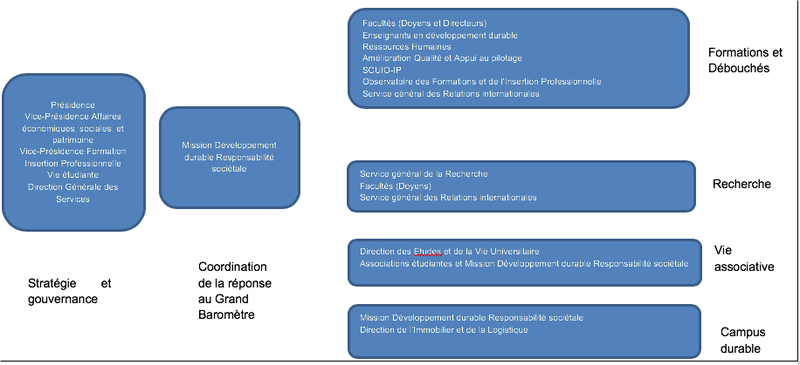
Avez-vous des messages pour d’autres acteurs, des commentaires, des choses à ajouter ?
Pas de réponse.

Dans quelle mesure votre établissement se donne-t-il pour objectif de former la communauté étudiante aux enjeux et aux métiers de la transition écologique ? Cet objectif est-il inscrit dans votre stratégie ?
Un des axes de travail du Chargé de Mission « Développement Durable, Transition Ecologique, Responsabilité Sociétale des Universités » nommé au cours de cette année universitaire est d'impulser, mais aussi de contribuer à faciliter la formation des étudiants à ces enjeux.
Dans quelle mesure des objectifs de transition écologique sont-ils inscrits dans le projet de transformation de votre établissement à court, à moyen, et/ou à long terme ?
Notamment : une démarche d'auto-évaluation DD&RS (Plan Vert) a-t-elle été mise en place pour votre établissement ? (en vertu de l'article 55 de la loi Grenelle 1 du 3 août 2009, le Plan Vert doit obligatoirement être élaboré par tous les établissements d'enseignement supérieur).
A court terme l'établissement lancera la démarche permettant d'aller vers l'obtention du label DD&RS.
Comment sont construites les maquettes pédagogiques de votre établissement ? Les étudiants ont-ils associés à l'élaboration des programmes de formation ? Si oui, à quelles étapes et selon quelles modalités ? Si non quelles propositions feriez-vous en la matière ?
Ces réponses seront formulées prochainement.
Existe-t-il un poste permanent de chargé.e de mission DD&RS ou de transition écologique au sein de votre établissement ? Si oui, depuis combien de temps ? Quelles sont ses missions ? Est-ce un emploi équivalent temps plein ? Quel est son positionnement dans l'organigramme ?
Un enseignant, ancien Directeur de composante, a été nommé Chargé de Mission « Développement Durable, Transition Ecologique, Responsabilité Sociétale des Universités » au cours de cette année universitaire. Il est rattaché à la Présidence de l'Université.
Ses missions sont les suivantes :
- Evaluer et Renforcer la sensibilisation à la thématique tant pour le personnel que pour les étudiants dans leurs pratiques quotidiennes personnelles,
- Former à la transition écologique, au développement durable et à la RSU dans lesdimensions formation, recherche et gouvernance,
- Obtenir, à terme, la labellisation « DD&RS ».
De plus, un pôle RSUDD a été créé au sein de la direction vie de campus (juin 2020) avec un responsable de pôle (1 ETP) ainsi qu'1 ETP également sur le poste de gestionnaire de l'engagement étudiant.
La sensibilisation et de la responsabilisation des personnels et étudiants sur ces enjeux sont-elles e la chargé.e de mission DD&RS ? Dans quelle mesure la communauté étudiante est-elle associée à ce processus d'éco-responsabilisation ?
Le paragraphe précédent répond à la première question; pour la réponse à la deuxième, voir les pages 16 et 17.
Question non posée aux universités.
Y a-t-il dans vos enseignements obligatoires des modules concernant l'apprentissage des fondements de la crise écologique et de ses conséquences ? Si oui, en quelle année sont-ils dispensés et avec quel poids dans les crédits obtenus ?
Pas de réponse.
La transition écologique fait-elle l'objet dans votre établissement de cursus spécialisés ? Si oui, quels sont-ils ?
Non mais c'est une piste envisagée.
L'ensemble du livret pédagogique, c'est-à-dire la totalité des modules d'enseignement, intègre-t-il les enjeux de transition écologique actuels de manière cohérente et ambitieuse ? Comment faites-vous en sorte que la formation aux enjeux écologiques ne soit pas restreinte à des cours spécialisés ? Comment articulez-vous les formations pour favoriser la transversalité et le dialogue des formations face à cet enjeu ?
Pas de réponse
De quelle façon les contenus des enseignements liés à la transition sont-ils abordés (détails des volets scientifiques, économiques, sociaux…)
Pas de réponse
4BIS/ Comment ces enseignements sont-ils reçus par les élèves ?
Réponse
5/ Quels modules parallèles ou activités pédagogiques sont organisés pour sensibiliser / informer sur les questions de transition écologique (séminaires de rentrée, interventions d'experts, journées dédiées, gamification (escape game etc..)) ?
Réponse
6/ Les enseignants de votre établissement sont-ils formés aux enjeux de la transition écologique ? Si oui, de quelle manière (cursus initial, formation continue, organisme dispensaire…) ? Si non, est-ce une évolution envisagée à court terme ? La connaissance des enjeux écologiques et l'interdisciplinarité sont-elles valorisées dans le recrutement du corps professoral ?
Réponse
Quels sont les débouchés de vos formations ? Dans quelle mesure ces débouchés sont-ils en adéquation avec la transition écologique ?
Réponse
Quelle place donnez-vous aux entreprises engagées dans la transition écologique et dans 'Économie Sociale et Solidaire lors de vos forums d'entreprises, interventions d'Alumni, ou dans les projets, études de cas des étudiants ?
Réponse
Avez-vous identifié les principaux impacts des métiers de vos diplômés sur le climat et la biodiversité ? Si oui, quels sont-ils ? Vos formations présentent-t-elles des pratiques professionnelles et personnelles permettant d'identifier et de réduire ces impacts ? Concrètement, lesquelles ?
Pensez-vous que la demande sur le marché du travail pour les métiers de vos diplômés est ou sera menée à évoluer dans le cadre d'une transition écologique ? Si oui, comment et pourquoi ?
Réponse
Les enjeux écologiques et sociaux sont-ils au cœur des stratégies de recherche de votre établissement? Comment la stratégie de recherche favorise-t-elle spécifiquement la recherche transdisciplinaire et interdisciplinaire en lien avec les enjeux de transition écologique ?
Réponse
Votre établissement soutient-il de manière spécifique la recherche (thèses, postdoc, travaux d'enseignants-chercheurs) en lien direct avec les enjeux de transition écologique, et les chercheurs qui s'engagent dans cette voie ? Quelle est la proportion du budget recherche allouée à ces travaux ?
Réponse
3/Existe-t-il des chaires ou des centres de recherche sur le sujet de la transition écologique au sein de votre établissement ? Si oui, quels sont leurs axes de travail ? Combien de professeurs intègrent-ils ?
Réponse
Les chercheurs sont-ils amenés à réfléchir à l'impact de leurs activités (pratiques et finalités) de recherche ? Si oui, comment ?
Réponse
Existe-t-il sur le campus des associations étudiantes dont l'activité est centrée sur l'action en faveur e la transition écologique ? Quelles sont-elles ?
Oui.
Certaines associations du campus ont une activité exclusivement centrée sur l'action en faveur de la transition écologique (ex : les jardins de Paris 8 ; l'abeille vincennoise – les ruchers de Paris 8).
D'autres associations ne sont pas exclusivement centrées sur l'action en faveur de la transition écologique mais intègrent ses préoccupations dans certaines de leurs actions (ex : CIVD ; Arc-en- ciel ; Unicef ; C'est cadeau ; BDE etc…) Enfin d'autres associations extérieures interviennent ponctuellement sur le campus avec des actions en faveur de la transition écologique ( ex : copaname – les bergers urbains ; greenpeace ; reporterre ; les jeunes écologistes ; etc…)
Quelles sont les thématiques abordées par ces associations (alimentation durable, réduction des déchets, sensibilisation…) ? Quelles actions entreprennent-elles ?
Quelle est leur échelle d'impact (l'ensemble ou une certaine catégorie d'étudiants, les personnels de 'établissement, échelle plus large que l'établissement) ?
Ces associations travaillent-elles par elles-mêmes sur le campus ou agissent-elles en partenariat avec l'administration de l'établissement (et si oui, à quel niveau) ?
Les thématiques abordées couvrent l'ensemble des thématiques DDRS avec principalement celle de l'alimentation durable et la sensibilisation, défense et développement de la biodiversité.
Actions :
- Végétalisation du campus
- Sensibilisation sur tous les domaines du développement durable lors de la fête de rentrée (200 associations invitées à tenir un stand pendant deux jours) -Installation de ruchers pédagogiques sur les toits de l'université
- Aménagement de jardins partagés
- Distribution paniers AMAP
- Pâturage de moutons sur le campus
Echelle d'impact : l'ensemble de la communauté universitaire. Les associations sont généralement composées d'étudiants et de personnels de l'université.
Partenariat : Les associations travaillent en collaboration et avec le soutien de l'administration de l'établissement, en particulier avec la vie de campus (conseil, suivi, la direction de accompagnement, financement et autorisation).
Comment valorisez-vous l'engagement citoyen et associatif de vos étudiants ?
L'engagement étudiant est valorisé dans le cursus universitaire de l'étudiant au travers d'un EC libre.
Accessible à l'ensemble des étudiants, aussi bien aux étudiants déjà actifs dans le milieu associatif, dans une structure d'utilité publique, dans un service de l'université, qu'aux porteurs de projets ou ceux qui souhaiteraient sauter le pas, l'EC libre Engagement étudiant permet de valoriser l'engagement associatif et d'obtenir la validation d'ECTS. (env. 600 étudiants / an)
Comment se financent les associations étudiantes à l'Université ? Quelle visibilité leur est accordée au sein de l'établissement ?
Les associations peuvent d'abord financer leurs projets via le FSDIE (Fonds de Solidarité et de développement des Initiatives Etudiantes). Ce fonds leur permet de financer des projets à hauteur de 3000€.
Elles ont également la possibilité de financer leurs activités en répondant aux appels à projets lancés par l'université (ex : appel à projet de la Contribution Vie Etudiante et de Campus (CVEC)) pour financer des projets d'envergure supérieur à 3000€.
A la rentrée prochaine (septembre 2020) elles auront aussi la possibilité de voir leurs projets financés par le « Budget Participatif » s'ils sont retenus par la communauté universitaire.
Enfin l'autofinancement est autorisé et facilité par l'université (adhésions, vente sur le campus etc…)
Votre établissement évalue-t-il son impact environnemental à l'aide de méthodes quantitatives normalisées, comme l'Analyse du Cycle de Vie ou le bilan carbone ? À quelle fréquence ? Quels postes de dépense intègre-t-il (notamment, comprend-il les mobilités, c'est-à-dire les voyages en avion des étudiant.e.s, des professeur.e.s et des conférencier.e.s) ?
L'Université travaille depuis septembre 2018 sur la réalisation d'un Schéma Directeur Énergie Eau qui permettra de réduire les émissions de GES ainsi que la consommation énergétique de l'Université. Celui-ci a permis de diagnostiquer nos bâtiments et leurs impacts environnementaux.
Il permettra de réaliser les actions de performance énergétique jusqu'en 2050 avec un objectif de 33% de réduction de nos consommations en 5 ans (début prévu en avril 2021). Une ligne budgétaire dédiée à ces opérations permettra de réutiliser les économies réalisées (intracting).
Un poste de dépense de 150 000 € à la Direction du Patrimoine est dédié chaque année au « Développement durable et énergie ».
Par ailleurs, une étude est menée depuis février 2020 pour réaliser le Schéma Directeur d'Aménagement des Espaces extérieurs. Celui-ci comprend l'étude d'une labellisation biodiversité pour les futurs aménagements paysagers du campus de Saint-Denis.
Comment votre établissement réduit-il au quotidien son empreinte écologique (végétalisation, incitations, économies d'énergies, alimentation responsable, réduction et tri des déchets …) ? Quels ont les résultats de ces actions ?
L'établissement possède les activités suivantes :
- Végétalisation : des jardins partagés existent sur le campus de Saint-Denis ainsi que des projets tutorés, des ruches sont présentes et des moutons viennent plusieurs fois par mois
-Incitations : des collecteurs de mégots de cigarette sont installés sur le campus -Economies d'énergies : un chef de projets à la direction du patrimoine est responsable du suivi énergétique de l'établissement afin de faire des économies
-Alimentation : une AMAP géré par l'association les Jardins de Paris 8 est présente, une épicerie solidaire est en cours de réflexion
-Tri des déchets : le service logistique réalise le tri des déchets sur le campus (collecte des papiers, cartons)
Ces actions permettent d'impacter les usagers de l'université et sont une base pour faire évoluer l'université en termes de DDRS.
Comment votre établissement interagit-il avec son territoire et s'intègre-t-il dans des politiques publiques locales à visée durable ?
L'Université s'intègre à son territoire de différentes manières :
- Associations locales : partenariat avec les Bergers urbains (moutons), l'Abeille vincennoise, les Jardins de Paris 8, …
Projets d'aménagements avec Plaine commune (Zac des Tartres), RATP, Saint-Denis, partenariat avec les Archives Nationales
Votre établissement est-il labellisé DD&RS ? Si non, un travail est-il en cours pour obtenir le label, et à quel horizon ?
Notre établissement n'est pas encore labellisé DD&RS, mais il s'est engagé dès janvier 2020 en nominant un chargé de mission développement durable, transition écologique et RS, et le recrutement de services civiques en développement durable.
Nous avons procédé à un recensement des activités au sein des services et des composantes de l'université qui ont un rapport avec le développement durable, et la responsabilité sociétale des universités.
Nous étudions les fiches métiers du guide des objectifs du développement durable, afin de les appliquer dans l'ensemble des servies et des composantes de l'université.
Nous avons également l'intention de créer un réseau interne qui rassemblera des référents de chaque service et composante sur les questions DD&RS e afin de réaliser une charte de valeurs environnementales au sein de l'université.
Par ailleurs, l''université a crée récemment un pôle RSU qui sera effectif dès la rentrée de septembre 2020. Nous adhérons au CIRCES afin de travailler sur la labellisation DD&RS par l'intermédiaire de ce pôle.
Quels blocages à la mise en place de dispositifs ou de mesures favorables à une transition écologique pouvez-vous identifier au sein de votre établissement (et à quel niveau) ?
Le principal blocage qu'on a pour le moment est due à la crise sanitaire qui à retardé la plupart de nos projets. Nous espérons les relancer partiellement dès la reprise normale des activités, et totalement dès la rentrée de septembre 2020.
La pluralité des services et composantes peut également être un blocage. L'objectif est de centraliser les activités DD&RS de chacun afin de faire évoluer et progresser.
Êtes-vous au fait des différents mouvements étudiants et institutionnels portant sur la transition écologique tels que le Manifeste étudiant pour un Réveil Écologique, le REFEDD, le projet FORTES du campus de la transition ou le groupe de travail du Ministère de l'Enseignement Supérieur, de la Recherche et de l'Innovation ? Quels mouvements connaissez-vous ?
Nous sommes au courant des mouvements étudiants et intentionnels portant sur la transition écologique comme le REFEDD, le plan campus vert, Le Manifeste étudiant pour un Réveil Écologique, ainsi que les actions menées par le comité CPU-TEE ou le CIRCES.
Pouvez-vous décrire l'organisation mise en place afin de répondre à ce questionnaire (personnes ou organes en charge, parties prenantes impliquées, etc.) ?
Les personnes qui ont contribué à répondre à ce questionnaire sont : Mr. André-Max BOULANGER – Chargé de mission développement durable, transition écologique et RSU Mr. Joeffrey MOREAUX – Chef de projets – Direction du patrimoine Mr. Jordane LEKCZYNSKI – Chargé de mission de la vie étudiante – Direction vie de campus Mr. Mohamed Badr NAJI – Service civique en développement durable Mlle. Sihame MADOUANI – Service civique en développement durable
Avez-vous des messages pour d'autres acteurs, des commentaires, des choses à ajouter ?

Dans quelle mesure votre établissement se donne-t-il pour objectif de former la communauté étudiante aux enjeux et aux métiers de la transition écologique ? Cet objectif est-il inscrit dans votre stratégie ?
La Responsabilité Sociale de l'Université (RSU) est devenue depuis décembre 2016 l'un des axes stratégiques majeurs de la politique de l'Université Paris Dauphine-PSL.
Les valeurs de responsabilité sociale et environnementale sont de plus en plus au cœur des attentes des étudiants et des personnels. La mission d'une université, comme Dauphine, est donc de former des responsables économiques et des décideurs publics, conscients de leurs responsabilités, et susceptibles de mesurer les conséquences sociales et environnementales de leurs décisions.
Dans quelle mesure des objectifs de transition écologique sont-ils inscrits dans le projet de transformation de votre établissement à court, à moyen, et/ou à long terme ?
Notamment : une démarche d’auto-évaluation DD&RS (Plan Vert) a-t-elle été mise en place pour votre établissement ? (en vertu de l’article 55 de la loi Grenelle 1 du 3 août 2009, le Plan Vert doit obligatoirement être élaboré par tous les établissements d’enseignement supérieur).
L'Université Paris-Dauphine-PSL a inscrit son engagement en matière de responsabilité sociale dans son plan d'actions stratégiques 2016-2020. Elle a réaffirmé cet engagement dans la Lettre d'Orientation Budgétaire 2020 avec la mise en place d'un programme « Dauphine Durable ». Ce programme vise à développer des initiatives structurantes au sein de la communauté universitaire concernant les enjeux environnementaux et plus largement les ODD. Il concerne tant notre politique de formation, de recherche que le fonctionnement même de notre campus.
L'enjeu est à la fois de mieux diffuser auprès des étudiants les principes du développement durable et de la responsabilité sociale, de développer les productions scientifiques sur le sujet mais aussi d'améliorer le fonctionnement de l'université en tant qu'organisation du point de vue de son impact environnemental et de la qualité de vie pour les étudiants et les personnels.
Par ailleurs, Paris Dauphine est engagée dans la démarche d'auto-évaluation DD&RS (Plan Vert) depuis 3 ans. Elle a candidaté en octobre 2019 au label DD&RS, le dossier a été jugé recevable et l'audit est en cours.
Comment sont construites les maquettes pédagogiques de votre établissement ? Les étudiants sont-ils associés à l’élaboration des programmes de formation ? Si oui, à quelles étapes et selon quelles modalités ? Si non quelles propositions feriez-vous en la matière ?
Les maquettes pédagogiques sont, comme dans toutes les universités, discutées et votées dans des instances collégiales associant enseignants et étudiants, comme les conseils de département ou le CFVE.
En outre, un groupe de travail composé d'enseignants chercheurs de toutes disciplines s'est mis en place en 2019 dans l'objectif de structurer une offre de formation sur les enjeux environnementaux.
Il ne comprend pas d'étudiants néanmoins le contenu des enseignements proposés prennent largement en compte les attentes des étudiants et leur retour sur les enseignements existants. Le choix a en particulier été fait de procéder par expérimentation. Les cours ont été proposés à titre optionnel sur l'année universitaire en 2019/2020 puis deviendront obligatoires en 2020/2021 de façon à ajuster au mieux le contenu et les modalités du cours aux attentes des étudiants.
Existe-t-il un poste permanent de chargé de mission DD&RS ou de transition écologique au sein de votre établissement ? Si oui, depuis combien de temps ? Quelles sont ses missions ? Est-ce un emploi équivalent temps plein ? Quel est son positionnement dans l’organigramme ?
Le pilotage de la RSU est porté depuis décembre 2016 par un vice-Président en charge de la Responsabilité sociale de l’université qui traite des questions relatives à l’éthique, au développement durable et à la responsabilité sociale. Il anime la politique de l’établissement en ce domaine et porte cette question au sein du Comex de l’université et auprès de l’ensemble des parties prenantes.
Le vice-président s’appuie sur un chef de projet qui pilote et coordonne depuis janvier 2018 la mise en oeuvre des actions et sur 3 référent.e.s : Egalité, Intégrité scientifique, Responsabilité Environnementale soit au total une équipe dédiée de 5 personnes et 4 ETP.
La référente « Responsabilité Environnementale » nommée en septembre 2017 évalue l’impact des activités de Dauphine sur le plan environnemental et propose des dispositifs permettant d’améliorer les pratiques de l’établissement en la matière.
Elle s’appuie sur un groupe de travail composé d’une vingtaine de personnes (enseignants chercheurs, administratifs et étudiants) qui instruit des dossiers et met en oeuvre des projets concrets concernant la gestion des déchets, la mobilité par exemple.
Elle s’appuie également sur un réseau de correspondants RSU constitué en avril 2018 autour d’une trentaine de personnes appartenant à l’ensemble des services et des laboratoires de recherche de l’Université qui facilite la mise en place concrète de la RSU en assurant le partage et la diffusion de l’information. Avec des réunions tous les trimestres, ces correspondants contribuent aussi à promouvoir les bonnes pratiques et à faire émerger de nouveaux projets ou propositions notamment pour ce qui concerne le fonctionnement de l’université et les questions environnementales. Les questions du recyclage de certains déchets ou encore celles du don de mobilier ont été par exemple débattues à l’initiative du réseau.
La sensibilisation et de la responsabilisation des personnels et étudiants sur ces enjeux sont-elles inscrites dans les missions du/de la chargé.e de mission DD&RS ? Dans quelle mesure la communauté étudiante est-elle associée à ce processus d’éco-responsabilisation ?
La sensibilisation et la responsabilisation des personnels et étudiants sur les enjeux environnementaux relèvent de la référente Responsabilité Environnementale et plus largement de la cellule RSU. Un réseau des correspondants RSU a été établi dans cet objectif. Il regroupe un représentant de tous les services de l’université et, dans chaque laboratoire de recherche, un membre de l’équipe administrative et un enseignant-chercheur. La sensibilisation passe également par l’organisation de conférences, d’expositions, de forums souvent en partenariat avec les étudiants, soit le comité RSU étudiant, soit les associations étudiantes, soit les étudiants de certaines filières spécialisées.
Le contenu est détaillé infra (chapitre 2 formation, question 6)
Quelles sont les principales sources externes de financement de votre établissement ? Selon quels critères votre établissement noue-t-il des partenariats financiers et non-financiers ? Ces critères prennent-ils en compte l’investissement dans la transition écologique de vos partenaires ?
Le financement de l'université repose sur la subvention publique, les droits d'inscription, mais aussi sur des liens denses avec les milieux socio-économiques. Les entreprises constituent ainsi des partenaires privilégiés de l'université à travers des chaires, les contrats de recherche, la taxe d'apprentissage, les contrats d'apprentissage, les stages, les conventions de partenariat, etc.).
L'université s'attache à encadrer ces partenariats, veille au respect de l'intégrité scientifique et des principes de déontologie de la recherche et de l'enseignement et développe une réflexion sur les manières de faire de l'investissement dans la transition écologique un critère de choix de nos partenaires. Ainsi, depuis 2019, un forum des métiers durables se tient à Dauphine avec la présence d'entreprises du secteur de l'économie sociale et solidaire ou qui interviennent dans la transition écologique. Plus largement, la préoccupation de l'éthique dans le fonctionnement de notre université a conduit à la mise en place de référents, d'instances de régulation ou encore à la signature de chartes pour encadrer nos relations avec les entreprises : La Charte nationale de déontologie des métiers de la recherche et un Comité d'Ethique de la recherche pour promouvoir la mise en œuvre de pratiques scientifiques transparentes et responsables avec la nomination de 2 référents, Intégrité Scientifique et déontologue.
La Charte d'acceptation des dons et du mécénat et un comité en 2019 pour définir le cadre général de la politique d'acception des dons et du mécénat et un comité pour veiller au respect et à la correcte application des principes de la charte et garantir l'indépendance de l'université et la liberté de ses personnels dans l'enseignement ou la recherche vis-à-vis des donateurs.
La Charte des Chaires en juin 2019 pour définir les principes généraux relatifs aux conditions de création, de fonctionnement et de reporting des activités de ces structures et un comité en novembre 2018 en tant qu'organe de pilotage de la mise en œuvre de la politique de Dauphine dans sa participation dans les chaires.
Une liste des organisations et entreprises actuellement partenaires de votre établissement est-elle disponible sur votre site Internet (public et privé) ?
Paris Dauphine entretient des relations très denses avec les milieux socio-économiques, tant avec les organisations publiques que privées. Le site web comporte une page « partenaires » qui mentionne les partenaires globaux, campus, parcours. D’autres partenaires se trouvent cités dans d’autres rubriques en tant que financeurs d’actions spécifiques.
Y a-t-il dans vos enseignements obligatoires des modules concernant l’apprentissage des fondements de la crise écologique et de ses conséquences ? Si oui, en quelle année sont-ils dispensés et avec quel poids dans les crédits obtenus ?
Notre université souhaite renforcer significativement les enseignements spécialisés ou généralistes concernant les questions environnementales, la responsabilité sociale et les enjeux du développement durable.
Dès septembre 2020, Dauphine rendra obligatoire pour tous les étudiants de 1ère année de Licence un cours complet (18 heures, 2 ECTS) sur les crises écologiques. Il s'agit d'un cours général, allant de l'analyse des causes à l'identification des acteurs et des moyens d'action. Il est à l'heure actuelle testé sur un petit groupe, et l'extension à toute une promotion mobilisera une pédagogie innovante (cours en ligne, apprentissage peer-to-peer, présentiel). A partir de 2021-2022, la seconde partie de ce cours obligatoire sera dispensée en 2ème année de licence. Il sera consacré aux enjeux politiques, économiques et sociaux de la transition écologique.
La transition écologique fait-elle l’objet dans votre établissement de cursus spécialisés ? Si oui, quels sont-ils ?
En formation initiale,
Le Master Économie et Finance, parcours Énergie, Finance, Carbone forme des jeunes économistes capables de donner un caractère opérationnel aux stratégies industrielles et économiques des grands acteurs du monde de l’énergie et de l'environnement devant gérer les énergies de demain et répondre désormais à des problématiques énergie, finance, carbone.
Le Master « Affaires internationales et Développement », parcours « Développement durable et Responsabilité des Organisations » forme des cadres spécialistes du développement durable. La formation est pluridisciplinaire et permet de s’approprier des compétences couvrant quatre disciplines : la gestion, l’économie, la sociologie et le droit ; le parcours « Peace Studies », vise à fournir une formation utile pour la gestion des crises, la prévention de la violence, la construction de la paix et la compréhension des conflits. L’objectif est ainsi de former de futurs professionnels appelés à intégrer des organisations internationales ou nationales, publiques ou privées, des ONG, des instituts publics ou privés de gestion de conflit social, et à s’engager dans des actions de paix. Le Master Politiques Publiques, parcours « Politiques d'entreprises et responsabilités sociales » s’adresse à des étudiants qui souhaitent s’orienter vers les métiers de la RSE et de l’économie sociale et solidaire et intervenir à l’interface entre la sphère privée et la sphère publique, entre les entreprises et leur environnement institutionnel.
En formation continue
Le Master « Développement durable et organisations », propose une formation de 15 mois intégrant tous les aspects du développement durable – environnementaux, sociaux, économiques, culturels et de gouvernance – et mobilisant une approche pluridisciplinaire – gestion, économie, droit, sociologie, sciences politiques, notamment.
L’ensemble du livret pédagogique, c’est-à-dire la totalité des modules d’enseignement, intègre-t-il les enjeux de transition écologique actuel de manière cohérente et ambitieuse ? Comment faites-vous en sorte que la formation aux enjeux écologiques ne soit pas restreinte à des cours spécialisés ? Comment articulez-vous les formations pour favoriser la transversalité et le dialogue des formations face à cet enjeu ?
Dauphine propose à la fois des formations dédiées à ces thématiques pour des étudiants qui souhaitent se spécialiser dans ces domaines (voir question 2), mais offre aussi des enseignements transversaux, soit obligatoires soit optionnels, à l'ensemble de ses étudiants pour encourager leur prise de conscience sur ces questions.
Des enseignements transversaux : deux cours obligatoires en licence (2020-2022) sur les crises écologiques et la transition écologique et quelques 240 enseignements au total dispensés sur les questions de développement durable, d'éthique et de responsabilité sociale.
SPOC E-RS-DD Un SPOC « Ethique, Développement Durable & Responsabilité Sociale » est proposé depuis la rentrée 2019 aux étudiants de master en année de césure. Une dizaine de modules d'une durée de 12h abordent les fondamentaux RSE mais aussi la transition écologique et les enjeux climatiques (l'effet de serre, le GIEC, les négociations internationales sur le climat, la neutralité carbone dans l'Accord de Paris).
Certificat Dauphine durable : Transition écologique et Responsabilité sociale Ce certificat (proposé à partir de septembre 2020) a pour objectif de développer les compétences des étudiants des différents masters de dauphine à propos des questions relatives d'une part, aux enjeux du dérèglement climatique et à la transition écologique, d'autre part à la responsabilité sociale des entreprises.
De quelle façon les contenus des enseignements liés à la transition sont-ils abordés (détails des volets scientifiques, économiques, sociaux…) ?
Généralement, les enseignements liés à la transition intègrent, de façon parfois rapide, les volets scientifiques qui fondent la nécessité de cette transition. Travailler sur l'environnement en SHS ne peut en effet se faire qu'en comprenant les composantes chimiques, biologiques, épidémiologiques.... des problématiques abordées.
Les nouveaux enseignements qui seront proposés à partir de la rentrée 2020 renforcent la présence de ces volets scientifiques. Le premier semestre de l'initiative climat qui sera proposé à l'ensemble des étudiants Dauphinois de première année (LSO et MIDO) comprend en particulier un important volet "sciences de la nature" : physique du climat, chimie de l'atmosphère, etc.
Le nouveau certificat proposé à l'ensemble des étudiants de M1 mêle des éléments scientifiques, législatifs, politiques, sociologiques et économiques.
Comment ces enseignements sont-ils reçus par les élèves ?
Les parcours de master qui dispensent des enseignements consacrés au développement durable et à la transition écologique sont très demandés par les étudiants. Par exemple, le parcours DD reçoit quelques 150 candidatures par an dont 100 extérieures à Dauphine pour une promotion d’une trentaine d’étudiants.
Un groupe de travail doit, en outre, être mis en place à la fin de l’année 2020, pour évaluer les attentes des étudiants s’agissant des enseignements généralistes dispensés dans les filières d’économie et de gestion.
Quels modules parallèles ou activités pédagogiques sont organisés pour sensibiliser / informer sur les questions de transition écologique (séminaires de rentrée, interventions d’experts, journées dédiées, gamification (escape game etc..)) ?
Le plan de formation interne propose par exemple au personnel de Dauphine de participer à une fresque pour le climat. Il s’agit d’un atelier scientifique d’intelligence collective permettant de comprendre les enjeux de l’urgence climatique, découvrir le fonctionnement du climat, ainsi que les causes et conséquences de son dérèglement. L’objectif est de permettre à tous de saisir l’importance et l’urgence d’agir et de contribuer à la transition écologique.
L’atelier a été également proposé aux étudiants. Au cours de l’année, plus de 250 étudiants de disciplines différentes (droit, marketing et économie, notamment finance) ont participé à une fresque du climat. De plus, une vingtaine d’étudiants ont été formés à l’animation de ces ateliers et ont organisé des fresques dans différentes institutions (écoles, collègues, écoles d’architecte, associations locales…).
La sensibilisation passe aussi par l’organisation d’évènements sur le sujet. Ainsi dans le cadre des 50 ans de Dauphine : les journées de la Responsabilités Environnementale en décembre 2018, une conférence « La neutralité carbone à quel horizon ? » en mars 2019 en partenariat avec la Chaire Économie du Climat pour initier un débat avec toute la communauté dauphinoise, une exposition photos « L'eau, l'air, le feu : Donner à voir les changements climatiques » en collaboration avec le National Geographic en mars 2019 avec pour objectif de montrer la diversité des changements en cours et de proposer un dialogue entre avancées scientifiques et phénomènes climatiques qui préfigurent les évolutions à venir.
Autre exemple, un appel à projets lancé fin 2019 auprès des personnels enseignants et administratifs ainsi que les étudiants avec deux thèmes majeurs : réduire l’empreinte écologique de Dauphine dans l’objectif d’améliorer le bilan environnemental de l’université et de son fonctionnement et de faire évoluer durablement les pratiques de tou.te.s à l’université et par ailleurs promouvoir et faire progresser l’égalité et la diversité sur le campus.
Au total ce sont 16 projets qui ont été formulés dont 13 portés par des étudiants et se structurent autour de 5 grandes thématiques dont l’environnement sur les questions de mobilité, d’énergie, de transport ou de gestion des déchets.
Enfin en février 2020, la bibliothèque de Dauphine s’est mobilisée sur ces sujets avec le lancement de “Rosebud”, Ressources et Objectifs de développement Durable pour la Semaine de l'Environnement à la Bibliothèque Universitaire de Dauphine. L’objectif était d’engager la communauté dauphinoise dans une plus grande conscience écologique avec de nombreuses actions telles un jeu concours, une sélection documentaire, une fresque pour le climat…
Les enseignants de votre établissement sont-ils formés aux enjeux de la transition écologique ? Si oui, de quelle manière (cursus initial, formation continue, organisme dispensaire…) ? Si non, est-ce une évolution envisagée à court terme ? La connaissance des enjeux écologiques et l’interdisciplinarité sont-elles valorisées dans le recrutement du corps professoral ?
Différentes modalités de formation ou de sensibilisation : Le plan de formation interne de l'établissement à l'attention du personnel enseignant et des administratifs propose depuis un an des fresques pour le climat.
Les expositions ou les conférences sur le thème de la transition écologique sont nombreuses, à l'initiative de la chaire du climat par exemple ou du parcours Énergie, Finance, Carbone. Les instances de direction de l'université – COMEX, Conseil d'administration – sont également sensibilisées, via la présentation du bilan carbone de l'université par exemple.
L'université vient en outre d'adhérer à l'UVED – Université Virtuelle Environnement et Développement durable – afin de permettre à chacun d'accéder librement à ses ressources sur ses thématiques.
De plus en plus d'enseignants chercheurs sont en outre intéressés par l'initiative Labo1.5 qui devrait mobiliser beaucoup de nos laboratoires de recherche à la rentrée.
Enfin, dans le cadre du programme Dauphine Durable, des chercheurs internationaux rejoindront Dauphine à partir de fin 2020 pour des séjours de recherche. Certains d'entre eux travaillent sur des enjeux liés à la mer, la pêche, les forêts etc.. et leur venue sera l'occasion d'organiser des conférences sur leur thème de recherche.
Quels sont les débouchés de vos formations ? Dans quelle mesure ces débouchés sont-ils en adéquation avec la transition écologique ?
L'université Paris Dauphine forme les étudiants à des fonctions de responsabilité dans des organisations privées ou publiques. Il est à nos yeux indispensables de former ces futurs responsables économiques et des décideurs publics, aux grands enjeux du développement durable et de la transition écologique.
Les taux d'insertion des diplômés des parcours des masters de l'université qui forment spécifiquement à ces métiers, manifestent en outre que les débouchés professionnels sont nombreux (par exemple, 9 étudiants sur 10 diplômés du parcours Énergie, Finance, Carbone trouvent un emploi dans les deux mois).
Des réseaux des anciens se constituent tel le réseau des anciens du master DD dont certains occupent aujourd'hui des postes à responsabilité sur ces thématiques.
Quelle place donnez-vous aux entreprises engagées dans la transition écologique et dans l'Économie Sociale et Solidaire lors de vos forums d’entreprises, interventions d’Alumni, ou dans les projets, études de cas des étudiants ?
Pour rappel, depuis 2019 un Forum des métiers durables est organisé avec des entreprises du secteur de l'économie sociale et solidaire et des organismes impliqués dans la transition écologique.
Il a réuni plus de cent étudiants autour d'une quinzaine de professionnels.
S'agissant des Alumni : le dernier numéro du magazine des alumnis, Dauphinews, en date de mars 2020, consacre un dossier spécial au « Développement Durable : changer les mentalités ».
La Chaire Economie du Climat constitue un espace de dialogue et d'échange avec des partenaires privés et publics : comme EDF, Véolia, Paprec, l'ADEME, le ministère de la transition écologique Le master Politiques Publiques, parcours Politiques d'entreprises et Responsabilités sociales, développe des liens étroits avec des entreprises du secteur de l'ESS, le groupe SOS par exemple.
Avez-vous identifié les principaux impacts des métiers de vos diplômés sur le climat et la biodiversité ? Si oui, quels sont-ils ? Vos formations présentent-t-elles des pratiques professionnelles et personnelles permettant d'identifier et de réduire ces impacts ? Concrètement, lesquelles ?
Cette réflexion n'a pas encore eu lieu mais serait en effet intéressante à mener avec les étudiants.
Les différentes actions de sensibilisation et de formation offertes à l'ensemble des étudiants de l'université (cf. Supra) visent justement à donner aux étudiants les connaissances et les compétences nécessaires pour mesurer les conséquences environnementales de leurs futures décisions (professionnelles, citoyennes, etc.) et à agir de façon à réduire l'impact environnemental de leurs activités.
Pensez-vous que la demande sur le marché du travail pour les métiers de vos diplômés est ou sera amenée à évoluer dans le cadre d’une transition écologique ? Si oui, comment et pourquoi ?
C'est déjà le cas, il y a une demande plus importante d'expertise sur la question des transitions.
Cela ne constitue pas encore le déterminant principal de l'offre de travail des entreprises mais nous anticipons un rôle croissant de celui-ci à l'avenir.
Les enjeux écologiques et sociaux sont-ils au coeur des stratégies de recherche de votre établissement ? Comment la stratégie de recherche favorise-t-elle spécifiquement la recherche transdisciplinaire et interdisciplinaire en lien avec les enjeux de transition écologique ?
De nombreux chercheurs dauphinois abordent les questions d'environnement, de climat, de développement durable et de responsabilité sociale des entreprises. Le lancement du programme Dauphine Durable a justement pour objectif de favoriser les synergies et l'émergence de projets communs. L'objectif est, en particulier, de favoriser le développement de recherches pluridisciplinaires sur ces sujets, associant différents laboratoires, gagner en visibilité et soutenir le développement de projets internationaux sur le sujet.
Pour cela, l'université soutient la mise en place de séminaires et l'organisation d'événements scientifiques permettant de présenter les travaux menés sur la question du développement durable dans les différents laboratoires et la mise en place des équipes pluridisciplinaires de chercheurs.
L'objectif est également de développer les collaborations académiques et pédagogiques avec les autres établissements de l'Université Paris Sciences et Lettres (PSL) dont Dauphine est membre fondateur. PSL dispose en effet d'un spectre disciplinaire très large dont un pôle en sciences dures du meilleur niveau mondial (Collège de France, ENS, Observatoire de Paris, Institut Curie) et des écoles d'ingénieur de premier plan (MINES ParisTech, ESPCI Paris, Chimie ParisTech) qui viennent compléter la propre pluridisciplinarité de Dauphine et démultiplier son impact.
Votre établissement soutient-il de manière spécifique la recherche (thèses, postdoc, travaux d’enseignants-chercheurs) en lien direct avec les enjeux de transition écologique, et les chercheurs qui s’engagent dans cette voie ? Quelle est la proportion du budget recherche allouée à ces travaux ?
Dans le respect des libertés académiques, l'université encourage le développement de recherches sur ces thématiques. Entre 2015 et 2019, 44 thèses abordant les thématiques de l'éthique, du développement durable et de la responsabilité sociale ont été soutenues à Dauphine soit une dizaine par an. Ces thèses relèvent à parts égales des sciences de gestion et des sciences économiques (18 dans chaque discipline), les autres en droit ou en informatique. L'Université recense actuellement 32 thèses en cours sur ces sujets dont une petite dizaine sur des problématiques de climat ou de transition écologique.
La chaire Economie du climat encadre actuellement 14 thèses sur ces questions et 23 thèses ont été soutenues depuis 2012 (dont une dizaine relève de l'école doctorale de Dauphine).
A l'avenir, l'université entend développer sa recherche sur ce terrain avec le programme Dauphine Durable en 2019 avec pour objectifs de favoriser l'émergence de recherches pluridisciplinaires associant les différents laboratoires, de gagner en visibilité et de soutenir le développement de projets internationaux ambitieux. Pour cela, l'université impulse l'organisation d'évènements scientifiques (colloques, séminaires, etc.), favorise les échanges internationaux (professeurs invités sur ces thématiques) et la publication d'un ouvrage de synthèse permettant de présenter l'ensemble des travaux menés sur ces questions à Dauphine.
Existe-t-il des chaires ou des centres de recherche sur le sujet de la transition écologique au sein de votre établissement ? Si oui, quels sont leurs axes de travail ? Combien de professeurs intègrent-ils ?
L’université compte 7 chaires de recherche financées par des partenariats avec les acteurs du monde socio-économique se rapportant à des thématiques en lien avec l’éthique, la responsabilité sociale et le développement durable.
Sur les questions de la transition écologique, on peut en particulier mentionner :
- La Chaire Economie du Climat, 30 enseignants chercheurs
Axes de travail : Prix du CO2 et Innovation Bas Carbone, Agricultures et Forêts, Transitions Energétiques
Résultats : depuis 2010, 23 thèses soutenues, 14 en cours, 56 articles, 91 working papers, 60 informations et débats, 17 policy briefs
- La Chaire Comptabilité Ecologique, 20 enseignants chercheurs
Axes de travail : Développer, modéliser, promouvoir et expérimenter des comptabilités en durabilité forte, pour mettre les systèmes comptables au service d’une transition écologique. Résultats : Depuis 09/2019, premières publications en cours.
Les chercheurs sont-ils amenés à réfléchir à l’impact de leurs activités (pratiques et finalités) de recherche ? Si oui, comment ?
Les enseignants chercheurs se mobilisent également sur cette question. Certains participent ainsi par exemple au Labos 1point5, collectif d'équipes de recherche du monde académique, de toutes disciplines et sur tout le territoire, partageant un objectif commun : mieux comprendre et réduire l'impact des activités de recherche scientifique sur l'environnement, en particulier sur le climat.
Deux laboratoires sont aujourd'hui impliqués mais d'autres ont également manifesté leur intérêt pour se joindre à cette initiative.
Existe-t-il sur le campus des associations étudiantes dont l’activité est centrée sur l’action en faveur de la transition écologique ? Quelles sont-elles ?
Dauphine compte une quarantaine d'associations étudiantes généralistes dont 13 spécifiquement dédiées aux thématiques du développement durable et de la responsabilité sociale qui mobilisent quelques 500 étudiants.
Plusieurs associations sont centrées sur la transition écologique, comme par exemple : Dauphine Durable : Recueillir et porter les initiatives des dauphinois en matière de développement durable.
NOISE : Promouvoir l'innovation sociale et environnementale et l'entrepreneuriat social (Nouvel Observatoire de l'Innovation Sociale et Environnementale) AIESEC : Dauphine Envoyer les étudiants dauphinois, à l'étranger dans des missions humanitaires ou des stages en entreprise qui respectent au moins un des 17 SDGs de l'ONU Ruche qui dit oui : Animer une plateforme de mise en relation de producteurs artisanaux, fermiers et bio en circuit court.
Quelles sont les thématiques abordées par ces associations (alimentation durable, réduction des déchets, sensibilisation…) ? Quelles actions entreprennent-elles ? Quelle est leur échelle d’impact (l’ensemble ou une certaine catégorie d’étudiants, les personnels de l’établissement, échelle plus large que l’établissement) ? Ces associations travaillent-elles par elles-mêmes sur le campus ou agissent-elles en partenariat avec l’administration de l’établissement (et si oui, à quel niveau) ?
Ces associations sont actives puisqu'elles ont organisé 34 évènements sur l'année 2018 par exemple sur la centaine dénombrée pour l'ensemble des associations étudiantes dauphinoises.
Elles sont par ailleurs très largement associées aux évènements institutionnels sur ces thématiques tels la Semaine du handicap en 2017, la Semaine de l'égalité et de la diversité et les Journées Responsabilité Environnementale en 2018, ou encore les Journées des Objectifs du Développement Durable en 2019.
Comment valorisez-vous l’engagement citoyen et associatif de vos étudiants ?
Dauphine considère que l'engagement étudiant est particulièrement important, car il contribue à l'enrichissement de la formation en développant des compétences additionnelles aux contenus académiques qui peuvent être valorisées au sein d'un cursus.
Ainsi, l'implication des étudiants dans la vie associative de Dauphine, ou plus largement une activité bénévole au sein d'une association ou encore le fait d'occuper un mandat électif est reconnue depuis 2017. Un dispositif permet à ces étudiants d'obtenir un bonus en termes de note qui est intégré dans la moyenne finale de l'année. En 2018, 1 300 étudiants ont déposé une demande de reconnaissance de leur engagement et 807 obtenu une telle majoration.
Comment se financent les associations étudiantes ? Quelle visibilité leur est accordée au sein de l’établissement ?
L'université soutient ces associations en leur attribuant un local, une subvention annuelle de fonctionnement et un financement complémentaire pour certains projets. Leur fonctionnement est encadré par une charte des associations revue en 2017 qui comporte des aspects éthiques.
Ces associées sont structurées depuis 2014 dans le cadre du comité RSU étudiant.
En termes de visibilité, ces associations peuvent diffuser des informations via my course ou encore sur les canaux institutionnels de Dauphine tels le site web, la lettre d'information hebdomadaire, les écrans au sein de l'université. Ils peuvent également tenir des stands dans l'université pour sensibiliser ou vendre des produits pour financer leurs activités ou leurs projets.
Votre établissement évalue-t-il son impact environnemental à l’aide de méthodes quantitatives normalisées, comme l’Analyse du Cycle de Vie ou le bilan carbone ? À quelle fréquence ? Quels postes de dépense intègre-t-il (notamment, comprend-il les mobilités, c’est-à-dire les voyages en avion des étudiants, des professeurs et des conférenciers ) ?
L'université a produit un BEGES pour l'année 2018. Le Bilan d'émissions de gaz à effet de serre (BEGES) de l'université a révélé l'importance des émissions liées aux déplacements (en particulier internationaux) des étudiants et des personnels. Une réflexion collective sera menée afin d'identifier les leviers d'action possibles pour baisser ces émissions. Plusieurs actions d'ores et déjà programmées devraient permettre de réduire ces émissions, principalement, pour les émissions indirectes de GES (SCOPE 3) : plan Action Achat avec l'intégration de clauses sociales et environnementales dans les nouveaux marchés, amélioration du tri et prise en charge des matières recyclables par des prestataires pertinents, nouvelle politique voyage (demande de privilégier le train pour certaines destinations), recours moins importants aux taxis quand transports en commun disponibles, incitation à utiliser le vélo pour les déplacements domicile-travail, installation de bornes électriques pour recharge de véhicules électriques.
Comment votre établissement réduit-il au quotidien son empreinte écologique (végétalisation, incitations, économies d’énergies, alimentation responsable, réduction et tri des déchets …) ? Quels sont les résultats de ces actions ?
La responsabilité environnementale du campus repose sur des actions visant à réduire la consommation de ressources – matières et énergies, et à limiter la production de déchets et les émissions de gaz à effet de serre. Elle s'exerce aujourd'hui dans un contexte de transformation du campus avec un vaste chantier de rénovation et de construction d'un nouveau bâtiment sur la période 2020-2025.
De nombreux chantiers ayant trait à la gestion et à la valorisation des déchets sont engagés : le tri sélectif (papier, carton, piles, Nespresso), la collecte des cartouches d'encre usagées… Les déchets d'équipement d'ameublement font l'objet de dispositifs pour limiter ces déchets et favoriser le réemploi du mobilier, soit au sein de l'université pour équiper les bureaux de Dauphine, soit via le don au personnel ou aux associations.
Les déchets d'équipements électriques et électroniques sont l'objet d'une grande vigilance. Le réemploi des matériels obsolètes mais en état de marche est assuré via des opérations de don au personnel ou à des écoles.
Enfin, des tables de tri ont été installées au CROUS et les bio déchets pris en charge depuis mai 2019 par l'association Love Your Waste.
Comment votre établissement interagit-il avec son territoire et s’intègre-t-il dans des politiques publiques locales à visée durable ?
Sur la question de la mobilité ou des déchets, l'université entretient des liens étroits avec la ville de Paris.
S'agissant plus largement de sa politique de responsabilité sociale, l'université s'est engagée dans différents types d'action mobilisant des partenariats locaux. L'Université s'est lancée en 2018 dans la formation et l'intégration socio-professionnelle des réfugiés. Avec un programme Tremplin est mené en partenariat avec une association (Wintegreat) et bénéficie à quelques 25 à 30 réfugiés par an avec un volet formation et un accompagnement.
Par ailleurs, un programme Egalité des chances implanté depuis 2019 à Dauphine permet un accompagnement de jeunes issus de zones sensibles en Ile-de-France avec la mise en place de nombreuses actions partenariales avec les établissements scolaires: sensibilisation des jeunes lycéens à l'enseignement supérieur par des interventions dans des lycées (1000 lycéens en 2018), offre de cours de renforcement dans les lycées pour préparer les élèves pendant les 2 années précédant l'entrée à l'Université (700 lycéens bénéficiaires en 2018).
Enfin, Dauphine dispose d'un incubateur depuis 2012 avec des projets locaux relevant des thématiques Responsabilité Sociale : Fairvioo une plateforme qui transforme les avis clients en dons reversés à des ONG, Meet My Mama, un traiteur solidaire de cuisine du monde par des femmes issues des migrations, Les Empotés avec des plateaux repas zéro déchet ou encore Zen ride qui propose un service de vélos de société.
Votre établissement est-il labellisé DD&RS ? Si non, un travail est-il en cours pour obtenir le label, et à quel horizon ?
Paris Dauphine a candidaté en octobre 2019 au label DD&RS, le dossier a été jugé recevable et l'audit est en cours.
Quels blocages à la mise en place de dispositifs ou de mesures favorables à une transition écologique pouvez-vous identifier au sein de votre établissement (et à quel niveau) ?
La responsabilité environnementale est devenue depuis plusieurs années une priorité politique de l'université. La mise en œuvre des différents projets qui y sont attachés dépend de la mobilisation la communauté universitaires (personnel administratif, des différentes composantes de enseignants-chercheurs, étudiants). Cela implique un travail nécessairement long de sensibilisation et de formation de tou.te.s sur le sujet. Il faut en outre être susceptible d'accompagner la mise en place de dispositifs nouveaux qui peuvent être perçus comme entrainant des coûts supplémentaires ou comme bouleversant les processus ordinaires de travail.
Êtes-vous au fait des différents mouvements étudiants et institutionnels portant sur la transition écologique tels que le Manifeste étudiant pour un Réveil Écologique, le REFEDD, le projet FORTES du Campus de la transition ou le groupe de travail du Ministère de l’Enseignement Supérieur, de la Recherche et de l’Innovation ? Quels mouvements connaissez-vous ?
Le Manifeste étudiant pour un réveil écologique est présent à Dauphine depuis la naissance du mouvement avec des appels à signature depuis 2018 auprès des dauphinois.
Le REFEDD est également présent dans notre université puisque des étudiants de l'association Dauphine Durable sont membres de cette structure. La question des évènements responsables a suscité de nombreux échanges.
Dauphine est membre du comité de la Transition écologique et énergétique de la CPU et participe aux réunions mensuelles.
Participation au projet FORTES du Campus de la transition.
Pouvez-vous décrire l’organisation mise en place afin de répondre à ce questionnaire (personnes ou organes en charge, parties prenantes impliquées, etc.) ?
Ce questionnaire a été renseigné par la cellule RSU sur la base des travaux et reporting déjà réalisés principalement pour le label DD&RS, Equis ou encore Principles for Responsible Management Education (PRME). Il a fait l'objet d'échanges avec les étudiants dauphinois membres du collectif Pour un réveil écologique.
Avez-vous des messages pour d’autres acteurs, des commentaires, des choses à ajouter ?
Pas de réponse.

Dans quelle mesure votre établissement se donne-t-il pour objectif de former la communauté étudiante aux enjeux et aux métiers de la transition écologique ? Cet objectif est-il inscrit dans votre stratégie ?
La démarche est inscrite au cœur du volet spécifique du contrat de site de l'Université 2015-2020, validée par les instances, ainsi que des axes stratégiques 2020-2024 adoptés en CA en Novembre 2018.
Le Référentiel DD/RS est repris intégralement comme indicateur spécifique de performance pour l'établissement.
Un service référent en charge de ces problématiques a été créé en 2017 ; le service RSU-DD, a été le premier crée au sein des universités françaises. D’autres services de l’université sont également mobilisés pour l’intégration de la démarche DD&RS (patrimoine, santé, vie du campus, service d’action sociale, hygiène et sécurité ...).
Dans quelle mesure des objectifs de transition écologique sont-ils inscrits dans le projet de transformation de votre établissement à court, à moyen, et/ou à long terme ?
Notamment : une démarche d’auto-évaluation DD&RS (Plan Vert) a-t-elle été mise en place pour votre établissement ? (en vertu de l’article 55 de la loi Grenelle 1 du 3 août 2009, le Plan Vert doit obligatoirement être élaboré par tous les établissements d’enseignement supérieur).
Notre établissement est parmi les premiers à avoir expérimenter la démarche de labélisation DD&RS et avoir reçu ce label en 2016. (Ce label portée par le Cirses s’appuie sur une autoévaluation qui s’inscrit dans la lignée du plan vert). Nous travaillons actuellement à la nouvelle obtention de ce label, l’audit devant avoir lieu fin avril 2020.
Comment sont construites les maquettes pédagogiques de votre établissement ? Les étudiants sont-ils associés à l’élaboration des programmes de formation ? Si oui, à quelles étapes et selon quelles modalités ? Si non quelles propositions feriez-vous en la matière ?
Les maquettes sont élaborées par les équipes pédagogiques des différentes UFR, et discutées lors des conseils d’UFR où les étudiants sont représentés, avec un cadrage de l’établissement et un pilotage par le Vice-président en charge de la CFVU. Les élus étudiants siègent également en CFVU.
Existe-t-il un poste permanent de chargé de mission DD&RS ou de transition écologique au sein de votre établissement ? Si oui, depuis combien de temps ? Quelles sont ses missions ? Est-ce un emploi équivalent temps plein ? Quel est son positionnement dans l’organigramme ?
Un service référent en charge des problématiques DD&RS a été créé en 2017, le service RSU-DD.
À l'université Paris Nanterre (UPN), et au sein de ce service, la responsabilité sociétale se décline en trois principales missions qui correspondent chacune à une définition particulière de la RSU et à un pôle à part entière du service :
- L'ouverture sur le territoire et le partage de la connaissance avec le pôle « Science et Société».
- La valorisation de l'engagement étudiant et la participation aux enjeux sociétaux contemporains avec le pôle « Solidarité et Engagement ».
- L'engagement en faveur d'une politique durable et éco-responsable sur le campus avec le pôle « transition écologique »
Le pôle Transition écologique est doté d’un support de poste pérenne d’ingénieur d’étude (IGE) en charge du label DDRS et de la transition écologique, en lien avec la direction du service et le Vice-président Transition écologique et patrimoine. Le service accueille également régulièrement des stagiaires étudiant·es et volontaires en service civique, en appui sur ces missions du pôle.
Le service RSU-DD est rattaché à la Direction générale des services, et à un·e vice-président·e Patrimoine et Transition écologique.
D’autres services de l’Université sont également mobilisés pour la mise en œuvre de la démarche DD&RS (patrimoine, santé, vie du campus, service d’action sociale, hygiène et sécurité ...)
La sensibilisation et de la responsabilisation des personnels et étudiants sur ces enjeux sont-elles inscrites dans les missions du/de la chargé.e de mission DD&RS ? Dans quelle mesure la communauté étudiante est-elle associée à ce processus d’éco-responsabilisation ?
La sensibilisation et la responsabilisation des personnels et étudiants aux enjeux du DDRS fait partie intégrante des missions du service RSU-DD. Et est également réalisée par d’autre services et dispositifs.
Concernant les personnels :
- Le service RSUDD met en place une formation aux enjeux du DDRS à l’UPN, qui devait voir le jour en Mai 2020.
- De plus, les missions du service sont d’insuffler au sein de l’ensemble de la communauté universitaire des actions ayant trait à la transition écologique, l’ancrage territorial, la solidarité et l’engagement : le service collabore avec d’autre services, et joue le rôle de «facilitateur », de « levier » pour la mise en place des projets et changement des pratiques.
- L’ensemble des services a été associé à la démarche de labélisation DD&RS, via une présentation du référentiel DDRS, des entretiens individuels, des articles sur les réseaux de communication de l’UPN, dans les instances de l’UPN.
- Par ailleurs, en tant que service commun, le service RSU-DD est doté d’un conseil, dont les membres représentent les parties prenantes internes et externes.
Concernant la communauté étudiante :
- Le service RSU-DD, organise et/ou vient en appui sur l’organisation d’évènements de sensibilisation spécifiquement DD et RSU : la Semaine Etudiante du DD, la semaine de la mobilité, le festival Ecozone de la ville de Nanterre...
- Il pilote ou soutient par ailleurs des projets DDRS portés par des associations étudiantes : l’épicerie solidaire, le jardin partagé, rucher, AMAP....
- Et offre des formations et projets en lien avec le DDRS aux étudiants : Bonus au diplôme, engagement associatif, apiculture, ...
- Le service ACA2 (action culturelle et artistique / animation du campus), est en charge de l'animation du campus et de la gestion de la maison de l'Etudiant·e qui accueille toutes les associations. De nombreux projets, en lien avec le DDRS, sont portés par ces associations (AFEV, UNICEF, AMAP-ETAL, Handiversité, Juris club, Facteur commun...) avec l'appui de l'université. L’ACA2 offre aux associations étudiantes un suivi, la possibilité d’être subventionnées via le budget CAPE (commission d’aide aux projets étudiants), des formations (hygiène, sécurité, évènement associatif écologique, communication non stéréotypée...)
De manière générale:
- Un budget participatif annuel, en place depuis 2019, invite l’ensemble de la communauté universitaire à proposer des projets d’intérêt général en résonance avec les valeurs DDRS, et à voter par la suite pour les projets. La première édition a permis, entre autres, l’installation de fontaines à eau et de micro-ondes à l’intérieur des bâtiments, de tables de pique-nique, la végétalisation de murs extérieurs, ou l’installation de nouvelles bornes de tri sélectif.
- Un prix de l’engagement étudiant et membres du personnel est proposé depuis cette année 2020, pour récompenser les engagements associatifs de la communauté universitaire.
- Le service communication fait de plus des points réguliers sur l’ensemble des actions de la communauté universitaire, et notamment via le prisme DDRS.
Question non posée aux universités.
Y a-t-il dans vos enseignements obligatoires des modules concernant l’apprentissage des fondements de la crise écologique et de ses conséquences ? Si oui, en quelle année sont-ils dispensés et avec quel poids dans les crédits obtenus ?
L’Université Paris Nanterre est plutôt dédiée à l’enseignement du droit, des sciences économiques, des sciences humaines et sociales, avec une composante scientifique et industrielle.
Il n’y a actuellement pas d’enseignements transversaux dédiés spécifiquement au DD&RS. Mais la structuration des licences dans le LMD4 devrait permettre la mise en place d’un module transversal sur ces enjeux.
En outre, plusieurs formations intègrent des modules dédiés. Et surtout, plusieurs formations sont exclusivement consacrées à une ou plusieurs thématiques DD/RS (cf ci-dessous).
La transition écologique fait-elle l’objet dans votre établissement de cursus spécialisés ? Si oui, quels sont-ils ?
Plusieurs formations sont spécialisées sur des thématiques DDRS, dans plusieurs UFR, notamment
- Master énergétique, licence pro Maitrise de l’énergie et environnement
- Sociologie de l'environnement
- Géographie urbanisme et aménagement durable
- Economie de l’environnement, de l’énergie et des transports
- droit de la santé et de la protection sociale,
- droit de l’Homme
- licence pro Gestion des organisations de l’économie sociale et solidaire
- ...
L’ensemble du livret pédagogique, c’est-à-dire la totalité des modules d’enseignement, intègre-t-il les enjeux de transition écologique actuel de manière cohérente et ambitieuse ? Comment faites-vous en sorte que la formation aux enjeux écologiques ne soit pas restreinte à des cours spécialisés ?
Comment articulez-vous les formations pour favoriser la transversalité et le dialogue des formations face à cet enjeu ?
Il n’y a actuellement pas encore d’enseignements transversaux dédiés spécifiquement au DD&RS.
Mais la structuration des licences dans le LMD4 devrait permettre la mise en place d’un module transversal proposé en licence sur ces enjeux.
De quelle façon les contenus des enseignements liés à la transition sont-ils abordés (détails des volets scientifiques, économiques, sociaux...) ?
Nous ne pouvons répondre à cette question de manière générale, car le contenu des enseignements relève de l’UFR et du département de rattachement (Droit, économie, science sociale, géographie, ...), il est propre à chaque formation.
Comment ces enseignements sont-ils reçus par les élèves ?
Aucune étude à grande échelle n’a été réalisée sur ce sujet.
Quels modules parallèles ou activités pédagogiques sont organisés pour sensibiliser / informer sur les questions de transition écologique (séminaires de rentrée, interventions d’experts, journées dédiées, gamification (escape game etc..)) ?
Plusieurs évènements ont lieu tout au long de l’année.
- A la rentrée en Septembre, lors de l’ouverture de l’université aux nouveaux arrivants, des visites « Patrimoine et transition écologique » sont organisés sur le campus, en complément de la visite de tous les services (santé, action sociale, Crous, sport, ...).
- A la suite, la crémaillère des associations, grand événement regroupant une centaine d’associations de l’université, et fréquenté par plusieurs centaines d’étudiant.es, est également l’occasion de présenter l’ensemble des actions RSUDD porté par l’université : des ateliers sur le recyclage à l’université, de réparations et ventes de vélo d’occasion, ou encore des distributions gratuites de protections périodiques y sont organisées. Une distribution de gourdes de verre est prévue pour notre prochaine édition.
- La Semaine Étudiante du Développement Durable, version étudiante de la Semaine Européenne du Développement Durable, au niveau national par le REFEDD, prend chaque année plus d'ampleur à l'UPN. En 2019, plus d'une vingtaine d’évènements ont été portés par une dizaine d'associations (facteur commun, les marmites artistiques, le Labeess, l'UniverCel, les Unis Verts, Nanterre pas ta cuisine) et services de l'université (ACA2, DALOE, RSU-DD, SUMP, Communication), en partenariat avec le Crous de Versailles. Un festival, « regard croisé sur l’écologie » est organisé sur une semaine, depuis 2019 ; il comprend de nombreuses expositions, conférences avec des intervenants extérieurs et/ou de l’université, projections, ateliers, visites, distributions de pack zéro déchet, clean walk, sessions de jardinage et semis, etc.
D'autres événements ont lieu à l'année :
- La participation au festival Ecozone de la ville de Nanterre
- Des ramassages de déchets
- L’anniversaire du rucher
- Les journées des Droits des femmes, contre les violences sexistes et sexuelles
- La semaine de l'accessibilité et du handicap
- La semaine de la mobilité
- Le séminaire bien-être...
- Etc...
Ainsi qu'un grand nombre d'évènements fléchés développement durable à l'initiative des étudiant·es et association étudiantes (DIY, conférence, ateliers zéro déchet, projections, boutique sans argent, animation du jardin partagé...).
Les enseignants de votre établissement sont-ils formés aux enjeux de la transition écologique ? Si oui, de quelle manière (cursus initial, formation continue, organisme dispensaire...) ? Si non, est-ce une évolution envisagée à court terme ? La connaissance des enjeux écologiques et l’interdisciplinarité sont-elles valorisées dans le recrutement du corps professoral ?
Il n’existe actuellement pas de plan de formation obligatoire pour l’ensemble de l’établissement, ou de politiques de recrutement valorisant la connaissance des enjeux DDRS.
Ils le sont à l’échelle des formations dédiés à ces thématiques, ou portés plutôt à titre personnel.
Dans le plan de formation du personnel de l’UPN, des formations dédiées aux problématiques DDRS sont proposées : une initiation aux enjeux du DDRS à l’UPN (en cours de conception), inclusion des étudiant.es en situation de handicap (mobilité, langue des signes) ou lutte contre les discriminations.
Quels sont les débouchés de vos formations ? Dans quelle mesure ces débouchés sont-ils en adéquation avec la transition écologique ?
L’Université Paris Nanterre est plutôt dédiée à l’enseignement du droit, des sciences économiques, des sciences humaines et sociales, avec une composante scientifique et industrielle. Elle accueille chaque année environ 34 000 des étudiant.es de la licence 1 jusqu’au doctorat.
Les débouchés sont donc très variés.
Quelle place donnez-vous aux entreprises engagées dans la transition écologique et dans l'Économie Sociale et Solidaire lors de vos forums d’entreprises, interventions d’Alumni, ou dans les projets, études de cas des étudiants ?
De manière générale, l’UPN propose entre autre :
- un programme (PEPITE PON) visant à accompagner l’entreprenariat étudiant
- un incubateur d’entreprises ESS
- un réseaux d’ancien étudiant.es ALUMNI
- un service, le SCUIO-IP, qui accompagne les étudiant.es dans leur intégration professionnelle et leur recherche de stage
Création d’une Chaire dans le cadre de la Fondation de l’UPN : Chaire Emergences : Economie et société collaboratives, coopératives et solidaires
Les formations donnent lieu à quelques initiatives propres au fonctionnement de chaque UFR (pas de politiques globales sur ce sujet), par exemple via la licence pro « gestion des organisations de l’économie sociale et solidaire ».
Avez-vous identifié les principaux impacts des métiers de vos diplômés sur le climat et la biodiversité ? Si oui, quels sont-ils ? Vos formations présentent-t-elles des pratiques professionnelles et personnelles permettant d'identifier et de réduire ces impacts ? Concrètement, lesquelles ?
Comme décrit précédemment, l’Université Paris Nanterre est plutôt dédiée à l’enseignement du droit, des sciences économiques et de gestion, des sciences humaines et sociales, avec une composante scientifique et industrielle
Les débouchés sont donc très divers, et aucune étude spécifique n’a été réalisée à ce sujet.
Mais, comme évoqué précédemment, des modules sont cependant intégrés dans les formations, notamment en droit (droit social, droit de l’Homme...), géographie (urbaine, de l’environnement, de l’eau...), économie (sociale et solidaire...), gestion (GRH et RSE), énergies renouvelables., etc.
Pensez-vous que la demande sur le marché du travail pour les métiers de vos diplômés est ou sera amenée à évoluer dans le cadre d’une transition écologique ? Si oui, comment et pourquoi ?
Comme décrit précédemment, l’Université Paris Nanterre est plutôt dédiée à l’enseignement du droit, des sciences économiques et de gestion, des sciences humaines et sociales, avec une composante scientifique et industrielle. Les débouchés sont très divers. Ils seront effectivement amenés à évoluer dans le cadre d’une transition écologique.
A titre d’exemple, la formation de master GEDELO, sur la gestion de l’eau, évolue avec les techniques de gestion des eaux de pluie et les politiques territoriales, le droit social avec les évolutions sociétales et le cadre européen, le génie énergétique avec les évolutions des pratiques de construction, des politiques et connaissances industrielles, etc...
Les enjeux écologiques et sociaux sont-ils au cœur des stratégies de recherche de votre établissement ? Comment la stratégie de recherche favorise-t-elle spécifiquement la recherche transdisciplinaire et interdisciplinaire en lien avec les enjeux de transition écologique ?
Ces enjeux ne sont pas au cœur d’une stratégie de recherche de l’université.
Mais plusieurs projets existent en ce sens :
L’Accent est mis par l’UPN sur l’élaboration de projets de recherche en ST et SHS dans les domaines scientifiques liés à la transition énergétique, écologique, l’écologie et la santé, ainsi que le handicap (contrat d’établissement, volet spécifique).
Les appels à projets de la Comue « Paris Lumières » intègrent l'axe stratégique « Sociétés de demain» : durabilité, innovation sociétale, émancipation humaine ».
Trois laboratoires en particulier traitent de questions DD&RS:
Economi’x : économie, développement durable, environnement et énergie
Laddys : gestion environnementale et des politiques publiques
Lavue, axe « Justice et inégalités » : l’urbanisme et de l’environnement, et notamment la géographie de la santé.
Ou encore, à titre d’exemple, trois programmes :
2019 – LAVUE, Modèles de villes durables en Afrique : injonctions et appropriations
2019 – ECONOMIX, Smart Cities : network solutions for sustainable mobility
2018 – CEROS, Conception pour une durabilité optimisée des systèmes en économie circulaire
L’université a créé une chaire en 2016 comportant un volet recherche sur ces thématiques
Chaire Emergences : Economie et société collaboratives, coopératives et solidaires
Votre établissement soutient-il de manière spécifique la recherche (thèses, postdoc, travaux d’enseignants-chercheurs) en lien direct avec les enjeux de transition écologique, et les chercheurs qui s’engagent dans cette voie ? Quelle est la proportion du budget recherche allouée à ces travaux ?
Plusieurs laboratoires et programmes traitent de près ou de loin des questions DDRS. On citera àtitre d’exemple trois d’entre eux :
Trois laboratoires en particulier traitent de questions DD&RS :
Economi’x : économie, développement durable, environnement et énergie
Laddys : gestion environnementale et des politiques publiques
Lavue, axe « Justice et inégalités » : l’urbanisme et de l’environnement, et notamment la géographie
de la santé.
Ou encore, à titre d’exemple, trois programmes :
2019 – LAVUE, Modèles de villes durables en Afrique : injonctions et appropriations
2019 – ECONOMIX, Smart Cities : network solutions for sustainable mobility
2018 – CEROS, Conception pour une durabilité optimisée des systèmes en économie circulaire
Existe-t-il des chaires ou des centres de recherche sur le sujet de la transition écologique au sein de votre établissement ? Si oui, quels sont leurs axes de travail ? Combien de professeurs intègrent-ils ?
Comme évoqué ci-dessus
Plusieurs laboratoire et programme traitent de près ou de loin des questions DDRS. On citera à titre
d’exemple trois d’entre eux :
Trois laboratoires :
Economi’x : économie, développement durable, environnement et énergie
Laddys : gestion environnementale et des politiques publiques
Lavue, axe « Justice et inégalités » : l’urbanisme et de l’environnement, et notamment la géographie
de la santé.
Trois programmes
2019 – LAVUE, Modèles de villes durables en Afrique : injonctions et appropriations
2019 – ECONOMIX, Smart Cities : network solutions for sustainable mobility
2018 – CEROS, Conception pour une durabilité optimisée des systèmes en économie circulaire
Les chercheurs sont-ils amenés à réfléchir à l’impact de leurs activités (pratiques et finalités) de recherche ? Si oui, comment ?
Il n’existe pas de dispositifs spécifiques de pour accompagner les chercheurs et chercheuses dans leur réflexion sur ces impacts. Les laboratoires et dispositifs de recherches étant nombreux et divers, les initiatives sur ces questions sont pour le moment associées à la politique de l’unité de rattachement, ou issues d’initiatives personnelles.
Le comité d’éthique de la recherche de l’UFR Sciences Psychologiques et Sciences de l’Education préfigure la constitution du comité d’éthique de la recherche de l’Université.
Existe-t-il sur le campus des associations étudiantes dont l’activité est centrée sur l’action en faveur de la transition écologique ? Quelles sont-elles ?
Plusieurs associations agissent spécifiquement sur les questions de transition écologiques :
- L’association Les Unis Verts
- L’association Facteur Commun
- L’AMAP Etal
- L’association le Labeess
- L’association Nanterre pas ta cuisine
Des associations plus axé sur des problématiques de responsabilité sociétales existent également,comme
- L’association l’Assega gère l’épicerie solidaire Agoraé
- L’association COFIN, collectif féministes Intersextionnel
Quelles sont les thématiques abordées par ces associations (alimentation durable, réduction des déchets, sensibilisation...) ? Quelles actions entreprennent-elles ?
Quelle est leur échelle d’impact (l’ensemble ou une certaine catégorie d’étudiants, les personnels de l’établissement, échelle plus large que l’établissement) ?
Ces associations travaillent-elles par elles-mêmes sur le campus ou agissent-elles en partenariat avec l’administration de l’établissement (et si oui, à quel niveau) ?
Plusieurs associations agissent spécifiquement sur les questions de transition écologiques, qui impactent en générale l’ensemble de la communauté universitaire, avec un ciblage renforcé à juste titre envers les étudiant.es:
- Les associations « Les Unis Verts », (une trentaine de membres) et Facteur Commun (Un dizaine de membres), travaillent sur la sensibilisation de l’ensemble de la communauté universitaire (et notamment des étudiant.es) à la transition écologique via l’organisation de conférences, ateliers DIY, fresques du climat, distributions de pack zéro déchet (400 environ par an), cercles de discussions, clean walk...
Facteur commun organise le festival Regards croisés sur l’écologie lors de la Semaine étudiante du Développement Durable d’avril.
Ces associations sont subventionnées quand elles en font la demande sur le budget CAPE, et souvent soutenues par le service RSU-DD, notamment pour la coordination de la Semaine étudiante du DD.
- L’AMAP Etal organisent des distributions hebdomadaires de paniers de légumes bio et en circuit courts pour une centaine d’inscrit.es par an, autant membres du personnel qu’étudiant.es
- L’associations le Labeess (étudiante, membres du personnels et extérieurs – une douzaine de membre), gère le jardin partagé, est partenaire du projet de rucher sur le campus, et organise des évènements visant la préservation et valorisation de la biodiversité à l’UPN. L’association propose également des ateliers de sensibilisation auprès des écoles primaires de Nanterre. On compte notamment parmi ses membres actuels : quatre étudiant.es («et un cercle de nombreux.ses « sympathisant.es » étudiant.es autour), deux jardinier.es de l’université, le responsable adjoint de l’équipe de sécurité, des habitant.es du quartier limitrophe...
- L’association Nanterre pas ta cuisine, localisée sur la résidence universitaire du Crous, organisent des disco soupes et ateliers de cuisines bio et de légumes abimés.
Le service ACA2 est présent pour accompagner et gérer les demandes de subventions de l’ensemble des associations étudiantes recensés à l’Université, en plus de la vie culturelle et artistique du campus. Il gère la maison de l’Etudiant.e, lieu dédié à l’activité des associations et à la vie culturelle, avec une vingtaine de locaux pour les sièges d’associations, deux salles de spectacle / conférence / activité, et un local dédié aux activités de l’économie sociale et solidaire. Il est le référent pour l’ensemble des projets associatifs.
En compléments, le service RSU-DD vient en appui pour accompagner, subventionner, ou être partenaire de certains projets liés au DD&RS.
D’autre services sont également partenaires de projets associatifs étudiants, comme le pôle valorisation des déchets de la direction de la logistique(DALOE), le service de la Santé (SUMP), le service handicap et accessibilité, ou le centre sportif (SUAPS).
Comment valorisez-vous l’engagement citoyen et associatif de vos étudiants ?
Plusieurs dispositifs sont proposés :
Les bonus au diplôme permettent aux étudiant.es de voir valorisés leurs engagements envers une cause et des apprentissages, en dehors de leur cursus. En échange de leur engagement, ils peuvent bénéficier de formations spécifiques et d’ECTS additionnels sur leur relevé de notes final. Les bonus recouvrent des champs très divers : les activités culturelles, les activités physiques et sportives, les langues, la recherche, la professionnalisation, et notamment les bonus au diplôme en lien avec la solidarité et engagement. On citera entre autre:
- Le bonus « responsables associatifs », qui valorise le travail étudiant engagé dans un bureau d’association
- Le bonus au diplôme Apiculture, 24h de formation pour apprendre à comprendre et valoriser le rôle fondamental des pollinisateurs dans le monde, et connaitre le fonctionnement de la ruche et le comportement des abeilles
Autre dispositif, le prix de l’engagement, ouvert aux étudiant.es et membres du personnel, permet de souligner l’engagement de ceux et celles donnant de leur temps pour un projet en lien avec la transition écologique, la solidarité et engagement, en dehors du cursus universitaire.
Comment se financent les associations étudiantes ? Quelle visibilité leur est accordée au sein de l’établissement ?
La Commission d'Aide aux Projets Étudiants (CAPE), issue du Fonds de Solidarité et de Développement des Initiatives Etudiantes (FSDIE), apporte un soutien financier et logistique pour mettre en œuvre les projets étudiant et associatif étudiant. La CAPE est présidée par le vice- président de la Commission de la Formation et de la Vie Universitaire (CFVU) et composée de membres élus (étudiants, personnels, enseignants) et de membres invités (ACA2, Crous, Mairie de Nanterre...). Plusieurs commissions CAPE ont lieu durant l’année, et permettent aux associations d’être subventionnées.
D’autre part, comme évoqué précédemment, le service ACA2 est présent pour accompagner et gérer les demandes de subvention de l’ensembles des associations étudiantes recensées à l’Université, en plus de la vie culturelle et artistique du campus. Il est le référent pour l’ensemble des projets associatifs.
Il travaille entre autre à la valorisation des actions étudiantes, à la communication de leurs évènements. Il met en relations les associations avec le service Communication générale de l’université, qui relaie leur évènements, invitations, activités...
Le service RSU-DD participe aussi à la valorisation et la promotion des actions des associations vertes et engagées (don de matériel, accompagnement, communication ...).
Votre établissement évalue-t-il son impact environnemental à l’aide de méthodes quantitatives normalisées, comme l’Analyse du Cycle de Vie ou le bilan carbone ? À quelle fréquence ? Quels postes de dépense intègre-t-il (notamment, comprend-il les mobilités, c’est-à-dire les voyages en avion des étudiants, des professeurs et des conférenciers ) ?
Plusieurs études quantitatives sont réalisées sur différents champs. On citera, entre autres :
- Diagnostic performance énergétiques des bâtiments et chaudière principale
- Bilan carbone général sur les performances des bâtiments (du retard a été pris sur ces diagnostics en raison d’une difficulté à recruter un manager énergie)
- Bilan et suivi de la gestion et valorisation des déchets par filière (Plan action déchet)
- Suivi de la consommation en eau par bâtiment et sur les espaces extérieurs
- Suivi des habitudes de déplacements (Plan de déplacement campus)
Comment votre établissement réduit-il au quotidien son empreinte écologique (végétalisation, Incitations, économies d’énergies, alimentation responsable, réduction et tri des déchets ...) ? Quels sont les résultats de ces actions ?
Plusieurs projets sont portés par les services et partenaires pour réduire l’empreinte écologique.
Déchets et valorisation :
- Le service de la DALOE (hygiène et logistique) et notamment son pôle Gestion et valorisation et des déchets gère 17 filières de tri à l’échelle de nos campus, via un Plan d’Action Déchet en place depuis 2015
Espaces extérieurs et biodiversité :
- Le campus principale compte 9 hectares d’espaces vert. Depuis 2012, l’usage des produits phytosanitaire est proscrit
- L’UPN est signataire depuis 2016 de la Charte Zéro Phyto et de la Charte régionale Biodiversité.
- Elle est labélisée Ecojardin depuis 2019, suite à la mise en place et suivi d’un Plan de Gestion différenciée, associé à des politiques de réductions globales des pratiques de tailles, de tontes, et d’arrosage, ainsi que sur des politiques de diversifications des essences plantées et des habitats.
- Les travaux d’aménagements sont également l’occasion d’envisager la désimperméabilisation des sols. A ce titre en 2019, 800m2 de bitumes ont été rendu à la nature et aux usagers du campus, et ont bénéficié de l’accompagnement technique et financier de l’Agence de l’eau Seine Normandie.
- L’ensemble de l’équipe de jardinier.es a pu suivre des formations pour appliquer ces nouveaux modes de gestion.
- Depuis 2015, le campus principal est muni d’une aire de compostage, réhabilitée en 2019, qui permet la réutilisation de la quasi-totalité des déchets verts produits sur le site.
- Depuis 2018, 15 ruches de la ville de Nanterre sont implantées sur le site, associées à des politiques de semis de prairie fleurie et plantations d’arbres mellifères. Une partie des ruches est dédiée à un usage pédagogique, ouvert à des ateliers d’initiations pour le personnel, des bonus au diplôme et des ateliers pour les écoles de la ville
- Un jardin potager universitaire est également en place depuis 2015, géré par une association mixe d’étudiant.e, membre du personnel et d’habitant.es du quartier limitrophe.
Économie d’énergie :
- Construit dans les années 60, les bâtiments d’origine du campus principal de Nanterre nécessitent des travaux de réhabilitation et de performance énergétique que l’UPN s’engage à réaliser au fur et à mesure. A titre d’exemple, la réhabilitation d’une salle de lecture de la bibliothèque universitaire en « Learning center » a été l’occasion d’isoler entièrement le bâtiment, pour une réduction des consommations d’énergie estimée à 70%
- Un Plan d’Action Energie (PAE) est en place depuis 2014.
- L’UNP est signataire de la Charte des bâtiments durables depuis 2015, et de la convention
- « Ville de demain avec plusieurs autres municipalités du territoire (où sont définis les stratégies communes d’actions sur les économies d’énergie, les cahiers des charges des nouveaux bâtiments, la gestion des déchets et des transports...)
- Pour les nouveaux bâtiments, des cahiers des charges incluant des closes environnementales et sociales très strictes sont suivis. Le bâtiment Max Weber, est par exemple gagnant du Prix bas carbone 2016, et du premier Trophée Bois Ile-de-France 2016.
- L’université favorise également le recours aux énergies renouvelables, la nouvelle bibliothèque « La Contemporaine » sera chauffée par géothermie et bénéficie pour cela de financements de la Caisse des dépôts et de l’Ademe. Les émissions de CO2 seront très faibles.
- Le remplacement de la flotte des véhicules utilitaires de logistique et des outils techniques du thermique vers l’électrique, initié en 2015, est quasiment achevé.
- L’université a mis en place une convention Intracting avec la Caisse des dépôts pour faciliter les investissements générant des économies d’énergie. Le plan d’action est doté d’un budget de 1.44M€, et a déjà permis des réductions importantes de consommations d’électricité (-20% environ en 4 ans).
- L’université valorise par ailleurs systématiquement les certificats d’économie d’énergie générés par certains de ses travaux.
Mobilité :
- Le campus principal de l’UPN et ses 3 antennes, inscrits dans le tissu urbain de l’Ouest francilien, sont accessibles en transport en commun (train, RER, bus). Environ 80% des mobilités des usager.es se fait en transport en commun, 15% via des modes actifs, et seulement 7% en voitures et 2 roues motorisé (chiffres étude PDE 2019, Cabinet Explain)
- En 2015, le premier Plan de Déplacement et mobilité campus a permis de programmer diverses actions en faveur des mobilités douces, avec notamment l’installation d’une centaine d’accroche vélo ou des actions de sensibilisation. L’accessibilité à l’ensemble des bâtiments pour les personnes à mobilité réduite a également été réalisée. Le travail est en cours sur les mobilités PMR à l’intérieur des bâtiments.
- Le Plan de Déplacement Campus (PDC) est en cours d’actualisation (2020), avec des projets d’ouverture du campus aux réseaux cyclables du territoire, la mise en place de bornes de réparation vélo, le développement des outils collaboratifs et de télétravail ...
- L’UPN est signataire de la Charte de lissages d’horaire de La Défense, invitant à adapter les horaires des cours et travail pour éviter l’engorgement de la ligne du RER A.
Alimentation responsable
- La convention avec le Crous Versailles, qui gère les points de restauration sur les sites, inclut la nécessité de travailler avec des producteurs locaux, de privilégier le bio, prévoir des repas équilibrés incluant une offre de légumes et repas végétariens
- L’Amap étudiante favorise également l’alimentation responsable
Achats :
- Une Charte des achats durables est en cours de rédaction au service des achats, en vue d’intégrer des clauses environnementales et sociales fixées sur la plupart des marchés publics.
Comment votre établissement interagit-il avec son territoire et s’intègre-t-il dans des politiques publiques locales à visée durable ?
Comme déjà évoqué précédemment, L’UPN est signataire de plusieurs conventions territoriales, notamment
- Des conventions cadres avec plusieurs acteurs territoriaux : Conseil Départemental 92, communauté d’agglomération, ville de Nanterre, au sein desquelles le DD&RS apparait comme un axe structurant
- Des actions conjointes ont lieu avec la ville de Nanterre, comme par exemple le projet commun de ruches.
- La Convention avec le Crous Versailles sur l’alimentation, le suivi de la situation sociale des étudiant.es, les logements universitaires...
- La convention « Ville de demain », signée par plusieurs municipalités du territoire où sont définies les stratégies communes d’actions sur les économies d’énergie, les cahiers des charges des nouveaux bâtiments, la gestion des déchets et des transports...
- La Charte régionale de la biodiversité et zéro phyto en Seine centrale urbaine
- La Charte régionale des bâtiments durables
- La Charte de lissage des horaires avec Paris la Défense
- Le Plan d’action Déchet de l’UPN est en corrélation avec les Programmes locaux de préventions de déchets ménagers et assimilés
- Les Plan de déplacement campus est en corrélation avec les PLU, PDE, et schémas directeurs mobilités douces territoriaux
- Les programmes de construction de l’UPN sont en corrélation avec le PLU de la ville de Nanterre (toiture végétalisée, basse consommation...)
- L’université sollicite régulièrement l’accompagnement des agences environnementales (Agence de l’eau, Ademe, agence régionale de la biodiversité...)
Votre établissement est-il labellisé DD&RS ? Si non, un travail est-il en cours pour obtenir le label, et à quel horizon ?
Comme évoqué en première partie,
Notre établissement est parmi les premiers à avoir expérimenté la démarche de labélisation DD&RS et avoir reçu ce label en 2016. Nous travaillons actuellement à la nouvelle obtention de ce label, l’audit devant avoir lieu fin avril 2020.
Quels blocages à la mise en place de dispositifs ou de mesures favorables à une transition écologique pouvez-vous identifier au sein de votre établissement (et à quel niveau) ?
La mise en œuvre de la démarche DDRS et la diffusion des problématiques de transition écologique dans l’offre de formation et dans les thématiques de recherche en sont à leurs prémices.
Il existe des initiatives éparses que le service RSUDD (créé en 2017 seulement) tente de fédérer. Il a pour vocation à impulser et accompagnateur un changement dans les pratiques professionnelles, au service de l’avenir.
Êtes-vous au fait des différents mouvements étudiants et institutionnels portant sur la transition écologique tels que le Manifeste étudiant pour un Réveil Écologique, le REFEDD, le projet FORTES du Campus de la transition ou le groupe de travail du Ministère de l’Enseignement Supérieur, de la Recherche et de l’Innovation ? Quels mouvements connaissez-vous ?
Nous connaissons plutôt bien l’ensemble de ces mouvements. Notre établissement est membre actif du CIRSES, partenaire régulier des évènements du REFEDD, membre du comité transition écologique de la CPU etc...
Pouvez-vous décrire l’organisation mise en place afin de répondre à ce questionnaire (personnes ou organes en charge, parties prenantes impliquées, etc.) ?
Le service RSU-DD était prédisposé à remplir ce questionnaire. Le responsable administratif a identifié l’intérêt de participer au baromètre, et a mandaté la personne en charge de la labélisation DD&RS au sein du service afin de compléter ce questionnaire (en charge du pôle transition écologique au sein du service).
Comme le label DD&RS est en cours d’actualisation, la plupart des informations étaient déjà collectées et le travail a surtout été de formuler les réponses. Pour information, la quasi-totalité des services de l’université avait été mise à contribution pour la compilation des données nécessaires à l’auto-évaluation du label DD&RS (entretien individuel, initiation au canevas plan vert, etc.).
Un travail de relecture et validation par les responsables du service RSU-DD et du Vice-Président Patrimoine et transition écologique a été réalisé.
Avez-vous des messages pour d’autres acteurs, des commentaires, des choses à ajouter ?
Pas de réponses

Dans quelle mesure votre établissement se donne-t-il pour objectif de former la communauté étudiante aux enjeux et aux métiers de la transition écologique ? Cet objectif est-il inscrit dans votre stratégie ?
Dans les différentes formations de l'UTBM, des filières directement en rapport avec les enjeux et les métiers de la transition écologique sont proposées :
- FISE Energie : filière Bâtiments intelligents et efficacité énergétique
- FISE Ergonomie, Design et Ingénierie Mécanique : filière Innovation et éco-conception (InECO)
De même, les enjeux et les métiers de la transition écologique sont abordés et traités de manière indirecte dans des filières et des enseignements obligatoires.
Par ailleurs, les étudiants ont une variété d'enseignements sont proposés dans les UVs OM ou encore QC, laissés au choix des étudiants. Ces enseignements sont aussi en rapport de manière directe ou indirecte avec les enjeux et les métiers de la transition écologique.
Dans quelle mesure des objectifs de transition écologique sont-ils inscrits dans le projet de transformation de l'établissement à court, à moyen, et/ou à long terme ? Notamment : une démarche d'auto-évaluation DD&RS (Plan Vert) a-t-elle été mise en place pour votre établissement ? (en vertu de l'article 55 de la loi Grenelle 1 du 3 août 2009, le Plan Vert doit obligatoirement être élaboré par tous les établissements d'enseignement supérieur).
Les objectifs de transition écologique sont inscrits dans le projet de transformation depuis plusieurs années. A ce titre, l'UTBM a mis en place, il y a une dizaine d'années, différents chargés de mission qui collaborent et œuvrent pour cette transition écologique : Développement Durable, Sécurité Hygiène et Environnement, Culture, Egalité Hommes-Femmes ou encore Handicap.
Dès 2014, le datacenter a été revu et conçu de manière écologique et pédagogique. Il utilise une technique nommée "free cooling" couplée à un système classique de refroidissement. Elle permet plus de la moitié de l'année, d'extraire à moindre coût la chaleur émise par le datacenter.
L'UTBM utilise le système d'auto-évaluation mis en place par la CPU et la CGE.
Comment sont construites les maquettes pédagogiques de votre établissement ? Les étudiants sont-ils associés à l'élaboration des programmes de formation ? Si oui, à quelles étapes et selon quelles modalités ? Si non quelles propositions feriez-vous en la matière ?
Les étudiants sont de plus en plus associés aux évolutions des maquettes pédagogiques. Toute évolution de maquette passe par différentes étapes :
- des échanges avec les étudiants et utilisation notamment des évaluations réalisées par les étudiants à l'issue de chacune des UVs.
- des échanges avec le milieu socio-culturel ;
- une analyse claire et concertée de l'évolution et des orientations du monde industriel.
De même, les étudiants sont petit à petit amenés à dépasser le statut d'étudiant pour se retrouver en face de leurs collègues et intervenir pour présenter des parties de cours lorsque leurs compétences sont avérées.
Existe-t-il un poste permanent de chargé.e de mission DD&RS ou de transition écologique au sein de votre établissement ? Si oui, depuis combien de temps ? Quelles sont ses missions ? Est-ce un emploi équivalent temps plein ? Quel est son positionnement dans l'organigramme ?
Plusieurs chargés de mission, directement sous la responsabilité du Directeur de l'UTBM, sont en charge du DD&RS (Développement Durable, Culture, Sécurité Hygiène et Environnement, Egalité Hommes-Femmes ou encore Handicap).
Ils sont en place depuis une dizaine d'années.
Ces postes sont généralement occupés par des enseignants-chercheurs.
La sensibilisation et de la responsabilisation des personnels et étudiants sur ces enjeux sont-elles inscrites dans les missions du/de la chargé.e de mission DD&RS ? Dans quelle mesure la communauté étudiante est-elle associée à ce processus d'éco-responsabilisation ?
Différentes actions sont menées tout au long de l'année pour sensibiliser étudiants et personnel. A leur arrivée, les étudiants sont systématiquement évalués par le Sulitest, d'ailleurs l'UTBM est l'une des rares universités françaises faisant partie des plus gros utilisateurs du Sulitest.
Actuellement, l'UTBM a été labellisée " Campus Durable en Ville Durable". Les étudiants ont été associés au montage du dossier et aux actions proposées pour cette labellisation.
Question non posée aux universités.
Y a-t-il dans vos enseignements obligatoires des modules concernant l'apprentissage des fondements de la crise écologique et de ses conséquences ? Si oui, en quelle année sont-ils dispensés et avec quel poids dans les crédits obtenus ?
Dans les différentes formations de l'UTBM, des filières directement en rapport avec les enjeux et les métiers de la transition écologique sont proposées :
- FISE Energie : filière Bâtiments intelligents et efficacité énergétique
- FISE Ergonomie, Design et Ingénierie Mécanique : filière Innovation et éco-conception (InECO) De même, les enjeux et les métiers de la transition écologique sont abordés et traités de manière indirecte dans des filières et des enseignements obligatoires.
Par ailleurs, les étudiants ont une variété d'enseignements sont proposés dans les UVs OM ou encore QC, laissés au choix des étudiants. Ces enseignements sont aussi en rapport de manière directe ou indirecte avec les enjeux et les métiers de la transition écologique.
La transition écologique fait-elle l'objet dans votre établissement de cursus spécialisés ? Si oui, quels sont-ils ?
Dans les formations :
- FISE Energie : filière Bâtiments intelligents et efficacité énergétique
- FISE Ergonomie, Design et Ingénierie Mécanique : filière Innovation et éco-conception (InECO)
L'ensemble du livret pédagogique, c'est-à-dire la totalité des modules d'enseignement, intègre-t-il les enjeux de transition écologique actuel de manière cohérente et ambitieuse ? Comment faites-vous en sorte que la formation aux enjeux écologiques ne soit pas restreinte à des cours spécialisés ? Comment articulez-vous les formations pour favoriser la transversalité et le dialogue des formations face à cet enjeu ?
Un des objectifs majeurs de l'établissement est de prendre en compte la dimension écologique de manière transversale dans l'ensemble des enseignements. Un groupe de travail a été mis en place à la rentrée 2019 pour proposer un schéma permettant cette prise en compte.
Il s'agit pour ce groupe de travailler sur une formation d'ingénieur responsable. L'ingénieur est un acteur majeur dans cette transition écologique et dans le monde de demain, il doit prendre en compte la dimension de la transition écologique dans tous ses actes et réalisations.
De quelle façon les contenus des enseignements liés à la transition sont-ils abordés (détails des volets scientifiques, économiques, sociaux…) ?
Il y a des enseignements spécifiques à la transition écologique qui aborde un thème précis et certains, peu pour l'instant, le font de manière indirecte. Par exemple, dans l'UV réseau haut débit RE55 et lorsque les salles d'hébergement sont abordées, l'impact écologique va être pris en compte pour réfléchir sur des salles durables.
L'objectif du groupe de travail est de généraliser cette manière de faire afin que l'ensemble des enseignements soient en lien d'une manière ou d'une autre avec la transition écologique.
Comment ces enseignements sont-ils reçus par les élèves ?
Ils sont perçus de manière très favorable.
Quels modules parallèles ou activités pédagogiques sont organisés pour sensibiliser /informer sur les questions de transition écologique (séminaires de rentrée, interventions d'experts, journées dédiées, gamification (escape game etc..)) ?
Les différents chargés de mission organisent régulièrement des manifestations ou animations pour informer ou sensibiliser les usagers de l'UTBML de manière générale.
Lors de l'accueil des étudiants le chargé de mission DD intervient avec le Directeur de l'établissement et la Directrice de la Pédagogie pour préciser l'importance de tout un chacun dans cette transition écologique. Par ailleurs, l'ensemble des étudiants sont évalués par le Sulitest, ce qui leur permet de se questionner sur un certain nombre de points relatifs à la transition écologique. L'évaluation porte à la fois sur des questions relatives à le France et au monde de manière général.
Les enseignants de votre établissement sont-ils formés aux enjeux de la transition écologique ? Si oui, de quelle manière (cursus initial, formation continue, organisme dispensaire…) ? Si non, est-ce une évolution envisagée à court terme ? La connaissance des enjeux écologiques et l'interdisciplinarité sont-elles valorisées dans le recrutement du corps professoral ?
Actuellement, le personnel de l'UTBM de manière générale a la possibilité de se former aux enjeux de la transition écologique mais uniquement à sa demande. Le groupe de travail chargé de réfléchir sur une formation d'ingénieur responsable devrait proposer un schéma directeur pour permettre aux enseignants d'acquérir les compétences nécessaires pour aborder leurs cours de manière à prendre en compte la transition écologique.
Quels sont les débouchés de vos formations ? Dans quelle mesure ces débouchés sont-ils en adéquation avec la transition écologique ?
L'UTBM forme essentiellement des ingénieurs et des Docteurs dans différents domaines technologiques. Ce sont des acteurs majeurs pour le monde de demain et forcément ils doivent être en adéquation avec la transition écologique. Ils doivent trouver leur voie dans un écosystème, dans une mondialisation sans se trahir, sans trahir leurs convictions qui doivent être fortes pour un développement durable.
Un travail de fond est mené de façon à ce que tout ingénieur formé par notre établissement puisse s'impliquer dans son futur emploi en étant conscient de l'importance de la structure dans laquelle il va évoluer et des produits qu'il va être amené à concevoir.
Quelle place donnez-vous aux entreprises engagées dans la transition écologique et dans l'Économie Sociale et Solidaire lors de vos forums d'entreprises, interventions d'Alumni, ou dans les projets, études de cas des étudiants ?
Le Crunch Time en est un bel exemple. Les projets menés par les dizaines d'équipes et proposés par les entreprises, les laboratoires de recherche et le personnel enseignant prennent en compte cette dimension. Nous essayons de prioriser et de favoriser tout projet en lien avec la transition écologique.
Les sujets des UVs à projets prennent directement ou indirectement en compte les notions et concepts en adéquation avec la transition écologique.
Avez-vous identifié les principaux impacts des métiers de vos diplômés sur le climat et la biodiversité ? Si oui, quels sont-ils ? Vos formations présentent-t-elles des pratiques professionnelles et personnelles permettant d'identifier et de réduire ces impacts ? Concrètement, lesquelles ?
Les ingénieurs et Docteurs formés à l'UTBM sont des acteurs majeurs dans la conception de l'écosystème mondial. Leurs compétences, leurs métiers, leurs conceptions auront forcément un impact sur le climat et la biodiversité.
L'UTBM propose des filières et des enseignements transversaux directement liés à la transition écologique (cf Formations).
Pensez-vous que la demande sur le marché du travail pour les métiers de vos diplômés est ou sera amenée à évoluer dans le cadre d'une transition écologique ? Si oui, comment et pourquoi ?
Il est évident que si la formation de nos ingénieurs et de nos Docteurs les amène à une prise de conscience, sachant qu'ils seront des acteurs majeurs dans la conception de l'écosystème mondial de demain, logiquement dans leur métier les choix qu'ils feront seront en adéquation avec une transition écologique. Ils ne pourront se trahir et amèneront forcément les acteurs du marché, leurs employeurs, à une prise de conscience.
Les enjeux écologiques et sociaux sont ils au cœur des stratégies de recherche de votre établissement ? Comment la stratégie de recherche favorise-t-elle spécifiquement la recherche transdisciplinaire et interdisciplinaire en lien avec les enjeux de transition écologique ?
Aujourd'hui les activités de recherche de manière générale ne peuvent se faire sans tenir compte de la transition écologique. A l'UTBM, la plateforme pile à combustible et les différents projets menés à l'échelle national et international sont l'un des axes de recherche menés par les chercheurs de notre établissement. Le domaine de l'optimisation, de l'écoconception ou encore de la santé sont autant de domaines de recherche des différents laboratoires de l'UTBM.
Votre établissement soutient-il de manière spécifique la recherche (thèses, postdoc, travaux d'enseignants-chercheurs) en lien direct avec les enjeux de transition écologique, et les chercheurs qui s'engagent dans cette voie ? Quelle est la proportion du budget recherche allouée à ces travaux ?
Aujourd'hui cette dimension est prise en compte automatiquement de manière transversale dans les différents travaux de recherche de l'UTBM.
La plateforme pile à combustible et le bâtiment F qui l'abrite, un bâtiment conçu dans le respect des normes et réglementations pour préserver notre environnement, est un exemple d'investissement et de soutien très lourds en direction de projets en faveur de la transition écologique.
Existe-t-il des chaires ou des centres de recherche sur le sujet de la transition écologique au sein de votre établissement ? Si oui, quels sont leurs axes de travail ? Combien de professeurs intègrent-ils ?
Oui, la chaire "Performance Energétique" créée entre l'UTBLM et EDF. Elle englobe les aspects de l'habitat à la production électrique en passant par les transports. Vastes sujets, domaines de pointe aux enjeux forts, à la fois sujets d'étude pour les chercheurs et les étudiants à l'UTBM, et partie prenante des activités d'EDF.
Les projets développés dans cette chaire touchent de façon transverse les 4 pôles instituant les pratiques et la stratégie d'ensemble de l'UTBM : Industrie 4.0 ; Énergie et informatique ; Mobilités et transport du futur ; Humanités.
Cette chaire industrielle implique également des répercussions sur les orientations stratégiques de l'établissement. Les activités et les intérêts de l'UTBM et d'EDF s'orientent dans le même sens, celui de la performance énergétique, en vue de participer pleinement à la transition écologique annoncée et à conforter les valeurs du développement durable. Les projets partenariaux développés au sein de la chaire aident l'université de technologie à opérer des choix et à prendre les décisions répondant le mieux possible aux enjeux sociétaux de demain.
Les chercheurs sont-ils amenés à réfléchir à l'impact de leurs activités (pratiques et finalités) de recherche ? Si oui, comment ?
Certaines équipes œuvrent dans leurs travaux en faveur d'une transition écologique. Les travaux autour de la pile à combustible, de l'écoconception, de l'optimisation ou encore de la santé sont menés pour permettre d'évoluer vers un nouveau modèle économique et social, un modèle de développement soutenable pour faire évoluer notre façon de consommer, de travailler, de vivre ensemble.
Existe-t-il sur le campus des associations étudiantes dont l'activité est centrée sur l'action en faveur de la transition écologique ? Quelles sont-elles ?
Oui, différents clubs proposent des activités en lien avec la transition écologique : Jardin'UT, Un Très Bon miel, Ingénieur.e.s Engagé.e.s Belfort-Montbéliard mais aussi des clubs favorisant le lien social et l'entraide comme Out'BM ou le Club Welcome.
Quelles sont les thématiques abordées par ces associations (alimentation durable, réduction des déchets, sensibilisation…) ? Quelles actions entreprennent-elles ? Quelle est leur échelle d'impact (l'ensemble ou une certaine catégorie d'étudiants, les personnels de l'établissement, échelle plus large que l'établissement) ? Ces associations travaillent-elles par elles-mêmes sur le campus ou agissent-elles en partenariat avec l'administration de l'établissement (et si oui, à quel niveau) ?
Les thématiques abordées sont diverses et peuvent évoluer d'une année sur l'autre. Ces clubs travaillent et agissent en fonction de leurs convictions et l'administration de l'établissement est là pour les accompagner et les soutenir sur tous les plans.
Comment valorisez-vous l'engagement citoyen et associatif de vos étudiants ?
L'établissement soutient les actions et l'engagement citoyen et associatif des étudiants en étant à leur écoute et en leur apportant les aides nécessaires pour leurs accomplissements : moyens humains, financiers, accompagnement dans les différentes manifestations organisées, etc.
Comment se financent les associations étudiantes à l'Université ? Quelle visibilité leur est accordée au sein de l'établissement ?
Les associations se financent par les actions et manifestations qu'elles peuvent organiser et l'établissement les soutient évidemment sur le plan financier.
Ils sont présents sur le site institutionnel de l'établissement et présents physiquement par des stands dans différentes journées et manifestations organisées par l'établissement. Le service de communication de l'établissement les accompagne dans leurs actions.
Elles sont aussi associées dans les actions de l'établissement comme dans la démarche de labélisation menée en 2019 par l'établissement : "Campus Durable en Ville Durable".
Votre établissement évalue-t-il son impact environnemental à l'aide de méthodes quantitatives normalisées, comme l'Analyse du Cycle de Vie ou le bilan carbone ? À quelle fréquence ? Quels postes de dépense intègre-t-il (notamment, comprend-il les mobilités, c'est-à-dire les voyages en avion des étudiant.e.s, des professeur.e.s et des conférencier.e.s) ?
L'UTBM est certifiée ISO 14001 et 18001 avec l'ambition d'être un établissement universitaire modèle dans la démarche HSE et d'être un acteur citoyen et engagé responsable, plaçant la responsabilité HSE au cœur de sa stratégie.
L'impact environnemental de l'établissement est évidemment évalué annuellement et tient compte de l'ensemble des postes qui impact l'environnement et notamment les mobilités de manière générale, un poste important.
Comment votre établissement réduit-il au quotidien son empreinte écologique (végétalisation, incitations, économies d'énergies, alimentation responsable, réduction et tri des déchets …) ? Quels sont les résultats de ces actions ?
Les espaces verts représentent une surface importante des campus de l'établissement. La végétalisation, le tri des déchets, l'incitation à la réduction de la consommation en électricité ou en eau avec la mise en place détecteur automatique, la favorisation des transports en commun pour les déplacements, le déremboursement de certains déplacements en voiture, etc. sont autant de leviers utilisés par l'établissement pour réduire son empreinte.
Comment votre établissement interagit-il avec son territoire et s'intègre-t-il dans des politiques publiques locales à visée durable ?
L'établissement a été labélisé Campus Durable en Ville Durable, un label qui dénote clairement de la synergie entre l'établissement et le territoire.
Votre établissement est-il labellisé DD&RS ? Si non, un travail est-il en cours pour obtenir le label, et à quel horizon ?
L'établissement est certifié ISO 14001, 18001 et labélisé Campus Durable en Ville Durable et n'a pas opté, à aujourd'hui, pour le label DD&RS.
Les certifications sont autrement plus exigeantes que le label DD&RS et c'est la raison pour laquelle l'établissement s'est engagé dans cette démarche depuis plusieurs années et avant la mise en place du label DD&RS.
Quels blocages à la mise en place de dispositifs ou de mesures favorables à une transition écologique pouvez-vous identifier au sein de votre établissement (et à quel niveau) ?
Aucun à aujourd'hui. Les directions qui se sont succédées ces dernières années ont toutes œuvrées en faveur d'un développement soutenable et d'une transition écologique.
Êtes-vous au fait des différents mouvements étudiants et institutionnels portant sur la transition écologique tels que le Manifeste étudiant pour un Réveil Écologique, le REFEDD, le projet FORTES du Campus de la transition ou le groupe de travail du Ministère de l'Enseignement Supérieur, de la Recherche et de l'Innovation ? Quels mouvements connaissez-vous ?
L'établissement est membre de la Conférence des Présidents d'Universités et de la Conférence des Grandes Ecoles et le chargé de mission DD de l'établissement est membre depuis des années des différents groupes de travail ces conférences et à ce titre il est forcément en relation avec ces mouvements étudiants.
Pouvez-vous décrire l'organisation mise en place afin de répondre à ce questionnaire (personnes ou organes en charge, parties prenantes impliquées, etc.) ?
Le chargé de mission DD.
Avez-vous des messages pour d'autres acteurs, des commentaires, des choses à ajouter ?
Il faut que la transition écologique soit une évidence et qu'elle soit ancrée dans notre quotidien.
Que ce soit notre manière de vivre par défaut ! Nos gouvernants doivent faire en sorte que ça le devienne et les leviers existent.

Dans quelle mesure votre établissement se donne-t-il pour objectif de former la communauté étudiante aux enjeux et aux métiers de la transition écologique ? Cet objectif est-il inscrit dans votre stratégie ?
L'UTT garantit que d'ici 2025 au plus tard l'ensemble de ses dispositifs d'enseignement et d'acquisition de compétences intègreront les contraintes posées par la transition écologique et sociétale.
Elle s'engage pour cela à mettre en œuvre une démarche holistique et cohérente couvrant son développement, ses formations et sa recherche. Pour garantir la crédibilité de cette démarche, elle s'engage également à obtenir en cours de période une labellisation correspondante.
Dans quelle mesure des objectifs de transition écologique sont-ils inscrits dans le projet de transformation de votre établissement à court, à moyen, et/ou à long terme ? Notamment : une démarche d’auto-évaluation DD&RS (Plan Vert) a-t-elle été mise en place pour votre établissement ? (En vertu de l’article 55 de la loi Grenelle 1 du 3 août 2009, le Plan Vert doit obligatoirement être élaboré par tous les établissements d’enseignement supérieur).
Étapes stratégiques de déploiement
- 2020 : objectifs stratégiques (par rapport aux 17 ODD de l’ONU) et acculturation, charte, premières évolutions pédagogiques
- 2021 : plan d’action Recherche, Formation, Vie du campus, actions sur le territoire, ateliers d’intelligence collective
- 2022 : mise en oeuvre d’une formation repensée
- 2023 : évaluation externe (labellisation : DDRS probablement)
- 2024 : extension à l’échelle européenne (Projet d’université européenne)
- 2025 : première promotion diplômée
Comment sont construites les maquettes pédagogiques de votre établissement ? Les étudiants sont-ils associés à l’élaboration des programmes de formation ? Si oui, à quelles étapes et selon quelles modalités ? Si non quelles propositions feriez-vous en la matière ?
Les maquettes pédagogiques sont construites au sein des programmes de formation.
Ce travail est coordonné par le responsable de formation en lien avec les équipes pédagogiques. Chaque année, la maquette est débattue en conseil de perfectionnement qui regroupe des enseignants élus, des étudiants élus et des représentants du monde socioéconomique. Les élus étudiants sont ainsi étroitement associés au travail de co-construction des maquettes pédagogiques.
Au sein de la direction de la formation et de la pédagogie, le travail autour de la démarche compétences permet de coordonner de manière cohérente les projets d’évolution des différents programmes.
Une fois que le comité de pilotage pédagogique, réunissant l’ensemble des responsables de programme, valide les maquettes pédagogiques, celles-ci sont présentées au conseil des études où les élus étudiants sont partie prenante. La validation des maquettes pédagogiques par le Conseil des Études est une étape consultative mais qui est généralement suivi par la Direction de la Formation et de la Pédagogie pour mise en oeuvre.
Au niveau institutionnel, les étudiants ont une appréciation mitigée de la manière dont ils sont associés à la réflexion sur l'évolution des enseignements. Ils sont consultés via les élus étudiants mais se considèrent peu informés des évolutions des formations par les équipes pédagogiques. Et ils estiment qu’ils n’ont pas été consultés dans le passé lors de la création d'une unité d'enseignement sauf à titre expérimental récemment. Cependant depuis 2020, un étudiant a l'autorisation d'assister au conseil pédagogique, conseil où tous les cursus de l'UTT échangent sur les stratégies de formation.
Des expérimentations pédagogiques ont été réalisées au sein de l'établissement et peuvent constituer des signaux faibles quant à l'évolution des formations.
De manière plus globale, la maquette de formation pour un ingénieur "Perma-circulaire" a été créée par des enseignants chercheurs travaillant sur la soutenabilité (équipe de recherche CREIDD) et des étudiants experts du sujet (collaboration d'abord séparée puis collaboration forte entre les deux équipes (enseignants / étudiants) depuis 1 an).
Cette dynamique a été favorisée par une collaboration antérieure sur des projets plus petits et donc le partage de valeurs communes autour de la soutenabilité (lectures scientifiques communes par exemples). Autour de cette démarche, différentes expérimentations ont été réalisées. Celles-ci sont présentées ci-dessous (3 actions).
Une première expérience de formation en dehors des murs de l'université a été réalisée sur un territoire rural du sud de l'Aube. Ce projet de recherche et de formation a impliqué des chercheurs du CREIDD et des étudiants de formation d'ingénierie (divers cursus) et de master (master risque et environnement). Les étudiants ont ainsi suivi un enseignement n'étant pas constitué de cours magistraux, de travaux dirigés ou de travaux pratiques mais plutôt la forme d'un tutorat. Chaque étudiant ou groupe d'étudiants avait un projet spécifique au sein du territoire rural qu'il devait mener à bien. Le sujet de chaque étudiant / groupe d'étudiants a été co-construit entre les étudiants et des membres de l'équipe de recherche CREIDD (enseignants chercheurs ou doctorants). Dans sa réalisation, chaque projet étudiant / groupe d'étudiant, impliquait des parties prenantes du territoire.
Une deuxième expérience est un cours sur les low-techs, construits dans une démarche collaborative par un noyau de personnes qui constituent le groupe projet (étudiants et 1 enseignant). Ce noyau de personnes a organisé un atelier ouvert à tous (entrepreneurs, étudiants, doctorants, chercheurs présents) afin d'apporter du contenu et une direction à leurs travaux pour la constitution du cours sur les low-techs. Ce cours est actuellement finalisé mais reste à titre expérimental car il doit passer au sein des instances de l'école pour être institutionnalisé. Une des améliorations envisagées dans le court terme est d'intégrer des membres de la société civile dans ce cours.
Une troisième brique de cette formation est l'apparition d'un cours ayant pour but de représenter et modéliser les interactions Homme, Systèmes et Nature selon plusieurs échelles spatio-temporelles. Ces représentations et modélisations faciliteront les entreprises à réduire ou, au minima, respecter les limites planétaires dans la conception des systèmes sociotechniques tout en évitant les effets rebonds. Cette unité d'enseignement est prévue pour être suivi par des étudiants en ingénierie des matériaux pour le moment (pour des raisons administratives) mais a vocation à pouvoir être choisie par tous les étudiants qui le souhaitent.
Ces expérimentations sont portées par un petit groupe d'individus. Elles constituent des laboratoires conduisant à une diffusion large de ce qui aura été mis au point.
Existe-t-il un poste permanent de chargé.e de mission DD&RS ou de transition écologique au sein de votre établissement ? Si oui, depuis combien de temps ? Quelles sont ses missions ? Est-ce un emploi équivalent temps plein ? Quel est son positionnement dans l’organigramme ?
A ce stade l'établissement réfléchit à l'opportunité de créer une instance où s'organiseraient les débats sur ces sujets de DD. L'idée d'un observatoire de la transition environnementale et sociétale est notamment à l'étude.
La sensibilisation et de la responsabilisation des personnels et étudiants sur ces enjeux sont-elles inscrites dans les missions du/de la chargé.e de mission DD&RS ? Dans quelle mesure la communauté étudiante est-elle associée à ce processus d’éco-responsabilisation ?
*
Y a-t-il dans vos enseignements obligatoires des modules concernant l’apprentissage des fondements de la crise écologique et de ses conséquences ? Si oui, en quelle année sont-ils dispensés et avec quel poids dans les crédits obtenus ?
Lors de la création de la première Université de technologie au début des années 70', une communauté s'est créée autour d'une volonté de penser autrement une formation technologique supérieure. Ce projet comportait plusieurs dimensions. Le mot, resté célèbre, du premier président de l'UTC, Guy Danielou, qui voulait « allumer des feux et non pas remplir des cruches », disait bien cette volonté que chaque étudiant se construise à sa manière durant son parcours, en organisant ses choix progressivement à mesure que ses connaissances et savoirs se structuraient, et la volonté aussi, que le futur ingénieur soit pleinement partie prenante au monde social dans lequel s'exercerait son activité. La place des SHS, des projets, des expériences internationales ont été des marqueurs innovants dans les Universités de Technologie pendant de nombreuses années.
Chaque semestre, les étudiants de l'UTT choisissent 6 modules d'enseignement classés en trois grandes catégories : connaissances scientifiques, technique et méthode et sciences humaines. Pour les guider, un enseignant référent leur est attribué. Ce référent les accompagne tout au long de leur cursus. Le choix des modules est réel et les modules sont accessibles à différents niveaux.
Les dispositifs mis en œuvre à l'UTT permettent aux étudiants de construire un projet personnel de formation. La logique d'apprentissage par projet est promue avec le dispositif MIND qui favorise et reconnait par des crédits ECTS l'investissement, l'initiative et l'innovation étudiante.
Ces projets correspondent à des modules aux contenus proposés soit par des enseignants soit par les étudiants. Les étudiants peuvent donc construire eux-mêmes le contenu d'un module. Ils peuvent construire un projet individuellement ou à plusieurs, sur un ou plusieurs semestres. Ils disposent d'espaces dédiés de type espace de co-working et fablab pour travailler. MIND pour Maîtriser, Innover, Développer. Certains de ces projets sont orientés DD, en fonction du choix des étudiants et des enseignants.
Près de 50 ans plus tard, le monde de l'ESR a évolué. Il s'est internationalisé, il a intégré la pluridisciplinarité et les démarches projets. Les impératifs de transition se font prégnants, d'autant que l'univers technologique qui organise le monde contemporain évolue rapidement et profondément, au point de poser des questions touchant au cœur même des ressorts de nos sociétés démocratiques.
L'UTT s'engage à intégrer les enjeux de soutenabilité des systèmes sociaux techniques dans ses formations et ses missions de recherche et de transfert de technologie.
L’intuition à ce stade est de combiner plusieurs démarches pédagogiques :
- Des cours transverses d’acculturation pour tous,
- Les impacts environnementaux dans tous les cours,
- Au moins un projet sur le DD dans le cursus d’un étudiant
Inventaire des cours existants à l’UTT :
Cours spécialisés
- Ouvert depuis since 2003), un master 1 : Risque et Environnement (66 crédits ECTS soit 1980 heures de formation) et un master 2 : IMEDD Ingénierie et management appliqué à l’environnement et au développement (60 crédit ECTS soit 1800 heures de formation). Un master 2 à l’international en double diplôme avec Sherebrook Canada
Un Mineur Environnement et Développement durable : 30 crédits ECTS soit 600 heures de formation
Existe depuis sous forme d’UE depuis plus de 10 ans
Les UE peuvent aussi se consommer à la carte :
- EV00 : prospective et philosophie de l’environnement
- EV01 : Bases scientifique de l’environnement
- EV02 : Environmental economics
- EV03 : Droit de l’environnement
- EV04 : risques environnementaux : gestion et controverse
- EV13 : Introduction to environmental science and engenering
- EV14 (MTE mais ouverte aux autres branches) : MODÉLISATION HOMME-SYSTÈMES-NATURE
Un PhD /doctorat auparavant dénommé DD et renommé Système Sociotechnique depuis la réforme des masters
Parcours ingénieurs dans lesquels l’environnement est intégré :
- MTE Matériaux, technologie et économie – filière EME Economie des matériaux et environnement
- Génie Mécanique – filière CEISME (qui a changé de nom pour intégrer l'environnement sous la forme d'une contrainte dont il faut tenir compte) Conception des systèmes mécaniques sous contrainte environnementale
Des Unités d'enseignement dédiée depuis de nombreuses années, plus de dix ans
- Une catégorie d'UE de type "EV" pour environnement, qui compte 10 UE actives
Soit 300 heures de formation dédiée :
- EV00 : prospective et philosophie de l’environnement
- EV01 : Bases scientifique de l’environnement
- EV02 : Environmental economics
- EV03 : Droit de l’environnement
- EV04 : risques environnementaux : gestion et controverse (existe en anglais) EV4A
- EV10 : Méthode et outil de base en analyse environnementale
- EV11 : Management du cycle de vie des matériaux
- EV12 Eco- conception, technologies propres et recyclage
- EV13 : Introduction to environmental science and engenering
- SY14: systémique et dynamique des systèmes
Une catégorie d'UE de type "ME" pour « Management de l'environnement » qui compte 6 UE actives qui sont mobilisées dans le master dans la formation des étudiants sous convention et pour quelques ingénieurs.
Accessible à des ingénieurs en double cursus
Convention internationale un semestre d’étude en fin de cursus
UE de master :
- ME01 : analyse de cycle de vie et impacts environnementaux
- ME02 : Management du développement durable
- ME05 : Material, substance and waste flow analysis
- ME09 : préparation à l’essai en environnement et développement durable
- ME10 : matériaux pour l’énergie
- ME11 Matériaux et transition énergétique
- Une catégorie d'UE de type "EC" pour Eco-Conception qui compte 2 UE actives EC01 et HT EC02 4 Eco-énergies à (Reims) et CS21 et CS22 qui aborde aussi l'intégration des contraintes environnementales à travers les normes d'écoconception et la règlementation environnementale
- Une catégorie d'UE "TM" pour Techniques et méthodes qui compte 1 UE active qui aborde la conception des systèmes sous fortes contraintes avec introduction à l'Innovation Frugale.
Une UE : 180 heures
La transition écologique fait-elle l'objet dans votre établissement de cursus spécialisés ? Si oui, quels sont-ils ?
Il existe une licence professionnelle qui aborde les questions de l'énergie : Maîtrise des Énergies et de l'Énergie Renouvelable (MEER).
La transition écologique n'était pas enseignée en classe préparatoire intégrée (bac+2). Les unités d'enseignement parlant de développement durable sont accessibles à partir de la première année de cycle d'ingénieur (bac+3).
Des aspects de la transition écologique sont présentes de manière ponctuelle dans les formations d'ingénieurs :
- En cursus "Génie Mécanique", spécialité Conception et industrialisation des systèmes mécaniques, en lien avec l’environnement (CeISME)
- En cursus "Matériaux, Technologie et Économie" : des unités d'enseignement sur l'analyse de cycle de vie, et la transition énergétique sont proposés en fin de cursus.
La transition écologique est enseignée au sein du master Ingénierie et Management de l'environnement et du Développement Durable (IMEDD) de manière holistique (formation bac+4 et bac+5).
L'UTT s'est lancé dans la construction d'une université de technologie européenne avec 7 autres partenaires européens. Un des partenaires a proposé le montage d'un doctorat sur le soutenabilité. L'équipe de recherche sur la soutenabilité (CREIDD) aujourd'hui rattachée à l'UTT est intéressée pour développer ce projet.
L’ensemble du livret pédagogique, c’est-à-dire la totalité des modules d’enseignement, intègre-t-il les enjeux de transition écologique actuel de manière cohérente et ambitieuse ? Comment faites-vous en sorte que la formation aux enjeux écologiques ne soit pas restreinte à des cours spécialisés ? Comment articulez-vous les formations pour favoriser la transversalité et le dialogue des formations face à cet enjeu ?
A quoi doit aboutir une formation d’ingénieurs « acteurs de la transition écologique » ? Quelle doit être la posture qu’adoptent ces personnes à titre personnel et professionnel ? Tels sont les questionnements auxquels l’UTT entend répondre en ouvrant le dialogue avec les étudiants, les enseignants-chercheurs et les personnels.
A date, il ressort de la réflexion menée que : l’ingénieur acteur de la transition environnementale est une personne consciente à la fois de l’ampleur des enjeux environnementaux et sociaux et des contributions de la technique à ces enjeux, notamment au travers des transitions énergétique, numérique et, plus largement, sociétale. Ceci le conduit à adopter une posture personnelle et professionnelle soutenant la transition écologique.
Consciente de l’ampleur des enjeux environnementaux et sociaux, cette personne possède un bagage scientifique suffisamment solide pour identifier et comprendre les apports de solutions techniques et leurs limites, notamment à travers leurs interactions avec l’être humain, les systèmes sociaux et naturels.
Consciente des contributions de la technique à ces enjeux - donc de la non-neutralité de la technique, cette personne est capable de concevoir et mettre en oeuvre des objets et systèmes sociotechniques bénéfiques pour la soutenabilité des systèmes sociaux et naturels. Elle est également capable d’accompagner et de mettre en oeuvre la transition et la transformation des organisations et systèmes techniques existants pour qu’ils intègrent pleinement ces principes.
Le projet aura pour but de mettre en oeuvre la transversalité et le dialogue des formations face à cet enjeu.
De quelle façon les contenus des enseignements liés à la transition sont-ils abordés (détails des volets scientifiques, économiques, sociaux…) ?
Au sein du master spécialisé en soutenabilité (IMEDD), la transition écologique est abordée de manière pragmatique et opérationnelle. Les enseignements liés à la transition écologique sont enseignés de deux manières : certains cours sont au niveau des produits et des services (conception technique), d'autres sont au niveau des territoires (zones industrielles, territoires ruraux de petite taille, villes). Sur ces deux volets, viennent se greffer une dimension d'évaluation (MFA, ACV, grille d'évaluation). Dans la partie conception, le volet socio-technique prime sur les autres aspects. Le volet économique est une contrainte posée. Sur la partie territoire, la dimension humaine (acteurs) et organisationnelle est au coeur du sujet.
Dans le master IMEDD, il est assumé le fait que les étudiants ne voient pas la transition des systèmes dans leur globalité. La transition écologique est posée comme contexte global. L'objectif est d'aborder de manière pragmatique la transition des systèmes.
Quelques cours abordent de manière scientifique la crise écologique et la question de la transition écologique parmi les cours institutionnels.
La formation Matériaux Technologie et Economie (MTE) aborde la transition énergétique par le biais des EnR principalement. D'autres unités d'enseignement proposent une approche d'outils pour l'analyse environnementale (Analyse de Cycle de Vie et de Bilan Carbone).
Au niveau des unités d'enseignement tournées vers les sciences humaines, sociales et culturelles de nouveaux cours sont en réflexion. Lorsque l'on ajoute les cours de management et de langue, ces cours représentent dans notre école environ 30% des enseignements de chaque étudiant. Une consultation étudiante doit être lancée (dans les prochains mois) pour répondre aux demandes étudiantes, notamment sur la question des problématiques environnementales, sociétales, politiques, etc).
Comment ces enseignements sont-ils reçus par les élèves ?
Témoignage 1 (Master IMEDD) :
"Cursus fortement apprécié qui aborde de nombreuses notions (soutenabilité, ACV, RSE, ...) en très peu de temps tout en les appliquant sur des projets concrets. Parmi les points les plus appréciés : un challenge de 24h pour éco-concevoir un produit/ service/ concept et également un voyage à la rencontre d'initiatives environnementales et sociales. Le tout est ponctué d'échanges riches. C'est également une réelle plus-value pour la recherche de stage et surtout pour un métier à la hauteur des enjeux actuels et futurs et en accord avec nos valeurs."
Témoignage 2 (IMEDD/MTE) :
"Ce double cursus offre des approches de la transition très différentes. Si le Master IMEDD appuie sur la dimension systémique de la transition, la formation d'ingénieur matériaux offre un regard plus technique et insiste sur la faisabilité économique des projets. Il existe une certaine dissonance entre la volonté de "durabilité forte" prônée dans ce master, et l'approche plus tournée "durabilité faible" proposée par le parcours d'ingénieur. Cela peut s'expliquer par l'approche très technique de cette formation et peut frustrer les étudiants qui s'interrogent sur les limites d'un système basé sur la croissance. J'apprécierais des cours au sujet des limites matérielles des ressources planétaires, et un peu plus d'accent sur les méthodes de conception sobre."
Témoignage 3 (ISI/IMEDD) :
"La branche Informatique et Système d'Information (ISI) permet de développer des techniques et méthodes d'analyses des problèmes avec un aspect sociologique intéressant. On y aborde pas du tout la question de la soutenabilité. Le master IMEDD permet d'aborder la soutenabilité territoriale et possède aussi une approche produit. Les méthodes que j'ai vu en IMEDD me permettent de voir les Systèmes d'Informations d'une manière différente. Il y a cependant un manque de lien dans la branche ISI avec l'environnement. A aucun moment on y aborde les impacts de l'informatique et des différentes pratiques. En tant qu'ingénieur nous sommes censé pouvoir étudier les différents points de vue nécessaire à la résolution d'un problème, j'aurais aimé avoir des cours sur les ressources utilisées par l'informatique et leur impact social et environnemental, et avoir des cours qui nous permettrait aussi d'aborder la soutenabilité des systèmes d'informations aurait été intéressant. Des cours plus techniques sur comment optimiser un système pour qu'énergétiquement ce soit plus intéressant. Je suis actuellement dans la spécialité "Valorisation des données et des connaissances" qui n'aborde pas le point de vue de la donnée à l'échelle territoriale : les villes en France travaillent beaucoup sur la mise en place d'open data. Pour moi ouvrir d'autres perspectives que l'entreprise comme unique débouché pour ingénieur mériterait d'être étudié."
Quels modules parallèles ou activités pédagogiques sont organisés pour sensibiliser / informer sur les questions de transition écologique (séminaires de rentrée, interventions d’experts, journées dédiées, gamification (escape game etc..) ?
Lors des 25 ans de l'UTT (octobre 2019), un groupe d'étudiants a souhaité porté un atelier autour de la question des formations et de la crise écologique. Ce questionnaire avait pour nom : "Perma-ingénierie et soutenabilité" et a été construit de telle façon qu'enseignants, chercheurs, étudiants et personnels administratifs se rencontrent sur un pied d'égalité pour parler de ces questions. Cet atelier d'une journée a permis une vulgarisation des connaissances scientifiques. Il a fait l'objet d'une production scientifique conjointe entre chercheurs CREIDD et étudiants experts du sujet.
Séminaire 3S
Le séminaire 3S est un séminaire scientifique sur deux jours organisé par l'équipe de recherche sur la soutenabilité (CREIDD). La deuxième édition (janvier 2020) a porté sur les low-tech.
Journée conférence
Une journée le 28 janvier organisée par le CREIDD et l'Institut Service et Industrie du Futur de Troyes, "Sustainability challenges and impacts on research on design and control of technical systems" / "Les enjeux de soutenabilité et leurs impacts sur la recherche en conception et contrôle des systèmes techniques, en présence de scientifiques internationaux orientée sur les challenges pour la recherche en technologie.
Workshop
Un workshop du 1er au 8 février réunissant les chercheurs et doctorants du projet européen CRESTING à Troyes : "Building a Regional Circular Economy; Communicating and Disseminating Research in an Open Access World; Local Circular Economy Employment Showcase" http://cresting.hull.ac.uk/
Conférence Controverses
Le 6 février une conférence débat autour de Clément MABI autour de la transition. Son domaine de recherche : Démocratie participative, Participation en ligne, ingénierie de la concertation, controverses socio-techniques, gouvernance de l’internet, Open Data, Open Government. Ses enseignements : science et débat public - communication et controverses.
Fresque du Climat
Une première Fresque du Climat à la rentrée Printemps 2020 organisée par des alumni a réuni 50 étudiants, soutenue par la Fondation UTT.
Profiter de la présentation de rentrée de l’association Ulysse sous forme d’une Fresque du Climat destinée à tous les étudiants entrants en première année, soit en présentiel, soit en mi-distenciel, mi-présentiel.
Aller plus loin : une demi-journée à caler pour tous les 300 TC en alternance avec la rentrée administrative (par demi-groupe) ?
Ce qui suppose une vingtaine d’animateurs. Formés à l’UTT ?
Question du défraiement d’animateurs supplémentaires à voir avec la Fondation
Un site de sensibilisation et d’autoformation a été créé par les étudiants de l’UTT
| AWAKE | Pour comprendre, analyser et agir face aux défis de notre siècle
📚 Actuellement étudiants en école d'ingénieur à l' UTT - Université de technologie de Troyes et conscients des problématiques environnementales et sociétales auxquelles nous faisons face. Nous souhaitons vous présenter une initiative qui nous tient à coeur afin de contribuer à éveiller les consciences. 💡Ce projet était initialement destiné à sensibiliser nos proches et nos pairs, afin d'échanger avec eux autour des sujets environnementaux. Durant plusieurs semaines, ils ont pu se former étape par étape aux enjeux énergétiques, climatiques et d'effondrement du vivant.
👏 Encouragés à élargir notre public, nous avons décidé d'ouvrir notre site à toutes les personnes souhaitant se former à ces enjeux.
Plusieurs parcours sont à votre disposition, en fonction de votre niveau de connaissance sur ces sujets. Nous avons essayé de sélectionner les ressources les plus compréhensibles et les plus pertinentes.
💻 La page d'accueil du site vous donnera plus de précisions sur notre démarche et le fonctionnement du site. N'hésitez pas à nous faire des retours dans la rubrique "Contribuer" du site.
Les étudiants du BDE ont mis en place une sensibilisation autour de certaines pratiques du quotidien lors de la semaine d'intégration. Même si l'UTT n’a participé encore à la Rentrée du climat, l'association Ulisse, y participe et va proposer différentes actions pour septembre 2020. Les projets sont en cours de réalisation.
Les activités d’Ulisse (et des associations et clubs qui la compose historiquement):
- Semaine du développement durable avec des ateliers de réparation notamment pour les vélos et l'électronique, des conférences (réduction des déchets, maison autonome), des ateliers DIY pour apprendre à faire des produits cosmétiques et ménagers sains, des repas zéro-déchets
- Débats sur l'alimentation et sécurité alimentaire, numérique et écologie, la question du sens
Les enseignants de votre établissement sont-ils formés aux enjeux de la transition écologique ? Si oui, de quelle manière (cursus initial, formation continue, organisme dispensaire…) ? Si non, est-ce une évolution envisagée à court terme ? La connaissance des enjeux écologiques et l’interdisciplinarité sont-elles valorisées dans le recrutement du corps professoral ?
Les enseignants-chercheurs de notre établissement ne sont pas spécifiquement formés aux enjeux de la transition. Néanmoins, nous avons une équipe de recherche active sur le sujet permettant lors de séminaires d'éclairer le corps professoral en organisant nombre d'événements ouverts (cf.réponses à la question 6 ci-dessus).
Nous avons un laboratoire de recherche dont la thématique de recherche centrale est la soutenabilité des systèmes sociotechniques. C'est dans ce laboratoire que l'essentiel des forces vives sur la thématique sont employées. Ce laboratoire représente environ 10% des enseignants- chercheurs produisant de l'établissement. Il regroupe des compétences en ingénierie mais aussi en SHS permettant d'aborder la question des enjeux écologiques sous divers angles et permettant aussi une grande interdisciplinarité. Par ailleurs, nous avons deux autres laboratoires traitant aussi des transitions (numérique et sécurité globale) dont les membres sont issus de différents domaines permettant d'appréhender les sujets de manière globale.
Quels sont les débouchés de vos formations ? Dans quelle mesure ces débouchés sont-ils en adéquation avec la transition écologique ?
Aujourd'hui les enquêtes d'insertion CGE ne permettent pas de répondre à cette question. Elles pourraient évoluer au niveau de la CGE. Nous allons à présent, et parce que nous trouvons cela pertinent, mesurer cela dans nos futures enquêtes d'insertion.
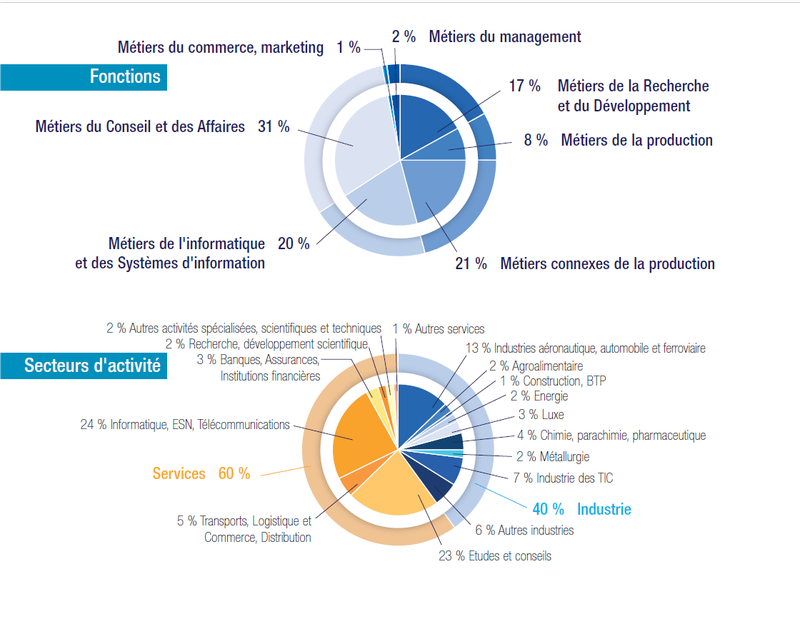
Quelle place donnez-vous aux entreprises engagées dans la transition écologique et dans l'Économie Sociale et Solidaire lors de vos forums d'entreprises, interventions d'Alumni, ou dans les projets, études de cas des étudiants ?
Apprentissage par projet
Des projets sont proposés par les enseignants (et / ou des entreprises) sur les thématiques de la transition écologique tout au long de l’année. Par exemple, cette année était prévu lors de l’UTT Innovation Crunch Time (annulé pour COVID), 12 sujets sur un total de 42 dédiés à une thématique de développement durable. C’est-à-dire que 330 étudiants auraient dû travailler pendant 3 jours sur un sujet directement lié à la transition écologique. (Opération annulée pour cause de Covid19)
Une semaine de la soutenabilité en projet
La création d’une semaine de la soutenabilité est en cours de réflexion. Il s’agirait d’organiser une semaine complète autour d’ateliers/de conférences proposés par des entreprises/associations engagées sur des thématiques de soutenabilité et de développement durable. Cette semaine pourrait se clôturer par une journée de Forum Stages et Alternances afin de permettre aux entreprises qui recrutent des profils ingénieurs de trouver leurs futurs collaborateurs au sein de l’université.
Accompagnement et financement de projets étudiants
L’UTT accompagne ses étudiants entrepreneurs au travers d’ateliers, de formations et de workshops tout au long de l’année. Les étudiants disposent même d’une commission de financement de leurs projets chaque semestre. Lors des 2 dernières commissions, ce sont 3 projets à dimension écologique qui ont été financés pour permettre aux étudiants de concrétiser leur idée.
Interventions de professionnels/alumnis via les évènements associatifs
Les associations étudiantes sont toujours en demande de contacts entreprises pour intervenir sur des thématiques de soutenabilité dans le cadre de leurs évènements. Le semestre dernier, Genius UTT a proposé une conférence sur le biomimétisme. Un atelier d’éco-conception a été réalisé par la Junior Conseil lors de l'événement « Meet your company » et l’association Ulisse organise aussi des interventions de professionnels sur le campus (ils travaillent actuellement sur l’organisation d’une conférence sur le climat pour la rentrée 2020).
Avez-vous identifié les principaux impacts des métiers de vos diplômés sur le climat et la biodiversité ? Si oui, quels sont-ils ? Vos formations présentent-t-elles des pratiques professionnelles et personnelles permettant d'identifier et de réduire ces impacts ? Concrètement, lesquelles ?
Nous sommes intéressés pour partager des pratiques avec d'autres écoles sur ce sujet. Notamment sur les référentiels utilisés. Nous n'avons pas la réponse à cette question.
Pensez-vous que la demande sur le marché du travail pour les métiers de vos diplômés est ou sera menée à évoluer dans le cadre d'une transition écologique ? Si oui, comment et pourquoi ?
Nous sommes convaincus que tous les métiers vont évoluer, pour traiter la contrainte environnementale. Les cursus universitaires (ou d’écoles) sont les laboratoires de l’entreprise de demain. En partant du constat qu’une partie de la population étudiante revendique une plus forte part des problématiques du changement climatique et des enjeux associés dans les formations, il sembla raisonnable d’imaginer un continuum dans leur vie de citoyen et de travailleur.
Les enjeux écologiques et sociaux sont-ils au cœur des stratégies de recherche de votre établissement ? Comment la stratégie de recherche favorise-t-elle spécifiquement la recherche transdisciplinaire et interdisciplinaire en lien avec les enjeux de transition écologique ?
Nous avons lancé il y a quelques mois une grande réforme sur l'organisation et la stratégie de recherche. La discussion n'est pas encore aboutie mais il apparait clair que la transition écologique sera l'un des 4 axes transverses que l'UTT se donne pour susciter des projets de recherche pluridisciplinaires dans ce domaine. Jusqu'à présent, le laboratoire unique de l'UTT a permis de favoriser des rencontres entre des chercheurs de différents domaines scientifiques. En parallèle de cela, nous avons mis en place deux instituts permettant d'agglomérer les synergies autour de grands thèmes sociétaux (L'Institut Sécurité globale et anticipation et l'institut services et industries du futur) qui permettent là encore la rencontre entre les chercheurs des différents horizons (ex : thèses financées entre des chercheurs en nanotechnologies et en développement durable : recyclage et ACV).
Votre établissement soutient-il de manière spécifique la recherche (thèses, postdoc, travaux d’enseignants-chercheurs) en lien direct avec les enjeux de transition écologique, et les chercheurs qui s’engagent dans cette voie ? Quelle est la proportion du budget recherche allouée à ces travaux ?
Il n'y a pas d'appel spécifique pour financer la recherche en lien direct avec les enjeux de la transition écologique. Par contre, comme nous avons une équipe de recherche qui travaille directement sur la thématique, elle est financée par l'établissement avec des critères partagés de manière collégiale par l'ensemble des chercheurs.
L'équipe dédiée à cette thématique de recherche a un budget de XX à comparer avec le budget global de la recherche qui est de YY€.
Existe-t-il des chaires ou des centres de recherche sur le sujet de la transition écologique au sein de votre établissement ? Si oui, quels sont leurs axes de travail ? Combien de professeurs intègrent-ils ?
Depuis 20 ans, l'équipe de recherche CREIDD, qui s'est construite initialement autour d'une chaire sur l'écologie industrielle, travaille sur le développement durable et la transition écologique. Depuis lors, les thématiques de recherche ont évolué significativement pour se focaliser à présent sur la transition vers la soutenabilité des systèmes socio-techniques. Cette thématique se projette sur deux axes majeurs : la conception et le territoire.
Ces axes de recherche ont évidemment de fortes interactions dans les différents projets portés par l'équipe. Actuellement, le CREIDD est composé de 10 enseignants chercheurs (2 HDR) et 15 doctorants et 1 ingénieur de recherche et une chaire sur le « métabolisme urbain » est en cours de création.
Les chercheurs sont-ils amenés à réfléchir à l'impact de leurs activités (pratiques et finalités) de recherche ? Si oui, comment ?
Une équipe de recherche a réfléchi et commencé à réaliser une charte sur ces questions. Celle-ci est interne à l'équipe pour le moment mais a vocation à être transmise aux autres équipes une fois finalisée.
Existe-t-il sur le campus des associations étudiantes dont l'activité est centrée sur l'action en faveur de la transition écologique ? Quelles sont-elles ?
Plusieurs associations travaillant sur la transition écologique ont existé au sein de l'UTT.
Jusqu'en 2019, il y avait 3 associations différentes : Ingénieurs Sans Frontières Troyes (ISF Troyes), Ecocampus3 et Élan Solidaire Troyens. ISF Troyes regroupait plusieurs clubs dont Ingénieurs Engagés Troyes et HelpAway (club d'humanitaire notamment). Il y a moins d'un an (2019), ces associations et clubs ont fusionné au sein d'une seule association afin de gagner en cohérence et en visibilité : ULISSE (Union Locale d'Ingénierie Sociale Solidaire et Environnementale).
Quelles sont les thématiques abordées par ces associations (alimentation durable, réduction des déchets, sensibilisation…) ? Quelles actions entreprennent-elles ? Quelle est leur échelle d’impact (l’ensemble ou une certaine catégorie d’étudiants, les personnels de l’établissement, échelle plus large que l’établissement) ? Ces associations travaillent-elles par elles-mêmes sur le campus ou agissent-elles en partenariat avec l’administration de l’établissement (et si oui, à quel niveau) ?
Les activités de cette association ULISSE (Union Locale d’Ingénierie Sociale Solidaire et Environnementale) sont multiples : sensibilisation via des courses d'autostop, organisation de débats, de conférences, réalisation de chroniques radio, partage de ressources sur les réseaux sociaux, des repas zéro déchet, organisation d'une semaine du développement durable, visite de repair café, le clean up sur le campus, culture d'un potager sur le campus, ventes de paniers légumes bio et locaux, évolution des formations, développement du covoiturage sur le campus.
Cette association travaille également avec des acteurs locaux:
- Le CROUS: compostage des déchets organiques, mise en place d'une option végétarienne (en cours)
- La ville: Initiative campus durable, groupe de travail sur la gestion des déchets
D'autres associations de l'école se mobilisent régulièrement comme le BDE via l'intégration où des tupperwares et des gourdes ainsi que des cendriers de poche ont été distribué à tous les nouveaux pour réduire le nombre de déchets lors de la semaine d'intégration. Des efforts ont aussi été fait lors des préparations des repas avec de l'achat local pour certains produits et toujours en essayant de réduire au maximum les déchets et la mise en place d'un ou plusieurs repas végétariens cours de la semaine et du week-end d’intégration.
Les activités ont pour but d'impacter l'ensemble des étudiants mais dans les faits, l'association touche essentiellement un public déjà intéressé par ces thématiques.
L'association est autonome, excepté sur certains événements lorsqu'une demande de subvention est nécessaire (en amont) ou lorsqu'une aide technique est essentielle au bon déroulement de l'activité (nettoyage des déchets sur le campus).
Comment valorisez-vous l'engagement citoyen et associatif de vos étudiants ?
A l'heure actuelle, l'engagement associatif UTT des étudiants est valorisé dans le cadre de la démarche MIND (pour Maitriser, Innover et Développer : promotion de l'initiative, l'innovation et l'entrepreneuriat Etudiant). S'ils ont déposé un projet, sous réserve d'un rapport et d'une soutenance validés par leur tuteur, ils peuvent obtenir des crédits ECTS correspondants à leurs compétences acquises. L'engagement citoyen est valorisé s'il rentre également dans un Projet MIND.
Il est prévu de faire évoluer l'engagement étudiant (associatif et citoyen) : un chantier important qui débutera en septembre 2020 pour établir un statut spécifique pouvant éventuellement conduire à un aménagement des études et/ou une valorisation des compétences toujours dans le cadre de la démarche MIND sur projets étudiants.
Comment se financent les associations étudiantes à l'Université ? Quelle visibilité leur est accordée au sein de l'établissement ?
Le BDE reçoit une subvention annuelle de la part de l'UTT. Le BDE reverse cette subvention, aux différents clubs et associations pour les financer. Parallèlement, les clubs et associations peuvent recevoir des financements sur projets via le FSDIE et la CVEC. Les clubs et associations organisent aussi des événements pour se financer. Il y a les cotisations de membres. Et puis elles reçoivent aussi des subventions de collectivités ou de la part d'entreprises ou même de la fondation UTT.
Les associations étudiantes et l'administration entretiennent des liens très étroits entre les 2, en premier lieu par la réunion hebdomadaire « vie étudiante » qui réunit autour de la table le BDE ainsi que les responsable logistique, patrimoine, vie étudiante, santé et ingénieur hygiène et sécurité.
Une grande proximité se développe aussi à travers des projets portés conjointement comme par exemple la Fête de la Science, la Remise des diplômes, le réseau des étudiants ambassadeurs, le CRUNCH (hackaton) … Avec le temps s'est développée une confiance mutuelle accordée, travail en grande intelligence.
Enfin, des sont organisées avec le Directeur de rencontres régulières l'UTT.
Votre établissement évalue-t-il son impact environnemental à l’aide de méthodes quantitatives normalisées, comme l’Analyse du Cycle de Vie ou le bilan carbone ? À quelle fréquence ? Quels postes de dépense intègre-t-il (notamment, comprend-il les mobilités, c’est-à-dire les voyages en avion des étudiant.e.s, des professeur.e.s et des conférencier.e.s) ?
Pas encore.
Comment votre établissement réduit-il au quotidien son empreinte écologique (végétalisation, incitations, économies d’énergies, alimentation responsable, réduction et tri des déchets …) ? Quels sont les résultats de ces actions ?
- Requalification de l’amphi minéral (passage en espace naturel)
- Création d’un bâtiment étudiant sur la zone BDE en lien avec l’activité étudiante
- Création d’une zone piétonne aménagée et sécurisée pour rejoindre la Halle Sportive
- Des poubelles de tri sont installées sur tout le campus depuis plus de 10 ans.
- L’éclairage LED à basse consommation énergétique est progressivement installé sur tout le campus.
- La mobilité douce est encouragée : parking à vélos sécurisés, bus qui desservent le campus, en lien avec l’association des étudiants UTT : la Roue Verte qui aident les étudiants à pratiquer le vélo.
Dans le cadre de l'appel à projets "agir ensemble : campus responsable en ville durable", l’UTT a été labellisée.
Le dispositif a aujourd’hui pour objectif de valoriser les alliances locales fédérant plusieurs acteurs locaux (Collectivités locales, Établissement d’enseignement supérieur et CROUS) autour d’un plan d’action de mobilisation des étudiants et du personnel des campus sur des enjeux locaux de développement durable.
Le dispositif a été porté par l’établissement et les étudiants, notamment l’association Ulisse.
Il comprend plusieurs axes de travail :
- Un axe dédié à la biodiversité a été privilégié avec un projet d’implantation de ruches, de recensement de la biodiversité locale et des sentinelles pollen, de sensibilisation et de mobilisation.
- Créer un collectif d’étudiants aptes à promouvoir la conception de repas « zéro déchet », sains pour un coût inférieur au prix d’un repas du RU.
- Poursuivre les « CleanUpDays » et les développer.
Comment votre établissement interagit-il avec son territoire et s'intègre-t-il dans des politiques publiques locales à visée durable ?
Dans le cadre de l'appel à projets "agir ensemble : campus responsable en ville durable", l'UTT a travaillé avec les collectivités locales.
Le dispositif prévoit un plan d'action de mobilisation des étudiants et du personnel des campus sur des enjeux locaux de développement durable et a été porté par l'établissement et les étudiants, notamment l'association Ulisse.
Il comprend plusieurs axes de travail : Un axe dédié à la biodiversité a été privilégié avec un projet d'implantation de ruches, de recensement de la biodiversité locale et des sentinelles pollen, de sensibilisation et de mobilisation.
Créer un collectif d'étudiants aptes à promouvoir la conception de repas « zero déchet », sains pour un coût inférieur au prix d'un repas du RU.
Poursuivre les « CleanUpDays » et les développer.
Quelques liens ont été établis avec des territoires ruraux afin de travailler avec eux sur la résilience de leur territoire. Dans ce cadre là, des liens avec un FabLab ont été noués (soutien de l'équipe de recherche au développement du FabLab).
Votre établissement est-il labellisé DD&RS ? Si non, un travail est-il en cours pour obtenir le label, et à quel horizon ?
La stratégie de l'UTT vise à ce qu'en 2025 l'ensemble de la promotion d'ingénieurs formés par l'UTT soit actrice de la transition écologique. L'action porte à la fois sur les dispositifs de formation et les lieux de formation.
Pour obtenir ce résultat, voici les étapes pertinentes à suivre année après année :
Rentrée 2020 : Objectifs stratégique et Acculturation
2021 : Plans d'action: recherche, formation, vie du site
2022 : Mise en oeuvre d'une formation repensée
2023 : Evaluation externe labellisation
2024 : Extension à l'échelle européenne
2025 : 1ère promotion diplômée
Quels blocages à la mise en place de dispositifs ou de mesures favorables à une transition écologique pouvez-vous identifier au sein de votre établissement (et à quel niveau) ?
Il faut éviter certaines pistes qui peuvent générer des blocages, comme :
- Trop contraindre les formations à un moment où nul ne sait comment la transformation de l’économie mondiale va s’opérer,
- Imposer des obligations et des interdits en matière de recherche, notamment fondamentale,
- Aller dans le sens du « name & shame », tant pour des entreprises que des cours ou des actions de recherche
Êtes-vous au fait des différents mouvements étudiants et institutionnels portant sur la transition écologique tels que le Manifeste étudiant pour un Réveil Écologique, le REFEDD, le projet FORTES du Campus de la transition ou le groupe de travail du Ministère de l’Enseignement Supérieur, de la Recherche et de l’Innovation ? Quels mouvements connaissez-vous ?
L’UTT est membre de l’association CIRSES qui assure, veille, information et accompagnement des écoles et se positionne comme référence en matière de pratiques sur le développement durable et la responsabilité sociétale dans l’Enseignement Supérieur et la Recherche français. https://www.cirses.fr/
Les étudiants de l’UTT ont rejoint le Manifeste pour un Réveil Ecologique.
L’UTT suit également la question au niveau européen à travers les réseaux Cesaer et Time. Ces deux réseaux européens, regroupent respectivement 53 universités de sciences et technologies de 25 pays, et 56 universités technologiques et écoles d’ingénieurs de 21 pays.
A cette échelle, avec ses partenaires du projet d’université Européenne Eut+, l’UTT pense que Green deal intègrera les critères de DD et RS dans les critères de sélection des projets financés. Il doit permettre de transformer l’Union pour atteindre la neutralité climatique à l’horizon 2050. Il se compose d’un large éventail de politiques (biodiversité, économie circulaire, agriculture, finance verte…) derrière la bannière du climat, ainsi que d’un plan d’investissements de 1 000 milliards d’euros sur dix ans.
De même, l’Etat devrait orienter les soutiens avec sa feuille de route « Agenda 2030 ».
Pouvez-vous décrire l'organisation mise en place afin de répondre à ce questionnaire (personnes ou organes en charge, parties prenantes impliquées, etc.) ?
Compte tenu des délais de réponse très courts, en pleine crise du Covid, une petite cellule pilotée par le Directeur de l’UTT a été constituée pour répondre à ce questionnaire. Elle a été en charge de coordonner les contributions de l’ensemble des personnes de l’UTT déjà impliquées dans les projets mentionnés dans ce questionnaire :
- Les étudiants
- Les enseignants chercheurs de l’équipe CREIDD
- Les ambassadeurs aluminis et la Fondation
- L’association Ulisse
- Les services de l’UTT concernés
Cette démarche a eu le mérite de faire un point à date sur une dynamique initiée en 2019 qui vise à placer cette question au niveau stratégique et aux coeurs des évolutions en matière de formation et de pilotage de l’institution.
Avez-vous des messages pour d'autres acteurs, des commentaires, des choses à ajouter ?
Aujourd'hui convergent les convictions des parties-prenantes : les transformations s'accélèrent et l'enseignement supérieur doit pouvoir non seulement suivre le rythme mais répondre aux enjeux sociétaux majeurs qui se présentent à l'échelle planétaire.
Les sciences et les technologies devront contribuer à notre adaptation collective aux déséquilibres écologiques et sociaux. Pour pouvoir le faire, il faut investir, y compris dans les territoires en dehors dans grands centres urbains qui concentrent et captent depuis plusieurs années les soutiens. Car il en va de la résilience des territoires et du lien entre l'ESRI et la société, les citoyens, la démocratie.
They are committed to answering us
As soon as an establishment makes an official commitment to respond to us, we display its logo here.